NATION

PASSWORD

A NEW, STRANGE WORLD (ALT-HISTORY RP - INACTIVE) - OOC
For all of your non-NationStates related roleplaying needs!
User avatar
Sao Nova Europa
Senator
 
Posts: 4801
Founded: Apr 20, 2019
New York Times Democracy

A NEW, STRANGE WORLD (ALT-HISTORY RP - INACTIVE) - OOC

Postby Sao Nova Europa » Wed Nov 05, 2025 4:17 pm

A NEW, STRANGE WORLD

Image


A NEW, STRANGE WORLD is a geopolitical RP set in January 2025, but with a twist: history has diverged from ours. This opens up endless possibilities as the world can change considerably.

Point of Divergence


The Point of Divergence (PoD) is the birth of human history. It is up to the players to decide if they want to create a completely different world or one closely resembling our own. While there is broad freedom given, some events still take place:

Alexander's Conquests
Roman Empire
Spread of Christianity in Europe
Spread of Islam
Mongol conquests
European colonization of the Americas
Reformation
Karl Marx and Marxism existing
1931 financial crash
A Great War in the 1940s between Germany and the rest of Europe, with Germany losing
Decolonization
2008 global financial crisis

Players will be given a lot of freedom in shaping the events and history of this world, but there should be common sense and realism. Bavaria uniting Germany? Sure. Ulm uniting Germany? No. Chinese colonizing the Pacific coast of the Americas? Yes. Chinese conquest of Europe? No.

I will also not allow colonial empires to still exist (though I will allow limited overseas territories). Anticolonialism was still a thing in this TL.

As a note, because in past iterations we had trouble agreeing on a common timeline about the Great War in the 1940s, this time around it's mandatory that Germany is the aggressor, and that Germany will have been defeated. While the details will be fleshed out by the players, I reserve the right to make judgments to speed up the process and avoid squabbling over the Great War.

Reports


Every IRL month equals four IC months. At the end of each IRL month, I will be releasing a report that will:

- show the consequences of your actions: if you implemented an economic policy, the report will mention whether it succeeded or failed.
- offer events: the world will be a lively one. Those can range from local conflicts to terrorist attacks to protests to natural disasters.

Rules


1. Be realistic: Use common sense when it comes to undertaking actions.

France invading Algeria to topple a dictatorship and install a democracy will be allowed. France invading Algeria to annex it into France proper or turn it into an official colony will not be allowed.
A middle-sized country with very high debt spending tens of billions of dollars without raising taxes or accounting for the huge deficit will lead to an economic crisis.

2. This is not a map-painting game.

If you start invading countries left and right (especially if you do not have a good reason), you will suffer from sanctions or outright intervention. If I feel your actions are far too unrealistic, I might even block them.
Even if you invade to "bring democracy to X country", you still need a proper justification and might still face public opposition. You need a good reason to intervene, and your citizens - especially if you are a democracy - will not be cheering on if you do not justify it properly to the public.

3. Wars

Ideally, the result of wars should be decided by agreement between the players. This is a collaborative RP, not an antagonistic one. In cases where this is not possible, though, I will be deciding the results based on numbers, logistics, tactics, and post quality.

SIGN UP


Fill out the application to join. You can post in the IC only if you have been accepted. Reservations last a week, with no possibility of renewal unless you can show a semi-completed application that can be finished in a day or two. If you fail to deliver, then your nation will be free once again to be taken by another player.

Code: Select all
[box][size=150]APPLICATION[/size]
[b]NS Name:[/b]
[b]RP Name:[/b]
[b]Flag:[/b]
[b]Capital:[/b]
[b]Territory:[/b]
[b]Population:[/b]
[b]Official Language(s):[/b]

[b]Type of Government:[/b]
[b]Head of State:[/b]
[b]Head of Government:[/b] If HoS and HoG are same person, then simply repeat their name.
[b]Legislature (the name of your national legislature):[/b]
[b]Legislative Houses (if your legislature is bicameral):[/b]
[b]Party in Power:[/b]
[b]National Issues:[/b] Mention [i]three (3)[/i] issues - domestic and foreign - that plague your nation and which you need to tackle in order to prosper.
[b]Public Goals:[/b]
[b]Private Goals:[/b]

[b]GDP (nominal):[/b]
[b]Currency:[/b]
[b]Economic System:[/b]
[b]Defense Budget (USD):[/b]
[b]Alliance(s):[/b]

[b]Military:[/b]

[b]History:[/b]
[b]RP Example(s):[/b] If you are new and do not have an example, you can write a short (two paragraphs long) RP in your app for me to evaluate.

Do not remove - 2025RP[/box]

Code: Select all
[box][size=150]RESERVATION[/size]
[b]NS Name:[/b]
[b]RP Name:[/b]
[b]Territory:[/b]

Do not remove - 2025RP[/box]
Last edited by Sao Nova Europa on Sun Feb 08, 2026 2:39 pm, edited 5 times in total.
Signature:

"I’ve just bitten a snake. Never mind me, I’ve got business to look after."
- Guo Jing ‘The Brave Archer’.

“In war, to keep the upper hand, you have to think two or three moves ahead of the enemy.”
- Char Aznable

"Strategy without tactics is the slowest route to victory. Tactics without strategy is the noise before defeat."
- Sun Tzu

User avatar
Sao Nova Europa
Senator
 
Posts: 4801
Founded: Apr 20, 2019
New York Times Democracy

Postby Sao Nova Europa » Wed Nov 05, 2025 4:18 pm

ACCEPTED NATIONS


United States of America - Reverend Norv
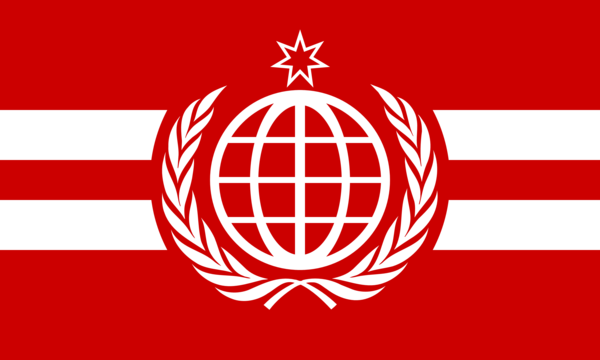
Socialist World Republic - Cybernetic Socialist Republics
Russian Empire - Union Princes
Ptolemaic Realm - Sao Nova Europa
Republic of China - Tracian Empire
Federation of Danubian Syndicate Republics - Azurnailia
Prussian State - New Harken
Empire of Japan - Shohun
French Empire - Newwe Zion
Kingdom of Mapuche - Dragos Bee
Socialist Republics of Southeast Asia - Bealan
Republic of the Fourteen United Low Countries - Kahlenberg
Republic of Germany - Khurun-Marrakh
Republic of Lombardia and Veneto - Great Confederacy of Commonwealth States
United Kingdom of Spain and Portugal - NPC
Socialist Republic of Ethiopia - NPC
Union of Scandinavian Socialist Republics - NPC
Republic of Nepal - NPC
Republic of Vietnam - NPC
Republic of Djubuti - NPC

NOTE: You can apply as an NPC nation. You can also request changes in the borders of those nations and a different government type, if you do decide to apply as one of them.

RESERVED NATIONS


Great Socialist Aydınlanmış Cumhuriyet - Newne Carriebean7
Republic of Haiti - Deblar
Republic of Iran - Arvenia
Last edited by Sao Nova Europa on Sat Nov 22, 2025 12:35 pm, edited 8 times in total.
Signature:

"I’ve just bitten a snake. Never mind me, I’ve got business to look after."
- Guo Jing ‘The Brave Archer’.

“In war, to keep the upper hand, you have to think two or three moves ahead of the enemy.”
- Char Aznable

"Strategy without tactics is the slowest route to victory. Tactics without strategy is the noise before defeat."
- Sun Tzu

User avatar
Sao Nova Europa
Senator
 
Posts: 4801
Founded: Apr 20, 2019
New York Times Democracy

Postby Sao Nova Europa » Wed Nov 05, 2025 4:22 pm

APPLICATION
NS Name: Sao Nova Europa
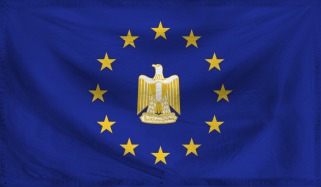
RP Name: Prolemaic Realm (Επικράτεια των Πτολεμαίων)/Ptolemies (Πτολεμαῖοι)
Flag:

Image

Capital: Alexandria
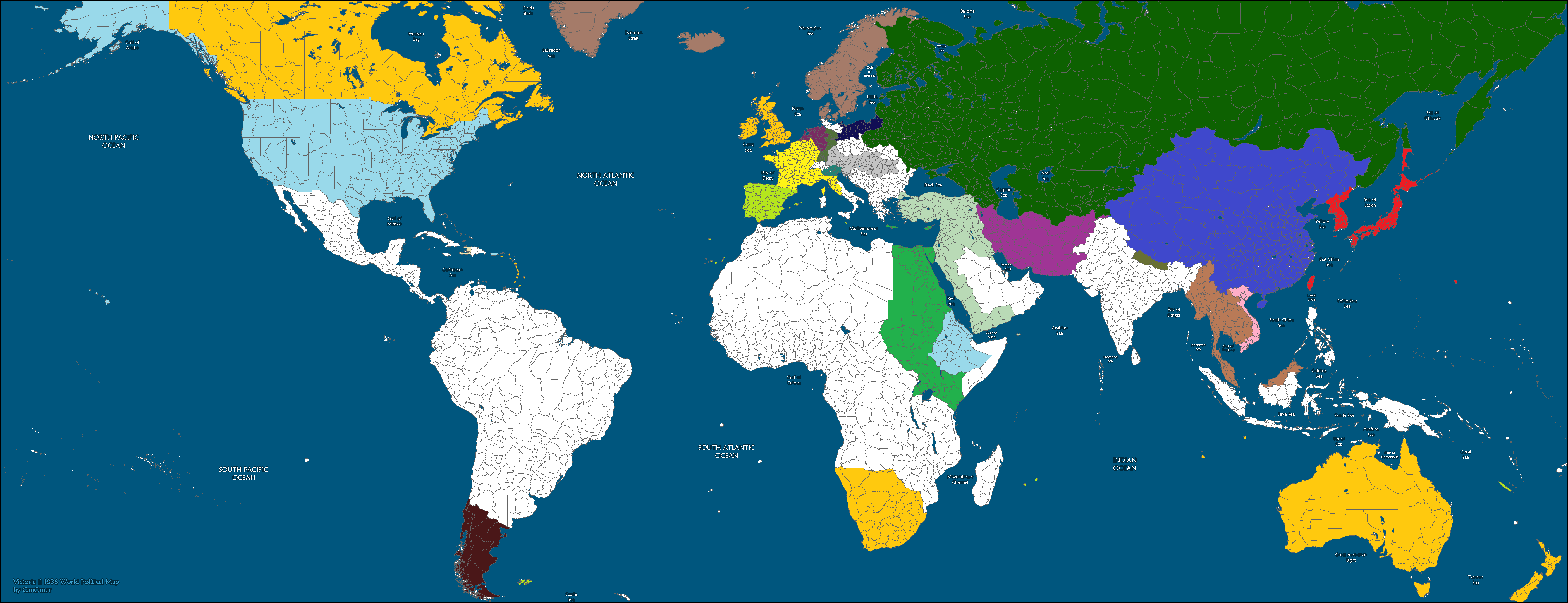
Territory: Map
Population: 287,097,417
Official Language(s): Attic Greek

Type of Government: Constitutional Monarchy

The Ptolemaic Realm is a unitary constitutional monarchy. The government is organized into three distinct branches: the executive, legislative, and judicial. The Basileus (Βασιλεύς) serves as the head of state, with a role that is largely ceremonial and symbolic. The Basileus's powers are limited, primarily focused on providing royal assent to legislation, serving as the commander-in-chief of the armed forces, and representing the nation on the international stage.

The head of government is the Prime Minister (Πρωθυπουργός), who is appointed by the Basileus. The Prime Minister must secure a vote of confidence from the National Assembly (Εθνοσυνέλευση) and is responsible for formulating and executing both foreign and domestic policy. The Prime Minister also leads the Royal Cabinet (Βασιλικό Συμβούλιο), a council of ministers that oversees the various government departments. Additionally, the Prime Minister nominates justices for the Supreme Court, who are then formally appointed by the Basileus.

The judicial branch is headed by the Supreme Court (Ανώτατο Δικαστήριο). This court is composed of seven Supreme Court Justices (Δικαστές του Ανωτάτου Δικαστηρίου). Justices serve ten-year terms, which can be renewed once. However, there is a mandatory retirement age of 80, at which point a justice's service ends regardless of the time remaining in their term.

The Ptolemaic Realm is a unitary state with a decentralized administrative structure. It is divided into seven Regions (Περιφέρειες): Crete and Cyprus, Lower Egypt, Upper Egypt, Northern Nubia, Southern Nubia, New Egypt, and New Macedonia.

Each Region is led by a directly elected Regional Governor (Περιφερειάρχης) and a Regional Council (Περιφερειακό Συμβούλιο), with elections held every four years. While the central government retains authority over most taxes, it grants the regions the exclusive right to levy property taxes, providing them with an independent source of revenue. The central government is responsible for collecting all other taxes and redistributing a portion of the nation's wealth to poorer regions to ensure a more equitable distribution of resources.

The powers of the Regions are delegated by the central government and primarily focus on local administration and service delivery. They are responsible for managing public education, healthcare, infrastructure projects such as roads and utilities, and local economic development initiatives.

The Regions are further subdivided into provinces (Επαρχίες), which in turn are divided into municipalities (Δήμοι). Provinces serve as an intermediate administrative layer, managing the coordination of services between the regional and municipal levels. Their powers are limited, generally focused on facilitating communication and implementing regional policies. Municipalities are the smallest administrative units, responsible for essential local services such as waste collection, public parks, and urban planning. They are also empowered to manage small-scale local projects and maintain public order through a municipal police force. There are 70 provinces and approximately 12,000 municipalities.

Head of State: Basileus Markos VI

Image

Head of Government: Prime Minister Traianos Tzimeros

Image

Legislature: National Assembly

The national legislature is a unicameral body known as the National Assembly (Εθνοσυνέλευση). It consists of 400 representatives (Βουλευτές) who serve four-year terms, unless snap elections are triggered earlier. The Prime Minister can request the Basileus to dissolve the Assembly, which would then necessitate snap elections. Of the 400 seats, 300 are filled by candidates from single-member constituencies using a First-Past-The-Post (FPTP) system. The remaining 100 seats are distributed to political parties based on their proportion of the nationwide vote, provided they meet a 5% electoral threshold. Voters cast two votes on the ballot: one for their district's candidate and another for a party to determine the proportional representation seats.

Legislative Houses: Unicameral
Party in Power:

Προοδευτικό Φιλελεύθερο Κόμμα (Progressive Liberal Party/PLP)
267/400 seats
A broadly centrist liberal party, the PLP is center-right on economic issues, advocating for reduced government spending, tax cuts, privatization, and a pro-business environment. Socially, the party is center-left, supporting the legalization of recreational marijuana, same-sex marriage, defending access to abortion, and secularism.

Χριστιανοκοινωνική Ένωση (Christian Social Union/CSU)
122/400 seats
The CSU is a center-right to right-wing party with a center-left, populist economic platform. They support family-oriented welfare programs, increased aid for low-income people, investments in healthcare, education, and infrastructure—particularly in rural areas where their support is strongest. Socially, the CSU is conservative. The party opposes same-sex marriage and marijuana legalization, and is strongly pro-life, aiming to amend the current abortion law, which they consider too liberal. They also emphasize the importance of Christian ethics.

Ενωμένη Αριστερά (United Left/UL)
11/400
As the only third party with representation in the National Assembly, the United Left is a left-wing party that is progressive on both economic and social issues. It critiques the "duopoly" of the PLP and the CSU, attacking the former as a "neoliberal" party and the latter for being "regressive".

National Issues:

Culture Wars
The nation is experiencing a deepening cultural divide, characterized by increased polarization between two distinct groups. On one side are the populist, nationalist, and socially conservative rural populations, who largely support the Christian Social Union (CSU). On the other are the liberal, cosmopolitan, and progressive urban populations, who tend to align with the Progressive Liberal Party (PLP).

Deficit Spending
For several years, the previous CSU administrations heavily invested in social services and infrastructure, financing these projects through foreign loans and leading to significant fiscal deficits. The new PLP administration, led by Prime Minister Tzimeros, aims to reverse this trend and balance the national budget.

Middle Income Trap
The Ptolemaic Realm is currently caught in a middle-income trap. This economic phenomenon occurs when a middle-income country struggles to advance to high-income status due to rising costs and a decline in economic competitiveness. The government faces the significant challenge of finding a solution to this long-standing issue.

Public Goals: Economic growth
Private Goals: Regional supremacy

GDP (nominal): $810.85 billion
Currency: Drachma
Economic System: Regulated Capitalism

The Ptolemaic Realm's economy is characterized by a diverse range of exports and products. A cornerstone of the economy is the export of mineral fuels and oils, sourced from significant natural gas reserves in Egypt and crude oil fields in the Sudans. This sector is a primary driver of the nation's trade balance. Key agricultural exports include cotton, a traditional staple, along with high-demand commodities such as coffee and tea from the highlands of Kenya and Uganda. Beyond raw materials, the Realm possesses a growing industrial base. This allows for the export of manufactured goods, including textiles, processed foods, and light industrial products. The nation also benefits from its substantial service industry, particularly in tourism, which draws visitors to historical sites in Egypt and Crete, wildlife reserves in Kenya, and the beaches of Cyprus. Furthermore, the Suez Canal provides a critical source of revenue from international shipping and logistics.

Defense Budget (USD): 4.3% ($34.87 billion)
Alliance(s): -

Military:

280,000 soldiers-at-arms

Land:
200,000 men
450 Tanks
5,000 Armored Vehicles
400 Self-Propelled Artillery
400 Towed Artillery
200 Rocket Projector

Sea:
50,000 men
4 Destroyers
8 Frigates
10 Corvettes
10 Submarines
30 Patrol Vessels
15 Mine Warfare Vessels

Air:
30,000 men
150 Fighters/Interceptors
80 Dedicated Attack Aircraft
100 Transports
50 Special Missions Aircraft
250 Helicopters
50 Attack Helicopters

History:

The Ancient Kingdom (305 BC - 641 AD)
In 305 BC, Ptolemy I Soter, a general of Alexander the Great, established himself as ruler of Egypt, founding the Ptolemaic Dynasty. The reign of his successor, Ptolemy II Philadelphus (284–246 BC), was a period of great prosperity and cultural flourishing, known as the "First Golden Age" of the Ptolemaic Kingdom. Although the kingdom faced challenges under Ptolemy IV Philopator (221–204 BC), suffering from internal instability and fighting a war against the Seleucid Empire, it remained a dominant power in the Mediterranean.

The rise of the Roman Republic eventually threatened the independence of the Ptolemaic Kingdom. Cleopatra VII (51–2 BC) navigated this delicate balance by leveraging Egypt's resources and strategic position to maintain its sovereignty. She skillfully avoided entangling Egypt in the Roman civil war between Mark Antony and Octavian. Her son, Ptolemy XV Philopator Philometor Caesar (known as Caesarion), who reigned from 2–37 AD, continued his mother’s policies of strengthening the economy and preserving diplomatic ties with Rome.

The successors of Ptolemy XV maintained a cordial relationship with Rome, effectively making Egypt a client state in exchange for its independence. The economy flourished, largely due to grain exports that met the growing demands of the Roman Empire. This period also saw the widespread adoption of Greek language and culture by the native population, a process known as Hellenization, which was largely complete by the third century AD. This era, marked by a flourishing of intellectual exchange and the enduring influence of the Library of Alexandria as a hub of learning, is known as the "Second Golden Age" of the Ptolemaic Kingdom.

The fourth century AD brought a new challenge with the spread of Christianity. The Ptolemies were initially hesitant to adopt the new faith, as it challenged the divine legitimacy of their rule, which was rooted in the cult of Alexander the Great and the Greco-Egyptian pantheon. A solution was devised by Theodoros, Bishop of Alexandria, in 334 AD: Alexander the Great was an instrument of God, a divine tool who spread the Greek language across the Eastern Mediterranean. This allowed diverse peoples to understand the Gospel, which was written in Greek.

This theological justification enabled Basileus Konstantinos III to adopt Christianity as the state religion in 356 AD while still venerating Saint Alexander the Great as the Guardian-Saint of Egypt. The Ptolemaic rulers maintained tight control over the Christian Church, with the Basileus serving as the "chosen one" of God and the ultimate arbiter of theological disputes. One such dispute was the Miaphysite doctrine, which asserted that Jesus Christ had one unified nature. This controversy led to a schism, and the Ptolemaic Basileus's adoption of the Miaphysite doctrine resulted in the separation of the Egyptian Orthodox Church from the rest of the Christian world.

In the fifth and sixth centuries AD, Egypt suffered invasions from Nubian tribes. Concurrently, the collapse of the Western Roman Empire and internal crises in the Eastern Roman Empire allowed Ptolemaic Egypt to assert its independence in a way not seen since the Hellenistic period. The country, however, soon faced the rising power of the Arab caliphate. In 641 AD, at the Battle of Giza, Basileus Alexandros VII was defeated by an invading Arab force. This defeat led to the fall of Lower Egypt to Islamic rule, forcing the Ptolemies to retreat to Upper Egypt.


The Medieval Kingdom (641 - 1522)
The loss of Lower Egypt and the retreat to Upper Egypt transformed the Ptolemaic Kingdom. To counter the threat of Arab invasion from the north, the Ptolemies began a massive fortification program. Urban centers declined as the population favored castles and fortified settlements. The standing army was replaced by a landed army, a system where men were granted farms in exchange for military service and maintaining their own equipment. This change was a direct response to the economic problems caused by the loss of the fertile northern territories.

The kingdom, however, survived and successfully repelled multiple Arab invasions. Ptolemaic armies even made incursions into Nubia, further strengthening the realm. Konstantinos V the Soter (683–702), a tough soldier and brilliant strategist, is often considered the greatest medieval ruler of Ptolemaic Egypt. In 689, he invaded Lower Egypt and, after a series of decisive battles, liberated the region from Islamic control by 691, thereby reunifying Egypt under Ptolemaic rule. For this success, Konstantinos is venerated as a Saint by the Egyptian Orthodox Church.

Konstantinos’s immediate successors were less focused on military conquest and instead prioritized domestic development. This era, known in historiography as the "Reign of the Eunuchs" (702–1025) due to their increased influence in government, was a golden age for the economy and culture. Commerce flourished, and the kingdom experienced unprecedented urbanization. The medieval Ptolemies were pioneers in water management, developing innovative techniques for irrigation and water storage, which significantly boosted agricultural productivity. Trade with both the West and East expanded substantially. Culturally, this period saw the construction of hundreds of churches, a flourishing of Greek literature and philosophy, and important advancements in mathematics and geometry.

In 1025, Basileus Nikolaos III ascended to the throne. Unlike his predecessors, he relied on his military officers rather than eunuchs and bureaucrats. He launched multiple expeditions to conquer Nubia, and his campaigns became legendary for their brutality. By 1047, he had pacified the region. Nikolaos III was assassinated in 1049 by one of his officers, Agathocles, who attempted to usurp the throne.

Nikolaos’s younger brother, Ioannes V, challenged Agathocles, leading to a civil war. After defeating and executing Agathocles in 1053, Ioannes V focused on restoring internal peace. He founded the University of Alexandria, one of the oldest universities in the world, which attracted scholars from across the Christian world and offered education in various fields.

Ioannes V's successors continued his policies of patronizing scholars and artists, making the period from 1053 to 1181 another cultural golden age. Ptolemaic scholars made significant contributions to astronomy, mathematics, and medicine. Royal patronage led to the construction of hundreds of churches and dozens of luxurious palaces. The markets of Alexandria became renowned for their diversity of goods, from spices and textiles to precious metals, solidifying Egypt's position as a major center of Christian culture and prosperity.

Despite their support for the Crusades launched by Western Christendom, the Ptolemies faced internal instability and a series of palace coups and military revolts after 1181 that prevented them from effectively aiding in the defense of the Levant. This period of turmoil lasted until 1205, when Basileus Xenophon I came to the throne.

Xenophon's reign marked a period of reform and recovery. He issued new coinage, reformed the tax system, undertook ambitious irrigation projects, and constructed new fortifications to protect against the resurgent Muslim world. He also acquired control of Crete and Cyprus, islands vital for controlling Eastern Mediterranean trade routes. During his reign and that of his successors, Alexandria continued to thrive as a cultural and intellectual hub, attracting scholars, artists, and merchants. Trade routes connecting Egypt to the Mediterranean, the Red Sea, and the Indian Ocean facilitated the exchange of goods, making the Ptolemaic Kingdom one of the most prosperous Christian realms.

This era of prosperity ended in the 1400s, ushering in a century of instability marked by civil wars, palace coups, military revolts, and inflation. This period of turmoil lasted until 1522, when Xenophon VII the Soter ascended the Egyptian throne.


The Early Modern Kingdom (1522 - 1855)
Xenophon VII (1522–1571) had a long and peaceful reign. He crushed internal revolts and restored a semblance of stability. He also circulated new coinage and bolstered public finances by reforming the tax system. To break the power of the landholding nobility, he redistributed land from large landowners to the peasants who worked it. His reign saw the construction of many new churches and a flourishing of Greek poetry and literature.

His successors, Aristeides II (1571–1602), Themistocles V (1602–1631), Themistocles VI (1631–1667), and Aristeides III (1667–1689), oversaw a prosperous kingdom. The agricultural products of the Nile River were exported across the Mediterranean, enriching the kingdom's coffers. The Ptolemaic Basileis also patronized the arts and architecture. Basileus Aristeides IV (1689–1711) used the kingdom's wealth to expand Egypt's control into southern Sudan. His successor, Themistocles VII (1711–1767), would construct numerous cities in Sudan and import Egyptian settlers to Hellenize the region. During this period, Ptolemaic armies arrived in Uganda and sought to annex the territories north of Lake Alexander. Between 1754 and 1766, the region was placed under Ptolemaic rule, becoming the province of "New Egypt."

His son, Aristeides V (1767–1771), was forced to accept several unequal treaties because the Ptolemies, despite their wealth, lacked the technological superiority of the European Great Powers. The treaties he signed were unpopular, as Egyptians had long considered their kingdom the center of the Christian world and could not accept a secondary position to the "Frankish barbarians." Aristeides V was succeeded by Themistocles VIII (1771–1799), who oversaw significant reforms to stabilize the kingdom. He reduced unnecessary government expenses, cracked down on corruption, and financed infrastructure projects to revitalize the economy. The Ptolemaic military also expanded government control from New Egypt (Uganda) into Kenya, which became the province of "New Macedonia" in 1786.

Konstantinos XVII (1799–1821) established the Antiquities Institute, managed by European academics, to advance archaeological work in Egypt and Sudan. He also financed the construction of new cities in Uganda and Kenya, which were settled by Greek-speaking Egyptians and Sudanese. To modernize the Royal Army, he began sending select officers to study in the West. This increased Westernization was not without its challengers, and Konstantinos had to suppress several revolts by groups opposed to his reformist agenda.

Konstantinos XVIII (1821–1857) was a more conservative Basileus than his father. While he accommodated Westerners—recognizing he had no choice but to do so—he refused to implement any meaningful reforms. In response, a secret organization of reformist military officers who had studied in the West, called the "Society of Progress," was formed. They believed the kingdom was stagnating under the current regime and were inspired by the "Democratic Movement," an intellectual movement that studied and idolized ancient Athenian democracy.

In 1853, these officers launched a military coup, forcing the Basileus to permit the formation of a Constitutional Assembly. This assembly drafted the Constitution of 1854, which established a constitutional monarchy and granted the right to vote to all males aged 21 or older. The first elections were held in 1855 to allow time for the formation of political parties and the civic education of the population. Although the 1855 elections resulted in a fragmented parliament, a coalition government was successfully formed seven months later.


The Modern Kingdom (1855 - Present)
In theory, liberalism and democracy had won, but in practice, the lack of democratic political traditions meant that political parties were centered around charismatic personalities or regional interests rather than an ideology. Parties would gain support by offering various benefits, including tax exemptions for certain regions and appointments to local and national offices. Elections became a competition for the "spoils" of the state rather than a debate over policies and ideas.

Some progress toward modernization was made during this period: foreign-language schools were established in 1862, modern arsenals in 1865, and a modern naval dockyard in 1866. Yet, the constant squabbling and political instability led to growing dissatisfaction with the status quo, which threatened democracy; a military coup attempt in 1867 was barely foiled. Thankfully for the democratic institutions, the charismatic liberal politician Nikolaos Andreades emerged. Unlike most other Ptolemaic politicians, he had an intellectual basis for his beliefs, but he was also practical enough to use political patronage and bribery to amass the necessary political capital to push through necessary reforms.

As Prime Minister (1869–1887), Andreades implemented a radical reformist agenda. Using loans and revenue from a modernized and expanded taxation system, he heavily invested in the construction of railways that sped up commerce and travel. A machine factory was established in 1870, and students were sent to Europe for advanced education starting in 1872. He also implemented a system of government budgets similar to those in Western countries. At the local level, the Kallisthenis system was established, which included a modern police force and expanded local organizational functions. Autonomous research institutes were set up in urban areas to promote modern Western-style education, and a new code of law and judicial system were enacted. The Bank of Egypt, founded in 1877, used tax revenues to fund the construction of modern factories. Other economic reforms passed by the government included a unified modern currency, commercial and tax laws, stock exchanges, and a communications network. The establishment of a modern institutional framework conducive to an advanced capitalist economy took time but was completed by the 1890s. By this time, the government had largely relinquished direct control of the modernization process, primarily for budgetary reasons.

The army was also reformed, with Western-style education for officers, many of whom were sent abroad. Wages for soldiers were increased to combat corruption. Most importantly, Andreades invested heavily in the navy, as he believed a strong navy was essential for a nation to expand its global influence. Andreades also successfully thwarted two reactionary coup attempts by ultraconservative military officers in 1872 and 1885. These coups were foiled with the support of younger officers who backed Andreades’ military reforms and saw the coups as an opportunity to sideline older, more conservative officers.

Andreades' modernization reforms paid off, and the kingdom entered a period of renewed prosperity even after his death in 1887. Under Kleomenes Thodoris (1903–1911), the National Renewal Movement gained prominence. This nationalist movement called for a strong, centralized state to push through radical Westernizing reforms, a powerful military with a culture of discipline, a veneration of the Basileus, an attack on "corrupt party politics," and Greek nationalism. Although many of the movement's early proponents were supporters of Andreades, they had abandoned liberal progressivism for an authoritarian and nationalistic form of progressivism—progress in the service of strengthening the "national body."

Kleomenes Thodoris was a moderate proponent of these ideas. While he believed in the need for strong government and a greater role for the Basileus, he rejected outright authoritarianism or absolute monarchy. Despite his rhetoric on morality and his attacks on "party politics," he used political patronage to maintain control of a fractured parliament. However, he also embraced the new radical ideas of the movement. He expanded the centralized public education system (founded in the 1860s) and pushed for a Greek nationalist curriculum. This was accompanied by government-funded "Cultural Festivities" that promoted Greek culture and "Summer Camps" where children were indoctrinated with the values of Greek nationalism. There were even government-backed attempts at pseudo-history, claiming that the ancient Egyptians were of Greek origin, to further strengthen this idea.

Thodoris was succeeded as Prime Minister by Eleftherios Venizelos (1911–1922, 1924–1935). Venizelos was a fervent nationalist progressive like Thodoris, who believed in the power of a strong government to modernize Egypt and make it powerful. His government increased funding for both infrastructure projects (including constructing the Suez Canal) and the military. In 1931, his government enacted female suffrage. The Ptolemaic Realm saw substantial economic growth during most of this period, but was affected by the global economic crisis of 1931, which led to increasing popularity for radicals on both the left and the right.

The death of Venizelos in 1935 caused a power vacuum, as no single figure could command a majority in the fractured parliament, leading to political gridlock and dozens of short-lived prime ministers. On July 1, 1937, Basileus Georgios V appointed former military officer and MP Makarios Papadopoulos as Prime Minister of a broad coalition of centrist and right-wing parties. On the eve of a massive strike organized by various labor unions, Papadopoulos—with the assent of the Basileus—suspended the constitution, dismissed parliament, and imposed martial law on August 4, 1937.

From 1937 to 1978, the Ptolemaic Realm was under an authoritarian government known as the "New Order." Papadopoulos served as Prime Minister from 1937 to 1958. Under his leadership, the kingdom recovered from the economic crisis due to massive investments in infrastructure and public works programs. His government also promoted tourism, especially to Crete, Cyprus, and Egypt. In 1958, Konstantinos Kaklamanis became Prime Minister. His government invested heavily in industrialization and export-oriented industries. Between 1955 and 1975, the economy grew at an impressive rate of 4–6% annually. However, this increased economic growth created a middle class that began demanding political freedoms.

Kaklamanis, an astute politician, began dismantling the authoritarian "New Order" state between 1974 and 1978. In 1978, in the first free elections in decades, his National Party won an overwhelming majority. However, his 1978–1982 government oversaw reduced rates of economic growth and was plagued by multiple corruption scandals. Kaklamanis resigned from the leadership of his party in 1981, as he did not want to lead it into the unfavorable 1982 elections. In those elections, the Christian Social Union (CSU) won an overwhelming majority under the leadership of the charismatic Andreas Papadakis on a platform of Christian morality and social welfare.

Andreas Papadakis established the National Health Service in 1984, providing universal healthcare to all citizens. He raised the minimum wage, supported trade unions, and invested heavily in welfare for the poorest citizens. The party was also opposed to no-fault divorce, the decriminalization of homosexuality, and abortion rights. It embraced a populist foreign policy of "national independence" from the Great Powers. In the 1986 and 1990 elections, the CSU won overwhelming victories.

Meanwhile, the National Party suffered defections as socially conservative politicians joined the more successful CSU. In 1987, liberal reformers founded the Progressive Liberal Party (PLP), which superseded the National Party as the main opposition to the CSU in the 1990 elections. The PLP was the party of the urban middle class, who resented high taxes to fund welfare initiatives and were more cosmopolitan and liberal than the rural, lower-income supporters of the CSU.

The CSU seemed impossible to defeat, but in 1993, Andreas Papadakis died. Compounding the death of their charismatic leader, a series of corruption scandals emerged that same year. In 1994, the PLP won a majority, and Costas Vlachos became Prime Minister. His government legalized no-fault divorce, decriminalized homosexuality, and legalized abortion up to 12 weeks. Economically, his government privatized multiple state assets, reduced welfare benefits, liberalized the labor market, and cut taxes. Bolstered by increased economic growth and despite resistance from the Christian right over his progressive reforms, Vlachos won reelection with an expanded majority in 1998.

In 2002, the CSU managed to gain a slim majority, and Antonis Savvopoulos became Prime Minister, winning another slim victory in 2006. His government (2002–2010) was rather moderate. He did not seek to reverse Vlachos’s progressive reforms or undo his economic liberalization. However, he did increase welfare spending for low-income citizens and invested in public projects in rural regions. These projects were mainly financed by deficit spending, which increased foreign debt. Savvopoulos also rejected public calls to allow civil unions for same-sex couples and, despite pressure from his party, he refrained from attempting to reverse the legalization of abortion.

The aftermath of the 2008 economic crisis and concerns over high debt led to the defeat of the CSU in 2010 and the victory of the PLP and Traianos Tzimeros. Tzimeros implemented austerity measures to cut the deficit and reduce public debt. His reforms ensured that the Ptolemaic Realm achieved fiscal balance and exited the crisis by 2013, but they were deeply unpopular. The PLP suffered a crushing defeat in the 2014 elections. CSU leader Alekos Alavannos became Prime Minister and won reelection in 2018 and 2022. His administration (2014–2024) restored some welfare benefits cut by the previous administration, enacted new family-oriented welfare benefits, and launched several infrastructure projects in rural regions. He also passed a law defining marriage as being between a man and a woman and became a vocal opponent of "LGBT propaganda." Despite massive protests in urban centers, Alavannos reversed the legalization of abortion in 2016, banning it in all cases except for rape, incest, or danger to the mother's health.

His popular administration faltered when a massive financial scandal involving bribes from companies seeking infrastructure projects was discovered in 2024. Alavannos himself was implicated and resigned. His replacement also resigned a few months later, as did multiple ministers who were implicated in this and other financial scandals. The CSU majority collapsed, and snap elections were called. Traianos Tzimeros, who had rehabilitated his image since the austerity years and had promoted himself as a progressive reformer and advocate of clean government, won a resounding victory in the October 2024 snap elections. His first act as Prime Minister was to legalize abortion once again, with free access in the first 12 weeks.

Whether Tzimeros can move the Ptolemaic Realm past the scandals of the past and into a new progressive direction remains to be seen.


RP Example(s): -

Do not remove - 2025RP
Signature:

"I’ve just bitten a snake. Never mind me, I’ve got business to look after."
- Guo Jing ‘The Brave Archer’.

“In war, to keep the upper hand, you have to think two or three moves ahead of the enemy.”
- Char Aznable

"Strategy without tactics is the slowest route to victory. Tactics without strategy is the noise before defeat."
- Sun Tzu

User avatar
Nationalist Northumbria
Senator
 
Posts: 4372
Founded: Apr 27, 2019
Iron Fist Consumerists

Postby Nationalist Northumbria » Wed Nov 05, 2025 4:25 pm

RESERVATION
NS Name: Nationalist Northumbria
RP Name: Northumbria
Territory: Northumbria

Do not remove - 2025RP
"The amazing thing is that Tony Blair being shot in the head after running a barricade for inexplicable reasons is one of the most plausible episodes in this RP,
which comes across as House of Cards by the writers of Mr. Bean."

User avatar
Sao Nova Europa
Senator
 
Posts: 4801
Founded: Apr 20, 2019
New York Times Democracy

Postby Sao Nova Europa » Wed Nov 05, 2025 4:26 pm

Nationalist Northumbria wrote:
RESERVATION
NS Name: Nationalist Northumbria
RP Name: Northumbria
Territory: Northumbria

Do not remove - 2025RP


As you can see from the map and the roster, that region is already claimed by Socialist Britain.
Signature:

"I’ve just bitten a snake. Never mind me, I’ve got business to look after."
- Guo Jing ‘The Brave Archer’.

“In war, to keep the upper hand, you have to think two or three moves ahead of the enemy.”
- Char Aznable

"Strategy without tactics is the slowest route to victory. Tactics without strategy is the noise before defeat."
- Sun Tzu

User avatar
Nationalist Northumbria
Senator
 
Posts: 4372
Founded: Apr 27, 2019
Iron Fist Consumerists

Postby Nationalist Northumbria » Wed Nov 05, 2025 4:27 pm

Sao Nova Europa wrote:
Nationalist Northumbria wrote:
RESERVATION
NS Name: Nationalist Northumbria
RP Name: Northumbria
Territory: Northumbria

Do not remove - 2025RP


As you can see from the map and the roster, that region is already claimed by Socialist Britain.

The reservation was made almost two months ago and I thought reservations last a week. Also, I can't see the map since I'm in England.
"The amazing thing is that Tony Blair being shot in the head after running a barricade for inexplicable reasons is one of the most plausible episodes in this RP,
which comes across as House of Cards by the writers of Mr. Bean."

User avatar
Sao Nova Europa
Senator
 
Posts: 4801
Founded: Apr 20, 2019
New York Times Democracy

Postby Sao Nova Europa » Wed Nov 05, 2025 4:29 pm

Nationalist Northumbria wrote:
Sao Nova Europa wrote:
As you can see from the map and the roster, that region is already claimed by Socialist Britain.

The reservation was made almost two months ago and I thought reservations last a week. Also, I can't see the map since I'm in England.


This is a reboot, so new time limits apply.

Also, Northumbria would have been rejected anyway from the same reasons I always reject it in my RPs. You can either apply as some other nation or join some other RP. Thanks.
Signature:

"I’ve just bitten a snake. Never mind me, I’ve got business to look after."
- Guo Jing ‘The Brave Archer’.

“In war, to keep the upper hand, you have to think two or three moves ahead of the enemy.”
- Char Aznable

"Strategy without tactics is the slowest route to victory. Tactics without strategy is the noise before defeat."
- Sun Tzu

User avatar
New Harken
Ambassador
 
Posts: 1255
Founded: Jan 03, 2025
Iron Fist Consumerists

Postby New Harken » Wed Nov 05, 2025 4:59 pm

APPLICATION
NS Name: New Harken
RP Name: The Prussian State
Flag: https://en.wikipedia.org/wiki/Free_Stat ... 1-1935.svg (Or the Black, white and red tricolor of the old German Empire)
Capital: Konigsberg
Territory: East Prussia, Danzig, Memel
Population: 7,930,200
Official Language(s): German

Type of Government: Military Junta
Head of State: (Officially) Kaiser Georg Friedrich (Unofficially) Eberhard Zorn
Head of Government: Carsten Linnemann
Legislature (the name of your national legislature): The Prussian State Parliament
Legislative Houses (if your legislature is bicameral): The Council of National Defense and German restoration (Upper House) The House of State representatives
Party in Power: Officially (The DNVP) Unofficially (The Prussian Armed Forces)
National Issues: The DNVP/Military Split: While the Prussian armed forces were able to work hand in hand with the DNVP after gaining power in 1972, however that warm relationship has since cooled as the DNVP aims to reign control from the army and place it's self at the head. This divide has made it far tougher to push for major change in Prussia as both sides refuse to compromise on much.

Military First, everything else second: While Prussia has been able to produce a highly advanced and capable armed forces, it has done so at the expense of the civilian population and the economy. The high military spending has led to major debt in Prussia which the Junta has constantly put on the back burner citing that "When things improve we can discuss our debts". This has also led to major public discontent which has turned many against the regime and only increased calls for a election.

The Kaiser's plays: While the Army and DNVP continue in their tug of war between each other, Kaiser Fredirich has been trying to put more of a foot down in the running of the Prussian state hoping to end the Puppet status that has hung over him and his father before him. The Kaiser's plans might lead to a third faction enter the political conflict threatening the already fickle stability of the regime at current.

Democratic Opposition: While the Restoration Coup led to the downfall of the Prussian Republic, that never meant that it's supporters or ideals died with it despite what the regime hoped. The current economic turmoil and worrying growing levels of poverty and homelessness have led many to begin to either silently or openly resist the Junta, many days will say marches and protests in the streets with supporters calling on the Military to surrender power despite it's claim to have handed it to the DNVP. Similar calls have also hit the DNVP to call for elections and even some whispers have also called for the Abolition of the Kaiser's position.

Public Goals: Defense of German/Prussian Traditions, German Reunification, Prevent the spreading of Leftism in Prussia and their neighbors
Private Goals: Army modernization for an eventual reunification war with Germany, gaining powerful allies to one day use in the fight for German reunification, Cracking down on Pro Democratic and Prussian Independence movements in Prussia

GDP (nominal): $43.280 Billion
Currency: Reichsmark
Economic System: Military First economy
Defense Budget (USD): $8 Billion
Alliance(s): The Moscow Accord

Military: The Prussian Imperial Armed Forces: The Prussian Army: 331,000, 534 Tanks, 790 APCs. The Prussian Imperial Navy: 1 Light Carrier, 14 Destroyers, 4 Light cruisers, 27 Submarines. The Prussian Air force (Luftwaffe): 355 Fighter aircraft, 227 Jet Strike aircraft

History:

German collapse and Prussian Independence: As the Great War began to turn for the worst for the German army, with it's lines collapsing from all sides and with the German army becoming weaker and weaker by the day there began a fear that with German defeat would swiftly follow with the destruction of Germanic and Prussian culture and tradition. To this end a small group of Junker elites and Army officers formed a united front to save German and Prussian way of life before it was too late. With Berlin continuing to put all to the war effort the East Prussian region began to suffer more and more from war exhaustion and starvation as food began to become less and less easy to find and those that were found were sent to the front. On the 16th of August 1944 East Prussia would go up in carnage as the cabal made their move officially seize control of Konigsberg and Danzig with loyal forces under Field Marshal Gunther Von Kluge and would declare the Independence of the Prussian state from Germany by the end of the day.

Following the declaration the provisional government would open the new country up to the Russian Imperial army and with their help along with the rag tag elements of former German army units that had been loyal to the New Prussian state there was nothing much the German army could as the war continued to go worse for Berlin all over. Following the end of war and German defeat the Russian army would maintain heavy presence in Prussia as it became a firm part of their sphere of influence, With Russian assistance the Prussian army would be firmly establish as a proper force. The new army would be firmly built on old Prussian military tradition which while was continued by Germany was felt by Prussian officers that it had been watered down as the war soured. Conscription was maintained and the ideals of discipline and efficiency became the core values of the Prussian military.

While on the political side the new Prussian state needed a government, while the initial collection of civilian and military offices had kept the state together during the war it could not manage the state without falling to petty squabbles as such elections were called for 1946 with the Conservative and monarchist friendly Franz Von Papen winning the presidency under the of the All Prussian Union Party (APUP) and with it he was quick to establish the new Prussian constitution which took on many similarities of Germany's own and Papen in his first term was quick to write into law protections for many Prussian/Germanic traditions shining them into the Constitution to prevent any future government from easily attempting to shift Prussia from it's conservative values and traditions. Along with this Papen would set in place laws protecing the properties and granted further powers to the many nobles and other German elites who began to come to Prussia all across Germany seeing it as a safe place for them and their property.

The Republic of Prussia: In the post war years the Republic was focused on rebuilding the new Prussian state, much of the region had been badly damaged by bombing and more so from the starvation and effects of shortages that had hit Prussia hard in the final years of the war. Prussia would open up it's markets to the rest of the world but the majority of it's trade would come from their new ally in Russia with food from Russia coming in to help the starving people of Prussia, thus bringing it further into the Russia sphere.

Von Papen's rule would eventually come to an end in 1955 when he would stand down from reelection citing ill health, in his place would be Otto Christian Von Bismarck, former prince of Bismarck and grandson to Otto Von Bismarck. Having fled to Prussia following the collapse of the German state he was quick to get involved in Prussian politics and while he respected the rule of Papen he believed that he hadn't gone far enough to bring Prussia and the German people to their rightful place in Europe. As such he would leave the APUP in 1952 and would join the DNVP and became it's leader in 1954 and soon after declaring his intention to run for the presidency. Von Bismarck would go on to use his family name and plans to massively expand the Prussian armed forces and perhaps the most sudden and historic pledge that would go on to shape Prussian policy till the modern day. In a speech in Danzig he would declare that while the Prussian state stands as a protector of Germanic culture it's true destiny was to restore that culture to the rest of Germany, he would declare that it was the rightful honor and calling for the Prussian people to one day restore order in the rest of the fatherland and restore Germany as the proud nation it once was. This speech would soon be known as the "Bismark Decree" and would propel his support among many nationalists and pro German voters who wished to return home once more. The results would see a landslide for the DNVP. After his swearing in one of the first decrees as president was to replace the Prussian Black and White with the old Imperial Tricolor making it clear to the world that Prussia was the rightful successor state and rightful government of Germany.

Under Bismarck the Prussian army would gain a massive increase in its budget and its power became far more clear to all. As a result the Military would become a key ally of the new administration. By the time of his election the Russian army had finally cut back heavily on its presence in Prussia and the Prussian army became much the center of Prussia's defense. While Prussia still remained in Russia's sphere of influence Bismarck would begin to push for Prussian autonomy and with the ever growing Prussian military he began to feel more confident in one day reclaiming the fatherland. He sought to open the country to more nations and Prussian business were encouraged to move away from the Russian market to expand their horizons.

The 72 "Restoration Coup": The Bismarck administration would continue on till 1970 in which after the economic situation of Prussia began to take a turn following the administration's push for militarization, taxes had been raised too high and poverty began to hit the state with the focus on the military before the home front. In the 1970 election the DNVP would see a drastic defeat in the electorate seeing their hold be crushed by the Liberal Prussian People's Party (LPP). However with the loss of the DNVP the military began to worry that perhaps the new government may begin to cut back on it's essences. These fears would be proven right as the new budget in 1971 would see gigantic cut in it's budget and soon after the government would begin to promote new ideas that would forgo Prussian tradition, the Government's talks of changing the Constitution to abolish universal conscription.

As such and with the belief that the LPP were seeking to destroy Prussia from whiten the military, aristocrats and the DNVP came together to plot the downfall of the LPP before they can destroy Prussia. On the 5th of July 1972 the Military would begin a full scale coup against the government with the 3rd Infantry division storming Konigsberg and holding the government hostage. Similar incidents would take place in Danzig and Memel and with the support of the DNVP and the monetary support of the aristocrats would see Prussia fall to the regime of the new "Council of Defense for Germanic traditions". The next day the Junta would broadcast to the nation that the LPP were found to be a dangerous cancer and that they were plotting to hand Prussia over to leftist regimes turning Prussia into a playground for the communists.

In the coming days the Junta would allow for the DNVP to place a civilian government in power to maintain the illusion of democracy while the military were in fact the one who still held the real power in Prussia. With it saw the return of Von Bismarck whom the regime believed with his still high popularity despite his election defeat two years prior would serve well to be the face of the new government, just now as a junior partner rather then the leading figure.

The Army with a state: With the Junta now in power and with the DNVP serving as it's public face the Prussian army was quickly granted an overwhelming increase in it's funding and with the support of the Russians in keeping the Prussian economy afloat following this rapid shift in economic policy the unemployment problem of Prussia massively was done away with as countless young men found work in the armed forces or it's factories. By 1983 the Junta had been in power for over a decade and their popularity had began to wain as the people called for the military to stand down and restore Prussian democracy, instead the Junta was not interested in that idea and found of a way to continue their rule while maintaining the illusion they had relinquished power. This came in the form of Prince Louis Ferdinand, the current head of the house of Hohenzollern since 1951. He had been allowed to return to Prussia during the Papen administration during the time of the Junta he had been quiet on the affairs of state only offering mild un-assuming statements that never actually said anything or gave away his stance. The Junta would approach him and granted him an offer, in exchange for being named Kaiser of Prussia he'd would be a figurehead. Of course officially it was to the civilian led DNVP but in reality it was making him a subject of the military.

Assuming this offer would make him a figurehead monarch like in the old British monarchy he accepted and on the 13th of December 1981 Ferdinand would be crowned in Konigsberg as Kaiser Ferdinand the 1st, King of Prussia and Emperor of all Germans. The former title only made Prussia's future plans and stance towards Germany even more clear then ever. From then on Ferdinand would rule as the puppet Kaiser till his death in 1994, with the throne going to his son Friedrich.

Prussia, alone but triumphant: Come the 21st century Prussia's status quo began to become shaky. The first hit came after the 2008 economic crash which shook the world along with Prussia, with the massively military spending and already unstable homefront collapsed under the economic troubles. It was only through emergency taxes and Russian economic aid that the Prussian economy even showed a semblance of recovery. But the effects of 2008 would still show even to this day.

The next blow to the Junta and the Prussian economy came following the outbreak of the COVID-19 pandemic in 2020, the economy was still recovering from the 2008 crash when the pandemic hit Prussia, Prussia's reaction was considered to the rest of the world slow and clunky as the DNVP were slow to even acknowledge the deadliness of the virus. Once again it took Prussia asking for Russian aid during the pandemic and the use of the Prussian army to enforce lock downs and vaccines that kept the situation turning even worse.

All this and a still weak economic recovery from the pandemic, as well as the full public knowledge of the facade democracy that is the Prussia has fueled mass public protests and rallies decrying the government as illegitimate and demanding the military stand down and hand over control of the government despite what they claimed to have done decades ago. Now with the 2025 elections set for September the LPP and the APUP are set to make a hard comeback as the public support for the DNVP continues to fall, yet the military are set to ensure the DNVP maintain power and have put their full backing into the victory in September despite the growing tensions between the two sides along with the Kaiser slowly but surely making his moves behind the scenes and establishing his own loyalists. For now Prussia stands on shakey ground and one mistake is all it would take to either send the Junta into a death spiral or maintain it's survival, it all hinges on the results that come in September.
RP Example(s): viewtopic.php?f=31&t=569306#p42859961

Do not remove - 2025RP[/box]

User avatar
Reverend Norv
Senator
 
Posts: 4281
Founded: Jun 20, 2014
New York Times Democracy

Postby Reverend Norv » Wed Nov 05, 2025 5:59 pm

Image


APPLICATION
NS Name: Norv.


RP Name: The United States of America, or U.S.A.. Usually just the United States or U.S.. Often simply America. Colloquially, Americans will sometimes call their country just the States; in political contexts, they often refer to the Union or to the Republic. In Spanish, the unofficial second language of the U.S., the country is normally called los Estados Unidos.

Flag: The flag of the United States - sometimes called Old Glory, the Flower Flag, or the Jubilee Flag - is shown at top. The fifty-two stars represent the fifty-two states of the Union. Other key symbols include the bald eagle, the national animal; the national motto, E Pluribus Unum; Lady Liberty, the most common national personification; and the iconography of broken chains. Unusually, documents are the most important national symbols: the Declaration of Independence, the Gettysburg Address, and the Constitution. The national anthem is America the Beautiful, though usually only the third verse is actually sung:
O beautiful for patriot dream
That sees beyond the years,
Thine alabaster cities gleam
Undimmed by human tears!
America! America!
God shed His grace on thee,
And crown thy good with brotherhood
From sea to shining sea!

Capital: The federal political capital is the National Capital Service Area, located within the state of Washington, D.C. (Douglass Commonwealth). Despite the fact that Washington is now a state like any other, it still functions as a metonym for the federal government. New York City is broadly considered the nation's economic capital, while New York and Los Angeles each claims to serve as its cultural capital.

Territory:
It is best to think of American territory not as lying within a fixed border, but as defined by a gradually waning sphere of influence. The center of this sphere - de jure American territory, what postcolonial theorists call the "metropole" - consists of the fifty-two states of the Union: the "lower forty-nine," plus the states of Alaska, Hawaii, and Puerto Rico. This is the United States as you will find it defined on a map.

Then there are the federal territories of the United States: the Indian Territory, American Samoa, Guam, and the U.S. Virgin Islands. Most of these are Pacific or Caribbean islands - but the Indian Territory, located between Oklahoma and Arkansas, is the last refuge of meaningful native sovereignty in North America. Washington claims that the territorial status of all these areas is temporary, and will be resolved by referenda on either independence or statehood; in the meantime, they remain only partially self-governing, under federal "supervision." Their people, however, are full American citizens, with all the rights that go with that status. On most maps, these territories are also shown as part of the U.S. - they are distinguished by Congress's insistence that this situation is temporary. The territories are supervised by the Joint Committee on Insular Affairs (except for the Indian Territory, which is supervised by the House Committee on Indian Affairs).

A step further out, one finds the Freely Associated States, or FASs. Most of these are small Pacific islands: the Federated States of Micronesia, Palau, Kiribati, Samoa, and Tuvalu. But the FASs also include Liberia and Panama - Panamanian membership was the American condition for the return of the Panama Canal - and perhaps other small states. (Players are welcome to claim membership.) The FASs are tied to the United States by a "Compact of Free Association," or CFA. The U.S. military guarantees their security, and many FASs have no armed forces of their own. In return, the FASs allow American forces to operate freely, and they lease military bases to the U.S.. Beyond this, their citizens can live, work, and study in the States on the same terms as American citizens - without being eligible for conscription. The FASs are also duty-free zones for purposes of U.S. trade; they benefit from billions in U.S. subsidies; and the U.S. administers disaster relief, postal, weather, aviation, and telecommunications services. If this is a form of colonialism, it is a remarkably altruistic one; the U.S. spends at least twice as much on the FASs as it receives back in trade or other economic value. Like the territories, the FASs are managed by the Joint Committee on Insular Affairs.

A step further out from that, one finds the U.S. alliance system. These countries are quite free and sovereign, not U.S. territory in any ordinary sense - except, of course, that most of them provide military bases for the United States Armed Forces, which are pledged by treaty to protect them. The more than 700 U.S. military bases scattered around the world mostly owe their existence to this alliance network. Some partnerships are bilateral, based on a "special relationship" with particular countries. Others are multilateral, like the Atlantic Treaty Organization - which is the main vector for American influence in Europe, Africa, and the Americas. These countries serve to extend the diplomatic, logistical, military, and covert reach of the U.S. government around the globe. But though they may substantially rely on American forces for their defense, American allies are not mere puppets, and the U.S. is generally careful to treat them as equal partners. American relations with, and operations involving, the nation's treaty allies are coordinated by the Joint Select Committee for Global Security.

A step further out still, and one finds the shadowy penumbra of American "territory": the private holdings of U.S. corporations. These range from rubber plantations in Liberia to oilfields in Arabia to factories in China. These holdings are not formally U.S. territory, not even in the limited sense of a leased military base. But they can reach enormous size, and are sometimes de facto self-governing: corporate security guards replace police, and corporate benefits matter more than government welfare. As a result, for better or worse, the influence of American business is at least as globally dispersed as the influence of the U.S. government; and sometimes it can be a challenge - both for foreigners, and for Americans - to tell where one ends and the other begins.

Population: There are approximately 340 million United States citizens and permanent residents - including the populations of the insular territories and the Indian Territory. Approximately 11 million more people live in the Freely Associated States. (N.B.: this figure may need to be revised upward if other players are interested in adding to the number of FASs.) There are also between 10 and 12 million short-term or undocumented immigrants in the United States, approximately half of whom have pending or accepted applications for guest worker or Temporary Protected status.

Official Language(s): The United States has no formal national language, though more than twenty states have adopted English as their official language. Spanish is a co-official language in New Mexico (along with Navajo and Pueblo), and it is the official language of Puerto Rico. Hawaiian is an official language of the state of Hawaii; Alaska has recognized 20 native languages as co-official; French is co-official in Maine and Louisiana. Federal law requires all official proceedings and documents to be made available in both English and Spanish, but encourages state and local governments to go further: in California, for example, official documents are published in Chinese, Korean, Tagalog, Persian, Russian, Vietnamese, Siamese, and Malay. In the insular territories, Samoan, Chamorro, and Carolinian have official status alongside English. Cherokee, Choctaw, and Muscogee are official languages in the Indian Territory.


Know each quiet act of dignity
Is that which fortifies
The soul of a nation
That never dies


Type of Government:
The United States is among the world's oldest and most successful democratic republics: the U.S. Constitution was written in 1787, and it has been a prototype for dozens of other republics around the globe. But it has also evolved, steadily and continuously, and often based on unspoken norms rather than constitutional amendments. From 1868 onward, the role of the American president has sharply diminished, and the power of Congress has greatly increased. As a result, the balance of power between three coequal branches has been replaced by a parliamentary system in all but name.

~The Federal System~

The United States remains a federal system: a sovereign union of sovereign states. Under the Tenth Amendment, any powers that the Constitution does not expressly assign to the federal government are reserved to the states and to the people. For this reason, state and local governments exercise by far the greatest influence over most Americans' daily lives: local police enforce state criminal codes, local school boards and state education departments run schools, states maintain and plan their own local roads and light rail systems, states license professions and issue construction permits, and so on. For the average American, most of the policy issues about which he cares most are within the jurisdiction of the states. The principle of subsidiarity is deeply embedded in American political life: there is a broadly shared belief that public business should be conducted at the lowest level that permits both fairness and efficiency. Thus, even federal programs are often implemented by state officials, who are better acquainted with local conditions. This principle is also at work in Congress's administration of federal territories: although the territories are not constitutionally entitled to administer themselves, they have always had at least as much autonomy as states, simply because Washington normally prefers to leave them to their own devices. The Joint Committee on Insular Affairs takes a similar attitude toward the Freely Associated States: providing federal services and funding as required by the Compact, but otherwise avoiding interference in the domestic business of the FASs.

The main exception to this rule is found in the system of federal supervision - also known simply as Reconstruction. The Sixteenth Amendment (1874) requires the federal government to take affirmative steps to secure the guarantees of the Fourteenth Amendment (1868) - that is, the privileges and immunities of citizenship, and the equal protection of the law - to all American citizens. It effectively gives Congress a perpetual duty to protect Americans' civil rights. Therefore, whenever those rights are violated, Congress not only can but must preempt the authority of state governments, and directly administer whatever state agencies are necessary to protect the rights of citizens. After the Civil War, the states of the former Confederacy were federally supervised for a century, and Congress controlled everything from land and inheritance laws to election law. Since the 1960s, the extent of federal involvement has both diminished and expanded: most governmental functions in the South have returned to state control, but Congress has extended Reconstruction to northern and western states - mostly big cities - in an effort to address structural inequalities in health, housing, and education. But if Reconstruction tilts the federal balance of power decisively toward Washington, it is also a limited tool: because federal supervision can be used only to protect civil rights, and not for any other political priority.

~The Congress~

Since the impeachment of President Johnson in 1868, a norm has evolved that the President serves at the pleasure of Congress; and whenever a majority of the House and two-thirds of the Senate can be persuaded that he is a failure, he will promptly be removed. For this reason, impeachment has come to serve effectively as a vote of no confidence, and the president has become merely a ceremonial head of state - not a truly coequal power. Congress, therefore, is by far the most powerful branch of the American government.

Congress remains bicameral. The 435 members of the House of Representatives are elected from equipopulational constituencies for two-year terms; the 104 members of the Senate are elected, two from each state, for six-year terms. Election laws are set by the states, albeit frequently under federal supervision to protect voting rights. Most states use some form of multi-winner proportional representation for House elections, and ranked-choice voting for the Senate. Elections are largely publicly funded, and corporate political spending is forbidden - but there are few limits on individual political spending, and so the wealthiest Americans still have a disproportionate influence on the composition of Congress.

In practice, Congress governs the country mostly by committee: because the whole legislature cannot vote on every action that needs to be taken, it uses parliamentary procedure to delegate. Thus, "select committees" responsible for foreign affairs and disaster relief and military operations - issues requiring swift and decisive action - have acquired the power to act on behalf of Congress as a whole: they make policy by "resolution" rather than by formal statute. Other committees, responsible for complex but not urgent questions, each draft a section of Congress's biannual omnibus bill; Congress then staples all the sections together and passes the entire bill into law, including each committee's agenda. Some committees - and, therefore, some authorities - are exclusive to one house or the other: the House Ways and Means Committee, for example, drafts the budget, while the Senate Committee on Agriculture, Nutrition, and Forestry writes the Farm Bill. But most committees - especially select committees - are joint in nature, with members from both the House and Senate.

Because committees run the government, the power to appoint legislators to committees is the power to control policy. This power is held by the Speaker of the House, who appoints all House members to their committees, and by the Senate Majority Leader, who appoints members of Senate committees. When the Senate and House are controlled by different parties, the Speaker of the House tends to dominate: because all members of joint committees, including Senators, require the consent of the Speaker in order to serve. Thus, the Speaker not only directly controls the House committees, but she also indirectly controls the joint committees, which wield the most important powers of government. But this does not entirely cure the dysfunction of having, for example, an agricultural policy set by a Republican Senate committee that is at cross purposes with an environmental policy set by a Radical House committee. Unified control of Congress is indispensable for efficient government.

Although the president is formally responsible for executing the laws, in practice Congress has acquired its own executive bureaucracy: the Congressional Administrative Service, or CAS. It is a professional civil service, whose members can be fired only for cause and are expected to remain rigorously apolitical. The president has delegated much of his executive authority to CAS (mostly because any president who refused to do so would be immediately impeached). CAS therefore acts with the president's executive authority, but its various departments report to congressional committees: the Medicare Services Administration, for example, reports to the Joint Committee on Health, and works to implement that committee's agenda. CAS also serves as the practical link between Congress and the states, assisting and supervising state administration of federally funded programs. Finally, CAS includes one quite special department: the Congressional Supervisory Service, more commonly known as the Freedmen's Bureau. The Bureau's core function is to mointor states' compliance with the Fourteenth Amendment; but in the service of this function, it has acquired extensive powers of physical, electronic, and digital surveillance. It is Congress' primary weapon against domestic extremism, and plays an important role in monitoring foreign misinformation and propaganda.

Beyond this, Congress has deliberately set certain agencies outside its own control, in order to prevent political interference. These include the Federal Elections Commission, the Federal Reserve System, the United States Information Service, the Federal Communications Commission, the Securities and Exchange Commission, the Federal Trade Commission, and the Consumer Financial Protection Bureau, among others. Civil servants working in these independent agencies are also members of the Congressional Administrative Service, but they do not report to any Congressional committee. Rather, they nominate their own directors from within their own ranks, and the Senate need only confirm them; therefore, they are effectively self-governing. Some, like the Federal Reserve, even have their own sources of funding, which Congress has excluded from the conventional federal budget. The goal is to place those forms of public power most prone to political abuse - monetary policy, election administration, censorship, propaganda, and so on - outside the reach of political actors. Independent agencies play a vital role in the nation's stable, consistent governance.

~The Federal Judiciary~

With the president reduced largely to a figurehead, it is the federal courts' power of judicial review that serves as the main check on Congress (and, together with Congress's power of federal supervision, on state governments as well). The federal courts can strike down any action of the Congressional Administrative Service as inconsistent with statute, and they can also void any federal or state statute that conflicts with the Constitution. The court system is an appellate hierarchy: cases are tried in the district courts and appealed to the circuit courts. Circuit court rulings can in turn be appealed to the Supreme Court, but only with that Court's own consent - it controls its docket. In principle, all federal judges - including Supreme Court justices - are nominated by the President and confirmed by the Senate. In practice, the Judicial Nominations Act of 1947 requires the President to nominate judges from a list of lawyers supplied by the American Bar Association. Thus, it is really the legal profession itself that controls judicial appointments, and the President and Senate can only choose judges who already possess the support of the country's lawyers.

The mainstream constitutional theory that American courts apply is civic republicanism. American jurists believe that the Reconstruction amendments fundamentally rewrote the Constitution - they often call the period from 1865 to 1875 the "Second Founding" - to prioritize a vision of equal, participatory citizenship. Freedom, in this sense, is not the right to be left alone. Rather, liberty means non-domination: the right to have a say. Just as the slave has no say in anything that happens to him, the citizen must have a say in everything that happens to him. He may still be taxed, conscripted, or imprisoned - but not unless he has first had the chance to vote, or demonstrate for peace, or defend himself in court. And this chance to participate cannot be merely symbolic: it must be real and practical, with the power truly to change outcomes.

For this reason, the Fourteenth Amendment's "privileges and immunities of citizenship" are understood to include everything necessary for full political participation. This includes freedom of speech and assembly, of course, but it also includes the right to shelter and work and basic sustenance - because a truly destitute citizen cannot participate equally in the public business. The Sixteenth Amendment requires Congress to ensure that these privileges and immunities are actually provided, and for this reason the federal government is constitutionally obliged to provide public welfare; this is why the U.S. is sometimes described as constitutionally, and not merely politically, a social-democratic state. Likewise, the courts have interpreted the Sixteenth Amendment to require the federal government to curb those forms of private power that render citizens helpless or dependent, because such domination makes truly free political participation impossible; therefore, the U.S.'s strong labor unions and antitrust laws are a constitutional imperative, not a policy choice.

By hounding Congress to keep the promises made at the Second Founding, the courts have played a crucial role in America's long march toward social and economic justice. Where that march remains incomplete, though, the fault also lies with civic republican jurisprudence. Because American courts place such importance on equal citizenship, they have been slow to recognize the rights of noncitizens, and willing to countenance a variety of abuses toward foreigners and the undocumented.

~The Presidency~

What then remains of the American presidency? Little practical power, that is sure. The president's role as the executive has mostly been transferred to the Congressional Administrative Service; his powers of foreign relations and judicial appointment have gone to congressional committees and the American Bar Association, respectively. His veto power remains, but to exercise it is an invitation to impeachment, and no president in sixty years has actually vetoed a bill. His status as commander-in-chief is but a theoretical one; the Joint Armed Services Select Committee actually controls the military on a day-to-day basis.

As a result, the president is really a ceremonial head of state: a kind of republican constitutional monarch. He serves two main purposes, which are in some tension with each other. First, he represents the nation: visiting disaster-struck areas, presenting civilian and military awards, calling attention to social ills, and so on. Second, because the president remains popularly elected, presidential elections have symbolic and political importance: they send a message about how the American people understand themselves and their values, and about how they want to be seen by the world. Thus, presidential elections serve as a valuable political safety valve: they divert the public's appetite for symbolic and cultural conflict, and this allows Congress - where the real power lies - to prioritize data and detail and compromise.

Head of State: The President of the United States is Jackson Callaghan. Elected in 2024 amid a sharp public backlash to illegal immigration, President Callaghan was previously an officer in the National Guard, a Republican congressman from Arizona, and a frequent conservative contributor to the "big three" news networks authorized by the Federal Communications Commission. His career really took off in the social media age, however, when he switched to the Democratic Party and began posting videos on Facebook and Twitter expressing the kind of incendiary opinions that the FCC would never allow on the television airwaves. By 2022, he was popular enough to win the Democratic nomination for president. He won a plurality of the popular vote and twenty states, with the others split between the Republicans and Radicals. Though effectively powerless, Callaghan has a reliable talent for provoking controversy and embarrassing the United States abroad. Still, mainstream members of Congress can comfort themselves that Callaghan's election is proof that the presidential "safety valve" is working as intended: Americans can make the powerless presidency the locus of their appetite for culture wars and symbolic gestures, and leave the legislature to get on with the business of running the country.

Head of Government: The Speaker of the House of Representatives directly controls appointments to House committees, and indirectly controls appointments to joint Congressional committees, and is therefore by a considerable margin the most powerful person in the American government - the real "Leader of the Free World." The current Speaker is Dr. Catherine Griffiths, of the Radical Party. Born into a coal-mining family in Kentucky, Dr. Griffiths volunteered for overseas duty during her conscript service and was wounded in Somalia in 1991. She then obtained a degree in economics from the University of Chicago and a law degree from Yale, and became a staff advisor to Radicals on the Joint Select Committee for Global Security. In 2000 she was elected to the House in her own right, from the safe Radical state of Massachusetts, and she has held her seat ever since. She became the House Majority Whip in 2008, and was primarily responsible for shepherding Speaker Elizabeth Warren's Fair Deal to passage. In 2020, the Radicals regained their majority after a four-year hiatus, and Dr. Griffiths was elected Speaker by her colleagues. She launched a new agenda - the "Covenant with Tomorrow" - intended to prepare the United States for a transition to a fully renewable and largely AI-driven economy. Dr. Griffiths has held on to the Speakership ever since, though her majority shrank to three seats after the 2024 election, and she must contend with an uneasy Radical-Republican "abolition coalition" in the Senate. Known as the consummate Washington insider, a lifelong political operative who understands every feint and trick of parliamentary procedure, Dr. Griffiths strives to be exactly what the world needs from America: a steady hand on the tiller of a global colossus, at a time of profound uncertainty and change.

Legislature: The United States Congress: the most important and active branch of the federal government, which has achieved the remarkable feat of leading the United States to the pinnacle of global power through that most maligned of all decision-making processes - government by committee.

Legislative Houses: The lower house, of 435 representatives elected for two-year terms from equipopulational constituencies, is the House of Representatives. The upper house, of 104 senators - two from each state - is the Senate. Each house is divided into committees which control certain areas of public policy. The most important authorities are entrusted to joint committees of members from both houses. Membership on these joint committees requires the consent of the Speaker of the House of Representatives, which makes the Speaker the de facto head of government of the United States.

Party in Power: The Radical Party controls the House, and therefore the Speakership, and therefore the most important levers of power in Congress. The Senate has no majority party, and so the Radicals and Republicans have formed their traditional "Abolition Coalition" in order to deny the Democrats access to power. The current Senate Majority Leader is Samuel Curtis, Republican of South Dakota. There are three major parties in the United States, and two minor ones; because most states use proportional representation for House elections, minor parties are better-represented in the House than in the Senate.

  • The Radical Party: Formed from the social-democratic wing of the Old Republican Party after the Woodall Crisis of 1877, the Radicals' traditional base is the unionized white working class and ethnic minorities; these voters made the Radicals the "natural governing party" of the United States for most of the twentieth century. The party retains a kind of revolutionary consciousness: for Radicals, Franklin Roosevelt's Four Freedoms are a blueprint for a better world, universally true and very nearly sacred. The party is broadly social-democratic in its economics, and supports strong labor unions and aggressive antitrust enforcement. On religious issues, it is traditionalist, though not fiercely so; it opposed gay marriage, and many Radicals still have doubts about abortion rights. The Catholic Workers Movement exercises a strong influence on Radical positions in this regard. On racial issues, it is progressive: partly because race-conscious measures are mostly aimed at increasing minority representation in white-collar fields, and are therefore irrelevant to most white union workers. But on immigration, the Radicals are restrictionist: fearing that an influx of undocumented workers will undercut native-born wages. On foreign policy, the party is broadly hawkish and liberal-interventionist: it is the party of military force, regime change, alliances - and investment in the developing world. All of this flows from the Radicals' fundamental faith in their ideals - they are committed to a universal cause, not merely their own interests. They currently control the House, and therefore the most important levers of power in the U.S. government - albeit only by three seats.

  • The Republican Party: Formed from the moderate and conservative wing of the Old Republican Party after the Woodall Crisis of 1877, the Republicans' traditional base is the northern and western white petit bourgeoisie - both urban and rural, and including many farmers. It broadly favors lower taxes, reduced regulation, and a more employer-friendly labor policy. On religious issues, it is more secular, and is traditionally supportive of abortion rights and the LGBT community. On racial issues, it is moderate: although it has always supported a civic republican vision of citizenship, it is mostly opposed to race-conscious measures like affirmative action. But on immigration, it tends to support an expanded guest worker program. On foreign policy, it tends to be less aggressive than the Radical Party; it seeks to uphold America's role in the world, but it is dubious about both humanitarian intervention and regime change. When neither the Republicans or the Radicals hold a majority in the House or Senate, they consistently share power - the "Abolition Coalition" - in order to keep the Democrats out of power. This coalition currently controls the Senate.

  • The Democratic Party: The party of Dixie. It is the party of treason, in the eyes of most Americans; but in the eyes of about a third of the country, it is the party of dignity, and they will never vote for anyone else. Its base is Southern whites: a category that has expanded as poor Southerners migrated to the Southwest or Midwest, but retained their Democratic loyalties, and passed that allegiance on to their descendants. A minority of Southern whites has always identified with the Radical Party instead, and the primary determinant of this loyalty is union membership: union workers are much more likely to be Radicals than they are to be Democrats. The Democratic Party is fundamentally revisionist. It is opposed to the Union's civic-republican tradition, and committed to a classical liberalism defined by the right to be left alone - which can be a license to oppress others without interference from the state. Thus, it favors low taxes and the dismantling of the welfare state; it opposes abortion rights, gay marriage, transgender acceptance, and affirmative action; and it seeks a complete or near-complete ban on immigration. On foreign policy, the Democrats are mostly isolationist and protectionist; they blame the U.S.A.'s supposed friends overseas for the loss of American jobs. They currently control the ceremonial presidency of the United States, but they have never controlled either house of Congress: whenever the Democrats win a plurality, the Republicans and Radicals form an "Abolition Coalition" to keep them out of power. Many Americans suspect them of complicity with the Ku Klux Klan, or of acting as useful idiots for foreign powers. It is widely - and correctly - assumed that the Freedmen's Bureau regularly surveils Democratic politicians.

  • The Socialist Party: The Socialists are one of the U.S.A.'s two minor parties - they normally hold only a few dozen seats in the House - but they can be important kingmakers in coalition negotiations. They draw their support from young, working-class voters - mostly in the service industries - who feel that America's Radical-aligned labor unions have failed to represent them. They are a straightforwardly left-wing party, still committed in theory to a syndicalist revolution and an end to private ownership of the means of production; they have recently argued that only such a radical transition can defeat market forces that offshore U.S. manufacturing jobs. On religious issues and racial issues alike, the party is firmly progressive: disdaining all appeals to the Yankee tradition of Christian abolitionism, and calling for open borders or quasi-open borders in the name of fellowship with all the workers of the world. On foreign policy, the party calls for rapprochement with socialist powers. They have often been reluctant coalition partners with the Radicals, and have relentlessly tried to pull the larger party to the left.

  • The Libertarian Party: The second of the U.S.A.'s two minor parties, the Libertarians usually hold about a dozen House seats - mostly from states in the West and the Rocky Mountains. Though the party is often maligned as an auxiliary to the Democrats, Libertarian politics is based less on racial animus, and more on a hostility to government in its entirety. Their base is mostly ranchers and business owners, including some of Silicon Valley's greatest billionaires, and they are ideologically consistent: opposed to high taxes, government regulation, military spending, foreign interventionism, and nearly every other form of government action. They have found common cause with the Socialists in their enthusiasm for relaxed immigration enforcement, and with the Republicans in their opposition to overseas wars. They rarely form durable coalitions with any of the major parties, because they tend to feel that this would compromise their integrity. The Libertarian Party is significant less because of the seats that it wins, and more because its loyalists are among America's last persuadable voters: they can swing for the Radicals, Republicans, or Democrats depending on how well a campaign is run.
National Issues:

  • The Indispensable Nation: For well over half a century, the United States has been the lynchpin of global order. It is the largest military power on Earth; the U.S. dollar is the world's reserve currency; the U.S. Navy guarantees free trade and free navigation on all five oceans. Whenever anything goes wrong, for anyone, anywhere in the world, the first question is: "What will the Americans do?" And this is not without reason. Militarily, the United States remains overwhelmingly preeminent; economically, it is rivaled only by its close ally, the Republic of China. But not even the world's leading superpower can do everything, everywhere, all at once. Holding the world together is gradually bleeding America white. Her treasure and blood go to endless foreign wars; her diplomatic capital is eroded every time she makes a well-intentioned but inevitable mistake; her talk of liberty and democracy seems to provoke as many foes as it reassures friends. And yet to surrender to isolationism, as President Callaghan and the Democrats would urge, is not an option: for the Union remains a cause and not merely a country, and that cause is the fight for human freedom in every land. Whether or not it has the strength to go on, the indispensable nation must find the will to go on: because it is better for America to fail than for her to quit.

  • Bring Me Your Tired, Your Poor?: After eight years of record migration, it has become impossible to deny that undocumented immigration to the United States is among the nation's most pressing challenges. Every year, nearly two million people attempt to enter the United States illegally: either overstaying their visas, risking the dangerous journey across the southern border, or arriving by boat or ship along the coast. Many are fleeing persecution; some simply seek opportunity, like generations of immigrants before them. But the lived experience of mass migration - hundreds of foreigners simply appearing in a town, without explanation or justification - is panic-inducing for many Americans. And American blue-collar workers have reasonable fears that employers, by turning to immigrants who cannot join labor unions or demand a minimum wage, will drive wages down for everyone. The American judiciary's civic-republican jurisprudence is deeply focused on the privileges and immunities of citizenship, and so has little to say about the rights of noncitizens; and in this legal vacuum, the issue of immigration invites radical solutions. From xenophobic Democrats demanding mass deportations (which would crash the American economy) to socialists calling for open borders (which would also crash the American economy), no issue is so divisive and dangerous to the body politic as this one.

  • "O I'm a Good Old Rebel": 161 years after the fall of the Confederacy, 104 years after federal troops withdrew from the first Southern state, and 58 years after the first Reconstruction programs in Chicago and Los Angeles, the United States still has not laid to rest the ghost of white supremacy. Reconstruction has been remarkably effective at erasing racial gaps in wealth and education, but that progress has not brought racial harmony. The Democratic Party remains the voice of Southern white identity. That identity - and its resentments - have spread: Southern white workers migrated to factories across the countries, and passed on their values to their children and grandchildren. With them spread the Ku Klux Klan and other terrorist organizations, which continue to target African-Americans and other ethnic and religious minorities. In Alabama and Mississippi, it is still not unusual to see Army conscripts protecting polling places every November; in Cincinnati just last month, a Special Intervention Unit of the Freedmen's Bureau raided a Klan safe house and shot dead six terrorists. All the real achievements of Reconstruction have only fanned the flame of white grievance, and so racial violence dwells in the shadow of racial justice. It is a problem that plagues the Union still.

  • "One Useless Man Is a Disgrace, Two Become a Lawfirm, and Three or More Become a Congress": It is hard to imagine a more unlikely success in the history of human governance than the de facto parliamentary system that evolved in America after the Civil War. It is, quite literally, a government by committee - and not even by one committee, but by dozens, which Congressional leaders must herd toward some kind of common purpose. This is possible, barely, with a strong Speaker of the House and unified single-party control of both houses of Congress. But with a weak Speaker, or a divided Congress, the system is a recipe for chaos: House and Senate committees work at cross purposes on programs that are at best wasteful and duplicative, and at worst wholly incompatible. In 2026, the system functions neither at its best nor at its worst: Dr. Griffiths is a highly competent and effective Speaker, and while the Radicals control only the House, the "Abolition Coalition" in the Senate can usually find a modicum of common ground with House leadership. But with every election, America runs the risk of a truly divided Congress, and of the governmental paralysis that would likely result.
Public Goals:

  • The World's Watchman: The United States believes in rules, and rules are only real if they apply to everybody. Freedom of navigation, guranteed by the U.S. Navy; free trade, mediated by international agreements and mediation; economic globalization, facilitated by the dollar's role as the global reserve currency; a worldwide minimum standard of human rights, violations of which trigger an organized international response. Washington wants nothing less than to impose order on history - to constrain all human events within the limits of what is legitimate, reasonable, legal. This is the essence of the vaunted "liberal world order" about which American legislators and staffers speak so much, and which the United States has spent so much blood and treasure in attempting to enforce. Even now, the vast power of the United States is bent primarily toward this goal: not to force the nations of the world into obedience to Washington, but to make a single set of rules and norms the unexamined, naturally assumed foundation of all world affairs.

  • Bury the Twentieth Century: The great challenge to this project is the failed ideologies of the twentieth century: communism, fascism, naked imperialism. From London to Tokyo, these ideologies categorically refuse to recognize any constraint on national policy save power alone. Nations who follow such twisted ideals refuse to play by America's rules. These states also know, for the most part, that they cannot challenge the United States directly; but each of them in its own way frays the fabric of the liberal global order, as a pack of hounds hold a bear at bay. For its part, the United States is constantly seeking ways to undermine and divide and destabilize and ultimately destroy these regimes. One cannot live and let live with lawlessness. And though Washington is rarely willing to risk open confrontation and nuclear armageddon, it is determined to accelerate the progress of tyrannical regimes toward what must be, in the eyes of Congress, their inevitable fate: a final collapse from within.

  • Reconstruction: Reconstruction is many things: a system of military occupation that governed the South in the late nineteenth century; an expression of Congress's 16th Amendment duty to uphold civil rights; a project of securing equal citizenship by correcting historical wrongs. Perhaps most fundamentally, it is a national narrative: a belief that the United States was founded in sin, but redeemed by the Civil War, and that the sacred mission of government is to complete that redemption by erasing the lingering inequalities left over from slavery. Americans may disagree about how to pursue that mission, or about how close the country has come to accomplishing it. But only a minority would deny either the legitimacy or the profound importance of Reconstruction as an overarching project. The most important domestic-policy goal of the Republic, then, is to secure truly equal citizenship for all: to ensure that all Americans, regardless of race or creed, have equal access to the privileges and immunities necessary for their full political participation.

  • The Hour of Decision: The most perceptive thinkers in Congress agree that the twenty-first century represents a civilizational hinge point, an hour of decision of the sort that comes once in a millennium. Humanity faces two existential challenges: climate change and artificial intelligence. The United States is determined to lead on both issues - not just in order to ensure a future for humanity, but in order to define that future in terms of humane and democratic values. The U.S. hosts an annual World Climate Conference in Chicago, and it has made climate policy a central part of its diplomacy: every U.S. embassy has an office of environmental coordination, which offers the host nation technical and financial support for projects intended to reduce emissions. The U.S. also attempts to lead by example: a web of nuclear power plants, offshore wind farms, and California solar arrays have supplanted its legacy coal industry, though natural gas remains an important fossil fuel. And a carbon cap-and-trade system means that the most efficient and dynamic businesses in America are also the greenest. For A.I., on the other hand - which was first invented by U.S. companies in Silicon Valley - Congress has sought to embrace technology's potential while mitigating its risks. The Senate Committee on Education has funded new degree programs at American universities, intended to prepare for a future where most work is done by A.I under human supervision. Congress has required commercial A.I.s to pass increasingly rigorous "anti-sandbagging" tests, intended to ensure the A.I.s are not deceiving users. And the Joint Committee on Civil Rights has recently tasked the Freedmen's Bureau with deciding if and when an A.I. is sufficiently sentient that use of it violates the Thirteenth Amendment - the prohibition on slavery. Abroad, Congress has sought to tightly control the spread of A.I. technology: both in order to prevent it falling into the hands of America's rivals, and to avoid an A.I. arms race with otherwise friendly states like China. The long-term goal is spectacular in its ambition: to save the planet for future generations, and to usher in a new era of unprecedented leisure and prosperity.

  • The Final Frontier: Congress mostly understands that American global leadership relies just as much on stories as on money or power. Money can buy loyalty; power can coerce obedience; but to win admiration, you have to do something worth admiring. That is why Speaker Griffiths has made NASA and space exploration once again a priority for the U.S.: in space, America becomes not just a nation like others, but the representative of all mankind. A manned mission to Mars is expected this year, and a permanent space station around the moon by 2030. The U.S. has been careful to treat its space program as an international project: one astronaut on every NASA crew is usually a foreigner. And Congress values the space program not only for what it may one day achieve, but also for the message that it sends to the world in the present - that America seeks not to dominate, but to lead humanity into a new and wider universe of possibility.
Private Goals: The public goals of the U.S. are quite sincerely held, and for the most part, America's private goals do not contradict them. Rather, these objectives are the necessary corollaries of Congress's public ambitions - the less savory conditions that must be met in order for America's leaders to achieve their aims.

  • Hold the Line: The liberal international order benefits many countries; often, small democracies gain even more from it than great powers. But no one except the United States has the strength and the commitment to uphold a rules-based order around the globe. Thus, for everyone's good, America must remain the world's preeminent superpower. To yield that spot, even to a relative friend like China, would mean the end of a particular vision of international order, and calamity for all who rely upon it. So the U.S. will not surrender any of its sources of international control: not its trillion-dollar military machine, not the dollar's role as the global reserve currency, not the complex web of treaty alliances that seeks to encircle America's adversaries. The moment is too dangerous for America to give away any of her power - not when she might need every ounce of her might, in order to save the world.

  • To Win Without Fighting: But here lies a paradox: global power can be maintained best when it is least visible. Nobody likes a bully. For the U.S. to swagger, coerce, act unilaterally - this only breeds the kind of resentment that will surely erode U.S. influence. Real victory lies in defeating one's enemies without alienating one's allies. So even as Dr. Griffiths speaks in ringing tones of American global leadership, when it comes time for the U.S. to act for real, she is careful to seek consensus and to move as part of a coalition. This is true when it comes to the use of military force, but also when it comes to economic sanctions or environmental treaties or human rights policy. The ends of U.S. policy are public, but the means are often oblique, and this obliqueness serves an end of a different kind: the goal of making American power as unobnoxious as possible - and, therefore, as legitimate as possible - to the rest of the world.

  • An Invisible Empire: American global influence is at least as much a product of private power as of public power: American companies own mines, factories, refineries, and investments on every continent. American movies and music are a key soft-power asset. And so American influence and prosperity require an interconnected world: when countries become more open to foreign investment and media, it is the United States that stands to benefit most. Many of the more technical, less obvious vectors of American power - from the Voice of America to the Development Finance Corporation - are therefore bent toward creating a more open world: a world where no country can seal itself off from Steven Spielberg, Taylor Swift - or J.P. Morgan Chase.
Do not remove - 2025RP
Last edited by Reverend Norv on Fri Nov 14, 2025 6:41 pm, edited 4 times in total.
For really, I think that the poorest he that is in England hath a life to live as the greatest he. And therefore truly, Sir, I think it's clear that every man that is to live under a Government ought first by his own consent to put himself under that Government. And I do think that the poorest man in England is not at all bound in a strict sense to that Government that he hath not had a voice to put himself under.
Col. Thomas Rainsborough, Putney Debates, 1647

A God who let us prove His existence would be an idol.
Dietrich Bonhoeffer

User avatar
Reverend Norv
Senator
 
Posts: 4281
Founded: Jun 20, 2014
New York Times Democracy

Postby Reverend Norv » Wed Nov 05, 2025 6:00 pm

Image


APPLICATION
NS Name: Norv.


Each generation from the plains to distant shore
With the gifts they were given
Were determined
To leave more


GDP (nominal): $27.72 trillion: the world's largest economy by a considerable margin, and growing by 2.5 to 3 percent per year.

Currency: The United States dollar. The dollar is the unofficial global reserve currency, and plays a key role in American economic power. Most currencies have value on international markets largely to the extent that they can be traded for, or offset by, dollars. Because American sanctions cut off the flow of dollars, they therefore have a unique impact on global trade. The dollar's reserve status also means that the majority of sovereign debt is denominated in dollars. This makes the U.S. debt much more stable (because it avoids a currency crisis), and it gives foreign governments an interest in the dollar's stability (because rapid changes in its value could plunge them into a currency crisis). The dollar, in these ways and many more, is not merely a national currency; it is the common denominator of the globalized world economy.

Economic System:
The United States is a social-democratic capitalist economy. Ever since Theodore Roosevelt's Square Deal, Congress has taken an explicitly civic republican approach to economic policy: economic growth is not an end in itself, but a means to the end of creating a republic of free and equal citizens. The goal is a country free of economic domination and dependence, in which neither the government, nor any employer, can use economic power as a form of coercion. This is why, for example, American economic policy prioritizes homeownership and is hostile to landlords - because how can you be truly free when even your home belongs to someone else? Liberty and dignity, not wealth, is the object of American economic policymaking.

This has a variety of implications. First, it means that American law strongly protects the right of workers to organize, bargain, and strike. Within a capitalist system, strong unions are the only way to prevent the domination of workers by bosses. Nearly sixty percent of American workers are unionized; sectoral bargaining is common; workplaces can be organized easily and simply, by a single secret ballot; and closed shops are both permitted and common. (This is not thought to violate civic republican principles, because workers who opposed unionization had a fair chance to argue their side before a free election; liberty is the right to participate, not the right to reject outcomes.) Congress has delegated to the unions the power to administer a wide variety of social welfare programs for their members. This accords with American ideals of subsidiarity, and it represents an effort to avoid rendering workers dependent on government aid: rather than becoming wards of the state, they control their own welfare programs through their unions. Thus, most American workers derive their retirement pensions, family and maternity benefits, unemployment insurance, and education savings accounts from their unions: funded by contributions from the federal government, the employer, and the union itself.

The union system is backstopped by a universal welfare state. The central pillar of this system is Medicare, America's single-payer government health insurer, which covers all Americans - whether or not they belong to a union. America's health care providers, while not government employees, are reimbursed primarily by Medicare, and Medicare sets the price of care. (Private insurance is also available, and is sometimes used to cover elective care that Medicare judges to be unnecessary.) Other programs are specific to ununionized Americans, and represent a public equivalent of union-run benefits: these include Social Security pensions, family and medical leave, education savings accounts, and a Universal Basic Income sufficient to survive brief unemployment. These programs are not means-tested: they are understood as an entitlement of citizenship, not a form of charity to those in need. But they do come with strings attached. Housing benefits, for example, are not money for rent: rather, the government will literally build you a house. But you have to help, investing 400 hours of "sweat equity" into building the home. Likewise, eligibility for Universal Basic Income requires either employment, disability, or enrollment in some kind of educational or vocational program: the government will not subsidize voluntary idleness.

Here, it is worth pausing to discuss the American system of higher education: which is among the country's greatest economic assets, its engine of cutting-edge research, and a cornerstone of American prestige and influence in the world of ideas. There are 1,626 public universities in America, and 1,754 private ones. The ranks of the country's finest schools include both private universities (like Harvard) and public ones (like the Massachusetts Institute of Technology). Higher education in the United States is funded through a system of education savings accounts, which are run by the unions (for union families) and by the federal government (for everyone else). These accounts are opened whenever a child is born. For the next twenty years, the government pays into the account. Every public university is required to accept the balance of the account, as of the child's twentieth birthday, as full tuition for four years of college. But parents can also pay extra money into the education savings account, and the government will match those funds dollar for dollar. This allows families of relatively modest means, who are willing to invest in their children's education, to pay the higher tuition demanded by many private colleges. Education savings accounts can only be used for university tuition, but they remain with a citizen throughout his life; he can go back to school at forty, and the account will still be there to pay for it. Post-graduate education - law school, medical school, and doctoral programs - are financed differently. Many graduate students receive stipends or teaching positions; others pay their own way; others agree to work for the government for five years after finishing their degrees, in return for which Congress pays their full tuition. The result, overall, is a system in which not every university is financially available to every family; but every American can afford to go to college somewhere.

Civic republican ideals are also responsible for the American economy's distinctive structure: extremely aggressive antitrust laws prevent the monopolization of economic power in too few hands. The goal is to prevent the kind of concentration of wealth that leads inevitably to economic coercion. Unusually, antitrust laws apply not just horizontally (no one company can control too much of a market), but also vertically (a company cannot control every stage of its own supply chain). This has led to the development of a distinctively, iconically American business model: the "Main Street company," or simply the "Main Street." A traditional Main Street is a medium-sized business, with fewer than 500 employees and with revenues of less than 50 million dollars. It is hyperspecialized: the typical Main Street is a manufacturing firm that builds one particular component of an aircraft engine, or a pharmaceutical company that offers a single, constantly updated vaccine. Success thus relies on learning to be the best in the world at one particular thing, achieving great efficiency and economy of scale (because you are not trying to do anything else), and exploiting that efficiency to outcompete less specialized foreign companies. Ultimately, the goal is to corner the global market for your very specific product. The country's roughly 13 million Main Street companies explain why American manufacturing has thrived despite globalization and free trade: it relies on expertise and hyperspecialization, not low wages and mass production.

Beyond this, Main Streets are essential not just to American prosperity, but also to American life - because they are founded on relationships. They are generational: ownership passes through families, and workers' children often succeed them at the same company. Thus, although Main Streets are traditionally unionized, relationships between labor and management tend to be personal and not just economic: bosses should know the names of their workers' children. The goal is not to get rich quick - hyperspecialization makes this impossible anyway - but to achieve long-term and consistent success: to leave a company for the next generation. And, as their moniker suggests, Main Streets are the economic backbone of America's small and medium-sized towns: a Main Street usually has all its operations in a single county. The business is deeply rooted in a particular community, and it often reinvests its profits primarily into that community. Social responsibility is not optional - it is a cultural requirement for respectability.

These dynamics play out differently in each sector of the American economy. The primary sector is a good example. There, Main Streets are less common in the mining industry, where small-scale hyperspecialization is impossible. But they are quite common in agriculture, forestry, and fishing. Family farms have survived in part thanks to generous government subsidies, but also in part by adopting high technology and hyperspecialization: growing only a particular strand of carefully genetically engineered tomatoes, for example, in hothouse conditions designed to produce the best flavor. The result is a very diversified agricultural sector, with millions of farmers trying to isolate a particular market niche. But when you add all those farmers together, the result is still an agricultural colossus: the U.S. is the world's third-largest agricultural producer, and American farmers regularly produce far more food than customers - domestically or abroad - can actually consume. This overproduction is subsidized by Congress, which buys the excess to fund USAID's global food programs: the world's largest source of food aid to starving people.

The paradigmatic Main Street firm is a manufacturing company. Because of American vertical antitrust laws, the major manufacturers - Ford, Boeing, General Electric, and so on - must rely on smaller, specialized producers for components. Every modern Ford car, for example, contains thousands of parts produced not by Ford, but by a myriad of Main Street manufacturers. And it is these manufacturers, not the Fords and Boeings, that have kept the American manufacturing sector competitive: because their hyperspecialization allows them to outcompete foreign firms, and ensure that German and Chinese cars (or planes, or computers) also contain parts made on an American Main Street. As a result, manufacturing still accounts for 30 percent of America's gross domestic product. This dynamic is especially visible in three industries. In military manufacturing, where U.S. federal spending drives revenue and quality matters more than cost, the Main Streets are foundational: assembling the thousands of different components, from the pieces of an AESA radar to carbon nanotube epoxy and Luneberg lens reflectors, that Lockheed buys to build each F-35 fighter jet. In renewable energy, the Main Streets play a similar role: specializing in specific components of photovoltaic cells or wind turbines or Generation III+ nuclear reactors. Westinghouse and General Electric then take advantage of the abundance of cheap, high-quality components to assemble and sell the finished products. This is the process by which renewables in the U.S. have achieved outcompeted coal and achieved grid parity with natural gas. And perhaps the most iconic example of Main Street manufacturing prowess is the American semiconductor industry: by relying on high technology and expertly trained workers, hyperspecialized American foundries have become the basis of the supply chain not only for Silicon Valley, but for many other technology companies around the world. Semiconductors are a perfect example of the Main Street model at work: specialized expertise and decades of experience matter more than raw scale, and so a medium-sized company that does only one thing really well can become a foundational cornerstone of the world economy.

Finally, in the tertiary sector, Main Street firms remain crucial to America's intellectual-property industries. The giants of Silicon Valley - Apple, Microsoft, and so on - rely on Main Street firms not only for the semiconductors that build their devices, but also for much of their software and programming. A new iPhone, for example, is conceptualized by Apple; but its programming is designed under contract by dozens of smaller, specialized firms - and thousands more code the third-party apps that the iPhone actually runs. This is the process that has made American information technology ubiquitous around the world. It has also pushed American companies to the forefront of A.I. innovation. Few engineers understand large language models better than the workers at the specialized A.I firms that built the first examples back in 2016 - because those engineers have spent the last decade focused on nothing else. A similar dynamic prevails in the pharmaceutical industry, where large distributors rely on smaller firms to innovate and produce each highly specialized medicine or vaccine; Main Street pharmaceutical companies usually produce only a single therapy, and their business relies upon perfecting it beyond the reach of competitors. Even in Hollywood and Memphis, the capitals of the American film and television and music industries, Main Streets have a part to play: they provide the production skills, from sets and costumes to marketing and computer-generated special effects, that have helped to make American entertainment ubiquitous around the globe. Of America's major tertiary industries, only finance does not rely on the Main Street model. But even there, the model's influence is felt. Because Main Street businesses are the backbone of the American economy, Wall Street's most crucial role is reinvesting their surplus profits - both in larger, publicly traded American companies, and in overseas markets. Although the financiers grow wealthy in the process, they are ultimately middlemen for the Main Street firms driving American innovation and prosperity.


Valiant battles fought together
Acts of conscience fought alone
These are the seeds
From which America has grown


Defense Budget (USD): $1 trillion, or 3.6 percent of GDP. The National Preparedness Act of 2022 requires Congress to spend at least $1 trillion on defense per year until 2030 or until the Act is repealed (whichever is sooner), in order to modernize U.S. forces for a new age of drone, cyber, and hybrid warfare against near-peer competitors.

Alliance(s):
The grand strategy of the United States relies upon alliances. Only through alliances can the U.S. establish its global leadership as legitimate, and its enemies as "rogue states"; alliances turn great-power realpolitik into international order, and place force at the service of principle. In Washington's ideal world, nearly everyone would be a U.S. ally, and a web of overlapping treaties would make war unthinkable.

Thus, the Atlantic Treaty Organization (ATO) plays a key role in U.S. policy. This is an American-led mutual defense pact of states in Europe, Africa, and the Americas; membership is open to all non-communist, non-fascist governments. It is the most important vector of American power in containing both nationalist revanchism and communist revolution.

In addition to ATO, the United States maintains a myriad of bilateral and multilateral alliances. These include the Gulf Security Conference, which organizes U.S. allies in the Middle East; and the Coordinated Committees for National Liberation, more commonly known as the Boston Group: a collection of governments-in-exile and resistance movements recognized by the United States as the legitimate national representatives of occupied peoples.

This complex web of alliances - which presents Congress with many different overlapping obligations, some of which are in tension with each other - is managed by the Joint Select Committee for Global Security. This committee of Congress is responsible for trying to prevent conflict between U.S. allies; for deciding when and where to deploy American forces; and for choosing the Republic's overarching strategic objectives. As its name suggests, the committee sees America's alliances as elements of a unified system that guarantees global order, not as discrete contracts between sovereign states. And so there is no conflict, anywhere on Earth, that does not in some way concern the Joint Select Committee for Global Security.

Military:
The United States Armed Forces are a trillion-dollar military behemoth: 1.3 million active-duty military professionals, 900,000 reservists, and another 900,000 civilian support staff. In addition to these professionals, every able-bodied American performs two years of national service (usually at ages 18 and 19), and the military remains the default form of national service. The five armed forces (Army, Navy, Air Force, Marine Corps, Space and Cyber Force) are organized under the Congressional Secretariat for Defense (CSD, or simply the "Secretariat") - a branch of the Congressional Administrative Service. The Secretariat has its headquarters at the Pentagon, the world's largest office building, across the Potomac River from the National Capital Services Area. The Secretariat answers variously to the Joint Committee on the Armed Forces (which controls recruiting/training and procurement - the "generating force") and to the Joint Select Committee for Global Security (which controls strategy and operations - the "operational force"). In concert with the Joint Chiefs of Staff - the military's seniormost officers - the Secretariat implements congressional policy across the Armed Forces. Actual military operations are usually entrusted to the combatant commands - AFRICOM, CENTCOM, EUCOM, INDOPACOM, NORTHCOM, and SOUTHCOM - each of which controls all U.S. forces assigned to a region of the world. The president remains the ceremonial commander-in-chief, but has delegated all practical control of the military to Congress.

The Armed Forces serve a variety of purposes. The United States is at scant risk of invasion, and so the U.S. military has long been expeditionary in its orientation: it is designed to project power across the world. It protects American allies, deters aggression by American adversaries, and intervenes to protect civilians or topple dictators or kill terrorists. Expeditionary operations are guided by two core strategic principles. The first is the Global Security Strategy, which is updated every year by the Joint Select Committee on Global Security, and which expresses Congress's strategic priorities: the "why" of military operations. It identifies key threats, and sets goals for variously containing, isolating, dividing, or degrading them. All non-humanitarian U.S. military operations must serve this strategy. The second core strategic principle of the Secretariat is the Powell Doctrine. Named for General Colin Powell, a former Chairman of the Joint Chiefs of Staff, the doctrine requires that all military operations must meet four criteria: the objective must be clear and attainable; the power available to achieve that objective must be overwhelming; there must be a plausible exit strategy to avoid endless entanglement; and the operation must have substantial support from American allies. If the Global Security Strategy tells the military why to act, the Powell Doctrine tells it how. Together, these two rules form the foundation of American military policy.

The expeditionary focus of the American military requires a global network of allies and bases, and so the U.S. has leased more than 700 bases around the world. Many of these come courtesy of treaty allies, and function as an extension of the American security guarantee: the presence of U.S. troops proves that to attack the host nation is to attack the United States. Others are leased from neutral countries, in exchange for cash: the U.S. is willing to pay generously, and in dollars, for the ability to position its forces near strategically vital points. All American bases include an airfield sufficient to allow the installation to be resupplied by airlift. They usually also include air defense systems and a fighter squadron, along with a ground security element from the Army or Marines. Coastal bases, which the U.S. considers to be of the greatest value, host squadrons or even whole carrier groups of the U.S. Navy. Within the base perimeter, it can sometimes be easy to forget that one has left America: bases are tidy suburban landscapes of clapboard Midwestern houses, brick office buildings, parks, and franchise restaurants. These overseas bases provide crucial benefits to the U.S.: they allow Congress to preposition and resupply its forces on every continent, greatly reducing U.S. military response times and logistical burdens. But they also provide benefits to the host nations: lease payments, security guarantees, and the presence of American troops who can train and advise the host nation's military. They are the physical manifestation of the American vision of global security through alliance and interdependence.

The U.S. Armed Forces also play a crucial role in American domestic affairs and political life. This role dates back to the Civil War: for it was the Army that saved the Union and freed the slaves, and it was the Army that occupied the South for generations thereafter in order to realize the promise of liberty. This experience introduced a new militarism into American political culture: a belief that the military was the "heart and conscience" of the country, its repository of republican virtue, and the guardian of its freedom. This is why the United States has maintained a system of universal conscription: not because the Armed Forces require conscripts in order to fill their ranks, but because military service has been enshrined as a rite of passage into full citizenship. Every American is still required to perform two years of national service - usually at ages 18 and 19, after graduating high school and before starting college. Disabled people, or conscientious objectors, can elect to serve in the National Park system or as school aides instead of in the military, but the military remains the default form of conscript duty. Ten weeks of basic training are followed by twelve weeks of advanced training in the conscript's assigned military specialization. The remaining 132 weeks are spent on active duty. Conscripts are rarely deployed overseas, but they serve a crucial role in supporting the operational force: managing paperwork, maintaining vehicles and ships, constructing infrastructure, working in hospitals. Where Reconstruction measures provoke unrest or rioting, Congress has typically used conscripts - not professional troops - to patrol the streets and restore order. But the greatest value of national service is surely cultural: it brings together Americans of all races and classes, from every corner of the country, and instills a shared commitment to a cause larger than themselves - the cause of human liberty. Not for nothing do American politicians call national service the "crucible of citizenship."

After finishing their conscript duty, Americans with a fondness for military service can choose to remain on active duty in the professional force, or to join either the Reserves or the Army National Guard. The Reserves are not a manpower reserve for the regular force; rather, they are an all-volunteer parallel military of part-time professionals, fully organized into units that mobilize and fight together. Army and Marine Corps reservists form their own brigades, which are fully equipped even in peacetime, and can deploy as soon as they are mobilized. Air Force reservists form their own squadrons, with monthly flying practice and weekly maintenance duty on permanently assigned aircraft. Navy Reserve units even have their own ships, which remain in port under conscript maintenance unless the Reserves are mobilized. Service members can spend an entire career in the Reserves: rising through the ranks, and ultimately retiring with a military pension. All military operations and exercises are designed to include Reserve units alongside active-duty troops, so the full-time professionals and their part-time counterparts regularly train together. The result is a system in which reservists do not simply backfill gaps in the active-duty force; rather, they are a true citizen army in their own right.

The other form of part-time duty in the U.S. military is the Army National Guard. This is the modern incarnation of the old state militia system, and in peacetime the Guard remains under the control of state governments: it is used for riot control, disaster relief, and other paramilitary functions. Some states still require all able-bodied citizens to join the National Guard. In others, militia service is voluntary. Regardless, in any national emergency, Congress can federalize the National Guard. It is generally reluctant to do so, however. Most Guard units are not trained or equipped to the standard of the professional force or the Reserves. They also tend to lack aircraft, drones, and other technology that federal forces take for granted. Thus, Guard units cannot integrate seamlessly into federal operations in the same way as the Reserves. For this reason, they are mostly left to the states to use for domestic purposes, and the expeditionary operations of the United States are entrusted to federal forces alone.

~The United States Navy~

No branch of the U.S. military is weak, but the Navy likely plays the largest role in America's global power. It is the guarantor of the law of the sea: free navigation and free trade, upon which depends the interconnected world that Congress worked so long and hard to build. The U.S. Navy is, therefore - as it must be - a global force; and with twelve nuclear-powered supercarriers, it is the largest navy on Earth by a considerable margin. American fleets are predominately not based at home in the U.S., but are instead forward-deployed, anchored at bases around the globe. At any given moment, five of the nation's twelve carrier groups are always at sea, performing exercises or freedom-of-navigation operations or anti-piracy campaigns. As a result, on any particular day, a U.S. fleet is active in each of the Earth's five oceans. Ready to respond to any crisis, or to project power anywhere on the planet, the U.S. Navy is the single most important source of American hard power.

The Navy is divided into fleets, which are permanent headquarters responsible for operations in each region of the world; they usually form the naval element of a combatant command. Thus, the Seventh Fleet is responsible for the western Pacific; the Fifth Fleet, for operations in the waters around Arabia and East Africa; the Fourth Fleet, for the Indian Ocean; and so on. Ships are assigned to each fleet according to operational requirements, but fleet commanders - the experts most familiar with the region - retain full operational authority. Typically, one carrier group is detailed to each fleet, and serves for eighteen months before being rotated back to the United States and replaced with a different group.

The carrier strike group is the foundation of U.S. naval power. Each includes a Nimitz or Leahy-class supercarrier, supporting an airwing of 75-90 aircraft: mostly F-35C and F/A-18F fighters - some optimized for electronic warfare - together with ASW helicopters, AEW aircraft, and transport planes. The carrier is protected by a squadron of three Arleigh Burke-class destroyers, one or two Virginia-class attack submarines, and sometimes a Zumwalt-class stealth cruiser. The group is supported by a Supply-class fast combat support ship, and it is usually joined by a Wasp-class amphibious assault ship that transports a full Marine Expeditionary Unit. The whole carrier group, including the airwing, is comprehensively networked using the AEGIS system: a central computerized command-and-control suite that uses every radar and sonar in the carrier group to acquire targets or burn through jamming. This is information-based warfare at its most sophisticated: by combining data from every ship and submarine and aircraft into a single networked picture, AEGIS surrounds the carrier group with a sphere of visibility - above, below, and at the waterline - within which any hostile submarine or ship, aircraft or missile, can be immediately identified and tracked and engaged. All an actual human needs to do is approve the firing solution. It is this system, designed by the best minds at Silicon Valley and constantly updated with the latest A.I,, that gives the U.S. Navy a qualitative and not just a quantitative edge over its possible foes.

Additional specialized ships can be added to the carrier groups as necessary. The highly modular Independence-class frigate, for example, can provide close-in defense against small boats and drones using a high-energy laser, or it can be refitted to function as a mine countermeasures ship. To support large-scale amphibious assaults, the Navy can turn to its twelve San Antonio-class amphibious transport docks; to provide a headquarters for land operations that remains safely afloat within the protection of an Aegis fleet, the Navy can rely on its three Blue Ridge-class amphibious command ships. And the Navy's six Lewis B. Puller-class expeditionary mobile bases are, in effect, floating ports unto themselves - which can anchor at a foreign coast, and move supplies from sea to shore sufficient to support a whole army. They are especially important for humanitarian relief operations, and allow the United States to flood aid into a country even if local port facilities have been destroyed. Finally, for operations along coastlines or rivers, the Navy maintains a fleet of armed speedboats manned by specialized combatant craft crewmen.

But American warships do not only operate as part of carrier groups. Smaller, AEGIS-networked task forces - often led by a Zumwalt-class cruiser, supported by Arleigh Burke-class destroyers and Independence-class frigates - serve a crucial role in antipiracy and antismuggling operations, and are a common sight in the world's most crucial waterways: the Red Sea, the Persian Gulf, the Strait of Malacca, the Bosphorus, the Baltic. Virginia-class attack submarines - which double as sophisticated surveillance platforms, and can insert special operators by swimmer delivery vehicle - lurk in the Indian Ocean and Mediterranean Sea, where they serve as a base for covert operations against the Union's foes. And the Navy's fifteen Ohio-class ballistic missile submarines support one leg of the American "nuclear triad": a total of 300 Trident II submarine-launched nuclear missiles, each with eight independently targetable 475-kiloton warheads - enough to annihilate 2,400 major cities in an afternoon. Small wonder that even the U.S. Navy acknowledges that some wars cannot be won, and should never be fought.

~The United States Army and Marine Corps~


The United States Army and Marine Corps are responsible for fighting and winning the Union's land wars. The Army is the largest of the military services, and plays an important domestic role as well as a geopolitical one. Most Americans spend their conscript service in the Army; the state militias have been formally assimilated into the Army as the National Guard; when unrest requires the deployment of troops on U.S. soil, it is exclusively the Army that answers the call. When Americans talk about military service as the crucible of republican virtue, it is largely the Army that they have in mind. But the full-time, professional side of the Army is different: this is an expeditionary force trained and equipped for overseas warfare. That description also fits the Marine Corps, and the main differences between the branches are scale and speed and specialization: the Marine Corps is smaller, generally deploys faster, and is specialized in amphibious operations. The Army, by contrast, is large and requires extensive logistics and has no single specialty - though certain Army divisions fill narrower military niches. Active-duty Army units are extensively forward-deployed: most rotate between nine months overseas and eighteen at home. Marines are aligned with the Navy, and every carrier group transports a Marine Expeditionary Unit. Therefore, both the Army and the Marines have units prepositioned and ready to respond to a crisis anywhere on Earth.

Leaving aside rear-echelon units like conscript brigades and the National Guard, the Army has twelve regular divisions and another five reserve divisions. Two of these are airborne divisions, capable of deploying entirely by parachute; they include the 82nd Airborne Division, which can deploy 15,000 troops anywhere in the world within 18 hours. Then there are two armored divisions and twelve infantry divisions (all five reserve divisions are infantry). The Army also includes the 101st Airborne Division, an air assault unit that is entirely helicopter-mounted. Every division includes a combat aviation brigade, a sustainment brigade, and three brigade combat teams (BCTs). BCTs come in three varieties: armored, mechanized, or mobile. Armored BCTs are based on tanks and infantry fighting vehicles; mechanized BCTs are based on the Stryker armored fighting vehicle; and mobile BCTs are based on utility vehicles. Each BCT is a combined-arms unit with its own artillery, reconnaissance, logistics, and medical units. Divisions are defined by their BCTs: an armored division, for example, is composed mostly of armored BCTs, while an infantry division has mostly mechanized BCTs, and an airborne or air assault division has only mobile BCTs. Because most divisions include at least two types of BCT, each division is a miniature army in its own right, with the full range of military capabilities. Thus, Army divisional commanders tend to assemble task forces from components of different BCTs, based upon the requirements of the mission at hand. Beyond these seventeen divisions, the Army also includes a number of specialized detached brigades, of which the most important are strategic air defense brigades: equipped with the Patriot and THAAD missile defense systems, they are mostly forward-deployed to defend U.S. allies from potential nuclear attack.

The Marine Corps' structure is quite different: even more than the Army, the Marines are a truly combined-arms force, and include their own air force with more than 200 F-35 stealth fighters. The basic Marine unit is the Marine Expeditionary Unit (MEU), a force of about 2,200 Marines that includes a ground combat element (complete with armored vehicles), an air combat element of F-35s and V-22 Ospreys, and a logistics element. Each of the Navy's twelve carrier groups transports one MEU aboard a Wasp-class amphibious assault ship, and they are often the first American troops to respond on land to a crisis overseas. When the U.S. requires a greater level of amphibious power, it turns to a Marine Expeditionary Force (MEF): essentially a scaled-up MEU, with a division-sized ground combat element (about 22,000 troops, including main battle tanks); a full air wing of more than 150 aircraft; and a logistical element capable of keeping both supplied on hostile shores. The Marines have three regular MEFs, and one reserve MEF. All are rapidly deployable, capable of moving to combat anywhere in the world within five days.

The Army and Marines share fairly similar training and doctrine, which allows them to work effectively alongside each other. Both rely on extensive, continuous, career-long training: when troops are not deployed, they are on exercises. Tactics emphasize initiative and aggression, especially at lower echelons, and this is enabled by mission command: officers and NCOs are taught to understand the objective first, and then to adapt on the fly in order to achieve it. They are not shackled to a rigid operational plan. In recent decades, two innovations have revolutionized American ground warfare: the internet, and drones. A networked force equipped with hundreds of small drones can establish a crucial information advantage on the battlefield: it can see exactly where the enemy is, and share that knowledge with every friendly unit. American commanders are taught to exploit that information advantage through rapid movement and concentrated firepower: locating the enemy's weakest point and hitting it fast and hard. Information and firepower are used to preserve lives, because the American public has a fairly low tolerance for casualties suffered in expeditionary wars far from home. This accounts, too, for the willingness of U.S. forces to invest vast material and engineering resources into warfare: the Army, in particular, is capable of building a prefabricated city from scratch in a matter of weeks. It is always better to spend money than lives.

American equipment is considered among the finest in the world; although many U.S. weapons systems are somewhat dated designs, they have been continuously upgraded to keep pace with the cutting edge of military science. Heavy BCTs depend largely on the M1A2 Abrams main battle tank and the M1296 Dragoon infantry fighting vehicle. The Dragoon is a variant of the Stryker armored fighting vehicle, whose other variants - armored personnel vehicles, command vehicles, mortar carriers, etc. - form the basis of medium BCTs. Mobile BCTs mostly rely upon the Joint Light Tactical Vehicle (JLTV), or - in airborne or air assault units - on the lightweight Infantry Squad Vehicle (ISV). Marine Expeditionary Units are based on the Amphibious Combat Vehicle. Infantry in both the Marine Corps and the Army are armed with the M27 Infantry Automatic Rifle (IAR), along with various support weapons; these include the EDM4S anti-drone jammer, a crucial advantage against near-peer threats. Key artillery systems include the HIMARS - which is mostly intended for use against peer threats, where survival requires long range and high mobility - and the M777 howitzer, which is mostly used in counterinsurgency operations: its ability to fire the extended-range, GPS-guided Excalibur shell is vital in limiting collateral damage. Key aircraft include the CH-53K King Stallion helicopter, which can haul 16 tons of cargo; the UH-60 Black Hawk utility helicopter, whose myriad variants are the basis for most air assault operations; the V-22B Osprey tiltrotor aircraft, which extends the range of air assault operations to beyond a thousand miles; and the AH-64D Apache Longbow attack helicopter. Finally, both the Army and the Marines have integrated drones at every level: MEUs and Army combat aviation brigades are equipped with Grey Eagle UASs, but man-portable Switchblade and Raven drones are also ubiquitous at the platoon level, used for reconnaissance and as loitering munitions. These smaller drones are all networked to each other and to the U.S. battlespace network, so that they provide visibility to the entire force and not just to their users. This networking allows U.S. drones to exhibit swarming behaviors, and the most recent versions even have a backup AI processor that can control the drone if the connection to the pilot is jammed.

~The United States Air Force~

The U.S. Air Force is the best-funded of the armed forces; its budget usually is equivalent to that of the Navy and Marine Corps combined. This is appropriate to its mission, which is breathtaking in its purpose: to be able to bomb any target, at any time, anywhere on Earth. Framed less dramatically, the Air Force has four key missions: air superiority, long-distance strike, strategic airlift, and fixed-wing air support for ground operations.

In service of these missions, the Air Force relies primarily on technology. This is why its budget is so high: more than any other service, the Air Force is at the cutting edge of military science. Its training and doctrine do not emphasize old-school dogfighting; its culture is indifferent to daring and physical courage. Rather, the Air Force relies on stealth, electronic warfare, and over-the-horizon munitions. In a perfect Air Force operation, the enemy never knows the Air Force was present: because his radars were jammed or useless against F-35s, and hypersonic missiles launched from a thousand miles away killed him before he realized he was under attack.

The strategic structure of the Air Force is similar to that of the Navy. The Air Force is divided into numbered air forces, which are regionally aligned headquarters elements; they usually form the air component of a combatant command. Thus, the Fifth Air Force is responsible for the western Pacific; the Ninth Air Force, for operations in the Middle East; the Twelfth Air Force, for Latin America; and so on. Each numbered air force maintains permanent airbases within its area of operations, and Air Force wings and squadrons are assigned to these airbases as operational requirements dictate; the numbered air force commanders, as regionally aligned experts, have full operational authority over units assigned to them. Like Army brigades, Air Force deployments are rotational: nine months forward-deployed, followed by eighteen months back in the States. The constant, globally dispersed presence of U.S. airpower serves crucial military and geopolitical purposes: it protects otherwise isolated U.S. military bases from sudden attack, and it ensures that U.S. security guarantees can instantly be backed up with force.

The Air Force's actual aircraft reflect a bifurcated mission set: the Air Force must be prepared both to operate in highly contested airspace against near-peer adversaries, and to support operations in highly permissive airspace against insurgents or guerillas. In a peer conflict, the Air Force relies heavily on its more than 500 F-35A stealth fighters, and on Acolyte drones. An AI-controlled "loyal wingman" that carries its own weapons, targeting pods, and electronic warfare pods, the Acolyte doubles the F-35's jamming power and weapons accuracy, and it can also serve as a decoy to protect the fighter itself. Likewise, the B-2 stealth bomber gives the Air Force the capacity for long-range strategic bombing even in strongly denied airspace, and its Mako hypersonic missiles allow it to strike from standoff range at speeds that defeat even sophisticated enemy air defenses. In less hotly contested airspace, the Air Force is more likely to rely on older, unstealthy aircraft: especially the F-16 strike fighter, the A-10 "Warthog," the B-52 bomber, and the AC-130J gunship. The Air Force's strategic airlift mission is primarily entrusted to C-17 and C-130 transport aircraft, and KC-46 aerial refueling tankers play a key role in enabling its global range. In addition to the Acolyte, the Air Force also makes extensive use of other drones: especially the MQ-9 Reaper for precision strikes, and the RQ-180 stealth surveillance drone for reconnaissance. Notably, nearly all Air Force munitions are precision-guided: in addition to the Mako, the most important weapons include the AGM-158 JASSM and AGM-158C LRASM (stealth missiles designed to evade enemy air defenses), and the GBU-57 massive ordnance penetrator (designed to destroy hardened targets deep underground).

But not all Air Force weapons are so precise: for the Air Force is responsible for two of the three components of America's nuclear triad. In siloes across the U.S., it maintains 150 Peacekeeper intercontinental ballistic missiles. Each carries twelve independently targetable 350-kiloton warheads. And at any given moment, ten B-2 stealth bombers are ready for takeoff and armed with AGM-129 Advanced Cruise Missiles - stealth weapons that each carry a 150-kiloton warhead. This nuclear arsenal, which falls to the Eighth Air Force to maintain in readiness, is the foundation of American atomic deterrence.

~U.S. Special Operations Command~


The United States Special Operations Command - better known as SOCOM - is a "functional" combatant command: co-equal to the geographic combatant commands that control U.S. operations in each region of the world, but defined by its role rather than by any area of operations. It brings together all the special operations units of the U.S. military into a single organization, so that they can plan operations together and provide mutual support. With a total of 70,000 special operators from four of the six branches, it is in practice an elite combined-arms branch unto itself. Its missions cover a broad range of operations: while it is best known for daring hostage-rescue and counterterror raids, SOCOM also is the lead U.S. force for unconventional warfare, foreign internal defense, special reconnaissance, and other specialized missions. It is called upon whenever Congress requires a scalpel instead of a sledgehammer. Because many of its missions are classified, and take place without overt congressional authorization or a declaration of war, SOCOM also works closely with the U.S. intelligence community: in many ways, SOCOM functions as the direct-action arm of the CIA, DIA, and other agencies. As a result, SOCOM's organizational structure is fluid: particular units, teams, or even individuals are combined into task forces as needed for any given mission.

In general, it is possible to break down SOCOM's component units into five broad categories.

  • Special Mission Units (SMUs) include the Army's Special Forces Operational Detachment-Delta (also known as Delta Force); and the Navy SEALs, especially DEVGRU (also known as Seal Team Six). These are the premier direct-action and hostage-rescue units of the Secretariat, and arguably of the world. Most information about them is classified; they rarely wear American uniforms; most of their operations are not acknowledged by the government. But when Congress absolutely needs someone on the other side of the world dead by nightfall, nobody is better trained or equipped or skilled for the task than an SMU.

  • SMUs and other special operations forces are transported to their objectives by SOCOM's aerial and maritime specialists: the 160th Special Operations Aviation Regiment (SOAR) and the Navy's Special Boat Teams. Combatant crewmen of the Special Boat Teams are expert in small-boat operations in denied environments: navigating treacherous marshes in the dark, or parachuting a rigid inflatable boat off a C-130 at 3,500 feet. The 160th SOAR is equipped with state-of-the-art helicopters, including stealth Black Hawks, and the regiment's pilots are trained to fly at very low altitudes while hugging the terrain to avoid radar detection. Together, these units ensure that SOCOM can strike into deep behind enemy lines, in denied areas where conventional units would be spotted in minutes.

  • Before SOCOM operators arrive on objective, they are supported by a variety of other specialists. These include the agents of the secretive Intelligence Support Activity (ISA), whose very existence is officially denied, and who infiltrate in civilian clothes ahead of SOCOM forces to identify targets and infil/exfil options. The ISA works closely with the CIA and other intelligence agencies, and ISA personnel often move back and forth between SOCOM and CIA Special Activities. To guide 160th SOAR pilots, or call in conventional Air Force air strikes, SOCOM relies on Combat Control Teams: small Air Force teams that are as capable of directing laser-guided bombs as they are of serving as air traffic controllers for an entire airport. And should SOCOM forces - or conventional troops - suffer casualties in an area too dangerous or austere for conventional MEDEVAC, Air Force pararescue jumpers - PJs - answer the call. Known within SOCOM as the bravest of the brave, their role is to infiltrate by air behind enemy lines, search for missing or wounded personnel under any conditions, provide expert emergency medicine, and then escort the casualties to safety - sometimes by air, but sometimes on foot, and sometimes for hundreds of miles. They keep the promise that the Secretariat does not leave anyone behind.

  • Not every SOCOM unit stands quite so far apart from the conventional support. Some - like the Army's 75th Ranger Regiment or the Marine Corps' Raider Regiment - are larger formations of elite light infantry. They specialize in raids, airfield or port seizure, special reconnaissance, and similar missions: often in close support of conventional forces, and usually unclassified in nature. These units are often Congress's first resort when American intervention takes the form of an overt invasion: they can seize and hold key infrastructure and terrain, allowing conventional forces to flood into the country behind them. Sometimes, though, a single battalion of Rangers or Raiders is sufficient to turn the tide of a civil war, or to depose an unpopular dictator, or to transform a flagging conventional operation from a failure to a success.

  • Finally, the Army provides SOCOM with a suite of units whose purpose is very different: rather than specializing in killing the enemy, they are used to strengthen American partners in skill or resolve or public legitimacy. Army Civil Affairs teams, Psychological Operations soldiers, and Special Forces detachments - the "Green Berets" - are unconventional warfare specialists: they work primarily by and through local partners. Civil Affairs units build and teach schools, practice medicine, train doctors, run public health programs, set up libraries, and so on. As armed humanitarians, they build public support and legitimacy for U.S.-aligned forces, often in close coordination with USAID. Psychological operations troops work to shape the perception of U.S. and allied operations: their work can be as broad as a social media campaign encouraging the enemy to desert, or as targeted as misleading a single enemy commander about the strength of American forces in a town. And Special Operations detachments inspire, organize, train, and lead indigenous forces into battle. Classically, their local partners are insurgents struggling to overthrow a tyrant; often, they are police or soldiers fighting to protect a democracy against terrorism or invasion. Together, these unconventional warfare units act as a force multiplier for U.S. allies. They strengthen America by strengthening her partners, with minimal risk to American lives. For that reason, they represent the most commonly used of all SOCOM's tools.


Do not remove - 2025RP
For really, I think that the poorest he that is in England hath a life to live as the greatest he. And therefore truly, Sir, I think it's clear that every man that is to live under a Government ought first by his own consent to put himself under that Government. And I do think that the poorest man in England is not at all bound in a strict sense to that Government that he hath not had a voice to put himself under.
Col. Thomas Rainsborough, Putney Debates, 1647

A God who let us prove His existence would be an idol.
Dietrich Bonhoeffer

User avatar
Reverend Norv
Senator
 
Posts: 4281
Founded: Jun 20, 2014
New York Times Democracy

Postby Reverend Norv » Wed Nov 05, 2025 6:01 pm

Image


APPLICATION
NS Name: Norv.


~The United States Space and Cyber Force~


The Space and Cyber Force - often just called the Cyber Force - is the new, twenty-first century branch of the Secretariat; it is sometimes called "Milpitas" by metonym. Founded in 2006 as the World Wide Web came of age, it reflects America's central role in the development of the internet: Silicon Valley, which built the internet age, also built the Cyber Force. It is based on two essential ideas: first, that cyber operations are now foundational for modern warfare; and second, that wireless communication relies on infrastructure in space. These ideas delineate the Cyber Force's institutional role. It is not responsible for all U.S. government satellites; spy and surveillance satellites, for example, are the province of the National Reconnaissance Office or the National Security Agency. Nor is it responsible for manned operations in space; those fall to NASA. But the Cyber Force is responsible for every Secretariat satellite that transmits military information. This includes the AEHF system: frequency-hopping, phased-array geostationary satellites that are the backbone of secure wireless communications for the U.S. and many of its allies. The Cyber Force is likewise responsible for the GPS satellites that allow U.S. and allied forces to navigate, and for the TRUMPET satellite network that monitors U.S. rivals and rogue states to detect ballistic missile launches. Thus, Cyber Force satellites - in coordination with Army air defense brigades and AEGIS-equipped Navy ships - generate the missile shield of each combatant command. And the Cyber Force even has its own, highly specialized kinetic capability: SM-3 missiles capable of striking enemy satellites to black out communications, navigation, and most other wireless data. Since 2008, the Cyber Force has repeatedly demonstrated its ability to destroy orbital targets.

Back on Earth, the Cyber Force has three main roles. As a military intelligence agency, it is responsible for military SIGINT and MASINT; as an offensive force, it is capable of cyberattacks against enemy military networks or civilian infrastructure; and as a "political warfare" force, it is responsible for using propaganda and disinformation to destabilize hostile regimes. Cyber troops are recruited from the best minds of Silicon Valley, and the Cyber Force works closely with California information-technology companies to develop new hacks and firewalls. In its espionage operations, it specializes in long-term, invisible infiltration: keylogging viruses, cellphone monitoring, and "Karma": a tool which can be downloaded by cloud connections, without requiring the target to click on any links. In its offensive operations, the Cyber Force has been linked to a wide array of attacks. These include brute-force DDOS; targeted worms that delete and overwrite key computers to render the whole network useless; and delayed-trigger viruses that can wait unseen in bank or electric-grid computers until they are needed. Finally, in its political operations, the Cyber Force uses both open attacks - like hacking public televisions to show politicians engaged in lies or corruption - and more subtle measures, like adjusting the algorithms of a search engine to lead the public to particular information. In one operation, it is believed to have set up a Dark Web chatroom populated by nonexistent dissidents, simply so that - when enemy cybersecurity shut the room down - the Cyber Forces could trace the hack and upload a virus to the enemy cybersecurity headquarters. Because many of its operations fall somewhere in the penumbra between peace and war, the Cyber Force is often Congress's first choice to respond to foreign provocation: it can inflict real pain with less risk of military escalation. Two decades of near-constant "hybrid operations" have produced a highly aggressive and extremely sophisticated organization.

~The United States Intelligence Community~


For all its global reach and power, though, the Secretariat for Defense is often not Congress' first choice in shaping events around the world. Even the most discreet SOCOM team still represents military action, and a subtler hand is often more effective. That subtle hand of American power is the Intelligence Community: eleven agencies with a total workforce of over 850,000, coordinated by the Congressional Intelligence Staff and reporting (organizationally) to the Joint Committee on Intelligence and (operationally) to the Joint Select Committee for Global Security. The defining mission of the Intelligence Community is to collect information on foreigners: foreign governments, foreign corporations, foreign citizens, foreign terrorists. It has few limits in how it goes about this task. The Community's leading organization is the Central Intelligence Agency, or CIA, which is primarily responsible for human intelligence. Working mostly out of American embassies, CIA case officers recruit sources at every level, from well-placed bartenders to cabinet ministers and religious leaders. They also recruit sources within the U.S. military and foreign affairs apparatus: many Green Beret teams, USAID workers, and diplomats are quietly debriefed by the CIA at the end of each tour of duty. The largest American intelligence agency, though, is actually the National Security Agency, or NSA. This is America's signals intelligence agency, which works in close coordination with the Space and Cyber Force: the Cyber Force usually targets particular individuals for digital surveillance, while the NSA monitors whole groups and movements and regimes. For this reason, it is broadly suspected of mass surveillance of the internet activity of millions - perhaps billions - of people outside the United States - but it is forbidden by law from collecting on Americans. Smaller agencies also play key roles in the Intelligence Community; the National Reconnaissance Office (NRO) is a classic example. It operates America's network of dozens of spy satellites - both imaging and penetration radar - though not its SIGINT satellites, which are the province of the NSA. This "eye in the sky" is a ubiquitous asset used, in one way or another, in every military or intelligence operation.

The Intelligence Community does not merely collect intelligence; it also engages in clandestine and covert action in order to affect outcomes. The CIA is infamous for its support of rebels in authoritarian countries, though its record is distinctly mixed: while CIA-backed revolutions mostly tend to succeed, they only sometimes leave stable democracies in their wake, and sometimes the new government turns out to be as bad as the old one. Nevertheless, the CIA's budget for covert operations is still north of fifty billion dollars per year, and it has a private arsenal of military materiel to distribute to its partners. Likewise, the NSA has engaged in targeted cyberoperations since the start of the digital age. While Cyber Force operations tend to focus on specific tactical goals, NSA hacks are strategic in scope: compromising not a single server or facility, but the security architecture of devices or applications used by millions of people. The goal is not to cripple the target, but to affect it in more subtle ways, shaping public perception or the profits of foreign companies. Often, the Community's covert operations are closely aligned with clandestine missions of SOCOM and the Cyber Force; each agency plays a specific role in achieving Congress's objectives, and in keeping America's hand obscured.

But there is one place where the Intelligence Community's broad authority meets a hard limit, and that is America itself: since the 1950s, Congress has prohibited every agency but one from collecting intelligence on American citizens for national-security purposes. The one agency that remains allowed to spy on Americans is the Congressional Supervisory Service: the Freedmen's Bureau, which serves as America's domestic counterintelligence and counterterrorism department. It has very broad authority to investigate and surveil anyone suspected of violating the civil rights of citizens. This extends both to foreign spies (who violate Americans' privacy rights) and to domestic extremists (who seek to violate the rights of some Americans to full civic equality). But it also covers unscrupulous corporations (who violate rights related to economic dignity) and even other government agencies. The main limit on the Freedmen's Bureau's authority is that, although it can investigate nearly anyone, it is not a police agency in itself; when its investigation is complete, it must turn to state police or federal marshals to make arrests, and it must prosecute its cases in the ordinary federal criminal courts. This ensures that, in pursuing men who violate the rights of others, the Bureau does not itself become a violator of civil rights: it is held to the same standard that it enforces.

~The Power of Peaceful Engagement~


As the foregoing discussion shows, Congress does not draw a bright line between military force and other forms of national power; rather, military and intelligence operations complement each other to advance U.S. objectives. Other agencies, neither military nor clandestine, also contribute to this collaborative project. These include the United States Information Service (USIS), which directs America's nonprofit international broadcast corporations: of which Radio Liberty and the Voice of America are the most important. Traditionally reliant on shortwave radio broadcasts - which remain widely used today, especially in developing countries, as a cheap transmission medium that is difficult for authoritarian regimes to jam completely - USIS has in recent years turned to the internet as its primary vector. With the help of the CIA, Radio Liberty smuggles over a million USB drives, pre-loaded with VPN and e-sim programs, into authoritarian countries every year. Installed over and over again, these programs allow access to the American internet, and specifically to country-specific USIS programming. This is available in over 200 languages, and is supported by a staff of more than ten thousand journalists reporting worldwide - including many who work undercover in countries where their activities would be cause for treason or espionage charges. Although often derided as American propaganda, USIS is actually an independent agency: Congress is prohibited by statute from setting its editorial agenda or appointing its directors, and its investigative reporting - though focused on foreign governments rather than the United States - is scrupulously sourced and widely trusted.

Foreign aid also fits into the mosaic of U.S. power projection. The U.S. has, since 1990, been committed by statute to spend at least $100 billion on foreign aid; in 2025, the actual budget was $111.8 billion. Most of this money goes to the United States Agency for International Development, or USAID. Its missions are varied and have made an enormous impact worldwide. For example: USAID health and family planning programs, by providing contraceptive and antiretroviral medicine, played a key role in bringing the HIV-AIDS epidemic in sub-Saharan Africa under control. USAID education programs have provided essential funding and teacher-training expertise for schools in developing countries; USAID agricultural programs were instrumental in providing genetically modified strains of wheat and rice to Chinese and Indian farmers, which ended famine in those countries. USAID democracy offices have nurtured independent judiciaries, civil society organizations, and human rights advocates in dozens of countries; and USAID disaster relief teams - often aided by the U.S. military - are among the first to respond after earthquakes or tsunamis. Since 2015, USAID has shared some of its portfolios with the Development Finance Corporation (DFC): a dedicated investment bank that provides capital for everything from infrastructure modernization to women-run small businesses. Its objective is to compete directly with the global investment programs of rival powers, which often seek to buy control of a nation's infrastructure or natural resources; the DFC, on the other hand, seeks not to buy out local people but to fund the most liberal and pro-American elements among them. It tries to align economic power in developing nations with democratic institutions that uphold the rule of law.

Finally, there is the National Air and Space Administration: NASA. NASA's ties to the NRO and the Cyber Force are as close as USAID's ties to the CIA and SOCOM - most American intelligence and military satellites are launched into orbit on NASA rockets. But NASA also plays an essential role in American public diplomacy. Space exploration is the quintessential American contribution to the larger human story: it expresses both American industrial might and scientific genius, and the American pioneer spirit; it frames the United States as a representative not of itself, but of the highest ambitions and wildest dreams of all mankind. This message is sent especially by NASA's longstanding policy of including at least one non-American astronaut on every manned mission. Since placing a man on the moon in 1967, NASA's research missions have pivoted to rely more on unmanned rovers and satellites. But scientific research is not the agency's only mission: its charter from Congress requires it to explore and not only to study, and it is tasked with paving the way for human settlement on other worlds. Thus, NASA maintains the GENESIS space station in low Earth orbit, where astronauts from the U.S. and allied countries can conduct long-term experiments; American and allied astronauts have visited the moon twelve times, most recently in 2022; and a manned mission to Mars is expected to lift off later this year.


The work and prayers of centuries
Have brought us to this day
What shall be our legacy?
What will our children say?


History:
17th Annual Arthur M. Schlesinger Jr. Memorial Lecture in American History
Choosing Redemption: Human Agency in American History
Dr. Eric Foner, Harvard University
Harvard Yard, 15 October 2024

Thank you very much to the University, and to the Department of History, for inviting me today. We gather at a time of profound uncertainty in this country, much more so than when Dr. Schlesinger became a witness and an author of history, back in the 1960s. Many things that we assumed as unchanging truths have been cast into question by populism at home and authoritarianism abroad. The president of the United States - that ceremonial figurehead whose only role has long been to give voice to our highest ideals - is a propagandist for our worst impulses. And if the fabric of the Union still holds, we may reasonably ask: for how much longer?

What I have to say to you today is simple: none of this is new. The story of American history is not an account of natural, providential progress - out of the darkness of slavery and injustice, and toward the light of freedom and social responsibility. It is a story of people who made that choice for themselves: while the outcome was still unclear, when the stakes were very high. If they had done otherwise, then the progress of our history could have been very different - could have, and would have. None of this was inevitable. Had our forefathers made different choices, we would live in a world where the American citizen exists to serve corporate profits, instead of a world where American business exists to serve the prosperity of the people; a world where the President is not a powerless figurehead, but a king in all but name; a world where American power attempts to dominate the world instead of to lead it.

We were saved from that world because, when it really counted, Americans chose a different path. That's the story I want to tell today: a story of a people who chose Reconstruction and progress, who chose to redeem this nation from its past. And I tell you this story for a reason: because if they could make that choice, then so can we.

The story begins, as it must, with the Second Founding - the War of the Rebellion, the Civil War. When the slaveholders' revolt was finally crushed, one in every fifty Americans had died in the last four years. It was by far the worst carnage this land had ever known. And the men who had saved the Union were determined that it should not have been saved in vain. They intended to free the South: to break up the big plantations, and redistribute land to the former slaves, and build a whole new system of public education, so that the economic and cultural foundations of slavery would be torn down as surely as the legal ones. The great opponent of these Radical Republicans was the president, Andrew Johnson: himself a former slaveholder, not to mention a drunk and a brute, whom the last century of Radical historiography has made out to be one of the great villains of our history. In my opinion, he deserved it.

So for three years after the murder of the great martyr-president, Abraham Lincoln - he whose face and words are everywhere in our modern Union, the abiding spirit whose wisdom we seek in every moment of crisis - for three years after the great man's death, President Johnson stopped Congress cold, and it looked like the war might have been fought for nothing: the slaves would go back to work as sharecroppers, the old rebel officers would resume their places in statehouses, and the Ku Klux Klan would ride at night to burn the new schools and terrorize Congressional commissioners. But Congress would not allow this. They impeached Johnson, and on March 4, 1868, he was convicted and removed from office. It was the first successful impeachment of an American president. And you have to understand the risk they were taking, John Bingham and the other Radical Republicans in Congress: the practical risk, because the president was commander-in-chief for real back then, and we had just fought a civil war - but also the moral risk. Everyone knew that Johnson was impeached not because he was a criminal, but because he refused to go along with Congress. At the time, this was very widely considered an abuse of Congress's power, a bid for supremacy. In hindsight, we can see that it was exactly that - the first step on the road to legislative supremacy in this country. But it was also, and for that very reason, the first step on the road to Reconstruction. Johnson's impeachment killed the old Constitution of 1787, and gave us a new system of government in which the president serves Congress, and Congress serves to protect the rights of the people. That's why, even more than the Rebellion, it's March 4, 1868 that marks our Second Founding.

Over the next twenty years, that Second Founding delivered Reconstruction as a generational project, and not the flash in the pan that Johnson sought to make it. Freedman's Bureau schools raised literacy rates for African-Americans to the same level as Whites. Land redistribution broke up the plantations, and created a landscape of small farms - albeit that northern corporations soon bought out most of the freedmen, and created a new - equally paid - class of White and Black tenant farmworkers. The Ironclad Oath forced former Confederates - and anyone who would not swear loyalty to the Second Founding - out of government, so that the old plantation barons were replaced by a biracial progressive coalition. And these measures were enshrined not as policy, nor as statute, but as a constitutional mandate. First, the Fourteenth Amendment made the rights of the citizens - not the rights of the states - the foundation of American constitutional law. And second, the Sixteenth Amendment required Congress to take affirmative action to protect those rights. For the first time, the Constitution became not only a shield against government power, but a sword that Congress could use on behalf of the powerless. That sword assumed physical form in the shape of the United States Army. For the first time, Congress did not demobilize the wartime Army after the Rebellion ended. Instead, it retained peacetime conscription, and occupied the South with a force of a million men. For decades, a year's tour of duty in Alabama or Louisiana, protecting the Black population from Klan terrorism, was a rite of passage for American men. And those two changes - the transformation of the American government into a dedicated agent of social justice, and the transformation of the American army into a draftee force charged with enforcing civil rights - had implications far beyond Reconstruction. Together, those institutions gradually influenced the culture of this nation: teaching Americans to believe that a free society was a society that changed for the better rather than a society that stayed the same, and that membership in such a society linked one's rights inseparably to one's duties toward that project of social change. In the end, the 16th Amendment and the conscript Army gave us the country we know today.

Reconstruction also had profound material effects. By 1890, southern African-Americans had the same literacy rates as whites. By 1905, they had the same average income. By 1925, they had the same average household wealth. We tend to focus on the ways in which Reconstruction deepened American divisions - on the anti-Klan counterinsurgency that plagued this country until the early 20th century, and that continues at a lower level to this day. But it's important to consider the alternative: that had our commitment to Reconstruction flagged, African-Americans would have remained second-class citizens, economically and socially and educationally disadvantaged. The continued expense of treasure and blood to rebuild the South prevented the emergence in this country of a racialized underclass. That was a real possibility after the Rebellion, and it would surely have been even more divisive and corrosive than the Klan terrorism we've endured because we avoided it.

Meanwhile, the country continued to evolve. The destruction of the slave power left most economic power in the hands of northern capitalists. The country industrialized: railroads doubled and then quadrupled, and where they met, steel mills and machine shops and chemical plants sprang up like mushrooms. The financial sector grew vastly in complexity, initially to support the railroad industry; then, financialization allowed for the consolidation and vertical integration of the country's first corporate giants. As more and more of the population moved to the cities and the factory towns, and more and more Americans worked for fewer and fewer massive corporations, so the labor market began to organize: hundreds of thousands of workers who shared the same boss found that they also shared an interest in better pay and safer working conditions. The first industrial unions - aimed at organizing all a company's workers, instead of only those who shared a trade - began to coalesce. Bosses responded with strikebreakers and gun thugs. By 1890, the United States had passed Great Britain to become the world's largest economy - as this country has remained ever since. But labor conflicts had also escalated into gun battles, like the 1886 Haymarket Massacre in Chicago. It was increasingly clear that the Union's prosperity now required a political solution to the struggle for economic power.

That solution emerged, ultimately, from the schism of the Republican Party. This had actually begun several decades earlier, after the Woodall Campaign of 1877. This was the last major offensive against the Ku Klux Klan's stronghold in northeastern Mississippi, where the group had established near-total control on the ground and established a de facto breakaway state. The Army crushed the terrorists and reestablished federal control, but at hideous cost: over ten thousand troops dead or wounded in just three weeks of fighting. In the aftermath, the Republican Party split between moderate Northern business interests - who hoped to avoid repeating such carnage, and therefore favored a less aggressive approach to Reconstruction - and the remaining hardline Radicals. The moderates prevailed at the party's 1878 convention, and the Radicals therefore left to found a new party. The two parties soon aligned along class lines: the Radicals forged alliances within the labor movement, and therefore came to represent both southern Blacks and the northern White working class; the Republicans found their support among Northern business interests and Midwestern farmers. (The Democrats remained the party of the White South.) For nearly twenty years after 1878, the Republicans predominated in Congress. And while today we tend to remember this "Gilded Age" - which coincided with much of the industrial growth I discussed a moment ago - as a time of rampant inequality and labor conflict, it did have one important political upside: successive Republican Congresses systematically stripped the presidency of much of its traditional power. The modern system of joint and select congressional committees dates from this period, as do the first agencies of the Congressional Administrative Service. As government grew to keep pace with the industrializing nation, it was the legislature and not the executive that would control the new bureaucracy.

And in 1894, Republican dominance came to an abrupt end - and the ascent of the Radicals inaugurated the Progressive Era, which gave us the Square Deal and the twin foundations of American prosperity: strong unions and Main Street businesses. The Radical Party won a majority in the House of Representatives in 1894, followed by a Senate majority in 1896, and it held both until 1916. The immediate cause was the 1894 Pullman Strike: American railworkers, in solidarity with striking workers in the Pullman Company's train-car factory, refused to operate trains that pulled Pullman cars. Rail transport ground to a standstill, paralyzing the Union's economy. State governors called out the National Guard to break the strike, and when strikers resisted, gun battles erupted across the country. The Republican-led Congress then deployed regular troops to restore order. This ended the strike, but it was a step too far for the electorate. On a wave of working-class fury, the Radicals swept into power. A new generation of young Congressional leaders - like Speakers Theodore Roosevelt and Robert La Follette - spent most of the next three decades building a new American political economy. Women won the right to vote in 1903, and by 1914 they comprised at least 20 percent of the workforce. Industrial unions were legalized in 1897. In 1905, Congress authorized those unions to engage in sectoral bargaining, which has been this country's standard form of contract negotiation ever since - preventing a race to the bottom for wages and benefits. A series of antitrust acts broke up the big corporate conglomerates first horizontally, and then vertically - forcing them to subcontract nearly every stage of production, and thereby placing specialized small business at the heart of the American economy. That was the birth of the Main Street model: a deliberate choice made by men and women a hundred years ago. In the South, Congress required the new industrial unions to integrate racially; and when the Klan attacked labor activists, U.S. Army conscripts were deployed to protect strikers from vigilantes.

Following Speaker Roosevelt, historians have called this era of sweeping reforms the "Square Deal," and it remains the foundation of the U.S. economy. Roosevelt's goal was not to impose socialism, as some alleged. Nor was it merely to create a more regulated capitalism. Rather, it was to place economic prosperity at the service of political liberty, rather than to treat wealth as a good in itself. The Square Deal was designed to sever economic power from political power: to end the dependence of workers upon employers, and the domination of labor by capital. The goal was neither to seize the means of production nor merely to boost wages, but to prevent some Americans from using money to control the lives of others. That basic attitude - an inclination to see economic questions through a political lens - has been foundational to Congress's economic policymaking ever since.

Of course, this period - both under the Republicans and the Radicals - also gave us the American empire. That's the irony, isn't it? That the same men who stood the course on Reconstruction and crafted the Fair Deal also turned this country into an imperial power. Perhaps it was inevitable: Reconstruction meant keeping a million-man army under arms in peacetime, and when you have that big a hammer, every problem looks like a nail. Congress put its hammer to use: crushing Native American resistance, forcing the tribes onto reservations and then into boarding schools. You have to understand that, to the Radicals, this did not seem like a contradiction - they were making the Indians fit for citizenship, turning inferior savages into educated equals. It was only when the Plains tribes rebelled in 1891 - the Ghost Dance Uprising, spilling from one reservation to another across the Dakotas - that Congress finally changed from a strategy of assimilation to one of containment: it removed the remaining tribes to the Indian Territory, and amended the Constitution to ensure that the Territory would remain, in perpetuity, a self-governing space under federal guardianship. It's stayed that way ever since: the last island of native sovereignty in North America, wedged between Texas and Arkansas.

The imperial project was not limited to this continent, either. In 1893, U.S. Marines overthrew the queen of Hawaii and established an American protectorate. In 1897, Congress declared war on Spain and seized most of the Spanish Caribbean, not to mention the Philippines. In 1899, as the Army struggled to quash a Filipino insurgency, the Radicals seized their chance: the War Powers Laws, passed over President Bryant's veto, stripped the president of all practical control of the military and instead created the Congressional Secretariat for Defense. Henceforth, Congress would not just declare America's wars - it would also direct and manage them. The Secretariat soon had plenty to do: it quashed the Filipino rebels in short order, and then organized America's intervention in China during the Boxer Revolt: U.S. troops were the first to storm the Forbidden City, and played a key role in preventing the division of China into colonial spheres by the other western armies. In 1907, U.S. troops landed in Panama to secure that country's independence from Colombia (and to take control of the construction site for the future Panama Canal). And in 1913, amid the Mexican Revolution, U.S. forces occupied swathes of our southern neighbor in order to crush forces opposed to President Francisco Madero, and to keep him in power in Mexico City.

So was all this rank hypocrisy - the "social imperialism" of which our British friends like to accuse us, progress at home paid for by brutality abroad? Not quite, I think. The road to empire was paved with good intentions, and at each step, Congress thought that it was extending Reconstruction values rather than betraying them. We overthrew the queen of Hawaii in order to establish a republic, which then voted to join the Union in a free and fair election. We went to war with Spain to support movements for national liberation in the Spanish colonies, and we did indeed grant those colonies independence, after a period of democratic tutelage; and perhaps Congress was not wrong to think that, without that quasi-colonial interlude, immediate independence would have spelled immediate anarchy. We intervened in China not only to defeat the Boxers, but also to prevent the Europeans from deposing the Empress and carving up the country, and we risked war with Britain and Russia to do it. We invaded Panama to protect a young republic against a neighboring military dictator, and intervened in Mexico to keep a revolutionary, democratic government in power when it was threatened with collapse. So yes - by 1920, the U.S. had become a global power, and we had assumed many of the imperial roles that we still hold today. But we did not choose - or use - that power for its own sake. And that's worth remembering, as we decide how we should use our power today.

It was based on such values that Speaker Charles Evans Hughes - a progressive Republican, not a Radical - led the country to war with Germany in 1916, after repeated German submarine attacks on American vessels trading with Britain. The addition of American industrial might - and several million U.S. troops, many veterans of the country's imperial wars - proved crucial, and the Central Powers collapsed within eighteen months of America's entry into the war. But for the first time in a generation, the Union Army had pulled most of its forces out of the South. The Klan and other white supremacist groups - led by the last surviving veterans of the Southern Rebellion - seized the opportunity for a rebellion: racially integrated schools and neighborhoods and state governments were attacked, remaining troops retreated to their barracks, and for a moment the progress of sixty years of Reconstruction seemed at risk. Then Congress surged freshly trained troops south, and the "Red Summer" of 1918 ended in disaster for the insurgents; two thousand Klansmen made a last stand at Stone Mountain, and were machine-gunned by federal regulars. Meanwhile, the war ended, and the Radical president Hiram Johnson refused to send delegates to negotiate a peace with Germany; he took the view that the Treaty of Versailles merely punished German imperial ambitions and rewarded French and British greed. Speaker Huges overruled him, and Congress voted to strip the president of his power over foreign relations: the State Department's budget and personnel were absorbed into the Congressional Diplomatic Service, which reported to the Senate Foreign Relations Committee.

Thus, when the Great War came to a close, American leaders had made a series of choices that would have generational effects. The U.S. now stood as a world power of the first rank, and Congress had consolidated both military and diplomatic authority over America's role in the world. The French and especially British economies, bled white by years of war, were newly reliant on American capital to stay afloat: European debt has remained Congress's strongest leverage over London ever since. The last mass uprising of the white South had been crushed, and three generations of Reconstruction had finally yielded racial equity in the old Confederacy- at least in economic terms. Though few Americans realized it at the time, the country was already on the path to superpower status: positioned politically, economically, and diplomatically to rise as the old imperial powers declined.

That glide toward global power continued throughout the 1920s. We all have a mental image of this time: Prohibition, the Jazz Age, Fitzgerald, Hemingway. Fast cars and bathtub gin. The truth is, the cliches are mostly accurate. It was a prosperous time. A lot of the American economy dates from this period, especially our modern manufacturing sector: the Fords and Boeings of the country, and the innumerable Main Street firms that have comprised their supply chains for generations. The U.S. became the world's biggest producer of cars, airplanes, locomotives, factory machinery. The American media industry also dates to this time, as does the - for lack of a better word - respectability of American culture. This is when American music - especially jazz - took over the world; this is when Hollywood became the biggest center for cinema on Earth. Those sources of soft power, which we have ever since taken for granted, were created in the '20s. And not by accident: they were the deliberate choice of men and women who thought that this country had something valuable to say, something that the rest of the world needed to hear. It took confidence to make Hollywood, and we were a confident country in those years. That confidence is worth remembering now, too.

We were confident enough to assume a larger role on the world stage, too. U.S. troops intervened in Vladivostok during the Russian Civil War, and served as advisors to the Polish and Finnish armies during their unsuccessful fight against Cossack reconquest. Congress has been a faithful ally to nations under the Russian yoke - especially the Poles - ever since. Closer to home, U.S. Marines occupied Haiti and the Dominican Republic, largely to prevent Britain and France from exploiting the debts of those small countries to establish colonial control. Those invasions revived the Monroe Doctrine - the long effort to push European influence out of the New World - which remains a thorny issue today: it is why we still speak of the Canadian Question. In China, the Kuomintang's consolidation of power in Nanjing paid dividends for Congress - which sought a strong local partner that could treat with European powers as an equal, and thereby maintain the Open Door for all. American companies invested heavily in Chinese tungsten, gold, tea, and cotton; in the Reconstructed South, textile mills spinning Chinese cotton replaced local cotton production. U.S. troops, too, played a crucial role in training Chinese officers and soldiers, and were instrumental in founding the National Revolutionary Air Force; when the Pacific War erupted in 1937, many American officers advising Kuomintang forces had spent nearly a decade in China. One result of these close ties to Nanjing was a surge in Chinese immigration to America. This development, and the flow of millions of refugees from conflict-wracked Eastern Europe, convinced Congress to take a more restrictive view of immigration. Over bitter Republican opposition, the Radicals managed to pass the Immigration Act of 1928, which required immigrants to be literate. The language of literacy did not have to be English - could, in fact, be any language - but total illiteracy was disqualifying. It was the first step toward the points-based immigration system that this country has used, with various refinements, ever since.

Then, of course, the Roaring Twenties ended. There have been a wide variety of explanations for the 1931 stock market crash, but the simplest explanation was inadequate banking regulation. The Square Deal - sectoral unionization and industrial trust-busting - pushed economic risk out of the manufacturing sector and into the financial sector, where there were fewer rules and you could make - or lose - a lot of money very fast. In '31, the banks realized they'd made too many bad bets, and when ordinary people asked to withdraw their money, the whole system collapsed. In two years, a third of the country's banks folded, taking dozens of major companies with them, and employment soared to above twenty-five percent.

And then, as we all know, came Franklin Roosevelt: Radical of New York, and Speaker of the House from 1932 to his death in 1945. Roosevelt's New Deal paved the way - albeit not quickly or easily - out of the Great Depression. But it also represented the next step in civic republican economics. In the same way that the Square Deal empowered unions and broke up trusts so that employers could not use economic power to dominate the political lives of employees, the New Deal rested on the premise that political liberty requires a minimum standard of material security. A man with no access to food or shelter will be so desperate for a job - any job - that he cannot speak or even vote in any way that risks his employment. That kind of debilitating dependance was very real for many Americans in the '30s. Roosevelt built America's welfare state to address it: not as charity, but as a way of turning economic serfs into citizens who can speak and vote their minds. That's why we don't just have a federal housing program - we have a program that helps Americans build and buy their own homes, rather than rent. It's why we have Medicare and Social Security, so that unemployment or illness do not mean helpless dependence. And it's why, for unionized Americans, most of these programs are administered by your labor union: because the goal is not to turn wards of the corporation into wards of the state. It is to place economic security in the hands of the citizens themselves, as close to the ground as possible.

Speaker Roosevelt's genius lay in his ability to articulate, in global affairs, the same values of liberty and dignity that dominated the New Deal. That's the essence of his Four Freedoms, which still remain the central ideals of the Radical Party. As the U.S. economy recovered over the course of the 1930s, so the primary threat to the Four Freedoms became foreign rather than domestic. It was largely the rise of fascist propaganda that motivated Congress to found the Federal Communications Commission - an independent agency tasked with enforcing the Fairness Doctrine, so that private (or public) broadcasters can't simply lie to the American people. With the outbreak of war in China and Spain, Congress supported the travel of U.S. veterans to fight as volunteers in those countries; the House even redesignated entire units of the U.S. Military Mission in China as "volunteers" who were paid by the Nanjing government using American foreign aid. More aid came in the form of dollar bonds, to stabilize China's currency, and ultimately in the U.S. embargo of oil and metal exports to Japan: slowly strangling the Japanese war machine. The goal, even then, was understood in principled terms. Roosevelt did not talk about Congress's efforts as aimed at supporting China against Japan. Rather, he spoke of creating a world in which international law, not force, shaped human events. The principle of nondomination received from the Second Founding would become the foundation of a new world order.

In the end, of course, that foundation could only be laid by force. That's always been the irony of civic republicanism: to build a world where brute domination is forbidden, you first have to brutally dominate a lot of bullies. But the war declarations of 1941 were still an extraordinary step: the first and only time the U.S. entered a world war, with all the force at its disposal, based not on any claim of self-defense but purely as a matter of principle. Congress, in the declarations, described its decision as a police action: "committed to restoring the peace of the world, and to enforcing respect for the sovereignty of nations and the rights of man." It was a profound shock to Berlin and Tokyo, which believed that, by avoiding direct provocation they could keep the United States out of the war. In October 1941, by contrast, it became clear that the U.S. saw itself not as a nation among other nations, but as the champion of a global cause. By its entry into the conflict, America turned the Second World War into a moral crusade.

It also all but guaranteed the outcome. The extensive bureaucratic machinery of the New Deal, married to wartime emergency powers, unleashed American industrial might and buried the Great Depression for good. Russian and French and Chinese forces, armed with American tanks and guns and protected from the air by American fighter squadrons, won the great land wars in Europe and Asia. American expeditionary forces struck into the Low Countries and helped ensure that the Netherlands - not the Bonapartes - secured Germany's industrial heartland when peace returned. Meanwhile, the Marines and Navy began a slow island-hopping campaign in the Pacific. This came to a premature end when the Japanese Army withdrew to the Yalu River, and American bombers tested the world's first atomic bomb on Raikoke Island, an uninhabited islet in the Kurils. The detonation was observed from as far away as Hokkaido, and convinced the Japanese to seek a negotiated ceasefire. Under pressure from Congress, Nanjing agreed.

When peace returned - to Europe in 1945, and to Asia in 1948 - this country had assumed the dominant position that we have held ever since. The British Revolution had transformed the Imperial Federation into the Socialist World Republic, but it had not erased the British debt to Washington; control of the SWR's debt allowed Congress to treat the new communist power as a manageable problem rather than an existential threat. Virtually every country, from Germany and Japan to Russia and China, had been devastated by the war - except the U.S.A., which emerged from the war as an economic and military superpower that had successfully projected force on every continent. Leftover U.S. forces in China helped the Kuomintang crush the last holdouts of the Chinese communists. American diplomats led the world's surviving powers in founding the United Nations, whose headquarters was established in New York City. Through the Marshall Plan, American investment and expertise rebuilt the shattered industries of Europe and China, and even - after a decent interval - assisted the recovery of Japan and the SWR. The American dollar became the global reserve currency, denominating the U.S. debt that Congress used to underwrite the recovering world's currencies. From the ashes arose a globalized economy with American capital at its center, and though various countries sometimes tried to except themselves from it, that's the point - they were trying to create exceptions from a new baseline. The circumstances of America's entry into the war had been a claim on global primacy - on a right to police the most destructive conflict in human history - and the war's outcome seemed to prove that claim as fact.

In describing the postwar years, when American power was at its apex, I'd like to speak first about foreign affairs and then about domestic ones. Of course, America's role in the world between 1948 and 2001 can't be separated neatly from what was happening at home. But one striking aspect of this period was that the profound changes - social, economic, and cultural - that affected this country did not really disrupt a remarkably consistent approach to American global leadership. Our exercise of global power was, I think it's fair to say, responsible and steady - even when the country seemed in chaos closer to home.

That responsible, steady approach owed much to the mavens of the Congressional Diplomatic Service - among them Dr. Schlesinger, whose memory brings us here today. George Kennan, among the greatest of the breed, first articulated America's approach to revisionist states in a series of cables from London. The Kennan Doctrine held that the Socialist World Republic was inherently unstable; that it would move inevitably toward either reform or toward collapse; and that U.S. policy should therefore be based on containing socialist power and exacerbating the SWR's internal contradictions - its reliance on U.S. credit, its restive majority-Black territories, and so on. This approach would gradually turn the SWR into a pressure cooker, and Washington could then offer support for reform in order to keep the whole system from exploding. The result, without risk of nuclear confrontation, would be to gradually push London toward greater and greater liberalization.

As applied to the SWR, Japan, and Russia - and, to a lesser extent, France and Japan - the Kennan Doctrine would have mixed success - but it did preserve American global leadership and moral credibility, and avoid nuclear war. It also inspired the creation of the CIA, USIS, and USAID: containing the spread of communism meant prizing as many former British colonies as possible away from the Lagos Pact. USAID - and other American-led institutions, like the World Bank - offered an alternative to London's economic aid; USIS helped to convince people across the developing world that the U.S. was a champion of the rights of small nations, and that the SWR was just the latest iteration of British colonialism; and the CIA directly attacked British intelligence and influence networks in decolonizing nations, eroding economic and political control. In 1963, this campaign of erosion nearly escalated to nuclear war: London attempted to move nuclear weapons onto Cape Breton Island, in Nova Scotia, and Congress responded with a naval blockade of the Canadian Maritimes. After several weeks of tense negotiations, the SWR withdrew its missiles. For the next seventeen years, relations were at their nadir. The U.S. committed not only soft power and intelligence support, but actual troops - mostly Green Berets in unmarked uniforms, we now know - to support armed independence movements in southern Africa. Those brushfire wars abated in the 1980s, during the SWR's era of Great Competition, when Speaker O'Neill hoped that economic liberalization would usher in political reform as well. When the pendulum swung back toward tyranny, and London began deploying its hideous system of Social Grading in the nineties, relations turned frosty again. They've remained so ever since, and I'm sure we will learn in a few decades of all the tricks the CIA and SOCOM are even now getting up to in outlying SWR territories. But credit where due: the Kennan Doctrine, by treating the SWR as a problem to be managed rather than an enemy to be destroyed, kept democracy rather than economics at the center of international order: it held America loyal to our own vision of world order, and avoided an enemy-of-my-enemy partnership with anticommunist thugs in Moscow. And to this day, the British make debt payments, and the world has not gone up in nuclear fire.

A similar story can be told about the U.S. and postwar Asia. When the Kuomintang initially failed to transition to democracy, we did not cut ties with China. Nor did we ever stop trying to guide Japan toward liberalization. In both countries, we stayed committed: a source of economic investment and political pressure. In 1966, that approach paid off, and China - the world's most populous nation - became an imperfect but very real democracy. After 1983, Japan decided to prioritize economic growth over saber-rattling, and American capital and diplomacy helped to tie the U.S. and Chinese and Japanese economies ever closer together, making open war a much more distant process. Getting there was not always peaceful: from 1958 to 1969, U.S. troops - mostly special forces and advisors, but also a regular force of Marines and paratroopers - fought alongside highland tribes in Burma to prevent the Thai communists from consolidating their control in the Shan and Kachin Hills. They ultimately failed, but their heroism in those jungle mountains proved Speaker "Scoop" Jackson's famous promise that "any man, anywhere in the world, who fights for freedom will always have a friend in the United States of America."

In more recent years, it's easy to think that all our hard work in Asia has been for nothing. Congress has spent the last two decades trying to keep Ma Ying-jeou from eroding peace with Japan and turning Nanjing back into a tinpot patrimonialist regime. The new president, Eric Chu, seems promising on this score: the first reliable partner since Lien Chan back in the nineties. I'm sure we've all heard Dr. Griffiths speak of her "productive conversations" with Chu - meaning the Chinese are listening to us again, at least sometimes. Meanwhile, Japan has rejoined the ranks of revisionist states: re-arming, standing up the Free Manchu Army, and organizing a global network of proxies with the obvious goal of keeping us distracted with a dozen brushfire conflicts. They've had some success. The Marines and SOCOM have spent the last fifteen years fighting Islamist rebels on Mindanao, whom everyone knows are armed by Tokyo; and just last year the SEALs and Rangers staged a two-week series of raids in Balochistan, targeting Japanese-backed insurgents who had taken to fund-raising by abducting Western hostages for ransom. Still, Congress has not written Japan off. The Kennan Doctrine is a slow push-pull process: contain the problem, impose political and economic pain, then offer rewards in exchange for even the most minor reforms. It does not burn bridges, and while tensions have increased recently, we are still on speaking terms with Tokyo - as we are with London, as we are with Moscow.

Speaking of Moscow: it was the effort to maintain a foothold in Europe - to ensure that German tyranny was not simply replaced by Cossack and Bonapartist tyranny - that motivated the creation of the Atlantic Treaty Organization in the first place. This was Europe, after all: where Asia and Africa were full of great nations just being born from the ashes of colonialism, Europe was full of smaller, ancient states whose own neighbors endangered their sovereignty. When the Atlantic Charter was first signed in the Hague in 1949, it established ATO as an alliance of democratic or democratizing nations, and it pledged the Allies to the principles for which America had fought the Second World War: that human rights and national sovereignty, not brute force or spheres of influence, should determine human events. This was an especially crucial principle for rich, small nations that found themselves trapped between Paris and Moscow - nations like the Netherlands, for example. And for nearly eighty years, ATO has kept its promise: no ATO member has been swallowed up by the Russian Empire, or reduced to a puppet of the Bonapartes. So the Kennan Doctrine has let us contain Moscow, and we have even scored a few strategic successes along the way: the CIA and Green Berets have turned Afghanistan into a decades-long leech on Russian manpower and materiel; American bases in willing countries around the Black and Caspian Seas have hedged further Russian expansion; Radio Liberty and the Voice of America are among the most important media outlets in occupied Poland, Finland, and Central Asia; and since 1972, the Coordinated Committees for National Liberation - the Boston Group, headquartered right down the road from here - has provided safe haven to governments-in-exile, awaiting the day when their home countries break free from the Russian yoke. But despite all this, the U.S. has not driven Russia out of the international system, and Moscow's occasional halting steps toward reform and detente have always found a welcome in Congress. Our skirmishes have never approached nuclear escalation, or burned relations to the ground. Today, as Japan slips out of the rules-based order, Alexei Navalny may be leading Russia into it. We can only hope; I'd say that Speaker Griffiths certainly does.

American foreign policy after the war was not wholly reactive, though - was not limited to containing revisionist regimes. It also sought to build a better world on Washington's own terms. That was especially true in America's historic backyard, where the 1951 Compact of Free Association began the transition of most American insular territories toward a form of independence as Freely Associated States. In 1954, amid tensions over natural resources, Argentina invaded the Mapuche Kingdom; the U.S. responded by blockading Buenos Aires, launching airstrikes on Argentine military bases, and landing the 101st Airborne Division in Peruenco. The Argentines withdrew in nine days, and the Mapuche have been a U.S. treaty ally ever since. As a result, gradual U.S. influence over the decades helped that kingdom transition from an absolute monarchy to an eccentric but flourishing democracy. There is no better illustration of how, for Congress, the postwar liberal order was supposed to work. A similar dynamic prevailed in Panama, where the U.S. invaded in 1988 to defeat an attempted socialist coup d'etat. In the aftermath, Panama was more or less forced to disband its army, join ATO, and become a Freely Associated State. But in return, Panama received not only security guarantees, but also control of the Panama Canal: an act of trust and respect that it is hard to imagine London or Moscow would have risked. The pattern repeated itself in Liberia, where U.S. forces intervened in 1995 to put an end to a brutal civil war that had killed hundreds of thousands of civilians. They installed a provisional government - previously a Boston Group government-in-exile - which voted to join the Compact of Free Association. U.S. troops have guaranteed both Liberia's sovereignty, and its democratic integrity, ever since. And even in countries that have no historic ties to the U.S., America has intervened to guarantee a baseline of human rights and human dignity. Most often, that intervention was peaceful: USAID flooded food into Ethiopia during periods of famine, or doctors into southern Africa during the AIDS crisis, or engineers into Indonesia after the 2004 tsunami there. Sometimes, the U.S. acted by force: sending Marines to Somalia in 1991 to protect refugee camps and food distribution, and deploying more than 50,000 troops to central Africa in 2002-2005 to enforce a U.N.-mandated ceasefire in the Second Congo War. The U.S. public tends to lose track of these smaller operations, and I've only mentioned a few out of dozens, some of which are no doubt still classified. But I think that they matter at least as much as Kennan Doctrine containment of nuclear powers. It's in our dealings with smaller countries that we most clearly prefigure the better world order we want to build, and the lengths to which we are willing to go to achieve it.

[Contd. on Page 2]


Do not remove - 2025RP
Last edited by Reverend Norv on Mon Nov 10, 2025 10:17 am, edited 10 times in total.
For really, I think that the poorest he that is in England hath a life to live as the greatest he. And therefore truly, Sir, I think it's clear that every man that is to live under a Government ought first by his own consent to put himself under that Government. And I do think that the poorest man in England is not at all bound in a strict sense to that Government that he hath not had a voice to put himself under.
Col. Thomas Rainsborough, Putney Debates, 1647

A God who let us prove His existence would be an idol.
Dietrich Bonhoeffer

User avatar
Reverend Norv
Senator
 
Posts: 4281
Founded: Jun 20, 2014
New York Times Democracy

Postby Reverend Norv » Wed Nov 05, 2025 6:01 pm

Image


APPLICATION
NS Name: Norv.


17th Annual Arthur M. Schlesinger Jr. Memorial Lecture in American History
Choosing Redemption: Human Agency in American History
Dr. Eric Foner, Harvard University
Harvard Yard, 15 October 2024

[Begin Page 2]

We found other ways to lead the world too, in those long postwar decades. There was the Space Race, of course. Yes, to some extent it was a way to force Japan and Russia to spend money they couldn't afford to lose. But it was also a claim on leadership, not merely of the world, but of humanity's highest aspirations: it was an assertion that America was advancing the hopes and dreams of all mankind, not just of our own people. We wanted to lead the children of Earth into the stars. That is why we landed a man on the moon in 1967, and why we will land another on Mars later this year; that is why we built the GENESIS station to orbit this blue marble, and why we are working to build GENESIS II in orbit around the moon. And if the Space Race also gave us the NGA, and GPS, and the satellite infrastructure that makes cellular telecommunications possible? Well, we were doing well by doing good, and the good came first, and it has lasted even when NASA doesn't make money. The same applies to the environmental movement. Yes, USIS initially provided funding and support for green activists because it was a way of showing that American democracy was better for the Earth than revanchist nationalism or communist materialism, let alone Cossack thuggery. But by the nineties, it was becoming clear that the climate crisis was a real threat that demanded real global leadership, or else it would get much worse. America made the choice to step up. In part, as I'll discuss in a moment, that meant a revolution in industrial policy and the birth of this country's green energy sector. But in part, it meant assuming a new global role: hosting the World Climate Conference in Chicago every year since 1989, for example, or tasking USAID to distribute millions of solar panels in developing countries. Here's what those two causes had in common: both space exploration and climate change deal with hopes and fears common to all mankind. At our best, when America has chosen to lead over the last eighty years, we've chosen to lead on those issues - on the things that matter to all of us, not just to folks in this country. That's a different choice than other powers have made, and it speaks to our different vision of what it means to lead the world.

So, that's the good news: the postwar period has been shaped by a broadly consistent, assertive, and principled American foreign policy. What was happening at home during those decades? By comparison, it can seem like total chaos.

Briefly: the first few postwar decades witnessed the last meaningful transfer of power from the presidency to Congress, and the final transformation of the president into a figurehead. Those years also witnessed the beginning of Northern Reconstruction: a program by Congress and the federal courts, working through the Freedmen's Bureau, to redress racial disparities in northern and western cities the same way the federal government had spent a century doing in the South. Well, the northern states didn't like that one bit. Realizing that they were about to lose their majorities in the House and Senate, the Radicals took two significant steps. First, they granted statehood to Puerto Rico and Washington, D.C. - both safe Radical jurisdictions. Second, they relied upon their control of the presidency - then occupied by the Radical Henry Stimson - to advance their agenda through the courts: Stimson nominated, and the Senate confirmed, hundreds of judges during the lame-duck session of December 1946. In response, when the new Republican Congress was seated in January 1947, it immediately passed the Judicial Nominations Act of 1947: requiring the President to nominated potential judges from a list prepared by the American Bar Association. The Act removed partisan politics from the judicial appointments process; it also stripped the president of his last actual power over government.

What the Judicial Nominations Act did not do was kill Northern Reconstruction, because the Radical judges - led by Chief Justice Earl Warren - had already been seated. In a series of landmark decisions, the Supreme Court claimed the authority, under the 16th Amendment, to require Congress to legislate on certain problems: redlining, police brutality, educational inequality, and so on. In effect, the courts became the enforcers of Congress's affirmative duty to secure Americans' civil rights. Among the most lasting of these changes was the Electoral Reform Act of 1951. Finding that most Northern congressional districts were essentially racial gerrymanders, the Supreme Court required every state to switch to a proportional-representation system for allocating House seats, and to a ranked-choice system for Senate elections. A few years after that, having won a narrow majority, the Radicals successfully pushed through legislation to limit corporate funding of political campaigns. The result - relatively clean elections that proportionally allocate control of Congress - has been the foundation of U.S. politics ever since. Those changes also made it possible to sustain political support for Northern Reconstruction, which - though still incomplete - has yielded important results over the last sixty years. Gone, for the most part, are the racially segregated urban ghettoes of the '40s and '50s; gone is the vast wealth disparity between Blacks and Whites in cities like Boston and Los Angeles; nearly gone is the racial gap in admissions to our top colleges.

Of course, the success of Northern Reconstruction owed much to one man: Speaker of the House Lyndon Johnson, and his Great Society. Though controversial for his role in the Burma War, Johnson sweetened the pill of Reconstruction by introducing a variety of universal programs, so that the traditional Radical base of Northern White union workers did not feel that they were being deprioritized in favor of African-Americans. Thus, for example, Johnson coordinated the construction of thousands of nuclear power plants: transitioning sixty percent of the U.S. grid to nuclear sources, and thereby driving energy costs sharply down across the country, for everybody. But Johnson's landmark achievement was the modern American system of higher education: every American receives an education savings account at birth, and the government pays into the ESA for the next twenty years; every public university is then required to accept the balance of the account, as of the child's twentieth birthday, as full tuition. But parents can also pay extra money into the ESA, and the government will match those funds dollar for dollar - subsidizing access to more expensive, private colleges like this one. The system has made college affordable for everyone, and brought the Ivy League into the reach of the middle class. If the unionized Main Street represents the economic floor supporting American families, the ESAs have sharply raised the ceiling, and made the American promise of social mobility much more real than once it was.

These legal changes went hand-in-hand with cultural changes. From about 1955 to about 1975, this country experienced profound social turmoil. You see, ever since the Second Founding, the civic-republican contract had been that citizenship meant agency over our national life in exchange for obligations to that collective life. It was a vision of freedom as collective and collaborative, not as individual self-expression. But for a generation with no memory of World War Two or the Great Depression, much less the Southern Rebellion or the long guerilla war against the Klan, that collective liberty was no longer enough. The children of the sixties demanded individual freedom, the freedom to be themselves: to say whatever they wanted; to refuse conscript service in the Army; to have casual sex, or gay sex; to ignore traditional gendered expectations of men and women; to experiment with anarchism and communism and drugs. Some of that radicalism burned itself out: draft-dodging faded along with the wars in Burma and southern Africa, for example, and national service remains a crucible of our American identity today. But in other ways, we are very much the heirs of the Sixties, whether we like it or not. It is thanks to those years that birth control and abortion are widely available in this country, and that feminism is an official plank of the Radical Party, and that street protests and radical speech are no longer seen as threats to national security. Federal recognition of same-sex marriages, though it would not be accomplished until 2004, would have been unthinkable entirely without the first Gay Pride parade in 1970. If we became a bit less united during the Sixties, we became a lot more free. Not everyone appreciated that trade, of course: the backlash included the election of the first Democratic president in a century, George Wallace - who attempted to veto the 1966 Education Reform Act, and was promptly impeached and removed by Congress for his trouble. No president has attempted to veto a bill since. I suppose that's as salient a legacy of the Sixties as any other.

With hindsight, we can see the period from 1975 to 2000 as dominated by economic changes, in the same way that the years from 1955 to 1975 were dominated by social changes. The globalized, dollarized economy that Congress had built after the Second World War came home to roost. The economic rise of China and Japan, and the economic opening of the Socialist World Republic in the 1980s, all contributed to a manufacturing crisis in the U.S.: increasingly, American investment flowed to opportunities overseas, and foreign products began to outcompete their American equivalents. Other forces put additional pressure on U.S. manufacturing jobs. Increasing global literacy rates meant that by 1980 - unlike in 1928 - even very poor and unskilled immigrants could usually read and write; immigration from the developing world began to soar, and as the supply of unskilled workers ballooned, so the unions representing them began to lose ground in sectoral bargaining. In the late 1980s, U.S. engineers - building on earlier British models shared during the Great Competition period - connected a variety of preexisting computer networks to create the World Wide Web. The expansion of the consumer internet in the 1990s served to draw the American economy's center of gravity even further from the traditional assembly-line jobs that had supported U.S. workers ever since the Square Deal. By the year 2000, the combination of offshoring, cheap immigrant labor, and digitalization had created something like a full-blown industrial crisis.

This was followed by a geopolitical crisis: the terrorist attacks of September 11, 2001. I think - I hope - most of you are still old enough to remember that day. Islamic fundamentalists hijacked civilian airliners and flew them into the Pentagon in Virginia and the Reconstruction Towers in New York City. This country has been hunting down the perpetrators - and those who harbored them, and those who aided them, and those who plan to imitate them - ever since. The immediate response was a full-scale invasion of Libya, where the terrorists had their bases and training camps. When they fled deeper into the desert, that became a broader conflict - the Saharan War - in which U.S. forces spent a decade fighting terrorist cells and Tuareg militias across not just Libya but Mauretania, southern Algeria, and the northern parts of Mali and Chad. A SEAL team captured Osama bin Laden in a cave in Mauretania in 2011, and returned him for trial before the International Criminal Court in the Hague. But we never entirely withdrew; though the days when a hundred thousand U.S. troops patrolled the Sahara ended back in 2013, there are still dozens of small SOCOM bases scattered across the desert, and American drones still strike terrorist bitter-enders from the air. No - instead of ending, the Saharan War just spread to encompass the world, and in a way the Global War on Terror gradually became just another front of the fight for the liberal world order. Are we fighting Abu Sayyaf in Mindanao, or raiding Jundallah in Balochistan, because we are trying to prevent the next 9/11? Or because they are bankrolled by Tokyo to cause problems for us? Nor is this our fight alone. The Ptolemaic military played a key role in the Saharan War, and most of our operations relied on safe rear areas in Egypt and Sudan. Mapuche volunteers have supported every major operation since 9/11, and have become especially important in the last ten or fifteen years - using Mapuche contractors to hold down small outposts or secure supply lines allows us to conserve manpower and avoid American casualties. In the immediate aftermath of 9/11, we even used Cossack mercenaries to help track down Osama bin Laden - they could go places we could not. Those days are done, though. Today, if you look at the 700 U.S. military bases scattered around the world, I doubt more than a quarter are primarily there for counterterrorism. The rest are used to support American security guarantees against more conventional threats by revisionist states: the same challenge that dominated the second half of the previous century.

The geopolitical crisis of 9/11 and the Saharan War was soon followed by an economic one: the 2008 financial crisis, America's worst economic shock since the Great Depression. In 1931, you will recall, the Fair Deal forced economic risk-taking into the financial sector, leading the banks to make bets they could not pay. Something similar happened before 2008: the domestic American economy was so thoroughly regulated by this time that the only way to make a lot of money very fast was to make risky investments in foreign markets. The crisis emerged in hedge funds that bundled risky investments, especially in Special Economic Zones in the Socialist World Republic. When it became clear that the value of many of these investments was inflated - often by managers who engaged in actual corruption and fraud with local SEZ leaders - the market crashed, wiping out trillions of dollars in economic value. Labor union pension funds, which had invested heavily in foreign markets, were hit especially hard. Five quarters of recession followed. But thanks to robust regulations, the banks generally did not fold; Congress bailed out the union pension funds, and prosecuted the most corrupt hedge funds; the Federal Reserve sharply cut interest rates to stimulate spending. From there, the path to recovery was defined by Speaker Elizabeth Warren's signature legislative package, the Fair Deal: which used tax credits, wage supports, and investments in technical education to reorient the U.S. economy away from the financial sector and back toward a modernized, high-tech version of the old Square Deal model. "Unions and Main Streets," went her slogan, "not gamblers on Wall Street."

The truth is, although Warren got most of the credit for it, the recovery and transformation of American manufacturing was already underway even before the 2008 crisis. By 2000, the industries most vulnerable to wage spirals and foreign competition had mostly folded already: we don't make t-shirts in this country any more. The firms that remained were those that had, in classic Main Street fashion, found a niche so narrow that a small producer could, by hyperspecialization, outcompete far larger foreign businesses that benefitted from far lower labor costs. The semiconductor industry led the recovery, and was the only sector that continued to grow by double digits throughout the dark days of 2009. Other Main Streets specialized in military manufacturing: medium-sized shops that each produced one tiny piece of an AESA radar, for example, could rely on the Saharan War and the Global War on Terror to sustain demand. As the U.S. moved to assert its global leadership on climate change, and Congress imposed gradually increasing carbon taxes, green energy became another growth sector for Main Streets: hyperspecialized firms building just one piece of a wind turbine or solar panel were suddenly at the center of America's energy supply chain. By 2015, even the American auto industry had become a net exporter, for the first time since 1997 - thanks largely to Main Streets specializing in electric-vehicle battery production, which made Fort and Chevrolet EVs the most efficient electric cars in the world. The renaissance of the American Main Street improved conditions across the economy, because Main Streets remained overwhelmingly unionized: a highly skilled, highly specialized workforce - plus growth industries - makes for a highly paid workforce, too. By 2018, the U.S. economy had not just recovered from the financial crisis a decade earlier. It was growing faster, and distributing prosperity more broadly, than it had since the 1970s.

Much of that new prosperity was driven by Main Street firms - producing everything from semiconductors to smartphone apps - associated with the new information technology industry centered on Silicon Valley. That industry is now the single largest sector of the American economy. It has produced enormous wealth, which the old Square Deal systems have forced down the supply chain to Main Streets and then shared out with unionized workers. But Silicon Valley has also contributed to a kind of social disintegration unseen since at least the 1960s. Social media has replaced, for too many Americans, the bowling alley and the union hall. Podcasters now boast as many viewers as the traditional news networks, and the Federal Communications Commission can't impose the Fairness Doctrine on every YouTube commentator. With the exception of national service - still the best way to force young Americans into proximity with unfamiliar people and ideas - the dominant trends in American life seem to be toward isolation, echo chambers, and ideological radicalization. In our politics, those trends are most obvious in the changing salience of the immigration restrictionism. In 2004, this was a niche position that carried the taint of racism - at least in polite society. By 2018, it was one of the top five most important issues in every election, and the most potent way for the Democrats to peel voters away from the Radicals and Republicans. Restrictionism hasn't been enough to actually hand the Democrats a majority, at least not yet. But it has strengthened the Democrats enough that, in every Congress of the last decade, an Abolition Coalition has been required to keep them out of power in the House or the Senate or both. All the moral certainties - about who we are, and what we stand for - seem suddenly at risk, and I fear that we are beginning to forget the Second Founding.

The last few years have not allayed those fears. Think of the COVID-19 pandemic. The Congressional Centers for Disease Control identified the seriousness of the disease early, and Congress passed comprehensive federal legislation locking down the country; four Main Street pharmaceutical firms, which hyperspecialized in mRNA therapies, produced working vaccines within thirteen months; by the middle of 2021, we had vaccinated ninety percent of Americans, and the lockdown was over. And yet a million Americans still died: because they wouldn't follow the lockdown, and they wouldn't get vaccinated. Because they did not trust the Republic, the Union. That is not who we used to be. And it's only getting worse. All those Main Street firms specializing in AI chips or large language module training? They may be driving a great deal of the economy right now, but they are also refining a technology that has the potential to put half the country out of work - while making it impossible to trust that anything you see or hear or read is true. There have been more bombings and shootings by white supremacist terrorists in the last five years than at any time since the 1970s. No wonder that in 2024, we elected the only Democratic president since George Wallace. The president is a symbol of how the country feels at each moment in time, the living embodiment of what we value. If Jackson Callaghan - a Twitter gadfly, an isolationist, a racist - is any indication, there is at this moment something sick in how we feel and what we value.

But that sickness has not overcome us yet. The parties of the Second Founding still control Congress. Speaker of the House Catherine Griffiths has led the Radicals to a majority in the House for three elections running - though in 2024, that majority narrowed to three seats. A bipartisan immigration bill in 2023 helped to take some of the wind out of the Democrats' sails: it introduced additional metrics to the points-based system, raising the barrier to entry based on education and job skills rather than race or national origin. Several measures of Griffiths' signature Covenant with Tomorrow - her attempt to make a controlled transition away from the last fossil fuel industries, and toward an AI-driven economy - have already passed Congress, and President Callaghan has signed them into law: meaning that the taboo against the use of the veto still holds. We have not retreated from the world, though there are now voices calling for us to do so. We have not betrayed the men and women who came before us.

Choices. Those were all choices, you understand: decisions about what is worth fighting for. Again and again, over the generations, we have tried as a people to choose the right path and not the easy one. It was as hard then, for them, as it will be for us. It was never inevitable; it was rarely sensible; it took moral vision and personal courage. But they did it, those great Americans from whose hands we received this country: they chose to redeem this nation, and to make it a light to the world. And now it's our turn to do the same.

RP Example(s): I think you know me.

Do not remove - 2026RP
Last edited by Reverend Norv on Fri Nov 14, 2025 7:01 pm, edited 9 times in total.
For really, I think that the poorest he that is in England hath a life to live as the greatest he. And therefore truly, Sir, I think it's clear that every man that is to live under a Government ought first by his own consent to put himself under that Government. And I do think that the poorest man in England is not at all bound in a strict sense to that Government that he hath not had a voice to put himself under.
Col. Thomas Rainsborough, Putney Debates, 1647

A God who let us prove His existence would be an idol.
Dietrich Bonhoeffer

User avatar
Newwe Zion
Diplomat
 
Posts: 974
Founded: Jun 09, 2025
Psychotic Dictatorship

Postby Newwe Zion » Wed Nov 05, 2025 6:31 pm

NS Name: Newwe Zion
RP Name: The Empire of the French
Flag: This
Capital: Paris
Territory: This
Population: ~148 million
Official Language(s): French (regional languages recognized but not official)
Type of Government: Constitutional Empire (parliamentary monarchy)
Head of State: Emperor Jean-Christophe Napoleon (House Bonaparte)
Head of Government: Prime Minister Marine Le Pen
Legislature (the name of your national legislature): The Assembly Imperiale
Legislative Houses (if your legislature is bicameral): Corps Législatif (for votes after debate), Tribunate (for debating laws), Senate (advisory body)
Party in Power: Imperiale (centrist–technocratic coalition loyal to Bonaparte dynasty)
National Issues:
Demographic pressure: France’s population is enormous; housing, urban planning, and employment are under strain.
A multipolar Europe: France is caught in a rivalry with Socialist Britain for influence and European ideological leadership.
Institutional reform: a constitution from 1889 struggles to handle the scale and complexity of the modern Empire.
Public Goals:
– Preserve unity of the multi-regional empire (France–Wallonia–Savoy).
– Modernize the state to accommodate mass population and urban growth.
– Assert cultural leadership across Europe.
Private Goals:
– Maintain continental dominance while keeping Germany weak.
– Undermine British socialist influence in northern Europe.
– Expand technological leadership (nuclear, aerospace, AI).
GDP (nominal): $7.4 trillion USD
Currency: Franc Impérial (₣I)
Economic System: Mixed economy with strong state-guided “dirigisme”
Defense Budget (USD): $170 billion
Alliance(s): The Continental System
Military:
– Army–
Active Personnel: 1.2 Million
Reserve: 650,000
Paramilitary (Imperial guard, gendarmerie, border guard, colonial detachments): 200,000
8 Armored Divisions (each 350 tanks, 500 IFVs)
12 Mechanized Divisions (each ~200 tanks, 700 IFVs, heavy artillery support)
10 Light Infantry Divisions
2 Airborne Divisions (parachute/air assault capable, 20,000 men each)
2 Marine Divisions (amphibious, tied to the Navy/Marines Imperiaux)
6 Independent Artillery Brigades (strategic rocket artillery, MLRS, long-range fires)
8 Air Defense Brigades (long-range SAM + mobile SHORAD)
10 Engineer Brigades (equipped for combat engineering, fortifications, bridging)
80,000 in Logistics Command
30,000 in Cybersecurity Command
– Army Deployment (Peacetime) –
Northern Army Group (Rhine): ~400,000 troops (3 armored, 4 mechanized, 2 infantry divisions). Primary objective: counter Germany.
Italian/Balkan Army Group: ~300,000 troops (2 armored, 3 mechanized, 4 infantry divisions). Primary objective: contain Austria-Hungary, stabilize Balkans.
Mediterranean Army Group: ~200,000 troops (1 armored, 2 mechanized, 2 light infantry, 2 Marine divisions).
Strategic Reserve (in central France/Switzerland): ~300,000 (armored + airborne + artillery brigades).

– Navy–
8 Nuclear Ballistic Missile Submarines
24 Nuclear-Powered Attack Submarines
12 Diesel-Electric Attack Submarines
3 80-tonne Nuclear-Powered Aircraft Carriers (50 fixed-wing fighters/attack aircraft, 6 AEW aircraft/helicopters, 8 ASW/helo/UAVs)
4 Large Amphibious Assault Craft
8 Amphibious Transport Docks
60 Amphibious Landing Craft
18 Guided Missile Cruisers/Large Destroyers
36 Standard Guided Missile Destroyers
40 Frigates
50 Corvettes

– Air Force–
750 5th Generation Multirole Fighters
400 4.5 Generation Multirole Fighters
40 Prototype 6th Generation Multirole Fighters
60 Strategic Bombers
120 Tactical Bombers
200 Large UCAVs
400 MALE UAVs
1200 Tactical UAVs
180 Strategic Airlifters
240 Medium Transports
250 Tactical Rotary Transports

–Missile Systems–
12 Strategic SAM brigades
600 Mobile SAMs
1000 SHORAD Systems
346 SLBM Warheads
180 ICBM Warheads
120 MRBM Warheads
360 Tactical SRBMs

–Nuclear Systems–
SLBM warheads: 336
ICBM warheads: 180
Air-delivered warheads: 80
Tactical (MRBM/SRBM) reserve warheads: 160
Maintenance / inactive reserve: 120
Doctrine: Deterrence to preserve continental order.


History:
The Empire Endures (1805–1821)(POD)
History for France, from Caesar’s Gallic Wars to the Revolution, remains as similar to OTL as possible. The PoD occurred for France in 1805, after the War of the Third Coalition. France had achieved massive success in the wars. Iberia was never invaded, removing the “Spanish Ulcer." Bonaparte, instead, shifted his focus to consolidating internally, having brought peace in Europe. The army and state are preserved, and with them, Bonapartism itself. The Emperor still struggled with Britain at sea, but his land empire faced no constant guerrilla campaign. The French Army remained intact, and veterans were available to resettle in the eastern holdings of the Rhineland and Italy. With success at home, Bonaparte never invades Russia. The French army and population, therefore, avoid catastrophic destruction in the Russian winter. This changes everything, as the Empire remains militarily strong in the 1810s, rather than depleted and vulnerable to the Sixth and Seventh Coalitions. France stepped back from perpetual expansion and instead focused on integrating its conquests: reforming administration, codifying Napoleonic law across the empire, and expanding infrastructure. The French birth rate remained high after the Napoleonic Wars, as France never suffered the devastating manpower losses.
When Napoleon dies in 1821 upon succumbing to stomach cancer, he leaves the Imperial throne to his son, Napoleon II, under a regency. Thus, the French Empire endured, remaining locked in economic rivalry with Britain. Instead of a brief, meteoric empire collapsing by 1815, the Napoleonic order stabilizes into a lasting foundation for the Empire of the French


The King of Rome (1821-1852)
After Napoleon I’s passing, the succession carried on to his son, the “King of Rome,” Napoleon II. Instead of the Bourbon Restoration, France enjoys continuity of institutions: the Napoleonic Code, centralized administration, and meritocratic military traditions remain intact. Political crises still occur, with liberals demanding constitutional checks, republicans grumbling, and monarchists dreaming of restoration, but the Bonapartes adapt. By the mid-century, a constitutional monarchy was forged: the Emperor as Head of State, but with a legislature and ministries accountable to the people. This made France more resilient, as reform prevents violent revolution.
In his youth, Napoleon II was surrounded by veteran marshals and administrators who had grown up under his father’s command. Men like Soult, Davout, Murat, and Berthier remained in service as elder statesmen, forming the regency council. These men ensured their commander’s dream of a strong France would continue well on with his son. The Napoleonic Code and centralized bureaucracy had already standardized governance across the empire. The immediate problem for the Young Emperor was not conquest but legitimacy: he had to prove to a generation of monarchs and peoples that the Napoleonic dynasty could endure beyond the charisma of the first Emperor. When he came of age to officially take the throne in 1829, Napoleon II was more than ready to continue his father’s work, ruling from the Neoclassical halls of the Palace of the Kings of Rome, built especially by his father for him.
Napoleon II pursued a careful foreign policy. Relations with Britain remained strained, but rivalry shifted from the battlefield to trade wars and colonial competition. Crucially, Napoleon avoided his father’s mistake with Russia, choosing instead to stabilize relations by recognizing spheres of influence in Poland and the Balkans.
Domestically, Napoleon II turned the empire into the cultural and intellectual capital of Europe. Paris flourished as a center of art, science, and philosophy, while the Napoleonic Code and centralized administration spread uniform governance across imperial territories. Instead of suppressing intellectual life, he co-opted universities and academies into the service of imperial patriotism, presenting industrialization and modernization as part of France’s civilizing mission.
Napoleon II’s reign saw differing ideas proposed across the large realm. Marxism develops in 1848, but is less influential in France. The impact of the 1848 revolutions in France is notably muted. The Bonapartes, unlike the Bourbons in our world, already hold popular legitimacy through their legacy of meritocracy. Discontent does rise, with workers in Paris demanding suffrage and protections, intellectuals dreaming of republics, and radicals citing Karl Marx, who still writes and agitates from exile. Yet instead of collapsing, the monarchy bent. Emperor Napoleon II instituted gradual reforms: he expanded suffrage, limited press freedoms, and recognized workers’ associations. The French Empire thus rode the revolutionary wave rather than being drowned by it.
This leaves Marxism less of a French phenomenon. Marx and Engels still develop their theories, but the French working class, while restless, sees Bonapartism as at least partially responsive to their plight. This prevented socialism from ever dominating French politics, even though it thrives elsewhere.
By his death in December of 1852, Napoleon II had transformed the French Empire from a fragile experiment into a stable continental order. He was remembered less as a conqueror and more as a consolidator who ensured the dynasty’s survival. With a population approaching 50 million and an industrial base rapidly expanding, France entered the second half of the 19th century as Western Europe’s undisputed land power, secure in its dominance and prepared for the revolutions and rivalries of the coming era.


The Social Emperor (1852-1873)
Unfortunately, Napoleon II was never able to bear any children, and when he passed, he left the French crown to his father’s brother’s son, Louis-Napoleon, who would become Napoleon III. He was crowned in 1852. Industrialization spreads swiftly in the Empire’s dense population centers: Wallonia’s coal and steel, Lyon’s textiles, and Parisian finance. The formation of Germany under the Hohenzollern wasn’t too much of a concern for France; the mass industry on the west side of the Rhine was the property of the Bonapartes. Napoleon III even went as far as to view the Germans as a potential puppet, nothing more than a new Confederation of the Rhine. He should have worried, of course, but he did not.
Napoleon III championed grand projects, such as railways, modern ports, and urban renewal in Paris and other cities. The French state fostered heavy industry in steel, textiles, and armaments, ensuring that France could compete with Britain and the newly rising Germany. Socially, he balanced authoritarian rule with gradual liberalization, allowing limited parliamentary debate and cultivating an image as a “social emperor” who cared for workers and peasants.
Unable to expand territorially on the continent without sparking a great war, Napoleon III looked outward. France invested in overseas naval stations, Mediterranean influence, and economic ties with Latin America and Africa. Diplomatically, France worked to maintain influence in Italy, Central Europe, and the Balkans. Relations with Britain remained competitive but stable, shaped more by global trade rivalry than existential conflict.
Napoleon III’s reign ended in 1873. By then, France was firmly entrenched as Europe’s leading continental power west of the Rhine, balancing Prussia’s new German Empire to the east. His two decades of modernization, cautious diplomacy, and industrial investment had given France a stable base for the next generation. His death, though not unexpected, brought the empire into a new and uncertain phase under his only son.


The Lost Emperor (1873-1879)
Napoleon IV came to the throne young and inexperienced, inheriting a France at the height of its prestige but facing new challenges. Prussia’s unification of Germany east of the Rhine had created a strong rival, while Austria still clung to its role in central Europe. Napoleon IV continued his father’s modernization projects, especially military reforms, but his reign was marked less by innovation and more by continuity. He was popular with the army and cultivated the image of a vigorous, active emperor, often appearing in military reviews and public ceremonies.
Diplomatically, Napoleon IV maintained the careful balance between Britain, Russia, and Germany, but he lacked his father’s instinct for caution. His flirtation with Italian ambitions in the Mediterranean worried both Britain and Austria, while his strong personal friendship with certain Prussian nobles created unease in Paris. Still, his reign was largely stable, and France remained the undisputed leader of western Europe.
In 1879, tragedy struck when Napoleon IV was killed unexpectedly in a hunting accident on a safari in Africa. The suddenness of his death shocked the empire, not least because he was young and appeared healthy. Whispers of conspiracy circulated: some claimed Prussian intrigue, others suggested republican plotters. No proof was ever found. His death after only six years on the throne left the dynasty without a direct heir, creating a period of regency and succession disputes that tested the stability of the imperial system.


The Changing Tides (1879-1914)
Upon the opening of Napoleon IV’s will, there were two contenders for the French throne: Victor-Napoleon or Napoleon-Jerome, both cousins of the dead emperor. The two embodied very different paths the Empire could take. Victor-Napoleon was an ambitious man, intent on centralizing authority around the Imperial crown. Napoleon-Jerome, on the other hand, was an outspoken liberal, more than willing to let the Imperial Assembly do whatever it wanted with himself as a figurehead. The will was opened, and Napoleon IV had declared Victor-Napoleon as his heir. Victor-Napoleon was crowned Napoleon V on his 18th birthday in 1880.
Napoleon V’s reign brought a shift from the more flamboyant style of Napoleon III and IV toward a more bureaucratic, institutional model of rule. He reigned for nearly five decades, focusing less on personal glory and more on strengthening the empire’s legal, administrative, and industrial foundations.
Domestically, he presided over an era of modernization. Universal education was expanded, heavy industry deepened, and France became a leader in electricity, automobiles, and aviation research. The rural population remained loyal thanks to protections for small farmers, while urban workers gained early forms of social insurance — carefully designed to undercut socialism’s appeal.
By 1900, the Empire boasted over 60 million people, vastly outstripping Britain and rivaling Germany, setting the stage for its dominance in the 20th century. Victor-Napoleon’s greatest challenge was keeping France out of a catastrophic European war during the late 19th century. He (for the time being) avoided provoking the German Empire to the east, recognizing that France’s Rhine frontier was secure so long as both sides accepted the balance of power. Relations with Britain remained competitive but cordial, defined by naval rivalries and colonial economics rather than open hostility. France maintained its influence in Italy and the Balkans, often clashing diplomatically with Austria and Russia. But unless something catastrophic happened, no great war seemed to be in sight. The 1800s were something of a golden century for the French. What could go wrong?


World War I (1914-1921)
When Kronzprinz Albrecht of Germany was killed, France was dragged onto the war path. Russia was an ally, and Germany had attacked the Empire’s friend to the east. Victor-Napoleon fantasized about taking Berlin, hoping to quickly knock out the upstart German state. Napoleon IV launched mass assaults across the Rhine, hoping to put Germany in her place. But this war was not like the ones that occurred over 100 years prior. Modern war was here, and it was here to stay. The fighting devolved into trenches, many valiant Frenchmen never seeing home again. But the industrial Rhine remained untouched, with more guns, planes, and ships being produced. It bled the Germans white.
When the Central Powers collapsed, France hosted the victorious Allies at the old royal palace of Versailles. France had suffered losses, but had emerged victorious. The Bonapartes did not call for complete German dissolution, as there was no need for “revenge for 1871.” Instead, France demanded reparations, weakening but not dismembering Germany.


The Interwar Period (1921-1940s)
France emerged from WW1 victorious but battered. The House of Bonaparte played a major role in maintaining national unity: the Emperor became a symbol of stability, while the Corps Législatif took on reconstruction. Unlike OTL’s Versailles Treaty, France insists on a settlement that truly cripples Germany. Many Germans who resided in the French Rhineland were deported, with French veterans settling there. France secured guarantees in the Rhineland and economic concessions from Germany, while maintaining military supremacy on the continent.
The 1920s became the “Reconstruction Decade” with mass rebuilding of French industry in Wallonia, Lorraine, and the Rhineland under French supervision. State-guided capitalism (dirigisme) emerges as the economic model: the government directly orchestrates steel, rail, and energy sectors. This cements France’s reputation as a technocratic empire, unlike Britain’s laissez-faire capitalism. Napoleon V passed in 1926, and a regency council formed once again, awaiting Napoleon VI’s coming of age in 1932.
Louis Napoleon, crowned Napoleon VI in 1932 came to power during a time of horrible despair for France. The Roaring 20s were gone, and the Depression was in.
The 1931 crash hit France hard, but it was not as devastating as in Germany or Britain. Thanks to a larger domestic market and state-controlled banks, France weathered the storm more effectively. Still, unemployment and inflation created unrest. Socialists gained traction, and communist agitation (inspired by Marx) spread in Paris and the industrial north.
The Bonaparte dynasty, now headed by the young and charismatic Napoleon VI, responded with reforms: emergency public works, welfare expansion, and tighter regulation of banks. This didn’t eliminate unrest but prevented collapse. France came out of the Depression bruised but intact, while the rest of Europe was plunged into chaos.


World War II (1940s) (WIP, pending on the current German situation)
The 20th century remained a turbulent one. Germany, still rising industrially, challenged French supremacy. Tensions built throughout the 1920s and 1930s, culminating in the Second Great War. France led a coalition of European allies against Germany. Napoleon VI proved an effective leader, managing the crisis with dignity. The war devastated the continent, but Germany was ultimately defeated.


The Post-War Period and Decolonization (Late 1940s)
The aftermath reshaped Europe profoundly. When Britain and Austria-Hungary became socialist, France went into crisis mode, seeing it as a complete upset of the balance of power. Spain, untouched by German aggression, continued as a Mediterranean rival to both Britain and France. France once again emerged bloodied but triumphant, its Empire intact and its dynasty vindicated.
France went through a lighter decolonization than in OTL. Instead, there was a gradual letting go, allowing departure from the Empire systematically. Larger colonies were allowed to go peacefully and mostly without great colonial wars. The French Caribbean, Guiana, Réunion, and Polynesia, however, were too small to demand independence in the same terms. Instead, France reorganized these smaller colonies as “overseas departments” with parliamentary representation. While protests occurred, the stakes were minor compared to the bloody wars of other nations.
The release of colonies meant France could channel its energies inward, investing heavily in education, nuclear research, and infrastructure. The Empire’s economy became one of the most advanced in the world by the late 20th century. French birth rates remained consistently high, ensuring a demographic base far larger than Britain or Germany, even after their postwar recoveries.
In the second half of the 20th century, France became a pillar of European stability. Its constitutional empire resembled a hybrid of monarchy and democracy: Emperors provided continuity, while elected parliaments managed day-to-day governance. The state maintained a dirigiste economic system: state-guided capitalism with powerful conglomerates and strong welfare supports.


The Early Cold War (1950s-70s)
The Cold Era in Europe was largely defined by two rival blocs: Socialist-Marxist states supported by Britain and the Conservative states supported by the French Empire. Europe became a patchwork of conservative and communist states, the ideological divides being more akin to a quilt than a curtain. Germany remained a question mark, with France supporting the Prussian breakoff as a counter to Danubian influence in Germany. The Empire projected soft power through culture and language, ensuring a vibrant “Francosphere” across Europe and in its scattered overseas outposts.
The “Mediterranean Front,” as France called it, was comprised of Iberia, Italy, and Rum. The French hoped that Spain and Rum would both reject socialism and form anti-Marxist pacts instead of pushing their own conservative–religious legitimacy.
In the “Slavic Front,” the Russians were seen as useful allies in the game against Britain. The Catholic, traditionalist monarchy was (presumably) still aligned with France after two World Wars. The French figured that between both France and Russia, they could box in and contain Scandinavia.
The “Balkan Front” was the most volatile. France hoped to pit the Danube and Rum against one another, potentially getting the Italians involved should the Danubians gain too much influence.
The situation remained tense in Europe for decades. The French Army always had more troops mobilized than in reserves, just in case a powder keg went off. It was during this time that the nation developed nuclear weaponry to deter Socialist Britain.
French nuclearization would come in handy too. The 1973 Oil Shock was a turning point. France reeled but adapted through dirigiste planning. Trade with the Middle East gave the French the resources needed to recover. Without Algeria or other large colonies at their disposal, France was dependent on Mediterranean oil flows, much of which passed through Iberian and Rum-controlled routes. Prices soared, inflation bit deep, and socialist agitation intensified in the industrial north.
Instead of collapsing, France responded with what became known as the Second Dirigiste Revolution. A massive nuclear program, pushed by Napoleon VI, began in the mid-1970s, giving France by far the largest civilian nuclear sector in continental Europe. The empire directed investment into high-tech industries (aviation, computing, medicine), ensuring it wouldn’t stagnate. The Emperor and the legislature negotiated constitutional reforms to give provinces and cities more autonomy, preventing separatist movements from gaining traction. Culturally, this was the era where France rebranded itself as the guardian of European civilization, tying Bonapartist legitimacy to stability in a chaotic world.
The French state weathered unrest by expanding social guarantees (housing, healthcare, education) while maintaining its capitalist framework, effectively outflanking socialist rivals with prosperity. Some far-right conservatives called it socialism, but the capitalist elements retained by the French system caused such calls to fall on deaf ears. Throughout the Cold War, France supplied proxy wars in Africa, Asia, and South America, becoming a combatant to Socialism abroad.


The Later Cold War (1980s-1990s)
The 1980s brought economic strain. France, despite its population boom, faces urban overcrowding and inflation. France faced its gravest Cold War challenges. A booming population (now over 110 million) put strain on housing and infrastructure. French cities struggled with overcrowding, unemployment, and rising extremism, both socialist and Islamist. Meanwhile, the Reds openly courted the workers, threatening to destabilize the industrial Rhine frontier.
The French response was twofold. First, France launched ambitious projects: the TGV high-speed rail, aerospace expansions, and the “Espace Napoléon” space program. This restored confidence in the empire’s modernity. Second, the Bonapartist regime leaned into imperial symbolism, using the long-reigning Napoleon VI as a unifying figurehead while emphasizing French culture as the “beacon of Europe.” This helped rally national pride against socialist and Islamist propaganda. By the late 1980s, France had stabilized again. France’s ability to adapt through reform, not revolution, was the key.
Unlike OTL’s U.S., no single power seemed to emerge from this multipolar Cold War with global hegemony. But France entered the 1990s in a strong position. Its nuclear power and aerospace industries gave it strategic autonomy. Its population boom ensured a huge internal market. Its constitutional Bonapartist system, headed for 70 years by one Emperor, kept legitimacy intact. Its Mediterranean diplomacy (balancing between Rum and Iberia) prevented oil crises from crippling it a second time.
By the mid-1990s, French leaders began speaking of the “Grande Siècle Français,” not in terms of conquest, but as a cultural, demographic, and technological dominance. France had overcome every Cold War challenge not by outspending rivals militarily, but by using its demographic advantage, centralized planning, and flexible constitutional empire to constantly renew itself.
Indeed, the future of France was looking up. In 1997, the empire lost it’s greatest servant of the 20th century. Emperor Napoleon VI, 83 years old, passed away. Interestingly, the Emperor of the French had bypassed his son, Charles-Napoleon, in favor of Charles’ son, Jean-Christophe, only 11 years old. Like the debacle 100 years prior, Napoleon VI saw his son as too much of a liberal, disagreeing about the Emperor’s role. Charles-Napoleon had also remarried in 1989 without the Emperor’s permission, violating Imperial procedure and, in Napoleon VI’s mind, disqualifying him from the Emperorship. So ousted Napoleon VII was, and Jean-Christophe was declared Emperor-appareant. For a third time, a regency council formed, awaiting the hair’s coming of age.


The Decade of Terror (2001-2011)
By the late 90s, France was the largest continental power in Western Europe, with 130 million people and a thriving high-tech economy. But it also had vulnerabilities. The Empire had a massive, diverse population, including large communities with ties to North Africa and the Levant. The ongoing ideological rivals of Socialist Britain left the nation in a constant state of suspense. The empire had a history of being targeted during the Cold War by both socialist militants and Islamist radicals. When the 2000s dawned, the global balance was frozen but fragile. The Empire was a conservative, Catholic-majority, western republic. The French had funded anti-Socialist forces across the world before. With its Mediterranean coast and cultural dominance, the Empire was an obvious target.
In 2001–2003, France suffered high-profile Socialist terrorist strikes in Paris, Marseille, and Lyon. Targets included transport hubs, financial institutions, and imperial symbols. Networks with ideological or material ties to terror cells in North Africa are blamed, though often acting through decentralized cells. Unlike America’s “War on Terror,” France opted for a Continental Security Doctrine. In 2004, Napoleon VIII would be coronated in the Palace of the King of Rome. Napoleon VII was notably absent.
In one of his first acts, the Emperor issued an expansion of gendarmerie, intelligence, and special forces to combat terrorism. Permanent “Vigipirate”-style deployments were stationed across major cities. New anti-terror courts were formed under imperial jurisdiction, bypassing ordinary parliament when “emergency decrees” were declared. The Emperor framed the terrorists as representatives of the socialist world, British proxies attempting to destabilize the empire.
France increased crackdowns on domestic terror cells. Socialist parties dwindled in the favor of the people. Relations with Britain and socialist Europe deteriorated further. Many were arrested, and few found guilty were spared from life behind bars. From the attacks, French socialism was declared dead. France was now effectively a semi-militarized society. Public life is filled with security checks, surveillance, and gendarmerie patrols.


The 2008 Crisis (2008-2013)
When the crash of 2008 spread from the U.S. banking system to Europe, France was hit hard, though not as catastrophically as others. France’s banks were highly exposed to global financial instruments, but the Empire had a long-standing Bonapartist tradition of state oversight in strategic sectors. This meant fewer purely private banks compared to the American system, giving Paris more room to intervene. Still, unemployment spiked, and exports collapsed, sparking fears of a second Great Depression.
Napoleon VIII, less than a decade into his reign, immediately took personal charge of the response. He convened emergency councils at the palace and declared that “France will not be ruled by the market, but by the people through the Emperor.” This was a direct rebuke of Anglo-liberal economic models and framed Bonapartism as superior in crisis. A graduate of HEC and Harvard’s School of Business, Napoleon VIII knew exactly what to do.
Major French banks and insurance firms were nationalized outright or placed under state receivership. The Banque Impériale de France (central bank) guaranteed deposits and extended credit lines to prevent collapse. A new system of public works projects (high-speed rail expansion, nuclear power investment, housing construction) employed hundreds of thousands. Tax incentives were given to French manufacturers to prevent outsourcing. A sovereign wealth fund, modeled on state-capitalist structures, bought up failing companies to keep them “under the tricolor.”
Napoleon VIII personally toured industrial regions, promising “not a single French worker will be sacrificed to the greed of financiers.” Republican and socialist critics were neutralized by co-opting their language. The Emperor presented himself as the “protector of the worker against global capital.”
The French Empire suffered less long-term damage than Britain or Germany. Unemployment returned to pre-crash levels by 2013, and state-owned industries became profitable again in energy, aerospace, and infrastructure. However, debt levels soared, and critics warned that the Empire’s command-heavy approach entrenched inefficiencies. Internationally, the French system of “Bonapartist managed capitalism” gained prestige. This allowed Napoleon VIII to position France as a model of stability in a chaotic global economy.


The modern Empire of the French (2013-2025)
Post-crisis, the Empire of the French seemed to be returned to her pre-crisis state. The Imperial Recovery Plan left the economy more state-directed than before, but also sturdier. Public works like the expanded TGV network, new nuclear power plants, and modernized ports restored confidence and jobs. Napoleon VIII framed this recovery as proof of the superiority of “Bonapartist economics,” neither capitalist anarchy nor socialist stagnation, but strong central direction under the Empire. France also exported this model abroad, funding infrastructure projects in Africa and the Mediterranean to extend influence. Politically, Napoleon VIII’s prestige soared. Even socialist and republican factions grudgingly admitted that the Empire had saved France from collapse. However, the younger urban elite began questioning whether state control and imperial oversight were stifling innovation. This marked the beginnings of a new cultural divide: Parisian cosmopolitans vs. provincial Bonapartist loyalists.
The Paris attacks of November 2015 (similar to our world) shook the Empire to its core. Tied to radical Islamist networks with roots in North Africa, they created the most serious internal security threat France had faced since the 1970s. Napoleon VIII responded swiftly with the “Internal Security Law.” The law expanded surveillance powers for the Gendarmerie Impériale and Direction de la Sûreté Impériale, gave the Emperor emergency powers allowing preventive detention of suspects, and militarized urban security zones in Paris, Marseille, Lyon.
This crackdown was paired with a softer hand: massive investment in education, jobs, and integration programs in immigrant-heavy districts. Napoleon VIII presented himself as both the iron fist and the open hand, the Emperor who defends France and embraces all loyal Frenchmen. The period also saw the rise of French meddling in Mediterranean geopolitics: France took a leading role in mediating tensions across southern Europe and North Africa.
By 2025, France stands as Europe’s pillar of conservatism. Britain has entrenched its socialist system, while Russia remains traditionalist. France, meanwhile, seeks to hold the balance.
Domestically, the Empire is defined by a strong welfare state rooted in Bonapartist paternalism, high-tech investment in aerospace, nuclear power, AI, and biotech (industries tightly linked to the Imperial state), and Cultural nationalism: schools emphasize Napoleonic history, French civilization, and loyalty to the Emperor.
Napoleon VIII, still only in his early 40s, is seen as the Emperor of the Digital Age. He projects himself as youthful, modern, and tech-savvy, while also embodying the timeless Bonapartist mythos of strong leadership. His challenge in 2025 is not immediate collapse, but managing internal fractures. It is the Emperor's job to balance a cosmopolitan elite in Paris with a traditionalist, Bonapartist provincial base.
Last edited by Newwe Zion on Mon Nov 10, 2025 9:52 pm, edited 3 times in total.
Your friendly neighborhood Protestant Patriot. A lover of the arts, architecture, and all things American. Admirer of Calvin, Cromwell, Owen, Edwards, and Washington. Certified fan of the Puritans. Amateur writer and cartographer. Big reader. Aspiring polymath and Renaissance man. Postmil, Christian nationalist by way of the Great Commission. Apostle of the Reformation. Christ alone is King.

"All authority has been given to Me in heaven and on earth. Go therefore and make disciples of all the nations, baptizing them in the name of the Father and of the Son and of the Holy Spirit, teaching them to observe all things that I have commanded you; and lo, I am with you always, even to the end of the age." -Gospel of Matthew, 28:18-20, NKJV

User avatar
Newwe Zion
Diplomat
 
Posts: 974
Founded: Jun 09, 2025
Psychotic Dictatorship

Postby Newwe Zion » Wed Nov 05, 2025 6:53 pm

I'd also like to propose two small NPCs in North Italy and the Alps. Both the Confederation of the Alps (red) and Venezia (blue) are neutral republics, like Austria and Switzerland are in OTL.
Your friendly neighborhood Protestant Patriot. A lover of the arts, architecture, and all things American. Admirer of Calvin, Cromwell, Owen, Edwards, and Washington. Certified fan of the Puritans. Amateur writer and cartographer. Big reader. Aspiring polymath and Renaissance man. Postmil, Christian nationalist by way of the Great Commission. Apostle of the Reformation. Christ alone is King.

"All authority has been given to Me in heaven and on earth. Go therefore and make disciples of all the nations, baptizing them in the name of the Father and of the Son and of the Holy Spirit, teaching them to observe all things that I have commanded you; and lo, I am with you always, even to the end of the age." -Gospel of Matthew, 28:18-20, NKJV

User avatar
Dragos Bee
Minister
 
Posts: 3416
Founded: Jul 17, 2017
Liberal Democratic Socialists

Postby Dragos Bee » Wed Nov 05, 2025 7:14 pm

Assuming a Norv US:

APPLICATION
NS Name: Dragos Bee
RP Name: Kingdom of the Mapuche
Flag:
Image

Capital:
Peruenco
Territory:
Image

Population: 24,000,000, from an initial population of 800,000 back in 1930, where the first census was held.
Official Language(s): Mapuche, Spanish, Welsh, Hebrew.

Type of Government: Constitutional Monarchy
Head of State: Queen Millaray 'The Weaver' (Weaving is highly respected in Mapuche Culture).
Head of Government: Prime Minister Antiman
Legislature (the name of your national legislature): The Mapuche King/Queen's Assembly.
Legislative Houses (if your legislature is bicameral): N/A; we are Unicameral.
Party in Power: Mapuche Center Party
National Issues:

The Foriegn 'Homelands' - The Welsh in Patagonia were allowed autonomy and even privileges in exchange for staying and providing their expertise to the Mapuche Kingdom. While these privileges have been eroded in recent years, the Welsh still maintain a good amount of economic strength that has been seized on by certain demagogues as a reason to agitate against 'continuing white supremacy'.

Not just that, but a substantial amount of land in the east and south was ceded to the World Zionist Congress, gaining the latter's support but in exchange causing a surge of non-native immigration into those areas that has threatened the Mapuche's demographic hold over an area they have only liberated little more than a century ago.

This, in turn has made the Jews a target by Mapuche extremists... But the situation is different as the Jews have their own private military forces and many of them work as 'volunteer soldiers' alongside the Mapuche's own armies, nany of whom have learned to admire them...

A Newborn Nation - In the lands which the Mapuche hold as their own, young men and women have challenged old traditions, insisting on new, more modern values. Democracy, liberalism, and free markets merge with more authoritarian ideologies like Socialism and Fascism (with Whites replaced by Mapuche), providing a heady mix of intellectual ferment that has resulted in at least one student uprising in the past century...

Warding off the Reconquista - The Mapuche have roused the resentment of Chile and Argentina (or their counterparts in this universe), who initially refused to recognize the liberation of their ancestral territory and some of them still seek to return it to their yoke. Thus, as the Mapuche grow stronger, deterring the nearby nations from an invasion has taken up a large portion of its national project.

Public Goals: Survive and Thrive.
Private Goals: Keep the International Rules-based Order alive to create a political and diplomatic climate that will punish strong nations openly invading weak ones.

GDP (nominal): $800,000,000
Currency: Mapuche Peso
Economic System: Mixed Economy
Defense Budget (USD): $24,000,000
Alliance(s): United Nations-equivalent, NATO-equivalent, Non-Aligned Movement-equivalent.

Military: The Mapuche Armed Forces are oriented around defense and mobility, with heavy investment in mountaineers, armored vehicles, light artillery and airpower to the detirement of their navy and heavy artillery. A third focus is also their widespread use of 'Volunteer Soldiers' to work around the international bans on mercenary activity. These troops go around the world, fighting for both state actors allied with the Mapuche Kingdom, non-state actors with compatible ideologies (and rich natural resources), and International Institutions when they needed "peacekeepers".

The Mapuche Army is composed of 222,000 men (and an increasing number of women who defy cultural norms), with 240 Tanks, 480 APCs and IFVs, 140 Rocket Artillery, 40 Self-Propelled Guns, and 250 Anti-Aircraft Artillery and 50 Tank Destroyers. Trucks, Humvees, and other vehicles make up a full 4800 in total.

The Air Force is composed of 8000 people and 80 Combat Aircraft made in America, Europe, or East Asia, 40 Light Bombers, 28 Transport Planes, and 100 Attack Helicopters.

The Navy is a mere 2000 people, not including 8000 Marines, and have only 8 Coast Guard vessels and 2 Transport Ships, plus 2 Seaplane Tenders.

5000 to 15,000-strong detachments of the Army, plus some Marines, are regularly sent to serve as 'volunteers' overseas to gain combat experience and cold hard cash...

History:The defeat of Argentina in the Cisplatine and Platine War emboldened the remaining Mapuche in Patagonia, who found themselves gathering under the influence of a chieftain named Lautaro II, who had named himself after the famous Mapuche chieftain and liberator. Lautaro II accepted help from an opportunistic Brazil, help in the form of arms and ammuition, military trainers and even volunteers, and when he launched his uprising against both Argentina and Chile, he scored unexpected success as the thunder of Mapuche Cavalry was heard all across Patagonia once more. Lautaro II also showed his gifts as a statesman during the war, punishing atrocities against civilians, treating his prisoners of war well, and offering local communities of whites the opportunity to stay with a measure of autonomy.

But by far his greatest coup was offering land to the World Zionist Congress, offering them a large portion of his 'liberated territory' for a Jewish Homeland, and their accepting said offer. This opened up access to cash and financial resources he might not otherwise have had, as well as earning a lobby for his people on the international stage.

When the Liberation War ended in 1919, Lautaro II found himself the ruler of one of the first states to throw off colonial rule on any sort of lasting basis, and he was determined to keep his new Kingdom not just free, but also prosperous. In the short term, this meant accepting informal clientage to Brazil, and joining with whoever won the equivalents of the World Wars in exchange for cash and diplomatic concessions.

After the World Wars, the Mapuche had tensions with Argentina that resulted in an invasion in the mid-1950s that the US intervened to stop; this marked the accession of the Mapuche Kingdom as a US Treaty Ally and also committed the Mapuche to a course of opposition to colonialism and, in time, a path to gradual democratization.

This resulted in the Mapuche exporting 'volunteers' to decolonization struggles worldwide in the following decades, earning cash and raw materials. Some of them, however, brought Communism over to the Mapuche Kingdom, along with other ideologies like Capitalist Minarchism. As education advanced, demands grew for the Monarchy to liberalize and democratize, leading to student uprisings in the 1960s and 1980s, as well as in 1998 and 2004.

The last two resulted in concrete steps towards the establishment of a 'True' Democracy under Queen Millaraya, granddaughter of Lautaro II. For the past twenty to twenty-four years, the Mapuche have strengthened their institutions, even as the 'question' of the Welsh and Jewish Minorities came under increasing debate.

However, enough people among all sectors of Mapuche society remain confident in their new future...

RP Example(s): viewtopic.php?p=40391030#p40391030

Do not remove - 2025RP
Sorry for my behavior, P2TM.

User avatar
Union Princes
Senator
 
Posts: 4514
Founded: Nov 02, 2017
Corrupt Dictatorship

Postby Union Princes » Wed Nov 05, 2025 8:42 pm

Can I claim Russia?

RESERVATION
NS Name:Union Princes
RP Name:The Russian Empire
Territory: 1914 borders including Tuva

Do not remove - 2025RP
Last edited by Union Princes on Thu Nov 06, 2025 9:09 am, edited 4 times in total.
There is no such thing as peace, only truce between wars

User avatar
Tracian Empire
Postmaster of the Fleet
 
Posts: 29022
Founded: Mar 01, 2014
Inoffensive Centrist Democracy

ROC App Part 1

Postby Tracian Empire » Thu Nov 06, 2025 1:15 am

APPLICATION
NS Name: Tracian Empire
RP Name: Republic of China (中華民國|Zhōnghuá Mínguó)
Flag:
Image

Capital: Nanjing - (南京市)
Territory: All the territories claimed by the ROC that were available at the time of the reservation, including the modern day territories of China and Mongolia, the islands of the Eleven-Dash Line, Aksai Chin, Arunchal Pradesh, northern Kachin, Haa Dzonkhag, Kula Kangri, parts of Gilgit-Baltistan, the Wakhan Corridor, parts of Gorno-Badakhistan, Tanu Uriankhai, Kutuzov Island, Heixiazi Island, the 64 Villages and Khan Tengri. Nanjing also maintains claims on Taiwan.
Population:1,515,207,548
Official Language(s): Standard Chinese, a form of standardized Mandarin based on the Beijing dialect is recognized as the National Language (国语|Guoyu). Mongolian, Tibetan, and Uighur have regional official status alongside Standard Chinese in the Mongolian, Tibetan and Xinjiang Autonomous Areas.

Type of Government: Unitary dominant-party constitutional Tridemist republic
Head of State: His Excellency, Eric Chu, President of the Republic of China
Head of Government: Her Excellency, President of the Executive Yuan of the Republic of China, Wang Ju-hsuan
Legislature: The legislature of the ROC lacks a specific name, as the separation of the five powers doesn't formally recognize a parliamentary body, with several citizen-elected bodies having legislative authority.
Legislative Houses: The legislative bodies of the ROC form what is widely considered to be a tricameral parliament, the National Assembly (國民大會|Guómín Dàhuì ), the Legislative Yuan (立法院|Lìfǎ Yuàn) and the Control Yuan (監察院|Jiānchá Yuàn).
Party in Power: The current ruling coalition of the China National League (中国全国联赛|Zhōngguó Quánguó Liánsài) is formed by the Chinese Nationalist Party (中國國民黨|Zhōngguó Guómíndǎng), usually referred abroad as the Kuomintang or simply as the KMT, the China Democratic Socialist Party (中國民主社會黨|Zhōngguó mínzhǔ shèhuìdǎng), the Young China Party (中國青年黨|Zhōngguó Qīngnián Dǎng), the the People First Party ( 親民黨|Qīnmín Dǎng) and the New Party (新黨|Xīn Dǎng). Further information on Chinese political formations can be found here.
National Issues:
  • Without the Kuomintang, There Would Be No New China! - The Kuomintang is in many ways synonymous with the Republic of China that was founded after the success of the Northern Expedition, and the Republican Government that has existed in the spirit of the ideals of Sun Yat-sen, the Eternal Premier of the Kuomintang. As the song inspired by the slogan of Chiang Kai-shek says, the Chinese state as it exists today could not have been created without the KMT. As such, the influence of the Nationalists in most areas of politics and government remains dominant, which has led to China being considered by many to be a dominant-party state. KMT affiliation has historically been important in securing government jobs or positions in the bureaucracy and administration, and many so-called "political dynasties" were formed by families with long-standing KMT membership histories.

    Even with the end of the Dang Guo, the party-state era, and the period of political tutelage during which the KMT was supposed to lead the nation and prepare the ground for a full democracy—towards which the ROC transitioned in the 1980s—the KMT and its various coalitions have remained in power since the end of the Second World War. The only exceptions were several four-year periods: 2000–2004, 2008–2010, and 2018–2022, when a coalition of various opposition forces unified in the China Democratic League managed to win majorities in the Legislative Yuan. Their time in power, however, was troubled. With new political leaders reforming the KMT and launching a massive effort against corruption and cronyism, the KMT was once again elected, bringing the Nationalists back to power for another four-year term.
  • Five Races Under One Union – From its very creation, the KMT has supported the concept of racial integration, asserting that non-Han ethnic groups in China are still Chinese and should be integrated into the Chinese nation. While the Manchu people are a small minority, the Mongolians, the Tibetans, and the Chinese Muslims, including the Uyghurs, are all ethnic groups with complicated relationships toward the central state in Nanjing. This has often led to a certain degree of opposition to the ROC.

    The situation in Mongolia is complicated, with the regional KMT never having gained much popularity. However, Mongolia's large nomadic population has allowed the ROC to portray its capital city of Kulun as a model city, while the rest of the region is mostly left to its own devices. In Tibet, the local Tibetan religious authorities have often been symbols of resistance against the ROC, even though several proposals for granting Tibet a degree of autonomy have been made in the past. The most complex situation is currently in Xinjiang, where ethnic tensions between the Muslim Uyghurs and the Han, combined with religious conflicts and a few terrorist attacks organized by Islamic extremists, have led to an increased campaign of repression and Sinicization organized by the government.
  • A shadow of statistics? - The National Bureau of Investigation and Statistics, commonly known as the Juntong, is officially the military intelligence organization of the Republic of China, but in practice, ever since its creation in 1927, it has served as a secret police for the Kuomintang regime. While the years of its worst crimes and excesses during the White Terror are long gone, and the agency has been repeatedly reformed in order to better fit within the democratic role, it is still believed by many that the Juntong have a strong influence within various aspects of the government, and the democratic opposition and large parts of the civil society are increasingly demanding for an end to this organization.
Public Goals:
  • Nationalism, Democracy, Welfare - The Republic of China remains committed to the ideals of Tridemism, the Three Principles of the People of Sun Yat-sen. The Principle of Nationalism (民族主義 | Mínzú Zhǔyì), the Principle of Democracy (民權主義 | Mínquán Zhǔyì), and the Principle of Welfare (民生主義 | Mínshēng Zhǔyì) are enshrined in the Constitution of the Republic of China and have remained the stated goals of all governments since the time of Sun Yat-sen, including the additional interpretations introduced by Chiang Kai-shek.

    The Principle of Nationalism includes the ideas of independence from foreign and imperialist powers, and the current desire of China to become and remain an economic and military superpower that can continue to exist and prosper even in the face of hostile relations with other parts of the world. It also includes the concept of the Chinese nation (中華民族 | Zhonghua minzu), a form of Chinese nationalism that transcends ethnic nationalism and aims to integrate the various non-Han ethnic minorities of China.

    The Principle of Democracy represents Sun's vision for a democratic state. The Constitution of the Republic of China guarantees four major rights: the right to vote (選舉), recall (罷免), initiative (創制), and referendum (複決). Inspired by this principle and critical of the three-branch system in Western states, Sun developed a five-power system, divided into five courts, each known as a Yuan: the Legislative Yuan, the Executive Yuan, the Judicial Yuan, the Control Yuan, and the Examination Yuan. The principle also called for a period of political tutelage, during which the KMT formed a party-state to prepare the Chinese people for democracy. This period was officially declared over in the 1980s, but due to the continued influence of the KMT, many political thinkers have argued that the KMT should retain a guiding role in the nation. Regardless, the ROC remains firmly committed to the concept of democracy, despite certain authoritarian tendencies, and its government continues to seek ways to expand and strengthen democratic practices.

    The Principle of Welfare has perhaps been the least understood and the most debated. The current interpretation of the ROC, developed by Chiang Kai-shek, rejects parallels with socialism or communism and instead advocates for social welfare programs and a regulated form of capitalism. The government is responsible for ensuring its citizens have guaranteed access to clothing, food, housing, mobility, education, land, and leisure. The initial implementation of this principle began with the land reforms of the 1950s, and successive governments have expanded the social welfare system—initially in urban areas and later extended to rural areas. In recent years, significant efforts have been focused on improving retirement plans and encouraging higher birth rates.
  • It is the common wish of the people that the autocratic rule be overthrown, that republican rule be strengthened, and that people's livelihood and welfare be pursued! - ever since the speech of Chiang Kai-shek which paraphrased an earlier speech by dr. Sun, the Republic of China has been dedicated to exporting the ideology of dr. Sun, the Three Principles of the People, also known as Tridemism or the San-min Doctrine.
  • In order to confront external threats we must unify internally first - Ever since the speech given by Chiang Kai-shek in 1931 after the Japanese annexation of Manchuria, the Republic of China has considered its internal unity and stability to be of paramount importance. This has been a fundamental principle adopted by all governments since, leading the Chinese government to prioritize its internal affairs over incidents abroad when necessary. It is tied to the constitutional amendment that forbids political dissent and unrest during times of war. As such, even though projecting Chinese power abroad and developing international relations and a sphere of influence are very important for the ROC, considerations of internal stability will always prevail.
  • China's peaceful rise - Tied to the previous goal, the concept of "China's peaceful development" was developed by the Bureau of Investigation and Statistics in the 1990's, and represents a wast operation of influence and propaganda which seeks to portray China as a responsible and non-threatening great power which prioritizes its own internal stability over external affairs and one that is not aggressive in regards to changing the global status-quo. Even so, it has been repeatedly stated that China considers its position and sphere of influence to be something that it needs to continue to expand.
  • Liberty for all nationalities is the only principle by which humanity will ever be saved! - The KMT also remains firmly committed to Dr. Sun's ideals of anti-imperialism and anti-colonialism. The Eternal Premier of the Kuomintang believed that imperialism was the ultimate cause of oppression—and his party continues to uphold that principle to this very day, even beyond the situation of China itself. With the end of the war against Japan and its success in throwing off foreign domination and establishing itself as a nation equal to the great powers of the world, China has taken on the mantle of anti-imperialism, having historically supported decolonization and intervened with influence and support in many places around the world, by offering Tridemism as an alternative to communism to form the basis of anti-colonial movements. This policy has often led to clashes with the Western nations, particularly the former colonial powers of Europe, and it is an issue that persists to this day as Nanjing opposes the "neo-colonialist" practices of some European nations in Africa.
  • Prosperity at home, prosperity abroad - One of the stated goals of the ROC in recent decades has been the expansion of a global infrastructure development strategy, using China's economical power and knowledge to invest in the economies, infrastructure and industries of other nations, with the stated goal of benefiting both China and the nation that China invests in, and also to develop trade routes between the rest of the globe and China.
  • We will liberate Taiwan! - The Republic of China continues to maintain that the Japanese occupation of Taiwan is illegal as it refuses to recognize the Treaty of Shimonoseki. Ever since the end of the Second World War, which had unfortunately not seen the hoped for return of Taiwan, successive ROC governments have continued to campaign for the liberation of the island, more or less aggressively depending on each of them. The status of the island remains a source of constant tensions between Japan and China which is made even more dangerous by the potential of a conflict between two nuclear powers. The democratic opposition proposed a peaceful return of Taiwan to China with the payment of compensations to Tokyo, but the plan went nowhere and the returned KMT government has so far not stated its position on whether such an offer should even be made.
Private Goals:
  • Train an army for a thousand days, use it for one morning - The National Revolutionary Army has never forgotten the humiliation of the first part of the War of Resistance against Japanese Aggression, when it was caught off guard, nor the humiliation suffered by the Qing during the First Sino-Japanese War. As such, the readiness of the armed forces, their development and modernization have been of the utmost importance regardless of government. This process of expansion and development is clearly a private goal of the current KMT government, with a particular emphasis being placed on the navy, the air force and the strategic nuclear forces.
  • Down with the Japanese devils! - Beyond just the liberation of Taiwan, China as a whole has never forgotten the deaths and war crimes of the Japanese invasion, and has never forgiven them for that war. The complete destruction of the Japanese Empire, the liberation of Korea and the occupation of Japan proper have been secret goals of all ROC governments ever since the end of the war, and while no government would admit it, opposing Japan in all possible ways, despite the occasional period of political detente, has been and will be the continued policy of the ROC.

GDP (nominal): $22,535,000 trillion
Currency: Yuan (¥)
Economic System: State-guided capitalism with a strong influence of the Tridemist principle of "People’s Livelihood" (民生|Minsheng)
Defense Budget (USD): $510 billion
Alliance(s):The ROC is the informal leader of the East Asia Treaty Organization (東亞條約組織), an alliance of states under China's influence mainly designed to limit Japanese revanchism and imperialism.

Military:
Image
Republic of China Armed Forces
中華民國國軍

The Republic of China Armed Forces (中華民國國軍| Zhōnghuá Mínguó Guójūn), also sometimes symbolically known as the National Revolutionary Armed Forces, are the armed forces of the Republic of China, and one of the largest armed forces in the world, both by size and by its military budget. A modern but still rapidly modernizing force, the ROCAF are a rising military superpower, with significant capabilities in defending China's interests and projecting China's force abroad. It is built upon a combination of voluntary professional soldiers with the addition of a compulsory military service. Men and women between the age of 18 and 28 have to perform this service, with its length dependent on their gender, personal situation, and the branch they qualify into, but it generally varies between a year and a half and two years. After their service, conscripts who excel can choose to remain in their branch as professional soldiers, while the rest are moved for four years into the primary reserve forces, then for ten years into the Armed Forces Reserve, the so called mobilized reserve forces.


Image
Republic of China Army
中華民國陸軍

Also known as the National Revolutionary Army, the Republic of China Army is the ground force of the ROCAF and the largest of its branches. With 1,100,000 active men and women, 800,000 in the primary reserve forces, and millions more in the mobilized reserve forces, the ROC Army is one of the largest military forces in the world. Its core is formed by professional volunteers, especially following the past decade's attempt at further increasing the quality and professionalism of the Chinese military forces, it nevertheless benefits from conscripts due to the existence of a compulsory military service. In terms of organization, the ROC Army is divided into five theaters, Eastern, Southern, Northern, Western and Central. The army is transitioning from the old division system into using the brigade (旅|Lǚ) as the main structure group. The main forces are specifically organized into combined arms brigades (合成旅|Héchénglǚ), with variations including heavy, medium, light, amphibious, and mountain combined arms brigades.

In terms of equipment, the ROC Army employs around 8000 tanks, with the modern core of the force being represented by the new Type 100 model, with around 2000, and the Type 99A, with around 3500. The rest of the tank force is represented by third generation tanks like Type 99, and second generation tanks like the Type 96, with even older tanks like Type 88 being phased out. Over 500 ZTQ-15 light tanks are also used.

The rest of the equipment is roughly formed as follows:
Infantry fighting vehicles
  • ZBL-08 IFV - 3000
  • ZBD 04A - 1900
  • ZBD 04 - 400
  • ZSL-92/B - 1150
  • ZBD-86A - 650
  • ZBD-86 - 600
Amphibious assault vehicles
  • ZBD-05 - 750

Armored personnel carriers
  • ZSL-10 - 1900
  • ZSD-05 - 3750
  • ZSD-89/A - 11750
  • ZSL-92A - 700
  • Type 63/C - 950

Anti-tank/anti-structure vehicles
  • ZTL-11 - 1200
  • ZTD-05 - 750
  • PTL-02 - 250

Missile carriers
  • AFT-10 -340
  • AFT-9 - 950

Artillery
  • PCL-161 - 300
  • PCL-171 -120
  • PLL-09 - 350
  • PLZ-07A/B - 750
  • PCL-09 - 300
  • PLZ-89 - 600
  • PLZ-82/83 - 150
  • PCL-181 - 630
  • PLZ-05 - 450

MLRS
  • PHL-16 - 150
  • PHL-03 - 175
  • PHZ-11 - 100
  • PHL-11 - 350
  • PHZ-89 - 375
  • PHL-81/90 - 550

Anti-aircraft artillery
  • PGL-12 - 250
  • HQ-16/B - 40
  • HQ-17 - 1400
  • HQ-6D - 60
  • HQ-7A/B - 200
  • PGZ-95 270
  • Type 92 Yitian - 600


Image
Republic of China Navy
中華民國海軍

The ROC Navy is the main naval force of China, and is tasked with defending China's coastlines, territorial waters, and with projecting China's power abroad. Initially created as a purely defensive force, to ensure that the Japanese would never again threaten Chinese shores, the dual objectives of liberating Taiwan and of projecting power abroad in the context of the Cold War led to a gradual but marked and continuous increase in the numbers, ability and power of the ROCN. 350,000 men and women serve in the Navy, and in terms of ships, the navy is currently equipped with:

  • aircraft carriers - 4, with 2 more in construction and slated to commence service in 2025,
  • Landing helicopter docks - 3
  • Amphibious transport docks - 8
  • Landing ship tanks - 36
  • Ballistic missile submarines - 15
  • Nuclear attack submarines - 12
  • Attack submarines - 58
  • Destroyers - 60
  • Frigates - 43
  • Corvettes - 72
  • Missile boats - 107
  • Submarine chasers - 26
  • Gunboats - 17
  • Mine countermeasures vessels - 36
  • Replenishment oilers - 16
  • Auxiliaries (various) - 233
The Navy's aerial arm also employs around 700 planes of various models.


Image
Republic of China Marine Corps
中華民國海軍陸戰隊

The Marine Corps are the amphibious arm of the Republic of China Navy, and is the primary force that is to be used in amphibious operations, both offensive and defensive. It numbers 40,000 and is considered to be an elite force.


Image
Republic of China Air Force
中華民國空軍


The ROC Air Force is the aerial branch of the ROC Armed Forces, and one of the largest air forces in the world. With 400,000 active personnel and over 3500 aircraft, with around 2500 of them being combat aircraft. It is responsible with the protection of China's airspace and with the projection of Chinese air force abroad.


Image
Republic of China Military Police
中華民國憲兵


The ROC Military Police is a military law enforcement force which remains under the broader authority of the ROC Ministry of Defense. It is divided between a larger force, operating as a paramilitary organization with internal troops, riot control, counter-terrorism, and disaster response attributes, and a more elite force, tasked with guarding strategic facilities throughout the country. 1 million men and women throughout the country are affiliated with the ROC Military Police, with around 200,000 of them being tasked with strategically important defense tasks. It also includes the Republic of China Military Police Special Services Company, a rather secretive special force unit with a counter-terrorist role.


Image

Republic of China Strategic Forces
中華民國戰略部隊


The ROC Strategic Forces, also known as the Rocket Forces, are responsible for operating the missile arsenal of China, both conventional and nuclear. Around 120,000 men and women serve in the Strategic Forces, and the largest organization structure of the ROCSF is that of so called "bases", comparable to an army group, which are organized in line with the broader theater commands of the ROC Armed Forces. A considerable number of rocket forces are placed to counter Japanese forces in Taiwan and Korea, while the nuclear are more scattered in line with the second strike strategy.


Image
Republic of China Armed Forces Reserve
國防部後備指揮部

The ROC Armed Forces Reserve is an organization under the Ministry of Defense tasked with the management and organization of the military reserves of the Republic of China, in particular with the recruitment, education, and training of effective reserve forces. In times of peace, the Armed Forces Reserve is tasked with everything related to the reserve forces, including their training and the preparation of mobilization plans, and it also uses the reserve forces under its command for civil defense and humanitarian works. In times of war, it is meant to aid the national defense and war effort by mobilizing reserve brigades that can be later integrated in the operational command of the ROC Armed Forces or which can be used for national defense.


Do not remove - 2025RP
I'm a Romanian, a vampire, an anime enthusiast and a roleplayer.
Hello there! I am Tracian Empire! You can call me Tracian, Thrace, Thracian, Thracr, Thracc or whatever you want. Really.

User avatar
Tracian Empire
Postmaster of the Fleet
 
Posts: 29022
Founded: Mar 01, 2014
Inoffensive Centrist Democracy

ROC App Part 2

Postby Tracian Empire » Thu Nov 06, 2025 1:16 am

APPLICATION

History:
  • March 20, 1913 - President of the Kuomintang and victor of the 1912 elections, Song Jiaoren, is fired upon in a botched assassination attempt by Wu Shiying, a lone gunman with connections to the underground world of Shanghai. Song survived, but this started a race for finding the perpetrators. All available clues led to Zhao Bingjun, the provisional prime ministers and the right-hand man of Yuan Shikai. The situation rapidly spiraled out of control, as KMT loyalists assassinated the gunman, his underworld connection, and in late March, Zhao Bingun himself.
  • April–May 1913 - With violence between the KMT and pro-Yuan supporters becoming an almost daily occurrence, the KMT and their supporters prepared for either a coup d'état or another revolution. Yuan Shikai continued his autocratic rule, securing a Reorganization Loan from the foreign powers without consulting parliament, and signing a deal with Russia which gave it rights in Outer Mongolia. Outraged, the KMT majority in parliament attempted to oust Yuan, but Yuan acted first, declaring the KMT to be a rebel organization, ousting its members from parliament, and beginning to remove KMT-aligned governors. This marked the beginning of the Second Revolution. Organized around Song Jiaoren and Sun Yat-sen, the KMT members of parliament fled to Nanjing and declared the end of the Beijing Government and the reorganization of China into the National Government. Most of the southern provinces sided with the National Government, and the Nanjing Government reformed the Revolutionary Armies into the National Revolutionary Army, purging their units and officers of assumed pro-Beiyang influences. By the end of April, gunmen affiliated with the Triads and the KMT shot and killed Yuan Shikai in Beijing, throwing the Beiyang Government into chaos. Power was assumed by the vice president, Li Yuanhong.
  • May–November 1913 - On July 22, the 2nd Division of the Beiyang Army defeated the NRA's forces in Xuzhou, but KMT forces managed to secure Shanghai and the Jiangnan Shipyard through a rapid assault, overwhelming the local Beiyang forces. In early August, a daring offensive by the NRA retook Xuzhou and threw the Beiyang forces into disarray. The front stabilized on a line between Shangqiu, Xuzhou, and Lianyungang. The inability of the better-armed Beiyang Army to quickly defeat the rebels, and the void of power left behind by the death of Yuan Shikai, led to a rapid unraveling of the forces supporting the Beijing Government. As arguments between the leading officers of the Beiyang Army increased, the forces of Feng Guozhang stood by and did nothing as the NRA overwhelmed the 3rd Division under Zhang Xun. Cheng Dequan was named supreme commander of the National Revolutionary Army, and he decided on a desperate gamble: a Northern Expedition to quickly overthrow the Beijing Government before anti-KMT opposition could solidify and before any foreign powers, in particular Russia and Japan, could intervene. Fortunately for the Nationalists, Europe was distracted by the Balkan Wars, and Sun Yat-sen, already well known abroad, successfully lobbied the great powers for their neutrality. By early September, the NRA pushed north. The Beiyang Army offered resistance but was flanked during the Battles of Linyi and Weifang, and their front crumbled. By early October, the NRA retook Beijing. The Beiyang Government collapsed as Li Yuanhong committed suicide. Remaining pro-Beiyang forces effectively turned into warlords, with the Fengtian clique under Zhang Zuolin cementing their power in Manchuria. Zuolin proclaimed the Fengtian Government as a direct continuation of the Beijing Government in opposition to the "KMT dictatorship."
  • November-December 1913 - The Fengtian Clique, eager to gain international recognition, starts an offensive to the south. Unprepared, the NRA are initially pushed back, but manage to resist north of Beijing, and the Fengtian forces bog down as winter comes. In Mongolia, Feng Yuxiang, already known for his pro-KMT sympathies, declares the formation of the Guominjun and joins the fight against the Fengtian.
  • January-March 1914 - With the Guominjun joining the fight, the KMT pushes north, defeats the Fengtian forces and occupies Manchuria. War almost erupts between Japan and the Nationalist Government due to clashes along the South Manchuria Railway Zone, but with the Fengtian Clique unraveling, neither side wishes to start a new war, and diplomacy wins the day. By March, the Kuomintang have occupied Manchuria, and are recognized as the legitimate Chinese government by the great powers.
  • Rest of 1914 - Under the slogan of "Eliminate the Warlords!" (除軍閥), the NRA deals with remaining anti-KMT forces and bandits in order to pacify the country. The beginning of the Great War gives the new government a certain amount of respite from foreign interventions, but good relations between the KMT and Germany, and the pressing need to end the anti-warlord operations prevent China from moving against the German concessions. Nanjing nevertheless requests Tokyo to return those concessions, which are considered sovereign Chinese territory, but the Japanese refuse. By late 1914, the KMT proclaims the beginning of the Political Tutelage period, pointing to the failure of the previous Republic. Sun Yat-sen is proclaimed President of China, and Song Jiaoren is chosen as Prime Minister.
  • 1915 - The Five Demands Incident. In early 1915, taking advantage of Europe being embroiled in the Great War, Japan sent a list of five secret demands to Sun Yat-sen, attempting to force China into recognizing the Japanese seizure of the German and Austro-Hungarian concessions, Japanese influence over the Shandong Province, and a confirmation of Japan's rights on the South Manchuria Railway Zone. China attempts to stall, but with no help forthcoming, and the Republican government still weakened after the Second Revolution, the ROC is finally forced to accept it. This marks the beginning of the breakdown in Sino-Japanese relations, as Sun Yat-sen is profoundly shaken by Japan's naked imperialist aggression, and turns against his former benefactors. The KMT increasingly abandons anti-Western rhetoric and focuses on Japan as the primary danger to China's stability and integrity.
  • 1915-1925 - The First Nanjing Decade. With the country formally unified under the KMT, the new Nationalist Government, under the dual leadership of dr. Sun and of Song Jiaoren, begins the implementation of reforms in order to respect the Three Principles. The Third Plenary Meeting of the First Kuomintang National Congress, held in Nanjing, passes the Organization of the Nationalist Government Act, with all power in the country centered under the Central Executive Committee of the Kuomintang. Wary after his experiences after the First Revolution, Sun Yat-sen takes big steps to centralize political power away from the provinces and under the party, limiting the influence of governors and of the National Revolutionary Army. The NRA was placed under the control of the Military Affairs Commission of the National Government (國民政府軍事委員會|Guómínzhèngfǔ Jūnshì Wěiyuánhuì), in order to ensure the complete submission of the NRA to the party-state and to avoid the politicization of the army like it had happened during the Beiyang Government. This also coincided with the formalization of the role of political commissars, through the creation of the Political Department of the National Revolutionary Army, intended to give the NRA the ideological backbone needed to serve the Kuomintang well. The Juntong - the National Bureau of Investigation and Statistics, was also created as the military intelligence arm of the NRA and the secret police force of the party, intended to root out remaining supporters of the Beiyang or of the Qing.

    Economically, the KMT acted quickly in order to stabilize the situation. In late 1915, the KMT Government proclaimed the Program of National Construction. The Central Bank of the Republic of China was formed, merging all the banks under the government's control, and it started issuing the Chinese national yuan, which was fully backed by silver, and which was instituted as a currency monopoly, replacing all earlier currencies in circulation throughout China. The Nationalist Government also acted quickly in order to gain full control over China's revenue, reorganizing all tax collection under the Ministry of Finances, abandoning the likin tax and reforming the land and agriculture taxes. The new government also forced the payment of all taxes to be done in the national yuan, or in silver or gold.

    With the Great War in full swing in Europe, China reaped the benefits, as the demand for Chinese goods increased. This greatly helped the development of China's industries, in particular the textiles industry, along with foodstuffs, cement and chemicals, and it helped increase the exports of agricultural products. State sponsorship for native companies and preferring native companies for state contracts also helped in this development. The state used the newly acquired revenue to expand programs of industrial support and to increase infrastructure development - particularly roads, railways, and telegraph lines.

    Also as part of the Program of National Construction the new government argued for two fundamental principles to be implemented - "equalization of land rights" and "public ownership of natural resources". This started with the implementation of the land tax, which formed land owners to declare the value of their lands in order for the government to collect the tax - in parallel, the government organized land surveys all throughout China. With the revenues from the land tax, the government started to purchase land and to redistribute it to farmers, along with land which had been confiscated from the supporters of the Beyiang Government. The Kuomintang also opened up areas which had been limited to Han immigration during the Qing, including Manchuria and Xinjiang. The government also began to cooperate with farmers' unions in order to stamp out illegal tax collection, and for the reduction of land rents. Alongside that, the KMT used the Program to reinvest such incomes into the rural areas, in order to implement the principles of social welfare, shore up the popularity of the KMT among the rural population, and to help in the reorganization and modernization of agriculture, which in many regions of China was still overwhelmingly feudal in nature. This however ultimately did have only a limited impact, as the government's control and finances simply did not allow it to be implemented at a truly national level.

    The end of the Great War brought with it a formal defeat of the Entente, but despite that, Japan managed to retain its conquered German concessions. China's attempts to make itself heard during the peace conferences that ended the war were ignored, and this spurred the May Fourth Movement, mostly formed by students and workers, with a strong anti-imperialist and anti-foreigner outlook. While initially the protests started by blaming the Nationalist Government for its handling of the situation, the KMT managed to use this popular outrage to its own benefit by redirecting the popular anger against Japan, portrayed as a backstabbing imperialist power. Subsequently, the Nationalists managed to increase their popular outreach, and the May Fourth Movement led to China's population rejecting foreign goods in a series of boycotts, which had the effect of radically decreasing foreign imports and helping the developing domestic economy.

    Diplomatic tensions with Japan continued as Japan intervened in the Russian Civil War on the side of the Tsarist government, leading China to fear a potential Japanese expansion into Siberia and a Japanese encirclement of China. The realization that at this point China had no means of confronting Japan led to the Government starting to focus on the development of the NRA, in an attempt to stall any future Japanese aggression. With Germany formally signing a treaty relinquishing most of its Pacific presence to Japan, Nanjing came to the realization that Germany might become the perfect partner of the ROC - lacking any direct concessions in China proper, the Germans might be persuaded to drop overtly imperialist acts in order to recreate their relationship with China, and in order to benefit from a local ally against Japanese encroachment on their remaining Pacific possessions. The German-educated Zhu Jiahua was named as Chinese ambassador in Berlin, and following long negotiations, the Sino-German Cooperation pact was signed in 1923, establishing strong commercial links, and leading to Germany sending military and industrial advisory missions to China. In the same year, the Great Kantō earthquake hit Japan, and the ROC under Sun Yat-sen decided to offer an olive branch to Japan by sending relief packages to Tokyo. Despite this however, by 1924 Japan announced military drills and increased its military presence in Taiwan - while this was secretly part of a Japanese plan to invade the Philippines, the ROC interpreted this as attempted Japanese preparations against China, which again led to a cooling of relations.

    By 1925, unfortunately, Sun Yat-sen died of what was reported as liver cancer. His death was widely mourned across China, and the Second Kuomintang National Congress, held in Nanjing shortly after his death, declared him to be the "Father of the Nation" and the "Eternal Premier of the Kuomintang", while his body was preserved for a future display inside a mausoleum in Nanjing. Dr. Sun had left a political will behind, but he hadn't formally named a successor. Song Jiaoren, the most likely heir apparent, didn't want to take sole control, and after a series of long discussions, the rule of the party was shared between the so called "Six Elders", old members of the party, including Song himself, Liao Zhongkai, Wang Jingwei, Hu Hanmin and Chen Jiongming. Song became the new President, and Chen Jiongming became the new Premier. The Second National Congress also reorganized the government by passing the Reorganization of the Nationalist Government Act, which led to the adoption of the Organic Law of the Nationalist Government in late 1925, fully solidifying the new five-branched government of the Republic of China, and enshrining the role of the Kuomintang and of its National Congress and Central Executive Committee into law.
  • 1925-1935 - The Second Nanjing Decade. Despite the progress of the first decade, several important issues remained. The death of dr. Sun had left his political ideology and his Three Principles wide open to interpretation, and it began the division of the party into a left and a right-wing that grew increasingly apart in their ideals and objectives.

    Cooperating with the German advisory missions, the KMT created the 4000 Days Plan. Hans von Seeckt, the leader of the German military mission in China, proposed a series of steps which were followed by the Nationalist Government. The hierarchy of the NRA was further centralized under the Military Affairs Commission, and preparatory steps were taken to reduce the size of the army, in order to aim for quality over quantity. The German military mission brought with it an elite force of Great War veterans to begin the training of Chinese officers and soldiers. German officers began implementing a new curriculum in Chinese military academies, particularly in the Whampoa Military Academy, and the German instructors began the reorganization of 10 Chinese brigades, intended to become training brigades that would afterwards train other Chinese brigades with their new knowledge. Von Seeckt suggested a trade agreement between the ROC and Germany, where Germany would receive minerals needed for weapon manufacture, especially tungsten, and China would be provided with weapons and the industrial machinery needed to make China self-sufficient in producing such weapons which would be necessary for its military development. This was crystalized in the creation of a Second Sino-German Cooperation Pact. German industrial interests in China were united into the Handelsgesellschaft für industrielle Produkte, commonly known as Hapro, and the Nationalist Government created the National Resources Commission and the National Defense Planning Commission.

    China began the First Three-Year Plan with German support and funding. All tungsten and antimony mining operations in the country were nationalized, and the ROC began heavy investments into steel and machine works factories, and into chemical factories and power plants. In return, China began exporting mineral resources to Germany, particularly tungsten and tin. The military hardware used by the NRA was deemed mostly unsuitable for modern warfare, and China started importing large quantities of German equipment. As part of the deal, the German military industry sent equipment and advisors to China in order to modernize military arsenals and start domestic production of licensed armament. Efforts were also being undertaken to start a modernization of the NR Air Force, by sending Chinese pilots for training in Germany and receiving a German volunteer group in China.

    The National Revolutionary Army adopted the 60 Division Plan, which sought to drastically reduce the number of divisions to 60 elite divisions that were to be modeled onto the Deutsches Heer, trained by German advisors, and armed with German equipment. Alexander von Falkenhausen was also sent to Germany and took over general control of the 60 Division Plan. Realizing that despite the progress, the Chinese industry was still too small to properly equip the army in a long war with heavy artillery and armor, von Falkenhausen argued for the creation of a mobile force that would mostly use small arms and infiltration tactics, learning from the experience of German stormtroopers in the Great War. As such, along with the 60 Division Plan, the NRA began creating elite troops trained by German Sturmtruppen veterans, which were named "Dared to Die Corps" (敢死隊) in the honor of the Chinese martyrdom culture.

    The aggressive Japanese militarism led to a predictable and easy to repeat cycle - with border incidents in Manchuria and Korea leading to bigger tensions, and to the KMT redoubling its military efforts, while diplomatic contacts and back channels managed to stop the situation from spiraling too far out of control.

    Eventually the industrial development managed to show promising results, as China's domestic military industry began to produce licensed German equipment for the NRA. Despite these tensions, overall, China greatly benefited from a period of peace and political stability, while the threat of Japan was used successfully by the KMT in order to unite the population against a foreign enemy. Somewhat toning down its anti-imperialist principles, the Nationalist Government started repeated attempts to improve relations with the European powers in order to use them as a counter-balance to Japanese expansionism. The Russo-German rapprochement in turn led to attempts to use German mediation to improve relations with the Russians.

    In 1927 the members of the Communist Party of China organized an uprising against the Nationalist Government in Nanchang, desiring to take advantage of the perceived split within the KMT's right and left wings in order to take power by force. This communist revolution however managed to reunify the various factions of the KMT against the new threat, and the uprising was quickly extinguished through the use of the NRA. What followed was a national campaign of anti-communist terror, with communist activists being arrested or executed.

    This in turn pushed the remaining elements of the CCP into hiding in rural areas, where they waged a campaign of guerrila warfare, attempting to convert peasants to their cause, gathering their forces, before striking into nearby cities. While their efforts were mostly contained to the south of China, the KMT was unable to fully crush them. This in turn led to the Military Affairs Commission concentrating the best NRA units against the communists. With the help of their German advisors, the units of the NRA adopted the doctrine of the encirclement campaigns, meant to blockade the areas where communist forces existed, and to slowly but certainly advance into them in order to fully exterminate the rebels - not giving them to chance to escape.

    The main political outcome of the 1927 Anti-Communist and Russian Bandits Purge as it became known in KMT historiography was the rise to political prominence of Chiang Kai-shek. A former lieutenant of dr. Sun, the head of the Whampoa Military Academy and one of the leading commanders of the National Revolutionary Army, Chiang took direct control of the operations against the communists. In late 1927 he was named as Chairman of the Military Affairs Commission, and then in 1930, he became the Chairman of the National Government of China, gathering enough power to be dubbed as the "Generalissimo of China" by foreign press. Chiang continued to focus on exterminating the communists through the encirclement campaigns, under the slogan of "First internal pacification, then external resistance." (先內部平定,後外部反抗)

    By 1931 however, this strategy led to a weakening of Chinese forces in Manchuria. Local Japanese forces in Korea and the Liaodong Peninsula took advantage of rising tensions between China and Japan, fueled in part by an event between Chinese and Korean farmers known as the Wanpaoshan incident, to stage their own military incident - the Mukden Incident, which was then used by the Kwantung Army as an excuse to invade Manchuria. The NRA forces in Manchuria, still unmodernized, proved unable to match the invaders, and despite a dogged resistance, were pushed out of the region. Back in Nanjing, in a much criticized decision, the Military Affairs Commission decided that it couldn't withdraw its best units from the encirclement campaigns - and risk giving the communists breathing room, in order to fight in a war against Japan that China was still in no position to win. As such, the Nanjing government did not offer any further military resistance to the Japanese invasion within Manchuria proper. This greatly weakened the political position of Chiang however, even if the main communist forces were destroyed later in the year by the last encirclement campaign. The Chinese forces saved some face in the last instance of this invasion however - as the Japanese forces approached the city of Jinzhou, the local NRA forces opposed resistance, leading to a siege which ended in early 1932 when an agreement between the two governments led to withdrawals and the creation of a neutral zone - even if China continued to refuse to recognize the occupation of Manchuria. Chen Jiongming died in 1933 due to typhus, and he was replaced in his position as Premier of the Executive Yuan by Hu Hanmin. Embracing the rising tensions with Japan, the new government officially declared that it no longer recognized the Treaty of Shimonoseki signed by the Qing dynasty and to the reiteration of ROC claims on Taiwan. The Second and the Third Three Year Plans are continued with German support, leading to further expansion of the Chinese domestic industries.
  • 1934-1937: With a certain breathing space, Chiang declared that the country had been sufficiently stabilized internally to face the Japanese. While not provoking a conflict outright, his comments were meant to calm those KMT members which had opposed his truce with Japan. With European help, the NRA continued to modernize. Large reforms had already been started before the wars against the Communists, warlords and the Japanese and were continued with greater intensity, like the New Life Movement, a focus on education, attempts to eradicate famine, the development of fiscal measures, industrial and infrastructure development, and so on. The years between 1928 and 1937 were often called "the Golden Years", as despite the wars, the progress began to be felt. Japanese pushes south of the Great Wall and in coastal regions were resisted military, leading to clashes and casualties on both sides. A particular incident quickly spiraled out of control in 1937 however, near the Marco-Polo Bridge, which began the Second Sino-Japanese War.
  • 1937-1947: The War of Resistance against Japanese Aggression, as it became known in Chinese history, saw Japanese forces make significant early progress, while the Chinese forces resisted with indirect American support.

    By 1943, even if the Japanese were being held at bay, the Nationalist government and the cause of the Republic of China were weakened. The economy was spiraling out of control, hyperinflation was growing, and the party was viewed as increasingly corrupt. Outside of the elite units of the NRA, discipline deteriorated, desertion was common, and brutal forced recruitment campaigns in villages were conducted by various NRA officers to keep their numbers high. Communist guerrillas were becoming increasingly active, trying to turn the people of China against the Kuomintang.

    This dire situation did not remain unnoticed, however. Younger members of the party, filled with dissatisfaction and opposing what they saw as the five evils—corruption, bureaucratism, factionalism, bureaucratic capitalism, and opportunism—formed the Party and Government Innovation Movement, popularly known as the Geixin Movement. They harshly attacked the current state of the country and the party during the 10th Plenum of the Kuomintang's Executive Committee, gathering support from dissatisfied members of the CC and Whampoa cliques. Chiang Kai-shek, viewing this as an opportunity to further consolidate his own power, agreed with them, saying, "If we do not weed the present body of corruption, bribery, perfunctoriness, and ignorance, and establish instead a clean and efficient administration, the day will soon come when the revolution will be started against us."

    The 2nd Extraordinary National Congress of the Kuomintang officially adopted the Articles and Directives of Party and Government Innovation and Reform. In practice, this led to a large purge of KMT party cadres, removing corrupt officials and opportunists, under the slogans of Eradicate Black Gold! (扫除黑金) and Members of the Kuomintang Must Uphold Party Principles! (国民党党员必须坚守党的原则). The American Dollar Bond scandal was used to purge even high-ranking members; in particular, H. H. Kung was sacked. He was replaced by T. V. Soong and a series of American advisors, despite the Geixin movement's accusations of "bureaucratic capitalism". The new finance ministry took significant steps to save the collapsing Chinese economy. A second American dollar bond was used to stabilize the fabi. Despite the pressure of the war effort, the Nationalist government limited the printing of currency and, after a preparatory period, issued a general price freeze later in the year. The government also granted full support to the Chinese Industrial Cooperative Association, and the Juntong was used to investigate and punish corruption among tax and industrial officials.

    The war with the communists remained a clear possibility following the war's end. As such, the Geixin movement convinced Chiang to tackle this issue in two main steps. The first was the issuing of the so-called "Three Promises": the end of political tutelage after the war, land reform, and the reconstruction of the country. Land reform, in particular, was the most important, as the government tried to retain the support of both the landed gentry and the peasants by promising a "land to the tiller" program—distributing government-owned land and land seized from collaborationists to peasants.

    By 1947, Japan's position in China had become untenable, and the National Revolutionary Army pushed the Japanese out, keeping them under heavy pressure and stopping them from implementing their planned scorched earth strategy. The bulk of the Japanese forces however was not destroyed by the Chinese counteroffensives, and managed to withdraw to Korea, where the Japanese repelled several Chinese offensives over the Yalu River. With 10 years of war having already passed, and the situation seemingly having come to an impasse, foreign mediation led to the establishment of a ceasefire that has prevented a full-scale resumption of hostilities until today. With the Japanese retaining Korea and Taiwan, China refused to negotiate peace. While the 2nd of September 1947 - the day of the armistice - is celebrated in China as the "Victory of War of Resistance against Japan Day" (抗日戰爭勝利紀念日|Kàngrì Zhànzhēng Shènglì Jìniànrì), technically a treaty of peace has not been negotiated to this day.
  • 1948-1950: The first years after the war were complicated, to say the least. Significant portions of the land were ravaged, millions had died, and the situation remained volatile. Land reform in particular quickly became one of the greatest objectives of the government in their attempts to limit communist influence among the peasants, which began the Program of National Reconstruction. With many of the landlords and other such elites having been displaced by the war, the KMT began a second, gradual land reform program but this time truly, at a national level: firstly by capping land rents, secondly by giving public land to farmers, and thirdly, through the "Land to the Tiller" program, which broke up large properties and gave them to the farmers, while compensating landowners by giving them shares in government-owned commercial and industrial interests. With the help of foreign aid, the KMT also encouraged economic development and, in particular, the development of industry, with mixed state and private ownership and a certain level of economic planning, but with a general focus on economic liberalism and the help of advisers such as Sho-Chieh Tsiang.

    Fiscally, the much-battered fabi was strengthened by changes in fiscal policy. With the war largely over, the NRA was largely demobilized as part of a larger plan of retaining the elite units as the core of a professional army, enough to prevent any Japanese revanchism, reducing the government's military expenditures. Foreign aid along with the recovery of the country's economic centers and the addition of what remained of Manchurian industry—soon to be revitalized with American investments—improved the economy overall and allowed the government to focus on small deflationary policies.

    Politically, China sought to move beyond the Kuomintang party-state phase and enter the third stage of the National Revolution: representative democracy. Except for the CCP, which remained banned and in rebellion, the KMT under Chiang Kai-shek initially allowed many political parties to organize. Under American pressure to hold free elections, representatives of most parties, including the CCP-in-exile, were invited to Chongqing in January 1946 to form the Political Consultative Conference (政治協商會議). The PCC adopted several resolutions and established a draft constitutional committee, but communist agitators ultimately disrupted the proceedings.

    Afterward, the constitutional drafting commission led by Professor John Ching Hsiung Wu produced the Constitutional Draft of the Political Convention (政協憲草), which conceded many points to the democratic parties. However, cooperation broke down when the Nationalists decided to convene the National Assembly elected in 1936 instead of holding new elections. On 25 December 1946, the Assembly adopted the draft constitution with minor changes, and the government promulgated it in January 1947. Several groups, including the CCP and the China Democratic League (an alliance formed in 1941 to pressure the KMT to adopt representative democracy), chose to boycott the constitution and the planned elections. This boycott fractured the CDL when two of its founding parties, the Young China Party and the China Democratic Socialist Party, decided to participate in the elections instead.

    The elections were relatively fair but marred by the boycott and the demands of smaller parties, which insisted on being allocated a percentage of seats regardless of election results to protect their minority interests. In November 1947, China held its first democratic elections for nearly 3,000 members of the National Assembly. With only three parties participating, the Kuomintang won a supermajority, a result it repeated in the January 1948 Legislative Yuan elections. In April 1948, the National Assembly held indirect presidential elections, which Chiang Kai-shek won, while Li Zongren was elected Vice-President. However, this transition to representative democracy would not last.

    The Kuomintang’s victory sparked mass protests across Chinese cities and a resurgence of communist activity. In late April 1948, the National Assembly appended the constitution with the Temporary Provisions Effective During the Period of National Mobilization for Suppression of the Communist Rebellion, which effectively nullified the constitution, expanded presidential powers, and removed term limits. The CCP and CDL were once again formally banned, and martial law was imposed nationwide. Ideologically, the regime justified this as democratic progress: a step down from the party-state and a return to political tutelage that would eventually lead to true representative democracy.

    These measures significantly damaged the popularity of the KMT and Chiang but provided the government the breathing room it needed to suppress the communist rebellion and implement sweeping land reforms that were unpopular with the landed gentry, who had once supported the party.

    By late 1949, the last communist holdouts in Shaanxi were crushed. An informal agreement between the Soviets and the Nationalists led to the air evacuation of Zhu De and other communist officials to the USSR in exchange for the Soviets returning Japanese prisoners of war, including former Emperor Puyi.
  • 1By early 1950, the government was finally able to replace the fabi with the New Yuan, backed by larger gold and foreign currency reserves and initially pegged to the US Dollar, further stabilizing the economy. Land reform advanced with significant investments in agriculture to support rural development. Under the slogan “Nurture industry with agriculture” (以農養工), Nanjing adopted an import substitution policy, exporting agricultural products to earn foreign currency for importing industrial machinery while restricting foreign imports to protect the emerging domestic industry. Economic planning increasingly shifted from party members to advisors from Academia Sinica, with Sho-Chieh Tsiang joined by Ta-Chung Liu in guiding policy.

    Militarily, the NRA’s reform program moved into full swing, supported by American aid and higher government revenues, allowing progress without excessive strain on the national economy. However, China’s inability to defeat the Soviet Union alone, combined with rising Cold War tensions, led to the launch of a Chinese nuclear program with American assistance.

    By 1954, as the political situation stabilized, martial law was lifted in most urban areas and then in the countryside, with only a few border regions near the USSR remaining under martial law.
  • 1955-1960: The economic stabilization and increased prosperity of the period enabled further industrial development, notably through the "Ten Major Construction Projects" and the "Twelve New Development Projects," which expanded the domestic industrial sector and spurred major infrastructure initiatives across the country. As the state stabilized, calls to end the political tutelage period grew louder. To justify its continued use of the Temporary Provisions Effective During the Period of National Mobilization for Suppression of the Communist Rebellion clause of the Constitution, the KMT regime adopted an increasingly anti-Soviet stance in both policy and propaganda. However, some concessions were made. Members of previously banned parties were allowed to organize and to run candidates in elections, though only as independents rather than under their party banners. In particular, the KMT re-legalized the China Democratic League and the China Public Interest Party—the two largest non-communist opposition groups in China, with the latter's legalization driven in part by U.S. pressure.

    These concessions only temporarily relieved the mounting pressure on the regime, and opposition to KMT rule grew, particularly among students and the younger generation. In 1959, Nanjing began providing military aid to the Vietnamese Nationalist Party while also threatening the Viet Minh with invasion. In 1958, China took the first steps toward developing a nuclear program by establishing its initial uranium enrichment plants.
  • 1960–1975:
    In the early 1960s, the political tutelage period came to a rapid end. In 1960, other political parties were finally allowed to field their own candidates in elections. Thanks to genuine popularity stemming from its reforms, institutional strength, and some underhanded tactics, the KMT maintained its supermajority. However, the presence of opposition parties in the Legislative Yuan and the National Assembly increased pressure on Chiang Kai-shek, especially after these parties reorganized into the China Democratic League (CDL). The CDL included the China Democratic League, the China Public Interest Party, and the Chinese Peasants' and Workers' Democratic Party. Over time, other parties such as the Young Labor Party, the Scientific Democratic Party, and the China People's Unity Democratic Party joined the alliance. This growing opposition led to relaxed censorship, which further emboldened calls for constitutional reform. Reformist elements within the KMT, led by figures like Sun Fo and Wu Kuo-chen, gained influence. In 1961, Sun Fo won the vice presidency in indirect elections—a significant victory for the reformists. Under increasing pressure, Chiang announced his intention to resign before completing his term.

    Meanwhile, as its economy grew, China began to assert itself on the global stage. To counter the threat of a Soviet invasion and avoid a war like the one fought with Japan, Nanjing accelerated its nuclear program with American technological support. In 1962, under Project 431, China conducted its first nuclear test, officially joining the ranks of nuclear powers, a move harshly criticized by the Soviets. China declared a policy of nuclear no-first-use.

    In early 1965, the National Assembly formally removed the Temporary Provisions from the Constitution. Chiang Kai-shek retired before the end of his term, and Sun Fo was elected President in the 1965 indirect elections.

    Sun’s presidency marked the fulfillment of his father's vision. The removal of the Temporary Provisions ended martial law nationwide, and Sun quickly enacted reforms that limited the powers of the Juntong and guaranteed freedom of assembly. In 1966, China held its first truly free elections, officially entering the phase of representative democracy and achieving the goals of the National Revolution.

    Nonetheless, challenges remained. Despite free elections, the KMT retained its dominance in the National Assembly and Legislative Yuan with the support of satellite parties. The removal of the Temporary Provisions also stripped the presidency of many emergency powers, forcing Sun to back constitutional amendments that shifted China toward a semi-presidential system, rather than the parliamentary system originally envisioned by the 1948 Constitution. These changes allowed Sun to continue passing reforms despite opposition from entrenched KMT factions.

    During his first term and throughout his second term, following his reelection in 1969, Sun focused on realizing his father's dream of a democratic China. He pushed for the separation of party and state, liberalized political laws, abolished censorship, and permitted all parties except the CCP to participate in elections. Sun also reformed the country's administration, dismantling the centralized system of Chiang's era that had weakened provincial governance due to the legacy of the warlord period. Among his major achievements was granting Mongolia, Xinjiang, and Tibet the status of Autonomous Political Areas, allowing them a degree of self-rule. To further engage citizens in governance, Sun implemented public policy consultations inspired by his "Guangzhou Model," developed during his tenure as mayor in the 1920s, and successfully expanded this approach nationwide.

    However, Sun's presidency was far from flawless. His efforts to balance cooperation between KMT factions and the democratic opposition led to compromises that dissatisfied both camps. His attempts to gain the support of emerging conglomerates, the Jituan, entangled him in corruption scandals, and he was notorious for his womanizing. These issues eroded his support within the KMT, and his status as Dr. Sun Yat-sen's son did little to win him favor with the democratic opposition. In 1974, Sun was ousted as KMT Chairman by Chiang Ching-kuo, Chiang Kai-shek's son, who went on to win the presidential elections and assume the presidency.
  • 1975-1988: Despite initial fears that his election would mean a return to authoritarianism, Chiang Ching-kuo proved very different from his father. He supported the core ideals of Sun’s reforms, especially the idea that China had entered the third stage of the National Revolution—constitutional rule and representative democracy—but sharply disagreed with Sun over the role and future of the Kuomintang. While Sun Fo believed the KMT had no future and should split into ideologically distinct Tridemist parties, Chiang believed the Nationalist Party should remain a unified force, both to protect the implementation of the Three Principles of the People and to guide their continued development. This led to the creation of “permanent Tridemism,” which, with various modifications, survives as the KMT’s foundational belief to this day.

    Chiang also believed the Kuomintang, due to factionalism and bureaucratization, had drifted from its revolutionary roots, especially under Sun Fo, reversing many achievements of the Geixin Movement. Determined to reform the party into a true party of the masses, Chiang sought to protect the interests of the people against capitalists and bureaucrats. Although this alienated parts of the party, he attracted a new generation of members and cadres who shared his vision, while maintaining control over other factions through a mix of personal loyalties and the fear that without his leadership, the party was heading toward dissolution.

    In tackling corruption, Chiang Ching-kuo continued the work he had begun in Shanghai in 1948—work previously halted by the failed introduction of constitutional rule and the influence of powerful families like the Soongs and the Kungs. Soon after becoming president, Chiang announced his new policy of "slaying tigers, not flies" (只打老虎,不拍苍蝇 | zhǐ dǎ lǎohǔ, bùpāi cāngyíng), focusing on the worst offenders in corruption and cronyism. Empowering the Control Yuan and using it alongside the Juntong, Chiang launched investigations that culminated in the Great Kung Scandal. Echoing earlier events in Shanghai, Chiang targeted conglomerates linked to the Soong and Kung families and arrested his cousin by alliance, David Kung Ling-kan. Despite personal appeals from Madame Chiang, Chiang Ching-kuo remained resolute, and Kung Ling-kan was sentenced to 15 years for corruption and embezzlement. Attempts by factions tied to these families to challenge Chiang internally failed, and many of their members and associates were investigated, often convicted, and almost always removed from the party.

    Propaganda campaigns supporting these anti-corruption efforts portrayed the KMT as fighting “tigers” for the benefit of the common worker. This coincided with a marked shift in the KMT’s approach toward trade unions. Since the Northern Expedition, the Nationalists had distrusted Chinese trade unions, many of which were linked to the Communists or May Fourth anarchists, such as when communists organized unionists to liberate Shanghai from the Zhili clique before the NRA arrived. For decades, the KMT actively undermined trade unions, and only after the end of political tutelage were independent unions allowed to exist legally. Chiang sought to mend relations with trade unions, reorganizing anti-strike laws, cooperating directly with union leaders, and giving pro-KMT union members more autonomy. This laid the groundwork for the implementation of social corporatism within parts of the ROC’s economy.

    In foreign affairs, Chiang followed in his father’s footsteps, doubling down on China’s anti-communist and anti-imperialist stance through a more assertive foreign policy. From the late 1970s onward, China positioned itself as a potential “third power” alongside the US and the USSR, supporting states and insurgencies abroad and actively opposing both communism and imperialism.

    Finally, under slogans such as "The KMT cares — people's livelihood comes first." (國民關懷,民生為先|Guómín guānhuái, mínshēng wéi xiān), the ROC launched welfare projects, reinterpreting Sun Yat-sen’s third principle—People’s Livelihood. Over Chiang Ching-kuo’s terms, these initiatives led to the development of a comprehensive welfare state and reaffirmed the KMT’s role in Chinese politics. This was due in part to the Nationalists’ enduring influence over the state, something Sun Fo’s policies had not fully dismantled, but also to the genuine popularity of KMT policies during this period and the tensions within the China Democratic League, which, having lost its primary purpose, had become somewhat directionless.
  • 1989-2004: After his death, the KMT lost its majority in the legislative assemblies for the first time but managed to retain a slight majority with the help of a coalition of other center-right forces, beyond the traditional satellite parties of the Kuomintang, forming the China National Front.

    As a response to the long period of dominance by the two previous presidents, the powers of the Presidency were somewhat weakened, and the Chairman of the KMT, Lien Chan, became the next Premier. Economically, he focused on the privatization of government enterprises and investments in technology and advanced electronics. By the early 1990s, China was officially confirmed as one of the largest economies in the world.

    In terms of foreign policy, Lien Chan was a man of detente, pursuing an official policy of détente with various socialist nations.

    The KMT itself was, however, beset with issues. Beyond Chiang's rule, it seems that once again a formal elite of the party had developed and that the party itself had once again fallen prey to bureaucratization. Accusations of corruption, a weakening of party unity, and clashes between the more conservative part of the Nationalists and the progressives of Lien Chan, combined with a reorganized and electrified democratic opposition that campaigned on bringing true change to the country, culminated in the first-ever electoral defeat of the Kuomintang. In 2000, the Democratic Progressive Party, having renamed itself in order to better reflect its new ideology and to avoid confusion with the coalition, and the coalition, the China Democratic League, won the election, beginning four years of further democratization, progressive reforms, and détente.
  • 2004-2020: The KMT managed to regain its majority in 2004, mostly riding on a wave of discontent following the inevitable failure of the democratic coalition to deliver on all its promises. The continuation of the détente policies by the democratic forces, while the Kuomintang moved back to its earlier anti-communist policies, also allowed the Nationalists to portray the DPP and its associated parties as pro-socialist. The poor coordination shown by Premier Frank Hsieh Chang-ting, the chairman of the DPP, in managing a border clash with Japan, in which the DPP-led government was widely believed by many to have been too weak and compromising, further weakened their position—something that the KMT electoral machine fully took advantage of. With the Nationalists rallied under the leadership of Ma Ying-jeou, the KMT won the 2004 election, and chose their Chairman as the new Premier of the ROC.

    Ma was less concerned with international accusations of China being a dominant-power state, and seeing as he had run for election under a nationalist platform, he broadly respected his promises—having vowed to increase China's military, to put pressure on Japan regarding Taiwan. This led to a further breakdown of Sino-Japanese relations, and further military rearmament.

    Unfortunately for the Nationalists, though, China was hit by the 2008 Economic Crisis, a situation that the party and the government were both poorly prepared for. This led to the KMT losing power again to a reformed China Democratic League coalition, which managed to lead the country through the economic recovery, but not well enough to satisfy the people.

    This allowed Ma Ying-jeou to return as Premier from 2010 to 2014, and after winning another election, keeping his position from 2014 onward. In 2017, however, Ma resigned and triggered a snap election. Hoping to further increase the KMT's position within the parliament, however, he greatly miscalculated and shattered the Nationalist position, and he had to include the Chinese Constitutionalist Party into another China National Front in order to just barely maintain a majority. From 2018 to 2020, however, Ma was hit by several corruption scandals and was officially indicted, leading to his resignation in late 2019. The damage done to the KMT's image was strong, and this was compounded in late 2019 and early 2020 with the emergence of a new virus in the Chinese city of Wuhan. Initial efforts to curtail the virus failed, and the acting KMT government adopted drastic measures of quarantine. This further eroded the KMT's popularity, and in 2020, they lost their majority—with the China Democratic League rallying. Despite initially opposing the KMT's harsh quarantine measures, decrying them as an assault on the freedom of the citizens, the CDL were forced to keep them as COVID-19 began to ravage the rest of the world. Attempting to minimize the duration of time in which such measures would be required, the new government adopted a strict zero-COVID policy intended to eradicate it within China proper, with the virus being brought under control towards the end of the year.
  • 2021-2025: The China Democratic League initially attempted to once again propose a policy of detente to Japan but the failure of negotiations and public outcry soon led to an end to such attempts, and to the DPP and its affiliated parties continuing Ma's military policies, which alienated the voters who had supported detente. This led to cracks appearing in the coalition, with the China People's Party breaking off from the DPP.

    By mid-2021, the Chinese economy began to show recovery from the effects of Covid, but this was still less than had been expected - and certainly a much worse situation than what the pan-Green coalition had promised. By 2022, a resurgence in Covid cases again forced the government to impose drastic measures, but public unrest was heightened by opposition to this zero-COVID policy, which ultimately greatly weakened the popularity of the coalition. By late 2022 and early 2023, large national protests against the policy ultimately forced the pan-Green coalition government to abandon it, but the failure of most of their stated program goals began to eat away at their majority in the Legislative Yuan, further limiting their ability to impose effective changes.

    In this period, the KMT rallied under Eric Chu, who sought to reform the party to fight against corruption - leading to a massive reorganization of the Kuomintang, and the ejection from the party of most of the members formerly associated with Ma Ying-jeou and his clique. A new coalition was then negotiated with other parties - alongside traditional KMT allies like the Young China Party, the People First Party, and the China Democratic Socialist Party, it also attracted the New Power Party. In late 2024, the China National Front won the elections, with both the Presidency and the Premiership returning to the Nationalists.

  • 2026: The new years starts with the KMT government attempting to achieve its first electoral promises.


RP Example(s): If you are new and do not have an example, you can write a short (two paragraphs long) RP in your app for me to evaluate.

Do not remove - 2025RP
I'm a Romanian, a vampire, an anime enthusiast and a roleplayer.
Hello there! I am Tracian Empire! You can call me Tracian, Thrace, Thracian, Thracr, Thracc or whatever you want. Really.

User avatar
Sao Nova Europa
Senator
 
Posts: 4801
Founded: Apr 20, 2019
New York Times Democracy

Postby Sao Nova Europa » Thu Nov 06, 2025 6:36 am

Union Princes wrote:Can I claim Russia?

RESERVATION
NS Name:Union Princes
RP Name:The Russian Empire
Territory: 1914 borders including the Iranian Caspian Coastline

Do not remove - 2025RP


Sure, but only 1914 Russian borders. No part of Iran.

Also, be sure to check the history of accepted nations like Prussia. :)
Signature:

"I’ve just bitten a snake. Never mind me, I’ve got business to look after."
- Guo Jing ‘The Brave Archer’.

“In war, to keep the upper hand, you have to think two or three moves ahead of the enemy.”
- Char Aznable

"Strategy without tactics is the slowest route to victory. Tactics without strategy is the noise before defeat."
- Sun Tzu

User avatar
Cybernetic Socialist Republics
Minister
 
Posts: 3065
Founded: May 17, 2019
New York Times Democracy

Socialist World Republic (Part 1)

Postby Cybernetic Socialist Republics » Thu Nov 06, 2025 10:20 am

APPLICATION
NS Name: Cybernetic Socialist Republics
Socialist World Republic
Image

Capital: London
Territory: Assorted Former British Empire Island colonies (Merged into nearest nation), Australia, Canada, Eswatini, Guyana, Ireland, Lesotho, Namibia, New Zealand, Papua New Guinea, South Africa, United Kingdom, West Indies Federation
Population: 254 Million (Excluding Special Economic Zones)
Official Language(s): English

Type of Government: The Socialist World Republic is a Federal Dual-Party State. There are two legal parties, the World Socialist Party & World Communist Party, each of which have their own branches inside of each constituent nation of the SWR. The National Congresses appoint the World Congress & the World Congress passes laws for the whole of the SWR, devolving powers down to the National Congresses as needed. The World Congress selects the chairman, the head of government, while an All-Nation Congress selects the SWR President, the head of state. Of course, the relative simplicity of this system does not come close to capturing all of its nuances. For instance, while there are only two legal parties which of the two one vote for is a decision made without any coercion beyond the pressures one would expect in a liberal democracy, with another important exception. The seats that each nation is entitled to in the world congress is directly proportional to turnout in their most recent national election, meaning that voters that aren't mobilized to vote present a tangible threat not only to representation of national issues, but to the political careers of those within said nations, often creating circumstances where the WSP and the WCP's national branches prefer a smaller majorities over their opposition if it means greater turnout from them.

But, free as the elections might be and as turnout incentivized the national parties are, much like in a liberal democracy and essentially every government, there exists elite groups of powerful people steering the direction of the state beyond might otherwise be the popular will. For instance, the disposition of the media, decisively swings elections one way or the other all the time. Sometimes this reflects purely the sincerely held beliefs of outlets towards the Socialist Party, the Communist party, or whatever that particular outlets staff feels due to their view of the national interest or whatever the specific focus of their audience might be. Other times, they choose to sit on the fence, until incentivized to slip over onto one side or another. What it takes to flip that outlet varies from one place to another. In some cases, leaks or special access will do it. In others' 'sponsorship' in the form of gifts does it. Of course, this all presents a delicate balance, if this behavior is too blatant, other outlets will jump on them for a lack of integrity, even if everyone is doing it to some extent. Knowing how to balance that gives one a larger and/or more loyal audience and more capacity to extract such privileges. State enterprises and bureaucracy are strictly prohibited from this sort of behavior, but if they're willing to pay the cost of outsourcing to cooperatives, they can advocate on their behalf.

Head of State: President Malinda Bauch (WorldSoc) has a long storied career, she was among optimistic youth leaders of the 1980s that called for detente with the United States and ATO. Was the youngest presidential nominee ever in 1991 and first woman (though there'd been female chairwomen), but her defeat saw her return to Australian politics until the 2010s, where she became a leading voice for environmentalism, which eventually rebuilt her favor with the World Socialist party and earned her a presidential nomination. Not in running for re-election in February 2025.
Head of Government: Chairman Michael Fakude (WorldSoc) previous served as the chairman of Azania, known as a moderate technocrat that helped return the Azanian Socialist Party to relevance after Communist Party's dominance from the 1990s onward. He'sso far resisted the populist trend in his party against artificial intelligence, a movement primarily found in the English and Australian Socialist Parties. Not in running for re-election in February 2025.

Legislature: World Congress
Legislative Houses: Unicameral
Governing Party: World Socialist Party (WorldSoc)
Opposition Party: World Communist Party (WorldCom)

National Issues:

Our, Robots: The SWR may not have a market economy, but like all functional economies, it must incentivize productivity and disincentivize unproductivity. That means finding metaphorical carrots (rewards) and metaphorical sticks (punishment). The strength of consumer economies is that by leaning on rewards, the whole of society is incentivized towards maximization of the capacity to deliver rewards for survival. Trouble starts, however, when you become so good at producing 'carrots', that the 'carrots' start producing increasingly more 'carrots' than a growing number of people can justify receiving for your system. That is the trouble of the SWRs increasingly drone and A.iI heavy economy, in which very extra bit of automation makes labor power increasingly less needed to meet the same demand. Unsurprisingly, this has triggered a popular movement to slow and limit, if not halt, the advancement of automation. They insist that if the economy truly use 'people' first, then to lean on "Soulless production" and "A.I. Slop" makes hypocrites of the state. While the World Communist Party might be mostly safe from this sentiment (on account being taken up by other passions), the World Socialist Party appears to be on precipice of being seized by these forces, though it is not necessarily inevitable. To suppress them is to court unrest, to embrace them, stagnation.

Innies & Outties: Despite being a radical project in human egalitarianism in most respects, since its founding, some people have always been 'more equal than others'. In the social grade economy, its not too hard to spiral down levels low enough that you are entitled to little more than basic subsistence, unable to climb back up on account of being surrounded by people similarly ill fortune, whose positive assessments mean very little. It is no coincidence that people locked in such a manner turn to work in the Special Economic Zones in an effort to buy their way into mid level SG. Problem being, aside from having to live a fully capitalist existence in these zones, they are forced to compete with masses of economic immigrants looking earn SWR Citizenship. Yet doing away with the SEZs seems infeasible, as they exist not only to attract foreign currency, but help anchor costs in the whole economy to the global economy to keep the SWR competitive. At the same time, this inequality serves to disillusion people with the state, as if nothing else it is a constant reminder that there exists a capitalist world out there that the SWR has to adjust to, with some increaaingly whispering that a broad social democracy would produce a more equal, if less socialist, society.

Revolution Delayed: When the revolution came to the Imperial Federation, the presence of previous Socialist states, the fact it was occurring in the birth place of capitalism and the ongoing global war lead many to believe that the world revolution had arrived, hence the state's name. It seemed like it was just a matter of the United States following their lead, then the rest of the world would fall like dominos. This didn't happen leadership had to pivot toward a long struggle against capitalism, requiring many compromises. The SEZs are one such compromise, the crypto-colonial relationship the SWR has with much of the Lagos Pact another. Its large conventional military, meant to at minimum stalemate the other great powers of the world, its most famous. All of these, corrosive to the 'soul' of the state. Without a decisive shift in the global balance of power toward socialism the SWR is not likely survive this century and perhaps not even its half way point.

Public Goals:

The Greatest Transformation: The rise of the market economy did not only mean a transformation of the physical world through industrialization and globalization or of its political institutions through liberalization and rationalization, but of human culture away from reciprocity and redistribution, towards exchange and competition. If the 'Social' Economy is to survive automation pushing competition towards futility and socialization pushing exchange towards redundancy, there needs to be a similarly massive cultural shift, despite the fact the market economy still exists in most of the world and even within the SWR.

Onboarding: It is unlikely that the special economic zones can be done away with in their entirety, in many respects they are too useful for that while still existing within a mostly capitalist world. But, there are alternative ways to anchor the costs within the SWRs economy to their prevailing costs in the global economy and other ways to earn foreign currency. If nothing else, SEZs should probably not be disproportionately present outside of the British isles, nor correlate so strongly with the non-white population.

All Destructions' Eve: In the history of interstate competition, there are very few moments where one state overtook another rival state without some form of violent confrontation and instead purely relied on peaceful competition to do so. Even in situations where there was no decisive war, one can usually point to a cascade of mistakes related to ear preparation being the ultimate cause of decline. The stakes are even higher when it is a competition of systems, capitalism did not come easily into the world, the thirty years war and the french revolution both consumed a continent. The SWR needs to be prepared not only to win a global war to kick out the pillars under international capitalism, but even be willing to trigger such a conflict.

Private Goals:

Into The Matrix: A funny thing about the guns and butter dichotomy, the idea that production in military goes takes away from consumer goods, is that not all guns and butter compete for the same resources equal amounts. As a matter of fact, some consumer goods have the useful property of being essentially infinitely replicable for basically free after the initial creation. Take the filmed movie, digitally copied repeatedly. Take a.i. generated media, whose only cost in running servers and computers. Consider how much real world material would be left for drone bombs and drone bomb manufacture, for example, if the technology existed to stuff people into a virtual reality? While that's well beyond our current abilities, we can convince people to content themselves with low-material impact living, so we have more material surplus for other concerns.

Red March: The Special Economic Zones have been allowed to exist essentially unharassed for around 80 years now, as hubs of capitalist activity that bring in much needed foreign currency to allow the import of goods and services needed to ramp up economic expansion. Yet there has always been whispers of what could be done to wind them down in a way that wouldn't completely destroy their legitimacy and the international trust of the SWR as a fair international broker. Every time, it has come down to one particular level that could be pulled, that wouldn't require any mass expropriation or nationalization at all. with an election on the way, if the World Congress gets their president, it is highly likely that it will be pulled.

Love The Bomb: There is an elephant that enters any room discussing the feasibility of a decisive military conflict against international capital and its radioactive. It is quite possible, if not certain, that in the event of an existential global conflict, or even the perception of it being existential, that nuclear weapons will be used by one or more sides of said conflict. In many respects, that's been the primary horror of horrors since the second world war. Issue is, with climate change essentially guaranteeing resource wars down the road, the use of a nuclear weapon at some point appears to be inevitable as the relative cost approaches zero. So the question is not so much how to make sure one is never dropped, but how to survive the aftermath, whether it be by preventing a greater exchange or somehow winning a nuclear. How to do that is the question being asked in secret by SWRs security apparatus.

GDP (nominal): 16.5 Trillion USD (Excluding Special Economic Zones)
Currency: World Credit is the 'outward-facing' currency of the SWR & is internationally traded as a free floating currency.
Economic System: The Socialist World Republic is a 'Social Grading Economy'. In the 1990s, around the time the capitalist world had began implementing credit rating systems for individual consumers based on their financial reliability, the SWR rolled out a system that controlled people's access to goods & services by tracking their social reliability. In the early years, this system was relatively limited & existed alongside the monetary economy, providing people discounts & imposing penalties on purchases, but by now, with the exception of the special economic zones, the SGE has become all-encompassing.

Put simply, every citizen of the SWR has a Social Grade. Goods and services require higher and lower SGs to access, depending on supply and demand for them, with all consumption from the state leading to SG decreases. SGs float up & down depending on a variety of factors. Citizens are periodically randomly selected to anonymously give simple trinary, positive, neutral or negative assessment of other citizens they are frequently in proximity with. Being in proximity to citizens whose SG is moving in a positive direction raises one's own SG, scaled to percentage shift, with the opposite also being true, as a means of encouraging group solidarity & avoid ghettoization.

Groups of citizens are permitted to organize themselves cooperatives, which may allow them to receive a good or service at a lower SG than normally be allowed, by creating a Cooperative Social Grade, which effects the group's members as agreed upon by majority vote within said group. Groups can then choose to deliver production to individuals & other groups on the expectation it will some way sufficiently increase their Grade, or they can deliver it to the state for a guaranteed increase in their Cooperative Social Grade.

On the whole, the SG system is not intended to compensate citizens for the full social value of their work, reason being the need to maintain some surplus for the provision of public non-excludable goods like infrastructure & the military. The state has essentially four tools to create this surplus. It can decrease the boost from positive assessments, it can increase the penalty for negative assessments, it can raise the costs of consumption for state provisioned goods, it can lower the compensation for provision to the state. These changes are usually flat shifts across the board.

However, while the overwhelming majority of the economy is managed with the social grading system, a monetary economy still exists within special economic zones. Here, non-citizens to the SWR own & operate firms, with World Credits exchanged for free market transactions. The sole tax within the SEZs is an LVT. Special Economic Zones are virtually exclusively granted around resource extraction & farming operations. Citizens can 'buy' SG with WC at a dynamically priced rate intended to maximize return. Immigrants to the SWR must have a minimum SG, the exception of the SEZs, into which immigration is open. The unpermitted in the rest of the country aren't deported, but sent to the SEZ of their choice. A feature of this is that unpermitted may cross illegally into one place then ask to be sent to the other side of the world, but in the end its all useable labor.

The nature of the SWRs economic is such that all ports of energy are state operated under the direct purview of the state planning committee, which works closely with the security apparatus to crack down on any efforts to traffick people or smuggle goods. To this end there is a very extensive use of mass surveillance technologies and drones. While no system is perfect, it is virtually impossible, for instance, to move a shipping container into the SWR without the state's knowledge. While this friction might have some economic consequences, the security considerations are believed to make it worthwhile.

Defense Budget (USD): 825 Billion
Alliance(s):

Lagos Pact: Federation of Danubian Syndicate Republics, Democratic Republic of Congo, Ethiopia, Ghana, Nigeria, Scandinavia, Sierra Leone, Socialist Republic of South East Asia, Somalia, Sri Lanka, Tanzania, Zambia, Zimbabwe

Military:

The World Proletarian Forces, the WPF, is directly descendent of the Imperial Army, Navy and Air Force, whose existence predates the founding of the Imperial Federation itself. This is important to keep in mind, as in many respects the IF was built around the Imperial Military and WPF is very much like that as well, being one of the most expense militaries in the world at weighing in at at consistent 5% of the Non-SEZ SWR Gross Domestic Product. The WPF, for stance, has a peculiarly direct relationship with the State Planning Committee of the SWR, which itself is a direct successor of the Imperial Bank, which absorbed the Bank of England. This is because the Imperial Bank was originally created as a way to manage the financing of the unification and maintenance of all the British empire's security forces into the Imperial Military, having even been given the authority to levee a land value tax across the whole of the empire to do so and soon after that build infrastructure to support the military and de facto increased revenues by boosting for land valuation.

When the first world war came along it unsurprisingly became the focal point of war planning and when the great 1931 economic crisis came alongside the election of IF's first and only socialist government, it became the center around which response to the crisis was organized. Some of these planning powers would be rolled back by the following government, but WW2 stepped in the middle of that process and when the SWR emerged the IB became the SPC. This is all to say that the economy of the SWR has be intertwined with the military and its successor organizes for at this point well over a century. It should be, therefore, no surprise that the SWR has consistently managed to get more out of its military expenditure than than typical for a country, or that the population has acquiesced to a military budget larger than would be normally politically feasible for longer than the typical nation. It also helps that military R&D has repeatedly produced technologies useful in the civilian sector, just as how the military as quickly absorbed useful advances in the civilian R&D. A notable example of this is drone technology, where the SPC has deliberately embraced the use of drones across the civilian sector to make their mass deployment in the event of military mobilization easier.

Total Personnel

~900 000 Regular
~1 080 000 Reservists

Proletarian Land Forces

Tanks: 2,556
Vehicles: 326,436
Self-Propelled Artillery: 852
Towed Artillery: 1,512
Rocket Artillery: 492

Proletarian Aerospace Forces

Fighters: 1,440
Dedicated Attack: 348
Transports: 372
Trainers: 2,628
Special Mission: 312
Helicopters: 3,312
Attack Helicopters: 624

Proletarian Naval Forces

Aircraft Carriers: 9
Drone Carriers: 15
Submarines: 120
Frigates: 48
Destroyers: 72
Mine Ships: 54
Patrol Vessels: 168
Amphibious Assault: 12

Proletarian Strategic Forces

Nuclear Warheads: 750
Percentage of Global Supercomputing Power: ~40%


Do not remove - 2025RP
Last edited by Cybernetic Socialist Republics on Wed Nov 19, 2025 9:36 am, edited 8 times in total.

User avatar
Cybernetic Socialist Republics
Minister
 
Posts: 3065
Founded: May 17, 2019
New York Times Democracy

Socialist World Republic (Part 2)

Postby Cybernetic Socialist Republics » Thu Nov 06, 2025 10:22 am

History: With the start of the 1870s, it was already clear to the political, economic and military leadership of the British empire, that South Africa was set to become ever more important for not only Britain, but international trade. If goods and materials were to travel to from Europe by see, they needed to round cape. As a consequence, ships that needed to make the trip would often stop over to refuel, or even drop shipments off to be transferred to another ship to continue the rest of their journey. All of this meant that plenty of additional economic activity occurred in South Africa & the British empire. This was compounded by the discovery of diamonds in the boer Republics, as purchasing that which might otherwise been shipped onward to the rest of the world became increasingly common. It goes almost without saying that the British Empire wasn't exactly interested in sharing in this bounty with the boer Republics, or God forbid another foreign power aligning with the beers and using them as a proxy.

The 1870s would be spent laying the groundwork for & setting up the pretext for unify the region under British control by arms. This included working with native groups to harass the boers, in a somewhat clumsy plan to build acceptance of unification under the British for protection. Come 1880, a tax dispute would see the Boers rise up in resistance to the British, but they were ready. The Boers put up a fight, but by 1884, they would be annexed by force. Yet in signing the peace agreement, a promise was made, not only for some form of self-government but for a commitment to not impose any imperial taxation on them without providing some form of Imperial representation. With the increasing wealth of the region, not taxing them would leave too much on the table, but there was also no formal mechanism to provide colonies with representation in the empire. Alongside some independent philosophical currents, the seeds of Imperial Federation were sown.

At first, the advocates for Imperial Federation were divided into two camps. On one side was the defense camp, those whose primary concern was sharing the burden imperial defense and integrating all of the armed forces of the empire. On the other side, was the trade camp, whose main focus was seeing to the standardization of commerce within an imperial federation and increasing internal trade to cut down on the need for external trade. The first instincts of both camps within the federation movement was to win popularity for the plan by keeping the form it'd take vague. However with the need to come up with some sort of settlement with regards to South Africa funneled the movement both into consideration by the political leadership of the empire and forced a clear path forward When the first colonial conference is held in 1887, the presence of a delegation appointed by a government that was elected in part by the boer republics, forced the adoption of concrete plans.

The first colonial conference would come to an agreement to form the First Imperial Governance Council. Each self-governing colony would receive a number of seats proportional to the turnout in their most recent general election. The IGC's purposes would be limited, but significant. It would approve the integration of the security forces of the self-governing colonies with the Imperial military. It'd subsidise upkeep costs for the imperial military. It'd work to standardise commercial and labour law across the colonies to facilitate internal trade. Lastly it'd be permitted to finance its operations by levying a flat land value tax on Britain and the self-governing colonies. Though the purview of the IGC was in theory narrow, in practice its role would gradually expand as it became a way for its participants to outsource costs to a body of shared responsibility.

The Self-governing colonies would be redefined as Nations. The self governing colonies of Australia, Fiji & New Zealand included, would confederate into a single nation. Ireland would become 'independent' within the IGC. National currencies would first be pegged in relation to the British Pound, then merged into an Imperial Pound, managed by an Imperial Bank. Said Imperial Bank, charted by the IGC, gave it a political and economic heft it lacked before, allowing it to de facto take up roles it did not de jure have. An example of that is investing in empire wide infrastructure programs. These programs were deliberately aimed to increase land values and therefore revenues from the IGCs only permitted means of taxation. To that end, it quickly became one of the largest borrowers in the world. Due to the IB being backed, apparently, by the empire itself, it did not have a hard time getting access to credit, especially American credit.

The Imperial governing council found itself under the disproportionate sway of two particular particular groups of interest, one rather obvious, but the other almost by happenstance. The first and unsurprising one was that of the imperial military. While the IGC was tasked with organizing the integration of the armed forces of the empire, in practice it was the Imperial military that carried out the integration, it just had the IGC as a direct conduit for doing so instead of having to go through westminster and having them have them organize diplomatically with the dominions. Influence over integration relatively quickly became influence over the IGC broadly, so it's actions very frequently reflected security interests of empire as determined by the Imperial military.

The second interest group to see disproportionate influence over the IGC was that of organized labor. A somewhat ironic consequence of the IGCs mandate harmonize commerce and labour laws on behalf of business is that labour benefited from the process as it made coordination and learning from eachother on a pan-imperial level easier. Beyond that, while businesses fought to carve out specific advantages for their own interests, the unions, increasing mobilized ideologically by Marxism and its international bent, were fine enough to moblize political support for regulation harmonization in exchange for more favorable organization conditions. The IGC after all, was chosen by the elected governments of its member nations and emerging labour parties offered their support to domestic conservative and liberal governments in exchange for favorable IGC appointments.

To take matters even further, the military and the unions at the level of the IGC did not organize separately nor in competitively, but cooperatively as both groups were the only interests meaningfully organized at the Imperial level, with the military able to carve out space for the unions among the ruling elite and the unions space for the military reforms among the masses. Ideological cross-pollination also occurred, as the need to find philosophical excuses for this pragmatic expediency emerged. The military developed a theory of imperial interest above business interest and the unions looked to history to claim militaries as a consistently historically progressive force within ruling classes that tended towards defection when faced with a sufficiently powerful revolutionary force

The first World War would be the final binding glue for Imperial Federation. The Imperial labor movement could not separate itself from its entanglement with the military apparatus without destroying all it gained, so in what many in the 2nd international considered a betrayal, chose to stand with the empire and the entente instead of against the war. As the conflict extended, more powers of the dominions and Britain itself were surrendered to the IGC and men died by the millions in imperial unity. The surrender of powers to the IGC, by the nature of whom had come to run it and the controls needed to fight the war, meant much central planning power went de facto to the military and the unions.

Amidst the first world war, identification with the empire had grown stronger than to the nation. This is in no small part to the very deliberate choice of the IGC to keep the Imperial level of government's hands free from actually carrying out rationing and maintaining order, leaving the national governments to take blame for the suffering of the war, with the IGC & its growing numerous of Imperial agencies being the ones to provide positive relief. So it was that soon after the end of the war, each nation the IGC put forward a referendum on formal unification into an Imperial federation, turning the IGC into a directly elected Imperial Parliament. It passed with super majority support and come 1925, the Imperial Federation would formally founded. Federation was, not, however supported by all. Alignment, with the federations caused by the union movement had unsurprisingly won it enemies among sections of the wealthy elite, even if it was divided by the prospect of a unified nation being an excellent market.

With regards to the the soon to be Imperial Federation's relation to the United States, relations were mostly positive. The Imperial Bank had been taking loans from American financiers for the better part of a generation at this point. When the great war started, that existing pipeline was used to secure even more credit. Notably, what that Imperial Bank had actually done was get the national government to take loans out from the Imperial Bank, then the Bank would finance these loans by taking more loans from American banks. Part of this process included using the excuse of war time controls to get even private debtors to pay off outstanding loans to any creditors that were not either a domestic bank their national government or the IB, by taking out loans from one of those four sources. The end result was that by the end of the war, essentially all foreign debt carried by the whole of the British empire could be traced back to American banks. This had originally been done as a way to pressure the US to enter the war on the side of the entente, but this practice would continue post-war. The Imperial Federation, after its official establishment in 1925, was a superpower without equal and the wealth of its citizenry could boast the same. The Socialist Party would always be the largest party in Imperial parliament, as its imperial party had national branches, while other parties just had Imperial branches of their national parties. Despite being the largest party, however, the Socialist Party wouldn't form the first governments, instead it'd be coalitions of various conservative and liberal parties that'd govern until 1931.

The Liberal-Conservative coalition governments were very unwieldy. Since most were separate parties all concerned for their own regionals interests, never mind ideologies contradictions between liberals and conservative, prime ministers scarcely lasted beyond a year. Some would even reach out to the Socialist Party for support on specific bills, which allowed them to get some policies through while in opposition. Those policies were essentially always centered around expanding union power, heightening economic contradictions, but deliberately not solving them. In 1931, a global economic crash and disagreements over what parts of the budget to cut would lead the Liberal-Conservative coalition to collapsing and forcing elections. This would return the first and only Socialist government that the Imperial Federation would ever see. Their response to the economic crisis was fundamentally different to that of the Liberal-Conservative coalition. They would not be cutting spending, they would be doing more of it. Specifically they would spend it on infrastructure, railroads, electrification and phone lines. The foreign debt to America grew ever higher and the gold standard, which had been returned to post World War 1, was abandoned again, loans could be taken from the Imperial Bank that it'd financed by printing money. The policy did much to lower unemployment, but it came to a severe economic cost that'd come to a head gradually.

For one, there was a growing sentiment among many Socialist Party members that the party's was essentially saving capitalism from itself, instead of being focused on its eventual overthrow. Like minded Socialist Party members would come together to break off entirely from the Socialist Party to form a Communist Party, which mirrored the organization of the Socialist Party. Their emergence and the governments refusal to ban the party, drove the right of the political spectrum to finally start banding together into the Imperial Party, which contained the vast majority of the old conservative and liberal parties, though left-liberal Keynesians would end up merging into the Socialist Party newly moderated by withdrawl of the communists, reinforcing that moderation with their presence. Facing a divide in is voter base, concern about leftist radicalism, a skyrocketing Imperial debt and a united right wing, the Imperial Party would be elected into office in 1936. They would be the last government of the Imperial Federation and they'd carry the country into the second world war. Not long after its outbreak, a government of national unity would be formed, including Socialists and excluding communists, with elections suspended.

As the war went on, The Imperial Federation was mostly up to the task, but an economic poison that'd been unintentionally planted during the reaction to the 1930s economic downturn started to rear its ugly head. There was a massive amount of Imperial pounds that'd been stashed away during the government's spending spree, in which goods and services ere brought from large corporations, as the socialists, to the chagrin of the communists that'd eventually leave the party, paid out instead of expropriated. These pounds remained where they were, only held back by massive confiscatory taxes imposed by the Socialists, which had partially driven the wealthy to form the Imperial Party in the first place, that had yet to be spent back into the economy. As war-time shortages dragged on and the Imperial Party tried to incentivize private investment by lowering these taxes. Once this money started entering into circulation, the result was nearly catastrophic levels of inflation

This hit at a particular bad time, as sections of the imperial elite had already been starting to whisper about the feasibility of reaching a settlement with Germany to end the war early. Imperial control over the British Raj during this time was growing increasingly costly as well. There, not socialists and nationalists that demanded independence made gaains. It seemed essentially guaranteed that if the war dragged on any longer, any victory would require the Imperial Federation to give up on the Raj, which had become the bedrock of financial and political power of right wing power in the federation, not for voting rights in the federation. It became obvious the many if not most of the political right, that British Raj had to be kept within the empire at all costs, including a separate peace with the germans.

This would come to head, as in response to a socialist party proposal for a massive one time tax to take money out of circulation to address inflation, the wealthy launched a general lockout in protest, shutting down war industry. The leader of the Imperial Party, Winston Churchill, ordered the military to break up the lockout, but in response to that he would be internally challenged within the Imperial Party and removed. Despite this, the military would move to carry out its orders, as no vote had been held to confirm a new prime minister and it was unclear if there were even enough votes to do so. In a last ditch attempt to win public support, the new Imperial leader publicly announced his willingness to agree to a negotiated peace with Germany, hoping that a war weary population would rally to support their cause.

This would backfire catastrophically on the right wing. With few lockdowns reversed, workers were ready to take to the streets with nothing else to do, so they did. The communists, seeing this was their moment of opportunity, helped organize massive protests and moved to start seizing key sites all across Imperial Federation. The military did essentially nothing to stop this, in some cases even defecting to the communists. Sure of their position and still skeptical of the "socialists" they saw as bourgeoise collaborators, The communists reached out to the Socialist Party for a joint declaration of insurrection against what they called a fascist coup, expecting delay, if not rejection. Yet to their surprise, seeing both the writing on the wall and a opportunity, the socialists agreed to join the joint deceleration of insurrection. It was then that the the Socialist World Republic as be declared and a promise made, publicly to not only win the war against the Germans, but against global capital.

All across the federation, the imperial military would march into empty out the national parliaments and the imperial parliament itself, clearing them out declaring them National Congresses and the World Congress, respectively. Each would be divided evenly between Socialist Party members and Communist Party members, with all other parties being banned as enemies of the revolution. Every last appointed individual would be informally approved by the military as well, keeping out anyone considered a liability. Consequently, the communist appointees included many people that had previously been on the left of the socialist party and the socialist party nominees had 'reliable' people who'd previously been members of other parties. Unsurprisingly, these new Congresses essentially became a rubber stamp for the newly renamed Proletarian Military to fight the rest of the war exactly as it pleased, which it would eventually do to conclusion. The 'empire' in the meanwhile was held together as transitional republics. The SWR hoped and almost expected, that the shock of this all would drive a similar overreach by the capital class in the United States, followed by a similar revolutionary overthrow, that would allow its unification with the SWR and the industrial capacity required to dominate the globe, but neither came. Instead, the war would conclude without a revolution extending anywhere outside the former British Empire.

Combined with the arrival of nuclear weaponry, it very quickly became clear that it'd be essentially impossible to carry out the support of global conventional war of liberation that the SWR's theorticians favored. Following the logic of Gramsci, easily absorbed by a labour movement that'd been deeply intertwined with the military state, the war for world revolution was clearly no longer one of maneuver, but of position. The cultural strength of socialism had to be retained, and the strength of its opposition on the right had to be undermined. Doing that required a foreign policy capable of defending socialism where it existed, an internal policy that would not allow itself to be overthrown, an economy capable of reinforcing both while undermining the strategy of its opposition. This would be an immense task for any revolutionary movement, but decades of being engrossed in the military and financial fabric of Imperial Federation and its Empire provided the labor movement with the experienced it needed. This was putting aside the fact that many great names in the imperial army and finance alike remained loyal to the state, as their power and status were tied to their professional relationship to the state rather than the personal wealth, never mind any patriotism they might feel for the British legacy or any sincere ideological commitment to socialism.

SWR's debt to the United States would not be repudiated, but honored in full. This was done to carry over the Imperial Federation's status as a reliable actor in international finance to the Socialist World Republic, but also to sustain buy in from the United States in from the united states into its continued stability. After all, a default would hurt both countries and it would be essentially impossible for the United States to reclaim its entire worth. Growing that debt would reinforce that aspect, while also providing US dollars that could be used to purchase foreign goods, with the SWR's banking apparatus trying to insert itself into the international flow of the USD as a reserve currency wherever it could, a practice it has continued to the present, despite ups and downs in its relationship with the United States. Foreign dollars would also be earned through the creation of special economic zones for foreign private investors to employ SWR workers and resources, selling of assets and using them to make purchaes of assets owned by capitalists in non-SEZ qualifying sectors. In some cases additional financing for purchases would be found by selling firms to their workers and even, their consumers, but never allowing for domestic private ownership. This shuffle would continue deep into the 20th century.

With the economic basis for the SWR set up, often in contradiction to the wishes of doctrinaire marxists, who at least saw more of their philosophy in the SWR than for instance the turks, it was now time to allow for the first elections since 1936. These elections were, in a sense, fair and free. There'd be no ballot stuffing, nor tossed votes, or pressure to vote one way or another. Just the constitutional enshrinement of only the Communist and Socialist party's legality. Voters received a ballot with two sides, socialist on one, communist on the other, with the voter marking the one they preferred. Seats were distributed proportionally based on said party's lists determined by internal 'democracy', though how democratic the process was varied from nation to nation and part to party within the SWR. Though it could be safely said that discontent with one party almost invariably lead to the accension of the other. Once these elections were held, each national congress would send a delegation proportionate to their turnout in their previous election to the World Congress. So it was with that the political foundations of the SWR were established, Deliberately after economic questions had already been more or less settled. This was especially the case because one of the first items of concern of these elected bodies was how to unwind the social controls, such as those against organizing and speech that piled up both during the second world war and in the revolutionary suppression of the capitalist classes. The post revolutionary elite, consisting nearly entirely of diplomats, officers, scientists and engineers, was happy enough to allow that to become the primary battlefield of political contestation as they led to way on managing the post-war order.

One of the most complex items of business would be what to do about the old British Empire. There were several practical limitations. The old Imperial Federation would remain together, that much was certain, support for breaking off was marginal amongst them, as they feared what might happen if they didn't. As for the rest, many of these nations wanted independence, but it was also asking a lot of a majority white public to take in huge populations of non-whites in as equal citizens. None of this was aided by the fact that the United States and other powers continuously meddled in the SWR's affairs in attempts to rile up separatist forces. Recognizing the difficult of the situation, the SWR came to a relatively rapid solution. The Lagos Pact was signed, an agreement which immediately recognized the independence of every part of former British Empire that was not part of the imperialist. If they desired aid from the SWR, they needed to join the Lagos Pact, a mutual defense agreement & economic union run by the SWR. Otherwise, newly independent states would be on their own. Lagos Pact members, with World Congress approval, could join the SWR. The SWR's aid was a deliberate double edged sword for those who took it. A great deal of it came in the form of free food, technical expertise and education support. The purpose of the food aid was to undermine if not destroy the food sovereignty of Lagos Pact members wherever possible. Additionally, in essential every circumstance, technical aid would be tilted to sectors that produced goods and services that depended on SWR production to operate. Education became a way to indoctrinate youth in SWR ideology and poach talent not only to enhance the SWR's economy but also suppress Lagos Pacts members capacity to develop outside of the London direction, creating what'd eventually become a constellation of lopsided middle income trapped economies.

By the 1950s, the SWRs economic position could be described as stable but stagnant. The state was was certainly safe from collapse on its own terms, but that wasn't enough. To fall behind United States growth rates, especially being the nation with a smaller population, even if its Lagos Pact members helped, would be fatal in the long term. Either because their advantage in economic capacity would allow them to militarily overpower them, a prospect that was admittedly looking increasing unlikely thanks to nuclear proliferation, or because of the better quality of life in the United States could undermine the legitimacy of the SWR. In any case, reform was needed and reform would come. One economic category that SWR had an advantage in, as a result of spending the 1940s breaking German ciphers, was in digital computing. Combined with the vast telecom networks that'd been built across the old Federation as part of the Socialist government's public works programs, this presented an opportunity. So began a program for state enterprises and bureaucracy to shift toward computerization and the mass deployment of telex machines for communication.

To the extent that there was to be significant new investment in heavy industry from the state, it disproportionately went into the manufacture of electronics. The subsidized export of Ferranti Mark 1 computer, one of the first commercial available home computers, began. It helped provide scale for the manufacturing for industrial electronics and provide flows of foreign currency that could be spent on expanding production, with the Mark 1 and its successors becoming a signature export of the SWR. By the mid 1960s, full computerization and digitalization had been achieved. This accomplishment was conveniently timed, because in the 1960s, the concept of packet switching was developed to make possible high-speed communication direct between computers over telephone lines, instead of requiring people to manually input and output data processed by computers for transfer over telex machines. It was small jump from where to realizing the use it could have for state enterprises, but there was also a desire to not just overlay this technology over the existing system, as had been done with the computers and telex machines, but to redesign the way they did things anew.

This would not happen happen immediately, nor would it be the only scientific endeavor of the SWR. In the midst of the space race, the SWR carved out its own independent space sector. The SWR was not, however, concerned with competing with the Russian and American race to the moon, but in building the capacity for a continued, economically self-sustaining space capacity, focusing specifically a non-rocket launch space capacities, starting with the space gun, though a traditional rocketry program following alongside it. This, alongside the development horizontal spaceplane launch technology, would become and remain a specialty for the SWR, producing a variety of spin off technologies for trains, planes and direct energy weaponry and serve as the means that the SWR has developed and maintained its own independent telecommunication and navigation infrastructure.

With regards to the computerization of the SWR economy, after a few years of studies and trials of computer use by workers, managers, experts and consumers in the cooperative, state and consumer sectors, come 1970, the exact nature of how state enterprises and bureaucracy would be reorganized to make use of computer and telecommunications technology began being approved by National Congresses. Most of the equipment was already around, it just became a question of getting people stuck in their old ways to accept change or move aside. Luckily, this was occurring right as the postwar baby boom as coming of age, so new blood was happy to have a cause and excuse to overturn their elders and replace a stagnating system. If Socialist or Communist party was in the majority in a National Congress and didn't adopt these packages, their opposition would assuredly come in and do so after the next election. The next 10 years would represent the first truly great period of economic growth for the SWR, which otherwise seemed to be on the path to secular stagnation. State bureaucracy became far more responsive and it became possible to cut their civil service wages and employ the young, knowing it wouldn't shrink capacity, but in fact release experienced people into the cooperative sector. Which it certainly needed, as the success of the state enterprises thanks in large part due to the reforms were starting to squeeze them out, first from highly capital intensive industries then on downward.

By the 80s came along, this created controversy as the once highly paid managers of cooperatives found themselves feeling held back by the need to consult with workers for changes, when the state could dictate to its workers as employees, even if they received feedback from them. So the SWR made an ambitious gamble, that not only could it out compete cooperatives, it could face down fully private companies, both domestic and foreign owned. So next came the full liberalization of the cooperative sector and the allowance of domestically owned private companies, often financed with foreign loans, to operate across the whole SWR economy. The SWR has built up credibility that it would stand by this offer, thanks to the SEZs operating unharassed for decades. The Great Competition era in the SWR had began, as state and private ownership went to economic war within the nation's borders, in a race to out market and out produced. This period of time would also represent the high water mark of USA and SWR relations. With the dovish Socialist Party firmly in control across the SWR for the decade, talk even began, vaguely, of economic unification of the Lagos Pact and ATO, on account of the rapid economic growth occurring from Moscow, to Beijing to Tokyo.

By 1991, the SWRs economic reached a critical moment, it's GDP per capita had reached parity with the United States. The main trouble with the economy was not that it had grown, it had, but that the cooperative sector had been essentially destroyed by competition between state and private enterprises, especially with the introduction of a stock exchange with publicly traded companies in the 80s. Economic democracy as it once existed within the SWR had been pushed to the fringes. All that was left were the feedback mechanisms in state enterprises that compensated for their political inability to squeeze workers in the way the private sector did. But the leadership of the SWR knew that to retreat from their gains would be to eventually invite disaster, a way was needed to bring in economic democracy that wouldn't risk efficiency. This era also started to see an inversion of the electoral coalitions that had characterized most of the SWR's existence. Traditionally, the most industrialized parts of the SWR had been the heartlands of the communist party, with the periphery, especially the non-white majority parts of the SWR, voting with the socialist party. But the 80s with see the socialists sweep as liberalization growth even greater wealth to the richest parts of the the SWR. Yet it expanded the gap between the core and the periphery. Talk of merging the Lagos Pact and ATO became the last straw, as the Communist Party gained ground it places it was long in the minority, rhetorically against exploitation, but also fearing becoming like the Lagos Pac middle income states to maximize surplus in the core.

It was in this environment that social grading as finally implemented. For years, there was a fight amongst the advocates of the digital transformation as to whether or not state enterprises ought to keep specific information on individuals, or keep everything down to anonymized averages. For the most part, the latter group won, accusing the former group of intending on creating a tyranny machine. Periphery communists, aligned with militarists that feared that dovishness with the ATO would weaken the military, approached the former group and provided them a political alliance brining the technocrats of northern England and other technology hubs of the SWR on their side. Social Grading was the key policy in the synthesis thesis of economic democracy and the antithesis of market productivism that had defined the SWR from its founding and arguably before it. By giving everyone a social grade that could be effected by non-market interactions with their fellow citizens, the prospect of a democratic escape from market exchange seemed possible. After all, there were plenty of non-market activities that directly contributed to the material wealth of the country, if a state could promote and track such behaviors it could systematically ta into expectations about their effect on future productivity, allowing for earlier and more precise investment that might have otherwise been possible. Investments could be made in human resources and society could reap its benefits directly. At first, social gradings would entitle people to discounts and enforce penalties in purchases of goods and services provided by state enterprises. Overtime, these discounts would pile up to the point that 'purchases' increasingly trended toward being 'free' for an expanding variety of goods and a growing number of people.

This had the side effect of disadvantaging the private sector, as these discounts essentially amounted to a state subsidy for consumption paid for by improvements to national productivity represented by people with higher social grades. But this was not all together a bad thing for the state, as during this period a process of nationalization privately owned firms outside of the SEZs began. This helped fuel the perception in liberal democracies and other states that the SWR was reversing its shift to liberalization and instead sliding into a totalitarianism more serve than it had ever previously engaged in. The reality is mixed. The emergence of social grading has occurred alongside the liberalising of several laws pertaining to drug use, public conduct, free association and speech. Yet by creating an economic mechanism by which dissidents could be driven to directly receive a lower standing of living, a new form of control has emerged. Obstructing one's neighbors with a protest that media figures deride as anti-social is a good way to receive negative social assessments that might slide you or perhaps those who associated with, down the grade system. The People's Panopticon, or Horizontal Totalitarianism are among phrases frequently used by foreigners, alongside a few beloved domestic eccentrics with enough of credit otherwise to earn the space to speak out in such a way without crashing their grade.

The combined effect of all of this was that while SWR growth remained acceptable and the private sectors began shrinking towards its final demise, nominal growth rates would see the SWR falling back behind the United States. However, cooperatives would start seeing a comeback, but only as groups of people who essentially had to 'bid' for access to state-owned equipment with their social grade. If they couldn't meet the productivity standards of the state and their peer cooperatives, they simply no longer continued to exist. These new cooperatives, as a result, tended to be just as productive, if not more so, than traditional state enterprises, though their emergence would be gradual. The 2008 financial crisis, however, would present a massive turning point. Foreign expertise and intellectual property would be vacuumed up on the cheap as the divergence between the structure of the SGE from the global market and its cycles of boom and bust allowed for an acceleration of economic growth.
Last edited by Cybernetic Socialist Republics on Mon Nov 17, 2025 6:46 am, edited 3 times in total.

User avatar
Union Princes
Senator
 
Posts: 4514
Founded: Nov 02, 2017
Corrupt Dictatorship

Postby Union Princes » Thu Nov 06, 2025 12:58 pm

APPLICATION
Image

NS Name: Union Princes


RP Name: The Russian Empire, or Russia. The religiously conservative Christians refer to the country as Holy Russia. Outside of the empire, it is also referred to as the Russian Tzardom.
Flag: The flag of Peter the Great: the white, blue, and red horizontal bar flag representing the nation and empire as a whole. Official interpretation since the 19th century, the colors white represent honor, blue for honesty and fortitude, and red for courage, generosity, and hospitality. Other symbols used to represent Russia are the Eurasian Brown Bear, the national animal; the national motto, God, Tzar, Nation; Mother Russia, the official national personification; and the Cossacks.
Capital: The historic, spiritual, and cultural center of Russia is Moscow, the political capital of the Russian Empire. However, the Tzar does not reign from the city; he and his line of the Romanov Dynasty reside in the Winter Palace in Saint Petersburg, being symbolic figureheads - under perpetual house arrest - of the nation, distant from common political discourse.

Territory: 1914 Imperial borders. Controlling nearly 1/6th of the Earth's landmass, the Russian Empire remains the third largest empire in human history, behind only the Mongol and British Empire.

Population: 400 million citizens; however, due to Russification policies and that Orthodox Christianity is the state religion, citizenship is granted only to foreign nationals who converted to Orthodoxy or at least recognize the religious authority of the Russian Holy Synod over all religious affairs. This is derived from the Cossack tradition: anyone from anywhere can become a Cossack; the person just has to say they accept the Orthodox Christian Church. It didn't matter what race or ethnic group the person originated from.

One notable demographic is the Russian Jewish population. Since 1922, the Jewish population in the Russian Empire has been on a steady decline due to emigration to Western nations, reaching the lowest point of 1 million Jews remaining in 1994. However, since 2001, the Jewish population has slowly increased to 1.3 million Jews in 2024 following the liberalization of Russian political discourse.

Official Language: Russian is the only recognized language to be used in all administrative, legislative, and judicial documents and reviews in the national government. Local regions are allowed to use bilingualism for ease of translation, but emphasis is ensured that Russian remains the priority language. However, due to increasing globalization with Europe and North America, there is a rising trend of Romanization of the Russian language for Western Europeans and Americans for easier comprehension. In modern urban areas, schools also teach a Russian language course in the Latin alphabet; in some cases, it is considered a foreign language course. As such, many students in these high schools take a Latin Alphabet class as part of their credits.


Orthodoxy, Autocracy, Nationality


Type of Government:
At first glance, it seems like the Tzars rule with an iron fist over their vast realm, but this outlook could not be further from the truth. On paper, the Tzardom is a Unitary Parliamentary Constitutional Monarchy. In reality, it is a Unitary Parliamentary Constitutional Monarchy under the thralls of Stratocracy, albeit of an authoritarian democratic kind. To put simply, the Russian government is an illiberal democracy.

The Russian Shogunate

In Russia, it is said that the Duma makes the laws, the Prime Minister enforces the law, and the Judiciary reviews the laws, but the Cossacks dictate what law even is. That is the quirk of the Russian government: neither the Duma nor the Tzar governs the country; they are both puppets to a class of tribal warriors of Slavic and Central/East Asian heritage. Although the Duma is a unitary parliament, under the Russian Constitution, 1/5 of the seats in Parliament must be reserved for the Cossacks, creating a house within a house, ensuring permanent Cossack representation in Russian politics and that no law can be passed with explicit Cossack approval.

The Office of the Prime Minister, on paper at least, seems to enjoy the responsibility of leading the Russian government, except that role is purely symbolic; the civilian face for the domestic population to elect and international observers to speak to. Real power lies in the hands of the Hetman, the highest military authority among the Cossack Hosts. The Hetman rules like a military dictatorship, in the Tzar's name, and has full legal authority and religious backing to dictate foreign and domestic policy. Yet even he must work with the Duma provided it fulfills the interests of the Cossack Hosts.

Despite the dictatorship, this is where the contradiction is most apparent. The Cossacks are a totally democratic people; everyone had a vote, women and teenagers as young as 12 participating in Ataman elections. Atamans themselves are elected leaders of the Cossack hosts, fulfilling of a general and a regional governor, serving one-year terms, ensuring no one man takes total control. This attitude extends to the Hetman; instead of ruling for life, his tenure in office is rotated every four years. The reason why the decision was made to limit the term to four years is that the Cossacks were inspired by the United States Presidency.

Yet, only Cossacks are allowed to vote for the Hetman. Everyone else is restricted to voting for the powerless Prime Minister, although Cossacks are allowed to vote in that election too. For the Hetman elections, there are two processes: the first round of candidate selection is Ostracization, derived from the Ancient Athenian practice, where instead of Cossacks vote for the most qualified, they vote to expel the candidate from the Russian Empire if his character or reputation is deemed too dangerous or unreliable to be trusted with so much authority. To be expelled from this process is not the same as being criminalized; the expellee still retains his status as a citizen, properties, and businesses, nor is he seen as a pariah. He is simply told, "Get out and do something else." After 10 years in exile, the expellee is allowed to come back to the country and go through the electoral process. Given that he is a Cossack, it is almost guaranteed that he will work as a mercenary.

The second round is where the candidates are finally picked to be the next despot. Given the militarism of the Cossacks, the candidates usually sell their potential through their past military campaigns. In the US, political TV ads and billboards marked the start of the election season. In Russia, it's when a land invasion or border skirmish occurs. However, after a candidate nearly started a nuclear war with the United States by invading Alaska with 21 Cossack followers in 1982, to show off his military prowess, the nomination system was reformed slightly to be expanded beyond just military conquests. The next generation of Hetmans to the modern age usually gain their renown through mercenary work or as foreign advisors/security.

Head of State: Tzarina Natalia I Nikolaevna Romanov of House Holstein-Gottorp-Romanov, granddaughter of Roman I the Puppet Tzar

Head of Government: The current autocrat is Hetman Vitaly Vladimirovich Kuznetsov. A dark-horse victory candidate, the remarkable thing about him is that his record is rather unremarkable. Despite being a Cossack mercenary serving in the Middle East, Africa, and in some of America's Foreign Wars as a PMC and CIA contact, Kuznetsov didn't accomplish anything noteworthy nor gain any notoriety. Indeed, most of his career as a Cossack was office work, earning him the unflattering name from his peers as the "Imperial Ottoman", referencing the furniture. However, despite the blandness of his resume, Kuznetsov is an expansionist and is deemed a potential threat by observers due to his push to achieve Russian claims over Afghanistan, Persia, Anatolia, and Polish Galicia.

Legislature: With 800 seats, the Duma is nothing more than a rubber stamp for the Hetman, though Hetmans rarely propose legislation on their own initiative, given how Cossack interests have a substantial say in the system to begin with. Because of this benign neglect, the Duma has been increasingly viewed as a strong safeguard against an unruly Hetman or a resurgent Tzar. Even when it experienced a wave of liberal and progressive Deputies in the 1990s and 2000s, the Cossacks did not see it as a major threat.

Legislative Houses: The Duma

Party in Power: The Radical Progressive Party; spearheaded by Alexei Navalny, is the governing party and leading coalition member of the People's Alliance, a coalition of liberals, social democrats, and moderate conservatives. However, the RPP will have to placate Cossack interests to achieve full dominant control of the Duma. Considering the Cossacks tend to paint themselves as apolitical warriors, being neither revolutionary nor reactionary, the Cossack representatives are at best fickle and easily seduced; or at worst, extremely self-centered and warmongering.

The Radical Progressive Party adheres to the doctrine of Radical Liberalism, prioritizing the establishment and expansion of the welfare state, secularization of Russian politics and government, and the belief that Russia is part of the greater European identity. Individual freedom, self-respect, anti-corruption, and full equality before the law define the RPP platform, with Navalny citing that income inequality is the first barrier to overcome for a "just and principled society to emerge." It is also pro-LBGTQ and supports abortion rights, currently hammering a bill to finally legalize gay marriage.

While the RPP would like to see the Russian Empire transition into a parliamentary republic, Navalny concedes that doing so would bring great political and social instability, as the Cossacks are still loyal to the Romanovs and the Hetmanate. Speaking of the Cossacks, the Radical Progressives aspire to rein in their worst attitudes, hoping to steer their militarist traditions to serve a more defensive approach and promote world peace and cooperation. Revoking the privileges of the Cossacks, however, is nigh impossible as it is enshrined in the constitution.

National Issues:
  • To Drink Like Water: In the words of Tolstoy: "Alcohol is a poison, harmful to the body and soul, therefore it is a greater sin to drink alcohol and to offer and it is an even greater sin to produce and sell this poison." Ever since the concept of Russia came into fruition, alcoholism has been tied to the Russian identity; a major contributor to a lower male lifespan, high suicide rates, high rates of domestic violence, and an overall feeling of despair. While prohibition was proposed as a radical measure, the Duma addressed the issue in the 80s through the regulation of sales and the mass implementation of warning labels and health awareness programs. Soda, beer, and cocktails were even promoted as an alternative to cheap vodka, eventually leading to a decline in alcohol consumption among the newer generations of Russians. Regardless, alcohol abuse remains relatively high in Russia, with all the ills it brings.
  • The Modern Great Game: There are a few nations that call Russia an ally and fewer people who trust Russia as a friend. To compensate for weak soft power, the Russian Empire has leaned heavily on demonstrating hard power, further alienating its neighbors. Russia lives as an unwelcomed guest in the Cold War between China and Japan, with claims over Mongolia, Xinjiang and South Sakhalin respectively. Russian military intervention, originating from the 70s, continues in Afghanistan, Iran and Turkey in the brazen attempt to force Russian influence over the Middle East and to reclaim Istanbul as Constantinople. In Europe, another land war seems to be brewing as Russian forces move to the border of Galicia, hoping to add it to the empire, while the Nordic countries are pressured to join the Russian sphere under threat of invasion.
  • All Belongs to Mother Russia: While the Russians are the dominant ethnic group in the Russian Empire, it is not the overwhelming majority. Over 100 minority ethnic groups live within its borders, and many of them are clamoring for independence. Whether Finnish, Polish, Ukrainian, or Tatar, not everyone sees themselves as part of the empire. However, this attitude is not seen lightly by most Russians, including the Cossacks. While secession is banned, it does not stop independence movements from forming and are often put down violently or through more subtle means. But when Cossacks get involved, the suppression is anything but subtle.
Public Goals:
  • The Third Rome: Despite the catastrophe that was the Crimean War, the Russian Empire never got over its desire to be the heir to the Roman Empire. While Americans are obsessed with secular freedoms and wealth, Russia is determined to protect and nurture the spiritual health of the Christian world, mainly Eastern Orthodoxy. Ironically, the symbol of this fascination is not Moscow but the legacy of Constantinople. Even after 160 years of its defeat, the Russian Empire is poised to avenge its humiliation to retake the Queen of Cities and restore its Christian roots. The fact that conquering the city will grant Russia access to the Mediterranean serves as an additional great strategic boon.
  • Pan-Slavism: Whether a romanticist's ideology or a cynic's reason for conquest, Pan-Slavism was the guiding foreign policy of Moscow for the 20th century in regards to Europe. Under this manifesto of uniting the Slavic peoples into a single confederal body under the Russian guiding hand, the empire has made considerable efforts courting South Slavs in the Balkans and assimilating Poles and Ukrainians into the larger Russian cultural sphere. This is the primary reason why Russia is adamant in acquiring Galicia: believing that it is Russia's duty to protect Slavs from their non-Slavic overlords.
  • Don't Play the Fool, America!: In the radical shift in Russian foreign policy concerning the United States, Prime Minister Navalny, despite the office being reduced to a minor advisory role, has been extremely open and articulate in seeking Russian reapproachment with Washington D.C. in the expressed desire for warmer relations and friendship. Navalny successfully built public support for this policy change through the clever use of social media and campaigning and used this popularity to convince Kuznetsov to open talks of mutual reconciliation and cooperation for the future of humanity and the Earth. While many nationalists and conservatives accuse Navalny of being a Western saboteur, many Russian youths are genuinely interested in ending the Great Game between America and Russia.
  • The Eurasia Doctrine: If the United States could claim the New World as its backyard, why can't Russia do the same in Europe and Asia? That was the attitude of the Cossacks and Russian nationalists after they fought the long and hard fight to reunite the broken Tzardom. While America is satisfied with a unipolar world, content even in a bipolar world, Russia embarked on a policy of forming a multi-polar world, to be separate from the Chinese, American, and Socialist spheres of influence. In essence, the Russian Empire is a revisionist power, hoping to upset the established rules set by America, because if there is one thing Cossacks hate most, it is being told what to do by a foreigner.
Private Goals:
  • The Afghanistan Question: After nearly 50 years of battle, skirmish, and raids, Kuznetsov has to address the same dilemma that his predecessors passed down: to conquer Afghanistan or continue the conflict as a "warrior's heaven" where mercenaries and soldiers go to cut their teeth in the Hindu Kush. When it was theorized that the country is sitting on a $1 trillion pile of untapped mineral wealth, including oil fields and uranium, the Hetman believed "Yes, it is worth every drop of blood to annex."
  • Give War a Chance: The Americans would wonder why Russia seems to be able to endure such grievous defeats only to renew their failed military campaigns years later and achieve similar results. But sometimes, there is no higher calling than conflict itself. To the Western world, war is a business but in Russia, war is a lifestyle. Russia does not benefit from peacetime, especially when it is not the dominant superpower, so why bother keeping the peace at all? Crises in Africa, Southeast Asia, the Balkans, the Middle East, India, and South America are all opportunities to claim respect and armament sales.

GDP (nominal): $18 trillion: the world's third-largest economy, with an annual growth of 2.1% per year
Currency: Ruble
Economic System: Mixed Capitalist Economy
Defense Budget (USD): $400 Billion, about 2.22% of the GDP
Alliance: The Moscow Accord; as far as first impressions go, it is less of an alliance and more of a holding pen of Russian spherelings, even that is in a rare supply. But in the words of Tzar Alexander III, Russia only needs two allies: the Army and the Navy.

The Continental System; an alliance with Imperial France, dividing Europe between two spheres of influence under the mutual interest of keeping Socialist agitation out of the mainland. Russia is promised hegemony over Eastern Germany and the Balkans as part of the agreement.

Military: The Imperial Russian Armed Forces
Who needs friends when you have the largest army in Europe? With 6 million active personnel and 20 million reserves, the Russian military, predominantly the Russian Army, still carries the reputation of being a large, unsophisticated force of peasant levies led by nepotism and incompetence. This is primarily due to the humiliating defeats in the Crimean War, the 1905 Russo-Japanese War, and the Great War. However, this is the same force that defeated Napoleon, terrified Frederick the Great, and pulled the Russian Empire back together through sheer stubborn grit when it balkanized in the Russian Civil War. Part of the reason why this perception of Russian backwardness persists is due to the stark strategic contrast between smaller Western nations and the Russian Empire. Technology is the great equalizer on the side of smaller militaries, compensating for their small recruitment pools and sustainability, but Russia has no such restriction. To Russia, technology is a force multiplier, maximizing its large human resources to achieve the highest output. The Russian steamroller is indeed real, and this time, it has an upgraded engine.

The most advanced tank in the world is certainly a nice weapon to have, but it can't be built fast enough to be in ten different battles at once, then it is not really an efficient weapon for the Russian army. A transcontinental bomber capable of flying across the globe without constant refueling is quite the wonder weapon for the Aerospace Force, but when most of the fighting is expected to take place on Russian soil or near the border, that type of bomber is really redundant. Due to the geographic location and strategic needs of the Tzardom, military doctrine dictates that hardware needs to be cheap, reliable, and easily produced in order to fulfill the material needs to field such a massive force. This emphasis on cheap and mass production is in response to the centuries-long issue of poor logistics, which were often the deciding factor if Russia won or lost its wars. Perfect is the enemy of good, as the common saying goes, and the Imperial Russian Armed Forces needs good weapons.

The other malady that plagued Russian military conquests for the longest time was poor leadership, something the Cossacks know all too well, and it inspired a very intensive reform program after the Great War and Russian Civil War, when they exposed these flaws at their fullest extent. Not every Russian commander is expected to be the next Suvorov, but every officer is expected to be flexible in planning, display initiative, and emphasize speed and movement. More importantly, these officers and commanders are educated to be on friendly terms, or at least be consummate, with one another, as some of the worst modern military campaigns were the result of petty rivalries and egoism.

The Cossacks themselves are the face of the Imperial Russian Army and given their heritage of unparalleled horsemanship, they made terrific motorized soldiers and tank commanders. A remarkable people of warrior nomadic Orthodox Christian horsemen, they were the most feared and brutal soldiers of the Tzar's forces; a reputation that carried on to this day. Historically, they regarded outsiders with great contempt, making them easily convinced to carry out atrocities and genocides throughout Russian history and in recent times. Russians and other minorities had learned a long time ago to expect Cossacks whenever there was trouble, but sometimes, more often than not, Cossacks were the trouble. Before the Russian Civil War, the Cossacks were seen as the enforcers of the Imperial Throne, like murderous automatons, but now that Tzar and the Duma are firmly in the pocket of the Cossacks, they are answerable only to God. These people break whatever needs breaking and have a knack for pursuing mercenary careers whenever Russia is at peace for too long.

As for the weapons of mass destruction, the Russian Empire is a nuclear power with an arsenal of 70,000 warheads, including 80,000 tons of chemical agents and the world's largest, longest-running, and secretive biological weapons program. The Hetmans referred to the WMDs as Russia's "Revenge Weapons" and repeatedly flirted with the idea of using chemical agents to break stalemates. This attitude significantly worries international observers, as most, if not all, of Russia's wars since the 70s ended in stalemates and frozen conflicts. Prime Minister Navalny proposed to Kuznetsov that earning American goodwill would require the Russian Empire to limit its WMD arsenal and engage in arms control. The proposal was immediately rejected.

One trick up the Russian sleeve is the Department of State Security, responsible for foreign intelligence, cyber intelligence, and counterterrorism, which garnered a reputation for punching above its perceived effectiveness. Russia's rivals often confuse the duties of the State Security with the Okhrana, the secret police responsible for domestic counterintelligence, and thus regard it as unsophisticated by the CIA and MI6 since the Hetman, especially the Cossacks, do not seem to care about subterfuge when brute force is available. However, the State Security is very much capable of information gathering, perhaps even more so than the American and British intelligence, as seen with the Ames-Hassen Affair in which American turncoats in the FBI and CIA stole over 300,000 classified documents to sell to Moscow between 1990 to 2002, signaling that Russian intelligence is just as capable of infiltration and covert actions as its rivals. It is said that the most valuable files Russia paid for the most were the ones about the Russian military and the Okhrana; the information gathered by the CIA and the NSA was the "third-party analysts" that helped the Kremlin identify its own bias towards its state reports and inspections. What was the most expensive classified document, which earned the turncoat Aldrich Ames a $200 million payout from Moscow, was the Afghanistan Files in which Russian intelligence found out how much the Americans backed Islamic fundamentalists, including Osama bin Laden, in Afghanistan to bleed Russia white through underground funding and arms supply; the same religious zealots that would later flee to the Sahara and conduct the 9/11 terrorist attacks against the US.

In a way, Russia is not a revisionist power; it is a country that revisionist states are scared of.

  • The Imperial Russian Army: 60,000 MBTs, 60,000 APCs, 30,000 IFVs, 1,000 Amphibious light tanks, 8,000 recon land vehicles, 33,000 towed artillery pieces, 9,000 Artillery SPGs, 8,000 MLRSs, 2,000 AA SPGs, 12,000 towed AA artillery, and 5,000 Helicopters.
  • The Imperial Military Maritime Fleet of Russia: 1,200 aircraft; 1,300 naval ships, including 5 carriers, 2 helicopter carriers, 3 battlecruisers, 30 cruisers, 45 destroyers. There are also 200 ballistic and cruise missile submarines.
  • The Imperial Military Aerospace Force of Russia: 20,000 aircraft.
  • The Imperial Strategic Rocket Force
  • The Imperial Air Landing Forces
  • The Imperial Special Operations Forces
  • The Royal National Guard of Russia
  • The Logistic Services of the Imperial Russian Armed Forces
  • Department of State Security
  • The Okhrana
  • The Russian PMCs


In Russia, even the rocks are guilty


History:
After 300 years of Romanov rule, it seemed inevitable that all Russian institutions would be destroyed after the complete collapse of the Russian war effort in the Great War. The incompetence of Tzar Nicholas II cost him his reign, his dynasty, and the very empire that ruled the East. He and his family paid for it with his life in a basement, shot dead by Bolsheviks as one last insult to the old regime and its supporters. But in the end, he had the last laugh.

As soon as Russia pulled out of the Great War in 1917, there was already a power vacuum following the failure of the Provisional Government. Initially, in the first year of the Civil War in 1918, the lines were largely split between Reds and Whites. The Bolsheviks held the industrial heartland while monarchists, republicans, and other anti-communists held the remainder. Both sides consolidated their forces before immediately moving to crush the other. While the Bolsheviks enjoyed greater unity and organization, disaster struck in 1919 when Vladimir Lenin and Leon Trotsky were assassinated that year by disgruntled followers. The Red Army turned in on itself as the Soviets bickered over the new selection of leadership. This chaos would have been exploited by the White Movement if it weren't for the fact that it was a broad coalition ideology divided over what type of Russia they wanted to save. The Whites could not coordinate a combined offensive and the situation deteriorated when new nations declared independence from the imperial corpse.

Soon enough, generals became warlords and the Reds and Whites found themselves challenged by the Black Army, the Green Army, and the armies of these independent nations. Although the Reds were suffering from severe infighting, the Whites were fractured as the remainder of Russia balkanized into warlord regions, as some White generals considered carving out their own fiefdoms. The White Army consolidated its forces in Southern Russia and the Caucasus in preparation for a future offensive, but they too teetered on the edge of total dissolution. Just when all hope seemed lost and Russia was picked apart by opportunists, one man would go down in history as the Savior of Russia and the Greatest Cossack Who Ever Lived. Afrikan P. Bogaewsky, the Ataman of the Don Cossacks, took up the mantle to reunite the Russian Empire.

But despite his loyalty to the Tzar, Bogaewsky had his own designs to elevate the Cossacks after the war. After establishing truces with the Ukrainians, Georgians, and Azerbajani, the Ataman marched north with his Cossack hosts, White Remnants, and other allies. Two long years of constant fighting took place before the victorious Cossacks liberated Moscow and St. Petersburg from the Reds in 1921. With European Russia finally under White rule, Bogaewsky looked to the east to liberate Siberia. Through diplomacy or conquest, the White armies brought the warlord regions under control in 1924 when Vladivostok was finally retaken. Yet, the Russian Civil War was not ended yet as there were still the separatist nations such as Poland, Ukraine, and Finland that had to be brought into line.

It took a year of preparation and another to finally regain the western territories but there were still the breakaway nations in the Caucasus and Central Asia. Those regions were eventually conquered, ending the national crisis in 1928. With 15 million dead or scattered, Bogaewsky had done the impossible and saved the Tzardom. However, a new dilemma emerged: who to succeed the late Tzar Nicholas? The most obvious successor would have been Kirill but the Cossack general had someone else in mind: Prince Roman. Although Roman was a Romanov, he was so far removed from the line of succession that it was abundantly clear that Bogaewsky crowned him Tzar Roman I as his puppet emperor.

With no other challengers to his rule, Bogawesky became the first Hetman, a military dictator, as he soon embarked on a project to make Russia more...friendly to Cossacks and Cossack culture. A general purge followed, Cossacks killing tens of thousands of remaining Bolsheviks, which then led to several Cossacks conducting pogroms against Poles, Jews, and Muslims to break any further notions of separatism. Despite the atrocities, the Russian Empire was back on track to democratize when the Duma was reinstated and a constitutional monarchy was formally announced but with the caveat that the Cossacks had tremendous say in parliamentary politics and the empire was still ruled by an autocrat. Yet in 1932, Bogawesky chose to step down from office, choosing to continue the Cossack tradition of democratic rule, thus setting a precedent of an elected dictatorship. To his surprise, his name was chosen to rule the Empire again. Granted, voting was restricted to Cossacks only but nonetheless, he stepped up to the role again to work on cementing Cossack dominance. He looked to America and Ancient Athens for inspiration on how to best manage such a powerful office.

Succeeding Bogawesky in 1936 as a notable White Cossack General Grigory Semyonov, a mixed Russian-Mongolian man, who immediately embarked on the Second White Terror, which boosted his body count from 30,000 to 300,000 people executed for communist or separatist views. His reign was marked by intense Russification and the proselytization of non-Christians to the Russian Orthodoxy. This mandate enjoyed explicit approval from the Duma as conservative nationalist Russians made up the ruling coalition. On the international stage, Semyonov was more moderate, focusing on internal reform and stability while indirectly supporting the KMT against Japan through arms donations during the 2nd Sino-Japanese War. Ironic considering the Transbaikal Cossack was once financially and materially backed by the Japanese during the civil war.

He would be elected again in 1940 as the new decade grew to be particularly unstable. By unstable, Russia was invaded in 1941 again invaded by the Germans. However, his leadership and experience fighting proved to be the bane of the German Army as Russia proved to be far stubborn than anticipated. Instead of a massive offensive sweeping across the Russian plains, the Germans hit a brick wall when Cossacks conducted the same strategy that broke the back of the Grand Armee a hundred years earlier. Harassment, infiltration, and awful weather blunted the German advance into a slow crawl. Eventually, Germany collapsed in 1944 when the Russians counterattacked and pushed them all the way back to Berlin, just in time for an election.

Semyonov would serve four consecutive four-year terms before refusing his nomination in the 1952 election, citing how he ran out of Bolsheviks to hang. Regardless, his tenure during the post-war years was marked by rapid recovery and tremendous economic growth for the Russian Empire, a trend that would continue until the 1970s, but also a deep hostility to all socialist governments, including the SWR. He even offered the British Royal Family asylum status in the Russian Empire, just as the British had offered to Nicholas II.

For the 50s, the next Hetman was Pavel Bermondt-Avalov, a Georgian-Russian Cossack of great renown for a long and illustrious career starting in the Russo-Japanese War. It was his rule that saw the Russian Empire become a nuclear power, asserting its claims in neighboring territories and pursuing an alliance with the French to contain the Danube Republic from spreading its socialist ideology. Like his predecessors, Bermondt-Avalov hated communism, going as far as viewing America with deep suspicion when Washington involved itself in rebuilding Post-War Europe, causing him to spout some thinly-veiled threats of Russian retribution in a blind, drunken rage. Yet despite his saber-rattling, Hetman Bermondt-Avalov invited the US President Dwight D. Eisenhower over to dine and drink in St. Petersburg and Vladivostok in a vain attempt to smooth relations and partition the world between Russian and American spheres though the invitation was quickly adjusted to the Speaker of the House, Estes Kefauver, when the Hetman was informed of the recent changes of the US government. Regardless, Bermondt-Avalov was left shocked when Kefauver refused to concede to a multipolar world order, reportedly saying to the American, "You don't want to rule the world? Everyone wants to rule the world."

In the 1960s, the next Hetman was Andrei Shkuro, the last elected Cossack who was a veteran of the Russian Civil War, and under his leadership did the Russian Empire took on a more aggressive pursuit in asserting Russian dominance. Believing that demonstrating strength would earn respect from the other great powers, Skhuro notably expanded Russia's nuclear arsenal to as many as 3,000 in 1962 before embarking on a series of border skirmishes against Afghanistan, Ottomans, and Galicia. Unlike his predecessor, Shkuro did not prioritize diplomacy with the United States, instead preferring to meet with the Prussians and the French over talks of communist containment. Concerning the Sino-Japanese rivalry in the east, the Hetman initially considered an alliance with Japan to acquire Russian claims to Mongolia and Xinjiang, but that idea was scrapped because the Shkuro was still resentful of the Russo-Japanese War. Nonetheless, Cossack raids over South Sakhalin and Northern China occurred for several months at a time for the next few years as they harassed military outposts, stole livestock, and plundered storefronts.

The biggest achievement of his regime was initiating the Space Race between Russia and the US, with the launch of Sputnik 1 in 1960, just a month after his electoral victory, which became the first artificial satellite to orbit Earth. In 1962, the Russian Empire launched Yuri Gagarin, the first man to fly into outer space. Gagarin's flight success stunned Shkuro, who immediately pushed for Gagarin to become part of the Russian Moon Landing program after realizing the prestige and goodwill Russia could acquire. However, that plan was derailed when Gagarin unfortunately died in 1969. Russia will not have its first moon landing before 1989.

Shukuro would only serve for one term before retiring from poor health. Succeeding him was Sergei Pavlov, a Cossack who achieved some renown in the Second Great War in defense of Russia against German invaders, who again served another one-year term before quitting national politics altogether. This would be a trend for the remainder of the 60s before two-term Hetmans became normal.

When decolonization was in full swing, the Russian Empire paid lip service to support African and Southeast Asian independence in the 60s but was adamant to make the distinction between a colonized people and a conquered people. In other words, neither Russia nor the Duma tolerated talks of separatism nor the end of Russification. Regardless, Moscow backed anti-communist regimes as it prioritized limiting SWR influence over preventing American involvement, leading to some awkward military encounters.

The 1970s, specifically at the start of 1972, were a transformative time for the Russian Empire when the Cossacks elected Aleksandr Solzhenitsyn, writer and historian by trade and a Cossack by membership instead of birth, as the next Hetman. Despite never fighting in a war, Solzhenitsyn would demonstrate himself to be the most authoritarian Hetman the nation has ever seen, yet paradoxically, instead of demonstrating hard power, Solzhenitsyn shifted Russian diplomacy to portray soft power through a massive push to export Russian literature (including his writings), music, food, and culture across the world; going as far as sponsoring a massive tourist industry in preparation of the 1980 Olympics in Moscow.

However, Solzhenitsyn started a low-intensity conflict with Afghanistan in 1975 under the justification of restoring the Afghan monarchy after it was overthrown in a communist revolution, but there was no real attempt to launch an offensive to overrun the country.

The Okhrana and Department of State Security were reformed under his directive, leading to a general purge of Communist and American double agents in the country. For the Americans, the FBI and CIA were unceremoniously being fed bogus information on Russian activities for nearly 10 years. Instead of calling in Cossacks to massacre a disloyal population, Solzhenitsyn relied on the Okhrana for their subtlety to crush dissent. The 20,000 Baltic, Polish, and Ukrainian intellectuals, students, and activists who collaborated with American agents were forcibly disappeared and so thoroughly unpersoned that they're own families and relatives forgot they existed. As for the State Security, his reforms allowed the department to expand operations outside of Russia more efficiently, infiltrating foreign governments and agencies with greater success in recovering information.

Solzhenitsyn also conducted a reapproachment policy to the US by appealing to the American religious right, framing Russia and America as Christian brothers tasked to save the world from the "Godless Reds." However, the results have been disappointing, leaving the Hetman genuinely worried that America will lose its "identity" in the face of militant secularism. He would eventually retire from politics, but not from writing, in 1988 after serving four terms. Afterward, he would work as a political activist attached to the Solidarist Movement. This pseudo-fascist, democratic Christian democratic movement positioned itself as a third alternative to communism and capitalism.

In the 1990s, under Hetman Nikolai Aleksandrovich Kozlov, Russia witnessed a countercultural movement born of increasing globalization with the West, including Third Wave Feminism and greater LGBTQ awareness. To the religiously conservative, this was initially taken as an existential threat born from American interference and many went as far as advocating for the Cossacks to conduct a national purge of anything deemed queer and anti-Christian. However, the liberals and progressives were more successful in appealing to Cossack sensibilities than the conservatives, tying sexual identities and female bodily autonomy to the martial heritage of radical independence and self-sufficiency. By painting the question of gay marriage and abortion as a national issue rather than religious, Kozlov held off the demands of a purge and instead issued the decree, rubber-stamped by the Duma, decriminalizing gay relationships in 1997. This marked the highlight of a gradual shift in Russian politics towards liberalism.

However, this liberal trend was disrupted in 2001 with 9/11 occurring in the US. Although the Russian Empire and the United States were rivals, Russians heavily sympathized with the Americans, especially when the year also marked Islamic terrorist attacks across the Caucasus and Central Asia, killing a few hundred citizens across the empire. The Cossacks responded with extreme brutality, conducting anti-Muslim pogroms across the Tzardom, killing 300,000 Muslims and forcibly converting a million more to Russian Orthodoxy. Moscow expressed public solidarity with Washington D.C. and offered to cooperate with the Americans against Osama bin Laden.

Thousands of Cossacks offered their services to the Americans, eager to do the dirty work that the Americans would be too ashamed to do, to hunt down Islamic terrorists in the Sahara. One of these men would be the future Hetman Vitaly Kuznetsov, who worked with the CIA and US military forces as a translator, logistician, security officer, and field agent. However, when it was uncovered that the US was backing the Afghan Islamic fundamentalists during Russia's Afghan Wars since the 1970s, many Russian's were outraged at the treachery and suddenly less sympathetic to the tragedies of the Reconstruction Towers falling. What started as thousands of Cossacks cooperating with the US was immediately reduced to just a few hundred operating as mercenaries.

During this period, the Russian politics shifted conservative again, halting the progressive movement regarding gay marriage and abortion rights. However, the 2008 Financial Crisis trashed the national economy, leading to high unemployment and dissatisfaction among the populace. For the first time, the Hetmanate was put into question. This led to a general shakeup in the Duma as the Conservatives lost many of their new seats while the Hetman elevated the Prime Minister to be a glorified advisor rather than another public figurehead. Liberalism and Progressivism found a comeback in the grassroots anti-corruption movement by Alexei Navalny, who rallied the Russian people against the oligarchs that dominated the Russian economy from the shadows.

Given how the Cossacks had a long history of chaffing under the nobility, the Hetman was more than eager to shift public attention away from his office to the oligarchs, using his authority to enforce anti-rust laws and enact new ones to break up the power of the ultra-wealthy. Although it took some time for the national economy to recover, it was still a rare moment when the Cossacks and the Russian people had a shared enemy to despise. The 2010s were marked by a period of electronic modernization as the Hetman desired to make Russia more technologically competitive with the US and China, investing heavily in the semiconductors and robotics industry, as well as an investigation into green energy.

Of course, Russia had to test its technology somewhere, once again opening border conflicts in Europe and in Afghanistan.

The COVID-19 pandemic was a massive shock to the Russian economy and psyche, bringing back bad memories of the Russian Civil War when the breakdown of the monarchy saw widespread famines and disease outbreaks. Moscow immediately pursued international cooperation with other Great Powers in Europe and the US in the pursuit of a vaccine and researching the virus. It was a rare moment where Russia was very transparent on its research notes concerning disease control, almost too transparent, as a report sent to the US almost revealed Russia's secret bioweapons program.

The 2024 election saw the election of Hetman Vitaly Kuznetsov and Prime Minister Alexei Navalny, and despite the stark contrast between their two backgrounds, the two men found common ground in their anti-corruption platforms and openness for a detente with the US. The sure sign of this rare partnership, Hetman Kuznetsov signed into law the national recognition of same-sex marriage, though with a caveat that conservative priests hold the right to refuse service but not withhold recognition. Despite that minor setback, it was a massive victory for the Liberal and Progressive movement though that zeal was immediately tempered with the Hetman's proclamation to liberate the oppressed Ukrainians from Galicia. Russian forces moved to the borders of Afghanistan, Iran, the Ottomans, and Galicia.

RP Example(s):https://forum.nationstates.net/viewtopic.php?f=31&t=563239

Do not remove - 2025RP
Last edited by Union Princes on Sat Nov 15, 2025 10:56 am, edited 33 times in total.
There is no such thing as peace, only truce between wars

User avatar
Shohun
Diplomat
 
Posts: 661
Founded: Mar 26, 2022
Iron Fist Consumerists

Postby Shohun » Thu Nov 06, 2025 4:02 pm

APPLICATION
NS Name: Shohun
RP Name: Empire of Japan
Flag: Image
Capital: Tokyo
Territory: Japan, Korea, the Ryukyu Islands, Taiwan, the Mariana Islands, the Marshall Islands, the Kuril Islands, and half of Sakhalin
Population: 243,825,284
Official Language(s): Japanese

Type of Government: Parliamentary Constitutional Monarchy
Head of State: Emperor Akihito
Head of Government: Prime Minister Fumio Kishida
Legislature (the name of your national legislature): Imperial Diet
Legislative Houses (if your legislature is bicameral): House of Peers and House of Representatives
Party in Power: Liberal Democratic Party
National Issues:
Far-Right Takeover: With increasing nationalist sentiment in Japan, right-wing parties have surged, with far-right elements such as the Sanseito party even gaining seats in the House of Representatives. The Nippon Kaigi remains strong, with several other groups rising in popularity. As Japan rises again and seeks to regain its pride on the international stage, the right has seized on the sentiment and has come to power in full force. This has clashed with more liberal groups, who have been increasingly trampled by the far-right parties. Such has caused political partisanship, with peace advocates going as far as resorting to violent means.

Security Void: As a relatively peaceful nation internally, Japan has been able to afford the luxury of a lightly armed police and lax security. That all changed with the assassination of former-Prime Minister Shinzo Abe in 2022, which has resulted in overhaul of the domestic security establishment. Now the National Police and the Special Higher Police have been granted powers not seen since the 1930s, allowing them broad powers to enforce the law and crack down on dissident.

Culture Wars: Ever since Japan began to open up to Western influence, a battle has raged behind the scenes as older generations call for a return to traditional values. As Japan continues to expand and become open to western culture, the government has been forced to balance economic interests with traditional culture.

An Aging Emperor: As Emperor Akihito grows older, he has become increasingly removed from politics, allowing advisors to fill the void. Now as rumors spread that Emperor Akihito plans to appoint the Crown Prince as Prince Regent, power-hungry Imperial advisors jockey for influence behind the scenes. The possibility of a new ruler calls for great concern for political upheaval, with Crown Prince Naruhito expected to take a much more active role politically.

The China Question: Although peace has reigned for decades, tensions still persist on the Korean border. Chinese claims over Taiwan and the Senkaku Islands has led to disputes and tense stand-offs over the years, as the Imperial Navy, Imperial Air Force, and Imperial Coast Guard seek to exert Japanese control over the disputed islands and seas. Tensions also persist in the South China Sea, where Japan, China, and Vietnam maintain disputes over local islands.

Public Goals: Develop the Japanese economy, bring peaceful relations to East Asia, and defend against aggression.
Private Goals: Rise to superpower status and crush remaining dissident in the annexed territories.

GDP (nominal): $7.8 Trillion
Currency: Japanese Yen
Economic System: Capitalist
Defense Budget (USD): $450 Billion
Alliance(s): Greater East Asia Co-Prosperity Sphere

Military:

The Imperial Japanese Armed Forces is one of the strongest militaries in Asia, boasting a powerful arsenal of weapons and well-trained soldiers. The Imperial Armed Forces has a range of power-projection capabilities, and claims to be capable of operating almost anywhere in the globe, although the Imperial Armed Force's operations are primarily limited to the Pacific and Indian Oceans. Among the branches of the Imperial Armed Forces is the Imperial Army, the Imperial Navy, the Imperial Air Force, and the Imperial Strategic Force.

The Imperial Army is the largest of the four branches, consisting of 800,000 active soldiers, 600,000 ready-reservists, and 4,400,000 homeland-reservists. The Imperial Army utilizes a combination of volunteers and conscripts in order to bolster its numbers, and generally requires all male citizens to serve a minimum of two years of active service before being transferred to the reserves in either the Armed Forces, Coast Guard, Border Force, National Police, or the Civil Defense Force. Exemptions are allowed for religious purposes or disabilities, but must be approved by local officials. The Imperial Armed Forces has modified its force structure in recent years to incorporate a ready-reserve component which trains 30 days a year and is meant to be able to be quickly mobilized within weeks or even days after the outbreak of fighting. Additionally, the Imperial Army has a sizable homeland-reserve component which trains 5 days a year and is meant to be a pool of trained former soldiers that can be gradually drawn upon during times of conflict. After active service, soldiers are required to serve for five years in the ready-reserve, and then for ten years after that in the homeland-reserve, provided that they end active service after only one tour of duty. Personnel who opt to serve in the Coast Guard, Border Force, or National Police serve for two years of active duty, but can be called up for service at any time for the next 20 years. There is no reserve component for the Coast Guard. For many decades, Japan has sought to build a large pool of "civilian warriors," whom are able to be called upon in the event of attack. As a result, most Japanese men over 25 have received military training due to prior service.

The Imperial Army is divided into five major commands. The primary command is Central Command responsible for the defense of Japan. Northern Command is one of the smallest units, responsible for protecting Karafuto and the Chishima Islands, although some units are positioned in Hokkaido. Western Command is responsible for the protection of Korea, while Southern Command is responsible for Taiwan the the Ryukyu. The Expeditionary Command is the force responsible for conducting international deployments.

The Imperial Army has transitioned to the combat brigade organizational format, believed by commanders to allow better flexibility in combat environments. Currently the active forces are dispersed as follows: Central Command - 150,000 Northern Command - 25,000 Western Command - 400,000 Southern Command - 100,000 Expeditionary Command - 125,000

Tanks:
Type 10 MBT
Image
- Number in Service: 3,250
- Description: Starting in 2010, the Empire of Japan began production of the Type 10 fourth-generation MBT. As part of the military modernization and expansion program launched in 2008, the Type 10 began production with the intention to replace Type 90 and Type 74 tanks in active service. Widely regarded as a match for most modern tanks, the Type 10 has been deployed across every tank unit in the Imperial Army. Additional tanks were produced over the years to supply Japanese partner forces across Asia.

Type 90 MBT
Image
- Number in Service: 1,520
- Reserve: 200
- Description: Initially produced starting in 1990, the Type 90 third-generation MBT was primarily built to supplement existing Type 74 tanks. Due to financial issues, the type was limited in the scale of production. As a result, only a limited number were produced for the Imperial Japanese Army. Most tanks produced were either sold to other countries, or have since been placed in reserve. Production of the type continues in limited numbers in Taiwan and in other countries through licensed production. The tanks that remain in service primarily have been designated to training roles, or have been deployed to remote islands across the Empire.

Type 74 MBT
Image
- Number in Service: 170
- Reserve: 1,250
- Description: Beginning production in 1975, the Type 74 second-generation MBT became the mainstay of Japanese forces, completely replacing the Type 61 in service. Thousands were produced to outfit the Imperial Army and partner forces, with many being sold off in following years. Due to the reliability of the tank, General Headquarters has been reluctant to completely remove the tanks, with a large number being kept in reserve. All Type 74s that remain in active and reserve service have been upgraded to the Type 74-Kai variant. The small number that remains in service are used in training or deployed across the remote positions of the Empire. An even smaller number are stationed in static positions along coastal strongholds.

Armored Fighting Vehicles:
Type 16 Tank Destroyer
Image
- Number in Service: 350 (Imperial Army), 200 (Imperial Navy)
- Description: The Type 16 began production in 2008 as part of a force restructuring in the Imperial Army towards the adoption of light rapid reaction forces. Previously, such a role had been designated to the Imperial Navy's Special Naval Landing Forces, but given the situation in Manchukuo and Korea, as well as the distance of remote island territories, the Imperial Army ordered the production of light vehicles capable of being airlifted into combat zones. The move was meant as a shift from stationing large garrisons in allied countries, towards having a mobile force capable of reacting across Asia. A variant of the Type 16, dubbed the Type 16A, has been adopted in the service with the Imperial Navy, with modifications allowing the vehicle to be amphibious.

Type 89 IFV
Image
- Number in Service: 1,500
- Description: The Type 89 began production in 1984 to supplement the concurrently produced Type 87, meant to replace earlier models. However due to financial constraints, only a limited number were produced initially. Later on as the economy improved, a new variant called the Type 89-Kai was introduced and produced from 2005 onwards.

Type 87 RCV
Image
-Number in Service: 200
- Description: The Type 87 began production in 1985 meant to build upon the earlier Type 82 and complement the Type 89. Ultimately, production ceased in favor of the more capable Type 89, due to financial constraints. Meant solely for reconnaissance, General Headquarters decided the Type 89 would be more capable to fill the role.

Type 47 IFV
Image
- Number in Service: 2,000
- Reserve: 1,200
- Description: Produced first in 1976, the Type 47 built upon earlier designs and quickly became the main IFV of the Imperial Army. Employed extensively across conflicts in Asia, the type has seen widespread use. While older than some Western counterparts, the type still is commonly found in Imperial Army units, and mounts a capable 25mm gun. The Type 47 can be found across the militaries of numerous partner nations.

Armored Personnel Carriers:
Type 96 APC
Image
- Number in Service: 18,900
- Description: Much cheaper than the previous Type 73, the Type 96 has become the primary APC of the Imperial Army, seeing widespread service across Asia. While nearing 30 years old, the Type remains a key part of the backbone of the Imperial Army.

Type 92 AAV
Image
- Number in Service: 150 (Imperial Army), 500 (Imperial Navy)
- Description: Developed to operate from Imperial Navy amphibious assault ships, these units are meant to retake and secure outlying Japanese islands from hostile threats.

Type 82 APC
Image
- Number in Service: 520
- Description: The Type 82 has been primarily employed as a command and control vehicle, but variants exist for use by special forces, or by NBC response forces.

Type 73 APC
Image
- Number in Service: 1,000
- Reserve: 35,000
- Description: A large number of Type 73s were produced in the 70s and 80s, leading to a massive number of these vehicles outfitting Japanese and partner forces. In recent years, the type has been all but replaced by the cheaper and more capable Type 96. A large number remain in reserve storage in the event of major conflict in Asia.

Armored Cars:
Komtatsu LAV
Image
- Number in Service: 6,000
- Description: The Komatsu LAV has become a primary transport vehicle for Imperial Army troops protecting partner nations. Better equipped to handle hostile fire and IEDs that previous models, the type has seen very active service, and remains in production.

Toyota HMV
Image
- Number in Service: 3,000
- Reserve: 5,000
- Description: Developed as a transport vehicle, the lightly armored SUV was produced from 1995 to 2005 for the Imperial Army and partner forces. While in service, it was realized that the type was not well armored against IEDs or other explosive devices used by insurgents across Asia, resulting in the units being withdrawn from frontline forces and many being sold off to partner nations or to the civilian market. While a number have been retained for reserve service, a sizable portion remain in second line service back in Japan. It is not uncommon to see the vehicles transporting soldiers on bases, and the vehicles are used by the Coast Guard Agency.

MLRS:
Type 18 MRL
Image
- Number in Service: 540
- Description: The Type 18 MRL was recently introduced into service in 2008, equipped with the Type 18 300mm rocket. Capable of utilizing both guided and unguided munitions, the system has a range up to 300km using extended range rockets, although regular munitions have a range of 160km. Capable of carrying 12 rockets at a time, the system is prized for its capabilities to launch long range strikes against enemy positions. The systems are primarily operated by the Imperial Army, although a number are known to be shared with the Imperial Strategic Rocket Forces. A variant of the system has been modified to be capable of using 130mm rockets in two pods of 30 rockets apiece. The type remains in active production.

Type 75 MRL
Image
- Number in Service: 100
- Description: Intended as a supplement to the Type 48, the Type 75 is mounted on the Type 73 APC, offering needed protection for the crew. Capable of firing 30 130mm rockets, the MRL has seen extensive service in Asia. Over the years, the decision was made to sell a number of the systems off in favor of fielding the Type 18.

Type 48 MRL
Image
- Number in Service: 2,500
- Reserve: 500
- Description: The Type 48 is the primary rocket launcher in Imperial Army service, utilizing unguided Type 75 or Type 48 130mm rockets. Each system has the capability of holding 40 rockets, and has a range of up to 20km.

Mobile Artillery:
Type 19 152mm Wheeled Howitzer
Image
- Number in Service: 120
- Description: First introduced into service in 2016, the new unit has been gradually produced to replace towed howitzers in frontline service. The new system fires 155mm projectiles at a maximum range of 30km.

Type 99 152mm SP Howitzer
Image
- Number in Service: 475
- Description: Replacement for the Type 74 utilizing the 155mm main gun. Still actively produced.

Type 96 120mm SP Mortar
Image
- Number in Service: 68
- Description: Utilized in small numbers primarily for anti-insurgency combat operations. Production abandoned in favor of cheaper regular mortars.

Type 74 105mm Howitzer
Image
- Reserve: 70
- Description: Small number retained in reserve service for potential use during wartime.

Towed Artillery:
Type 60 152mm Howitzer
Image
- Number in Service: 2,600
- Reserve: 100
- Description: Primary artillery option, due to General Staff favoritism towards rocket artillery capabilities.

SAM:
Type 03 Chu
Image
- Number in Service: 25 Batteries
- Description: Medium ranged system capable of engaging fighter jets, helicopters, and cruise missiles.

Type 98 Funryu
Image
- Number in Service: 30 Batteries
- Description: Predecessor to Type 03, medium ranged system capable of engaging fighter jets, helicopters, cruise missiles, and ballistic missiles.

Type 116 Funryu
Image
- Number in Service: 20 Batteries
- Description: Medium ranged system capable of engaging fighter jets, helicopters, and cruise missiles.

Type 11
Image
- Number in Service: 1,210 Systems
- Description: Short ranged system utilizing the Type 11 SAM missile. Deployed by all branches.

Type 93
Image
- Number in Service: 200 Systems
- Description: Short ranged system utilizing the Type 91 SAM missile. Deployed by all branches.

Type 87 SPAAG
Image
- Number in Service: 152
- Description: Self-propelled anti-aircraft gun, best suited to engaging low-flying targets.

Type 81
Image
- Number in Service: 1,800 Systems
- Description: Mass produced short range SAM using the Type 81 SAM missile.

Anti-Ship Missile Systems:
Type 12
Image
- Number in Service: 120 Batteries
- Description: Recently developed long-range anti-ship missile, used by both the Imperial Army and the Imperial Navy to protect the coast of Japan and other allied nations. Highly capable, the system has been under going modifications to allow the Type 12 missiles to be launched from aircraft or used on ships.

Type 88
Image
- Number in Service: 80 Batteries
- Description: Medium ranged missile deployed to protect Japanese coasts. Slowly being phased out as Type 12 production ramps up.

Chu MPMS
Image
- Number in Service: 300
- Description: Anti-tank/landing craft system slowly phasing out the more expensive and less capable Type 96.

Type 96 MPMS
Image
- Number in Service: 120
- Description: Anti-tank/landing craft system.


Fixed Wing:
Mitsubishi MU-300
Image
- Number in Service: 25
- Description: Utility and liaison aircraft built to replace the Mu-2.

Mitsubishi C-15
Image
- Number in Service: 2
- Description: Used for VIP transport missions.

Mitsubishi MU-2
Image
- Number in Service: 16
- Description: Utility and liaison aircraft used for photo reconnaissance. Most commonly used to scout before anti-insurgency missions, but also used as small transport.

Nakajima FA-300
Image
- Number in Service: 5
- Description: Used as a utility and light transport aircraft.

Attack Helicopters:
Kawasaki OH-2
Image
- Number in Service: 180
- Description: The OH-2 entered service in 2013, designed to complement the OH-1s. The helicopter is equipped with two pylons, capable of carrying up to eight rockets.

Kawasaki OH-1
Image
- Number in Service: 140
- Description: The OH-1 functions as both an attack helicopter and scout helicopter, equipped with four hardpoints. While still in production, the type has been considered for other applications, such as an utility helicopter.

Transport Helicopters:
Kawasaki YH-11
Image
- Number in Service: 270
- Description: Utilized for utility and transport purposes.

Mitsubishi YH-8
Image
- Number in Service: 158
- Description: Medium helicopter capable of transporting up to 30 soldiers.

Drones:
Type 05
Image
- Number in Service: 120
- Description: Larger drone utilized by the Imperial Army to conduct reconnaissance. Capable of carrying a small weapons payload.

Type 03
Image
- Number in Service: 200
- Description: Small portable drones used for reconnaissance, capable of being carried and launched my infantry soldiers.

Nakajima FFOS
Image
- Number in Service: 50
- Description: Utilized for scouting and for correcting artillery.


The Imperial Navy is the might of the Japanese Empire and boasts a highly capable force of hundreds of combat warships. The Imperial Navy is made up of 420,000 active personnel, 140,000 ready-reserve personnel, and 20,000 homeland-reserve personnel. Among these numbers is the 120,000 active and 30,000 reservist Special Naval Landing Forces (SNLF) which operates as Japan's marines. Under a new centralized grouping, the SNLF acts as one of Japan's most elite infantry forces, with certain units being trained as paratroopers or in special forces tactics. In addition to their duties as a naval assault force, the SNLF serves as security on ships, bases, and on islands in coordination with Imperial Army garrisons. SNLF and Army soldiers operate anti-ship missile batteries stored on many islands as part of Japanese doctrine of overwhelming the enemy with defensive fire as they come near Japan.

Among the most capable in the world, the Imperial Navy is said to be capable of conducting operations anywhere, with Japanese nuclear submarines said to be lurking in the Atlantic at any given time. Despite this, the Imperial Navy has developed and continued to hold a defensive doctrine, imagining combat taking place close to home.

The Imperial Navy is equipped with 5 aircraft carriers, 14 amphibious assault ships, 1 battleship, 8 cruisers, 66 destroyers, 4 frigates, 6 destroyer escorts, 20 nuclear ballistic missile submarines, 12 nuclear attack submarines, 38 conventional attack submarines, 24 minesweepers, 24 patrol boats, 178 transport ships, other auxiliaries, 685 fighters, 175 patrol aircraft, 12 AWACs, 20 search and rescue planes, 30 utility aircraft, 135 anti-submarine warfare helicopters, 250 utility helicopters, and 20 recon drones.

Aircraft Carriers:
Yamamoto Class
Image
HIJMS Yamamoto, HIJMS Kato, and HIJMS Nagumo
- Description: The Yamamoto class carriers are the newest in the Japanese fleet, capable of carrying up to 70 aircraft. They are nuclear powered, giving them a long range capability. Recently the carriers have been outfitted with 5th generation jets, allowing Japan decisive naval control over the region. Divided into multiple strike groups, the carriers frequently patrol around the Sea of Japan and the South China Sea. The carriers have been specially named to honor notable past naval commanders, including Marshal Admiral Isoroku Yamamoto, Admiral Chuichi Nagumo, and Admiral Sadakichi Kato.

Togo Class
Image
HIJMS Togo and HIJMS Kabayama
- Description: The Togo class carriers entered service in the early 2000s, replacing older carriers that had been in service since the 70s. The highly capable nuclear powered carriers are capable of carrying 65 aircraft. The carriers were recently modified to accept modern, 5th generation jets. The carrier names were chosen to honor Marshal Admiral Heihachiro Togo and Admiral Sukenori Kabayama.

Amphibious Assault Ships:
Shinshu Class
Image
HIJMS Shinshu and HIJMS Akitsu
- Description: Recently developed, the Shinshu class adds to Japanese amphibious capabilities, being capable of carrying 670 soldiers and 2 helicopters. Used by both the Special Naval Landing Forces and the Imperial army, the capable ships have been deployed for disaster relief missions and amphibious assault drills in recent months. Two more are currently under production. The class was named after the Shinshu Maru, known for its status as the first amphibious assault ship, having been developed in the 1930s.

Izumo Class
Image
HIJMS Izumo and HIJMS Kaga
- Description: Unlike traditional amphibious assault ships, the Izumo class is solely equipped to carry up to 28 aircraft, and no landing craft. The class is equipped with powerful communication arrays, allowing them to lead amphibious operations. The primary role of the ship would be to provide air support and to lead amphibious assaults. The ship relies on its transport helicopters to deliver troops to the battlefield, but carries modern 5th generation fighters to support Japanese operations.

Hyuga Class
Image
HIJMS Hyuga and HIJMS Ise
- Description: Like the Izumo class, the Hyuga class is only capable of carrying 18 aircraft, of which all are helicopters. More of a fleet escort than an amphibious assault ship, the class's communication array is the most useful element in a landing operation.

Osumi Class
Image
- Number in Service: 8
- Description: The Osumi class is the primary landing force of the Imperial Navy, capable of carrying 330 personnel or 10 tanks each. They are also capable of carrying 8 helicopters on their deck.

Battleships:
Showa Class
Image
HIJMS Showa
- Description: Up until the 1960s, the Imperial Navy remained convinced in the decisive battle doctrine, with the battleship remaining a crucial part of the fleet. The Imperial Navy continued to maintain a host of its older battleships, and continued to build several after the Yamato class. The latest battleship was the nuclear-powered Daitoua class, equipped with modern features for the time, as well as nine 50cm turrets. During this time, budget constraints would lead the Imperial Navy to cease battleship production in favor of carriers and lighter ships. While battleships remained in service and were regularly upgraded, they would be relegated to sitting in port as a fleet-in-being. Minor action would be seen in Korea and along the Chinese coast in the 1970s, but for the most part battleships began to fall by the wayside.

Cruisers:
Takao Class
Image
- Number in Service: 8
- Description: The Takao class cruiser is a recently developed ship based on former designs that were not build due to financial constraints during the 1990s. Construction of the four ships in the class began in 2014, and all were completed by 2021. The ships boast a powerful armament of 112 VLS and two sets of torpedo tubes, in addition to air defenses and the main cannon. The type was the first Japanese cruisers in many years, after the last cruisers were retired in 1996 due to budget restraints on the aging fleet of increasingly obsolete cruisers.

Destroyers:
Maya Class
Image
- Number in Service: 12
- Description: Guided-missile destroyers that entered service in 2021. Equipped with 96 VLS, 8 Type 17 anti-ship missile tubes, 6 torpedo tubes, other systems and powerful the "Hogo" ballistic missile defense system, the ships serve as important escort ships and missile defense assets. Built as part of the continuation of the 2008 military build-up. Widely considered as a cruiser by western standards.

Asahi Class
Image
- Number in Service: 12
- Description: Standard destroyers designed with a focus on anti-submarine warfare. Eight more under construction to replace Asagiri class.

Atago Class
Image
- Number in Service: 12
- Description: Guided-missile destroyers equipped with 96 VLS, 8 Type 17 anti-ship missile tubes, 6 torpedo tubes, as well as other systems. Additionally equipped with the "Hogo" ballistic missile defense system. Built as part of the continuation of the 2008 military build-up.

Kongo Class
Image
- Number in Service: 4
- Description: Guided-missile destroyers equipped with 90 VLS, 8 Type 17 anti-ship missile tubes, 6 torpedo tubes, as well as other systems. Additionally equipped with the "Hogo" ballistic missile defense system.

Akizuki Class
Image
- Number in Service: 4
- Description: Standard destroyer primarily equipped to deal with anti-submarine warfare.

Takanami Class
Image
- Number in Service: 5
- Description: Standard destroyer built as an improvement of the Murasame class.

Murasame Class
Image
- Number in Service: 9
- Description: Standard destroyer.

Asagiri Class
Image
- Number in Service: 8
- Description: Standard destroyer.

Frigates:
Mogami Class
Image
- Number in Service: 4
- Description: Highly modern and capable frigate built to replace Asagiri and Abukuma class destroyers. 26 remaining in production, with 4 more set to be completed by 2024.

Destroyer Escorts:
Abukuma Class
Image
- Number in Service: 6
- Description: Smaller escort ship build with focus on anti-submarine warfare capabilities.

Ballistic Missile Submarines:
Sentaka Class
Image
- Number in Service: 20
- Description: Built to replace older models during and after the 2008 buildup, the Sentaka class has remained in production up until current day, as the primary nuclear ballistic missile submarine in the Imperial Navy. All submarines are equipped with 12 nuclear-armed ballistic missiles.

Attack Submarines:
Taigei Class
Image
- Number in Service: 2
- Description: Newest conventional submarines in the fleet, with 5 more underway. Built under defensive doctrine of allowing a hypothetical enemy force to come to Japan, making the need for unlimited range unimportant.

Ro Class
Image
- Number in Service: 12
- Description: Nuclear submarines with 6 torpedo tubes built to replace older nuclear submarines as part of military buildup. Began production in 1993, continuing until current day. Designed to meet service requirement for submarines capable of traveling far away from the mainland to target enemy supply routes.

Soryu Class
Image
- Number in Service: 18
- Description: Conventional submarine built with 6 torpedo tubes, but equipped with advanced magazine capacity to hold 10 more reloads than previous ships. Built for military buildup.

Oyashio Class
Image
- Number in Service: 11
- Description: Conventional submarines equipped with 6 torpedo tubes.

Harushio Class
Image
- Number in Service: 7
- Description: Conventional submarine equipped with 6 torpedo tubes.

Mine Countermeasure:
Uraga Class
Image
- Number in Service: 2
- Description: While officially a minesweeper, the class is equipped to deploy naval mines, meant to be deployed during the event of conflict to stop the passage of hostile ships towards Japan.

Awaji Class
Image
- Number in Service: 4
- Description: Smaller minesweeper, but equipped with several naval mines for deployment during conflict.

Enoshima Class
Image
- Number in Service: 3
- Description: Equipped to deploy mines.

Hirashima Class
Image
- Number in Service: 3
- Description: Equipped to deploy mines.

Sugashima Class
Image
- Number in Service: 12
- Description: Coastal minesweeper.

Patrol Boats:
Hayabusa Class
Image
- Number in Service: 24
- Description: Guided missile patrol boat equipped to handle coastal threats.

Transport Ships:
Taiwan Class
Image
- Number in Service: 24
- Description: Large logistic support ship capable of carrying 15 Type 90 Tanks.

Karafuto Class
Image
- Number in Service: 130
- Description: Mass produced landing craft capable of traveling long distances with 200 soldiers or 3 tanks. Large number in reserve.

Chosen Class
Image
- Number in Service: 24
- Description: LSTs capable of carrying 200 soldiers or 10 tanks.


List of Aircraft of the Imperial Japanese Navy Air Corps:

Fighters:
Mitsubishi X-2 Shinshin
Image
- Number in Service: 275
- Description: 5th-generation stealth multi-role fighter designed in the late 1980s, entering service first in 2010. The Imperial Navy currently employs the X-2B variant, which is carrier capable. 2,560 km range and capacity to carry 8,000 kg of bombs.

Mitsubishi Seko-5 Go-Sen
Image
- Number in Service: 410
- Description: 4.5 generation multi-role fighter utilized by the Imperial Navy Air Corps. Capable of carrying 8,550 kg of bombs with a range of 2,020 km. A sizable portion are land-based fighters.

Patrol Aircraft:
Kawasaki P-1
Image
- Number in Service: 105
- Description: Modern maritime patrol aircraft built to replace older P-5. Equipped with 8 hardpoints capable of carrying 9,000 kg of bombs. Regularly seen on patrols to monitor for submarines or to assert Japanese control over far-flung or disputed territories.

Nakajima P-5
Image
- Number in Service: 70
- Description: Older patrol aircraft being gradually replaced by the P-1 as production continues.

AWACS:
Kawasaki C-1E
Image
- Number in Service: 12
- Description: Carrier-capable AWAC system based on Kawasaki C-1 transport aircraft to improve Japanese Early Warning and Control Capabilities.

Search and Rescue:
Shinmaywa US-2
Image
- Number in Service: 20
- Description: Amphibious flying boat utilized for search and rescue purposes. Also capable as a patrol aircraft.

Utility Aircraft:
Mitsubishi MU-3
Image
- Number in Service: 30
- Description: Utility aircraft used for patrols and transport purposes.

Helicopters:
Kawasaki OH-1 Tai-Sen
Image
- Number in Service: 135
- Description: The OH-1 Tai-Sen, a variant of the OH-1 used by the Imperial Army, is equipped with four hardpoints capable of conducting anti-submarine warfare and patrols.

Kawasaki YH-11
Image
- Number in Service: 200
- Description: Utilized for utility and transport purposes.

Mitsubishi YH-8
Image
- Number in Service: 50
- Description: Medium helicopter capable of transporting up to 30 soldiers.

Drones:
Type 17
Image
- Number in Service: 20
- Description: Larger drone used by the Imperial Navy for reconnaissance. Capable at a long range and of carrying a weapons payload.

Type 05
Image
- Number in Service: 150
- Description: Larger drone utilized by the Imperial Navy to conduct reconnaissance. Capable of carrying a small weapons payload.


The Imperial Air Force consists of 200,000 active personnel, 40,000 ready-reserve personnel, and 10,000 homeland-reserve personnel. The primary duty of the Imperial Air Force is to operate Japan's fighter, bomber, and transport force to support Army and Navy operations across Asia. While almost every branch has its own air wing, the Imperial Air Force also is responsible for the space domain, and has the largest number of operators for the cyber domain. Despite being regarded as a support branch, the Imperial Air Force sees some of the most action, flying regular patrols over contested islands and waters, including conducting incursions of the Chinese and Vietnamese ADIZs.

Strategic Bombers:
Kawanishi ZXN Hachiman
Image
- Number in Service: 20
- Description: Stealth strategic bomber with a 7,500 km range and capacity for 15,000 kg of bombs. Nuclear capable.

Kawanishi Z7K Ibuki
Image
- Number in Service: 70
- Description: Newer strategic bomber capable of carrying 31,000 kg of munitions at a range of 9,300 km. Nuclear capable. Better suited than G10N for strikes against sophisticated enemy locations.

Nakajima G10N-Kai
Image
- Number in Service: 250
- Description: Modern variant of the Nakajima G10N bomber, first deployed in 1950. Highly regard for its durability, and saw mass production in the early years. Over time, numerous planes have been retired, leaving a smaller but capable fleet. The type is nuclear capable, and has intercontinental range. Numerous stored in bases across the Pacific for hypothetical nuclear response.

Fighters:
Mitsubishi X-2 Shinshin
Image
- Number in Service: 300
- Description: 5th-generation stealth multi-role fighter designed in the late 1980s, entering service first in 2010. The Imperial Air Force currently employs the X-2A variant. 2,560 km range and capacity to carry 8,000 kg of bombs.

Mitsubishi X-1
Image
- Number in Service: 220
- Description: 5th generation stealth air superiority fighter. Deployment limited to only the Imperial Air Force.

Mitsubishi Seko-5 Go-Sen
Image
- Number in Service: 330
- Description: 4.5 generation multi-role fighter. Capable of carrying 8,550 kg of bombs with a range of 2,020 km.

Nakajima Se-6 Kitsune
Image
- Number in Service: 480
- Description: 4th generation air superiority fighter.

AWACS:
Kawasaki C-2E
Image
- Number in Service: 20
- Description: AWAC system based on Kawasaki C-2 transport aircraft to improve Japanese Early Warning and Control Capabilities.

Kawasaki C-1E
Image
- Number in Service: 25
- Description: AWAC system based on Kawasaki C-1 transport aircraft to improve Japanese Early Warning and Control Capabilities.

Electronic Warfare:
Kawasaki EC-1
Image
- Number in Service: 8
- Description: Variant of the C-1 transport utilized for electronic warfare jamming.

NAMC YS-11
Image
- Number in Service: 18
- Description: Used for electronic warfare jamming and ELINT.

Tanker:
Kawasaki KC-3
Image
- Number in Service: 30
- Description: Modern refueling tanker used to extend the range or loitering time of Japanese aircraft.

Transport:
Kawasaki C-2
Image
- Number in Service: 200
- Description: Large transport aircraft with long range and high capacity. Capable of carrying up to 38 tons of equipment, including a helicopter or Type 16 tank destroyer.

Mitsubishi C-15
Image
- Number in Service: 5
- Description: 2 used for VIP transport missions, 3 used as nuclear command posts. The 2 VIP transport planes are dubbed "Japan Air Corps One," and "Japan Air Corps Two," for use by the Imperial Family and for the Prime Minister or Deputy Prime Minister.

Kawasaki C-1
Image
- Number in Service: 300
- Description: Large transport aircraft with long range. Capable of carrying 9 tons of equipment. Often utilized by paratrooper units of both the Imperial Army and the Imperial Navy.

Transport Helicopters:
Kawasaki YH-11
Image
- Number in Service: 380
- Description: Utilized for utility and transport purposes.

Mitsubishi YH-8
Image
- Number in Service: 230
- Description: Medium helicopter capable of transporting up to 30 soldiers.

Drones:
Type 22
Image
- Number in Service: 30
- Description: Stealth drone armed with two weapons bays.

Type 17
Image
- Number in Service: 150
- Description: Larger drone used for reconnaissance. Capable at a long range and of carrying a weapons payload.

Type 08
Image
- Number in Service: 25
- Description: High speed reconnaissance unarmed drone. Capable of hypersonic speeds at high altitude.

Type 95
Image
- Number in Service: 40
- Description: Armed drone for precision strike missions. Some stealth capabilities.


The Imperial Strategic Force consists of 75,000 active personnel and 5,000 ready-reservists. As the smallest branch, the Imperial Strategic Force is primarily responsible for Japan's nuclear arsenal, and missile arsenal, while also operating a large number of drones or smaller artillery rockets. Serving as Japan's deterrent, the Imperial Strategic Force is made up of only the most loyal soldiers, who swear an oath directly to the Emperor.

The majority of Strategic Force bases are buried deep underground, with the idea that they cannot be wiped out in a first strike by enemy nuclear missiles. Most bases are located in mountain complexes, with a large number of nuclear missiles stationed in the more remote Hokkaido. Sizable stocks of conventional missiles in special magazine launch systems are deployed across Taiwan and southern Japan, meant for use during a conventional conflict. Development of hypersonic missiles is currently underway, with missiles set to begin active deployment in 2023. Additionally, a number of air launched ballistic missiles are maintained by the Air Force.

ICBMs:
Jimmu Mu-5
Image
- Number in Service: 150
- Description: Newest ICBM in Japanese service, based on the Mu-5 rocket. Capable at a range of 12,500km carrying ten 300kt nuclear warheads. Deployed primarily in underground silos. Primarily deployed to Hokkaido with a small number in the Japanese Alps.

Meiji Mu-3
Image
- Number in Service: 500
- Description: Older ICBM based on the Mu-3 rocket. Capable at a range of 13,000km carrying ten 300kt nuclear warheads. Deployed mostly to underground silos. 30 deployed on mobile launchers. Primarily deployed to Hokkaido, with a small number deployed in Taiwan.

IRBMs:
Heiwa-6
Image
- Number in Service: 250
- Description: IRBM capable at a range of 5,500km. Carries a 1,800kg conventional or nuclear warheads. Deployed mostly to underground silos. Primarily deployed to Hokkaido, with a number in Kyushu and Taiwan.

Showa-5
Image
- Number in Service: 750
- Description: IRBM with a range of 5,000km. Carries 600kg conventional warhead or nuclear warheads. Deployed to both underground silos and mobile launchers. Primarily deployed to Hokkaido and Taiwan.

MRBMs:
Reiwa-1
Image
- Number in Service: 530
- Description: Newest MRBM in Japanese service with a range of 1,200km. Carries a 1,500kg warhead and is deployed to both underground silos and mobile launchers across Japan and the Empire. Capable of evading enemy air defenses due to high speed and angle of deployment.

Heiwa-3
Image
- Number in Service: 1,200
- Description: MRBM capable of a range of 4,500km. Carries a 1,500kg warhead and is deployed primarily to underground silos in Taiwan and Kyushu.

Showa-4
Image
- Number in Service: 1,850
- Description: Highly capable MRBM capable at a range of 1,800km with a 270kg conventional or nuclear warhead. Has glide capability to evade air defenses.

Taisho-9
Image
- Number in Service: 4,500
- Description: Cheap, mass produced MRBM. Despite being obsolete, they are deployed in silos and mobile launchers across Japan with a 1,200kg warhead.

SRBMs:
Heiwa-4
Image
- Number in Service: 300
- Description: SRBM with a range of 900km. Deployed to Taiwan.

Showa-1
Image
- Number in Service: 1,600
- Description: SRBM with a range of 900km. Deployed to Taiwan.

Cruise Missiles:
Type 17
Image
- Number in Service: 3,700
- Description: Derived from Type 12 anti-ship missile with 1,500km range.

Type 92
Image
- Number in Service: 5,200
- Description: Cruise missile with a range of 4,000km and 500kg warhead.

Strategic Drones:
Tsuru-2
Image
- Number in Service: 300
- Description: The more sophisticated counterpart to the Ohka-8, the Tsuru-2 drone is also a suicide drone, but is capable of being recovered. Being several times more expensive, the drones are highly capable and don't necessarily need to be used in wave attacks. Range of 1,00km with 23kg warhead.

Ohka-8
Image
- Number in Service: 20,000
- Description: With a range of 2,500km, and going for a cool $10,000 apiece, the Ohka suicide drone is one of the most utilized in Japanese service, used as a loitering munition or in the place of an expensive cruise missile. Used in mass waves, the drones make up for their technical faults in numbers, deployed from mobile launchers. 50kg warhead.


Besides the Imperial Armed Forces, the Imperial Border Force is responsible for security on the Korean border, the Imperial Coast Guard protects the EEZ, while the National Police and Special Higher Police are in charge of law enforcement across Japan.

History:

1941: Separated from its allies, the Empire of Japan wages a fierce war in China that begins to grind into stalemate. The Imperial Army makes gains in hard fought campaigns, but is unsuccessful at completely dislodging the Chinese. Under Prime Minister Konoe, the Imperial Army follows through with an invasion of Indochina, seeking to sever Chinese supply lines. However, condemnation from the United States and the Western Allies leads to the implementation of economic sanctions against Japan, most notably with an American embargo of oil and scrap metal, risking the entire Japanese war effort. Under pressure from the militarist faction within the Japanese government, Prime Minister Konoe resigns and on his advice, Emperor Hirohito appoints Prince Naruhiko Higashikuni as Prime Minister. Strongly opposed to war with the Allies, the new Prime Minister stalls on plans to attack Pearl Harbor, and continues negotiations with the US.

1942-1943: Prime Minister Higashikuni convinces the Emperor that war with the United States is unfeasible, citing new concerns from within the Imperial Navy's planning team that the strike against Pearl Harbor would not longer have the crucial element of surprise, and without a ground invasion of Hawaii, the war could not be won in the long term. Understanding the American reluctance to go to war, but not interpreting it as weakness, Prime Minister Higashikuni pushed forward with negotiations, offering to withdraw from China and Indochina in exchange for retaining Manchukuo and lifting of the trade embargo. All the while, the oil embargo has a crippling effect on the Japanese war effort, as resources are conserved for a hypothetical conflict with the United States.

1944-1947: As the Japanese war machine grinds to a halt, it is forced to slowly pull back forces out of China proper in order to maintain its military. Once the decisions is made for a phased withdrawal, the Japanese retreat in China is brutal, with Japanese soldiers looting and burning every town and city to the ground wherever possible. Slowly returning to pre-war borders, Japan unilaterally declares an end to the 'China Incident,' and eventually withdraws from Indochina, allowing for negotiations with the United States to continue successfully.

1948-1953: Now focused internally, the Imperial Army goes through a series of purges to eliminate generals it blames for "losing" the war in China. With the war against China being over, the Imperial Army is allowed to focus on eliminating insurgents in Korea and Taiwan, finally wiping out all major elements by 1953. Seeking to remain competitive with foreign powers, the Empire begins a nuclear research program. The first Japanese nuclear bomb is tested in this time, too late for use in China. In Korea, the Imperial Manchukuo Army is reformed from Manchus who fled to Japan following the initial Japanese withdrawal. Emperor Puyi is given an honorary title in the Japanese Imperial Family, and is considered the leader of the Manchukuo Government in Exile.

1954-1960: Japan goes through a period of economic turmoil, and its wartime expenses catch up to the economy. The Imperial Armed Forces is downsized, and efforts are made to cut back expenditures. At the height of a Cold War with China, Japanese nuclear weapons are stationed on the border and prepared for use. The Imperial Manchukuo Army is deployed to the border and occasionally in small raids on China, while the official Imperial Armed Forces does not get involved.

1961-1966: The Empire embarks on a campaign to improve the economy, working with other nations to increase trade. The Empire opens up a space program to compete in the space race, and in doing so develops its first ICBM. The Cold War continues, but enters a period where "Manchu" raids are ceased and tensions are lowered slightly.

1967- 1975: As the economy begins to improve, investment is directed to Taiwan and Korea. A series of LDP administrations seek to increase unity and allow equal rights for Taiwanese and Koreans.

1976-1984: The Imperial Armed Forces announces its first expansion program in decades, as it seeks to modernize amid numerous developing threats. During the time, efforts are made to improve relations with Japan's neighbor Russia. The Imperial Manchukuo Army is officially disbanded in a sign of goodwill to China. However the unit, while much smaller than before, is allowed to operate within the Imperial Army.

1985-1993: With a focus on the economy, a series of Japanese administrations make efforts to improve foreign ties and to improve trade relations. The Japanese economy enjoys growth and stimulation.

1994-2003: Japan begins to play a greater role in international politics, and liberal reforms being to take place. Greater extents of democracy are allowed, while the control of the military declines.

2004-2012: Japan begins a military rearmament program amid tensions with China, vowing to defend itself and to bring peace and stability to the region. The Japanese economy takes a hit during a recession in 2008, but begins to slowly recover. The former Imperial Manchukuo Army is revived as the Free Manchu Army, as tensions with China begin to grow once again. While small and limited in capability, the Army is armed with rockets and heavy artillery for hypothetical use on the border. The FMA's role remains limited to launching propaganda balloons and blasting propaganda on loudspeakers, but the Army vows to return to power one day. In addition, Japan begins to covertly fund and arm radical groups across Asia and even as far as Europe, focusing efforts in Indonesia, the Philippines, and the Middle East in an effort to build a network of proxies around the world to do Japan's bidding.

2013-2023: Japan is one of the strongest countries in Asia as it continues to grow. Challenged with anti-Imperialist sentiment and hostile neighbors, the future remains uncertain. However forces in the Empire seek to undermine the long-peace and revive Japan's days of glory. Imperial Army generals routinely boast to the public of their ability to take Manchuria in a week, labeling China as a paper tiger. As internal unrest grows and the nationalists dream of empire, the risk of miscalculation is great.

RP Example(s): Strange New World
2025: A Shifting World

Do not remove - 2025RP

User avatar
Shohun
Diplomat
 
Posts: 661
Founded: Mar 26, 2022
Iron Fist Consumerists

Postby Shohun » Thu Nov 06, 2025 4:02 pm

-snip-
Last edited by Shohun on Mon Nov 10, 2025 5:36 pm, edited 1 time in total.

User avatar
Sao Nova Europa
Senator
 
Posts: 4801
Founded: Apr 20, 2019
New York Times Democracy

Postby Sao Nova Europa » Thu Nov 06, 2025 5:06 pm

Nice to see activity. Map and roster will be updated tomorrow, and will be doing review of Mapuche and Socialist Britain as well :)
Signature:

"I’ve just bitten a snake. Never mind me, I’ve got business to look after."
- Guo Jing ‘The Brave Archer’.

“In war, to keep the upper hand, you have to think two or three moves ahead of the enemy.”
- Char Aznable

"Strategy without tactics is the slowest route to victory. Tactics without strategy is the noise before defeat."
- Sun Tzu

Next

Advertisement

Remove ads

Return to Portal to the Multiverse

Who is online

Users browsing this forum: Vonston

Advertisement

Remove ads