Advertisement
 by Union Princes » Thu Nov 06, 2025 11:57 pm

by Tracian Empire » Fri Nov 07, 2025 1:59 am
Union Princes wrote:WIPAPPLICATION(Image)
NS Name: Union Princes
RP Name: The Russian Empire, or Russia. The religiously conservative Christians refer to the country as Holy Russia. Outside of the empire, it is also referred to as the Russian Tzardom.
Flag: The flag of Peter the Great: the white, blue, and red horizontal bar flag representing the nation and empire as a whole. Official interpretation since the 19th century, the colors white represent honor, blue for honesty and fortitude, and red for courage, generosity, and hospitality. Other symbols used to represent Russia are the Eurasian Brown Bear, the national animal; the national motto, God, Tzar, Nation; Mother Russia, the official national personification; and the Cossacks.
Capital: The historic, spiritual, and cultural center of Russia is Moscow, the political capital of the Russian Empire. However, the Tzar does not reign from the city; he and his line of the Romanov Dynasty reside in the Winter Palace in Saint Petersburg, being symbolic figureheads - under perpetual house arrest - of the nation, distant from common political discourse.
Territory: 1914 Imperial borders. Controlling nearly 1/6th of the Earth's landmass, the Russian Empire remains the third largest empire in human history, behind only the Mongol and British Empire.
Population: 400 million citizens; however, due to Russification policies and that Orthodox Christianity is the state religion, citizenship is granted only to foreign nationals who converted to Orthodoxy or at least recognize the religious authority of the Russian Holy Synod over all religious affairs. This is derived from the Cossack tradition: anyone from anywhere can become a Cossack; the person just has to say they accept the Orthodox Christian Church. It didn't matter what race or ethnic group the person originated from.
Official Language: Russian is the only recognized language to be used in all administrative, legislative, and judicial documents and reviews in the national government. Local regions are allowed to use bilingualism for ease of translation, but emphasis is ensured that Russian remains the priority language. However, due to increasing globalization with Europe and North America, there is a rising trend of Romanization of the Russian language for Western Europeans and Americans for easier comprehension. In modern urban areas, schools also teach a Russian language course in the Latin alphabet; in some cases, it is considered a foreign language course. As such, many students in these high schools take a Latin Alphabet class as part of their credits.Orthodoxy, Autocracy, Nationality
Type of Government:At first glance, it seems like the Tzars rule with an iron fist over their vast realm, but this outlook could not be further from the truth. On paper, the Tzardom is a Unitary Parliamentary Constitutional Monarchy. In reality, it is a Unitary Parliamentary Constitutional Monarchy under the thralls of Stratocracy, albeit of an authoritarian democratic kind. To put simply, the Russian government is an illiberal democracy.The Russian Shogunate
In Russia, it is said that the Duma makes the laws, the Prime Minister enforces the law, and the Judiciary reviews the laws, but the Cossacks dictate what law even is. That is the quirk of the Russian government: neither the Duma nor the Tzar governs the country; they are both puppets to a class of tribal warriors of Slavic and Central/East Asian heritage. Although the Duma is a unitary parliament, under the Russian Constitution, 1/5 of the seats in Parliament must be reserved for the Cossacks, creating a house within a house, ensuring permanent Cossack representation in Russian politics and that no law can be passed with explicit Cossack approval.
The Office of the Prime Minister, on paper at least, seems to enjoy the responsibility of leading the Russian government, except that role is purely symbolic; the civilian face for the domestic population to elect and international observers to speak to. Real power lies in the hands of theHetman, the highest military authority among the Cossack Hosts. The Hetman rules like a military dictatorship, in the Tzar's name, and has full legal authority and religious backing to dictate foreign and domestic policy. Yet even he must work with the Duma provided it fulfills the interests of the Cossack Hosts.
Despite the dictatorship, this is where the contradiction is most apparent. The Cossacks are a totally democratic people; everyone had a vote, women and teenagers as young as 12 participating in Ataman elections. Atamans themselves are elected leaders of the Cossack hosts, fulfilling of a general and a regional governor, serving one-year terms, ensuring no one man takes total control. This attitude extends to the Hetman; instead of ruling for life, his tenure in office is rotated every four years. The reason why the decision was made to limit the term to four years is that the Cossacks were inspired by the United States Presidency.
Yet, only Cossacks are allowed to vote for the Hetman. Everyone else is restricted to voting for the powerless Prime Minister, although Cossacks are allowed to vote in that election too. For the Hetman elections, there are two processes: the first round of candidate selection is Ostracization, derived from the Ancient Athenian practice, where instead of Cossacks vote for the most qualified, they vote to expel the candidate from the Russian Empire if his character or reputation is deemed too dangerous or unreliable to be trusted with so much authority. To be expelled from this process is not the same as being criminalized; the expellee still retains his status as a citizen, properties, and businesses, nor is he seen as a pariah. He is simply told, "Get out and do something else." After 10 years in exile, the expellee is allowed to come back to the country and go through the electoral process. Given that he is a Cossack, it is almost guaranteed that he will work as a mercenary.
The second round is where the candidates are finally picked to be the next despot. Given the militarism of the Cossacks, the candidates usually sell their potential through their past military campaigns. In the US, political TV ads and billboards marked the start of the election season. In Russia, it's when a land invasion or border skirmish occurs. However, after a candidate nearly started a nuclear war with the United States by invading Alaska with 21 Cossack followers in 1982, to show off his military prowess, the nomination system was reformed slightly to be expanded beyond just military conquests. The next generation of Hetmans to the modern age usually gain their renown through mercenary work or as foreign advisors/security.
Head of State: Tzarina Natalia I Nikolaevna Romanov of House Holstein-Gottorp-Romanov, granddaughter of Roman I the Puppet Tzar
Head of Government: The current autocrat is Hetman Vitaly Vladimirovich Kuznetsov. A dark-horse victory candidate, the remarkable thing about him is that his record is rather unremarkable. Despite being a Cossack mercenary serving in the Middle East, Africa, and in some of America's Foreign Wars as a PMC or CIA contact, Kuznetsov didn't accomplish anything noteworthy nor gain any notoriety. Indeed, most of his career as a Cossack was office work, earning him the unflattering name from his peers as the "Imperial Ottoman", referencing the furniture. However, despite the blandness of his resume, Kuznetsov is an expansionist and is deemed a potential threat by observers due to his push to achieve Russian claims over Afghanistan, Persia, Anatolia, and Polish Galicia.
Legislature: With 800 seats, the Duma is nothing more than a rubber stamp for the Hetman, though Hetmans rarely propose legislation on their own initiative, given how Cossack interests have a substantial say in the system to begin with. Because of this benign neglect, the Duma has been increasingly viewed as a strong safeguard against an unruly Hetman or a resurgent Tzar. Even when it experienced a wave of liberal and progressive Deputies in the 1990s and 2000s, the Cossacks did not see it as a major threat.
Legislative Houses: The Duma
Party in Power: The Radical Progressive Party; spearheaded by Alexei Navalny, is the governing party and leading coalition member of the People's Alliance, a coalition of liberals, social democrats, and moderate conservatives. However, the RPP will have to placate Cossack interests to achieve full dominant control of the Duma. Considering the Cossacks tend to paint themselves as apolitical warriors, being neither revolutionary nor reactionary, the Cossack representatives are at best fickle and easily seduced; or at worst, extremely self-centered and warmongering.
The Radical Progressive Party adheres to the doctrine of Radical Liberalism, prioritizing the establishment and expansion of the welfare state, secularization of Russian politics and government, and the belief that Russia is part of the greater European identity. Individual freedom, self-respect, anti-corruption, and full equality before the law define the RPP platform, with Navalny citing that income inequality is the first barrier to overcome for a "just and principled society to emerge." It is also pro-LBGTQ and supports abortion rights, currently hammering a bill to finally legalize gay marriage.
While the RPP would like to see the Russian Empire transition into a parliamentary republic, Navalny concedes that doing so would bring great political and social instability, as the Cossacks are still loyal to the Romanovs and the Hetmanate. Speaking of the Cossacks, the Radical Progressives aspire to rein in their worst attitudes, hoping to steer their militarist traditions to serve a more defensive approach and promote world peace and cooperation. Revoking the privileges of the Cossacks, however, is nigh impossible as it is enshrined in the constitution.
National Issues:Public Goals:
- To Drink Like Water: In the words of Tolstoy: "Alcohol is a poison, harmful to the body and soul, therefore it is a greater sin to drink alcohol and to offer and it is an even greater sin to produce and sell this poison." Ever since the concept of Russia came into fruition, alcoholism has been tied to the Russian identity; a major contributor to a lower male lifespan, high suicide rates, high rates of domestic violence, and an overall feeling of despair. While prohibition was proposed as a radical measure, the Duma addressed the issue in the 80s through the regulation of sales and the mass implementation of warning labels and health awareness programs. Soda, beer, and cocktails were even promoted as an alternative to cheap vodka, eventually leading to a decline in alcohol consumption among the newer generations of Russians. Regardless, alcohol abuse remains relatively high in Russia, with all the ills it brings.
- The Modern Great Game: There are a few nations that call Russia an ally and fewer people who trust Russia as a friend. To compensate for weak soft power, the Russian Empire has leaned heavily on demonstrating hard power, further alienating its neighbors. Russia lives as an unwelcomed guest in the Cold War between China and Japan, with claims over Mongolia, Xinjiang and South Sakhalin respectively. Russian military intervention, originating from the 70s, continues in Afghanistan, Iran and Turkey in the brazen attempt to force Russian influence over the Middle East and to reclaim Istanbul as Constantinople. In Europe, another land war seems to be brewing as Russian forces move to the border of Galicia, hoping to add it to the empire, while the Nordic countries are pressured to join the Russian sphere under threat of invasion.
- All Belongs to Mother Russia: While the Russians are the dominant ethnic group in the Russian Empire, it is not the overwhelming majority. Over 100 minority ethnic groups live within its borders, and many of them are clamoring for independence. Whether Finnish, Polish, Ukrainian, or Tatar, not everyone sees themselves as part of the empire. However, this attitude is not seen lightly by most Russians, including the Cossacks. While secession is banned, it does not stop independence movements from forming and are often put down violently or through more subtle means. But when Cossacks get involved, the suppression is anything but subtle.
Private Goals:
- The Third Rome: Despite the catastrophe that was the Crimean War, the Russian Empire never got over its desire to be the heir to the Roman Empire. While Americans are obsessed with secular freedoms and wealth, Russia is determined to protect and nurture the spiritual health of the Christian world, mainly Eastern Orthodoxy. Ironically, the symbol of this fascination is not Moscow but the legacy of Constantinople. Even after 160 years of its defeat, the Russian Empire is poised to avenge its humiliation to retake the Queen of Cities and restore its Christian roots. The fact that conquering the city will grant Russia access to the Mediterranean serves as an additional great strategic boon.
- Pan-Slavism: Whether a romanticist's ideology or a cynic's reason for conquest, Pan-Slavism was the guiding foreign policy of Moscow for the 20th century in regards to Europe. Under this manifesto of uniting the Slavic peoples into a single confederal body under the Russian guiding hand, the empire has made considerable efforts courting South Slavs in the Balkans and assimilating Poles and Ukrainians into the larger Russian cultural sphere. This is the primary reason why Russia is adamant in acquiring Galicia: believing that it is Russia's duty to protect Slavs from their non-Slavic overlords.
- Don't Play the Fool, America!: In the radical shift in Russian foreign policy concerning the United States, Prime Minister Navalny, despite the office being reduced to a minor advisory role, has been extremely open and articulate in seeking Russian reapproachment with Washington D.C. in the expressed desire for warmer relations and friendship. Navalny successfully built public support for this policy change through the clever use of social media and campaigning and used this popularity to convince Kuznetsov to open talks of mutual reconciliation and cooperation for the future of humanity and the Earth. While many nationalists and conservatives accuse Navalny of being a Western saboteur, many Russian youths are genuinely interested in ending the Great Game between America and Russia.
- The Eurasia Doctrine: If the United States could claim the New World as its backyard, why can't Russia do the same in Europe and Asia? That was the attitude of the Cossacks and Russian nationalists after they fought the long and hard fight to reunite the broken Tzardom. While America is satisfied with a unipolar world, content even in a bipolar world, Russia embarked on a policy of forming a multi-polar world, to be separate from the Chinese, American, and Socialist spheres of influence. In essence, the Russian Empire is a revisionist power, hoping to upset the established rules set by America, because if there is one thing Cossacks hate most, it is being told what to do by a foreigner.
- The Afghanistan Question: After nearly 50 years of battle, skirmish, and raids, Kuznetsov has to address the same dilemma that his predecessors passed down: to conquer Afghanistan or continue the conflict as a "warrior's heaven" where mercenaries and soldiers go to cut their teeth in the Hindu Kush. When it was theorized that the country is sitting on a $1 trillion pile of untapped mineral wealth, including oil fields and uranium, the Hetman believed "Yes, it is worth every drop of blood to annex."
- Give War a Chance: The Americans would wonder why Russia seems to be able to endure such grievous defeats only to renew their failed military campaigns years later and achieve similar results. But sometimes, there is no higher calling than conflict itself. To the Western world, war is a business but in Russia, war is a lifestyle. Russia does not benefit from peacetime, especially when it is not the dominant superpower, so why bother keeping the peace at all? Crises in Africa, Southeast Asia, the Balkans, the Middle East, India, and South America are all opportunities to claim respect and armament sales.
GDP (nominal): $18 trillion: the world's third-largest economy, with an annual growth of 2.1% per year
Currency: Ruble
Economic System: Mixed Capitalist Economy
Defense Budget (USD): $400 Billion, about 2.22% of the GDP
Alliance: The Moscow Accord; as far as first impressions go, it is less of an alliance and more of a holding pen of Russian spherelings, even that is in a rare supply. But in the words of Tzar Alexander III, Russia only needs two allies: the Army and the Navy.
Military:
History:
RP Example(s): If you are new and do not have an example, you can write a short (two paragraphs long) RP in your app for me to evaluate.
Do not remove - 2025RP
by Tracian Empire » Fri Nov 07, 2025 2:11 am
Union Princes wrote:Im interested in discussing Russian history with the ongoing Sino-Japanese rivalry.

by Great Confederacy of Commonwealth States » Fri Nov 07, 2025 3:16 am
RESERVATION
NS Name: GCCS
RP Name: Republic of Veneto and Lombardia (Republic of Venice)
Territory: Lombardia, Veneto and Trentino
Do not remove - 2025RP

by Kahlenberg » Fri Nov 07, 2025 7:43 am
APPLICATION
NS Name: Kahlenberg
RP Name: Republiek der Veertien Verenigde Nederlanden [Republic of the Fourteen United Low Countries]
Flag: Red - White - Blue
Capital: Amsterdam [Formal], Enschede [Most government agencies, National Parliament], Hamburg [House of Lords, Palace of the Stadhouder]
Territory: The Netherlands, East-Frisia, Oldenburg, Bremen, Hamburg, Niedersachsen, NRWF
Population: 42 million
Official Language(s): Dutch, Frisian, Low-Saxon
Recognized minority Language(s): Limburgic, Brabantic, Low Rhenish, Saterlandic, Low German
Type of Government: Federal Republic
Head of State: Stadhouder Willem XII
Head of Government: Landsadvocaat Johannes Grote Nijkamp
Legislature (the name of your national legislature): Staten Generaal
Legislative Houses (if your legislature is bicameral): Huis der Provinciën [House of Lords], Nationaal Parlement [House of Commons]
Party in Power: Coalition government of Liberaal-Federale Partij (LFP) [Liberal Federalist Party] and the Sociale Arbeiderspartij (SAP) [Social-Democratic Party]
National Issues:
Complexity of government structures
After the defeat of Germany in the Great War the Repulic of the Ten United Netherlands, as member of the victorious Allied forces, was awarded with the territories of Niedersachsen and Nordrhein-Westfalen along with the former Free Cities of Bremen and Hamburg. This included much of the industrial heartland of the fallen worldpower. The population of the former German territory after initial reluctance enthusiastically embraced its new Dutch identity, inventing a new national story of unity centered around perceived former roots as the Saxon tribes that once bested the Roman legions in the Teutoborger Forest. The German language soon faltered and in many places fell into disuse, being replaced with Low-Saxon, that was elevated to official language of the Republic.
The inclusion of a large German population and a land mass that doubled the size of the Netherlands further complicated the already complex Dutch government structure that was traditionally highly decentralized and revolved about strong member provinces and a federal government that only took care of foreign policy, defence and infrastructure. Later, social security was added to these responsibilities - including comprehensive pension systems, as well as health care and social security programs. The result: a complex and a highly diverse nation, in which (aside from a highly uniform system of roads, canals and public transportation) enormous differences are visible between provinces in fields like education, policing and justice, economic and environmental policy, housing and spatial planning. The lack of uniformity on so many levels makes the country hard to govern, causes practical difficulties for investors, entrepreneurs ánd its inhabitants and is a source of continuous frustration for both foreigners trying to comprehend the workings of the complex and sometimes highly bureaucratic structures. The strong role of local governments, however, also contributes to a high sense of community on the local level, allowing the preservation of the high diversity of local cultures and contributing to safety, social cohesion and population happiness.
The many institutions in the Netherlands make it almost impossible for a single force or party in the Netherlands to impose its will, forcing the country to continuously look for the middle ground and to come to agreements through talking and deliberation.
Energy & Environmental issues
The Dutch nation was blessed with big gas reserves. This, however, slowed the transition of the country towards renewable energy. The presence of heavy industries in the Ruhr area and the Rotterdam harbor area, as well as the big impact of a growing and highly efficient agricultural industy making the Netherlands the second highest exporter of agricultural industries caused environmental issues related to nitrogin and the decay of local wildlife reserves and forests. This forced the country into an awkward phase of transition, in which windmills, solar energy and nuclear energy are broadly regarded as a way towards a cleaner future. Complex regulation spurred on by environmentally-minded political parties makes it difficult to build, invest or do business in the Netherlands while this transition phase is in full swing.
Ageing
After the end of the war a baby boom took place. In the former Germany areas, many towns were without young men that had died in the war and enthusiastic Dutch singles from the more western provinces moved eastwards to find a partner. In the late 40s to 50s this lead to a spike in newborns. After this spike, reproduction rates gradually dropped and now the Netherlands if facing an ageing population, increasing costs of health care and shortages on the labor market.
Political Background:
The Fourteen Provinces
The Republic as a confideration consists of the fourteen equal low countries. Two of them are former German Imperial Free Cities, that have a similar status to provinces. The provinces have different official languages: Dutch, Frisian or Low Saxon. Minority languages in respective provinces are acceptible to be used in politics and courtrooms, as well as in official correspondance with government organizations.
De Staten van Holland
De Staten van Zeeland
De Staten van Utrecht
De Staten van Brabant
De Staten van Gelre / De Stoaten van Gelre
De Staten van Over-IJssel / De Stoaten van Oaveriessel (Including Flevopolder)
De Stoaten van Drèente
Gouvernement Limburg
De Stoaten van Grunn
Steaten fan Fryslân (Including Noordoostpolder)
De Stoaten van Noordrhain-Westfele
De Stoaten van Neddersassen
Friee un Hansestadt Hamborg
Friee un Hansestadt Bremen
Political parties (WIP)
Nationaal Parlement (150 seats)
47 seats Liberaal-Federale Partij (LFP) [Liberal Federalist Party] - Social-liberal party, emphasis on investments in education,infrastructure, the economy and science/technology combined with high personal freedoms
29 seats Sociale Arbeiderspartij (SAP) [Social-Democratic Party] - Social-democratic party, emphasis on progressive taxation, social security, education
21 seats Christian-Conservative Union (CCU) [i]Christian-Democratic Party - Christian democratic party, emphasis on social security, the family, tradition
12 seats Socialist Union (SU) Communist Party - Communist Party seeking the privatization of businesses and the expansion of government, as well as (peaceful) government chance.
Public Goals:
Security
The Netherlands wants to invest in European security and has increased its Defence spending recently after decades of neglect of its military. The population of the Netherlands has the lowest willingness to die for the fatherland recorded globally and is short on recruits fot its military, and therefore heavily invests in hightech solutions and robotics to counter these staff shortages. The Netherlands is looking for strong alliances, especially within Europe.
Free trade
The Netherlands has since its conception been a proponent of free trade. Through foreign policy it wants to safeguard the intersts of its companies and investors and to counterbalance the ideologies of socialism, nationalism and protectionism.
Democracy and human rights
The Netherlands values democracy and human rights, regards itself as the global compass on ethical matters and through its foreign policy it tries to spread the light of democracy in the world. The Hague is frequently positioned as the Human Peace Capital.
Economic growth, educational excellence and scientific development
Perhaps the most important policy goal of the Netherlands is the goal of development in a broader sense: not just economic growth, but scientific progress and heavy investments in science, technology and education. The Netherlands aims to be among the world leaders in the fields of information technology, photonics, chiptech, medical technology, engineering and high-quality manufacturing, with special emphasis on automotive and aviation industry, with Spyker, DAF, Fokker en Luchtbus as mayor, world famous brands.
Private Goals:
Destabilizing the United Scandinavian Socialist Republics
The Netherlands regards the peoples of Scandinavia as natural brothers and the public opinion is dismayed by the way the socialist parties in the USSR are treating citizens. It has set up special "free" radio and television stations in Danish, Swedish and Norwegian and is trying to gain influence in Schleswig-Holstein, now a buffer zone between the USSR and the Netherlands.
Balancing the Russian threat
The Netherlands wants to counterbalance the threat of Russian domination in Europe by increasing its military spending, commiting to its ATO partnerships and seeking tighter relations with other European nations.
GDP (nominal):3.000 billion
Currency: Florijn, Gulden
Economic System: Social democratic market economy
Defense Budget (USD): 120 billion
Alliance(s): Founding member of the ATO (Atlantic Treaty Organization)
Military:
Army
Approximately 125.000 active personnel, 35.000 members of the national reserve
Fully integrated in the ATO system
370 DAF - Strijdende Leeuw Fighting Lion 3A (Main battle tank)
135 Rijnmetaal 'Widukind' RV35 A t/m F (Specialized main battle tanks - anti-drone, anti-aircraft, anti-tank)
230 DAF GVG gepantserd verkennings en gevechtsvoertuig 'Jachtluipaard' - 6 wheel armored vehicle specialized in mud-warfare and high mobility
151 DAF DBS drone basis systeem 'Zeearend' - 8 wheel trucks specialized drone docking stations with anti-drone and anti-air features
Several DAF and Rijnmetaal produced armored vehicles with transportation, communication and/or specialized roles
120 Rijnmetaal SMAV snel mobiel aanvals voertuig - 8 wheel self-propelled howitzer
240 DAF Eindhoven towed propelled artillery
21 Patriotten US-bought Sophisticated anti-air systems with integrated radar
Navy
Walrus class attack submarines 9
Hendrik de Vogelaar anti air frigates 7
Specialized air protection frigates with enhanced stealth features
De Zeven Provinciën class frigates 6
Mainly anti-air warfare with BMD capability with extensive command & communication facilities
Karel Doorman class frigates 10
Stealth frigates with helicopter pads, used for specialized missions in support roles by the Dutch Marines
Den Helder class Combat Support Ship 3
Fleet Replenishment ship.
Hanzeverbond class Landing platform dock 2
Troop & equipment transport, helicopter platform with command & communication & hospital facilities. Used for amphibious warfare, capable of transporting the bulk of the Dutch Marines
Hamburg class corvette 10
Enhanced stealth capabilities, mostly used in remote scouting roles
Mk. LCVP Landing Crafts 15
Landing crafts for amphibious assault roles
Pelikaan class Multi-purpose logistic support vessel 3
Multi-purpose logistic & amphibious support vessel based in Dutch Caribbean
Dolfijn Sea Drones 56
Dutch produced underwater reconaissance drones used for coastal surveillance (both civil and military)
Witte haai Sea Drones 31
Dutch produced underwater attack drones with enhanced stealth capabilities
Several smaller boats with coastal protection roles and support roles
Airforce
Fokker - Condor - Controlevliegtuig 3
Dutch produced early warning and control aircraft
F-35 'Lightning' II 92
US-produced single-seat, single-engine, supersonic stealth strike fighters
Luchtbus A330 MRTT 8
Dutch produced tanker aircraft
C130 Hercules 8
US-produced propelled transport aircraft capable of lifting off from dirtstrips
Fokker A230 4
Dutch-produced jet-engine powered transport aircraft capable of lifting off from dirtstrips
Fokker - Adelaar - Aanvalshelikopter 65
Dutch-produced twin-turboshaft attack helicopter
Fokker - Rijger - Transporthelikopter 55
Dutch-produced Heavy-lift transport helicopter
Sperwer Drones (Several hundreds)
Reconnaissance drones
Buizerd Drones (Several hundreds)
Small attack drones that detonate on impact
Torenvalk Drones 52
Drones specialized in urban reconnaisance
Wespendief Drones 152
Drones specialized in anti-drone operation and signal jamming
Havik Drones 42
Large hunter-killer attack drone designed for long-endurance, high-altitude surveillance.
Visarend Drones 50
Anti-ship drones designed for long-endurance surveillance
Slechtvalk Drones 25
Stealthy reconaissance drones designed for long-endurance high-altitude surveillance over enemy territory
Satelites 3
Several training aircrafts and aircrafts in support roles
History:
80 years war or Dutch War of Independence
The Eighty Years' War (1568–1648), also called the Dutch Revolt, was a long fight between the Netherlands and Spain. The people in the Netherlands (which included present-day Netherlands, Belgium, and Luxembourg) were unhappy with heavy Spanish taxes and Spain's harsh persecution of Protestants. Under the leadership of William the Silent, the northern provinces fought for their freedom and, in 1581, formed their own independent country called the Dutch Republic. The war was interrupted by a twelve-year break, but fighting started again and eventually became part of the bigger Thirty Years' War in Europe. The conflict finally ended in 1648 with the Peace of Münster, when Spain officially recognized the Dutch Republic as a free and independent nation, which then entered a period of great wealth and power known as the Dutch Golden Age.
Dutch Golden Age
The Dutch Golden Age, lasting mostly through the 17th century, was a time when the Dutch Republic became a world leader in trade, science, and art. After gaining independence from Spain, the Dutch, driven by an enterprising merchant class, established global trading routes through powerful companies like the Dutch East India Company, which created immense wealth through the trade of spices and other goods (though this prosperity was partly built on colonialism and the slave trade). This economic success led to an explosion in culture, producing world-renowned painters such as Rembrandt and Vermeer, along with major scientific and philosophical advancements in a society known for its relative religious tolerance.
Decline, Napoleontic Wars
The Dutch Republic's decline in the 18th century was caused by a combination of strong foreign competition and internal political problems. Neighbouring powers like England and France grew larger and stronger, developing their own trade empires and using mercantilist policies, such as the English Navigation Acts, to hurt Dutch shipping and trade. The Dutch, a small nation with limited manpower, simply could not compete with the military might of these larger, centralizing monarchies. A series of costly wars, especially the four Anglo-Dutch Wars and conflicts with France, drained the Republic's finances, leading to massive national debt. Internally, the wealthy ruling class became more focused on preserving their own power and investing in foreign loans rather than domestic industry, leading to deindustrialization and economic stagnation. This created political instability and growing unrest, which culminated in the French invasion of 1795 and the temporary end of the Republic.
Renewed independence
1815 marked the end of French rule - not through war, but after a period of severe national unrest that ended in the Utrecht Accord in which Napoleon Bonaparte agreed to allow the Dutch Republic renewed independence under the condition that it would continue to supply its Empire with manpower for the next 15 years and remain strictly neutral. A Dutch Constitution was signed that cemented the principles of equality under law and the principle of citizenship. The Stadhouder returned from Great Britain and a period of Dutch isolationism (with regard to foreign politics) began, in which the Dutch invested heavily in industrialization, paid for by ruthless exploitation of the natural resources - and peoples - of the Dutch East Indies. In 1852 a liberal revolt managed to get severe concessions from the Stadhouder that resulted in the formation of a national parliament, directly elected by a small percentage of people. Growing inequality because of industrialization led to the growth of socialist parties, and especially in Enschede and Tilburg revolts broke out. Eventually, concessions to worker conditions, an important mediating role played by Roman Catholic and Protest clergy and the introduction of social policies in the late 19th century managed to calm these tensions.
20th century, Great War, Unification with Nethersaxon Germany
The 20th century started with the Netherlands as a nation of little importance - a relatively poor country, a backwater of Europe. A German attack on the Netherlands in the early 1940's led to the nation becoming involved in one of the major global conflicts of that century. Remarkable successes - including tough resistance at the Dutch Water Line, the capture of many parachutists at the assault of the Hague, a victory at the Afsluitdijk, a daring succesful Anglo-Dutch naval raid against the port of Hamburg and the destruction of a surprising number of German planes in the aerial war resulted in a wave of international admiration for Brave Little Holland. The difficult war against what was widely regarded in Germany as a friendly people of brothers was a mayor blow to morale for the German war effort, despite broad successes on other fronts. After 5 months of fighting and the bombing of Utrecht and Rotterdam the Dutch eventually capitulated and the Stadhouder fled to England once more. During the German occupation, the Dutch East Indies were granted independence after regional unrest that the Dutch government was unable to quell. The transition towards independence was a violent episode, in which many Dutch and Indo-Dutch citizens, having no place to flee with the Netherlands occupied, were murdered or fled to the US or Australia.
The war concluded, the valiant Dutch war effort had not been forgotten and in the complex negotiation on the future of Europe a proposal by Dutch prime minister Drees to reintegrate Nethersaxon lands back into the mother nation gained traction when it received the backing of the US and Russia. An initially smooth proces of integration followed, spurred on by the wederopbloei - an economic miracle in which the new nation, with US loans, managed to get back onto its feet within the span of only a few years. Still, the introduction of Nedersaksisch as official language in the newly acquired areas instead of German was met with reluctance and sceptiscism. The process of intergration continued relatively smoothly though, helped by a feeling of shame about the war deepened by a focus on German war crimes in the Netherlands during the war in history classes and in the public discourse. A yearly day of forgiveness and national unity helped to forge a new narrative in which these war crimes were blamed on a misguided sense of German nationalism that turned brother against brother and that could only be prevented by increasing national unity of the Nethersaxon people. The highly federal government structures much smoothened the transition and integration phase; allowing the former territories of Germany to retain much of their own culture and customs and even self-rule on many important subjects such as internal security and (to a great extend) justice.
Eventually, the investments in Dutch Low Saxon made cross-border cooperation easier and helped to erase the Dutch-German border from the common mind. Still, groups in former-German parts of the Netherlands exist that wish for integration with Prussia or Germany reunification. The German Independence Party, forbidden through the 70s, 80s and 90s gained a permit to enter local and national elections in the early 2000s and gained 7% of votes in provincial elections in Noordrijn Westfalen - a national shock, but not enough for any real political impact.
RP Example(s): viewtopic.php?f=31&t=314767
Do not remove - 2025RP

by Bealan » Fri Nov 07, 2025 9:22 am
by Bealan » Fri Nov 07, 2025 9:29 am
by Union Princes » Fri Nov 07, 2025 9:32 am
Tracian Empire wrote:Well, the two main historical events that would need to happen so far based on the common Sino-Japanese history would be for Russia to get involved in the Russo-Japanese War and to lose it - which would in turn allow the Japanese to set up shop in Kwantung and to start influencing Manchuria, and for Russia to not have intervened during the Second Sino-Japanese War, since a Russian intervention against Japan would have made Japan's military survival and continued presence in Korea rather impossible, and an intervention against China would have likely made China's liberation of Manchuria rather impossible.
Of course if you want to change the details we can discuss them, but the outcomes should remain the same - that being Japan ending up with the primary influence in Manchuria which would eventually lead to the Kwantung Army staging the Mukden Incident and invading Manchuria.
Tracian Empire wrote:For other historical things to discuss, there would have been plenty of opportunities for Russia to have extended its influence south of its current border, much like in real life, since there would have been a period of very weak government control over Tuva, Mongolia, and XInjiang, roughly from 1911 to 1915, and then there would certainly have been at least another decade or two before the Chinese military could have even conceived opposing Russia, so if you want the Russians to have had some adventures there we could make it so that they happened.
Tracian Empire wrote:China for its part would respond resolutely to any provocations along the border, but would probably semi-regularly attempt, perhaps with American support, to improve relations.
by Sao Nova Europa » Fri Nov 07, 2025 10:35 am
Great Confederacy of Commonwealth States wrote:RESERVATION
NS Name: GCCS
RP Name: Republic of Veneto and Lombardia (Republic of Venice)
Territory: Lombardia, Veneto and Trentino
Do not remove - 2025RP
by Sao Nova Europa » Fri Nov 07, 2025 10:39 am
Bealan wrote:Is the IC being rebooted too or just the OOC?

by Cybernetic Socialist Republics » Fri Nov 07, 2025 12:12 pm

by Azurnailia » Fri Nov 07, 2025 7:25 pm
APPLICATION
NS Name: Azurnailia
RP Name: Federation of Danubian Syndicalist Republics
Flag:
Capital: Wien (Vienna)
Territory:(I added south Sudenland and Slovenia)
Population: 48.7 Million
Official Language(s): Cistinnia (Bavaria): German, Swiss
Cistleithania (Austria): Austrian, German, Swiss
Transleithania (Hungary): Hungarian, Romanian, Polish, Slovakian
Type of Government: Unitary Federation
Head of State: Jakob Zimmerman
Head of Government: Günther Komjáthi
Legislature (the name of your national legislature): Danubian Congress
Legislative Houses (if your legislature is bicameral): Congress of Cisinnia, Congress of Cisleithania, Congress of Transleithania
Party in Power: Worker’s Party of the Danube
National Issues:Public Goals: Preserve the Socialist/Syndicalist ideals, Continue building relations with USSR/WSU
- Germanic-Hungarian Tensions
Ever since the Austro-Hungarian agreement in 1867, the Hungarians and the Austrians were split between the Leitha river. With the addition of Cisinnia in 1920 tipped the delicate power into German hands, in order to appease the Hungarians, Cisinnia was not allowed to be incorporated into Cisleithania. The polarization between the Germans and the Hungarians has created tensions between Austria and Hungary which threaten to throw the Union into chaos- Bavarian Nationalists
After the addition of Cisinnia into the federation, there have been several who oppose this move, many from Germany, think that Bavaria should be an independent nation, or even going as far as returning to Germany. The nationalist do not hold a major party in congress, however they have been implementing terror attacks on local infrastructure.- Underfunded Völksmarine
With a small coastline, and only one real port to use, the Völksmarine has been a laughable failure of a navy. Because if this, the navy is almost obsolete, and we have to rely on equipment provided to us from the other Socialist Nation of the world
Private Goals: Continue aiding Supportive Socialists in Switzerland to potentially admit them into the Union, rebuild the Völksmarine, become the shining light of Socialism in the Balkans
GDP (nominal): 2.2 Billion USD
Currency: Völksmark
Economic System: Worker Controlled economy
Defense Budget (USD): 122 Million USD
Alliance(s): none, member of the World Internationale Forum
Military:
Völksjäger (army): 78,900 men with 26,740 in reserve
780 Tanks, with about 190 pieces of SPAAs and 190 APV/APCs
Völksmarine (navy): 2 Destroyers, 5 Frigates, 9 Corvettes and about 11 smaller ships for coastal defense
Völksadler (Air Force): 17,000 men with about 680 Fighters and 200 Fighter-Bombers. Functioning with 5 main air wings with 6 AEW&C craft. About 700 Helicopters of all sorts (Transport and attack).
History:
Post WW1
WW1 showed how Socialism and communism would play a big role in the coming century, as the front began closing on them, Austria Hungary was no different, as the war kept dragging on, the workers demanded more out of their owners. They looked at Karl Marx's Ideas, and refined it, forming Syndicalism. As The October Revolution commenced, Austrian Syndicalists, supported by Hungarian Nationalists and Syndicalists, led an armed coup against the Hapsburg Monarchy and the Crown of Saint Stephen. The coup would lead to the overthrow of the Dual-Monarchy and would form the short lived Austro Hungarian federation. The Federation would succumb to the Armistice of Villa Giusti, and then would later lose the Bohemian Republic to a nationalist revolution. By a miracle, Austria Hungary remained partially intact.
Meanwhile, members of the German Socialist Party created the Bavarian Communist Republic in 1919. To prevent any foreign influence potentially threatening the small nation, Austria Hungary would support the nation to maintain Pro-Communist/syndicalist relationships. The Bavarian Communist republic would discuss with Austro Hungarian officials in the Reisenberg Accords, the state of Cisinnia was created and Bavaria was admitted into the young Federation.
the nation however was not except from horrific treaties which would humiliate the nation.
WW2: In 1939, Germany crossed the border of Cisinnia and drew Danubia into the war, this led to a two front war between Danubia and the Germanic-Romanian forces. German forces matched in Munich and Salzburg and not before long, Cisinnia collapsed under pressure and was colonized into Reichsprotekterat Bayern. Major strides were made against the weaker Romanian army, which resulted in most of Transylvania being occupied by Transleithanian forces. Being able to stay in the war until the march on Wien when the Government fully surrendered and was partitioned between Germany, Romania and Serbia. After the fall of Germany, Danubia was granted Transylvania and other ethnically Hungarian lands. Along with South Sudenland and Slovenia.
Post war: After the war, the nation slowly saw a progressive era. With the rise of the “Wien spring” with Cisleithania becoming a more progressive stronghold, this shifted the balance of power towards a more unified “socialist” idea then the conservative “syndicalism” which dominated the country. Because of this, Bavarian Nationalism and Hungarian Anti-Syndicalism grew in power and resulted in the Tyrol bombings where the regional government in Tyrol was held hostage and destroyed by Bavarian Nationalists. The state of the union is troublesome, as sectionalism between Transleithania and the Germanic-Austrian sphere has caused inter-cultural tensions between the three Union states.
RP Example(s):https://forum.nationstates.net/viewtopic.php?f=31&t=571872
Do not remove - 2025RP
Azurn/Akagi
She/her, Proud Lesbian Transfem
Important Info and link to factbooks, New to F7? Click here (not ripped off of Godular)
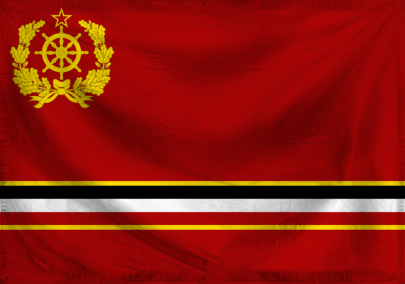
by Newne Carriebean7 » Fri Nov 07, 2025 10:14 pm
RESERVATION
NS Name: Newne Carriebean7
RP Name: The Great Socialist Aydınlanmış Cumhuriyet
Territory: Turkey, Syria, Iraq, Azerbaijan, Armenia, Jordan, Israel, Lebanon, Kuwait, The Coastline of Saudi Arabia, Yemen
Do not remove - 2025RP
Former Carriebeanian president Carol Dartenby sentenced to 4 years hard labor for corruption and mismanagement of state property|Former Carriebeanian president Antrés Depuís sentenced to 3 years in prison for embezzling funds and corruption
by Union Princes » Fri Nov 07, 2025 11:35 pm
by Tracian Empire » Sat Nov 08, 2025 2:21 am
Union Princes wrote:Tracian Empire wrote:Well, the two main historical events that would need to happen so far based on the common Sino-Japanese history would be for Russia to get involved in the Russo-Japanese War and to lose it - which would in turn allow the Japanese to set up shop in Kwantung and to start influencing Manchuria, and for Russia to not have intervened during the Second Sino-Japanese War, since a Russian intervention against Japan would have made Japan's military survival and continued presence in Korea rather impossible, and an intervention against China would have likely made China's liberation of Manchuria rather impossible.
Of course if you want to change the details we can discuss them, but the outcomes should remain the same - that being Japan ending up with the primary influence in Manchuria which would eventually lead to the Kwantung Army staging the Mukden Incident and invading Manchuria.
That is fine, I still plan on losing the Russo-Japanese War for my nation's history. And Russia won't get involved either in the 2nd Sino-Japanese War. I would imagine that out of spite for that humiliating defeat, Russia will back the KMT with arms and ammunition during the 1930s and 40s even if Chiang Kai-shek has a reputation of being a RedTracian Empire wrote:For other historical things to discuss, there would have been plenty of opportunities for Russia to have extended its influence south of its current border, much like in real life, since there would have been a period of very weak government control over Tuva, Mongolia, and XInjiang, roughly from 1911 to 1915, and then there would certainly have been at least another decade or two before the Chinese military could have even conceived opposing Russia, so if you want the Russians to have had some adventures there we could make it so that they happened.
Hmmm. Considering that my Russia will be facing a lot of internal problems in the 1910s to 1920s, the adventurs would probably be limited to the antics of Baron Sternberg. I would say in the 40s and 50s does Russia started looking eastward over Mongolia and South Sakhalin.Tracian Empire wrote:China for its part would respond resolutely to any provocations along the border, but would probably semi-regularly attempt, perhaps with American support, to improve relations.
Yup, hence why Russia is that unwanted third-party butting in on their rivalry. However, like with the US, the Prime Minister Navalny is expressing a desire to repair relations with China and Japan, hoping to convince the Hetman to engage in soft power rather than hard.
by Sao Nova Europa » Sat Nov 08, 2025 3:56 am
Newne Carriebean7 wrote:You can turn Scandinavia into either an NPC or have some other player take it over, Sao. I'm going to do something more, camel-ey this time around.RESERVATION
NS Name: Newne Carriebean7
RP Name: The Great Socialist Aydınlanmış Cumhuriyet
Territory: Turkey, Syria, Iraq, Azerbaijan, Armenia, Jordan, Israel, Lebanon, Kuwait, The Coastline of Saudi Arabia, Yemen
Do not remove - 2025RP
by Sao Nova Europa » Sat Nov 08, 2025 3:59 am

Cybernetic Socialist Republics wrote:So... 400 Million people Russia. Since the United States isn't invading Canada to split it off the SWR and relationships are mostly friendly, can it be added the SWR? The SWRs' total population would be around 250 million and by landmass still smaller than Russia.
by Tracian Empire » Sat Nov 08, 2025 4:00 am
by Sao Nova Europa » Sat Nov 08, 2025 4:19 am
Dragos Bee wrote:Assuming a Norv US:APPLICATION
NS Name: Dragos Bee
RP Name: Kingdom of the Mapuche
Flag:
Capital:
Peruenco
Territory:
Population: 24,000,000, from an initial population of 800,000 back in 1930, where the first census was held.
Official Language(s): Mapuche, Spanish, Welsh, Hebrew.
Type of Government: Constitutional Monarchy
Head of State: Queen Millaray 'The Weaver' (Weaving is highly respected in Mapuche Culture).
Head of Government: Prime Minister Antiman
Legislature (the name of your national legislature): The Mapuche King/Queen's Assembly.
Legislative Houses (if your legislature is bicameral): N/A; we are Unicameral.
Party in Power: Mapuche Center Party
National Issues:
The Foriegn 'Homelands' - The Welsh in Patagonia were allowed autonomy and even privileges in exchange for staying and providing their expertise to the Mapuche Kingdom. While these privileges have been eroded in recent years, the Welsh still maintain a good amount of economic strength that has been seized on by certain demagogues as a reason to agitate against 'continuing white supremacy'.
Not just that, but a substantial amount of land in the east and south was ceded to the World Zionist Congress, gaining the latter's support but in exchange causing a surge of non-native immigration into those areas that has threatened the Mapuche's demographic hold over an area they have only liberated little more than a century ago.
This, in turn has made the Jews a target by Mapuche extremists... But the situation is different as the Jews have their own private military forces and many of them work as 'volunteer soldiers' alongside the Mapuche's own armies, nany of whom have learned to admire them...
A Newborn Nation - In the lands which the Mapuche hold as their own, young men and women have challenged old traditions, insisting on new, more modern values. Democracy, liberalism, and free markets merge with more authoritarian ideologies like Socialism and Fascism (with Whites replaced by Mapuche), providing a heady mix of intellectual ferment that has resulted in at least one student uprising in the past century...
Warding off the Reconquista - The Mapuche have roused the resentment of Chile and Argentina (or their counterparts in this universe), who initially refused to recognize the liberation of their ancestral territory and some of them still seek to return it to their yoke. Thus, as the Mapuche grow stronger, deterring the nearby nations from an invasion has taken up a large portion of its national project.
Public Goals: Survive and Thrive.
Private Goals: Keep the International Rules-based Order alive to create a political and diplomatic climate that will punish strong nations openly invading weak ones.
GDP (nominal): $800,000,000
Currency: Mapuche Peso
Economic System: Mixed Economy
Defense Budget (USD): $24,000,000
Alliance(s): United Nations-equivalent, NATO-equivalent, Non-Aligned Movement-equivalent.
Military: The Mapuche Armed Forces are oriented around defense and mobility, with heavy investment in mountaineers, armored vehicles, light artillery and airpower to the detirement of their navy and heavy artillery. A third focus is also their widespread use of 'Volunteer Soldiers' to work around the international bans on mercenary activity. These troops go around the world, fighting for both state actors allied with the Mapuche Kingdom, non-state actors with compatible ideologies (and rich natural resources), and International Institutions when they needed "peacekeepers".
The Mapuche Army is composed of 222,000 men (and an increasing number of women who defy cultural norms), with 240 Tanks, 480 APCs and IFVs, 140 Rocket Artillery, 40 Self-Propelled Guns, and 250 Anti-Aircraft Artillery and 50 Tank Destroyers. Trucks, Humvees, and other vehicles make up a full 4800 in total.
The Air Force is composed of 8000 people and 80 Combat Aircraft made in America, Europe, or East Asia, 40 Light Bombers, 28 Transport Planes, and 100 Attack Helicopters.
The Navy is a mere 2000 people, not including 8000 Marines, and have only 8 Coast Guard vessels and 2 Transport Ships, plus 2 Seaplane Tenders.
5000 to 15,000-strong detachments of the Army, plus some Marines, are regularly sent to serve as 'volunteers' overseas to gain combat experience and cold hard cash...
History:The defeat of Argentina in the Cisplatine and Platine War emboldened the remaining Mapuche in Patagonia, who found themselves gathering under the influence of a chieftain named Lautaro II, who had named himself after the famous Mapuche chieftain and liberator. Lautaro II accepted help from an opportunistic Brazil, help in the form of arms and ammuition, military trainers and even volunteers, and when he launched his uprising against both Argentina and Chile, he scored unexpected success as the thunder of Mapuche Cavalry was heard all across Patagonia once more. Lautaro II also showed his gifts as a statesman during the war, punishing atrocities against civilians, treating his prisoners of war well, and offering local communities of whites the opportunity to stay with a measure of autonomy.
But by far his greatest coup was offering land to the World Zionist Congress, offering them a large portion of his 'liberated territory' for a Jewish Homeland, and their accepting said offer. This opened up access to cash and financial resources he might not otherwise have had, as well as earning a lobby for his people on the international stage.
When the Liberation War ended in 1919, Lautaro II found himself the ruler of one of the first states to throw off colonial rule on any sort of lasting basis, and he was determined to keep his new Kingdom not just free, but also prosperous. In the short term, this meant accepting informal clientage to Brazil, and joining with whoever won the equivalents of the World Wars in exchange for cash and diplomatic concessions.
After the World Wars, the Mapuche had tensions with Argentina that resulted in an invasion in the mid-1950s that the US intervened to stop; this marked the accession of the Mapuche Kingdom as a US Treaty Ally and also committed the Mapuche to a course of opposition to colonialism and, in time, a path to gradual democratization.
This resulted in the Mapuche exporting 'volunteers' to decolonization struggles worldwide in the following decades, earning cash and raw materials. Some of them, however, brought Communism over to the Mapuche Kingdom, along with other ideologies like Capitalist Minarchism. As education advanced, demands grew for the Monarchy to liberalize and democratize, leading to student uprisings in the 1960s and 1980s, as well as in 1998 and 2004.
The last two resulted in concrete steps towards the establishment of a 'True' Democracy under Queen Millaraya, granddaughter of Lautaro II. For the past twenty to twenty-four years, the Mapuche have strengthened their institutions, even as the 'question' of the Welsh and Jewish Minorities came under increasing debate.
However, enough people among all sectors of Mapuche society remain confident in their new future...
RP Example(s): viewtopic.php?p=40391030#p40391030
Do not remove - 2025RP

by Reverend Norv » Sat Nov 08, 2025 8:27 am
Union Princes wrote:Hey Norv, is Russia going to be America's primary rival or will that be the Socialist World Republic? I haven't started on my Cold War section since I really don't know yet what Russia will be doing internationally other than old-fashioned saber rattling towards its weaker neighbors. Perhaps we would be allies in containing the SWR? Or will America side with the SWR against Russian Imperialism in Eastern Europe and the Middle East?
Sao Nova Europa wrote:Cybernetic Socialist Republics wrote:So... 400 Million people Russia. Since the United States isn't invading Canada to split it off the SWR and relationships are mostly friendly, can it be added the SWR? The SWRs' total population would be around 250 million and by landmass still smaller than Russia.
Will need clarification from Norv about his relationship with SWR, since I still think a socialist Canada might be a bit too much for US, but I ain't against it in principle.

by Newwe Zion » Sat Nov 08, 2025 10:27 am
Union Princes wrote:Hey Norv, is Russia going to be America's primary rival or will that be the Socialist World Republic? I haven't started on my Cold War section since I really don't know yet what Russia will be doing internationally other than old-fashioned saber rattling towards its weaker neighbors. Perhaps we would be allies in containing the SWR? Or will America side with the SWR against Russian Imperialism in Eastern Europe and the Middle East?
by Union Princes » Sat Nov 08, 2025 10:32 am
Newwe Zion wrote:Union Princes wrote:Hey Norv, is Russia going to be America's primary rival or will that be the Socialist World Republic? I haven't started on my Cold War section since I really don't know yet what Russia will be doing internationally other than old-fashioned saber rattling towards its weaker neighbors. Perhaps we would be allies in containing the SWR? Or will America side with the SWR against Russian Imperialism in Eastern Europe and the Middle East?
The Empire of the French would be greatly interested in helping Russia contain the SWR in Europe proper. We are just across the channel, after all.
by Newwe Zion » Sat Nov 08, 2025 10:56 am
by Sao Nova Europa » Sat Nov 08, 2025 11:29 am

by Reverend Norv » Sat Nov 08, 2025 11:38 am
Sao Nova Europa wrote:Alright. Canada is socialist then.
Map and roster update coming shortly. I've fixed most issues, but need to give Canada to the Socialists and add Newne's nation on the map too. Once that's done, I can upload it.
With that clarified, I'm hoping that by the mid of next week we have US, Russian, and Socialist Britain apps accepted. Once that's done, I will launch the IC. I will be adding some new events aside from ones used in the last version, to add some variance (Madrid terrorist attack and Ethiopian civil war will still be a thing).
Hopefully the quick launch of IC means we will have momentum going. LET'S GET STARTED!!!
Return to Portal to the Multiverse
Users browsing this forum: Amures, Great Confederacy of Commonwealth States, Kingdom of Irhk, Shacklefold, The United Human Systems