NATION

PASSWORD

Night and Fog (Transnapastain: Everything you need to know)

A place to put national factbooks, embassy exchanges, and other information regarding the nations of the world. [In character]

Advertisement

Remove ads

User avatar
Transnapastain
Retired Moderator
 
Posts: 12252
Founded: Antiquity
Compulsory Consumerist State

25. Naval vessels (I)

Postby Transnapastain » Wed Feb 23, 2011 6:26 pm

Return to contents

Information on system listed under "countermeasures" as well as data on radars, electronic warfare systems and other devices can be found in the naval weapons and systems section.

A ship at sea is its own world. To be the captain of a ship is to be the unquestionable ruler of that world and requires all of the leadership skills of a prince or minister.

Hornet Class patrol boat

The Hornet Class is a small, yet heavily armed missile boat for “brown water” and “green water” operations and local patrol duty. The ships are quick and agile, and well suited to their intended rolls. The ship has the distinction of being the only hydrofoil craft in service. While foilborne, it is one of the fastest ship in the Transnapastaini fleet. In addition to its speed, the Hornet class is heavily armed, carrying 4 anti-ship missiles, in addition to a G-161 75 mm cannon.

The Hornet Class is largely out of service, having been replaced by the Coyote class. The Transnapstaini Navy determined that the Hornet class, while unique in design, was not cost effective to operate when compared to other patrol and fast attack class vessels, such as the Orion lass CPV and the Coyote class missile attack craft. Transnapastaini intends to remove the Directorate-sensitive electronics from the vessel, and sell them off on the international market.

Manufacturer: Halifax Shipwrights
Designed: 1971
Entered Service: 1974
Status: Retired as of 1997
In service with:
- Transnapastaini Navy
Displacement: 255 long tons
Length: 134.4 ft (41 m)
Beam: 27.8ft (8.5 m)
Propulsion:
- Hullborne: 2 × Halifax marine diesels
- Foilborne: 1 × Halifax SE250 gas turbine
Speed:
- Hullborne: 14 mph (12 knots 22 kph)
- Foilborn: 55 mph ( 48 knots 89 kph)
Complement:
- 4 officers
- 17 enlisted
Radar/Sonar system(s):
- Rylon Defense SR/ASA-47 I/J/K band fire control radar
- Rylon Defense SR/ASA-5 short-range, I-band, gun fire control radar
- Rylon Defense Rylon Defense SR/PSANS-87 I/G-band, surface/low altitude search and navigation radar
Electronics:
- RadioStar CIMS datalink module
- RadioStar SNS-9 GPS/INS navigation system
- RadioStar SR/VUHF-78 radio and SATCOOM communications system
- RadioStar CIMS datalink module
Armament:
- 2 × 4-pack SLAM-31 anti-ship missiles.
- 1 × C-161 75mm cannon
- 1 x M-90 CIWS turret
Mines: Carries 12 x NM-23 CONTORP Mines
Countermeasures:
- AeroTech Missile Systems Active Rocket Decoy System
- Belfast Munitions CM-34 Chaff Dispenser
- Moltan-Keller CM-16 DIRCM turret(located spaced around the ship and on the M-90 CIWS turrets)
- Rylon Defense CM-89 towed decoy
- Rylon Defense CM-220 CHILUM (Chaff illumination) Antenna
- Rylon Defense SRW-22 Infra-Red and Ultra-Violet MAWS


Image


Orion-class Costal Patrol Vessel (CPV)

The CPV is an extremely fast, extremely agile costal patrol boat used by both the Transnapastaini Navy and Coast Guard, as well as the Directorate Defense Forces. It is capable of operating at speeds up to 40 knots in coastal water. The Orion class is primarily used by the Directorate Defense Force for interdiction missions against unauthorized shipping and piracy in the Seabelt, as well as by Directorate Customs Enforcement for boarding and inspections of vessels operating in Directorate waters.

The CPV is extremely light weight, and utilizes twin water jets for propulsion. The water jets are partially ducted, and, with the addition of underwater control surfaces not unlike diving planes of a submarine, the CPV is capable of executing tight turns at speed. Further it can decelerate from its top speed to a full stop in 2.5 seconds, as well as adjust its pitch and yaw while in operation. Due to its extreme maneuverability and speed, as wel as its ability to speed quickly, it is used by Transnapastaini forces as a fast response boat for rescue or anti-piracy operations within the Seabelt, and is commonly used by customs officials as a boarding craft.

The Orion class is the only vessel capable of launching the AVM-220MR anti-vehicle missile, for use against land targets. In addition, the ship carries the ASM-220 anti-ship variant, for use against lightly armored surface threats.

Manufacturer: Halifax Shipwrights
Designed: 1989
Entered Service: 1994
Status: In service
In service with:
- Transnapastaini Navy
Displacement:
- Empty: 28,660 lbs (13,000 kg)
- Standard: 33,730 lbs (15,300 kg)
- Full load 45,190 lbs (20,500 kg)
Length:
- Overall: 52 ft (15.9 m)
- Waterline: 48 ft (14.9)
Beam: 12.6 ft (3.8 m)
Draught: 2.8 ft (0.8 m)
Propulsion: 2 x 625 bhp Halifax BE-50 V8 Diesel; 2 x Halifax FF water jets
Speed: 45.9 mph (40 knots 74 kph)
Range: 273 mi (240 nmi 440 km) at 22.9 mph (20 knots 37 kph)
Complement:
- 2 Officers
- 1 Engineer
- 21 Combat troops with full equipment
Radar/Sonar system(s):
- Rylon Defense SR/ASANS-87 X/S-band, surface/low altitude search and navigation radar
Electronics:
- RadioStar CIMS datalink module
- RadioStar SNS-9 GPS/INS navigation system
- RadioStar SR/VUHF-78 radio and SATCOOM communications system
Armament:
- 3 × HMG-16 .50 cal machine guns.
- 1 × AGL-14 40mm grenade launcher
- 2 x AVM-220MR or ASM-220 missiles on twin launcher
Mines: 4 NM-23 CONTORP Mines
Countermeasures:
Countermeasures:
- AeroTech Missile Systems Active Rocket Decoy System
- Belfast Munitions CM-34 Chaff Dispenser
- Moltan-Keller CM-16 DIRCM turret(located spaced around the ship and on the M-90 CIWS turrets)
- Rylon Defense CM-89 towed decoy
- Rylon Defense CM-220 CHILUM (Chaff illumination) Antenna
- Rylon Defense SRW-22 Infra-Red and Ultra-Violet MAWS


ImageImage


Coyote Class Fast Missile Attack Craft

The Coyote class is designed to compliment the existing Orion class coastal patrol vessels, and to eventually replace the Hornet class hydrofoils in service.

Taking a design cue from the Orion class, these vessels are propelled with water jets, as opposed to traditional propellers, which allow them to operate in very shallow waters and accelerate, slow down and turn in unconventional ways. In addition, their aluminum hulls and carbon-fiber superstructure give the ship a very shallow displacement and high very maneuverability. Further, steps have been taken during the design and construction of the Coyote class to allow it to operate as a true "Stealth" ship, with minimal magnetic, heat and radar signatures.

The shape of the vessel has been designed to reduce radar signature. Metal parts have been covered with radar absorbent material, and the composite parts have radar absorbent material embedded in the structure. Radar transparent materials such as kevlar and even balsa have been used where applicable. Further, The vessel contains hardly any steel parts, thus generating very low magnetic field. The remaining magnetic field is actively canceled with electromagnets.

The carbon fiber superstructure blocks radio waves. This protects ship's electronics against electromagnetic pulse. In addition, it stops any radio frequency signals generated by ships electronic devices to escape outside. Except for the bridge, the vessel has no windows that would allow the signals to escape.

An intuitive system allows exhaust gases can be directed underwater to minimize thermal signature, or up in the air to minimize sound in submarines direction. Multiple nozzles situated around the decks and upper structures can be used to spray seawater on the vessel to cool it. In addition, the nozzles can be used to clean the ship after chemical attack or radioactive fall-out.

It is the only ship in the fleet to mount the Rylon Defense SR/ASAG-177, X/S-band, three-dimensional search radar. The SR/ASAG-177 was designed specifically for the Coyote class, as it was too small to mount the Moltan-Kellar Aerospace SR/ASAG-151 S-band, multi-function, three-dimensional active electronically scanned array radar. Naval command, however, felt that the Rylon Defense SR/ASA-170 two dimensional search radar was insufficient for the ships intended mission, as it would function as a seaborne aircraft early warning vessel while on patrol in the Seabelt. As such, Rylon Defense was commissioned to develop an entirely new radar for the vessel.

Manufacturer: Halifax Shipwrights
Designed: 1999
Entered Service: 2004
Status: In service
In service with:
- Transnapastaini Navy
Displacement: 250 tons
Length: 167 ft (51 m)
Beam: 27.8 ft (8.5 m)
Draught: 5.5 ft (1.7 m)
Propulsion:
2 × Halifax SE-394 diesels; 5520 kW.
2 × Halifax SWJ-8 waterjets
Speed: 34.5 mph (30 knots, 55.56 kph)
Range: 575 mi (500 nm, 926 km)
Complement:
- 7 officers
- 19 enlisted
Radar/Sonar systems:
- Rylon Defense SR/ASAG-177 long range, X/S-band, three-dimensional radar.
- Rylon Defense SR/ASA-5 short-range I-band gun fire control radar
- Rylon Defense SR/ASANS-87 X/S-band, surface/low altitude search and navigation radar
- Rylon Defense SUSA-18 sonar detection and processing system
Electronics:
- RadioStar CIMS datalink module
- RadioStar SNS-9 GPS/INS navigation system
- RadioStar SR/VUHF-78 radio and SATCOOM communications system
- RadioStar CIMS datalink module
Armament:
- 4 x SLAM-31 anti-shipping missiles
- 1 x G-87 57 mm cannon
- 2 x 4-pack SLIM-29 SAM's
- 2 x HMG-16 .50 cal gun
Mines: Carries 12 x NM-23 CONTORP Mines
Countermeasures:
- AeroTech Missile Systems Active Rocket Decoy System
- Belfast Munitions CM-34 Chaff Dispenser
- Moltan-Keller CM-16 DIRCM turret(located spaced around the ship and on the M-90 CIWS turrets)
- Rylon Defense CM-89 towed decoy
- Rylon Defense CM-220 CHILUM (Chaff illumination) Antenna
- Rylon Defense SRW-22 Infra-Red and Ultra-Violet MAWS


ImageImage


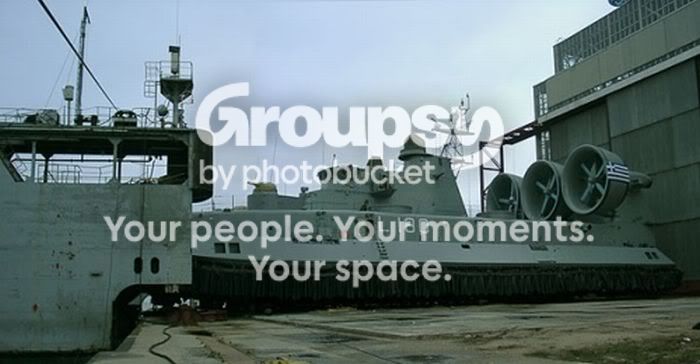
Stinger class air cushioned landing craft

The Stinger class landing craft is used by Fleetwood class assault ships to deliver infantry and armored vehicles to a landing zone during an amphibious assault. The ship is equipped with both defensive weapon, as well as weaponry to assist troops as they land on hostile landing sites. It is the only air cushioned vehicle in Transnapastaini service.

The ship is capable of carrying 500 combat personal in addition to its own crew. High strength and floatability of the craft are provided by a rectangular pontoon, the main load-carrying part of the ship's hull. The ship is compartmentalized in sections, separated by two longitudinal bulkheads. The center area comprises the main cargo area and includes ingress/egress ramps at the for and aft of the ship. The two outboard areas contain main and back up propulsion systems, NBC protection and other climate control systems, as well as crew quarters and faculties. The outboard sections are insulated and sound proofed, with the bulkheads containing vibrodamping materials, and are fitted with heating and air-conditioning units to allow the crew and troops to operated in as much comfort as possible.

At full displacement, the ship can negotiate up to 5-degree gradients on non-equipped shores and 1.6m-high vertical walls. Further, it is capable of navigation and operation in heavy sea state conditions, up to sea sate four. It can carry 500 troops (with 360 of those troops being in the cargo hold), three main battle tanks, or 10 infantry fighting vehicles, and 180 combat troops.

Manufacturer: Halifax Shipwrights
Designed: 1984
Entered Service: 1988
Status: In service
In service with:
- Transnapastaini Navy
Displacement: 555 tons
Length: 187 ft (57 m)
Beam: 84 ft (25.6 m)
Draught: 5.2 ft (1.6 m)
Propulsion:
5 × Halifax SE-667 gas turbines for lift and propulsion
3 × Halifax SP-9 four bladed variable pitch propellers
Speed: 72 mph (63 knots, 115 kph)
Range: 300 mi (480 km)
Complement:
- 4 officers
- 27 enlisted
Radar/Sonar system(s):
- Rylon Defense SR/ASA-5 short-range I-band fire control radar
- Rylon Defense SR/ASANS-87 X/S-band, surface/low altitude search and navigation radar
Electronics:
- RadioStar CIMS datalink module
- RadioStar SNS-9 GPS/INS navigation system
- RadioStar SR/VUHF-78 radio and SATCOOM communications system
- RadioStar CIMS datalink module
Armament:
- 2 x GLAM-13 quad missile launchers
- 2 x G-16 30 mm 6-barreled anti-aircraft cannon
- 2 x retractable ARP-120 120 mm rocket pods
Mines: Carries 40 x NM-23 CONTORP Mines
Countermeasures:
- AeroTech Missile Systems Active Rocket Decoy System
- Belfast Munitions CM-34 Chaff Dispenser
- Moltan-Keller CM-16 DIRCM turret(located spaced around the ship and on the M-90 CIWS turrets)
- Rylon Defense CM-89 towed decoy
- Rylon Defense CM-220 CHILUM (Chaff illumination) Antenna
- Rylon Defense SRW-22 Infra-Red and Ultra-Violet MAWS


Image
ImageImage


Beowulf Class Coastal Combat Vessel

The Beowulf-class CCV is a relatively small surface vessel intended for operations in the littoral zone (close to shore). Given that the Seabelt is made of many scattered islands, the Transnapastaini Naval, along with otehr Directorate nations, produce a wide array of coastal patrol and combat vessels for use in interdiction and patrol operations in the Seabelt. The Beowulf class is designed to work in tandem with Coyote class patrol vessels, with the Beowulf acting as a lead ship in a task force dedicated to interdiction and interception of illegal traffic in the Seabelt. It is the only naval vessel in Transnapastaini service using a trimaran hull design, and is often considered the (very) little brother to the Kaukolastaini trimaran Dominater class battleship.

The vessel, while not truly stealth, has been designed and produced with reduced radar cross section in mind, such as having side and forward surfaces are angled for reduced radar profile, and right angel construction was avoided whenever possible. Radar absorbent material has been used to coat the ship. Doors and hatches are flush with the surfaces and the windows are flush without visible coaming (edge of window aperture) and are fitted with radar reflective screens.

The Beowulf class is designed to support land operations, and as such is armed with a variety of surface to surface weapons. While it is not as heavily armed as the larger Davidson class destroyer, its mission places emphasis on speed and stealth in coastal zones, something the Davidson class can not manage. It's single G-117 155 mm cannon can provide fire support, striking at targets up to 14,9 mi (24 km) away. The twin 57 mm G-87 cannons, using the advanced CR-50N ammunition, can strike at surface, land based, or airborne targets. Finally, unlike any other ship in the Fleet, the Beowulf class carries two AC-235 30 mm autocannons for direct ire applications against both surface and land based targets.

The Beowulf class can also function as a small assault transport with a flight deck and hangar large enough to base 1 CH-135 Oxen, two TH-101 Longhorn helicopters, or several MRH-4N, and SPH-70 Dolphins, and its trimaran hull allows for aircraft operations to continue even during violet storms and heavy sea state. In addition, provisions for UAV's and UUV's to be launched from the vessel are in place. Further, it has the capability to recover and launch small boats from a stern ramp,

While not often used in this role, enough cargo volume and payload to deliver a small assault force with armoured fighting vehicles to a roll-on/roll-off port facility. The internal bay holds enough storage space for four AMPV's or 2 IFV-3 series fighting vehicles. It would be common for the Beowulf to carry a contingent of Directorate Defense Force Costumers Enforcement agents for boarding and inspections purposes.

Manufacturer: Halifax Shipwrights
Designed: 2002
Entered Service: 2008
Status: In service
In service with:
- Transnapastaini Navy
Displacement: 2,176 tons light,
Length: 418 ft (127.4 m)
Beam: 104 ft (31.6 m)
Draft: 13 ft (3.96 m)
Propulsion:
- 2 × Halifax SE-287 diesel engines
- 2 x Halifax SE-2500 gas turbines
- 2 x Light weight multiple-section carbon fiber propulsion shaftlines
- 4 x Halifax waterjets, retractable bow-mounted azimuth thruster
- 4 x Halifax diesel generators
Speed: 51 mph (81 kph)
Range: 4,948 mi (963 m)
Boats and landing craft carried: 4 Rigid hull inflatable boats
Complement:
- 8 officers
- 32 enlisted
- 35 passengers or mission-specified personal
Radar/Sonar system(s):
- Moltan-Kellar Aerospace SR/ASAG-151 S/X-band, multi-function, three-dimensional active electronically scanned array radar.
- Rylon Defense SR/ASA-170 long range, L-band, two-dimensional air search radar.
- Rylon Defense SR/ASA-5 short-range I-band fire control radar
- Rylon Defense SR/ASANS-87 X/S-band, surface/low altitude search and navigation radar
- Rylon Defense SUSA-18 sonar detection and processing system
- Rylon Defense ASAD-1 Anti-diver sonar system
Electronics:
- Moltan-Kellar Aerospace SEWS-8 electronic warfare system.
- RadioStar CIMS datalink module
- RadioStar SNS-9 GPS/INS navigation system
- RadioStar SR/VUHF-78 radio and SATCOOM communications system
- RadioStar CIMS datalink module
Armament:
- 1 x G-117 155 mm naval cannon
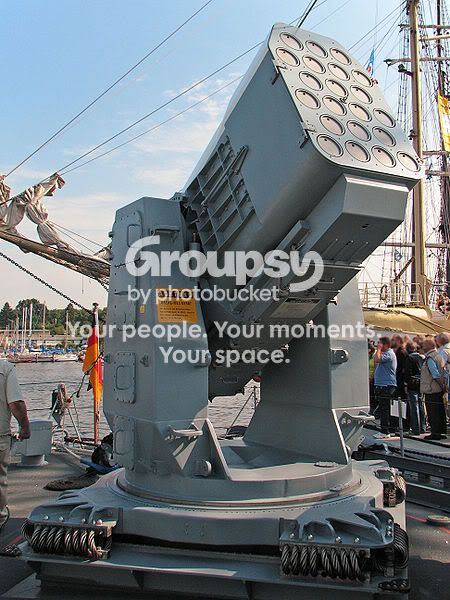
- 1 x RAM-19 21 cell surface to air missile launcher
- 1 x M-90 25 mm CIWS turret
- 2 x G-87 57 mm cannons
- 2 x AC-235 30 mm autocannons
- 4 x HMG-16 machine guns
Aircraft carried:
- 1 x CH-135 or
- 2 x TH-101 (Usually TH-101N, TH-101A or TH-101T)
- 8 x MRH-4N
- 6 x UAV-8 Corsair drones
Countermeasures:
Countermeasures:
- AeroTech Missile Systems Active Rocket Decoy System
- Belfast Munitions CM-34 Chaff Dispenser
- Moltan-Keller CM-16 DIRCM turret(located spaced around the ship and on the M-90 CIWS turrets)
- Rylon Defense CM-89 towed decoy
- Rylon Defense CM-220 CHILUM (Chaff illumination) Antenna
- Rylon Defense SRW-22 Infra-Red and Ultra-Violet MAWS


ImageImage


Ellington Class Frigate

The Ellington class Frigate is one of the most numerous vessels in the Transnapastaini Navy, and often operate in teams of three, with one Davidson class destroyer and a Stryker class guided missile cruiser, for patrol operations. The ship is often used to escort conveys of other vulnerable craft in low to medium threat environments as well. In addition, the Ellington class fares well at anti-submarine operations, as well as anti-aircraft defense.

The Ellington class is somewhat light and undermanned for a traditional frigate, but its impressive speed and armaments make up for any disadvantages. As it is designed for escort and asset protection, standard naval cannon was not included in the design. Armaments focus on the use of anti-aircraft and anti-ship missiles to destroy incoming targets.

The ship makes full use of Transnapastaini CIMS networking, and uses the standard electronic warfare systems, radar, and countermeasures found on most surface combat vessels in the fleet.

Manufacturer: Halifax Shipwrights
Displacement: 1,075 tonnes
Length: 280.97 ft (85.64 m)
Beam: 38.98 ft (11.88 m)
Draft: 10.40 ft (3.17 m)
Propulsion:
- 2 × Halifax Se-700 gas turbines generating 41,000 shp (31,000 kW) through a single shaft and variable pitch propeller
- 2 × Auxiliary Propulsion Units, 350 hp (260 kW) retractable electric azipods for maneuvering and docking.
Speed: 38 mph(33 knots (61 kph)
Range: 4,038 mi (3,500 nautical miles, 6,500 km)
Boats and landing craft carried: 2 Rigid hull inflatable boats
Complement:
- 19 officers
- 55 enlisted
Radar/Sonar system(s):
- Moltan-Kellar Aerospace SR/ASAG-151 S/X-band, multi-function, three-dimensional active electronically scanned array radar.
- Rylon Defense SR/ASA-170 long range L-band two-dimensional air search radar.
- Rylon Defense SR/ASA-47 I/J/K band fire control radar
- Rylon Defense SR/ASA-5 short-range I-band gun fire control radar
- Rylon Defense SR/ASANS-87 X/S-band, surface/low altitude search and navigation radar
- Rylon Defense SUSA-18 sonar detection and processing system
- Rylon Defense ASAD-1 Anti-diver sonar system
Electronics:
- Moltan-Kellar Aerospace SEWS-8 electronic warfare system.
- RadioStar CIMS datalink module
- RadioStar SNS-9 GPS/INS navigation system
- RadioStar SR/VUHF-78 radio and SATCOOM communications system
- RadioStar CIMS datalink module
Armament:
- 2 x 32 cell VLS carrying 128 total assorted missiles including:
- SLIM-29 Ship Launched Interceptor Missile
- SLIM-34 Ship Launched Interceptor Missiles
- SLAM-31 Ship Launched Attack Missile
- SLAM-53 Ship Launched Attack Missile
- UAM-10 anti-submarine warfare missile
- 1 x 4 cell SLAM-31 ship launched attack missile
- 2 x 21 cell RAM-19 surface to air missile launcher
- 2 × 12.75 in triple torpedo tubes for the SLT-80 torpedo
- 6 x 12 in torpedo tube for the SLT-90 torpedo
- 2 x G-87 57 mm cannons
- 3 x M-90 25 mm CIWS turret
Mines: Carries 18 x NM-23 CONTORP Mines
Aircraft carried:
- 2 × MRH-4N or
- 2 SPH-70 or
- 1 TH-101 variant (usually TH-101A, TH-101N, or TH-101T)
Countermeasures:
- AeroTech Missile Systems Active Rocket Decoy System
- Belfast Munitions CM-34 Chaff Dispenser
- Moltan-Keller CM-16 DIRCM turret(located spaced around the ship and on the M-90 CIWS turrets)
- Rylon Defense CM-89 towed decoy
- Rylon Defense CM-220 CHILUM (Chaff illumination) Antenna
- Rylon Defense SRW-22 Infra-Red and Ultra-Violet MAWS


ImageImage


Davidson Class Guided Missile Destroyer

The Davidson class destroyers are primarily tasked with assisting landing operations with direct fire support, using the ships 155 mm naval cannon and surface attack missiles from its VLS cells. The Davidson class is also used in fleet defense roles, its task being to act as shields for the larger Stryker and Defender class guided missile cruisers. Finally, the Davidson class is suited to independent operation, having both land attack, anti ship and anti-aircraft capability, and is often deployed as the lead ship in a naval patrol or convoy escort formation.

As with every large surface combat ship, the Davidson class uses the powerful Multan-Keller Aerospace ASA-151 radar, which interfaces with CIMS to provide vessels operating in conjunction unprecedented reaction time to threats. The Davidson class is capable of carrying several different helicopters in its hanger, which can be used to ferry troops or equipment to and from the ship, or for anti-submarine warfare purposes.

While the Davidson class is not truly stealth, the ship was designed with the goal of minimizing its radar cross section. In addition to its psychical design, exposed metal surfaces were covered with radar absorbent material and, where possible, parts that were traditionally metal have been replaced with composite parts, which have radar absorbent material embedded within. Doors and hatches are flush with the surfaces and the windows are flush without visible coaming (edge of window aperture) and are fitted with radar reflective screens.

As the primary mission of the Davidson class emphasis land attack, special attention was paid to the ships two G-117 155 mm naval cannon. The cannons are feed by a special auto loader system which contains 600 ready rounds. In generally, though rounds will be divided between standard AR-155 155 mm rounds the a special NAR-155G guided naval attack round. In addition to the ready rounds, the ship carries an extra 320 rounds in storage, which are not directly connected to the autoloading system. The Davidson class is able to provide naval fire support from its two G-117 cannons out to a range of 95 mi (154 km), with a rate of fire of near 10 rounds per minute, and uses water cooling to prevent the barrel from overheating. This rate of fire makes the dual G-117 cannon configuration as effective as 18 G-155 howitzers.

Manufacturer: Halifax Shipwrights
Displacement: 9,200 tons
Length: 505 ft (153.9 m)
Beam: 60 ft (18.3 m)
Draft: 30.5 ft (9.2 m)
Propulsion: 2 Halifax Marine SE-30 gas turbines and emergency diesel generators, 78 MW (105,000 shp)
Speed: 35 mph, (30.4 knots, 56.3 kph)
Range: 5,063.4 mi (4,400 nmi, 8,151.4 km)
Boats and landing craft carried: 4 Rigid hull inflatable boats
Complement:
- 23 officers
- 250 enlisted
Radar/Sonar system(s):
- Moltan-Kellar Aerospace SR/ASAG-151 S/X-band, multi-function, three-dimensional active electronically scanned array radar.
- Rylon Defense SR/ASA-170 long range, L-band, two-dimensional radar.
- Rylon Defense SR/ASA-47 I/J/K band fire control radar
- Rylon Defense SR/ASA-5 short-range, I-band,gun fire control radar
- Rylon Defense SR/ASANS-87 X/S-band, surface/low altitude search and navigation radar
- Rylon Defense SUSA-18 sonar detection and processing system
- Rylon Defense ASAD-1 Anti-diver sonar system
Electronics:
- Moltan-Kellar Aerospace SEWS-8 electronic warfare system.
- RadioStar CIMS datalink module
- RadioStar SNS-9 GPS/INS navigation system
- RadioStar SR/VUHF-78 radio and SATCOOM communications system
- RadioStar CIMS datalink module
Armament:
- 1 x 32 cell VLS carrying 64 total assorted missiles including:
- SLIM-29 Ship Launched Interceptor Missile
- SLIM-34 Ship Launched Interceptor Missiles
- SLAM-31 Ship Launched Attack Missile
- SLAM-37 Ship Launched Attack Missile
- SLAM-53 Ship Launched Attack Missile
- UAM-10 anti-submarine warfare missile
- 2 x 4 pack SLIM-29 SAM launcher
- 1 x 8 pack SLIM-34 SAM launcher
- 2 x 21 cell RAM-19 missile launcher
- 2 x G-117 155 mm naval cannon
- 2 x G-87 57 mm cannon
- 3 x M-90 25 mm CIWS turret
- 2 × 12.75 in triple torpedo tubes for the SLT-80 or SLT-90 torpedo
Mines: Carries 36 x NM-23 CONTORP Mines
Aircraft carried:
- 4 x MRH-4N helicopters or
- 3 x SPH-70 or
- 2 x TH-101 (TH-101N, TH-101A, TH-101M, or TH-101T) and 1 MRH-4N
Countermeasures:
- AeroTech Missile Systems Active Rocket Decoy System
- Belfast Munitions CM-34 Chaff Dispenser
- Moltan-Keller CM-16 DIRCM turret(located spaced around the ship and on the M-90 CIWS turrets)
- Rylon Defense CM-89 towed decoy
- Rylon Defense CM-220 CHILUM (Chaff illumination) Antenna
- Rylon Defense SRW-22 Infra-Red and Ultra-Violet MAWS


Image
The TNS Kamelot from the 4th Fleet returning to port after completing operations in the Northern Pacific


Stryker class guided missile cruiser

The Stryker class guided missile cruisers are the main surface combatants of any Transnapastaini fleet, and are designed to engage enemy naval vessels, both surface and undersea, using long range anti ship missiles, or ground targets using surface attack missiles. With any task unit that is not equipped with a carrier, a Stryker class will almost always carry the flag of the commanding officers of the task unit. Often, Stryker class cruisers are used as patrol vessels in the outer Seabelt due to its ability to easily operate independently of support ships, and as a projection of Transnapastaini naval power.

The Stryker class, befitting its designation as a guided missile cruiser, makes use of extensive VLS cells to accomplish its missile, The ship carries an assortment of anti-aircraft, anti-ship and land attack missiles, which it can fire from extreme ranges. For defense, the ship is equipped with standard electronic warfare systems, as well as hard kill countermeasures.

The Stryker secondary role is the protection of the fleets capital assets, such as the Fleetwood class amphibious assault ship, and the Admiral Ponitz class carriers from air attack. While this duty generally falls to the Defender class guided missile cruiser, the Stryker class is extremely capable of executing air defense missions.

Manufacturer: Halifax Shipwrights
Designed: 2002
Entered Service: 2005
Status: In service
In service with:
- Transnapastaini Navy
Displacement: Approx. 9,750 t full load
Length: 567 ft (172.8 m)
Beam: 55 ft (16.7 m)
Draught: 34 ft (10.2 m)
Propulsion: 4 × Halifax SE700 Gas Turbine Engines, 80,000 shaft horsepower (60,000 kW) 2 × Controllable-Reversible Pitch Propellers
Speed: 37.2 mph (32.3 knots, 60 kph)
Range: 6,831 mi (11,000 km)
Boats and landing craft carried: 4 Rigid hull inflatable boats
Complement:
- 33 Officers
- 27 Chief Petty Officers
- 340 enlisted
Radar/Sonar system(s):
- Moltan-Kellar Aerospace SR/ASAG-151 S/X-band, multi-function, three-dimensional active electronically scanned array radar.
- Rylon Defense SR/ASA-170 long range, L-band, two-dimensional air search radar.
- Rylon Defense SR/ASA-47 I/J/K band fire control radar
- Rylon Defense SR/ASA-5 short-range I-band gun fire control radar
- Rylon Defense SR/ASANS-87 X/S-band, surface/low altitude search and navigation radar
- Rylon Defense SUSA-18 sonar detection and processing system
- Rylon Defense ASAD-1 Anti-diver sonar system
Electronics:
- Moltan-Kellar Aerospace SEWS-8 electronic warfare system.
- RadioStar CIMS datalink module
- RadioStar SNS-9 GPS/INS navigation system
- RadioStar SR/VUHF-78 radio and SATCOOM communications system
- RadioStar CIMS datalink module
Armament:
- 2 × 90 cell vertical launch systems for 540 assorted missiles including:
- SLIM-29 Ship Launched Interceptor Missile
- SLIM-34 Ship Launched Interceptor Missiles
- SLAM-31 Ship Launched Attack Missile
- SLAM-37 Ship Launched Attack Missile
- SLAM-53 Ship Launched Attack Missile
- UAM-10 anti-submarine warfare missile
- ASM-35 Anti-Ship Missile
- 4 x 21 cell RAM-19 missile launcher
- 1 x G-117 155 mm naval cannon
- 2 × G-87 57 mm cannon
- 2 × 25 mm CIWS M-90 turrets
- 2 × 12.75 in triple torpedo tubes for the SLT-80 or SLT-90 torpedo
Mines: Carries 36 x NM-23 CONTORP Mines
Aircraft carried:
- 2 × MRH-4 helicopters and 1 SPH-70 or
- 2 TH-101 (TH-101N, TH-101A or TH-101T) helicopters and 1 MRH-4
Countermeasures:
- AeroTech Missile Systems Active Rocket Decoy System
- Belfast Munitions CM-34 Chaff Dispenser
- Moltan-Keller CM-16 DIRCM turret(located spaced around the ship and on the M-90 CIWS turrets)
- Rylon Defense CM-89 towed decoy
- Rylon Defense CM-220 CHILUM (Chaff illumination) Antenna
- Rylon Defense SRW-22 Infra-Red and Ultra-Violet MAWS


ImageImage


Defender-class guided missile cruiser

The Defender class has a similar mission to the Stryker class guided missile cruisers, except that, where the Stryker class focuses on land attack and anti-ship actions, the Defender class is solely used for anti-aircraft and missile interception, designed as a close-in escort for fleet carriers and amphibious assault ships.

The ship was built with a high degree of automation, reducing the crew size significantly, and allow more space for vertical launch cells and ammunition storage. Its central body consists of 12 separate 36-cell launch tubes, for a total of 432 launch tubes. The Defender class is equipped with a mixture of SLIM-29 and SLIM-34 ship launched interceptor missiles for use against both aircraft and missiles. The SLIM-34 also gives the Defender class the ability to attack orbital assets which may be in a position to attack or spy on the naval vessels.

The ship does retain a small amount of armaments for self defense, aside fronm the missiles in the VLS cells. These weapons include M-90 CIWS turrets and several independent SLIM-29 launchers. Further, the aircraft retains a small hanger faculity in the stern, for 2 various helicopters.

Manufacturer: Halifax Shipwrights
Designed: 2007
Entered Service: 2009
Status: In service
In service with:
- Transnapastaini Navy
Displacement: 14,564 tons
Length: 600 ft (180 m)
Beam: 80.7 ft (24.6 m)
Draught: 27.6 ft (8.4 m)
Propulsion: 4 × Halifax SE700 Gas Turbine Engines, 80,000 shaft horsepower (60,000 kW) 2 × Controllable-Reversible Pitch Propellers
Speed: 37.2 mph (32.3 knots, 60 kph)
Range: 6,831 mi (11,000 km)
Boats and landing craft carried: None
Complement:
- 13 officers
- 26 Chief Petty Officers
- 101 enlisted
Radar/Sonar system(s):
- Moltan-Kellar Aerospace SR/ASAG-151 S-band, multi-function, three-dimensional active electronically scanned array radar.
- Rylon Defense SR/ASA-170 long range, L-band, two-dimensional air search radar.
- Rylon Defense SR/ASA-47 I/J/K band fire control radar
- Rylon Defense SR/ASANS-87 X/S-band, surface/low altitude search and navigation radar
- Rylon Defense SUSA-18 sonar detection and processing system
- Rylon Defense ASAD-1 Anti-diver sonar system
Electronics:
- Moltan-Kellar Aerospace SEWS-8 electronic warfare system.
- RadioStar CIMS datalink module
- RadioStar SNS-9 GPS/INS navigation system
- RadioStar SR/VUHF-78 radio and SATCOOM communications system
- RadioStar CIMS datalink module
Armament:
- 12 × 36 cell vertical launch systems carrying a total of 864 missiles including:
- SLIM-29 Ship Launched Interceptor Missile
- SLIM-34 Ship Launched Interceptor Missiles
- 4 x 8 pack SLIM-34 launchers
- 2 x 4 pack SLIM-29 launchers
- 3 x 21 pack RAM-19 launchers
- 4 x M-90 25mm CIWS
Aircraft carried: 2 x SPH-70 Dolphins
Countermeasures:
- AeroTech Missile Systems Active Rocket Decoy System
- Belfast Munitions CM-34 Chaff Dispenser
- Moltan-Keller CM-16 DIRCM turret(located spaced around the ship and on the M-90 CIWS turrets)
- Rylon Defense CM-89 towed decoy
- Rylon Defense CM-220 CHILUM (Chaff illumination) Antenna
- Rylon Defense SRW-22 Infra-Red and Ultra-Violet MAWS


Image


Fleetwood Class Amphibious Assault ship

The Fleetwood-class amphibious assault vessels are used to transport infantry, armor, and support elements to battle in preparation for landing operations, in addition to airborne assets to support landings. These ships carry troops used to force landings in hostile territory, and the firepower to assist them in securing an area so that more conventional ground forces can be brought into the conflict zone.

The Fleetwood-class is designed to allow personal and material to be delivered to the landing site in two different ways. The first is by the use of the single Stinger class air cushioned landing vehicle stored inside the well dock. The Stinger class can carry 500 troops, 3 main battle tanks, or 10 infantry fighting vehicles with 180 troops to shore, and can defend itself with its own surface to air and surface to surface weaponry. In addition, the Fleetwood carries 24 AAV-21 amphibious assault vehicles, which are designed to carry 17 armed combat troops ashore, and support them after landing with direct fore from their 30 mm autocannons. The second option is t ferry troops and equipment to shore via helicopter. Typically, infantry will force a landing and secure a beachhead, which will then allow the remaining troops to be brought to shore in the helicopters.

The Fleetwood-class can carry a vast amount of hardware and cargo in its internal bays, with space for up to 30,800 sq ft of cargo pallets, which is in addition to the space allotted for the fighting vehicles. An internal monorail easily shuttles cargo from the internal stores to the well dock for loading, and cranes and elevators allow the cargo to be brought to the flight deck via retractable loading bays for loading onto helicopters, or helicopters to be moved into the hanger for service. Often, if not carrying helicopters, equipment and additional supplies can be sealed in cargo containers and loaded onto the deck to allow for additional transport capacity. In addition, the Fleetwood-class has the hospital faculties to treat up to 600 patients at one time.

Manufacturer: Halifax Shipwrights
Designed: 2001
Entered Service: 2005
Status: In service
In service with:
- Transnapastaini Navy
Displacement: 40,500 tons
Length: 844 ft (257.2 m)
Beam: 106 ft (32.3 m)
Speed: 23 mph (20 knots, 14.2 kph)
Complement:
- 104 officers
- 1,004 enlisted
- 1,900 with helicopter compliment
- Up to 2,100 troops if used as a troop ship
Radar/Sonar system(s):
- Moltan-Kellar Aerospace SR/ASAG-151 S/X-band, multi-function, three-dimensional active electronically scanned array radar.
- Rylon Defense SR/ASA-170 long range, L-band, two-dimensional air search radar.
- Rylon Defense SR/ASA-134 precision landing assistance system
- Rylon Defense SR/ASA-47 I/J/K band fire control radar
- Rylon Defense SR/ASAG-5 short-range I-band gun fire control radar
- Rylon Defense SR/ASA-5 short-range I-band gun fire control radar
- Rylon Defense SR/ASANS-87 X/S-band, surface/low altitude search and navigation radar
- Rylon Defense SUSA-18 sonar detection and processing system
- Rylon Defense ASAD-1 Anti-diver sonar system
Electronics:
- Moltan-Kellar Aerospace SEWS-8 electronic warfare system.
- RadioStar CIMS datalink module
- RadioStar SNS-9 GPS/INS navigation system
- RadioStar SR/VUHF-78 radio and SATCOOM communications system
- RadioStar CIMS datalink module
Armament:
- 2 x 4 pack SLIM-29 SAM's
- 1 x 8 pack SLIM-34 SAM launcher
- 2 x 21 cell RAM-19 missile launcher
- 3 x 25 mm M-90 CIWS turret
Aircraft carried Depending upon mission:
- Standard compliment:
- 13 AH-47, AH-72, AH-72A1 or AH-93 attack helicopters
- 12 CH-135 transport helicopters
- 2 SPH-70 helicopters
- 8 MRH-4 series helicopters
- 4 TH-101 series helicopters
- Assault troop delivery
- 42 CH-135 transport helicopters
- 4 SPH-70 helicopters
- Sea Dominance
- 24 MRH-4 series helicopters
- 14 TH-101 series helicopters
- 2 SPH-70 helicopters
- Troop ship
- 2 SPH-70 helicopters
Craft carried:
- 1 x Stinger class air cushioned landing vehicle (stored in well dock at rear of the ship)
- 24 x AAV-21 amphibious assault vehicle
Countermeasures:
- AeroTech Missile Systems Active Rocket Decoy System
- Belfast Munitions CM-34 Chaff Dispenser
- Moltan-Keller CM-16 DIRCM turret(located spaced around the ship and on the M-90 CIWS turrets)
- Rylon Defense CM-89 towed decoy
- Rylon Defense CM-220 CHILUM (Chaff illumination) Antenna
- Rylon Defense SRW-22 Infra-Red and Ultra-Violet MAWS


ImageImageImage


Admiral Ponitz Class Nuclear Aircraft Carrier

The Admiral Ponitz class aircraft carrier is the newest air craft carrier design in the Transnapastaini Navy, and has completely replaced the older Admiral Garlen class carriers. It is a nuclear powered vessel carrying a larger compliment of air craft than its predecessors, and serves to allow Transnapastaini to project power across the glode. There is one Admiral Ponitz class carrier per fleet, and is almost always the flagship of its assigned fleet.

The Admiral Ponitz class makes use of a ski-jump style launching system, as opposed to a steam catapult. Normal air compliment is three fighter squadrons, thee attacker squadrons, and a mixed squadron of 12 support aircraft, including ASW, electronic surveillance, and electronic warfare craft in addition to a single helicopter squadron. The flight deck maintains three launch positions, one amidships, and two towards the bow of the carrier. Aircraft can be moved between the hanger bay and the flight deck with two elevators, which can bring two aircraft from the hanger to the deck every 60 seconds. The ships self-defense weapons include anti-aircraft missiles launchers, and 20mm CIWS batteries.

The Admiral Ponitz class sails with a compliment of 4,660 sailors, officers and airmen. As such, crew facilities are available that are unlike anything on other ships in the fleet. The ship features a full feature movie theater, in addition to four diffident mess halls, which can serve over 960 meals an hour. The ships medical facility is able to accommodate up to 24 patients at a time, and includes a surgery and dental operating area.

There are 16 Admiral Ponitz Class carriers in service, they are the flagships of the 16 Transnapastaini Fleets. (Hulls for 7 more carriers have been laid, and are in various states of completion)

First Fleet - TNS Executer Alexander
Location: Cestra Heights (In harbor)

Second Fleet - TNS Executer Drederick
Location: Livas (In harbor)

Third Fleet - TNS Majesty
Location: Deployed in support of the liberation of Brazul (Home port in Fort Triumph)

Fourth Fleet - TNS Geofon
Location: Nordale (In harbor)

Fifth Fleet - TNS Divine Right
Location: Boreas (In harbor)

Sixth Fleet Tanager
Location: Green River (In harbor)

Seventh Fleet - TNS Admiral Ponitz (ship of class)
Location: Port Sawyer (In harbor)

Eighth Fleet – TNS Virtuous
Location: Deployed in support of Directorate Oceanic Security and Prosperity Operation (West) (Home port in Livas)

Ninth Fleet - TNS Admiral Carson
Location: Engel (in harbor)

Tenth Fleet – TNS Faithfully
Location: Taupran (in harbor) Deployed in support of Directorate Oceanic Security and Prosperity Operation (Home port in Cestra Heights)

Eleventh Fleet – TNS Immortal
Location: Deployed in support of Directorate Oceanic Security and Prosperity Operation (East) (Home port in Cestra Heights)

Twelfth Fleet – TNS Wisdom
Location: Salvacion (In port) Deployed in support of Directorate Oceanic Security and Prosperity Operation (East) (Home port in Livas)

Fourteenth Fleet – TNS Admiral Underwood
Location: Marquet (In port)

Fifteenth Fleet – TNS Storm
Location: Junon (In port)

Sixteenth Fleet: TNS Glory
Location: Vardar (In port)

Seventeenth Fleet – TNS Admiral Andros
Location: Port Canton (in port)

Manufacturer: Halifax Shipwrights
Designed: 2000
Entered Service: 2008
Status: In service
In service with:
- Transnapastaini Navy
Displacement: 100,000 tons
Length: 1,092 ft (332.8 m)
Beam: 134 ft (40.8 m)
Propulsion: 2 × Halifax NSE-90 nuclear reactors
Speed: 34.5+ mph (30+ knots 21.4 kph)
Range: Essentially unlimited distance; 20 years
Complement: 4,660
Radar/Sonar system(s):
- Moltan-Kellar Aerospace SR/ASAG-151 S/X-band, multi-function, three-dimensional active electronically scanned array radar.
- Rylon Defense SR/ASA-170 long range, L-band, two-dimensional air search radar.
- Rylon Defense SR/ASA-134 precision landing assistance system
- Rylon Defense SR/ASA-47 I/J/K band fire control radar
- Rylon Defense SR/ASAG-5 short-range I-band gun fire control radar
- Rylon Defense SR/ASANS-87 X/S-band surface/low altitude search and navigation radar
- Rylon Defense SUSA-18 sonar detection and processing system
- Rylon Defense ASAD-1 Anti-diver sonar system
Electronics:
- Moltan-Kellar Aerospace SEWS-8 electronic warfare system.
- RadioStar CIMS datalink module
- RadioStar SNS-9 GPS/INS navigation system
- RadioStar SR/VUHF-78 radio and SATCOOM communications system
- RadioStar CIMS datalink module
Armament:
- 8 x RAM-19 21 cell missile launchers,
- 6 x 4 pack SLIM-29 SAM launchers
- 4 x 8 pack SLIM-34 SAM launchers
- 6 x 25mm M-90 CIWS turrets.
Aircraft carried: 96 fixed wing and rotary aircraft (6 squadrons of 12 aircraft each, 3 fighter, 3 attacker, 1 squadron of 12 support aircraft, 12 rotary craft)
Countermeasures:
- AeroTech Missile Systems Active Rocket Decoy System
- Belfast Munitions CM-34 Chaff Dispenser
- Moltan-Keller CM-16 DIRCM turret(located spaced around the ship and on the M-90 CIWS turrets)
- Rylon Defense CM-89 towed decoy
- Rylon Defense CM-220 CHILUM (Chaff illumination) Antenna
- Rylon Defense SRW-22 Infra-Red and Ultra-Violet MAWS


ImageImageImageImage


Canton class attack sub

The Canton class attack submarine was developed using many of the technologies utilized in the Boreas class missile submarine. The Canton class submarine is primarily used for anti-submarine activities in defense of the main fleet element, as well as land attach and blockade support through the use of its cruse missiles. The ship is designed to operate in both deep ocean and littoral waterways. Finally, the ship is designed to locate and destroy enemy nuclear deterrent submarines.

The Canton class, like the Boreas class, utilizes a 39 MW pressurized water reactor for propulsion, allowing it to remain at sea longer than a conventional diesel submarine. The reactor is designed to work for over 30 years without refueling. Like the Boreas class, the Canton class uses pump-jet propulsors, which reduce the risks of cavitation, allowing for quieter operations and reducing the noise signature of the submarines.

The Canton class utilizes a telescoping photonics mast system in place of a traditional periscope. Each mast contains a high definition camera for optical tracking, as well as infrared and laser range finder, as well as integration with the ships electronic warfare system and navigational array. The entire ship uses fiber optic wires to transfer electronic data to the combat command center and to other key portions of the vessel.

To facilitate the Canton class in its duties a s a submarine hunter, new composite alloy materials were used in its construction to allow it to dive to depths greater than most attack submarines, allowing it to reach depths where enemy nuclear deterrence submarines lurk. acoustic tiles, are used to mask the vessels sonar signature, allowing ti to operate as stealthy as possible when attempting to locate an destroy enemy submarines.

Manufacturer: Halifax Shipwrights
Designed: 2008
Entered Service: 2014
Status: In service
In service with:
- Transnapastaini Navy
Displacement:
- Surfaced: 8600 tons
- Submerged: 9,138 tons
Length: 353 ft (107.5 m)
Beam: 40 ft (12.1 m)
Propulsion: 1 x Halifax SNE-900 45,000 hp, 1 secondary propulsion submerged motor, 1 shaft, 1 propeller
Speed:
- Surfaced: 20.7 mph (18 knots, 33.3 kph)
- Submerged: 40.2 mph (35 knots, 64.7 kph)
Depth: 2,000 ft (609.6 m)
Complement:
- 14 Officers
- 126 Enlisted
Radar/Sonar system(s):
- Rylon Defense SR/ASA-170 long range, L-band, two-dimensional air search radar.
- Rylon Defense SR/ASANS-87 X/S-band, surface/low altitude search and navigation radar
- Rylon Defense SUSA-21 sonar detection and processing system
- Rylon Defense ASAD-1 Anti-diver sonar system
Electronics:
- RadioStar CIMS datalink module
- RadioStar SNS-9 GPS/INS navigation system
- RadioStar SR/VELF-29 underwater radio receiver
- RadioStar SR/VUHF-78 radio and SATCOOM communications system
- RadioStar SR/UHLF-9 transmission buoy
- Rylon Defense ARD-9 acoustic receiver for detecting active sonar and acoustic homing torpedoes.
- Rylon Defense RDF-19 radio direction finder.
Armament:
- 4 × 21 in (533 mm) torpedo tubes
- 4 x 12.5 inch torpedo tubes for the SLT-80 torpedo
- 50 x various missiles including:
- SLAM-31 Ship Launched Attack Missile
- SLAM-37 Ship Launched Attack Missile
- SLAM-53 Ship Launched Attack Missile
- ASM-35 Anti-Ship Missile
Mines: Carries 24 x NM-23 CONTORP Mines
Countermeasures:
- AeroTech Missile Systems Active Rocket Decoy System
- Belfast Munitions CM-34 Chaff Dispenser
- Moltan-Keller CM-16 DIRCM turret
- Rylon Defense CM-89 towed decoy
- Rylon Defense CM-220 CHILUM (Chaff illumination) Antenna
- Rylon Defense SRW-22 Infra-Red and Ultra-Violet MAWS


ImageImage
Last edited by Transnapastain on Thu Sep 20, 2012 3:26 am, edited 58 times in total.

User avatar
Transnapastain
Retired Moderator
 
Posts: 12252
Founded: Antiquity
Compulsory Consumerist State

26. Naval vessels (II)

Postby Transnapastain » Wed Aug 10, 2011 6:56 pm

Return to contents

Boreas class ballistic missile submarine

The Boreas class, named for the city of the design origin, and the North Wind, is Transnapastaini primary delivery system for intercontinental ballistic missiles. Boreas class ships, when deployed, lay dormant in classified locations across the Seabelt and international waters, and exist to respond in kind to any first strike carried out the nation or the Directorate. Aside from minimal defensive systems and torpedoes, the ship only carries a nuclear payload. As the Boreas class comprises the bulk of Transnapastain's nuclear deterrence and strike capability, Naval Command insisted this vessel be designed with emphasis on stealth, and long-term endurance missions with many of its technological improvements over older designs being incorporated into the Canton class attack submarines.

The Boreas class was designed with war deterrence in mind, which entails long endurance missions. As such, the Boreas class is powered by two 190 MW nuclear reactor, giving in extreme endurance for long-term deterrence missions. Moreover, the ships design allow it to serve for approximately fifteen years before major overhaul and dry dock repairs are required. Its pump-jet propulsors reduce the risks of cavitation, allowing for quieter operations and reducing the noise signature of the submarines. The Boreas class is capable of silent operation at a cruising speed of 23 mph (20 knots). Finally, the ships design incorporates thousands of acoustic tiles, which are used to mask the vessels sonar signature.

However, while the machine is capable of long endurance, trials found the human crews were much less resilient. As such, each Boreas class has two naval crews assigned to it, and submarines return to port every 90 to 120 days for crew replacement. Time in port is decreased by utilizing several large hatches incorporated into the deigns, which facilitates the rapid movement of supply pallets, equipment, and personal to and from the ship, allowing the Boreas class to resume its mission with minimal time in port.

To maximize the crews ability to endure long missions, particular attention was paid to creature comforts. The Boreas class is the only submarine in the Transnapastaini now, or ever before, to assign one bunk to each sailor on board. It was thought that is, as opposed to hunt bunking, would maximize moral and efficiency. In addition, submarines are stocked with a large quantity of movies and monitoring equipment, and receive new titles during their replenishment cycle. Submarines are encouraged to stay in shape using on board athletic equipment, such as an exercise bike, versa climber, rowing machines, and free weights. It is not uncommon for avid runners to run laps around the perimeter of the missile compartments. Extra attention was paid to the mess hall, and the menu selection tends to be the mos t diverse in the fleet, excepting aircraft carries and assault ships. The ships day is scaled back to 18 hours, as opposed to a 24 hour cycle. This allows for three watches of 6 hours, and 12 hours off time for all crew members, maximizing the amount of rest crewmen relieve while deployed. Crews on Boreas class submarines are not able to receive electronic mail while deployed, due to thee extremely sensitive nature of their missile, and due to the necessity to keep their launch sites hidden.

Waste is stored aboard until the ship is able to return to port, however, systems on board allow for food waste to be converted into biodegradable pulp, which can be safely expelled form the ship into the surrounding water.

The Boreas class maintains a standard communications array, and is capable of SATCOM communications with Naval Command if surfaced, or is a relay buoy is used. However, using its RadioStar SR/VELF-29 underwater radio receiver, a Boreas class submarine can receive targeting information and fire confirmation orders without exposing itself or its presence.

Manufacturer: Halifax Shipwrights
Designed: 2006
Entered Service: 2010
Status: In service
In service with:
- Transnapastaini Navy
Displacement:
- Surfaced: 14,720 t (14,488 long tons)
- Submerged: 24,000 t (23,621 long tons)
Length: 557.9 ft (170 m)
Beam: 4.3 ft (13.5 m)
Draught: 32 ft 10 in (10 m)
Propulsion:
- 2 x Halifax SNE-89 nuclear reactors
- 1 x Halifax SST-8 steam turbine
- 1 x Halifax PJP-1 pump jet propulsor
Speed:
- Surfaced: 33 mph (29 knots, 54 kph)
- Submerged: 17 mph (15 knots, 28 kph)
Range: Unlimited
Depth:
- Operational: 1,246 ft (380 m)
- Maximum: 1,480 ft (450 m)
Endurance:
- Standard 90 - 120 days
- Maximum: 180 days
Complement:
- Officers: 35
- Enlisted: 72
Radar/Sonar system(s):
- Rylon Defense SR/ASA-170 long range, L-band, two-dimensional air search radar.
- Rylon Defense SR/ASANS-87 X/S-band, surface/low altitude search and navigation radar
- Rylon Defense SUSA-21 sonar detection and processing system
- Rylon Defense ASAD-1 Anti-diver sonar system
Electronics:
- RadioStar CIMS datalink module
- RadioStar SNS-9 GPS/INS navigation system
- RadioStar SR/VELF-29 underwater radio receiver
- RadioStar SR/VUHF-78 radio and SATCOOM communications system
- RadioStar SR/UHLF-9 transmission buoy
- Rylon Defense ARD-9 acoustic receiver for detecting active sonar and acoustic homing torpedoes.
- Rylon Defense RDF-19 radio direction finder.
Armament:
- 6 × 12.5 in (317 mm) in torpedo tubes for the SLT-80 torpedo
- 20 x NBM-3 Ballistic Missiles[/tab]
Countermeasures:
- AeroTech Missile Systems Active Rocket Decoy System
- Belfast Munitions CM-34 Chaff Dispenser
- Moltan-Keller CM-16 DIRCM turret
- Rylon Defense CM-89 towed decoy
- Rylon Defense CM-220 CHILUM (Chaff illumination) Antenna
- Rylon Defense SRW-22 Infra-Red and Ultra-Violet MAWS


Image


Gull class fleet supply tanker

The Gull class tankers are tasked with providing food, water and fuel to Transnapastaini ships on patrol or deployed around the world. While not its primary function, Gull class ships also have the capability to carry weapons, munitions and equipment to vessels at sea.

The ships carry equipment to refuel vessels at port, starboard and stern locations through RAS systems. In addition the ship is quipped with a system of cranes and winches to enable abeam replenishment as well as stores handling.

The main cargo bay can hold up to 17,657 ft3 (500 m3) of solid cargo, including 8 separate refrigerated storage units, and the fuel tanks are able to store up to 162,729,984 gallons of liquid fuel for vessels. The vessels were designed with double hulls to prevent or reduce environmental pollution from oil spills if damage is sustained to the outer hull. Finally, the [i[Gull[/i] class makes use of it reverse osmosis equipment to produce 26,417 gallons of potable drinking water per day, with facilities to store 100,385 of purified water. This water can be delivered to other vessels or consumed by the crew.

While not a combat ship, the Gull class is armed with one G-87 57 mm cannon and several M-90 CIWS turrets for air and point defense, as well as for use against pirates or other criminal elements at sea. regardless of its minimal armaments, Gull class ships are generally escorted by other warships. It has provisions for one helicopter in its aft flight deck, and generally carries a TH-101N, a SPH-70, or two MRH-4N helicopters.

Manufacturer: Halifax Shipwrights
Designed: 2000
Entered Service: 2003
Status: In service
In service with:
- Transnapastaini Navy
Displacement: 31,500 tonnes
Length: 644 ft (196.5 m)
Beam: 92.5 ft (28.2 m)
Propulsion: Hallifax SE-668 diesel-electric
Speed:
- Sustained: 4.6 mph (4 knots, 7.4 kph)
- Maximum: 20.7 mph (18 knots, 33.3 kph)
Range: 12,427 mi (20,000 km)
Complement:
- Officers: 13
- Enlisted: 67
- Other (helicopter crew and weapons operators): 20
Capacity
- 616,000 m3 of liquids (of which 3,000 m3 aviation fuel & 380 m3 fresh water)
- 125 tonnes of lubricating oil
- 500 m3 of solids
- 150 tonnes of fresh food in eight 20 ft refrigerated container units.
Radar/Sonar system(s):
- Rylon Defense SR/ASANS-87 X/S-band, surface/low altitude search and navigation radar
- Rylon Defense SR/ASA-5 I-band gun fire control radar
- Rylon Defense ASAD-1 Anti-diver sonar system
Electronics:
- RadioStar CIMS datalink module
- RadioStar SNS-9 GPS/INS navigation system
- RadioStar SR/VUHF-78 radio and SATCOOM communications system
- RadioStar CIMS datalink module
Armament:
- 1 x G-87 57 mm cannon
- 2 x 25mm M-90 CIWS turrets.
Aircraft:
- 1 x TH-101N or,
- 1 x SPH-70 or,
- 2 x MRH-4N
Countermeasures:
- AeroTech Missile Systems Active Rocket Decoy System
- Belfast Munitions CM-34 Chaff Dispenser
- Moltan-Keller CM-16 DIRCM turret(located spaced around the ship and on the M-90 CIWS turrets)
- Rylon Defense CM-89 towed decoy
- Rylon Defense CM-220 CHILUM (Chaff illumination) Antenna
- Rylon Defense SRW-22 Infra-Red and Ultra-Violet MAWS


Image


Aurora class fast transport ship

The Aurora class transport ships were designed to be one of the fastest transports in the world. The Aurora is intended for missions where rapid deployment and reduced response times are a necessity. The Aurora class' speed is such that it can keep up with its naval escorts, allowing it to deliver its cargo while under guard, without reducing the speed of the escorting warships.

The Aurora class ships were designed with rapid transport of material and vehicles in mind, and are especially suited to transport heavy or bulky unit equipment such as tanks, large wheeled vehicles and helicopters. The cargo hold was designed with a series of decks connected by ramps so that vehicles can be driven in and out of storage areas for rapid loading and unloading. The Aurora class features four cranes, the aft cranes, when paired, are capable of lifting 100 tons, whereas the cranes positioned amidships can lift 70 tons. The ship was designed with equipment for roll on/roll off operation, enabling the ships to off-load in ports where shore facilities for unloading equipment are unavailable

The Aurora class can carry nearly an entire armored division to its destination. Due to their infrequent use, most Aurora class vessels are kept in ready reserve, and can be ready for transport with in 72 hours of activation order.

Manufacturer: Halifax Shipwrights
Designed: 1977
Entered Service: 1984
Status: In service
In service with:
- Transnapastaini Navy
Displacement: 55,350 tons
Length: 946.2 ft (288.4 m)
Beam: 106 ft (32 m)
Draft: 37 ft (11 m)
Propulsion:
- 2 x Halifax SB-9 boilers, 875 psi (61.6kg/cm2)
- 2 x Halifax SE-ST-11 steam turbines; 120,000 hp (89.5 MW)
- 2 shafts
Speed: 41.6 mph (33 knots, 67 kph)
Range: 12,427 mi (20,000 km)
Complement:
- Officers: 11
- Enlisted: 44
Radar/Sonar system(s):
- Rylon Defense SR/ASANS-87 X/S-band, surface/low altitude search and navigation radar
- Rylon Defense SR/ASA-5 I-band gun fire control radar
- Rylon Defense ASAD-1 Anti-diver sonar system
Electronics:
- RadioStar CIMS datalink module
- RadioStar SNS-9 GPS/INS navigation system
- RadioStar SR/VUHF-78 radio and SATCOOM communications system
- RadioStar CIMS datalink module
Armament:
- 2 x 25mm M-90 CIWS turrets.
Countermeasures:
- AeroTech Missile Systems Active Rocket Decoy System
- Belfast Munitions CM-34 Chaff Dispenser
- Moltan-Keller CM-16 DIRCM turret(located spaced around the ship and on the M-90 CIWS turrets)
- Rylon Defense CM-89 towed decoy
- Rylon Defense CM-220 CHILUM (Chaff illumination) Antenna
- Rylon Defense SRW-22 Infra-Red and Ultra-Violet MAWS


Image


Moondance class replenishment ship

The Moondance class replenishment vessel is deisnged to transfer cargo such as ammunition, food, repair parts, ship store items and expendable supplies while at sea to station ships and other naval warfare forces. While not its primary mission, the Moondance class can supply a limited quantities of fuel.

Wile primarily designed to ferry supplies form port to ships at sea, the Moondance class is fully equipped to operate in concert with the Gull class fleet tanker as an on-station ship, providing direct logistic support to ships within a single carrier strike group.

Manufacturer: Halifax Shipwrights
Designed: 2001
Entered Service: 2006
Status: In service
In service with:
- Transnapastaini Navy
Displacement: 45,149 tons
Length: 689 ft (210 m)
Beam: 106 ft (32.3 m)
Draft: 29.9 ft (9.12 m)
Propulsion: Halifax SE-245 electric diesel
Speed: 23 mph (20 knots, 37 kph)
Range: 16,110 mi (25,928 km)
Capacity:
- Dry Cargo Capacity: 1,388,000 cubic feet
- Fuel Cargo Capacity: 26,000 barrels
Complement:
- Officers: 32
- Enlisted: 103
Radar/Sonar system(s):
- Rylon Defense SR/ASANS-87 X/S-band, surface/low altitude search and navigation radar
- Rylon Defense SR/ASA-5 I-band gun fire control radar
- Rylon Defense ASAD-1 Anti-diver sonar system
Electronics:
- RadioStar CIMS datalink module
- RadioStar SNS-9 GPS/INS navigation system
- RadioStar SR/VUHF-78 radio and SATCOOM communications system
- RadioStar CIMS datalink module
Armament:
- 2 x 25mm M-90 CIWS turrets.
Aircraft:
- 2 x TH-101N or,
- 2 x SPH-70 or,
- 4 x MRH-4N
Countermeasures:
- AeroTech Missile Systems Active Rocket Decoy System
- Belfast Munitions CM-34 Chaff Dispenser
- Moltan-Keller CM-16 DIRCM turret(located spaced around the ship and on the M-90 CIWS turrets)
- Rylon Defense CM-89 towed decoy
- Rylon Defense CM-220 CHILUM (Chaff illumination) Antenna
- Rylon Defense SRW-22 Infra-Red and Ultra-Violet MAWS


Image
Last edited by Transnapastain on Sun Nov 25, 2012 10:14 pm, edited 23 times in total.

User avatar
Transnapastain
Retired Moderator
 
Posts: 12252
Founded: Antiquity
Compulsory Consumerist State

27. Naval weapons (I)

Postby Transnapastain » Thu Oct 13, 2011 1:53 am

Return to contents

G-332 406 mm (16 in) rifled coastal artillery gun

While most shore defense batteries within the Directorate Seabelt have been replaced with shore-launched anti-ship missiles, several G-332 heavy artillery cannons remains in service on various Seabelt islands. Targeting for these guns is done by a targeting team either using a laser range and direction finder or optically with triangulation (requiring two teams).The coordinates are sent to a calculation unit which then calculates the targeting solution for the guns. This is a continuous (tracking) operation since the targets are mobile. The gun itself can be directed manually with the data coming from the central calculation unit or fully automatically based on the data received via a CIMS or BCS datalink from the central calculator. The gun is also fully capable of autonomous operation with its own laser rangefinder and firing solution computer. The spaces required for the tower gun, such as room for the gun crew and ammunition storage was built inside the base rock of the islands with concrete casemates for shaping. The G-322 fires a special 406 mm rocket assisted HE projectile, similar to the AR-155ER round used by standard 155mm artillery guns, increasing the weapons range and lethality against naval vessels. In addition, the G-322 can fire 406 mm round with a 250 kt nuclear warhead for use against large surface combatants.

Manufacturer: Belfast Munitions
Crew: 18
Weight: 1,745 metric tons
Barrel length: 70.6 ft (21.5 m)
Elevation:
- Minimum: -15°
- Maximum: +52°
Elevation rate: 15°/sec
Traverse: 110° from either side of centerline
Ttraversing rate: 30°/sec
Muzzle velocity: 3,300 f/s (1,000 m/s)
Rate of fire:
- Burst: 3 rounds in 20 seconds
- Sustained: 2 rounds per minutes
Effective range: 55 mi (88 km)


Image
Coastal battery on Maelay with the 14th Coastal Artillery Division, Directorate Defense Forces


G-117 155 mm (6.1 in) naval gun

The primary gun on Transnapastaini naval destroyers, it is designed for use against surface warships and naval support operations, with anti-aircraft fire being its secondary role. The gun mount features an automatic loader, and is able to fire the entire magazine (300+ rounds) with an average rate of fire of twelve rounds per minute using a water cooled barrel. The G-177 is able to fire a variety of munitions, and is capable of firing precision guided land attack rounds for ground based fire support missions.

The main feature of the G-117 is its advanced autolaoder system. The autoloading system was designed with modular ammunition loading in mind, and features four ammunition drums, each with one shell ready to fire, which can be reloaded while the turret is in operation. The ammunition manipulator automatic reloads the drums, bringing the projectiles form the main ammunition store via conveyor. The process is reverseable, allowing ammunition to be moved back into the armory, and the guns to be unloaded,

The NAR-155G shell is a rocket assisted, guided munition fired from the G-117 for use against surface targets in support of land based forces. The warhead is guided sing internal navigation, as well as GPS, and features a circular error probability of less than 164 ft (50 m). As such, it is not as useful for final protective fire, or other "danger close" fire missions, and is often sued to engage stationary and static targets form extreme range. The warhead on the standard NAR-155G is a standard IHE warhead, with the NAR-155GT featuring a thermobaric warhead, and the NAR-155GN featuring a 10 kt nuclear warhead.

Manufacturer: Belfast Munitions
Caliber: 155 mm. (Not interchangeable with land based artillery
Weight: Total: 246 lbs (102 kg);
Length: 87.7 in (223 cm).
Guidance: GPS/INS.
Accuracy: Circular error probable of 164 ft (50 m) or less.
Range: 55.8 mi (90 km) max
Warhead:
- NAR-155G: High-explosive
- NAR-155GT: Thermobaric
- NAR-155GN: 10 kt nuclear device


Manufacturer: Belfast Munitions
Weight: 5,765 lbs (2,615 kg)
Length: 23.2 ft (7 m)
Barrel length: 19.8 ft (6 m)
Elevation: 15°/+80°
Maximum elevation rate: 20°/sec
Traverse: 170° from either side of centerline
Maximum traversing rate: 30°/sec
Muzzle velocity: 2,713 fps (827 mps)
Rate of fire: 12 rounds per minute
Effective range:
- NAR-155G series: 14.9 mi (24 km)


Image


G-87 57 mm cannon

The G-87 is a 57 mm cannon mounted on many Transnapastaini warships. It is primarily used for anti-aircraft work, but does include ammunition types allowing it to engage surface and land targets. While its primary mission of ant-aircraft fire and land attack has been supplanted by long range ship launched missiles, it remains a viable defense option against enemy attacks. The guns integration into the ships fire control computer allows it to preform its duties with speed and accuracy, though back up controls are retained for manual operation, should the need arise.

The G-87 is equipped with a special 57 mm round,d designated the CR-57N. These rounds contain 6 modes of pre-programmed engagement ability for use against various targets, including anti-ship missiles, aircraft, naval and shore based targets. These rounds are individually programmed by the ships computer, which continuously receives data from the Fire Control Computer, immediately before firing, allowing the computer to determine and select the desired engagement mode. The rounds are immune to ECM countermeasure, as they require no communications between themselves and the ships weapons systems after firing.

The CR-57N uses a pre-fragmented warheads with air burst and proximity fuse capability. The rounds have a plethora of pre-programmed engagement options, including
  • Gated proximity mode for air defense, which also allows for priority to be given to impact detonation for use against large aerial targets.
  • Time delay, for use against small, fast maneuvering and agile surface targets or concealed land based targets.
  • Standard impact mode for normal engagement of shore and land-based targets. Has the option of also engaging armed targets, such as surface combat ships, or bunkers.

The CR-57N is rapidly replacing specialized 40mm cannon rounds aboard surface warships, as it allows more ammunition to be carried on board, and fulfills a wide range to mission profiles.

Manufacturer: Belfast Munitions
Crew: 2-4
Weight: 31,000 lb (14,000 kg)
Caliber: 57x438 mm
Warhead types: HE, air bursting fragmentation, Armor-piercing.
Elevation:
- Minimum: -10°
- Maximum: +77°
Elevation speed: 44°per seconds
Traverse 360°
Traverse speed: 57°per second
Rate of fire: 220 rounds per minute
Muzzle Velocity: 3,400 ft/s (1,035 m/s)
Range:
- Effective: 5.2 mi (8,5 km)
- Maximum: 10.5 mi (17 km)
Ammunition capacity: 120 ready rounds of CR-57N programmable ammunition, 1,000 rounds in mounting.


Image


G-16 30 mm Gatling gun

The G-16 is only used on the Stinger class LCAC, and is used to defend the ship against airborne threats and incoming anti-ship missiles. It is a 6-barreled, Gatling style weapon, which engages targets automatically using the ships radar and fire control computer, or manually using electro-optical/FLIR systems. In addition, it is used to engage surface combat ships and against land targets in support of landing operations.

The guns own electro-optical systems can detect a light fighter sized target at 4.3 mi (7 km) distance, and is capable of detecting a target the size of a torpedo boat at 43.4 mi (70 km). The weapons systems, like those aboard all Transnapastaini ships, are highly resistance to jamming and interference.

There has been some talk in the Transnapastaini Navy of upgrading existing M-90 25 mm CIWS batteries with G-16 cannon due to its impressive rate of fire.

Manufacturer: Belfast Munitions
Weight: 26,060 lb (11,819 kg)
Caliber: 30x165 mm
Barrels: 6
Elevation:
- Minimum: -12°
- Maximum: +88°
Elevation speed: 44°per seconds
Traverse: 360°
Traverse speed: 57°per second
[b]Rate of fire:
10,000 rounds per minute
Muzzle Velocity: 2,770 ft/s (845 m/s)
Range:
- Aerial: 2.4 mi (4 km)
- Surface: 3.1 mi (5 km)
Ammunition capacity: 4,000 ready rounds.


SLT-80 torpedo

The SLT-80 is the standard torpedo carried by surface and subsurface combat warships. It s launched from the triple torpedo tubes aboard almost every surface combat ship, as well as both the Canton-class attack sub and Deterrence-class “Boomer’s”. In addition it is carried by anti-submarine aircraft, such as the ASW-70 Blue Hound and ASW-90 Raider anti-submarine patrol planes, and the MRH-4N helicopter when it is operating in an ASW capacity. The SLASM-18 also carried a SLT-80 torpedo, which it disgorges in flight. The torpedo's Stored Chemical Energy Propulsion System (SCEPS) uses a small tank of sulfur hexafluoride gas which is sprayed over a block of solid lithium, which generates enormous quantities of heat, in turn used to generate steam from seawater. The steam propels the torpedo in a closed Rankine cycle, supplying power to a pump-jet. In keeping with the SLT-90, electromagnetic coils in the torpedoes warhead give it the ability to monitor electrical and magnetic fields. This allows the torpedo to detect the hull of a ship and detonate at a proper stand off distance if desired. The torpedo will continue to circle and attack the target if it misses, until it runs out of fuel. Upon consuming its fuel, it will detonate. The SLT-80 is designed to attack both deep-diving, speedy submarines, and combat surface ships. It is operations in both deep and costal waters.

Manufacturer: Belfast Munitions
Weight: 750 lb (340 kg)
Length: 112 in (2.84 m)
Width: 12.75 in (0.32 m)
Warhead: HE shaped charge
Warhead weight: 100 lb (45 kg)
Launch/search mode: Snake or circle search
Detonation mechanism: Proximity fuze, to include magmatic field detection, command detonation
Engine: Stored Chemical Energy Propulsion System
Operational range: 9.3 mi (15 km)
Operation Deph: 1,900 ft (579 m)
Speed: 46 mph (40 knots, 74 kph)
Guidance system: Common Broadband Advanced Sonar System, Active/passive acoustic homing, wire guided,


Image


SLT-90 Ship launched torpedo

The SLT-90 was developed to help surface ships, and, ore importantly, submarines, sink both fast moving, deep diving nuclear submarines, as well as combat high-performance surface combat ships. The torpedo is optimized for both the deep and littoral waters and has advanced counter-countermeasure capabilities

The torpedo is capable of being guided by its onboard active and passive sonar equipment, but retains the ability to be wire guided if necessary. The torpedoes are designed to detonate under the keel of a surface ship, intended to cripple the vessel. The torpedoes on board equipment is capable of steering the torpedo and, should it miss its target, the torpedo will come about for a second chance at striking the target. The torpedo's seeker has an active electronically-steered "pinger" that helps avoid having to maneuver as it closes with the target, in addition, electromagnetic coils in the topeods warhead give it the ability to monitor electrical and magnetic fields. This allows the torpedo to detect the hull of a ship and detonate at a proper stand off distance if desired.

The SLT-90 is powered by a swashplate piston engine and fueled a monopropellant that decomposes into hot gas when ignited, which drives the engine. The thrust is generated by a propulsor assembly. Due to improved noise isolation in the engine section, the torpedo is difficult to quire on sonar as a potential target.

Manufacturer: Belfast Munitions
Weight: 3,434 lb (1,558 kg)
Length: 19 ft (5.79 m)
Diameter: 21 in (533 mm)
Effective range: 23 mi (38 km) at 63.2 mph (39.2 kph), 31 mi (50 km) at 46 mph (74 kph)
Warhead: high explosive plus unused fuel
Warhead weight: 650 lb (295 kg)
Launch/search mode: Snake or circle search
Detonation mechanism: Proximity fuze, to include magmatic field detection, command detonation
Engine: Swash-plate piston engine; pump jet
Maximum depth: 2,624 ft (800 m)
Speed: 63.2 mph (55 knots, 39.2 kph)
Guidance system: Common Broadband Advanced Sonar System, Active/passive acoustic homing, wire-guided


Image


UAM-10 Anti-submarine missile

The UAM-10, which stands for "underwater attack missile", is a misnomer, as it is not a missile which attacks underwater targets. It is, in fact, a missile containing a mdoified SLT-90 torpedo, and releases the torpedo to attack a target.

Using detection equipment aboard Navy assets, such as anti-submarine aircraft, sonobouys, and sonar systems aboard surface ships and submarines, the UAM-10 is launched on an unguided ballistic trajectory toward the target. At the pre-determined time, the SLT-90 torpedo is jettisoned form the missile. The torpedo deploys a small parachute to slow its speed, thereby reducing its splash noise when it enters the water, reducing the chance of detection by the enemy submarine. Entry into the water causes the torpedo's internal sonar activates and uses either active or passive sonar to locate and engage its target.

Though rarely deployed, the UAM-10N uses a 10 kt nuclear depth charge in place of the SLT-90 torpedo. When the nuclear depth charge hit the water, it would simply sink to the appropriate depth and detonate. In addition to anti-submarine warfare, the UAM-10N is intended for use against enemy amphibious assault forces, as detonating nuclear weapons under an assault force is a proven means of destroying the incoming vessels, or, at least, completely disrupting landing operations.

Manufacturer: AeroTech Missiles Systems with Belfast Munitions
Primary Function: Anti submarine warfare
Weight: 1073 lb (488 kg)
Length: 14.7 ft (4.5 m)
Diameter: 16.6 in (422 mm)
Wing span: 26 7/8 in (683 mm)
Engine: AeroTech ME-564 Solid propellant rocket motor
Speed: Subsonic
Warhead:
- UAM-10: SLT-90 torpedo
- UAM-10N: 10 kt nuclear depth charge
Range: 13.6 mi (22 km)


Image


NM-23 CONTORP Mine

The NM-23 CONTORP (Contained Torpedo mine is an underwater mine designed to attack enemy submarines. The mine, dispersed by a variety of aircraft, or sea vessels, anchors itself to the ocean floor until its sonar detects a hostile submarine. When contact with a hostile submarine is made, the mine launches a SLT-80 torpedo. Its sophisticated electronic processors can distinguish the difference between submarines and surface ships, and will not fire on a surface ship. When an enemy submarine passes close by, the passive sonar detects it and releases the torpedo, which tracks the sound until it contacts the submarine hull and explodes.
Manufacturer: Belfast Munitions
Dimensions:
- Aircraft/Ship laid: 21 by 145 in (530 mm by 3.68 m)
- Submarine laid: 21 by 132 in (530 mm by 3.35 m)
Weight:
- Air or Ship laid: 2,370 lb (1,077 kg)
- Submarine laid: 2,056 lb (935 kg)
Detection System: Reliable acoustic path (RAP) sound propagation
Guidance System: Homing mode - Active or passive/active acoustic homing, magmatic field detection, command detonation
Launch/search mode: - Snake or circle search
Power Plant: Stored Chemical Energy Propulsion System
Depth Range: 2,500 feet (762 meters)
Range: 4.5 mi (7.3 km)
Speed: 40 mph (34.7, 64 kph)
Explosives: 100 lb (45 kg) high explosive (bulk charge) torpedo


Image


RAM-19 Rolling Airframe Missile

The RAM-19 is present on every Transnapastaini surface combat ship, as all modern naval combat ships must be equipped with SAM for survivability. The RAM-19 is intended for point defense against aircraft and, more commonly, anti-shipping missiles. The RAM-19 is unique, as it is the only missile in the Transnapastaini arsenal that rolls while in flight to stabilize its trajectory. The missile is capable of obtaining flight speeds of Mach 2+. The RIM-19 is capable of several different forms of guidance, being able to home in on missiles or aircraft emitting radiation signals, (as in radar), and then use its onboard IR seeker for terminal guidance. For use against non-radar guided missiles, an IR only detection and guidance system is included. The RAM-19 turret is capable of quick traverse, and the missiles are extremely nimble to allow them to combat more maneuverable anti-ship missiles and aircraft.

Though used primarily for point defense, upgrades over the years have allowed the RAM-19 to engage aircraft, both fixed wing and rotary, targets at a distance, using the ships own radar tracking ability, and sending the information to the missile via secure CIMS data link. The missiles IR seeker is, once again, used for terminal flight. The missiles have more fuel than necessary to accomplish their pint defense duty, but still have a limited range.

In addition to manual use, the RAM-19 is part of the automated SBDS (Ship Board Defense System) and can fire without input from the controller, allowing it to engage rapidly approaching missiles.

Manufacturer: AeroTech Missiles Systems
Primary Function: Surface-to-Air Missile, point defense intercept missile
Length: 9.1 ft ( 2.79 m)
Diameter: 5 in (127 mm)
Fin span: 17 in (434 mm)
Speed: Mach 2.0+ (1,522+ mph, 2,450+ kph)
Warhead: 24.9 lbs (11.3 kg) blast fragmentation
Launch Weight: 162 lbs (73.5 kg)
Range: 9.9 mi (16 km)
Guidance System: four modes—passive radio frequency/infrared homing, infrared only, or infrared dual mode enabled (radio frequency and infrared homing, datalink targeting from shipboard radar)


Image


M-90 Close In Weapons System

The M-90 CIWS is the other offensive component of the SBDS. Like the RAM-19 surface to air/Interceptor missile battery, the M-90 is designed to provide point defense to every surface combat ship in the Transnapastaini Navy. In fact, the M-90 was selected to be part of the land based C-RAM system. The system, though not generally done so, can be used against other surface warfare ships. It posses Forward-Looking Infra-Red systems to assist its targeting of lightly armored floating targets, and its ability to down low-flying, slower moving aircraft, and to better “see” incoming missiles. The 25mm turrets can be manually controlled. The M-90 is considered the last line of defense, and has a short range, though it does fire at an extremely high rate, around 4,500 rounds per minute from a 2,000 round drum magazine, and to a high degree of precision. The two antennas, know has the “search” and “track” antenna, work together to target the weapon. The search antenna, inside the radome, searches for targets, and, after positively IDing a target, passes data to the “targeting” antenna, which tracks with a high degree of precision, but “sees” a very limited area. The rounds are armor-piercing tungsten penetrator rounds or depleted uranium with discarding sabots. The kinetic projectiles are designed to pierce and explode an incoming missile's warhead. The ammunition handling system has two conveyor belt systems. The first takes the rounds out of the magazine drum and to the gun; the second takes either the empty shells or non-fired rounds and routes them back to the opposite end of the drum.

Like the RAM-19, the M-90 is able to be set to “automatic”, and interfaces with the SBDS, allowing it to automatically acquire and fire on incoming targets, and share information between the offensive weapons aboard the ship. Further, the ships radar can pass information on incoming missiles and aircraft to the M-90, so it can pre-orient itself for an attack on the target before the target enters its on limited detection range. However, due to its ability to traverse a full 360 degree, safe precautions are in place to disallow the turret from firing on the ship while tracking a target while automated.

Manufacturer: Guardian Arms and Moltan-Kellar Aerospace
Gun: 1× 20 mm M-90 Vulcan 6-barreled Gatling cannon
Barrel length: 78.0 in (1,981 mm)
Height: 15.4 ft (4.7 m)
Weight: 13,668.5 lbs (6,200 kg)
Elevation:-25°/+85°
Rate of elevation: 115°/sec)
Traverse: 360°
Effective range: 2.2 mi (3.6 km)
Muzzle velocity: 3,600 ft/s (1,100 m/s)
Rate of fire: 4,500 rounds/minute. (50-75 rounds/second).
Maximum burst size: 1000 rounds.
Ammunition capacity: 1,550 rounds.
Ammunition types: Armor-piercing tungsten penetrator rounds with discarding sabots, High-Explosive Incendiary Tracer.
Guidance system: Radar and FLIR


Image


SLIM-29 Ship Launched Interceptor Missile

The SLIM-29 is designed to give ships longer range air defense ability, and to engage hypersonic, maneuvering, anti-ship missiles. Functioning in the same way as a surface based SAM, the SLIM-29 has the ability to seek its own targets through its on board radar, but can receive targeting data via data link through CIMS from its parent ship. They are generally fired from 4-cell launchers on most ships. However, they are able to be fired from the VLS cells on the Davidson class destroyers and Styker class GMC. Unlike other shipboard system, the SLIM-29 is not linked to the SBDS

Manufacturer:AeroTech Missiles Systems
Weight: 617.2 lbs (280 kg)
Length: 12 ft (3.66 m)
Diameter: 10 in (254 mm)
Warhead: 85.9 lbs (39 kg) blast-fragmentation
Detonation mechanism: Proximity fuze, terminal IR guidance capable
Operational range: 39.7 mi (64 km)
Speed: Mach 4+ (3,044 mph, 4,900 kph)
Guidance system: Midcourse datalink, Terminal semi-active radar homing


Image


SLIM-34 Ship launched interceptor missiles

The SLIM-34 is a longer range interceptor missiles designed to give Transnapastaini ships the ability to intercept aircraft, cruise missiles, ballistic missiles and has even had success against satellites in low Earth orbit. In keeping with the SLIM-29, the SLIM-34 can interface with the ships powerful radar to acquire targets outside its own detection equipment's range, and its missiles can be guided to targets by CIMS data link. It is capable of being launched from a VLS missile tube, or a 8 pack stand alone launcher.

The missiles uses a three-stage, or phase, motor, the first being a solid state rocket booster. Communication with the shipboard guidance system, or CIMS data link is established during phase one. When the rocket booster burns out, it detaches, and the second phase begins. The second stage is power by a solid-fuel dual thrust rocket motor. During the second phase, mid course data is continually supplied to the missile from the parent ships radar, or through CIMS and GPS guidance. The final stage is controlled by a pulse firing rocket motor, and begins when the solid-fuel dual thrust rocket motor burns out and detaches. The third stage motor fires in pulse bursts until approximately 30 seconds before calculated impact.

The SLIM-34 uses a LAMKE (Light-weight Anti Missile Kinetic Energy) warhead when attempting to intercept a ballistic missile. When the third stage begins the LAMKE warhead begins to actively seek targets. The LAMKE’s sensors are able to send monitoring data to the third stage pulse rocket, and steer the missile in the direction of its intended target. While in flight, the LAMKE’s sensors identify the target, attempt to identify the most lethal part of the target and steers the missile to that point. If the LAMKE intercepts the target, it provides 130 megajoules (96,000,000 ft•lbf, 31 kg TNT equivalent) of kinetic energy at the point of impact.

The same method is used for ASAT work, but the missile is also fitted with the IR guidance system from the AOM-67 ASAT missiles used by the Transnapastaini Air Fleet.

When employed in anti-aircraft configuration, or attempting to destroy a cruise missile target, the missiles uses \a standard blast fragmentation warhead with proximity fuse or IR terminal guidance.

Manufacturer: Rylon Defense Industries
Length: 21.6 ft (6.55 m)
Diameter: 13.5 in (0.34 m)
Warhead:
- Air to air/ Air intercept: 85.9 lbs (39 kg) blast-fragmentation
- Anti-Ballistic LAMKE (Light-weight Anti Missile Kinetic Energy warhead.)
- Anti-Satellite: LAMKE with AOM-67 IR guidance systems
Wingspan: 62 in (1.57 m)
Engine:
- Stage 1: Solid-fuel rocket engine
- Stage 2: Solid fuel Dual Thrust Rocket Motor
- Stage 3: Solid fuel Pulse Rocket Motor
Operational range: 310 mi (270 nautical miles, 500 km)
Flight ceiling: 100 mi (160 km)
Speed: Mach 7.8 (5,937 mi, 9,558.5 kph)
Guidance system: GPS/INS, CIMS data link, semi-active radar homing/ IR terminal guidance, LAMKE seeker (KE), IR guidance form AOM-67 missile


ImageImage


SLIM-66 Submarine Launched Interceptor Missile

The SLIM-66 was developed as a short range weapon for use by submerged submarines to defeat ASW helicopters and low-flying aircraft. Though, aside form its intend target and despite its designation, the weapon can be used against small to medium sized surface ships and land targets.

Unlike previous submarine launched anti-aircraft missiles, the SLIM-66 is launched directly from the submarines torpedo tubes. Four missiles are contained inside a launch canister, which is inserted into the torpedo tube in the same fashion as a standard SLT-90 torpedo. The missile is ejected from the torpedo tube by means of a hydraulic piston. Using this method to launch the missile allows the submarine to continue normal operation and maneuvers before, during and after firing.

After traveling several meters ahead of the vessel, the SLIM-66's rocket motor will ignite and, upon breaking the surface, the missiles aft compensation buoy is separated and the missile locates its target while gaining altitude. The target is confirmed by the submarine weapons systems operator, or in the case of a target misidentification or the presence of a more suitable target, the SLIM-66 can be directed to a new target. Target destruction is confirmed via images transmitted by the missile directly before impact.

Having already received targeting tumultuous via CIMS prior to launch, the SLIM-66 will then seek its target. The weapon is guided by an IIR seeker while in flight, and also utilizes an internal navigation unit for location reference, however, the SLIM-66 can be re-targeted or aborted in flight via CIMS link.

Manufacturer: Aerotech Missile Systems
Length: 8.2 ft (2.5 m)
Diameter: 7 in (180 mm)
Warhead: 44 lbs (20 kg) high explosive
Wingspan: 17.5 in (447 mm)
Engine: Single stage solid propellant rocket motor with
varying thrust levels
Operational range: 12.4 mi (20 km)
Flight ceiling: 65,000 ft (20,000 m)
Speed: Mach 3
Guidance system: IIR/INS guidance with CIMS datalink


SLAM-31 Ship Launched Attack Missile

The SLAM-31 is the primary anti-ship missile used on Transnapastaini vessels. It is in service alongside the larger ASM-35, and both are carried aboard Naval vessels. The SLAM-31 is capable of all-weather and temperature operation. The weapon uses GPS and CIMS datalink for targeting and mid-course updating, as well as allowing it the ability to actively select and engage priority targets.

When fired, the weapon can be uploaded with multiple way points, allowing it to disguise its point of origin, or attack enemy vessels from unexpected angles. Via CIMS data link, the way points can be changed, updated, or aborted in flight. When multiple missiles are launched, their way points are easily programmed to allow them to take different curses to the target, but arrive in mass, or staggered, formation depending on the missile profile. The SLAM-31 uses advanced signal processing to counter soft kill measures, such as interference from electronic and psychical countermeasures. When the missiles enters terminal phase, it will automatically increase thrust and execute evasive maneuvers, which can be random or pre-programmed to circumvent point-defense weapons such as RAM's and CIWS. Thanks to the missiles advanced signal processing and high-resolution radar seeker, the missile offers excellent target discrimination against intended targets. These abilities are further enhanced by a number of programmable parameters such as target priority, search area size, target size, masking and attack direction.

A special version of the SLAM-31, the SLAM-31T, has the standard blast fragmentation warhead replaced with a penetrator coupled with a (110 kg) thermobaric charger. Essentially a smaller version of the ASM-35T, the SLAM-31T is designed to penetrate the armor of a ship, allowing the follow-on thermobaric charge to detonate inside of the vessel. In addition to use against warships, the SALM-31T is extremely effective against lightly armored amphibious assault ships and other troop carrying vessels.

Manufacturer: AeroTech Missiles Systems
Weight: 1,763 lbs (800 kg)
Length: 14.1 ft (4.3 m)
Diameter: 1.6 ft (.5 m)
Warhead:
- SLAM-31: 440 lbs (200 kg) IHE blast fragmentation
- SLAM-31T: Penetrator with a 242 lbs (110 kg) follow on thermobaric charge
Wingspan: 4.5 ft (1.4 m)
Operational range: 155 mi (250 km)
Flight altitude: Sea-skimming
Speed: Subsonic
Guidance system: Active J-band radar. Internal/GPS pre-programmed targets with CIMS up link.


Image


SLAM-37 Ship Launched Attack Missile

The SLAM-37 is a long range attack missiles capable of low-level flying and all weather flight. It is very similar in design to the Air Fleets ALCM-44 missiles. Like the SLAM-31 both anti-shipping and ground attack versions exist, with both be able to carry variable yield (5kt to 200kt) nuclear warheads. Capable of being launched from both VLS tubes or stand alone, 4 pack launchers aboard surface warfare ships , or VLS tubes and modified torpedo tubes aboard submarines, the SLAM-37, after being ejected by gas pressure (vertically via the VLS) or by water impulse (horizontally via the torpedo tube), the missile exits the water and a solid-fuel booster is ignited for the first few seconds of airborne flight until transition to cruise. After the missile has achieved flight, its wings fold out, and the airscoop is deployed. The turbofan takes over powering the missile, allowing it to cruise in flight. Like the air launched models, the missile is capable of following Terrain Contour Matching guidance. Ground attack versions can be loaded with a bomblets dispenser, allowing it to disperse submunitions used by the Air Fleets cluster bombs, such as incendiary, sensor fused weapons for anti-armor work, anti-electrical weapons, or anti-personal mines. Missiles can communicate their positions via SATCOM UHF to ground or sea control stations. If the missiles is intercepted before it reaches the target area, its last position will be sent to its launch platform.

Manufacturer: AeroTech Missiles Systems
Weight: 1,440 kilograms (3,200 lb)
Length:
- Without booster: 18.2 ft (5.56 m)
- With booster: 20.5 ft (6.25 m)
Diameter: 1.7 ft (0.52 m)
Warhead: Conventional: 1,000 lb (450 kg), or submunitions dispenser with 166 submunitions, or a variable yield (5kt-200kt) nuclear device
Engine: Rylon ME-107 turbofan and a solid-fuel booster
Wingspan: 8.7 ft (2.67 m)
Operational range: 1,550 mi (2,500km)
Speed: Subsonic - about 550 mph (880 kph)
Guidance system: GPS, TERCOM, Satellite, CIMS data link, laser.
Accuracy: Approximately 32.8 ft (10 m)


ImageImage


SLAM-53 Ship Launched Attack Missile

The SLAM-53 is a supersonic cruise missile in use by the Transnapastaini in both a ground attack and anti-shipping role. The SLAM-53 is in use by the Transnapastaini Air Fleet as the ALCM-53, and the Transnapastaini Army as the TCM-53.

The SLAM-53 is capable of being delivered by VLS cell or standard launchers, aboard both surface warships and submarines, as well as carried by the SF-101 Eagle. The missile itself uses a two-stage propulsion system, with a solid-propellant rocket for initial acceleration and a liquid-fueled ramjet responsible for sustained supersonic cruise. Air-breathing ramjet propulsion is much more fuel-efficient than rocket propulsion, giving the SLAM-53 a longer range than a pure rocket-powered missile would achieve. The missile can approach its targets reliable flying at altitudes as low as 32 ft (10 m), and uses standard GPS/INS guidance with CIMS datalink for mid-course updates. An elecro-optical seeker head allows the missile to "see" its pre-loaded targets, giving it the ability to distinguish its intended target from look-alike, decoys, or other clutter in the target zone. Further, the seeker determines the proper time to activate the warhead, when tracking targets with active radar, it can detect and lock the target up to 46 mi (75 km) away, allowing it to achieve target lock, and then "dive" closer to the ground, decreasing the missiles chance of interception. The missile will fly pre-programmed or randomized courses to the target zone, further decreasing its probability of intercept.

Because of the SLAM-53's increased speed, and increased weight, the missile has better penetration potential than the Air Fleet's ALCM-44. Testing has shown that the kinetic energy generated by an SLAM-53 impacting its target is 32 times greater than that of the ALCM-44. The SLAM-53 (as well as the TCM-10) carry a smaller payload than the ALCM-53. The increased speed also decreases the missiles interception possibility allowing it to circumvent some missile defenses systems. In testing the missile was able to correct identify and destroy a land target among a cluster of similar looking objects. Also, the missile achieved a Transnapastaini record for being the first missile capable of completing a supersonic dive.

The SLAM-53T has a 440 lbs (200 kg) thermobaric warhead. The warhead was able to maintain the maximum amount of payload weight due to the inherent penetration properties in the missiles warhead design. The missile is designed to penetrate the ships hull, allowing the thermobaric warhead to detonate inside the vessel. Troop carriers and tankers are a favored target for the SLAM-53T.

A hypersonic missile is currently under development, and meant to replace the SLAM-53 in service. The missile must retain all aspects of the SLAM-53, and be able to achieve a speed of Mach 7 or greater.

Manufacturer: AeroTech Missiles Systems
Designed: 2008
Entered Service: 2011
Status: In service
In service with:
- Transnapastaini Air Fleet
Weight: 6,613 lbs (3,000 kg)
Length: 27.5 ft (8.4 m)
Diameter: 1.9 ft (.6 m)
Warhead:
- SLAM-53: 440 lbs (200 kg) conventional IHE with semi-armor piercing
- SLAM-53T: 440 lbs (200 kg) thermobaric with armor piercing
Engine: 1 x Aerotech ME-766 integrated ramjet/rocket engine
Wingspan: 5.5 ft (1.7 m)
Operational range: 186 mi (300 km)
Speed: Mach 3
Guidance system: GPS/INS with terrain contour-matching and CIMS data link, active/passive radar homing, terminal electro-optical IR seeker


Image
A guided missile cruiser, the TNS Parson, fires a SLAM-53 missile


ASM-35 Anti-ship missile

The ASM-35 is the primary anti-shipping missiles in use by the Transnapastaini Navy for shore defense. It is a ramjet powered anti-shipping missile very similar to the ASM-17 used by the Transnapastaini Air Fleet. The missile is capable of being delivered from VLS tubes aboard Deterrence class submarines and Stryker class guided missile cruisers. However, due to its extreme size, the missile is primarily used in shire defense roles.

The missile utilizes a booster when launched, which is jettisoned when the missile enters sustained flight. For sustained flight, it is powered by an AeroTech ME-971 turbojet.

The missile is intended to be fire din groups of 4 to 6, in order to attempt to overwhelm the target. When operating in groups, one missile will climb to a higher altitude, popping up for short times before descending again, allowing it to designated and pass targeting information onto other missiles in flight via CIMS. The missiles are able to differentiate targets in a group and assign priorities based on information gathered during flight, provided to it by reconnaissance, or by an on board database of know ship designs. If the missile responsible for designation is destroyed, a second missile will automatically assume its duties. The missiles will attack targets in order of priority, moving onto the next highest priority target when the first is destroyed.

The ASM-35 is capable of carrying a nuclear payload. the ASM-35N is fitted with a 450 kt nuclear warhead. In addition, the ASM-35T is fitted with a penetrator warhead, and a 190 kf thermobaric charge. The ASM-35T is designed to penetrate into the ship, allowing the thermobaric warhead to detonate inside of the vessel.

Manufacturer: AeroTech Missiles Systems
Weight: 15,432 lbs (7000 kg)
Length: 32.8 ft (10 m)
Diameter: 2.7 ft (.8 m)
Warhead:
- ASM-35: 1,653 lbs (750 kg) IHE warhead
- ASM-35N: 500 kt nuclear warhead
- ASM-35T: Penetrator with a 881 lbs (400 kg) follow on thermobaric charge
Wingspan: 5.5 ft (1.7 m)
Operational range: 388 mi (625 km)
Flight altitude: 16 ft (5 m) or higher
Speed: Mach 2.5
Guidance system: Active/passive radar with home-on-jam and option for terminal IR guidance.


Image


SLASM-18 Anti-submarine missile

The SLASM-18 is designed to counter enemy undersea warfare vessels. The missile carries a lightweight SLT-80 torpedo, which is dispersed form the rocket at a pre-determined point. The SLASM-18 was designed to be fired from the VLS systems aboard the Davidson-class destroyers, and Stryker -class guided missile cruisers. It could be fired from the Defender -class guided missile cruisers, but is not commonly carried. While all ships retain their torpedo tubes to launch standard SLT-80 torpedo, the missiles aboard the ships gives them longer range when engaging enemy submarines. ASW-70 and ASW-90 craft are used to pinpoint the location of the enemy submarines prior to the missiles launch.

Manufacturer: AeroTech Missiles Systems
Length: 15 ft (4.5 m)
Warhead: SLT-80 torpedo
Engine: Two-stage Solid Rocket Fuel Engines
Operational range: 13.6 mi (11.8 nm, 22 km)
Guidance system: Inertial guidance, CIMS data link
Launch platform: Surface Ship VLS cells


Image


NBM-3 Ship launched ballistic missile.

The NBM-3 is the naval version of the silo or TEL launched BM-3 and BM-3E1 intercontinental missiles in service with the Transnapastaini Air Fleet. The missile is guided by GPS and/or INS systems after its target is programmed. However, the missiles target can be altered while in flight, or a destruct command issued, via CIMS.

The missiles use of solid propellant allows it to be maintained on alert status for long periods of time, and also means it can be fired within minimal preparation, usually within minutes of a launch command. The missile features am extremely short engine burn time on launch, intended to minimize satellite detection. This allows for launches to possibly circumvent many early warning systems, and also increases the complexity of interception calculations during boost phase. Its flat ballistic trajectory further complicates interception by terminal phase countermeasures.

Like the land based BM-3, the NBM-3 utilizes a series of countermeasures to defeat enemy anti-ballistic missile systems. While the BM-3, using a single 800 kt warhead, is capable of execution evasion maneuvers during terminal flight, the NBM-3 utilizes a number of decoy reentry vehicle. Finally, it is shielded against EMP strikes, and is capable of surviving a nuclear blast within 1,640 ft (500 m). Further, the missile is designed to withstand the effects of directed energy weapons and similar countermeasures.

All naval nuclear weapons are designed to carry multiple reentry vehicles as opposed to a single nuclear warhead. These multiple warheads are capable of adjustable yield, generally raging from 100 to 450 kt.

Manufacturer: AeroTech Missiles Systems
Weight: 129,000 lb (58,500 kg)
Height: 44.0 ft (13.41 m)
Diameter: 83 in (2.11 m)
Engine: Three-stage solid propellant
Range:
- Minimum: 1,242 mi (2,000 km)
- Maximum: 7,000 mi (11,300 km)
Maximum speed: 13,422 mph (21,000 kph)
Guidance system: inertial, with GPS, or CIMS data link
CEP: 200–300 ft (60 - 91 m)
Warhead: 1 nuclear MIRV with 12 re-entry vehicles, carry between 100-450 kt payloads, yield adjustable.


Image
Last edited by Transnapastain on Fri Dec 07, 2012 8:15 pm, edited 39 times in total.

User avatar
Transnapastain
Retired Moderator
 
Posts: 12252
Founded: Antiquity
Compulsory Consumerist State

28. Naval weapons (II)

Postby Transnapastain » Thu Oct 13, 2011 1:53 am

Last edited by Transnapastain on Mon Jun 11, 2012 2:47 am, edited 18 times in total.

User avatar
Transnapastain
Retired Moderator
 
Posts: 12252
Founded: Antiquity
Compulsory Consumerist State

29. Naval Systems

Postby Transnapastain » Thu Oct 13, 2011 1:54 am

Return to contents

- Radar and Sonar

Rylon Defense SR/ASA-177 long range, X/S-band, three-dimensional search radar

The SR/ASAG-177 was designed specifically for the Coyote class, as it was too small to mount the Moltan-Kellar Aerospace SR/ASAG-151 X/S-band, multi-function, three-dimensional active electronically scanned array radar. Naval command, however, felt that the Rylon Defense SR/ASA-170 two dimensional search radar was insufficient for the ships intended mission, as it would function as a seaborne aircraft early warning vessel while on patrol in the Seabelt. In addition, the ship required a search radar ca[able of reliably detecting surface and land targets, which the SR/ASA-170 was not designed t for. As such, Rylon Defense was commissioned to develop an entirely new radar for the vessel. The resulting design, the SR/ASAG-177 is capable of tracking and engaging up to 8 targets simultaneously, including surface, land and aircraft, at ranges out to 124 mi (200 km).

Moltan-Kellar Aerospace SR/ASAG-151 X/S-band three-dimensional active electronically scanned array radar

The Moltan-Kellar Aerospace SR/ASAG-151 X/S-band, multi-function, automatic detect-and-track, multi-function three-dimensional passive electronically scanned array radar is the standard search radar on most Transnapastaini warships. It is designed to rapidly and reliably detect small fast moving targets at all altitudes, in severe clutter typical of the naval environment.The SR/ASAG-151 is primarily used to track and engage aircraft and missiles, but can be used in conjunction with the ships surface radar for surface and land engagements, as well as as a navigational system, if necessary.

The SR/ASAG-151 boats 4 powerful antenna spread across the ship, allowing for 360 degree surface coverage against incoming threats. When tracking and engaging aircraft, the high powered radar preforms optimally at 93 mi (150 km) tracking 200 targets at up to 66,000 ft (20,000 m), but has the ability to track targets out to 300 mi (480 km), and can perform search, tracking, and missile guidance for up to 48 missiles functions simultaneously, with a track capacity of well over 1,000 targets at maximum range.

The SR/ASAG-151 is designed to provide not only tracking data for objects, but also threat analysis, and point of origin information. The ships computer is equipped with an advanced target assessment program, and ensures priority targets, such as anything moving under jet or rocket propulsion, are reported at once. The priority assignments can be changed to suit the ships particular mission.

For surface targets, the SR/ASAG-151 can operates in conjunction with the SR/ASANS-87, the standard surface search radar on Transnapastaini warships., The SR/ASAG-151 is capable of tracking and providing firing solutions against 150 targets out to 39 mi (64 km), and can be used to direct fire from the ships G-117 155 mm cannon's if desired. In testing, The SR/ASAG-151 was able to track an object the size of a soccer ball at over 12 mi (20 km) away. Its advanced technology allows it to reliably track aircraft with low RCS characteristics, such as rgidif inflatable boats, UAV's, anti-ship missiles and periscopes out to a range of 40 mi (65 km) and is able to detect splashes and other water disturbances in proximity to the ship.

Rylon Defense SR/ASA-170 L-band, two-dimensional air search radar.

Working in conjunction with the SR/ASAG-151 is the Rylon Defense SR/ASA-170 long range, L-band, two-dimensional air search radar. Able to provide contact bearing and range up to 150,000 ft (45,720 m), at ranges out to 294 mi (474 km), operating with a precision of 1/16 nmi range at 0.5 degree azimuth, it provides 360 degree surface coverage against incoming threats. The speical shape of the parabolic portion of the antenna creates a narrow 3.3°-beam to reduce the probability of detection or jamming. It can rotate at 6 rpm in long range mode or 12 rpm in short-range mode, though default setting of 12 rpm.

Rylon Defense SR/ASA-134 precision landing assistance system

In addition to the standard air search radar, the Fleetwood class assault ship and the Admiral Ponitz class carrier employ the Rylon Defense SR/ASA-134 \precision landing assistance system. The SR/ASA-134 provides safe and reliable final approach and landing guidance for helicopters and fixed wing aircraft during day/night operations and adverse weather conditions, out to a distance of 8 mi (14 km). The SR/ASA-134 is capable of controlling up to two aircraft simultaneously in a "leapfrog" pattern because of two dual-band radar antennas/transmitters. To facilitate rapid landing operations, as each approaching aircraft being assisted by the system lands, another can be "acquired" by the SR/ASA-134. While it is generally safer for the computer to assist the fighter on approach, the SR/ASA-134 provides for a manually controlled approach, in which the air traffic controller relays to the pilot continuous updates on his position and direction. The SR/ASA-134 employs low-probability-of-intercept technology to decrease the probability of passive detection by hostile forces.

Rylon Defense SR/ASA-5 I-band gun fire control radar

The Rylon Defense SR/PSA-5 gun fire control radar provides fire control for the ships M-90 CIWS and G-87 57 mm cannons. It is a 2 dimensional, I-band radar with a maximum range of 22 mi (37 km) and can detect and track low flying aircraft at up to 2,000 ft (609 m).

Rylon Defense SR/ASA-47 I/J/K band fire control radar

The Rylon Defense SR/ASA-47 I/J/K multi-band fire control radar provides terminal guidance to the SLIM-29 anti-aircraft missile. Its continuous wave illuminating radar, provides it a very high probability of kill. The SR/ASAG-151 radar system detects and tracks targets and then points the SR/ASA-47 toward the target, which in turn provides illumination for the terminal guidance of SLIM-29 missiles. In order to track a target a very narrow beam of RF energy is needed. The narrower the beam, the more accurately it is possible to tell whether there is one target or multiple targets (this is called radar resolution). This narrow beam radar is normally a second radar that works with a primary search or track radar. The SR/ASA-47 illuminating radar works as a second radar with the SR/ASAG-151 series radar. On a vessel that does not mount the SR/ASAG-151, the SR/ASA-170 provides long range detection and tracking for the SR/ASA-47

Rylon Defense SR/ASANS-87 X/S-band, surface search radar

The Rylon Defense SR/ASANS-87 X(I) and S(E/F)-band, surface search radar is a two-dimensional, surface-search/navigation radar system that provides contact range and bearing information, as well as firing solutions and telemetry for the ships long range missiles, as well as acting in conjunction with, or as a stand in for, the SR/ASAG-151. The radar preforms extremely well, even during rainy or otherwise unfavorable weather conditions, and is capable of detracting objects as small as buoys in the water, making it extremely useful for harbor navigation. The radar has an extremely long range, able to track over 60 targets out to 500 mi (800 km) from its position.

In addition, due to its ability to track low-flying objects, the radar can be used in conjunction with other air search radar on the ship to track and intercept incoming anti-ship missiles or aircraft. The radar provides for targeting of high speed moving and highly agile targets. It can easily acquire targets moving at up to 700 mph (1,126 kph), and preforming maneuvers in excess of 4G's The radars high degree of resolution allows it to discern separate objects within detection range, even if said objects are within close proximity of one another. The radar incorporates a station keeping mode, which allows operators to define a sector for tracked vessels, allowing the operator to see if they have moved from their previous position.

If radar silence aboard a vessel is necessary, the SR/ASANS-87 incorporates a freezing mechanism. Once the operator activates this function, the radar display shows a still image of the radar situation immediately before radar silence was ordered. The operator can activate this function locally or it can be imposed remotely y operational control, or from the Captain's control station. In addition, the radar has the ability confine its operation in to several defined sectors, while maintaining radar silence is on all other bearing. This ability is especially useful when radar silence is required over a particular arc, but radar watch is needed on a bearing of interest. Finally, the SR/ASANS-87 features a tracking history and playback option, allowing for reviewing of the ships radar logs over a given course of time. This feature was extremely useful during Operation: Timely Arrival, when the TNS Floyd was accused by the government of Daemyrs of launching a deadly cruise missile strike against one of their cities. The crew of the Floyd was able to prove their innocence by providing the Daemyrs government with recordings of their radar telemetry at the time of the attack.14

On smaller surface ships which lack the more sophisticated Rylon Defense SR/ASA-134 precision landing assistance system, the SR/ASANS-87 provides flight control with approach vectors for aircraft, allowing the flight controller to to check the status of the helicopter’s approach and offer guidance to the pilot, which is especially useful in adverse weather conditions, where visibility is poor or sea state is heavy.

Rylon Defense SUSA-18 sonar detection and processing system

The SUSA-18 uses a combination of active and passive sonar arrays to detect objects underwater, including possibly hostile vessels. The system presents an integrated picture of the tactical situation by receiving, combining and processing active and passive sensor data from the hull-mounted array, towed array and sonobuoys. The SUSA-18 system is fully integrated into the shipboard electronic warfare system, allowing it to rapidly and efficiently pass threat detection and analysis data onto the crew. In addition, the SUSA-18 is used to help direct underwater fire control in combat, assisting in the acquisition of targets for depth charges, mines and torpedoes. The SUSA-18 is a spherical sonar array and is mounted on several key points of the ships, such as the bow, with wide aperture arrays along the ides of the hull, and two high frequency arrays at the stern and keel.

In addition, the SUSA-18 functions as the ships sonobuoy data processing center, taking data from air dropped or ship launched sonobuoy''s and processing it into tangible information to assist in locating enemy undersea vessels. It uses a RF preamplifier, an optimised high-performance, low noise VHF preamplifier which provides amplification and prefiltering of received RF signals using over 40 acoustic channels for processing. Each digital receiver is easily commanded to any frequency in the 99-channel sonobuoy receiver band.

The Air Fleet has adopted the sonobuoy processing equipment from the SUSA-18 as the AR/SPS-9 system, which is carried aboard the ASW-70 nd ASW-90 maritime patrol aircraft.

SUSA-21 sonar detection and processing system

The SUSA-21 is an almost exact copy of the SUSA-18 system, but optimized for undersea combat vessels.

Rylon Defense ASAD-1 Anti-diver sonar system

The ASAD-1 s a diver-detector sonar used in anti-frogman precautions, and is able to detect divers up to 2,400 ft (731 m) away form the vessel. The detector finds the range of the subject and converts it into a GPS position, notifying watch personal of the contact. Further, the ships computer systems are able to analyze and disregard background noise, allowing it to differentiate between diver echoes and shoals of fish, marine mammals, debris, and bubbles from boat wakes.

- Electronic warfare system

SEWS-8 electronic warfare sysrem

The standard Moltan-Kellar Aerospace SEWS-8 electronic warfare system. With several warning receivers and sensors on both sides of the ship, linked to a master SEWS console, the ship is afforded 360 degree coverage against surface threats, further, the SEWS-8 allows for active radar-jamming capability against attacking aircraft, and incoming radar guided anti-ship missiles. The SEWS-8 allows the vessel to identify and track radar emissions, and is capable of receiving high-band radar signals of the type commonly carried on missiles and aircraft. In addition, the SEWS-8 receive surveillance and targeting radars, allowing the ship to know its being tracked. It, along with the SR/ASAG-151, provides fire control and passive targeting for a variety of shipboard weapons, and controls the SBDS when the system is engaged in antonymous mode. Regardless of the SBDS settings, the SEWS-8 controls the ships automated chaff and flare dispensing equipment, as well as the ARDS (active rocket decoy system).

- Countermeasures

AeroTech Missile Systems Active Rocket Decoy System

ARDS stands for Active Rocket Decoy System is another facet of the ShipBoard Defense System (along with the M-90 Close In Weapons System, and integration of the ships RAM-19 rolling airframe missiles wen the SBDS is engaged in automatic mode.)

The ARDS projecticle is a rocket propelled, disposable, offboard, active decoy designed to seduce anti-ship missiles away from their targets. It has a unique design in that it hovers in mid air while seducing the incoming anti-ship missile.
The ARDS rocket is compadavle with the standard flare launching tubes on all Transnapastaini ship, and is transproted in a hermetically sealed canister prior to launch, which is then insterted into the launcher. It is epxected that the ARDS system will rapidly replace traditional IR flare aboard Transnapastaini vessels.

Image


Rylon Defense CM-89 towed decoy

the Rylon Defense CM-89 towed torpedo decoys are standard on all Transnapastaini warships, and attempt to defeat a torpedo's passive sonar by emitting simulated ship noise, such as propeller and engine noise, which is more attractive than the ship to the torpedo's sensors and by utilizing active sonar decoys by receiving, amplifying, and returning "pings" from the torpedo, presenting a larger false target to the torpedo. The CM-89 consists of a towed decoy device, fiber-optic tow cable, and a shipboard signal generator. The decoy emits signals to draw a torpedo away from its intended target.

Belfast Munitions CM-34 Chaff Dispenser

Chaff is a radar countermeasure in which aircraft or other targets spread a cloud of small, thin pieces of aluminium, metallized glass fibre or plastic, which either appears as a cluster of secondary targets on radar screens or swamps the screen with multiple returns. Chaff is primarily used to distract and disrupt radar guided missile.

Rylon Defense CM-220 CHILUM (Chaff illumination) Antenna

Chaff in and of itself works wonderfully well against incoming radar guided missiles, however, to spoof more sophisticated designs, an antenna will activate when the vessel disperses chaff, and illuminate it. The antenna receives information regarding the signal utilized by the incoming missile from the vessels radar, and directs that signal to the dispersed chaff. The chaffs acts like a mirror, presenting the incoming missile with a "brighter", stronger target to home in on.

Moltan-Keller CM-16 DIRCM turret

The CM-15 DIRCM turret is a second line of defense against incoming IR guided missiles. When the SEWS-8 detects a missile launch, it determines if it is a threat, warns the weapons officer and activates its high-power, countermeasure system to track and defeat the target by directing energy toward the threat, using pulsing flashes of IR energy to confuse the missile guidance system.

Rylon Defense SRW-22 Infra-Red and Ultra-Violet MAWS

ARW-20 Infra-Red and Ultra-Violet MAWS is an shipboard radar system carried on all Transnapastaini warships which is designed to warn of a missile threat that has actually targeting the aircraft, thus enabling the effective employment of evasive maneuvers and electronic warfare and infrared/ultra-violet countermeasure. The SWR-22 passively detects missiles by their infrared signature, and uses algorithms to differentiate between incoming missiles and false alarms. The system's algorithms include looking for temporal variations in asignal's strength, such as the brightening of an incoming missile. It also evaluates the spectral bandpass of the threat. After processing the nature of the threat, the system gives the crew of the vessel an audio and visual warning via the electronic countermeasures display console. Unless disabled by the crew, the SRW-22 can activate the vessels DIRCM turrets and dispense ARDS flares. The SRW-22 includes a Hostile Fire Indication (HFI), which is the ability to detect incoming rocket propelled grenades and tracer ammunition in addition to anti-ship guided missile detection

RadioStar Undersea Minefield Reconnaissance System

The UMRS system is an unnamed undersea vehicle deployed via torpedo tube designed to provide early, rapid and accurate surveying of mine fields in support of proposed amphibious operations and for single ship or battle group operation and transit around mined waters. Using both forward-looking sonar and side-scan synthetic aperture sonar, the UMRS can preform autonomous minefield reconnaissance out to 74 mi (120 km) ahead of advancing surface or submarine vessels. The system is rated to conduct operations for 60 hours before requiring recovery.

- Communications

RadioStar CIMS datalink module

The CIMS module allows access to the Combat Information Management System maintained by Transnapastain, giving aircraft, naval vessels, missiles, and vehicles the ability to interface and share targeting information and other vital battlefield data. The terminals are lightweight and are interchangeable between all platforms, allowing for ease of maintenance and replacement int he filed. In addition to its communication equipment, each module features a built in GPS transmitter to aid in recovery if the modules is lost of stolen. CIMS modules are ruggedized to allow them to survive under combat conditions, and are shielded against heavy EMP surges.

The CIMS network also managed the Transnapastaini Vehicle Identification and Verification System (VIVS). VIVS is used to determine the identity and disposition of an unidentified vehicle.

Prior to a VIVS query, a contact will be bracketed with a gray outline, and designated as "unknown". Any CIMS equipped vehicles is capable an initiating an VIVS query, and a non-response, or incorrect code response, from a queried vehicle will result in that vehicle being designated as hostile. Once designated, the object will be shown on equipped modules, such as commander and gunners sights, as well as OTIS and other heads up displays, with a red outline.

A correct response will flag that vehicle as friendly, showing it with a green outline, or, in the case of non-Transnapastaini but allied unit,s such as other Directorate forces, a blue outline. In many cases, once identified, VIVS will provide more specific data regarding the target, such as the vehicles designation, call sign and unit assignment.

It is important to note that, even if VIVS has identified a target as friendly or allied, it will not prevent a vehicle from achieving a weapons lock or firing on the target.

RadioStar SNS-9 GPS/INS navigation system

The RadioStar SNS-9 GPS/INS receiver is standard issue on all Transnapastaini warships and s capable of performing high accuracy navigation while supplying unsurpassed sensor stability for superior geo-location needs, and is also usable by submerged warships while underwater, thereby allowing easy tracking of underwater assets by Naval Command without forcing the submarines to surface. The SNS-9 is also included on land vehicles as the VNS-9 and on military aircraft as the ANS-9,

RadioStar SR/VELF-29 underwater radio receiver

The VELF-29 is used by submarine warships to receive communications from ground stations. There are ground station broadcasting on VLF frequencies located throughout Transnapastaini and the Seabelt.

VLF signals can transmit through water up to about 130 ft (40 m). Submarines ether surface to an acceptable depth, or extend a radio buoy to the proper depth to receive signals. The submarines on board computer uses digital signal processing to remove much of the background noise contamination from the messages. Because of the low bandwidth available, audio messages can not be sent using VLF transmitters. Instead, alphanumeric codes are transmitted at low bitrates using minimum shift keying techniques. These techniques allow transmissions up to 300 bit/s- or about 35 8-bit ASCII characters per second, which works out to about a sentence every two seconds, or 450 words a minute. While it is simple to intercept these transmissions, they are always encrypted,, using rotating encryption methods, and the wording is kept to an absoluteness minimum to hinder deciphering efforts.

ELF transmissions are used to communicate with submarines submerged deep underwater, such as craft carrying nuclear weapons which are currently on strategic alert duty. As with the VLF transmitters, they are ELF sites scattered through the nation and the Seabelt. In general ELF is only used to signal a submarine to rise to a shallower depth to receive a VLF transmission, to release its radio buoy to do the same, or to release a signal buoy to confirm to command that operations are proceeding as normal, and no assistance is necessary. The Transnapastaini Navy runs "check ups" on its submerged deterrent fleet once every 3 months. If a submarine fails to check in with in 72 hours of am ELF transmission, forces will be dispatched to determine its situation, and assist if possible.

Submarines can not answer on VLF or ELF frequencies, and, if two-way communication is necessary, must surface or release a radio buoy with a pre-recorded message. The buoy will float to the surface, transmit its message, usually via SATCOM, but also can transmit on UHF and VHF frequencies. After transmission, a small spike will impale the recording device and hard drive, and a small demolition charge will detonate, making the data unrecoverable.

RadioStar SR/UHLF-9 transmission buoy

The UHLF-9 buoy transmitter is used by submerged submarines to send two-way communications to command and control facilities while underwater. It is typically deployed after the submarine receives a ELF or VLF message requiring them to contact command, or for a routine check in. The buoy can be used to transmit via SATCOM to command or other surface warships, or using UHF/VHF to communication locally with surface warships.

The buoy will float to the surface, transmit its message, usually via SATCOM, but also can transmit on UHF and VHF frequencies. After transmission, a small spike will impale the recording device and hard drive, and a small demolition charge will detonate, making the data unrecoverable.
Last edited by Transnapastain on Thu Sep 20, 2012 3:26 am, edited 23 times in total.

User avatar
Transnapastain
Retired Moderator
 
Posts: 12252
Founded: Antiquity
Compulsory Consumerist State

30. Miscellaneous systems and devices

Postby Transnapastain » Thu Oct 13, 2011 1:54 am

Return to contents

- Ground and sea based systems

Rylon Defense GR/ESG-5 S-band counter-battery radar

The GR/ESG-5 is a mobile radar system designed to detect and track incoming artillery and rocket fire to determine the point of origin for counter-battery fire. The GR/ESG-5 is an electronically steered radar which scans a 90-degree sector for incoming rocket, artillery and mortar fire. Upon detecting a possible incoming round, the system verifies the contact before initiating a track sequence, continuing to search for new targets. The incoming round/rocket is tracked during its initial upward/launch trajectory while the systems computer analyzes the track data and then extrapolates the round’s point of origin. This calculated point of origin is then reported to the operator with map coordinates, thus allowing friendly artillery to direct counter-battery fire towards the enemy artillery. Additionally, the computer predicts the impact points of the incoming rounds and provides that information to the artillery controller, facilitating the warning of units about to come under artillery barrage. The system has reliably detected and tracked incoming fire from up to 10 separate targets out to 31 mi (50 km), and can also be used to track friendly, outgoing fire to assist in accurately aiming artillery strikes as well as store over 100 target locations for future engagement or reference.

Image


The GR/ESG-5L is a similar system towed by a utility AMPV. Working on the same principal as the GR/EGS-5, the GR/ESG-5L (light) can detect incoming enemy artillery fire from 14 mi (24 km) away. While its range is reduced from the larger GR/ESG-5, it is more transportable and easier to set up under battlefield conditions.

Image


Rylon Defense GR/PSA-99 X-band short range air defense radar

The GR/PSA-99 is a towable, short range radar which can acquire, track, classify, identify and report targets, including cruise missiles, unmanned aerial vehicles, rotary and fixed-wing aircraft to anti-aircraft assets. Designed to protect proint line forces operating outside of more permanent radar coverage, the GR/PSA-99 is towed and deployed by AMPV or a variety of transport trucks.

It can acquire targets out to 46 mi (75 km) and track targets out to 24 mi (40 km) and is designed to be highly resistance to electronic countermeasures and anti-radiation homing missiles.

Image


Transnapastaini Aerospace Defense Network and Seabelt Monitoring Systems

The Transnapastaini Aerospace Defense Network, abbreviated as TADN, but more commonly refereed to as SkyGuard is a layered system space-based detection and tracking systems as well as various transportable and emplaced radar and weapons systems designed to provide early warning, target point estimation and missile interception as well as air defense coverage for the entirety of Transnapastain and the Directorate Seabelt. Many of the same components used by Skyguard are also employed by the Seabelt Monitoring System to maintain observation of and allow enforcement inside of the Seabelt.

While missile defense of the entire Directorate falls to the Kaukolastaini maintained Massive Airspace Denial Artillery Emplacement, SkyGuard is maintained as a defense against any missiles which make it through the MADAE engagement system as well as for local engagement of hostile aircraft where the deployment of MADAE is not required. Further, SkyGuard radar stations are employed to track orbital bodies in low earth orbit as part of the Kessler Initiative.

SkyGuard is tied into subsidiary monitoring systems slaved to the Transnapastaini Aerospace Defense Network master control facility located at Minerva. While capable of local control, operation and engagement, the system is fully controllable from Minerva. SkyGuard installations are generally situated in and around important tactical and strategic targets from large cities and military instillation, to smaller targets such as power stations and major bridges. In addition, the radar stations located on various islands throughout the Seabelt are incorporated into Skyguard, thereby allowing it to cover the entire Directorate.

Primary early warning in space is provided by MEWS-7 and MEWS-9 early warning satellites. The MEWS-7 satellites are placed in geosynchronous orbit and is intended primarily to provide enhanced strategic and theater ballistic missile warning capabilities through infrared and optical detection of ballistic missile launches. These systems report both to the Transnapastaini Air Defense Command station at Minerva and the Directorate Air Defense Command station at the MADAE master control facility in Kaukolastan.

The MEWS-9 satellites are designed to be placed in low orbit and work in tandem with the MEWS-7 satellites. These lower orbiting bodies are designed to provide point of impact estimation, detection abd tracking of ballistic missiles through all of its phases of flight. and interception data to ground based systems at ranges greater than those allowed by their ground based counterparts, such as the OTH-1 and GR/CAST-12 radar systems. The MEWS-9 system has shown success in detecting and tracking a variety of missiles launches, orbital bodies and even aircraft. It feeds its information to the Air Defense Command station at Minerva and MADAE, as well as its orbital tracking data to the Kessler Initiative.

High flying UAV's, such as the UAV-4 SkyEye, equipped with electro-optical sensors are often deployed over the Seabelt as a secondary monitoring system, specifically designed to locate missiles launches from surface craft and submarines. These UAV patrols are not commonly run and are generally only deployed when a credible threat has been perceived or the Directorate is operating at a heightened state of alert.

Primary ground based early warning comes from several Over-the-Horizon radar sites strategically placed throughout the Seabelt. The Rylon Defense OTH-1 radar array's are able to monitor in a 180 degree arc (in 60 degree sectors) out to 3,000 mi (4,800 km) from its location. In addition to its early warning capabilities, the OTH-1 array's are used to locate and intercept unauthorized vessels entering and transiting the Seabelt, in an effort to reduce piracy and smuggling.

ImageImage
Several different components of the OTH-1 arrays operating in the Seabelt


For detecting and interception ballistic missiles the Moltan-Kellar Aerospace GR/ASAG-987 Long Range AESA radar are located in installations throughout the country and Seabelt. The GR/ASA-987 uses a unique “detect to kill” system which allows it to perform all search, identification, track, and engagement functions. It is highly resistant to jamming, utilizing electronic countermeasures of its own, as well as frequency hopping and has shone shown some ability to thwart radar warning recover equipment.

As a redundant system and to compliment the GR/ASA-987 arrays, the Rylon Defense GR/AST-45 radar is deployed throughout the Seabelt to assist in air tracking and further interdiction efforts. The GR/AST-45 is capable of high resolution and more accurate tracking of objects in flight than the OTH-1 radars. When the OTH-1 radar detects a threat, it will track it until it comes into closer range, at which point the GR/ASAG-987 and/or GR/ASAG-987 arrays will assume tracking of the threat. The GR/AST-45 L-band three-dimensional search radar can detect objects out to 287 mi (460 km) and as high as 18.9 mi (30 km) whereas the GR/ASAG-987 radar installations are capable of tracking and engaging 30 targets at speeds of 10,000 feet per second (3,000 m/s) at over 560 mi (900 km). Obviously, engagement range is also dependent on the weapons range of flight. In addition to its anti-aircraft duties, GR/ASAG-987 radars operating in the Seabelt are capable of providing targeting information for shore based coastal defense cannons and anti-ship missile batteries.

The GR/ASA-987T is a three dimensional search radar, and is the transportable version of the GR/ASA-987 radar. The ASA-987T is designed to provide in theater warning of incoming ballistic missiles. The radar set is able to detect targets up to 90,000 ft ( 27,432 m) in elevation, out to ranges of 248 mi (400 km).

Primarily, the GR/CAST-12 frequency modulating continuous wave radar is used for tracking and engaging hostile air targets over Transnapastaini or Directorate airspace, and can effectively engage low RCS targets, such as stealth aircraft and cruise missiles. The GR/CAST-12 is deployed to the Seabelt and to instillation around Transnapastain. It can reliably detect, track and engage hostile aircraft at up to 310 mi (500 km) away and provide that targeting data to a variety of anti-aircraft platforms, such as land based mobile or fixed positions, ship-based weapons and even aircraft.

While AMPV-AA, ADV-4, ADV-8 and MSAM-77 have the ability to receive targeting data from SkyGuard via CIMS, as well as intercept missiles such as the AAM-34, launched by aircraft, the standard surface to air missile battery tied into the SkyGuard system is the SAM-38 ground based missile system utilizing the AAM-78 surface to air missile. The AAM-78 missile has three different variants which are optimized for different roles. The standard AAM-78 anti aircraft missile is used to engage hostile air targets, whereas the and the AAM-78B and AAM-78BS missile is more suited to intercepting ballistic missiles, with the AAM-78B being used for long range ICBM interception and the AAM-78BS used to intercept short and medium range missiles. The AAM-78S is generally deployed at weapons sites within Transnapastain, whereas the AAM-78BS is deployed primarily to the Seabelt instillation.

- AAM-78

The AAM-78 anti aircraft missile is designed to engage and destroy hostile aircraft. It has a shorter range than the AAM-78B and uses a blast fragmentation warhead to destroy its targets. In addition to receiving targeting data from the GR/CAST-12 or GR//ASA-987 radar set, the AAM-78 features an active seeker warhead for terminal guidance. It is also fitted with a Rylon Defense AEW-89 anti-stand off jammier which allows it to seek out and destroy sources of ECM activity after launch. The AEW-89 is not automatically activated on launch, instead, it is toggle-able by the launch crew.

- AAM-78B

The AAM-78B is designed to actually strike and destroy the incoming ballistic missile, and is an adaptation of the Navy's SLIM-34 LAMKE warhead. The LAMKE’s sensors are able to send monitoring data to the rocket, and steer the missile in the direction of its intended target. While in flight, the LAMKE’s sensors identify the target, attempt to identify the most lethal part of the target and steers the missile to that point. If the LAMKE intercepts the target, it provides 130 megajoules (96,000,000 ft•lbf, 31 kg TNT equivalent) of kinetic energy at the point of impact.

- AAM-78BS

The AAM-78BS acts more like the traditional AAM-78 weapon in that it relies on an explosive warhead to achieve a kill. The AAM-38BS was deployed in 2012 when ti became clear that land-based ICBM's were no longer a significant threat to Transnapastaini defense and that the inappropriate threat rested with submarine launched ballistic missiles. Even though these missiles have ranges on par with land based missiles, the fact that they can be launched from a previous undetected location and in closer proximity to the Directorate than land base counterparts land tot he nee for a high speed, quick reaction missile interceptor. AAM-78BS batteries are intended to fire in salvo of 5 missiles and can have all 5 missiles away within 30 seconds to target detection and launch order.

Like the AAM-78B, the AAM-78BS is launched upon detection of an incoming missile, prior to the incoming weapons target or point of impact being estimated. As more information becomes available from space and ground based assets, the data is fed to the missile via CIMS, which automatic corrects its course using its thrust-vectoring solid state rock engines to confirm to the optimal intercept point. The AAM-78BS is designed to achieve a kill against ballistic missiles at as high an altitude as possible to mitigate the effects of nuclear, biological or chemical agents surviving the explosion and returning to land. AAM-78BS is intended to intercept missiles at altitude approaching 62 mi (100 km), which i well into the planets stratosphere. In addition, the missiles speed and range could allow it to be fired from ships and deployed as a ground-based anti-satellite weapon.

The two-stage missile is equipped with solid propellant booster and sustainer rocket motors. The missile uses an initial burn to carry out a vertical hot launch from the container and a secondary burn to sustain the missile's trajectory towards the target. It has a maximum speed of Mach 9, making it the fastest missile in Transnapastaini service.

The AAM-78BS features a gimbaled seeker for hemispheric coverage. The seeker acquires its target by measuring the seeker’s line-of-sight propagation relative to the target vehicle’s motion, the kill vehicle will use proportional navigation to divert its course and line up exactly with the target’s flight path. The kill vehicle is designed to achieve a hit-to-kill interception, but if this is not achieved, the proximity fuze will direct the warhead fragments at the target shortly before reaching the closest point to the target. The kill vehicle features a 330 lbs (150 kg) warhead and will destroy any targets within 130 - 160 ft (40 - 50 m) of detonation.

Although it is designed for high altitude (up to the stratosphere) interception, its kill vehicle contains four moving delta aerodynamic control fins to give low altitude interception capability. The missile seeker has a passive infrared seeker for the acquisition and tracking of tactical ballistic missiles and an active radar seeker used to home on air-breathing targets at low altitudes and is readily able to determine an actual missile from a decoy.

Producer: AeroTech Missiles Systems
Weight:
- AAM-78: 1,543 lbs (700 kg)
- AAM-78B: 2,000 lbs (900 kg)
- AAM-78BS: 2,900 lb (1,300 kg)
Length:
AAM-78 and AAM-78B: 19 ft (5.8 m)
AAM-78BS: 23 ft (7 m)
Diameter:
- AAM-78 and AAM-78B: 15 in (410 mm)
- AAM-78BS
- First stage: 31 in (800 m)
- Second stage: 20 in (500 mm)
Warhead:
- AAM-78: IHE Blast
- AAM-78B: LAMKE KEP warhead
- AAM-78BS: Directed high Energy Fragmentation
Warhead weight:
- AAM-78: 200 lb (90 kg)
- AAM-78B: N/A Kinetic Energy Warhead
- AAM-78BS: 330 lbs (150 kg)
Detonation mechanism:
- AAM-78 and AAM-78BS: Proximity fuze
- AAM-78B: No detonation, impact only
Wingspan:
- AAM-78 and AAM-78B: 36 in (920 cm)
- AAM-78BS: 32 in (820 mm)
Propellant: Solid-fuel rocket
Operational range:
- AAM-78: 43 mi (70 km)
- AAM-78B: 149 mi (240 km)
- AAM-78BS: 92 mi (148 km)
Flight altitude:
- AAM-78 and AAM-78B: 79,500 ft (24,200 m)
- AAM-78BS: 328,084 ft (100,000 m)
Speed:
- AAM-78: Mach 3.0
- AAM-78B: Mach 5.0
- AAM-78BS: Mach 9.0
Guidance system:
- AAM-78: Shore based radar guidance with active terminal homing
- AAM-78B LAMKE seeker
- AAM-78BS: Dual mode: passive infrared seeker and active radar seeker


- Seabelt Monitoring and Defense Systems

Transnapastain, along with other Directorate nations, staff and maintain various radar monitoring installations operating within the Seabelt, used for airspace tracking and defense, in addition surveillance of land a water under Seabelt jurisdiction, in efforts to curtail smuggling and piracy operations.

In addition to their service as early warning and tracking radars, the GR/ASAG-987, in conjunction with the GR/AST-45 and OTH-1 radar arrays, is used to track movements of aircraft and ships within the Seabelt. In addition to its duties tracking and providing targeting data for aircraft and missile interception, the CAST-12 is capable of guiding shore based anti-ship defenses, including cannon and missiles, to their targets. The primary shore defense missile used in the Seabelt is the AeroTech Missile Systems ASM-35, ASM-35N, carrying a 450 kiloton nuclear warhead, and the ASM-35T, which is designed to penetrate the target ship and detonate a thermobaric warhead within the ship.

The entire Seabelt is ringed with multiple layers of passive sonar listening stations. These sonar posts are permanent undersea, unmanned posts which are placed at various depths to passively listen for ship movement. Using the sonar returns, ships can be identified by class and weight and tracked through the various sea lanes. Due to the quiet conditions at undersea depths, the sonar arrays have no trouble locate ships at long rages. Sonar information is proceed at several different facilities, including the command stations at Taupron and Salvacion.

It is unlawful for any ship to transit the Seabelt without using one of the assigned sea lanes. Vessels tracked by the sonar net who deviate from their sea lane will be challenged by a Directorate Defense Force patrol. Failure to comply with the sea lane regulations could result in fines and repeated violations could result in revoking of the ships transit pass and expulsion of the vessel from the Seabelt. Vessels who demonstrate hostile intent may be fired upon.

In addition to the sonar net, many areas of the Seabelt are blanketed by immense mine fields. Due to the danger drifting mines pose to ships transiting the Seabelt, only NM-23 CONTORP Mine are utilized. However these mines, designated NM-23C CONTROP mines, have been modified from standard NM-23's to remain on passive standby until activated by higher command. NM-23C mines will only activate and track targets if activated by command. Authority to activate any portion of a minefield rests only with local commanders and senior command staff at Taupran or Salvacion. Each mine is fitted with a tracking device which, when queried, will relay is position through the fiber-optic lines. Mine location checks are conducted every 48 to 96 hours. If the NM-23C mine fails to receiver a location query for longer than 100 hours, it will assume it has been disconnected from the network and disarm itself.

As the minefields (not the location of individual mines) are clearly marked and the information provided via LORAN navigation systems or general maps to ass vessels transiting the Seabelt, there is no reason to conceal their particular location. As such, a communications buoy is anchored at the center of the minefield. It is connected by fiber-optic wire to mines within the field and can transmit firing instructions to any of the miens, activating a single mine, a portion, or the whole field. Self-test equipment allows for the fiber-optics lines to be tested regularly to determine if line have been broken.

- Miscellaneous entries

Combat Information Management System

The Combat Information Management System is a high speed, incredibly jam resistant, tactical data exchange network. CIMS equipment is located in all ground, airborne, and sea-based air defense platforms, E-2000 Guardian , Fleet aircraft carriers and fighter aircraft. In addition support elements, such as aircraft and artillery units, can receive firing solutions and target instructions form CIMS. With CIMS, military aircraft as well as ships and ground forces may exchange their tactical picture in near-real time. CIMS also supports the exchange of text messages, imagery data and provides several channels of digital voice communications. The system works on two Principal. For local communication between ships, aircraft (between themselves and missiles), or ground forces, the system uses L-band communications (969–1206 MHz frequency hoping is standard) of the UHF spectrum. For long range communications (ground forces to CAS craft, naval assets, or artillery, or AWACS craft guiding long-range missiles), secure UHF-SATCOM or TCP/IP is utilized. The system sends and receives the secure, encrypted data at 22mb/s. CIMS also passes information, in real time, between air defense instillation across the nation and the Directorate, including the Seabelt.

As previously outlined, CIMS is a battlefield control system designed to enhance communication between soldiers fighting on the front lines and support elements. CIMS command posts can be found on E-2000 AWACS craft and aboard carriers, inside the CIC. This program uses super-computers, pseudo-AI abilities, and secure datalinks to pass targeting information, firing solutions, and other, vital, combat information from soldiers to support elements, such as CAS aircraft, artillery forces, and armored fighting vehicles. The average soldiers does not interface with CIMS except to use the standard laser designator on his rifle to identify a target, and transfer that information to the command center, which will then pass it along to a support asset. In addition, Transnapastaini military satellite radios are capable of interfacing with the system, allowing streamlined calls for fire and support, without having to bog down radio operators by forcing them to acknowledge and retransmit each request. Also, support assets can use CIMS to communicate with one another to assure that targets are being engaged logically, and there is no overlap. The CIMS allows share targeting data with one another, in addition to and acquire targets from beyond its own radar range, by slaving its targeting systems to the advance radar aboard the E-2000 or located on the carrier. A subset of CIMS is CATS, or Computer-Aided Targeting System. This simple system assists artillery gunners by making rapid calculations and adjusting the elevation of the gun accordingly, removing some of the work from the gunnery team, and allowing for faster target acquisition and engagement, cutting down on the time elapsed between a call for fire, and the shells being sent down range. A CIMS network can be found at most major bases within Transnapastain and its holdings. The Master control facility for CIMS is located at Minerva, deep inside the Curtz Mountains in northern Transnapastain. The main command center for the nations defense forces, as well as the super computer, semi AI can be found inside this ultra-hardened facility.

Image
Airborne Combat Information Center on an E-2000
Image Image
Carrier Combat Information Center.
Image
A CIMS control facility
Image
Shots of the super computers powering CIMS


IHE Insensitive High Explosive

Insensitive high explosives are explosives that remain chemical stable when exposed to shocks or other rough handling, but are still able to explode as intended when engaging a target. The use of IHE has been shown to greatly enhance the safety of crews handling, transporting, or using explosives, as such, all high explosives produced within Transnapastain, from ordinary gravity bombs, artillery shells, or rocket warheads, to the shaped charges used to detonate nuclear warheads, must be constructed using IHE materials. The most common IHE used in Transnapastain is IMX-101 and FOX-7. Both IHE’s, when subjected to fire, both slow and fast burning, will only burn, as opposed to exploding, and IMX-101 will remain stable at a temperates as high as 260 degrres Celsius for long periods of time, it will melt at 350 degrees C. In addition IMX-101 can not be set off by bullets, shrapnel, sympathetic detonation, or even shaped charges. IMX-101 has proven to be safer when used in large caliber weapons and warheads, such as the 155mm artillery hells fired by the SPAV-30 and SPAV-60. In addition, missiles such as the AVM-220 and air to air missiles like the AAM-9 utilize IMX-101. While the explosive properties of the missiles are not degraded by the use of IHE, the pilot and ground crew are exposed to less danger when mounting, carrying, or firing the weapons, as accidents on the ground, or even enemy weapons fire, will not detonate the ordinance.

FOX-7 is mainly used in the production of plastic explosives. Its explosive properties appear extremely favorable; in addition to its insensitive properties, the detonation velocity of mixtures of 80% FOX-7 plus binders are as high as Composition B, and nearly pure FOX-7 based plastic bonded explosives are slightly superior to RDX. FOX-7 has been calculated to have a detonation velocity of 8,870 m/s.

Image
Chemical composition of FOX-7
Last edited by Transnapastain on Tue Oct 30, 2012 10:39 pm, edited 14 times in total.

User avatar
Transnapastain
Retired Moderator
 
Posts: 12252
Founded: Antiquity
Compulsory Consumerist State

31. Massive Airspace Denial Artillery Emplacement

Postby Transnapastain » Sat Oct 22, 2011 9:06 pm

Return to contents

See full write up here

Transnapastain, and other nations in the Directorate, as well as the entirety of the Seabelt, are protected under the blanket of the MADAE system.

Excerpt:

Kaukolastan wrote:Each gun was 196 meters long, with 107 meters elevated above its trench, suspended from a cradle of redundant guide wires and struts, and had a bore of one meter. The guns could fire shells to altitudes of 233km, and strike targets across the hemisphere. However, their massive size and L-bend construction meant that they could not be aimed more than a few degrees from side to side, and even with the eight cannons laid out in a compass rose, they were unfit for most military applications.

In order to counter this problem, the MADAE engineers devised an audacious solution. If the guns could not be moved, then the earth below them would be. The round table mount for the guns was sectioned into compressible arcs, so that the surface could be driven and contracted like tectonic plates, rotating the guns into rough trajectories. For precision strikes, the munitions would be self-guided, assuming flight control as they descended from suborbital.
Last edited by Transnapastain on Mon Jun 11, 2012 2:45 am, edited 39 times in total.

User avatar
Transnapastain
Retired Moderator
 
Posts: 12252
Founded: Antiquity
Compulsory Consumerist State

32. Uniforms of the Transnapastaini Military

Postby Transnapastain » Thu Nov 10, 2011 2:40 am

Return to contents

Standard Uniform

Image

Transnapastaini soldiers in all regular branches of service are issued the Camouflage Duty Uniform. The CDU comes in two patterns. The type of pattern issued will depend on where the unit is currently stationed, or being deployed to. Standard Camouflage Pattern (SCP) is standard issue, which is a bending of colors, including green, tan, and gray to work effectively in desert, woodland, and urban environments. Black is not a standard color on uniform camouflage, as it is not naturally occurring, and actually tends to be rather distinctive when viewed by night vision devices. The uniform will actually darken or lightening depending on its exposure to direct sunlight.

In addition, units stationed in, around, or deploying to more rocky, desert-like environments are issued uniforms using the MTCP (Multi-Terrian Camouflage Pattern).

Image
Image


CDU’s utilize buttons fasteners on all pockets of the uniform, and, in addition, identifying markers such as flags, branches tapes, name tapes, and rank insignia are Buttons. The uniform uses NIR (Near Infrared signature management technology. NIR-compliant uniforms use a special fabric that allows soldiers to appear at the same radiation level as the surrounding terrain, thus making them more difficult to detect. There are IR tabs embedded into the uniform, as well, that assist with friendly unit identification when NOD’s (Night-Optic Devices) are being used. The tabs are covered by Buttons tabs when the wearer is not in combat to protect the tags from damage. For units not deployed to combat stations, or who are unlikely to be deployed, full-color Transnapastaini (Or DDF) flags are worn. In combat situations, subdued IR-pattern flags are worn. Flags are always worn on the right solder.

The uniform collar is generally worn in the typical down position, but has the ability to be turned up, so minimize its interference with body armor and load bearing equipment. The coat of the uniform fastens with a zipper, and is secured with buttons.

Image


Soldiers are not authorized to wear any more than 5 skill tabs, pins or decorations on their CDU’s at any time. If the wearer has earned any special skill tabs, such as special forces, airborne, or the like, it is worn above the unit patch on the left shoulder. The Church of God’s Will Chaplin insignia is exempted from the rule, and must be warn by a solider deserving of the insignia at all times (including in combat).

Cold-weather field jackets of the same pattern of the CDU being issued are available. Pants are cargo-style, in the same pattern as the rest of the CDU. Buttons fasteners are also used for the pockets.

Image
Image


When not serving in a combat zone, or deployed, a patrol cap is warn by solider. A boonie cap is acceptable, but not standard practice, and is more often than not worn by special forces soldiers. Only special forces units, snipers, and airborne units are issued berets. (Black for sniper units, green for airborne and red for special forces)

Image
Image


In combat, the ACAPS (Advanced Cranium Armored Protection System (though, for some reason, soldier still insist on calling it a brain bucket) is used. It weights between 3 and 3.6 pounds (size dependent). Its advanced Kevlar design allows for superior protection against small-arms fire. It uses a pad system and four-point retention system, which improves it protection ability, and makes the helmet for comfortable for the wearer. The helmet comes standard with a mount for a monocular NOD. A laser designator can be attached to the helmet, as well. Earpiece radio receivers can be mounted inside the helmet for the user to easily hear radio calls, and it is able to accept a radio mic for transmitting. It is designed to take cloth helmet covers, to allow the helmets to be adapted for any camouflage environment.

Image
Image


Dress uniforms

Dress uniforms vary between the branches of the regular Transnapastaini military. They, however, are of the same basic construction, and purpose. Pistols can be warn with dress uniforms, and only Marine's wear ceremonial swords. When in dress uniform, ALL earned medals and insignia are to be displayed. (the ribbers for medals earned can be substituted for the actual medals, if desired)

Air Fleet
Image
Image


Army
Image
Image


Navy
Image
Image


Marines
Image
Image


Rugged Individual Load-carrying Equipment (RILE)

Image

Issued to solider deployed into combat situation. The system's modularity is derived from the use of high-strength webbing, in the form of rows of heavy-duty nylon stitched onto the vest as to allow for attachment of various RILE-compatible pouches and accessories. The vest does not typically have a duty belt incorporated into the vest, but it does allow for one to be attached. This would typically be used my military police, or Office of Public Order CRU’s. RILE gear comes in both vest form, using snaps, quick release buckles and zippers an over the head “smock” type arrangement, using snaps, quick release buckles and Velcro to secure.

Image
Image


The vest is padded on the inside, and uses mesh to allow the best to breath. It also has plate carries to allow for the insertion of trauma plates. The vests themselves are made from bullet-resistant Kevlar.

A canteen is no longer included with a soldier load-bearing gear. Instead, the solider has a hydration bladder and carrying which fastens to the RILE gear, generally on the back, with a drinking tube that crosses the shoulder and secures near the uses mouth.

Image
Image


Gear can also be worn on an attached duty belt, or even attached to the gear by drop straps, and worn around the leg. Common examples would be dump pouches and pistol holsters. There is also a simple leg platform available, which allows the wearer to attach any desired RILE attachment

Image
Image


Some examples of common punches found on soldier RILE gear include…

Mag Pouches

Different styles of combat rifle magazine pouches
Image
Image


Shotgun shell or single bullet (such as .308 or .300 WinMag rounds
Image


Pistol mag pouches
Image


Mag pouch fits over the buttstock of the M-12 MCR
Image


Frag grenade pouches
Image


Drum mag pouch for operators carrying the M-12 LMG
Image


Sub-machine gun may pouches
Image


Backpacks and bags

Laptop bag, carries secure laptops, UAV controllers, and other sensitive media devices.
Image


Standard rifle carrying case for the M-12 MCR
Image


Small capacity "sling" style bag
Image


Standard patrol/Urban operations bag. Medium capacity
Image


Large capacity long-range patrol/extended operations assault backpack
Image


Other assorted pouches, compartments, and containers.

Carrying case for digital media devices such as music players, smart phones, or digital cameras
Image


Thermos provided in addition to the hydration pack, keeps hot liquids hot and cold ones cold for extended periods of times.
Image


Sun glass case, specific designed for F-Sol designer sunglasses (Made in Kaukolastan) .
Image


Radio case, mostly used by law enforcement agencies, it will fit standard military hand held portable radios. Allows for left, or right aligned antennas.
Image


A "dump" pouch, intended to hold expended magazines, soldiers store a variety of goods in there...can hold one IMOG (Individual Meal On the Go).
Image


Known as a "gadget" pouch, has enough room for small electronics, a pack of cigarette, ID cards, cash, or...pretty much anything else.
Image


Transnapastaini Air Force (Air Fleet) Flight Suit and Helmet

Fight suits worn by Air Fleet personal are OD green or black in color. They contain a number of pockets for various instruments, including a clear plastic pocket on the thigh intended to house a map of the aircraft's planned flight path. Flight suits are made form Nomex and, despite the name, are also warn by Army aviation crews piloting attack and transport helicopters.

Image
Image


Standard flight helmets are used in most air craft, and helicopters. They have built in ear pieces for aircraft crews to hear radio transmission, and will accept microphones for transmission. So contain built in transmitter for communications between pilot and WSO, or other aircraft. They do not have built in night optic devices, but allow for separate devices to be sued....though all aircraft have NVG and FLIR systems built in.

Image
Image
Image


The helmet used on the I-4, F-41 and CF-107 is slightly different. The helmet has built in NOD, and includes an HMS (Helmet Mounted Sight) and infra-red search and track (IRST) system, allow the pilot to sight using the helmet mounted systems. This does not replace the traditional heads up display on the aircraft.

Image
Image


Flame Resistant Operator's Garment (FROG)

The FROG was designed with vehicle crewmen, such as tank, or infantry fighting vehicles, in mind. The material is lightweight, and, more importantly, as the name suggests, fire resistant. The FROG system consists of a long-sleeve shirt, t-shirt, combat shirt, combat trousers, gloves, and a balaclava. Generally, the camouflage pattern is in MTCP. The balaclava has a hinging system that allows it to be unfashionable, and the user to expose their face, without removing their helmet.

Image
Image
Image
Last edited by Transnapastain on Thu Oct 11, 2012 4:35 am, edited 11 times in total.

User avatar
Transnapastain
Retired Moderator
 
Posts: 12252
Founded: Antiquity
Compulsory Consumerist State

33. Protectorate Uniforms

Postby Transnapastain » Thu Dec 22, 2011 3:59 pm

Return to contents

OOC: This post maintained for historical sake. The Protectorate ceased to be an official organization in May of 2014.

The Protectorate, as previously mentioned, is a para-military force dedicated to the defense of the Church of God's Will.

Their uniforms are designed with class and style in mind. Namely, they are styled to impress, and impress fear into to their enemies, and intimidate those they come into contact with.

Protectorate police officers (Known as Shield officers) are also commonly seen patrolling the streets of Transnapastaini cities. They are interesting in that they serve both as the stereotypical local friendly constable...and also populate the "Secret Police"

When in combat, Protectorate Sword soldiers have the option to wear standard issue infantry uniforms, and use regular RILE gear. Their unit patch will identify them as a "Protectorate" solider, and not regular military. However, when deployed, most Protectorate soldiers choose to wear their "combat dress" uniforms, along with special load bearing gear. Regardless, their duty uniforms, as well as dress and combat dress uniforms, are vastly different than their regular military counter parts

Protectorate Sword dress uniforms
ImageImage


Protectorate Sword duty uniform
ImageImageImage
Combat dress uniforms


Protectorate Shield Patrol Officer

These are the uniforms worn by Protectorate Shield Officers who work as patrolmen and women, in the cities. Often times, their role is ceremonial in nature. They can be found acting as security for public events, or standing "guard" at public buildings, or in public places, they are, by design, quite approachable. They are unarmed in most cases, or carry a simple expandable baton. They engage in a variety of community-based policing activities, such as sponsoring and staffing youth sports leagues, speaking ins schools regarding the dangerous of drugs and gang related actives. It is not uncommon to see Shield officers playing with children, walking them home from school, r generally being helpful within the community.

ImageImageImageImageImage


However, sometimes they are not so nice. Units of the Shield do perform special policing duties. These images show them engaged in their more..."proactive" roles.

ImageImageImageImage
Last edited by Transnapastain on Thu Sep 13, 2012 7:58 pm, edited 12 times in total.

User avatar
Transnapastain
Retired Moderator
 
Posts: 12252
Founded: Antiquity
Compulsory Consumerist State

34. Major defense contractors and other industries

Postby Transnapastain » Thu Dec 22, 2011 4:00 pm

Return to contents

Rylon Defense Industries

Rylon is a leading producer of high performance electronics and engines for the Transnapastaini and Directorate military. Rylon was established in the early part of the of the 20th century and has consistently been awarded contracts to produce high performance engines for the Transnapastaini Air Fleet, as ell as producing many of the nations less advanced radar and electronics equipment, including targeting systems for precision guided bombs and drone aircraft. In addition, Rylon produces a wide variety of infantry electronic equipment, including night vision devices, laser designation devices, and infra-red target markers.

Recently, Rylon has been in fierce competition with AeroTech Missile Systems attempting to usurp that company's near monopoly on the production of missiles for the Transnapastaini Air Fleet, Army, and Navy. Failing that, they are attempting to at least receive commission to build parts for the missiles, such as the engines or seeker heads.

Further seeking to extend this business base, in 2009 Rylon vied for, and won, the contract to produce the high performance engines for the F-41A1 and CF-107A1 fighter aircraft. Previously, aircraft engines were produced by the companies that made them, notably Cyclone Aerospace and Taisch Aeronautical Incorporated. This has caused both Cyclone Aerospace and TAI to reevaluate their positions in the market, and begin working in earnest on upgrades for their existing products.

Rylon Defense Industries
Stock market trading symbol (Subrosa Stock Exchange: SSE) RDI
Chief Executive Officer: Donald Matheson
Ownership: Publicly traded
Headquarters: Livas, Transnapastain (Subsidiary offices in Corsingard, Kaukolastan, Kailian City, Nailiak, and Oaken, Confederacy of Armed Lumberjacks )
Number of employees: 546,000 (Directorate-wide)

Taisch Aeronautical Incorporated

Taisch Aeronautical Incorporated is another leading producer of combat aircraft for the Transnapastaini military. Notable aircraft produced by TAI include the F/A-67 Conqueror and F/A-70 Shark, as well as several Naval aircraft, such as the CF-107 carrier fighter, the ASW-70 Blue Hound and ASW-90 maritime patrol planes. TAI was the first aerospace firm to prefect the "fly-by-wire" technology use din many modern aircraft, and has been a mainstay in the Transnapastaini Defense industry ever since. Since their inception, TAI has lobbied the government for more and more research funds always attempting to push the cutting edge a little further, bringing new developments in aircraft design to the market.

TAI has continued to experiment with stealth aircraft, even after the government expressed disinterest in the concept. After the incident in the North Sea in 2009, interest in stealth design experienced a resurgence with the Transnapastaini government. The recovery of the downed Licanan fighter assisted in advancing components used in the F-41A1, namely the AR/ASA-1 radar by Rylon Defense and Moltan-Keller. The remains of the air frame were turned over to TAI for study and possible development of strike fighter incorporating stealth design. The project, code named "Ghost", yielded results in 2019 as the F/A-91 Shadow.

With Rylon's aggressive business practices undercutting TAI's contracts and business, the company feels that they are in danger of being pressed out of business, and absorbed by RDI. In 2013, Cyclone Aerospace, attempting to recover from RDI's intrusion into their domain, won the contract to produce the nation's newest carrier fighter, beating out the TAI design. Many believe that TAI, having lost the prestigious naval aircraft contract with the Air Fleet, is on its way out of the defense business.

Taisch Aeronautical Incorporated
Stock market trading symbol (Subrosa Stock Exchange: SSE) TAI
Chief Executive Officer: Edward Blouschat
Ownership: Publicly traded
Headquarters: Subrosa, Transnapastain (Subsidiary offices in Corsingard, Kaukolastan, Kailian City, Nailiak, and Oaken, Confederacy of Armed Lumberjacks )
Number of employees: 522,000 (Directorate-wide)

AeroTech Missile Systems

AeroTech has long since been seen as the cutting edge in missile technology in Transnapastain, producing missiles for all branches of the service for generations. AeroTech traces its linage back through history to the first unguided rocket tests conducted in Transnapastain in the early 1910's. Since those fruitful tests, AeroTech has dedicated itself to the production and distribution of high-tech missiles systems across a variety of launch platforms.

Recently, friction between AeroTech and Rylon Defense, who has been attempting to expand into what AeroTech perceives as its domain, have led to fierce competition between the two contractors. Rylon seems to have gained a foothold in the missile producing industry with its acquisition of the rights to produce the AAM-20 medium range air to air missile, and the Navy's SLIM-37 interceptor missile.

AeroTech Missile Industries
Stock market trading symbol (Subrosa Stock Exchange: SSE) ART
Chief Executive Officer: Catherine Alexander
Ownership: Publicly traded
Headquarters: Subrosa, Transnapastain (Subsidiary offices in Corsingard, Kaukolastan, Kailian City, Nailiak, and Oaken, Confederacy of Armed Lumberjacks )
Number of employees: 816,000 (Directorate-wide)

Moltan-Kellar Aerospace

Moltan-Kellar Aerospace is a Kaukolastaini based aerospace firm that specializes in high-end electronics, such as avionics components and radar arrays. In addition, Moltan-Kellar Aerospace produces many satellite components. Products by Moltan-Kellar are used in both military and civilian applications. Moltan-Kellar produces all radar systems used in Transnapastaini Air Force and Navy, from the active radar system on the AAM-20, to the massive radar systems in use aboard the E-2000 Guardian AWACS

Moltan-Kellar Aerospace
Stock market trading symbol (Kaukolastaini Stock Market) MKA
Chief Executive Officer: Jonathan McAlister
Ownership: Publicly traded
Headquarters: Corsingard, Kaukolastan, (subsidiary offices in Subrosa, Transnapastain, Kailian City, Nailiak, and Oaken, Confederacy of Armed Lumberjacks
Number of employees: 296,000 (Directorate-wide)

Cyclone Aerospace

Cyclone Aerospace is famous for producing the F-41 Angel, and now F-41A1 Archangel air dominance fighters. Cyclone is the leading producer of high-performance aircraft in the Directorate. Cyclone was founded in the late 20th centaury, and designed form the ground up to be a leading aerospace firm, with the intent of producing top notch fighters form its inception. Cyclone broke into the market in 1974 when it designed and convinced the Air Fleet to buy the A-36 Buzzard over the TAI designed A-31 Jaguar to replace its older A-27 Buccaneer, also a TAI design. The A-36 was selected due in no small part to the special cannon that the aircraft was designed around, the guardian Arms AMC-30 30mm cannon. Aside fro its colossal gun, The A-36 proved to be an exceptional combat aircraft, and TAI has yet too even attempt to produce a viable competitor, instead resorting to designing multi-role strike fighters. Having secured the ground attack contract, Cyclone began to focus on designing and producing high performance fighter craft, embarking on a project to create what they called an "air dominance fighter". The term was applied to the F-41 Angel when it was accepted into service in 1988.

When a contract to replace the Transnapastaini Air Fleet's SF-71 Skyhawk in 1981, Cyclone, in another move to push TAI out of the business, submitted a tandem-seat strike fighter, the SF-101 Eagle. The designed proved popular with pilots and the military and was adopted in 1988. During the 7 year trial period, TAI submitted several designs,, and attempted to prolong the procurement process, in an attempt to produce a prototype that could best the SF-101, even partnering with Creighton Systems, using the B-45 air frame as a basis, merely because it was tandem seat like the SF-101. In the end, though, the SF-101 was selected and brought into service, over sharp protests from TAI's management and political supporters.

Cyclone Aerospace lost some footing in the aircraft market in 2009, when RDI secured rights to produce new engines for the F-41A1, beating out the Cyclone design. Cyclone suffered a loss of revenue from this turn of events, but, more importantly, it also suffered a loss of pride. In 2013, in an attempt to rebound and fortify their holdings, Cyclone won a contract to develop a new carrier-based fighter, beating out the CF-107, and taking another of one of TAI's contracts away.

Needless to say, some animosity exists between the two rival corporations.

Cyclone Aerospace
Stock market trading symbol (Subrosa Stock Exchange: SSE) CAE
Chief Executive Officer: Thomas McNamara
Ownership: Publicly traded
Headquarters: Auster, Transnapastain (Subsidiary offices in Corsingard, Kaukolastan, Kailian City, Nailiak, and Oaken, Confederacy of Armed Lumberjacks )
Number of employees: 398,000 (Directorate-wide)

Hathaway Aviation Incorporated

Hathaway produces almost exclusively civil and non-combat aircraft. In addition to a line of jet liners in use by most Transnapastaini airline services, Hathaway produces the C-24 Griffon and C-87 Mammoth transport craft. The ARC-76 Extender aerial refueling tanker, and the airframe for the E-2000, though most components are produced by Moltan-Kellar Aerospace. The only combat aircraft produced by Hathaway is the AG-10 Warrior gunship and EA-10 Shadow Warrior craft. Both of which is a descendant from the C-10 cargo craft, which is no longer produced or in service. The AG-10 and EA-10 are the only other prop driven aircraft in the inventory, aside form the AS-70 Blue Hound, produced by General Aviation.

Hathaway Aviation Incorporated
Stock market trading symbol (Subrosa Stock Exchange:) HAI
Chief Executive Officer: Elizabeth Dryden
Ownership: Publicly traded
Headquarters: Subrosa, Transnapastain (Subsidiary offices in Kailian City, Nailiak, and Oaken, Confederacy of Armed Lumberjacks )
Number of employees: 743,000 (Directorate-wide)

Some of Hathaway civilian models
Image
Hathaway Ha-17, general used by corporations or wealthy individuals.
Image
Hathaway Ha-21, also used by corporations, and by the Transnapastaini military for non-emergency flights for personal, generally officers.
Image
Hathaway Ha-400, supersonic jet liner
Image
Hathaway Ha-171 passenger liner
Image
Hathaway Ha-191 passenger liner, one of the largest in the Directorate


Creighton Systems
Creighton systems is a specialized defense contractor, which holds contracts for the several high-performance designs. It is commonly thought among the Ministry of Defense procurement officers that If all it does is go really, really, really, fast, its probably a Creighton. Creighton is contracted to produce the HSR-190 Dart high speed reconnaissance craft, and also produce the hypersonic ASM-17 anti-shipping missile. The B-118 Penetrator bomber is also produced under contract with Creighton Systems.

Creighton Systems
Stock market trading symbol (Subrosa Stock Exchange:) CRS
Chief Executive Officer: Jason Burns
Ownership: Publicly traded
Headquarters: Subrosa, Transnapastain
Number of employees: 43,000 (Directorate-wide)

Civil Aviation Solutions

Much like Hathaway, CAS makes mostly civil aviation helicopters, for use by hospitals, emergency rescue services, news stations, and police departments. The CAS firm has been in business since the first rotary wing designs were introduced in Transnapastain. When the Naval Aviation was looking for a special purpose CSAR and currier aircraft, it natural contracted with CAS to produce. The result with the SPH-70 Dolphin helicopter, which is used for close combat search and rescue, generally in urban areas where the larger TH-101 Longhorn has trouble maneuvering. What the SPH-70 design losses in size, it makes up for in handling and speed.

Civil Aviation Solutions
Stock market trading symbol (Subrosa Stock Exchange:) CAS
Chief Executive Officer: Miranda Kardis
Ownership: Publicly traded
Headquarters: Port Sawyer, Transnapastain
Number of employees: 369,000 (Directorate-wide)

Some of CAS’s civil aviation models
Image
A RH-17 Rescue helicopter belonging to the Transnapastaini Coast Guard operating off the coast near Port Sawyer
Image
A UH-90 Helicopter belonging to the Subrosa Prefecture Sheriff’s Department
Image
UH-120 Cooperate Transport


Campbell Defense Industries

Campbell is the primary producer of military-grade, rotary wing aircraft in Transnapastain. Producing the versatile TH-101 Longhorn transport helicopter, the small, nimble, MRH-4 Cheetah helicopter, the deadly AH-47 Greyhound gunship, and newer AH-72 Jaguar. Campbell’s name has been on military helicopters since their induction into service. It is one of several family owned, operated, and dominated corporations in Transnapastain.

Campbell Defense Industries
Stock market trading symbol (Subrosa Stock Exchange:) CDI
Chief Executive Officer: Donald Campbell IV
Ownership: Publicly traded
Headquarters: Auster, Transnapastain
Number of employees: 247,000 (Directorate-wide)

Harrison Freight Solutions

Harrison Freight entered the business world intending to develop a helicopter suitable for postage companies, such as the Transnapastain Federal Postal Service, or private institutions like SpeedEx freight, to use to move parcels across the nation, believing it would be cheaper to use helicopters. While freight continues to be moved by civil aviation craft, the Harrison Freight design, designated the FH-80 by Harrison Freight, found a home with the Transnapastaini Army Aviation wing. Re-designated the CH-121, it has served as Transnapastains heavy lift helicopter since the contract was first awarded, and wont be replaced in the foreseeable future. Campbell attempted to produce a comparable helicopter, but was unable to best the Harrison design. Nobody lifts it like a Harrison! has become the official company motto. Harrison refuses to change their company name, though they are largely uninvolved in the freight movement business. The Harrison family, which retains control of the company, believes that, one day, their helicopter will overtake aircraft in parcel moving within the nation.

With the acquisition of the Civil Air Solutions designed and produced CH-135 Oxen, the CH-121 is being phased out of service in the Transnapastaini military. This decision cost Harrison Freight their only military contract, reducing their sales drastically. However, sales of surplus, n addition to a license to export their designs on the international market, have allowed them to recoup some of those losses. Harrison is now solely involved in civil freight operations.

Harrison Freight Solutions
Stock market trading symbol (Subrosa Stock Exchange:) HFS
Chief Executive Officer: Sarah Harrison III
Ownership: Publicly traded
Headquarters: Auster, Transnapastain
Number of employees: 17,000 (Directorate-wide)

Halifax Shipwrights

Halifax Shipwrights may be one of the oldest corporations in the nation, and has been producing nearly all of Transnapastain’s naval vessels for generations. Currently Halifax produces all surface and undersea warfare vessels in the nations arsenal, from the [i[Ellington[/i] class close escort frigate to the massive Admiral Ponitz class carriers.

Halifax Shipwrights
Stock market trading symbol (Subrosa Stock Exchange) HSH
Chief Executive Officer: Admiral (ret) David Anderson
Ownership: Publicly traded
Headquarters: Livas, Transnapastain (Subsidary officers in Taupran, Directorate Seabelt)
Number of employees: 889,000 (Directorate-wide)

Road King automotive

Road King ostentatious names comes from the fact that, in addition to military applications, they produce a large number of utility vehicles, ambulances, fire engines, tractor trailers, and police cruisers (Including the purpose built police cruiser in use by most metropolitan police departments.). They produce the engines for most of the armored vehicles in use by the Transnapastaini Army, and are the sole producer of the AMPV and CT-47 transport truck.

Road King automotive
Stock market trading symbol (Subrosa Stock Exchange:) RKA
Chief Executive Officer: Eric Kelling
Ownership: Publicly traded
Headquarters: Fleetwood, Transnapastain
Number of employees: 475,000 (Directorate-wide)

Some of Road Kings non-military vehicles
Image Image Image Image Image


ArmaCorp

Aptly named, ArmaCorp produces most of the armored vehicle chassis and armored plating in use by the Transnapastaini Army. ArmaCorp was awarded the contract to produce first the chassis, and then the vehicles, for the MCV project (RC-90 Recovery Vehicle, and MEV-120 moble hospital, are included in that family, alog with the SPMC-120 and the MRAV-6 light tank). In addition, the IFV-3 (and CSV-3) Fullback, LAV-36 mobile gun system TMV-120 mortar carrier (now largely out of service), The SPAV-30 Knight (again, being phased out of service, and replaced with the SPAV-60 Knight II), ADV-4 Pelican air defense vehicle, AAV-21 Turtle amphibious assault vehicle, and the LRRA-300 mobile rocket artillery, are produced by ArmaCorp, along with the fearsome MBT-1 Drederick Main Battle Tank.

ArmaCorp
Stock market trading symbol (Subrosa Stock Exchange:) ARC
Chief Executive Officer: Jessica Harley
Ownership: Publicly traded
Headquarters: Boreas, Transnapastain
Number of employees: 320,000 (Directorate-wide)

Belfast Munitions

According to their company website Belfast Munitions are the leading manufacturer of things that go boom in the Directorate. this might even be true, as Belfast produces the IPAT and ATM series anti-tank weapons, and all artillery pieces and mortar tubes, along with their corresponding ammunition, for the Transnapastaini Army. The ABGL-26 and AGL-14, TDAM-3, GLAM-10 and GLAM-13 were developed by and are currently produced by Belfast Munitions. In addition, Belfast has taken over contracts to produce a wide array of unguided free-fall bombs, cluster munitions, and aerial rockets for the Transnapastaini Air Force.

Belfast Munitions
Stock market trading symbol (Subrosa Stock Exchange:) BFM
Chief Executive Officer: Alexander Brandt
Ownership: Publicly traded
Headquarters: Subrosa, Transnapastain (Subsidiary offices in Corsingard, Kaukolastan, Kailian City, Nailiak, and Oaken, Confederacy of Armed Lumberjacks )
Number of employees: 909,000 (Directorate-wide)

Security Solutions Incorporated

Security Solutions has found its niche in Transnapastain producing shotguns for hunting, home defense, and recently, military applications. The SG-100 pump action shotgun has been sold to civilians all over the nation. While particular types of ammunition are restricted to military use, the weapon still enjoys sales in the hundreds of thousands every year. Recently, Security Solutions introduced the ASG-120, which was described by critics as The answer to a question no one asked. The ASG-120 assault shotgun, restricted to military use, is a full automatic, drum fed, bull-pupped 12 gauge shot gun. It was criticized for its potential to cause wide spread havoc and grievous bodily harm…and was immediately bought by the Transnapastaini Army.

Security Solutions Incorporated
Stock market trading symbol (Subrosa Stock Exchange:) BFM
Chief Executive Officer: Paul Hardy
Ownership: Publicly traded
Headquarters: Port Canton, Transnapastain (Subsidiary offices in Corsingard, Kaukolastan, Kailian City, Nailiak, and Oaken, Confederacy of Armed Lumberjacks )
Number of employees: 86,000 (Directorate-wide)

Guardian Arms

Guardian Arms produces the vast majority of all combat small arms in use with the Transnapastaini military, and is the only licensed producer of the M-12 MCR in the nation. Also produced by Guardian is the PMR-6 and PMR-6 marksmen rifles, the M-17 CSP, the new MP-87 special purpose submachine gun. It produces the AMR-3, one of the largest guns in Directorate service. It also produces the MG-12 GPMG and .50 caliber HMG-16 machine gun. With the relaxation of gun laws, and installment of concealed carry programs within Transnapastain, Guardian Arms has attempted to break into the civilian market with a line of handguns like the M-17, minus the laser aiming device, and offering them in calibers other than .40 caliber Directorate, such as .45 ACP and 9x19 parabellium. Guardian also produces a civilian version of the M-12, without optics or BCS interface (or laser rangefinder/grenade sight) while they have seen limited success, firms like Security Solutions Inc, and Executer Defense have beat them to the punch. Guardian Arms weapons are seen as high quality, but its generally perceived that the consumer is also paying the name. (According to popular culture, its 75 dollars per letter in Guardian)

Guardian Arms
Stock market trading symbol (Subrosa Stock Exchange:) GUA
Chief Executive Officer: Major Gen (ret) William Starkey
Ownership: Publicly traded
Headquarters: Subrosa, Transnapastain (Subsidiary offices in Corsingard, Kaukolastan, Kailian City, Nailiak, and Oaken, Confederacy of Armed Lumberjacks )
Number of employees: 617,000 (Directorate-wide)

Some of Guardians civilian designs
Image
A civilian model CSP, chambered in .45 GCP
Image
Intended for concealed carry, the Guardian Model 380, chambered in .380.
Image
Image
Civilian M-12, called the CR-12.


Executer Defense

Executer Defense produces the AMP-7 in use by the Protectorate. However, it has never been able to secure another military contract since. When the preliminary announcement swore made that firearms laws with in the Republic we’re to be relaxed, Executer Defense began producing a line of firearms. It was a daring move, as there was no guarantee that the laws would be repealed, and the lost revenue if the guns could not be sold would have placed the company in serious financial jeopardy. However, CEO Robert Kriss knew that, if Executer Defense wasn’t prepared, and did not gain an immediate edge in the civilian market, they would be beat out by big-name manufactures, such as Guardian Arms and SSI. On the day firearms we’re allowed to be sold to the general public, Executer was ready, and flooded the market wit their firearms. Executer Defense produces a wide variety of weapons, many of them parodies of military weapons. Thanks to Kirss’ foresight, Executer Defense has made more profits in the last fiscal year, than the previous five years combine. Executer guns are perceived to be of lower quality than Guardian Arms produced gun, but are still considered reliable, and perfect for a first-time purchase, or intermediate gun buyer. Recently, Executer Defense has begun making copies of foreign military weapons, to allow gun collectors to experience “exotic” flavors of firearms. They attempted to produce an M-12 MCR clone, but desisted after an injunction from the Magisterium n behalf of Guardian Arms. Executer Arms is the only firearms manufacturer able to export firearms to non-Directorate nations. Executer Arms only produces semi-automatic weapons, excepting the AMP-7, which is restricted t law enforcement use only.

Executer Defense
Stock market trading symbol (Subrosa Stock Exchange:) EXD
Chief Executive Officer: Robert Kriss
Ownership: Publicly traded
Headquarters: Emirson, Transnapastain (Subsidiary offices in Corsingard, Kaukolastan, Kailian City, Nailiak, and Oaken, Confederacy of Armed Lumberjacks )
Number of employees: 295,000 (Directorate-wide)

Some examples of Executer Arms products.
Image
Executer Defense AR-15 clone, called the ED Sporter, chambered in both 5.56x45 and the more common 6.8 SPC.
Image
Executer Defense .357 revolver, marketed as the .357 Defender, chambered in .357
Image
Massive Executer Defense handgun, fires .45 ACP, or .410 shot shells, aptly named the ED Annihilator or Pokerizor.
Image
ED PMR-6 clone, called the ED Sharpshooter, chambered in .308 (not the military .300 WinMag)
Image
ED PMR-9 clone, marketed as the ED Sharpshooter II, also chambered in .308
Image
Executer Defense concealed carry pistol, ED Cricket, chambered in the anemic .25 ACP.
Image
Executer Defense hunting rifles, chambered in .308, and also in the exotic 7.92x57 Mauser.
Image
Executer Defense Semi-automatic hand guns. Popular with small police departments that can’t afford the M-17. Lack of physical safety also makes it popular with police. Cambered in a wide variety of rounds, from .380 (9x17mm), 9x19mm, .40 cal Directorate, .45ACP and 10mm Auto
Image
ED G-3 clone, called the Hunter. Chambered in .308
Image
ED AK clone. Called the Husky, Comes in a wide variety of types and calibers, including 5.45x39 (pictured), 7.62.39, 5.56x45 and 6.8 SPC.
Image
ED Colt 1911 clone, called the Freedom or Patriot. Chambered in .45 ACP or 10mm Auto
Image
Uzi Model A clone. Barrel extended to comply with barrel length restrictions. Called the ED Desert Wind.


RadioStar

RadioStar supplies command and control, communications, intelligence, surveillance and reconnaissance systems for the Transnapastaini military. Having been in business since the early 1920's, RadioStar is the premier producer of radio electronics in the nation.

RadioStar
Stock market trading symbol (Subrosa Stock Exchange:) RDS
Chief Executive Officer: John Oldham
Ownership: Publicly traded
Headquarters: Livas, Transnapastain (Subsidiary offices in Corsingard, Kaukolastan, Kailian City, Nailiak, and Oaken, Confederacy of Armed Lumberjacks )
Number of employees: 595,000 (Directorate-wide)

Miranda Oil and Petrochemical

More later

Miranda Oil and Petrochemical
Stock market trading symbol (Subrosa Stock Exchange:) MOP
Chief Executive Officer: Edwin Miranda Jr
Ownership: Publicly traded
Headquarters: Boreas, Transnapastain
Number of employees: 346,000 (Directorate-wide)

Dynamic Energy Systems

More later

Dynamic Energy Systems
Stock market trading symbol (Subrosa Stock Exchange:) DES
Chief Executive Officer: Clint Blackwell
Ownership: Publicly traded
Headquarters: Engel, Transnapastain
Number of employees: 146,000 (Directorate-wide)

Sylvia Chemical and Pharmaceutical Concerns

Sylvia Chemical and Pharmaceutical Concerns
Stock market trading symbol (Subrosa Stock Exchange:) SCP
Chief Executive Officer: Fredrick Avery
Ownership: Publicly traded
Headquarters: Subrosa, Transnapastain
Number of employees: 746,000 (Directorate-wide)

- Private Security and military contractors.

The 2013 Private Military Company and Private Security Company Operations Act defines a PMC as:

"A legally established firms offering services domestically and abroad that involve the potential to exercise force in a systematic way and by military or paramilitary means, as well as the enhancement, the transfer, the facilitation, the deterrence, or the defusing of this potential, or the knowledge required to implement it, to clients."

and a private security company (PSC) as:

"A legally established firm which may provide armed and/or unarmed security services and expertise to private and public clients domestically and abroad."

Under the protocols set forth in the Private Military Company Operations Act, a PMC/PSC located inside of Transnapastain can not accept contracts from any organization or nations specified as a threat by the Transnapastaini Foreign Intelligence Service. Failure to follow this guideline will result in fines and possible revoking of the PMC/PSC's license status. Grievous violations and armed conflict on behalf of a client sanctioned by TFIS could result in charges of treason against all parties involved. It is also unlawful for a PMC/PSC to accept a contract which requires its assets to take direct or in-direct action against Transnapastaini forces, interests, holdings, other Directorate nations and their holdings, or allies of Transnapastain. Engagement in simulated combat is exempted. Contract which require the PMC/PSC to divulge, or may cause the PMC/PSC to divulge, Transnapastaini military secrets, such as capabilities or tactical doctrine, are unlawful and can not be accepted. All contracts will be approved by the Transnapastaini Intelligence Service prior to acceptance. Likewise, all transactions with international clients will be disclosed to the Transnapastaini Intelligence Agency upon request. Contractual obligations to maintain anonymity or secrecy do not supersede this directive.

Further, it is unlawful for any private military or security company to employee a stateless person. It is unlawful for a stateless person to seek employment in Transnapastain or its holdings. Transnapastaini labor law mandates that employers can not hire employees who are not citizens of Transnapastain or another Directorate nation.

It is unlawful for a private military contractor or private security agency to operate inside of Transnapastain, its holdings, or Directorate holdings without being licensed by the government of Transnapastain and full disclosure of their contract details. Failure to abide by this protocol will result in asset seizure and expulsion from the nation and could result in charges of sedition and/or treason. Violators are subject to Transnapastaini law regardless of citizenship, or lack thereof.

Apex International Security

Apex Intentional Security, generally refereed to as AIS or Apex, is one of the largest private security corporations in the nation. Apex is known to provide military and security consultation services to a variety of international clients, including military and security training, risk assessment, and operational support, including unarmed operational support such as intelligence monitoring and command and control, logistical support services, and what the company refers to as "direct mission support services". Apex conducts the majority of its business outside of Transnapastain and the Directorate, but is licensed to operate inside of the nation if contracted.

The company has acquired and operates a variety of military weapons systems and vehicles including aircraft and armor, from both Transnapastaini sources and abroad. While prohibited from purchasing many weapons systems from the government or privately from contractors, Apex has acquired a vast amount of surplus equipment. Unique among other PMC's based in Transnapastain, AIS has acquired a number of surplus armored vehicles and heavy weapons, including IFV-3 Infantry Fighting Vehicles, and several MBT-1 (and later MBT-1A1) Main Battle Tanks. It is, however, unlawful for Apex to possess, maintain or deploy these assets within the nation or Directorate territory, and as such, AIs maintains a large operational HQ on Spiro Island, located just beyond the Eastern Seabelt.

Apex International Security
Stock market trading symbol (Subrosa Stock Exchange:) AIS
Chief Executive Officer: Linus Sindell
Ownership: Publicly traded
Headquarters: Livas, Transnapastain (Operational Headquarters located on Spiro Island)
Number of employees: 776,000 personal

Opfor Incorporated

Opfor Inc provides a unique and beneficial service to both domestic and international clients. Opfor Inc employs a variety of specialists who are capable of determining, understanding, teaching and employing a variety of tactical and strategic doctrines. OpFor Inc recruits its members from ex-military and police agencies from around the world; an uncommon practice among Transnapastaini private military contractors.

In addition, Opfor Inc asses the capabilities and weaknesses of a variety of weapons systems at the behest of its clients. Due to the large amount of varying weapons systems in production and use throughout the world, Opfor can not maintain an extensive collection of actual models and may often require the client provide examples or data regarding weapons systems. Opfor Inc does maintain a large collection of examples of foreign military equipment, form small arms and infantry equipment to armored vehicles, aircraft and their assorted weaponry. Opfor commonly displays their collection at its expansive range and testing facility in the scrub lands outside Springfield. This display is open to the public and is an attraction for many military enthusiasts from across the region; a fact that Opfor uses to supplement their income. At their museum facility, citizens can admire the displayed equipment, and Opfor commonly offers hands-on demonstrations for its equipment; for a fee. While on display, weapons and equipment are disarmed and unable to function in a military capacity, with weapons fire for demonstrations being simulated.

However, Opfor is authorized to maintain a large stock of non-demilitarized material inside the nation for testing and evaluation. The Opfor Testing and Evaluation Center is located at Fort Kingston, Transnapastain and is a joint venture between Opfor and the Transnapastaini military. Opfor is free to test and evaluate materials acquired form clients or purchased abroad with military oversight. Opfor often conducts classroom training courses for clients at this facility.

Opfor also maintains an extensive on-line and hard copy database of their accumulated knowledge, including vehicle and weapons statistics and capabilities, as well as common tactics and defensive strategies. Clients can subscribe to these periodicals, paying a membership fee, and have access to Opfor's extensive database. The Transnapastaini Intelligence Service has the ability to strike any knowledge from their database for the reasons of "national security." In practice, only details concerning Transnapastaini military capabilities, and those of her allies are removed.

Opfor also maintains a large number of trained military operators who familiarize themselves with the operation of foreign military equipment and the proper execution of its use in combat. These operators work with clients and act as the "opposing force" during combat simulations, including infantry, armor, aircraft and combined arms confrontations, to allow clients to better understand and combat their enemy's equipment and tactics. Opfor Inc is regularly employed by the Transnapastaini military to act as the opposing force during simulated combat exercises.

It is not uncommon for OpFor direct actions operators to unofficially apply their knowledge against an enemy on behalf of their client. As OpFor operators are generally well versed in both traditional and asymmetric warfare ad the means and ways of combating it, their services are invaluable to both insurgents, national governmental and non-governmental organizations around the world. Though this is not part of their operational guidelines, no charges of misconduct bought against OpFor personal have been verified.

OpFor Incorporated
Stock market trading symbol (Subrosa Stock Exchange:) OFI
Chief Executive Officer: Connor O'rourke
Ownership: Publicly traded
Headquarters: Springfield, Transnapastain
Number of employees: 512,000 personal

Phalanx Personal Protection

Forthcoming

Phalanx Personal Protection
Stock market trading symbol (Subrosa Stock Exchange:) PPP
Chief Executive Officer: Dusty McDaniel
Ownership: Publicly traded
Headquarters: Springfield, Transnapastain
Number of employees: 121,000 personal

Shadowhawk International

Forthcoming

Shadowhawk International
Stock market trading symbol (Subrosa Stock Exchange:) PPP
Chief Executive Officer: Dusty McDaniel
Ownership: Publicly traded
Headquarters: Springfield, Transnapastain
Number of employees: 312,000 personal
Last edited by Transnapastain on Wed Oct 31, 2012 12:48 am, edited 66 times in total.

User avatar
Transnapastain
Retired Moderator
 
Posts: 12252
Founded: Antiquity
Compulsory Consumerist State

35. Minerva Command Center

Postby Transnapastain » Thu Dec 22, 2011 4:00 pm

Return to contents

Information, the first principle of warfare, must form the foundation of all your efforts. Know, of course, thine enemy. But in knowing him do not forget above all to know thyself. The commander who embraces this totality of battle shall win even with inferior force.

Image

The Minerva Command Center is located under the Crutz Mountains in Northern Transnapastain. It is a hardened bunker situated deep underground which houses the Transnapastain Combine Service Command, comprises the command posts of all branches of military service within the nation, as well as the headquarters for the Transnapastaini Air Space Defense Program (though it is subsidiary to the MADAE Command Complex in Kaukolastan) In addition, operations for the Transnapastaini Foreign Intelligence Service (TNFS), and Transnapastaini National Intelligence Service (TNIS), are located in the Minerva Command Center.

Until several decades ago, Minerva was the exclusive preserve of the Transnapastaini intelligence community. It was only accessible by two methods. The first being a long, underground high speed tram running between the facility and a secure tram station outside of Boreas. The second was by helicopter or VTOL. Several vertical shafts (converted ICBM silo’s) allowed for VTOL aircraft to land in the facility. However, due to the violent winds and raging snow storms of the Crutz Mountain range, VTOL transport could be extremely dangerous, and even impossible at times. (Most of the V-3 aircraft used specifically for this purpose are out of service)

Image
V-3 hanger with vertical shaft and elevator. Most of the V-3's and the vertical shaft entrances are no longer in use

As such, the facility has been heavily renovated over the last decades, and now features a fully functioning airfield for VTOL aircraft (as opposed to the vertical silos), and several surface instillations. Air travel to the base can still be difficult during winter storms. An outlying base at the base of the mountains also features an airstrip, to serve as a contingency. The tram line from Boreas has been upgraded to a maglev train, but is rarely used for personal, instead being used to bring supplies into and out of the facility. Surface rods have been constructed to a outlaying base situated at the base of the mountains, at which point, employees disembark and take a much shorter tram ride into the facility. There is no way to reach the facility by surface (unless one was to climb the treacherous mountains). While, on top of the mountains, roads have been constructed to allow personal to move between sites situated on the tops of the mountains (mostly by winter-ized AMPV or snow mobile)

Image
Military base at the base of the Curtz Mountains
Image
Sing located at entry point to the base
Image
Entrance to the tram station
Image
Soldiers riding behind a snow machine, getting around during heavy snow storms can be difficult
Image
Snow covered vehicles on top of the mountains


Image
VTOL landing pad with a Nailiak Air Force VF-101 fighter landing.

The facility sprawls on, and inside of the mountains of the Crutz Mountains, borrowing deep into the hardened and cold earth. The main facility is hardened against direct nuclear strikes (obviously, the surface faculties are not so protected, though the entire mountain range is littered with SAM barriers and AAPS-integrated batteries to defend against both air attacks and ballistic missile strikes. The mountain tops are dotted with radar instillation, satellite dishes and antennas sued by the TFIS and AFSRC for monitoring operations.

Image
Image
Image
Air defense radars and missile batteries maintained by the TASDC
Image
Satellite dish operated by the AFSRC


Image
Archives - Where memory is preserved and history is made - mission statement of Project: Preservation


Buried within the facility are deep underground vaults that hold many of the nations hard-copy archives, The archive vaults, started under Project: Preservation were designed to survive a devastating nuclear assault (along with the facility) and provide its inhabitants all the technical knowledge needed tor rebuild after a cataclysmic event. As such, the archives contain a wide variety of material in several forms, print, and digital media. In addition samples of seeds are stored within the facility, and other samples have been cryogenically frozen to ensure they will last almost indefinitely. The facility (one of the deepest chambers in the entire Minerva complex), is separated by several miles form the main command post of the TCSC by deep underground tunnels, and has no surface access. The vaults are able to have their internal temperatures and condition adjusted independently to better accommodate the media stored within. Workers are tasked with the continued upkeep of the material contained within the vaults, and also imputing the printed information in massive hard drives for further safe-keeping, and then copying the entered information to a media storage device. Due tot his redundant system, all information is stored three different ways. The entire facility is administered by a massive super computers and is not tied into the main intranet inside the main Minerva facility. Nor is it, in anyway, connected to the Internet.

Image
Shots of the of the paper archive rooms
Image
One of the digital media archive rooms, media is stored in protective cases, and inside cardboard boxes. Often times, a tablet PC or other medium for playback is stored in the same vault.
Image
Shot of the hard drive vault, where electronic archive information is stored after being entered into the computer form the paper-archive.
Image
Shot of one of the cryogenic freezers where seed specimens are stored.


The TFIS runs its espionage operations from the Minerva facility. Here, massive amounts of data are transmitted, sorted, and stored for future use. All signals intelligence (SIGINT) and electronic intelligence (ELINT) gathered by Transnapastain is done so at, or eventually routed to, the Minerva facility from listening posts within Transnapastain, or the Seabelt, at in various nation around the world. trillions of bytes of data are gathered each day, and a massive AI (produced and maintained by Kaukolastan) is utilized to shift through the enormous amount of data, with linked super-computers assisting the efforts. Information is checked by the AI and computers for various content that may be interesting to the human operatives and analysts, based on parameters set by the analysts, such as keywords, proximity to Directorate interests. The computers are programed to shift through the massive amounts of signals intelligence recovered in the form of news broadcasts from various nations. The AI directs massive search programs through the internet, gathering information for a variety of sources, such as online news agencies, collaborative encyclopedias, military review websites, and other websites. As such, a lot of useless data is queried by the searching bots, and discarded. Due to the massive amounts of processed data, the system is, by necessity, highly automated, and that automation can lead to information being missed by the searchers.

Image
Conference room used by intelligence agents and analysts for briefings.
Image
TFIS agents hard at work


The Air Force Strategic Reconnaissance Command runs its operations from the Minerva facility, monitoring key targets and areas of interest through various satellites, such as the Kaukolastaini produced "DarkStar" satellite. Satellite info is processed, reviewed and stored on site, and transmitted to destinations after review, if necessary. During times of war, when information flow to units on the ground is a must, E-2000, and carrier CIC's have access to satellites operating in the particular theater of engagement. The SRC Operations room, nominally the center of power at the Minerva facility, and used by all of the various commands in the facility, is laid out as a large circle. Ringing the outside of the circular room is a walkway surrounded by offices and conference rooms. At the middle of the room, a giant 3D representation of the globe is projected, showing satellite tracks, aircraft patterns, and information regarding conflicts all over the world. In the event that ballistic missile launches are detected, their tracks will be plotted on this 3D hologram of the world. The globe is ringed by stations where AFSRC analysts work, gathering and reviewing information. The outer walls are covered in flat screen televisions displaying various information such as maps, news agencies, or other topics of interest to the AFSRC personal on duty.

One of major responsibilities of the AFSRC is to maintain the OLVAT (Orbital Launch And Vector Asset Tracking) system, which keeps tabs on all satellite launches from around the world. One reason for this to to ensure that weapons systems deployed into space can be tacked, and, if used against Directorate forces, can be traced back to the host nation for retaliation purposes. Further, due to the inordinate amount of space-borne platforms in orbit around the world, the AFSRC attempts to determine the orbits of all bodies in orbit to ensure that Directorate assets remain in safe orbits.

AFSRC is also responsible for the Fleet Asset Tracking System (FATS, no joke). FATS is used to keep tabs on enemy, or possible enemy surface warfare fleets while they are at sea, Allowing intelligence analysts to follow them by the method of taking bearings on the ships' onboard radioelectronic equipment from several positions. Transnapastaini official records do their absolutely utmost to not mention these assets, Official reports based on these systems observances only mention the FATS assets at the highest classification level. This cases many commanders to sometimes question the validity of the information gathered, as the source is not credited in most dispatches. Generally, reports only refer to them by projects code names, Shadow, Skytrace, or Parcae.

The last designation more precisely reflects the mission and operating principle of the system's satellites. The mythological Parcae were the three daughters of Zeus and the goddess Themida (the FATS satellites are launched in groups of three and fly relatively close together.) One of the daughters spins the thread of fate for each mortal (one satellite has a wide observation swath, but cannot exactly determine the coordinates of radio emitters). The second daughter measures out a length of thread for each person (when two satellites get a fix on the shipborne emitters, the position is obtained, but with some ambiguity). The third sister (Atropos - "she from whom one may not flee") cuts the measured thread of life (the third satellite, getting a fix on the emitters' signals, enables their coordinates to be determined precisely and then transmitted to Minerva Command for tracking, or to Navy or Air fleet weapons system for engagement.

FATS satellite bodes are purposely designed to look like civilian Transit navigational satellites to deter the enemy for deploying ASAT weapons against them, and to cause enemy commanders to dismiss their presence as coincidental. To ensure that the satellites sensors are continually oriented towards Earth, FATS satellites have gravity gradient orientation booms 10-15 meters long, and use low power power thrusters to maintain their stations and formations. The FATS satellites operate between 30 and 240km

It is understood that locating fleets of ships embarked in the ocean can be a difficult task, as there are many fleets afloat in the world at any given time, and the ocean provides very few land marks for satellite orientation. It would take far too many satellites to cover an entire oceans worth of space, and maintain the clarity and definition of picture needed for reliable surveillance. As such, the FATS program was adopted. FATS satellites work in pairs, or, usually, trios. They, under favorable conditions, can reach magnitude +8 or +9, making them difficult to observe with binoculars, even high powered 11x80 models. Generally, the satellites operate at magnitude, +5, observable with 7x50 binoculars. Occasionally, they brighten to magnitude +2 to +4, readily visible to the un-aided eye. Rarely, they rival the brightest stars.

Image
A FATS satellite trio passes the Moon.

Using both SIGINT and ELINT intercepts, the FATS satellites operate in clusters in low orbit to detect radio transmissions from ships at sea and locate them using the "Time Difference Of Arrival" technique. The constant issue of ensuring that the FATS assets on board radio receivers were synchronized, as well as the baseline intersatellite distances was negated by the addition of a millimeter wave communications device on the FATS satellites. Satellites are able to pick up data being transmitted in an radius of roughly 3500km and can generally, under favorable conditions, be re-tasked and on station within 120 minutes of receiving instructions form ground control. With two groups of FATS satellites working in tandem, a particular region can be monitored more than 45 times a day. As information is gathered by the FATS satellites, it is processed by AFSRC personal and verified by other FATS assets, allowing the coordinates, direction and speed of the ships being shadowed to be obtained and tracked. The task of determining the bearings of naval targets is made easier by the fact that practically all ships have continually operating emitters fulfilling various purposes: communications, navigation, surface and air search, and weapons control. Transnapastain SIGNIT and ELINT monitoring intercepts billions of radio transmissions each day, and many of them can not be decoded, as they employ encryption methods from the nation sending them. Regardless, the same form and type of encryption tends to be used by nations for their military applications. FATS assets will run an encrypted radio transmission through a database of known encryption types, and their probable nations of origin, provided by SIGINT and ELINT intercepts, to produce a match. As such, it is not necessary to know the contents of the messages, just where they were sent from, and two, to determine the position of a fleet being monitored by FATS. Once located by FATS, if necessary, a DarkStar reconnaissance asset can be tasked to observe the fleet in question.

Operations of the ELINT satellites, specifically the FATS operations, have demonstrated that they have a quite high reliability, with a mean operating lifetime in orbit of seven to eight years. When new satellites are launched, It can take from 25-30 days to bring them fully on line, the time given over to aligning and synchronizing them. Transnapastain consistently launches new satellites to expand coverage, and, attempts to maintain a stock of spare satellites, as, if one of a trio of FATS satellites fails, coverage and reception is severely degraded. All FATS satellites have a remote destruct option, and are not allowed to re-enter atmosphere if they are compromised.

Image
A FATS trio crossing the night sky

Though rarely used in this capacity, the FATS assets are tied into CIMS and can be used for over-the-horizon weapons targeting, if needed. Data can be transmitted from FATS to warships operating within range of the fleet in question, to guide cruise missiles, such as the SLAM-31, to their targets
More importantly, Deterrence-class "boomer" submarines can use FATS to assist in target nuclear SLBM strikes.

Image
Air Fleet Strategic Reconnaissance Command shoulder patch


Image
AFSRC command post
Image
AFSRC conference room


The Material Identification and Catalog Command is designed to give Transnapastaini and Directorate forces an advantage in combat before hostilities even begin. The mission of the MICC is to research, identifying, profile, and catalog all known military vehicles in operation world wide.

While it is unrealistic to think that MICC can manage to correctly identify and catalog every armored vehicle, naval vessel and combat aircraft in existence, MICC draws much of its information from publicly available sources, lovingly provided by many of the top manufacturer and defense contractors who sell to the world on the open market. These weapons systems, which are often in wide-spread circulation, and in us by many different nations, are simple to obtain information on for the purposes of cataloging their profile for future targeting and identification use.

The master control center for the Combat Information Management System (CIMS) is located under the Minerva facility. Driven by a linted AI super-computer, the system processes battlefield data and distributes to network nodes trough the nation and territories, ensure Transnapastaini units always have accurate and up to date battlefield information. Every major base, E-2000, aircraft carrier, amphibious assault ship, and selected guided missile cruisers have CIMS network nodes installed, and can be used to direct local engagements. All aircraft, naval vessels, artillery units, and armed vehicles are able to interface with the CIMS network. The CIMS network works on a local level to allow infantry units to accurately pass targeting data to artillery, fighter craft to relay target information to other fighters, ground units, and/or intelligence assets for futurity study, just to name a few examples. (More information on CIMS can be found here

The facility maintains its own garrison of security forces troops, and has living facilities for over five thousand people. These barracks facilities are a hold over from a time when personally were assigned to the center for tours of duty no longer than 365 days, and we're not allowed to leave for any reason. While employees are now able to leave the facility at the end of the work day, many elect to remain one base while assigned to Minerva. Many service and entertainment establishments were added to the facility to accommodate the live-in workers, and are still maintained. Te facility features a full commissary and post exchange, several restaurants and bars, and one large chamber that has, at great expense, been hollowed out, and lined with large projectors. They project external video images recorded from around the nation onto the walls, giving the occupants the feeling of being outside. After the addition of the "theater" as it came to be called, officers reported stress levels of the live-in employees were drastically reduced.

Image


Though greatly reduced in number, the countries few remaining ICBM silos are located at Minerva, as is the Air Fleet Strategic Missile Command. Transnapastain has reduced its number of land-based strategic nuclear missiles to several hundred, instead deployed SLBM's aboard submarines, and relaying on the B-118 bomber to deliver a tactical or strategic nuclear strike if needed. Also, if necessary, orbital nuclear strikes can be carried out by Kaukolastani nuclear equipped weapons platforms. (Obviously with the consent of Kaukolastan) The remaining weapons contain MIRV warheads of varying, and adjustable, yield. The missiles are controlled from the AFSMC master control room, but, in case of failure at the master control room, can be fired from subsidiary launch rooms for each silo.

In the event of a nuclear exchange, the facility is designed to hold key government individuals, and protect them from harm during the exchange. When the nation is operating at Threat Condition 3 or lower, one member of the line of succession (down to the 4th place) will always be at Minerva to ensure that a first, or sudden strike will not completely disrupt the line of succession and destroy government cohesion.

Image
Air Fleet Strategic Missile Command shoulder patch

Image
Soldiers inspecting an open silo
Image
NM-90 MIRV missile in silo
Image
AFSMC Master control room
Image
Subsidiary control room


Image


Also, in secret, and sealed off, and separated form the rest of the facility, is the Military Chemical and Biological Ordinance Command (MCBOC). Though, officially, the MCBOC handles the maintaining and production of chemical weapons in the Transnapastaini arsenal, here, research into new biological and chemical weapons, or the improvement of existing stockpiles, is conducted. The facility is highly secretive. Further, when the facility is referenced at all, it is simply refereed to as "Project Blue.". The facility is separated form the main facility and the archives vaults by several miles of underground tunnel, and also has absolutely no access to the surface. The entire facility operates under negative air pressure and closed circulation. In addition, each lab and storage area operates under independent air circulation and negative pressure, so that a leak can be contained in a general area without having to lock down and cleanse the entire lab complex. To enter, aside from passing through several armed checkpoints, one must pass through several air-locks and UV scrubbing devices, designed to kill even the most resilient germs, both to protect the integrity of the research and to prevent the contents of the lab form escaping. These excessive measures are intended to, in case of an accident, maintain the seal on the facility and disallow any viruses or chemicals to infect anything outside of contaminated area. If a leak in any area is detected, the entire facility will shut down, locking the inhabitants inside. The tram connecting it to the main Minerva facility will stop, and cease to operate. The lock-out can only be overridden from outside the facility by the commander of the Minerva Facility, and two consenting officers. The command staff of MCBOC does not keep their offices inside the facility, so that, in the event of a catastrophe, all people aware of the facilities existence can not be sealed inside. If the integrity of the entire complex in compromised, a nuclear device below the labs can be remotely detonated. The device is guaranteed to seal the complex and should incinerate any contaminates. Of all the military faculties in the nation, the MCBOC labs operate under the most stringent security, and observe the most obsessive safety precautions. Employees, between 25 and 50 persons, are generally assigned to the lab for long periods of time, and do not routinely leave the labs confines.

Image
MCBOC patch worn on uniform or lab coat. (Hehe OOC irony)


Image
Entrance to the MCBOC facility
Image
Lab entrance
Image
Image
Examples of some of the biology and chemistry labs located within the facility.
Image
Image
MCBOC researchers at work
Last edited by Transnapastain on Mon Jun 11, 2012 2:43 am, edited 22 times in total.

User avatar
Transnapastain
Retired Moderator
 
Posts: 12252
Founded: Antiquity
Compulsory Consumerist State

36. Time line of RP’s involving Transnapastain

Postby Transnapastain » Thu Dec 22, 2011 4:02 pm

Return to contents

Time line of RP’s involving Transnapastain

The following is a rough time line involving RP’s in which Transnapastain has participated. Understanding that the listed years may differ from those of other participants, they are accurate as far as the Directorate calendar is concerned, but are mostly provided to give the reader a sense of time while reading.

Only RP’s where Transnapastain took any measurable action or participated in any measurable way are included. RP’s that were not concluded to a satisfactory degree are generally not included in this index.

Title: 1: Echoes
Recommended listening:Time frame: March 1979 - February 1983
Summary: Deeper exploration of the events surrounding the blade crisis that rocked Transnapastain in the 1970’s and preceded the establishment of the current government.
Participating nation(s): Transnapastain, Kaukolastan.
Status: Incomplete – unknown start time

Title: 2: [No title to date]
Timeframe: October 1983
Summary: Description of events involving the creation of the Undercites and the following cover-up (both literally an figuratively)
Participating nation(s): Transnapastain
Status: Incomplete – unknown start time

Title: 3: Diplomatic Sanfu [working title, subject to change]
Timeframe: April 1990
Summary: Description of events involving terrorists aligned with the Nailiakian Ecological Preservation Army. Terrorists infiltrated a Directorate wide diplomatic function and took several leaders hostage, resulting in the execution of Executer Alexander Simon. Situation resolved by Directorate Defense force special action teams.
Participating nation(s): Transnapastain, Kaukolastan, Nailiak
Status: Incomplete – unknown start time

Title: 4: Transnapastain leaders meet with President Macht
Timeframe: September 2008
Summary: Transnapastain and Lineale engage in diplomatic relations...and so much more....
Participating nation(s): Transnapastain, Lineale
Status: Complete

Title: 5: A Case of Mistaken Identity
Timeframe: January 2009
Summary: A Transnapastaini Merchant Marine vessel is sunk by trigger happy North Defesian forces.
Participating nation(s): Transnapastain, North Defese
Status: Complete

Title: 6: Loose Cannon
Recommended listening:Timeframe: March 2009
Summary: Transnapastaini Air Fleet personal on routine patrol of the northern Seabelt are ambushed and engaged by a rouge Licanian UCAV.
Participating nation(s): Transnapastain, Licana, Kaukolastan.
Status: Complete

Title: 7. Lineale: A monarchy?
Timeframe: August 2010
Summary: Former Transnapastaini Ambassador, and now fiance of William Macht, assist in determining the fate of Lineale's Monarchy movement.
Participating nation(s): Transnapastain, Lineale, Amigard, Osthia, Hugora, Blazing WAR, Itailian Maifias, Menassa, Almaniania, Bergnovinaia,
Status: Complete

Title: 8. The Sword of Eden (Main Thread)
Recommended listening:Timeframe: October 2010 – January 2011Timeframe: June 2011 – March 2014Summary: Combination of threads describing the events of a war of “liberation” waged by Transnapastain against the impoverished tropical nation of Brazul
Participating nation(s): Credits can be found here
Status: Incomplete, on hold indefinitely

Title: 9: Evisceration of the People
Timeframe: March 2011
Summary: Transnapastain opens a large Air Fleet base in the central lands of Licana. The opening ceremonies are interrupted by an assault by Licanian terrorists.
Participating nation(s): Transnapastain, Licana
Status: In progress

Title: 10: Blood Vendetta
Recommended listening:Timeframe: February 2012
Summary: Transnapastaini covert involvement in the Floridian Coast runs array when an ill-planed and executed assassination places the lives of several agents in serious jeopardy, and takes the country to the brink of war.
Participating nation(s): Transnapastain, The Floridian Coast
Status: Complete

Title: 11: Rise of the Theocracy
Timeframe: March 2013
Summary: Transnapastain unofficially intervenes in the Tarahnurian/Anglynovan Civil War, sending Protectorate forces to fight alongside the Tarahnurian military
Participating nation(s): Tarahnuri, Anglynova, Eastern Vchak, Imperialisium, Capisaria, Ruffnekia
Status: Complete

Title: 12: The Enemy of my Enemy
Timeframe: March 2013
Summary: Transnapastain attempts to establish diplomatic relations with a large, expansionist neighbor to the south. When her offers of peace are rebuffed, Transnapastain goes to plan B...
Participating nation(s): Templa, Voltarus
Status: Incomplete, on hold indefinitely

Title: 13: For What It's Worth
Recommended listening:Timeframe: July 2013
Summary: Transnapastain attempts to defend its client state of Tarsia from domestic terrorists backed by Templa
Participating nation(s): Transnapastain, Templa
Status: On hold

Title: 14: [No title to date]
Timeframe: August 2013
Summary: Templa infiltrates a Directorate naval facility and hijacks a Licanan Longsword class supercapital guided missile battleship.
Participating nation(s): Transnapastain, Kaukolastan, Licana, Templa, Lyras
Status: Incomplete – unknown start time

Title: 15: A Cowardly Strike
Timeframe: March 2014
Summary: Transnapastaini warships join with an international armada of warships to assist the nation of Daemyrs in locating and destroying a rouge warship and the perpetrator of a deadly terrorist attack
Participating nation(s): Transnapastain, Daemyrs, Nordkrusen, Central and Eastern Visayas
Status: Incomplete - ended

Title: 16: Cold Chase
Recommended listening:Timeframe: November 2016
Summary: Information pertaining to the unauthorized assassination of a Floridian Coast senator comes dangerous close to sparking all-out war
Participating nation(s): Transnapastain, The Floridian Coast
Status: Complete

Title: 17: Breaking Point (What wonders await!)
Recommended listening:Timeframe: December 2016
Summary: Licanian science team with Transnapastaini security forces penetrate into the Telford Zone on a scientific expedition,
Participating nation(s): Transnapastain, Licana, Kaukolastan
Status: In progress

Title: 18: Fascist uprising in Kvatchdom!
Timeframe: April 2017
Summary: Transnapastain attempts to support the Nationalist government in Eastern Kvatchdom with funds and arms as nations line up on both sides of the issue. After Eastern Kvatchdom chooses to sue for peace, Transnapastain departs the region, instead depositing the arms in Voltarus for use against Templa.
Participating nation(s): Kvatchdom, Eastern Kvatchdom, Hippostania, Rainara, Radovia, Terishany, Gzeench, Chainsaw Travelers, Victorian Empire, Imperial--japan, Northwestern Iberia, National Socialist City of Cologne, Karonmo, The Emerald Legion,
Status: Complete

Title: 19: The Reqiuem
Recommended listening:Timeframe: May 2017
Summary: Transnapastain reacts to the removal of a Fascist regime and prosecution of religious worshiper in Unitedia
Participating nation(s): Transnapastain, Unitedia
Status: Incomplete - ended

Title: 20: Darkness Looms
Recommended listening:Timeframe: January 2018
Summary: Former Protectorate Lieutenant and war criminal Peter Milner (AKA Victor Peretz) continues his service in the Berlina Capital Police department in the UWO. Meanwhile, Milner must balance his ideals versus survival when he is caught up in a communist plot against the UWO. However, when he history catches up with him, it leads him on a trip through his past, causing him to question actions taken on behalf of the Protecotrate in the jungles of Brazul.
Participating nation(s): Transnapastain, United World Order
Status: Incomplete - ended


Title:21: ACA-PDRA War
Timeframe: March 2020
Summary: Transnapastain deploys forces to Anglynova in support of the Provisional Government of the Republic of Anglynova aloing with an ACA task force
Participating nation(s): Transnapastain, Several members of the Anti-Communist Alliance, Anglynova , Democratic Koyro
Status: In progress
Last edited by Transnapastain on Mon Mar 25, 2013 9:18 pm, edited 22 times in total.

User avatar
Transnapastain
Retired Moderator
 
Posts: 12252
Founded: Antiquity
Compulsory Consumerist State

37. Time line of RP’s involving Transnapastain (II)

Postby Transnapastain » Thu Dec 22, 2011 4:02 pm

Last edited by Transnapastain on Mon Jun 11, 2012 2:40 am, edited 36 times in total.

User avatar
Transnapastain
Retired Moderator
 
Posts: 12252
Founded: Antiquity
Compulsory Consumerist State

38. Allies, Enemies and Contacts of Transnapastain

Postby Transnapastain » Sun Dec 25, 2011 1:30 am

Return to contents

OOC: I want to be clear that, when I say a nation is our "enemy" I mean it in a strict;y IC sense. Also, due to the complexity of international politics (and story lines) nations can appear on more than one list.

Transnapastain's closet allies are member states of the Directorate Alliance.


This list includes other, non-Directorate, allied nations (This includes military assistance and defensive agreements)

Transnapastain is a member of the following international organizations:

Governmental:
Non-governmental:
The following is a list of nations that Transnapastain enjoys "friendly" relations with.

These can be due to continued, mutual partnerships, or as a mater of circumstance, as in being on the same side during conflicts. The evaluation of said nation carries until they do something to contradict the evaluation. (OOC: some of these required the conclusion of RP'ed events. I'm including them now because this was the desired OOC result, but, frankly, I don't think the RP's will ever finish)


The following is a list of nations that are not on the best of terms with the Transnapastaini government.

This could be due to a known radical difference of governance, or completely circumstantial due to being on opposite sides of a conflict. Even if the nations in a conflict are not directly engaged with Transnpastaini forces, they will be added to this list. This list doubles as a "watch list" for the TFIS.


The following is a list of nations that Transnapastain considers to be its declared enemy.

This is due to open conflict, or other hostile actions taken against Transnapastain, her allies, or interests.

Last edited by Transnapastain on Sun Dec 02, 2012 10:07 am, edited 15 times in total.

User avatar
Transnapastain
Retired Moderator
 
Posts: 12252
Founded: Antiquity
Compulsory Consumerist State

39. Who's Who in Transnapastain

Postby Transnapastain » Sun Dec 25, 2011 1:32 am

Return to contents

Work in progress

Note: Appearances do not include threads which are not listed under post 34. Time line of RP’s involving Transnapastain These might includes embassy application, or non-participatory IC replies in threads

- Major Characters: These characters tend to be reoccurring characters that are in prominent positions within Transnapastain.

Hans Brandt
Age: (Present day) 76
Birthdate: March 7th 1936
Gender: Male
Position (Present day) Retired
Character type: Major character
Status: (Present day) Out of play
Appearances: 3, 4, 7-2, 7-3, 7-8, 8 through 13, 16, and 17

Brief biography:

Notable positions and points:

  • March 7th, 1936: Born in Auster, Transnapastain to Alice and Otto Brant
  • November 23rd, 1959: Graduated from Oakland Business College with a Master's in Business and Administration
  • January 1st, 1961: Operations manager with Belfast Munition's at Plant #264 in Telford, Transnapastain
  • March 11th, 1963: Wed to Hilda Larson in Auster, Transnapastain
  • November 18th, 1965: Recruited into the Order of the Rose by Sebastian Iams.17
  • May 31st, 1968: Received Master degree in business administration from Oakland Business College
  • April 7th. 1969: Promoted to Executive Vice President in charge of Operations with Belfast Munition's
  • July 19th, 1971: Alexander Brandt, first child of Hans and Hilda Brandt is born in Subrosa, Transnapastain
  • August 25th, 1975: Emily Brandt, second child of Hans and Hilda Brandt, is born in Subrosa, Transnapastain
  • February 15th, 1983: Promoted to Chief Executive Officer of Belfast Munitions
  • June 9th, 1991: Appointed as Prefect of Subrosa by Jackson Savett, Executer of Transnapastain
  • October 1st, 2000: Retires as CEO of Belfast Munitions, turning the company over to his son, Alexander Brandt.
  • May 17th, 2003: Elected to the Synod council by unanimous vote
  • June 14th, 2005: Replaces Jackson Savett as Executer of Transnapastain
  • June 5th, 2011: Issued formal deceleration of war on behalf of the Transnapastaini government against the nation of Brazul 7-3
  • January 3, 2017: Retires as Executer of Transnapastain17

Name: Hannah Lenier Beade
Age: (Present day) 37
Birthdate: December 19th 2004
Gender: Female
Position (Present day) No position (future Executer of Transnapastain)
Character type: Major character
Status: (Present day) In play
Appearances: 13

Brief biography:

Notable positions and points:

  • December 19th, 1996: Born in Belrasa, Tarisa to Marcus and Rebecca Lenier
  • October 15th, 2012: Rescued by Tarsian Army personal during the Tarsian Civil War, removed from combat zone to Berlow, capital of Tarsia13
  • June 12th, 2013: Adopted by Richard and Mary Adamson and relocated to Transnapastain.13
  • June 1st, 2014: Graduated from Subrosa Central High School.
  • September 5th, 2014: Began two year government service contract. Worked with Office of Foreign Affairs
  • January 3rd, 2015: Began classes at Subrisa University, majoring in political science and business administration
  • September 5th, 2019: Completed government service contract. Accepted position with the Office of Foreign Affairs, to represent Transnapastain to the ACA
  • August 2nd, 2026: Married Jeremy Beade
  • November 24th, 2027: Graduated from Subrosa University with degrees in political science and business administration
  • January 3rd, 2028: Appointed as Mayor of Kirkland, Transnapastain by the Prefect of Subrosa
  • April 9th, 2034: Promoted to Deputy Prefect of Subrosa by order of the Synod
  • November 1st, 2036: Appointed Prefect of Subrosa by order of Executer Ryan Alvies
  • July 19th, 2037: Appointed to the Synod Council by order of Executer Ryan Alwin
  • January 4th, 2041: Appointed Executer of Transnapastain by unanimous vote of the Synod

James Schmidt
Age: (Present day) 33
Birthdate: December 19th 1982
Gender Male
Position (Present day) Director, Transnapastaini Intelligence Service
Character type: Major character
Status: (Present day) In play
Appearances: 1, 3, 4, 7-1 through 7-3, 7-8, 8 through 14, 16 and 17

Brief biography:

Notable positions and points:

  • December 19th, 1982: Born in Cestra Height, Transnapastain, parents unknown, declared Ward of the Church.1
  • June 6th, 1998: Graduated from Plison High School at the age of 16, began attending classes at Cestra University, majoring in international relations and philosophy.
  • March 21, 2000: Began two year government service contract, choose to serve with the Office of Foreign Affairs.
  • November 24th, 2001: Graduated with honors from Cestra University with a bachelor's degree in international relations and a minor in philosophy.
  • March 21, 2002: Completed government service contract, discharged from Office of Foreign Affairs. Due to impressive test scores and academic record, was offered abbreviated internship with the Transnapastaini Intelligence Service.
  • March 21, 2003: Completed TIS internship, Hired by Transnapastaini National Intelligence Service, Analytical Division, due to exceptional performance during internship, granted position of Senior Analyst. Marked for early and rapid promotion by superiors.
  • October 19, 2004: Promoted to Deputy Administrator, TNIS, Analytical Division, received Master's degrees in international relations and philosophy from Subrosa University
  • April 11th, 2006: Transferred from TNIS, Analytical Division, to Transnapastaini Intelligence Service, Command Division, Promoted to Deputy Director, Transnapastaini Intelligence Service.
  • April 25th, 2006: Recruited into the Order of the Rose by Hans Brandt
  • June, 16th, 2008: Promoted to Director of Transnapastaini Intelligence Service. Is noted as being the youngest Director in Service history
  • September 17th, 2008: Clandestinely accompanied Lisa Ericson to Lineale during a diplomatic mission. Returned to Transnapastain when the situation was determined to be secure.3

Julian Harris
Age: (Present day) 60
Birthdate: May 11, 1956
Gender: Male
Position: (Present day) Retired
Character type: Major
Status: (Present day) Out of play
Appearances: 3, 7-2, 7-3, 9, 11-13, 16 and 17

Brief biography:

Notable positions and points:

  • May 11 1956: Born in Subrosa, Transnapastain to Loretta and Robert Harris
  • June 3rd, 1974: Graduated from Kirkland High School and choose to attend seminary at St. Gregory Theocratic College
  • March 29th, 1978: Graduated from St. Gregory Theocratic College, assigned to study under Father Bernard Wheaten at Grace of God's Will Church in Cestra Height's
  • February 11th, 1980: Caught in the Blade Epidemic, joined the militia being formed by the Church of God's Will to help fight the Blade infection and tend to the wounded. Due to seminary experience, and the organization’s loose affiliation with the reeling Transnapastaini Military, received rushed tactical training and commissioned as the Second Lieutenant in the church militia, known as the Protectorate.2
  • September 8th, 1980: Promoted to First Lieutenant
  • April 17th, 1982: Promoted to Captain
  • February 6th, 1983: Blade Crisis ends, retains position in Protectorate, transferred into a new division as the Protectorate, known as the Protectorate Shield.
  • October 12th, 1983: Participated in Operation: [PLACEHOLDER], records sealed by order of Executer Alexander Rockwell. Promoted to Major
  • June 16th, 1989: Promoted to Lieutenant Colonel
  • August 28th, 1989: Received master's degree in theological studies from St. Gregory Theocratic College
  • March 1, 1994: Promoted to Colonel
  • May 11th, 1999: Promoted to Brigadier General, installed as commanding officer of the Protectorate.
  • May 21st, 1999: Appointed to the Curia by unanimous vote.
  • June 6th, 1999: Received doctorate in theological studies from St. Gregory Theocratic College
  • February 1st, 2000: Recruited into the Order of the Rose
  • September 19th, 2005: Resigned position as commanding officer of the Protectorate, elected by the Curia to the Office of Lord Proctor, appointed to the Synod.
  • December 2nd, 2005, Promoted Protectorate Sword officer Colonel Alexander Simons to Brigadier General, installing as commanding officer of the Protectorate.
Last edited by Transnapastain on Mon Nov 26, 2012 3:39 pm, edited 4 times in total.

User avatar
Transnapastain
Retired Moderator
 
Posts: 12252
Founded: Antiquity
Compulsory Consumerist State

40. Reserved

Postby Transnapastain » Sun Dec 25, 2011 1:33 am

Return to contents

Stuff goes here
Last edited by Transnapastain on Tue Mar 13, 2012 2:50 am, edited 2 times in total.

User avatar
Transnapastain
Retired Moderator
 
Posts: 12252
Founded: Antiquity
Compulsory Consumerist State

41. Reserved

Postby Transnapastain » Tue Mar 13, 2012 2:49 am

Return to contents

Stuff goes here
Last edited by Transnapastain on Mon Jun 11, 2012 2:39 am, edited 3 times in total.

User avatar
Transnapastain
Retired Moderator
 
Posts: 12252
Founded: Antiquity
Compulsory Consumerist State

42. Reserved

Postby Transnapastain » Tue Mar 27, 2012 3:40 pm

Return to contents

Stuff goes here
Last edited by Transnapastain on Mon Jun 11, 2012 2:39 am, edited 2 times in total.

User avatar
Transnapastain
Retired Moderator
 
Posts: 12252
Founded: Antiquity
Compulsory Consumerist State

43. Reserved

Postby Transnapastain » Mon Jun 11, 2012 2:38 am

Return to contents

Stuff goes here
Last edited by Transnapastain on Thu Sep 20, 2012 3:45 am, edited 2 times in total.

User avatar
Transnapastain
Retired Moderator
 
Posts: 12252
Founded: Antiquity
Compulsory Consumerist State

44. Bestower of the Fruit Basket

Postby Transnapastain » Thu Sep 20, 2012 3:46 am

Return to contents

Bestower of the Fruit Basket
Image


We are the premier gifter of fruit baskets to the nations of the world. All fruits are grown locally, and picked form the finest orchards and vineyards of Auster. To receive one should be counted as a great honor indeed! Imitations will never compare to the real Transnapastain Fruit Basket.

Nations who have received this honor:
Bafuria for this
Bamabam for this
Dingerhollow for this
Dzamada for this
The European Jews for this
Gratislavia for this
Higgaslavokia for this
Jo Ibilis Regnant for this
Monahtan for this
Montiar for this
O5vx for this
The Order Of One for this
The Wattleys for this
Pachydermenta for this
Strabonica for this
United human countries for this
Last edited by Transnapastain on Sun Jan 06, 2013 9:47 am, edited 1 time in total.

Previous

Advertisement

Remove ads

Return to Factbooks and National Information

Who is online

Users browsing this forum: No registered users

Advertisement

Remove ads