NATION

PASSWORD

Greater Díenstad News Feed

A staging-point for declarations of war and other major diplomatic events. [In character]

Advertisement

Remove ads

User avatar
Fedravka
Lobbyist
 
Posts: 18
Founded: Dec 01, 2023
Iron Fist Consumerists

Postby Fedravka » Thu Jul 16, 2026 1:53 pm


Batumi Daily News


Farm Report


Fedravkan corn farmers grew a historic, record-shattering crop last year, anchoring an economic mainstay that drives142 billion Lev in total economic activity across the Confederacy, according to a comprehensive study released this month by the National Corn Growers Association (NCGA). The report, which tracks the deep economic linkages of the nation’s largest crop, arrives at a critical crossroad for the agricultural sector. While the harvest was massive in volume, a resulting supply glut has dragged grain prices well below historical averages, pinching farm margins even as rural spending buoys hundreds of non-farming industries.

“The nation’s corn growers drive economic activity far beyond their farms, supporting local communities and boosting the broader Fedravkan economy,” said Istvan Nagy, an economist for the NCGA and author of the study.

According to the analysis, which utilizes trans-Inland Sea economic modeling software from IMPLAN, every single bushel of corn harvested in the Confederacy last year generated an associated 8.34 Lev in secondary economic activity as it rippled through the broader economy.

Breaking Records on the Ground
On the farm, the sheer scale of the 2025 was unprecedented. Ideal growing conditions and advancing agronomics helped farmers pull a staggering 17.02 billion bushels of corn out of the ground—a 14% increase over the prior year’s already substantial crop. The harvest was cultivated across 98.8 million acres, marking the highest planted acreage seen in Fedravka since 1943. Yields also reached an all-time high of 186.5 bushels per acre. The direct market value of the crop itself reached an estimated 70.1 billion Lev, up from 64.7 billion the year prior.

The NCGA study breaks down the macro-impact of the corn crop into three distinct economic tiers:
- Direct Effects (73.4B Output): The baseline economic activity occurring directly at the farm level, which directly employs more than 156,000 workers and contributes 16.8 Lev to gross domestic product (GDP).

- Indirect Effects (41.4B Output): The upstream supply chain. Corn farmers rely heavily on outside vendors, indirectly impacting 489 different industries by purchasing billions in fertilizer, machinery, fuel, financial services, and transportation.

- Induced Effects (27.0B Output): The localized retail ripple. Farm hands, equipment dealers, and chemical manufacturers spend their wages at local businesses, filtering money into rural healthcare systems, restaurants, and real estate.

In total, the industry supported 482,293 American jobs in, yielding 32 billion Lev in wages and contributing 56 billion to total GDP.

While the heart of the economic activity remains concentrated in The Confederacy’s agricultural sectors, the study emphasizes how deeply corn production is woven into urban and technical corporate supply lines, both here and across northwest Greater Dienstad. Of the 20 broad industry groups classified by the National Reserve Bank of Eitoan, 17 saw an economic boost exceeding 1 billion Lev due to corn production. Outside of agriculture itself—which claimed 79.0 billion in output—wholesale trade companies captured 9.8 billion in economic activity, while the real estate and leasing sector logged 8.8 billion. Commercial manufacturing hauled in 7.7 billion, while finance and insurance companies backed 5.6 billion in related business. Even service-oriented sectors like healthcare (4.5 billion) and food services (2.2 billion) saw measurable lifts from localized farm spending.

A Financial Paradox for Corn Growers
Despite the celebratory tone of the macroeconomic data, the report highlights an unsettling reality for the roughly 500,000 Fedravkan smalholders who grow corn: big crops do not always equate to big profits.
The sheer volume of the historic harvest created a massive domestic supply buffer, pushing prices downward. The season-average price received at the farm gate for the crop plummeted to an estimated 4.15 Lev per bushel. To put that in perspective, the current price is significantly lower than the five-year average of 5.10, the 10-year average of 4.31, and the 20-year average of 4.32.

The study points to the major contributions of corn growers as these farmers face mounting input costs and low corn prices. For many growers, the 4.15 per bushel price tag hovers perilously close to, or below, the break-even cost of production, which has been driven higher in recent years by stubborn inflation across equipment, land rent, and petroleum-based fertilizers. While the broader Fedravkan economy continues to reap the secondary rewards of cheap, abundant grain and the massive industrial spending required to produce it, Fedravka’s farmers and landowners are absorbing the financial bruises of their own record-breaking productivity.

Soybean Producers at Tariff Disadvantage
Strong winds whipped around Simoni Dvidani, a fifth-generation farmer, as he headed into a grain bin to shovel soybeans onto a conveyor chute. The 60-year-old was anxious at the onset of the spring planting season, rattling off the long list of issues affecting his family’s livelihood at their 2,000-acre farm sitting on a long term ducal lease near the Ralkovian border. The high cost of fuel, equipment, and fertilizer — compounded by the diversion of supplies from Velstrania redirected to new customers enjoying tariff relief under the Kelso Treaty, and low soybean prices driven by a supply glut in western Greater Dienstad of it weighs heavily on Dvidani, who is chairman of the Fedravka Soybean Association.

“Our biggest struggles are our inputs, be it fertilizer, seed, chemical, parts,” Dvidani said. “There has been so much drastic markup in all of these. And I just kind of feel like the farmer’s kind of painted in the corner.”

His concerns are shared by many soybean producers. The glut has depressed prices over the past year, adding to woes brought on by Fedravka’s unfavorable tariff scheduled in comparison to neighbors Volsku and Velstrana.“negative returns.”

Years of rising costs, low soybean prices
Soybeans, which are used for livestock feed, food and biofuels, are among the nation’s top agricultural exports. That hasn’t always been the case. Before the 1990s soybeans weren’t a major crop in the Fedravka It wasn’t until the 1990s that soybean production accelerated due to international demand — primarily from Ralkovia — and soybeans and corn are now dominant in Fedravkan agriculture. But soybean farmers, who typically also grow corn, have been facing financial issues for years. Soybean prices have been persistently low in recent years. The regional market has been awash in soybeans, driven in part by other northwestern producers. “If we look at global soybean production over the past several years, it continues to set record, after record, after record,” Dvidani said. “There’s been just large supplies globally, and that has led to depressed prices.”

Meanwhile, soybean farmers’ costs have risen. Overall farm production expenses, including seed and pesticide, have increased over time, according to the Royal Department of Agriculture. Operating costs for soybean production have stayed elevated over the last two years and are projected to increase again in this year, according to the department.

The cost of land leasing also is a major issue for farmers, experts say. Crop land values have increased. And most farmers are on short term leases from Lords and Lower Lords. Dvidani, who rents three-quarters of his land, said landowners are increasing rents, causing further financial strain.

“The financial reserves needed on a farm are much greater than they used to be,” Dvidani said. “We’re a bit more sensitive to the financial conditions these days because so much capital is being utilized within the farm business. And we were hit hard by the capital squeeze during and after the Kallman Coup ”.

Growers have been hard hit by declining sales in foreign markets caused by neighboring states removal of tariffs under the Kelson Treaty. “When that was announced and soybean prices basically collapsed, if you could afford to hold on to your beans and wait for better times, you were OK,” said Dvidani. “If you had a mortgage due or payments due or cash flow needs and you had to sell at that point, you were taking it pretty rough.”

Malchut Movement Gains Traction in Agar-Na

The initiative to declare Prince Harold II Frager as King of Agar-Na is reported to have been making progress both in the Royal Council and the Popular Assembly there. Low level discussions in both bodies have now focused on the details regarding the status of Princess Sarah and the Prince’s son’s David and Samuel in the event of elevating the throne. Prime Minister Shapira has provided Prince Harold with notes recently surrounding the issues, although the Prince has not made comment publicly. Lord Attorney General Jonas Dobrodovsky has appointed a commission of constitutional scholars to study the issues, and the details of such a move. Public opinion in The Principality has been generally favorable to the elevation as many view it as a completed sundering of any connection to the House of Raskov under which the Fragrev dynasty was granted it’s Patent of Suzerainty upon the country’s independence from Imperial Ralkovia in 1975. Enthusiasm for Malchut is muted among the Ralkoviak minority, with a strong plurality declining to state an opinion.

User avatar
Holy Marsh
Negotiator
 
Posts: 6011
Founded: Nov 09, 2007
Mother Knows Best State

Postby Holy Marsh » Tue Jul 21, 2026 11:21 pm

Karda News 1

Image

Theocracy Enters into Agreement with the Sultanate of Mahdah; Large Military Deployment En Route


From Connick El'Sara, Primary Reporter of Vital News-

Mar'si, Matriarchy- The Theocracy has announced the establishment of a new military presence in the western Dienstadi region, opening up a major naval base and authorizing a significant deployment of ground troops into the Sultanate of Mahdah. NB Kōraḍa (NBK) has been under construction for some time as part of an ongoing effort to bolster regional security and recently came into full operation and is expected to host the 5-8 Tactical Fleet and multiple associated support fleets. Meanwhile, forward deployments of the newly created Mahdan Crusade are expected to arrive in the coming hours as officials discuss the deployments of the Mar'si over the coming weeks.

NB Kōraḍa is named after a foundational document in the history of relations between the Mar'si of Mahdah and the Sultanate. During a brutal civil war in ages past, the Sultanate was in desperate need of military aid from its populace. However, harsh religious restrictions and other difficulties made such overtures largely ineffective. The Mar'si, known for their militancy yet largely untapped, were approached by emissaries of the Sultan. They struck a pact known as the Kauna-kōraḍa dujar Salatanata, or The Concord with the Sultanate. This Concord brought the Marshites into the war on the Sultan's side. The Concord gave the Mar'si significant rights and religious liberties above and beyond the rights and liberties of others. In return, the Mar'si promised a single child from each family, almost always the first born, who would become a Jannisary for the Sultanate when they came of age. These Mar'si, known as the Barachē Mar'si, take different educational tracks to prepare them for a lifetime of military service. Families and communities alike have charted their local histories through this commitment. Over the years, the Sultanate has eased many restrictions on other faiths, perhaps reducing the initial value of the Concord. Mar’si in Mahdah do not view it thus, believing that they have played a role in this growing religious ease, and look to the Concord as a pillar of strength.
“The Kauna-kōraḍa has for centuries stood as a pillar of strength for both the Sultanate and the Mar'si who call it home. Today, we reaffirm those ancient bonds of friendship between the Matriarchal Theocracy and the Sultanate during these difficult years, preparing together for the glory of a new dawn,” Admiral-Warmaster Lejayson Charvign said during the ceremony announcing NAB Kōraḍa's commissioning as the permanent homeport of the 5-8 Tactical Fleet.

While the 5-8 Tactical Fleet will serve as the installation's principal formation, it represents only a portion of the naval forces assigned to the new base. While it is the lead fleet deployed, it is far from the only one, with more than six Tactical Fleets and Groups deployed in support. The deployment will certainly establish NB Kōraḍa as the largest Mar’si naval base in the Bay of Liberty sunregion, as well as the most important overseas military facility. NB Kōraḍa will provide the navy with a forward presence in a hotly contested naval region. The location of NB Kōraḍa is of exceptional strategic value, situated as it is where the Great River meets the Baty of Liberty and Inland Sea. This principal maritime bottleneck is of tremendous importance to regional powers and the Theocracy has a vested interest in securing it. Naval forces can project power down the river and into the Bay with equal strength, with continued operations against the Ralkovian Regime down the river and the Tarao countries south of that being especially important to secure long-term. Should war break out, the position will no doubt prove vital.

Rumors indicate that the initial strength of the Mahdan Crusade will be around five million. The movement of these forces is complicated by conflicts in the immediate region.With the current conflicts involving Mahdah, war in Fustersa, and the conflicts in the Tarao countries, officials have elected to avoid routes that could expose transportation or risk undue entanglement. Much of the force will travel through longer routes to reach Mahdah, meaning deployment into September is expected.
Defense sources indicate that officials from both Mahdah and the Theocracy conducted an extensive assessment of the Sultanate’s existing defensive posture before determining the makeup of the Crusade. It is expected for the Crusade to provide important capabilities to the Sultanate that should improve its security dramatically. The Crusade has reportedly been organized to reinforce areas where additional manpower, air power, engineering capacity, airborne, COIN, logistics, and heavily armored rapid-response formations would provide the greatest increase in overall military readiness. Coordination between Mar'si and Mahdan commands is expected to continue throughout the deployment as units arrive and permanent facilities are brought into service.

The Sultanate already fields one of the most effective armed forces in the subregion and officials on both sides have characterized the Crusade as a method of bolstering the might of the Sultanate. At the time of announcement, no offensive operations were associated with the deployment and no changes to current posture were expected. Nonetheless, observers noted that the arrival of the Crusade and the establishment of NAB Kōraḍa will significantly strengthen the position of the Sultanate while bringing the Mar’si closer to conflict.
The Mahdan Crusade no doubt is prepared to expand if needed. It is common for Crusades to have escalation built into them, with the command and logistivs structure already existing. All it would take is the call from the leader of the Crusade, though it remains unknown just how many may eventually be deployed if called upon. It is hard believe the current force will represent the final extent of Mar'si military involvement. With Ordenite forces continuing to operate through the Potthani regime, a direct confrontation between the Theocracy and Ordena seems an inevitability.

The Sultanate remains engaged in an active conflict against the Barjaani Emirate and the Potthani state, a war that began following the widespread ruthless atrocities committed by the Barjaani government against its own population. The Sultanate bravely entered into conflict in order to bring justice and liberty to the innocents so ruthlessly murdered, only to be waylaid by the nefarious actions of the cruel regime of the puppet state of Potthan and the increasing military involvement of Ordena. Ordenite support for Potthan has given the conflict a broader scope in terms of regional import, drawing increasing attention from governments throughout the region as part of the larger macrostrategic conflict that is brewing between the Agonal State of Ordena and those destined to oppose such a cruel regime.

"In this struggle it is clear that the Sultanate has the correct view of affairs,” Sister-Assassin Elviri Can'Kasa, commander of the Mahdan Crusade, said during the announcement. “The Theocracy officially supports the positions of the Sultanate as it relates to the Potthani and Barjaani Emirates. May the swords of justice swiftly lay low the mad and cruel and throw from holy shores the madness of Ordena and her insidious global ambitions."
Mar’si political support for Mahdah is likely to bolster its claims in the GDRC and other international areas, while there is an expectation that significant financial resources are involved as well. A significant demonstration of the Theocracy’s commitment to the Sultanate’s long-term security, the agreement is expected to be the first of many steps taken in the near future.
Last edited by Holy Marsh on Mon Sep 14, 2026 8:51 pm, edited 4 times in total.

User avatar
Solisian Union
Diplomat
 
Posts: 903
Founded: Apr 22, 2018
Democratic Socialists

Postby Solisian Union » Wed Jul 22, 2026 12:35 am

Yellow Star National Herald
Official Voice of the New Solisian Union


Solisia Moves into Tupenga – Mar’si Presence to Be Fully Replaced as New Order for Western Greater Dienstad Declared

The New Solisian Union has begun the formal process of replacing all Mar’si military and non-military presence in Tupenga. Senior Solisian diplomats and military liaison teams arrived in the Tupengan capital today under the protection of Task Force Starlit Wave, marking the start of a carefully managed transition that prioritizes partnership over occupation.

Queen Wessa I’s government is engaging the Tupengan leadership with a clear and comprehensive set of requests. Solisia has asked Tupenga to:

Formally accept a permanent Solisian embassy
Accept a lasting Solisian naval presence and the establishment of a dedicated naval base
Accept Solisian air presence and the establishment of a forward air base
Open its markets and ports fully to Solisian trade and private enterprise
Confirm formal security guarantees from the New Solisian Union
Publicly affirm that Solisia’s commitments to Tupenga remain firm despite challenges elsewhere


These requests come as Solisia continues to manage the southern crisis involving Sishia and Kebab, as well as broader regional pressures. Officials emphasized that neither internal difficulties nor external crises will prevent the Union from upholding its word.

“Despite the challenges we face in the south and the continuing instability of the Tarao theater, the New Solisian Union remains fully committed to Tupenga,” said Prime Minister Elena Santos Marquez. “We are here to replace Mar’si influence with a genuine partnership based on mutual respect, security, and shared prosperity.”

While the transition has been largely orderly, pockets of discontent have emerged among Tupengan communist groups, who have expressed suspicion toward the arrival of Solisian forces and diplomats. Some of them publicly questioned whether Solisia’s presence will remain limited to security arrangements or eventually expand into political interference.

Solisian officials are fully aware of these concerns. In response, the Union has quietly deployed former Republicans and more moderate, sympathetic Solisian personnel to engage with Tupengan communist representatives. These intermediaries have been tasked with offering clear assurances that Solisia has no intention of interfering in Tupenga’s internal politics, suppressing local political movements, or destabilizing the country’s existing systems.

The message delivered remains very consistent: Solisia is here primarily for security reasons to fill the vacuum left by the Mar’si withdrawal and to provide genuine protection. We do not want to reshape Tupengan governance.

Solisian sources also noted that Mar’si officials have expressed quiet satisfaction with the handover. Several Mar’si representatives have privately told their Solisian counterparts, “We have been withdrawing for a bit,” framing the Solisian arrival as a natural continuation of an already ongoing process rather than a sudden displacement.

In parallel with the diplomatic initiative, the government announced major progress on northern defenses. Several key northern coastal defense systems have been completed, and the militarization of the northern provinces now stands at approximately 70 percent completion. Officials described the upgrades as essential to ensuring that no threat from the northwest can approach the Solisian heartland.

A formal statement released by the office of Her Majesty also carried a clear message to the region: “We are not allowing the Tarao crisis or any sort of hostility from Istoloa to come down into the sphere of the New Solisian Union or their allies. Our Yellow Star, our Sun, our Moon, and our many Stars shall stand in the great sky and keep any sort of strife and danger far from any of us.”

Queen Wessa I herself used the occasion to outline a broader vision for Western Greater Dienstad. In a carefully worded declaration, the Queen called for the creation of a new regional order based on six guiding principles:

Permanent stability of Western Greater Dienstad
Neighbourly amity and international justice
Joint defence against Ordena and any state acting like Ordena
Creation of a new culture inspired by the New Solisian Union
Economic cohesion and co-operation
Peace under the banner of the Solisian Triad


“These principles are not merely aspirations,” Queen Wessa stated. “They are the foundation upon which a lasting peace in the west can be built. Solisia will lead by example, and we invite every nation that seeks genuine stability and justice to walk this path with us.”

The arrival of Solisian forces and diplomats in Tupenga, the acceleration of northern defenses, and the Queen’s formal declaration together signal a decisive phase in Solisia’s regional policy. Officials confirmed that negotiations with the Tupengan government will continue in the coming days, with the first practical steps toward base surveys and embassy establishment already underway.
^_^

User avatar
Castille de Italia
Minister
 
Posts: 2648
Founded: Mar 22, 2012
Father Knows Best State

Postby Castille de Italia » Wed Jul 22, 2026 3:13 pm

Image


CLOSIA-NORD LNG PIPELINE SET TO ENTER SERVICE


ULSTER — The Castillian Federation is poised to significantly expand its role as one of Greater Dienstad's leading energy exporters as the Closia-Nord LNG pipeline enters its final phase of commissioning ahead of commercial service.

The new transmission line will connect the natural gas fields of Castillia's interior directly to the liquefied natural gas export terminal at the Port of Ulster in northern Castleclose, dramatically increasing the volume of gas available for liquefaction and overseas shipment. Once fully operational, federal officials estimate the project will effectively double the Federation's LNG export capacity to markets across Greater Dienstad.

The pipeline represents one of the largest energy infrastructure investments undertaken in recent decades and is expected to transform the Port of Ulster into one of the busiest LNG export hubs in the region.

According to the Secretariat of Energy, the project was designed to eliminate a longstanding transportation bottleneck between inland production fields and Castillia's northern coastline hamstrung by constant repairs to the aging Transnational Pipeline built in the 1960s as a joint effort between Castillia and Castleclose, decades before the latter was annexed.

The expansion comes amid geopolitical turmoil throughout Greater Dienstad, particularly in the region's west, where utilities and industrial consumers continue to seek long-term supply agreements with politically stable producers. Industry analysts expect the additional export capacity to strengthen Castillia's position in regional energy markets while providing producers with greater access to overseas buyers. Several shipping companies have already announced plans to increase LNG tanker calls at Ulster once commercial operations begin.

The Ulster Terminal Authority, a government-owned corporation responsible for managing the Port of Ulster, has completed extensive upgrades in preparation for the pipeline's commissioning, including expanded liquefaction facilities, additional cryogenic storage tanks, and new loading berths capable of accommodating the latest generation of LNG carriers.

Economists project the project will generate billions of Castillian dataries in additional export revenue over the coming decade while supporting employment across the energy, shipping, engineering, and manufacturing sectors.

The pipeline is currently undergoing final pressure testing and safety certification. Commercial gas deliveries are expected to begin within weeks, with the first LNG exports under the expanded capacity anticipated shortly thereafter.


© CORPORATION DE RADIODIFFUSION CASTILLIAN
The Castillian Federation | La Fédération Castillia
Fraternité sous notre Fédération

M.E. | IIWiki | Dramatis Personae | CDPEC | Pan Dien | Deep Throat | Under Marianne's Banner

User avatar
Free Kolechia
Spokesperson
 
Posts: 115
Founded: Jan 01, 2014
Father Knows Best State

Postby Free Kolechia » Sat Aug 08, 2026 3:08 pm

Image


Emergency Session in Milteu Begins
Since the deadly terror attack in Libegeist, which reportedly killed several hundred people and left an unknown number of injured, an emergency session was called by members of the SSC to be hosted in Milteu Cartoonia. Rep. Magomed Khadzhimuradov and Deputy Rep. Albina Balaeva have both arrived in the city, according to the Ministry of Foreign Affairs. It is possible the government may offer foreign aid of some kind, though it may not be needed as most member states have also offered such support. There have been no other confirmed attacks so far, with local security forces being on high alert. Another aspect still alarming the SSC community as there still appears to be no indication of who is behind the attack or why, outside of spreading death injury and terror. Local commentators have generally agreed that unless there is a unknown local connection at the site of the attack, then it almost appears random. Both the President's Office and the Foreign Affairs Ministry cautioned anyone considering travel to the nation for the time being.

Defense News: Training In Wellovia Continues

In a new recently documented training program being conducted with the PUF military in Wellovia, the Fifth Mechanized Infantry Regiment are returning to Yurkovia for rest and to spend time with loved ones after rigorous training, including simulated combat scenarios putting them to the test. The troops conducted ruck marches, land navigation training, radio and mass casualty training, live fire exercises, and war games involving combat in rural or urban areas and river crossings. Tensions across the region are still high as conflict plagues part of the region, nations are still responding to Xofrautan, the already mentioned terrorist attack in Libegeist, and bellicose behavior from Harannica, has left many worried about national security. Replacing these troops will be personnel from the Sixth Mechanized Infantry Regiment who will also conduct similar training. Similarly, there has been rumor that the Ministry of Defense will be making another announcement soon at least regarding security, but not much more is known than that.

Other News:
-Parties Gearing Up For Elections
-High Temps Continue Nationwide with Cooldown From Storms This Weekend
Yes, this nation was inspired by the video game.

Embassy Program

User avatar
Cossack Peoples
Diplomat
 
Posts: 927
Founded: Jul 11, 2019
Corporate Police State

Postby Cossack Peoples » Sun Aug 09, 2026 3:28 pm
Korf Enquirer

FRCP SPACEPLANE DISASTER

Image

Vyacheslav Kubiyovych

Sunday, August 9th


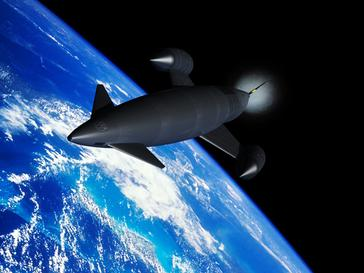
Late this evening, tragedy struck as the maiden flight of the VELTZ (Heavy Exoatmospheric Logistics Vehicle, Vazhkyy ekzoatmosfernyy lohistychnyy transportnyy zasib) spaceplane is believed to have burned up on reentry.

The Czaslyudian Aerospace Command, whose continued interest in and funding for the VELTZ program helped to get it off the ground in the first place, intended to take on the cost of the spaceplane before allowing civilian, and even private sector actors in the FRCP take advantage of the platform. The VELTZ spaceplane was meant to meet the need for bulk transport of non-sensitive goods to or from orbit with enough frequency to be economically feasible as an alternative for traditional spacelaunch vehicles. It can sling up to 15 tons to LEO or 21 passengers with life support in its main bay-- otherwise, on a return trip, it can store 18 tons. It is powered by three Primakov-YVG PAT-2210 scramjet-rockets, a hybrid air-breathing engine and rocket system.

VELTZ is a single-stage to orbit reusuable launch vehicle, avoiding the complexity of staging and recovery, and uses emerging technologies which would simplify the engineering picture. Its spaceframe is a silicon carbide-reinforced titanium, with an additional layer of ceramic skin to provide heat ablation on the exterior, with multi-layered insulation (titanium foil and aerogel) beneath that to manage heat. While this is not enough for a conventional reentry vehicle, the VELTZ's trajectory would always slow at higher altitudes, where the skin only heats to 830oC along its leading edges, allowing for the integration of more durable and cost-efficient materials.

The VELTZ had been in R&D for the last decade, with the first successful unmanned flight February 2035. It was meant to operate either unmanned for routine missions, or with up to two crew for training and supervision.

The VELTZ-3 mission was the third launch of the spaceplane, and first manned mission. Colonel Marina Zakharova-Nadyrova was the mission commander, supported by Major Vitaly Gladyr, both experienced pilots and members of the FRCP Air Forces, on a routine flight to evaluate the spaceplane's flight systems, with a ten-tonne cargo in the craft's main bay. They would carry and deposit the payload in LEO at approximately 400 kilometers altitude, after which they would perform a retrograde burn with the liquid oxygen rocket motors, altering the orbital parameters to (400kmx0km), allowing for a controlled glide.

Despite such a mission occurring twice now during unmanned tests, Zakharova-Nadyrova and Gladyr perished on the evening of October 9th, 2036, approximately 21:49 hours local, approximately seventeen kilometers in the air as their spaceplane broke apart.

Spokespeople at the FRCP Aerospace Command and the Central Space Bureau (Tsentkosmos) did not produce an official statement until hours later, producing ultimately, "We believe the cause of the failure to be weather-related and not a result of sabotage or malfunction."

Later, the chief of the Deputy Chief of Air Operations, Hetman-leytenant Inna Semykina, issued a statement clarifying their investigation: "The flight staff and the crew of VELTZ-3 had been operating with razor-thin margins for error in atmospheric interface-- earlier this evening, a high-pressure system unaccounted for by our meteorological services produced an atmospheric anomaly right over the North Vanguat Sea where this interface would take place. The trajectory chosen by the Aerospace Command's staff, unadjusted for the increased air resistance they would meet, and operating on the spacecraft's automatic control system, was deemed to be too steep for its temperature control systems and overwhelmed the composites of the body, resulting in catastrophic failure."

Hanna Gladyr, the mother of the second-in-command of VELTZ-3, was asked for comment.. Choking back tears, she replied, "I didn't even know [Major Vitaly Gladyr] was on this mission . . . why didn't they tell me?"

The Central Space Bureau (Tsentkosmos), established in 2025 as a purely civilian space agency by the National Assembly, has long been the center for criticism of the nation's space policy-- while Tsentkosmos operates in relative transparency, it hardly ever leads anything but routine missions, including building and maintaining satellite infrastructure. Meanwhile, critics single out the FRCP's Aerospace Command, a subset of the Air Forces, as "hogging all the [funding and talent] . . . behind closed doors with every other program being classified."

Representatives in the National Assembly, particularly A. Egorov of Lymanya, have announced they are seeking to build a resolution denouncing this state of affairs, seeking to shift the control of the cosmos away from the military and away from the Principle Chairman, Yehor Pelsh. Although another election cycle is around the corner, Egorov and the Novytskyist Agrarian-Industrial League (APLN) bloc remain down sixteen seats against their All-People's Union for Liberty and Equality (VSSR) opponents.

Officials in Sevyich have made clear that the VELTZ program will continue despite the tragedy. Economists and industrialists point out the utility a spaceplane like the VELTZ could play in Czaslyudiya's space program: it opens possibilities toward affordable space launch for satellites and their maintenance or recovery; opens the doors to bringing back cargo from space-- particularly the yields from asteroids-- and opening an entire new source of rare minerals and metals; it even, if the need for it arises, could facilitate the rapid construction of Czaslyudiya's own space station, putting it into orbit one module at a time.

Back on Earth, however, Principle Chairman Pelsh has announced a day of mourning to take place this following Wednesday (August 12th, 2036), to both commemorate their achievements in the program and pay them respects in a closed ceremony in Gorevia.


Vyacheslav Kubiyovych is the Head Columnist of the Korf Enquirer, the FRCP’s first private news source and most widely distributed news source in both paper and digital formats in the Korf Autonomous Republic.

In the News
  • FoRel Central Ministry secures new industrial investment plan from New Solisian Union
  • Golden Throne grunge group, Heinrik's Corpse, cancels tour in Gorevia citing health crises.
Last edited by Cossack Peoples on Thu Aug 13, 2026 7:50 am, edited 3 times in total.

"You give a monkey a stick, inevitably he’ll beat another monkey to death with it."
— Sadavir Errinwright, Expanse S2E12
"Вечнасць для Czaslyudiya!"
Federal Republic of Czaslyudian Peoples

A corrupt, Post-Soviet anocracy whose de facto third branch of government is an arms manufacturer.
Sponsoring this signature
(Czaslyudian Defense Exports)
We're also the Czaslyudian Peoples now. Don't ask.

User avatar
Cossack Peoples
Diplomat
 
Posts: 927
Founded: Jul 11, 2019
Corporate Police State

Postby Cossack Peoples » Sat Aug 22, 2026 4:57 pm

Shcherbyna Center for Public Policy and Politics

SECURING THE WEST: DIPLOMATIC CAMPAIGNING IN MAHDAH AND STRALKOVIA
19th August, 2036
By Matko Ruban, Inessa Shoutvin

Uncertainty has been a quality experts have long ascribed to the northwest quadrant of Greater Dienstad, with regional wars and conflagarations over independence centering largely around the Ralkovian Empire casting a dark shadow over its states. The Czaslyudian journey has its genesis here, as well as so many others which have dealt with the after-effects of such calamity in their own ways. As a result, the shadow receding from recent memory, the game of security and politics starts once again along the Vanguat coasts.

The Pelsh administration has shown two principal concerns with regards to foreign policy-- the Vanguat continent to the south, and Varathron in which the industries and treasure of the country are becoming increasingly committed. While the commitment required of both of these to manage simultaneously seems almost too much to bear, Pelsh's policies seem to balance complete contradictions quite frequently-- signing onto alliance and treaty structures like the CTSA and while shirking from engagement with the nearby Northwest Mutual Assistance Agreement (NMAA), maintaining an liberal economic policy and easing trade restrictions with the Greater Dienstad region while keeping a long-term view on security concerns, particularly with energy and minerals through the Great Inland Sea. Pelsh has been, as one local radio pundit put it, "the most authoritarian liberal [we've] ever met."

Mahdah
One can see that same strain of contradictions in Pelsh's recent diplomatic campaigns to the Republic of Stralkovia and the Sultanate of Mahdah. While FoRel officials maintain that the support of the southerly Marcechalisimo occurs for the reasons of securing regional stability, they use the same reasoning for their recent spree of outreach toward Mahdah which initiated (however justly) conflicts with its neighbors.

Pelsh's Department of Foreign Relations (FoRel) concluded meetings with officials of the Sultanate with a variety of trade and security issues discussed, including their conflict with the Central Dienstadi-controlled Potthani government and Barjaani Emirate and energy concerns, especially as it relates to the recently-renamed Bay of Chains. Officials in the Deparment of Foreign Relations came away with promising results, including the deliberation of the stationing of a Czaslyudian joint force contingent to help safeguard maritime and energy traffic through the vital waterway. Certain international affairs experts on the region say that the move is an attempt by the Pelsh administration to ward off "another Kebab," only this time "far closer to Czaslyudian vital interests." Indeed, the conflict surrounding the Kebab National Republic has seen many threats to the sea lanes around the so-called "Vanguat Corridor", the title of the still mostly classified national policy of Pelsh's.

While sea lanes and the supply of critical goods for the war effort in Varathron are clearly important to the admin and the national interest, there is no doubt that the large Marshite presence-- a mission called a 'crusade' by their officials-- balanced against the Ordenites and the Macabean naval base (Elokeum) in Barjaanistan signals to government officials that if the long-awaited final confrontation between the Macabeans and Ordenites hits off, Mahdah and the entrance to the Bay of Liberty will be in jeopardy and leave the FRCP “with only one coast”. With a task force operating out of Mahdah, it will no doubt comfort national security officials to have a contingency force available, if not to monitor the situation, then to apply leverage to bring the conflict to its most rapid conclusion possible. In exchange, some reports say, the FRCP will grant the Sultanate a line of credit for loans to support their administration as well as guaranteeing the purchase of a quantity of their crude oil.

Stralkovia
Two weeks earlier, FoRel concluded similar high-level talks with the government of Stralkovia, a budding relationship ever since funding for Trans-Inland Sea Energy Partnership (TISEP) pulled through, costing in total a whopping 400 billion NSD-- money sorely needed for the Pelsh administration's other pursuits. There have been eternal questions over the stability of the Stralkovian regime, particularly on internal issues the FRCP has since remained neutral on, but for now these concerns appear to have been subdued either by chance or direct, unspoken policy. Possibly to assuage these fears over their internal stability, Stralkovian and Czaslyudian officials announced the signing of the Sevyich Treaty on Mutual Assistance (STMA), which crystallizes the Czaslyudian-Stralkovian defense and economic relationship, including defensive commitments to Stralkovia.

Additionally, in response to increased Volskuan militarization of their side of the Inland Sea, Czaslyudian and Stralkovian officials have committed to two major steps in their relationship: the movement of the Sea Forces' Western Fleet Command ashore to Stralkovian Rozshyrennya (continental Stralkovia), as well as wiring to President Markovic's government 400 million NSD for the down payment on a new submarine base, a mere 1000 kilometers from the mouth of the Inland Sea. Chairman-Minister (FoRel) Saldadze claimed that "[Czaslyudian] submarines will begin armed patrols, unseen, to keep in check [Volskuan] aggressions." Diesel submarines are heavily featured in the FRCP's Western Fleet Command, and a forward presence in the Great Inland Sea will allow them to exercise control nearly over the entire sea, rather than be confined to the Bay of Minstravia in the east.

Trade reorientation
As conflict emerges like sporadic wildfire over the land west of the Vanguat, the emerging security ties on either side of the Strait of St. Flor (beside Aman) signal a clear intent of the Czaslyudian government to secure not only its energy needs but also establishing a line of friendly nations with which it can increasingly trade. Stralkovia itself is an undeniable stepping stone not only geopolitically but economically in preparing possibly a transcontinental energy network, running out of the Great Inland Sea and down to the Southern Seas. An alliance with Mahdah would further secure the Great Inland Sea for Czaslyudian interests. Herein lies another Pelshian contradiction-- the FRCP simultaneously pursues breaking with the 'old Dienstad'-- Central Greater Dienstad-- for the reasons of economic and political independence as well as greater interaction with the institutions founded by and centered in old Dienstad, legitimizing them through their use in pursuit of Czaslyudian interests. Mahdah and Stralkovia are steps toward securing the former pursuit, with Mahdah being a next natural step for a partnership like TISEP to expand to. The FRCP would rather combine with, rather than compete with other major contributors to the local energy market, in the hopes that mechanisms like TISEP and ISTRA reduce the industrial overhead, and increase the effectiveness of heavy state subsidy in that sector, albeit at the loss of energy profit which keeps the FRCP's trade balance afloat.

Conclusion
"The long arm of geography and its logic", as Chairman-Minister Saldadze puts it, "constrains our decisions . . . and will inevitably shape the future of our nation." This much is indisputable. Securing favorable relations with these two states given their significant geographic positions would solidify the FRCP's presence in the Great Inland Sea, particularly against the increasing westward drift of NMAA membership which, the probability of a Ralkovian resurgence or other local conflagaration remaining low, serves no other purpose than to menace Czaslyudiya. The tying the knot with Mahdah, in particular, also seems to be an alignment of interests with regards to the ever-present belief of creating an independent community of Western Greater Dienstad-- free from the ever-present meddling, infighting, and other undue influence brought into the region by Central Dienstadi great power conflict. One way or the other, the rim of the Great Inland Sea and Zakhyadro (Northern Vanguat) has too long been dominated by states left in the shadow of the Ralkovian Empire-- sooner or later there will emerge a dominant power to take over the Ralkovian's former mantle.


The Shcherbyna Center for Public Policy and Politics is a government-funded think tank based in Perekhmisto, FRCP. The opinions expressed here are not necessarily the official position of the Czaslyudian government.

"You give a monkey a stick, inevitably he’ll beat another monkey to death with it."
— Sadavir Errinwright, Expanse S2E12
"Вечнасць для Czaslyudiya!"
Federal Republic of Czaslyudian Peoples

A corrupt, Post-Soviet anocracy whose de facto third branch of government is an arms manufacturer.
Sponsoring this signature
(Czaslyudian Defense Exports)
We're also the Czaslyudian Peoples now. Don't ask.

User avatar
Volsku
Civil Servant
 
Posts: 9
Founded: Sep 02, 2023
New York Times Democracy

Postby Volsku » Sat Aug 22, 2026 5:16 pm

Volskuan Nuntius Servitium
Вальскуанскае Pадыёвяшчанне
Volskuan Broadcasting Service


Trade Delegation Returns From Bay of Liberty, Tarao Region


The delegation tasked by Foreign Minister Marcella Sulla to explore opportunities for Volskuan businesses in the south has returned to Kramfors. The mission, headed up by Caelus Processus, CEO of Volsku’s fourth largest accounting firm and recently Praetor of Saminia Province visited Potthan, Ladeo and Mahdah. Mr. Processus immediately went into consultations with Mrs. Sulla. Afterward the two issued a joint statement, saying “We are pleased with the results of this mission. Trade and financial opportunities were, of course, the main objective of the mission, but in the turbulent Tarao security concerns were unavoidable. Results varied among the three states visited. The security concerns of Pottthani officials appeared to overshadow any trade talks, unfortunately. We think this is to the detriment of the Potthani people and businesses. We feel that Potthan offers some opportunities that would be mutually beneficial to us and to them, but their engagement with their neighbors make it hard for them to take a long term view. Frankly, there have been doubts as to the creditworthiness of the current Potthani leadership, and that will be a subject for further discussion among Volskuan bankers and regulators. The talks in Ladero were much more productive. As they are a signatory of the Treaty of Kelso, tariff issues never came into play. Recent developments in the Tarao area have been favorable to Ladero, and talks centered on coordination of meat and dairy inspection and grading standards that should facilitate trade with them. We are hopeful that this could contribute to similar changes in Irat and Sorofi. Laderan car dealers seemed eager to increasing mid-market Volskuan imports, and their clothing manufacturers want to establish a trade center to promote sales of their products here. In Mahdah we were met with the Sultan’s gracious hospitality. There were long discussions in which more in-depth knowledge of the Hahdavan economy was conveyed, and we are grateful to his Sublime Excellecy’s Council of Economic Advisors for spending generous amounts of time with us on this matter. Here too the constraints imposed on lending and spending due to tensions with Potthan were evident, but overall we view the mission as successful.

While trade with Ladero has been on a steady upswing since the Treaty of Kelso, opportunities in the Bay of Liberty can mostly be seen as realizable in the longer term. There does not appear to be any resolution between Potthan and the Sultanate soon, given that neither the larger powers or local powers have put forth an initiative aimed at settling that simmering conflict. Obeservers in Kramfors believe that the Sultanate may have the upper hand at this time, but not decisively. In addition to the tensions between the two states there are many Zenitharian factions involved, not all of which are under Mahdavan control. Volskuan sentiment, although unspoken is likely more favorable to the Sultan, given it’s traditional Amanitte antipathy to Potthan. Officially, Kramfors is unlikely to weigh in on the matter, given strong anti-Zenitharian sentiment in neighboring Fedravka and Federal Ralkovia.

User avatar
Solisian Union
Diplomat
 
Posts: 903
Founded: Apr 22, 2018
Democratic Socialists

Special Frontline Dispatch

Postby Solisian Union » Sat Aug 22, 2026 8:46 pm

YELLOW STAR NATIONAL HERALD — SPECIAL FRONTLINE DISPATCH
DATELINE: THE KASHIRI CORRIDOR, LIBERATED KEBAB


The unstoppable tide of Operation "Climb Mount Ranyas" has broken through the central defensive belts, surging along the river highways as Solisian combined-arms formations spearhead the drive toward the capital of Zafarkand. Along the eastern littoral, Special Naval Landing Forces and reinforced mechanized columns have shattered the enemy's coastal garrisons, securing Eastern Kebab and cutting off remaining junta supply routes from the sea.

The Ministry of War extends our deepest gratitude to the Federal Republic of Czaslyudian Peoples and our allied partners for decisively neutralizing hostile Scandinavian naval vessels and condemning Drakensund University for deploying armed student flotillas to recklessly interfere in sovereign Solisian affairs. All foreign nations are strictly warned to stay well clear of the comprehensive maritime exclusion zones now established across the western and eastern waters of Kebab and Sishia, where any unauthorized vessel will be treated as a hostile combatant and destroyed without hesitation.

The operational mandate behind Operation "Climb Mount Ranyas" reaches far beyond mere border stabilization. Solisian forces are irrevocably committed to the complete liberation of Kebab and the total empowerment of the Free Armies of Kebab who are rightfully fighting for the Triad Salvation Front. Yet true peace cannot be secured merely by clearing the frontier. We believe that Sishia must face overwhelming punishment for the unprovoked shelling of Gurutala and the desecration of our sacred shrines. Should the regime in Montreval refuse unconditional capitulation, the Union stands fully prepared to pursue complete conquest of Sishian territory to extinguish this colonial menace once and for all.

That resolve was on full display this morning in the central plaza of a major captured provincial city guarding the direct road to Zafarkand. Amidst the roar of idling Eclipsar main battle tanks, soldiers of the 3rd Army Group gathered beneath the scorched facade of the municipal headquarters, severed the halyards with bayonets, and hurled down the despised flags of Sishia and the KNR junta. The enemy colors were trampled into the dust as Solisian regulars and allied volunteers erupted into thunderous cheers, waving the Yellow Star and the Triad standards to the applause of weeping and joyful Kebabese lining the streets.

Surveying the smoldering defensive works as endless armored columns rumbled past toward the front line, General-Marshal Sofia del Carmen Velez issued a ringing declaration to the Union:

"The great war to liberate Kebab and punish Sishia is righteous and justified."


HOSHIZUKI SHINPŌ
La Victoria Bureau — Economic & Strategic Desk


Global financial institutions are facing sharp diplomatic pressure from the Ministry of Foreign Affairs as Solisia demands that all foreign governments immediately freeze Sishian sovereign assets, trade reserves, and offshore accounts, transferring them directly into Solisian custody as mandatory restitution for unprovoked aggression and wartime damages.

Appearing on the national economic affairs panel, Senior Industrialist and Solisian Renewal Dynamics (SRD) Board Director Teresa Del Castillo noted that the state's economic fundamentals remain unshakeable despite full wartime mobilization. "Our Guided Renewal framework was engineered for endurance," Del Castillo explained, emphasizing that the NNRA and the Four Modernizations are fueling domestic self-reliance across critical sectors. State-backed production facilities—led by SRD, New Sun Rifles, Cháng Máo Industries, and Corporación Manos Firmes—have drastically expanded shift capacity, ensuring that agricultural abundance from the Free Rasur State and mass armament deliveries easily keep pace with military operations without stoking civilian shortages. "We are not simply sustaining this war effort. Quite frankly, we are actively expanding the industrial capacity of the Union so that our total victory over Sishia and the KNR junta leaves our nation wealthier, stronger, and completely self-sufficient."

Del Castillo also highlighted the administration's poise on the world stage, noting that the southern invasion of Kebab has not disrupted long-term strategic commitments along the northern frontier. Under Field Marshal Ramziyya Artigas and the 1st Army Group "Yellow Star," the Union is pushing ahead with its scheduled multinational live-fire drills under Operation North 26, specifically preparing to host participating units from the Andrenadian National Armed Forces (ADN).

"Our ability to host Andrenade and conduct major northern exercises while simultaneously running multi-front combat operations in the south proves the sheer scale and institutional depth of our armed forces," Del Castillo remarked.

That multi-theater momentum is matched by an uncompromising resolve among the Solisian High Command. Following an operational briefing in La Victoria, General-Marshal Diego Rafael Solorzano, commander of the 4th Army Group and senior colleague of General-Marshal Sofia del Carmen Velez, issued a blunt assessment of Solisia’s strategic end-state:

"There is no intermediate compromise, and there is no half-measure that guarantees our safety. There's no solution except to break the power of the Sishian President by capturing their capital after we have freed the capital of Kebab and given it back to the FAK. That is what we must do."
^_^

User avatar
Free Kolechia
Spokesperson
 
Posts: 115
Founded: Jan 01, 2014
Father Knows Best State

Postby Free Kolechia » Sat Aug 22, 2026 9:17 pm

Image


FRCP Disaster- Government Announces Day of Mourning- Amb. Receives Condolences
Local news in FRCP and international media has reported that the "maiden flight of the VELTZ spaceplane is believed to have burned up on reentry." The VELTZ program was a FRCP project that "was meant to meet the need for bulk transport of non-sensitive goods to or from orbit with enough frequency to be economically feasible as an alternative for traditional spacelaunch vehicles." According to the rest of their announcement, the tragedy struck when it was finishing a routine test flight and that there were no survivors. The crew on board who were lost have been identified as Colonel Marina Zakharova-Nadyrova, and Major Vitaly Gladyr. A statement by the Ministry of Foreign Affairs shared President Safadi's condolences and hopes their sacrifice will bring greater safety and advances, and his direction that tomorrow shall be a day of mourning. Condolences were also delivered to the FRCP Ambassador Nazar Holovko in Kashgar.

Ministry of Defense Announces Activation of National Guard
In a breaking announcement, the Ministry of Defense has revealed they will be activating the National Guard, which will initially only consist of assigned officers and cadre, before organizing full scale divisions. The "decision was made after further review of several issues. The guard units were usually raised during crisis, in order to defend the nation and its borders. By re-activating these divisions, it will provide relief to current active combat forces, especially in the event of a deployment outside of our nation. They can provide a rapid response, quickly establish defense and provide resistance to emergencies. Once leadership has been established, the National Guard will normally serve under the Ministry of Internal Affairs (MVD) though in the event of a crisis, their divisions may be transferred to control of the Army." The announcement indicated the first unit to be organized would be the 21st Guard Division.

Novogorizont Province Witnesses Growth
Since establishment of a new security province in the former Craxx Empire, which completely collapsed after a massive war destroyed their nation, people to companies and resources continue to flow to Novogorizont. The government believes the number of new residents will soon surpass 100,000 people. According to the latest numbers provided by GazArg (Argun Oil) an additional 10,000 employees (one third of the company) working in various roles, are now working and living in the province. The goal of creating a rebuilt, prosperous and peaceful land is no easy task, the Ghaala Construction Company has at least 15,000 workers in the three largest towns, creating them from nothing. The bolstering of companies from the work in Novogorizont has had even more of a dramatic effect (albeit on a smaller company) on Terek Shipping, where up to half of their 12,000 workers are now in Craxx. The Misab Mining Corporation (MMC for short) has 7,000 staff in the new province alone. All this new opportunity does not come without risks and problems.

Work in the oil industry and mining are historically dangerous as is, add in the risk of possible buried munitions left over from the war, whether it be hidden ammo stocks or unexploded ordnance the stakes are even higher here. Above ground, there are the Craxxian people, who were led to complete ruin by their government. According to research and investigating from the government, the former nation is only equaled in destruction by some parts of Greater Dienstad. The war left the once proud inhabitants in a failed state. But it is a failed state that interestingly, sits outside of Greater Dienstad (and possibly the purview of the GDRC) but not outside the interests and reach of these nations. Large swathes of the former empire have been and are being partitioned, by forces from across Dienstad, who do not just bring their way of government, language, and culture etc. but also their alliances and rivalries. To add to the imported rivalries, many of the Craxxians seem to face this development with hurt bewilderment. The destruction of the war has left many regularly migrating throughout the former nation, and now an untold number are moving again, due to violence and skirmishes with new colonies and states.

The government it seems however, hopes to take a different path and possibly bring in Craxxians. While there has been skirmishes between security forces, it has been minor and the military has been more restrained compared to others in the area. Several in Safadi's administration and his own party, including local minister Mansur Vizirov himself has put forward the idea of offering citizenship. He argues this could give them benefits, a more stable existence, and protection from other forces in the region. Likewise, sincerely or pragmatically bringing foreign peoples, under the protection of Kolechia and bringing them into a system of law and order, could assist in solidifying control. Others, including some in the rival National Democratic Party, have argued against the nation's involvement in Craxx at all. With industry and populations increasing in the area, regardless of the elections and a possible political victory, it seems this is now very unlikely.
Yes, this nation was inspired by the video game.

Embassy Program

User avatar
Sishia
Lobbyist
 
Posts: 17
Founded: Dec 03, 2025
New York Times Democracy

Postby Sishia » Sun Aug 23, 2026 4:54 am

THE TRUTH TELLER
Montreval Bureau — Dispatch from the Home Front

RISE FOR THE REPUBLIC: AS AGGRESSION REACHES OUR GATES, SISHIA CALLS HER CITIZENS AND EXPATRIATES HOME


The Restoration Republic of Sishia stands at a pivotal crossroad in its history. While our expeditionary forces continue to support and assist the KNR in suppressing violent religious radicalism, make no mistake: the existential fight has arrived at our own threshold. The primary duty before us is the direct defense of Sishia, our sovereignty, and the hard-won socialist republic built through generations of sacrifice.

Citizens of Sishia, the hour has come to rise.

From the industrial heartlands of Valmont to the streets of Montreval, every worker, student, and reservist must awaken to the peril. The Republic requires more than passive loyalty; it demands active defiance.

This urgent summons reaches far beyond our territorial borders. To every Sishian living, studying, or working abroad across Greater Dienstad—hear the call of your homeland. Put aside foreign comfort and return home to take up arms. The Sishian military needs your hands and your resolve. Volunteer offices in our major cities are opening foreign-returnee battalions to bolster our mechanized and technical formations. Do not watch your motherland confront this storm from afar! We ask you to return and stand as an impenetrable shield along with your sisters and brothers here in Sishia.

Yet, we cannot ignore the bitter realities unfolding in our streets. Sishia is straining under the weight of wartime transition. Supply networks are congested, civil defense sirens interrupt our evenings, and communities are learning the harsh discipline of emergency quotas and blackouts. More frustratingly, our leadership in Montreval has been slow and hesitant to meet the full scale of the danger. While front-line commanders in the 3rd Strategic Army Group and reserve generals push for immediate, sweeping mobilization, political bureaucracy continues to drag its feet, caught in cautious debate while the enemy prepares massive encirclement maneuvers.

Compounding this friction, domestic authorities have clamped down on transit routes, erecting strict exit restrictions at border hubs and ports to halt fleeing draft-age citizens and stem panic. But true republicans know that walls and travel bans cannot manufacture fortitude. The safety of Sishia will not be preserved by bureaucratic inertia or coerced confinement—it will be saved by the voluntary, iron will of a mobilized people. Rise up, defend the Republic, stand by our allies, and drive the invaders back from our soil.

User avatar
Castille de Italia
Minister
 
Posts: 2648
Founded: Mar 22, 2012
Father Knows Best State

Postby Castille de Italia » Wed Aug 26, 2026 3:34 pm

Image


BACKÈS BLASTS MIDDLE POWER'S ‘ADDICTION TO CONFRONTATION’ IN LEAKED REMARKS


PRESLAFF — President Marlène Backès privately expressed deep frustration with the increasingly aggressive foreign policy of the Solisian Union, describing its government as possessing an “addiction to confrontation” and questioning whether its leaders understood the responsibilities that accompanied their country’s promises to transition to democracy, according to portions of a confidential conversation obtained by CRC.

The remarks, whose authenticity was confirmed to CRC by two officials familiar with the conversation, offer an unusually candid glimpse into the President’s personal assessment of another Dienstadi state.

Backès made the comments during a closed-door discussion with senior advisers following a cabinet meeting earlier this week. The discussion reportedly turned to growing tensions between Solisia and several of its neighbors following snap military exercises, increasingly bellicose statements from senior government officials, and the series of military interventions the country has made in western Greater Dienstad despite having come out of a civil war in recent years.

“I am tired of being told that because they plan to transition towards some sort of democracy, we are required to pretend everything they do is inherently responsible,” Backès can be heard saying on the recording. “They want to become democratic. That was Queen Wessa's promise apparently. Fine. That does not make every threat her regime makes democratic, every mobilization defensive, or every artillery piece they move toward somebody else’s frontier an instrument of liberalism.”

"I have no interest in our financial institutions to freeze credit because they want to treat civil conflicts adjacent to them as military playgrounds," the President also noted, apparently referencing Solisian calls to freeze Sishian sovereign assets.

"And even if we did, we're certainly not transferring those funds into the Solisian treasury to finance more of their military adventurism," Backès went on.

The President appeared particularly frustrated by what she characterized as apparent efforts by Solisia to create their own hegemonic power bloc in the west, with governments pressured to demonstrate solidarity whenever relations between Solisa and one of its neighbors deteriorate.

“They seem to believe friendship is measured by how quickly everyone else is willing to join their next quarrel,” Backès said. “Their entire existence basically hinges on the continued military backing of the Marshites. So if I were them, knowing they just had a civil war, I'd probably focus on domestic issues.”

Manoir du Montbatten did not dispute the authenticity of the recording when contacted by CRC, but strongly criticized its unauthorized disclosure.

“The President regularly engages in frank and confidential discussions with her advisers regarding developments affecting the security of the Castillian Federation,” a presidential spokesperson said. “Private deliberations should not be interpreted as changes in the foreign policy of the Castillian Federation.”

Reaction within the States-General was divided. Government supporters largely defended Backès, arguing that the leaked comments reflected concerns that have become increasingly common within Castillian diplomatic and defense circles.

“She said privately what quite a few governments in Greater Dienstad have been saying privately for months,” one senior legislator told CRC on condition of anonymity. “Being friendly does not grant a state immunity from criticism when it behaves recklessly.”

Opposition lawmakers focused instead on the leaking, with several demanding an investigation into how a confidential presidential conversation had been recorded and subsequently provided to the press.

The controversy comes at a particularly sensitive moment for Greater Dienstad.

Military deployments across the region have increased during the past year, while disputes involving borders, maritime claims and competing security arrangements have placed growing strain on institutions intended to prevent confrontation between Dienstadi states.

Castillia has attempted to position itself as an intermediary in a few of those disputes, particularly in Xofrautan, with Backès repeatedly arguing that the Federation should maintain sufficient military strength to deter aggression while avoiding what she has called the “politics of permanent mobilization.”

"Our global order continues to be rocked by wanton aggression by the Ordenstaat," Backès recently said at a public appearance at a military munitions production plant in southern Lozère. "We must be committed with our allies to deter these acts from the Ordenites. However, this does not mean we need to continually deploy our troops overseas in wars that have lost all their meaning except to play with madness."


© CORPORATION DE RADIODIFFUSION CASTILLIAN
Last edited by Castille de Italia on Wed Aug 26, 2026 3:41 pm, edited 1 time in total.
The Castillian Federation | La Fédération Castillia
Fraternité sous notre Fédération

M.E. | IIWiki | Dramatis Personae | CDPEC | Pan Dien | Deep Throat | Under Marianne's Banner

User avatar
State of Ordena
Envoy
 
Posts: 243
Founded: Jun 07, 2023
Psychotic Dictatorship

Postby State of Ordena » Wed Aug 26, 2026 10:29 pm

OFFICIAL CORRESPONDENCE FROM THE OFFICE FOR EXTERNAL AFFAIRS OF THE STATE PRESIDIUM


The State Presidium has directed the External Affairs Office to communicate the following official position. The State Presidium has reviewed the recent abrasive actions conducted by the Solisian Union in Western Dienstad, especially in the Shartourn Sea. Its brash military maneuvers are alarming and should be whole heartedly condemned by the whole of the Dienstad region. The Solisian Union has shown time and time again that despite its apparent transparency concerning bringing "democracy" to troubled nations that it too is a crafty predator seeking to use its good will efforts in order to undermine others sovereignty for their own imperialist agenda. A tendency that has often been seen with the likes of the Golden Throne and its own interventionalist nature which they who have labeled themselves "champions of democracy and humanitarianism" are no more than wolves in sheep clothing.

The State Presidium recognizes that the Solisian Union are bringers of chaos and disorder similarly to their Mar'si and Golden Throne allies. It affirms that the Ordenstaat will remain steadfast across all of Greater Dienstad to ensure that Order and stability remain. Therefore, the State Presidium has authorized all necessary administrative and security measures to safeguard the interests of the State. Foreign governments are advised that all measures undertaken pursuant to this determination are internal matters of the Ordenstaat and are not subject to external consultation. Further public statements, if necessary, will be released exclusively through the External Affairs Office of the State Presidium.

Issued under the Authority of the State Presidium.

The Order endures.


THE HOMELAND REPORTS
DIE HEIMATBERICHTE


ORDENITE SEA POWER DEMONSTRATED AS KRIJGSMARINE BEGINS MARITIME EXERCISES IN WESTERN WATERS


BERLINA -- The Krijgsmarine kicked off maritime exercises in response to recent rash Solisian naval movements in the Shartourn Sea. Elements of Naval Group Command West comprising of multiple fleets operating in the Shartourn Sea and from bases in Istoloa, Potthan and Fustera are slated to participate.

The exercises themselves are said to focus on convoy protection and defensive maneuvers. The volatile nature of Western GD with predatory powers such as The Golden Throne, Theocratic Matriarchy and the Solisian Union mean that the Ordenstaat must continue to upkeep readiness at all times.

A Krijgsmarine Vizeadmiral was available for comment and had the following to say. "Western Dienstad has long been known for being a harbor of disorder and chaos. The Krijgsmarine and the Ordenstaat at large are here to ensure order and stability remain paramount."

The Office of External Affairs of The State Presidium recently released a statement on recent Solisian naval maneuvers and exercises, labeling them brash and predatory against other nation-states in the area. Also released was expected restrictions for civilians regarding the exercises along with the duration which has been said to be over a weeklong.
Formerly known as; United World Order, Greater Ordena.
Proud member of Greater Dienstad
Condemned by the WA Resolution #272

User avatar
Eitoan
Chargé d'Affaires
 
Posts: 366
Founded: Jan 04, 2018
Anarchy

Postby Eitoan » Sat Aug 29, 2026 5:18 pm

Eitoan Overseas Radio
Vladarsik


Эйтоан за мяжойРалкоўская служба
в ИйтоБалковска служба на задграничното радио
Eitoan Rare Radio Amanitte Service
Eitoan Overseas Radio Weslkian Service
Eitoan im Ausland Nordischer Rundfunkdienst
Servicio Eitoan Overseas Radio Mokan
Vozes de Shartourn


www.eor.DepForgn.et.gov

The time is 1900 in Vladarsik. News from Eitoan Overseas Radio.


Politics: Conservative Trend Continues


Civic Platform Even With Socialists In National Ghastak Polling

Communist Decline Continues


The latest national polls, as reported by the Virden Territorial University Center for Opinion Analysis show further erosion on the left in favor of the conservative Civic Platform Party. At the current time, President Shrdlu’s Free Democrats are still expected to lose two seats, shrinking from 15 to 13 in the upper chamber. Civic Platform is shown as going from 4 seats to 9, up a further one seat from polling last month, and tying the Socialists for second place. The Socialists show a drop of 2 seats from their current 11., and the Communists losing one seat going from 4 to 3. The right wing National Democrats are expected to remain at 1. Most of the decline among the left appears centered in the skilled blue collar segment of the electorate, evident on big city polling as well as in small towns. Although there is some discontent with the general electorate over economic pressures, the blame hasn’t landed at the feet of the Shrdlu administration by and large. The earlier Civic Platform victory capturing Stickney city hall appears to have been a leading indicator of voter weariness with leftist economic and labor doctrine, as was frequently noted all summer. Although support for the Communists and more left wing Socialists remains strong among the laborer unions and hired farm workers, powerful building trades and shipbuilding labor organizations have so far refrained from making endorsements in this fall’s at large national contest for the upper house.

Voters polled in Eitoan’s cities show continued strong support for the Free Democrats at 39% of those planning to cast a ballot. Big city voters indicate 26% for the Socialists, and 22% for Civic Platform. Tracking to expected, the Free Democrats are strongest among middle income voters in Kelso, and Civic Platform doing well in Berwyn and other coastal cities. Following on Civic Platorm’s victory in Stickney, the party polls well there among a broad swath of both white collar and blue collar voters. Suburban voters continue to hold strong for the Free Democrats across the nation, but the Socialists slip badly there, declining from 25% in midsummer to 21% now. Civic Platform has campaigned extensively in the suburbs this summer, both with local events and targeting baseball and golf coverage in it’s advertising. Smaller towns, hit more heavily by restrictive consumer spending is holding up better for the Socialists, currently at 31%. This is especially true in the southern and frontier territories. It is also likely that local issues are butressing the Socialists in those areas. Rural Eitoan follows typical regional preferences, with Civic Platform strongest in coastal territories, and the Socialists and Communists holding up in the frontier territories. In the central corridor, home to 50% of the electorate farm voters are following the national conservative trend.

Views of Shrdlu and Likely Successors.


President Shrdlu remains popular as he heads into his last year at the Executive Residence, with an approval rating of 57% to 27% unfavorable. The President scores well on tax policy, fiscal restraint and educational reform. His main weaknesses appear to be a perceived favoritism toward big business, and some inconsistency in judicial nominations. Among the likely contenders to succeed him under the Free Democrat banner next year, Vice President Paula Koubek leads Treasurer Jonathan Shore at 47% to 31%, with 15% opting for other candidates and 7% undecided. Mrs. Koubek has wide support among the party faithful. She is seen as faithfully following the the President’s footsteps, and a strong advocate of national defense. Mr. Shore is more popular among the conservative members of the Free Democrats, and is popular among many in the business community. Although he has not been outspoken on foreign policy his cautious approach to involvement outside the northern cap has been noted. Free Democrat leaders in the largest cities seem to be cool to any presidential ambitions by the Treasurer.

The most interest among Civic Platform is in the second on slate for the Ghastak this year, war hero Colonel Doug Taylor. Plagued by anemic showing since President Shrdlu’s first term win 9 years ago, many in Civic Platform are thinking outside the box. Colonel Taylor has kept up an exhausting campaign schedule since securing second place on the ticket earlier this year and shows no signs of slowing down. His unbuttoned style has boosted the party, plagued by a stodgy, C-Suite image for years. From beer chugging at Midsummer Holiday block parties in Upper Burgess Falls in July to informal get together events at college orientation in the last 2 weeks, Colonel Taylor seems to draw a crowd wherever he goes. Indeed, much of the Civic Platform bigwigs appear happy to let him take center stage. By contrast, Socialist Ghastaker Balashova Valeranova, the party’s prospect with the highest recognition rating is burnishing her image as a thoughtful legislator, and leads the party’s efforts at differentiation from the Communists. Rarely seen outside of Vladarsik, Mrs. Valeranova has been keeping a low profile, preferring to present a reasonable, moderate face for the Socialists on discussion forums and in exclusive press interviews. A party leader in Sitary Territory commented “This may be our best chance to weather the storm, given recent opinion trends. A calm, steady, rational approach in both domestic and foreign policy is called for if we hope to hold on to second place in the Ghastak, and to bargain with the Free Democrats for effective legislation.”

Foreign Election Interference Under Investigation.


Yesterday’s announcement of possible foreign meddling in this year’s legislative elections is still being digested by both the electorate and all parties. Lieutenant General Jan Weissman, Chief of National Intelligence Operations reported yesterday that certain messages flooding Accelafeed and other popular social media platforms calling out against military spending and service have been traced to overseas actors. Mr. Weissman declined to offer any details at the time, saying that the investigation was ongoing, but urged citizens to be alerted to unusual postings. A spate of pacifist oriented comments had been noted after many of them were seen with seldom used typeface, simple grammatical errors and a diacritical mark. As is commonly known, there are no diacritical remarks in Standard Eitoan Dienstadi. Communists were upset when many postings urged reduction of the required national service term from 2 years to 1 year, support of Communist candidates, and institution of exemptions for “conscientious objectors”. Vlaclav Magdougal, ranking Communist on the Dashez Armed Services Committee said after Mr. Weissman’s announcement “We have nothing to do with this calumny. Eitoan Communists are Eitoans first, and I’ll stack my Army service up against anyone. The Attorney General must get to the bottom of this!” The Rozroh community is also upset with a reference to a “Corn Spirit Celebration”. Grand Sachem of the Shrine of the Spirits of Prairies Bernard Isenman told Eitoan Overseas Radio “Of course this is preposterous. We have no Corn Spirit Celebration. Everyone knows of our Celebration of All the Grains. I don’t know who is spreading this, but it hearkens back to the ugly days of bigotry against us, back in the early days of the Republic and again in the 1950s. We must never return to those dark days”. Mr. Weissman warned “If this can be traced to actions of a foreign government, any Eitoan collaborating with this effort may face treason charges, and if convicted would face the death penalty.”


Overseas: Knights Gambit Naval Exercise Concluded


NMAA Fleets Converge in Annual Northern Vanguat Sea Manuvers


Speaking to incoming freshmen at the Naval War College in Berwyn, Chief of Naval Operations Admiral Antonin Reid reported on this year’s Knights Gambit exercises. He told the incoming class “I am pleased to report that this year’s Knights Gambit performed to standard. The Eitarska Yamskreit and allied navies simulated support for a major amphibious operation in The Jesheoda Channel, and advanced anti submarine warfare coordination and training, and in naval aviation in the open Northern Vanguat. We were pleased to host observers from the Tupengan Navy and the Federal Ralkovian Naval Self Defense Force for this years's exercises. The flag was passed from the Yamskreit to the Classis Volskuana at the entrance to the Amman Passage upon exiting the Great Inland Sea enroute to Liberty Bay, and again to the Yamskreit upon exiting Liberty Bay. Results are under further analysis. I hope many of you will have the opportunity to participate in these large scale exercises as you embark on your service to the nation.”
Last edited by Eitoan on Thu Sep 17, 2026 5:57 am, edited 1 time in total.

User avatar
New Calandria
Bureaucrat
 
Posts: 52
Founded: Aug 29, 2026
Inoffensive Centrist Democracy

Postby New Calandria » Sat Aug 29, 2026 9:45 pm


KALA YANTIGA NEWS ASSOCIATION
⮞ currentevents.en.kalayantiganews.cal
Calandrian | Wuomui | English


United Islands launches Humanitarian Mission to Darvand Conflict

Editor Mara Kkinteiro | Nerva FD, Wuomu State, The United Islands of New Calandria

⮞ International News | Top Stories Today
// THE KASHIRI CORRIDOR, LIBERATED KEBAB
// BACKÈS BLASTS MIDDLE POWER'S ‘ADDICTION TO CONFRONTATION’ IN LEAKED REMARKS
// Knights Gambit Naval Exercise Concludes


NERVA, FD— The Darvand Conflict continues to rage with the conflict showing no signs of letting up. The State Department has reportedly been paying close attention however. The nation's parliament, the Cais, passed a resolution which was approved by the Wanakke to mobilize the Peace Corps and the Red Rose Humanitarian Organization to the region. The State Department issued its intent late last night laying out the United Islands mission in the conflict as a neutral party to provide critical humanitarian relief.

According to spokesperson Anita Kawwa, quote, 'The United Islands will divert resources and funding of the International Crisis and Relief Fund as well as mobilize the New Calandrian Peace Corps to respond to the ongoing conflict in the Darvand Crisis, this includes dispatching a humanitarian flotilla of the support helicarrier UIN Grais tei Nerva alongside escorts of the cruisers UIN Kaimon, UIN Wanta, and the destroyer, UIN Saitiago.'

The government stated that the conflict has been a matter of concern for sometime now and the humanitarian crisis has only worsened since hostilities began. The relief mission, officially named, Operation Hala Janu's Mercy, after the Wuomui ocean goddess, will include 'the shipment, storage, and distribution of medicines, clothing, blankets, food and water, medical care from the Red Rose, counseling services, temporary shelters, and elevated trauma care.'

The UIN Grais tei Nerva is a converted helicarrier for these types of missions. The ship features OR rooms, ICUs, Decon units, and dedicated clinical teams of physicians, nurses, psychologists, and volunteers capable of treating the most critically affected from the conflict. According to the memo released today, the flotilla will also accept and treat injured service personnel of the combatants, regardless of nationality, and repatriate them to their nation of origin.

The State Department made it clear that the United Island is not participating in combat operations in the conflict and is strictly adhering to its role as a humanitarian relief force. They further confirmed that they have warned all parties in the conflict that the UIN will engage in self-defence if the flotilla, its personnel, or its patients are attacked. The UIN Gran Republikke, a Belfacit-class carrier, will also be mobilizing alongside its support group and travel to a nearby region for monitoring.

'We have the capability, if necessary, to respond to any threats against the flotilla. However, we are trusting all involved parties to respect international law and allow the flotilla to serve the needs of civilians and injured caught up in this unfortunate conflict' Adm. Rio Kastro-Vaagas told Kala Yantiga News.

The State Department says that it has also offered the United Islands to act as intermediary for cease-fire talks and to negotiate a potential peace plan.
Last edited by New Calandria on Sun Aug 30, 2026 11:36 am, edited 3 times in total.

User avatar
The Macabees
Senator
 
Posts: 4326
Founded: Antiquity
Anarchy

Postby The Macabees » Sun Aug 30, 2026 9:52 am

Image


ALL QUIET ON THE KILLIAN FRONTIER
Commanders tell the press that there are no signs of a major Ordenite military buildup on the other side of the DMZ.

Image
The Killian DMZ line runs through the middle of the purple zone depicted on this map.


With Ordena's aggression and expansion seemingly unchecked, fears of war ripple through the provinces. Tensions in Killia remain high, and the heavily defended frontier zone is a powder keg. A peacetime but substantial mobilization in Killia has not helped to defuse things, with the republic setting the goal of a 100-million-strong standing army. Nevertheless, according to commanders on the front lines, occupational operations at the extremes of Greater Díenstad have so far seemed to discourage Ordena from significantly growing its military forces in the border zone.

Killia's mobilization has been aided by the Golden Throne in important ways. Its ground forces are receiving large amounts of equipment that the Ejermakt is shedding as it continues to adopt newer technologies. The Killian Free Army is receiving Nakíl 1A2M tanks and Type 52GT infantry fighting vehicles, as well as a deluge of missiles, rockets, small arms, and munitions. Also being donated are helicopters, fighter aircraft, and an entire array of weaponry that would be impossible to recount in full here. Seeing itself stretched across the region, the Golden Throne has signaled its willingness to help its ally rebuild an army capable of taking on their southern neighbors. Just as important as materiel, Fedala finances Killia's mobilization. Nor is this financing only in the form of loans. The Golden Throne has injected almost one trillion ríokmark directly into Killia in total, including the construction of a multi-layer defensive belt that now scars most of North Lomec and Lincoln.

Despite increased investment in the republic's defensive capabilities, military commanders deployed to the frontier zone have reported no alarming changes to or increases in the number of Ordenite soldiers concentrated on the other side. According to official sources with the Fuermak, Ejermakt, and Kríerpalatio, Ordenite forces have been increasing steadily, but the rate has not significantly changed in recent months.

Thus, at the moment, it seems that all is quiet on the Killian frontier. Even as the geopolitical situation heats up in the far west, analysts remain relatively certain that war between Ordena and the Golden Throne is not imminent.

"It's scaremongering," said Professor Angus Demoon, "plain and simple."


___

ORMONT AND NICAROAN CANAL PROJECTS BEGIN

Navitek was awarded two new massive infrastructure projects, this time in the Satrapy of Ormont and the Territory of Nicaro. The multinational has been tasked with constructing a canal connecting the Sea of Ice to the Bay of Oldwitch and another one cutting through the thinnest section of Nicaro, facilitating the movement of imperial fleets between the mainland, Nicaro, and Mananakop.

This canal is made possible by ongoing dredging operations in the Sea of Oldwitch, which readers may remember as Communist Oldwitch. That country's infestation by Kravenite replicants required its physical removal. The good news is that Ormont can now enjoy a beautiful, new southern coastline directly connecting with the Mar'si-dominated Sea of Faith. It's the dredging mega project, conducted predominantly by the Mar'si, that now allows the Golden Throne to connect its naval bases in Nicaro more directly with those in Mananakop.

Though the projects have been funded mostly under military pretenses, the canal is also expected to be a major boon for commercial trade. It will primarily benefit the local economy, as it's hoped that shorter distances will help promote more trade between the Eternal Union, the imperial holdings, Motokata, Holy Marsh, Magdaran, and the continent's other economies.


___

FEDRAVKA CANAL OWNERSHIP STRUCTURE REVERTS TO ORIGINAL POSITION

After the third-party investors in the Fedravkan canal mysteriously disappeared, the ownership restructuring has apparently reverted to the stakes stipulated in the original canal deal: FKK (35%), Navitek (30%), Fedravka (25%), and the Golden Throne (10%).


___

FUERMAK STRENGTHENS GARRISONING FORCES IN FAR WEST

Mainland Magdaran's imperial garrison has been bolstered by the deployment of another 20 million soldiers, with another 20 million augmenting the garrison in Samarasta. All 40 million are being moved from New Empire, a relatively secure — though insubordinate — imperial constituent. Though neither the Kríerpalatio nor the Diplopalatio have said much about the troop movements, the decision reflects the growing concerns around expanding Ordenite aggression on the far-western megacontinent.

New Empire serves as an important manpower reserve for the Ejermakt, where almost one-third of the Ejermakt's strength is based. The empire has drawn on it to empower interventions elsewhere in the region, including in Mananakop and Magdaran. These redeployments are contentious among policy experts, many of whom argue that the empire stretches its forces thin at a moment when it needs to concentrate them where they'd be most useful for a great war.

It's not just Ordena who threatens imperial security in the area, however. Analyst Dugas Benletti argues that, "The government is just as concerned with communist upstarts and communist sympathizers who seek to take advantage of geopolitical disruptions to attack the so-called Coalition, an informal collection of anti-Ordenite states, at its most vulnerable moment.


___

TANGO ET KARTUMA RMK WINS I FORZALA 1

The Beda Fromm-based manufacturer, Tango et Kartuma, has won the inaugural Forzala 1 constructors' championship. Despite Viting Horsele's loss to Cooper Motors' Jose Luiz Lopez, 26 combined points were enough to secure the constructors' title.

"It's an important milestone," said Technical Director Igalo Barastek. "We're proud of both of our drivers, and also of Marko Meya. Despite his switching teams, Marko was an important part of our early season momentum."

The drivers' championship is still up for contention, though Jose Luiz Lopez is the dominant favorite. Lopez came into Forzala 1 late, but that does not seem to matter for a driver who seems unstoppable. With Coopers' second driver, Alessandro Di Raffaele, struggling, Jose Luiz Lopez is clearly doing something right. His 23-point lead over Arturia Nero, who led the championship for most of the season, is just shy of the 27 needed to have won the title with a round to spare. As it stands, Forzala 1's drivers' champion will be decided at the Berliston Speed Tunnels, a completely subterranean race specializing in high-speed straights and fast corners.
Former Sr. II Roleplaying Mentor | Greater Dienstad founder (Current active GD RPs) | Factbook

The Macabees' Guides to Roleplaying, Worldbuilding, and Other Stuff
(Please upvote if you found value in them!)

User avatar
New Calandria
Bureaucrat
 
Posts: 52
Founded: Aug 29, 2026
Inoffensive Centrist Democracy

Postby New Calandria » Sun Aug 30, 2026 11:36 am


KALA YANTIGA NEWS ASSOCIATION
⮞ currentevents.en.kalayantiganews.cal
Calandrian | Wuomui | English


Tauta'talamin wins re-election in Kua Iokkaano

Editor Mara Kkinteiro | Nerva FD, Wuomu State, The United Islands of New Calandria

⮞ International News | Top Stories Today
// THE KASHIRI CORRIDOR, LIBERATED KEBAB
// BACKÈS BLASTS MIDDLE POWER'S ‘ADDICTION TO CONFRONTATION’ IN LEAKED REMARKS
// Knights Gambit Naval Exercise Concludes


LIS SAI'AKKUA, Kua Iokkaano State— Despite a blistering race in the state of Kua Iokkaano for the Caisador, state representative, Tauta'talamin managed to secure enough votes for his re-election by a slim margin of 53.8%, beating out his challenger, Sai'Rios Deggarro. The election was a watershed moment for the Iokkaani Progressive Party, whose policies, while popular, have been met with scrutiny over their implementation. A corruption scandal involving the island state's Finance Minister, Treio Dominkkes, and his subsequent arrest by federal authorities further bruised Tauta'talamin's promise of a new direction for the Iokkaani people.

Despite the neck-and-neck at the polls and the, at times, heated debates about the success of Tauta'talamin's policies, including the Yuunatape Oil Disaster, that mired his early administration, the returning Caisador seemed hopeful. To his supporters in Lis Sai'Akkua, the capital of Kua Iokkaano State, Tauta'talamin promised more clarity and cooperation with his opponents in the state's government.

'I am very glad to stand here before you all today and have this second chance to serve the people of Kua Iokkaano once again. It's no secret that my first term in office drew in some controversies, and rightly so, but I am still dedicated to my work of what we set out to do,' Tauta'talamin said.

The Wanakke, the nation's ceremonial monarch, Se'arra Kala-Okana, congratulated the Caisador on their victory and promised to work with the island state on major projects and investments. Prime Minister Enrikke Orvala, asked about the victory, was humble during a press conference in Nerva, FD renewing calls of cooperation and strengthening the IPP's vision for a better, more prosperous Kua Iokkaano.

Tauta'talamin and Enrikke Orvala have long had a history of butting heads. When the island state sought to construct a causeway to neighboring Hala Janu state, the federal government denied applications for the State's trusts to fund the project, labeling it too costly and impractical to build. The causeway would serve thousands of motorists everyday between the two island states that make up the Hala Janu island chain. Tauta'talamin had fired back that the denial of their applications was a sign that the government was unwilling to invest in public infrastructure that didn't impact the main islands.

Nevertheless, it seems that the two have started to find common ground. The State approved applications for new oil drilling and solar farm projects in the Awa'i Sea southwest of Kua Iokkaano. The island state has long been the largest producer of the nation's oil, amounting to roughly 60% of all crude oil production that the United Islands exports. Part of the agreement for the trust was tighter regulations and safety upgrades for offshore drilling platforms to prevent another Yuunatape disaster.

User avatar
Cossack Peoples
Diplomat
 
Posts: 927
Founded: Jul 11, 2019
Corporate Police State

Postby Cossack Peoples » Sun Aug 30, 2026 10:26 pm

Shcherbyna Center for Public Policy and Politics

PELSH DELIVERS GENERAL ADDRESS
31 August, 2036
By Editorial Staff of the Shcherbyna Center for Public Policy and Politics

Image

CONTEXT: Principle Chairman Pelsh recently left a lengthy meeting with the informal 'One Committee', a lean council on the Principle Chairman side of the government comprised of high-ranking military, intelligence, and foreign policy figures and advisors. This meeting was disruptive to the office of Principle Chairman's routine, with the Principle Chairman neglecting to meet face-to-face with a top-level delegation of the Federation of Dernel that was to visit that day. As the meeting went on, security was heightened for unknown reasons around the Sevyich Federal Administration Zone. The doors were closed to the outside world for upwards of eight hours before letting out. This morning, Chairman-Minister (of the Department of Foreign Relations) Moisei Saldadze opened and invited the Principle Chairman to speak. What follows is a transcript of Pelsh's speech.


"Good morning, esteemed members of the press and my friends. I come before you today grateful for being given an opportunity such as this, to improve the lives of my countrymen and secure a future for Czaslyudiya on the world stage. Czaslyudiya voted and bestowed upon me the mandate, which I am obliged to accept-- to reduce poverty, to modernize, and to seize what is rightfully Czaslyudian. Nowhere in this mandate is any toleration for passivity, nor any toleration for the old order. At your direction, I have moved forward international partnerships that benefit Czaslyudiya and most importantly, her workers. By this time next year I will cut the ribbon on a new energy pipeline connecting the FRCP to the energy supplies of Zakhyadro and the Northern Reaches! I have secured international investment in the promise of Czaslyudian industry, and tied partnerships like the Chornaya Accords and ISTRA that make Czaslyudiya not only more respected amongst its peers but more secure, secure in might and secure in the knowledge that everything Czaslyudiya needs is right here, not in queues in canals halfway across the region. I have taken and reformed the government and her services, from our diplomatic corps to our venerable Armed Forces, rooting out top-level corruption and complacence that have plagued previous administrations. With a national champion through the Universal Rifling Collective, we can ensure that the Czaslyudian soldier is as good as not only his word, but his arms! Our strength and prowess is through our industries, and they are only strong through our workers! At my direction, the FRCP now goes up to the Regional Council not to receive lashings for ill-advised adventures in Ormont but to speak and be listened to! A year ago, I vowed to never again let our republic be a victim to the schemes of the powers that be in Greater Dienstad. A year since, with the people's mandate, you can be put at rest that we are no longer in that position. We are prosperous, we are strong, and we will be victorious in every theater! No nation on Earth has the acumen, the versatility, and the grit that Czaslyudians have-- they will find for all their fleets and their armies that we are more than a match for them. In fact, the uniformed services of Greater Dienstad flock to the Czaslyudian husars'kyy, accepting the gift of our Brotherly Initiatives and hoping to learn from our ingenuity!

"Now, let no one tell you that what you have on your back or on your tables or in your cupboards are gains made at the expense of others. To the contrary, we have suffered like no other people has. Four hundred odd years of the most heinous subjugation of our peoples and pillaging of our lands. Sixteen years of bloodletting to achieve independence. Thirty-seven years of wandering in the dark, beaten and suspicious of neighbor and self. One civil war to expel a cadre of ideological fanatics. Another gruesome affair of a civil war to expel just one. Scattered peoples-- our own blood, our own friends of faith and family-- being eliminated in a terrifying fashion. Now, through all our struggles, in spite of all our nemeses and challengers, we have persevered. More than that, we have made something of the terrors they inflict on us! Life in Czaslyudiya has become more joyful. We are now a true liberal democracy, and have assembled allies that will help us defend that. Czaslyudians that would formerly have only the knowledge of their menial trade and of the nature of their yoke now attain some of the best technical and scholarly education in this hemisphere. Social nets through our various established institutions nurture motherhood itself, letting every Czaslyudian know that there is material plenty in their future, and in the futures of their children as well! Czaslyudiya itself is no longer a notion of a nation, or a contentious gaggle of ethnic enclaves but a proper and first-rate nation. This federal republic is one of the most comprehensive bureaucracies in the region and, since our steadying out in the last decade, one of its most stable governments. While a century ago we were slaves, today we are reaching for the stars. In not too far a future, a Czaslyudian will have a positive reputation across the globe, beyond even Levanora, for our democracy, our strength, and our industriousness. Every land will have heard of our great republic.

"It is no coincidence that international affairs are what they are now. Certainly, it is no coincidence that this year marks the centennial of the beginning of our War of Liberation, our united, armed struggle for freedom and justice. In 1936, a Provisional Government was formed of the New State of Czasaria, the Free City of Korf, the Midian Federation, the League of Czas Freedmen, the Bakivniks, and many others. Free armies arose when there was no foreseeable hope for victory-- only that knowing, in resistance, we did damage an unjust system imposed upon us. The first bonds of our new nation were forged when out of mutual respect and brotherhood we trusted those from other valleys and unknown plains to fight alongside them, to trust that in freeing another would be to free oneself. We are above all else a nation of strangers, but a most trusting union of such. For so long as our cause is just, we can trust one another to carry on the fight, knowing one's efforts will ultimately secure our sacred objective. We must always be just like a motley band of partisans who have turned against the only way of the world they knew.

"While we have made great strides, we must not allow greater capability to prevent us from ever looking at larger problems.

"Under my administration, we have expanded Czaslyudian influence up and down the Vanguat Seas, honing our ability to exercise our authority as a peer of the international community and protecting our interests and that of our developing partners. Recently, our forces in the Southern Vanguat Sea have accomplished a great success toward enforcing and materially legitimizing international law. Because oftentimes what is right, what is truly just, needs to be fought for not merely arrived at by consensus. The Federal Republic is doing more for international security than nations several times our size and several times our power. Because power alone does not confer justice, particularly if it is not used when it is prudent, or used when it is not. You will find many of our 'betters' finding a solid line of justification for their use of force is often as hard for them as finding substantive justification for their withholding of force. No, might does not confer right, otherwise we would never have escaped our slavery. Rather, we must look at our own experience for guidance, as a nation-- it was community, it was justice, and it was a desire for independence outweighing even our own lives that secured us our right to build our nation on these grounds.

"With this in mind, I must turn to the regretful topic of the Shartourn Seas. The Solisian Union has made maneuvers in its neighboring waters, to no violent or ill-mannered conclusion. A distance no further from their shores than ours are to Novaralk. And yet it has produced nothing short of an uproar among the states of Old Dienstad. The vocal ones construe it as demonstrating an "addiction" to conflict. How is rectifying a wrong anything but just? How can it be their addiction when Solisia had no say when, cut up in its civil war, it was the arms and soldiers of Central Dienstad which were put to shore to draw out and bleed their people? Toward the unfortunate case of Solisia, I put to those vocal few; how can her poisoner be in any position to offer her a cure? The quiet ones, who I say are in actuality the great butchers of the world, maneuver themselves in the dark. I halt myself and say with some fairness that their positioning of millions of men and thousands of ships into the region are, in fact, logical decisions. It is certainly in the Ordenite or the Macabean interest to do so. But while the logic passes muster, a discerning, moral individual will tell you that their actions, logic nonwithstanding, are unjust. Because we now come to the crux of the issue.

"Well known to the Czaslyudians, the world is structured into master and slave. Or rather, center and periphery. This is arranged initially by geographic fortune, next by the power dynamics that follow. All states and their gestalt, the civilizational bloc, are to suffer the fate of lice, forsaken, unless they cultivate within themselves as a culture, as a state, and as a suprastate, cohesion. Those without cohesion suffer entropy and pass away into history. Geographic fortune alone enables the 'center' to develop and persist, perpetrating their power and their wars through generations and centuries. In order to remain in the ranks of the fortunate and withstand entropy, they must exploit those in the periphery in order to sustain themselves. The exploitation is not ideological but purely for power. The subjection of other states to this force brings to the victim ruin and devastation and to the perpetrator riches at best, in most cases merely the status quo. This pattern repeats itself throughout the Earth, and will doubtlessly carry on, inflicting onto our descendents its misery. However, the Czaslyudian experience is that just as master can be slave, in the case of the peoples of Magdaran, so too can we secure our destiny at the expense of our enslavers. One can see from our history too, that in the recent or distant past we have not inflicted the same wretchedness which was imposed upon us. The old world, the tsentralit, cannot break from the habit formed over centuries. It is in their blood, and their systems of thought. What they do not realize is that the world is new again, for on this Earth walks a people unlike any other, with an innate justice and the potential to access resources far beyond the means of any previous nation on Earth, generously provided to us by Mother Zakhyadro, by the Vanguat. We are clearly presented with a choice, that over the next century the children of the Vanguat must either assert themselves and establish our own community, our trust, institutions, and cohesion, or we will be swept away into dust.

"This emergence of Solisian make is only a symptom of a larger problem. The Vanguat ties the tsentralit to the source of their stability, that for their stability and prosperity it must come at the bloodshed and loss of freedom for the West. It is no wonder that the center of gravity of the region responded as it has. Challenging their power is how it is broken. Many choose to ignore this, seeking instead to be their lapdogs. Worst of all is a people who have control over their own government and still choose to live, sated, in their own enslavement as well as holding leash on others. Eitoan recalcitrance to our common cause emboldens Old Dienstad, its Northwest Mutual Assistance Treaty exists as a check on any uprising within its sight, while Eitoans themselves fatten themselves on the gains made from their Kelso treaty. No 'free trade' treaty that puts the industrial development and future livelihoods of its signatories in jeopardy is mutually prosperous. Industrial and social development is the instrument by which we break ourselves free from the yoke of Old Dienstad, while the Kelso Treaty does the opposite by flattening Volskuan, Fedravkan, and Agarese industries to the competition of Macabean-funded Eitoan factories. If one is still in question about the intent of this other Zmyletinan puppet, look only to our trajectories. For twenty years, twenty years Eitoan wastes. For twenty years, Czaslyudiya comes from the cold brink of annihilation to prosperity, development, and prestige. On the international stage, Eitoan dithers while others suffer. On the international stage, the FRCP powers ahead in support of the interests of the people of Zmyletina. It has not been a question for some time, but brief military comparison reflects all one needs to know about each states' capability to defend the interests of the West. Eitoan finds its closest allies in positions of inferiority. That is, if you consider Eitoan's fiefdoms granted to her by tsentralit capital allies-- the FRCP seeks out peers and is yet friends to all. Our relationships forged across the Vanguat reflect the justness of our interests and righteousness of our cause. Our allies are great cultural and technological centers of the region, their beauty and utility rivaling anything the Old Dienstad can cough up-- the Nootechnic Republic, the Solisian Union, the Federation of Dernel. With my time on this topic coming to a close, let me finish with this: the Mantle of Zmyletina and its future lies in the new order, not in shallow reflections of the old.

"My countrymen, and our friends around the world, know that this decade is a decade of decision. A system of exploitation, of victimization of the Czaslyudian people is rapidly approaching obsolescence. Across the globe, terrors that have cast long shadows on the Earth must know that their reign is through. Not even the Unified Authority will last forever. No Lirvittian will persist for eternity. So long as we are led by our light, so long as we find in our common man an ounce of resistance, so long as we carry on the fight for our liberation and that of every soul on Earth, we impose onto the oppressors an inescapable dilemma: they may either peacefully accommodate our rise or we will break the old system violently. The New World, the West, is ready to rise. Will the tsentralit stay in their ways and set the world on fire, or make way for our arrival?"


End of transcript

Addendum 2: The Department of Foreign Relations made a press release commenting on and clarifying the speech. Apparently not addressed directly in the speech, the Council of the General Staff were instructed by Principle Chairman Pelsh to assign two naval task forces in southern waters. Semi-Permanent Task Force "Olokhan the Great" is assigned to the Shartourn Sea and the Semi-Permanent Task Force in the Magdaran and Solisian Straits is assigned to operate out of Solisia, combining with existing elements there.


The Shcherbyna Center for Public Policy and Politics is a government-funded think tank based in Perekhmisto, FRCP. The opinions expressed here are not necessarily the official position of the Czaslyudian government.
Last edited by Cossack Peoples on Sun Aug 30, 2026 10:28 pm, edited 1 time in total.

"You give a monkey a stick, inevitably he’ll beat another monkey to death with it."
— Sadavir Errinwright, Expanse S2E12
"Вечнасць для Czaslyudiya!"
Federal Republic of Czaslyudian Peoples

A corrupt, Post-Soviet anocracy whose de facto third branch of government is an arms manufacturer.
Sponsoring this signature
(Czaslyudian Defense Exports)
We're also the Czaslyudian Peoples now. Don't ask.

User avatar
Holy Marsh
Negotiator
 
Posts: 6011
Founded: Nov 09, 2007
Mother Knows Best State

Postby Holy Marsh » Tue Sep 01, 2026 2:46 pm

Karda News 1

Image

Korrodos Purchases 40% Stake in Covenant Arms for $50 Trillion


From Connick El'Sara, Primary Reporter of Vital News-

Mar'si, Matriarchy- The Karda has reached an agreement with the Empire of Korrodos to sell a 40 percent stake in Covenant Arms for $50 trillion, bringing one of the Theocracy's closest allies directly into the ownership of one of its more important arms distributors. The agreement leaves the Karda with a controlling 60 percent share of Covenant Arms and grants Korrodos a substantial position within the organization. The transaction is among the largest foreign investments ever accepted into the Mar'si defense industry.
Covenant Arms has been fully owned by the Theocracy since its inception brought together more than three dozen smaller defense manufacturers near the end of the Long War. Taken together it encompasses the vast majority of the defense industry of the Theocracy barring singular Sarda-run entities. Korrodos will receive a corresponding share of profits under the agreement and is expected to participate directly in defense production and research, with a number of its own defense concerns being folded into the umbrella as well.

The Karda has shown little to no concern over the profit share, with Covenant Arms for years operating on paper-thin profit margins as is. “Profit has never been a motive for Covenant Arms and I doubr that will change considerably going forward. The concern has always being the best and arming the good and righteous with the best,’ said the newly crowned CEO of Covenant Arms, Embron Euvern. The sixty percent held by the Karda still gives them the final word in Covenanr affairs and leaves it in Mar’si hands. Officials have expressed considerable excitement at adding the vast Korrodosian military industry to Covenant Arms, further bolstering its impressive capability. The longstanding military relationship between the two powers has made Korrodos an acceptable partner for an arrangement involving an institution as sensitive as Covenant Arms.

Korrodos will gain access to the commercial opportunities created by Covenant Arms and a closer relationship with Mar'si military production, while its own defense industry gains another avenue through which Korrodan equipment can reach foreign customers. Korrodos was a former member of the RMU and in many ways this new agreement stitches together the former close knit relationship that the industrial and military bases of both countries once shared.
The Karda has already determined where the proceeds of the agreement will be directed. Most of the $50 trillion received from Korrodos has been earmarked for ongoing Theocratic operations in Markion, providing an infusion of cash reserves into regional operations preparing to oppose the Unified Authority. Implementation of the Covenant Arms agreement is expected to proceed immediately, with representatives from Korrodos beginning the process of identifying what systems to cross over and Covenant Arms officials ensuring the successful transfer of secretive technology.

User avatar
New Calandria
Bureaucrat
 
Posts: 52
Founded: Aug 29, 2026
Inoffensive Centrist Democracy

Postby New Calandria » Tue Sep 01, 2026 8:38 pm
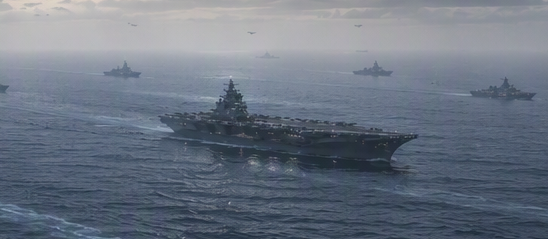

KALA YANTIGA NEWS ASSOCIATION

Image
UIN begins humanitarian relief mission in the Darvand Conflict

Editor Mara Kkinteiro | Nerva FD, Wuomu State, The United Islands of New Calandria

⮞ International News | Top Stories Today
// THE KASHIRI CORRIDOR, LIBERATED KEBAB
// ALL QUIET ON THE KILLIAN FRONTIER
// PELSH DELIVERS GENERAL ADDRESS


GULF OF HORMAZ, Ormazd— A couple hundred kilometers away, a conflict continues to spiral out of control. The war seems distant here, as the strike group led by the carrier UIN Gran Republikke prepares for its mission. The war in Ormazd, the Darvand Conflict as some call it, has attracted a coalition of nations into the fray. The United Islands days ago announced its intention to begin a largescale humanitarian mission in the region that has seen tens of thousands killed and many more wounded, homeless, and fleeing the war.

The mission of the strike group is simple: monitor the situation, and ensure the relief flotilla and the supply lane into the region is protected. The Gran Republikke is more than capable of launching strikes deep into the region and carries a complement of next-generation fighters and drones. Several ships in her pack also have an array of missiles such as the LRGM-12 Anvil, a missile that has an estimated range of at least 3,000 km, though it's actual maximum range is classified.

The UI notified warring powers in the region of an identification zone that it has enforced in the Sea of Atar and the Gulf of Hormaz. The UIN has allowed the relief flotilla to venture into the Gulf with its smaller supporting escort to assure its intentions. However, true to form, the UIN stationed the Gran Republikke's strike group within firing range in case there are any attempted attacks against the flotilla.

Early this morning, the flotilla arrived in the Gulf and immediately began operations. Helicopters worked around the clock to airlift supplies, vehicles, and personnel to the Hormaz coast to set up a 'Medical Command Center'. According to the UIN, this location was chosen because its away from major targets and also in a strategic position to be able to respond to MEDEVACs and establish supply lines into the country.

And the relief flotilla won't be the only one in the Gulf. Two more flotillas have departed Portu Alis and Belfacit to head towards the region, one of these flotillas is escorting supply ships and a few Saitiago mobile harbors, showing just how committed the United Islands is to the relief mission. Nerva has also stated that they are redirecting another carrier group led by the UIN Vangarda to the region.

The Vangarda is another nuclear-powered Belfacit-class super carrier like the Gran Republikke. The strike group also has two Manta-class drone carriers and a Trident-class arsenal ship, providing the strike group significant fire power. According to Nerva, the additional support is meant to act as a deterrent to prevent any hostilities. It will also allow the UIN to begin wider patrols along the shipping supply corridor they have established. Several bulk and fuel haulers are expected to begin their transit with the second flotilla.

Developments from the war paint a grim picture of the fighting. The Verezhi are pushing against a coalition of powers with a coalition of their own. Most of the fighting has been centered around Rostam Pass, the Karmazh Pass, and the city of Al-Masjid. Al-Masjid was subjected to massive bombardments in the last few days, reducing entire buildings to piles of rubble. The ground situation has been deteriorating since and confusion in the ensuing chaos has only grown. Just days ago, it appeared that the Ormazdi eastern front would entirely collapse, but recent analysis have now put that into question, with the front experiencing some of the worst close quarters fighting seen thus far.

"What we can see of the situation is almost unspeakable. Fighting in the Darvand region, particularly around Al-Masjid has gone from measuring how many kilometers gained this day to how many blocks have been taken. The city is completely unrecognizable and the civilian loss of life is expected to be astronomical. If there were ever a hell on this earth, Al-Masjid would be its name," Prime Minister Enrikke Orvala stated during a press conference.
Last edited by New Calandria on Tue Sep 01, 2026 9:02 pm, edited 2 times in total.

User avatar
The Macabees
Senator
 
Posts: 4326
Founded: Antiquity
Anarchy

Postby The Macabees » Thu Sep 03, 2026 7:58 pm

Image


LOUIS BURCH WINS KILLIAN PRESIDENTIAL ELECTION
An update on this post.

Image
DeMaio, capital city of the Republic of Killia.


DEMAIO, FREE KILLIA — National Republican Alliance (NRA) party leader Louis Burch was elected president of the Killian Republic in a close vote, winning 57 percent of the national vote in the second round. He defeated Charles Witting of the Democratic Reform Party (DRP), who conceded the loss in an early morning online statement. Burch thus becomes the first president since Jackson Hamilton, deposed by General Ambrose Longstreet during the Valo'Kap War.

The NRA received support from Killian Sovereignty Party (KSP) voters after their candidate lost in the first round. The vote among Liberty and Commerce Party (LCP) supporters was even split between the two big parties during the second round, and roughly 60 percent of Northern Civic Association (NCA) voters voted for the DRP.

The election's results are a strong message from the Killian electorate that its demand for a democratically elected executive authority is not synonymous with a decoupling from the Golden Throne. Most Killians still see the empire's military forces in the country as crucial for their defense in a war against Ordena. The Killian military is not expected to be ready for a complete takeover of imperial military garrisons until M.C. 2038, and the truth is that it will likely be even later than that. The election also shows that most Killians still strongly advocate for renewing the war effort against Ordena, with the intention of liberating the southern states. President Burch campaigned heavily on reinvigorating the domestic arms industry, especially in the area of drone warfare and munitions production. Much of this program has been heavily subsidized by the Golden Throne, while a smaller portion has been financed by the Golden Throne's banks, but Burch promises to significantly ramp up the number of Killian tax dollars invested into the defense sector. "We want to be ready for the next war," he said at a rally earlier in the month.

For many Killians, it raises the prospect of conscription. The NRA has promised to introduce legislation calling for national conscription, intending to stretch the 100-million-man army goal to a 300-million-man army during the same time frame. It has the backing of the KSP, and even many DRP voters acknowledge that a large standing army is required for asserting the country's sovereignty, not just against Ordena but also in relation to the Golden Throne.

Though Fedala has shown disinterest in Killian politics, going as far as to encourage the presidential elections, its territorial growth and the favorable legislation granting it a near-permanent lease on the entire state of New Hemett have proven distasteful among the urban middle-class. Ultimately, all Killians seek a world in which Killia can successfully defend itself against Ordenite military aggression and, even if as part of a coalition, as the dominant partner on its home soil.

More immediately, President Burch is charged with resolving the contentious topic of south Killian refugees filling the refugee camps outside of northern and central Killian cities. KSP and NCA voters want to push them back south, but the government says that the fortification of the south has made most of it unavailable to its previous inhabitants. Burch will have to navigate what seems like an impossible task. Conscripting as many of them into the military seems like the easiest solution.

There are also economic matters to attend to, as the country seeks to rebuild itself after territorial loss and financial ruin. Killia is borrowing in increasing amounts from imperial banks, but all parties have identified growing the domestic tax base as crucial for long-term fiscal health.

The NRA says the way to more public revenue is more economic growth, not higher taxes. President Burch is charged with invigorating a post-war economic revival that will fund the country's long-term mobilization plans.


___

RUMORS OF DISGRUNTLEMENT AMONG GARRISONING FORCES IN NEW EMPIRE

With additional redeployments of Ejermakt units in New Empire to Killia and the far west, a growing number of sources report rising discontent among imperial soldiers facing redeployment to Killia. Although information remains scarce, informants from within involved military units are raising concerns that are becoming increasingly dire and alarming. A few voices, including General Fres Barbágo, according to anonymous sources close to him, have already warned of mutiny.

Early reports of looting within some of the lower levels of Dasch, Halisfavon, and Hardsdad were dismissed as momentary breakdowns in discipline among isolated units. But as the stories of fighting, killing, and armed robbery continue to mount, questions about the extent of the breakdown in discipline have inevitably begun to rise. As UCS congressman Arnold Farmer said during a speech on the floor of the United Parliament, "why hasn't the Fuermak been able to crack down on the disorder, and why is it getting worse?"

Almost all of the incident reports come from the cities in the southern half of the satrapy. Traditionally rebellious, they have been heavily packed with imperial troops after the southern megalopolises shed hundreds of millions of civilian inhabitants during a series of violent urban revolts against the authority of the United City States and the Imperial Bureaucracy. Today, in Dasch, there is more than one imperial soldier for every three locals. The Ejermakt has opted to squelch any further opportunities for rebellion after deposing the city's former ruler, a strongman king known locally as an anax. The fate of the other cities in the south all mostly follow the same or similar tale, though Dasch has always been the most disloyal of all. That penchant for insubordination now seems to infect military units of predominantly Theohuanacan makeup.

During the Gothic War, New Empire served as an introduction to combat operations for freshly recruited auxiliary forces before ultimately being destined to fight against the Scandinvan Empire. Hundreds of millions of fighting-age people from Guffingford, Theohuanacu, Holy Panuli, Indras, Zarbia, the Havenic Territories, Monzark, and even New Empire itself were recruited as auxiliaries by Ejermakt. Whether lured to fight for the empire by the bonuses offered, by the retirement settlement that all veterans are awarded upon demobilization, or by the urge to leave home and see the world, the empire's subjects swelled the military's ranks. The auxiliaries made possible the marshalling of a billion-man army to invade the Scandinvan home isle of Drana. After the war's conclusion, the auxiliaries were abolished and these units reorganized into the Ejermakt's field army forces, named the Regulares.

A disproportionate number of units in southern Dasch are of Theohuanacan origin. And not by accident, either. Before the war, most of Theohuanacu was only loosely administered and existed on the margins of empire. Only the Zealand Prefecture, down to the port city of Tlaloc, could provide reliable recruitment pools, and the Fuermak waited until it had scraped the bottom of the barrel elsewhere before turning up its mobilization efforts in Zealand. That meant that most auxiliary units filled with Theohuanacan recruits got to New Empire late and, for a significant share, were too late to ever deploy to Gholgoth. They have since remained in these cities, now for several years, and many of the soldiers have settled in.

For now, the incidents remain local and directed entirely at the local population. But it suggests that order is breaking down among units facing removal to Killia, where the prospects of combat against Ordena are very high.

Further, the fact that the military has yet to be able to fully quell the disgruntlement suggests that the army may be unable to.

However, according to a press release issued by the Diplopalatio, the situation in New Empire "remains peaceful. The Ejermakt's redeployments to the west are proceeding on schedule."
Former Sr. II Roleplaying Mentor | Greater Dienstad founder (Current active GD RPs) | Factbook

The Macabees' Guides to Roleplaying, Worldbuilding, and Other Stuff
(Please upvote if you found value in them!)

User avatar
Solisian Union
Diplomat
 
Posts: 903
Founded: Apr 22, 2018
Democratic Socialists

Solisian News - Castille

Postby Solisian Union » Thu Sep 03, 2026 9:23 pm

HOSHIZUKI SHINPŌ

The Voice of the Starry Sky

Independent • Free • Solisian


CASTILLIAN PRESIDENT’S LEAKED REMARKS TRIGGER MASS PROTESTS ACROSS UNION

Veterans Surround Embassy as Foreign Ministry Summons Castillian Representative; Palace Orders Security Forces to Protect Diplomats but Not Disperse Peaceful Crowds

La Victoria, Solisia Primus


What began yesterday afternoon with disbelief became anger by nightfall has now transformed into national demonstrations in many parts of the Union.
Tens of thousands of Solisians have gathered, and continue to gather, throughout La Victoria and provincial capitals following the publication of leaked remarks attributed to Castillian President Marlène Backès, whose private comments accused the New Solisian Union of possessing an “addiction to confrontation,” pursuing military adventurism throughout Western Greater Dienstad, and depending for its continued existence upon the military protection of Holy Marsh.

It appears that the Castillian government has not denied the authenticity of the remarks, although officials in Preslaff have emphasized that the conversation was private and does not constitute a formal change in Castillian foreign policy. That distinction has done little to calm Solisia.

By dawn, Magdaran veterans, students, dockworkers, military families, provincial associations, religious groups, farmers, former Republicans, former Monarchists, and ordinary citizens had packed the streets surrounding the Castillian diplomatic mission in La Victoria, raising Yellow Stars, household banners, old regimental colors, photographs of the dead, and handwritten placards above the crowd. More people poured out of side streets and tram stops until banners and rain-darkened bodies swallowed whole intersections. Veterans forced their way toward the front in loose groups while students climbed benches, railings, and parked vehicles and shouted over the chants rolling down the avenue. Dockworkers hammered gloved fists against the metal barriers in rhythm while military families lifted portraits of their dead high enough for anyone watching from the embassy windows to see them. Police officers constantly shifted their lines, opened emergency lanes, and pushed the crowd back whenever it pressed too close to the gates, but they made no effort to send anyone home.

Among the most common words painted across them were: MAGDARA WAS NOT A PLAYGROUND.

WE CROSSED THE SEA OURSELVES.

NO ONE CARRIED US.

WE FOUGHT FOR THE COMMONWEALTH AND THE SOCIALISTS AGAINST ORDENA.

SOLISIA STANDS ABOVE THE BLOODSHED OF MAGDARA.

And, on a long white cloth held by nearly forty veterans: HOLY MARSH IS OUR SISTER, NOT OUR MASTER. ALLY AND EQUAL - NEVER MASTER, NEVER.

Hoshizuki Shinpō correspondents counted veterans from several Magdaran formations among the largest groups gathered in La Victoria. Some wore current service dress. Others arrived in faded field uniforms kept since the war. A few wore nothing military except campaign ribbons pinned to ordinary shirts. Many carried photographs.

One elderly woman held a framed image of two young soldiers beneath one arm while holding a Yellow Star banner with the other. She declined to give her full name.
“My daughters crossed the waters, that strait, and they fought hard and honest,” she said. “One came back. Only one. But I love them both, the dead and the living.” When asked what had angered her most about the Castillian remarks, she stared toward the embassy for several seconds before answering. “The playground. That's what they called it.” She shook her head. “Do not call the place where my child died a playground.”

Shortly after sunrise, the Nemseitai sealed the streets immediately around the Castillian mission with layered barricades, police trucks, and tightly spaced lines of officers in dark field uniforms. Armed Nemseitai personnel took positions at the embassy gates, along the walls of nearby diplomatic residences, and at every road used by Castillian vehicles, while traffic units diverted cars and kept narrow emergency lanes open through the growing crowd.

Several nearby businesses and foreign residents asked the Nemseitai to clear the district completely. Their commanders refused. Instead, they pushed demonstrators back whenever they crowded the outer barriers, pulled away anyone carrying weapons or trying to climb the barricades, and arrested the few people who attempted to throw objects toward the embassy.

When Hoshizuki Shinpō asked one senior Nemseitai officer why thousands of protesters were still being allowed to remain within sight and hearing of the Castillian compound, she answered without hesitation. “We have orders to protect the embassy, the diplomats, the residents, and the people in these streets. But we have our limits. We were not ordered to protect Castille from hearing why Solisia is angry. So this is all we do.”

“WHO CROSSED THE WATER?”

The largest demonstration began shortly before noon near the Starlight Basin, where several thousand Magdaran veterans assembled before moving toward the diplomatic district.
Veterans arrived in family groups, former platoons, provincial associations, trade-union delegations, neighborhood groups, and informal gatherings of soldiers who appeared to have contacted one another overnight. The first unified chant began without any visible organizer.

A woman standing on the roof of a parked truck shouted: “WHO CROSSED THE WATER?”

Thousands answered:

“WE DID!”

“WHO FOUGHT IN MAGDARA?”

“WE DID!”

“WHO CAME HOME?”

The answer began loudly, faltered, and then changed.

“NOT ALL OF US!”

The crowd went quiet. For nearly a minute, the only sounds came from traffic farther away and the low movement of security personnel along the barriers. Then someone began singing. Others joined. Within moments, several thousand voices had taken up an old military song. Such spontaneous collective singing is common in Solisian public life and has long accompanied work, festivals, demonstrations, mourning, and military gatherings. The modern Union’s martial culture continues to draw heavily on older communal traditions in which loyalty is understood through household, community, unit, ancestry, and obligation rather than purely individual patriotism.

AZYNIA: HOUSEHOLDS ARRIVE TOGETHER

In the Azenian districts of the capital and across Azenia itself, demonstrations took on a distinctly communal character.
Entire households traveled together. Women with tribal tattoos walked beside children with Yellow Stars painted across their cheeks. Young veterans stood beside grandmothers carrying household banners. Several groups wore body paint representing family relationships, military service, and local affiliations, continuing Solisia’s broader tradition of marking loyalty and life milestones physically through tattoos, paint, and other symbols. Unlike the looser crowds seen elsewhere, many Azynian groups organized themselves into circles or rough columns before entering demonstration areas. Their chants emphasized belonging.

“OUR SISTERS BLED.”

“OUR DEAD ARE OURS.”

Several protesters repeatedly shouted a phrase increasingly heard across the Union since the Magdaran War: “You do not leave your sisters behind. Forever remember your sister! Forever sisters, forever honor!”

The saying is now common far beyond Azenia, although historians have long traced similar forms of the sentiment to older Azynian ideas of household, tribe, unit, and collective obligation. However, not all Azynian demonstrators called for retaliation against Castille. Many did not. But anger at the suggestion that Solisia survives only because of Holy Marsh appeared nearly universal among those interviewed.

“We love the Mar’si,” said an Azynian veteran named Yessara Tul. “That is why the insult is stupid.” She pointed toward the embassy. “They think saying we have an old ally means we cannot stand?” She laughed. “Then they do not understand either of us.”

EASTERN PORTS SOUND THEIR HORNS

The reaction in eastern Solisia and the Elizaran Islands was louder in a different way, as shortly after noon ship horns began sounding throughout several eastern ports and merchant vessels, fishing ships, harbor tugs, private craft, and ferries joined naval-family demonstrations along the waterfront districts. In Magadanga, where maritime trade and naval life have shaped generations of Elizaran culture, dockworkers briefly halted loading operations while several hundred workers gathered beneath harbor cranes carrying both Elizaran and Union flags. Elizarinia remains one of the Union’s great maritime centers, with seafaring, trade, ports, privateering traditions, and naval life deeply embedded in local society.

Across several warehouses appeared newly painted slogans:
WE CROSSED THE SEA OURSELVES.

ASK MAGDARA WHO CAME.

Port authorities ordered commercial activity resumed after short stoppages and warned workers against interfering with foreign shipping. No mass arrests were reported. In Ginwan Coast, another demonstration gathered outside a naval memorial dedicated to sailors killed during the Magdaran War. The names of the dead were read aloud.
No speeches followed.

“THE SOLDIERS CROSSED. WE FED THEM.”

The Free Rasur State answered differently. Rather than concentrating immediately in giant city demonstrations, farmers, transport workers, food-processing employees, railway laborers, and agricultural cooperatives organized local protests throughout the day. In Central Rasur, workers from several meat-packing and distribution facilities conducted temporary walkouts. In the western farming districts, convoys of tractors and produce trucks entered market towns flying Yellow Stars from their cabs.

A handwritten banner stretched across three agricultural trucks outside one provincial hall read: THE SOLDIERS CROSSED THE SEA. WE FED THEM.
An older farmer interviewed beneath it said she had never served in uniform. “My sons did. My daughters did. But I always loved and supported them. They earned and deserved that much.” She pointed to the grain warehouses behind her. “So did this place.”

For many demonstrators there, the Castillian criticism was not merely an insult to the military. It was interpreted as an insult to a national war effort sustained by farms, railway workers, factories, ports, families, and towns far from the front.

KARATAL: “WE ROSE WITHOUT YOUR PERMISSION”

In the northern highlands of Karatal, protests developed through villages and household associations before larger groups gathered in provincial towns.
Karataikara communities frequently place strong importance on household identity, locality, and communal reputation. Their naming traditions themselves often preserve aspirations toward prosperity, health, dignity, learning, opportunity, and rising beyond hardship. The demonstrations reflected that local character.
Rather than large standardized national banners, many groups carried household colors or placards naming their home villages and valleys.

One sign photographed outside a government building read simply:

WE ROSE WITHOUT YOUR PERMISSION.

Another:

POOR ONCE. SILENT NEVER.

The first phrase spread rapidly through Solisian social media by afternoon.

DUSK RITES FOR THE MAGDARAN DEAD

Triad priestesses throughout the Union have so far avoided joining calls for retaliation. Instead, several temples announced special dusk observances for those killed during the Magdaran War. The Triad Faith places the Sun with vitality and strength, the Moon with healing and growth, and the Stars with memory, guidance, and the Eternal Ancestors.

At one crowded shrine in La Victoria, a priestess told worshippers: “The Stars remember those who crossed the water. The Moon asks that grief not become madness. The Sun does not ask us to kneel.”

Those words were repeated widely by evening. Rain began falling shortly afterward. Few people left. For followers of the Triad, rain itself is traditionally celebrated as a gift shared by Sun, Moon, and Stars rather than treated as an inconvenience. The demonstrations continued beneath it.

SECURITY FORCES TIGHTEN CONTROL WITHOUT CLEARING STREETS

The Interior Ministry confirmed that the Nemseitai, Solisia’s civilian police, had taken primary responsibility for keeping order around the Castillian diplomatic district, while specialized Aruvataiwan formations — formally the Solisian Arunakai Nurvarei Keedutaiwan — reinforced ordinary precinct officers wherever the crowds became too large or too volatile for regular policing. The Aruvataiwan had been created under Queen Wessa and the NNRA specifically for crowd control, major public disturbances, mass emergencies, and what officers themselves less formally described as situations where “real fucking shit” had begun. Their reputation was not for ceremonial policing, but for being the units sent when the Nemseitai needed people who would stay competent, reliable, and prepared under pressure.

In La Victoria, ordinary Nemseitai officers worked the inner streets around the embassy while Aruvataiwan teams took over the heavier outer lines, crowd channels, vehicle barriers, emergency corridors, and rapid-reaction positions. Commanders rotated units frequently to stop individual lines from becoming exhausted or angry as insults, drums, chanting, and rain continued for hours. Officers in heavier protective equipment stayed several streets back unless needed, deliberately keeping the most intimidating formations out of direct view while lighter Nemseitai lines handled most contact with demonstrators.

Several people were detained during isolated disturbances. Nemseitai investigators confirmed arrests for attempted assaults, carrying incendiary materials, climbing diplomatic barriers, damaging nearby property, and trying to force their way through police lines. Those arrests remained selective. Officers dragged individuals out of the crowd rather than driving whole formations forward, and the Aruvataiwan repeatedly opened lanes so detained protesters could be removed without turning the surrounding demonstration into a running street fight.

Hoshizuki Shinpō correspondents also watched Nemseitai officers pull Castillian citizens, foreign journalists, and confused passersby out of crowds when protesters surrounded them too closely. Aruvataiwan teams reinforced those movements when necessary, forming short protective corridors through the demonstrations and then withdrawing again as soon as the immediate danger passed.

No general order went out to clear the streets. No mass dispersal began.

Chanting continued. Drums continued. Songs continued. Placards remained raised. Veterans continued shouting toward the embassy. Students remained on railings and parked vehicles until Nemseitai officers ordered them down only when they blocked movement or risked falling into the crowd.

One Nemseitai commander near the embassy was overheard briefing officers before another relief shift arrived.

“Nobody touches the embassy. Nobody touches Castillian civilians. Nobody lets anyone through the diplomatic perimeter.” She looked down the police line. “And nobody starts beating Solisians because they are angry. That's what we are all here to make sure of.”

Nearby, an Aruvataiwan section leader gave an even simpler order to her people.

“Hold the line and maintain order! Take the dangerous ones. Leave the loud ones.”

Later, a group of Magdaran veterans pushed several steps beyond the marked protest boundary before Nemseitai officers stopped them. One officer placed both hands against an older veteran’s chest and pushed her gently but firmly backward.

“Behind the line.”

The veteran shouted another insult toward the embassy.

The officer pointed back toward the crowd.

“Behind the line.”

The woman stepped back, turned toward the diplomatic compound, and screamed the insult again at twice the volume.

The Nemseitai officer watched her for a moment.

“Louder is legal.”

The surrounding veterans erupted in cheers. Behind the ordinary police lines, Aruvataiwan officers did not react.

That, more than anything, captured the government’s approach. The Nemseitai would stop assaults, arson, and any attempts to storm the embassy, but they would not protect Castille from the people who must shout against them, no matter what their diplomats may say, though the Nemseitai shall honor Her Majesty's wishes that they protect the diplomats of Castille.

Hoshizuki Shinpō could not independently confirm whether the unusually permissive rules came directly from Queen Wessa I. However, several officials familiar with palace discussions said Her Majesty personally reviewed the security arrangements throughout the day. One described her as “seriously, but not extremely, displeased” by President Backès’ remarks. Another said the Palace had reduced its guidance to: “Nothing must happen to their diplomats. Do not turn this into a battle with our own people.”

Two officials said Wessa specifically resisted proposals for an early mass-dispersal order after briefings warned that the demonstrations could continue into the night.
“The Queen does not want the embassy burned. She would rather have no issue with foreigners. However, she does assert and impress upon us that she would rather not see the streets emptied for President Backès’ comfort.”

The Royal Household declined to comment further and the Aruvataiwan remained deployed after dark. Their presence and their mobile reserves parked out of immediate sight, officers rotated through crowd-control positions, and Nemseitai investigators moved quietly through the demonstration identifying people who had crossed from protest into actual violence.

CASTILLIAN REPRESENTATIVE SUMMONED

The Ministry of Foreign Affairs told reporters this afternoon that it had summoned Castille’s senior diplomatic representative in La Victoria to answer directly for President Marlène Backès’ remarks. Ministry officials made clear that Solisia is not breaking relations, recalling its mission, or pretending the leaked conversation was a formal Castillian communiqué; the government nevertheless considers the comments serious enough to demand an explanation from Preslaff.

“We want answers,” one ministry official told Hoshizuki Shinpō. “The President of Castille questioned our sovereignty, our conduct in war, our relationship with Holy Marsh, and the legitimacy of our policy in Western Greater Dienstad. We intend to ask the Castillian government, directly and officially, whether those views reflect how it actually regards the New Solisian Union. We hope that the government of this country, with measured respect for their own contributions to the Magdaran War, shall do their best to clarify and speak with us concerning the matter of their President.”
^_^

User avatar
New Calandria
Bureaucrat
 
Posts: 52
Founded: Aug 29, 2026
Inoffensive Centrist Democracy

Postby New Calandria » Fri Sep 04, 2026 9:00 pm


KALA YANTIGA NEWS ASSOCIATION

UISLA launches first modules into orbit after years of development

Editor Mara Kkinteiro | Nerva FD, Wuomu State, The United Islands of New Calandria

⮞ International News | Top Stories Today
// THE KASHIRI CORRIDOR, LIBERATED KEBAB
// ALL QUIET ON THE KILLIAN FRONTIER
// PELSH DELIVERS GENERAL ADDRESS


MARU ATOLL, Caldera Sea — The United Islands Launch Alliance successfully launched its Aro IV launch vehicle from the Maru Space Center on Maru Atoll this morning, bringing to a close years of development, and starting a new chapter in the UI's goals for space exploration. Aboard the launch vehicle was the first module for the Frontier Space Station, an ambitious project that will eventually see more launches to complete it.

Frontier has been a joint project between various corporations as well as the United Island's Space Agency. The goal of the Frontier program is to facilitate re-usability, develop new technologies in space, and eventually provide a platform for in-situ construction of satellites, probes, and spacecraft. The Aro IV is expected to be replaced by the Adastra launch vehicle next year, which has successfully managed return flights in the Caldera Sea.

"Our goal is to not only have rockets that can fly to Frontier and deliver supplies, material, and personnel but also develop technologies that will allow us to go even further. Right now, what we can build and launch into space is limited by physical factors regarding our atmosphere, aerodynamics, weight, and so on. This means rockets have to be strong enough to survive immense forces, but light enough to fly," Space and Science Director Iankarlo Ernandes stated during a press conference following the Frontier launch.

What we can put into space is limited by what can be fit on a rocket, something that has long been seen as inefficient, wasteful, and needlessly difficult for the UISA. Frontier promises what our world can't. The capability to design larger, more capable craft in space that can focus solely on transit between our planets and other rocky bodies. That leaves the Adastra to simply resupply and bring in crew.

The eventual goal is to build a permanent lunar base for the UISA, a project that is going to take several years of development and stepping-stones to achieve. If Frontier is successful, it'll be a matter of further developing craft that then can bring supplies from a spacecraft to the lunar surface where it can be used to construct such a base.

User avatar
Eitoan
Chargé d'Affaires
 
Posts: 366
Founded: Jan 04, 2018
Anarchy

Postby Eitoan » Sun Sep 06, 2026 3:06 pm

Image
www.News-Herald.et.com
Business: National Reserve Bank of Eitoan Issues Quarterly Report


Report Discussed at Berwyn Conference.


The nation’s central bank released it’s quarterly report in a talk at the Berwyn Economic Form, feted at the Harbormaster’s Club in the nation’s second city. Presenting the report to many of the nation’s leading financial and business luminaries today was Mr. Christopher Ra, member of the NRBE Board of Overseers for four years. The quarterly report is mandated by NRBE Rules, and the presentation was the first time in twelve years the Berwyn Economic Forum hosted it. Following tradition, Mr. Ra addressed general price levels. The Consumer Price Index snapshot at time of report clocked in at 4.3%. The rate was a slight bit higher than targeted by the bank, but was not unexpected to many economists. Food prices retarded the rise of prices at home, increasing only 2.1% annually. Since this was the most impactive component of the CPI, there hasn’t been much concern voiced about prices at the grocery checkout either directly by or among distributors or grocers. Transportation costs outpaced the CPI however, leading it at 4.7%. Transportation analysts pointed to increased public transit fares in the larger cities, attributed to rising costs of construction and maintenance, and increased private vehicle passenger traffic due to greater highway capacity, particularly in the central corridor main routes. Road construction projects in Kelso and Stickney also were blamed for a rise in commute time in those cities as another contributor. Housing led the way in consumer inflation at a 5.6% increase. Much of this once again was traced to the larger cities, where median rents in Kelso shot up 7.7% at an annual rate, spurred by demand for luxury and upper income rental units near or in the nation’s business center’s central business district. This also caused a ripple effect in upper tier home prices across greater the greater Keslo vicinity. The Producer Price Index, by contrast lagged at a 3.2% growth, signalling some possible relief for Etioan consumers in the upcoming year. Raw materials saw an anemic increase of 2.7%. The NRBE report pointed to better sourcing for manufacturers, and also upgrades to transportation and logistics systems in the past year, particularly in more remote areas and across the border. Docking and material handling at the port of Blue Island also were reported to have contributed to the low rate of increase for chemicals and primary steel materials. Energy prices also remained relatively stable, growing at 3.0% annually. In this sector, commercial electricity rates increased at only 1.1%, the result of negotiation of long term contracts with providers in the mid-Ruzek valley. The quarter also saw two new generation facilities, both fifth generation nuclear at Cloverdale and Halkev. Primary industrial finished goods saw a price growth of 3.4%, with rubber and plastic components leading that area at 5.3%. In a side note, Mr. Ra cited retooling and software upgrade costs at Gold and Brass Manufacturing Pvzurk, the nation’s second largest materials supplier as a contrubuting factor.

The Consumer Price Index growth exceeded that set under the Policy Target Agreement with the Treasury by 0.2%. Mr. Ra said that the Board of Overseers had not been lobbied for sterner anti-inflationary measures, and that the lower Producer Price Index growth rate should be felt downstream by households in the upcoming months. The Treasury was not demanding tightening of business or consumer lending, and he referred those with questions about the administration’s views to contact the Treasury directly. Most Overseers would like to see a cooling of consumer price inflation to just above 3% in the upcoming years, but had qualms about any sudden brakes on consumer borrowing. He pointed out at this time there had been very little appreciable increase in individual load applications, and most of that had been in short term mortgage lending. He pointed out that the average mortgage loan term had increased in the last year only from 5.7 to 5.9 years, outside of the nation’s two largest metropolitan areas. He also noted that the obverse of inflation, unemployment had declined to 4.2% from last year’s 4.4%. He reminded the attendees that “While gross price stability remains the primary goal of both the NRBE and the Treasury, nobody wants to see this upset by a rise in unemployment at this time. At 4.2% we are well above the confidence interval of frictional unemployment, at believe this to ba a reasonable tradeoff with inflation in a growing economy”. Mean time to fill openings in the service sector did show an increase from six to seven weeks annually, another indicator of a strong labor market.

Banking Supervision and Non Charter Comments

Mr. Ra then summarized the major points in the Quarterly Report’s Charter Review. Deficiencies were found in three tier one commercial lenders, the most serious one in a breach of trust data in the Dolton First Charter Bank. Analysts from the NRBE are close to wrapping up the onsite investigation there, and expect to come up with findings in the next few weeks. The Dolton First Charter data breech may require selling of trust assets to certified institutions in the event recommendations are not followed within a sixty to one hundred twenty day window. The total number of deficiencies found declined from four in the previous quarter. Mortgage lenders showed a marked improvement in security and reporting over the prior quarter, as did consumer lenders. There was an increase in actions against second tier commercial lenders over the last quarter, with the most severe being hearings for charter revocation for two banks, the first revocations at the tier two level this year. Mr. Ra touched briefly on non-charter financial activity, noting that bi party and other multiparty funding of major projects remained brisk in the tech sector, a not uncommon occurrence. Both the NRBE and the Treasury have traditionally looked upon this favorably, removing the risk to borrowers and lenders in the commercial banking ecosystem.

Foreign Banking Oversight

As part of the Quarterly Report, the NRBE jointly issues a section issued by the Foreign Financial Practices Task Force jointly with the Treasury and the Attorney General. As always, high values financing by foreign banks headlined the section. Real estate investment and financing by stable, vetted firms, particularly in Kelso commercial and high value mixed real estate was the leading area, and was adjudged to be stable and of controlled impact on Eitoan financial markets. The NRBE did not expect expansion of certification beyond well established institutions, mostly of Macabbean and Mokan ownership. There was a slight increase in foreign participation on the Regular Cammercial Activity category, where the was an increase in applications from western banks, currently under review. Cooperative Lending Agreements showed a significant growth in the past quarter, with Valkolicci lenders obtaining Eitoan correspondent banks. Mr. Ra noted this marked the entry of Valkolicci institutions into Eitoan lending.

He also spoke extemporaneously about indirect foreign actions in the west and their relation to Eitoan business, telling the Forum “The mainstay of Eitoan financing has been and remains internally generated capital spending, where businesses freely decide which projects will provide the creates return on investment. We don’t see this changing in the near future. It has always allowed Eitoan business to innovate, to grow at it’s own pace, to serve the needs of companies, investors and consumers free of banking constraints, taking the risks and gaining the rewards it sees fit. Of course, when banking is needed, in those projects in critical industries, the NRBE will maintain close scrutiny of foreign involvement and exposure for national security related transactions. We operate under the Constitution, written by the people of Eitoan, for the people of Eitoan. That can never change. It is not the purpose of the bank, or of the Eitoan government to build a commercial empire. We do not operate in a command and control economy. For those with ambitions, whether near or far to carve out an empire, to any in Eitoan contemplating such a thought, we say if you want an empire, sell a better product”.


Vladarsik: Treason Legislation Proposal Underway in Dashez

Civic Platform Defines Pacifism as a Danger

The recent announcement by Chief of National Intelligence Operations Lieutenant General Jan Weissman of Accelafeed and other social media posts promoting disarmament and pacifism have raised the hackles among several conservative legislators in the Lower House. The misleading messages, crudely written have been thought to point to foreign actors, and it is unknown how much traction they have found among the general public.

The Chief’s announcement initiated discussions at the Dashez, and participants included members of the Upper House (Ghastak) late last week for consultation about the formatting and likely success of any draft resolution passing into law. At this time discussions have not included any member of the administrationi and it is not know if the legislation could get past a first reading in the Dashez before the November legislative elections. In the mean time, the Office of the National Intelligence Operations has begun consultations with the High Command to investigate if the calls for pacifism have had any impact on morale, or on selection of branch of service for this year’s class of inductees under the draft.

Dasheznik Norman Nelson, a freshman Civic Platform legislator is leading the efforts to define the role of pacifism in the Criminal Code. He is joined by three other Civic Platform Dashezniks. The group has been tight lipped on details of a proposed bill, and it is not known if incarceration, fines, or capital punishment would be included in such a bill. Although only Civic Platform Dashezniks are involved in drafting any potential legislation, several key National Democrats have endorsed such a move. A rough draft has been indicated, patterned on Article 24 of Chapter 1 (Fundamental Provisions) of the Constitution. Article 24, passed as an amendment revokes cover from prosecution for organizations engaged in treason or subversion, otherwise protected under Chapter 1, Article 14, guaranteeing freedom of religion. The addition to the Criminal Code would explicitly define pacifism as subversion, and would not be tied to religious teaching.

Legal discussions at this time have centered on whether such a change to the Criminal Code would violate Chapter 1, Article 15, Section 1, guaranteeing freedom of speech. Many prominent attorneys and legal scholars argue that it would undermine that guarantee, and that should pacifism take root, the state would have not power to suppress it. Those promoting the legislation argue that such a philosophy has no grounding in Eitoan history, or among any Eitoan faith or school of thought. They claim that it is subersive to the maintenance of the state, in that it would undercut the capabilities of the armed forces and cause a rift between those that serve the country and those that refuse. Legal commentators have noted there is scant case law regarding refusal to serve under the draft, with those having objections to fighting for any reason opting for or being assigned to the the Uniformed Military Service Corps.

The administration, as well as Free Democrat legislators have refrained from comment, citing the preliminary nature of the discussions, and that there is no bill currently before the Dashez to review. Questions remain at this point. If the postings were instigated by a foreign source, where did it originate, and was the originator a foreign government? It is not believed to have any credible domestic source. However, some have noted that it could be a form of pushback among post-graduate students in liberal arts and related areas at some universities. There has been some disgruntlement at four liberal arts colleges in Virden Territory, where the Territorial Legislature has moved to limit the time granted to complete a doctorate to ten years, under a new “graduate or get out” policy aimed at trimming waste in education.
Last edited by Eitoan on Mon Sep 07, 2026 6:25 am, edited 1 time in total.

User avatar
State of Ordena
Envoy
 
Posts: 243
Founded: Jun 07, 2023
Psychotic Dictatorship

Postby State of Ordena » Tue Sep 08, 2026 6:56 pm

THE HOMELAND REPORTS
DIE HEIMATBERICHTE


KRIJGSMARINE SIMULATE BLOCKADE OF TUPENGA AS PART OF WESTERN GD NAVAL EXERCISES


BERLINA -- The Krijgsmarine recently began a weeklong maritime exercise in Western GD waters. In doing so the Krijgsmarine naval forces involved conducted live simulations of a blockade of Tupenga, a nation that had not long ago had its rightful government overthrown by the Theocratic Matriarchy. The simulation in question involved over 300 warships of the Krijgsmarine's Western Sea Fleet based in Fustera. Due to the predatory nature of the Theocratic Matriarchy and the Solisian Union, these maritime exercises were essential in hammering out specifics in a war time scenario in which Tupenga would need to be liberated.

A separate exercise was also taking place involving the Ordenite Aerospace forces and naval infantry, in which they simulated conducting an amphibious landing operation in a theoretical war to liberate Tupenga. The amphibious landing exercises were held in Fustera where in such a theoretical war would be the direction in which such an operation would come from. The exercises would also apply to the now Satrapy of Samarasta although no blockade was simulated for the former Istoloan colony.

In light of these exercises and the ever prevelant threat of the Solisian Union, the Krijgsmarine has upped its presence of Type 216 long range diesel electric submarines in the waters between Fustera and Tupenga. The Krijgsmarine remain dedicated to the keeping of order and stability in Western GD and in Greater Dienstad as a whole.
Formerly known as; United World Order, Greater Ordena.
Proud member of Greater Dienstad
Condemned by the WA Resolution #272

PreviousNext

Advertisement

Remove ads

Return to International Incidents

Who is online

Users browsing this forum: No registered users

Advertisement

Remove ads