NATION

PASSWORD

Land Transport in your nation

A place to put national factbooks, embassy exchanges, and other information regarding the nations of the world. [In character]

Advertisement

Remove ads

Which is the primary land mode of transport in your nation?

Cars/Trucks
68
34%
Motorcycles/Mopeds
3
1%
Bicycle
2
1%
Trains
77
38%
Buses
16
8%
Trams/Trolleys
12
6%
Walking
9
4%
Animal-Powered
5
2%
Other [Please Specify]
9
4%
 
Total votes : 201

User avatar
Hiyoko
Bureaucrat
 
Posts: 55
Founded: Mar 13, 2022
Moralistic Democracy

Postby Hiyoko » Sat Jun 28, 2025 5:24 am

In the realm the primary means of land transportation is indeed trains, both passenger and freight owned by the Hiyokoan Logistics Forces (HLF).

Of course, the honorable mentions are cars and bicycles. The former for reaching locales where trains don't go and the latter are for small cities.

⸸ 歿 ⸸ The All-Valkyries' Government of Hiyoko ⸸ 歿 ⸸
ㅤ◈ㅤOverview ㅤ◈ㅤCultureㅤ◈ㅤ Leisureㅤ◈ㅤEconomyㅤ◈ ㅤArmyㅤ◈ㅤThe Valkyriesㅤ◈
《 The aristocratic realm in the clouds, continuing the great acceleration. One dead Imperialist at a time! 》
'ᴀɴᴅ ᴛʜᴜꜱ ɢɪʀʟꜱ, ʙᴇᴄᴀᴍᴇ ᴇxᴇᴄᴜᴛɪᴏɴᴇʀꜱ, ᴍᴀꜱᴋᴇᴅ ᴄᴏɴᴅᴏᴛᴛɪᴇʀɪ. ɪᴍᴘᴇʀɪᴜᴍꜱ ꜱᴇᴛ ᴀʙʟᴀᴢᴇ, ᴡᴀʀʜᴀᴡᴋꜱ ꜱʜᴏᴛ, ᴛʜᴇɪʀ ʀɪᴄʜᴇꜱ ʙᴜʀɪᴇᴅ'


User avatar
The Sernetian Empire
Negotiator
 
Posts: 6244
Founded: Jul 04, 2024
Right-wing Utopia

Postby The Sernetian Empire » Sat Jun 28, 2025 8:19 am

Sernet wrote:All of you are going to know the answer to this:

Although there is an extensive road network in sernet, by far the most popular mode of transport are TRAAIIIIIIIINNNNSSSSSSSSSSSSSSSSSSSSSSSSSSSSSSSSSSS.

operated by sernetrail
Polish-algerian muslim guy who lives in SE london, Arsenal supporter, I also am passionate about trains, I play nationstates and stepford county railway (roblox) and some stuff on switch. Location (where I live): London, UK
Sexuality: straight
Sernet is a large nation famous for its extensive rail network and our skyscrapers and tower blocks. Capital city: Sernetesen. Sernet is a space-capable state and maintains a network of terriories, but we're not your traditional earth-based empire (we are very benevolent). The nation is rich in history and culture and is extremely patriotic.
Mostly modern tech, except in some fields where we'd be PMT


#thepowerofsernet
The Sernetian Empire

Rest in peace OG Sernet - Sernet is back
NS stats were gunned down by anti-aircraft guns
News can't fit

User avatar
Sycorat
Minister
 
Posts: 2798
Founded: Dec 18, 2024
Civil Rights Lovefest

Postby Sycorat » Sat Jun 28, 2025 9:02 am

Zetronic commuters often use something called Mež'žlo Aiþžykapažlo (Zetryy-Kykran for Work Transport) in which large amounts of commuter-driven cars, vans, and other vehicles can go underground, through up to 2 million single or double-file roads, and resurface at parking lots next to certified offices and work buildings. surface-level vehicular transport can be used for leisuric, non-employer transport, such as road trips, transport to parks, and residential areas. this also allows for the existence of under-ground gas and petrol stations, where in rare cases, the petrol can be siphoned directly from the source.

Alternatively, private low-flying aircraft can be rented for up to 16 hours at a time, and ranges in price from 400 to 2900 ternion, which is around 1200 GBP and 8700 GBP respectively, 1,645 USD and 11,931 USD respectively for my American friends reading this. these planes are obligated to fly no less and no more than 20 feet above urban roads, however it should be note that in open, more ruralic areas, they can fly much higher. They can contain up to five people at a time, not excluding the pilot.
telegram me anything you like. shoutout to my twin Ceved Azan.
join this pretty please
I am a British Democratic Socialist. Cis Male, He/Him. Aroace. Apathetic Insomniac.
Progress > Perfection
click here for more info regarding me
RIP Ascendant Europe
BURNOUT IS A NASTY FUCKING BITCH
Zetronis Main Hub, old
Join Paladin Astralblitz! Never call me Syco. Anything but that.
dumbville, population: stupid

User avatar
Karnith
Spokesperson
 
Posts: 183
Founded: Feb 21, 2025
Ex-Nation

Postby Karnith » Sat Jun 28, 2025 9:57 pm

Tramways and buses are usually preferred for longer distances, for shorter distances, bikes and scooters are chosen.
Electric cars are a popular choice as well. (Note that any other type of car other than electric is illegal.)
┉⦿┉┉⦿┉┉⦿┉┉⦿┉┉⦿┉┉⦿┉┉⦿┉┉⦿┉┉⦿┉┉⦿┉┉⦿┉┉⦿┉┉⦿
“Karnith, a nation where the people speak free,
Beautiful trees and hills, likes of which look like they came from a dream,
Serving citizens for eternity…
Tell me, what is a nation without the voices of it’s denizens?”
Just a transgender turkish dude with a odd liking for linguistics, mold and everything nationstates, he/him.

┉⦿┉┉⦿┉┉⦿┉┉⦿┉┉⦿┉┉⦿┉┉⦿┉┉⦿┉┉⦿┉┉⦿┉┉⦿┉┉⦿┉┉⦿

User avatar
Askio
Diplomat
 
Posts: 889
Founded: Jun 07, 2024
Civil Rights Lovefest

Postby Askio » Sun Jun 29, 2025 3:47 am

Trains and cars reign supreme on Perlo (the most populous planet of Askio) due to the huuuuuuuuuge distances and very low electricity costs (Askio only has electric cars, old timers run on biofuel). Astorio and Belvido are for example 7000 km apart, you can't take a bike ride. However! Public transport with subways, trams, busses is very well developed in cities and there are a lot of bike lanes.

When it comes to long distance travel, such as from Astorio to New Bohemia, you'd almost certainly take a plane though :)
★ Bonvenon al la -Planeda Unio de Askio ★
⛅ 19 °C
Astorio 1: ▶ Ĉiuj en la mondo by Martin kaj la talpoj ❯❯❯❯ New government with a humanitarian and pro-science focus • Askio to help refugees struggling to find shelter on Earth to find asylum here • New hydrogen super-sonic aircraft, the Robino-X, designed by Alaero

User avatar
Ceteguila
Political Columnist
 
Posts: 3
Founded: Jun 29, 2025
Ex-Nation

Postby Ceteguila » Sun Jun 29, 2025 5:19 am

Ceteguila's main land transit is either buses and trains.

All train networks are run by the Imperial Ceteguilan Railway Networks, or ICRN. Bus routes are run by localised authorities.
★ The Imperial Regency of Ceteguila ★
A nation ruled by the Regent Alexis III, with 753 million people, a strong military, and decomposing neighbours. Also, NS stats were killed during the Cerise Revolution
(we are so back ^_^)
Ⰻⰿⱂⰵⱃⰻⰰⰾ Ⰱⱃⱁⰰⰴⱌⰰⱄⱅⰻⱀⰳ Ⱀⰵⱅwⱁⱃⰽ | Imperial Broadcasting Network: Altusian ambassador to Ceteguila dies at age 83 of a cerebral haemorrhage.

User avatar
Xaalsheon
Bureaucrat
 
Posts: 50
Founded: Jun 08, 2025
Democratic Socialists

Postby Xaalsheon » Sun Jun 29, 2025 5:52 pm

In Xaalsheon, people don't travel long distances as much as they do in other nations because state economic planning has largely eliminated commuting, makings trams our primary method of transport and putting trains in second place.
Qekhool ken Cuom, Qekhool ken Hon'o - Nobility in Duty, Nobility in Dedication

Qhaaşka Nes̓un Sutetsu ya nesoota koḩ - NS stats aren't canon

User avatar
Kaywell 2018
Civil Servant
 
Posts: 6
Founded: May 31, 2025
Ex-Nation

Postby Kaywell 2018 » Sun Jun 29, 2025 7:19 pm

Buses and trains are the primary modes of land transportation in Kaywell. However, a solid amount of individuals also own Opus vehicles, personal transportation vehicles roughly equivalent to cars. Opuses are floating octahedral vehicles that can accommodate up to 6 people typically.
-The Kingdom of Kaywell-
“For the everlasting glory of Uingffh!”

Kaywell in 2018, when it was yet an egalitarian kingdom coexisting peacefully with its neighbors.
Proud founding member of the Interstellar Consortium of Polyingffh.
Factbooks take priority, but NS stats are otherwise canon.

User avatar
Dacarbatia
Postmaster-General
 
Posts: 10155
Founded: Dec 30, 2024
Left-wing Utopia

Postby Dacarbatia » Mon Jun 30, 2025 3:17 am

In Dacarbatia, buses and trains are the most common land transportation vehicles in the country, and trains are usually common while going and returning home from work. Train networks are run by Dacarna Railways, while bus routes are run and managed by authorities to ensure safety and decrease the risks of road accidents, as long as the bus driver was trained and was acquired a bus driving license.
    Federal Republic of Dacarbatia | Yonbankonghuaguk Kaya-Leubat

IC: A large country located in Teryana, with East Asian influence, a centuries-long history, diverse wildlife, numerous ethnic groups, and a vibrant culture. OOC: That's it! *un-Dacars your Batia*
⛅️ 29 °C
★ The Dacarbatian Star ★ HEADLINES President Jang Hwa-seok announces that Dacarbatia will officially apologized to its indigenous people for the country's role in genocide throughout its history. INTERNATIONAL Marco Rubio cancels visit to Dacarbatia due to Jang Hwa-seok declining him to enter into the country. ★ House fire in Laguo lefts homeowner with third-degree burns. ★ Former President Gou Ling-ean went full Mitch McConnell mode in the hospital for some reason, IDK. ★ Dacarbatia to import more lithium to avoid possible lithium shortage.

User avatar
Riandera
Chargé d'Affaires
 
Posts: 477
Founded: Dec 06, 2024
Ex-Nation

Postby Riandera » Mon Jun 30, 2025 4:25 pm

Buses and trains are the most common land transportation vehicles in Riandera. Bus networks are run by TranspRian, while train networks are run by Rianderan Railways. Bus and train drivers require a special license, ensuring theirs and passengers' safety.
❁ ETERNAL KINGDOM OF RIANDERA ❁
Capital: Langkamata • Population: 47.2 million • Demonym: Rianderan • Trigram: RIA • Tech: Modern Tech • Year: 2026 AD
NS stats ain't canon

It's Rainbow Dash time (yes, i am a MLP fan and i'm proud of it). IC FLAG HERE

Proud member of the South Pacific since 2024

User avatar
Wairiensies
Attaché
 
Posts: 70
Founded: Jun 24, 2025
Scandinavian Liberal Paradise

Land Transport in Wairiensies

Postby Wairiensies » Sun May 10, 2026 3:47 am

In Wairiensies, the modes of land transport are: cars, trucks, trains, buses, bicycles, and other vehicles.

FUN FACT:
Image
In Wairiensies, the Ford Transit Mk2 minibus with Sherpa Dormobile bodywork (seen above) is commonly known as the Imperial Community Minibus or simply the Town Shuttle. Much like the character Trevor Evans from Fireman Sam and his beloved bus, this compact minibus has become a familiar and nostalgic sight throughout towns and villages across the Holy Empire of Wairiensies.

Starting around 1978, Wairiensies began importing these minibuses from the United Kingdom and assembling some locally under license. The Ford Transit Mk2 with a Dormobile Limited Sherpa-style minibus conversion features 8 passenger seats plus the driver, large side windows, a comfortable interior, a sliding side door, and excellent maneuverability on narrow roads.

Its modest size made it ideal for various uses, including:

- Small-town transit
- School transport
- Church and community group transport
- Hotel shuttles
- Rural feeder services

In Wairiensies, these minibuses became especially common in:

- Harbor Crown City suburbs
- Mountain villages
- Resort islands
- School districts
- Municipal transit fleets

Because many roads in Wairiensies are narrow and winding, the Transit-based minibus was often more practical than a full-size coach.

When Fireman Sam premiered on the WBC Kids television block in 1990 and aired until 2000, children across Wairiensies grew fond of Trevor's gentle personality and his dependable bus. This led to affectionate local nicknames such as:

- Trevor Bus
- Sam Shuttle
- Friendly Minibus
- Blue Village Bus

Parents would often point out real minibuses to their children, saying, “Look, there goes Trevor's bus!”

**Common Uses:**

- **School Service:** Many schools used these vehicles to transport children from rural areas.
- **Rural Public Transport:** They connected villages to larger bus terminals and railway stations.
- **Tourist Transfers:** Hotels used them to shuttle visitors between airports and resorts.
- **Community Services:** Churches and local organizations relied on them for group outings.

Transit minibuses in Wairiensies commonly appeared in:

- Cream and royal blue for municipal services
- Yellow for school buses
- White and green for church transport
- Red and gold for imperial government use
- Tropical-themed liveries for resorts

By the early 1990s, Wairiensian coachbuilders began producing similar bodies on imported Ford Transit chassis, inspired by the original Dormobile conversions. These locally built versions often featured:

- Roof-mounted air conditioning
- Tropical rust protection
- Vinyl seating
- Decorative imperial crests

In Wairiensies, the Ford Transit Mk2 Dormobile minibus symbolizes community, reliability, and nostalgia. It represents a time when transportation felt personal and friendly, much like Trevor Evans himself.

For many residents of Wairiensies who grew up watching Fireman Sam on WBC Kids during the 1990s, seeing one of these minibuses brings back warm memories of childhood and the comforting sight of Trevor cheerfully driving through Pontypandy.
Last edited by Wairiensies on Fri May 29, 2026 12:44 am, edited 4 times in total.
_________
__★★★___
_________
The Holy Empire of Wairiensies
Empayar Suci Wairiensies
威林神圣帝国
From Many Isles, One Sacred Empire
Dari Banyak Pulau, Satu Empayar Suci
万岛归一,神圣帝国

User avatar
Thalapolis
Bureaucrat
 
Posts: 47
Founded: Apr 09, 2020
Inoffensive Centrist Democracy

Postby Thalapolis » Mon May 11, 2026 1:30 pm

Considering that our territory consists almost entirely of seasteads and artificial islands, Thalapolis does not have much in the way of land transport. Larger seasteads might make use of small vehicles like golf cars or tuk-tuks but the only actual form of public transport are ferries that route between the different seasteads
A PMT nation of artificial islands somewhere in the ocean.


Embassy Program

User avatar
Retro Caliland
Envoy
 
Posts: 237
Founded: Sep 24, 2025
Anarchy

Postby Retro Caliland » Tue May 12, 2026 2:47 pm

Despite Caliland having one of the most efficient public transportation systems in the world, car culture is huge here. The popularity of the public transportation is paradoxically, the cause of this phenomenon. Since fewer people use a car as a a daily driver for commuting to work, school and for running errands, they don’t buy boring cars. The money they would spend on buying and maintaining a boring daily driver is often saved up for a nicer, sportier car. And since the highways are just like the German Autobahn, with no speed limits, people can actually drive their cars at the speed they were meant to be driven. Street racing is a popular pastime, and Fast and Furious-style races are commonplace across the country. The police generally do not break up these nighttime races, as per a new policy aimed at minimizing collateral damage from police action. Police vehicles have even been known to partake in street races.
A chaotic direct democracy off the coast of California, with political parties banned, Universal Basic Income, free healthcare, free college, legalized weed, mafia-run casinos, superyachts, tax haven status, sports cars, offshore bank accounts, tech startups, and no speed limit highways.
IC name is Caliland. Also: I finally did it


There are two kinds of folks who sit at home thinking about how to ruin the country: politicians, and satire writers. I’m the kind that pays worse.
Headlines: New Survey Reveals Cuffing Season In Full Swing As Desperate Singles Lower Standards Just To Have Someone To Spend The Holidays With | Prestigious University’s PhD In Diploma Forgery Program Found To Be A Hoax

User avatar
Tabura
Secretary
 
Posts: 29
Founded: May 08, 2026
Ex-Nation

Postby Tabura » Tue May 12, 2026 4:20 pm

Cars are popular for civilians in Tabura. Being an island nation with many rural and unpaved roads, 4x4s and pickup trucks are most popular, specifically the Hilux and the Landcruiser. Car brands such as Suzuki, Toyota, Nissan and Ford are popular, usually imported from Southeast Asia or Australia. Also popular are motorcycles and scooters.

In Kali, the largest and capital city, municipal buses are used by many.

Freight transport is mostly by rigid-body (non-articulated) trucks.

User avatar
Neo Lunatea
Senator
 
Posts: 4070
Founded: Mar 13, 2026
Left-Leaning College State

Postby Neo Lunatea » Tue May 12, 2026 4:57 pm

Car. Same as America

User avatar
Bealan
Diplomat
 
Posts: 526
Founded: Dec 18, 2024
Democratic Socialists

Postby Bealan » Tue May 12, 2026 4:59 pm

well you can't own a car and our auto industry is in the negative so I'ma go train and with 40% of the population living in a single region its pretty easy to provide transport for them
Last edited by Bealan on Tue May 12, 2026 5:02 pm, edited 1 time in total.
Hi there :D so uh yeah
look at that below this line! :o
Nothing you do will be remembered in 100000 years you will be gone nothing of you left and NS will no longer exist sad :(


NS Stats are never canon EVER or else I'll send Jerry to find you. I warned you here is Jerry -> >:p

Q/A https://forum.nationstates.net/viewtopic.php?f=23&t=567036

User avatar
The Sernetian Empire
Negotiator
 
Posts: 6244
Founded: Jul 04, 2024
Right-wing Utopia

Postby The Sernetian Empire » Wed May 13, 2026 1:32 pm

Sernet wrote:All of you are going to know the answer to this:

Although there is an extensive road network in sernet, by far the most popular mode of transport are TRAAIIIIIIIINNNNSSSSSSSSSSSSSSSSSSSSSSSSSSSSSSSSSSS.

Adding to this post


Sernet's extensive rail network is world-famous.

copied from a different thread about metro, commuter rail and trams in sernet:

Sernetesen

Sernetesen has one of the most complex and layered urban transport systems in the world, built up over time to serve its role as the capital of Sernet.

STB (Sernetesen Transportation Board)

The city's main transport authority, responsible for all urban rail, metro and light rail services.
Resembles TfL in London.

SMR: Sernetesen Metropolitan Railway

The backbone of the city.
A heavy, sub-surface metro with 14 lines, extensive branching and long suburban reach. Comparable to London's sub-surface Underground lines, it connects the city centre with inner suburbs and far-out commuter towns. Nicknamed "the Met."

SMR+:

An express overlay to SMR.
Runs SMR rolling stock on parallel corridors, providing faster services to major satellite towns while sharing tracks and stations with SMR in the core. Similar in role to Elizabeth line outer branches or RER-style express metros. 6 SMR lines have an SMR+ counterpart.

Metrogrid:

A fully metro-standard, mostly underground network.
Smaller, faster-spaced lines serving dense inner-city areas and suburbs not as well covered by SMR. Comparable to Berlin U-Bahn or Warsaw Metro. There are 4 lines.

Sernetesen Connect:

An orbital and cross-city rail system.
Links outer and inner districts without going through the city centre, similar to the London Overground. Some lines act as commuter rail from the centre to suburbs. There are 8 lines.

Sernetesen Sprinter:

A high-capacity cross-city railway.
Serves long central tunnels and distant suburbs with fast, frequent services, comparable to the Elizabeth line or Seoul’s GTX-lite corridors.

ESLR: (East Sernetesen Light Railway)

A light, automated rail system serving the Docklands and eastern regeneration zones.
Branch-based with no line names, focused on high frequency and flexibility, directly comparable to the DLR.

Sernetrail services: (National Rail)

State-owned national rail operator, separate from STB.
Runs suburban, regional and high-speed services through Sernetesen’s major termini via multiple operating divisions. Suburban and regional operators in Sernetesen include Sernetesen & Northern, Sernetesen & Western, CrosSernetesen etc.

Trams:

There are multiple tram lines in Sernetesen, such as SolarTram and WSLR.
Setelendisen, the largest of Sernetesen's satellite cities, has its own light rail system, the SLR

because i feel tired ill just put summaries for other cities
All cities have Sernetrail services

nestomerisen= nestomerisen metro + trams
stensemertef= network stensemertef; stensemertef metro and stensemertef sprinter (yes sprinter like in sernetesen but i might rename it) as well as some other stuff + light rail and trams
sprostrodisen= sporstrodisen metrolink (tram), sporstrodisen swiftlink, metro sportstrodisen
sermeslau= Transport for Sermeslau; metro, swiftram, warpbus, monorail
septingof= septingof subterranean (metro), trams
lofnostem= metro + trams
Stalmesen/posplisen/seltemer= metro & trams
Stroławostok= metro, SKM & tramwaje
Plostruń = metro, skm & tramwaje
Sultrisend = metro and trams as well as a separate tram system for lofnolmesen
Krafnoslau = Kraflink (metro) and trams
Lunstrisolt = underground & trams

There are more cities with metro systems but because im on phone rn i dont feel like writing so much.

Most cities on this list have a metro system:
https://www.nationstates.net/nation=the ... id=2727857

Most cities above 200K population have trams

High-speed:

https://www.nationstates.net/page=dispatch/id=2777159

Sernet Rapid Express (SRX)

TransCapital Express (TCE)
Northstar
Sernet West Express (known as WestEx colloquially)
Sernet Eastlink (known as Eastlink colloquially)
SFE (SuperFast Express, but not what it was before, it mainly serves cities in the south, linking them and Sernetesen together, alongside SRX)

Can't forget about GUSM (stands for Great Undersea Maglev) and SRM (sernetrail maglev)


Sernetrail of course operates Regional and semifast services under a variety of different operators, as previously mentioned.
Sernetesen & Northern
Sernetesen & Eastern
Sernetesen & Southern
Sernetesen & Western
CrosSernetesen
Sernet Northwest
Sernet Southeast
Stalliost Rail
Dameristol Rail
Skorkrosol Connect
Nestomesiom Rail

among others
some operators may get renamed, especially ones that do not serve Sernetesen, but more on that some other time.

That is simply an abridged description of Sernet's extensive and world-famous rail network.
Polish-algerian muslim guy who lives in SE london, Arsenal supporter, I also am passionate about trains, I play nationstates and stepford county railway (roblox) and some stuff on switch. Location (where I live): London, UK
Sexuality: straight
Sernet is a large nation famous for its extensive rail network and our skyscrapers and tower blocks. Capital city: Sernetesen. Sernet is a space-capable state and maintains a network of terriories, but we're not your traditional earth-based empire (we are very benevolent). The nation is rich in history and culture and is extremely patriotic.
Mostly modern tech, except in some fields where we'd be PMT


#thepowerofsernet
The Sernetian Empire

Rest in peace OG Sernet - Sernet is back
NS stats were gunned down by anti-aircraft guns
News can't fit

User avatar
Norse Inuit Union
Ambassador
 
Posts: 1826
Founded: Nov 05, 2021
New York Times Democracy

Postby Norse Inuit Union » Wed May 13, 2026 5:43 pm

In winter it's snowmobiles. When not its cars or atvs. Boats are also commonly used due to our nation being by the ocean.
The Norse-Inuit Union (NIU)
★Wiki Page★ | FAQ/OOC | Lego NIU Fort I made | Religion | NS Minecraft Builds | Flag history | Heros of The NIU | Regional Map and Flags! | Shorts
Discord is .dangis feel free to contact me.
TGs are open.

User avatar
Abalucia
Envoy
 
Posts: 241
Founded: Aug 10, 2011
New York Times Democracy

Land Transport in Abalucia

Postby Abalucia » Thu May 14, 2026 1:31 pm

Abalucia has a wide range of land transport options, predominantly private cars and trains.

Roads
Cities in Abalucia are linked by a huge system of roads and highways built mainly in 1960s/70s during the Post-Atalantican war years that saw massive expansion in the national infrastructure. Roads and highways are graded per the following:

Country Roads: These are usually single-track roads that connect local towns and villages. These are maintained through local parish, metro or state taxes.

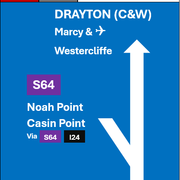
State Highways ('S' Roads): These are usually dual or triple-lane highways that link major towns and cities across a single state. They are maintained by State taxes and are characterised as 'S' roads e.g.: the S64.

Interstate Highways ('I' Roads): These are usually dual or triple-lane highways that major towns and cities across 2 or more states. They are maintained by State taxes up to the border of that state, then it becomes the responsibility of the next that the road crosses into. They are characterised as 'I' roads e.g.: the I24.

National Highways ('N' Roads): These are triple and quadruple-lane highways (sometimes more) that link the major cities of Abalucia. They are maintained through Federal taxes and are characterised as 'N' roads e.g.: the N7.

Image
Roadsign in Abalucia at Junction 14 of the N7 West of the Capital Drayton. This is a well-used route between Drayton's Marcy airport, the Western suburb of Westercliffe and Noah Point, a popular tourist destination, via State highway 64 (S64)

Trains
Trains in Abalucia are operated by the state operator, Abalucian Rail Network Services or ARNS as they are commonly known. Many would choose this option to travel nationwide due to Abalucia's large size. They offer 3 main services across the country:

RegionalLink: These trains service local towns and villages and can link up to major hubs. These will usually travel lesser distances, stop at more stations and not travel as fast as other services.

NationalLink: These trains service towns and cities across the country and do link up to major hubs. They often link major towns and cities in individual states, as well as some smaller towns. These usually stop at more stations also but often travel farther distances and are faster services per mile.

InterCity: These services link major cities across Abalucia. They travel farther distances and at greater speeds. ARNS run a vast network of high-speed train services linking all major cities. The InterCity services are also marketed as 'Hyper-G' services due to their manufactured namesake (domestically produced ALAMAC IVR Hyper-G series trains) and their usual operating speeds of around 240mph.

ARNS also run certain SuburbanLink services through major towns and cities where an agreement has been reached for line expansion with local councils. This is the case in major cities such as Drayton, Eura, Calís and Amenburg. Cities themselves often have their own metro systems that SuburbanLink trains are integrated with.

Image
Logo of ARNS

Local Metro systems
Most major towns and cities in Abalucia have expansive public transport systems consisting of buses, suburban trains, trams and underground metro systems, among other modes of transport. Major cities, such as Drayton, Bastíon and Benesaro operate large metro systems, whilst still large towns and cities usually operate tram systems.
Last edited by Abalucia on Thu May 14, 2026 1:32 pm, edited 1 time in total.

User avatar
Shangtianhua
Diplomat
 
Posts: 555
Founded: Apr 16, 2026
Ex-Nation

Postby Shangtianhua » Thu Jun 11, 2026 2:09 am

Being the successor polity to the People's Republic of China, Huaxia has the largest, most sophisticated infrastructure network in the world, being a world leader in both transportation technology and infrastructure construction, with its sheer scale outmatching even that of the entire west combined by several orders of magnitude. The physical state and comprehensiveness of Huaxia's transport infrastructure spans from the more-wealthier coastal regions in the eastern half of the nation all the way to the more-remote rural frontiers in the western half.

Rail transport is the most important mode of transportation in Huaxia, and as of 2040, the country has more than 971,320 km of mainline railways, of which 94.85% (921,297 km) are electrified. Huaxia's railway network is nationalized, although a number of dedicated industrial lines are owned by private companies. The nation also has the world's largest high-speed railway network, with operational length of 639,740 km, as well as the world's largest high-speed maglev railway network, with operational length of 14,862 km. The railway sector in Huaxia is essentially operated by the central government, with almost all rail operations being handled by the Huaxia State Railway Group Company, Limited, also known as Huaxia Railway for short.

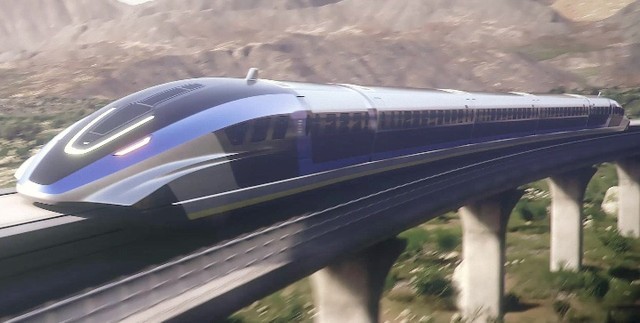
Operationally, Huaxia's railway network is divided into three; the conventional railway network, which goes by the name Huaxia Railway Classic Rail and is mixed-use, handling both freight and passenger service, with railway lines operating at speeds of 160 km/h or below on single or double-tracked lines with very-high degrees of electrification; the high-speed railway network, introduced on April 18th, 2007 and fully-operational since August 1st, 2008, operating under the brand Huaxia Railway High-Speed (HRH) and mostly handling passenger service with limited high-speed freight service, while the fastest railway lines operate at speeds of up to 400 km/h; the high-speed maglev railway network, introduced on September 30th, 2029 and fully-operational since June 28th, 2031, also operating under the HRH brand and handling only passenger service, with the fastest railway lines operating at speeds of up to 600 km/h.

Thanks to the sheer scale of Huaxia's railway network, every single city in the country is connected to the conventional railway network, thus allowing for the mass movement of goods and people across the entire nation. Not only that, 100% of cities over a million inhabitants have been connected to the high-speed railway network, while 98% of cities over 200,000 have been connected to the high-speed railway network, thus allowing for quick and extremely-convenient travel and mobility across Huaxia which also helps boost domestic tourism and allowing connected cities to experience sheer economic growth, all while allowing for regular intercity commute between two cities that may otherwise take several hours just to drive back and forth.

Aside from the national railway networks, Huaxia has numerous extremely-extensive urban-rail transit networks that encompass a broad range of urban and suburban passenger-rail mass transit systems, consisting of rapid transit, light rail, tram, monorail, and urban maglev. Compared to all other nations, Huaxia has the largest urban-rail transit system in the world, being several times larger than those of other countries by multiple orders of magnitude. With rapid transit alone, Huaxia's entire metro network currently has an operational system length of up to 42,680 km nationwide as of 2040, consisting of the total route length of all operational lines in each of the 141 rapid transit systems in the country. With rapid transit systems first introduced on October 1st, 1969 and fully-operational since January 15, 1971, Huaxian metro lines can have maximum operating speeds ranging from 80 km/h all the way to 160 km/h, although the exact maximum operating speed depends on each individual metro line.

Of the top 50 largest metro networks in the world by length, station quantity, and both daily and annual ridership, 48 of them are in Huaxia, with the top 20 largest being dominated entirely by rapid transit systems from Huaxia. The Shanghai Metro has the highest daily and annual ridership in the world, at 25.73 million and 9.392 billion respectively, while the Beijing Subway is the largest system in the world by total track length, with the network having a system length of 7,308 km. Huaxia's rapid transit systems are globally-renowned for their bleeding-edge technology, second-to-none punctuality, and extremely-high levels of safety.

For Huaxia's mainline railway, in 2040 alone, the network delivered a total of 23.418 billion passenger trips and carried 29.372 billion tonnes of freight, with both traffic volumes being among the highest in the world and outmatching the rest of the world by several times. The high volume of traffic carried by Huaxia's railway system is critical not just to the nation's economy but also to global trade as well, especially across the entirety of Eurasia. Huaxia also has numerous rail links between seaports and interior export-processing zones. For example, Chengdu in Sichuan is linked to the Shenzhen Special Economic Zone in coastal Guangdong, with exports clearing customs in Chengdu and shipped thirteen-times daily by rail to the seaport at Shenzhen for fast delivery.


Conventional Railway In Huxia

Huaxia's conventional railway serves a dual role in transporting both passengers and freight while operating at speeds of up to 160 km/h or below on traditional conventional railway lines. Operating on 1,435 mm standard gauge, electrified lines along the conventional railway network use a 25 kV 50Hz electrification system, while non-electrified lines are located in remote sections.

Classic conventional trains have significantly-lower ticket prices compared to both high-speed conventional trains and high-speed maglev trains, and are a popular choice for budget-friendly travel. Despite the existence of high-speed services, conventional railway remains vital for freight transport and rural connectivity. Numerous small remote towns across the nation rely extensively on conventional trains for daily commuting, agricultural transport, and long-distance freight, ensuring economic inclusion for remote areas not served by the high-speed railway network

Although the maximum operating speed on the conventional railway network varies depending on the different types of conventional train, they are either 160, 140, 120 or 100 km/h depending on the specific train type. Huaxia's rail construction utilizes prefabricated slabs that simplify and speed-up construction while allowing for precise standardization, which are all put in place by large technologically-advanced highly-automated track-laying machines.

The most common forms of rolling stock on Huaxia's conventional railway network are electric locomotives, electric-multiple-units (EMUs), diesel-electric locomotives, electro-diesel locomotives, electro-diesel multiple-units (EDMUs), battery-electric multiple-units (BEMU), and hydrogen fuel-cell multiple-units, followed by hydrogen fuel-cell locomotives, diesel-hydraulic locomotives, diesel-electric multiple-units (DEMUs), battery-electric locomotives, and diesel-hydraulic multiple-units (DHMUs). Huaxia not only has the world's largest railway network but also the word's most powerful and sophisticated locomotives, with raw power output and tractive effort being unmatched, allowing for hauling massive heavy loads with ease, as well as having the world's largest and longest multi-section locomotives with numerous axles. As of 2040, there are currently up to 243,210 locomotives and 18,380 multiple-units operating on Huaxia's conventional railway network.
Image
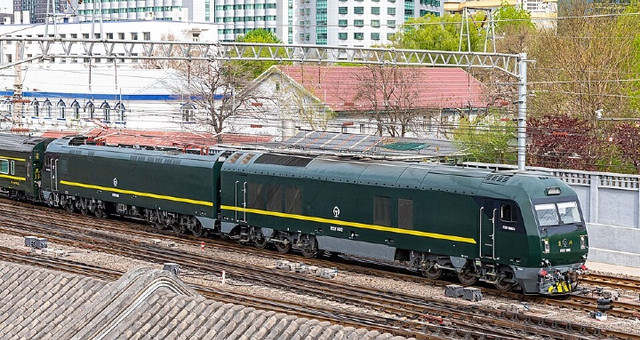
T57 Through Train from Baoji to Tianjin, using an FXSY electro-diesel locomotive, passing through Beijing

A trip on the Z264/265 Through Train from Guangzhou to Lhasa


High-Speed Railway In Huaxia

Huaxia not only has the world's largest high-speed railway network but also the word's fastest, most powerful and sophisticated high-speed electric-multiple-unit (EMU) trains that are bleeding-edge and technologically-unmatched. In Huaxia, high-speed rail refers to rail services operating at speeds exceeding 200 km/h. The system consists of: passenger-dedicated lines (PDLs) with a design speed of 350 to 400 km/h, which form the backbone of the national high-speed railway network; regional lines with a design speed of 200 to 250 km/h and providing fast interprovincial connections; intercity lines with design speeds ranging from 200 to 400 km/h, serving metropolitan areas with more frequent stops for regional service. High-speed EMU trainsets are designed for frequent services and are capable of handling numerous passengers per each trainset. EMU services running below 200 km/h or on mixed-traffic lines are not classified as high-speed rail unless the line is specifically intended for future speed upgrades.

In practice, high-speed rail services in Huaxia are divided into three categories: G-series trains are the fastest and most common, operating at speeds of up to 350 to 400 km/h on dedicated high-speed lines; D-series trains run at 200 to 250 km/h, with some providing overnight sleeper services; C-series trains serve short intercity routes, running at 200 to 400 km/h depending on each specific intercity line. Because Huaxia has the world's fastest and most powerful high-speed EMUs, the country also has the world's fastest high-speed railway service. Using a range of advanced technology to achieve not only high speed but also a high standard of safety and comfort, Huaxian high-speed EMU trains offer high acceleration and deceleration, and reduced damage to the track because of lighter vehicles compared to slower conventional trainsets, while the coaches are air-sealed to ensure stable air pressure when entering tunnels at high speed. Operating on 1,435 mm standard gauge, Huaxia's high-speed railway network uses a 25 kV 50 Hz electrification system.

The Huaxian high-speed railway network uses numerous tunnels and viaducts to go through and over obstacles rather than around them. With a standard curve radius ranging from 2,000 meters (for 200 km/h traveling speed) to 9,000 meters (for 400 km/h traveling speed), the tracks allow trains to traverse them at higher speeds without increasing the centripetal acceleration felt by passengers. Tracks can also incorporate steeper gradients than normal since the high power/weight and adhesive weight/total weight ratios of the high-speed trains allow them to climb much steeper grades than conventional trains. The considerable momentum at high speeds also helps to climb steep slopes very quickly without greatly increasing energy consumption. A combination of ballasted and ballastless track is used for the Huaxian high-speed railway network. Five design types of ballastless tracks within the Huaxian Railway Track System (HRTS) are used: one design that consists of twin ties/sleepers that are connected by a steel track rod and enclosed in a rubber shoe with all components capable of being exchanged individually; a triple-layered design consisting of a base course and two slabs that are joined by reinforcement steel bars, as are the individual ties/sleepers; a simple design that is characterized by its use of prefabricated concrete slabs rather than a continuous structure that is cast on site, with mortar being used to connect the slabs to the infrastructure and to one another; a fixed-track design consisting of elastically-supported track slabs; and a simple low-vibration design that uses twin ties/sleepers enclosed in rubber shoes. Track designs are optimized for different speeds, train loads, and environmental conditions such as temperature variations and uneven subgrade settlement. Advanced design methods, such as the limit state method, are extensively-used to improve safety and material efficiency. Huaxia's high-speed rail construction utilizes prefabricated slabs that simplify and speed-up construction while allowing for precise standardization, which are all put in place by large technologically-advanced highly-automated track-laying machines.

Track alignment on the Huaxian high-speed railway network is more precise than on the normal railway lines of the conventional railway network, and ballast is in a deeper-than-normal profile, resulting in increased load-bearing capacity and track stability. A high-speed rail track is anchored by more sleepers/ties per kilometre than normal rail tracks, and all are made of concrete, either mono- or bi-bloc. Heavy rail is used and the rails are more upright, with an inclination of 1 in 40 as opposed to 1 in 20 on normal railway lines. Continuous-welded-rail and swingnose crossing points are employed, eliminating gaps at turnouts and crossings. Long rails are used, joined by expansion joints to minimize gauge fluctuation due to thermal elongation and shrinkage.

The Huaxian high-speed railway network employs highly-sophisticated automatic train control system, eliminating the need for trackside signals. The track-to-train transmission system allows signaling information to be transmitted to the high-speed train and displayed as part of the train controls, allowing more information than traditional signaling would allow, including gradient profiles and information about the state of signaling blocks further ahead. This high degree of automation from the track-to-train transmission system does not remove the train from driver control, although on dedicated automation-supported high-speed lines with automatic train operation, high-speed EMU trains belonging to the intelligent type each feature an automated operation system for driverless operation, allowing for minimum intervention from the driver. Centralized traffic control manages train operations while any tasks relating to train movement, track, station and schedule are networked and computerized.

Using a 25 kV 50 Hz electrification system, the Huaxian high-speed railway network uses overhead power supply for the high-speed EMU trains. Overhead catenary wires are kept at a greater mechanical tension than normal lines on the conventional railway network because the pantograph causes oscillations in the wire, and the wave must travel faster than the train to avoid producing standing waves that would cause the wires to break. Only the rear pantograph is raised, avoiding amplification of the oscillations created by a front pantograph. The front power car is supplied by a cable along the roof of the train. The high-speed trains are long enough that oscillations are damped sufficiently between the front and rear power cars, allowing the two power cars to be connected without a high voltage cable through passenger vehicles. The high-speed EMU trains on the high-speed railway network feature motors under each carriage and active suspension for increased ride comfort as well as having all axles powered with greater proportion of motored axles resulting in higher acceleration, meaning that the trains do not lose as much time if stopping frequently. Power is distributed along the axles of the train to reduce heavy axle loads. The high-speed trains feature semi-permanently coupled articulated air-sealed coaches, with Jacobs bogies between the coaches supporting both of them. Power cars at each end of the trains have their own bogies. Trains can be lengthened by coupling two other trains, using couplers hidden in the noses of the power cars. The articulated design is advantageous during a derailment, as the passenger carriages are more likely to stay upright and in line with the track. A disadvantage is that it is difficult to split sets of carriages. While power cars can be removed from trains by standard uncoupling procedures, specialized depot equipment is needed to split carriages, by lifting the entire train at once. Once uncoupled, one of the carriage ends is left without a bogie at the split, so a bogie frame is required to support it.

As of 2040, there are currently up to 93,600 high-speed electric-multiple-units operating on Huaxia's high-speed railway network.
Image
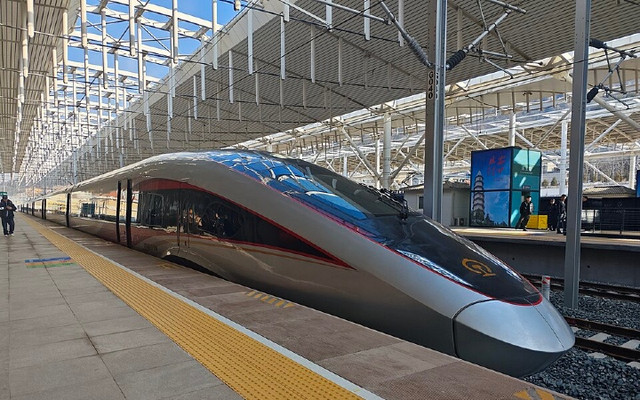
A CR400BF-Z intelligent high-speed EMU at Yan'an Railway Station, ready to depart for its journey to Xi'an

A ride on a CR400BF-BZ intelligent high-speed EMU from Shanghai to Nanjing


High-Speed Maglev Railway In Huaxia

Being the world leader in railway technology, Huaxia has the world's largest high-speed maglev railway network as well as the world's fastest and most advanced high-speed aerodynamic electric-multiple-unit (EMU) maglev trains. The system consists of: passenger-dedicated lines (PDLs) with a design speed of 550 to 600 km/h, which form the backbone of the national high-speed maglev railway network; regional lines with a design speed of 450 to 500 km/h and providing highly-rapid interprovincial connections; intercity lines with design speeds ranging from 450 to 600 km/h, serving metropolitan areas with more frequent stops for rapid intercity commute service. High-speed EMU maglev trainsets are designed for frequent services and are capable handling numerous passengers per each trainset.

In practice, high-speed maglev rail services in Huaxia are divided into three categories: G-series maglev trains are the fastest and most common, operating at speeds of up to 550 to 600 km/h; D-series maglev trains run at 450 to 500 km/h; C-series trains serve medium-to-long intercity routes, running at 450 to 600 km/h depending on each specific intercity line. Because Huaxia has the world's fastest and most powerful high-speed maglev EMUs, the country also has the world's fastest high-speed maglev railway service. Using a range of advanced technology to achieve not only high speed but also a high standard of safety and comfort, Huaxian high-speed EMU maglev trains offer high acceleration and deceleration, and an extremely-smooth ride thanks to magnetic levitation and lack of mechanical friction, while the coaches are air-sealed to ensure stable air pressure, as well as using electromagnetic shielding. High-speed maglev EMUs use an electromagnetic suspension (EMS) system, in which electronically-controlled electromagnets within a trainset attract it to a magnetically-conductive track. As a result, the high-speed aerodynamic EMU maglev train levitates by attraction to the ferromagnetic rail while the electromagnets onboard the train are oriented towards the rail from below. Installed in the bogies of each train is a series of C-shaped arms, with the upper portion of each arm attached to the vehicle and the lower inner edge containing the magnets. The rail is situated inside the high-speed maglev EMUs' C-shaped arms, between the upper and lower edges. The vehicle's levitation system utilizes a long-stator linear synchronous motor (LSLSM) propulsion system that also provides braking. Featuring active, multi-phase stator windings that are laid out along the entire length of a track, while the magnets are placed inside the vehicle, the propulsion system works like a rotating electric motor in which the stator is unrolled along the underside of the track guideway, and instead of producing torque the system produces a linear force along its length. The electromagnets in the vehicle which lift it also work as the equivalent of the excitation portion of the electric motor. Since the magnetic travelling field works in only one direction, if there were to be several high-speed aerodynamic EMU maglev trains on a given track section, they would all travel in the same direction thereby reducing the possibility of collision between moving trains. High-speed maglev EMUs use servo-mechanisms to pull the train up from underneath the magnetically-conductive track guideway and maintain a constant gap while traveling at high speed. No active feedback control is needed.

The Huaxian high-speed maglev railway network uses numerous tunnels and viaducts to go through and over obstacles rather than around them. Designed to accommodate high-speed aerodynamic EMU maglev trains and created completely-separate from both the conventional and high-speed railway networks, the high-speed maglev railway network uses tunnels and viaducts to go through and over obstacles rather than around them. With a standard curve radius ranging from 9,000 meters (for 450 km/h traveling speed) to 12,000 meters (for 600 km/h traveling speed), and a maximum grade of 4% (1 in 25), maglev tracks allow for less weathering and lower energy consumption along with lower maintenance needs. Maglev tracks are more flexible and more easily-adaptable to specific geographical circumstances than conventional railway tracks. Huaxia's high-speed maglev rail construction utilizes prefabricated track guideways that simplify and speed-up construction while allowing for precise standardization, which are all put in place by large technologically-advanced highly-automated track-laying machines.

Huaxia's high-speed maglev railway network employs highly-sophisticated automatic train control system, eliminating the need for trackside signals. The track-to-train transmission system allows signaling information to be transmitted to the maglev train and displayed as part of the train controls, allowing more information than traditional signaling would allow, including gradient profiles and information about the state of signaling blocks further ahead. This high degree of automation from the track-to-train transmission system does not remove the train from driver control, although since the high-speed maglev railway network consists entirely of automation-supported high-speed maglev lines with automatic train operation, all high-speed aerodynamic EMU maglev trains are of the intelligent type with each featuring an automated operation system for driverless operation, allowing for minimum intervention from the driver. Centralized traffic control manages train operations while any tasks relating to train movement, track, station and schedule are networked and computerized.

Using electromagnetic suspension together with long-stator linear synchronous motor propulsion, the high-speed aerodynamic EMU maglev trains feature no wheels, no axles, no gear transmissions, and no overhead electrical pantographs. Rather than rolling on wheels, the high-speed maglev EMUs hover above the magnetically-conductive track guideway, using the attractive magnetic force between two linear arrays of electromagnetic coils, with one side of the coil on the vehicle and the other side in the track guideway, functioning together as a magnetic dipole. During levitation and travelling operation, the vehicle floats on a frictionless magnetic cushion with no mechanical contact with the track guideway. On-board vehicle electronic systems measure the dipole gap distance hundreds of thousands of times per second to guarantee the clearance between the coils attached to the underside of the guideway and the magnetic portion of the vehicle wrapped around the guideway edges. With this precise, constantly-updated electronic control, the dipole gap remains nominally constant at 10 millimetres. When levitated, the high-speed aerodynamic EMU maglev train has about 15 centimetres of clearance above the guideway surface. For on-board power needs, the high-speed maglev EMUs feature electromagnetic induction conductors under each carriage for receiving power from the magnetically-conductive track guideway through wireless and contactless energy transmission, an electric motor-generator in each end-car for additional on-board power, an on-board array of highly-dense space-efficient backup battery-packs to temporarily-power the vehicle's levitation system in case of power failure of a track's propulsion system, and C-shaped arms featuring electronically-controlled electromagnets that produce electromagnetic suspension for increased ride comfort and traveling speed. Power is distributed equally along the carriages of the train. The high-speed maglev EMUs feature semi-permanently coupled articulated air-sealed coaches, with electromagnetic bogies between the coaches supporting both of them. Power cars at each end of the trains have their own electromagnetic bogies. Maglev trains can be lengthened by coupling two other trains, using couplers hidden in the noses of the power cars. With the articulated design, it is difficult to split sets of carriages. While power cars can be removed from trains by standard uncoupling procedures, specialized depot equipment is needed to split carriages, by lifting the entire maglev train at once. Once uncoupled, one of the carriage ends is left without a bogie at the split, so a bogie frame is required to support it. Each maglev train is fitted with an automated system for minimum intervention from the driver, however the driver can manually-operate the train if needed.

With the high-speed maglev railway network featuring minimal guideway maintenance, vehicle maintenance for the maglev trains is minimal. Maglev trains accelerate and decelerate faster than conventional wheeled trains regardless of the slickness of the guideway or the slope of the grade because they are non-contact systems, thus providing extremely-smooth high-speed movement without experiencing any mechanical friction thanks to magnetic levitation.

As of 2040, there are currently up to 2,700 high-speed aerodynamic maglev electric-multiple-units operating on Huaxia's high-speed maglev railway network.
Image
A CR600AF intelligent high-speed maglev EMU passing through the Nanyan Mountain Scenic Area in Shangrao, on its way to Changsha from Shanghai

A view of the interior of a mockup of CR600AF intelligent high-speed maglev EMU


Rapid Transit In Huaxia

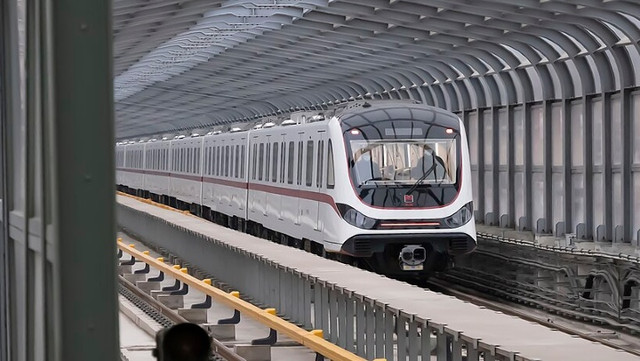
With currently up to 141 rapid transit systems in the country as of 2040, Huaxia is home to the world's largest nationwide metro network. Providing high-capacity public transport within each city, rapid transit systems in Huaxia are electric railways that operate on an exclusive right-of-way that cannot be accessed by pedestrians or other vehicles of any sort, and is either at-grade or grade separated in underground tunnels and on elevated railways. Services on rapid transit systems are provided on designated lines between stations using high-capacity rapid transit electric-multiple-units (EMU) on rail tracks.

Huaxian metro lines can have maximum operating speeds ranging from 80 km/h all the way to 160 km/h, depending on the exact metro line, with the actual maximum operating speed depending on each individual metro line. Adhering to a serialized national standard, the designs of the rapid transit EMUs are engineered for rapid acceleration, high passenger capacity, and energy efficiency, as well as high safety using heavily-reinforced body frames and significantly-lower energy consumption using weight-saving composite materials such as carbon fiber as well as utilizing carbon-ceramic brake discs. Designed as modular universal platforms, rapid transit EMUs in Huaxia are standardized and use interchangeable modules to lower operational and maintenance costs as well as allow all rapid transit systems in the country to use the same serialized standard. Huaxia has numerous metro lines that are fully-automated using automatic train operation, with rapid transit EMUs operating on those lines being fully-uncrewed, remote-controlled, and entirely-unmanned by operating automatically at all times, including door closing, obstacle detection, and emergency situations. Depending on each individual rapid transit system, an on-board staff may be provided on those fully-automated rapid transit EMUs for other purposes, such as customer service, but are not required for safe operation. Controls are often provided to drive the automated train manually in the event of a computer failure.

Depending on each rapid transit system, metro lines can be either completely-underground or partially-underground with at-grade ground-level segments and elevated sections, while metro stations can be either deep-underground, semi-underground, shallow, surface-level, or elevated. The design of a deep-underground and semi-underground metro station can be either triple-vaulted pylon, triple-vaulted deep-column, or single-vaulted underground. For a shallow metro station, the design can be either spanned shallow-column, single-vaulted shallow, or single-spanned shallow. Deep-underground and semi-underground metro stations can serve as nuclear shelters. For this purpose, deep-underground and semi-underground metro stations are each fitted with large thick-layered highly-reinforced doors with gas-tight seals, life-sustenance systems, and air-filtration systems. Military installations can also be connected to deep-underground and semi-underground metro stations, while underground metro lines can be reserved solely for military use only. Huaxia is home to multiple deep-underground metro stations and underground metro lines that can reach underground depth of around 105 to 120 meters or deeper, although the exact depth depends on each specific deep-underground metro station and underground metro line.
Image
A fully-automated Type-A rapid transit EMU on Wuhan Metro's Line 5 departing from Guangxia Station

A ride on Ningbo Rail Transit's Line 8.


Huaxia has the largest road network in the world, being several times larger than those of other nations. As of 2040, the nation has a total road network of more than 36,759,203 km of public roads, of which 98.74% (36,296,037 km) are fully-paved. The nation is linked by a massive network of trunk-road highways, belonging to the Huaxia National Highways, and national- and provincial-level expressways, with the national-level expressway system belonging to the National Trunk Highway System. Huaxia has the world's most extensive network of highways and expressways, with the Huaxia National Highways encompassing over 11,601,833 km of highways, while the national- and provincial-level expressway network has a total length of 1,261,385 km, consisting of primary routes and orbital zonal ring routes, as well as auxiliary routes consisting of spur routes, parallel routes, metropolitan area ring routes, and city ring routes.

Thanks to the sheer scale of Huaxia's road network, every single rural village and town in the country is connected to the highway network, thus allowing for the convenient movement of motor vehicles, goods and people across the entire nation. Not only that, 100% of cities over 200,000 inhabitants have been connected to the expressway network, thus allowing for convenient travel and mobility across all of Huaxia on motor vehicle, especially in remote rural areas, which also helps boost domestic tourism and allowing connected villages and towns to experience sheer economic growth, all while providing rural folks with mobility from motor vehicles.

The automotive industry in Huaxia is the largest in the world based on automobile unit production, numbering at around 71,946,233 units manufactured annually as of 2040 including passenger cars, light commercial vehicles, minibuses, trucks, buses and coaches. Huaxia is also the world's largest automobile market both in terms of sales and ownership, with around 976,357,617 motor vehicles on the road and 527 motor vehicles per 1,000 inhabitants. Thanks to Huaxia's absolute dominance over most fields of bleeding-edge critical-technology, such as advanced radiofrequency communications like 5G, advanced optical communications, artificial-intelligence algorithms and hardware accelerators, advanced data analytics, machine learning including neural networks and deep learning, advanced integrated-circuit design and fabrication such as EUV-fabricated MOSFET semiconductors, high-power RF MMICs with advance-material substrates such as diamond substrate, and extremely-safe fast-charging high-density electric batteries such as lithium iron phosphate batteries, lithium nickel-manganese-cobalt oxide batteries, lithium manganese iron phosphate batteries, lithium-silicon batteries, lithium-sulfur batteries, sodium-ion batteries, nanowire batteries, nanoball batteries, and blade-battery packs, the nation is at the bleeding-edge of motor vehicle technology, especially when it comes to new energy vehicles including battery electric vehicles (BEVs), extended-range electric vehicles (EREVs), plug-in hybrid electric vehicles (PHEVs), and hydrogen fuel-cell electric vehicles (FCEVs). Thanks to this technological edge, Huaxia's automotive industry has absolute market dominance by domestic manufacturers and an extremely-tiny market share for foreign car brands, with Huaxian automobile companies being globally-renowned for their strong focus on areas such as electric vehicle technology and highly-sophisticated advanced driver-assistance systems (ADAS), as well as being at the forefront of automobile innovation and research. With a domestic market size that is larger than that of any other nations, bleeding-edge technology that is globally-unmatched, and highly-sophisticated supply chains that is several times bigger than that of the west combined, this has also led numerous foreign carmakers to seek strong partnerships with Huaxian manufacturers and rely extensively on Huaxian automobile technology to remain globally-relevant, even if they cannot compete with Huaxian companies such as FAW Group, SAIC Motor, BYD Auto, Nio Inc., Geely Auto, Xiaomi Auto, XPeng Motors, and Li Auto. Due to technological advancements by Huaxian companies, Huaxia's automotive industry is widely-regarded as the most highly-competitive and technologically-innovative in the world, outmatching the automotive industries of all other nations combined. With Huaxian automakers having already established the building blocks for unrivalled competitiveness in NEV technology, software, digitalization, factor cost and supply chain areas, automobile manufacturing plants in Huaxia, like with all other factories in the country, are the most highly-automated and robotized of their kind worldwide, with a single automobile each taking only a few hours or less to be fabricated thanks to the use of massive fully-automated "dark" factories and fully-digitalized manufacturing complexes that are several times larger than any towns of other nations.
Image
Three EVs, a Luxeed S7, AITO M5 EV, and AITO M7, at a Huawei charging station inside the underground parking of iAPM Mall in Shanghai.

Riding inside a fully-autonomous self-driving taxi in Beijing

Riding inside a fully-autonomous self-driving bus in Guangzhou

Riding inside a Yutong ZK5120C rigid dual-mode trolleybus on Shanghai's Yan'an Road Medium Capacity Bus Transit System

User avatar
Andocara
Chargé d'Affaires
 
Posts: 388
Founded: Aug 07, 2018
New York Times Democracy

Postby Andocara » Sat Jun 20, 2026 6:10 pm

Automobiles are the primary means of land transportation in Andocara, even though many cities are bike and pedestrian-friendly. Because Andocara isn't a huge nation, EVs are popular, and per capita ownership rates are the highest in North America. On a global scale, it only trails behind Norway & Iceland. In 2020, Norway had 81 EVs per 1,000 residents, Iceland had 36.8 per 1,000 residents, and Andocara had 34.1 per 1,000 residents. In the cities, trams, trains, and buses are popular means of transportation. In Paramount City, these forms of public transport are more popular than privately owned automobiles. Paramount City is also less pedestrian-friendly than other Andocaran cities.

User avatar
DutchFormosa
Negotiator
 
Posts: 6486
Founded: Feb 11, 2023
Scandinavian Liberal Paradise

Postby DutchFormosa » Sat Jun 20, 2026 9:20 pm

There is a significant amount of public transit options available, but most people do still use personal vehicles to go about
IC wiki
OOC info
============

User avatar
Sectiyera
Chargé d'Affaires
 
Posts: 468
Founded: Oct 27, 2025
Psychotic Dictatorship

Postby Sectiyera » Sun Jun 21, 2026 8:58 pm

The people of Sectiyera primarily use cars - SUVs are especially popular.
Gürekj-Sektijeriva! (Glory to Sectiyera!)
Eating cement is good for you

Founded 1932. The most powerful nation in the Balkans. World-renowned airforce and special ops. NATO member state. Participated in NATO strikes against Serbia, Desert Storm, Desert Shield, Iraqi Freedom, and Enduring Freedom. Current year: 2026.
Class 2 civilization. (?)
Stats note: NationStates stats are not canon. Refer to factbooks or contact me directly.
British Columbian living in North Carolina. Boy. Computer geek, especially when it comes to hardware. Wikipedia editor (User:TheBrokenHDD). Stargate fan. Subaru hater. Right-wing. FREE ISRAEL.


Ask an OOC question | Request an English to Sectiyeran translation | earshit.

User avatar
Safiloa
Diplomat
 
Posts: 782
Founded: May 15, 2021
Liberal Democratic Socialists

Postby Safiloa » Sun Jun 21, 2026 9:37 pm

The nation of Safiloa is made up of 44 islands, islets, and small atolls, but only 7 are inhabited.
The main island of Safiloa (also called Safiloa) with over 95% of the population offers numerous ferries to the other inhabited islands. There is one train line that loops around Lake Kukuvaku and the capital city of Ponaiga, and extends from the international airport toward the other major urban centres on the southern half of Safiloa.

That being said, numerous trams criss-cross throughout the capital of Ponaiga. Though initially automobiles and asphalt were too expensive, now Safiloans are mostly proud of their lack of personal motorised vehicles. Fatal collisions are almost unheard of and the air in the city is wonderfully clean. Despite being in the tropics, the city’s temperature always fresh and usually cool. Ambulances and fire engines do exist however, so there some designated emergency pathways. This means that most people in Safiloa either walk, bike, skateboard, or take the tram or non-motorised pedicabs (locally known čaħičaħi) for their daily commute. E-bikes and segways have exploded in popularity in recent years as well.
❊ - A class 2.11 civilization according to THIS INDEX.
❊ - Observer status member of the International Socialist Congress.
❊ - All policies are canon. Stats are not.
❊ - Population: 421.392 - Land Area: 2.921 km2 - GDP:
❊ - Modern Semi-Theocratic Agrarian Syndicalism based on Mazdakism & Jainism
He/Him, Eco-Progressive Socialism, Vegan, Pacifist, Persophile - I dislike Fascism, Racism, Sexism, and Dogmatic Fundamentalism
THE COMMONWEALTH OF SAFILOA ❊ KULASAÑOS'EÏA SAFILOA
Diplomatic Mission ❊ NEW Map! ❊ Factbook (WIP)

User avatar
Side 3
Envoy
 
Posts: 282
Founded: Jul 07, 2018
Iron Fist Consumerists

Postby Side 3 » Wed Jun 24, 2026 6:22 am

The primary method of land transport is electric cars and trams; non-electric vehicles are banned. This is because Side 3 is made up of O'Neill Cylinders, and is thus reliant on artificial oxygen production. These cylinders lack the ability to filter CO2 emissions on a large scale. As such, air pollution from gasoline or diesel powered vehicles pose a much greater risk than on Earth.
Sieg Zeon!

REDCON-1

ZeoNet Channel 2:

January 22nd, 0097: Stocks in the Zimmad Corporation have gone down by 5% today, following the military's decision to halt its purchase of the company's latest mobile armor. The unnamed mobile armor has been rumored to have been in development for the past 6 years, and would've been worth roughly $150 million.

PreviousNext

Advertisement

Remove ads

Return to Factbooks and National Information

Who is online

Users browsing this forum: Deutscher Volksstaat, The Crooked Beat

Advertisement

Remove ads