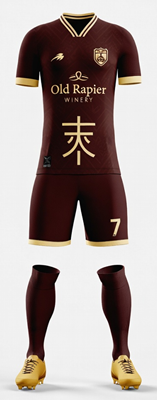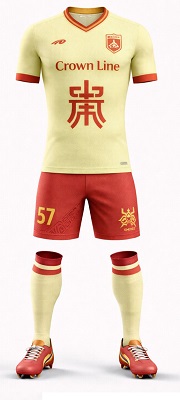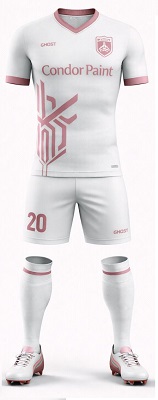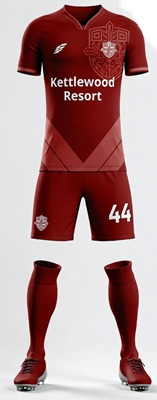
The launch of the first season of the Fallenstorm Elite Liga (FEL) marks a defining moment in the evolution of football within the country. For the first time, Fallenstorm has a clearly defined professional tier at the summit of its domestic football structure, setting a new benchmark for organization, competition, and ambition in the sport.
The FEL is overseen by Elite Liga Management Inc., an independent body established specifically to administer and commercialize the league. Its role extends beyond scheduling matches and enforcing regulations; it is also tasked with shaping the league’s identity, maintaining professional standards, and ensuring long-term financial and sporting stability. This centralized management model reflects an effort to modernize the game and align Fallenstorm football with contemporary international practices.
At present, the Fallenstorm Elite Liga consists of ten clubs, carefully selected to form a competitive yet sustainable inaugural lineup. Rather than pursuing rapid expansion, league organizers have emphasized quality control, infrastructure readiness, and organizational professionalism. Each club is expected to meet minimum standards in governance, facilities, youth development, and financial transparency, reinforcing the FEL’s status as the pinnacle of domestic football.
One of the league’s most distinctive features is its closed structure. Unlike traditional pyramid systems, the FEL does not operate with relegation. Clubs are not demoted at the end of the season, allowing them to plan long-term without the immediate pressure of survival. Proponents argue that this approach encourages investment in youth academies, training facilities, and community engagement, rather than short-term decision-making driven by fear of relegation. Critics, however, question whether the absence of relegation might reduce competitive intensity, a debate likely to shape public discussion as the league matures.
Beneath the Fallenstorm Elite Liga lies a broad amateur foundation composed of five regional tiers managed by FA Fallenstorm. These divisions—A1 Northern, A2 Southern, A3 Eastern, A4 Western, and A5 Central—form the grassroots backbone of the national football ecosystem. While all five tiers remain amateur in status, they play a crucial role in talent development, community participation, and regional identity. Young players often begin their journeys in these leagues, gaining experience before aspiring to the professional stage.
Although there is currently no formal promotion pathway from the amateur tiers into the FEL, league officials have suggested that future integration mechanisms could be explored once the professional league is firmly established. For now, the separation between professional and amateur football is intended to provide clarity of purpose for both levels, allowing each to grow according to its own realities and resources.
As the first season unfolds, the Fallenstorm Elite Liga represents more than a new competition. It symbolizes a strategic shift in how football is organized, valued, and presented within the country. Whether the closed-league model ultimately proves successful will depend on its execution, governance, and the FEL's ability to inspire fans while nurturing the next generation of players.
The FEL is overseen by Elite Liga Management Inc., an independent body established specifically to administer and commercialize the league. Its role extends beyond scheduling matches and enforcing regulations; it is also tasked with shaping the league’s identity, maintaining professional standards, and ensuring long-term financial and sporting stability. This centralized management model reflects an effort to modernize the game and align Fallenstorm football with contemporary international practices.
At present, the Fallenstorm Elite Liga consists of ten clubs, carefully selected to form a competitive yet sustainable inaugural lineup. Rather than pursuing rapid expansion, league organizers have emphasized quality control, infrastructure readiness, and organizational professionalism. Each club is expected to meet minimum standards in governance, facilities, youth development, and financial transparency, reinforcing the FEL’s status as the pinnacle of domestic football.
One of the league’s most distinctive features is its closed structure. Unlike traditional pyramid systems, the FEL does not operate with relegation. Clubs are not demoted at the end of the season, allowing them to plan long-term without the immediate pressure of survival. Proponents argue that this approach encourages investment in youth academies, training facilities, and community engagement, rather than short-term decision-making driven by fear of relegation. Critics, however, question whether the absence of relegation might reduce competitive intensity, a debate likely to shape public discussion as the league matures.
Beneath the Fallenstorm Elite Liga lies a broad amateur foundation composed of five regional tiers managed by FA Fallenstorm. These divisions—A1 Northern, A2 Southern, A3 Eastern, A4 Western, and A5 Central—form the grassroots backbone of the national football ecosystem. While all five tiers remain amateur in status, they play a crucial role in talent development, community participation, and regional identity. Young players often begin their journeys in these leagues, gaining experience before aspiring to the professional stage.
Although there is currently no formal promotion pathway from the amateur tiers into the FEL, league officials have suggested that future integration mechanisms could be explored once the professional league is firmly established. For now, the separation between professional and amateur football is intended to provide clarity of purpose for both levels, allowing each to grow according to its own realities and resources.
As the first season unfolds, the Fallenstorm Elite Liga represents more than a new competition. It symbolizes a strategic shift in how football is organized, valued, and presented within the country. Whether the closed-league model ultimately proves successful will depend on its execution, governance, and the FEL's ability to inspire fans while nurturing the next generation of players.
Fallenstorm Elite Liga
Season N°1: Innclaus Paladin FC
Season N°2: Pineworth Locomotive FC
Season N°3: Innclaus Paladin FC
Season N°4: Innclaus Paladin FC
Fallenstorm Elite Cup
Season N°1: Innclaus Paladin FC
Season N°2: Innclaus Paladin FC
Season N°3: Eastgate Astros FC
Season N°4: Pineworth Locomotive FC
Season N°1: Innclaus Paladin FC
Season N°2: Pineworth Locomotive FC
Season N°3: Innclaus Paladin FC
Season N°4: Innclaus Paladin FC
Fallenstorm Elite Cup
Season N°1: Innclaus Paladin FC
Season N°2: Innclaus Paladin FC
Season N°3: Eastgate Astros FC
Season N°4: Pineworth Locomotive FC