NATION

PASSWORD

Beneath the Palm Shadows: The Veyran Situation (MT/IC)

A staging-point for declarations of war and other major diplomatic events. [In character]
User avatar
Veyran Islands
Lobbyist
 
Posts: 11
Founded: Nov 12, 2025
Ex-Nation

Beneath the Palm Shadows: The Veyran Situation (MT/IC)

Postby Veyran Islands » Sun Nov 16, 2025 8:15 am

This is open to any and all nations that qualify within the time period and parameters of this topic. If interested in participating in this topic, please TG prior to posting. Member states of Teremara or Wishtonia are welcomed and encouraged to participate, but please contact me before posting. This post will be edited as the event progresses.
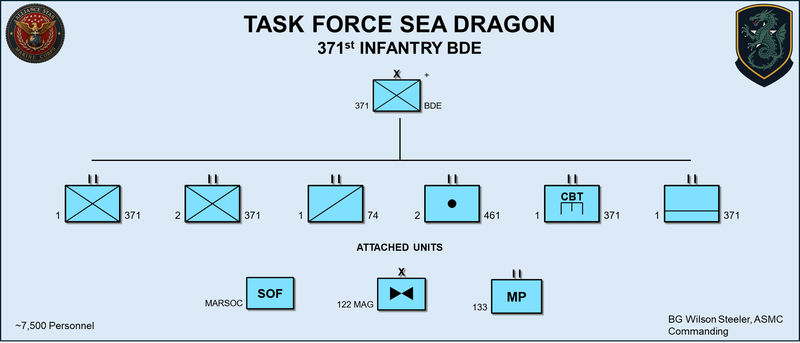
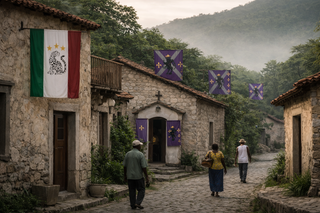
Image

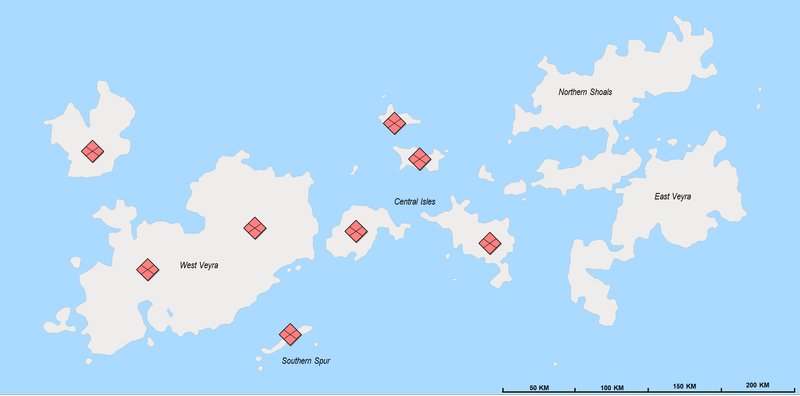
Image


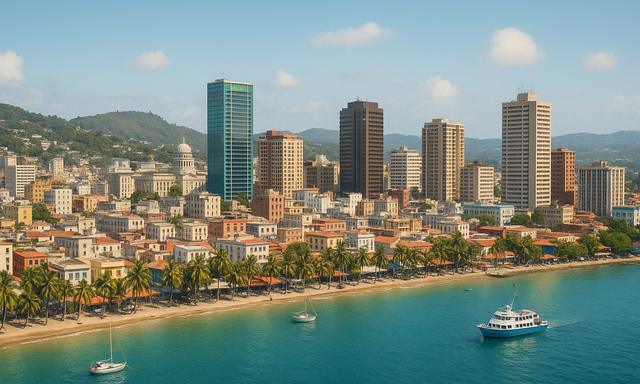
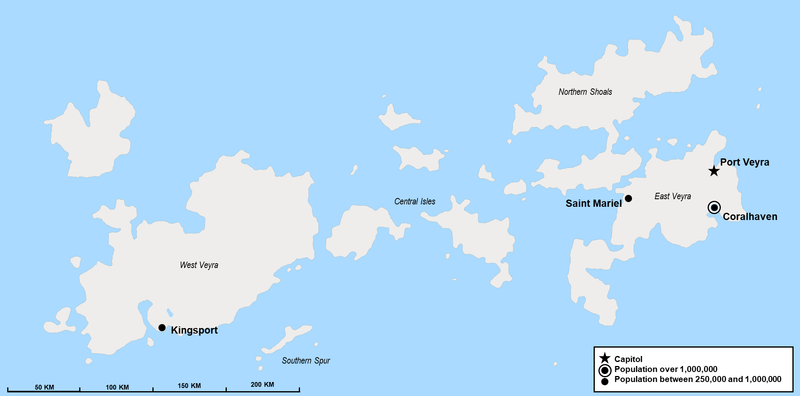
The Veyran Islands form one of the Alliance Star Confederation’s most strategically valuable territories: a chain of deep-water harbors, surveillance chokepoints, and shipping lanes linking northern and southern hemispheric trade routes. Its cities support ASC naval logistics, its airfields serve joint security operations, and its economy is tightly integrated with Confederation markets. But strategic value has a price. The islands’ population retains a strong nationalist undercurrent, a legacy of the fallen Veyran Empire and the harsh years of occupation that followed its collapse. Today, the Veyran Islands balance limited self-rule with the reality of ASC dominance, a relationship defined as much by cooperation as by quiet friction. The territory is stable, but never fully settled; prosperous, but unevenly; loyal in places, resentful in others. For the ASC, it remains both an asset and a challenge. For the Veyran people, it is home, and a contested future lies ahead.

Current Political Situation in the Veyran Islands

The Veyran Islands enter 2025 in a state best described as uneasy stability layered over deep structural tension. On paper, the territory enjoys broad local autonomy under the Veyran Territorial Assembly, with a Governor-General appointed by the ASC and a locally elected Prime Minister. In practice, however, the islands remain economically dependent, strategically vital, and politically fractious, with the Alliance Star Confederation exerting decisive influence over security, trade, ports, and airspace.

The Government: Fragile Legitimacy

Prime Minister Jael Descor leads a slim coalition government attempting to modernize infrastructure, expand tourism revenue, and stabilize the energy grid. While generally popular in Coralhaven and coastal metropolitan areas, his administration is viewed with distrust in rural and mountainous regions, where ASC authority is strongest and economic inequality is most pronounced. Governor-General Elena Carraway, the ASC’s representative, maintains emergency powers under the Territorial Security Mandate (TSM) a wartime-era statute never fully repealed. Her office oversees port and airport security, the national decision-making process, intelligence sharing between the AIS and the Veyran Police Service, and the Coordination of anti-insurgency operations. The TSM’s continued existence is a significant source of political resentment.

The Opposition: Nationalists on the Rise

A loose coalition of parties collectively labeled the Veyran Sovereignty Bloc (VSB) has gained momentum. While officially committed to “peaceful political reforms,” many members have historical, financial, or familial ties to dissident groups in the Central Isles and the Southern Spur. Their platform centers on: phasing out ASC security oversight and control, demanding control over natural resource concessions, rewriting the Associated Territory status, rebuilding a distinct Veyran national identity, and establishing independent trade agreements with regional partners. They command strong support in Kinsgport, the west, and many Central Isles communities. Their rhetoric frequently skirts the line between civil advocacy and open agitation.


The Insurgency: Dormant, Not Dead

Although major insurgent activity is slowly increasing, the foundation is already present: rumors of training camps in remote Southern Spur islands, disappearances of Veyran Police Service weapons and personnel, sabotage attempts against fiber lines supplying Coralhaven, a growing black-market trade in small arms and radios, and occasional clashes between Territorial Guard patrols and unknown militants. Local and ASC intelligence services track at least three active groups but have not identified a unified command. The movement appears to be shifting from scattered criminal-adjacent groups to a more organized political-militant hybrid.

Veyran Restoration Front (VRF) (Estimated size Core Fighters: ~1,150–1,700 Sympathizers: ~5,000–7,500)
Ideology: Ethno-nationalist, monarchist revivalist, anti-ASC
Base: Central Isles highlands, rural West Veyra
Summary: The VRF seeks to “restore the Veyran nation” by reviving symbols of the old Veyran Empire and ending ASC control. Rooted in older generations and families tied to pre-war privilege, the VRF mixes nationalism, cultural revival, and historical grievance. Their propaganda romanticizes the imperial era ("the Lost Crown") and paints the Territorial Government as a puppet of the ASC.
Threat Profile: The most “traditional” insurgency, seeking to overthrow the territorial government and establish a nationalist state aligned with Veyran heritage.

People’s Liberation Alliance (PLA) (Estimated size Core Fighters: ~800–1,350 Sympathizers: ~8,000–12,000)
Ideology: Socialist, anti-colonial, anti-capitalist
Base: East Veyra industrial districts, Coralhaven inner wards, dockworkers
Summary: The PLA is a left-wing revolutionary group that frames ASC oversight as “capitalist colonial extraction.” Their goal is to topple the territorial government and replace it with a workers’ state. They exploit inequality between coastal cities and rural poverty, leaning heavily on anti-tourism, anti-corporate rhetoric.
Threat Profile: Most active in urban areas and economically sensitive regions; excellent at disruption and propaganda, less effective at rural operations

Veyran Sovereign Covenant (VSC) (Estimated size Core Fighters: ~750–1,100 Sympathizers: ~4,000–6,000)
Ideology: Syncretic religious-nationalist, isolationist, anti-modernity
Base: Southern Spur villages, highland communities with strong Creole spiritual traditions
Summary: A mystic movement blending Protestant revivalism with Creole folk traditions. The VSC believes ASC presence and modernity in general have spiritually corrupted the islands. They seek a return to “holy island self-rule,” governed by village councils and religious elders.
Threat Profile: Extremely dangerous in rural terrain; difficult to infiltrate; driven by belief rather than political calculus.


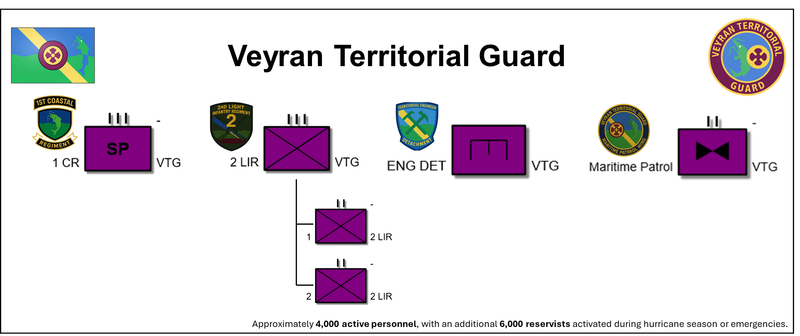
Organized Military Deployments
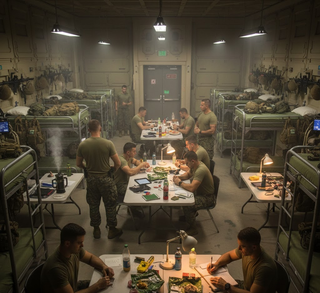
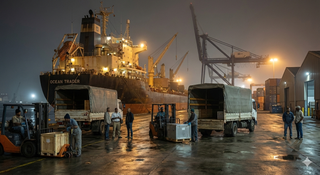
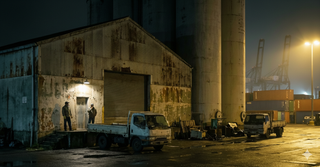
Image
Image
Image
Last edited by Veyran Islands on Thu Nov 20, 2025 12:11 am, edited 1 time in total.
THE VEYRAN ISLANDS
Located in the region of Wishtonia

“Pou libète nap goumen”
Puppet of Alliance Star

User avatar
Veyran Islands
Lobbyist
 
Posts: 11
Founded: Nov 12, 2025
Ex-Nation

Postby Veyran Islands » Sun Nov 16, 2025 9:20 am

Coralhaven, East Veyra
12:32 PM (Local Time)

Jean walked down the sidewalk, deep in thought, as he contemplated turning around and not going to work. He was only in his third week at the casino, which was placed near the pier to target cruise ship passengers that might stop by. But, he hated every day of his existence while he stood near the blackjack table waiting to prey on tourists with pre-identified cards and stacked decks. As he walked down the torn and broken sidewalk, he wished he had made better life decisions, but any stable income isn't easy to come by. As he walked, he noticed his appetite was growing, and he didn't do anything to manage it as he continued along his way. Tugging at the straps of his worn black backpack containing his work attire, he didn't mind working late into the night - just wished that the ethics of the job were a little easier to swallow. He looked inside a small bakery situated on the edge of the tourist area, where small baked pastries and the smell of freshly baked bread emanated from the interior of the business. He shoved his left hand in his left pant pocket, quickly realizing the metaphorical cash he wished he had never materialized. He continued his slow, protruding walk along the sidewalk, approaching the nearby intersection. The light was a steady red, and he waited for opposing traffic to stop, allowing him to cross the street.

He waited and continued to imagine his life as a chief executive officer of a large corporation, having all the money in the world and living in an estate on the north side of the city without rolling blackouts and better roads. And a car. A car would be great.

Suddenly, he heard shouting as two men ran past him, clad in a mix of clothing, sneakers, and wearing backpacks, and cut around a corner. Shortly behind them was an older police officer wearing a smeared white uniform shirt, service weapon in hand, screaming for them to get on the ground. Jean took a step back to allow the officer to cross, but was surprised when the officer body slammed him to the ground. The officer leveled the gun against the small of his back and yelled for compliance as Jean, surprised as he was, tightened every muscle in his body, reacting to the sudden trauma of what was going on. The officer continued to scream, "...behind your back, arm behind your back!" Jean replied curtly, "I didn't do anything, get off me!" Three men from across the street observed what happened and knew that Jean had nothing to do with whatever the officer was doing. Additionally, unbeknownst to the two in a physical struggle, were gang members who controlled the local area. The men rushed over and attempted to reason with the officer to get off Jean, but the officer cut them off and screamed for them to get back. The officer also began to cry on the radio, a mix of Standard and Creole, "Need help, officer needs help!" The officer then raised the gun from Jean and directed it toward the three men, screaming for them to get down.

One of the men produced a small black semi-automatic pistol from his waistband, and the officer noticed this and fired in his direction in a panic. The first two rounds struck the man to the armed man's left as the gang member was able to also fire his weapon, the first round striking the pavement and ricocheting, and the next two rounds striking the officer in the chest. The officer recoiled in pain, errantly discharging his service weapon again, but getting a fortunate shot off. The round struck the shooter in his left cheek, and the exiting round resulted in his near immediate incapacitation. The remaining uninjured gang member fled the area, screaming as the officer collapsed to his knees. He clutched his chest with his left hand as he held onto his sidearm with his right. Looking behind him, he observed Jean lying lifeless on the pavement. The errant ricochet that struck the sidewalk struck Jean in the face leaving him a shell of a person he was just moments ago.

The scream of sirens filled the streets as additional officers arrived in the area. Gang members, angry with the altercation and their two shot members, exited various nearby residences and businesses with firearms and makeshift weapons. The officers fired first, resulting in a firefight that consumed a square block area, drawing in the city's resources. The escalation resulted in mass looting, riots, and violent crime erupting throughout the city as local law enforcement lost control of the area. Territorial guard members were deployed to the area in order to suppress the rioting and violent upheaval that was increasing the number of wounded and dead in the area. The violence would spread near the tourist terminal, where a small deep-sea fishing trip with about three families from Alliance Star was briefly visiting local shops to purchase overpriced and poor-quality souvenirs. In a confrontation of an attempted robbery, two men were shot, one man was killed, and a pair of women were kidnapped. It would take another hour and a half through the chaos for the information of the violence in the largest city on the Veyran Islands to reach the closest member of the Alliance Star Marine Corps.
THE VEYRAN ISLANDS
Located in the region of Wishtonia

“Pou libète nap goumen”
Puppet of Alliance Star

User avatar
Alliance Star
Bureaucrat
 
Posts: 55
Founded: Jun 10, 2008
Ex-Nation

Postby Alliance Star » Tue Nov 18, 2025 10:47 pm

Forward Operating Base Highwater
Alliance Star Marine Corps
1428 LOCAL


"...information is limited, as are local Alliance Star assets in the area. Notifications to the office of the Governor-General are being made, but time appears to be critical as the degradation of the location and status of the hostages becomes uncertain." The young lance corporal serving as the battalion radio-telephone operator (RTO) tried not to be overwhelmed as he noted everything as quickly as he could. Mitchel joined the Marine Corps to get some free cash for college and went into the infantry because he wasn't paticularly the most intelligent guy, but would do as he was told. The Battle NCO signed as he put his hands on his hips, and attempted to interpret whatever the frantic scribling of the young Marine was "writing." The exterior door feeding into the TOC burst open as a young Marine held the door ajar, briefly catching his breath as he looked at the Battle Captain peering in his direction.

"Sir, the BC is inbound," the young runner stated.

"Afirm, Marines, standby for the Commander." The young Captain ordered as the local news reflected the increased violence, and the inability to retain control of the local population became overwhelmingly evident. A long sigh would emanate from the nose of the Captain as he adjusted his position to be able to see out of his periphery when the Battalion Commander entered the TOC. "Staff Sergeant, be ready with that information. We don't have a lot, but we do need ot be clear with what we have. Notify the QRF to be ready to deploy. I want everything in place if he gives the go."

The Staff Sergeant had a subtle nod and a barely audible "sir" as he stared down the second Lance Corporal at the large radio stack to relay the direction provided by the captain. The nervous Marine lifted the handset and began transmitting, " Ember TOC from Inferno 33..."

The Lance Corporal continued his transmission as the door opened to reveal an older Asian Marine, adorned in his utility uniform, with silver oak leaves resting on his lapels. Quickly behind him was a Major and a Captain, his Operations and Intelligence Officers, as he entered the room without breaking his stride."

The Battle NCO snapped to the position of attention and began to state, "Atten-"

"It can wait, Staff Sergeant. What do we have?" the Battalion Commander ordered.

"Sir," the Battle Captain began, "we don't have a lot. What we do know is that two women were kidnapped, three men were shot, and one man was killed. The status and location of the women are shaky, but we still believe they are near the port in a central part of the riots. We don't have much intelligence or information from this. Local police are overwhelmed, and I don't know if the VTG has been notified, as there have been no signs of their deployment."

The Lieutenant Colonel pivoted, "And the women are-"

"Alliance Star citizens, yes, sir," the Captain completed.

A moment passed as the steel-eyed man looked over to his slightly younger Operations Officer.

"Company status?" questioned the Lieutenant Colonel.

"Ember, Magma, Pyre, and Cinder are all green," the Major nodded.

In a snap, the Lieutenant Colonel walked over to a nearby grey office phone, lifted the receiver, pressed a button, and paused. After a few moments, the Battalion Commander responded. "This is Inferno 6. Get me Dragon 6." There was a pause as the Battalion Commander's eyes locked on the screen, which showed poor-quality live news coverage of the ongoing instability in the host nation. He never broke his pose, remaining composed and focused on his self-determined objectives and mission. "Sir," he continued, finding his target audience, "we're getting word of two female citizens abducted. Three others were shot, with one deceased. The situation within the city is quickly devolving, and I am requesting to deploy forces to address, locate, and recover endangered citizens immediately." Another pause was noted as the room was on its feet, eyes locked on the Commander, waiting for the decision from the Brigade Headquarters. A few subtle nods from the Commander were observed as he replied, "Yes, sir," and "I do believe so," to questions that, to others observing this without knowledge, would otherwise appear to be in a vacuum. "Affirmative, sir, we will take any assets you can provide." A few more subtle nods would result in a sharp breath and a final reply, "We will make it happen, sir."

The Battalion Commander hung up the phone as he looked over to the Staff Sergeant near the pair of RTOs. "Make sure Brigade and Battalion nets are hot," as he then looked at the FIRES NCO, "gun crews at the ready." They then ordered the pair of JTACs and an FSO, "Standby, they're going to spin up AWT and support assets our way." He took a step back as the Battle Captain had positioned himself to the side of the Operations Officer. Looking at the pair of them, he continued with his orders, "Deploy the QRF. Deploy Ember and Magma for rescue operations and support to address any threats. I want it to be overwhelming, precise, and effective. Pyre and Cinder are on standby. This needs to happen now."

The radio for both operators would be a hub of activity as staff in the room relayed the Commander's orders to subordinate units and coordinated inbound assets to support the mission. The Lieutenant Colonel stood back, eyes locked on the news, as a screen to the right flickered, standing by for the ISR feed to be channeled in.


Forward Operating Base Highwater
Alliance Star Marine Corps
1449 LOCAL


"Let's go, Marines!" an angry Gunnery Sergeant would growl as Marines around him began to load up into light armored vehicles, checking their weapon systems after a brief equipment check by their respective squad leaders. Fear and uncertainty would be at the forefront for most young Marines, who had experienced combat during their deployment to the island. The Marines assigned were for deterrence, training, and support to the VTG, rather than the direct combat operations the Marines appeared to be locked into. The platoon leader walked over to the Gunnery Sergeant, checked his platoon radio, and ensured it was set to the correct channel.

"Gunny, how are we looking?" the young lieutenant asked.

"We're set. All squads report ready," the Gunnery Sergeant replied.

The lieutenant nodded as he looked at his vehicle and walked over to it. Minutes later, the engines of the dozen vehicles roared to life as the platoon spooled up and the vehicles rolled forward. "Ember TOC, Ember 1-6, SP time now." The vehicles passed through the ECP of the FOB as Marine MPs raised the base's force protection status, progressively donning personal armor and setting up additional terrain obstacles and heavy weapons.

"Alright, Badgers, we're tasked with going into Coralhaven and finding a couple of lost tourists." The lieutenant continued on the platoon net, "We've got rough IDs on the two women, and we don't have an exact location or status of them, but we're to kick down any door and use any means to find them. ROE still applies, but do what it takes to make this happen. Battalion is spinning up the rest of the Ember and Magma companies in support, along with air assets. But, they're some time out and we're it."

The platoon would charge through the main thoroughfare, moving at around 65 miles an hour, cutting through intersections and daring oncoming traffic to tempt a crash with the uparmored vehicles. The crew-served weapons on the roof-mounted systems pivoted as they scanned for threats, while smoke plumes crescendoed along the horizon and the screams of crowds grew louder. As they approached the epicenter of the violence, the smell of burning metal and rubber filled the air, and the shouting of mobs of angry protestors overwhelmed any ambient sound that might have previously existed. As they rounded the corner to their first target location, a small group of men emerged with various small arms, chanting in front of the armored vehicles as the lieutenant observed the obstacle forming before them. They weren't Alliance Star citizens, and the ROE permitted the Marines to use any force required to complete their mission and overcome objectives.

"One warning to clear from the roadway, and then we move forward. Road clear or otherwise. If one of them even thinks of lifting a rifle in our direction, eliminate any and all threats."

The PA on the lead vehicle came to life, "Clear the roadway. This is your only warning." The crowd screamed, and one of the men raised a rifle in protest.

The leading vehicle's remote weapon system clicked into place and opened fire.
Last edited by Alliance Star on Fri Nov 21, 2025 1:04 am, edited 2 times in total.

User avatar
Alliance Star
Bureaucrat
 
Posts: 55
Founded: Jun 10, 2008
Ex-Nation

Postby Alliance Star » Wed Nov 19, 2025 11:53 pm

Diplomatic Mission of the Alliance Star Confederation
Office of the Govenor-General


The Governor-General had just lifted the handset when the doors to her crisis suite burst open and Colonel Harrow, the forward-deployed Marine Corps Brigade Commander, strode in without waiting to be announced. His boots thudded against the polished floor, the sound cutting through the frantic tapping of staffers’ keyboards and the overlapping phone calls filling the room. He didn’t nod, didn’t salute, didn’t acknowledge anyone but her. He simply placed a folded operations map on the table in front of her and said, “Ma’am, Ember Battalion is fully committed. Magma and Pyre companies will be rolling within the hour. We’re increasing to full brigade alert.” Her eyes narrowed—not in disapproval, but in grim satisfaction. “Good,” she said, adjusting the receiver against her ear. “They’ll need the support. The situation is deteriorating faster than expected.”

On the other end of the line came a short, stunned silence before the Prime Minister’s voice—tight, clipped, barely restrained—cracked through the speakers. “Excellency… what did he just say? Did he say a brigade alert? Colonel Harrow is there with you?”

The Governor-General didn’t flinch. “Yes, Prime Minister. He’s briefing me directly.”

“Briefing you—?” The Prime Minister broke off, incredulous. “Madam Governor-General, I am the elected head of government on these islands. If Marines are deploying in strength, I require full coordination with the VTG. You cannot simply—”

“I can,” the Governor-General replied coolly, “and I must. Hostage recovery operations of OUR CITIZENS fall under Confederation prerogative, and when Alliance Star citizens are taken in a lawless zone, rapid military response is not optional.”

“You’re treating Coralhaven as if it were a collapsed state,” the Prime Minister shot back. “My government has police forces. My government has the VTG. You had no right to authorize a foreign military incursion without consulting—”

“Consulting?” The Governor-General let out a soft, humorless laugh. “Prime Minister, by the time your Interior Ministry finished arguing over deployment thresholds, three Alliance Star citizens would be dead. Your police had already lost the city by the time Marines even started their engines.”

The staffers around her pretended to stay busy, but every single one was listening.

Colonel Harrow stepped closer, one hand on the back of her chair, leaning slightly so his voice carried into the receiver. “Mister Prime Minister,” he said, tone professionally polite but iron underneath, “your VTG is in no condition to handle this. They’ve already misidentified our units twice. They’re entering the city in a disorganized surge without a common operating picture. If they walk into our arcs of fire again, someone’s going to get killed.”

The Prime Minister practically hissed the words. “Our people are getting killed! In our streets! Because your Marines deployed with no coordination!”

Harrow opened his mouth, but the Governor-General raised a hand and silenced him.

“Prime Minister,” she said, voice dropping to a low, cold register that carried absolute authority, “your city is in a state of violent collapse. Your territorial guard was ten minutes away from chaos when they saw Marines in the streets. The Coralhaven Police are overwhelmed, routed, and in some cases missing. You said yourself the VTG deployed without your authorization. So spare me the lecture on coordination.”

“That surge happened,” the Prime Minister snapped, “because your Marines shot Islanders. You unleashed armored vehicles into Coralhaven without warning—”

“I unleashed them,” the Governor-General corrected smoothly. “Because Coralhaven was already burning. And because Alliance Star citizens, my citizens, were taken by armed gangs, your government allowed them to metastasize unchecked.”

A sharp intake of breath crackled over the line. For a moment, the Prime Minister sounded almost wounded. “So this is what it is? You’ll blame my administration while your Marines tear through my largest city and leave my security forces sidelined?”

“I’m not blaming you,” the Governor-General replied. “I’m stating the reality on the ground. And that reality is this: the Marines are the only organized force currently capable of mounting a successful hostage rescue.”

“That is not your call to make!” the Prime Minister shouted.

“But it is,” the Governor-General said simply. “By law, by charter, and by necessity.”

Colonel Harrow shifted impatiently beside her, tapping the map. “Ma’am,” he said softly, but urgently, “Ember is requesting clearance to push into the pier district. ISR drone coming online. They need confirmation before contact with multiple hostile groups.”

She held up a single finger.

“Prime Minister,” she said, her voice softening—but not becoming gentler. “The faster we resolve this, the fewer Islanders die. If you want to save your city, let my Marines eliminate the threats instead of obstructing them.”

“I am not obstructing anyone,” the Prime Minister said, nearly shaking with fury. “I am demanding respect for the sovereignty of this island.”

“And I am doing what is required to save lives,” the Governor-General replied.

A strangled sound—frustration, disbelief, something almost like grief—escaped the Prime Minister.

“This will not be forgotten,” she said finally, voice low. “By my government. By my people. The sight of foreign soldiers shooting Veyrans will stain us for a generation.”

The Governor-General closed her eyes briefly, exhaling through her nose. “Then I will shoulder that blame,” she said. “But I will not allow hostages to die for the sake of optics.”

Colonel Harrow leaned over and whispered, “Ma’am, we really need to green-light Ember before they lose their window.”

She nodded once, then spoke clearly into the receiver. “Prime Minister, I will contact you again when the situation stabilizes. VTG will not interfere with Marine operations.”

“You do not command the VTG!” the Prime Minister snapped.

“No,” the Governor-General said. “But right now, they’re listening to anyone who acts like they’re in control. And that, evidently, is not your Cabinet.”

The line went dead.

She hung up the handset, inhaled deeply, and looked to Harrow.

“Colonel,” she said, “tell Ember they are cleared to advance. Full authority. Recover the hostages.”

Harrow saluted sharply. “Yes, ma’am.”

As he strode out to relay the order, the Governor-General turned to her stunned staff.

“Prepare a statement,” she said. “A carefully worded one. And get my diplomatic team ready.”

Her voice dropped to a whisper.

“We may be running the islands by force before morning.”
Last edited by Alliance Star on Thu Nov 20, 2025 12:05 am, edited 2 times in total.

User avatar
Veyran Islands
Lobbyist
 
Posts: 11
Founded: Nov 12, 2025
Ex-Nation

Postby Veyran Islands » Wed Nov 19, 2025 11:53 pm

Coralhaven, East Veyra
3:27 PM (Local Time)


Nobody in Coralhaven expected the Marines to come roaring down the main thoroughfare like they were rolling into a warzone. One moment, folks were hiding behind shuttered stalls and overturned carts, trying to escape the gunfire echoing from the bakery blocks. The next moment, twelve armored vehicles came screaming through the smoke, cutting through intersections, forcing cars into ditches, smashing whatever wasn’t fast enough to move. Residents watched from cracked windows and balconies as foreign soldiers, boys barely older than the youngest gang runners, scanned the streets from behind blacked-out glass. Their mounted turrets swung back and forth, trembling with the weight of machine guns no civilian on the island had ever seen this close. The first burst of gunfire from the Marines made everything worse.

A group of locals, mostly neighborhood men who grew up defending their blocks from rival crews, had formed a loose barricade with dumpsters and cinderblocks. They were armed, yes, pistols, old shotguns, two rusted rifles, but they were shouting, waving their arms, trying to warn the Marines they were civilians. They were shouting because everyone knew Coralhaven’s gangs and Coralhaven’s neighbors often occupied the same skin. The uniforms stay the same. The only difference is the intention.

The Marines didn’t wait to find out which was which. The instant one man lifted his rifle, whether in defiance, or warning, or foolish bravado, the lead vehicle’s RWS spun in place, clicked, and opened fire. The heavy rounds tore through the barricade, the street, the crowd behind it. Three men fell instantly. A fourth crawled behind a trash pallet, screaming. A fifth staggered into a doorway, bleeding from the leg.

People screamed from windows. Mothers pulled their children away from the blinds. Shopkeepers locked their doors, praying their metal shutters would hold against the next burst. By the time the Marines pushed through the debris and rounded the corner, the block felt like it had been erased. No warnings. No restraint. No sense that this was their land they were driving through. Just foreign soldiers, in foreign armor, killing foreign citizens — except they weren’t foreign. They were Veyrans in their own street.


Word spread faster than the gunfire.

“Sparrows been hit.”
“Marines shot Kaleb.”
“They’re coming down the main road.”

Within minutes, young men scrambled out of apartment blocks, back alleys, and corner bars, forming impromptu militias. Some of them were gang members. Some weren’t. Some were just angry locals with revolvers older than the island’s independence statute. Nearly all of them were terrified. They talked big. They always do. That’s the Veyran way of masking fear behind loud voices.

But as the Marines approached, shouting for people to clear the streets, many realized the truth too late: You cannot face armored vehicles with hope and half-empty magazines.

The militias fired first in some alley corners, ambushes, potshots from rooftops, panicked volleys at vehicles that barely flinched. The Marines returned fire with precision bursts and coordinated suppressive fire, turning concrete into dust.

A group of five from the Shoreline Krew tried to flank the Marine column. They were cut down before they even reached the intersection. Another group attempted to throw Molotov cocktails. The wind blew one back onto a parked car instead. The Marines shot the other two throwers before the bottles left their hands. Every block the Marines pushed through left behind broken glass, bullet holes, and blood. None of the neighborhood militias survived intact. Most didn’t survive at all.


For hours after the first gunfire erupted near the pier, Coralhaven’s residents watched their neighborhoods dissolve into something far more terrifying than the day-to-day background threat of gangs and corrupt police. The Marines entered the city like a storm.

No announcement.
No coordination with local forces.
No warning to the population.

To civilians crowding behind windows, doorways, and cracked gates, the Marine column looked less like a rescue force and more like an invading army. The sight of light armored vehicles barreling down narrow commercial streets — built for mopeds and delivery vans, not eight-ton military machines — sent residents scrambling into alleys and into each other. The first people to see the Marines were shop owners on Shoreline Road. They stepped out at the sound of engines, expecting maybe police reinforcements or VTG trucks. Instead, they saw foreign-built vehicles with angular armor, turret-mounted weapons, and masked soldiers scanning the rooftops.

Nobody in the Veyran government knew that two Alliance Star women had been taken hostage. Nobody knew why the Marines were here. They only knew that death followed them almost instantly.

When the first militia barricade was shredded, the entire neighborhood went silent except for the ringing in people’s ears. Mothers pulled children into bathrooms. Neighbors dragged wounded young men into shuttered shops. An entire city held its breath, waiting to see if the Marines would keep firing. They did. And every burst sent a shockwave of panic across Coralhaven.


The Coralhaven Police Service (CPS) had already lost control of the initial incident long before the Marines reached the port district. The first responding officers were overwhelmed when the gang factions, residents, and bystanders all converged on the scene simultaneously after the officer-involved shooting that killed Jean. By the time CPS Command attempted to reassert control, half its patrol officers were sheltering behind vehicles or pinned down by gunfire they could not trace. Worse, their radios were failing.

CPS dispatchers repeatedly transmitted: “Units be advised, unknown armed groups approaching from the east side. VTG is not responding. Marines are rumored to be in the area. Do not—repeat, do not—engage foreign forces.” But the chaos drowned everything.

When the Marine column entered the city limits, CPS didn’t know. They had no joint operations center. No liaison. No notification. No shared intelligence regarding hostages. The police only learned that Marines were present when their own officers saw them, and by then, bodies were already on the pavement.

A squad of CPS officers attempted to form a perimeter near Teakwood Circle, blocking a road they believed the Marines were about to take. They were not trying to confront the Marines; they were trying to keep civilians from stumbling into the line of fire. But when the lead Marine vehicle turned the corner unexpectedly, the CPS officers froze, hands raised, shouting: “Police! Veyran police! Don’t shoot!” A Marine gunner swung his weapon toward them in a split-second reflex, and only the quick intervention of his squad leader prevented a tragedy. This moment would later circulate on social media, fueling rage across the islands.


Veyran Territorial Guard Barracks, Coralhaven
1541 HOURS


The first VTG platoon that learned something was happening in Coralhaven did not hear it from headquarters, the Prime Minister's office, or the Coralhaven Police Service. They learned about it the way every ordinary resident did, through shaky cell phone footage passed around on social media, with screaming in the background and Marines firing in the distance. Inside the Barracks, a dozen soldiers were gathered around a corporal’s phone, the small screen illuminating their stunned faces. The video showed a block of Marine vehicles rolling through Shoreline Road, turrets pointing left and right as if sweeping for insurgents, not Islanders. A burst of gunfire followed long, heavy, unmistakably machine-gun fire. People screamed and scattered. The video shook violently before cutting out.

No one spoke at first.

Then a sergeant finally muttered, “That’s Laurel Street. That’s two blocks from my mother’s house.” They all knew the sound of foreign weapons. They had trained with, drilled with, and performed joint disaster relief with the Marines. Hearing those weapons firing in a Veyran neighborhood was something nobody had ever expected or ever wanted to hear. A lieutenant, barely thirty, rushed in moments later, face red and jaw tight, waving his own phone. “Command says rumors only,” he said. “Stay in barracks. Do not deploy.”

Nobody believed that for a second. The videos alone told a story far more horrific than any rumor. Another video arrived moments later, shared by a cousin of one of the soldiers. It showed bodies of Islanders lying in the street while a Marine squad stood against a doorway, kicking it in. Shouts. More gunfire. The camera panned wildly before hitting the ground. The lieutenant stared at it for a long moment, his breathing growing shallow. He whispered, almost to himself, “They’re clearing houses…” A nearby soldier replied, “Sir, we need to move. Right now.” The officer didn’t respond. His eyes were glazed, processing the impossible: foreign soldiers conducting live combat operations inside their jurisdiction, without warning, without coordination, and without a single Veyran representative on scene.

He finally snapped out of it. “To the motor pool,” he ordered. “Full riot kit and rifles. Move!”

The barracks erupted into motion. Boots slammed the floor. Lockers opened. Soldiers grabbed helmets, vests, and ammunition. Someone cursed loudly as he fumbled with the straps on his plate carrier: “They didn’t even call us! They didn’t call anyone!” The entire platoon was seething. This wasn’t anger born purely from pride — though pride was undoubtedly part of it. This was terror disguised as rage. Nobody knew what the Marines were doing, what threat they were responding to, or whether they were shooting at gang members or simply anyone with a gun — which, in Coralhaven, was half the population after dark.

By the time the first VTG convoy started rolling toward the city, the soldiers could already hear gunfire from blocks away. As they approached Coralhaven, smoke lifted from multiple intersections. Civilians ran past the VTG vehicles, shouting:

“They shot them!”
“The foreigners are killing everyone!”
“You’re late — they’re killing our boys!”
“They think we’re gangs!”


The lieutenant tried to get answers from the panicked crowds, but everyone was talking over each other, each giving a different version of events. One terrified teenager screamed, “They shot my cousin! He wasn’t armed! They shot him because he ran!” The VTG platoon leader grabbed the boy by the shoulders. “Listen to me carefully,” he said. “Where are the Marines now? Which direction did they go?” The boy pointed up the road. “They’re clearing buildings! Anyone who pokes their head out gets shot at!” The lieutenant felt his stomach drop. This wasn’t a “foreign military presence.” This was a full-scale combat operation inside his home. He relayed orders to the lead vehicle: “Get us closer. Keep it slow. Make sure they see we’re VTG.”

But someone in the squad whispered what they were all thinking: “Do they even care that we’re VTG?”

The convoy came to a halt when they reached a Marine roadblock, a hastily formed cluster of armored vehicles and armed Marines positioned at an intersection littered with casings and broken glass. The Marines had taken defensive positions behind their vehicles, weapons pointed down the street. The VTG lieutenant dismounted, hands raised, approaching with measured steps. Five of his soldiers flanked him, rifles slung, palms open to show they had no hostile intent. “Alliance Star Marines!” he shouted. “This is the Veyran Territorial Guard! We are the host-nation military!”

The Marines didn’t lower their weapons.

Their platoon commander, a young lieutenant younger than the Veyran officer, approached cautiously. “Stop right there,” he ordered.

The VTG lieutenant held his ground. “What’s going on? Why are you firing inside Coralhaven? Why was the VTG not notified of foreign military operations?”

“Step back, sir,” the Marine said, voice rigid. “We have an ongoing hostage situation involving Alliance Star citizens. We have the authority to intervene.”

The VTG officer stared at him in disbelief. “Authority from whom? Certainly not from us. Certainly not from the Prime Minister.”

“We don’t have time for this,” the Marine snapped. “Stand down and clear the way. This is an active combat zone.”

The VTG lieutenant stepped closer. “Active because you made it one! You’re killing civilians, Marines! Islanders! You’re firing on people defending their own streets!”

The Marine commander clenched his jaw. For a moment, he looked conflicted. Then he hardened again.

The VTG officer felt something crack inside him. Not fear. Not confusion. Something older. Something national. “You have no jurisdiction here,” he said quietly, but with an authority he didn’t expect from himself. “These are our streets. These are our people. And you entered our city without a word. You did not call us. You did not consult us. You did not warn us. And now dozens are dead because you acted alone.”

The Marine commander didn’t reply. But he didn’t back down either. His radio crackled. He listened. Then he said, “We’re moving.”

And just like that, the Marines pushed past the VTG barricade, engines rumbling, leaving the Veyran soldiers staring after them with clenched fists and hollow eyes.

The VTG lieutenant stood motionless as the vehicles disappeared into the smoke-filled streets. His NCO approached him. “Sir. Orders?”

The officer exhaled shakily. “Tell HQ we made contact with the Marines,” he said. “Tell them…” His voice broke for the briefest moment. Then he steadied himself. “Tell them foreign forces are conducting combat operations in Coralhaven without coordination. And we are not in control of our own city.” The sergeant nodded grimly. As the VTG convoy repositioned, civilians gathered around, demanding answers, asking why the Guard had not stopped the Marines, why their neighbors were being shot, why Coralhaven had become a battlefield for foreign forces. The lieutenant had no answers to give them. He could only repeat the truth: “We did not know they were coming.”

And as the sounds of gunfire echoed deeper into the city, the VTG realized the full gravity of what had happened: For the first time in almost a hundred years, the Veyran Islands were at war — not with gangs, not with insurgents, but with their own helplessness.

And the world was watching


Truckbeds filled with troops, helmets snapped into place, radios squawked as platoon leaders screamed over one another to get their squads in line. The regiment’s motor pool, normally a slow-moving place of maintenance logs and grumbling mechanics, became a whirlwind of motion. Headlights flashed on in unison. Engines revved. Sirens that had not been used since the last tropical evacuation blared into the humid evening air. Soldiers climbed into vehicles, their eyes hard and their jaws clenched. Their own people were dying in Coralhaven, and the Marines were treating the city like a warzone. If the government would not defend Veyran soil, then the Territorial Guard would. Colonel Daerin Vos stood in the middle of the operations room with a radio in each hand, shouting into one and listening to frantic updates on the other. No one in the Governor-General’s office was answering. The Coralhaven Police Commissioner, exhausted and hoarse, was begging the VTG to intervene. And in the background, open channels crackled with terrified civilian calls: “They’re clearing buildings,” “Marines shot at the crowd,” “My brother is bleeding in the street, please, someone come.” Vos stopped waiting for authorization that would never come. “Roll every company that can move,” he barked into the comms. “Coralhaven is under our protection. We are not standing down.”

The first VTG convoys reached the edges of Coralhaven just as the Marines were pushing deeper toward the port. Smoke twisted upward from burning cars and shattered storefronts, drifting lazily across the sky like a curtain pulled over the setting sun. The noise was disorienting: sirens wailing, crowds screaming, gunshots echoing from multiple directions, a distant heavy burst from a Marine turret that made everyone pause for half a beat. Civilians flooded the streets at the sight of the Guard arriving, waving their arms, shouting pleas and accusations all at once. Some pointed toward the plumes of smoke, begging the soldiers to hurry. Others shouted that the Marines had killed their neighbors. More than a few demanded vengeance, spitting fury and fear at the soldiers as if the VTG alone had the power to rewrite the past hour. The VTG trucks pressed on through the chaos, sirens blaring, troops gripping rifles as they scanned windows, roofs, doorways, anything that might conceal a terrified civilian, a gang member with a pistol, or a Marine patrol that didn’t know the Guard was coming. The tension was unbearable. Everyone knew the city was flooded with armed, confused, panicked people. And now two militaries, one local, one foreign, were converging on the same blocks with overlapping authority and zero communication. Every soldier in those convoys knew how easily this could become something irreversible.

But the Guard didn’t slow down.

The first real contact came near the eastern market district, where a Marine squad had taken up a blocking position behind two armored vehicles angled across the roadway. Their muzzles were still hot, the asphalt beneath them littered with shattered plastic, blood, and the still-smoking wreckage of a civilian scooter. The moment the VTG convoy rounded the corner, the Marines shifted instantly. Weapons raised. Turrets turned. Orders shouted. The VTG trucks braked hard, tires screeching as soldiers leapt out with hands raised, shouting their identification even before their boots hit the ground. But the Marines didn’t lower their weapons. They were exhausted, keyed up on adrenaline, convinced that every shadow held another gunman. One nervous twitch on either side would decide whether this became a diplomatic incident or a massacre between allies.

The VTG lieutenant, the same officer who had confronted the Marines earlier, stepped forward again, except this time he was not a lone platoon leader with a handful of troops behind him. Now he had three companies at his back, their silhouettes filling the street with rows of helmets and visors and rifles. His voice was raw but steady as he shouted, “This is Veyran Territorial Guard. These streets are under our jurisdiction. Lower your weapons.”

The Marine finally spoke, voice cracking with strain. “We have hostages taken by armed groups. Alliance Star citizens. We’re not stopping.” The VTG officer took one step closer. His soldiers mirrored him without being told. “And you’re killing Veyrans while you search for them. You’ve lost control of your own mission. We will not let you continue without coordination.” For a moment, it seemed impossibly fragile, like the entire world was balancing on the blade of a knife.

And then the VTG radios erupted: “Shots fired near the pier!” “Civilians down!” “Gang fighters moving toward Marine positions!” “Multiple casualties!” “Marines are engaging again!”
THE VEYRAN ISLANDS
Located in the region of Wishtonia

“Pou libète nap goumen”
Puppet of Alliance Star

User avatar
Alliance Star
Bureaucrat
 
Posts: 55
Founded: Jun 10, 2008
Ex-Nation

Postby Alliance Star » Mon Nov 24, 2025 11:41 am

Coralhaven, East Veyra
1601 LOCAL


The moment Task Force Sea Dragon gave the green light, Ember and Magma Companies rolled out of FOB Highwater in a line of armored vehicles that shook the pavement. Each company deployed at full strength three rifle platoons apiece, headquarters sections, attached support teams, medics, and a logistics footprint that could sustain a fight in dense urban terrain. Engines roared in staggered bursts as the convoy entered Coralhaven’s outskirts, weapons loaded, antennas flexing with the rhythm of movement. Every Marine in those vehicles knew this wasn’t a show of presence anymore. This was combat.

Ember Company led the inland push; the battalion's first and second platoons mounted in armored carriers, with the third platoon moving in overwatch. They advanced down Coralhaven’s main artery like a slow, deliberate tide, methodically clearing side streets and intersections. Magma, positioned to the south, swung toward the waterfront and the docks, their vehicles fanning out along the industrial district. The two companies’ movements were synchronized across the battalion net, each platoon leader’s voice calm and clipped, their updates layering into a mosaic of unfolding precision.

The earlier violence had already fractured the city. Gangs, neighborhood militias, and angry civilians roamed streets half-choked with smoke and debris. From above, ISR feeds painted the chaos as flickering heat signatures of armed clusters moving unpredictably, forming and dissolving like waves. Ember’s attached forward observers used those feeds to vector in their advance. Machine gun teams set up along intersections while breachers moved door to door, shouting warnings before clearing suspected firing points. The sharp crack of rifles echoed off concrete facades, followed by the heavy thump of grenades in tight alleys.

Magma’s first platoon hit contact near the market district, where a loose militia barricade of cars and wooden pallets blocked a key approach to the piers. The militia fired first, wild, unaimed bursts that smacked harmlessly off vehicle armor. The Marines responded like a machine: suppress, maneuver, and destroy. A squad flanked through a narrow side street, lobbed smoke, and breached from the rear. The fight lasted less than two minutes. When it ended, the militia melted away into the crowd, leaving spent casings and the acrid smell of burning fuel behind. The Marines didn’t linger. They moved.

As the companies advanced, the battalion’s supporting elements began to saturate the battlespace. Overhead, rotary-wing aircraft joined the ISR drones, flying low enough that the whump of rotor wash sent trash skittering down the streets. Gunships orbited the perimeter, their crews scanning for muzzle flashes and relaying targeting data to ground commanders. A pair of transports loitered further back, ready for CASEVAC or extraction. The sound of aviation engines mingled with the crackle of comms and the relentless crunch of boots on broken glass.

Ember’s third platoon reached the old tramway, a tangle of wires, half-collapsed market stalls, and bodies. Gunfire erupted from the upper floor of an apartment block. The platoon commander called for suppressive fire, and two squads answered with disciplined bursts, cutting through the facade. A fireteam moved up the stairwell under the cover of smoke grenades, rifles steady, voices low and deliberate. Moments later came the all-clear. No one cheered. They marked the building as cleared and pushed forward.

By now, Coralhaven was a patchwork of gun battles, burning vehicles, and civilians cowering in doorways. From the outside, it looked indiscriminate, foreign soldiers firing through smoke, but inside each platoon, it was precision under chaos. Every Marine knew their sector, their lanes, their fields of fire. Ember’s command net hummed with calm efficiency even as rounds snapped past their vehicles.

Magma’s second and third platoons closed in on the waterfront from opposite ends, leapfrogging through warehouses and half-sunken piers. A drone feed overhead showed a small group of hostiles dragging two women between shipping containers near a rusted warehouse. The feed shifted, focused, and confirmed human signatures. The hostages.

“Target confirmed,” Magma Actual transmitted, his voice measured but charged. “All platoons, converge. Establish a perimeter. Magma 2-6, Prepare to breach.”

One platoon took the high ground on a container stack overlooking the warehouse. The second moved to block escape routes along the piers. The third advanced from the main road, their light armored vehicles forming a wedge. The company commander gave a final check to his team leaders, then keyed his mic to a higher volume.

“Magma 6 to Inferno 33 — possible hostage location confirmed. Engaging.”

“Sea Dragon 6, Copies. Hunt well,” came Harrow’s voice from the battalion TOC. “Ember is clearing your northern corridor. Gunships are in orbit.”

The breach was fast and violent. A shaped charge tore through the side door, smoke and dust exploding into the interior. Marines poured inside, flashlights cutting through the gloom. Shouts in Veyran Creole echoed from within, panicked, desperate. A gunshot cracked; two more followed; then silence. The Marines moved room to room, methodically, each callout answered, each threat neutralized. When the smoke cleared, two women huddled near a desk, duct tape still around their wrists, eyes wide and vacant. The assigned medic immediately rushed to attend to the two captives as the Marine ensured that the threats from moments ago no longer presented any signs of life and made adjustments to those to ensure their departure from the mortal realm.

“Magma 6 to Inferno 33 — hostages recovered. Alive.” Colonel Harrow and Lieutenant Colonel Rennard stood side by side, eyes locked on the ISR feed streaming directly into the flatscreen panel central on the TOC wall.

Above them, gunships repositioned to guard the exfil routes, their engines thundering as they pivoted along the coastline. Ember’s platoons pressed south, eliminating the last pockets of resistance that could threaten the extraction. VTG convoys were reported closing from the east, but for now, they were still outside the perimeter. Every Marine knew how delicate that margin was. One wrong move, one miscommunication, and two allied forces could end up exchanging fire.

At the dock’s edge, one of the helicopters dipped low, rotors throwing up a storm of grit and salt spray. The hostages were lifted aboard under covering fire, flanked by Magma’s squad leaders. The aircraft climbed, banking west toward FOB Highwater. Ember and Magma’s infantry platoons held their ground, engines idling, weapons trained on empty windows that could bloom with muzzle flashes at any second.

In the command vehicle, Harrow’s headset crackled. “Inferno 33, this is Magma 6R. Exfil underway. Hostages secured.”

The commanders glanced toward the live drone feed, the helicopter lifting away, the city below smeared with smoke and fire, and the Battalion Commander replied, “Acknowledged, Magma. All elements consolidate and prepare to withdraw.”

The Marines did not cheer. They just exhaled, weapons still ready, as they began to fall back through a city that was still alive with noise and anger. Overhead, gunships tracked their movement, watchful, patient, waiting to see if Coralhaven would finally stop shooting long enough to let them leave.


The Next Day
The Alliance Star Confederation


By the time the morning sun rose over Nova Caelora, the story from Coralhaven had spread across the entire Confederation not as a scandal, but as a wound. Three dead. Two abducted. All citizens of the Alliance Star Confederation. The broadcasts began just after dawn: fragments of cell phone video, short clips from panicked witnesses in Coralhaven’s pier district, and the grainy overhead feed of Task Force Sea Dragon’s helicopters rising through the smoke. But what caught the Confederation’s attention wasn’t the gunfire; it was the faces of the dead. Their names scrolled in white across every network chyron. They weren’t soldiers. They weren’t officials. They were civilians on holiday.

“CONFEDERATION CITIZENS MURDERED IN FOREIGN RIOTS.” “HOSTAGES RESCUED — THREE DEAD, TWO RECOVERED.”


The nation reacted like a struck nerve. Talk radio blazed with fury. News anchors barely contained their indignation. Every editorial board in the capital carried the same tone: This cannot stand. Even networks usually critical of foreign intervention closed ranks. The Confederation had been humiliated on its own protectorate, its citizens hunted, killed, and dragged through a city under its supposed oversight.

On ANN’s morning broadcast, the host leaned into the camera with a voice like tempered steel.

“Let’s be clear,” she said. “Those people were not thrill-seekers or mercenaries. They were families. Tourists. They were walking on streets guaranteed by the Veyran Charter to be under Confederation protection. And what did they get? Lawless gangs. Collapsed policing. Government paralysis. Task Force Sea Dragon didn’t invade; they intervened when no one else would move.”

Her co-anchor nodded grimly. “It wasn’t just a rescue. It was justice.”

The screen cut to archival footage of Marines disembarking from transports, rifles slung, helmets gleaming beneath the tropical sun. The narration was clinical, proud, and unmistakably nationalistic:

“Task Force Sea Dragon, the quick-reaction arm of the Alliance Star Marine Corps in the Veyran Islands, was deployed under direct authorization from the Governor-General and with the full sanction of the President. Their mission: recover two abducted citizens and stabilize a collapsing urban zone. Mission complete. Both hostages are alive. Enemy combatants neutralized.”

The broadcasts carried none of the hesitation of foreign coverage. Instead, the tone was quiet, moral fury turned outward. The death of Confederation civilians in Coralhaven was not a diplomatic incident. It was an affront to the Republic itself.

At the same hour, in the Celora Manor, the mood was equally sharp.

President Michael Sortana sat at the head of the Federal Security Council, flanked by the Admiral of the Confederation and the Directors of Foreign Affairs and Intelligence. The air was heavy with exhaustion and purpose. The Admiral, in dark service uniform, stood beside the table, hands clasped behind his back, his voice low and absolute.

“Task Force Sea Dragon acted correctly, Mister President. The Veyran authorities lost control before our Marines even reached Coralhaven. Their command network failed within the first hour. We moved because waiting meant losing both hostages and more citizens.”

Sortana nodded once. His tone was quiet, deliberate. “And the civilian deaths?”

The Admiral didn’t flinch. “Regrettable. But inevitable once the situation degraded. Every engagement was in defense of the hostages or to prevent further loss of life. The operation was clean.”

Director Halden of Foreign Affairs shifted uneasily. “Clean, perhaps, but not quiet. The Veyran Prime Minister has called it a violation of sovereignty. His cabinet is demanding the withdrawal of all Confederation forces from Coralhaven.”

Sortana leaned back. “Then they’ve forgotten the charter.”

The Governor-General’s voice came through over the secure line, calm but resolute. “They’re invoking the autonomy clause of the 1947 Charter, sir. They’re claiming we exceeded the limits of oversight.”

The President’s expression hardened. “The Veyran Charter grants Confederation authority over security and defense in times of instability. And what we saw in Coralhaven was instability bordering on collapse.”

The Admiral added, “The Charter was written for this exact circumstance. Veyra governs itself, but the Confederation guarantees the peace.”

There was a silence, the kind that precedes consensus.

“Then we remind them of that guarantee,” Sortana said. “And we enforce it.”

By noon, the Confederation’s unified narrative was everywhere. Press statements from the President’s Office and the Governor-General all echoed the same phrasing: The deployment was authorized. The rescue was necessary. The Confederation will always act to protect its citizens.

The President himself delivered the midday address from the Federal Assembly press chamber. The national flag hung motionless behind him, the wreaths and nine stars gleaming under the studio lights.

“Two citizens are alive today because our Marines acted decisively,” he began. “Three others are dead because the government of Veyra failed to act at all. Coralhaven’s descent into violence represents a failure of local governance and a betrayal of the trust placed in them under the Charter of 1947.

The Alliance Star Confederation does not abandon its people. We will not apologize for defending them.

We will take every step necessary to ensure that no confederate citizen is ever again left unprotected on Veyran soil.”

The applause in the press gallery was spontaneous and sustained. ANN aired the full address without interruption, the chyron reading simply: “‘We Will Not Apologize’ — PRESIDENT SORTANA DEFENDS MARINE ACTION.”

In the hours that followed, the public mood shifted from anger to resolve. Vigils were held for the three dead citizens, their portraits framed with the Confederation flag and small blue ribbons tied around their names. The rescued women’s families issued brief statements of gratitude, thanking “the Marines of Task Force Sea Dragon and the leadership that refused to wait.”

When one grieving relative was asked what she wanted the government to do next, her reply became the day’s defining soundbite:

“Make sure this never happens again. However, you have to.”

And the Confederation listened.

The Admiral met privately with the President that night, delivering his proposal in blunt, precise terms. “Options for increased presence in the islands. It ensures rapid response and deters further instability.”

Sortana nodded slowly. “You’ll have what you need, but we need to make sure not to create a scenario where we lose perspective, and this evolves into an invasion. The Veyrans will resist, but they’ve already lost the argument.”

He glanced toward the window, where the lights of Nova Caelora shimmered against the sky. “We built the Confederation to protect its people,” he said quietly. “If Veyra can’t do the same, then we’ll protect them, too, whether they like it or not.”

That night, the networks played the President’s words again and again. And by the next morning, a new phrase began trending across the Confederation: #CoralhavenWillNotHappenAgain.

It wasn’t just a hashtag. It was a promise and a warning. The Alliance Star Confederation was staying in the Veyran Islands. Whether it liked it or not.

User avatar
Veyran Islands
Lobbyist
 
Posts: 11
Founded: Nov 12, 2025
Ex-Nation

Postby Veyran Islands » Mon Nov 24, 2025 12:28 pm

Coralhaven, East Veyra
The Next Day


The Marine column had already melted back toward FOB Highwater before dusk, the roar of their engines folding into the distance and leaving Coralhaven to a smoke-hung silence that felt, to those left behind, like a held breath. When Task Force Sea Dragon withdrew its armored perimeter and lifted most of its patrols out of the neighborhoods, it was not relief that spread through the streets but a raw, new awareness: the city had been bled, and someone would have to pick up the pieces. The VTG answered that call.

Morning found Coralhaven a city of work crews and wagging tongues. VTG convoys rolled in not like an occupying force but as a local instrument trying to reverse the damage they had not caused: flatbed trucks for hauling away wrecked cars, medevac teams with stretchers and tarps, forensic vans with white-suited technicians stepping gingerly into alleys, and VTG squads moving in squads to secure cordoned areas. They moved methodically, with a grim, professional pace. For every street where a Marine burst had torn bodies and blood into the sunlight, there was now a VTG sergeant writing names on notebooks, a patrolman guiding a grieving woman away from a doorway, a medic preparing a body bag.

They cleared the blast sites first. Teams worked from the perimeters inward. Where bodies had fallen, young men behind overturned crates, a woman dragged into a doorway, a tourist couple crushed under a sputtering scooter, VTG members kneeled and covered faces with the same careful gentleness they had used in training for disaster relief. The Coralhaven Police, shaken but present, coordinated with VTG to call in a fast-moving forensic detail. Cameras were shielded; evidence was dusted and bagged; spent casings cataloged by caliber and location. For some of the older soldiers watching, it felt like atonement: the painstaking, unglamorous work that kept facts alive when emotions tried to obliterate them.

Word-of-mouth carried through the lanes. “They’re taking the bodies to St. Elara’s morgue.” “Forensics will want eyewitnesses.” Small clusters of neighbors lingered under awnings. Some cried openly. Others kept their faces stony with anger. A few cursed the VTG as complicit; others cursed the Marines. The Guard’s attempt at neutrality was impossible. Every uniformed form was a lightning rod for grief.

VTG stretcher-bearers moved with patient tenderness, shielding bodies from the crowds. Where possible, they identified the dead on the spot with local ID cards, hospital bracelets, the shredded remnants of a tourist’s passport, and radioed lists back to Coralhaven Command. Family notification teams were dispatched with a police constable and a VTG liaison. The arrangements were bureaucratic and humane: a quiet knock at a neighbor’s door, a name spoken in a low voice, an officer placing a hand on a shoulder. Some families screamed and tore at uniforms; others fell silent and sank to the floor. The VTG kept them informed about morgue procedures, offered counselors when available, and arranged for the immediate transport of the dead to the municipal mortuary.

At St. Elara’s, the morgue workers had not slept. They had set out a long line of metal tables, each draped, each labeled. Forensic pathologists worked with the methodical cruelty that duty required photographs, notes, and toxicology swabs, while coroners met with distraught families in small, curtained rooms. The doctors’ verdicts would not all be the same: some deaths were instantly attributable to the heavy-caliber rounds recovered at the scene; others bore the hallmarks of ricochets and crossfire, hard to pin to a single shooter in the chaos. The VTG insisted on a chain of custody and impartiality: evidence must be logged, bullets sent to a central lab, and witness statements recorded in triplicate. They were aware, painfully, that every loose thread could become a political noose.

Clearing operations meant more than bodies. The VTG’s engineers and sappers set up temporary lighting and shored up facades that might collapse; bomb techs swept for unexploded ordnance and improvised devices left by panicked fighters. Teams walked house-to-house, knocking, calling, and corralling civilians into temporary safe zones while searching for overlooked ammunition caches and stolen firearms. In some instances, they found stash-holes where gang members had secreted away pistols and grenades, evidence that gangs had exploited the chaos to rearm. Each cache recovered was another tally in the ledger of how quickly violence could propagate.

At times, the work exposed the VTG to ugly honesty. An old sergeant found a neighbor’s son among the dead, a boy he’d watched grow up. He walked through the block as his fellow soldiers worked, jaw tight, and did not speak until the bodies were loaded. Later, he would stand at the curb while a woman wailed at the sight of the black tarp on the truck, trying to explain how they had been powerless to stop what they had not known. “We were down the road, sir,” he said quietly to a commander. “We had no orders. We had no picture.”

For VTG leadership, cleanup was also a form of triage for legitimacy. They documented everything for public defense: the timetables of their movements, radio logs of failed calls, transcripts of attempts to reach coalition liaisons, and photos of areas they had been assigned to clear. They were building a record to show that they had not stood idly by, that they were not the enemy of their own people. Yet for all their paperwork, there was little that could paper over the immediate pain of families who wanted names and faces held accountable.

The police, whose radios had failed in the heat of the firefight, also used the lull to reassert basic civic order. Officers patrolled markets now dotted with temporary checkpoints. They escorted funeral processions, somber, guarded walks down narrow streets where the weight of grief made the residents, bankers, market stallholders, and children walk like they had been taught to in times of national mourning. The CPS coordinated with the VTG to arrest individuals suspected of starting the initial shooting that had cascaded into the riot. Some arrests were clean: a local gang leader caught on multiple cellphone videos at the perimeter of a firefight. Others were messier: a young man seized because he matched a witness’s description, his hands trembling and eyes wild as he insisted he’d only been protecting his sister.

The recovery of the bodies became a focal point for anger as much as mourning. Crowds gathered at the morgue gates, and the VTG erected barricades to keep the flow respectful and manageable. In the afternoon, a group of youths attempted to break through to the parking lot where the stretchers were staged; old women formed a human chain to block them. The VTG held their rifles low, faces set, but one of their lieutenants, fresh from the front lines in Coralhaven, lost his temper when a man spat at his boots. He grabbed the man by the collar, hauled him into the mud, and half the crowd gasped. The officer’s commander pulled him back, palms on the soldier’s chest, and then offered the crowd an explanation over a bullhorn: the VTG would chase the killers, but they would do it lawfully. He promised investigations. He promised justice. The crowd’s response was a mix of skepticism and exhaustion, muttered in a low voice.

Investigations began immediately. The VTG’s legal officers and the CPS detectives set up a makeshift evidence center under a sheeted canopy near the docks, where they could take statements, conduct initial ballistics analysis, and record witness accounts. Forensic teams worked to trace bullet fragments to weapon types. When a lab report came back showing a match to calibers and marks typically used by some Marine weapon systems, the VTG flagged it for the prosecutor and for the Governor-General’s liaison office. Those reports were delicate, possible proof of misdirected Marine fire, and were handled with the highest secrecy. The VTG knew the political fallout such evidence could cause, and they also knew their duty: to the truth, and to their community.

Amid the forensics and funerals, the VTG also had to provide security. Patrol rotations expanded; checkpoints grew more numerous. They set up humane screening centers where civilians could report missing relatives, check lists of detained individuals, and receive emergency aid. The Territorial Guard coordinated with local NGOs and faith groups to distribute water, blankets, and hot meals to the displaced, many of whom had lost homes in the burn-ridden cordon. Chaplains and community leaders walked among the tents, calling names and offering what comfort they could.

There were moments of quiet that lingered longer than any parade of uniforms. An elderly man, whose son had died near the bakery, stood silent while a VTG corporal knelt and handed him a photograph found in the man’s torn wallet. The corporal’s voice was steady as he recited the circumstances and the time. “We found him here, sir,” he said. The man folded the photograph into his palm and walked away without a sound, shoulders stooped as if the weight of the whole city rested on them.

Politically, the VTG’s cleanup provided ammunition to both sides of the debate. Some saw the Guard’s responsiveness as proof that Veyra could, when pushed, still manage its own affairs. Others saw the detail-oriented retrieval, documentation of prints, filing of witness statements, and arrests of suspects as evidence that the Confederation’s presence had not nullified local sovereignty: the VTG was the instrument by which citizens could demand answers. But the prevailing mood was bitter: how had things come to this? Why were Confederation Marines needed on Veyran streets at all?

The work was slow and unglamorous, and it did not end with the last body bag. The VTG stayed behind for days, weeks, walking the routes, talking to families who demanded answers, backing CPS detectives through neighborhoods where evidence might yet breathe. They coordinated with municipal social services to route compensation claims, funerary assistance, and emergency shelter. They compiled lists of the wounded and ensured that those who needed long-term care received it. Every recovery, every arrest, every processed witness statement was recorded like a stitch in a garment that still needed mending.

Yet the emotional rift did not heal quickly. In the markets, mothers whispered about the soldiers who had been there and the soldiers who had not been there in time. In the coffee shops, old men compared notes about which units had been seen and when. In the alleys, rumors fed on gaps in facts: that the Marines had shot to kill on purpose, that the Confederation would soon annex more of the island, that the VTG had been deliberately sidelined. The VTG officers moved through these rumors like physicians through infection; they treated symptoms, disinfected, but could not instantly cure the disease.

At night, the VTG sent patrols through the burned districts and stood guard over temporary memorials. Small piles of candles and flowers grew at corners where friends had left makeshift altars. A child’s shoe on a stoop, a torn shopping bag, a hand-stitched banner, these things compelled restraint. The soldiers sometimes found themselves in the quiet company of grieving parents, neither side sure how to speak. “We did what we could,” a captain would tell them, meaning both to comfort and to position the Guard as the island’s caretaker now that the foreign force had returned to its base.

And beneath the ritual and routine, the VTG continued to investigate. When witnesses came forward with more specific eyewitness account names, vehicle identifiers, and descriptions of the people who had dragged the hostages, the Guard followed those threads. They arrested suspected gang lieutenants, secured weapons caches, and unearthed networks that had profited from the city’s lawlessness. In some neighborhoods, the presence of the Tented VTG bureau and police checkpoints reduced shootings to a trickle.

But for every success, there was a rebuke. At one clearing operation, a squad found a wounded civilian cuffed and left in a courtyard, blood dried around his sleeve, his story a tangle of mistaken identity. The VTG freed him, but a small crowd had already formed, angry and inflamed. The Guard commander apologized in public, explained the misstep, and promised accountability; photos of the apology spread on social media like oil slicks over water. The apology was necessary but not sufficient.

In the weeks that followed, Coralhaven’s recovery would be uneven: broken windows replaced, bullet holes patched, burned stalls cleared, but the names of the dead would remain on tongues and on shrines. The VTG’s cleanup had been competent and, in many ways, compassionate. They had recovered the bodies, they had logged the evidence, and they had detained suspects where they could. But the deeper work, trust rebuilding, political reconciliation, and moral accountability for those deaths, would take longer than a forensic report or an arrest roster. The Guard had done the practical thing; history would judge whether that was enough.

At the foot of a battered bakery, where the first shots in this chain had sounded, children returned eventually to pick up the crusts swept from the pavement. A VTG patrol stood watch nearby, rifles slung low, exchanging glances with shopkeepers who nodded, not in gratitude, but in a tacit acknowledgment that for now, at least, someone on the island was tending to the aftermath.


Port Veyra, Capital of the Veyran Islands
Four Days After the Coralhaven Incident


The flags outside the Government Centre flew at half-mast as the Cabinet assembled in the humid dawn. The sea breeze coming through the louvered windows did little to cut the heaviness in the air; everyone around the table knew the death toll had risen overnight. The final VTG report listed forty-one dead, dozens wounded, and nearly a hundred homes damaged or destroyed. Prime Minister Jael Descor sat at the head of the long mahogany table, collar unbuttoned, tie loosened, his eyes fixed on a copy of the preliminary casualty list. He looked less like a politician and more like a man reading the names of people he knew.

“Forty-one citizens,” he said quietly, “and not a single warning before foreign troops opened fire in their streets.”

No one interrupted.

Defense Minister Ansel Rorik finally spoke. “The Marines have withdrawn to Highwater. Their command says they’re awaiting further orders. VTG recovery teams confirm that at least fifteen of the dead were killed by heavy-caliber rounds, a Marine issue. They’re denying responsibility for the rest.”

Descor’s voice hardened. “Of course they are.”

Foreign Minister Elior Vance, pragmatic as always, interjected. “Their networks are already framing this as a lawful intervention. The Confederation claims the deployment was authorized under Charter Clause 9B — the emergency protection of citizens abroad. Their President’s speech is all over ANN: ‘We will not apologize for defending our own.’”

Descor closed the folder and set it aside. “Then we make it clear whose soil those citizens died on.”

That afternoon, under the vaulted ceiling of the National Assembly, Descor addressed the nation. Cameras from every Veyran and Confederation network crowded the press gallery. His tone was measured, legalistic, and unmistakably furious. “Three days ago,” he began, “our capital’s sister city was turned into a battleground without our consent. Foreign forces entered Coralhaven without coordination, consultation, or respect for this nation’s sovereignty. They came claiming rescue. They left behind graves.” He paused, eyes scanning the chamber.

“We are a partner in the Confederation, not its province. The Charter of 1947 grants oversight, not occupation. It promises cooperation, not subjugation. If that promise still holds, then the Alliance Star Confederation must stand beside us now in truth and accountability.”

The Assembly rose in a wave of applause. Even opposition MPs, usually eager to spar with Descor, stood with him. Outside, the crowd in Independence Square took up his closing line, “We will not yield.”

Back at the Prime Minister’s Office on Harbor Road, Descor convened his ministers. Present were the Ministers of Defense, Justice, Foreign Affairs, the Commissioner of Police, and Colonel Vos of the Veyran Territorial Guard in Coralhaven.

Rorik summarized the recovery: “VTG cleanup complete. Forensics ongoing. Civilians returning to the port districts. But the anger is spreading, sir. Every night there are vigils, and every vigil turns into a rally.”

Justice Minister Alana Delcourt laid out the legal path. “We’ll establish an independent inquiry commission chaired by a retired jurist, with equal representation from civil society and the VTG legal service. Every shot, every casualty, every recovered shell casing will be documented. We will present our findings publicly.”

Descor nodded. “Do it. We can’t fight their firepower, but we can fight with transparency.”

Vance leaned forward. “The Governor-General has requested a meeting. She says Nova Caelora wants to discuss ‘security reinforcement.’ Meaning more troops.”

Rorik’s temper broke. “Reinforcement? They kill forty of our people, and now they want to expand their base?”

Descor’s reply was sharp. “They want to remind us who commands the bay.” He looked to Vance. “Tell her the government will meet, but on our terms in public, in daylight, in front of the cameras. No closed-door theatrics.”

By evening, the official communiqué from the Government of the Veyran Islands was released to the press:

The Government expresses its profound sorrow for the loss of life in Coralhaven and calls for immediate cooperation from the Alliance Star Confederation in a transparent, joint investigation. The deployment of foreign troops without prior coordination constituted a serious breach of the Charter of 1947. The Veyran Islands will seek restitution for the victims and renewed clarity on the limits of Confederation authority within our territory.


It was the most assertive statement Port Veyra had issued since independence.

That night, the island’s television stations broadcast Descor’s interview with VCN News. The host asked, “Prime Minister, are you accusing the Confederation of overreach?”

Descor didn’t hesitate.

“I am saying no nation, however powerful, may operate with impunity inside another’s borders. The Veyran Islands are not a battlefield. We are a partner state. If they wish to defend their citizens, they will do so alongside us, not above us.”

Within hours, the quote led every morning's headline within the islands and would expand throughout the region.

In the days that followed, Descor moved carefully, visiting Coralhaven, meeting families of the dead, walking through the narrow streets still pockmarked by bullets. Cameras followed as he laid wreaths at St. Elara’s Cathedral and clasped the hands of the VTG soldiers still patrolling the ruins.

When reporters shouted questions about retaliation, he replied with restraint:

“Justice is not vengeance. But justice will be done.”

In quiet moments, he admitted to his aides that he didn’t know how long his defiance could hold. The Charter still bound him. The Confederation still controlled the island’s ports, its airspace, and its external defense. But for the first time in decades, the government of Veyra was behaving like what it always claimed to be: a nation.

And as dusk settled over Port Veyra’s harbor, Jael Descor watched the lights of a Confederation frigate glimmering just offshore and said to no one in particular: “If they will not respect our sovereignty, we will teach them to fear our unity.”

The words were not meant for microphones, but by dawn they were everywhere quoted in editorials, etched on placards, and whispered in the corridors of Parliament.

Veyra had found its voice. Whether the Confederation would listen was another question entirely.


The Coralhaven funerals were the match. What came next was the slow, precise unspooling of plans that had been murmured in basements, buried in mountain huts, and half-forgotten in exile communities now reworked into a campaign to seize the state. Each movement used the same raw material images of smoke, coffins, mothers’ faces, and turned it into momentum, but each did so in its own language, with its own targets, and toward its own end: overthrow the government of Jael Descor and replace it with something very different.

In the weeks after the shootings, the Veyran Restoration Front moved like a shadow reclaiming its shape. Colonel Emeric Ardan, thirty years removed from highland command but never from ambition, turned grief into a call to arms. The VRF’s message was simple and elegant: Coralhaven had shown that the existing order could not protect the island’s dignity; only a restored national polity, one that reasserted traditional symbols and centralized authority, could deliver security and honor. That message found quick purchase among two groups: older rural families nostalgic for old hierarchies and younger ex-reservists who felt humiliated by the Marine incursion.

Operationally, the VRF shifted from symbolism to seizure. They moved first where the state’s presence was thinnest: remote towns and highland hamlets where the Territorial Guard’s checkpoints were few and response times long. Quiet at first, a community meeting here, a VTG outpost pressed to relocate there, then louder: a local magistrate escorted out of his office “for his protection,” a provincial radio station playing prerecorded addresses of Ardan and his lieutenants. The VRF didn’t try to take Port Veyra or Coralhaven immediately; they concentrated on building a hinterland of control, a string of small towns where they could govern the basics and present themselves as an alternative authority. In those places, they raised the old banners, reopened shuttered civic halls, and set curfews. To residents whose sons had been killed in the docks, the VRF offered food, order, and a narrative that their suffering had meaning. That stewardship bought loyalty, not always enthusiastic, but sufficient to erect checkpoints and organize local recruitment drives.

The VRF’s international push was as carefully staged as its local politics. Their social feeds and encrypted channels turned funeral footage into pastoral elegies of nationhood. They solicited funds from sympathetic diaspora patrons under the rhetoric of “community restoration” and cultural salvage. They reached out to foreign cultural organizations and identity-minded groups with curated dossiers: histories of the Crown, lists of casualties, and carefully crafted statements that sounded like dignified resistance rather than raw rebellion. In short order, the VRF had a modest flow of money, nonlethal supplies, and a growing cadre of disciplined fighters who had learned how to live off sympathetic local networks.

Meanwhile, in the city’s gutted wards and shuttered docks, the People’s Liberation Alliance moved with a different logic. The PLA’s aim was systemic: to topple the current government and erect a new order defined by worker councils and radical redistribution. Coralhaven gave them the pretext to turn economic grievance into a program of urban insurrection. They flooded social media with a steady stream of short, sharp clips: a burning market stall, a grieving husband, a translated timestamped sequence of events, and paired them with demands: independent inquiry, seizure of “extraction” assets, and the dismissal of officials complicit in the island’s neglect.

The PLA’s operations were deliberately public-facing and disruptive. They called for rolling strikes at the harbor and municipal services, coordinated “work stoppages” timed to key supply runs, and organized mass demonstrations whose chants and banners dominated feeds across the diaspora. Their cells sabotaged commercial logistics in ways that drew attention without wholesale destruction: targeted shutdowns of payment kiosks, coordinated refusals at key terminals, and intermittent cuts to non-essential infrastructure to create headlines. They published lists of firms accused of profiting from the island and demanded the appointment of international labor monitors.

Where VRF built alternative territorial control, the PLA sought to choke the economy, delegitimize the state by making it appear inefficient and incapable, and create a political crisis in which the current institutions could not function. Their appeals abroad were to labor groups, human rights NGOs, and sympathetic advocacy networks, requests framed as calls for observers, legal teams for victims, and pressure on the Confederation to withdraw rather than entrench. PLA organizers livestreamed worker testimonies, crowdfunded legal aid, and used diaspora networks to place op-eds and to generate calls for parliamentary questions in sympathetic legislatures. That international noise both pressured the Confederation diplomatically and encouraged strikes at home; the resulting economic pain increased the PLA’s leverage within urban centers.

The Veyran Sovereign Covenant responded in the oldest language the islands had: faith and sanctuary. Their leader, Reverend Mikel Toussaint, converted moral outrage into an organizational program of refuge and parallel governance in the Southern Spur and in rural interior enclaves. The Covenant’s goal was not a secular state at all but a spiritual restoration: village councils, elders’ courts, and the social isolation of what they called the “corrupt modern order.” For followers, Coralhaven was proof that the island’s soul was under attack; for the Covenant’s leadership, it was the justification to withdraw whole communities from the reach of the state.

The Covenant’s operations were quiet and fiercely local. They set up sanctuary hamlets where families could hide, instituted communal food stores to withstand sieges, and opened networks to move the vulnerable out of contested urban zones. When Civic Council offices were vulnerable, Covenant elders convened their own assemblies and, in several coastal towns, declared the removal of locally appointed officials sometimes with only the force of numbers, sometimes backed by small armed squads furnished by loyal parishioners. The Covenant deliberately avoided broadcasting calls for overseas arms, preferring instead to cultivate religious solidarity with faith groups abroad and to ask for humanitarian assistance: clothing, radios, medical teams, and sanctuary programs. Their social footprint was slower long-form sermons, hymns recorded under lamplight, and detailed testimonies from villagers, but those materials were shared in communities that prided themselves on interwoven kinship ties, making recruitment deep and durable.

Crucially, the three groups did not merge. They competed for legitimacy, recruits, and resources. VRF sought legitimacy through reclaimed symbols and the administration of order in rural domains; PLA sought legitimacy through worker solidarity and international legal pressure; the Covenant sought legitimacy through spiritual authority and sanctuary. Their differences made them unpredictable adversaries for a government that had to respond with both police and political instruments.

The insurgent launches were, in practice, a sequence of local coups and provocations. VRF units seized municipal halls in two coastal townships and declared provisional administrations, replacing official insignia with older banners and imposing new curfews. Those seizures produced immediate knock-on effects: VTG detachments were diverted from urban patrols to retake the towns; local police stations were isolated. The VRF’s message, “We will protect what the state cannot,” carried weight in communities tired of instability.

The PLA, in turn, executed a city-focused campaign that deliberately targeted supply and perception. They organized a blockade of the main cargo piers for three days, mobilizing dockworkers who refused to handle shipments heading to Confederate military units. The economic ripple was immediate: fuel deliveries slowed, perishable goods spoiled, and a media tempest framed Coralhaven as the turning point in a longer-term labor struggle. The PLA’s online channels amplified the disruption as proof that organized labor could compel policy change; their street organizers called for general strikes to force the capital to the negotiating table.

The Covenant moved differently but no less effectively. In several rural districts, they convened popular courts that declared local leaders illegitimate and forbade cooperation with Confederation forces and VTG units. They set up checkpoints on feeder roads and arranged hidden routes to ferry women, children, and elders out of contested zones under the cover of night. Their sanctuaries grew into quasi-autonomous zones where the Covenant administered justice by its own rules and kept state eyes at bay. Those hamlets became supply magnets for families fleeing urban violence, and their very existence complicated any VTG plan for a clean, systematic restoration of authority.

Each movement also tested the Territorial Guard’s cohesion. Defections were not mass, but they were symbolic: a sergeant here, a junior officer there, sometimes whole local platoons who refused to move against villages where their families lived. Those small acts of abstention did more politically than a single ambush: they signaled to civilians that the Guard’s loyalties might be porous and that insurgents could be the safer bet in some places. Conversely, other Guard units fought hard and effectively to deny seizures, creating a patchwork of contested space that made governance by Descor’s administration uneven and increasingly untenable.

The insurgents’ online campaigns were as crucial as their street actions. VRF posts portrayed the provisional administrations as respectful restorations, solemn footage of elders signing decrees while civilians cheered. PLA posts were raw and accusatory: timelines, casualty lists, calls for observers. VSC posts were intimate and spiritual: midnight hymns, images of shared bread, and invitations to “visitors of faith” to help shelter families. Each movement’s feeds were optimized for distinct audiences: VRF aimed at the diaspora with a narrative of loss and lineage; PLA targeted activists and NGOs with allegations and calls for solidarity; the Covenant appealed to faith networks and humanitarian organizations.

Internationally, the insurgents’ overtures were carefully calibrated to avoid direct foreign military entanglement, a political trap the island’s opponents could exploit. VRF couriers sought private patrons and cultural sympathizers; PLA activists lobbied sympathetic NGOs and labor federations for observers and legal teams; the Covenant sought sanctuaries and humanitarian corridors. The result was an ephemeral but consequential external attention: petitions, op-eds, offers of legal observers, and quiet overtures from non-governmental religious networks. Each of these threads complicated the Confederation’s political position and made a robust kinetic crackdown more diplomatically costly.

Inside the government, Prime Minister Jael Descor’s options narrowed. He moved to assert law and to shore up legitimacy: a public commission of inquiry, appeals to international legal norms, and a stern mobilization of VTG units to retake key towns. But every reassertion of force risked inflaming the very grievances the insurgents exploited. Every negotiation risked being read as capitulation.

What followed was a summer of pitched local contests: street fights near municipal halls, isolated sieges of supply depots, and trench-like stand-offs in hamlet approaches where the Covenant’s vigilance met VRF patrols. The PLA’s strikes could paralyze a port for two days; the VRF’s re-securings could force a regional withdrawal of administrative personnel for a week. No single group controlled the island, but each controlled leverage: VRF commanded terrain and rallied traditionalists; PLA commanded urban labor and international sympathy; the Covenant commanded spiritual sanctuaries and the reluctant loyalty of whole villages.

The insurgents’ launch from Coralhaven had a stealthy logic. They never needed to win every battle; they needed to make governing impossible without conceding something fundamental. Their endgames differed: restoration of a Crown, workers’ councils, or spiritual secession, but their short-term strategy was the same: degrade the state’s monopoly on administration, create pockets of alternative governance, and internationalize the crisis so that any heavy-handed answer by the Confederation or the VTG would come with political costs.
THE VEYRAN ISLANDS
Located in the region of Wishtonia

“Pou libète nap goumen”
Puppet of Alliance Star

User avatar
The Cardwith Islands
Diplomat
 
Posts: 632
Founded: Nov 05, 2012
Father Knows Best State

Postby The Cardwith Islands » Fri Nov 28, 2025 12:45 pm

Entering Kingsport Harbor
The Veyran Islands


Sholana stood on the deck of the Tenicus, a Roman States flagged smaller cargo vessel, as she looked over the Veyran port. Kingsport was similar to many such tropical ports she had been, but still a cut above many of them.
She had cut her hair short, to a tight curl, from its earlier length, as sort of a clean slate. She wore shorts, a faded T-shirt with a multi-pocketed vest over it, thick, special wicking socks, and tactical boots. It was the typical non-descript uniform PAD operatives like her wore on mission.

The Tenicus was one of many boats that PAD (People's Action Directorate), and through them, the ISVC, used in operations to infiltrate into various nations they intervened. While Roman flagged, it had rarely made an appearance on those shores, spending the bulk of its time in Wishtonia. The crew were multi-national, but all were dedicated to the socialist cause, or suitably rewarded to pretend they were. The cargo in the holds was nothing close to being a legitimate import, and were customs officials doing their job properly to attempt to match the physical with the manifest, they would find out rather quickly what was actually in the containers. At that point, depending on the force of customs officials on board, they would be dealt with and disappeared, or the crew would end up in detention and needing rescue.

They were minutes away from docking and a lot needed to happen in that time. Pemberton ‘Pem’ Tolgapa made an appearance next to her, anticipating her need to beckon him.
They had worked together in a PAST (People’s Action Strike Team) during the Cardwithian independence struggle. They made a good team.

She was glad to get away from Hesttens finally, after all the fallout from the transition of the government after the death of Founder and President Charles Nellis. It had been a tumultuous few weeks and she had lost several friends, and slain many enemies, but in the end, they had been triumphant against the reactionaries who had tried to take power. With President Metsupgo in power, and her boss, Lelah Marousha advising him, all was finally getting put back in order in the nation.

The DSRC (Democratic Socialist Republic of the Cardwith Islands) were able to return to their mission of building a socialist world beyond their shores. It had been a long struggle to build a socialist Wishtonia, and there had been many setbacks. Movements in Dao Chong (Dachine), Rulapanga, and Owaya had been thwarted by Imperial and colonial authorities in those islands, but they had managed to wrestle the People’s Republic of Gahana away from the Kingdom of Jaragupta, after a failed ISVC invasion of the main island. Now Jaraguptan forces still plotted to take Gahana back, with assistance from their Gaulic and Hutanjian allies.

Hutanjia, the Cardwiths former ruler, always seemed to be right there in way of the Cardwiths plans to subvert the capitalist and imperialists around the region. Even with Cardwithian support for the rebels on the Hutanjian island of Nesselberg, they still managed to marshal intelligence and military force outside their Republic.

When it came to the Veyran Islands, it was much the same story of another pawn in the game that they hoped to turn into a full ally. Hutanjia kept up trade relations and seemed to support the ASC-administered territory, while the Cardwiths had wanted to support the socialist insurgents to overturn the colonials. They had wanted to send material and financial support. With things settled at home, a renewed campaign on Nesselberg, and the Jaraguptan imperialists kept at bay from Gahana, they had decided back in Hesttens that it was finally time to step up involvement next door in the Veyran Islands. Whether that was a unilateral Cardwithian effort, or they would bring in a concerted, unified ISVC mission, was still to be determined after this scouting trip by Sholana’s small team. She was also tasked to see if the limited financial support previously sent on to the supposed PLA leadership had actually been put to good use or ended up in the wrong coffers.

It was really natural that along with slipping in with their gear, that they should also accompany a bountiful amount of arms, munitions, and technical equipment for their contacts in the PLA, if they could actually firm up which of them was the true leadership. It was a risk to be caught with it, but it was also important that they not show up empty handed.

“Get the team ready. I’m going to talk to the Captain. Be ready if we are boarded by anyone other than our PLA contacts. You know the drill.”

“Yes, comrade.”

“Cover names now in effect.”

“Yes, Comrade Freesia.”

“Thank you, Comrade Koa. On with it.”

Within minutes, the Captain was pulling into the dock after getting clearance. They waited to see what kind of reception they would get, but hoped for the expected one.
Last edited by The Cardwith Islands on Thu Dec 04, 2025 8:46 pm, edited 2 times in total.

User avatar
Veyran Islands
Lobbyist
 
Posts: 11
Founded: Nov 12, 2025
Ex-Nation

Postby Veyran Islands » Mon Dec 01, 2025 8:20 pm

Kingsport Harbor
Kingsport, West Veyra Island


They had been waiting for help, but they had not expected it to arrive so quietly and so soon.

At Kingsport, the waterfront had always run on the unspoken labor of men whose hands knew the shape of every crate and the way a rope might be coaxed to give. The PLA's presence on the docks was not a bannered affair; it was a low, watchful discipline stitched into the ordinary rhythm of work. Dockworkers who punched time cards on the wharf by day were organizers by night: tallying shifts on the roll-call, swapping a cigarette and a nod when a stranger asked for directions, learning the micro-habits of customs officers and the habits of captains who preferred to avert their eyes. After Coralhaven, those rhythms were sharpened into purpose.

When the Tenicus eased alongside the quay, the PLA cells were already in motion. A foreman who had once led a lunchtime grievance meeting now checked the ship's lines with practiced fingers and a secret signal to the men under his charge. He wore the same oil-streaked overalls as the rest, but his eyes moved like a clerk reading a ledger for misprints. He was the sort of man everyone trusted because he had always been reliable; he was the sort of man the PLA trusted because he had always known when to be brave.

The harbormaster, with his ledger and his habit of stamping forms, watched the arrival with the mild disinterest of a man who had seen tens of thousands of arrivals. He was competent, predictable, and exhausted by politics. The paperwork was in order; the stamps were where they should be. To him, the docks were a machine that needed oil and little human drama. He did not look for danger in a crate because the port's business had been safer until now, when the only risks were storms and rust.

His junior clerk, however, moved through the same papers with conscience tucked into the fold. He had been to vigils. He had seen the coffins. And so when the captain produced a manifest that read like any other, the clerk shifted a line, added a seemingly trivial annotation, and set a sequence of times that made an inspector glance at his watch and sigh. Small bureaucratic nudges like that were the PLA's currency here: not theft, but redirection. The subordinate's minor acts of forgery, a pen-stroke, a stamped time, a quietly swapped serial number, were practiced ritual. They kept the port running and let the ship slip past the eyes that had become very good at looking away.

The PLA did more than bend paperwork. They had real hands on the deck. When crates were lowered, men in plain boots took their place among the dockhands; their movements were the practiced muscle of men who had loaded and unloaded for years, but their orders came from a different ledger. They carried the heaviest boxes without pause and distributed the load across a dozen vehicles that melted into night traffic without drawing attention. The crew of the Tenicus, when they were approached, answered not with the stiffness of strangers but with the quick, quiet trust of comrades who had once fought side by side: nods, brief phrases in a shared code, the soft exchange of a cigarette and a low joke. It was, for all of them, business and salvation.

Unloading was choreography. A pallet would be eased down; two hands would grasp and turn; a third would whisper a code. Radios were uncrated from cardboard that had once held canned food; med kits were slipped beneath tarps marked "medical supplies" in plain English; compact optics and precision parts were slipped into false bottoms of crates labelled "agricultural equipment." A woman who ran a food stall near the pier received a pamphlet tucked inside a bag of yams and later passed a sealed battery to a man who would carry it to a safehouse two streets away. A truck driver who hauled produce by day now took a side lane to a derelict warehouse and unloaded into an inner room where another PLA operative kept a list of names and the distribution schedule.

The VTG presence at the quay was visible but ineffective. A handful of Territorial Guard soldiers stood with rifles or leaned against lampposts, checking IDs when asked. They patrolled in rhythms that matched their exhaustion: too slow to catch a careful seam in a tarpaulin, too distracted to note a ledger's tiny amendment. Their radios crackled with dispatch calls about memorials and funerals elsewhere; their sergeants had been pulled to family notifications and cordon management all night. When a VTG corporal glanced toward the Tenicus, his eyes lingered not on the crates but on a grainy clip of a funeral looped on his handset. He murmured an oath and looked away. It was not incompetence so much as a misallocation of attention; the Guard was stretched thin, and their priorities were human, not investigatory.

For the PLA dock cells, Tenicus's arrival marked the first time an international group had responded directly to the island's pleas. They had sent messages to sympathetic handlers and watched them go unanswered; they had appealed to distant networks that offered solidarity in text and, at best, empty promises. The cargo arriving under that Roman States flag, whether couriered by PAD operatives, disguised by manifest, or simply left in the right hands, mattered because it was the first tangible proof that the movement's calls had reached beyond the archipelago and into sympathetic hands. The operatives who carried crates into the night whispered blessings as if they were taking on small sacraments. The men with radios nodded each other's names with a weight like gratitude; it was a relief that tasted like coal smoke and salt.

The unloading teams split the haul with tactical thrift. Medicines and bandages went to a night clinic run in a tenement where a sympathetic nurse kept a ledger of wounds and a list of fighters in need of care. The radios went to the most precarious cells, a slum perimeter that needed coordinated watch shifts, a rooftop lookout that had been blind at night. The optics and compact parts were passed to a small, disciplined team who had been far-sighted enough to practice marksmanship away from prying eyes. Pamphlets, printed under cover and folded into bread sacks, would the next morning find themselves tacked beneath lamp posts and left under tea cups, the words read aloud in kitchens and whispered in alleyways.

They were careful to leave no obvious trail, but even the most careful operations have their slips. An ASC surveillance drone, circling since Coralhaven, noted an odd spike of crane activity at a late hour and passed the image down to a naval coordination node. VTG analysts cross-referenced the captain's name with past voyages and found an odd pattern of sidings and scatterings. Within their own channels, the PLA saw the flag rise, the report filed, and felt the first real stirrings of a campaign that might, for the first time, be sustained. For the dockworkers who had labored to unload the goods, it was a practical success, a week's worth of leverage in material, now etched as hope across their social feeds.

On the wharf, the harbormaster went back to his ledger the next morning, pen ticking across time columns like a metronome. He did not know what had been shifted in the night more than a dozen times; he felt only the pressure of the day ahead. His subordinate, the younger clerk, watched the offload's ripple through the city's rumor channels with tight satisfaction. He had done what he felt was right and, for once, had not been punished by fate. The PLA's men, the foreman, the quiet truck driver, the woman with the apron, met that afternoon to distribute the supplies and to mark the contacts they had made. They tidied the ledger of their own names inked in charcoal, radios labeled to cell IDs, vans mapped to safehouses. One of them, holding a radio for the first time, turned it on and heard the scratchy static bloom into a voice. The men around him broke into quiet smiles, a scarce kind of joy in those days.

Their social feeds carried a measured jubilation: a short, grainy clip of two crates, a hand lifted in salute, the text: "First support has arrived. The people are not alone." Their hashtags were careful and guarded: #PortsForPeople #FirstAidFirstResponders. They posted gratitude not to governments but to anonymous hands and to a movement that had reached across the water and chosen them first. That gratitude became a political tool as much as a human one: it rallied local sympathizers and created the earliest cracks in the image of absolute isolation.

It was not yet an uprising. It was an enabling moment: radios that could coordinate a blockade, medkits that could keep a cell alive long enough to fight another night, optics that could extend a lookout's vision. For the dockworkers who had moved the cargo and the clerks who had bent the rules, it was proof that action messy, shadowed, and morally ambiguous could produce immediate relief for a city that had been hollowed by grief. For the PLA cells, most of whom had spent months practicing organization under duress, Tenicus's call was the first foreign hand to reach through the fog. They were grateful, and that gratitude would color every political message and every quiet strategy to come.


The pier lights flickered as the ship's hull drew alongside the dock, the mist curling in lazy ribbons around the mooring posts. The Tenicus' engines throttled down, replaced by the creak of wet rope and the soft clang of steel against steel. For most of Kingsport, it was just another vessel easing into the harbor before dawn, but for the handful of figures waiting on Dock Six, it was something far more significant.

Arun Dacosta stood at the front of the group, coat collar turned up against the sea wind, clipboard tucked under his arm more out of habit than need. Years on the docks had given him a calm patience, but tonight he felt the pulse behind his ribs quicken as the gangway dropped. He glanced behind him — Marla Kess, Hector Linvale, Ravi Antoun, and two others, all trusted hands from the Kingsport Dock Syndicate's inner circle. They wore the dull fatigue of dockhands, but their eyes were bright and focused.

Marla adjusted the strap of her satchel — a bundle of false manifests, forged delivery tags, and the letter of transit that would explain everything and nothing all at once. She looked toward Arun, and he gave her a brief nod. That was her cue.

As the silhouettes appeared at the top of the gangway, Marla stepped forward to meet them. The crew disembarked cautiously, each step deliberate, scanning the docks out of instinct rather than distrust. They carried themselves like people who knew what it meant to be seen too soon.

Marla halted a few paces from the bottom of the ramp. Her voice, when it came, was low but steady, the kind that carried through fog without drawing unwanted ears.

"Evening," she said, offering a polite half-smile that didn't quite reach her eyes. "You're expected. Welcome to Kingsport."

She lifted her clipboard slightly, as though confirming a routine offload, and gestured toward the row of waiting trucks idling under the lamplight. "Everything's ready for transfer. Manifest's already cleared."
Behind her, Arun stepped forward, inclining his head in quiet acknowledgment of the unspoken greeting between organizers. "Dock Syndicate," he said simply, his tone equal parts introduction and reassurance. "We handle the local end."

He didn't elaborate. He didn't need to. The name alone carried weight among those who knew the island's undercurrents, a blend of legitimate labor power and revolutionary discipline that kept the PLA alive in the city's shadows.
The rest of the team moved into motion. Hector and Ravi began directing forklifts toward the open holds, their movements practiced and natural. At the same time, the remaining workers formed a subtle cordon, shielding the exchange from the VTG soldiers posted near the checkpoint. The Guardsmen didn't look twice; it was just dock work, and dock work was endless.

Marla glanced briefly toward the figures descending the ramp, then extended a gloved hand, steady, calloused, and sincere. "On behalf of the movement," she said quietly, "thank you for coming."
The fog carried away whatever reply came, leaving only the rhythm of work crates shifting, engines rumbling, the slow exhale of a harbor coming alive before sunrise.

As the offload began in earnest, Arun stood back, watching the coordination unfold with the satisfaction of a man who understood the magnitude of what was happening. It wasn't just contraband or supplies being moved under the state's nose. It was proof that the Veyran struggle was no longer an isolated whisper, but part of something larger, something that had finally reached across the sea to answer.

He turned his eyes toward the mist-veiled ship one last time, then back to the workers moving in careful synchrony. For the first time in months, the cause felt real.
THE VEYRAN ISLANDS
Located in the region of Wishtonia

“Pou libète nap goumen”
Puppet of Alliance Star

User avatar
The Cardwith Islands
Diplomat
 
Posts: 632
Founded: Nov 05, 2012
Father Knows Best State

Postby The Cardwith Islands » Thu Dec 04, 2025 10:55 pm

Sholana and Pem moved to the gangway and watched as the greeting party closed the distance. While Pem guided the Tenicus crew to assist in unloading the cargo with the locals, Sholana stood observing and calculating.

A woman stepped forward from their group.
"Evening," she said, offering a polite half-smile that didn't quite reach her eyes. "You're expected. Welcome to Kingsport."

"Thank you. We look forward to the rest of our visit."

The woman lifted her clipboard slightly, as though confirming a routine offload, and gestured toward the row of waiting trucks idling under the lamplight. "Everything's ready for transfer. Manifest's already cleared."
Behind her, Arun stepped forward, inclining his head in quiet acknowledgment of the unspoken greeting between organizers. "Dock Syndicate," he said simply, his tone equal parts introduction and reassurance. "We handle the local end."

"Right."
Sholana began to move down the gangway.

The woman extended a gloved hand, steady, calloused, and sincere. "On behalf of the movement," she said quietly, "thank you for coming."

Sholana took the proffered hand. It was a warmer greeting than they had gotten on some missions.
"Again, thank you. Let's go somewhere to talk. If you don't have a safe space, then we can go back onto the Tenicus."
What she didn't say out loud was that if this group representing the PLA had no safer place to go to talk than on board a foreign ship, then there was little more to talk about. She would need to look at importing a proper group to form a solid socialist rebellion, gaining back their arms and money, and reporting back to Hesttens that the PLA was not a viable organization to keep dealing with. She didn't want to do that, however, if it wasn't necessary.

User avatar
Veyran Islands
Lobbyist
 
Posts: 11
Founded: Nov 12, 2025
Ex-Nation

Postby Veyran Islands » Mon Dec 08, 2025 1:14 am

Marla caught Sholana’s hand and gave it a quick, steady squeeze—an islander’s handshake that said more than words. She let go and, without ceremony, turned toward the narrow lane that led off the pier.
“We’ve got a place,” she said, voice low so only the crew and the immediate circle could hear. “Warehouse Six. Three blocks from here, behind the rice silos. It’s dry, it’s been empty since the owner moved north, and we’ve cleared it for tonight. Bring whoever you need, but keep it small for now—two or three tops. We’ll have Arun, Hector, Ravi, and a couple of others there. They’ll meet you at the back door.”

Arun stepped forward and tipped his head in the direction of the waiting trucks. “We’ll move the first load under cover and get you safe in. If the Tenicus is more comfortable for you as a fallback, we’ll respect that. We’ve no desire to force anyone into a cramped hold if they don’t trust it.”
Marla glanced once toward the line of Territorial Guard men half a pier away, then back to the visitors. “We’ll run a short escort. Keep your hands visible when we walk, and keep your crew to the inner group. Nothing public. No cameras. We’ll talk terms inside.”

She pushed the clipboard toward Arun, then toward the nearest crate being loaded onto a truck. “We’re grateful,” she added, plainly. “This city’s been listening for voices like yours. The men who moved the cargo? They weren’t volunteers, they’re our people. They worked tonight because they believed. That matters.”

Marla looked back at Sholana and Pem, offering a final, measured nod. “If you want to come now, good. If you prefer to finish whatever you need on the Tenicus and come later, we’ll be there at the back door. Either way, we’ll make sure you get inside without the show.”

They moved as a small, disciplined knot off the pier—workers slipping into lanes that smelled of salt and oil, carrying the rhythm of the night with them. Behind them, the harbor kept its indifferent, creaking watch. Ahead, Warehouse Six waited with its darkened windows and a locked back door that would open for friends tonight.


Northern Shoals, Veyran Island Territorial Waters
0203 Local Time


The skiff moved without lights, its hull barely whispering against the water. Only the pale shimmer of the moon traced its outline as it cut northward, leaving the faintest wake across the glass-smooth sea. Six men rode aboard, five in muted work clothes and one in a dark oilskin coat that looked far too new for anyone local. None spoke. They didn’t need to. The rhythm of the outboard motor and the steady hum of the tide filled the silence with purpose.

The Northern Shoals had been empty since the old lighthouse fell into the sea thirty years ago, a scattering of limestone ridges and mangrove thickets that served only fishermen, smugglers, and those who preferred not to be found. It was the kind of place the Territorial Guard never bothered to patrol, the type of place the Veyran Restoration Front considered sacred ground. Forgotten, unspoiled, and theirs.

A pale beam blinked twice from the distant island, short, long, the agreed-upon signal. The man in the coat glanced toward the helmsman and gave a single nod. The skiff adjusted its bearing by a few degrees and eased closer, the motor throttled low until its sound disappeared beneath the steady percussion of surf on rock.

They made landfall on a narrow strip of sand littered with coral fragments. The men jumped out, pulling the boat onto the shore until the keel ground against the gravel. Lanterns were lit, their light carefully hooded. The air smelled of salt, iron, and mangrove decay. In the distance, the outline of the old radio tower loomed against the stars, rusted and broken, yet still standing as a monument to another age.

One of the men, tall and broad-shouldered, knelt beside the nearest rock and brushed away a thin layer of sand. Underneath lay a rusted plaque, its words nearly eaten by the sea: “To the glory of Veyra Eternal, 1889.” He touched it reverently, tracing the faded crest, the sunburst crown of the old Empire.

He murmured, “We still remember,” and the others bowed their heads. Even the man in the coat inclined his slightly.

From the darkness inland came the low growl of another engine, heavier, more profound. The men exchanged quick glances and moved toward the sound. A pair of vehicles, matte-painted trucks with no plates and covered cargo beds, rolled out from behind the mangroves and came to a stop. The drivers wore no insignia, only plain fatigues. Their faces were obscured by scarves and shadow. One of them stepped forward and spoke in clipped, careful Veyran, the accent impossible to place.

“Your message was received,” the stranger said. “We brought what was promised.”

The man in the coat nodded once. “And the price?”

“Only commitment,” came the answer. “The rest we’ll discuss inside.”

They led the men toward a makeshift shelter hidden within the tree line, a camouflaged tent lit faintly from within. Crates were stacked inside, marked in unfamiliar code and sealed with wax. A single table stood in the center, maps spread across it: the Western Isles, Coralhaven, Port Veyra, routes shaded in red pencil.

When the crates were stacked and the lanterns dimmed, one of the outsiders produced a folded banner from an oilskin tube. They unrolled it across the table, deep imperial purple, bisected by a silver saltire that caught the lantern light like polished steel. At its heart stood a black lion crowned in gold, its paw raised in defiance, the symbol of sovereignty long lost but never forgotten. To its left, a golden cross gleamed against the fabric, and to its right, fleur-de-lis marched vertically, each a stylized echo of nobility and faith.

The men recognized it immediately.

Its colors, purple for dominion, silver for purity, and black for endurance, had flown over crusaders, knights, and dynasties whose names had become myth. Now it hung once more, spread between flickering lanterns and shadowed faces on a forgotten island in the Shoals.

The man in the coat laid his hand flat upon it and said, “Our benefactors honor strength and memory. They see in you what your own rulers have forgotten heritage.”

The symbol on that flag, the crowned black lion, would become the unspoken sign of patronage among VRF cells. It appeared weeks later, painted on walls in the highlands, burned into crates of munitions, whispered about in recruitment halls as “the Lion’s Mark.”

To the Veyran Restoration Front, it was not merely foreign aid; it was validation. Proof that history was on their side, and that the Empire they mourned might one day rise again.

The tall man smiled, the kind of slow, bitter smile born from decades of loss. “You’ve given us a chance,” he said. “And we’ll make it count.”

“Then make it clean,” one of the strangers replied. “No cities, not yet. Win hearts first. Show them who failed them.

The words lingered. Outside, the surf broke against the rocks with dull regularity, steady as a drumbeat. The Front’s men began unloading crates, their movements efficient, ritualistic. Rifles wrapped in oiled canvas. Radios. Field rations. Maps. Ink for printing leaflets.

When the last container was stacked, the man in the coat turned to the others. “We move before sunrise. This never happened.”

As the outsiders extinguished the lanterns and the island fell back into darkness, the only light came from the old radio tower, a weak reflection of the moon, glinting off rusted steel.

To most, it was a ruin.

To the Front, it was a promise, a crown waiting to be reclaimed.
Last edited by Veyran Islands on Mon Dec 08, 2025 1:14 am, edited 1 time in total.
THE VEYRAN ISLANDS
Located in the region of Wishtonia

“Pou libète nap goumen”
Puppet of Alliance Star

User avatar
Alliance Star
Bureaucrat
 
Posts: 55
Founded: Jun 10, 2008
Ex-Nation

Postby Alliance Star » Thu Dec 11, 2025 12:40 am

Forward Operating Base Highwater
1st Battalion, 371st Marines | Alliance Star Marine Corps


1828 LOCAL

The heat clung to everything: armor plates, helmets, rifles, skin. The kind of sticky, heavy humidity that crawled under flak and stayed there no matter how still you stood. Even as the sun bled into the horizon, Forward Operating Base Highwater seemed to radiate its own warmth back into the air, the concrete and sandbags holding onto every bit of the day. Beyond the wire, the noise never stopped. A crowd swelled along the perimeter road, a thousand voices, uneven but determined, rising and falling in a rhythm that had long since stopped being an organized protest and had become something more primal. Banners made from bed sheets fluttered on broom handles, painted slogans fading under sweat and heat. The old Veyran tricolor, banned from most public buildings, waved defiantly among them, the fabric catching the orange glow of the setting sun like a relic of defiance.

The chants rolled together: “Freedom for Veyra!” “No more soldiers!” Sometimes shouted, sometimes sung, always echoing. From the guard towers, the sound came and went like surf breaking on a distant shore.

Image
Protests outside of FOB Highwater.


Inside the wire, the Marines of Ember Company held their line. Rows of concrete barriers and triple-layered concertina wire marked the boundary: one side ordered, the other outraged. The Marines stood behind them in silence, boots planted in red dust, faces hidden behind darkened eye protection. Their uniforms were salt-stained and dusty, sleeves damp at the elbows, shoulders marked by the pressure of plate carriers worn since dawn. No one talked much. Just the occasional rattle of sling clips, the soft clack of rifle safeties checked out of habit, or the muted hiss of a hydration hose as someone took a quick sip. At the center of the line, Captain Arlen Duvall stood with his helmet under one arm and a radio handset pressed against his shoulder. His tone was steady, clipped, and precise, the kind of voice that carried authority without ever needing to rise.

“Maintain spacing. Eyes on the road. If they breach the wire, fall back to secondary cover. Nobody goes cowboy tonight.”

Beside him, a platoon sergeant scanned the crowd through binoculars, elbows braced on the barrier. He lowered them slightly, squinting against the glare flickering near the front row.

“They’ve got kids out there this time,” he said.

Duvall’s jaw tightened. He didn’t answer right away. Then, after a moment, “Yeah. I see them. Make sure the less-lethals stay staged, but not visible. Last thing we need is to look like we’re about to gas a crowd.”

The sergeant gave a short nod, then relayed the instruction down the line through hand signals and short, low radio bursts. Marines farther along the barrier shifted slightly, calm, deliberate movements, checking optics and adjusting firing arcs. No one aimed their weapons; they didn’t have to. Presence was enough. Behind them, two up-armored MRAPs idled quietly under camouflage netting, their engines thrumming low and steady. The metallic scent of exhaust mixed with dust and the faint ozone bite from the base’s generator stacks. A pair of Marines stood near one vehicle, speaking in low tones, one of them rubbing the condensation from his forearm with a grimy glove, the other tapping a finger against his rifle’s stock in thought.

The first line of floodlights blinked to life, flickering once before stabilizing. Harsh white light flooded the barrier and spilled out over the field beyond, washing color from everything it touched. The shadows it cast were long and sharp, stretching across the red dirt toward the protest line like fingers reaching for something that wasn’t there. The chants didn’t stop; they just grew quieter, steadier. Less anger now, more fatigue. And beneath it all, a silence that pressed harder than the noise itself, the shared understanding, on both sides of the wire, that this was just the beginning.


In the command post, the air-conditioning was fighting a losing battle. The hum of the unit filled the small space, pushing lukewarm air that only just dulled the heat. The room smelled of coffee grounds, sweat, and the faint ozone tang of electronics left running too long. On a folding table at the center, maps of Coralhaven sprawled in overlapping layers, hand-marked grids, satellite printouts, and fresh notes scrawled in grease pencil. Colored pins traced protest sites, known insurgent routes, and convoy choke points along the western road.

Lieutenant Colonel Rennard stood at the head of the table, helmet tucked under one arm, sleeves rolled high. His forearms were sunburned brick-red, a faint sheen of sweat across his temple. The glow of the monitors flickered in his eyes as he leaned over the map, weight balanced on one hand.

“How long have they been out there now?” he asked.

“Since 1500 local, sir,” replied a staff sergeant from the operations desk. He had a radio headset crooked against his shoulder, fingers moving over a tablet. “Crowd’s holding steady, but we’re seeing new arrivals from the west highway. Looks like they’re bringing in supplies, tents, maybe.”

Rennard straightened slightly. “Any weapons?”

The sergeant shook his head. “Nothing visible. Some handheld radios, a few covered packs. They’re organized, but careful.”

Rennard gave a quiet grunt. “Careful means trained. Keep the drones on them in full rotation. I want eyes on that road and the intersection by the power substation.”

Image
Marines reviewing a digital mapboard.


Across the room, an intelligence corporal looked up from his workstation. His headset was slightly askew, the fabric of his sleeve dark with sweat.

“Sir, I’ve got chatter again on the open band. Local dialect, mixed with some coded bursts. Could be civilians rebroadcasting, but…”

Rennard didn’t look up.

“Log it. Tag the frequency. And get me visuals on that northern approach road. Last thing I need is a repeat of what happened downtown.”

A silence rippled through the tent. The corporal didn’t reply, just nodded once, and went back to his console. No one asked for details. Everyone knew what “what happened downtown” meant.

For a few moments, the only sounds were the hum of the AC unit, the low clatter of keyboards, and the soft clicking of a pencil as someone updated the incident log. Outside, thunder rolled somewhere far off, deep, heavy, and uncertain. A few heads turned briefly toward the sound.

Rennard didn’t. He kept his eyes on the map.

“If it’s a storm, it’ll hit by midnight,” he muttered. “That might break the crowd.”

“Or rile them up,” said the staff sergeant quietly, not looking away from his screen.

Rennard exhaled through his nose. “Yeah. Either way, we’ll still be here.”

He glanced toward a wall monitor showing the live drone feed, grainy night vision of the protest camp beyond the FOB. The crowd looked smaller from that high angle, but the motion never stopped. Flags waved. Figures milled near campfires. Every so often, a bright spark flared a lighter, a torch, or something else.

Rennard studied the screen for a long moment before turning away.

“Rotate the watch at 2300. Keep the quick-reaction team on standby. If anything shifts, I want to know before it reaches the wire.”

The sergeant acknowledged with a clipped “Yes, sir.”

Rennard took a step back, rubbing the bridge of his nose with his thumb and forefinger. His helmet hung heavy in his other hand. The air felt thicker now, pressing in around the low hum of the machines. He looked at the map one last time, the clusters of pins, the narrow highways threading toward Coralhaven, and thought, too many moving pieces, too few answers.

Outside, the thunder rolled again, closer this time. No one said a word.


Out by the barrier, dusk slipped quietly into the night. The last light bled from the horizon, leaving the protest in a muted haze of torchlight and motion. The crowd’s chants had lost their rhythm, replaced by the dull hum of restless voices and the occasional sharp whistle that cut through the air like a signal. On the line, the Marines of Ember Company held their posts in silence. The hum of the floodlights mixed with the constant clicking of insects and the distant rumble of traffic on the coastal road. A faint tang of burning fuel drifted in from the protest camp; someone out there was cooking or keeping a fire going. A lance corporal leaned his rifle against the barrier and adjusted the strap of his hydration pack, taking a slow pull from the mouthpiece before letting it fall back against his chest plate. Sweat traced lines down his temple as he watched the shifting silhouettes beyond the wire.

“Feels like they’re waiting on something,” he murmured.

Next to him, Sergeant Reyes kept his gaze steady on the field ahead, one gloved hand resting on his weapon. His voice came out low and even.

“They are. Waiting for us to make a mistake.”

The younger Marine gave a tired grin that didn’t quite reach his eyes.

“Hell of a way to spend deployment.”

Reyes let out a quiet breath that might’ve been a laugh.

“You wanted action. This is what it looks like when politics wears a rifle.”

A few meters down the line, another Marine cracked the seal on a plastic water bottle from a pallet by the barrier and passed it to the next man. The bottle hissed faintly as it flexed in the heat.

“Bet command’s in the tent pretending this is all under control,” someone said.

“Bet command’s wishing we had an ocean between these people and us,” another replied, tugging his gloves tighter.

A few chuckles rippled through the line, not humor, just habit. The kind of laughter that kept hands from shaking when there was nothing else to do. The Marines settled again, eyes back on the wire, rifles resting on bipods, every man waiting for the night to decide whether it would stay quiet.


By 2300 hours, the crowd had thinned but not disappeared. Small campfires dotted the field outside the perimeter, their smoke drifting low and gray under the humid night air. The rhythmic chants had softened into the faint sound of singing tired, uncertain voices carrying an old Veyran folk tune that mixed strangely with the hum of generators and the buzz of security lights. Inside the wire, the Battalion TOC had rotated its watch. Fresh squads took the line while the earlier shift stripped off armor and wiped down rifles, sweat-darkened undershirts clinging to their backs. The barracks were dim, lit mainly by the pale glow of tablets, phones, and laptops, and the red standby lights of charging radios.

A few Marines lounged at a folding table stacked with MRE wrappers and electrolyte drink bottles, playing a half-hearted game on a nearby gaming console. Someone in the corner fiddled with a field coffee press, the bitter smell mixing with the scent of oil and canvas. Sergeant Reyes sat near the bay door, rifle field-stripped across his lap. He worked in silence, brushing carbon from the bolt carrier while the night breeze pushed faint bursts of chanting through the gap in the fabric. Across from him, a corporal scrolled absently through a newsfeed on his tablet.

“They’re calling us occupiers again,” the corporal said quietly.
Image
Marines relaxing after being cycled out.

Reyes didn’t look up. “We’ve been called worse.”

“You think they’re right?”

Reyes paused, set the bolt aside, and met the younger man’s eyes. “Doesn’t matter what I think. We’re here until someone higher up decides we’re not.”

At another table, a small group debated the odds of rotation going ahead on schedule.

“They’ll extend us. You watch,” one said.

“We’re stabilizers now, didn’t you hear? That’s politician-speak for indefinite.”

“My sister says the protests are staged,” another added, shaking his head. “Whole damn world thinks they know what’s going on here.”

The laughter that followed was short and flat, filling the silence without softening it.

Nearby outside, Lieutenant Colonel Rennard stood just beyond the Tactical Operations Center, one hand resting on his belt, the other holding a notepad tucked under his arm. The map inside glowed under a desk lamp, dotted with unit markers and projected protest zones. The staff had thinned for the night, and a skeleton watch now manned the radios.

He could still hear the distant voices, faint but persistent beyond the wall. He rubbed at the edge of his jaw, thinking. Then, picking up a pen, he scrawled a note across the bottom of his brief: Maintain discipline. Restraint buys time. Time buys stability.

He stared at the words for a long moment before muttering under his breath: “Restraint’s easy to write. Harder to hold.”

A faint flash outside caught his eye, a flare arcing from the protest camp, burning white against the black sky before fading. Not a threat, just a message. A reminder.

Along the perimeter, a few Marines turned their heads toward the light, watching it drift down before disappearing behind the treeline. No one spoke.

By midnight, FOB Highwater had gone still. The floodlights hummed, the outer sensors pinged faintly, and the men inside waited, caught between duty and fatigue. They’d fought to restore order once. Now, they were learning the harder lesson: peace wasn’t silence, it was endurance.

And outside the wire, the night was far from over.

User avatar
The Cardwith Islands
Diplomat
 
Posts: 632
Founded: Nov 05, 2012
Father Knows Best State

Postby The Cardwith Islands » Sat Dec 13, 2025 3:01 pm

Kingsport Harbor
The Veyran Islands


“We’ve got a place,” Marla said, sotto voce. “Warehouse Six. Three blocks from here, behind the rice silos. It’s dry, it’s been empty since the owner moved north, and we’ve cleared it for tonight. Bring whoever you need, but keep it small for now—two or three tops. We’ll have Arun, Hector, Ravi, and a couple of others there. They’ll meet you at the back door.”

Arun stepped forward and tipped his head in the direction of the waiting trucks. “We’ll move the first load under cover and get you safe in. If the Tenicus is more comfortable for you as a fallback, we’ll respect that. We’ve no desire to force anyone into a cramped hold if they don’t trust it.”

Sholana held up her hands, speaking in a matching soft tone.
“The warehouse will be fine. As long as you can ensure security, then that is the place we shall go. It will just be myself - I'm Comrade Freesia, and Comrade Koa…” She nodded towards Pem. “...for now to commence discussions. The rest of the Tenicus crew is just here to unload the cargo and add legitimacy. They are friendly to our mutual cause, but not cleared for any discussion beyond logistics, and getting in and out of port.”

Marla glanced once toward the line of Territorial Guard men half a pier away, then back to the visitors. “We’ll run a short escort. Keep your hands visible when we walk, and keep your crew to the inner group. Nothing public. No cameras. We’ll talk terms inside.”

‘Freesia’ nodded. “Lead the way.”

Marla pushed the clipboard toward Arun, then toward the nearest crate being loaded onto a truck. “We’re grateful,” she added, plainly. “This city’s been listening for voices like yours. The men who moved the cargo? They weren’t volunteers, they’re our people. They worked tonight because they believed. That matters.”

Marla looked back at Sholana and Pem, offering a final, measured nod. “If you want to come now, good. If you prefer to finish whatever you need on the Tenicus and come later, we’ll be there at the back door. Either way, we’ll make sure you get inside without the show.”

Freesia shook her head. “I said we’re fine with the warehouse, and we should meet now. We shouldn’t be having you on the boat to conduct business, if there are unfriendly eyes upon us. It’s just fuel for them to confiscate the vessel which will complicate future operations. Let’s just go now, please.”
She and ‘Koa’ followed, surrounded by the tight group to the trucks. Anything could happen at this point. This could have all been an elaborate trap laid by the colonial government authorities, although she hadn’t said anything that particularly incriminating to cause concern, other than hinting they were there for the cause. Alternatively, any of the other opposing factions could have done the same, intercepting the PLA’s real group and impersonating them. They made it off the docks and walked the distance to the trucks, so if it was a trap, it wasn’t meant to be sprung on the docks. The true test would be whatever was on the other side of the door of the Warehouse when they walked through it. Sholana and Pem were prepared for the worst, but hoped for the best.

She made herself a mental note. Even if the warehouse was safe, it wouldn’t be so to return to it after tonight, if there were unseen eyes tracking them now. They weren’t exactly taking the most stealthy approach to get there, even if they were not raising the hackles of the Territorial Guard, who seemed rather oblivious to anything that didn’t directly entertain them. It was a no-win situation. If the trucks went directly to the warehouse, whoever might have been assigned to track them would easily be able to follow. If the trucks took a very circuitous route, it could throw off immediate pursuers, but raise suspicions, especially if someone later followed up with reviewing CCTV footage. These were the chances one had to take for the cause.

User avatar
Veyran Islands
Lobbyist
 
Posts: 11
Founded: Nov 12, 2025
Ex-Nation

Postby Veyran Islands » Tue Dec 16, 2025 1:34 am

Kingsport Harbor
Kingsport, West Veyra Island

Image

Marla guided the core group toward the second truck in line, an unmarked flatbed with a covered rear compartment that looked no different from the dozens that moved cargo through Kingsport each night. The engine was already idling, low and steady. Arun opened the rear door and motioned them inside without urgency.

“This one,” he said. “Short ride.”

The compartment was clean and bare, with bench seating bolted along the sides, enough space to sit comfortably without crowding. Once everyone was aboard, the door was closed and latched from the inside, not locked, a deliberate choice. The truck eased away from the dock at a normal pace, neither hurried nor cautious enough to draw attention.

The route to Warehouse Six took less than five minutes. The driver stayed on service roads and warehouse lanes, avoiding the main thoroughfare without resorting to anything that might look evasive. Sodium lights flickered overhead. A pair of late-shift workers crossed the road ahead of them, barely glancing at the truck as it passed. No one followed. No sirens sounded. The city, exhausted from recent days, seemed content to let the night pass quietly.

When the truck rolled to a stop behind the rice silos, the engine cut off, and the rear door opened. Warehouse Six loomed a short distance away, corrugated steel walls dulled by salt air, its main bay door sealed shut, the side entrance barely visible unless you knew where to look. It looked abandoned in the way many dockside buildings did: neglected, unremarkable, and easy to ignore.

Two dockworkers lingered outside, each positioned casually near an entrance, one at the side door, another near the rear service exit. They leaned against the walls, cigarettes unlit, eyes moving in slow, practiced patterns. There were no visible weapons on them or anyone else nearby; their role was observation, not confrontation.

Arun stepped down first and gave a brief signal. The side door opened, and the group was ushered inside.

The interior was cool and dry, lit by temporary work lights strung along the rafters. The space had been cleared deliberately, no clutter, no blind corners left unchecked. Pallets were stacked neatly along one wall, leaving a wide central area open. The concrete floor bore old scuff marks from forklifts long gone, but nothing recent enough to suggest constant use.
Image

No one inside carried a weapon. Hands were visible, jackets open, movements unhurried. The absence was intentional, a signal as clear as any spoken assurance.

Marla swept a hand across the room. “This is the meeting space. Two exits, the one you came through, and a service door on the far side. Both are covered outside.”

Hector and another dockworker quietly took up positions along the wall, giving the center of the warehouse space. Arun remained near the entrance, posture relaxed but attentive.

Ravi gestured toward a folding table set beneath the lights, a few chairs arranged around it. A kettle sat off to the side on a portable burner, along with water and a small first-aid kit, practical accommodations, nothing ceremonial.

“Before we start,” Ravi said evenly, “you’re welcome to look around. Check whatever you need. We’ll wait.”

Marla nodded once. “When you’re ready, we can sit and talk.” She paused as she led a hesitant continuation, "...we are just going along with what we know. None of us have never really done anything like this before and we really need the help."

The PLA members stepped back, leaving the warehouse quiet and open, the atmosphere deliberately calm as they waited for the visitors to decide how they wished to proceed.
THE VEYRAN ISLANDS
Located in the region of Wishtonia

“Pou libète nap goumen”
Puppet of Alliance Star

User avatar
The Cardwith Islands
Diplomat
 
Posts: 632
Founded: Nov 05, 2012
Father Knows Best State

Postby The Cardwith Islands » Fri Dec 19, 2025 5:44 am

Kingsport Harbor
Kingsport, West Veyra Island


The operatives currently known as Freesia and Koa followed the PLA members into the truck, and finally into the warehouse. Slowly but surely Freesia began to relax, or at least not be as on edge as she had been at the docks. That was until Pem aka Koa said,
“See! Everything’s fine. They’re not incompetent. We will be all right, and get them up and running.”

It immediately put her back on edge. She said under her breath so only he could hear:
“You really had to say that?! I was starting to chill until you said that. That’s like a jinx. I am waiting for the other shoe to drop.”

The woman who seemed to be in charge made a flourishing sweep with her hand.
“This is the meeting space. Two exits, the one you came through, and a service door on the far side. Both are covered outside.”

They both nodded without speaking, examining everything, but also still in tune for anything amiss that would indicate a trap was still about to be sprung. They watched as the dockworkers took up their positions. What most gave Freesia unease was how practiced and natural they seemed to fit their roles of an underground group, yet they were still a fledgling self-proclaimed 'rabble' rather than a true organized resistance with time in the trenches. Something was very discordant about those two facts together. Or was just one the fact?

“Before we start,” The one more vocal man said, “...you’re welcome to look around. Check whatever you need. We’ll wait.”

The woman nodded her agreement. “When you’re ready, we can sit and talk.” She continued, "...we are just going along with what we know. None of us have never really done anything like this before and we really need the help."

They sat at the table.
Koa spoke to give Freesia time to absorb it all and work through her unease.
"I don't think we need a full tour here. We are fine to get started, if we can just get to it." He nodded over to Freesia.

"Yes, I don't think we need any more preamble. So...You say you have done nothing like this before, but you all seem well prepared. How did you all learn to clandestinely operate? I would like to know what you need from us still, other than what we brought, and what you hope to accomplish in the short term. What is your plan here, and what do you need from us to get it up and running?" Freesia smiled. "Rather than us 'checking around' an empty warehouse, I want to hear your assessment of what you need us to fill it with, and others like it. How do we fit in to your plan? More importantly to begin with, what do we call you?"

User avatar
Saterun
Diplomat
 
Posts: 783
Founded: Dec 15, 2018
Father Knows Best State

Postby Saterun » Wed Dec 24, 2025 3:35 pm

The fleet of 5 ships cut through the dark water, transporting the first brigade of the Imperial Expeditionary Force. Armed with this equipment, the 5000 soldiers were the best of the Saterun military. They were here in support of the Veyran Restoration Front, and were docking at a small port in the Central Isles. Given the escalating situation, the foreign office back home had seen fit to support a group that seemed sympathetic to Saterun's aims. A monarchist state, strategically located and with significant resources, could be a key future ally. However, this intervention had to be kept a secret for at least a little while.

Following decades of interventionist precedent, General Amadeus Cielo set up an initial base. The IEF always did this: unload the ships, get the men out into the land, and form a camp to begin operations. They would meet up with VRF resistance fighters tomorrow, and Cielo wanted to make sure they were ready to move out if needed. This group was highly trained, with very advanced equipment, but were only 5000 men strong. They'd be most useful against unprofessional rebel groups, and could only play a supporting role if called against a more professional army. They'd seek to move quickly, securing any positions and using their artillery to wear down opposition.

But that was still far away. Right now, he was under orders to work with the VRF, and fortify the IEF's position on the island. In case the fighting came to them, he wanted to be ready. The ships sat out in the harbor, on high alert. Three of the Kondor helicopters took off into the night, scoping out the surrounding terrain. Cielo knew this area was more mountainous, which would benefit the IEF. They could fight guerilla warfare if they had to.
Gold Medals: Big Seven Nine Conference Tourny NSCAA 13|Plava Laguna Open Tour Doubles|Independent Associations Championship 20|Jenna Raven Cup 6|Cup of Harmony 92
Silver Medals: Women's World Cup 14|Jenna Raven Cup 1|Cup of Harmony 88
Bronze Medals: Independent Associations Championship 19, 22|Jenna Raven Cup 4, 5

Novos Sportswear

Я з Україною

User avatar
Veyran Islands
Lobbyist
 
Posts: 11
Founded: Nov 12, 2025
Ex-Nation

Postby Veyran Islands » Wed Dec 24, 2025 9:56 pm

Warehouse Six, Kingsport Harbor
Kingsport, West Veyra Island


Marla didn’t bristle at the question. If anything, she seemed relieved it had finally been asked out loud.

She took a breath before answering, glancing briefly toward Arun, then back to the visitors. “We should be honest about this,” she said. “Because if we pretend to be something we’re not, we won’t last very long.”

Arun shifted his weight, arms folding loosely across his chest. “The People’s Liberation Alliance isn’t a militia,” he said plainly. “Not yet. We’re a labor movement first. Dockworkers. Mechanics. Drivers. Teachers. People who got tired of watching decisions made for us and profits leave the island while neighborhoods fell apart.”

He gestured vaguely toward the walls of the warehouse. “What you’re seeing tonight — the escorts, the trucks, the quiet — that’s not combat experience. That’s habit.”

Marla nodded. “Most of us have spent our lives moving things people don’t look at twice. Cargo, paperwork, people who don’t want attention. We know how to blend in because we’ve always had to.”

Arun allowed himself a faint, humorless smile. “I bounced for clubs for a long time. You learn quickly how to move people out without drawing a crowd. How to spot trouble before it spills. How to stand somewhere and look like you belong. That’s where some of this comes from.”

Hector spoke up next, quieter. “Others of us read. A lot. History, case studies, outside movements. What worked, what failed, what got people killed. Some of it’s theory. Some of it’s guesswork.”

Ravi exhaled slowly through his nose. “And some of it,” he admitted, “we’re learning as we go.”

Marla didn’t shy away from that. “We’re not pretending we’re veterans of an underground war. We haven’t been ‘in the trenches.’ What we have is anger, organization, and a base of support in places the government and the corporations can’t function without — the docks, the warehouses, the transport corridors. That’s our strength.”

She folded her hands together on the table. “Our limits are just as real. We don’t have trained cadres. We don’t have a command structure built for sustained confrontation. We don’t have secure communications beyond what we can improvise. And until tonight, we didn’t have reliable external support.”

Arun picked up from there. “Short term, our goal isn’t to start shooting. It’s to survive long enough to become something that matters. Build discipline. Build trust. Keep people fed and connected. Control information. Make sure when pressure comes — and it will — we don’t collapse.”

Ravi looked directly at Freesia. “What we need from you isn’t just equipment. It’s guidance. Training. Help understanding what’s realistic and what’s fantasy. How movements like ours grow without burning themselves out or turning into something we don’t recognize.”

Marla nodded again. “We don’t expect you to run this for us. We want to learn how to run it ourselves.”

She hesitated for half a second, then answered the last question. “As for what to call us — here, now — we’re the People’s Liberation Alliance. The name’s aspirational. We know that.”

A faint, wry smile crossed her face. “If we do this right, maybe one day it won’t be.”

The room settled into a quiet pause, not uncomfortable, just honest — the kind that came from finally putting the truth on the table.


Off the Coast of the Central Isles
Near Saint Calyx, Central Isles
Pre-Dawn


The sea was calm enough to forgive them.

Low silhouettes broke away from the larger ships well offshore, their engines barely above idle as they slipped toward the dark shoreline. No lights. No signals beyond the briefest flashes, timed to the rhythm of the surf. The Central Isles were not watched the way Coralhaven was. They were too quiet, too sparse, too forgotten to justify the expense of constant patrols.

That was why they had been chosen.

Along the narrow beaches east of Saint Calyx, older men waited in the scrub, wrapped in coats that had seen more seasons than fashion. The village itself lay a kilometer inland, a scattering of stone houses, a shuttered chapel, a disused schoolhouse whose bell hadn’t rung in decades. Fewer than two hundred people lived there now, most of them elderly and related by blood or marriage. No police post. No Guard detachment. Only memory and land.

The first inflatable boats grounded softly on the sand. Boots touched shore without ceremony. The figures that disembarked moved with discipline and restraint, spreading out just enough to secure the landing zone without announcing it. They said nothing. They didn’t need to.

One of the Veyrans stepped forward, Alaric Vosse, old enough to remember the last royal standard lowered from a courthouse roof. He carried no rifle, only a walking stick and a handheld device that vibrated once, then fell silent.

“It’s done,” he murmured, more to the island than to the men beside him.
Image

Behind him, others emerged from the brush: former estate clerks, retired customs officials, farmers whose families had once managed crown lands. They were not fighters in the modern sense. Their strength was not firepower but familiarity. They knew which paths flooded at high tide, which ridgelines blocked sight from the air, which abandoned terraces could hide a platoon from casual observation.

Handheld devices flickered to life across the hills, messages passed in fragments: Landfall complete. Move inland. Avoid roads. Saint Calyx is secure.

Transport was limited by necessity. Old trucks waited farther inland, engines cold, hidden beneath canvas and palm fronds. Most movement would be on foot or by mule, along paths that predated the Charter. Weapons were brought ashore carefully and in small numbers, wrapped and cached rather than distributed. Radios were few. Power was precious. Silence was survival. The elders personally guided the initial movements, directing the newcomers toward high ground and abandoned structures rather than a single camp. An old sugar drying shed became a temporary command post. A ruined watchtower overlooking the southern approach was reoccupied before sunrise. Nothing permanent. Nothing that could not be abandoned in minutes.

One of the older women from Saint Calyx unlocked the chapel doors just long enough to let in supplies, then closed them again. To any passerby, it would look like nothing more than another quiet morning in a village long past its relevance. As dawn crept over the hills, the newcomers were no longer visible from the shore. The beach returned to its empty state, the boats already gone, the sand smoothed by the tide. From above, there would be nothing to see but scrub, stone, and the slow breathing of the island.

A final message passed through the network before devices went dark: Central Isles hold. Remain unseen. The Crown does not announce itself; it returns.

Saint Calyx slept on, unaware that history had stepped ashore in silence just beyond its fields. As the light strengthened and the hills took on their muted morning colors, the next phase began not with engines or orders, but with fabric. In Saint Calyx, shutters opened slowly. Doors that had not been used in years were unlocked without ceremony. From cedar chests and false floors, from wrapped bundles hidden behind altar stones and beneath floorboards, the old colors emerged.

They were not large banners. That would have drawn attention. Instead, they were modest hand-sewn flags, weathered standards, faded cloth bearing symbols remembered more than recognized. The crowned sunburst of the old Veyran Empire appeared first, tied discreetly to a balcony rail overlooking the square. Then another, draped across a stone wall near the dry well. A third was hung inside the chapel’s open doorway, just visible through the shadows if one knew to look. Alongside them, smaller foreign pennants were placed with care, never dominant, never central. They were hung higher up the hills, near temporary encampments and watch points, marking areas the villagers would not approach without invitation. To an outsider, they would look like decorative remnants, the sort of banners that appeared during local festivals and were forgotten afterward. To those who understood the language of power, they were unmistakable.

By midmorning, Saint Calyx had changed.

No proclamation had been made. No shots fired. No vehicles rolled through the streets. And yet the village now bore the marks of occupation not by force, but by memory. Every banner whispered the same message: we were here before, and we have returned. The elders walked slowly through the streets, not to supervise but to witness. One paused beneath a standard bearing the old crown and touched it with two fingers before moving on. Another adjusted a knot where a foreign flag had been tied too tightly, loosening it so it would move more naturally in the breeze. Nothing was rushed. Nothing was sloppy.

From the hills, the newcomers observed without interference. They did not publicly raise their own flags. They did not step into the square. This was not their moment. It was the island’s.

Handheld devices flickered briefly across the network: Markers placed. Village compliant. No resistance.

And then silence again. From above, the village looked unchanged stone roofs, narrow lanes, and scrub creeping back toward old foundations. But for those who passed through Saint Calyx that morning, the effect was unmistakable. The banners were not aggressive. They did not command. They simply existed, woven into the landscape as they had never left. It was the most dangerous kind of takeover: one that felt inevitable.

By the time the sun was fully above the ridgeline, the Central Isles were no longer empty. They had been claimed not by armies marching, but by symbols raised in the quiet confidence of people who believed the land still recognized its rightful masters. And somewhere beyond the hills, unseen and unannounced, others took note.
THE VEYRAN ISLANDS
Located in the region of Wishtonia

“Pou libète nap goumen”
Puppet of Alliance Star

User avatar
Saterun
Diplomat
 
Posts: 783
Founded: Dec 15, 2018
Father Knows Best State

Postby Saterun » Sat Dec 27, 2025 11:35 am

They had officially made contact with the VRF. Outside of the small town of Saint Calyx, the IEF waited. Their intelligence suggested that the ASC had noticed them, but so far there was no indication of hostilities. General Cielo had been told in his briefing report that the central isles maintained the largest autonomy in the region, so he hoped that the IEF could continue to operate without disturbance. The primary goal right now was to set up a defensive base in the outer highlands. The ships were waiting in a small, nearby natural harbor, shielded from the ocean and any passing patrols. The IEF itself was set up in the hills, and a small camp had been constructed a few kilometers from the town.

Throughout the day, various helicopter patrols were sent out to scope out the surrounding area. Cielo always liked to have a grip on the terrain first, which would give direction to their larger plans. As he was reading reports, a colonel came up to him. "Sir, we've got the equipment unloaded. Should we make additional contact with the VRF?" Cielo assented. Part of their mission here was to provide more advanced systems to the resistance fighters, and they had brought along some artillery that could be quite effective against a larger force. Cielo ordered a few men to take one of the transports down to the city, and telegraphed ahead to his VRF contacts. If possible, they'd pick up some fighters and bring them back to the Saterun camp to begin weapons training.

As Cielo got to the last of the reports, he noticed something interesting. The Central Isles, while having a few main islands, were also dotted with smaller ones. Less than a kilometer away from their current base sat one of these smaller islands. It was uninhabited, and small enough that the IEF had initially missed it when planning their landing spot. It could be a perfect base for them to begin to prepare for active fighting. Cielo quickly sent for an advanced patrol, in order to fully map and describe the island. He also telegraphed the VRF. This could be a good potential move, but he wanted to make sure it also helped their allies.
Gold Medals: Big Seven Nine Conference Tourny NSCAA 13|Plava Laguna Open Tour Doubles|Independent Associations Championship 20|Jenna Raven Cup 6|Cup of Harmony 92
Silver Medals: Women's World Cup 14|Jenna Raven Cup 1|Cup of Harmony 88
Bronze Medals: Independent Associations Championship 19, 22|Jenna Raven Cup 4, 5

Novos Sportswear

Я з Україною

User avatar
The Cardwith Islands
Diplomat
 
Posts: 632
Founded: Nov 05, 2012
Father Knows Best State

Postby The Cardwith Islands » Wed Dec 31, 2025 12:35 pm

Warehouse Six, Kingsport Harbor
The Veyran Islands


Freesia nodded along as Marla, Arun, Ravi and the others explained. She exchanged brief glances with Koa.

“As for what to call us — here, now — we’re the People’s Liberation Alliance. The name’s aspirational. We know that.”
A faint, wry smile crossed Marla’s face as she wrapped up their pitch. “If we do this right, maybe one day it won’t be.”

They stopped, looking expectantly at Freesia and Koa.

Freesia uncrossed her legs, then crossed them the other way.
“It’s perfectly understandable. That is a solid way for you to have come about your tradecraft, and smart. For now, you’re in the daylight operating right under their noses, which is natural and beneficial for not raising suspicion in these beginning stages. However, as things heat up…And they will, trust me, they will…you will need to learn to start operating from the shadows…at night.”
Freesia paused, looking around. There was a turning point when a new partner had to be given at least a bit of trust. If her and Pem - ‘Koa’ - had been lured into a trap by authorities pretending to be the PLA, it was ludicrously past the point that it should have been sprung. But either way, you had to accept that if it were to happen, it was inevitable and they would just take it from there. If it was just those in the warehouse, her and Koa stood a decent chance with their training to turn the tables. If there were more waiting outside, they could be overwhelmed. It would be what it would be, but they could cross that bridge when they got there. So she went forward with incrimination…
“As for material and training support, that is not a problem. The CAIF [Corps Advisory Implementation Force] team has already been assembled at the ISVC base in North Cardwith. It will take a day at most to get them here. Likely arriving the same way we did. They will be accompanied by more material support, plus the gear we will need for our team to operate. For the time being, I will need temporary co-command of the PLA to get us all operational and integrated…That could be tough to swallow, I understand, but the amount of support we are about to dump on you demands that level of cooperation.”
She paused to scan them all again.
“I will need to see the full scope of your operation to start on plans. So, if you…”

Koa interrupted her. He was their comms specialist on this mission.
“Freesia. I think you need to see this. Now.”
He held out the GXP 5, an encrypted sat phone that also worked as a smart phone. It was a tool made by capitalists, which PAD/ISVC ironically used to defeat the capitalists and imperialists. Also, it was more universal to the civilian market and less incriminating than using socialist gear such as a Janpian manufactured piece.

She stood up, walked over and took the phone. She read it and frowned.
Tracked 5 civilian merchant vessels approaching Veyrans from the south. Riding low in the water. Origin unknown. Port unknown. Might be inbound your way.


Riding low meant they were likely heavily laden with troops, equipment, or both. The Cardwiths didn’t have high aerial or satellite tracking capabilities of their own. They relied on their ISC allies for that.
She typed furiously into it to get more details. Soon she found out that there were none more to be had. For now.
Freesia walked towards the center of the gathered individuals.
“You have many visitors inbound. We can’t be certain if they’re headed right here to Kingsport, but certainly into the Veyrans. They’re not in proper military naval vessels, so likely not the ASC or associated allies like Hutanjia, and they didn’t originate in the Wishton. A convoy of five is rather suspicious as opposed to one by one. That means one of your rival factions is about to get a big jump up. Fascists or monarchists, or…who knows? This will move up our time table quite a bit. The good news is that there’s no way the local authorities and their ASC overlords didn’t track this as well. While a boon to a rival faction, there is certain to be immediate action on this by said authorities, which means we can move more gear in with less subterfuge, undercover of the ensuing chaos. Let’s prepare for battle!”

Koa replied,
“We still have some time before they track the final port and response. Maybe we don’t get ahead of ourselves?”

Freesia smiled
“Yes…Sorry to get dramatic there. I still want the full tour. Just keep in mind that this will change our initial plans a bit, but ultimately...not really.”

User avatar
Veyran Islands
Lobbyist
 
Posts: 11
Founded: Nov 12, 2025
Ex-Nation

Postby Veyran Islands » Tue Jan 06, 2026 2:30 am

Veyran Territorial Guard
Central Isles Joint Operations Center
Administrative District, Central Isles
Pre-Dawn


The first warning did not arrive as a single report. It arrived as a pattern.

It began with normal things logged by normal people. A harbor clerk noted five merchant vessels entering the southern approaches on an unusual track. The hulls rode low, deeper than expected for coastal trade, and they loitered outside customary traffic lanes. A lighthouse crew reported small craft moving at night without running lights, cutting close to the inlets that were rarely used outside of fishing season. Civil aviation controllers, used to quiet skies, flagged repeated rotary-wing flights that never checked in, never filed routes, and never squawked the identifiers that even private operators usually carried.

None of that was an invasion by itself. The islands had seen smugglers, private security, and political intimidation before. It was when those separate strands began aligning in time and geography that the VTG started treating it as something else.

The Joint Operations Center built the picture the way small militaries actually do, through accumulation and corroboration.

First came maritime tracks. Coastal radar sites along the main islands were ordered to pull twenty-four hours of raw returns and compare them to shipping manifests and port-call schedules. The five merchant vessels were not in any expected pattern. Their declared destinations did not match their drift, and their positions clustered near secondary landing points that had no reason to attract commercial traffic.

Then came the air picture. Civil aviation provided time-stamped observations of low altitude helicopter movement. VTG air controllers cross-checked those tracks against internal flight logs, authorized contractor schedules, and routine training. There were no matches. The flights repeated along similar corridors, not the random wandering of joyriders or tourists, and they favored inland approaches that avoided the most observed coastal routes.

Third came human reporting. Mayors and police chiefs from the western towns began calling in the same kind of message, hesitant and oddly consistent. Unfamiliar men were present at intersections, near municipal buildings, and at road choke points. They were not aggressive. They were disciplined. They told locals they were there for security and safety. They did not threaten anyone. They also did not identify themselves, did not accept local direction, and quietly redirected traffic away from the coast.

The VTG intelligence cell began building a structured assessment. They did not label it hostile. They assigned it a category: coordinated non-local security presence with possible external sustainment.

The turning point was verification that local authority had been functionally displaced without formal action.

In two separate towns, the local councils reported that their routine movements were being “advised” by unfamiliar armed personnel. Police patrols were asked to remain in station “to avoid misunderstandings.” Port workers were turned away from specific piers. Deliveries were delayed without explanation. These were not requests in the usual sense. They were instructions issued politely, backed by the implied certainty that resistance would be pointless.

A VTG reconnaissance team attempted to approach one of the affected areas from the east using an unmarked route. They did not breach the town. They did not need to. They observed a controlled access posture. Vehicles were stopped and waved through based on quick visual assessment. Unknown personnel were positioned where a trained force would place them, at bends, rises, and choke points, not where civilians would stand. That alone was enough to elevate the situation.

In parallel, the VTG contacted the ASC regional liaison to rule out the simplest explanation.

The initial message was deliberately conservative. Unattributed maritime and rotary-wing activity. Possible unauthorized security operations. Request confirmation of any affiliated movements or exercises.

The reply did not provide attribution. It did confirm awareness.

ASC sensors had detected anomalies as well. They could not identify the force conclusively yet. They advised continued observation and avoidance of escalation while analysis continued.

That response carried weight for two reasons. First, it meant the activity was real, not rumor. Second, it meant it was serious enough that the ASC did not want local forces stumbling into a firefight.

With that, the VTG shifted from monitoring to response.

At 0415 local, the Central Isles Joint Operations Center initiated the territorial defense escalation sequence. The objective was containment, denial of further expansion, protection of unaffected population centers, and preservation of civil continuity.

Reserve activation came first. Notification chains were triggered across the two main islands. Local armories and municipal depots opened under controlled conditions. Former infantry, logistics specialists, communications technicians, and air and maritime reservists reported in staggered waves to avoid bottlenecks and public alarm. Initial issue was standardized and practical. Rifles, light machine guns, protective gear, radios, and vehicle keys. The intent was rapid manpower generation and visible presence, not a dramatic mobilization that would panic civilians or force the incursion to react violently.

Simultaneously, active units were redistributed from the two main islands to reinforce the Central Isles.

Motorized companies were repositioned to secure the administrative district, key port facilities, and transport junctions. Mechanized elements moved to establish blocking positions along the road network connecting the affected coastal towns to the interior. Fire support units remained in reserve locations with prepared routes and pre-surveyed positions, ready if the situation escalated but not deployed forward where their presence would be interpreted as a preparation for assault.

Air operations expanded in a controlled manner.

Fixed-wing patrol aircraft launched before sunrise to establish persistent coastal overwatch and to search for secondary landings. Rotary-wing assets repositioned to forward pads outside the affected zone with clear rules of engagement. Their mission was mobility and medical evacuation readiness, not intimidation. Unmanned systems were distributed down to operational commands for near-continuous observation of road approaches, small harbors, and potential staging areas inland. The VTG did not need to fly directly over the occupied towns to understand what was happening. They needed to watch the routes that fed them.

At sea, maritime posture tightened.

Offshore patrol vessels shifted from broad area patrol to barrier coverage. Fast craft were placed on short readiness at reserve piers. Boarding teams were augmented and briefed. Every vessel approaching secondary inlets would be hailed, documented, and, if necessary, denied access. The standing order emphasized restraint, but also clarity. No one was to be left unsure whether the islands were watching their coastline.

Coastal radar sites moved to full manning and extended shifts. Communications monitoring teams were activated to map transmission patterns and identify coordination activity inconsistent with civilian networks. None of this was glamorous. It was the quiet work that allowed a small force to punch above its weight: seeing first, understanding next, then acting with discipline.

By daylight, the posture had become visible across the Central Isles.

Convoys moved along the main roads with lights on and markings clear. Checkpoints appeared at junctions that controlled access to the administrative district and the larger ports. Patrols doubled around fuel depots, municipal buildings, and airfields. VTG presence was deliberate, calm, and heavy enough to deter opportunists from using the crisis as cover.

No attempt was made to retake the towns already under foreign control. That was not denial. It was judgment.

The VTG understood what the incursion was trying to achieve: a fait accompli, built quietly, betting that local forces would either overreact and discredit themselves or hesitate long enough for the occupation to become normal.

The VTG chose a third path.

Containment without panic. Mobilization without spectacle. A clear line drawn around what remained free, reinforced from the two main islands, backed by surveillance, and coordinated with the ASC to avoid accidental escalation.

The islands had been approached in silence.

Now they were being watched in detail.

And any further movement would be met by a force that had stopped asking whether this was real, and started preparing as if it was.


Veyran Resistance Front
Western Central Isles
Pre-Dawn


The Guard’s shift was unmistakable.

VRF couriers were the first to feel it. Roads that had been open for weeks were now observed. Patrol patterns repeated with intent. Vehicles were not stopped aggressively, but they were assessed, noted, remembered. The coastline grew quieter in the wrong way, no longer neglected but watched. Aircraft passed overhead on lawful, predictable routes, visible enough to signal authority without daring anyone to challenge it.

This was not a raid posture.

It was containment.

The VRF regional command cell convened before dawn in a warehouse that had served three different purposes in the last decade. It was not hidden. It did not need to be. The men and women inside understood that secrecy now came from behavior, not location.

“The Territorial Guard has activated reserves,” the logistics officer reported. “Movement from the two main islands confirmed. Not toward us directly, but around us.”

“They are sealing what they still control,” another added. “They are not trying to come inside yet.”

That distinction mattered.

The senior VRF commander studied the map spread across the table. Towns already under VRF influence were marked plainly. Roads now watched by the state were circled. Secondary routes, footpaths, and informal crossings were annotated in pencil, not ink.

“They have accepted that we are here,” he said quietly. “What they have not decided is what to do about it.”

Orders went out immediately.

Local units were instructed to freeze visible expansion. No new checkpoints. No additional armed presence in town centers. Security elements were to maintain existing positions and routines exactly as civilians had already accepted them. The appearance of completion was more important than growth.

Courier traffic was reduced and rerouted. Movements that could be delayed were delayed. Training was decentralized into smaller groups and shifted further inland. Equipment caches were left untouched. Nothing would be moved simply to prove that it could be.

The objective was to deny the Guard a reason to escalate.

At the same time, the VRF recognized the reality. Sustainment and long term planning could not be handled alone now. The window for informal coordination had closed. What followed would require alignment at the highest level.

The decision to seek direct coordination with the external force already present was not debated. It was assumed.

A liaison team was selected from personnel with experience operating alongside foreign advisors. Their instructions were narrow and explicit. Establish contact. Exchange assessments. Identify shared constraints. Do not commit either side to action. Do not speak for partners who are not present.

A secure message was transmitted through prearranged channels, brief and factual.

VTG posture escalation confirmed. Reserve activation underway. Air and maritime observation intensified. No direct engagement. VRF holding current positions. Request face to face coordination to align assessments and deconfliction.

The response window was left open.

While preparations were made for the liaison movement, the VRF leadership continued its own planning. If the Guard attempted to retake towns, the VRF would not meet them head on. If the Guard tightened the perimeter further, the VRF would adapt internally. If the Guard hesitated, the VRF would let time work in its favor.

The incursion had shifted the strategic phase. The quiet entry was over. The political and military environment was now contested openly, even if no one was firing yet.

As dawn approached, a small transport lifted from a concealed inland site, routed carefully through terrain that avoided the most observed corridors. It carried no insignia and no urgency. Its destination was not a town and not a battlefield, but a place chosen for distance from civilian eyes and proximity to decision makers.

The VRF liaison team carried maps, assessments, and one clear intent.

To sit down with IEF leadership.

To compare what each side was seeing.

And to begin shaping a plan for what came next, before the Guard or the ASC decided that waiting was no longer acceptable.


National Council of Ministers
Port Veyra
Morning


By morning, confusion had become unavoidable.

Overnight briefings arriving from the Central Isles did not agree with one another. Municipal leaders from several western towns reported calm conditions and uninterrupted daily life, yet acknowledged that local security decisions were no longer being made locally. Police commanders spoke carefully, emphasizing cooperation and stability while declining to specify who now controlled access points and road junctions. The Veyran Territorial Guard confirmed an expanded defensive posture but stopped short of naming an adversary.

Inside the Council chamber, ministers spoke in fragments rather than conclusions.

“Is this an internal security issue or an external one?” the Minister of the Interior asked.

“We do not know,” came the reply from defense staff. “We know control has shifted in places. We do not know by whom, or under what authority.”

That uncertainty drove the government’s first instinct. Clarify before acting.

Formal inquiries were issued through established diplomatic channels to neighboring states and regional partners. None acknowledged responsibility or foreknowledge. Commercial shipping registries were contacted to explain irregular maritime activity. Aviation authorities were asked for confirmation of authorized flights. Each response removed possibilities without adding answers.

By mid morning, the Prime Minister authorized a direct request for clarification to the Alliance Star Confederation.

The message was deliberately cautious and procedural. It did not accuse. It did not assume.

Unidentified security activity has been reported in several Central Isles towns. The Veyran Territorial Guard has initiated defensive measures to preserve civil order. We request confirmation of any ASC affiliated operations or exercises in the region and any relevant intelligence that may clarify the situation.

The reply came faster than expected, and it unsettled more than it reassured.

The ASC acknowledged awareness of anomalous activity. They confirmed that no ASC units, contractors, or authorized partners were operating inside the affected towns. Attribution, they said, was still under assessment. They emphasized restraint and coordination to avoid unintended escalation.

That answer confirmed what the government had been reluctant to say out loud.

Whatever was happening was not sanctioned.

The political response followed immediately. Emergency sessions were convened with island governors. Legal advisors debated whether the situation met the threshold for extraordinary authorities. No declaration was issued. Doing so would have implied clarity that did not yet exist.

Instead, the government moved to control the narrative.

At noon, the Prime Minister addressed the public.

He spoke calmly and without dramatic language. He acknowledged unusual security conditions in parts of the Central Isles. He praised the VTG for acting professionally to protect civilians. He stressed that there was no widespread violence and no disruption to essential services. He urged residents to remain calm, avoid speculation, and follow guidance from local authorities.

He did not name an enemy.

Within minutes, news outlets filled the vacuum he left behind.

Footage of VTG convoys rolling through port cities aired on every channel. Commentators speculated about foreign interference, organized crime, insurgents, and shadow wars. Social media amplified unverified images and secondhand accounts from the western towns. Rumors spread faster than facts, some claiming liberation, others invasion.

Government spokespeople worked continuously to dampen extremes.

This is a developing situation.
There is no confirmed invasion.
There is no declared state of emergency.
Public safety remains the priority.

Behind closed doors, the tone was less reassuring.

The Council understood the danger of ambiguity. If the situation resolved quietly, restraint would be praised. If it escalated, hesitation would be blamed. The government faced a narrowing corridor between overreaction and irrelevance.

Late in the afternoon, a second message went to the ASC, this one more direct.

We require continued intelligence sharing and clarification as assessment progresses. The appearance of foreign control over Veyran towns carries serious political and security implications. Any developments affecting sovereignty must be communicated immediately.

The response acknowledged the request and reiterated coordination.

As evening approached, the government issued formal guidance to all ministries. Maintain continuity of services. Defer enforcement actions to the VTG. Avoid unilateral statements. Prepare contingency plans quietly.

The Veyran Islands were no longer simply reacting to a security anomaly. They were navigating a political crisis in real time, one shaped as much by what was unknown as by what was visible.

The Guard had drawn lines on the ground. Foreign actors were moving carefully. Civilians were watching the news.

And the government was waiting for clarity that might not arrive before decisions had to be made.


Warehouse Six, Kingsport Harbor
Kingsport, West Veyra Island


The room went quiet in a way that felt heavier than silence.

Marla was the first to break it, not loudly, not dramatically, just enough to keep everyone anchored. She rested both hands flat on the table and took a slow breath, eyes moving from face to face before settling back on the phone in Freesia’s hand, careful not to ask to see it again.

“Five ships,” she said, more to herself than anyone else. “That’s not smugglers. That’s not a coincidence.”

Arun shifted his weight near the wall, arms crossed. He had the look of someone doing mental math with incomplete numbers. “If they’re riding low, someone paid a lot to move them quietly,” he said. “And they didn’t do it for Coralhaven dock workers or angry speeches.” He glanced briefly toward the warehouse doors, as if expecting to hear engines already.

Ravi rubbed his jaw, unease creeping into his voice. “If one of the other groups is about to get backed like that… we’re no longer the loudest problem in the room.”

No one argued.

This wasn’t something the PLA had planned for. They had expected surveillance, pressure, arrests, maybe a crackdown that would test their nerve. Not an external actor escalating the board entirely. Not yet.

Marla straightened, forcing her voice to stay level. “We’ve heard rumors,” she admitted. “Old families talking more openly. Symbols appearing where they haven’t in years. We assumed it was posturing people trying to feel important in the chaos. But if someone’s bringing in ships…” She trailed off, then finished quietly. “Then someone’s decided it’s time to make a move.”

Arun nodded once. “That explains the silence from certain corners. And why a few people stopped returning calls this week.”

There was a subtle shift in the room after that. Not panic but recognition. The sense that the ground they were standing on had just tilted.

Marla looked around at her people. “This doesn’t change who we are,” she said firmly. “We’re still workers. We’re still local. We still move because people trust us, not because we frighten them.” Her eyes flicked toward Freesia, then back to the group. “But it does mean we can’t afford to stay small in our thinking.”

She gestured around the warehouse. “You wanted the full picture. This is it. We’ve got contacts across the docks, in transport unions, and in a few neighborhoods where people listen when we speak. We can move things quietly, shelter people, and keep our eyes open. What we don’t have is experience dealing with foreign-backed forces trying to reshape the island.”

Ravi exhaled slowly. “And if the authorities react to those ships the way they reacted to the Marines…” He didn’t finish the sentence. He didn’t need to.

Marla turned back toward Freesia and Koa, careful with her words now. “If someone else is being armed, trained, or legitimized from the outside, then whatever we’re building needs to be faster, smarter, and better rooted than we planned.” She paused. “We don’t need theatrics. We need discipline. And we need to understand what comes next before it runs us over.”

She glanced at the warehouse door again, then back to the table. “You asked what we need you to fill this place with. That answer just changed.” A thin, resolute smile crossed her face. “Now we need to survive long enough to matter.”

Outside, the sentries shifted positions, unaware of the implications but alert all the same. Inside Warehouse Six, the PLA began quietly recalculating not as revolutionaries yet, not as soldiers, but as people who had just realized they were no longer alone on the board, and that the game had accelerated whether they were ready or not.

And somewhere beyond Kingsport, unseen ships were already rewriting the island’s future.
Last edited by Veyran Islands on Tue Jan 06, 2026 2:32 am, edited 1 time in total.
THE VEYRAN ISLANDS
Located in the region of Wishtonia

“Pou libète nap goumen”
Puppet of Alliance Star

User avatar
Alliance Star
Bureaucrat
 
Posts: 55
Founded: Jun 10, 2008
Ex-Nation

Postby Alliance Star » Tue Jan 06, 2026 3:27 am

Camp Liberation, Port Veyra
TASK FORCE SEA DRAGON | Alliance Star Marine Corps


The first report was unremarkable.

Five civilian vessels were detected south of the Central Isles, riding low in the water and moving without urgency. Their transponders were inconsistent, but not absent. Their course did not violate any declared exclusion. In a region where shipping paperwork was often incomplete, and local authorities preferred discretion, it did not immediately appear to be a threat. The intelligence officer logged the sighting and flagged it for follow-up.

With almost no human sources on the Central Isles and no standing Territorial Guard liaison in that area, the assumption was simple. If something was moving quietly there, it was likely being done with Veyran Island government's approval, or at least tolerance. The Alliance Star did not act on conjecture alone. Task Force Sea Dragon continued its routine posture and watched.

The situation changed when the airspace did.

Rotary-wing contacts appeared over the Central Isles later that day. Brief at first. Low altitude. Terrain masking. Then another flight. Different profile. Different loiter pattern. None of it matched civilian traffic. None of it aligned with the Territorial Guard's aviation capability.

The intelligence officer requested expanded collection authority.

Within minutes, higher-tier ISR assets were tasked overhead. Satellite coverage tightened. Long-range sensors began resolving details that surface observation could not. Patterns emerged quickly once the data was layered.

Temporary encampments in the outer highlands. Aircraft operating from unimproved zones. Organized movement away from population centers. Equipment concentrations are inconsistent with anything the Veyran Islands could field without advance coordination. The intelligence officer briefed the task force commander directly.

“This is not a Veyran operation,” he said. “We assess a foreign military presence in the Central Isles. State-backed. The initial posture appears defensive, but they are consolidating and surveying the terrain. We have no reliable HUMINT in the area, but the technical indicators are consistent.”

The Task Force Commander did not interrupt.

“Hostile intent?” he asked.

“Not overt,” the intelligence officer replied. “But the scale and discipline suggest preparation, not observation.”

That was sufficient. Under the Veyran Charter of 1947, the Alliance Star did not require proof of aggression to act. The presence of an uncoordinated foreign force within a supervised territory was, in itself, a breach of the security framework.

The Governor-General was notified shortly thereafter. She was not briefed on unit designations or flight patterns. She did not need them. She was informed that a foreign expeditionary force had entered the Central Isles without prior notice or coordination, and that Task Force Sea Dragon was adjusting its posture accordingly. Her response was direct: “They are not here by accident. And they are not here with permission.” Authorization followed immediately.

Task Force Sea Dragon shifted without fanfare.

ISR coverage expanded and remained persistent. Notifications and requests were being made at the national level for additional assets and resources. Rotary-wing aviation at Highwater was placed on heightened readiness, and crews were briefed on contingency insertion and rapid movement missions. Additional support assets were requested and assigned as needed, staged forward but not committed. No public announcement was made. No demands were issued. The objective was clarity, not provocation. The lack of human intelligence on the Central Isles was openly acknowledged in the operations center.

“We do not know who is cooperating,” the intelligence officer cautioned. “We do not know what the local population understands of this presence.”

“Then we do not rush,” the commander replied. “We observe. We position. And we make it unmistakable that this territory is not uncontested.”

By nightfall, Task Force Sea Dragon had transitioned from passive monitoring to deliberate shaping. From the ground, the Central Isles appeared unchanged. Hills, scrub, scattered villages. But above them, the pattern had shifted. The Confederation had confirmed what it was dealing with, not a misunderstanding, not a local initiative, but a calculated insertion. And while no confrontation had yet occurred, the response was already underway.

Quiet. Controlled. Intentional.


Celora Manor
Federal District, Alliance Star Confederation

Late Evening


The doors to the situation room closed without ceremony.

No press. No aides beyond what was strictly necessary. Only the President of the Confederation, the Admiral of the Confederation, and a small handful of staff officers knew better than to speak unless asked.

The Admiral stood at the end of the table, hands resting lightly on the back of a chair, eyes fixed on the display projected against the wall. The Central Isles filled the screen, overlaid with clean, restrained markings. No red arrows. No dramatic symbology. Just terrain, maritime approaches, and a growing web of indicators.

The President broke the silence first.

“Walk me through it,” he said. “From the top. And tell me what you need.”

“Yes, sir.”

The Admiral tapped a control, shifting the display to a broader view.

“We assess approximately four to five thousand foreign troops inserted into the Central Isles in support of the Veyran Restoration Front. They are brigade-sized, organized, and disciplined. Their posture is currently defensive, but they are establishing sustainment and terrain familiarity. Helicopter activity confirms intent to remain, not merely observe.”

The President nodded once. “And our people on the ground.”

“Task Force Sea Dragon remains in control of the primary population centers,” the Admiral replied. “They are not in contact with the foreign force. We detected their presence solely through technical means. HUMINT remains extremely limited in the Central Isles.”

“So we are not reacting to a firefight,” the President said. “We are reacting to a breach.”

“Correct, sir.”

The Admiral shifted the display again.

“Our response is sized deliberately. Not to crush, not to provoke, but to ensure escalation dominance and deny freedom of action.”

He gestured to the first layer.

“Task Force Sea Dragon remains the lead element. Three maneuver battalions, Organic artillery, Engineers, and rotary-wing Aviation are already present. Their mission does not change. They secure and deploy to population centers, critical infrastructure, and maintain liaison with the Territorial Government.”

The President leaned back slightly. “No expansion orders.”

“None,” the Admiral confirmed. “They hold what they hold.”

Another layer appeared.

“We reinforce them with a follow-on airborne infantry brigade. Airlifted in elements, with a Battalion at a time. Command, signals, and quick reaction forces first. This is not a mass arrival. It is controlled and visible enough to be understood.”

“And the rest?” the President questioned.

“Sealift,” the Admiral said. “An Amphibious Ready Group is repositioned into the theater. A combat-capable expeditionary unit. They remain afloat, staged to deploy in force. No landing unless authorized.”

The President studied the screen. “That gives us mobility without commitment.”

“Yes, sir. And options without declarations," the Admiral quickly replied

The next overlay appeared.

“A Surface Action Group operates offshore, four to five surface combatants. No hails and no boardings. They are there to ensure no reinforcement or withdrawal occurs without our knowledge. We want the Veyran Islands to handle direct contact, but we want to be able to respond in the event this escalates further quickly, and we need to regain and force control.”

“No carrier,” the President said.

“Not at this phase,” the Admiral replied. “Fixed-wing assets remain theater-based from here. On alert. We avoid the optics of pre-war posture.”

The President was quiet for a moment. “And if the foreign force expands.”

“Then we escalate cleanly,” the Admiral said. Jets forward deploy. Maritime posture tightens. Amphibious elements become relevant. But we do not make that move unless forced. Every step remains legally grounded under the Charter.”

The President exhaled slowly.

“This keeps us on the right side of the line.”

“That is the intent,” the Admiral said. “We are not here to fight unless we must. But if we must, we will not be surprised. I also want to spin up and start deploying SOC."

The President nodded, then looked up. “Authorize it,” he said. “All of it. And keep the Governor-General fully informed.”

“Yes, sir.” As the Admiral turned to leave, the President added one last thing. “And make sure everyone understands this. We are not reacting out of fear. We are asserting responsibility.”

The Admiral paused, then nodded once. “Understood.”

The screens dimmed. Orders began moving. And across the Confederation, forces that had not yet been named in public began to shift from readiness to motion.


Fort Schroder
Alliance Star Confederation

LCPL T. Rollins, ASMC
Pre-Dawn

The ramp lights washed the tarmac in a dull amber glow, just enough to see without inviting attention. Moist air hung low, heavy with fuel fumes and the distant whine of auxiliary power units. The transports sat nose-to-tail along the apron, their silhouettes tall and blunt, cargo doors open like waiting mouths. The Marines moved in steady lines. Rucks thumped onto the concrete. Helmets were checked, straps tightened, gloves pulled on and off again out of habit. The airborne platoon formed up beside their aircraft, packs already rigged for parachute operations, even though everyone knew this lift would be wheels-down. Old habits died hard, especially for Marines trained to expect gravity as an adversary. A young lance corporal stood near the chalk line, rifle slung, watching the process with quiet intensity. This was his first real deployment, and it felt different. Not training. Not a rotation. Not an exercise with color-coded lanes and safety briefs that went on too long.

This felt real.

Across the tarmac, another group was loading. They didn’t form up. They didn’t shout. There was no visible leader barking corrections. Small clusters moved independently toward a separate transport parked farther down the line. No unit patches stood out. No identifying insignia beyond muted rank tabs and subdued flags. Their gear was different, too. Lighter in some places, heavier in others. Radios tucked close. Packs smaller, denser.

The lance corporal watched as one of them paused at the base of the ramp, glanced back briefly, then disappeared inside the aircraft without a word. No one checked their spacing. No one counted them out loud. They just went.

“Eyes forward,” a sergeant muttered nearby, not harshly, just enough to pull the Marine back to his own world. The airborne Marines began moving again as the loadmaster waved them in. Boots clanged against the ramp. The inside of the aircraft smelled like canvas, metal, and recycled air. Red lighting cast everything in shadow. The Marine found a seat along the webbing, clipped in, and rested his helmet against the bulkhead. Through the open ramp, he could still see the other aircraft.

That one loaded faster. Too fast. No wasted movement. No pauses. The ramp came up smoothly. The engines spooled, and within minutes, it was taxiing away, peeling off toward the active runway ahead of the rest.

Someone across from him noticed. “Those guys always go first,” another Marine said quietly. “Yeah,” someone replied. “Means we’re doing something big.”

The ramp on their own aircraft began to rise. The outside light narrowed to a thin strip, then vanished altogether. The engines climbed in pitch, vibrating through the deck plates and into their bones. As the transport lurched forward, the lance corporal closed his eyes for a moment and pictured the map he’d seen only once. Islands. Hills. Town names he couldn’t pronounce yet. Somewhere out there, other Marines were already in contact. Somewhere else, people were making decisions that would ripple outward from this moment. And somewhere between those points, men who didn’t wear patches anymore were already on their way.

The aircraft lifted off, banking gently into the dark. Behind them, the Alliance Star Confederation receded into runway lights and shadow.

Ahead of them waited the Veyran Islands.

User avatar
The Cardwith Islands
Diplomat
 
Posts: 632
Founded: Nov 05, 2012
Father Knows Best State

Postby The Cardwith Islands » Wed Jan 07, 2026 9:22 pm

Warehouse Six, Kingsport Harbor
The Veyran Islands


Freesia and Koa continued to pay attention to updates they were getting via their sat phone, but also shift attention up to the PLA leaders Marla, Arun, and Ravi, as they spoke about broken communication with contacts and pivoting their plans to incorporate the new developments.

As they were winding down, she added.
“There were helicopters clocked coming from the ships to recon the coast, which is again odd for merchant ships, as well as some odd bandwidth traffic. The good news is we don’t have to scramble out of here and get our ship safely away immediately. They’re headings seemed to be somewhere called the…Central Isles? I think…? I don’t know your geography solidly yet, but I feel like that’s not too close. Correct me if I’m wrong. That gives us some time, I do believe. Now…

I think you’re spot on in reaction to this. If we can rely on assumptions about these new arrivals, and I think we can, then this does in fact change the game, and this does mean that you will have to act a bit quicker than a plan staged over months, or even years, because if the authorities don’t roll over you, this new foreign player, or the faction they’re backing, certainly will if you let them.”
Freesia paced, circling the PLA people and Koa, giving some low key hand gestures as she spoke,
“You have made some of these deductions on your own and I salute you for it. I will just confirm what you said and speak from my vast experience in years of political agitation…
This is both a boon and a curse. A boon because it means the authorities will likely focus more on the new intruders, and less on you. From what last update we had from Central Command back home, the ASC and your local authorities are going into action to quarantine this foreign human infection. The mobilization is being broadcast publicly on your networks for Marx sake!
So that means that they were neither expected nor welcome, is what we can conclude from that. With the focus on these new interlopers and whichever faction they might be backing, that could enable you to get away with more. But… the cursed part is that the authorities now have their hackles up…their suspicions are raised and they are on a much more forward footing. Quicker to react to trouble than maybe before. With the unrest and riots, that was maybe inevitable, anyway…That’s the bad side of the coin. It might get tougher for us to get arms and personnel in here for you, if they start to patrol more by air and sea. If we can get them here sooner, we might slip through before they have a patrolling routine down. Plus, this is Wishtonia, so there’s really no shortage of fishing, shipping, and recreational nautical traffic between all the islands.”

She stopped to hold up a finger to show she wasn’t done, but scanning the expectant faces.
“I think my Command is going to up our commitment, and if they didn’t decide from back in Markville, I would fully recommend it. We in the ISVC have what we call CAIF teams. Corps Advisory Implementation Force, with highly skilled military and civilian personnel in several areas of specialty. Not just from the Cardwiths, but the best of the best contributed by the hundreds of nations that are constituents to the Socialist Congress. Sometimes, as few as around a dozen personnel are deployed, and sometimes, the full max amount of personnel are deployed, which is about 300. Or anywhere in between those numbers. It all depends on the mission. For this, I would say we need the max amount, and here’s why…
You don’t have a lot of basic fighters ready and trained to defend you at this early stage, from what you have said. Until you can up your recruitment, and I suggest you do, hitting those dockworker unions first… We will have to rely on trained tier one ISVC operators for both protecting your small baby of a movement, and also performing some of the first missions to strike out and gain attention to ignite a wider call to popular revolution. It can be done, as you have said and decided. We just need to keep quick on our feet and move while we can.”

User avatar
Veyran Islands
Lobbyist
 
Posts: 11
Founded: Nov 12, 2025
Ex-Nation

Postby Veyran Islands » Mon Jan 26, 2026 7:54 pm

Warehouse Six, Kingsport Harbor
Kingsport, West Veyra Island


Inside Warehouse Six, the energy shifted again, not louder, but sharper. The ideas had momentum now, but momentum without direction had a way of burning itself out, and everyone in the room seemed to feel that at once. Marla was the one who voiced it. She folded her arms, thoughtful rather than defensive, and looked directly at Freesia and Koa. “All of that,” she said, gesturing loosely to the conversations that had just unfolded, “we can do. We know our people. We know how to talk to them without putting a spotlight on their backs. Dockworkers, hotel staff, ferry crews, students, kitchen workers, cleaners. That’s our terrain.” She paused. “What we don’t know is what comes immediately after.” Arun nodded in agreement. “We’ve never taken this past agitation and mutual aid. Never past making noise and keeping each other safe when the noise got too loud.” He hesitated, choosing his words carefully. “If we move faster now, if we expand like this, we need to know where the line is between growing and exposing ourselves.” Ravi leaned forward, elbows on the table. “We’re not asking for slogans,” he said. “And we’re not asking you to tell us what to believe. That part’s already settled.” His expression hardened slightly. “We’re asking about sequencing. What first, what second, what absolutely not yet.”

There was a brief silence, not awkward, but expectant.

“One wrong move,” Marla continued, “and the Guard, or the police, or the ASC, or one of the other factions decides we’re the threat worth crushing early. We don’t want to sprint into that blind.” She exhaled slowly. “So tell us what you’d do in our place. Not in theory. Here. Now. With what we actually have.” Around the room, heads nodded. No bravado. No revolutionary theatrics. Just people who had decided they were committed, and were suddenly very aware of how little experience that commitment came with. A younger organizer near the doorway spoke up quietly. “Do we focus on recruitment first, or security?” she asked. “Do we build cells before we link them, or link them loosely and risk leaks?” She swallowed. “Do we stay visible as a movement, or disappear into the background for a while?” Marla looked back to Freesia and Koa again, her tone steady but unguarded. “We’re ready to move. We just don’t want to move stupidly.” The warehouse felt smaller then, not because of fear, but because of gravity. The PLA wasn’t asking for permission. They were asking for direction, for a map where none existed yet.

“Tell us,” Marla said simply. “What do we do next?”
THE VEYRAN ISLANDS
Located in the region of Wishtonia

“Pou libète nap goumen”
Puppet of Alliance Star


Advertisement

Remove ads

Return to International Incidents

Who is online

Users browsing this forum: No registered users

Advertisement

Remove ads