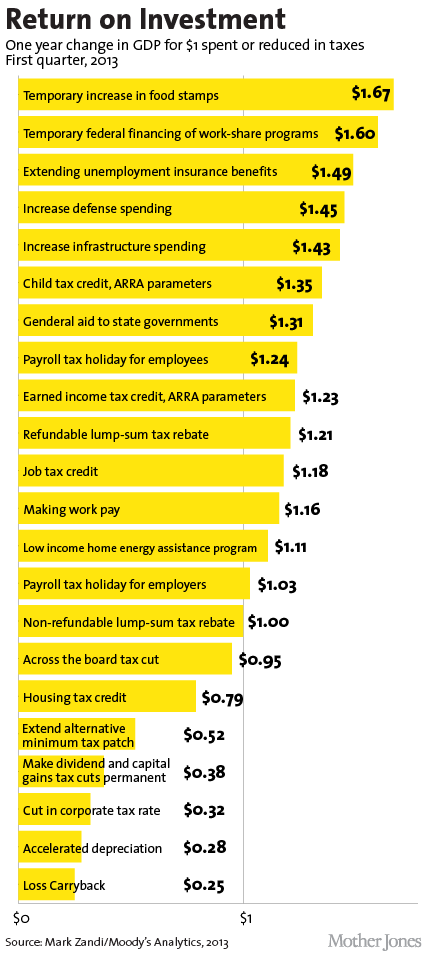
However, Tyler Cowen lays a rather interesting case for the subsidization of the wealthy in his book. Simply put, when analyzing return over capital and trickledown rates it is definitely possible for the poor to be better off by handling their money to the top earners. The logic is that, assuming that the long-run trickle down rate of the income generated on the economy is 30% (a good year in the markets renders around 20%, so 30% as a mean isn't really stretching it), the bottom earners would need the wealthy to have capital returns just a bit over three times higher than themselves to achieve a breakeven on upward income redistribution. Such figures -- at least in the developed world -- are definitely attainable as explicited in the spoiler below:
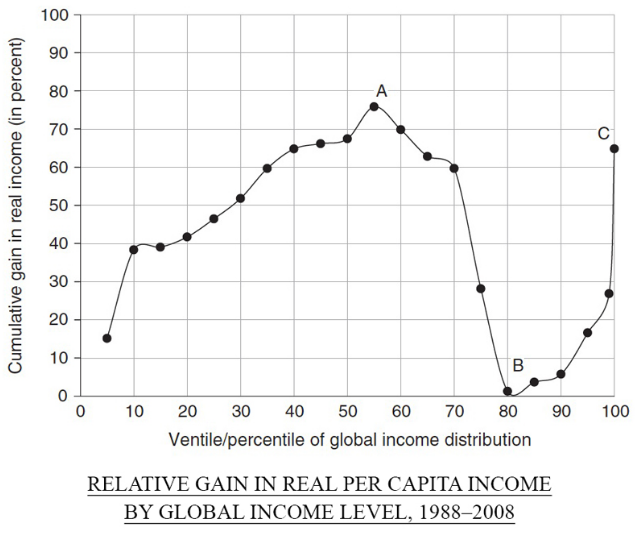
Truthfully, from a historical scope, such concept might go to the extent of justifying why developing countries with redistributive policies to the poor eventually decayed into a trap of low growth (e.g. USSR, Brazil) while poor countries which maintained a caste of rich people being constantly subsidized by the State eventually ascended to attain personal incomes equivalent to First World levels (e.g. South Korea with the Chaebols and Japan with the Zaibatsu).
Albeit the OP does seem a bit bloggy due to the extent of the explanation involved, I really think it's necessary to bring this up to the NS community given the raging debates on inequality that have been long happening. That said, I'd like to hear the arguments from the users regarding the subsidization of the rich, since it's an innovative solution to boost the condition of extremely poor countries.