NATION

PASSWORD

Custom Product Write-Ups [Not A Storefront]

A meeting place where national storefronts can tout their wares and discuss trade. [In character]
User avatar
United Earthlings
Minister
 
Posts: 2033
Founded: Aug 17, 2004
Ex-Nation

Custom Product Write-Ups [Not A Storefront]

Postby United Earthlings » Fri Mar 12, 2010 10:25 am

OC: This is not a storefront, merely a place where I can post and edit my custom designs in one place without clogging up my various storefronts pages and having my custom products appear all over the place. If you wish to purchase the custom products I list here, follow the link in my signature to my storefront.

If you feel so inclined, you may post your criticism or praise if you feel like being nice of my designs here or at the OC thread I created specifically for the storefronts, but kindly ask that you please not post any OC comments in my main storerfronts thread. Thank you.

=============================================================================

Designs currently in active service and available for sale.
  1. F-Type Class AAW Frigates
  2. M-51 Assault Rifle
  3. Type 20 family of Torpedoes
  4. Terra Family of Main Battle Tanks
  5. MAS-08/MAS-8 "Marksman" Rifle
  6. HERMES Anti-Tank Guided Missile
  7. Eclipse Family of Vehicles
  8. CF-21 "SparrowHawk|Sea Hawk" Fighter
  9. Stuart/E-Class Frigate
  10. Farragut Class Destroyer
  11. C-235A "Gull" Transport
  12. AC-400M Gunship
  13. Prussian Class Frigate
  14. "Poseidon" family of Missiles
  15. "Type 205(A) “Achilles” Self Propelled Assault Gun
  16. Scylla/S Class of Large Guided Missile Aviation Cruiser
  17. Type 215 "Blatta" Main Battle Tank
  18. Type 214 “Athena” Infantry Fighting Tank {IFT}
  19. Sea Serpent Family of Missiles
  20. G-Class Guided Missile Frigate

Designs currently in active service, but not available for sale.
  1. MGM-150C/N “Prometheus & Prometheus II” ICBM

Designs that have been removed from active service, discontinued or decommissioned and are no longer available for sale.
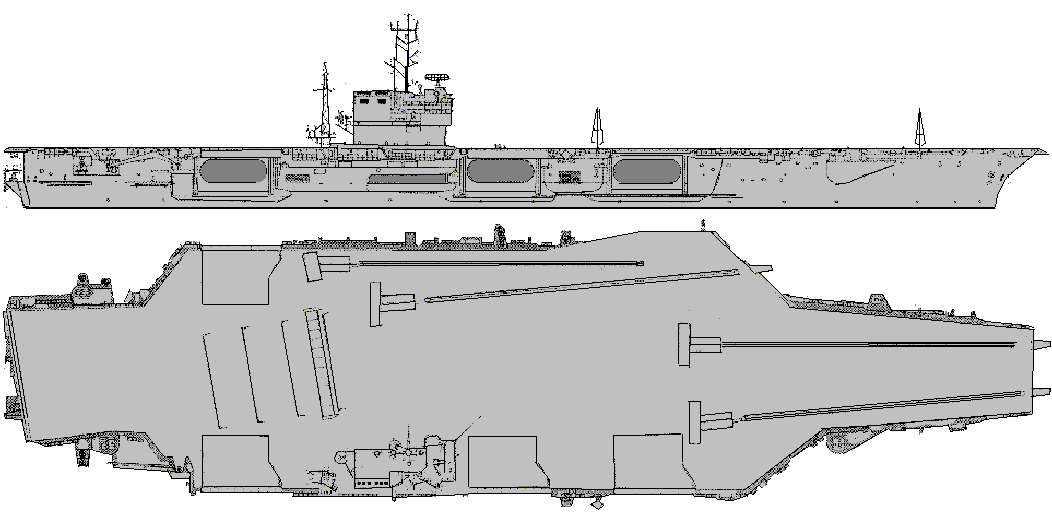
  1. Eradicate Class Guided Missile Battleship
  2. Shadow Harbor Class Amphibious Assault Ship
  3. Kaiserin/Kaiser Class Battlecruiser
  4. Winston Class Cruiser
  5. Erie Class Diesel Attack Submarine
Last edited by United Earthlings on Wed May 13, 2020 4:39 pm, edited 33 times in total.
Commonwealth Defence Export|OC Thread for Storefront|Write-Ups
Embassy Page|Categories Types

You may delay, but time will not, therefore make sure to enjoy the time you've wasted.

Welcome to the NSverse, where funding priorities and spending levels may seem very odd, to say the least.

User avatar
United Earthlings
Minister
 
Posts: 2033
Founded: Aug 17, 2004
Ex-Nation

F-Type Class Frigates

Postby United Earthlings » Fri Mar 12, 2010 10:31 am

F-Type Class AAW Frigates


Background and Developmental History

Begun under the behest of the Royal Commonwealth Navy for a cheaper mission specific vessel with a standard displacement not to exceed 5,000 tons and a full ton displacement not to exceed 6,000 tons, the resulting vessel design was orginally given the class designation Fjord, named after the many fjords that make up the geography of the Commonwealth. However, upon the adaption of the USNDS {Uniform Service Naval Designation System} all current/about to enter service or future naval design class vessels would recieve an alphanumerical class designation. Since, orginally to be called the Fjord Class, this was changed to the F-Type Class with all vessels to be commissioned into service given names that began with the letter F.

The final hull design chosen for the F-Class was a 4,800 ton standard displacement vessel with five decks and two superstructures. The welded 137.77 meter steel monohull has 14 watertight compartments in addition to insulation, redundancy of vital systems, power distribution, and routing, blast and fragmentation retaining structures which provide a very high level of survivability against missile attack and fire hazards. The design of the ship also incorporates stealth features with an emphasis on the reduction of radar cross section, infrared, acoustic, electrical and magnetic signatures. Finally, the hull is optimized for stability, sea keeping and maneuverability in both rough and shallow seas.

The F-Class Anti-air warfare [AAW] frigates are being built by Bremen Iron Works, Inc or BIW for short. The first vessel although to be named HMCV Fjord from which the class orginally got its name, was aptly renamed as HMCV Fable and launched from BIW’s shipyard in March 2010. Sea trials of the first of what is expected to be at least thirty vessels later increased to thirty-six of the F-Class are expected to be completed within a few months with a commission inter service date following by the end of the year. Launch of the second, third and fourth vessels of the F-Class are expected to follow within a few months of each other with a deadline of four vessels per year being launched until each Commonwealth Naval BattleGroup is each equipped with two vessels of the F-Class Frigate. The F-Class is not expected to replace the Stuart Class Frigate outright, but to act as a compliment to reduce the overall work load of the Stuart Class Frigates and of the Naval BattleGroups themselves.

Like all Bremen built ships, the vessels of are modular construction reducing the time and cost needed to bring a new class of vessel into service. While, the main mission of the frigate is anti air warfare [AAW] by providing local area or extended cover against saturation missile attacks and to escort and protect carrier groups. Upon customer request, the F-Class can be configured for either an anti submarine or anti-surface warfare role or both. In addition, all F-Class vessels can also be used to carry out non combatant tasks in peacetime. The ship is configured for rapid deployment, extended range and endurance and can carry sufficient fuel, water and stores for a minimum endurance of 45 days at sea between replenishments. The ship is capable of attaining a maximum speed of 29 knots and, at a cruising speed of 18 knots has a range of over 4,600nm.

Helicopters and Flight Deck

While, the ship has a helicopter landing deck capable of supporting one medium-sized helicopter for easier replenishment at sea. Due to the requirement to cut costs and devote as much of the limited space as possible to the anti-air warfare role, the F-Class is not equipped with a hanger.

Electronic warfare systems, Countermeasures and Sensor Systems

The F-Class was the first in a planned class of three vessel types that was to be fitted with an experimental two radar detection system. However, following design studies and reviews that showed huge cost overruns due to excess displacement growth and the devolpment of Dual-band radars incorpulating both detection and fire control, a single Main radar system was choosen instead, the Aegis integrated combat system being selected. The Aegis combat system for the F-Class is based on the SPY-1F multifunction phased array radar, a scaled version of the AN/SPY-1D in service. It provides missile and gun fire control functions, simultaneous multiple target tracking, volume radar search and horizon search.The surface-search radar is the G/H band AN/SPS-67(V)3. Aegis uses two Raytheon AN/SPG-62 I/J-band radar illuminators to provide terminal flight guidance for the Standard and Evolved Sea Sparrow missiles. A Sagem Vigy 20 electro-optical and infrared tracker provides passive target tracking.

The electronic warfare suite includes the CS 3701 tactical radar surveillance system or TRSS. The CS 3701 system combines precision electronic support measures (ESM) and radar warning receiver (RWR) functions. A Terma DL 12T decoy launcher dispenses infrared, radar and acoustic decoys. In addition, the DL-12T can dispense LOKI acoustic torpedo countermeasures. The ship's internal and external communications are managed by an integrated communications control system. The communications suite includes tactical data link, link 11, link 16/22 and for SHF and UHF military satellite communications.

The F-Class is not fitted with any type of ASW sensor suite, but upon customer request a few select choices can be installed. In addition, upon customer request a variety of combat radar systems and electronic warfare suites of the customers choosing can be installed in place of those equipped on Royal Commonwealth vessels.

Weapon Systems

As the main priority of the vessels have been devoted towards AAW, the F-Class has not been equipped with a main gun, anti-ship missiles or torpedoes thereby saving weight, time and cost in integrating these weapons into the ship design. However, upon customer request and requirements these items can be integrated in, of course at additional cost to the customer.

The main armament of the F-Class is the locally designed CIMS {Common Integrated Missile System} VLS incorporating the capabilities of various successful missile designs, but with each offering unique capabilities to the Royal Commonwealth Navy in helping to defend its fleets from air and missile attacks. The bow CIMS is a thirty-two cell VLS and the stern CIMS is a twenty-four cell VLS. The CIMS is capable of operating the Standard family of missiles, Evolved Sea Sparrow Missile (ESSM), Aster family of missiles as well as a few Russian missile types. The Standard SM-2MR Block IIIA/B missiles have a range up to 166.7 kilometers and a speed of plus Mach 3. The Evolved Sea Sparrow Missile (ESSM) has a range up to 50+ kilometers and a speed of plus Mach 4. The Aster 30 has a range from 3 km to 80 km (1.6 to 45 nm) at Mach 4 with the Aster 15 having a range from 1.7 km to 15 km (1 to 8 nm) also at Mach 4.

Depending on customer requests, the CIMS VLS system can be alter with in addition to the capability listed above can be configured to fire the Tactical Tomahawk land attack missile, the ASROC missile, a naval version of the MBDA SCALP land attack missile and finally the Poseidon family of anti-ship missiles.

The F-Class is fitted with three last ditch anti-air defense guns. The ship's multi-role gun which is mounted in the bow is the 40mm Oto Melara Compact Fast-Forty L70 twin gun which has a range of 12.5km and firing rate of between 600 to 900 rounds per minute. In addition two Phalanx 1B Mk15 close-in weapon systems (CIWS) are installed. The Phalanx IB is a 20mm/53-calibre six-barrel Gatling gun capable of firing 3,000 rounds a minute to a target range of 1.5km. Phalanx Block 1B is fitted with a thermal imager and is capable of firing up to 4,000 rounds a minute. In place of the Twin Forty, a main gun up to 76mm can be installed and in place of the Phalanx CIWS a wide variety of close-in weapon systems can be installed all upon customer request, but at additional cost.

Propulsion System

The F-Class frigates are equipped with a combined diesel and gas turbine or CODAG for short, propulsion system. In gas turbine mode, a single WR 21 advanced cycle gas turbine engine with intercooler and recuperator (ICR) heat exchangers provides an output of 25MW or 33,512 horsepower. From HMCV Fantasia on, in lieu of the WR-21 a LM2500+G4 gas turbine is installed which provides an output of 47,370 shp (35.32 MW) allowing the vessel to reach a new maximum speed of 32 knots. In diesel mode which is the same in all vessels also known as Cruising Mode, two MTU 20V 1163 TB93 diesel engines operating at 1,300 rpm and each rated at 9,925 horsepower (7.4 MW). All three engines are installed in a non-walkable sound proof capsule. When the full CODAG system is engaged all three engines operate two main gearboxes and the cross connection gearbox which are connected to twin shafts and two five bladed controllable pitch propellers. At max power, each F-Class vessel is capable of reaching a maximum speed of 29/32 knots.

SPECIFICATIONS
Displacement: 4,800 tons [standard]; 5,340 tons [full load]
Dimensions: Length of 137.77 meters [452 feet]; Beam of 16.8 meters [55.2 feet] and a Draught of 4.9 meters [16 feet]
Machinery: CODAG with one Rolls-Royce WR 21 gas turbine delivering 25 MW [33,512 horsepower] or one LM2500+G4 gas turbine delivering 35.32 MW [47,370 horsepower]and two MTU 20V 1163 TB93 diesels delivering 14.8MW [19,840 horsepower] for a combined total output of 39.8MW [53,352 horsepower] to two shafts.
Speed and range: Maximum possible of 29/32 knots with a range of 7,404 kilometers [4,600 miles] at 18 knots.
Armament: Two CIMS VLS with 56 cells for the Standard family of missiles, ESSM missiles and Aster family of missiles; One Oto Melara Twin 40L70 Compact Gun [Type A version has a 736 round magazine while Type B has a 444 round magazine] and two Phalanx 1B Mk15 CIWS.
Complement: 120 personnel

Royal Commonwealth F-Class Frigates in Service
HMCV Fable
HMCV Fabulous
HMCV Faena
HMCV Fagged
HMCV Faithful
HMCV Faitour
HMCV Fanatic
HMCV Fanciful
HMCV Fancy
HMCV Fang
HMCV Fantasia
HMCV Farce
HMCV Fastuous
HMCV Fatal
HMCV Fatality
HMCV Fate
HMCV Faust
HMCV Favoured
HMCV Fearful
HMCV Fearless
HMCV Fearsome
HMCV Fjord
HMCV Flair
HMCV Flaky
HMCV Flame
HMCV Flamboyant
HMCV Flanker
HMCV Focus
HMCV Fog
HMCV Foil
HMCV Foray
HMCV Forbear
HMCV Forbearance
HMCV Forbid
HMCV Foresee
HMCV Foxtrot
Last edited by United Earthlings on Thu Jan 28, 2016 9:55 pm, edited 4 times in total.
Commonwealth Defence Export|OC Thread for Storefront|Write-Ups
Embassy Page|Categories Types

You may delay, but time will not, therefore make sure to enjoy the time you've wasted.

Welcome to the NSverse, where funding priorities and spending levels may seem very odd, to say the least.

User avatar
United Earthlings
Minister
 
Posts: 2033
Founded: Aug 17, 2004
Ex-Nation

Eradicate Class Battleship

Postby United Earthlings » Mon Mar 29, 2010 1:25 pm

Eradicate Class


The Eradicate Class is based on the well proven hull design of the Iowa Class battleships with a few slight modifications. The two main modifications are the reconfiguring of the ships keel to improve hydrodynamic efficiency which includes the incorporation of a bulbous bow thereby offering an increase in speed and range and/or a decrease in fuel consumption. This reconfiguring of the shape of the hull also includes the upper hull above the waterline with the incorporation of stealth features to minimize radar, thermal, acoustic, electrical and magnetic signatures. The second modification involves the integration of modern weapons and sensors to bring the vessels capabilities up to modern requirements for twenty-first century warfare. These improvements allow the Eradicate class to combine the power of a battleship with that of a modern guided missile cruiser or destroyer. As some of the most powerful vessels ever to sail the high seas, the Eradicate Class provides unique capabilities to foreign navies. Able to function as a command and control vessel leading a Naval Battlegroup or Task Force, the Eradicate Class offers unique power projection capabilities into far-flung areas whether they be unclaimed, peaceful or hostile. With both long range heavy guns and tactical missiles, Eradicate Class vessels are able to inflict tremendous amounts of damage and with enough armor plating to protect the vessels from any current threat they might encounter on the high seas. These vessels are capable of absorbing massive amounts of damage and still keep functioning as weapons of war. The Eradicate Class vessels are some of the finest and most capable vessels ever to be commissioned into service within the Royal Commonwealth Navy and play a vital role in the Commonwealth’s blue water power projection capabilities.

In recent years, due to their cost and upkeep, a number of Eradicate Class vessels in the Royal Commonwealth Navy have been decommissioned and either replaced by cheaper cruiser sized vessels such as the Kaiserin/Kaiser Class family of vessels which offer similar capabilities, but at a fraction of the cost or placed into the mothballed fleet awaiting either to be scrapped or sold to foreign navies. Those vessels that remain in service are slowly being upgraded when the vessels are required to undergo their mandatory 25-year Refueling Complex and Maintenance Overhaul cycle at which point their nuclear reactors are refueled or in some cases replaced by newer more advance units, in addition the main naval guns barrels are replaced, the sensors are upgraded or updated if applicable and four of the vessels 5” guns are replaced by four Oto Melara Twin 40L70 Compact Guns. Those vessels to have undergone the RCMO are reclassified as Generation 2, while those yet to have undergone the RCMO are known as Generation 1. After being reintroduced into service, all Generation 2 vessels are reassigned to either the 10th, 11th or 12th Fleet for support in amphibious operations.

AEGIS COMMAND AND CONTROL SYSTEM

The Eradicate Class battleships are equipped with the Aegis Combat System which integrates the ship's electronic sensors and weapons systems to engage anti-ship missile threats. The Aegis system has a federated architecture with four subsystems – the AN/SPY 1D(V) multifunction radar [which has enhanced electronic countermeasures and more effective capability in littoral environments compared to older versions], the Command and Decision System (CDS), Aegis Display System (ADS) and the Weapon Control System (WCS). The CDS receives data from ship and external sensors via satellite communications and provides command, control and threat assessment. The WCS receives engagement instruction from the CDS, selects weapons and interfaces with the weapon fire control systems. The weapons control system includes a SWG-1A for Harpoon or SWG-1P for Poseidon, SWG-3 for Tomahawk, Mark99 Mod 3 missile fire control system, the GWS34 Mod 0 gun fire control system and a Mark116 Mod 7 fire control system for anti-submarine systems.

MISSILES

Each ship is fitted with three Mark 41 Vertical Launch Systems (VLS) containing a total of 192 cells with 64 cells located near the bow of the ship in where turret #2 was previous located and 128 cells located forward [behind] of the stern turret, with the two rear Mark 41 VLSs being side by side on a raised superstructure. Each cell can be armed with either, a Boeing/Raytheon Tomahawk cruise missile, a Lockheed Martin ASROC vertical launch anti submarine system, an Evolved Seasparrow (ESSM) missile or the Standard Missile. In the Anti ship role the Tomahawk missile uses inertial guidance and active/passive radar homing to a range of 250 nautical miles. The land attack (TLAM) version uses a Tercom (terrain comparison) and inertial navigation system (TAINS). Tactical Tomahawk has the capability for mission planning onboard the launch vessel, in flight targeting and loitering with a range up to 2,500km.

The Raytheon Standard SM-2MR Block IIIA/B and Block IV family of Surface to Air missiles uses a command and inertial guidance along with a semi active radar homing. The SM-2MR missiles have a range from 70 to 166km with an intercept speed of Mach 3+. The other member of the Raytheon family of standard missiles is the new SM 3, which is designed to intercept ballistic missiles outside the planet's atmosphere. The missile has a new GPS/INS (global positioning/inertial navigation) guidance and kinetic warhead.

The Evolved Sea Sparrow Missile (ESSM) has also been developed by Raytheon and is designed to counter high speed Anti ship missiles. It has the same semi active radar guidance and warhead as the Seasparrow but has a new rocket motor and tail control to provide increased speed, range and maneuverability. The ESSM has a range up to 50+ kilometers and a speed of plus Mach 4.

Four quad launchers for the Boeing Harpoon surface to surface anti-ship missile system are installed on the gun deck at the stern of the ship. Harpoon has a range up to 125km. Unique among the Eradicate class is that it is among a select few vessel types within the Royal Commonwealth Navy to have been reequipped to use the more powerful Poseidon family of anti ship missiles in place of the Harpoon. The load out for the Poseidon family remains the same as for those vessels carrying the Harpoon.

TORPEDOES

The Lockheed Martin Vertical Launch ASROC is armed with either the Mark 50 or Mark 46 torpedo and is launched from the Mark 41 VLS. The Mark 46 anti submarine torpedo has a range of 10km while the Mark 50 has a range of 15km.

GUNS

The ship's main guns are either six Mark 7 16 inch/50 caliber guns capable of firing a 1,225 kilogram [2,700 lbs] shell out to a maximum target range of 42,345 yards [approx 24 miles] at a maximum firing rate of 2 rounds per minute or six 18.1in/45 Caliber Type 94 guns capable of firing a 1,460 kilogram [3,219 lbs.] shell out to a maximum target range of 45,960 yards [approx 26 miles] also at a maximum firing rate of 2 rounds per minute. Both gun types are placed in triple turrets with one at the forward end of the bow and one at the stern. Most of the main naval guns used on Royal Commonwealth vessels are the Mark 7 type due to their slightly lighter weight.

The main secondary guns are eight BAE Systems Land & Armaments MK45 Mod 4 5"/62 caliber guns with each fitted with a Kollmorgen mk46 mod 1 electro-optic sight. Capable of firing, a 32kg shell to a target range of 22km at a maximum firing rate of 20 rounds per minute. With Extended Range Guided Munitions (ERGM) a range of nearly 60 miles is possible. Secondary armament is divided with four on the port side and four on the starboard side.

In place of the BAE MK 45 guns, the 6.1 inch/62 caliber Advance Gun System or (AGS) can be installed. Each gun is capable of firing a 102kg Long Range Land Attack Projectile (LRLAP) out to a range of 100nm (180km). It is also able to fire a 90kg Ballistic Long Range Projectile out to a range of 24nm (44km).

In Generation Two vessels in Royal Commonwealth service, four of the classes Mark45 Mod 4 five inch guns are replaced by four Oto Melara Twin 40L70 Compact Guns with two on the starboard side and two on the port side. These weapons provided a greater defense against sea-skimming anti-ship missiles then either the 5” or 6.1” guns while at the same time offering about the same capabilities in ship to ship combat and naval bombardment. The 40mm Oto Melara Compact Fast-Forty L70 twin gun has a range of 12.5km and a firing rate of between 600 to 900 rounds per minute.

Four Raytheon Phalanx Block 1B Mark 15 CIWS are also installed for last ditched defenses. Phalanx has a 20mm/53 calibre six barrel Gatling gun capable of firing 4,000 rounds per minute up to a target range of 1.5km and in addition is fitted with a Thales Optronics HDTI5-2F thermal imager. Two additional CIWS are installed in the form of the SGE 30 Goalkeeper with each one consisting of a 30mm seven barrel Gatling gun providing a rate of fire of over 4,000 rounds a minute. Range is between 200m and 3km.

COUNTERMEASURES

The ship's electronic countermeasures/support measures system is the Raytheon AN/SLQ-32(V)3 which performs radar warning and jamming. Decoys include four Lockheed Martin Sippican SRBOC six-barreled launchers for chaff and infrared flares and the AN/SLQ-25D Nixie torpedo decoy system. The Mk53 Nulka active missile decoy system is a hovering rocket system, which seduces incoming missiles away from the ship.

HELICOPTERS

The ship can support up to four medium sized helicopters such as the MH 60R/S, NH 90 or EH 101. However, there are no hangers for storage, maintenance and rearming.

SENSORS

The air search and fire control radar for the Aegis system is the Lockheed Martin AN/SPY-ID(V) 3D phased array radar, operating at E/F band, which provides continuous search and tracking of several hundred targets. Surface search radar is a DRS Technologies AN/SPS-67(V)3 G/H band (4-6GHz) radar. There is also a Raytheon SPS-64(V)9 I-band navigation radar and four Raytheon AN/SPG-62, I/J-band radars for fire control and terminal flight guidance for the Standard and Evolved Sea Sparrow missiles. A Sagem Vigy 20 electro-optical and infrared tracker provides passive target tracking. The sonar suite is the AN/SQS-53C bow-mounted active search and attack sonar.

PROPULSION

Each Eradicate Class vessel is powered by either in the case of Generation 1 vessels by two B1W pressurized water reactors, which are derived from the A4W/A1G reactors that power all Nimitz Class Carriers. In Generation 2 vessels, two more advance B2B pressurized water reactors are fitted, which are a modification from those powering the Gerald R. Ford-class Carriers. Both types of twin reactors are connected to four turbines capable of outputting up to 260,000hp (194MW) which drive four shafts. While, the top maximum speed of the vessels is 35 knots, due to refinements in hull design and a higher maximum power output, the Eradicate Class has a theoretical speed of 40+ knots, but due to the need to limit the stress on the hull and utilize excess power for weapons and sensors requirements, those theoretical speeds are never utilized or achieved except in rare or extreme cases such as during a shakedown cruise.

SPECIFICATIONS
Dimensions: Length (887.3 ft), Beam (108.3 ft); Draught (38 ft)
Displacement: 45,000 tons standard and 56,292 tons fully loaded
Complement: 960 personnel
Armor Protection: 6.1-12.1 inch belt, 1.5-6 inch deck, 11.6-17.3 inch barbettes, 9.5-19.7 inch turrets and 7.25-17.3 inch CT
Last edited by United Earthlings on Tue Jul 20, 2010 2:34 pm, edited 3 times in total.
Commonwealth Defence Export|OC Thread for Storefront|Write-Ups
Embassy Page|Categories Types

You may delay, but time will not, therefore make sure to enjoy the time you've wasted.

Welcome to the NSverse, where funding priorities and spending levels may seem very odd, to say the least.

User avatar
United Earthlings
Minister
 
Posts: 2033
Founded: Aug 17, 2004
Ex-Nation

M-51 Assault Rifle

Postby United Earthlings » Tue Mar 30, 2010 2:26 pm

Milizgewehr 51 {M-51}


The Milizgewehr 51, also known as the M-51 came about after a design request was submitted to UEMS from the Rheingua government for a weapon ideally suited to the needs of special forces. With it’s long history of designing the most cutting edge and reliable weapons at stake, UEMS began the task of bringing it’s extensive expertise to use to producing a weapon that would be the equal of no other. After, years of research and testing, the final result had finally emerged from the inner workings of the UEMS test center, the Milizgewehr 51 had come to fruition.

The Milizgewehr 51 is a gas operated, selective fired weapon of modular design that was designed and built in such a way that the weapon will not malfunction even when subject to heavy fouling. It uses a short stroke gas piston, located above the barrel, square-shaped bolt carrier and the typical rotating bolt with 7 locking lugs. The bolt carrier rides on a single guide rod, with the return spring around it. The charging handle is attached to the top of the bolt carrier and can be rotated to the left or to the right. When not in use, the charging handle aligns itself with the axis of the weapon under the pressure of its own spring, and reciprocates with the bolt group at the top of the receiver. The gas block is fitted with the self-adjustable gas valve that expels all the used gases forward, away from the shooter. The ejection window is located at the right side of the receiver and features a spent cases deflector to propel the ejected cases away from the face of the left-handed shooter. The receiver is made from high grade aluminum alloy.

The trigger unit on the Milizgewehr 51 is assembled in a separate plastic housing, integral with the pistol grip and the trigger guard. Thanks to this feature, a wide variety of firing mode combinations can be used on any rifle or carbine, simply by installing the appropriate trigger unit. Standard options are single shots, full automatic fire, 2 or 3 round bursts in any reasonable combinations. The default version is the single shots + 2 rounds burst + full auto. The ambidextrous fire selector lever also serves as a safety switch. The Milizgewehr 51 is fitted with four Picatinny rails as standard, and may accept any type of sighting devices on STANAG-1913 compliant mounts. It can also accept a variety of types of 40mm grenade launchers, which are clamped directly to the bottom rail. The side-folding skeletonized buttstock is standard on all Milizgewehr 51 rifles and carbines. It folds to the right side and does not interfere with the weapons function when folded. In addition, the buttstock can be locked into various positions, allowing the individual user to make adjustments as desired for easier use. The protected release lever prevents unintentional release or snagging, as well as protecting against injuries and fouling. The buttstock also contains the rear sling loops for the carrying sling as well as compartments for storage of spare batteries and tools. A choice of convex or concave shaped recoil pads is also available.

The Milizgewehr 51 is fed from the proprietary 20 or 30-rounds box magazines, made from translucent plastic. All magazines as standard have special studs on its sides, so two or three magazines can be clipped together for faster reloading. The magazine housings of the Milizgewehr 51 are made as separate parts, so each Milizgewehr 51 can be easily adjusted to the various magazine interfaces. As standard, the magazine release catch is located just behind the magazine, in the G3 or AK-47 style, rather than on the side of the magazine housing (M16-style). One additional feature that distinguishes the Milizgewehr 51 from the many other assault weapons found on the international market and one the weapons engineers within United Earthlings are the most proud of is the capability of the Milizgewehr 51 to interchange ammunition of the 5.45x39mm and 5.56x45mm variety while in the field with little to no modifications necessary. The Milizgewehr 51 even has the capability to fire both types of rounds from the same clip, although this action should only be consider in times of crises and not a part of the standard operating procedure of the weapon. This unique ability found in no other weapon system gives Milizgewehr 51 users, an tactical advantage when the selection of ammo is limited to one type or the other by the local environment.

The standard sighting equipment of the Milizgewehr 51 consists of two scopes, one 3.5X telescope sight below, with the second 1X red-dot sight above it. The sights are completely independent, with the former suitable for long range accurate shooting, and the latter suitable for the fast target acquisition at the short ranges. Both sights are built into the plastic carrying handle. In addition, an emergency rear folding 'peep' or aperture sight is molded into the top of the carrying handle for even faster shooting.

Specifications
Caliber: 5.45x39mm or 5.56x45mm NATO
Action: Gas operated, Refined rotating bolt head with multiple locking lugs
Overall length (stock extended/collapsed): 796/700 mm [10" barrel], 899/803mm [14" barrel], 950/854mm [16.5" barrel] and 1036/940mm [20" barrel]
Barrel lengths: Carbine Models [10.5"/267mm; 14.5"/368mm]; Rifle Models [16.5"/419mm and 20"/508mm]
Width: 77.978mm [3.07 inches]
Height: 239.776 [9.44 inches]
Weight (without magazine): 6.65 lbs or 3.01 kg [10.5"], 7.69 lbs or 3.48 kg [14"], 7.84 lbs or 3.55 kg [16.5"] and 8.49 lb or 3.85 kg [20"]
Weight (with full 30 round magazine): 8.01 lbs or 3.63 kg [10.5"], 9.05 lbs or 4.10 kg [14"], 9.20 lbs or 4.17 kg [16.5"] and 9.85 lb or 4.46 kg [20"]
Rate of fire: 650 rounds per minute
Magazine capacity: 20 or 30 round box magazines
Last edited by United Earthlings on Tue Mar 30, 2010 2:26 pm, edited 1 time in total.
Commonwealth Defence Export|OC Thread for Storefront|Write-Ups
Embassy Page|Categories Types

You may delay, but time will not, therefore make sure to enjoy the time you've wasted.

Welcome to the NSverse, where funding priorities and spending levels may seem very odd, to say the least.

User avatar
United Earthlings
Minister
 
Posts: 2033
Founded: Aug 17, 2004
Ex-Nation

Nuclear Weapons Program

Postby United Earthlings » Thu Apr 01, 2010 12:52 pm

Nuclear Weapons Program


Tired of buying Nuclear Weapons, but don't feel like establishing your own program from nothing. Then this is the program for you.

200 Gas centrifuges are supplied to turn Natural Uranium into Enriched Uranium. Each Centrifuge is able to operate at 5 kilogram SWUs (Separative Work Unit) per year. Running at full capacity it will take 171 days or 0.47 years to obtain 50 kilograms of highly-enriched or weapons grade Uranium (90% U235). Depleted Uranium can also be obtained through the Gas centrifuges if configured right.

To obtain weapons grade Plutonium-239, a small Fast Neutron Reactor is supplied to turn Natural Uranium into Plutonium-239. Depending on the Amount of Uranium in supply the FNR can supply an almost limitless supply of Plutonium-239.
Commonwealth Defence Export|OC Thread for Storefront|Write-Ups
Embassy Page|Categories Types

You may delay, but time will not, therefore make sure to enjoy the time you've wasted.

Welcome to the NSverse, where funding priorities and spending levels may seem very odd, to say the least.

User avatar
United Earthlings
Minister
 
Posts: 2033
Founded: Aug 17, 2004
Ex-Nation

Type 20 Family of Torpedoes

Postby United Earthlings » Thu Apr 01, 2010 12:56 pm

Type 20-08 Torpedo


Designed solely for use with the Poseidon II anti-ship cruise missile, the Type 20-08 torpedo brings the advance light weight torpedo design to its ultimate conclusion. Fitted with the same warhead size as an Mark 48, the Type 20-08 is capable of sinking or heavily damaging any ship or submarine within its reach through the use of its active and passive acoustic homing seekers. Though quite capable of sinking submarines, the Mark 58 is mainly designed to sink or severely damage heavy capital ships such as Cruisers, Battleships and Aircraft Carriers. A single Type 20-08 torpedo is carried inside each Poseidon II ASM, which carries it to its intended target far over the horizon. Enter operational service in 2008 C.E.

Specifications
Weight: 699 kg [1,542 lbs.]
Overall Length: 2.6 meters [102.4 in]
Diameter: 533 mm [21"]
Explosive Charge: 292.5 kg [650 lbs.] of PBXN-103
Range/Speed: 12,000 m at 45 knots
Operating Depth: Up to 600 meters
Power: Mono-propellant (Otto fuel II) fueled Pump-jet


Type 20-18 Torpedo


Designed for deployment from the Sea Serpent, the Type 20-18 torpedo improves upon the capabilities of the previous generation Type 20-08 torpedo. Whether operating in an open or littoral ocean environment, the Type 20-18 is capable of engaging any designated target at stand-off range through its use of advanced active and passive acoustic homing seekers. The Type 20-18 torpedo entered official service in 2018 C.E.

Specifications
Weight: 736 kg [1622.6 lbs.]
Overall Length: 3 meters [9.84 in]
Diameter: 533 mm [21"]
Explosive Charge: 292.5 kg [650 lbs.] of PBXN-103
Range/Speed: 12,000 m at 65 knots; 24,000 m at 55 knots
Operating Depth: Up to 1200 meters
Power: Electrical Pump-jet; Aluminum-silver oxide (Al-AgO) batteries
Last edited by United Earthlings on Wed May 13, 2020 4:26 pm, edited 2 times in total.
Commonwealth Defence Export|OC Thread for Storefront|Write-Ups
Embassy Page|Categories Types

You may delay, but time will not, therefore make sure to enjoy the time you've wasted.

Welcome to the NSverse, where funding priorities and spending levels may seem very odd, to say the least.

User avatar
United Earthlings
Minister
 
Posts: 2033
Founded: Aug 17, 2004
Ex-Nation

Terra Family of Main Battle Tanks

Postby United Earthlings » Fri Apr 09, 2010 12:08 pm

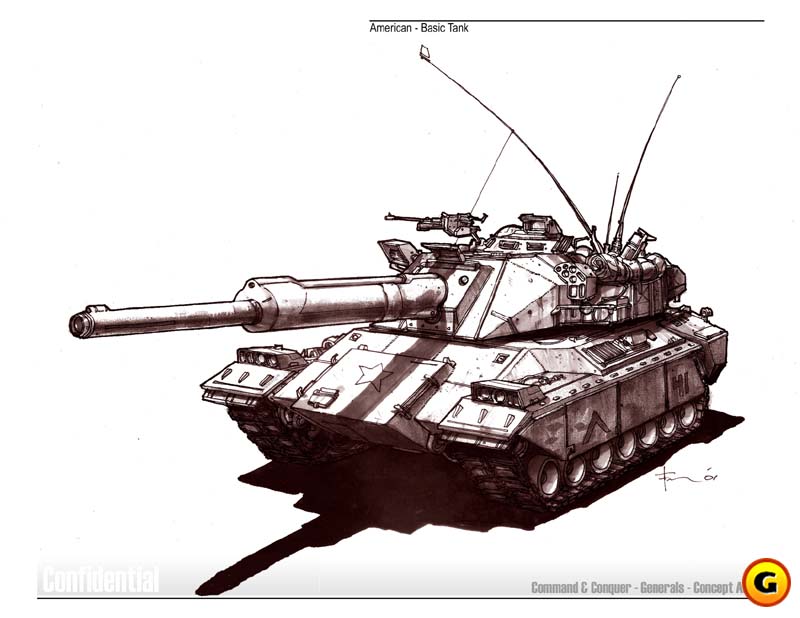
Terra Main Battle Tank

Image


The Origins of the Terra Series of Main Battle Tanks

The design history of the Terra series of main battle tanks in use by the Royal Commonwealth Army is prolonged and varied, filled with wild ambitions, spectacular failures and ultimately a rounding success in what was to become the main battle tank of the Royal Commonwealth Army and a few international clients. The inception of the Terra series of main battle tanks was initiated, when in November 1995 the Commonwealth government issued a defense tender requirement for a fast, nimble and light weight MBT capable of engaging other enemy main battle tanks outside their effective combat range with anti-tank guided missiles. Though the first Terra series of tanks later to be known as the Terra Mark Is or simply, Terra Is would never enter full scale production or see service with the armed forces of the Commonwealth, the research and development of the Terra I ultimately led directly to the tank the Royal Commonwealth Army had always desired. Though only a few prototypes of the Terra Mark Is were ever built, with most of the prototypes ending up looking like modified oversized Infantry Fighting Vehicles, with their 75mm, 90mm or 105mm cannons and turret mounted reloadable anti-tank guided missile tubes. In the end, the entire project was deemed a failure and canceled. After a few more years of going back and forth between various designs and defense committees, it was ultimately decided that a cannon capable of firing anti-tank guided missiles themselves instead of having them attached to the outer hull would be of a more practical nature for a design and hence less venerable in combat. By 2003, the design for future Terra series of main battle tanks was nearing the end of what had been a very protracted design process that resulted in a more conventional design outlay being chosen with production of prototypes for testing soon beginning on what would ultimately become the Terra Mark II or simply the Terra II.

Like the Mark I, the main priority for the design of the Terra II was given to the ability to use anti tank guided missiles. After reviewing various tank cannon designs from all over the known world, a locally built 125mm cannon by Imperial Ordnance was finally chosen as the winning design as the main weapon that would arm the Terra II and later the Terra III. Though the Terra Mark II was a great success, it still wasn’t without its faults, namely an engine output that was deemed lacking by many and a lower then expected combat range. It wasn’t until many years later that the Royal Commonwealth Army truly got the tank they had always dreamed of, just this time in the form of the Terra Mark III. For the first time in its history, the Royal Commonwealth Army had a tank that combined the best of protection, mobility, and firepower. At the end of the day, the Terra Mark III was more then for a match for any current main battle tank then in service with the numerous foreign military powers in the world.

Terra III MBT Technical Data


Even though when the Terra II first came off the assembly lines and entered into official service starting in mid-2005, it was without a doubt one of the best all around tanks ever to be built for the Royal Commonwealth Army and provided a unique counter to other main battle tanks then in service in other nations. Still, after a few years of service a few glaring flaws began to emerge. Not long after these flaws become apparent was it then decided that a program to improve the Terra II would commence. Within a few months a new prototype had began testing which would result in the outcome of a completely reformed tank design. Eventually, the new tank would be given the designation of T3 [Terra III] with the third symbol denoting both an capital I for improvement and the Roman Numeral 1, as this new tank was both an improvement of the Terra II and the third Terra series tank.

In the years since the Terra II had been conducted into service, new technology had been developed and it was that very technology that would correct the single most glaring flaw many saw the Terra II having, that of it's limited range. This flaw would be corrected two fold. First, a lighter, smaller more powerful fuel efficient version of the MTU MT 883 Powerpack would be installed to replace the MTU MB 873 and with the opening up of space and weight, larger fuel tanks would be installed. With this new engine, horsepower was increased from 1650 to 1800 and RPMs from 2600 to 3000. Fuel capacity would increase to 1,260 liters thereby finally giving the Terra series of tanks a range of over 300 plus miles (500 km). With the increase in HP and drop in weight from the lighter engine, the Terra series of tanks not only gained an improved maximum speed both on road and cross country, but a power to weight ratio second to none. The Terra II had finally fulfilled its full potential its designers had always dreamed of, except this time in the form of the Terra III.

WEAPONS: The main armament on use of the Terra family is a locally built fully stabilized 125mm L/55 smoothbore gun, developed by Imperial Ordnance. Main gun elevation is plus twenty {+20} degrees with a depression range of negative nine {-9} degrees. Turret rotation time for a complete 360° rotation is nine seconds. The system manager for the 125mm ammunition is divided between United Ordnance Industries and Imperial Ordnance. The 125mm gun can fire a wide variety of ammunition from Armor Piercing, Fin Stabilized, Discarding, Sabot (APFSDS) either with Depleted Uranium [DU] or Tungsten penetrators, HEAT (High Explosive Anti-Tank) as well as an HE-FRAG (High Explosive Fragmentation) Canister round. Depleted uranium has density two and a half times greater than steel and provides high penetration characteristics. The main gun is also capable of firing the HERMES anti-tank guided missile. The ammunition is loaded by an automatic loader.

The commander has at his or her disposal a 7.62mm machine gun [specific model can be chosen by customer] on a manually powered rotary platform. The elevation is from 10 to +65 degrees and the traverse is 360 degrees. This replaces the previous used 12.7 millimeter (0.50 inch) caliber Browning M2 machine gun on a powered rotary platform and equipped with a x3 magnification sight. Starting with the Terra III this powered platform and sight gave way to a larger commander's cupola and the manually operated machine gun mount. So, from the Terra III onwards, the commander has to open the hatch and use the machine guns iron sights to engage targets. This was done because the room formerly taken up by the sight, the platform power assembly and the controls is now taken up by the CID and the thermal viewer. In addition, both a 12.7mm Browning M2 machine gun and a 7.62 mm M240 [specific model interchangeable per customer request] machine gun is also mounted coaxially on the right hand side of the main armament, that being the 125mm cannon. The dual use of two coaxially mounted machine guns was integrated into the Terra III because why the 7.62mm is a very effective weapon against personnel against soft-skin vehicles the punch of the 7.62mm is often lacking hence the need for a more powerful round. In this capacity, the crew again has access to the 12.7mm machine gun, but without having to expose the vital tank commander to possible enemy fire. However, per customer request, the 12.7mm or 7.62mm coaxially machine guns can be removed leaving just one coaxial machine gun for use of the customers choosing.

COUNTERMEASURES: On both sides of the turret the tank is fitted with six barreled smoke grenade dischargers, model L8A1, designation M250. A smoke screen can also be laid by an engine operated system.

Terra III LAYOUT

(Commander): The commander is responsible to the platoon leader and signed equipment, the reporting of logistical needs, and the tactical employment of their tank. They brief their crew, direct the movement of the tank, submits all reports and supervises initial first aid treatment and evacuation of wounded crewmen. They’re an expert in using the tank's weapon systems, requesting indirect fires, and executing land navigation. The commander knows and understands the company mission and company commander's intent. They are prepared to assume the duties and responsibilities of the platoon leader or PSG in accordance with the succession of command. These requirements demand that the commander maintain situational awareness by using all available optics for observation, by eavesdropping on radio transmissions, and by monitoring the inter-vehicular information system (IVIS) or appliqué digital screen (if available).

The commander is seated on the right hand side of the turret. The commander's station is equipped with six periscopes which provide all round 360 degree view. The Independent Thermal Viewer from Texas Instruments provides the commander with independent stabilized day and night vision with a 360 degree view, automatic sector scanning, automatic target cuing of the gunner's sight with no need for verbal communication, and back up fire control. The system consists of a gyrostabilizer head housing the sensors, a hand control grip with a panel for selecting parameter settings, an electronics unit and a remote cathode ray tube display. The range of the viewer is 12 to +20 degrees in elevation and 360 degrees in azimuth. The magnification is x2.6 at 3.4 degrees narrow field of view and x7.7 at 10.4 degrees wide field of view. In addition, to the four Halon fire extinguishers stored behind the driver, an extra 2.5 kg Halon fire extinguisher (HAL 2.5) is stored on the floor below the commander.

(Gunner): The gunner searches for targets and aims and fires both the main gun and the coaxial machine gun. The gunner is responsible to the commander for the maintenance of the tank's armament and fire control equipment. The gunner serves as the assistant commander and assumes the responsibilities of the commander as required. The gunner also assists other crew members as needed. Several of their duties involve the tank's communications and internal control systems: logging onto and monitoring communications nets; maintaining digital links if the tank is equipped with the IVIS or appliqué digital system; inputting graphic control measures on digital overlays; and monitoring digital displays during the planning and preparation phases of an operation.

The gunner is seated on the right hand side of the turret. The Gunner's Primary Sight Line of Sight, G.P.S. LOS, has been developed by the Electro Optical Systems Division of C-tronics Technologies and Systems (CETS). The Terra III series of tanks have a G.P.S. LOS with a single axis stabilized head mirror. The system has daylight optics with x10 magnification narrow field of view and x3 magnification wide field of view, and unity magnification close in surveillance with 18 degrees field of view. The night vision Thermal Imaging System, TIS, from C-tronics has magnification x10 narrow field of view and x3 magnification wide field of view. The Thermal Imaging System creates an image based on the differences of heat radiated by objects within the field of view. The thermal image is displayed in the eyepiece of the gunner's sight together with the range measurement from a C-tronics laser range finder. The Terra II/III series of main battle tanks has a two axis G.P.S. LOS which significantly increases the first round hit probability by providing faster target acquisition and improved gun pointing. The azimuth inertial stabilization allows target detection, recognition and acquisition at longer ranges than the single axis system. The Line of Sight excursion range is 16 to +22 degrees in elevation and + or 5 degrees in azimuth. The stabilization accuracy is less than 100 microrads, and the bore sight retention is less than 100 microrads.

The C-tronics Laser Rangefinder for the Terra III consists of a Neodinium Yttrium Aluminum Garnet, (Nd:YAG) solid state laser transmitter, a receiver and timing and logic electronics integrated into the tank's fire control system. The operator aims the rangefinder on the target and fires the laser. The laser beam is reflected back from the target into the receiver and the time of travel to and from the target provides an accurate range measurement for the fire control computer. The wavelength of the Nd:YAG laser is 1.06 microns which can be damaging to the eye. A new rangefinder, the Eyesafe Laser Rangefinder has been developed by Hughes for the Terra III tank which incorporates a Raman resonator which shifts the wavelength from 1.06 to 1.54 microns which is not damaging to the eye. The C-tronics laser rangefinder has a firing rate of 1 shot per second and provides range accuracy to within 10 meters and target discrimination of 20 meters with a maximum range of less than 10,000 meters. The gunner has a Kollmorgen Model 939 auxiliary sight with magnification x8 and field of view 8 degrees.

The digital fire control computer consists of an electronics unit and a data entry and test panel. The range data from the laser range finder is transferred to the fire control computer. The fire control computer automatically takes data to calculate the fire control solution. The data includes 1.) the lead angle measurement, 2.) the bend of the gun measured by the muzzle reference system of the main armament, 3.) wind velocity measurement from a wind sensor on the roof of the turret and iv) the data from a pendulum static cant sensor located at the center of the turret roof. The operator manually inputs the data on the ammunition type and temperature, and the barometric pressure.

(Driver): The driver moves, positions, and stops the tank. While driving, they constantly search for covered routes and for covered positions to which they can move if the tank is engaged. The driver maintains their tank's position in formation and watches for visual signals. If the tank is equipped with a steer to indicator, the driver monitors the device and selects the best tactical route. During engagements, the driver assists the gunner and commander by scanning for targets and sensing fired rounds. The driver is responsible to the commander for the automotive maintenance and refueling of the tank. They also assist other crewmen as needed.

The driver's station is at the center front of the vehicle and is equipped with a monitoring panel showing the condition of vehicle fluid levels, batteries and electrical equipment. The driver has either three observation periscopes or two periscopes on either side and a central image intensifying periscope for night vision. The periscopes provide 120 degrees field of view. The driver's night vision equipment enables the tank to maneuver at normal daytime driving speeds in darkness and in poor visibility conditions such as in dust, smoke and in battlefield obscurants. The Driver's Vision Enhancer.v5 developed for the Royal Commonwealth Army Communications and Electronics Command is based on a 328 x 245 element uncooled detector array, working in the 7.5 to 13 micron waveband. The DVE5 provides a 30 degree elevation and 40 degree azimuth field of view. The field of regard is given as -50 to +20 degrees in elevation, and plus or minus 190 degrees in azimuth.

A Driver's Thermal Viewer.v3 developed by the Electro Optical Systems Division, is installed on the Terra III. The DTV3 is based on a 60 element cadmium mercury telluride, CdHgTe, detector operating in the wavelength band 7.5 to 12 microns. The cooling is provided by a Split Stirling 0.25 watt engine. The field of view is 40 degrees azimuth x 20 degrees elevation, and the field of regard is given as 100 degrees in azimuth and 40 degrees in elevation. In addition, four 9 kg Halon fire extinguisher bottles are installed on the right behind the driver's station. The bottles are connected to pipes and hoses and are activated automatically by the fire detection system, when temperatures rise above 180° F inside the fighting compartment, or manually via a control panel in the driver's compartment.

PROTECTION: The Terra family of MBTs is protected by third generation composite and steel encased depleted uranium armor mesh with additional reinforcement to the turret frontal and lateral armor through the use of NERA [Non-explosive and non-energetic reactive armor] and externally mounted add on armor modules. In the event of weapon penetration through the armor, the inside of the tank is completely surrounded by a spall liner to reduce the effects of being hit by projectiles, hollow charges or fragments, additionally the spall liner also provides noise and thermal insulation. This reinforcement also provides protection against multiple strike, kinetic energy rounds and shaped charges. The turret, glacis and upper front hull are protected by a combination of the composite armor and steel encased DU armor mesh [nuggets] with the side and rear upper hull and lower hull protected just with the composite armor. When second generation Terra IIIs were beginning to be commissioned into service the Royal Commonwealth Army recognized that a fundamental shift in warfare had occurred. With this recognition firmly in place, the new Terra IIIs in addition to being fitted with new monocoque V-shaped hulls which are better able to resist improvised explosive devices (IEDs) and landmines also saw the belly [bottom] armor of the tanks reinforced. Some of the new crew survivability features included blast-resistant seats and protected interior stations. Finally, in addition to containing a self contained NBC protection system which produces up to 4 mbar (0.004 kp/cm²) of over pressure inside the vehicle, the Terra III is also fitted with an air-conditioning unit.


Turret Armor
Front Turret: 1,410mm RHAe against KE and 2,580mm RHAe against CE [Mantlet: 1,425mm RHA against KE and 3,000mm RHAe against CE] @70 degrees slope
Side Turret: 525mm RHAe against KE and 810mm RHAe against CE rounds @70 degrees slope
Rear Turret: 90mm RHAe against KE and 410mm RHAe against CE @10 degrees slope

Upper Hull Armor
Front Hull: 975mm RHAe against KE and 1,575mm RHAe against CE @70 degrees slope
Side Hull: 170mm RHAe against KE and 680mm RHAe against CE @40 degrees slope
Rear Hull: 100mm RHAe against KE and 500mm RHAe against CE @48 degrees slope

Lower Hull Armor
Front Hull: 930mm RHAe against KE and 1,455mm RHAe against CE @60 degrees slope
Side Hull: 90mm RHAe against KE and 680mm RHAe against CE [protection includes armored side skirts] @0 degrees slope
Rear Hull: 70mm RHAe against KE and 400mm RHAe against CE @30 degrees slope

Top and Bottom Armor
Top: 90mm RHAe against KE and 2,000mm RHAe against CE
Bottom: 45mm RHAe against KE and 1,620mm RHAe against CE


PROPULSION: The engine compartment is at the rear, separated from the fighting compartment by a fireproof bulkhead. All engine versions are started by eight 12 volt/125 Ab batteries and a 24 volt electrical system. Originally fitted with an uprated MTU MB 873 Ka 501 liquid cooled 47.64 liter V 12 cylinder turbo charged diesel engine that developed 1,230.9 kW [1,650 hp] at 2,600 RPMs. In the Terra III, this engine was replaced by the more powerful MTU MB 883 Ka-501 CRI liquid cooled 27.4 liter V-12 cylinder turbo-charged diesel developing a power output of 1,342.8 kW [1,800 hp] at 3,000 RPMs. The most recent engine to equip Terra III tanks in the Royal Commonwealth Army are fitted with a new multi-fuel flex engine that usually runs on a Biodiesel of B40 [Blends of 40 percent biodiesel with 60 percent petroleum diesel]. Like the MTU MB 883, the Turmeca D1800 is a liquid cooled 27.4 liter V-12 turbo charged diesel engine with an power output of 1342.8 kW [1800 hp] at 3,000 RPMs. In addition to the main engine, the Terra III is fitted with a rechargeable Auxiliary Power Unit or APU. All engine versions can be operated at ambient temperature conditions of -46°C [-50.8°F] to 52°C [125.6°F], though at temperatures below -20°C [-4°F], the oil has to be preheated to prevent engine damage. Originally, the Terra II had a maximum road speed of 70 km/h, while this was increased to 74 km/h in the Terra III versions though both versions are limited to 50km/h during peacetime and a top reverse speed of 31 km/h.

With the new Turmeca engine fuel consumption is estimated at around 214 liters per 100 km on roads and around 400 liters per 100 km across country. Though not as good as the Turmeca engine, the MTU MB 883 fuel consumption is estimated at around 250 liters per 100 km on roads and around 500 liters per 100 km across country. Originally the four fuel tanks held a total capacity of approximately 1,160 liters, giving a maximum road range of around 350 km. However, in the Terra III the fuel tanks were slightly enlarged giving a maximum capacity of 1,260 liters and a new maximum range of around 632 kilometers. Fitted with a Renk HSWL 354 hydro kinetic planetary gearbox with integral service brake that is coupled to the engine, forming a compact power pack which can be exchanged within 15 minutes. Four forward and two reverse gears are available through a torque converter, enabling the Terra III to turn on the spot if required. The transmission automatically changes gear within the range pre selected by the driver. The reinforced cooling air outlet grille is very prominent across the upper section of the rear plate. Exhaust grilles with vertical bars are located to the left and right of the air vents. A fault detection system detects any technical malfunctions. The original engine/transmission powerpack of the Terra II weighed in at 6,120 kilograms, while the newer MTU MB 883 and Turmeca D1800 of the Terra III weigh in at 5,460 kilograms. Finally, the Terra III is able to ford water obstacles 1.20 m deep (wading) without any preparation, and to ford at a depth of 2.25 m (deep wading) with special preparation. About 15 minutes preparation is required to get the tank ready for crossing water obstacles at a depth of 4 m (underwater driving), including the fitting of a special three piece snorkel to the commander's cupola.

SPECIFICATIONS
Crew: 3
Weight: 65 metric tons (65,000 kilograms)
Length: 9.97 meters (32.7 feet) [Gun Forward]
Width: 3.74 meters (12.3 feet)
Height: 3 meters (9.8 feet)
Armament: 1 x Imperial Ordnance 125mm L55 smoothbore gun (42 rounds [automatic loader]), 1 x coaxial 12.7 mm machine gun (1,200 rounds), 1 x coaxial 7.62 mm machine gun (2,400 rounds) and 1 x roof-mounted 7.62mm machine gun for the commander (1,200 rounds)
Maximum speed: 74 km/hr (46 mph)
Maximum range: 632 km (392 miles)
Powerplant: 1 x MTU MB 883 or Turmeca D1800 diesel engine at 1,342.8 kW [1,800 hp] at 3000 RPMs
Power to weight ratio: 27.7 hp/ton


Terra III System Electronics Enhancement Program {SEEP}


By the early 2010s with over two decades of operational service behind it, the Terra II and its updated successor the Terra IIIs were beginning to be outclassed on the digital battlefield thereby necessitating the requirement for an upgrade for the Commonwealth’s Premier Battle Tank. This upgrade program came to be known as SEEP or System Electronics Enhancement Program. This program, however wouldn’t just update the electrics though, but bring the Terra III again to the cutting-edge of performance and technology.

Overall the System Enhancement Program upgrade is intended to:
  • improved target detection, recognition and identification with the addition of 3rd generation FLIR's.
  • incorporate an under armor rechargeable auxiliary power unit to power the tank and sensor suites that replaces the standard rechargeable Auxiliary Power Unit.
  • incorporate a thermal management system to provide crew and electronics cooling.
  • increased memory and processor speeds and provide full color map capability.
    provide compatibility with the Royal Commonwealth's Army C2 Architecture to ensure the ability to share command and control and situational awareness with all components of the joint arms team.
  • incorporate a new armored package with thicker armored plates on the side turret as well as adding composite armor side skirts and armored wheel hubs.
  • improve protection further through the addition of a Soft and Hard Kill Active Protection System as was as the fitting of 4th Generation ERA capable of defeating kinetic energy penetrators and newer Tandem shaped-charged warheads.
  • incorporate an exterior telephone that allows supporting infantry to communicate with the tank commander directly.
  • incorporate a remote-control weapon system that provides the ability to acquire and engage targets from inside the protection of an armored vehicle.
  • replace the 7.62mm coaxial MG and turret mounted MG with one chambered for 8.6×70mm rounds.
  • incorporate a new stronger hydropneumatic suspension system in lieu of the previous torsion bars suspension system and reinforced brake disks to handle the increased vehicle weight.
For the electrics enhancement package, the Terra III incorporated the latest digital systems improving the war fighting capability of the crew, and ensuring compatibility with the standards to be implemented by the Commonwealth’s future combat systems. These upgrades included advanced displays showing color maps, sensor imagery and situational pictures, supporting wireless technologies to enable remote diagnostics, vehicle monitoring and dismounted command and control. As well as Individual displays being introduced to all crew members, improving intra-vehicular connectivity. Finally, all tanks will be equipped with a new rechargeable battery system, extending the silent watch capability and eliminating the need for unnecessary use of the auxiliary power unit.

For the weapons package, the Terra III will replace the coaxial 12.7mm & 7.62mm machine guns with a single 8.6mm machine gun. Additional, a CROWS II RWS will be installed on the roof fitted with a 12.7mm M2 machine gun. The CROWS II is a remote-control weapon system that provides the ability to acquire and engage targets from inside the protection of an armored vehicle. It is designed to mount on a variety of military platforms. The CROWS’ laser range finder improves accuracy and the sensor suite permits target engagements in all conditions.

For the protection package, the Terra III will be provided with both a Soft Kill electro-optical jammer that jams the enemy's semiautomatic command to line of sight (SACLOS) antitank guided missiles, laser rangefinders and target designators and a Hard Kill system based initially on the Rafael Trophy Active Protection System. A local custom designed APS will be fitted/retrofitted to all existing Terra IVs as standard. Known as “Vanguard”, the design includes a millimeter-wave fire-control radar (FCR) with four flat-panel antennas mounted on the vehicle giving a 360 degree protection in azimuth, as well as extensive elevation coverage, while maintaining a pre-defined safety zone for friendly troops on the ground. The neutralization process is initiated only if the threat is about to hit the vehicle.

When an imminent threat is detected, the internal computer calculates an approach vector almost instantly before its arrival. Once the incoming threat is determined, the computer calculates the optimal time and angle to fire the interceptor towards the incoming threat. Once the explosive projectile interceptor or EPI is launched, the interceptor explodes very near the threat, destroying-deflecting-destabilizing the incoming threat without detonating its warhead. For this, only the blast effect of the explosive is used. The interceptor casing is made of combustible materials so no fragmentation is formed in the explosion, helping minimize collateral damage to nearby friendly personnel. The “Vanguard” has been successfully tested against a wide variety of threats including rocket-propelled grenades, anti-tank guided missiles, platform-fired High-Explosive Anti-Tank (HEAT) rounds and kinetic energy penetrators aka APFSDS.

Additional protection is provided by further reinforcement to the side turrets as well as the installation of fourth generation explosive reactive armor [ERA] bricks on the Front & Side Turret, Glacis, Upper Front & Side Hull as well as the turret roof to provide protection from top-attack weapons.

Finally, the Terra III is fitted with a number of automotive and basic vehicle engineering improvements. The first being reinforced brake disks to cope with the increased vehicle weight. Additionally, the engine compartment is constantly cooled to reduce the IR signature and heat sensors installed in the engine compartment are designed to automatically cut off fan and air intake operation if the Terra III should come under attack by napalm. Furthermore, both fuel tanks have a special additional explosion-suppressing filling liquid. New road wheels have been installed that are fitted with armored hubs. And finally, to extend range new fittings for two 200 liter armored fuel drums that could be discarded are installed.

Continuing its naming convention, this newer version of the Terra series of MBTs was given the local designation of Terra IV.


Turret Armor
Front Turret: 1,410mm RHAe against KE and 2,580mm RHAe against CE [Mantlet: 1,425mm RHAe against KE and 3,000mm RHAe against CE] @70 degrees slope
Side Turret: 825mm RHAe against KE and 1,260mm RHAe against CE rounds @70 degrees slope
Rear Turret: 90mm RHAe against KE and 410mm RHAe against CE @10 degrees slope

Upper Hull Armor
Front Hull: 1,075mm RHAe against KE and 1,875mm RHAe against CE @70 degrees slope
Side Hull: 270mm RHAe against KE and 930mm RHAe against CE @40 degrees slope
Rear Hull: 100mm RHAe against KE and 500mm RHAe against CE @48 degrees slope

Lower Hull Armor
Front Hull: 930mm RHAe against KE and 1,455mm RHAe against CE @60 degrees slope
Side Hull: 90mm RHAe against KE and 680mm RHAe against CE [protection includes armored side skirts] @0 degrees slope
Rear Hull: 70mm RHAe against KE and 400mm RHAe against CE @30 degrees slope

Top and Bottom Armor
Top: 200mm RHAe against KE and 2,250mm RHAe against CE
Bottom: 45mm RHAe against KE and 1,620mm RHAe against CE

SPECIFICATIONS FOR THE Terra IV
Crew: 3
Weight: 67.6 metric tons (67,600 kilograms)
Length: 9.97 meters (32.7 feet) [Gun Forward]
Width: 3.74 meters (12.3 feet)
Height: 3 meters (9.8 feet)
Armament: 1 x Imperial Ordnance 125mm L55 smoothbore gun (42 rounds [automatic loader]), 1 x coaxial 8.6 mm machine gun (2,800 rounds) and 1 x roof-mounted CROWS 2 {RWS} 12.7 mm machine gun (1,500 rounds)
Maximum speed: 72 km/hr (45 mph)
Maximum range: 776 km (482 miles) [Road] & 417 km (259 miles) [Cross-Country]
Powerplant: 1 x Turmeca D1800 diesel engine at 1,342.8 kW [1,800 hp] at 3000 RPMs
Power to weight ratio: 26.6 hp/ton
Last edited by United Earthlings on Wed May 13, 2020 3:34 pm, edited 15 times in total.
Commonwealth Defence Export|OC Thread for Storefront|Write-Ups
Embassy Page|Categories Types

You may delay, but time will not, therefore make sure to enjoy the time you've wasted.

Welcome to the NSverse, where funding priorities and spending levels may seem very odd, to say the least.

User avatar
United Earthlings
Minister
 
Posts: 2033
Founded: Aug 17, 2004
Ex-Nation

MAS-08/MAS-8 "Marksman" Rifle

Postby United Earthlings » Tue Jul 20, 2010 2:46 pm

MAS-08/MAS-8 "Marksman" Rifle


The developmental beginnings of the XARARM weapons program, better known as the Experimental Army Replacement Assault Rifle Machiavellian for a new light weight assault rifle was initiated upon the behest of the Commonwealth’s Defense Procurement Agency once it was determined that the “Enforcer” assault rifle had failed to live up to expectations and the project was terminated. Instead of trying to replace both the standard 5.56mm and the 7.62mm battle rifle within Commonwealth service with one single design, the two design projects would again diverge, one for a replacement for the 5.56mm AUG and the other for the 7.62mm FAL. Designed from the very beginning to use the more powerful 7.62mm round for better penetration of modern body armor and structures, in addition to enhanced accuracy over 500 meters. This new weapon was designed and expected to be a cheaper and more cost effective assault rifle then the “Enforcer”, however as fate would show, with a program experiencing numerous developmental delays and unforeseen cost overruns, what would later become known officially as the MAS-8 was destined to be plagued with developmental difficulties since its inception. Most of these difficulties would result from the many political squabbles that would erupt over the course of the program’s developmental cycle. The most notable example being of one of these squabbles to take place was the debate over whether to continue development of the “Enforcer”, even though it had proven to be a less then satisfactorily weapon in the field, submit a defense tender to purchase/use a foreign design [highly unlikely given the political climate of using foreign made weapons] or just use an existing weapons design. Adding to the complications was the debate ranging in the military community at the time of whether to just fully adapt the lighter weight slightly less powerful 5.56mm round for all current and future planned assault rifles or if a more powerful Battle Rifle chambered in 7.62mm was still worthy of pursuit, both arguments having their advantages and disadvantages.

It was around this time that another factor would enter the fray, furthering complicating the ongoing debate and further delaying the program. When the local defense company UEMS received a defense tender from the Rheingua government to design a new assault rifle, later to be known as the Panzergrenadiergewehr I or PzGrG I for short, many within the echelons of power that both oversaw and managed the defense procurement programs of the Commonwealth, seriously begin to consider merging the XARARM program with that of the one that would later produce the PzGrG I. In the end, as the PzGrG I was a private adventure and in addition as the AUG and FAL had continue to proven themselves to be suitable enough weapons, the two programs were kept separate with the XARARM program being placed on a lower priority list for receiving the necessary funding to continue development. Only later in hindsight would it be realized that placing the XARARM program on a lower rung was a foolish move that only caused the program to experience a further myriad of developmental delays and cost overruns.

After completing design and developmental work on the PzGrG I, many within the military expected the XARARM program to resume its high priority status that it had occupied merely a few years ago. As fate would have it, by this time political interest in the program had faded to its lowest level since the program’s inception. Furthermore, the Royal Commonwealth Navy and Air Force were seen as more vital to national security and as such were given a higher priority in the fight for access to the appropriations budgets that divvied up the funds for the research, design and purchase of new equipment. In the end, ironic enough it would be the designing and development of a new assault rifle, again for the Rheingua government, that would see the complete termination of the XARARM weapons program for nearly half a decade. That weapon was the Milizgewehr 51 or simply the M-51 and again ironic enough, it was the very success of the M-51 program that would see the rebirth of the XARARM program, now renamed and known as the MAS-08 or MAS-8.

With over a decade of continuous delays and political bickering having passed by, the soldiers and officers of the Royal Commonwealth Army at long last had their final objective in sight and all that was left was that final push over the ledge to get the political hacks that governed over them to approve their budget requests for a limited production run. The assault rifle they had long desired, dreamed of and lobbied hard for had finally arrived on the scene among much fanfare. So began the process of inducting the MAS-8 into official service at first just among a few select front-line combat units and in time to all units within the Royal Commonwealth military structure. In keeping with the long held tradition within the Commonwealth of supplying quality designed world-renowned weapons for international forces, the MAS-8 was expected to exceed all expectations. The Royal Commonwealth Army finally had in their hands a weapon uniquely designed to suit their operational requirements, methods and tactics. The company makers could only hope that the MAS-8 would be as successful on the export market as it was expected to be with the domestic market after having invested so much time, money, blood, sweat and tears into the grueling process to bring the MAS-8 to it’s ultimate fulfillment it enjoys today.

In keeping with tradition and status of all active duty Royal Commonwealth Army soldiers of having advanced infantry training, the MAS-8 was designed from the very beginning to focus on reliability, pinpoint accuracy from a firing range of over 500 meters and an effective terminal ballistic performance. As such the MAS-8 was envisioned from the very beginning to be a "designated marksman" rifle with a one shot-one kill capability rather than a standard assault rifle. Though for the most part designed with a very conventional nature in mind between the focus on designing a “marksman” assault rifle and a slightly greater use of composite materials and titanium to decrease overall weight, these advantages of lighter weight, enhanced accuracy, penetrative power and higher effective range were weighted against an increased unit cost, decreased rate of fire and in some instances a smaller magazine capacity.

TECHNICAL DESCRIPTION

Like the M-51 and weapons of similar nature, the MAS-8 is a gas operated, selective fired weapon of a modular nature designed to stand up to heavy fouling without malfunctioning. Using a short stroke gas piston with a square-shaped bolt carrier located above the barrel and the typical rotating bolt with 7 locking lugs. This bolt carrier rides on a single guide rod, with the return spring around it. The charging handle is attached to the top of the bolt carrier and can be rotated to the left or to the right. When not in use, the charging handle aligns itself with the axis of the weapon under the pressure of its own spring, and reciprocates with the bolt group at the top of the receiver. The gas block is fitted with the self-adjustable gas valve that expels all the used gases forward, away from the shooter. The ejection window is located at the right side of the receiver and features a spent cases deflector to propel the ejected cases away from the face of the left-handed shooter. The receiver is made from a high grade aluminum and titanium alloy.

The trigger unit for the MAS-8 is assembled in a separate plastic housing, integral with the pistol grip and the trigger guard. Thanks to this feature, a wide variety of firing mode combinations can be used simply by installing the appropriate trigger unit. As a “designated marksman” rifle, the MAS-8 is not fitted with full auto capability, this full auto capability was deemed redundant as each Royal Commonwealth Army rifle squad contains two members each assigned to carry a FN Minimi squad support weapon chambered for 7.62mm. Instead, standard firing options for the MAS-8 include single shots and 2, 3 or 4 round bursts in any of those combinations. The default Royal Commonwealth version is fitted with a single shot + 2 rounds burst firing mode. In addition to keeping with its Special Forces nature, the MAS-8 is provided with a built-in full silencer option that allows the user to switch from normal to silencer mode on the spot. The ambidextrous fire selector lever also serves as a safety switch. The MAS-8 is equipped with a MIL-STD-1913 free-floating rail system giving the user the freedom to choose from a wide range of special accessories they may need for a given mission from tactical sights and lasers to 40mm under-barrel grenade launchers. The standard extendable buttstock can be locked into various positions, thus allowing adjustment to the individual, of length of pull and eye relief as desired. The protected release lever prevents unintentional release or snagging, as well as protecting against injuries and fouling. The buttstock contains the rear sling loops for the carrying sling, in addition inside the buttstock are compartments for storage of spare batteries and tools. As optional, the MAS-8 can be fitted with a side-folding skeletonized buttstock to further reduce the weapons length. It folds to the right side and does not interfere with the weapons function when folded. Finally, choices of convex or concave shaped recoil pads are also available per customer request.

The MAS-8 is fed from proprietary 20, 25 or 30-rounds box magazines, made from translucent polymers. All magazines as standard have special studs on its sides, so two or three magazines can be clipped together for faster reloading. The magazine housings of the MAS-8 are made as separate parts, so each MAS-8 can be easily adjusted to the various magazine interfaces. As standard, the magazine release catch is located just behind the magazine rather than on the side of the magazine housing.

The standard sighting equipment of the MAS-8 consists of TWO scopes, one 3.5X telescope sight below with the second 1X red dot sight above it. The sights are completely independent, with the former suitable for long range accurate shooting, and the latter suitable for the fast target acquisition required for shorter ranges. Both sights are built into the plastic polymer carrying handle.

SPECIFICATIONS
Caliber: 7.62mm x 51 [NATO]
Length, max: 985mm [38.77 in.]
Length, min: 905mm [35.62 in.]
Width: 82mm [2.36 in.]
Height: 196mm [7.71 in.]
Barrel length: 406mm [16.00 in.]
Weight: Complete weapon- approx. 4,070 grams [8.965 lbs]; 20 Round Magazine (full) approx. 679 grams [1.49 lbs]; 25 Round Magazine (full) approx. 848.75 grams [1.8625 lbs]; 30 Round Magazine (full) approx. 1018.5 grams [2.235 lbs] and Magazine (empty) approx. 152 grams [0.33 lbs]
Trigger pull: 21 - 27 Newtons
Maximum rate of fire: 250 to 300 rounds per minute [rpm]
Muzzle velocity: Approximately 750 meters a second [m/s]
Last edited by United Earthlings on Wed May 13, 2020 4:12 pm, edited 6 times in total.
Commonwealth Defence Export|OC Thread for Storefront|Write-Ups
Embassy Page|Categories Types

You may delay, but time will not, therefore make sure to enjoy the time you've wasted.

Welcome to the NSverse, where funding priorities and spending levels may seem very odd, to say the least.

User avatar
United Earthlings
Minister
 
Posts: 2033
Founded: Aug 17, 2004
Ex-Nation

HERMES Anti-Tank Guided Missile {ATGM}

Postby United Earthlings » Tue Sep 14, 2010 1:17 am

HERMES


The HERMES is a semi-active laser homing light-weight guided anti-tank missile developed and manufactured by United Missile Systems. Designed primarily to be launched from Imperial Ordnance 125mm cannons.The HERMES has a semi-active laser guidance system, capable of both direct and indirect laser designation- target can be laser-designated by the launching platform itself or other platforms in the combat area requiring minimal exposure in the firing position. With a low launch signature, the missile’s trajectory can be set for either top attack kills or direct attack engagements against either structures or armored fighting vehicles. With a maximum endurance range of up to 8 kilometers when launched from a level ground platform and up to 13 kilometers when deployed from higher elevations. The missile with its tandem warhead to better deal with add-on reactive armor hits the target with an accuracy of between 0.5 meter and 0.8 meter CEP providing effective penetration of up to 800mm of RHA@90° behind ERA and up to 850mm of RHA@90° without ERA. Second gen versions of the HERMES are equipped with an embedded active protection system countermeasure capability. The HERMES is designed to be stowed and handled just like any other type of ammunition whether through an autoloader or hand loaded.

Specifications
Weight: 15.35 kilograms {Missile itself} and 22.6 kilograms {Entire Round}
Length: 97.5 centimeters
Diameter: 125 millimeters
Warhead: Tandem HEAT
Warhead weight: 4.5 kilograms
Operational range: 8000 to 13,000 meters
Speed: 300 m/s
Last edited by United Earthlings on Wed Dec 20, 2017 11:29 pm, edited 4 times in total.
Commonwealth Defence Export|OC Thread for Storefront|Write-Ups
Embassy Page|Categories Types

You may delay, but time will not, therefore make sure to enjoy the time you've wasted.

Welcome to the NSverse, where funding priorities and spending levels may seem very odd, to say the least.

User avatar
United Earthlings
Minister
 
Posts: 2033
Founded: Aug 17, 2004
Ex-Nation

Eclipse family of fighting vehicles

Postby United Earthlings » Tue Sep 14, 2010 1:38 am

Eclipse Family of Fighting Vehicles


The Eclipse family of tracked armored vehicles began development in the early-1990s by the then United Earthling Land Systems {UELS} which following the massive privatization of the Commonwealth defense sector is now known as United Commonwealth Defence Systems. Since entering service in 2002 the Eclipse family has proven itself in action with the military forces of the Commonwealth along with a wide range of International Customers in operations across the globe. The Desert Eclipse family of vehicles has been adapted for operations in hostile desert conditions. In all over 12,000 vehicles have been produced for the Royal Commonwealth Army and other international customers.

Eclipse vehicles typically carry a driver, commander, gunner and eight [8] fully equipped soldiers together with supplies and weapons for 48 hours under combat and NBC conditions. The Eclipse adapts to a wide range of roles with weapon fits ranging from machine pistols to 125mm guns, mortars and missile systems. The Eclipse is in service in the following variants: Infantry Section Vehicles, Infantry Command, Mobile Gun System (MGS), LT 125 light tank, anti-aircraft missile carrier, anti-aircraft gun system, anti-tank guided missile carrier, mortar carrier, repair and recovery vehicle, logistics carrier, command and communication carrier, artillery observation post and ambulance.

ARMAMENT

Turret control is electro-mechanical and the turret is fitted with a turret drive stabilization system from Curtiss-Wright Controls of Gastonia, North Carolina. The weapon system is stabilized in two axes, which allows the vehicle to engage targets stationary or on the move. Elevation is from -10 to +50° with a 360° traverse.

The vehicle's main armament is a 30mm dual feed, gas-operated Mauser MK 30-2 automatic cannon with two 7.62mm machine guns are installed on the turret, one co-axial with the main gun. Two TOW 2 anti-tank guided weapon launchers are installed, one on each side of the turret. The TOW 2 wire guided anti-tank missile from Raytheon Missile Systems travels at 200m/s to a range of 3,750m. The vehicle has the capacity to carry four TOW 2 missiles in the vehicle and two in the launchers. The 30mm gun has a rate of fire of 800 rounds/minute and can fire a range of ammunition including APFSDS rounds. The vehicle carries 200 rounds of 30mm and 700 rounds of 7.62mm ammunition ready to fire, and a store of up to 245 rounds of 30mm and up to 3,200 rounds of 7.62mm ammunition. The fire control for the TOW 2 missiles is integrated into the vehicle's fire control system.

SELF-PROTECTION

The hull and turret are constructed from all-welded steel armor, which provides protection against 14.5mm armor piercing rounds, 155mm air burst shell fragments and 9kg anti-tank mines. Additional ballistic protection is available against a variety of anti-armor munitions including shoulder-launched rocket propelled grenades (RPG), up to 30mm APFDS (Armor Piercing Fin Stabilized Discarding Sabot) rounds fired from a 1,000m range over the forward 60° arc, and all round protection against 14.5mm armor piercing incendiary (API) rounds from a range of 500m.

Two sets of three smoke grenade launchers are installed on each side of the turret. It is also fitted with an engine smoke generating system. Eclipse fighting vehicles can be fitted with laser warning system and NBC (nuclear, biological, chemical) detection system.

FIRE CONTROL AND OBSERVATION

The gunner is equipped with a Raytheon Integrated Sight Unit (ISU) which includes a day/thermal sight of magnification x4 and x12. An optical relay provides the image of the gunner's sight to the commander. The gunner also has periscopes for forward and side observation. A daytime sight system for the gunner or commander is provided as backup to the primary sight.

The driver is equipped with three forward periscopes plus one periscope to the left. The central periscope can be replaced with the Northrop Grumman (formerly Litton) AN/VVS-2 Driver's Night Viewer with a 25mm second generation image intensifier. Eclipse will be equipped with the DRS Technologies Driver's Vision Enhancer (DVE) from 2005.

Eclipse RECONNAISSANCE VEHICLE

The Reconnaissance Vehicle is fitted with additional armored protection against conventional and chemical attack. Armor shielding covers the front, sides and the suspension of the vehicle. The Eclipse Reconnaissance vehicle is normally operated by a crew of three, the driver, commander and the gunner. The vehicle has capacity to accommodate a reconnaissance officer and additional surveillance equipment.

AMOS INTEGRATION

The AMOS (Advanced Mortar System) has been integrated on Royal Commonwealth Army "Eclipse" infantry fighting vehicles. The AMOS twin 120mm mortar system has a direct fire capability and a digital, computerized fire control system, which can fire a variety of mortar bombs including the Strix "smart" mortar which was developed by UEMS.

PROPULSION

The Eclipse is fitted with an MTU 8V-199-TE20 8-V90 diesel engine (530kW at 2,300rpm), rated 720hp, and a Renk HSWL 106C hydro-mechanical transmission, and torsion bar suspension.

All Eclipse’s are amphibious and all models have an inflatable pontoon which fits on the front and sides of the vehicle. Water propulsion is provided by tracks and the Eclipse can attain a maximum speed of 7.2km/h in water.

"Eclipse" Mobile Gun System (MGS)

The "Eclipse" mobile gun system variant consists of the basic vehicle with a UEMS fully stabilized shoot-on-the-move low-profile turret. The turret is armed with a M68A1E4 105mm cannon with muzzle brake, a 7.62mm coaxial machine gun and an M2 0.50 caliber commander's machine gun. The mobile gun system has the same C4ISR communications and driver's vision equipment as the IFV. The "Eclipse" MGS can be used for a variety of roles, but within the Royal Commonwealth army its task is mainly Reconnaissance and tactical support. An advantage to having the mobile gun vehicle of the same "Eclipse" family of vehicles is the commonality across the entire capability and the reduced logistics requirement.

"Eclipse" 125 LIGHT TANK

The "Eclipse" 125 LT is fitted with the proven gun on the Terra III/IV series of Main Battle Tanks. Main armament is the 125mm E/55 smoothbore tank gun with a 7.62mm coaxial machine gun. The HERMES anti-tank guided missile can also be used in the Eclipse LT, but at the cost of 125mm rounds. For this reason, all Eclipse LTs in the service of the Royal Commonwealth army have not provided with these missiles. The "Eclipse" LT has the same C4ISR communications and driver's vision equipment as the IFV and the "Eclipse" MGS (mobile gun system). The "Eclipse" LT is also fitted with the same fire control system as the Terra family of main battle tanks.

SPECIFICATIONS
Dimensions: (Overall Length 6.836m [22.4 feet)- (Overall Height 2.653m [8.7 feet])- (Overall Width 3.15m [10.3 feet])
Ground clearance: .49m [1.6 feet]
Combat Weight: 25.2 metric tons [Basic Protection Level] or 26.3 metric tons [Higher Protection Level]
Performance: (maximum road speed- 70 km/hour), (average cruising speed- 50 km/hour on roads), (maximum reverse speed- 35 km/hour), (acceleration 0 to 50 km/h= approximately 14 seconds) and (cruising range 600 km on roads)
Power-to-Weight ratio: 28.5 kW/ton [Basic] or 27.4 kW/ton [Higher]
Turret and Weapons: Main armament- 30mmx173 dual-feed, gas-operated Mauser MK 30-2 automatic cannon with a 7.62mm coaxial machine and a smoke discharger system of 81 mm, 2 x 4. Ready to fire ammunition- 200 30mm rounds; 700 7.62mm rounds and 8 smoke grenades. Stowed ammunition- 240 30mm rounds; 3,200 7.62mm rounds and 16 smoke grenades.
Spec. ground pressure: 62 kPa
mean maximum pressure: 150 kPa
smallest turning diameter: 7.9 m
steering ratio: 1.67
Engine: MTU 8v 199, 530 kw (720hp) at 2,300 rpm
Maximum torque: 1,900nm at 1,500rpm
Fuel capacity: 770 liters


SPECIFICATIONS for Mobile Gun System (MGS)
Crew: 4 (3+1)
Performance: Same as above
Combat Weight: 27.5 metric tons
Power-to-weight ratio: 27.6 kW/ton
Spec. ground pressure: 63.7 kPa
mean maximum pressure: 153.5 kPa
angle of approach: 65 deg
departure angle: 60 deg
Dimensions: (overall height- 2.76m [9.05 feet]), (overall width- 3.15m [10.3 feet]), (overall length including main gun- 7.63m [25.03 feet]) and (overall length of vehicle- 6.836m [22.4 feet])
Power pack: [Diesel engine- MTU TE20 8-V90], [Power rating-560 kw (760 HP) at 2,300 rpm] and [Transmission- Renk hswl 106c hydro-mechanical transmission].

Turret and Weapons
main armament: M68A1E4 105mm low recoil tank cannon, 7.62mm coaxial machine gun, M2 0.50 calibre commander's machine gun and smoke discharger system 81 mm, 2 x 4.
Ready to fire ammunition: 18 105mm rounds; 3,400 7.62mm rounds, 700 2.7mm rounds and 8 smoke grenades.
stowed ammunition: 24 105mm rounds; 1,800 7.62mm rounds, 350 12,7mm rounds and 8 smoke grenades.


SPECIFICATIONS for 125mm LIGHT TANK
Crew: 4 (3+1)
Performance: Same as above
Combat Weight: 28.05 metric tons
Power-to-weight ratio: 27.1 kW/ton
Spec. ground pressure: 65.7 kPa
mean maximum pressure: 158.7 kPa
time for pivoting through 360 deg: 11 seconds
angle of approach: 65 deg
departure angle: 60 deg
Dimensions: (overall height- 2.8m [9.18 feet]), (overall width- 3.15m [10.3 feet]), (overall length including main gun- 8.9m [29.2 feet]) and (overall length of vehicle- 6.836m [22.4 feet])
Power pack: [Diesel engine- MTU TE20 8-V90], [Power rating-560 kw (760 HP) at 2,300 rpm] and [Transmission- Renk hswl 106c hydro-mechanical transmission].

Turret and Weapons
main armament: 125 mm semi-automatic low recoil tank gun, 7.62 mm coaxial machine gun and smoke discharger system 81 mm, 2 x 4.
Ready to fire ammunition: {14} Fourteen 125mm rounds; 700 7.62mm rounds and 8 smoke grenades.
stowed ammunition: {24} Twenty-four 125mm rounds; 2,800 7.62mm rounds and 8 smoke grenades.


Eclipse II


The Eclipse II family of armored vehicles began development in 2015 by United Commonwealth Defence Systems as an update of the original Eclipse family. Entering service in 2017, these updated families of vehicles incorporate various improvements on the original design such as a refined hull design, a more advanced locally manufactured 30-mm cannon, new automotive components which includes a new engine, transmission and suspension, a modified driver's position, advanced sensors and a number of other improvements. In concomitant of its weight increase, the Eclipse II is also better protected against the latest threats than its predecessor.


As part of the refined longer hull design, the Eclipse II is fitted with a double V-shaped hull floor protected by a layer of composite armor to withstand blasts from landmines and improvised explosive devices equivalent to 15 kg of TNT anywhere under the hull or under any track location. Furthermore, crew and passengers are seated on mine blast resistant seats. With a baseline weight of 35 metric tons that can be increased to 38 metric tons the armor modules on the Eclipse II can withstands hits from 30-mm armor-piercing rounds from any direction as basic protection levels and 40-mm armor-piercing rounds from any direction with the advanced protection level armor. The Eclipse II also has a higher ground clearance than its predecessor due to a redesigned hydropneumatic suspension system. As part of the Eclipse IIs protection package, all vehicles are fitted with the Vanguard-Lite active protection systems. It is currently believed that the Eclipse II with its maximum level of protection is one of the most protected vehicles in its class.

Like its predecessor, the baseline infantry fighting vehicle has a crew of three, including commander, gunner and driver with accommodation for 8 troops. Dismounts enter and leave the vehicle via rear doors in addition there also being roof hatches for observation, firing and emergency exit. The Eclipse II can be fitted with various armaments, depending on the version in question ranging from a remotely-controlled 12.7-mm machine gun to an 125-mm cannon. The Eclipse II is powered by a new Turmeca D815 turbocharged diesel engine, developing 815 hp that was original developed to power the Type 215 main battle tank. As is standard for infantry fighting vehicles the engine is located at the front that is mated with a 6-speed automatic transmission. Though none are in service, the Eclipse II has been tested with hybrid propulsion.

Variants
  • Eclipse II-30: The Eclipse II armed with the Avalon Techsystems MK30-2 30-mm automatic cannon
  • Eclipse II-40A: The Eclipse II armed with a 40-mm Bofors automatic cannon
  • Eclipse II-40B: The Eclipse II armed with a CT40 cannon
  • Eclipse II: LT 125 light tank-A 125-mm armed light tank
  • Eclipse II: ISTAR “90” Scout-A ISTAR reconnaissance vehicle armed with a 90mm HV gun and a extendable mast that comprises a thermal imager, day vision camera and a laser rangefinder.
  • Eclipse II: Anti-Air Carrier- SAM launcher armed with six SLAMRAAMs
  • Eclipse II: Anti-tank guided missile carrier-Armed with six Spike LR-II anti-tank guided missiles
  • Eclipse II: 120-mm mortar carrier-Lacks turret to allow enlarged roof panels to open up for on the move firing. Designed to replace the Commonwealth’s M1064 mortar carriers.
  • Eclipse II: Repair and Recovery vehicle
  • Eclipse II: Logistics carrier
  • Eclipse II: C4(I) Carrier
  • Eclipse II: Ambulance Carrier
  • Eclipse II: Multi Launch Rocket System (MLRS)-Lengthened Eclipse II chassis designed to replace the original M270 MLRS system from the 1980s and fitted with various improvements like an armored cab. Weapon load-out from the original MLRS remains unchanged.
  • Eclipse II: 155-mm self-propelled howitzer based around the Artillery Gun Module (AGM) autonomous artillery system.

SPECIFICATIONS
Length: 7.4 meters
Width: 3.3528 meters
Height: 2.68224 meters
Weight (only applies to the IFV versions): 35 metric tons [[Basic Protection Level] or 38 metric tons [Advanced Protection Level with add-on composite armor kits]
Turret and Weapons: Main armament- 30mmx173 dual-feed, gas-operated Avalon Techsystems MK30-2 automatic cannon with a 8.6mm coaxial machine gun and a smoke discharger system of 81 mm, 2 x 4. Two dual box launchers for Spike-LR II anti-tank guided missiles with one box on each side of turret.
Engine: Turmeca D815 turbocharged diesel engine, developing 815 hp (699 kw) at 2,300 rpm
Last edited by United Earthlings on Fri Feb 02, 2018 2:23 pm, edited 11 times in total.
Commonwealth Defence Export|OC Thread for Storefront|Write-Ups
Embassy Page|Categories Types

You may delay, but time will not, therefore make sure to enjoy the time you've wasted.

Welcome to the NSverse, where funding priorities and spending levels may seem very odd, to say the least.

User avatar
United Earthlings
Minister
 
Posts: 2033
Founded: Aug 17, 2004
Ex-Nation

Shadow Harbor Class

Postby United Earthlings » Sat Oct 16, 2010 9:41 pm

Shadow Harbor Class Amphibious Assault Ship


At first glance the Shadow Harbor Class looks like any standard fleet carrier, but on closer inspection is in fact a very large Assault Ship. The largest multipurpose amphibious assault ships ever built. These LHDs (Landing Helicopter Deck) can embark, transport, deploy, command and fully support all elements of an Amphibious Assault Force, inserting forces ashore via helicopters, landing craft and amphibious vehicles. Thirty-six fixed wing aircraft are designed to operate from the Shadow Harbor class, giving this class of Amphibious Assault Ship, the greatest deployment of aircraft for close air support to ground forces then any other Amphibious Assault Ship ever built before it.

DESIGN

The ship is constructed from steel and designed to minimize radar cross-section. Enhanced survivability features include improved fragmentation and nuclear blast protection and shock-hardened structure. Automation and integration of systems has enabled a significant reduction in crew. With a Length of 320.6 m (1,052 ft), a Beam of 39.6 m (130 ft) and a draught of 11.4 m (37.5 ft), each ship comes to a standard displacement load of 61,000 tons and a full displacement load of 81,430 tons. Each ship can reach a maximum speed of 32 knots, and accommodates a complement of 2,930 personnel (with 155 officers); 1,240 aircrew (with 160 officers); and a troop capacity of 5,682 personnel.

AIRCRAFT

Air wings can be varied for the mission at hand, but on average 36 fixed wing aircraft are on hand plus a mix of assault helicopters with storage up to 50 aircraft of all types possible. The ship's air traffic control system supports simultaneous all aircraft operations on the ship's 1,047ft by 250ft flight deck.

The Ship has four lifts, four Electromagnetic-driven catapults and four arrester wires. Each ship is capable of launching one aircraft every 20 seconds.

WEAPONS

The ship is armed with four MK29 SEASPARROW Guided Missile Launching System (GMLS) octuple missile launchers for the Evolved Sea Sparrow missile [ESSM] and four Phalanx Close-In Weapon-System (CIWS) mounts that have a range of 1.5 km to counter threats from low flying aircraft and close-in small craft. Four 12.7mm machine guns are also fitted. Upon customer request an the MK31 Rolling Airframe Missile (RAM) Guided Missile Weapon System or MK15 Mod 31 SeaRAM Anti-ship Missile Defense System can be installed in place of the Phalanx CIWS or Mk29 GMLS on a one for one basis.

COUNTERMEASURES

Decoys include four Sippican SRBOC (Super Rapid Bloom Off-Board Chaff) 6 barrelled Mk 36 decoy launchers, which deploy infrared flares and chaff, an SSTDS torpedo defense system and AN/SLQ 25 Nixie torpedo countermeasures system.

The Raytheon AN/SLQ 32(V) electronic warfare system detects hostile radar emissions by two sets of antennae and the system analyses the pulse repetition rate, the scan mode, the scan period, and the frequency. The system identifies the threat and direction, provides a warning signal and interfaces to the ship's countermeasures systems.

COMBAT SYSTEMS

The Assault Ships combat data systems are based around the Block 0 or 1 naval tactical and advanced combat direction system (ACDS) with communications Links 4A, 11, 14, and 16. Weapons control is managed by three Mk 91 Mod 1 MFCS directors for the Seasparrow missile. Each ship has also been fitted with the SSDS Mk2 Mod 0 ship self defense system, developed by Raytheon. The SSDS will provide automated self-defense against anti-ship cruise missiles (ASCMs) by integrating and co ordinating the ship’s weapon and electronic warfare systems.

Each ship has also been fitted with the Lockheed Martin TIS (Tactical Input Segment) digital reconnaissance processing system, which can receive real-time imagery from airborne sensors.

SENSORS

Air search radars include the ITT SPS 48E 3 D, operating at E/F band; Raytheon SPS49(V)5, C/D band; and Raytheon Mk 23 TAS, D band. Surface search radar is the Northrop Grumman Norden Systems SPS 67V, operating at G band.

COMMAND SYSTEM

The ship's C4I systems support amphibious operations and secondary mission roles. Large screen displays and automated C4I systems are located in the Combat Information Center (CIC), the Landing Force Operations Center (LFOC) and Flag Plot to monitor and support tactical operations. A Sperry Marine Integrated Bridge System (IBS), which provides computerized integrated navigation, steering and control.

AMPHIBIOUS ASSAULT CAPABILITY

The ship's assault support system synchronizes the simultaneous horizontal and vertical flow of troops, cargo and vehicles throughout the ship, for insertion of forces ashore via helicopters, landing craft and amphibious vehicles.

Six 12,000lb capacity cargo elevators transport material from cargo holds to staging areas for loading. Cargo to be loaded aboard landing craft within the well deck is moved via a monorail system. This system consists of 2,900ft of track in a six-track layout. The five 32ft monorail trains each have a capacity of 6,000lbs and a speed of up to 600ft/min (6.8mph).

The vehicle storage area typically accommodates 15 Main Battle tanks, 75 Light Armored Vehicles, 24 155mm guns, 204 military trucks (HMMVVVs), 30 logistics vehicles, 36 five-ton trucks, 6 water trailers, 3 fuel service trucks, 12 rough terrain forklifts and 6 generator trailers. These vehicles can be loaded aboard landing craft, and the majority can be rigged for transportation to the beach by helicopter.

Off the beach, landing craft are launched and recovered through the very large stern gate, which opens the well deck to the sea. This well deck is 267ft long, 50 ft wide and is designed specifically for the fly-in/fly-out capabilities of the air-cushioned landing craft (LCAC), which generally three are carried aboard. The LCAC is a high-speed landing craft capable of carrying a 60t to 75t payload. It can carry heavy payloads, such as a Main Battle tank and 5t trucks, at a speed of more than 40 knots (73.6km/h). The air cushion allows the LCAC to reach more than 70% of the world's coastline. Conventional landing craft can land at only 15% of coasts.

To launch and recover conventional landing craft, the ship can ballast over 30,000t of seawater to allow these craft to float into and out of the well deck.

PROPULSION

The ship is steam powered, the steam being generated by the two General Electric (originally Westinghouse) nuclear pressurized water reactors type PWR A4W/A1G.

The steam drives four turbines generating a total of 260,000hp (194MW), which drive four shafts. A Colt-Pielstick 2.5 STC diesel engine developing 10,400hp is installed for emergency power.
Last edited by United Earthlings on Wed Oct 27, 2010 5:59 am, edited 2 times in total.
Commonwealth Defence Export|OC Thread for Storefront|Write-Ups
Embassy Page|Categories Types

You may delay, but time will not, therefore make sure to enjoy the time you've wasted.

Welcome to the NSverse, where funding priorities and spending levels may seem very odd, to say the least.

User avatar
United Earthlings
Minister
 
Posts: 2033
Founded: Aug 17, 2004
Ex-Nation

Kaiserin/Kaiser Class Battlecruiser

Postby United Earthlings » Sat Oct 16, 2010 9:48 pm

Kaiserin/Kaiser Class Battlecruiser


The second successor to the Tiger Class Battlecruiser and a compliment to the Virginia Class Cruisers, the Kaiserin/Kaiser Class of Battlecruisers are actually a class of two different ships based loosely around the proven design of the Scharnhorst Class Battlecruiser. The main differences to the design being the addition of a bulbous bow which helps reduce drag by providing improved buoyancy to the forward end of the ship as well as improved hull efficiency. Other improvements included the use of nuclear reactors for propulsion and finally, the installment of more advance weapons and sensors. To differentiate between the two classes of vessels within the service of the Royal Commonwealth Navy, those vessels equipped with the proven 15" SK C/34 gun became the Kaiser Class family of vessels, while those fitted with the slightly less powerful 12" Mark 8 gun became known as the Kaiserin Class.

With the decommissioning of the last of the Tiger Class (Flight II), the Royal Commonwealth Navy for the first time in its history found itself without a cruiser sized ship in service. In late 2007, a dual requirement was issued to Norfolk Marine Shipbuilding&Engineering and Bremen Iron Works, Ltd for a fleet of cruisers to replace the Tiger Class. The first design to emerge from the drawing boards would eventually turn out to be the Winston Class and has now entered widespread service. The second design proved to be a little more troublesome in getting into service seeing numerous production delays due to the complex nature of the vessels and mainly to the integration of the ships weapons systems, namely the Poseidon family of missiles which itself was seeing numerous service and production delays. Now that the Poseidon family of missiles has finally entered limited service and integration into the Kaiserin/Kaiser Class has been proceeding smoothly, the first of the class was finally launched for sea trails. The number of Kaiserin/Kaiser Class ships expected to be commissioned into the service of the Royal Commonwealth Navy is expected to be around eight to twenty vessels depending on the requirements of the Royal Commonwealth Navy and the success of the Winston Class Cruiser.

The first of class, HMCS Kaiserin (CBGN48), built at the Bremen Iron Works shipyard in Bremen, was launched in July 2008 and was commissioned in December 2008. The second, HMCS Kaiser (CBGN58) also built by Bremen Iron Works, was launched in August and commissioned in February 2009. The third, fourth, fifth and sixth vessels, being built by Norfolk Marine Shipbuilding&Engineering have completed sea trails and commissioned into service, all but one of the Kaiserin Class. Once production numbers are decided upon and standardized for each sub class, the Royal Commonwealth Navy expects to be able to commission up to six vessels every two years.

COMMAND AND CONTROL
As standard the Kaiserin/Kaiser Class are equipped with the Aegis Combat System which integrates the ship's sensors and weapons systems. The Aegis system has a federated architecture with four subsystems – AN/SPY 1D(V) multifunction radar, Command and Decision System (CDS), Aegis Display System (ADS) and the Weapon Control System (WCS). The CDS receives data from ship and external sensors via satellite communications and provides command, control and threat assessment. The WCS receives engagement instruction from the CDS, selects weapons and interfaces with the weapon fire control systems.

In place of the Aegis system, a Thales Nederland Sewaco FD combat system can be installed which uses a distributed real time database and integrated communications network which includes 17 multifunction consoles and processors, two large screen tactical displays, 12 bus interface units, a COSMOS monitor, a redundant databus and distributed processing. The system uses Asynchronous Transfer Mode based (ATM) architectures for fast data transmission.

GUNS
The Kaiserin/Kaiser Class is equipped with a variety of weapons to suit the various service requirements of both the Royal Commonwealth Navy and potential export customers. The Kaiserin Class is equipped with the 12"/50 (30.5 cm) Mark 8 gun in three triple gun turrets, hence it’s female designation. The Kaiser Class meanwhile, is equipped with the more powerful 38 cm/52 (14.96") SK C/34 gun in three double gun turrets, hence the male designation.

For their secondary armament, both the Kaiserin and Kaiser Class in Royal Commonwealth naval service are equipped with four BAE Systems Land & Armaments 5"/62 (127mm) Mark 45 Mod 4 gun with Kollmorgen Mk 46 Mod 1 electro optic sight.

Upon request and in place of the 5"/62 Mark 45 Mod 4 gun, both classes can be equipped with the BAE Systems RO Defence 114 mm/55 (4.5") Mark 8 Mod 1 gun as a secondary armament. The 4.5" gun has a range of 22km against surface threats and 6km against airborne targets. Mod 1 guns also have the capability to fire the new high explosive extended range ammunition developed by RO Defence, which extends the surface range to 27km. The fire control system for the 114mm gun is the BAE Systems Sea Archer 30 {GSA 8} electro optical fire control system

The four CIWS can be either the Raytheon Mk15 block 1B Phalanx six barrel 20mm gun or the Thales Naval Nederland 30mm Goalkeeper. For their standard CIWS armament, the Kaiserin/Kaiser Class vessels are fitted with the Thales Naval Nederland 30mm Goalkeeper. The Phalanx fires 4,500 rounds a minute to a range of 1.5km, while the Goalkeeper provides a maximum firing rate of 4,200 rounds a minute with a range of 1,500m. The CIWS provides the vessels with a short range defense against surface and airborne threats including high speed surface craft.

MISSILES
Both classes of vessels are equipped with two Mk41 64 cell vertical launch systems (VLS) capable of carrying and firing a variety of type of missiles. The ship's medium and long range anti air missiles are the Raytheon Evolved Sea Sparrow Missile (ESSM) and the Standard SM 2MR Block IIIA/B or Block IV. The SM 2MR BlockIIIA/B has a range of 70+km, a speed of Mach 2.5 and a semi active radar or IR seeker with an Aegis radio command link. While, the SM 2MR Block 4 has a range of 185+km, a speed of Mach 3+ and a semi active radar seeker with an Aegis radio command link. The ESSM meanwhile has a range of 50+km, a speed of Mach 4+ and semi active radar.

For long range land attack, a compliment of the land attack version (TLAM) of the Raytheon Tomahawk cruise missile which uses a Tercom (terrain comparison) and inertial navigation system (TAINS) is installed with about thirty to forty being the standard compliment, the rest of the VLS cells used for anti air defense. The average range of the Tomahawk cruise missile is up to 2,500km.

In the anti ship role the Kaiserin/Kaiser Class are the first vessels to be equipped with the new Poseidon family of anti ship missiles. Two four cell “Poseidon” missile launchers are installed at the stern of each vessel. However, as the Poseidon anti ship missile is only available and in service within the Royal Commonwealth Navy at this time, in place of the Poseidon missile. Two four cell launchers for the Boeing Harpoon, the MBDA MM40 Exocet or the NSM (naval strike missile) can be installed depending on customer requirements.

TORPEDOES
Each vessel is fitted with two triple 324mm Mk 32 torpedo tubes, which launch ATK (AlliantTechsystems) Mk 46/Mk 50 or Eurotorp MU90 active/passive homing anti submarine torpedoes.

HELICOPTERS
While, the Kaiserin/Kaiser Class is not equipped with a hanger, a stern flight deck is rated to accommodate up to two 15t class helicopters such as the Merlin.

COUNTERMEASURES
The ship's electronic countermeasures suite includes an EADS Systems and Defence Electronics FL1800 SII ECM system and six Sippican Hycor SuperRBOC launchers which fire chaff and flares. Electronic support measures are provided by EADS Systems and Defense Electronics Maigret CESM (Communications ESM).

SENSORS
The air search and fire control radar for the Aegis system is the Lockheed Martin AN/SPY ID 3D phased array radar, operating at E/F band. Surface search radar is a DRS Technologies AN/SPS 67(V)3 C band (5.4 5.8 GHz) radar. There is also a Raytheon SPS 64(V)9 I band navigation radar and three Raytheon AN/SPG 62, I/J Band radars for fire control. The bow sonar is the STN Atlas Elektronik DSQS 24B.

PROPULSION
The Kaiserin/Kaiser Class is equipped with a first of its kind combined nuclear and diesel propulsion system or CONAD. Main power is provided by two B2U nuclear reactors with each reactor generating a maximum output of 59,656 MW or 80,000hp. Two Colt Pielstick 2.5 STC diesel engines are installed for emergencies with each diesel engine having a peak performance of 7,756 MW or 10,400hp. When both nuclear reactors and diesel engines are operated together, a total output of 134,823 MW or 180,800hp is achieved. The three operating shafts work independently with each shaft driving five bladed fixed pitch propellers. While the maximum speed of the vessel is officially listed as 31.65 knots, due to the design enhancements a theoretically speed of 35+ knots is possible under ideal conditions.

SPECIFICATIONS
Displacement: Standard (31,753 metric tons), Full Load (37,998 metric tons) [Kaiserin Class]; Standard (32,062 metric tons), Full Load (38,307 metric tons) [Kaiser Class]
Length: 235.4 meters or 772.3 feet
Beam: 30 meters or 98.4 feet
Designed draught and maximum draught: 8.69 meters [28.5 feet] or 9.93 meters [32.6 feet]
Armor Protection: Side 320mm (12.59") over 70% tapering to 170mm (6.69") at bottom;
Deck 48.3mm (1.9") main deck and 150mm (5.9") third armored deck; Forward transverse bulkhead 150mm (5.9"); Turrets 358mm (14.1") face and 190.5mm (7.5") sides; Barbettes 350mm (13.8") and Conning tower 218mm (8.6") sides
Fuel Storage Bunkers: 6,200 metric tons
Ship's company: 573 men and 111 officers [standard] or 606 men and 117 officers [wartime]
Last edited by United Earthlings on Sun Oct 17, 2010 1:52 pm, edited 2 times in total.
Commonwealth Defence Export|OC Thread for Storefront|Write-Ups
Embassy Page|Categories Types

You may delay, but time will not, therefore make sure to enjoy the time you've wasted.

Welcome to the NSverse, where funding priorities and spending levels may seem very odd, to say the least.

User avatar
United Earthlings
Minister
 
Posts: 2033
Founded: Aug 17, 2004
Ex-Nation

CF-21 "SparrowHawk|Sea Hawk" Fighter

Postby United Earthlings » Tue Oct 19, 2010 9:44 pm

CF-21A/C/T "SparrowHawk/Sea Hawk"


The CF-21 is a single seat single engine Multirole Fighter combining the advancements of 5th gen stealth fighters with the maneuverability and proven combat capabilities of 4th gen fighters like the F-16 and JAS-39 Gripen. Though the CF-21 is slightly similar in outward appearance to the F-35 due to the requirement of stealth shaping to reduce the CF-21s RCS, the two aircraft except for a few key internal similarities like the same radar are completely different in role and capability. The CF-21 was designed to fulfill the role of a single seat multi role fighter with the same abilities as other 21st century fighters, but equipped with the latest advantages found in advance 4th and 5th generations fighters such as an improved cockpit with colored LCD panels, an TVC {thrust vector control} engine with three dimension vectoring (pitch and yaw axes), greater stealth ability and the ability to super cruise without the use of an afterburner are just a few of the improvements that are found in the CF-21. Over the next decade the CF-21 will become the premier Multirole fighter in service with the Royal Commonwealth Air Force.

DESIGN: The CF-21 construction is composed of 40% titanium, 24% composite materials, 15% aluminum and 1% thermoplastic by weight. Titanium is used for its high strength to weight ratio in critical stress areas, including some of the bulkheads, and also for its high heat resistant qualities in the hot sections of the aircraft. Carbon fiber composites are also used for the fuselage frame, the doors and for the honeycomb sandwich construction skin panels.

To improved on the CF-21 design and allow it to compete with other Multirole Fighters a number of modifications were made, the key change being the ability of the CF-21 fighter able to operate from Aircraft Carriers. With this enhanced capability, the CF-21 is capable of taking on any mission role assigned to it.

COCKPIT: The cockpit features three colored (6.25" x 6.25") liquid crystal displays as well as an Hands on-throttle and stick control (HOTAS) system similar to the one used in the F-22. The three colored Primary Multi-Function Displays (PMFD) provide a variety of information with the right LCD displaying the air and ground tactical situation including threat identity, threat priority and tracking information. The left LCD panel displaying the remaining tactical information required such as weapons management, engine thrust output and basic flight information such as the artificial horizon. The final bottom LCD panel provides communication, navigation, identification, Integrated Caution/ Advisory/ Warning (ICAW) data and the remaining flight information such as the Fuel Quantity Indicator (FQI). The standard tactical display system used by pilots of the CF-21 in the Royal Commonwealth Air force is a helmet-mounted display system (HMDS). However, a monochrome Head-Up Display (HUD) that shows target status, weapon status, weapon envelopes and shoot cues is also installed for those customers who prefer an HUD system. In addition, the interior and exterior lighting of the cockpit is fully Night Vision Goggle (NVG) compatible. Finally, a video camera records data for post mission analysis.

WEAPONS: The aircraft has six exterior hard-points for weapons payloads: one at each wing tip and two under each wing. In addition, the CF-21 “Sparrowhawk” has three internal weapon bays. The main center weapons bay can carry five medium to long range missiles such as the AMRAAM AIM-120C|D or MBDA Meteor missile and two short range missiles in the two side bays such as the AIM-132 ASRAAM, AIM-9 Sidewinder or the IRIS-T. In place of the five missiles in the main weapons bay the CF-21 can carry two Air-to-Air missiles and two 1,000lb GBU-32 Joint Direct Attack Munitions (JDAM) or eight Small Diameter Bombs (SDB) and two Air-to-Air missiles. The Royal Commonwealth Air Force also has conducted experiments with various other weapons load in the main internal bay. The bay is fitted with the EDO Corp. LAU 142/A AVEL AMRAAM Vertical Ejection Launcher which is a pneumatic ejection system controlled by the stores management system. The ordnance is launched from Raytheon LAU 88 launchers, MAU-12 and Orgen bomb ejector racks. The port wing can be fitted with a 25mm General Electric GAU-12/U Equalizer multi barrel cannon, Mauser BK27mm gun or 20mm M61A2 Vulcan cannon depending on customer requirements. The main gun fitted for use in the Royal Commonwealth Air Force is the Mauser BK27mm. The gun sight is interfaced to the HMDS or cockpit HUD.

Weapons cleared for internal and external carriage include the: JDAMs (Joint Direct Attack Munitions), WCMD (Wind Corrected Munitions Dispenser) for CBU 87, 89, and 97 cluster munitions, JSOWs (Joint Standoff Weapons), Paveway II guided bombs, Small Diameter Bombs (SDB); AIM-120C|D AMRAAM, MBDA Meteor, ASRAAM and IRIS-T Air to Air missiles.

For external carriage only: Raytheon Sparrow, MBDA Skyflash and the MBDA R550 Magic 2 Air to Air missiles. Air to surface bombs and missiles include the JASSM (Joint Air to Surface Standoff Missile), MBDA PGM 500/2000 family of bombs, MBDA Brimstone and Maverick anti-armour missiles, HARM and ALARM anti radiation missiles. Anti-ship missiles include the Boeing Harpoon, MBDA AM39 Exocet and Kongsberg Penguin 3.

The CF-21 can be fitted with the Lockheed Martin Wind Corrected Munitions Dispenser (WCMD), which provides precision guidance for CBU 87, 89, and 97 cluster munitions. The system corrects for launch transients, ballistic errors, and winds aloft. The CF-21 will be the first aircraft to use the RCAF's new weapon rack, the Edo Corporation BRU-57. The BRU-57 is a vertical ejection rack which doubles the aircraft's capacity for precision guided weapons like the JDAM and WCMD.

TARGETING: Lockheed Martin Missile & Fire Control and Northrop Grumman Electronic Sensors and Systems are jointly responsible for the CF-21 electro optical system. A Lockheed Martin Electro Optical Targeting System (EOTS) will provide long range detection and precision targeting, along with the Northrop Grumman DAS (Distributed Aperture System) thermal imaging system. EOTS will be based on the Sniper XL pod developed for the F-16, which incorporates a mid wave third generation FLIR, dual mode laser, CCD TV, laser tracker and laser marker. DAS consists of multiple infrared cameras providing a 360° coverage using advanced signal conditioning algorithms. As well as situational awareness, DAS provides navigation, missile warning and Infrared Search and Track (IRST). EOTS is embedded under the aircraft's nose, and DAS sensors are fitted at multiple locations on the aircraft.

RADAR: To save on developmental costs, the CF-21 is fitted with the same advanced electronically scanned array (AESA) AN/APG-81 multi function radar as found on the F-35. The AN/APG-81 AESA will combine an integrated radio frequency subsystem with a multifunction array. The radar system will also incorporate the agile beam steering capabilities developed for the APG-77 found in the F-22A.

COUNTERMEASURES: The aircraft's electronic warfare system includes a radar warning receiver and a UEAS Information & Electronic Warfare Systems (IEWS) missile launch detector.

NAVIGATION AND COMMUNICATIONS: The TRW CNI communications, navigation and identification system includes an intra flight data link, joint tactical information distribution system (JTIDS) link and an identification friend or foe (IFF) system. The National Aviation Corporation along with United Earthlings Aerospace Systems is responsible for mission software and avionics integration. The aircraft has a UEAS LTN 100G laser gyroscope inertial reference, a global positioning system and a microwave landing system.

ENGINE: The CF-21 is powered by a single Rolls-Electric Limited F210-100, a modified derivative of the Pratt and Whitney F119-100 engine, the same engine used on the F-22A,. The F210-100 is a low bypass turbofan engine providing 23,500 lbs (104 kN) of dry thrust or 35,000+ lbs (156+ kN) of thrust with afterburner and with three dimensional thrust vectoring nozzles capable of ±20° in pitch axis and yaw. Thrust vectoring is controlled by a dual redundant full authority digital engine control (FADEC) system. The FADEC is integrated with the flight control computers in the F-21s Flight Controls vehicle management system. The fuel supply is equipped with an inert gas anti fire system. An in flight refueling probe is installed in the top of the fuselage. The CF-21 has also completed developmental flight testing using new Conformal Fuel Tanks (CFT) which will significantly add to the aircraft's mission radius.

VARIANTS: The CF-21 is divided among three different versions each capable of meeting the requirements of the Royal Commonwealth Air Force and its various foreign customers.

The CF-21A, the conventional takeoff and landing (CTOL) variant is the smallest, lightest version of the CF-21 series. The CF-21A not only matches other single engine fighters in maneuverability, instantaneous and sustained high G performance, but also outperforms them in range on internal fuel, stealth, payload, avionics, operational effectiveness, supportability, and survivability.

The CF-21C naval variant, also known as the Sea Hawk, will have a larger, folding wing and larger control surfaces for improved low speed control, and stronger landing gear for the stresses of carrier landings. The larger wing area provides increased fuel capacity giving the CF-21C a slightly increased range on internal fuel compared to the CF-21A allowing the CF-21C to stay on mission longer compared to other single engine fighters. When assigned to a Carrier Battle Group, Sea Hawk squadrons will each be made up of 12 aircraft assigned to support the more capable Super Hornets squadrons in the CAP role. A single Royal Commonwealth Naval CF-21 squadron is usually assigned to operate from each CBG {Carrier Battle Group}.

The CF-21T, a two seat model of the CF-21A, has tandem cockpits that are about the same size as the one in the A model. Its bubble canopy extends over to cover the second cockpit. To make room for the second cockpit, the forward fuselage fuel tank and avionics growth space were reduced. During training, the forward cockpit is used by a student pilot with an instructor pilot in the rear cockpit.

SPECIFICATIONS
Dimensions- Length: 54.6 ft (16.6 meters); Height: 16.4 ft (5 meters) and Wingspan: 42.9 ft (13.1 meters)
Weights-Empty: 26,463 lbs (12,003 kg) and Maximum takeoff: 60,000 lbs (27,216kg)
Performance-Maximum Speed: Mach 2.2 or 1,451 mph with a Supercruise capability of between Mach 1.4 and 1.6
Service Ceiling: 60,000 ft
Operational Radius: 851 miles on internal fuel
Range: More than 2,000 miles ferry range
Crew: 1(A/C), Trainer 2(T)
Last edited by United Earthlings on Thu Dec 27, 2012 6:06 pm, edited 4 times in total.
Commonwealth Defence Export|OC Thread for Storefront|Write-Ups
Embassy Page|Categories Types

You may delay, but time will not, therefore make sure to enjoy the time you've wasted.

Welcome to the NSverse, where funding priorities and spending levels may seem very odd, to say the least.

User avatar
United Earthlings
Minister
 
Posts: 2033
Founded: Aug 17, 2004
Ex-Nation

Stuart Class Frigate

Postby United Earthlings » Tue Oct 19, 2010 9:48 pm

Stuart Class Frigate


The Stuart Class is a 5,800t multipurpose frigate built by Royal Maritime Shipbuilding Systems, a partner of UEMS. The ship incorporates the AN/SPY 1D(V) Aegis Combat System from Lockheed Martin Naval Electronics and Surveillance Systems. The main missions of the ship are fleet protection, Anti-Air warfare, operation as a flag ship for a combat group though this capability was never implemented on any Commonwealth vessels, Anti-Surface and anti submarine warfare. The Stuart Class is only the third frigate class to be equipped with the Aegis Combat System.

The Stuart Class is designed around the hull basis of the F100 Class frigates, but with few modifications to suit the requirements of the Royal Commonwealth Navy. The most major modification is the replacement of the BAE Systems, Land & Armaments Mk45 Mod-2 gun with the more advanced Mk45 Mod-4 gun which can fire Extended Range Guided Munitions (ERGM). Other modifications include a Modified Mk 41 VLS able to fire Raytheon Tomahawk cruise missiles and Lockheed Martin ASROC vertical launch anti submarine systems.

The Royal Commonwealth Navy's Stuart Class frigates were envisioned since its inception to replace the Prussian Class frigates, in service for over a decade with a more multi-mission capable design. The Stuart Class will replace the Prussian Class on a one for one basis with the Prussian Class frigates going into either the naval reserve or into the Royal Commonwealth Naval Coast Guard. The first Stuart Class Aegis frigate was commissioned in May of 2007. Since, then over forty-eight vessels have been built and commissioned into the Royal Commonwealth Navy as the premier naval vessel within the service of the Royal Commonwealth Navy.

AEGIS COMBAT DATA SYSTEM

The Stuart class is equipped with the Aegis Combat System which integrates the ship's sensors and weapons systems to engage anti ship missile threats. The Aegis system has a federated architecture with four subsystems – AN/SPY 1 multifunction radar, Command and Decision System (CDS), Aegis Display System (ADS) and the Weapon Control System (WCS). The CDS receives data from ship and external sensors via satellite communications and provides command, control and threat assessment. The WCS receives engagement instruction from the CDS, selects weapons and interfaces with the weapon fire control systems. The Stuart class is also fitted with satellite communications, Link 11 and Link 16 secure tactical data links.

WEAPONS SYSTEMS

The ships are armed with Raytheon Tomahawk cruise missiles, with a combination of land attack (TLAM) missiles with a Tercom Aided Navigation System, and anti ship missiles with inertial guidance. Lockheed Martin ASROC vertical launch anti submarine systems, armed with the Mark 50 or Mark 46 torpedo are also installed. Both Tomahawk and ASROC are fired from one of the 48 cell Lockheed Martin Mk41 vertical launch system.

The Surface to Air missile system is the Evolved Sea Sparrow Missile (ESSM). ESSM has semi active radar guidance with tail control motor to improve range, speed and maneuverability. The medium range Raytheon standard missile SM 2MR Block IIIA provides area defense. SM 2MR has a range of 70km, a speed of Mach 2.5 and has semi active radar seeker and an Aegis radio command link. Both ESSM and SM 2MR use the Lockheed Martin Mark 41 vertical launch system.

The ship is equipped with the BAE Systems, Land & Armaments Mk45 Mod-4 gun that is capable of firing 32kg shells to a target range of 22km at a maximum firing rate of 20 rounds a minute. The gun can also fire Extended Range Guided Munitions (ERGM) to a range of nearly 60 miles. The gun is controlled by the DORNA radar/electro optic fire control system. DORNA sensors include K band radar and tracking radar along with an infrared camera, TV and laser rangefinder.

The primary anti-ship missile system that arms Stuart Class vessels within service of the Royal Commonwealth Navy is the RBS-15 Mk3, a fire-and-forget day and night anti-ship missile with land-attack capability. The Stuart Class carries a total of eight RBS-15 missiles. The RBS-15 missile uses a active Ku-band radar homing, has a range of more than 200 km thanks to its high subsonic speed of Mach 0.9, and is armed with a 200kg warhead. In lieu of the RBS-15, either the Boeing Harpoon or NSM (naval strike missile) anti ship missile system can be fitted instead depending on custom requirements. Harpoon is a medium range missile with a range of 120 km, a 220 kg warhead and active radar terminal guidance. The NSM has a 125 kg multi-purpose warhead equipped with an imaging infrared terminal seeker, a range of 160 km and uses inertial navigation mid-course guidance with GPS.

The Close In Weapon System (CIWS) is a single 20mm Phalanx1B MK15 with a range of between 1500 and 2,000 meters. The Phalanx CIWS includes an infra red camera, video auto-tracker and is cued by the Aegis radar. Two close-in Oerlikon 20mm machine guns are also installed, one to port and one to starboard of the main mast. The ship has two Mark 32 double torpedo launchers for Mk 46 lightweight torpedoes and also two anti ship mortars.

HELICOPTERS

The Stuart Class has a flight deck 26.4m long and will accommodate one helicopter. The Stuart Class has been configured to operate either the AW-101 Merlin, Sikorsky MH 60R Seahawk LAMPS Mk III helicopter or the 10t NH90 naval helicopter. The AW159 Wildcat once it entered service was also later tested aboard Stuart Class vessels ensuring the Stuart Class could handle a wide range of helicopter types depending on custom requirements.The main helicopter chosen to operate from the Stuart class frigates within the service of the Royal Commonwealth Navy was the AW-101 Merlin.

COUNTERMEASURES SUITE

The ship's countermeasures suite includes the Aldebaran Electronic Support Measures/Electronic Countermeasures (ESM/ECM) system, four Lockheed Martin Sippican Mk 36 SRBOC chaff and decoy launchers and the AN/SLQ 25A Nixie acoustic torpedo countermeasures system.

SENSORS

The most essential part of the Aegis system is the Lockheed Martin AN/SPY 1F fixed phased array radar used for air and surface search, which is an multi function E/F band three dimensional radar. The radar provides instantaneous beam steering, target detection for fire control tracks on hundreds of targets and multiple target kill assessment. The air search radar is the three dimensional TRS and the surface search radar is the G/H band AN/SPS 67(V)3. The hull mounted sonar is the Raytheon DE1160 LF active and passive sonar.

PROPULSION

The Stuart Class is equipped with a Combined Diesel And Gas Propulsion (CODAG) system with one GE LM2500+G4 gas turbine providing 35.338MW (47,370 shp) at 3,600 rpm and two Caterpillar 3616/C280 16MC diesel engines with a combined rating of 10.84MW (14,536 bhp) at 1,000 rpm. The shafts drive two controllable pitch propellers with steering controlled by a dual rudder system.

SPECIFICATIONS
Dimensions: Length (overall) 146.7 meters (481.3 ft); Length (waterline) 133.2 meters (437 ft); Beam 18.6 meters (61 ft); Draught 4.9 meters (16.1 ft)
Displacement: 5,800 tons standard or 6,250 tons full load
Performance: Maximum speed of 28.8 knots; Cruising speed of 18 knots with a maximum range of 5,000 miles at said cruising speed.
Complement: 250 [35 officers]
Last edited by United Earthlings on Wed May 13, 2020 3:48 pm, edited 4 times in total.
Commonwealth Defence Export|OC Thread for Storefront|Write-Ups
Embassy Page|Categories Types

You may delay, but time will not, therefore make sure to enjoy the time you've wasted.

Welcome to the NSverse, where funding priorities and spending levels may seem very odd, to say the least.

User avatar
United Earthlings
Minister
 
Posts: 2033
Founded: Aug 17, 2004
Ex-Nation

Farragut Class Destroyer

Postby United Earthlings » Wed Oct 27, 2010 5:48 am

Farragut Class DDG


The Farragut Class is a continuation of the design linage and further refinement of the Arleigh Burke Class Guided Missile Destroyer equipped with the latest technological advancements. Just a few of these refinements found on the Farragut Class include an enlarged flight deck and hangars for two medium sized helicopters such as the EH-101 Merlin or NH90 NFH, the integration of new weapons and software systems such as the ESSM missile, the AN/WLD 1 Remote Minehunting System, Kollmorgen optronic sight and an improved version of the Aegis radar system. Finally, the last additional feature to be found on the Farragut Class is the installation of a second 5" Gun located at the stern of the ship behind the flight deck.

DESIGN: The entire ship (except the two aluminum funnels) is constructed from steel, with vital areas protected by two layers of steel and 70t of Kevlar armor. There is a platform for rearming and refueling the two medium size helicopters. The ship is also fitted out with an NBC warfare protection system.

AEGIS COMBAT SYSTEM: The Farragut class destroyers are equipped with the Aegis Combat System which integrates the ship's sensors and weapons systems to engage Anti-ship missile threats. The Aegis system has a federated architecture with four subsystems: the AN/SPY 1 multifunction radar, Command and Decision System (CDS), Aegis Display System (ADS) and the Weapon Control System (WCS). The CDS receives data from ship and external sensors via satellite communications and provides command, control and threat assessment. The WCS receives engagement instruction from the CDS, selects weapons and interfaces with the weapon fire control systems.

The latest Aegis radar upgrade found on the all Farragut Class ships is the Baseline 7.1 version. The upgrade includes a new radar, the AN/SPY 1D(V), which has enhanced electronic countermeasures and more effective capability in littoral environments. Baseline 7.1 is based on COTS or Commercial-Off-the-Shelf computer architecture to reduce costs. The weapons control systems include a SWG 1A for Harpoon, SWG 3 for Tomahawk, Mk-99 Mod-3 missile fire control system, GWS34 Mod-0 gun fire control system and Mk-116 Mod-7 fire control system for anti submarine systems.

WEAPONS: Each Farragut Class vessel is armed with two Mk-41 Vertical Launching Systems (VLS) containing a total of ninety-six cells {96} capable of firing a variety of missiles including Raytheon Tomahawk cruise missiles with a combination of land attack (TLAM) missiles with a Tercom Aided Navigation System and Anti-ship missiles with inertial guidance being carried. The Standard SM 2MR Block 4 Surface-to-Air missiles with command/inertial guidance remain at the center of the Aegis system. All Farragut Class vessels are also fitted with the Evolved Sea Sparrow Missile (ESSM), developed by Raytheon. ESSM is an advanced ship self defense missile for use against Anti-ship missiles.

The new Tactical Tomahawk (Block IV) missile has the capability for mission planning onboard the launch vessel, in-flight targeting and loitering. Another update is the use of the Standard Missile 3 or SM-3. The SM 3, based on hit-to-kill technology, has a kinetic warhead and is for deployment against short to medium range ballistic missiles. UENS is developing the Aegis Ballistic Missile Defense (BMD) capability for the Aegis combat system to engage ballistic missiles with the SM 3 missile. Both the introduction of the new Tomahawk and SM 3 missile give the Farragut Class a greater punch then any previous destroyer classes.

There are also eight Boeing Harpoon Surface-to-Surface missiles and Lockheed Martin ASROC vertical launch anti submarine systems armed with either the Mark 50 or Mark 46 torpedo. ASROC is launched from the Mark 41 VLS.

There are two BAE Systems Land & Armaments 127mm Mk-45 Mod-4 gun fitted with a Kollmorgen Mk-46 Mod-1 electro-optic sight. The Mk-45 Mod-4 gun is the most advance gun and can fire extended range guided munitions (ERGM) to a range of nearly 60 miles. Two Raytheon/General Dynamics 20mm, six-barreled Phalanx Mk 15 Close-In Weapon Systems (CIWS) are also installed. The upgraded Phalanx Block1B which includes a Thales Optronics HDTI5 2F thermal imager, improved Ku band radar and a longer gun barrel providing an increased rate of fire of up to 4,500rpm have been installed on all Farragut Class Ships.

The destroyers are also fitted with six (two triple) 324mm Mk-32 Mod-14 torpedo tubes which launch ATK Mk-46 or Mk-50 active/passive homing anti submarine torpedoes.

COUNTERMEASURES: The ship's electronic countermeasures/support measures system is the Raytheon AN/SLQ 32(V)3 which performs radar warning and jamming. Decoys include two Lockheed Martin Sippican SRBOC 6 barrelled launchers for chaff and infrared flares and the AN/SLQ 25A Nixie torpedo decoy system. Finally, the Farragut Class has also been installed with a Mk53 Nulka active missile decoy system. Nulka is a hovering rocket system which seduces incoming missiles away from the ship.

SENSORS: The air search and fire control radar for the Aegis system is the Lockheed Martin AN/SPY ID 3D phased array radar operating at an E/F band. Surface search radar is a DRS Technologies AN/SPS 67(V)3 C-Band (5.4 5.8 GHz) radar. There is also a Raytheon SPS 64(V)9 I-band navigation radar and three Raytheon AN/SPG 62, I/J-Band radars for fire control.

The sonar suite is the Lockheed Martin SQQ 89A(V)15 which includes an AN/SQS 53C bow mounted active search/attack sonar fitted with the Kingfisher Mod-2 mine detection sonar and the AN/SQR 19B passive towed array. The use of the upgraded SQQ 89 sonar suite allows the deployment of the Lockheed Martin AN/WLD 1 Remote Minehunting System. The AN/WLD 1 includes a Remote Minehunting Vehicle (RMV) that tows the AN/AQS 20A variable depth sonar (VDS).

PROPULSION: Each destroyer was originally fitted with and powered by four GE LM2500 gas turbines with each rated at 33,600hp for a combined output of 134,400hp with a power turbine speed of 3,600rpm. Since, 2010 newly built Farragut Class destroyers have been fitted with the more powerful LM2500+G4 gas turbine. With a greater output per unit at 47,370hp, Flight II Farragut’s are able to be powered by just three of these improved gas turbines giving a maximum output of 142,110hp. Turbine speed remains the same as well as the continuation of driving two shafts, with controllable pitch propellers.

SPECIFICATIONS
Crew: 278 (24 officers)
Displacement: 9,500 tons (standard); 9,930 tons (full load)
Dimensions: Length 529.6 ft, Beam 60 ft, Draught 20.7 ft
Speed: 32+ knots
Range: 4,400 miles at 20 knots {Flight I} or 5,000 miles at 20 knots {Flight II}
Last edited by United Earthlings on Wed Oct 27, 2010 5:51 am, edited 1 time in total.
Commonwealth Defence Export|OC Thread for Storefront|Write-Ups
Embassy Page|Categories Types

You may delay, but time will not, therefore make sure to enjoy the time you've wasted.

Welcome to the NSverse, where funding priorities and spending levels may seem very odd, to say the least.

User avatar
United Earthlings
Minister
 
Posts: 2033
Founded: Aug 17, 2004
Ex-Nation

Winston Class Cruiser

Postby United Earthlings » Wed Oct 27, 2010 5:58 am

Winston Class Cruisers


With the decommissioning of the last of the Tiger Class (Flight II) cruisers, the Royal Commonwealth Navy for the first time in its history found itself without a cruiser sized ship in service. In late 2007, a requirement was issued to UENS/UEMS for an Aegis Nuclear Powered Strike Cruiser similar to the earlier Virginia Class Cruiser minus the Aegis radar system, but equipped with updated electronics, weapons and other vital systems. In addition, the design of the Winston Class incorporates new stealth features with an emphasis on the reduction of the radar cross section of the vessels through the use of radar-absorbent paint, infrared, acoustic, electrical and magnetic signatures as well as a few of the external profile features have been reduced to more manageable levels. Designed with the idea in mind of providing a cheaper alterative to its large numbers of Eradicate Class battleships, this would in turn allow the withdraw from service of some of the more expensive Eradicate Class battleships thereby easier crewing requirements and lead to defense savings in the budget. The number of Winston class ships to be commissioned into the Royal Commonwealth Navy service is expected to be between eight and sixteen.

DESIGN: The entire ship (except the two aluminum funnels) is constructed from steel, with vital areas protected by two layers of steel and 140 tons of Kevlar armor. The flight deck and hangar accommodate two helicopters such as the NH90 NFH. The flight deck is rated to accommodate up to a 15 ton class helicopter such as the EH-101 Merlin, for fuelling and torpedo loading. The Winston Class is also fitted out with NBC warfare protection system.

AEGIS COMBAT SYSTEM: The Winston class cruisers are equipped with the Aegis Combat System which integrates the ship's sensors and weapons systems to engage Anti-ship missile threats. The Aegis system has a federated architecture with four subsystems: the AN/SPY-1D(V) multifunction radar which includes enhanced electronic countermeasures and more effective capability in littoral environments, Command and Decision System (CDS), Aegis Display System (ADS) and the Weapon Control System (WCS). The CDS receives data from ship and external sensors via satellite communications and provides command, control and threat assessment. The WCS receives engagement instruction from the CDS, selects weapons and interfaces with the weapon fire control systems. The weapons control systems include a SWG-1A for Harpoon, SWG-3 for Tomahawk, Mk99 Mod-3 missile fire control system, GWS34 Mod-0 gun fire control system and the Mk116 Mod-7 fire control system for anti submarine systems.

WEAPONS: Each Winston Class vessel is armed with Tomahawk cruise missiles with either a combination of land attack (TLAM) missiles with a Tercom Aided Navigation System or Anti-ship missiles with inertial guidance. The Standard SM-2MR Block 4 Surface-to-Air missiles with command/inertial guidance remain at the center of the Aegis system like its smaller counterpart the Farragut Class Destroyer. Complementing the SM-2 is the Evolved Sea Sparrow Missile (ESSM) for self defense against Anti-ship missiles. Like in the Farragut Class destroyers UENS has also began deliveries of the latest version of the Standard Missile, the SM-3 to equipped a few select Winston class vessels. The SM-3 is based on a hit to kill technology and has a kinetic warhead for deployment against short to medium range ballistic missiles. For submarine defense the Winston class is also fitted with ASROC vertical launch anti submarine missiles armed with either the Mark-50 or Mark-46 torpedo. The Tomahawk, Standard/ESSM and ASROC missiles are all fired from one of the two Mk41 vertical launch systems {VLS} which contain a total of 128 cells with 64 cells placed near the bow and 64 near the stern.

Besides the sixteen Boeing Harpoon, RBS-15 Mk. III or MBDA MM40 Block 3 Exocet, depending on customer requirements, Surface-to-Surface missiles installed at the stern of each vessel, unique to Royal Commonwealth vessels the Winston Class is also equipped with the Poseidon anti-ship missile system with eight quad-cell launchers installed port and starboard of the forward island and set at an angle of about 15 degrees. Standard armament of the Poseidon anti-ship missile system carried aboard the Winston Class usually consists of twenty-four {24} Poseidon's and eight {8} Poseidon II's. Furthermore, the launchers for the Poseidon missiles have been recessed into the sloped forward island hull for enhanced stealth characteristics. Harpoon is a medium range missile with a range of 120 km, a 220 kg warhead and active radar terminal guidance. The Exocet has a range of 70 km and approaches the target in a sea skimming mode at high subsonic speed, approximately 0.95 Mach. The 165 kg shaped charge warhead has time delayed impact proximity fuses.

The main guns are two BAE Systems Land & Armaments 127mm (5in) Mk45 Mod-4 guns with Kollmorgen Mk46 Mod-1 electro optic sight, which can fire Extended Range Guided Munitions (ERGM) to a range of nearly 60 miles and two 20mm, six-barreled Phalanx Block1B Mk15 Close-In Weapon System (CIWS). The Phalanx1B upgrade includes a Thales Optronics HDTI5 2F thermal imager, improved Ku band radar and a longer gun barrel providing an increased rate of fire of up to 4,500rpm.

Depending on customer requirements, a BAE systems 4.5in (114mm) Mk8 Mod-1 medium caliber gun system or an 6.1in (155mm) Advanced Gun System (AGS), can be installed in place of the 5in Mk45.

The Winston Class Cruisers are also fitted with six (two triple) 324mm Mk32 Mod-14 torpedo tubes, which launch Mk46 or Mk50 active/passive homing anti submarine torpedoes. The ability to launch and recover various types of UAVs such as the RQ 8/MQ-8 Fire Scout has also been tested for use on Winston Class cruisers.

COUNTERMEASURES: The ship's electronic countermeasures/support measures system is the AN/SLQ-32(V)3 which performs radar warning and jamming. Decoys include two Sippican SRBOC 6 barrelled launchers for chaff and infrared flares and the AN/SLQ-25 Nixie torpedo decoy system, which includes open architecture software and a new lightweight winch. Also fitted to all Winston Class cruisers like the Farragut Class destroyer is the Mk53 Nulka active missile decoy system. Nulka is a hovering rocket system which seduces incoming missiles away from the ship.

SENSORS: The air search and fire control radar for the Aegis system is the AN/SPY-ID 3D phased array radar, operating at E/F band. Surface search radar is a AN/SPS-67(V)3 C band (5.4 5.8 GHz) radar. There is also an SPS-64(V)9 I band navigation radar and three UEMS AN/SPG-62, I/J Band radars for fire control. The sonar suite is the upgraded SQQ-89A(V)15, which includes an AN/SQS-53C bow mounted active search/attack sonar with Kingfisher Mod-2 mine detection sonar and the AN/SQR-19B passive towed array. Like on the Farragut Class, the SQQ-89(V)6 has been upgraded to the improved SQQ-89(V)15 version allowing deployment of the AN/WLD-1 Remote Minehunting System. The AN/WLD-1 includes a Remote Minehunting Vehicle (RMV) that tows the AN/AQS-20A variable depth sonar (VDS).

PROPULSION: The ship's propulsion system consists of two C9G pressure water reactors, each rated at 29.84MW or 40,000hp. The C9G is a modification of the S9G reactor, used in Virginia Class Submarines and that which has been modified for use in cruiser sized ships and specifically the Winston Class. The engines drive two shafts with controllable pitch propellers with the propulsion system providing a maximum speed of over 30 knots. A single Colt Pielstick 2.5 STC diesel engine developing 10,400hp is installed for emergency propulsion.

SPECIFICATIONS
Crew: 358
Dimensions: Length 586 ft (178.6 meters), Beam 63 ft (19.2 meters) and Draft 31.2 ft (9.5 meters)
Displacement: 10,540 tons standard and 11,440 tons full load
Performance: Speed of 30 plus knots with an unlimited range
Powerplant: Two C9G PWR of 80,000shp
Basic hull layout before modifications were undertaken to the design.
Last edited by United Earthlings on Sun Oct 31, 2010 7:32 am, edited 3 times in total.
Commonwealth Defence Export|OC Thread for Storefront|Write-Ups
Embassy Page|Categories Types

You may delay, but time will not, therefore make sure to enjoy the time you've wasted.

Welcome to the NSverse, where funding priorities and spending levels may seem very odd, to say the least.

User avatar
United Earthlings
Minister
 
Posts: 2033
Founded: Aug 17, 2004
Ex-Nation

C-235A "Gull" Tactical Transport

Postby United Earthlings » Thu Oct 28, 2010 6:22 am

C-235A "Gull"


The C-235A “Gull” is a derivative of the CN 235-300 turboprop tactical transporter fitted with up-rated engines for improved hot and high performance and specifically carrier operations. The aircraft like the CN-235 is noted for its short take off and landing capability on semi prepared runways as well as now aboard Aircraft Carriers. The landing and take off run of under 600 meters allow the aircraft access to runways close to operational or crisis areas or where supplies and troops are needed. In all over two hundred aircraft C-235As of various versions have been sold to the Royal Commonwealth military and international customers, including Domestic Production Rights.

UEAS/UEMS has developed the C-235A multi mission tactical aircraft into a number of special application versions for the Royal Commonwealth Army, Navy and Air Force as well as international customers which include the main tactical transport version as well as Carrier Onboard Delivery {COD}, electronic warfare (ESM/ECM and ELINT/COMINT), navigator training and aerial survey versions. As standard like the CN-235 the new UEAS/UEMS C-235A provides in flight refueling for extended range and longer time on station, higher rated pressurization and a twin nose wheel design for improved operation on short and unprepared runways as well as carrier landings. The take off run to 50 feet is less 600m and the plane can transport loads up to 7,625kg with its up-rated engines verses 6,000 kilograms with the CN-235.

FLIGHT DECK: The flight deck accommodates the pilot and co pilot and a mission crew member. The C-235A cockpit is night vision goggle compatible and fitted with twin head up displays. The electronic flight and information system, a Rockwell Collins EFIS 85B (14), has four 152mm x 203mm (6in x 8in) liquid crystal displays. The aircraft is equipped with an open systems avionics suite with MIL STD 1553B and ARINC 429 military digital databuses, a Thales (formerly Sextant) Avionics Top-deck color weather, flight data recorder, cockpit voice recorder, advanced terrain collision avoidance system (enhanced TCAS) and Ground Proximity Warning System (GPWS).

CABIN CONFIGURATIONS: The fully air conditioned and pressurized cabin can be configured for passenger transport, for mixed passenger and cargo or for all cargo operations. For passenger transport, the cabin will accommodate up to 51 passengers/fully equipped troops or 48 paratroops with Paratroops being dropped from two rear doors. In the medical evacuation role, the aircraft can transport 21 litters (stretcher patients) and four-medical crew.

A roller loading system is fitted for easy loading of cargo and a wide ventral door and cargo ramp in the upswept rear fuselage. The cabin can carry up to four standard LD3 containers and is equipped for parachute load dropping. The aircraft is fitted with an in-flight operable rear ramp. Loads can be dropped using low altitude (LAPES) or high altitude (HAD) delivery. The aircraft's flight management system with an integrated four dimensional navigation system automatically calculates the altitude and release points for parachute load dropping.

TURBOPROP ENGINES: The aircraft is powered by two Rolls Royce AE2100J turboprop engines each developing 4,591shp or 3,423 kW. The engines are fitted with fire detection and fire extinguishing systems and are wing mounted in composite nacelles. The engines drive 3.35m diameter four-bladed, constant speed, full feathering, reverse pitch propellers.

The aircraft has two integral main tanks in the center section of the wing and two integral outer wing tanks holding a total fuel capacity of 5,220l. Each tank is fitted with a gravity fueling point and there is a pressure refueling point in the landing gear fairing on the starboard side. The aircraft is fitted with an auxiliary power unit but the starboard (number 2) engine can also be used as an auxiliary power unit on the ground, by using propeller breaking. The C-235A can also be equipped for in-flight refueling capability, giving it an almost intercontinental range.

LANDING GEAR: The C-235A is fitted with tricycle type retractable landing gear designed by UEAS/UEMS. The landing gear is designed to allow operation from semi prepared runways and aircraft carriers. Each landing gear is equipped with levered suspension and pneumatic shock absorbers. The main landing gear, each equipped with two wheels in tandem, is installed in fairings on the underside of the fuselage. The gear is fitted with Dunlop hydraulically operated differential disc brakes and an anti skid system. The steerable nose wheel is fitted with twin wheels.

CARRIER OPERATIONS DESIGN: The fuselage can be modified for carrier operations and is fitted with a nose tow catapult attachment for accelerated carrier take off, an A-frame arrester hook for engagement of the arresting gear and a tail bumper to withstand impact or scraping on the runway. For storage in the hangar, the wings fold hydraulically to lie flat to the fuselage.

SPECIFICATIONS
Performance: Max Speed 535km/h (289kt or 333mph), Max Cruising Speed 480km/h (260kt or 300mph). Initial rate of climb at sea level 1780ft/min. Maximum Range 5,630 km [3,040 nm] and Range with 5,000 kg (11,023 lbs) payload 2,150 km [1,160 nm].
Weights: Empty 10,922kg (24,078lb), Max Takeoff [MTOW] 23,200 kg (51,146 lb), Maximum Payload 7,625kg (16,810 lbs).
Dimensions: Wing span 25.81m (84ft 8in), Length 21.40m (70ft 3in), Height 8.18m (26ft 10in), Wing area 59.1m2 (636.17sq ft).
Commonwealth Defence Export|OC Thread for Storefront|Write-Ups
Embassy Page|Categories Types

You may delay, but time will not, therefore make sure to enjoy the time you've wasted.

Welcome to the NSverse, where funding priorities and spending levels may seem very odd, to say the least.

User avatar
United Earthlings
Minister
 
Posts: 2033
Founded: Aug 17, 2004
Ex-Nation

AC-400M Gunship

Postby United Earthlings » Sat Oct 30, 2010 12:17 pm

AC-400M Gunship


The UEAS/UEMS AC-400M gunship is a heavily armed ground attack airplane. The basic airframe is manufactured by United Earthling Aerospace Systems {UEAS}, who is also responsible for the conversion of the C-400M as the Airbus A400M is known within the Royal Commonwealth military into a gunship for close ground support. One of the many variants of the Airbus AC-400M used by the Royal Commonwealth military forces, the AC-400M supersedes the proven AC-130H “Spectre” and AC-130U “Spooky” variants of the C-130 Hercules. As expected, beside entering service with the Royal Commonwealth Air Force, the AC-400M proved to be a strong export contender securing many international customers. The AC-400M is powered by four 11,000hp EuroProp International TP400 D6 turboprops and has an armament ranging from 30mm chain guns or 30 mm Gatling guns {the same ones used on the A10 Warthog} to 155 mm howitzers. It has a standard crew of twelve or thirteen Airmen, including five officers (two pilots, a navigator, an electronic warfare officer and a fire control officer) and enlisted personnel (flight engineer, electronics operators and aerial gunners).

The Royal Commonwealth Air Force uses the AC-400M gunships for close air support, air interdiction, and force protection. Close air support roles include supporting ground troops, escorting convoys, and flying urban operations. Air interdiction missions are conducted against planned targets and targets of opportunity. Force protection missions include defending air bases and other facilities.

Development: The C-400M was selected to replace the AC-130H and AC-130U gunships with regard to improved gunship endurance capabilities and increased munitions capacity. In 2008, C-400M 06-1626 was selected for conversion into the prototype AC-400M gunship. The modifications were done that year at Valparaiso Air Force Base, by the Aeronautical Systems Center. A direct view night vision telescope was installed in the forward door, a forward looking infrared (FLIR) in the forward part of the left wheel well, and Gatling guns fixed mounted facing down and aft along the left side. A new more advance digital fire control computer prototype was also installed to replace the ones used by the AC-130 gunships. Flight testing of the prototype was also subsequently performed primarily at Valparaiso Air Force Base, followed by further testing and modifications. By December 2008, the aircraft was certified ready for combat testing and was flown to Eindhoven Air Force Base for a 90 day test program. Following these successes, a few more AC-400Ms were constructed using similar equipment and manufactured versions of the digital computer.

Design: The AC-400M like the AC-130s it replaces incorporate side firing weapons integrated with sophisticated sensors, navigation and fire control systems to provide precision firepower or area saturation fire with its varied armament. The AC-400M can spend long periods flying over their target area at night and in adverse weather. The sensor suite consists of a television sensor, infrared sensor, and radar. These sensors allow the gunship to visually or electronically identify friendly ground forces and targets in most weather conditions.

Radar System: The AC-400M features UEAS/Raytheon's AN/APQ-173 fire control radar system, derived from the APG 63(V)3 AESA radar used on the F-15E Eagle fighter. The AN/APQ-173 system is integrated with the gunship's fire control system. This enables the radar not only to locate and track multiple targets but also to track rounds from the gunships 30mm, 105mm or 155mm guns and to adjust fire automatically. The use of the more advance AESA radar brings the modern gunship into the 21st century and gives enhanced performance over its predecessor.

Sensor Suite: The most significant changes in the AC-400M Gunship are enhancements and expansions to its sensor suite. Both the All Light Level Television and the Infrared Detection System can scan a full 360 degrees, allowing the gunship crew to search for and find targets much faster then previously. The target detection and recognition ranges of both sensors are nearly double those of the AC-130H/U gunships. The television system also incorporates a laser target designator and rangefinder that allows the AC-400M to designate targets for other aircraft armed with smart, laser guided weapons. Finally, the AC-400M incorporates Night Vision Imaging System, with compatible lighting throughout to support use of night vision equipment by its crew.

Navigation System: The AC-400M Gunship integrates ring laser gyro technology with precision locater capabilities of the Global Positioning Satellite, or GPS system. This provides the aircraft with its exact position and the precise location of any target detected by its sensors, reducing workload, speeding up target location and improving the precision of targeting information for other friendly forces.

Fire Control System: The AC-400M Gunship is much more lethal than its predecessors, due to the additions of an Mk44 Bushmaster II, 30mm chain gun. Firing up to 250 shots per minute and mounted on a fully trainable gun mount, the Mk44 provides triple the lethality of its former 20 mm cannons, a longer stand off range and greater accuracy. The operator can select from a series of burst lengths to tailor effectiveness of the Mk44 for each target due to a fully automated ammunition handling system, capable of carrying 2,000 rounds. The gunship also carries a M777 155mm howitzer that can be fired five times a minute. To maximize accuracy, like the Mk44 chain guns the 155mm howitzer is also installed on trainable gun mounts. Depending on customer requirements a variety of different weapon systems can be installed in place of the Mk44 30mm chain gun and the 155mm M777 howitzer. In place of the Mk44, a GAU-8 Avenger 30mm Gatling gun, firing at 3,900 shots per minute can be installed. In place of the M777 howitzer a, M102 105mm howitzer firing at six shots a minute can be installed.

The AC-400M has a dual target attack capability that allows it to attack simultaneously two targets located up to a kilometer apart. Its fire control system enables the AC-400M to destroy targets more quickly, expediting air to ground mission objectives while decreasing threat exposure time, which enhances aircraft survivability.

Countermeasures: The AC-400M aircraft includes a complementary suite of both active and passive threat countermeasures, including the AN/ALQ-172(V)3 Electronic Countermeasure System, to provide protection against radar guided threats. The AN/ALQ-172(V)3 is augmented by the AN/ALR-56M radar warning receiver, which is also found on the F-16 fighter. In addition, an APR-46A panoramic receiver alerts the crew to electronic emissions in the aircraft vicinity, enhancing early radar threat detection. Protection against infrared threats is provided by an AN/AAR-54 Missile Approach Warning System (MAWS) which is a passive infrared warning receiver integrated with a series of ALE-47 chaff and flare dispensers which can be operated in fully, semi automatic or manual mode which are strategically placed around the aircraft. An AN/AAQ-24 NEMESIS Directional Infrared Countermeasure (DIRCM) system provides additional infrared missile protection. Other passive countermeasures include lightweight Spectra armor to protect critical components and crew. All mission essential avionics are dual redundant and physically separated to maintain mission capability in the event of battle damage. The AC-400M gunship's system architecture allows the operators to reconfigure subsystems to maintain combat effectiveness in the event of component failure.

Control Systems: A highly integrated system of controls and displays increase operational effectiveness and enhance situational awareness. The AC-400M crew maintains full knowledge of the combat environment, system status and mission requirements to employ the gunship's weapons and sensors more quickly and effectively. Co-located in the battle management center, the AC-400M gunship's five person tactical crew as well as its three person flight deck crew all have access to a computer generated tactical situation map {TSM}. The TSM provides situational awareness of the combat environment and enhances intra crew communications. Exploiting the precision navigation and targeting capabilities of the AC-400M, the TSM displays threat locations and both friendly and enemy force positions. It also shows where the AC-400M gunship's sensors and guns are tracking, which greatly reduces the possibility of friendly fire incidents.

General Characteristics
Power Plant: Four EuroProp International TP400 D6 turboprop engines
Thrust: 11,000 shaft horsepower each engine
Wingspan: 139 feet, 1 inches (42.4 meters)
Length: 147 feet, 9 inches (45.1 meters)
Height: 48 feet, 2 inches (14.7 meters)
Maximum Speed: 780 km/h (420 kt, 485 mph, Mach 0.68 0.72)
Cruise Speed: 556 km/h (300 knots, 345 mph, Mach 0.45)
Range: Approximately 3,450 nautical miles; unlimited with air refueling.
Service Ceiling: 37,000 feet (11,300 meters)
Maximum Operating Altitude: 40,000 ft (12,000 meters)
Empty weight: 154,324 pounds (70 tonnes)
Maximum Takeoff Weight: 310,852 pounds (141 tonnes)
Armament as standard: One M777 155mm howitzer and two Mk44 Bushmaster II, 30mm chain guns, but can be varied depending on customer requirements.
Crew: pilot, co pilot, navigator, fire control officer, electronic warfare officer (officers) and flight engineer, TV operator, infrared detection set operator, loadmaster, four or five aerial gunners (enlisted)
Last edited by United Earthlings on Sat Oct 30, 2010 12:42 pm, edited 1 time in total.
Commonwealth Defence Export|OC Thread for Storefront|Write-Ups
Embassy Page|Categories Types

You may delay, but time will not, therefore make sure to enjoy the time you've wasted.

Welcome to the NSverse, where funding priorities and spending levels may seem very odd, to say the least.

User avatar
United Earthlings
Minister
 
Posts: 2033
Founded: Aug 17, 2004
Ex-Nation

Erie Class Diesel-Attack Submarine

Postby United Earthlings » Sat Oct 30, 2010 12:21 pm

Erie Class SSK


With a displacement of 3,100 tons surfaced and 3,500 tons dived, the Erie Class is one of the heaviest diesel attack submarines ever to be built. With a crew of 42 personnel, the Erie Class can dive to an operational depth of 400m (1,315 ft) and a maximum of 550m (1,804 ft). With a length of 78m (256 ft), a beam of 7.8m (25.5 ft) and a draught of 7m (23 ft). At 12 knots surfaced, she is able to cruise out to 13,250 miles and 420 miles at 8 knots dived. Though a capable fleet submarine, after giving over decades of excellent service to the Royal Commonwealth submarine fleet, the Royal Commonwealth Navy in 2010 began the process of replacing its diesel attack submarines under a two-tier project. Instead of having a single class diesel attack submarine in service, the Royal Commonwealth Navy would commission into service two very different designs, the first design class being a smaller submarine in the 1,200 to 1,500 ton class range whose smaller profile would better allow the submarines to operate in coastal {littoral) situations. The second design would be an even larger more capable fleet boat then the Erie Class, almost closely matching the capability of an SSN, but with the key advantage of being a diesel-electric being even quieter and hence better able to stalk its prey, a true hunter killer.

STEALTH DESIGN: The planning and design of the Erie Class was directed towards achieving an extremely quiet vessel with a detection capability and offensive power close to that of a nuclear powered attack submarine. The forms of the hull, the sail and the appendages have been specifically designed to produce minimum hydrodynamic noise. The various items of equipment are mounted on elastic supports, which are in turn mounted on uncoupled blocks and suspended platforms. The isolation also provides better shock protection to the equipment.

COMBAT SYSTEMS: The Command and Control Systems Module (CCSM) was developed by a team led by United Earthlings Naval Electronics & Surveillance Systems Undersea Systems (NE&SS-US). It will integrate all of the vessel's systems sensors, countermeasures, navigation, weapon control, and will be based on open system architecture (OSA) with Q-70 Colour Common Display Consoles. Weapon control will be provided by Raytheon with a derivative of the CCS Mk 2 combat system, the AN/BYG-1 Combat Control System. The Erie has two mast mounted Raytheon Submarine High Data Rate (Sub HDR) multi band satellite communications systems that allow simultaneous communication at Super High Frequency (SHF) and Extremely High Frequency (EHF).

TORPEDOES: The Erie Class has the capacity for up to 24 missiles and torpedoes, or up to 46 mines in place of the torpedoes and missiles. There are six 533mm forward torpedo tubes with an air turbine pump discharger. The Erie class can carry a variety of torpedoes such as the Gould Mark 48 ADCAP torpedo, the WASS (Whitehead Alenia Sistemi Subaquei) Black Shark, the ECAN F17 Mod 2 torpedo or the BAE Systems Spearfish torpedo. The Erie class can also carry the BAE Systems Stonefish Mk III or Mk60 CAPTOR mines.

SUB HARPOON ANTI SHIP MISSILES: The surface to surface missile is the Boeing Sub Harpoon anti ship missile, which is equipped with active radar homing. The range is up to 30km and the speed Mach 0.9. Sub Harpoon carries a warhead of 227kg.

COUNTERMEASURES: The Erie Class will be fitted with the AN/WLY-1 acoustic countermeasures system being developed by Northrop Grumman, which provides range and bearing data, and the mast mounted AN/BLQ-10 Electronic Support Measures (ESM) system from UEMS Integrated Systems. AN/BLQ-10 provides full spectrum radar processing, automatic threat warning and situation assessment.

SENSORS: The Erie Class sonar suite will include the integrated DBQS sonar system which has a cylindrical array for passive medium-frequency detection, a TAS-3 low-frequency towed array sonar, a FAS-3 flank array sonar for low/medium-frequency detection, a passive ranging sonar and a hostile sonar intercept system. The active high-frequency mine detection sonar is the Atlas Elektronik MOA 3070. The I-band navigation radar is the Kelvin Hughes Type 1007 consisting of an antenna unit, a transmitter/receiver and a display. The transmitter/receiver unit operates at 9.410GHz with transmitter power output at 25kW.

The submarines will have two Kollmorgen AN/BVS-1 photonic masts, rather than optical periscopes. Sensors mounted on the non hull penetrating photonic mast include LLTV (Low Light TV), thermal imager and laser rangefinder. The mast is the Universal Modular Mast developed by UEMS. United Earthling Military Systems is supplying the LightWeight, Wide Aperture Array (LWWAA) system based on fibre optic arrays, instead of traditional ceramic hydrophone sensors. LWWAA is a passive ASW sonar system which consists of three large array panels mounted on either side of the submarine's hull.

PROPULSION SYSTEMS: The submarine is equipped with two diesel electric, MTU 16V-4000 M93L diesel engines, each generating 3.44MW[4,615bhp] and two Siemens AIP(Air Independent Propulsion) system, generating a total output of 300kW. The MTU engines are mounted on a swinging deck platform with double elastic mounts for noise and vibration isolation. The propeller motor is directly coupled to the seven bladed screwback propeller. The submarine has the capacity for three weeks of air independent propulsion at a speed of up to 6 knots without snorting. The AIP uses liquid oxygen and diesel fuel in a controlled inert (helium) environment. Performance of the AIP system has been increased with two Siemens PEM fuel cells which produce 150kW per module. The AIP liquid oxygen tanks are located on the deck below the engines. The propulsion system provides a speed of 12 knots surfaced and 20 knots dived.
Last edited by United Earthlings on Sat Oct 30, 2010 12:42 pm, edited 1 time in total.
Commonwealth Defence Export|OC Thread for Storefront|Write-Ups
Embassy Page|Categories Types

You may delay, but time will not, therefore make sure to enjoy the time you've wasted.

Welcome to the NSverse, where funding priorities and spending levels may seem very odd, to say the least.

User avatar
United Earthlings
Minister
 
Posts: 2033
Founded: Aug 17, 2004
Ex-Nation

Prussian Class Frigates

Postby United Earthlings » Wed Nov 10, 2010 1:07 pm

Prussian Class Guided Missile Frigates


The Prussian Class frigates were ordered in May 2006 to replace the older Perry class frigates that had been in service with the forbearer of the Royal Commonwealth Navy for many decades. The frigates are/were primarily tasked with anti submarine operations, while also contributing to Anti-air defense, the tactical command of group forces and surface operations. The all steel ship has enhanced stealth features, extra space for Task Group personnel and fin stabilizers. The Prussian class was designed to carry two ASW helicopters and a rigid inflatable boat for boarding operations.

Following the introduction of the Stuart Class, the now Royal Commonwealth Navy was faced with a difficult dilemma. It could either retire the entire class of what was still a very capable fleet of vessels or find new uses for these vessels. After months of government reviews, the decision was made to convert the ships to coastal duties under the Royal Commonwealth Coast Guard, itself a division of the Royal Commonwealth Navy. The entire class underwent these conversions having most of their offensive armament in the form of the Harpoon Anti Ship missiles, SAM systems and torpedo tubes removed or replaced by other equipment. Replacing the SAM systems were the following options- two 57mm Bofors guns, two Oto Melara Single Fast Forty Guns or two Oto Melara Twin 40L70 Compact Guns depending on the requirements and missions the ships were expected to undertake. However, in the majority of cases the vessels were provided with the Twin 40L70 Compact Gun with the remainder receiving the 57mm Bofors gun. The converted Prussian Class were also provided with a few 12.7mm and 7.62mm machine guns to provide cover for boarding operations where a 40mm or 57mm would be overkill.

DESIGN: The Prussian class has a displacement of 4,700 tons fully loaded and an overall length of 138.9m. Each vessel is capable of a maximum speed of 29 knots using the gas turbines and 18 knots using the diesel engines, with a range of 4,000 nautical miles at 18 knots. Each Prussian class vessel is manned by 199 personnel including nineteen [19] air crew. Though the Prussian Class stealth features as not as advance as on later vessels built by UEMS, the use of RAM paints has slightly offset these disadvantages for a design that has far outlived its initial service expectations.

COMMAND AND CONTROL: A Thales Nederland Sewaco FD combat system using a distributed real time database and integrated communications network includes 17 multifunction consoles and processors, two large screen tactical displays, twelve bus interface units, a COSMOS monitor, a redundant databus and distributed processing. The system also uses a asynchronous transfer mode (ATM) based architectures for fast data transmission.

WEAPONS: Each vessel was initially armed with two four cell Harpoon missile launchers, the Harpoon being an autonomous all weather Anti-ship missile with a range in excess of 65 nautical miles, as well as a Mark41 VLS fitted with sixteen cells [16] for sixteen Sea Sparrow Missiles. Newly built vessels since then have been retrofitted with an eight-cell Mark41 vertical launch system for the Evolved Sea Sparrow missile (ESSM) with the capacity for thirty-two [32] missiles with four per cell. ESSM is designed to counter high-speed anti-ship missiles while still using the same semi-active radar guidance and warhead as the Sea Sparrow, but with a new rocket motor and tail control to provide increased speed, range and maneuverability. In addition, the Prussian Class is\was fitted with two 21 cell launchers for the RAM (Rolling Airframe) short range Surface-to-Air missile. The RAM missile uses an infrared guidance and has a range of 9.5km.

Each vessel was also initially equipped with one Oto-Melara 76mm/62 Mk75 main gun, which has a firing rate of 85 rounds/minute and range of 16 km in anti surface mode and 12 km in anti air mode. In addition, two Raytheon Phalanx1B Mark15 Close in weapon systems are also fitted. The Phalanx CIWS is a 20mm/53 calibre six barrel weapon system capable of firing up to 4,500 rpm up to a target range of 1.5 km. The upgraded Phalanx1B system besides the higher rate of fire from 3,000 rpm to 4,500 rpm due to a longer gun barrel includes a Thales Optronics HDTI5 2F thermal imager and improved Ku-band radar. Two twin 324mm Mk32 torpedo tubes were also fitted for Mk46/50 active/passive anti submarine torpedoes or Eurotorp MU90 lightweight torpedoes.

Though all of the above weapons systems except the CIWS were removed from Royal Commonwealth vessels, the above mention weapon systems are available to customers who order newly built vessels.

HELICOPTERS: The flight deck and hangar accommodate two helicopters with the flight deck rated to accommodate a 15 ton class helicopter such as the Merlin, for fuelling and torpedo loading. The Helicopter Handling System uses laser guided and computer controlled manipulator arms to secure the helicopter after landing.

COUNTERMEASURES: The electronic warfare suite includes the FL1800 S-II electronic support measures/countermeasures system and two Oto-Melara SCLAR decoy dispensers fitted for chaff and infrared flares.

SENSORS: The air/surface search radar is the Thales Nederland SMART-3D radar operating at F-band. Air search is performed by Thales Nederland LW08, D-band radar. Two Thales Nederland STIR-180 tracking radars for fire control and two Raytheon Red-path I-band for navigation are also fitted. The DSQS-23BZ hull mounted medium frequency search and attack sonar is supplemented by a low frequency active sonar system (LFASS) towed array.

PROPULSION: Each vessel was originally powered by a CODOG (combined diesel or gas) plant of two GE2500 gas turbines, each rated at around 30,000hp with a power turbine speed of 3,600rpm, and two MTU ZOV956 TB92 diesel engines, each developing 6,568hp at 1,500rpm, driving two shafts with controllable pitch propellers. Thanks to advancements in naval propulsion technology, newer built Prussian class vessels are fitted with a CODOG system composed of a single LM2500+G4 gas turbine and two MTU 20V 1163 TB93 diesel engines, generating a combined output of 67,216shp.

SPECIFICATIONS
Crew: 199 and 19 aircrew [218 personnel total]
Displacement: 4,700 (full load)
Dimensions: [Length 138.9m or 455.8 ft (overall)]; [Beam 16.7m or 54.10 ft]; [Draught 6.8m or 22.4 ft]
Maximum Speed: 29 knots
Range: 4,600 miles at 18 knots
Last edited by United Earthlings on Wed Nov 10, 2010 1:20 pm, edited 2 times in total.
Commonwealth Defence Export|OC Thread for Storefront|Write-Ups
Embassy Page|Categories Types

You may delay, but time will not, therefore make sure to enjoy the time you've wasted.

Welcome to the NSverse, where funding priorities and spending levels may seem very odd, to say the least.

User avatar
United Earthlings
Minister
 
Posts: 2033
Founded: Aug 17, 2004
Ex-Nation

“Poseidon” Family of Anti-Ship Missiles

Postby United Earthlings » Wed Nov 10, 2010 1:19 pm

Poseidon family of Anti Ship Missiles


The “Poseidon” is a long range, air, ship and surface launched, solid propellant and turbofan propelled, single warhead, Surface-to-Surface Anti-ship cruise missile. Designed in response to the ever increasing sophistication of ships sensors and weapons in addition to ever larger more damage resistant vessels entering service with the various navies throughout the world, the “Poseidon” family of missiles are capable of destroying or at least heavily damaging large surface vessels such as Aircraft Carriers in a single blow, as well as the ability of engaging submarines through the use of the Type 20-08 torpedo. The Poseidon family of Anti-ship missiles can be launched from both ships and aircraft, or from a variety of platforms as a coastal defense missile. It is similar in appearance to the RGM/UGM-109 “Tomahawk” cruise missile design, from which it draws it’s inspiration from along with the Klub family of Missiles. Due to the advance nature and capabilities of the “Poseidon” family, an export restriction on both its sale as individual units and the transfer of DPRs was imposed by the Commonwealth government to prevent its advanced technological capabilities from falling into the hands of foreign operators. Though, since entering widespread service with the Royal Commonwealth Navy and Air Force, the export restriction on the purchase on individual units has been repealed by the Commonwealth Government. That stated the transfer/export of the components and/or technologies required to produce the “Poseidon” family of missiles locally within a Domestic Production Right Agreement or DPRA remains restricted and a closely guarded secret by the Commonwealth Government.

In 2002 C.E., United Missile Systems or UMS began development of the “Poseidon” family of missiles, which included an air launched, ship launched as well as a ground launched version for use in coastal defense batteries. The idea was to create a standard heavy Anti-ship cruise missile for the Royal Commonwealth Navy and Air Force designed to sink large warships in both an open ocean and littoral (shallow water) environment. From the beginning, two distinct versions were developed: the Poseidon, a two stage Anti-ship missile and the Poseidon II, a single stage Anti-ship missile armed with a single Type 20-08 torpedo instead of a warhead. In 2010 C.E., development began on a third and forth version known as the Poseidon-N and a submarine underwater launched version. The Poseidon-N is expected to enter limited service soon initially as an air launched version only with the Poseidon-UL to follow not long after for use aboard the new cruise missile submarines expected to be commissioned soon within the Royal Commonwealth Navy.

Both the Poseidon I/II-SL and the Poseidon I/II-AL, entered official service in 2008 C.E. with the Poseidon I/II-GL following a year later. The “Poseidon” has been tested for deployment and integrated on the Stuart Class Frigate, the successor to the Stuart Class the G-Class Frigate and later the Scylla/S Class of Large Guided Missile Aviation Cruisers. Integration on the Farragut Class guided missile destroyers was initially projected to be shelved to conserve costs, however following delays in the design and construction of the follow-on new destroyer class that plan was amended. The Poseidon I/II meanwhile has been tested for deployment on the P-8A Multi-Mission Maritime Aircraft (MMA), Eurofighter Typhoon, various versions of the Su-30 and Su-35, Rafale, B1B Lancer, F/A-18 Super Hornet, and the JAS-39 Gripen. Following the successful integration on the above aircraft, weapons testing and integrated has continued on new aircraft platforms that meet the desired requirements to enter service within the Royal Commonwealth Navy and Air Force.

The “Poseidon” is fired from Mk148 launchers and is powered by a tandem mounted booster rocket in the launch phase and a turbofan engine in the midcourse phase with a solid propellant boost motor used during the terminal phase. The missile travels at low altitude toward its target and uses a sea skimming attack profile during the terminal phase. Upon entering the terminal phase, the engagement of the solid rocket motor can be set anywhere from 28 to 46 kilometers away from the desired target, giving the intended target little to no warning time. The missile’s strap-down three-axis attitude/heading inertial navigation system (INS) provides guidance during the midcourse phase with an AN/DSQ 28 J-band active radar seeker providing guidance in the terminal phase.

The missile is launched in the general direction of the target and at some distance from the expected target position it enters a serpentine flight pattern to search for the target using both passive radar to scan enemy emissions and active radar to lock on a detected target. Once, the seeker has locked onto a target, the “Poseidon” proceeds towards its target at a very low altitude (sea skimming). Maneuvers after lock on can include short pop ups to get a better fix on the target position and/or course changes to strike the target from an unexpected direction such as hitting the target from either the side or from the top after a terminal pop up maneuver. The “Poseidon” family of missiles can be armed with either a 450 kg (1000 lb) WDU-47/B depleted uranium or tungsten armor piercing high explosive blast fragmentation warhead, a Type 20-08 torpedo or a variable yield nuclear warhead.

Unlike the Poseidon, the Poseidon II ASM is not equipped with a solid rocket motor and upon entering the terminal phase instead of directly attacking it’s intended target at high speed continues towards it’s target, intent on bringing it’s payload of a single Type 20-08 torpedo within range of it’s designated target. Once the active radar on board has confirmed the target is in range of the Type 20-08 torpedo, the turbofan on the Poseidon II disengages and the guidance system noses the missile down into a controlled crash into the sea whereupon the Type 20-08 torpedo is expelled from it’s secure casing and begins it’s run toward it’s surprised and unsuspecting target. The final version of the Poseidon family of missiles is the Poseidon-N which itself is nothing more then a Poseidon missile with its regular warhead removed to be replaced by a miniature variable yield nuclear warhead of either 25 or 50 kilotons.

Specifications
Poseidon/Poseidon-N
Length: 6.2 meters (20 ft 3 in) (w/o booster); 6.89 meters (22 ft 6 in) (incl. booster)
Wingspan: 2.62 meters (8 ft 6 in)
Diameter: 0.533 meters (20.9 in)
Weight: 1500 kg (3306 lb) (w/o booster); 1780 kg (3924 lb) (incl. booster)
Speed: 880 km/h (546 mph) for cruising range and Mach 2.5 (1,903 mph) for Terminal attack phase.
Max Range: 675 km (419 miles)
Propulsion: Solid Fuel Rocket and 3.1 kN (700 lb) Thrust Williams F107 WR 402 turbofan; Booster: A/B44G 3 solid fueled rocket; 53 kN (12000 lb) for 2.9 sec

Poseidon II
Length: 6.56 meters (21 ft 5 in) (w/o booster); 7.25 meters (23 ft 8 in) (incl. booster)
Wingspan: 2.62 meters (8 ft 6 in)
Diameter: 0.534 meters (21.02 in)
Weight: 1745 kg (3848 lbs) (w/o booster); 3072 kg (6772 lbs) (incl. booster)
Speed: 1,041 km/h (647 mph) for cruising range
Max Range: 675 km (419 miles)
Propulsion: 3.1 kN (700 lb) Thrust Williams F107 WR 402 turbofan; Booster: A/B44G 3 solid fueled rocket; 53 kN (12000 lb) for 2.9 sec
Last edited by United Earthlings on Thu Mar 19, 2020 3:49 pm, edited 2 times in total.
Commonwealth Defence Export|OC Thread for Storefront|Write-Ups
Embassy Page|Categories Types

You may delay, but time will not, therefore make sure to enjoy the time you've wasted.

Welcome to the NSverse, where funding priorities and spending levels may seem very odd, to say the least.

User avatar
United Earthlings
Minister
 
Posts: 2033
Founded: Aug 17, 2004
Ex-Nation

MGM-150C/N “Prometheus I&II” ICBM

Postby United Earthlings » Sun Sep 25, 2011 10:58 pm

MGM-150C “Prometheus” ICBM


The development of the MGM-150C “Prometheus" Intercontinental Ballistic Missile began in the late 1990s/early 2000s C.E. as the result of the findings of an extensive strategic defense study launched by the Commonwealth’s Defense Research for Advanced Technologies Agency or DRATA for short to investigate the Commonwealth’s defensive forces ability to destroy or disable key strategic target location’s positioned within an advanced and sophisticated air defense network where enemy air superiority let alone supremacy was all, but guaranteed and where a stealth capability no longer ensured the tactical capabilities it once did, the key areas indentified by the committee caused a great deal of concern among the defense planners within the Commonwealth. While traditional strategies for penetrating an enemies airspace for precision bombing had relied on overwhelming numbers of low-flying {stealth} bombers carrying either missiles or bombs both dumb and smart, the increasing spread of not only sophisticated & integrated air defense systems, but man-portable air-defense systems or MANPADS had all but, guaranteed that any mission even with the latest stealth aircraft would incur unacceptable losses of both personnel and material, both of which the Commonwealth was loathe to incur even given it’s all but, guaranteed numerical superiority in both. The three main solutions to this problem proposed by the committee and pursued by the Commonwealth military command structure were thus.

  1. The use of advanced unmanned combat aerial vehicles or UCAVs capable of carrying a sufficient combat load, however this solution was the least desirable due to the limited current capability of UAV/UCAVs not to mention the possibility of enemy jamming.
  2. Use of current long-range bombers operating on the farthest edge possible of the known enemy’s air defense network and launching long range cruise missiles. Though this capability was already long enjoyed within the Royal Commonwealth Air Force it was still deemed sufficiently lacking in future capability of eliminating strategic targets deep within the enemy heartland.
  3. The last and most ingenious solution proposed was also the most controversial, why not just simply avoid the air defense network altogether by going well beyond the reach of any modern or future missile system currently in development. While, a high-attitude supersonic bomber would be possible it would also be prohibitively expensive to build and maintain not to mention still highly vulnerable even with a stealth capability. It was then that the future solution enacted become apparent, a long range-mostly stealthy precision strike platform had already been in service in many different variants and versions for well over six decades, that platform was the Ballistic Missile. Instead of a nuclear payload, would it be possible to fit the missile with a conventional payload of GPS guided bombs? After extensive and exhaustive tests, the answer was yes and so began the life of the MGM-150C “Prometheus” ICBM.

The first test launch of the Prometheus occurred in mid-August 2006 followed by the first conventional missile squadron declared operational in 2008, the second and third in 2009, a third and fourth in 2010 with the final fifth and sixth conventional missile squadrons becoming operational in 2011. In addition, four nuclear missile squadrons would become operational in the next two years. Production of the MGM-150 was originally scheduled for 108 missiles, though these numbers have subsequently been raised to include the classified nuclear/chemical capable versions. Final production is expected to be around 180 missiles, with 108 armed with conventional munitions {JDAMs} and 72 equipped with nuclear/chemical warheads. Missile production will yielded up to 36 missiles per year until completion of final delivery. Though most of the Prometheus missiles would ultimately be conventionally armed in the form of the MGM-150C, the MGM-150N would eventually form one foundation of the Commonwealth’s TRIAD of its strategic nuclear arsenal by 2012 C.E.

The MGM-150C/N is a “light/medium” road mobile solid-propellant intercontinental ballistic missile. It represents the pinnacle of Commonwealth ballistic missile technology, incorporating modern designs, as well as being capable of being launched from Transporter-Erector-Launcher (TEL) vehicles. The MGM-150C/N has a range of nearly 15,000 km and is typically equipped with either a conventional layout of 6 GBU-32 JDAMs, 12 GBU-38 JDAMs or 22 GBU-39 SDBs {Small Diameter Bombs}. Roughly comparable to other foreign systems the MGM-150C is deployed on self-propelled transporter erector-launchers (TELs) derived from the Logistics Vehicle System Replacement (LVSR) 10*10 MKR16 Tractor.

While, normally based at centralized control and maintenance complexes, in wartime these missiles are dispersed to remote launch sites to enhance their survivability: mobile missiles being extremely difficult to locate and track with surveillance satellites. As a solid propellant design, the Prometheus can be maintained on alert for prolonged periods of time and can be launched within minutes of being given the order. In addition, the Prometheus is shielded against radiation, electromagnetic interference and physical disturbance whereas previous missiles could be disabled by detonating a nuclear warhead nearby. The Prometheus is also designed to survive a strike from any laser technology available, rendering any current or future laser platforms useless whether they be space or air based. As the Prometheus is quite accurate it is capable of precisely hitting hardened or semi-hardened targets. The Prometheus employs a cold launch technique, whereby the missile is housed in a launcher/storage canister, which is mounted on the TEL with the missile being stowed horizontally for travel and raised vertically at the rear of the vehicle for launch. A cold gas generator ejects the missile from its canister to a height of some 150 ft (50m) before the main engines ignite. Controlled by inertial guidance and GPS as well as employing general energy management steering whereby the missile makes excursions above and below its nominal trajectory, in order to allow each stage to burn to exhaustion to maximum efficiency. The Prometheus uses this efficient energy management system {EEMS} to manage its pre-programmed evasive maneuvers as it approaches it’s target, enabling it to evade any terminal phase interceptors making the Prometheus practically invulnerable to any modern anti-ballistic missile (ABM) defenses.

The Prometheus missile casing is fabricated of wound fiber glass composites in addition to other classified composites to enhance the missile’s stealth characteristics as well as to reduce weight. The Prometheus uses a three-stage solid propellant engine with the first stage being fitted with three gimbaled nozzles for attitude control and steering to direct its 1,500 kN (337,213 lbf) thrust engines for 68 seconds with the entire length of the first stage being 8.4 meters and having a gross weight of 25,800kg. The second stage of the Prometheus uses two gimbaled nozzle engines to direct its 980 kN (220,312 lbf) of thrust for 72 seconds and is 5.4 meters long with a gross weight of 13,000kg. The third and final stage also known as the Post-Boost Phase/Post-Boost Vehicle is 6.1 meters total in length with 4.1 meters of that length devoted to payload capacity. The third stage uses a single gimbaled nozzle to direct its 245 kN (53,954 lbf) thrust engine for up to 62 seconds with a gross weight of 6,000kg not including the payload. The third PBV stage has an assessed throw weight of up to 3,036 kilograms or roughly 6,693.24 lbs. Using this Post-Boost Vehicle (PBV) system to deploy its warheads using a digital inertial navigation system with a Global Position System receiver, combine with the GPS receiver fitted to the JDAMs themselves this achieves a reported accuracy of 10 to 13 meters of Circular Error Probability [CEP]. All combine the Prometheus has a total launch weight of just slightly under 50 metric tons or exactly 47,836 kilograms [108,018 lbs] in addition to a combined length of 19.8 meters [64.96 feet] and a maximum diameter of 2 meters [6.56 feet].

MGM-150N “Prometheus II”

Developed in parallel and in secret with the MGM-150C, the MGM-150N or nuclear/chemical armed version can be fitted with up to twelve 150 kiloton yield MIRVs {Multiple Independent Reentry Vehicles}, but within the Commonwealth is typically equipped with only up to eight {8} thermonuclear warheads with the rest being PENAID {penetration aid} decoys. The chemical armed version on the other hand is typically outfitted with nerve agent canisters.

Although, the Prometheus II has considerable utility as a first strike weapon, combine with the Commonwealth’s deterrence policy of NFU {No First Use} and a desire to avoid confusion or cause a mistaken impression of the Commonwealth’s non-nuclear/chemical armed versions and thereby avoid a nuclear retaliatory strike. The MGM-150N does not officially existed publicly and all designated Prometheus II missiles are keep in an inactive state being indistinguishable from their conventionally armed counterparts allowing with a few hours prior noticed the payload to be fitted to best suite the mission whether that be as an ideal retaliatory weapon given the Prometheus II’s excellent survivability and multiple warheads capability being deemed sufficient to depopulate not just whole cities, but whole regions or as a conventional precision strike platform. Whether using conventional, nuclear or chemical warheads the Prometheus and Prometheus II missiles enable the Commonwealth Defense Forces to guarantee a successful response to any hostile act perpetrated against the Commonwealth Motherland and its people.

SPECIFICIATIONS
Dimensions: Length of 19.8 meters [64.96 feet] and diameter of 2 meters [6.56 feet]
Weight: 47,836 kilograms [108,018lbs]
Range: Up to 15,000 kilometers [9,320.57 miles]
CEP: 10 to 13 meters [Prometheus] or 30 meters [Prometheus II]
Last edited by United Earthlings on Wed Apr 25, 2018 9:28 pm, edited 4 times in total.
Commonwealth Defence Export|OC Thread for Storefront|Write-Ups
Embassy Page|Categories Types

You may delay, but time will not, therefore make sure to enjoy the time you've wasted.

Welcome to the NSverse, where funding priorities and spending levels may seem very odd, to say the least.

User avatar
United Earthlings
Minister
 
Posts: 2033
Founded: Aug 17, 2004
Ex-Nation

Type 205(A) “Achilles” Assault Gun

Postby United Earthlings » Fri Aug 05, 2016 8:31 pm

Type 205(A) “Achilles” Self Propelled Assault Gun


Length (gun forward) [10.845 meters]
Width [3.74 meters]
Height [3.048 meters]
Weight [72 metric tons]
Crew [3: Commander, Gunner, Driver]
Armament: 1 x Imperial Ordnance 155mm L/50 gun (34 rounds [automatic loader]), 1 x coaxial 8.6 mm machine gun (2,400 rounds) and 1 x roof-mounted CROWS 2 {RWS} with either a 8.6 mm machine gun (1,500 rounds) or a 12.7 mm machine gun (1,200 rounds)
Maximum road speed: 58 km/hr
Maximum off-road speed: 40 km/hr
Maximum range: 500 kilometers
Powerplant: 1 Turmeca D1800 diesel engine rated at 1,342.8 kW [1,800 hp] at 3000 RPMs
Power to weight ratio: 25 hp/ton


Design & Development

From the mid-1940s through the early 1980s, the Commonwealth Defence Forces had maintained a two level distinction of its Armoured Forces and their usage. The first designated class was of the Cruiser or Medium tank variety which later evolved with the adoption of modified Centurions into the Commonwealth’s Main Battle Tank. The second class belonged to the heavy or breakthrough category in the form of a 90mm armed heavy tank from late 1943 through to the early 1950s and from 1954 to 1984 in the form of M103s and their updated sisters. Only with the procurement of modified Leopard IIs beginning in 1984 and later the development & deployment of the Terra series of MBTs did the Commonwealth finally cast off this long held distinction.

By the late 1980s/early 1990s, however with the national MBT programs of the world seeing ever increasing adoption of heavier and heavier MBTs and ever larger and more powerful guns first with 125mm, then 128mm, then 130mm and some even with 140mm. The Defence Community within the Commonwealth began again to seriously consider the development of a two tier system of tanks divided between a main battle tank with a 125mm gun and a heavy battle tank with at a minimum a 140mm gun and possibly even a 155mm one. This research development foundation began as the Paladin Project. Though ultimately the project to develop a 155mm gun armed tank would prove a costly failure due to both the technological limits of the time and the ever shifting defense priorities in regard to the development of the Terra series of main battle tanks. In the end the paladin project would prove to be just a stepping stone on the road to the development of the Achilles.

By the dawn of the new millennium and the successful integration of the Terra series of main battle tanks, attention again in the Commonwealth returned to the idea of the development of a heavy tank. The inspiration for the initial prototype of the Achilles was borrowed from the great designers of the past, with the Achilles more akin in appearance to the Germanic and Slavic assault guns developed during the last major world war with a standard tank hull chassis fitted with an armored upper superstructure built around a limited traverse gun. Though the mating of the Rheinmetall 155mm L52 Artillery Gun to the hull of a Terra II MBT proved successful, the prototype proved to be a major disappointment with its numerous technical limitations most notoriously it’s proneness to mechanical breakdowns, the requirement to counterbalance the massive length and weight of the 155mm gun and finally the platform’s limited field of fire. The next series of prototypes would seek to address these failures and produce a simple yet rugged design.

It would be another five years before the next round of prototypes of the Achilles would enter testing and thanks to the experience of operating both the Terra series of tanks and the PzH 2000 SPH the Commonwealth had reached the level of critical mass necessary to begin the Engineering & Manufacturing Development [EMD] phase of the design for the Achilles to where it was ready for Low rate initial production (LRIP). Beginning in late 2005, a lengthen Terra II chassis was modified to fit a new turret ring capable of accepting a shorten Rheinmetall 155mm L52 Artillery Gun in the form of the Imperial Ordnance 155mm L/50 gun. With a slightly shorter length to weight ratio on top of the turret placed slightly back on the lengthen hull through the addition of an extra road wheel solved the first two requirements of counterbalancing the massive weight of the gun as well as reducing barrel overhang without suffering a significant drop in penetration capabilities. Still, even after solving the numerous technical issues of the Achilles, the design would continue to be plagued with automotive troubles thanks to its excessive weight combined with a slightly underpowered engine. Only years later with the introduction of a modified Terra III chassis, strengthen to take the 72 metric tons of weight and a more powerful 1800hp engine would these final issues finally be fully resolved and the Achilles be approved for mass production. These modification developments of the Achilles would later be applied to the next series of upgrades for the Terra series of main battle tanks, resulting in the Terra IV variant.

Employment of Doctrine

For centuries, the {Royal} Commonwealth Defence Forces have generally leaned on the more conservative side of the nature of war: Stressing the defense over the offense, protection/firepower over mobility, mass conscription over a small professional force, the tried and true over adapting revolutionary new technologies or tactics. It is in that regard, that the Achilles emerged from the drawing board. By all appearances at first glance then, the Achilles would appear to be nothing more than the natural evolution of the tank towards its ever greater quest of superior firepower, protection and mobility. The confusion of the Achilles for a tank is probably compounded by the fact that the Commonwealth’s main battle tank chassis is used, being further muddled by the fact that the Achilles battalions TOEs are organized similar to the Royal Commonwealth’s Armoured Battalions. In that regard, foreign intelligence agencies can be forgiven for their mistaken impression that the Achilles is a tank at all. In keeping with its noble beginnings and in recognition of the Achilles main design goal, as that being the direct support of the armoured infantry, the Royal Commonwealth Defence Forces made to what may seem like many the unusually distinction of classifying the Achilles as a Self-Propelled Assault Gun firmly placing it under the classification of artillery.

Organized as independent battalions non-organic to any division, these independent “Achilles” artillery battalions when employed on the offensive with armoured divisions would generally be assigned either as a whole to a single armoured regiment forming a powerful combined arms armoured regimental combat battle group or piecemeal with one of the three Achilles companies, each being assigned to the one of the three armoured regimental combat battle groups. In both cases, the Achilles wouldn’t be leading armoured spearhead assaults, but instead directly supporting the armoured infantry as they carried out their mission objectives. Given the firepower limitations of the infantry [Mechanized] divisions, their employment by these divisions is rare and more akin to be used on an ad hoc basis, hence no standard SOP doctrine has of yet been written concerning their use on the offensive by infantry [Mechanized] divisions. For defensive operations, whether employed by either armoured or infantry [Mechanized] divisions, Achilles battalions/companies are positioned at prepared enfilade kill zones with supporting armor and infantry to form Hedgehog defensive perimeters as part of the Commonwealth’s Elastic Deep Area Defence doctrine.

Technical Data

Equipped with an Imperial Ordnance 155mm L/50 gun derived from the PzH 2000 155mm L52 howitzer gun, this enables the chromium-plated barrel of the Achilles to fire high-explosive or APFSDS projectiles out to a range in excess of 10,000 meters with enhanced-range precision guided munitions projectiles capable of dispensing autonomous, target-seeking, anti-armour/anti-personnel submunitions out to a range of 15,000 meters. Equipped with a fully automatic projectile ammunition management loading system the Achilles is capable of an initial burst of 10 rounds per minute with a continuous 8 rpm onwards. In addition to the barrel being chromium-plated for enhanced service life, the barrel is fitted with a slotted muzzle brake which gives increased muzzle velocity and reduces the level of muzzle flash for single shot target destruction thereby reducing the possibility of enemy counter fire. In addition, with a built-in automatic replenishment system, the three crewmen can reload the entire 34 round turret magazine in less than 10 minutes. The gun positioning and laying system mounted on the gun cradle automatically determines gun direction, position and elevation above sea level using the integrated dual global positioning system (GPS) receiver as well as the vehicle's motor sensors to form the hybrid navigation system.

Besides, the fire control and observation systems carried over from the Terra series of MBTs, the Achilles is integrated with an advanced OSS COTS on-board computer that enables autonomous fire control functions as well as facilitates simplified future planned software upgrades. Under automatic mode, target engagements can be carried out by the gunner and commander and by using the fire control data provided by the ballistics computer, the gun is automatically laid and relayed during the mission. Thanks to the Commonwealth’s combat systems redundancy policy various backup modes are available which guarantee system sustainability in case of a component failure with the lowest backup mode, an optical mechanical backup system being available.

Armor protection remains relatively unchanged from the Terra III/IV except for additional armor reinforcement to the turret front to resist 155mm APFSDS penetrators. Following series production of the Type 205(A) variant, the Achilles was fitted with a new type of hard kill active protection system {APS} that was later retrofitted to existing Terra IVs MBTs. Known as “Vanguard”, the design includes a millimeter-wave fire-control radar (FCR) with four flat-panel antennas mounted on the vehicle giving a 360 degree protection in azimuth, as well as extensive elevation coverage, while maintaining a pre-defined safety zone for friendly troops on the ground. The neutralization process is initiated only if the threat is about to hit the vehicle.

When an imminent threat is detected, the internal computer calculates an approach vector almost instantly before its arrival. Once the incoming threat is determined, the computer calculates the optimal time and angle to fire the interceptor towards the incoming threat. Once the explosive projectile interceptor or EPI is launched, the interceptor explodes very near the threat, destroying-deflecting-destabilizing the incoming threat without detonating its warhead. For this, only the blast effect of the explosive is used. The interceptor casing is made of combustible materials so no fragmentation is formed in the explosion, helping minimize collateral damage to nearby friendly personnel. The “Vanguard” has been successfully tested against a wide variety of threats including rocket-propelled grenades, anti-tank guided missiles, platform-fired High-Explosive Anti-Tank (HEAT) rounds and kinetic energy penetrators aka APFSDS.

Power plant, fuel capacity, transmission and gearbox remain unchanged from that found in the Terra III/Terra IV main battle tanks.

Variants: Type 205: First production models based on the Terra III Chassis.
Type 205(A): Both rebuilt and newly built Achilles based on the Terra IV Chassis. Other enhancements included the installation of the Vanguard APS as well as a software upgrade to enable the use of Excalibur and other precision guided munitions compatibility.
Last edited by United Earthlings on Sat Mar 24, 2018 4:22 am, edited 2 times in total.
Commonwealth Defence Export|OC Thread for Storefront|Write-Ups
Embassy Page|Categories Types

You may delay, but time will not, therefore make sure to enjoy the time you've wasted.

Welcome to the NSverse, where funding priorities and spending levels may seem very odd, to say the least.

User avatar
United Earthlings
Minister
 
Posts: 2033
Founded: Aug 17, 2004
Ex-Nation

Scylla/S Class Large Guided Missile Aviation Cruiser

Postby United Earthlings » Wed Sep 20, 2017 5:44 pm

Scylla/S Class of Large Guided Missile Aviation Cruiser: CBGV(N)

Displacement {Standard}: 28,146 metric tons [Scylla Class]; 28,799 metric tons [Charybdis subclass]
Length [O/A]: 225.552 meters {740 feet}
Beam [W/L]: 32.31 meters {106.00394 feet}
Draught: 9.784 meters {32.0997375 feet}
Complement: 542 [Scylla Class] or 557 [Charybdis subclass] (total); 420 ship crew [Scylla Class] or 435 ship crew [Charybdis subclass]; 122 air crew
Propulsion: [Scylla Class]: Integrated Electric Propulsion {IEP} with 4 × Rolls-Electric C406 gas turbines (40,600 shp each) driving electric generators, 2 × Rolls-Electric RE5100 turbine generators (5,100 hp each), 4 × propellers driven by electric induction motors; [Charybdis subclass]: CONAG {combination of nuclear and gas} Integrated Electric Propulsion {IEP} with a single PWR (60,000 SHP) and 2 × Rolls-Electric C406 gas turbines (40,600 shp each), 2 × Rolls-Electric RE5100 turbine generators (5,100 hp each), 4 × propellers driven by electric induction motors
Speed: 31.64 knots {Maximum}
Range: 32,320 km at 15 knots or 10,630 km at 25 knots [Scylla Class]; Unlimted at 15/20 knots or 75,485 km at 25 knots [Charybdis subclass]
Armament: 320 CIMS VLS cells with 256 cells fore and 64 cells aft, Three IO 155mm Advanced Naval Gun System {ANGS} [one fore, one fore portside and one fore starboard], Six DARDO Twin Fast Forty Bofors 40mm CIWS [three portside and three starboard], Two 20mm Phalanx CIWS [one fore, one aft] and two twin launchers for twenty-four Mark 54 torpedoes.
Aircraft carried: 14 rotary wing aircraft and 2 VTOL Firescout UAVs or 16 rotary wing aircraft
Aviation facilities: Below deck hanger for 12 rotary wing aircraft [Hanger Clear Height of 6.096 meters {20 feet}]; 1 central twin hanger and 2 single side hangers above deck.


Developmental Concept

As the 1990s unfolded, the Royal Commonwealth Navy started experiencing the pinch imposed by a Senate adverse to continue a decade’s long trend of high defence spending. Though, the Navy wouldn’t be the only service branch to feel the sting of the capital’s bureaucrats, as the largest and most prestigious branch of the Royal Commonwealth Defence Forces, this simple truth resulted in the Royal Commonwealth Navy assuming a greater proportional share of the defence budget and therefore an ever eager Senate ready to scrutinize over the defence budget, but especially the naval budget with a fine tooth comb as compared to their sibling service branches. As part of the Commonwealth Senate’s budget saving control measure, the first recommendation was the cancelling of any future RCOHs for the navy’s Eradicate Class battle cruisers to be followed by their whole sale decommissioning, the second recommendation being the outright cancellation and decommissioning of their successors the Kaiser/Kaiserin class battle cruisers after only two vessels had been constructed, the third proposed recommendation the gradual decommissioning and placement in the naval reserve fleet of all Wilson class cruisers and Tico class destroyers. Lastly and finally of what would prove to be the most controversial and hotly contested decision was the decision to reduced the active carrier fleet by more than half. While controversial, the estimated projected savings were calculated to be enormous and after careful analysis of doctrinal roles, there would be no reduction in the overall war-fighting effectiveness of the Royal Commonwealth Navy, assuming the money saved could be reinvested, at least in part, in new classes of missiles, submarines, and surface ships.

As the Commonwealth gradually wound down the number of active carriers from a peak high of 24 to 12, dissent within the naval aviation community began to clamor for some kind of light carrier to operate with the Navy’s Surface Action Groups to offset the huge loss of airpower from the decommissioning of so many carriers. Combined with the requirement to replace withdrawn battle(cruiser) classes, Naval Systems Command [NAVSCOM] began to propose and circulate designs that would eventually become known within Commonwealth naval circles as the Sea Control Ship {SCS}.While due to cost and complexity a one-on-one replacement basis wouldn't be possible, it was envisioned that given the enhanced capabilities offered by these vessels, as of yet to be named class, this would permit a higher savings in operational expenses specially in regard to the operational requirements in maintaining the Royal Commonwealth's Navy fleet of missile armed battle cruisers. Estimated to cost at least half the cost to build a new nuclear carrier, these hybrids cruisers/carriers Sea Control Ships could be dispatched into waters that were dangerous to the nuclear carrier. The Commonwealth’s carriers could then hover out of range of high-threat areas, putting themselves out of reach of a first strike, and be prepared to use their greater offensive firepower to fight their way back into the combat theater. At that point, with the enemy threat overcome, the Sea Control Ships with their battle groups would retire to provide mid-ocean protection to underway replenishment groups, amphibious forces, convoys or task groups, leaving the carriers free for forward offensive operations.

While in the beginning referred within the naval community to as sea control ships, given other foreign powers similar design classification of both projected designs and actually built various versions of their own SCSs vessels. To avoid any possible confusion given the broad range of capabilities these new vessels were to fulfill by the time construction was started in 2006 on the first Design Study F vessel, the future vessels had been reclassified as Large Guided Missile Aviation Cruisers with the first of class known as the Scylla class or simply S class. Before construction was approved on the first of the more ambitious F1 CONAG design, now known as the Charybdis subclass, building priority would be given to the Scylla class vessels.

Design Studies


Preliminary Design Study A: Vessel Dimensions shall be as follows-228.6 meters X 32.9 meters with a standard displacement of 32,000 tons. A twin reactor design based around the proven technology of the A4W PWR. Armament Capabilities shall consist of the following-A fore mounted 128 cell Mk41 VLS and a 128 cell Mk41 VLS mounted aft, 16 armored box launchers for the future Poseidon Missile recessed into the forward hull topside, six 5in guns, six 40mm AA guns and two 20mm Phalanx CIWS. Aviation below deck hanger for 6 helicopters and above deck hanger for two helicopters with total capacity of 8 helicopters with two configured in the AEW role. Vessels shall achieve a speed capability of 30 knots.

Preliminary Design Study B: Vessel Dimensions shall be as follows-220.98 meters X 32.9 meters with a standard displacement of 30,000 tons. All other specifications are the same as those stated in Design Study A.

Preliminary Design Study C: Vessel Dimensions shall be as follows-220.98 meters X 32.9 meters with a standard displacement of 30,000 tons and a design speed of 32 knots. A conventional propulsion system consisting of four General Electric LM2500+G4 gas turbines coupled to four shafts/twin rudders generating a combined output of 189,480 SHP. Armament Capabilities shall be as follows-Four fore mounted 64 cell CIMS VLS bringing the total to 256 cells and an single aft mounted 64 cell CIMS VLS; total VLS capability will be 320 cells, five 5in Mk45 Mod-4 guns, six DARDO Twin Fast Forty Bofors 40mm CIWS and two 20mm Phalanx CIWS. Aviation below deck hanger for 10 helicopters and two above deck hangers for two large helicopters with a total capacity of 12 helicopters with four configured in the AEW role. Additionally there will be a center-line hanger configured for the use of two UAV Helicopters which has been indicted will be the MQ-8 Firescout once it achieves operational status.

Preliminary Design Study D: Vessel Dimensions, displacement & armament capabilities will remain the same as Design Study C the only difference being in lieu of the gas turbines vessel shall be equipped with a single reactor design.

Preliminary Design Study E: Vessel Dimensions will remain unchanged from the two previous design studies with a slight change in the vessels displacement now standardized as 28,000 metric tons. A design speed of 30/32 knots was standardized consisting of a Propulsion system of four locally built Rolls-Electric C406 gas turbines connected to an Integrated electric propulsion (IEP) scheme coupled to four shafts/twin rudders generating a combined output of 162,400 SHP. The Mk45 guns will be replaced by the IO 155mm Advanced Naval Gun System {ANGS} and the number of ANGSs will be reduced from five to three with one fore, one fore portside and one fore starboard. For short range anti-submarine and anti-surface defense two twin launchers for twenty-four Mark 54 torpedoes are added. The center-line hanger is enlarged to facilitate the operation of two large helicopters of the Merlin Class as well as access to the below deck hanger. The two outer hangers redesigned to each operate a single small helicopter such as the AS365/565 or VTOL UAVs such as the MQ-8 Firescout.

Preliminary Design Study E1: Vessel Dimensions, displacement & armament capabilities will remain the same as Design Study E the only difference being in lieu of the gas turbines (IEP) arrangement the vessel shall be equipped with a CONAG {combination of nuclear and gas} system consisting of a single PWR with an output of 60,000 SHP and two Rolls-Electric C406 gas turbines capable of producing 81,200 SHP with the entire system connected through Integrated electric propulsion (IEP).

Preliminary Design Study F: Vessel Dimensions and displacement changed to reflect feasibility studies that indicated the hull form was insufficient in design capabilities to create a stable platform as well as meet the power requirements outlined in the previous preliminary design reviews submitted before this committee to achieve the desired design speed. Hull length was extended to 225.552 meters, which also permitted a slight increase in hanger capacity thereby facilitating an expansion of the aviation component of the vessels from a maximum of fourteen helicopters to sixteen. Hull Beam was reduced slightly to permit a more streamlined hydro-dynamically efficient hull shape. Calculated Displacement increased to 28,146 metric tons with Armament capabilities and Propulsion systems outlined in the previous design study E reviewed by this committee remaining unchanged.

Preliminary Design Study F1: Like the previous E1 design proposal, F1 is the CONAG variant of Design Proposal F with the modification of the design reflecting the replacement of the C406 gas turbines with two larger and more powerful 51,200 SHP Rolls-Electric C512 gas turbines thereby bringing the total shaft horsepower output in line between the two design variants. Calculated Displacement increased to 28,799 metric tons with Vessel Dimensions and Armament capabilities unchanged.

TECHNICAL CHARACTERISTICS

The Scylla Class of Aviation Cruisers were designed as a complement to the carrier strike groups {CSGs} for operation in the surface action groups {SAGs} providing enhanced ASW through its large fleet of helicopters and ASUW through its long range anti-ship/land attack missiles. First envisioned as a sea control ship, later evolving with the change in the Commonwealth’s naval operational doctrine which stressed greater use of asymmetric “silver bullets” or “assassin’s mace” tactics/strategies such as undersea warfare, mine warfare and other A2/AD weaponry into a sea denial capability. As the Commonwealth naval doctrine further evolved to meet new operational requirements and emerging threats, new roles for these vessels were envision or added alongside the already well established anti-air, antisubmarine, anti-surface and strike operations ones, these roles including amphibious operations as well as a host of other Non-War Operations [pronounced NOW] which included disaster relief, noncombatant evacuation, and various types of humanitarian assistance.

By the time of the commissioning of HMCV Sibyl, fleet exercises had reveled that one or two Scylla class vessels as the head of a large surface action group lacked the necessary offensive/defensive striking power required to facilitate an effective sea denial strategy let alone sea control. In addition, it was noted that while yes the large complement of helicopters added to the combat capabilities of the Surface Action groups as a whole these capabilities didn’t offset the wide advantages enjoyed by an OPFOR carrier group which was calculated to mostly likely be the type of enemy resistance force encountered by one of the Commonwealth’s SAG. After careful analysis, operational experience had shown that the new class of aviation cruisers performed at their most effectiveness when integrated into the carrier strike groups providing additional AAW and ASW defense to the group as a whole with a lesser focus on ASUW engagement. Finally, why still debated even today, the concept itself of a surface action group was deemed if not outright flawed then outmoded. Addressing these issues, the Royal Commonwealth Navy began a program to tweak the overall Fleet Organization with all, but three SAGs being disbanded and the remaining three groups being renamed to Surface Strike Groups or SSGs with a single Charybdis Class as a Flagship of the head of the group. This decision ultimately lead to the cancellation of the planned construction of additional Charybdis Class vessels beyond the third vessel, with funding redirected toward additional Scylla class vessels and a proposed planned future conventional powered carrier class.

Utilizing the latest in hull design techniques, the Scylla Class uses a hull profile optimized for long range cruising at 20 knots while conferring significantly improved sea keeping at high speeds in difficult sea states through the use of a flared V-shaped bow. Constructed primarily from Acicular ferrite & Microalloy High-strength low-alloy (HSLA) steels incorporating various stealth features to minimize the radar, thermal, acoustic, electrical and magnetic signatures of the vessels. Enhanced survivability features include compartmentalization, insulation, redundancy in vital systems, power distribution and structural components to channel and retain blast and fragments. For NBC protection the vessels are subdivided into three main citadels and one sub-citadel.

The Commonwealth Multifunction Active Electronically Scanned Array Radar {CAESAR} produced by Avalon found on the Scylla and her later Subclass is composed of 4 active arrays operating in the X/S-band with each of the 4 arrays positioned in one direction. The CAESAR radar employs multi-beam and pulse Doppler techniques as-well-as robust Electronic counter-countermeasures techniques to extract low radar cross-section targets from complex clutter and jamming environments. CAESAR is capable of tracking both air and surface targets and can track hundreds of targets simultaneously with a very fast refresh rate. It is capable of providing guidance illumination and mid course updates to both active and semi active Surface-to-air missiles and Anti-ship missiles, with multiple simultaneous engagement capability. It is also capable of automatic splash detection and correction for naval gunnery support.

CEASAR provides the following capabilities:
  • air target tracking of over 600 targets out to 400 km
  • surface target tracking of over 150 targets and horizon search out to 75 km with "limited" volume search out to 150 km
  • cued search (a mode in which the search is cued using data originating from another sensor)
  • surface naval gunfire support
  • missile guidance using the Pulse Wave Illumination (PWI) technique, thus allowing guidance of dozens of semi-active and active radar homing missiles in flight simultaneously including those in the terminal guidance phase
  • Electronic Counter-Countermeasures (ECCM) capabilities

The other key sensor platforms being an Avalon CSQS-6 hull mounted sonar and an Avalon towed array sonar system, and an Infrared Search & Track (IRST) system.

Starting with HMCV Silenus of the Scylla Class and HMVC Sacrarium of the Charybdis Subclass all vessels are fitted with a Torpedo Defense System for Surface Vessels (TDSSV). The TDSSV combines the passive detection of a Torpedo Warning System (TWS) that finds, classifies, and tracks torpedoes with the hard-kill capability of a Countermeasure Anti-Torpedo (CAT), an encapsulated miniature torpedo designed to locate, home in on, and destroy hostile torpedoes. This increases protection against wake-homing torpedoes like the Type 53 that don't respond to acoustic decoys. The TDSSV is engineered to locate and destroy incoming torpedoes in a matter of seconds. Each system includes one TWS and 8 CATs. Initial operational capability (IOC) is planned for 2018 and all surface vessels are expected to be outfitted by 2030.

The core of the ship’s operational capability are the five Commonwealth Integrated Missile System {CIMS} vertical launch system {VLS} containing a total of 320 cells for various SAMs such as ESSM, SM-2, SM-3 and SM-6. Additional weapons compatibility includes Starfish ASASuROC, RUM-139 VL-ASROCs, BGM/RGM/UGM-109 Tomahawk Missiles, SCALP Naval {Storm Shadow} and finally the Poseidon family of missiles.

The ship’s main guns are three 155mm Imperial Ordnance Advanced Naval Gun System with one being placed on the fore deck, one fore portside and one fore starboard side followed by six DARDO Twin Fast Forty Bofors 40mm for close in defense against small surface craft and anti-ship missiles with three portside and three starboard side. Two 20mm Phalanx CIWS are installed with one fore and one aft. Short range anti-submarine and anti-surface defense is vested in two twin launchers for twenty-four Mark 54 torpedoes.

Hard Kill vs Soft Kill vis-à-vis armoured protection

Though armoured protection for modern warships had fallen out of favor among the majority of international navies, the practice continued to enjoy support within the Commonwealth naval community. Only in ship designs starting in the 1990s/early 2000s did this common practice begin to be reexamined in a new light. In this hard kill verses soft kill debate, the evidence supported the fact that no amount of armour could reduce the effectiveness of a soft kill strike on operational capability as a deafened and blinded vessel was for all intents and purposes a sunken ship. Still, while this truth set in, advances in technology started to change the rationale within naval circles of the Commonwealth of the interconnectedness of a hard and soft kill. A successful soft kill strike needn’t reduce a vessel or a squadron to operational ineffectiveness. With the gradual evolution of a fleet wide integrated battle network, any platform could locate and target any potential adversary systems. As long as a vessel maintained power and by default maneuverability, functioning arsenal and buoyancy even the loss of critical sensors wouldn’t degraded overall operational effectiveness thanks to network centric connectivity. A hard kill on the other hand, would prove as fatal to the operational effectiveness to any vessel as it always had. An armoured ship designed to survive modern weaponry especially anti-ship missiles and still retain some semblance of combat effectiveness would indeed be a wise investment and a tough opponent.

While there will always be those questioning the wisdom of an armoured ship, for the Commonwealth limiting the chance of an effective hard kill on its class of aviation cruisers was well worth the expense even if a soft kill couldn’t be eliminated. Armoured {composite} plates backed by a spall liner of Kevlar armour were fitted over all vital spaces, but especially the engineering spaces, the VLS cells not only protected by armour, but each 64 cell VLS system within their own individual fire-proof bunkers and finally the hanger decks/areas.
Flight Landing Deck: 127mm {5in} HY-100 on 19 mm {0.75 inch} Kevlar Spall for fragmentation protection
Hanger Deck: 25.4mm {1in} HY-100
Armor Belt, Vertical Below Hanger Deck and Machinery Spaces: 152.4mm {6 inches} HY-100 on 19 mm {0.75 inch} Kevlar fragmentation protection tapering to 63.5mm {2.5 inches} at 2.4384 meters {8 feet} below waterline.
Centerline and Outboard Decks: Main Deck-127mm {5in} HY-100 on 19 mm {0.75 inch} Kevlar fragmentation protection with secondary protective deck of 25.4mm {1in} STS HY-100. Total Deck Protection is 152.4mm {6 inches}.
Bridge Citadel: Sides-127mm {5in} HY-100 on 19 mm {0.75 inch} Kevlar fragmentation protection backing & Top- 50.8mm {2 inches} HY-100 on 19 mm {0.75 inch} Kevlar fragmentation protection backing
Topside Superstructure Hanger Vertical sides & Aft VLS Vertical sides: 63.5mm {2.5 inches} HY-100 on a 19 mm {0.75 inch} Kevlar fragmentation protection backing


Scylla Class


NameBuilderLaid DownLaunchedCommissionedDecommissioned
HMCV ScyllaCommonwealth Shipbuilding SystemsMarch 2006May 2009July 2010In Service
HMCV SteropeCommonwealth Shipbuilding SystemsJuly 2009September 2012March 2013In Service
HMCV SarpedonCommonwealth Shipbuilding SystemsSeptember 2009October 2012April 2013In Service
HMCV SatyrsNorfolk Marine ShipbuildingSeptember 2009November 2012May 2013In Service
HMCV SeleneCommonwealth Shipbuilding SystemsNovember 2012November 2015May 2016In Service
HMCV SibylCommonwealth Shipbuilding SystemsDecember 2012December 2015June 2016In Service
HMCV SilenusCommonwealth Shipbuilding SystemsFebruary 2016January 2019July 2019In Service
HMCV SilvanusCommonwealth Shipbuilding SystemsFebruary 2016December 2018June 2019In Service
HMCV SinonNorfolk Marine ShipbuildingMay 2016April 2019October 2019In Service
HMCV SirensCommonwealth Shipbuilding SystemsFebruary 2019November 2021May 2022In Service
HMCV StentorCommonwealth Shipbuilding SystemsMarch 2019December 2021June 2022In Service
HMCV StyxCommonwealth Shipbuilding SystemsFebruary 2022December 2024May 2025 Estimate*

Charybdis subclass


NameBuilderLaid DownLaunchedCommissionedDecommissioned
HMCV CharybdisNorfolk Marine ShipbuildingJanuary 2013March 2016March 2017In Service
HMCV SacrariumCommonwealth Shipbuilding SystemsJanuary 2016January 2019June 2019In Service
HMCV SagaciousNorfolk Marine ShipbuildingMay 2016May 2019November 2019In Service
Last edited by United Earthlings on Thu Mar 19, 2020 2:55 pm, edited 11 times in total.
Commonwealth Defence Export|OC Thread for Storefront|Write-Ups
Embassy Page|Categories Types

You may delay, but time will not, therefore make sure to enjoy the time you've wasted.

Welcome to the NSverse, where funding priorities and spending levels may seem very odd, to say the least.

User avatar
United Earthlings
Minister
 
Posts: 2033
Founded: Aug 17, 2004
Ex-Nation

Type 215 "Blatta" Main Battle Tank

Postby United Earthlings » Fri Jan 12, 2018 8:25 am

Type 215 “Blatta” Main Battle Tank

“The Roach that flies”


Crew: 3 (commander, gunner and driver)
Weight: 40 metric tons standard, 42 metric tons with add-on Enhanced Modular Composite Armor Package which includes 4th gen ERA.
Length (gun forward): 9.53 meters
Hull length: 7 meters
Width: 3.74 meters
Height: 2.42 meters
Armament: 1 x Imperial Ordnance 125mm L55 smoothbore gun (40 rounds [automatic loader]) or 1 x Imperial Ordnance/Allanean 152mm smoothbore gun (35 rounds [automatic loader]), 1 x coaxial 8.6mm machine gun (2,800 rounds) and 1 x roof-mounted CROWS 2 {RWS} 12.7mm machine gun (1,500 rounds)
Maximum speed: 142 km/hr (88.2 mph) [Road] & 88.6 km/hr (55 mph) [Cross-Country]
Maximum range (when two 200 liter drums are installed): 845 km [Road] & 484 km [Cross-Country]
Powerplant: 1 x Turmeca D1800 diesel engine at 1,342.8 kW [1,800 hp] at 3000 RPMs


DESIGN AND DEVELOPMENT OF THE BLATTA: A CONCEPTUAL HISTORY

The Type 215 or “Blatta”, which when translated from the native Latish language of the Commonwealth means cockroach, as it later came to be unflatteringly called. A somewhat fitting name for a tank that was designed from the start to fly as an Airborne Assault Tank, but like it’s named insect brethren, never really achieved flight before being squashed under the bureaucratic boot. But, government bureaucracies being what they are, inertia carried the program forward resulting in probably the lightest MBT to enter service in decades.

Developed in response to a 2008 Royal Commonwealth Army requirement for a lightweight main battle tank that could be air dropped at medium attitude from the Commonwealth’s strategic transports behind enemy lines thereby providing infantry forces heavy armor support. During the early developmental phase, as the realization set in that even a lightweight main battle tank of under forty metric tons, the problem of a medium attitude drop couldn’t be successfully executed given current technological limitations. As a result the requirement was shifted from a mid attitude drop to one where the future platform could survive intact a Low attitude or LAPES opening.

It was during the EMD phase that the Blatta in its early prototypes form would appear at least internally, in its most exotic form as a result of the initial design requirements that the Blatta have a twin engine requirement: One Diesel and One Gas Turbine. The reasoning at the time seem simple enough, diesels offered superior fuel consumption performance while turbines offered superior acceleration, which meet the Royal Commonwealth’s Army requirement of a speedy tank. The initial prototypes were fitted with a rear mounted Turmeca D815 turbocharged diesel engine, developing 815 hp (699 kw) and a right front mounted Turmeca T771 gas turbine rated at 771 hp (575 kw). By placing the gas turbine in the front, this required the deletion of the front hull ammo storage bunker limiting the tank to only those rounds stored in the turret bustle, a design requirement that would have a lasting effect on the final production models. Even though this would ultimately limit the amount of 125mm rounds the future Blatta could carry, given the Blatta’s designed weaker armor scheme this was deemed an acceptable trade-off.

While the initial front and rear engine prototypes proved overly mechanically troublesome and the arrangement eventually abandoned, the next round of prototypes developed did ultimately solve the mechanical problems by placing both engines in the rear hull side-by-side, but separated by a fire proof compartment. By the time these new prototypes had entered testing however, the Commonwealth had developed the superior Turmeca D1800 turbocharged diesel engine for the Commonwealth’s main battle tank, the Terra III. With all the complexity of having two engines offering no discernible advantage over a single more powerful one, the Commonwealth’s conservative leanings directed the future design of the Blatta towards a more traditional version fitted with a single diesel engine with the third prototype variants adapting the engine and aspects of the transmission from the Terra III. Though the final prototypes of the Blatta would require a few modifications to the transmission and running gear to take advantage of the more powerful engine on a lighter platform, even at one point during the design phase consideration was given to derate the engine down to 1500 hp, in the end the Commonwealth stuck to its design guns, after all a cockroach can’t be a cockroach without speed and now that speed is armor had been embraced as the mantra of this new design. Any advantage that could be reasonable gleamed to increase the overall speed of the Blatta whether on road or off was worth pursuing. Though by the end of development the Blatta wouldn’t be flying as originally intended, as one of the fastest MBTs ever design within or outside the Commonwealth, the Blatta would certainly achieve the distinction of one type of flying, the speed demon.


TECHNICAL CHARACTERISTICS

The Type 215 or “Blatta” Main Battle Tank (MBT) is smaller and weighs significantly less than other modern battle tanks being designed from the very beginning to emphasized speed, mobility, a low silhouette and light weight. Significantly lighter than the Commonwealth’s current Terra IV main battle tank, the Blatta can be transported on standard commercial trailers as well as being lighter permits easier transport by air & sea, a key initial design requirement. The Type 215 “Blatta” can be seen more as a light or medium battle tank, rather than a true main battle tank. Designed with asymmetric warfare in mind, the Blatta lacks the usually thick armor which is presently found on modern main battle tanks. Its main role is to support infantry with its firepower, rather than to combat enemy tanks, though with the same powerful 125mm gun as its bigger brother the Terra IV, the Blatta is quite capable of killing even the most modern MBT should the misfortunate situation arise.


A greater emphasis of the Type 215 “Blatta” was placed on protection against anti-tank guided missiles and rocket propelled grenades rounds with the all welded steel and titanium alloy hull protected by advanced composite armor with special emphasis on the turret and hull roof to withstand top-attack munitions. The Blatta has a sloped modular Nano-ceramic composite armor similar to its bigger brother, the Terra IV which as its base level provides protection against 120mm rounds over the turret front and protection against 105mm rounds on the side turret. The base protection level for the Front and Side hull is against 30x173mm rounds. In the event of weapon penetration through the armor, the Blatta is fitted with a spall liner which reduces the number of fragments and narrows the fragment cone. The spall liner also provides noise and thermal insulation. The Add-on armor modules can be easily installed or removed and reinstalled which enables a combat weight of 40 metric tons for ease of transportation as well as permit damaged modules to be easily replaced in field conditions. These Add-on armor modules increase the weight of the Blatta to 42 metric tons, but increase protection of the turret to capable of resisting 125mm rounds with the frontal hull rating increased to resist 40mm rounds. Also, like its bigger brother, the Terra IV, the Blatta is fitted with armored side skirts and hubs as well as a double V-shaped hull floor protected to withstand blasts from landmines and improvised explosive devices.


The Blatta is equipped with an NBC protection and automatic fire suppression system. Additional countermeasures for the Blatta include two six barreled smoke grenade dischargers with one on each side of the turret in addition a smoke screen can also be laid by an engine operated system. The smoke grenade launchers are coupled to laser warning receivers, these receivers are automatically triggered when the Blatta is illuminated by a laser beam. Such passive protection system reduces the chance of being hit by anti-tank guided missiles with semi-automatic laser guidance. Finally, the Blatta can be upgraded with the “Vanguard” Active Protection System which includes a millimeter-wave fire-control radar (FCR) with four flat-panel antennas mounted on the vehicle giving a 360 degree protection in azimuth, as well as extensive elevation coverage, while maintaining a pre-defined safety zone for friendly troops on the ground. The neutralization process is initiated only if the threat is about to hit the vehicle.


When an imminent threat is detected, the internal computer calculates an approach vector almost instantly before its arrival. Once the incoming threat is determined, the computer calculates the optimal time and angle to fire the interceptor towards the incoming threat. Once the explosive projectile interceptor or EPI is launched, the interceptor explodes very near the threat, destroying-deflecting-destabilizing the incoming threat without detonating its warhead. For this, only the blast effect of the explosive is used. The interceptor casing is made of combustible materials so no fragmentation is formed in the explosion, helping minimize collateral damage to nearby friendly personnel. The “Vanguard” has been successfully tested against a wide variety of threats including rocket-propelled grenades, anti-tank guided missiles, platform-fired High-Explosive Anti-Tank (HEAT) rounds and kinetic energy penetrators.

The Blatta operates with a crew of three, a commander, gunner and a driver. The Blatta has an automatic ammunition loading system located in the turret bustle which incorporates a blow-out ammunition compartment. The turret bustle autoloader has access to all 40 stored rounds for immediate use with the autoloader capable of achieving a rate of fire of 12 rounds per minute. The Blatta is armed with the same high velocity fully stabilized to permit firing on the move Imperial Ordnance 125mm L55 smoothbore gun which arms the Terra III/IV main battle tanks. Elevation limits for the main gun are plus twenty {20} degrees and negative eight {8} degrees with the turret capable of making a full 360 degree rotation in nine seconds. The main gun is capable of firing three types of fixed fin-stabilized ammunition: APFSDS rounds, Multipurpose anti-structure/anti-personnel rounds and High Explosive rounds in addition to the Hermes anti-tank guided missile round even though it’s rare for the Commonwealth to utilize the Hermes round for the Blatta. Secondary armament consists of a coaxially mounted 8.6 mm machine gun and a roof mounted CROWS 2 remotely controlled 12.7 mm machine gun.

Advanced fire control systems are carried over from the Terra IV enabling the Blata to engage stationary and moving targets. Other features include a digital battlefield management system which includes a navigation system for rapid coordination and increased situational awareness by compromising color map displays for the three crew members which shows the positions of the host tank, allied and hostile forces and designated targets and can be used for route and mission planning. The system also permits the exchange of data including the tactical situation and the graphic orders displayed on a background map, between the vehicle and higher level commands.

The commander’s station is equipped with six periscopes, providing a 360° view. The commander’s independent thermal viewer (CITV) provides the commander with independent stabilized day and night vision with a 360° view, automatic sector scanning, automatic target cueing of the gunner’s sight and back-up fire control. The thermal imaging system (TIS) has magnification ×10 narrow field of view and ×3 wide field of view. The thermal image is displayed in the eyepiece of the gunner’s sight together with the range measurement from an eye safe laser range finder (ELRF) with range accuracy to within 10m and target discrimination of 20m. The Blatta has also been fitted with an two-axis gunner’s primary sight–line of sight (GPS-LOS) which increases the first round hit probability by providing faster target acquisition and improved gun pointing. The gunner also has an auxiliary sight with magnification of ×8 and a field of view of 8 degrees.

The digitized fire control computer automatically calculates the fire control solution based on lead angle measurement, bend of the gun measured by the muzzle reference system, velocity measurement from a wind sensor on the roof of the turret and data from a pendulum static cant sensor located at the centre of the turret roof. The driver’s compartment is equipped with two periscopes on either side of them with a central image intensifying periscope for night vision. The periscopes provide 120° field of view. The driver’s vision enhancer (DVEv.6) is based on a 328×245 element uncooled infra-red detector array, operating in the 7.5 to 14 micron waveband. In addition a camera with a 65 degree horizontal and vertical field of view positioned at the rear of the vehicle and a television monitor provide a reversing aid for the driver. Finally, the Blatta incorporates an exterior telephone that allows supporting infantry to communicate with the tank commander directly.

The Blatta is powered by a Turmeca D1800 diesel engine developing 1,342.8 kW [1,800 hp] at 3000 RPMs which when coupled to a Continuously Variable Transmission (CVT) enables the Blatta to reverse at speeds of up to 70 km/h. The Blatta is also fitted with a hydropneumatic suspension enabling the tank to sit, stand, kneel or lean in any direction. This feature gives a number of advantages, especially operating in mountainous terrain. The Blatta can also be fitted with a front-mounted mine plough, mine roller or dozer blade for clearing of mines and obstacles. The Blatta carries 1,400 liters of fuel in the main internal fuel tanks with fittings for two, to extend range, 200 liter fuel drums reinforced with armour plating that can be discarded.


Doctrine Employment

As initially conceived, the Blatta was originally expected to be deployed as an air mobile mechanized force forming the hard hitting power of a combined arms battalion. Once it become clear to those involved in the project that the technological hurdles couldn’t be overcome especially not as the weight of the projected vehicles increased ever upward. With the air drop requirement almost entirely removed, the Blatta was granted a second lease of life as a scout or reconnaissance tank. For years, the Royal Commonwealth Army had utilize either its Terra main battle tank or Eclipse “125” LT [Light Tank] as the main fire support asset in the Commonwealth’s armoured reconnaissance units. While both vehicles were capable of performing their assigned functions adequately, the Commonwealth had acquired the view that the Terra in this reconnaissance role was unsatisfactory in enhancing mission capabilities let alone needlessly expense when factoring in the strategic requirement to transport dozens of extra 68 metric tons vehicles to the battlefield. The Eclipse “125” LT on the other hand derived as it was from the Commonwealth’s IFV while easily exceeding the strategic weight limitations, the Commonwealth found the Eclipse LT less than satisfactory in the tactical mobility and protection dimensions. All-in-all, the Royal Commonwealth Army had begun to accept both vehicles as an interim solution until something more conductive to the operational requirements came along.

As the Blatta began to be issued in significant numbers to front-line reconnaissance units and feedback received from in the field, the Commonwealth initialed a pilot study to examine various aspects on how the Blatta could enhance the tactical and operational capabilities of the Royal Commonwealth Army’s armoured divisions. One such proposal was the creation of a light MBT company that would be attached to each armoured battalion. While reconnaissance in force missions would be the bread and butter of the new Blatta, battalion commanders could use the Blatta for other secondary missions such as flank security/screening exposed flanks, clearing out bypassed enemy forces in mop-up operations or conducting a variety of special missions unique to the wide range of traditional cavalry tasks. If nothing else one battalion commander grimly noted during a test of the Blatta during a wargame, the Blatta could be used as “tank bait” to help discover enemy tank or anti-tank positions.

Variants of the Blatta, in November 2018, a new classification system for the Type 215 "Blatta" was implemented.
  • Type 215 Mk1; {Previous Classification:Type 215}: First Service Model, 125mm armed version, still in production.
  • Type 215 Mk1A; {Previous Classifications:Type 215A/Type 215 “Allanean”/Type 218}: Developed in response from feedback from units in the field requesting a version of the Blatta with a more powerful main gun that would overmatch any potential foes it was likely to encounter. Various prototypes were initially tested with 130mm, 135mm and 140mm cannons, however around the same time these prototypes were being tested, the Commonwealth had acquired Allanean T-95ALs armed with 152mm cannons for testing. Impressed with the performance of the 152mm 2A83 cannon, the Commonwealth secured production rights to the cannon and began to manufacture them locally. The 152mm armed Blatta prototypes required a few design changes necessary to operate the larger gun in regards to a slight enlargement of the turret ring and a redesigned turret bustle to handle the larger ammunition. Officially and unofficially referred to by many designations, these more heavily armed Blatta’s began to make their way into Commonwealth service.
  • Type 215 Mk2; {Previous Classifications: Type 215TB [Twin Blatta]}: While only the prototypes were ever manufactured, the twin rear engine Blatta with the Turmeca D815 turbocharged diesel engine, developing 815 hp (699 kw) and the Turmeca T771 gas turbine rated at 771 hp (575 kw) were made available for temporary export pending any interest in such a design.
Last edited by United Earthlings on Thu Nov 29, 2018 8:15 pm, edited 5 times in total.
Commonwealth Defence Export|OC Thread for Storefront|Write-Ups
Embassy Page|Categories Types

You may delay, but time will not, therefore make sure to enjoy the time you've wasted.

Welcome to the NSverse, where funding priorities and spending levels may seem very odd, to say the least.

Next

Advertisement

Remove ads

Return to Global Economics and Trade

Who is online

Users browsing this forum: No registered users

Advertisement

Remove ads