NATION

PASSWORD

Midnight in Moscow, Mk. III (IC Thread!)

For all of your non-NationStates related roleplaying needs!
User avatar
Senkaku
Postmaster of the Fleet
 
Posts: 27594
Founded: Sep 01, 2012
Ex-Nation

Midnight in Moscow, Mk. III (IC Thread!)

Postby Senkaku » Wed Feb 25, 2015 9:20 pm

Midnight in Moscow
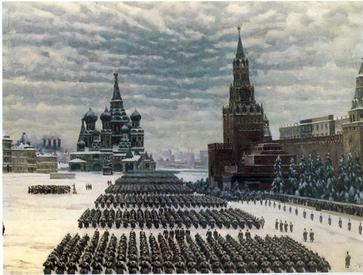
1921 Alternate History RP

Image

"Sometimes, history needs a push." -Vladimir Lenin


OOC -- IC -- Map -- Factbook -- Old IC


Important Things & Announcements
Honorary Taishang Huang OP and Savior of the Glorious Revolution: Sveltlana
OP: Senkaku
Co-OPs: Alleniana


Attach a "42" to a post if you require administrative attention, and a flight attendant will be with you shortly.
Also, when writing your applications, please keep in mind we're picking up where the previous MiM left off, and include that in your history, etc. People from old MiM, feel free to shamelessly recycle your apps like I did- and keep in mind your honors are not set in jade. If someone beats you to the app, tough.


RULES AND REGULATIONS
Just follow them please.


  1. General.
    1. Obey the OP Board.
    2. RP Adequately.
    3. Follow NS Forum rules.
    4. Do stay active.
  2. Posts and posting
    1. Try using decent formatting. Make them long, people.
    2. Avoid godmodding/metagaming/etc...
    3. In short, RP adequately, write well, and make your posts look pretty.
  3. Random events
    1. OP will appoint a person to issue random events.
    2. Random effects will also be used to "punish" nations IC-ly for, e.g., over-extension.
    3. If you feel Random Events are unfair, contact the OP.
  4. Casus Bellis
    1. Declaring war for no reason (with no casus belli) may result in negative effects or random events.
    2. For a list of possible casus bellis, see this link.
    3. Cite applicable Casus Bellis when declaring war, or the lack thereof.
    4. Even war WITH a Casus Belli may result in negative random events.
  5. When dealing with an NPC:
    1. If possible use a Random Number Generator to determine the outcome of several actions, or just use common sense. Give each number a possible outcome, cite those outcomes in a spoiler in your post, and present the number that was victorious, which determines which course of action the NPC took. Or, you know, just don't be an idiot. The OP and Co-OPs are also available to play as NPCs if necessary, which will probably be simpler, but as long as you're not an idiot, it's good.
    2. Applies to both battles in warfare and to diplomatic actions.
    3. More important actions with NPCs may require OP approval.
    4. If you are discovered exploiting this system, you may be expelled from this RP.
  6. When dealing with other players:
    1. Talk with the player you are dealing with and mutually determine the outcome of an action.
    2. If no agreement can be reached, the OP Board has the right to intervene.

Breaching these rules may result in a user being expelled from this RP at the OP Board's discretion.


The aftermath of the Great War of 1913-1919 saw the world a new place, the product of six years of unrestricted warfare across the globe, plus countless "lesser" conflicts that have caused no less misery and destruction. Trenches still criss-cross the scarred European countryside, while millions live in squalor in the slums of Guangzhou and Nanjing and millions more flee a Russia that has collapsed before the vision of the Bolsheviks. Some trenches were turned into mass graves and covered with corpses and dirt. Thousands of miles of minefields and barbed wire stand rusting, wet with the dew of the new morning that never came. Craters and ashes now are where once was, for example, a white farmhouse: the oxen are long dead, their powerful muscles gone with the smoke-filled wind. Perhaps there stands a monument on one end of the former battlefield, grim and dead in relation to the youth that fought and died for the sake of empires already on their deathbed. Perhaps there is no monument, but a hole in the ground with an assorted collection of bones.

A man once said that the worst disaster that ever befell Russia was the birth of Lenin, the second worst his death. The Russian Empire ended with the Great War, replaced by a fashionable red star and Marx's hammer and sickle. In the West are the Bolsheviks, sworn to follow Lenin, flying the red flags of revolution. In the Urals is Kolchak, his large volunteer army willing to sacrifice anything to avoid communism. The Reds and the Whites, that is what they are called. Many still believe that both are brothers and that Russia is pink, but now some believe that that is not the case. The Tsar has been forced to abdicate, and the royal family has been exiled from the country, and have taken refuge in Luxembourg, hoping to see the monarchy restored from afar- but now the ruby stars of the Kremlin gleam bright, as Trotsky's Trans-Ural Offensive opens with the aim of sweeping Kolchak into Siberia and the Sea of Okhotsk.

In the west, proud France and Italy are also burning with the fires of Revolution: Communists are close to triumph in Italy, with only scant forces left to combat them; France has seen Paris burn twice over the course of three years, both times by her own countrymen. The country of the tricolor is locked into a war that has evolved into Spanish-style Guerilla warfare, with actives spread through the country fighting for either side. The German steamroller has been broken in the Great War; twice were the Russians about to reach Berlin, and twice did the valiant blood of the sons of Germany push them back with cries of Kaiser! Deutschland! The Hapsburg empire is nearing collapse, already there is open rebellion in Hungary, which the broken Austrian army cannot realistically put down without foreign aid. Britain faces the peculiar problem that the British wish to be independent from each other. All of Europe, still sick with grief from the horrific loss of the Great War, now watches in horror as bloodshed begets further bloodshed in France and Italy. As Revolution burns in Russia, Italy, and France, China's young emperor emerges from that country's recent political chaos with a burning ambition to restore his empire, and Columbia reaches across the Atlantic to prop up a Europe sick and tired of bloodshed, the clock has struck midnight in Moscow, and a new chapter of history is about to begin, one that will usher in a world changed beyond the wildest dreams of all those who have preceded it.


TIMELINE
Timeline to record important events in history.
18th Century
1700: The Great Northern War begins.
1776: Columbian declaration of independence.
1783: Consummation of Columbian independence.
179x: Revolutionary France draws Europe into the bloody Napoleonic era.

19th Century+Early 20th Century
1809: Peruan declaration of independence.
1812: 1812 War between Columbia and Great Britain.
1815: Concert of Europe begins.
1825: Argentine declaration of independence.
1830: Belgian-Luxembourgian declaration of Independence.
1848: Revolutions of 1848.
1848: Formation of Germany - a Crown from the Gutter.
1850: Heavenly Kingdom of Great Peace declares independence from the Qing Dynasty.
1864: End of the so-called 'Taiping Rebellion'.
1868: Meiji Restoration in Japan.
1871: Franco-Prussian War. Germany consummates her independence at Versailles and annexes Alsace-Lorraine.
1884: Berlin Conference - Belgians receive the Congo.
1905: Russo-Japanese war. Pyrrhic Japanese victory.
1911: Xinhai Rebellion in China.
1913: Kurdistan declares independence.
1914: Chinese Civil War begins in China.
1915: Republican rebels in China launch the Northern Expedition.

Great War
February 1913: An Austrian ultimatum given to Bosnia triggers a domino effect of Alliances and triggers the Great War.
February 1913: Initial sides are (Main Powers) Austria-Germany-Greece against Russia-France-Britain.
March 1913: Russian March offensive. Before the offensive devolves into trench warfare, the Russian lines reach Stargard in the North and the Carpathian range in the south. No major breakthroughs achieved. Counter offensive sees the lines fall back to Kolberg.
March 1913: German offensives in the Western front destroy Benelux armies in a matter of weeks.
May 1913: After an aggressive start, the Western front devolves into trench warfare.
July 1913: Battle of Kolberg. First major battle of the war. A massive Russian offensive is halted by the Germans, although several divisions achieve a breakthrough and make incursions into Pomerania before being forced to retreat by German forces. Line established at Kolberg in the north, Carpathian range in the south.
August 1913: The Fourth Geneva Convention sees all powers agree to avoid the use of Chemical weapons in the war.
October 1913: Italy Joins the war in the Allied side.
December 1913: Eastern front devolves into Trench Warfare.
May 1914: Russian May offensive. Disastrously defeated by joint Austro-German forces.
March 1915: Battle of Jutland. Inconclusive.
June 1915: Battle of Verdun. At high cost, Germans make tiny gains.
July 1915: Joint French-British-Italian offensive sees Alsace-Lorraine and the Rhineland be occupied for a week before the Germans reorganize and drive the Allied armies from Germany.
June 1916: Second Battle of Kolberg. Major Russian breakthrough sees the German line dissolve against the Russian onslaught. The Germans ultimately halt the Russian advance near Berlin and launch a counter-offensive that sees the line fall back to Danzig in the north and the Carpathian range in the South.
July 1916: Allied offensive against Austria from Italy is skillfully parried by joint Albanian-Greek-Austrian armies and sees Northern Italy invaded by the Central powers down until Romagna and Lazio from the North, and Sicily and Naples from the South. Ceasefire called, and Treaty of Tirana sees Italy lose several colonies.
August 1916: General Allied offensives are staved off and riposted by German and Austrian offensives. In the East, the lines reach Latvia while in the West they reach Champagne.
December 1916: Italian Civil War begins.
February 1917: Second Battle of Jutland. As the High Seas fleet leaves port, it encounters a large British fleet and is forced to retreat. Major tactical and strategic victory for the Royal Navy.
February 1917: February Revolution in Russia.
March 1917: German-Austrian offensives against Russia see the Eastern front crumble. German-Austrian offensives in France score considerable breakthroughs, but result in no considerable gains.
October 1917: Russian Civil War begins.
March 1918: Battle of the Somme. The Central powers score a general breakthrough against the Allied lines and reach as far as Paris.
December 1918: Russian provisional government signs the Treaty of Karlsruhe and thus leaves the war.
February 1919: The Allies sign the Treaty of Erfurt and thus the Great War is concluded.


20th Century
1918: German revolution.
1918: Kurdistan consummates her independence.
1917: Estonian independence.
1919: The Qing dynasty launches the Spring Offensive, aimed at bringing an end to the Civil War.
1920: End of the Chinese Civil War, with a Qing victory.
1921: Spain sells Taiwan to Japan, the Soviets begin the Trans-Ural Offensive, and the Chinese regency collapses.


ROSTER


1. United States of Columbia - Of The Rnclave
2. Dominion of Canada
3. Republic of Guatemala
4. Dominion of Belize
5. Cuban Republic - Lingria
6. Kingdom of Hispaniola
7. Free Republic of Puerto Rico
8. Republic of Panama
9. Republic of Cartagena de las Navas
10. Republic of Ecuador
11. Republic of Venezuela - The Emerald Dragon
12. Brazilian Republic - Baja California y Sonora
13. Republic of Bolivia
14. Great Republic of Peru - Reatra
15. Republic of the Andes
16. Kingdom of Argentina de la Plata
17. Free Republic of the Rio Grande
18. Republic of the Paraguay
19. Republic of Honduras
20. Second Nicaraguan Republic
21. Free City of Progreso
22. Second Spanish Republic - Caltarania
23. United Kingdom of Great Britain - The Grand Republic of Hannover
24. People's Republic of France - Bujahla
25. Free German State - The New Lowlands
26. Neutral State of Switzerland
27. Reformed Socialist Republic of Italy - Epraria
28. Austrian Empire - Kryskov
29. Republic of Poland - Neo-Assyrian Empire
30. Scandinavian Confederation - Alleniana
31.Free Finnish State
32. All-Russian State - Sveltlana
33. Soviet Revolutionary Party/Russian Soviet Revolutionary Republic - Lunas Legion
34. Duchy of Lithuania
35. Duchy of Latvia
36. Duchy of Estonia
37. Ruthenian State
38. Republic of Moldavia - Tracian Empire
39. Republic of Romania
40. Free Bosnian Republic
41. Serbian Republic
42. Kingdom of Montenegro
43. Albanian Republic
44. Hellenic Republic - The Industrial States of Columbia
45. Turkish State
46. United Republics of Greater Kurdistan - Alsheb
47. Hashemite Kingdom of Palestine
48. Arab Republic
49. Kingdom of Abyssinia
50. Free State of Iraq
51. Sultanate of Persia
52. Afghanistan
53. Sikh Empire
54. Free Kingdom of Great Tibet - Altito Asmoro
55. Kingdom of Mysore
56. Ever-victorious Empire of Travancore
57. Nepal
58. Bhutan
59. Sikkim
60. Burma
61. Khmer Empire - Great Confederacy Of Commonwealth States
62. Empire of Japan - Liecthenbourg
63. Great Qing Empire - Senkaku
64. Kingdom of Belgium - The Kingdom of Glitter
65. United Provinces of the Netherlands - Hastiaka
66. The Vatican
Last edited by Senkaku on Wed Feb 25, 2015 9:56 pm, edited 3 times in total.
FUCK YOU. STAND WITH ME. NO MEATBALLS, NO LAMPS. WE ARE ALL LOSERS. COINCIDENCE IS SUBSIDENCE.
America supports THE PEDO NAZI CABAL. America supports GENOCIDE. My country is VERY ANNOYING TO ME.

User avatar
Senkaku
Postmaster of the Fleet
 
Posts: 27594
Founded: Sep 01, 2012
Ex-Nation

WIP

Postby Senkaku » Wed Feb 25, 2015 9:22 pm

Image


Xinhua, Part One, Chapter One: Beijing Nights


Image
The Forbidden City, Beijing


Beijing had long been a fortified city, but never more so than in recent years. She had earned the nickname Yàosàijing for the tunnels and trenches and bunkers and artillery emplacements that ringed her like steel cages, her greatly repaired city walls now bristling with artillery, and new earthwork fortress strongpoints holding trench intersections or tunnel entrances.

But even a city with ring after concentric ring of fortifications, stretching out for miles, like Beijing, could not possibly hold all the teeming millions of the imperial city within them. The city was a bustling metropolis, stuffed with refugees or reserve soldiers, jammed to overflowing by wave after wave of migrants from the Yangtze basin seeking a job in the capital or just escape from their war-ruined villages and farms. People slept anywhere they could, and the city guard had had to begin regular patrols to search for bodies- it was quite common, to see some poor farmer fled to the capital for a job in the new factories, laying dead in the street where he’d been sleeping, from malnutrition or cold. There were not enough houses, there was not enough food for so many millions of people in such a small region. The granaries were never open- they stayed shut unless there was a true emergency- and many people had taken to bribing Green Standard troops to guard their houses against homeless people who might try and sneak in and sleep in an unoccupied room or steal valuables to buy their own little room somewhere. Even though an army of farmers came in daily with huge quantities of food from the countryside and ships full of Manchurian wheat and corn docked daily in Tianjin to feed Beijing, many could not afford even the cheapest bread or bags of rice. The vermin problem had also gotten out of control, the city’s primitive sewer systems overloaded- in short, Beijing was, like so many other cities in China, an overcrowded, underfed, underpaid city, filled with people from the farthest-flung reaches of the vast Qing empire driven here by necessity or chance. It was not a pleasant city, outside the vermilion walls of the Forbidden City, and order was maintained only by the vast military presence of the tens of thousands of soldiers responsible for its defense, alongside the thousands of Ministry redshirts who helped organize the city watch and police.

The Jiuzhu Emperor was looking down on this sad, shambling sprawl from the top of Jingshan Hill, looking past the battered gates of Tiananmen where scaffolding had already been erected to rebuild them, out into the sea of dilapidated tile roofs. In the past few days, he had spent tremendous amounts of time reading up on hundreds of memoranda from the Eight Organs, informing himself of every aspect of the government’s function.
Now, he was meeting with the Grand Council, on Jingshan, on a chilly day as the sun beat down on the pavilion roof. He finished listening to their initial briefings, and then sipped his tea delicately, setting the cup down with a slight clink.
“Obviously, since this is my first convention of this assembly, I have little experience in its typical protocols,” he said, while the various ministers sat in apprehensive silence. “But I’m sure you’ll all adjust. I already have several policy questions and ideas I want to implement immediately, and I trust you will all give me the full picture on my various suggestions’ practicality.”
There were mute nods from around the table- none of the ministers knew just exactly how Pujie was going to act. Few had ever even seen him before the boy-emperor’s superbly orchestrated coup- the little they did know, though, indicated he was not to be trifled with.
“Firstly, I want to immediately begin some projects in Beijing itself. We lack housing and sufficient food to feed however many millions live in the city, correct?”
The President of the Board of Works, Sirin Ayan, nodded. “Yes, illustrious lord.”
“I have several plans, which may sound a bit simplistic, but I have thought about them a great deal. The first is to open the granaries.” There were a few gapes and stutters, but the Emperor continued on serenely. “A vermilion decree opening the granaries will go a long way towards increasing popular support, as well as general health. Viceroy Zhang, do Zhili's grain reports indicate to you that we possess sufficient stored foodstuffs to make this practical?"
The Viceroy of Zhili, Zhang Mao, shrugged, then nodded. "At present, the granaries are reasonably full, and the grain is only going to spoil or be lost to the vermin. With the new rail line to Baoding, I think this would be practical."
Pujie nodded. "My second idea was construction of additional housing. High-density apartments of some type, that the government could rent to the poor for low costs, would bring us income and would help solve the overcrowding issue we currently face."
"The construction projects begun under the regency is currently taking up the bulk of our funding and resources in Zhili," President Sirin responded. "The new factories and rail lines have taken up most of our steel, concrete, and skilled laborers, and the armaments factories and industrial zone in Taiyuan consumes even more despite budding foreign investment."
"Have your architects draw up something that can be built quickly and cheaply by provincial corvées, then," the emperor responded. "I want Zhili and Beijing itself to be a sort of testing phase for these projects. If we can increase industrial output and standards of living in the capital, then we can begin to increase them across the country. My third prong concerns the New Ministries. I believe we should immediately establish a subordinate section of the Ministry of Domestic Tranquility to begin a coordinated propaganda effort. A state that rules through fear and essential bribery of rough men as ours does cannot long endure against the dissatisfaction of the people. It must be this government's top priority to regain the love and trust of the Chinese people, and to help bind them together and make our empire a cohesive whole."
President Wu, of the Board of War, spoke up. "Illustrious lord, if I might speak. I have an important concern from the Admiralty Board, which was commissioned several months ago by the former First Marshal. It contains information on a possible expedition for the repacification of rebellious elements in Xinjiang. Additionally, it had separate information on a possible restructuring of military command, which I feel is particularly relevant given the recent demise of our First Marshal." He snapped his fingers at a nearby servant, who quickly brought over a stack of papers and began distributing them, kowtowing to the emperor before setting the papers at his place at the table.
There were several minutes of silence, and then Wu, seeing everyone was about done, spoke up.
"This is obviously the Admiralty Board's assessment of the practicality of a Xinjiang campaign, and their assessment of the current command structure. Personally, given the recent death of the First Marshal and the growing necessity for a western campaign, I think we should take their advice into account and perhaps begin to implement some of these changes."
Pujie nodded. "These changes would greatly improve our command structure. President Wu, you have full authority to pursue these modifications and enforce their application in the military- you will work with Minister Cibukit as well, I hope, so that the political department is given proportional input."
Wu nodded, shivering inwardly as he glanced across the table at Cibukit's serene, flat Manchu face. The new Minister of Domestic Tranquility had been a member of Cixi's original Public Security Directorate, and was an old friend of their new empress- Wu was not looking forward to working with him.

Cibukit merely inclined his head.


Beijing


As the granaries were opened and people celebrated, a number of posters went up around the city. Each was perhaps ten meters tall, hung from the sides of tall buildings, each with several different people shown on it. Each of the people displayed was different, but they were all shown on a faded orange-tinted version of the Chinese flag, painted so that light seemed to be bursting from the dragon's mouth from behind their heads. There were all varieties of people painted on them- Han farmers or factory workers, Mongol tribesmen, Manchu nobles, Tibetan monks, Miao musicians, Cantonese fishermen, Uighur nomads, every sort of citizen of the empire. Some wore New Army uniforms, others the clothes of a coolie, some fine silks reserved for nobles, the monk's robe, the priest's garb, others fur garments typical of the Tatars and Mongols. All were looking upwards together, at the same thing, with stolid, optimistic expressions on their faces, whether they carried a rifle, a hammer, a bushel of grain, or a pen, or nothing at all, and beneath them, written in thick gold characters, it said 我們是中國: "We Are China".
On every granary, there were also golden banners hung above the entrances where officials were distributing grain, each of which had the same bold black characters and the same message. On every one, the black characters read: "In peace there is strength, and peace begins when the hungry are fed." Smaller red posters beneath them, on the walls with white characters, displayed a variety of messages- "Give thanks to our glorious Emperor for this abundance!" "The strength of the nation lies in you, so eat and be strong!" "The wise Emperor will provide complete abundance for his adoring subjects!"- and the like.
The push was beginning.


"We know the Russians will never agree to it, particularly once they become aware of the recent ousting of Prince Chun," President Wu said. "However, the new Central Military Commission I'm setting up in conjunction with the Admiralty Board should be able to make use of the significant forces we've already deployed in Manchuria to begin an operation that will quickly take back our rightful lands."
President Silin continued for him. "Once Outer Manchuria is in our hands, resettlement programs along the Amur will have the dual effect of ridding us of many excess bodies and increasing agricultural production, and it'll dilute the Russian population."
"I thought we were preparing to open a front in Xinjiang, to retake Kashgar and the like?"
"Illustrious lord, much of that fighting will simply be cavalry or air attacks. We will not require any tremendously large body of forces for the Xinjiang campaign, and we have already assembled many of the men necessary for a campaign in Manchuria."
"Very well. You're both dismissed. Send in Minister Cibukit, if you could."
The two presidents exchanged a glance. "Of course," Sirin said, and they both walked out.
A minute or so later, Minister Cibukit entered, bowing deeply. "Radiant lord. You required this one's presence?"
"I'm having some... concerns... about the loyalty of the court in the wake of my ascension to the throne. I need you to investigate."
"Of course, radiant lord. Will that be all?"
"Yes. Dismissed.


POST SUMMARY:

-Beijing's granaries have been opened, and new construction efforts are under way to build cheap large-scale housing in the capital.
-The Ministry of Domestic Tranquility has begun a propaganda offensive, especially in Beijing.
-Chinese troops in Gansu and Western Mongolia are being mobilized for a campaign to retake the regions of Xinjiang not controlled by the government.
-The significant Chinese forces already in Manchuria are being moved north and more are being mobilized for a campaign into Outer Manchuria.
-Torpedo boat construction continues at Fuzhou and Weihaiwei.
-The new Minister of Domestic Tranquility and the Emperor are plotting to purge the court of disloyal courtiers.
Last edited by Senkaku on Thu Mar 05, 2015 9:32 pm, edited 21 times in total.
FUCK YOU. STAND WITH ME. NO MEATBALLS, NO LAMPS. WE ARE ALL LOSERS. COINCIDENCE IS SUBSIDENCE.
America supports THE PEDO NAZI CABAL. America supports GENOCIDE. My country is VERY ANNOYING TO ME.

User avatar
Caltarania
Postmaster-General
 
Posts: 12927
Founded: Feb 01, 2013
Ex-Nation

Postby Caltarania » Wed Feb 25, 2015 11:53 pm

Spanish Republic | República Española

Image

Chapter 1 - A Peaceful Revolution


Madrid, Distrito Federal
March 1st, 1921


It was, as common in Spain, a warm day. Within the narrow streets of Madrid, people went about their daily lives. The streets were full with people of all kinds, and a day of work was beginning for most. In the Cortes Generales, however, the work being done was of an oral nature, and was much more tense than the world outside. Presidente Julián Besteiro and Primer Canciller Indalecio Prieto - along with their party and their left-wing allies - were arguing against the right-wing members of the Parliament. The subject was a heated one, a subject which may shape the very future of Spain - nay, of Europe - itself. The subject at hand was whether or not the Spanish Republic should recognise the French Socialist Republic, which had held mainland France for a long period of time by this point. The ruling party - Partido Popular Socialista de España or PPSdE for short - argued that Spain should recognise the fledgling nation, and rallied the party's leftist allies for support. The opposition party, however, was not so sure. The Partido Católico Nacional Conservador, the largest non-left-wing party, argued with the Alianza de Monárquicos y Realistas that acknowledging such a Republic would put Spain on the side of the Communists.

After nearly a day of discussion, shouting and debate - along with a fair amount insults and tension between the two blocs - Presidente Julián Besteiro opted to hold a final vote on the matter. Two hundred and fifty five of the three hundred and forty eight deputies of the Congreso de los Diputados voted in favour of recognising the new French Socialist Republic. In the senate, the result was two hundred and three of the two hundred and sixty six senators also voting in favour of the motion. The Presidente announced these results to the Cortes Generales, much to the disappointment of the rightists. Their main leader - José Antonio Primo de Rivera of the Alianza de Monárquicos y Realistas - was the most vocal opponent of this, and said so openly.

"This is the ultimate betrayal, Socialist dogs!" he said, his voice heavy and laden with insult. "Spain will not bend to your leftist ideals, and neither shall the rightful King of this land. In the name of King Alfonso XIII, I hereby sentence you all to death!" he shouted, bringing the room to silence.

Julián was the first to respond, leaping to his feet. "Then be gone, vile vermin of ages long past!" he said, to a thunderous applause from his supporters.

De Rivera sighed heavily, before ordering the members of the Santa Alianza de Patriotas Españoles to rise with him and march out of the room. As De Rivera approached the door, he turned around and looked Julián straight into the eyes, in a stare that seemed to last a life time.

"I warned you." Rivera said. "Let that be known." De Rivera then turned on his heel and exited the room, before talking to one of his most supportive generals, Fransisco Franco.

"Franco; execute order 66." José said, to a near demonic nod from the general. Franco loaded his pistol, and rallied his force of fifty trained guardsmen. He marched them into the Cortes Generales, where they met the deputies, who sat in discussion. Julián noticed that these guards had their guns aimed at the deputies, and quickly took control of the situation.

"Guards loyal to this Republic!" he said "Halt your march!" It was at that moment that Franco order his men to do the same, though Julián knew by the fact that the guardsmen were now kneeling that their march had been halted not for peace, but for war. Franco and Julián exchanged glances, before guards truly loyal to the republic pulled Julián down, behind his podium, and prepared for the battle ahead. It was Franco's men who shot first, firing an old-fashioned volley at the deputies. Many were hit, and fell to the floor in agony, still cowering behind their seats as Franco's men quickly reloaded their guns. It was at that moment that Julián lept to his feet, grabbed a revolver from one his guards, and urged the loyal forces into motion.

"For the Republic!" Julián exclaimed, to cheers from his guards, who then began to fire at Franco's men themselves. It was a firefight evenly matched, with each side having roughly fifty well-trained troops, yet even so the Republican forces seemed outmatched, as the guards continued to fire randomly at the elected deputies. Julián heard a cry that he knew well, and turned to see Niceto Alcalá-Zamora - Gran Senador and leader of the Partido de Centro - laying across the floor with a bullet wound in his upper thigh. Similar wounds Julián also saw not only in the deputies, but in his own guards. He knew that his forces were outmatched; Franco's forces had had the first shot, and were able to cause massive damage to the Popular Front by murdering it's deputies. Nevertheless, Julián egged his men onward, and began tossing small arms to the unwounded deputies, in an attempt to surround Franco's forces with soldiers of the Popular Front.

After around an hour of exchanging shots, it seemed that neither Franco nor Julián had the upper hand; that was until Vicente Rojo Lluch and his forces - who had gotten news of the Rightist betrayal - charged into the congress building with a hundred men at his back. Unfortunately, however, Franco managed to escape from the Republican's grasp. Disregarding this, Vicente and Julián quickly began to count their dead and wounded. They counted twenty five dead deputies and two dead senators, and hundreds of wounded deputies and senators. Among them was Gran Senador Niceto Alcalá-Zamora, who had since been shot in the head, after surviving the shot to his thigh. Julián sighed, and then proceeded to congratulate his men on their victory, before remembering that he had to write a letter to the French Socialist Republic; that being said however, it was probably not top priority; as he now had a civil war on his hands.

Image
From His Excellency, Presidente of the Spanish Republic
Julián Besteiro Fernández


Dear Jules Guesde, Chairman of the Central Committee of the Republique Francaise Socialiste,

Greetings, representative of the French Socialist Republic. It is my greatest honour - as Presidente of the Second Spanish Republic - to formally recognise the French Socialist Republic as the one and only true representative state of the French people. As comrades of the left, we wish also to ask that our two great Republics of the People can create agreements in regards to mutual defense and mutual alliances. In addition, in regards to recent events that have unfolded within our nation, we humbly request that you support our Republic in it's war against the right.

Warm Regards,

RH Primer Canciller Indalecio Prieto Tuero
Representative of HE Julián Besteiro Fernández, Presidente of the Spanish Republic


Image
From His Excellency, Presidente of the Spanish Republic
Julián Besteiro Fernández


Dear Giuseppe Perrelli, Premier Consul of the Repubblica Socialista d'Italia,

Greetings, representative of the Socialist Republic of Italy. We hope that the fight in Italy is well. As comrades of the left, we wish to ask that our two great Republics of the People can create agreements in regards to mutual defense and mutual alliances. In addition, in regards to recent events that have unfolded within our nation, we humbly request that you support our Republic in it's war against the right.

Warm Regards,

RH Primer Canciller Indalecio Prieto Tuero
Representative of HE Julián Besteiro Fernández, Presidente of the Spanish Republic
Last edited by Caltarania on Thu Mar 05, 2015 3:34 pm, edited 5 times in total.
I'M FROM KYLARIS, AND I'M HERE TO HELP!

User avatar
Kryskov
Powerbroker
 
Posts: 8116
Founded: Oct 26, 2012
Ex-Nation

Postby Kryskov » Thu Feb 26, 2015 1:05 am

Image
The Austrian Empire
A Nation of Nations


Schönbrunn Palace
Vienna
March 2nd, 1921


Kaiser Karl walked the luxurious gardens of the Schönbrunn Palace, staring at the beautiful fountains and gardens. Indeed, the spacious Schönbrunn was much preferred over the inner-city Hofburg. As this March was noticeably warmer than usual, Karl had decided to move his family to this summer palace. On this day, various butlers and servants were moving illustrious gilded ornaments and plush furniture into the palace. The din of footsteps, the smell of paint, and the hurried pace of the day made the Palace unbearable, though, so Karl often spent his time in the garden. Not that he didn't mind, however, as Karl loved to spend the day in a Versailles-esque garden. His focus, though, for nearly three years, was to avoid a Versailles-esque fate.

Indeed, Karl was a peacemaker in a time of warmongers. When the war ended, Karl rejoiced. He envisioned a new future for his people; one of peace and patriotism. He envisioned a world with no death but that of a gentle end at old age for all of man. When the war ended, Karl got none of this. Half of Europe had fallen to the radicals, and a terrific civil war raged on in Russia. The Hungarians were once again beating the drums of war, and all of the other nations in Austria looked to Karl with weary, yet opportunistic eyes. Rudolf von Steinstätten, the Minister of War, walked with Karl on this day.

"You are very fortunate, mein Kaiser, that my afflictions have let up so that I may walk with you today," Rudolf remarked.

"Truly it seems to be an act of God. I need near constant counsel these days to inform me whatever the hell goes on in Szeged," Karl replied, frustrated.

"I have ordered about 50 members of the Guard into the city in civilian clothing to keep an eye on this rebellion. I placed the local garrison on strict orders to act only in self-defense, and I have mobilized some of our Hungarian battalions to move to Budapest and Debrecen. Initial intelligence suggest the Hungarian terrorists are gathering in the rural east. Our police corps in those areas are reporting a relatively large number of weapons being trafficked as of late, and an overall increase in the agitation of the people."

"Have we any idea who the leaders are?" Karl questioned.

"Mihály Károlyi, the Social Democrat, appears to spear the campaign. He is advocating for a greater Hungary, and not necessarily the dissolution of the monarchy or a total break with Austria proper," Rudolf answered.

"Then why does this man revolt?!" Karl shouted angrily.

"If you want my sincere opinion, I believe he is merely building leverage to force us to the negotiation table. He wants to reunite Hungary, fill it with Hungarian politicians, and put himself on the national stage."

"And such is the same with the Croats, Czechs, Slovaks, Italians, and Slovenians?"

"And such is so."

"You know..." Karl began hesitantly, "my dear cousin, Lord rest his soul, before he passed advocated for a national stage where every ethnic group would have a say in how the nation runs. He thought that, by federalizing the Empire, he could save it. I... I must admit, Rudolf, I have often thought about the implications of this. If this nation falls, which it may very well do soon, we end a millennium of Habsburg tradition and heritage. If this nation falls, we see a century of fighting. I do not think I can bear that."

"Making such a confederation would be a lot of work. It would need reform of the military, finances, and constitution. You may exhaust your ministers to death!" Rudolf chuckled, then coughed. "Your cousin Franz was not the most... adored man in Austria. But he was smart when it came to foreseeing all the tension the empire has today. I will stand by your decision, Kaiser."

"I thank you, Rudolf. I know your illness affects you greatly. I am thankful for your service to me."

"It is merely my duty, Kaiser. But, I came here today for more than to brief you on the Empire. I grow weaker by the day and sicker by the minute. I need to retire, mein Kaiser...I must resign soon."

"That..." Karl was taken aback. "That is... understandable. You will be greatly missed, Rudolf. Who do you suggest as your replacement?"

"Well, seeing as we need to pacify the Hungarians now, I would propose a fellow Ungarn. A man who is monarchist, and so fairly conservative and won't defect as easily as someone like Karolyi. I propose the naval hero, Miklos Horthy. He is a man who is loyal, but strong-willed and obedient. He thinks highly of order and of a democratic state of mind.

Schönbrunn Palace
Vienna
March 8th, 1921


Here stood Miklos Horthy, once-retired war hero and the new Minister of War. A victor for Hungary. A man on the inside. A cabinet member who would vouch for Karl when the time came to federalize Austria. Today was his final test: a presentation to the Kaiser himself on the development of the arms of the Empire. His introduction, talking about the ongoing study on camouflage and the continuation of the Navy Grooming Standards, went well, he just had to finish with the introduction of the new tank.

"We have studied for months the weapons of armored tractors in the Great War. Tanks such as the German A7V and the British Mark IV were built well for the stalemate conditions experience for over three years. Essentially, they were slow-moving fortresses. Their main goal was to provide cover and fire support for the attacking infantry, but they suffered a limited window from which they could fire and a huge vulnerability to artillery. Their crews sometimes suffocated due to the proximity of the engine. The last war meant the death of the slow line tactics of the last century. New tactics will focus on speed, overwhelming defensive lines not by numbers but by sheer velocity. As such, the Austrian Army has developed a tanks design we have called the "Sturmpanzer." With 15mm armor, a 57mm cannon on heavy models and a 37mm cannon on light versions, and one frontal MG-08 machine gun, the tank has sufficient armor and armament to take the fight to any enemy. The engine compartment in the back prevents exhaust from feeding into the crew compartment. The proposed motor would be able to travel 16 km/h on roads and 10 km/h. We will take to our tanks like storm clouds rolling onto a plain." His presentation a resounding success, Horthy walked away, now with the simple task of contacting the rebel leader and agreeing to listen to negotiation.
Last edited by Kryskov on Thu Feb 26, 2015 10:09 pm, edited 1 time in total.

User avatar
The New Lowlands
Postmaster-General
 
Posts: 12498
Founded: Jun 26, 2011
Ex-Nation

Postby The New Lowlands » Thu Feb 26, 2015 1:54 am

Image
Freistaat Deutschland
Einigkeit Und Recht Und Freiheit
-THEME-


Langemark War Cemetery, West Flanders, Belgium

There wasn't much to look at in Langemark. The stones and fences that had been set down to mark the site of what was to become Germany's largest war cemetery were, in their own, undeveloped way, solemn, standing among the field of splintered trees: the German War Graves Commission had yet to clean up the site according to a commission. That was the reason why Adolf Alois Schicklgruber found himself here: the young naturalised Germany, assigned due to an administrative error to be a battalion runner, had seen the Battle of Ypres first-hand and wanted to illustrate his own concept of what the site should look like.

Rudolf Eckhart looked quietly on while his friend sketched out his plans. The older man, formerly a reservist from Thuringia, had met Adolf prior to the very battle that had taken place here. Both of them had been so excited, with their dreams of German greatness in Europe and of serving their country against the dastardly French and cowardly English. Then the war had happened.

By some miracle both of them had made it bad alive, Adolf with shrapnel in his leg from a shell, and Rudolf with a gunshot wound which at the time had shattered his left arm. Battered if not broken, they went home with a pointless victory to a state which had been speedily replaced by one which was eager to familiarise itself with the very people that a short three years ago they had been busy killing. With nothing left to them except their comradeship and a small pension, they had both decided to make their home in Düsseldorf, where if nothing else, there was work.

Were it not for the recent diplomatic developments between Belgium and Germany Rudolf would have advised strongly against this excursion, not that it would have deterred Adolf, the young Austrian being so insistent on going that eventually Rudolf himself agreed to accompany him. It was funny how Adolf had a forceful way about him.

The scribbling quietly came to an end, and Adolf reclined on the stone on which he was perched. A long moment of silence passed between the two men, a mutual understanding preventing either from speaking up while Adolf sat surveying the scene. Slowly, he closed his sketchbook.

"Are you done?" asked Eckhart, following his gaze.

"Yes," Adolf replied. "I think I just about am."
Last edited by The New Lowlands on Tue Mar 03, 2015 4:43 pm, edited 1 time in total.

User avatar
Hastiaka
Minister
 
Posts: 2296
Founded: Sep 20, 2014
Ex-Nation

Postby Hastiaka » Thu Feb 26, 2015 3:03 am

Image

Kingdom of the Netherlands
Amsterdam, Holland

Episode 1: Unity or Demise


Introduction


In the European Mainland, a nation dawned from the ashes of rebellion; Netherlands. Since then, her ambitions have arisen from her darkest times. From a small colony, it rose to be an empire. In her proper, three cities shine brightest; The Hague, Amsterdam and Rotterdam. As a Hapsburg colony, her people worked hard to serve the Spaniards. Now, they watch the Spanish empire cries upon her ruined adobes. In the east, the Netherlands gains her greatest asset in her history; Dutch East Indies. A vast empire of goods. An entire inter web connection of rice, rubber and oil. All essential to the survival of the Kingdom of the Netherlands. Meanwhile, Dutch colonies in the Caribbean is also boosting the economy of the country. The speakers of rebellion has long since fallen and the people has fully absorbed Dutch citizenship. Her agricultural projects in Indonesia and Silver monopoly on the seas has made the Dutch East Indies and her homeland the richest country in Europe, if not the western hemisphere. Life in the Netherlands in generally peaceful with low signs of rebellious thoughts or actions against the ruling administration. Which further attracts investors in the cities.

Politically, the Netherlands are not the best of friends with Belgium. But King Willem of Rotterdam has been debating with the Parliament about BENELUX. A personal customs and economical union with Belgium and Luxembourg. Though, the citizens of Amsterdam and the general area is furious about such an idea claiming that the Netherlands would go to a dramatic scale of demise while Belgium succumbs all the money that they can get. However, some also support the king's stance saying that it will not only increase the economy of the Dutch but also that of the Belgians and Luxembourgian peoples. In coordination with her colonies, she is enacting a navy of epic proportions with thousands of Indonesians being shipped to the Netherlands drydocks to create more warship for the Imperial Navy. The Dutch Empire is one of the most stable countries on earth.


States Generals of the Netherlands, The Hague, The Kingdom of the Netherlands

The Hague, home to the politicians, statesmen and corrupt people of the Netherlands. Everyone important can be seen living in the De Facto capital of the Hague. Amsterdam is rival with this great city. In the Parliament Building, hundreds of old men or just simply politicians gather to witness a historic debate. A debate between King and Prime Minister. King Willem of Rotterdam would like BENELUX to be enacted in the Netherlands. Everyone in the room wore black suits. The walls were freshly painted with yellow and white. Historical paintings were in the roofs. Obviously reflecting the rich culture of the Netherlands and her colonies. Flags of the Dutch East Indies and the Dutch Antilles were hanged in the doorstep as Indonesian representatives sat in their own desk for the first time in history. A man seemed to distinguish himself from others though. He stood up and fixed his bowtie and started to speak; ''Why would the great Dutch Empire bow down to the Belgians? Why would our great nation unite with such rivals? Are we finally weak enough to even look down when passing by them? The Belgians will just make use of our situation and bankrupt us until we have none left'' the man then sat back to his blue laden comfortable seat and waited for the King to respond. ''Prime Minister Asturias, why the hell do you keep on being closed-minded? What are you thinking! The Netherlands will not only contribute money for itself but also the Belgians and the Luxembourgians!. They are our friends. What you are-'' the Man's name was Asturias. What an odd name for a Dutchman. Maybe his parents were inspired by the old kingdom of Asturias in Spain. But the Man stood up. He was the Prime Minister. He had the obligation to reply to his king. ''Friends? You call them friends? They have been our rival for centuries and you call them friends? They neglected our crown! Your very ancestors! Thousands of Dutch have died under their hands and you call them Friends? What a load of hypocrite and a pile of shit you are your 'Imperial Majesty'''

The King looked at his foot for a few minutes before speaking. He rushed to write cheats on his hand and stood up to the Podium. The crowd was still shocked by the reply of the Prime Minister. They gasped and started to mumble with each other. Whispers and Murmur spread all over the room. The King started to speak. ''Prime Minister, you do not have the right to speak against your King! I am your Monarch! You do not have respect for your king! You have a pigoistic... sorry, egoistic personality Mr. Prime Minister. We must reason with the Belgians. The Congo will prove worthy also should we ever join BELUX.'' Asturias burst into laughter with him kicking and laughing. The entire room was looking upon him. Defense Minister Edith von Brauss looked upon him. A skeptical Edith replied; ''I agree that joining the BELUX is required. Not only will it increase our chances of survival but also increasing the chances of trade and economy. Asturias, stop acting like a child and face it. Belgium is no longer a threat.'' Asturias' boisterous laughter ceased and turned into a frown. Then, the cross-examiner stood up and went towards the brown podium. ''Resolved; Belgium, Luxembourg and the Netherlands; Unity or Demise.'' then, the committee nodded as a sign of agreement. ''The committee of examinations have declared an affirmation with the BENELUX. Not only will it mend the bond between the already scarce relations and would also give the Netherlands a Custom agreement with Belgium and also give the Netherlands access to Africa.'' Then, the King and the Prime Minister shook hands and decided to send messages to Belgium.


Image

Dutch East Indies, Batavia, Dutch Indonesia
Jakarta


Colonial Stories 1: Respect at last.


Vast Plantations are scattered throughout the land. Europeans dock to trade spices, silver, rubber and oil. No longer will the Indonesians suffer under scrutiny as the King has enacted a new law; ''The Indies Act'' an act which bans discrimination against the Indonesians. The Indonesians celebrate on their newly found respect. Someone out there actually cared for them. The King is praised by tens of millions in the colonies, literally making shrines for him. But the act has a flaw. Protestantism was to be shared with the Muslim-majority Indonesians. On the lobby of the colonial house, the Governor is seen waiting for someone. ''Governor Rennwick, I am Lady Renata of Orange. I come here to tell you that the Monarchy prohibits intense pressure on the natives. If anyone will be caught damaging properties of the the natives without proper authorization of the crown or the parliament, you yourself will be expelled.'' Governor Rennwick nodded and proceeded towards the port of Batavia. Ships docked unto the ports. But HMNS Von Wesse and Messarielle; The two Tromp-class heavy cruiser were the sole cruisers docked in the port. Rennwick was worried. From last year, 70% of the Colonial Fleet was transferred to the Atlantic Command. Only 19 warships and 33 support ships remained but such a force was till capable of defending the East Indies. In the construction docks in Batavia, four more cruisers and two oilers were under construction. The Indo population is competing with the Indonesians in terms of Literacy and workforce. 15,000 Indos were hired and started to construct the warships in Batavia. Furthermore, 18,000 Indonesians and Indos were hired to help constructing the New Forts in Jakarta namely; Fort Middelburg, Fort Sint Maartin, Fort Johan von Nassau and Fort Drenn. Four Forts were to be strategically placed in certain locations to further fortify the colony. However, the citizens of Amsterdam claim it is a waste of resources.

Image
HMNS Ludewidde approaching the port of Batavia


''Governor Rennwick, should we boost the defenses in our naval capabilities? We should increase education in the Indies too, King Willem expects more Dutch orphans and single women to intermix with the Indonesians to create more Indos. Let us expose the Indonesians in Dutch culture and tradition.'' suggested Colonel Vulter Ertvonne ''Vulter, I am trying my best to balance them both. The conference in Belgium takes too much naval capabilities from the Indies. We are vulnerable to any attack. We have only 13 planes and a handful of warships! Plus, the four cruisers will be finished next month! What if any attack comes this month, the nearest trading port from us is from the Adaman Sea! Trading posts there only has 4 warships!'' Vulter nodded as a sign of agreement. Then, the two was transported to the HMNS Ludewidde to welcome Commodore Stakenbourgh to the East Indies. The ceremony started with a ceremonial band and a 12 gun salute. The governor was pleased to see Commodore Stakenbourgh and two other cruisers enter the docks. Five hundred sailors manned the 3 ship convoy to Batavia. ''Commodore Stakenbourgh! Welcome to Batavia! Our great culinary arts will please you and you will never regret entering our waters!'' the governor smiled as he offered the commodore with exotic fruits. ''Governor Rennwick, i am pleased to meet you too. Let us start discussing the security issues the East Indies face.''

The Bank of Amsterdam, Amsterdam, Netherlands
Holland, Kingdom of the Netherlands


A tycoon sat on his desk, as he watched the skyline of Amsterdam, he placed down his cigarette. ''Lord Winterdorf, i am pleased to meet you here in Amsterdam. King Willem expects more trade routes in the Andaman Sea. However, King Willem also noted if we are financially secured to purchase the Philippines.'' The man said to the tycoon. The man was Lord Winterdorf, a noted businessman and pioneer. The Tycoon approached the man and gave him an offer. ''Buy the Philippines and i shall give you more assets from the Bank.'' the Man gladly accepted the offer. ''I shall tell King Willem that you are interested in supporting the government in buying the Philippines.'' Then, the man took off.

Outside the room, the Tycoon met his secretary. ''Lord Winterdorf, what do i require of your service?'' the Winterdorf gave the lady some folders about the Assets of the Bank. ''I would like to inquire donations to the Government of the Netherlands.'' then, they rushed to create documents and would soon give them to the king.

Image

Bank of Amsterdam
Amsterdam, Holland
Kingdom of the Netherlands
March 10th, 1921


The Bank of Amsterdam has issued several notices to certain individuals; HM King Willem and Lord Winterdorf. The Bank has been given a total of 12.1 million Dutch Guilders as donations by Lord Winterdorf and has given the full amount to His Majesty King Willem of Rotterdam who is settled at Amsterdam. At the request of the Office of Treasuries, the Bank of Amsterdam has disclosed the full interests in resolving the security of the Imperial Treasury. The Bank of Amsterdam has also issued a reform in her properties;

Section A:

1) The Bank of Amsterdam has issued a new CEO; Lord Winterdorf will now oversee all operations of the Bank from now on. All assets of the Bank of Amsterdam will be given to the former and will assume all impending scenarios and will be liable to any misdeeds of the Bank. Lord Winterdorf will have an annual salary of 1,328,921 Dollars.

2) HMNS Beckindarren; a Freight ship will be transferred to the Bank of Amsterdam and will become the flagship of the Bank of Amsterdam and will use the route of Amsterdam - South Africa - Batavia and will be handling 42,000 lbs of goods every year.

3) Security personnel will be added unto the Merchant fleet thus effectively ending Pirate threats in the Arabian and African sectors of the routes. All liabilities of death will be abdicated by the signatories.

Section B:

The Bank of Amsterdam will move into a new building just three miles away from the current building. More facilities will be added and vaults will be upgrade in order to adapt Modern securities in financing and banking. The Netherlands will be designated as the official ground of the Bank of Amsterdam and will be the forefront and pioneer of Modern-day banking as it did centuries ago.

King Willem is now designated as the top share holder with stakes up to 40% of the total revenue with Prime Minister Asturias as 2nd with 4% of the total revenue of the Bank.


Meanwhile, the Monarch has sent messages to Belgium about a personal union.

Image

Kingdom of the Netherlands

Official Communique


To whomever it may concern,

The Government of the Netherlands is deeply interested in joining your trade and customs union with Luxembourg. We have discussed this issue firmly with the States Generals and will be very happy if you reply back. We request to send HMNS Venkjaf; a heavy cruiser to enter your docks as our sign of respect. We would also like to formally discuss this issue after the Brussels Conference. We believe that by joining BELUX, we would benefit greatly with each other and would increase our economy and our own strength.

Sincerely,

King Willem of Rotterdam

Sovereign King of the Kingdom of the Netherlands.

Noted by,

Prime Minister Asturias

Defense Minister Edith

Attorney William von Ausse
Last edited by Hastiaka on Sun Mar 01, 2015 1:25 am, edited 5 times in total.

User avatar
Sveltlana
Minister
 
Posts: 2906
Founded: Mar 01, 2014
Ex-Nation

Postby Sveltlana » Thu Feb 26, 2015 8:43 am


Image

Временное правительство России

Provisional Russian Government

Подмосковные вечера

Chapter 1: A Question of When
2 March, 1921


Arkhangelsk, Arkhangelsk Oblast
Kolchak Line
2 February 1921


Before the enemy even considered crossing the Northern Dvina river over either of the two bridges that led to the city, every last building within twenty meters of the bridges had been flattened. Cautious Red Snipers had picked off several intrepid White scouts who had attempted to blow the bridges with the use of dynamite, often under cover of night. The Whites did end up succeed in blowing the northern bridge thanks to the gallantry and stealth of a man under the name of Vladimir Ilyich Komisarov (who would posthumously receive the award of Hero of the Russian Nation, Medal of Suvorov 3rd Class).

In a surprising lapse of judgement, the Whites had failed to demolish the one leading from the islet of Vychinga to the city even while the islet was being evacuated. Perhaps Miller predicted that aid would come. Perhaps he took a gamble. Perhaps he was planning some sort of ambush before any position where it could be conducted from was demolished by Red artillery. Nevertheless, only eight-hundred meters separated the charred remains of the Arkhangelsk Line from the islet, and as Miller believed, these would be more than sufficient to halt a possible advance into the city itself.

The dawn of the 3rd of February saw the heavy artillery fire on the part of the Red Army end after two days. Out of the mist rising from the waters, the only tank Frunze had emerged as a crocodile from the waters. Heavy rifle and automatic fire rained upon it, but its steel skin deflected a large volume of projectiles, giving off sparks as the projectiles bounced from the armor. The clatter of the British vehicle's reinforced treads on the cobblestones remained slow and steady, crossing the bridge with the pomp and serenity of a victorious General of Rome parading down the Red Square before ecstatic crowds. Then, as the tank opened fire, panic spread among the White forces.

A round from the vehicle's main gun splashed against the ruin of a building, concluding the life of the weak concrete edifice. The structure battled to remain standing before it crumbled to the ground. An unsuccessful attempt at a boarding was prevented by the advance of several Red infantry squadrons that rushed behind the tank, peppering the confused rubble of the Arkhangelsk line with suppressive rifle and grenade fire. It was not long before heavy Red forces crossed the bridge and the urban slaughter that became the Battle of Arkhangelsk began.

(Casualties: about 8,500 White soldiers, excluding several dozen casualties of foreign Expeditionary forces).

Code: Select all
-- Telegram to H.M. Kristiansen, Gen. of the 5th
-- -- 17, Feb.

-- The considerations of this mess. of the Gen. of the 5th Army have been fwd. to Yekaterinburg & A.V. Kolchak. The President has made it clear that he has begun planning a general advance upon Petrograd from the north now that heavy Columbard & German E. Forces are arriving at Arkhangelsk.

-- I estimate that with the planned arrival of Brit. forces, 147,500 men will form a multinational army that will establish the security of the s. lines from the port (as you have specified) before reinforcing N.N. Yudenich who currently sieges Petrograd and cleansing the center of bolshevism.

-- -- E.K. Miller


Mursalimkino, Chelyabinsk Oblast
Kolchak Line
21 February 1921


Out of Kappel's 10,000 veteran 'Little Swedes', about 1,980 had been transformed to casualties in the first eleven days of fighting.

But the enemy had been repelled, and Yekaterinburg had been firmly secured as the capital of President Kolchak's Provisional Russian Government. Kolchak was now free to push towards Moscow, although the infant Volga Line stood in his way.

(Casualties of the Trans-Ural Offensive: 49,000 White soldiers, excluding 1980 of the Scandinavian volunteers + several hundred foreign casualties [I'll leave that to them]).

Yekaterinburg, Yekaterinburg Oblast
Town Hall of the City of Yekaterinburg
1 March 1921


Those were difficult times for Alexander Vasilyevich Kolchak. Two of the most important orders issued in his office were rendered foolish and ineffective in light of their being carried out incorrectly. In the West, Denikin had responded to Kolchak’s order to advance upon the Insurrectionary Army of the Ukraine with all possible haste with a ludicrous telegram that stated that his army could not complete the order, and now the IAU remained free to either fortify its position in Kiev or to pillage the countryside. In the East, Bovarin and Solodnikov had zealously clinged to the obsolete fact that, in his open orders for Army Group A, he had called upon every white soldier to “remain standstill without forsaking the Line, and drown the enemy in his own blood before allowing him to break the Line;” and thus, both commanders had failed to exploit wide-open gaps that occasionally surged in the Red Offensive.

However, the Kolchak Line (which Kolchak referred to as the Ural Line, or A-Line because of the army group that held it) had held on for about a month now despite considerable pressure by the red armies that doggedly attempted to break those steadfast fortifications in the Urals. In some places, the lines had been reduced to rubble by the massive artillery bombardment of the Red Artillery. In others, the lines had been completely covered by snow, and every manner of tactical and logistical disaster. But in every crater, and peeking out of every fresh coat of snow, there was a white soldier using a German rifle, refusing to surrender Yekaterinburg and Chelyabinsk to the two-prong offensive of the Red Army.

Leon Trotsky must be having a better time than I, thought Kolchak with a grin, because he was certain he wasn't. Trotsky lacked the foreign support of the communist regimes that were about to be installed in France and Italy, and other parts of the world; Trotsky even lacked the domestic support of Stalin and Voloshinov, who were fortifying to the west and whose arrival at the trans-Ural offensive would have surely required every white soldier to grow more limbs to field more muskets against the Bolshevik menace that threatened the Russian people. Kolchak changed his balance and rested his weight on his back on the comfortable velvet chair in his office.

He extinguished the cigar that he had been smoking in the ashtray, and crushed the brown paper until his fingertips were covered by ash and the paper had dissolved into the atoms that form the universe.

Sunlight poured in from outside. Songbirds began to signal that spring was finally close to arriving, which, Kolchak was confident, would help his force regroup with Yudenich (that is, if Yudenich obeyed his clear orders) in order to march on Moscow and declare the permanent status of the Provisional Government in the marble halls of the Kremlin, and parade waving Peter’s tricolor in the Red Square (which will surely be renamed), and to thank God for the great victory in the ancient cathedral of Saint Basil. As Kolchak shifted uneasily in the velvet chair, he could almost feel the leather trim of the limousine from which he would salute the valiant Russian people, who would undoubtedly extirpate the seed of communism from the Third Rome. Kolchak’s digressions were interrupted by Pepelyayev, who walked in and handed the Admiral a series of telegrams, and then left.

Yes, the offensive would come in the Spring and the Summer. Trotsky had little chance of breaking through the line now, the momentum of his forces and more importantly the shells of his artillery were gone. In parts, the snow had begun to thaw, and had formed despicable quagmires that reduced the force of the advancing red armies. The Japanese had arrived to bolster Yekaterinburg in timely order, and soon the enemy would be repelled there: Kolchak was sure that Trotsky would not commit his reserves to the attack. Not anymore, at least. There had been few breakthroughs, chiefly in the north, although the Reds had failed to capitalize greatly from them, and a series of organized counteroffensives from Perevalov's reserve had managed to set the front at the Kolchak Line. Yes, the offensive would come. Kolchak would celebrate in Moscow.

The admiral's eyes began to do what they did best as his strong hands opened the creased paper.

Code: Select all
-- Telegram to Gens. Wrangel and Denikin
-- -- 1, Mch.; 1921.

-- I have ordered the forces of the Don Cossacks to adv. to the area N. of Crimea and E. of the Dnieper River in order to secure the area against the possible threat of an Ukrainian assault on Sevastopol so as to avoid disrupting the positions built at K. and P. and the supply lines of the S. front.

-- I expect you to hold those positions but fall back and merge your forces close to Crimea if presented with an offensive combining the forces of Stalin and Voroshilov.

-- Death to Bolshevism. You fight for your people.

-- -- A.V. Kolchak


Image


To the Emperor of Japan, Emperor Taisho:

Please accept my personal congratulations on the performance of General Suzuki Sosaku's Imperial Force.

The Imperial Force has, under extreme duress, held the Ural Line at one of the points where the enemy attacked in the greatest numbers. The Imperial Force not only stemmed the enemy offensive in the most steadfast of ways, but it did in fact undertake successful counteroffensives that reduced the morale of the enemy and deprived his assault of impetus.

We are cognizant of the great effort that the Empire of Japan has exerted in order to exterminate the evils of bolshevism from the face of the Earth, and, on behalf of the Russian People, I sincerely extend my full gratitude to the Emperor and the Empire of Japan.

Image
Alexander Vasilyevich Kolchak
President of the Provisional Russian Government


Image


To the Foreign Relations Office of the Empire of the Qing:

Greetings, Prince;

I thank you most sincerely for your sympathy in this coming conflict. Hopefully, we shall be able to exterminate the evils of Bolshevism from the face of Russia once and for all.

However, I cannot comply to your offer to surrender land that belongs to the Russian people; even though my predecessors may have taken that land from your nation's hands. Furthermore, ceding Manchuria would deprive Russia and the Russian people from Vladivostok, which, as you surely know, is among the most important ports and cities in the Provisional Russian Government.

Image
Viktor Nikolayevich Pepelyayev
Prime Minister of the Provisional Russian Government


Last edited by Sveltlana on Mon Mar 02, 2015 9:02 am, edited 14 times in total.
ASTURIAS STRONK

Now, mortal, you have made the mistake of opening Pandora's Box. What evils have you unleashed upon the Earth?

Me, Svet lol good one svet
Me, Svet
: ikr svet it was pretty good

-- Politics --
Fuck that.

Senka: [about me] "You are a deplorable reactionary fascist cockroach with no hope of redemption who should be condemned to burn with the rest of the plutocratic imperialist stooges in the cleansing atomic fire of the righteous."


User avatar
Liecthenbourg
Postmaster-General
 
Posts: 13271
Founded: Jan 21, 2013
Civil Rights Lovefest

Postby Liecthenbourg » Thu Feb 26, 2015 8:46 am

Image

The Japanese Empire
The Land of the Rising Sun

Chapter 1: The Red Menance


General Suzuki's Imperial Force, the Ural-Line
Imperial Soldiers had struck like a hammer against an anvil. Breaches in the White-Held defensive line had been made, but the Japanese had managed to arrive just in time to plug in the holes and where had once stood the battered, regiments of the White forces stationed here, the Reds instead came face to face with the hardened veterans of Suzuki's Expeditionary Force. They were fresh and properly trained. Some of the White Russians had even begun calling them "Tenacious Bastards", Suzuki could only agree. They would refuse to give up a single inch of ground so long as they lived, and many-a time had they sallied forth against stragglers with their bayonets before retreating back into the defensive shell of the Kolchak line in an orderly fashion.

The ageing Japanese General stared solemnly out towards what had once been lush countryside - craters adorned the landscape, items of clothing and bullet casings littered every inch of soil and every bush, bones, remains, banners and blood also stained the ground. Suzuki was a tall and lean fellow. He wore a great blue trench coat, an uncommon sight from one of his culture but the cold weather had made it most suitable. His cap was also blue, and it had flaps on its side and rear that covered those parts of his neck. Additionally, a great red sun badge was placed at its forefront. His held onto the katana on his waist idly. He exhaled, watching his breathe escape and travel into the air. Suzuki smiled briefly, sat down and began to reminisce about events prior to the battle that had occurred here so long ago.

The Japanese had filed as they were instructed, holding the Arisakas with great pride. The Koreans too had a great ferocity about them, as evident by their piercing pupils and the grips on their weapons. Suzuki himself had personally lead the counter-attack of the many morale boosted soldiers under his command. It had been a great speech, he was told. "You are the sons of Samurai!" he had barked greatly, drawing forth his katana. "These Communists threaten the Imperial way of life! They seek to destroy all we have worked to do! Gather your valour, your courage, your honour and let it be your shield upon this battlefield! The enemy have naught of this, for they seek to threaten the lives of the innocent. We shall defend the White Russians, even if everyone of us perish in doing so! Forward. Not. One. Step. Back! A Korean Officer, who spoke fluent Japanese had translated this for the Korean soldiers on the battle field and they too felt invigorated, it was said. After the great rush forward however, into the breaches to halt the Communists, all seemed to happen too fast for the General to remember.

Gunsan, Japanese Korea
The IJS Satsuma sat idly in port, odd hands upon her decks working their trade. Other ships had begun moving out of the port, and the Satsuma was to be the last. She was to be the symbolic capital ship of the Japanese fleet moving towards Vladivostok in their gesture to help the whites not only on land, but at sea as well. Many a trained and veteran sailor had been hand-picked for this assignment and the mighty battleship was to be a great prestigious mark on the navy's fame. With the army fighting in the Urals, it was only natural that Admirals had requested to help against the Red Menace and this was the closest the Japanese Government could do to actually mobilise its navy in the Russian Civil War.

Nagasaki, Japan
Quite a sizeable aspect of the Japanese Military had been drafted to Nagasaki, and here they were met with transports a plenty to ferry them to their destination. Escorting this vast plethora of ships was a large portion of the Imperial Navy. They were to set out immediately to their destination and bring forth the force of the Imperial Armies and their agenda.

Taiwan
Due to their now new inclusion in the Japanese Empire, the ministers on the Home Islands did as they always did - allowed Colonials to elect their own ministers into the Japanese Parliament. This had gone rather smoothly. As well as this, the Emperor had stationed the administrator Otomo Kyoshi as the Governor-General of Taiwan.

Image


To Charles Evan Hughes
From; His Imperial Majesty, the Emperor of Japan.

Dearest Friend.
I would be most honoured to have our nation attend your military fair and talk that will be occurring this coming February. I shall inform the Japanese Military Pioneers at once.
Last edited by Liecthenbourg on Sun Mar 01, 2015 2:48 am, edited 4 times in total.
Impeach Ernest Jacquinot Legalise Shooting Communists The Gold Standard Needs To Be Abolished Duclerque 1919
Grand-Master of the Kyluminati


The Region of Kylaris
I'm just a simple Kylarite, trying to make my way on NS.

The Gaullican Republic,
I thank God for Three Things:
Kylaris, the death of Esquarium, and Prem <3

The Transtsabaran Federation and The Chistovodian Workers' State

To understand European history watch these: Cultural erosion, German and Italian history, a brief history of Germany.

User avatar
Of The Rnclave
Powerbroker
 
Posts: 8548
Founded: May 22, 2014
Ex-Nation

Postby Of The Rnclave » Thu Feb 26, 2015 10:28 am

- Snipped -
Last edited by Of The Rnclave on Sun Mar 15, 2015 10:37 pm, edited 9 times in total.
What don't you understand? I CAN'T DIE!
As if that gives you an excuse to live.


Smoke the Meth Bobby. Smoke it All


Me lookin' hella swaggy
DragonBall Super Trailer#1

User avatar
Lunas Legion
Post Czar
 
Posts: 31658
Founded: Jan 21, 2013
Psychotic Dictatorship

Postby Lunas Legion » Thu Feb 26, 2015 12:34 pm

Русский советский революционный Республика
Russian Soviet Revolutionary Republic
Part 1: A Humiliating Climbdown

Image

Red Army soldiers in retreat from the Trans-Ural Offensive


Ulyanovsk, 4th March 1921

Trotsky sighed as he sent the telegram to the front. Perhaps he had been over-optimistic in launching the offensive; perhaps he had simply underestimated the quality of the White soldiers. It mattered not. In the face of mounting casulties, at roughly a eighth of both assault forces bad been killed during the assault, frozen to death or simply missing in action. He was unsure of the amount of White Casulties, but they would doubtless be lower, and that left him with a problem.

He lacked the forces to stage another offensive, and the only commanders available to supply those reinforcements were Stalin or Voroshilov, neither of whom would be forthcoming with their men. In effect, he was out in the cold. But he could make do with what he had, and he had no doubt that they could defeat the coming White counter-strike when it came. It wasn't even a matter of if any more. He'd taken a gamble and lost, and now he would have to face the consequences.

He glanced out at the melting snow. Spring was on it's way, but the spring thaw might hopefully delay a White counter-offensive, and give his forces the chance to prepare a defence along the Volga and Kama. If that line fell, there would be nothing between the Whites and Moscow but space.


Kiev, 5th March 1921

"It appears that our adversaries have made a mistake." Makhno smiled thinly. It was a rare thing to see the anarchist leader smile these days; the war and it's consequences had broken his sense of humour and wit in equal measure. "They've given us some breathing space." Makhno had fully expected to be besieged and destroyed in Kiev following his rejection of Wrangel's terms, but it wasn't to be. Why, he couldn't say, but the why didn't matter.

"And what should we do with this space?" One of his advisors asked. "We don't have the heavy equipment or manpower to launch an attack."

"Engage in the oldest form of warfare." Makhno turned, walking away from the table to a window in the small house he'd commandeered as a commander center near the center of Kiev. "Have our army dissipate into small fast-moving bands with orders to harass the Whites."

"But that means we'll be unable to defend our country!"

"The revolution, comrades, is more than likely defeated in Russia itself. Defeated by the ego of Trotsky and the paranoia of Stalin. But in the Ukraine, it lives on. The Russians may have lost their war, but in the Ukraine, it is just beginning."


Saratov, 7th March 1921

"So Trotsky's gamble failed." Stalin began as he stared out the window onto the Volga, ice slowly thawing out. "And now we shall pay the price for his arrogance."

"We could save Trotsky." Voroshilov suggested cautiously. "I can keep the Whites pinned down while you move to reinforce him."

"No." Stalin slammed a fist on the windowsill. "I will not help Trotsky. His is an arrogant Menshevik and can deal with his own mistakes. And I don't believe your forces can hold out against the Whites alone."

"Then what shall we do? Our actions today will either save or damn the revolution."

"Find that..." Stalin waved vaguely. "That calvary leader. You know the one I'm talking about... TImoshenko, I think?"

Voroshilov remained silent.

"Anyway, find him. Give him control of our 25 thousand cavalry and send him towards Central Asia. Let's see if Lenin's Plea actually counted for something after all."


Outside Arkhangelesk, 8th March

"How did it come to this?" Frunze sighed sadly as he poured over a map of the region. They had been so close; with the tank Moskva spearheading the assault, they had made progress into the city, but it had all been for naught in the end. The Moskva had been destroyed by concentrated anti-tank rifle fire from a Scandanavian unit, and the arrival of foreign forces during the assault enabled the Whites to drive his forces from the town with heavy losses to both sides.

If he'd had more artillery, he could've pushed to the bridges quicker, and he could've taken the docks and cleaned out the northwest and moved to help Lenin at Petrograd. But it was not to be. Trotsky's offensive had failed. The White Sea Fleet, based at Murmansk, had scuppered its ships to prevent their capture and fought to the last man against the Scandanavian Army. His own forces had retreated to a loose perimeter around Arkhangelesk, demoralised and dejected.

He glanced up at the ceiling. A light whistling, louder than wind, formed in his ears. Frunze blinked in confusion, before realisation dawned as the shell struck home, and his last thought was that he shouldn't have located his HQ that close to the front line.


Winter Palace, Petrograd, 11th March 1921

Nikolai Kuzmin winced as he heard the sound of something shattering. Ever since the news of Trotsky's failure had reached Petrograd, Lenin had been in a foul mood, lashing out and breaking things. But the Premier's mood was not what concerned him today. Word from one of his gunboats was that a British fleet had been spotted moving towards Leningrad, no doubt in support of Yudentich's siege, and he, as Admiral-Commissar of the Soviet Baltic Fleet and Commissar for the Red Navy, was to lead the Red Navy in battle against it.

He stood up from behind his desk, having made sure his affairs were in order, and quickly departed, heading for his flagship which was currently anchored in Petrograd Harbour, from where it would rendezvous with the rest of the Baltic Fleet at Kronstadt before moving to engage the British.
Last edited by Lunas Legion on Thu Feb 26, 2015 5:14 pm, edited 5 times in total.

User avatar
The Kingdom of Glitter
Postmaster-General
 
Posts: 12372
Founded: Jan 08, 2014
Civil Rights Lovefest

Postby The Kingdom of Glitter » Thu Feb 26, 2015 2:16 pm


Image

The Kingdom of Belgium

Koninkrijk België | Royaume de Belgique


15 March 1921
Laeken, Belgium
Royal Palace of Laeken


"But Prime Minister, you must listen to the people of this nation. Women are clamoring in the streets for the right to participate in elections." King Albert said swiftly.

"Just because those women want something, does not mean they should be given it, Your Majesty." his Prime Minister refuted.

The King chuckled before replying. "Oh it most certainly does, Mr. Delacroix. Keep in mind this nation has her democratic tendencies, and while I may be the King of the Belgians those who serve in my government are elected by the people of this very nation. What the people want, the people must be given, or any aspect of democracy this government practices becomes null and void. With the communist movement continuing to rise across this continent, promising equality to the masses, this is no time to deny women their right to suffrage. We do not need mothers and wives across this nation pledging their fealty to the communist cause, and I highly recommend that my government consider this when discussing the women's suffrage movement. Also, Prime Minister, keep in mind it is I who appoints the Prime Minister of the Belgians. I am sure I can find another man within your party who is willing to give women their rights. On a much more positive now, consider that should the Catholic Party give women the ability to vote, it would surely cause women to lean strongly towards your party, and vote for you in both national and regional elections, would it not?"

Aware of the King's position on the matter and his inability to change the monarch's mind, the Prime Minister reluctantly agreed. "All fair points, Sire. I must say I am now inclined to agree with you on this matter. I will raise the points you made when I am next discussing the matter with those in your government."

The King was quite pleased and dismissed the Prime Minister, who quickly left the palace.

19 March 1921
Brussels, Belgium
Palace of the Nation


"We cannot possibly give women the right to vote! It goes against the traditions of this very nation!" a representative from Namur shouted.

"Oh shut up you ignorant frog! We have just given women the ability to inherit the throne, any 'tradition' you speak of has ended with that. Besides, do you dare defy your own wives, and your own daughters the right to vote?" one of the Flemish politicians fired back.

"It is the will of God, sir!" the Walloon fired back

"The will of God is to discriminate against his own mother? How dare you say such things about the Madonna! You damned crouton!"

The Prime Minister sat, listening to the two men, both members of his party, fire back at one another. The Catholic Party had been in power essentially since Belgium was forged, and managed to hold was looked like a monopoly on power ever since. It had members from both Flanders and Walloonia, and the two did not always get along, as perfectly represented by the two men.

"Gentlemen" the Prime Minister calmly said. "Our party is going to be giving women the right to vote. Backing this bill is not an option. You will back it, and we will pass it. That is the end of this conversation. If you do not back this bill, you will suffer deep consequences. This is not a time for division within this party or within this nation. The communist threat is on the rise throughout the Continent. If we and the rest Belgium are to survive, we must stand united. We must give women the right to vote. Otherwise, we risk isolating them and forcing them to support the communists, who would no doubt offer them suffrage in exchange for their support. That simply cannot happen, and it will not happen. Support the damned bill."

And support the bill they did, as the Women's Suffrage Act of 1921 passed both the Chamber of Representatives and the Senate.

21 March 1921
Zeebrugge, Belgium
Sint Leopold ZeeArsenaal


In an attempt to try and fight communism abroad, the Prime Minister deemed it wise to send some form of military aid to the White Russians. It had been no secret that various capitalistic governments had been sending thousands of troops to enter the civil war, and Belgium would follow suit on a much smaller scale. With growing fears of a potential communist threat at home, only 500 men could be spared and thus were put into the Belgian Expeditionary Force. The Belgian Expeditionary Force departed from the Sint Leopold ZeeArsenaal Zeebrugge and was set to arrive in Arkhangelsk, in order to join up with the British Expeditionary Force under whose orders the Belgians would follow. The men boarded the HMS Leopold I and the HMS Louise, two cruisers that had been the only ships in the Royal Navy before the purchase of the two pre-dreadnoughts from the Germans.


Image

Official Diplomatic Communique of the Belgian Government


Addressed to the Government of Columbia


Dear Secretary Hughes,

My nation would be honored to host your proposed conference. My government recommends that it is held in our capital city of Brussels on the 1st of April.

Belgium hopes to be a bastion for capitalism and liberty on this Continent, especially with the rise of the communist movement in France and my government deems it more than appropriate to host this conference.

We thank you for covering the cost of the conference, and would like to request that you invite whomever you please to attend this conference.


Sincerely,
Henri Jaspar
Foreign Minister of the Belgians


Image

Official Diplomatic Communique of the Belgian Government


Addressed to the Government of Germany


Dear Staatskanzler Fehrenbach,

I must thank you for your most generous offer in regards to my government's inquiry into the purchase of the DMS Lothringen and the DMS Preussen. It has been unanimously decided that my government will purchase both vessels. I have also been given permission to accept your offer of a low interest loan to pay for both of the vessels.

I must also thank you for your noble initiative in rebuilding Wallonia's industry, of which was most unfortunately devastated during the Great War.

I have also been given permission to offer your government the ability to construct a military fortress in Wallonia, in either Virton or St Vith. Unfortunately, due to the decisions of our ancestors decades ago, the great fortress of Luxembourg City had been disassembled, leaving the city defenseless. Due to Luxembourg's strategic location between Germany and France, I have contacted the Prime Minister of Luxembourg and he has given me permission to propose that your government builds a new fortress in Luxembourg City, garrisoning it with German soldiers of your choosing.


Sincerely,
Henri Jaspar
Foreign Minister of the Belgians


Image

Official Diplomatic Communique of the Belgian Government


Addressed to the Government of Germany


Dear Minister Stresemann,

I am writing to you in order to inform you of my government's acceptance of the Frankfurt Agreement. May our efforts lead to the destruction of communism on this continent.


Léon Delacroix
Prime Minister of the Belgians

Last edited by The Kingdom of Glitter on Sat Feb 28, 2015 10:59 am, edited 8 times in total.

User avatar
The Grand Republic of Hannover
Postmaster-General
 
Posts: 14846
Founded: Jan 26, 2012
Ex-Nation

Postby The Grand Republic of Hannover » Thu Feb 26, 2015 4:42 pm

Image
London - British Empire
Theme


Project Thinking Owl:

The United Kingdom is in need of developing more technology that helps the nation to steam ahead on its economic growth and development. Thus, the government studied different policies that could achieve that end (refer to Old IC - United Kingdom Posts) and the most feasible solution was the attraction of the intelligentsia into London, Oxford, and other research centers in Britain. Under the plan, code-named Project Thinking Owl, stipulates that the British government will financially aid a number of research universities and centers to expand their research facilities as well as their staff. In addition, a special visa program has been created for any expert in the areas of engineering, chemistry, and physics who wishes to find better job and research opportunities. The program guarantees employment, a short process to acquire citizenship, and a tax-break incentive for the first 10 years, among others. In order to cover some of the cost, the British government will direct some revenue from the Suez Canal Company and some from its profits in the lucrative cotton industry. The ultimate hope was to encourage education, research, and innovation within the British Empire.

New Relations with Latin America:

After the damaging war, the country had an interest in finding new economic and military allies in a number of regions across the world. An evident place to start was in Latin America - Britain has had long lasting relations with many of the nations in that region as well as it was seen with very positive eyes by many politicians. Because of the economic damages suffered throughout the recent war the British government was interested in establishing trade deals that could help bolster growth to both sides.

Image
Official Letter of the United Kingdom of Great Britain


Respectable King Augustus II of Argentina,
Honorable President Epitácio Pessoa of Brazil,

I hope this letter receives you and your countries well. The reason for my letter can be spelled in a few simple words yet they hold a tremendous significance in what could develop from this initiative. For our governments it is no secret that the war has left many damages that seem difficult to overcome. The geopolitical developments before, during and, now, after the war created a new scenario in which we have to respond in new ways to the new changing times. For these and many other reasons that you may already be acquitted with through our recent opportunities to exchange ideas, the British government proposes the creation of a military and defensive alliance between the three countries present - Argentina, Brazil, and the United Kingdom.

It is important not to underestimate this alliance. It may be between 3 nations however its capabilities are impressive. Together we represent 497.9 million people across the planet. Our armed forces are composed of roughly 3.4 million active members. If we agree to some sort of economic alliance, our combined Gross Domestic Products would amass to more than 14.2 Billion Pounds (2014 USD$875.1 Billion). This impressive size could attract investors, promote trade and, ultimately, help our economies recover, grow stronger, and become influential global players. I hope these few facts are enough to show you how beneficial an alliance would be.

I await your response with the utmost humility.

Your friend,

David Lloyd George
Prime Minister of the British Empire


Image
Official Letter of the United Kingdom of Great Britain


Well-Respected President Alfredo Zayas y Alfonso of Cuba,

For the British government is a pleasure to contact the government of such a beautiful paradise such as Cuba! I am writing you to humbly propose to you the negotiation and signing of a trade agreement that benefits both of our economies and, most importantly, increases the welfare of our peoples. My government believes that there is an immense opportunity for trade and investment between our countries.

Additionally, since the United Kingdom of Great Britain controls a number of islands in the Caribbean as well as it has a number of Dominions nearby, it would be of great interest if we create a Caribbean Trading Bloc. Such a move encourages the growth of trade and the development of the individual economies in the region.

We hope your consider our proposals.

Sincerely,

David Lloyd George
Prime Minister of the British Empire


Image
Official Letter of the United Kingdom of Great Britain


Most Gracious President Morales of Venezuela,

It is a pleasure for me to write you on this opportunity. The reason for this letter is because of our interest in negotiating and signing a trade agreement and an investment deal with Venezuela. We believe these pacts would promote the general welfare of our peoples and create a long-lasting diplomatic relation.

In addition, we would like to invite Venezuela to be a member of the proposed Caribbean Trading Bloc which will act as a customs union and an organization that promotes trade between the different nations located in the Caribbean. Our goal is to encourage economic growth and recover from the damaging effects of the recent war.

We await your response.

Cordially,

David Lloyd George
Prime Minister of the British Empire


Growth of the Grand Development Bank:

Soon after the creation of the Grand Development Bank (GDB), the new banking organization sent invitation letters to the Dominions and Protectorates of the United Kingdom of Great Britain. The invitation was accepted by the invited governments in the spam of 5 weeks (OOC: This took place long ago but didn't formally write it in an IC post). Additionally, an invitation was sent to Argentina and accepted soon thereafter. Currently, the active members of the GDB are as follow: Great Britain, Canada, Argentina, Bermuda, Mysore, Travancore, Nepal, Bhutan, Sikkim, Ethiopia, Burma, Afghanistan, and the Sikh Empire.

Although the investment organization has seem a tremendous growth in the number of its members (from one to 13), the size of its financial assets have not seen such growth. In part, the outcome is due to the fact that many of the member nations are small economies with small financial sectors. The biggest contributors to the financial size of the organization are Britain, Canada, and Argentina. Thanks to the fact that the GDB operates independently from the British government and is completely autonomous, the organization has benefited by taking decisions that improve the standing of the organization instead of serving as another tool of diplomacy.

Policy towards Belgium:

Even after the horrible result of the war Great Britain had large stakes in Continental Europe. Belgium, a perpetual ally, was in need of assistance in order to recover from the disastrous war. Britain would be there to help it. The Belgian Navy needed to be re-equipped and strengthened to the demanding times. Moreover, to Britain it was important that Belgium had a capable navy to help protect the seas in the vicinity. After much deliberation, the British Navy decided to donate a number of ships to Belgium.

Image
Official Letter of the United Kingdom of Great Britain


Your Excellency, King Albert of Belgium,

I hope this letter finds you and your country well during such harsh times. The reason for my letter is to inform you that the British Navy have decided to donate a number of ships to strengthen your Navy. We hope that our donation can effectively increase the defensive capabilities of your nation.

In addition, we would like to propose to you the construction of a British Naval base in Belgian territory with the goal of further protecting the country against any possible aggression from Continental Europe.

We humbly hope that this letter is favorable to you.

Your friend,

David Lloyd George
Prime Minister of the British Empire


Disillusionment in Eastern Europe:

After much consideration and analysis of the current crisis in Russia, the leaders of the British government and of the British Armed Forces began to see a very cloudy future. To them, it seemed very difficult for Britain to successfully press in favor of any term as a reward for the involvement in the crisis. Many among the closest circles began to wonder if it was even a good gamble - putting troops in Russian soil and then get nothing? That sure could be a harmful factor in the elections.

The ruling circles are in a tough position whether to continue its involvement in the Russian Civil War or instead let the crisis play itself out with the help of other foreign powers. With the public becoming increasingly aware of the situation in Russia the time to make a decision is getting closer and closer.

818 - Tracking Purposes
Last edited by The Grand Republic of Hannover on Sat Feb 28, 2015 8:31 pm, edited 9 times in total.
NSG - Independent. Senator Daniel Krumholz
1870 Real-World RP - Colombia
2014 RP - Colombia
Marsisian Communist Revolution - Hannover
1913 RP - Great Britain


You may also contact me at Here

User avatar
Neo-Assyrian Empire
Powerbroker
 
Posts: 9506
Founded: Feb 05, 2013
Ex-Nation

Postby Neo-Assyrian Empire » Thu Feb 26, 2015 5:01 pm

Image
Rzeczpospolita Polska
Nowa Epoka

Belweder Palace, Warsaw
22nd, 1921

The Palace of Belweder was a noble house and a symbol of the Polish people. Until 1795, Poland's Royal Family resided there and, in 1830, it was the location of a failed rebellion against the Russian oppressors. After Poland regained its independence just two years ago, Jozef Pilsudski chose it as his seat of power. On this brisk spring morning, there was to be a meeting between the Marshal and his aides about the future of the country and, more importantly, how to bring the dreams of międzymorse in to the real world.

The aides sat around a table, discussing various topics ranging from general chatter to policies in the Republic, when Marshal Pilsudski opened two large wooden doors and entered the room. Almost immediately, every minster and aide stood at attention. Pilsudski said nothing, only giving a nod to everyone once he reached his spot at the table. At that point, everyone else sat down. "Gentlemen," he said, "It is very clear that the state of Europe today is... alarming, to say the least. Communists have been successful in France and Italy, with Russia waging war against its own people to protect themselves from the ideology. Meanwhile, countries like Germany and Britain have yet to do anything more than send a division or two to help the Whites in Russia. While the fires of revolution burn through Europe, we should expand Poland's influence.

"The plan is simple: We will use force to bully lesser states, like Ruthenia and the Baltic states, to do as we say. But, at this point, they will not be intimidated by us. We have yet to do anything that would signify our military might. That is why I believe we should pay a visit to our Lithuanian brothers and sisters in Vilnius. A complete invasion of Lithuania would bring the Republic to the international stage (And give much-needed ports.) The Russians are too preoccupied killing each other to pay attention to our progress; the Germans are likely to be displeased, but not angered. It is a perfect plan."

General Edward Rydz-Smigly was the first to doubt the plan. "And what if the Germans don't react the way you want them to? What if they mobilize an army to bring your head to Ebert? You wouldn't bring glory to Poland, you would have doomed it just like the Kings of Old!"

"Well, that is where things get complicated. We cannot just invade Lithuania, the world would vilify us for such an act. That is why I propose we stage an attack on an outpost close to the Lithuanian border. A battalion dons Lithuanian military uniforms and, after a staged attack and a few explosions, we "capture" a few of their soldiers and claim they attacked us first. If it is done convincingly enough, then we can go into Lithuania with few repercussions. Any other questions?"

The room was silent. "Good, then it is agreed: Poland shall invade Lithuania in the coming days." The Marshal then left as the room exploded into small debates over the plan. Pilsudski paid little attention to their arguments.
Last edited by Neo-Assyrian Empire on Sun Mar 01, 2015 12:22 am, edited 3 times in total.
Account may or may not be alive or dead. We'll see what happens
General Information
<G> Is the national currency. <G> 1 = $1.6
Political Compass: Economic Left/Right: 1
Libertarian/Authoritarian: -.31
Veni, Vidi, Vici
|[=-=X|X=-=]|
Currently RPing As
Nobody
;~;

|[=-=X|X=-=]|

User avatar
Fortunagen
Minister
 
Posts: 2331
Founded: Jan 25, 2013
Ex-Nation

Postby Fortunagen » Thu Feb 26, 2015 7:06 pm


Duchy of Estonia
Image
Chapter 2: To Dust


Office of Maido Kapp, Prime Minister

It had been two weeks since the Prime Minister had met with co-conspirators in the outskirts of the capital, and he was now having second thoughts. The Duke had been acting unexpectedly competent these last few weeks. He'd been speaking publicly and talking to the press, he'd obtained some form of political second wind, and as a result a revolution at this point would anger an already uneasy Estonian public, especially now their Duke seemed to care about them. Minister Kapp and the others had recognized this, and until further notice the Democratic Committee for Free Estonia was put on hold. In the meantime the Minister had kept himself busy with actual affairs of state, which currently were not exactly bustling, but none the less required attention. He found himself working on a land-lease bill, which had little overall significance and was mainly being done to repay favors for a coalition of supporters from the more rural areas of the nation. It was then he was alerted that he was too come to the Kadriorg Palace at once to see the Duke.


Kadriorg Palace, Tallinn, Duchy of Estonia

The building was a national icon despite the fact it was constructed for and by foreigners. It was still by far one of the best architectural accomplishments ever completed in the capital. The Duke had moved his official residence there early on in his political career, and for much of his time in power he'd been content just letting the nation do it's own thing in terms of politics and economics. But he could sense emptiness in his minister's words, and he could tell this lifestyle was no longer affordable. The situation with Scandinavia was getting worse, and it was time to do something about it.

The last few weeks had seen a zealous public relations campaign, and with work in Parliament to create a more fair tax system. None of his economists could truly give a number on just exactly how much was owed with regards to Scandinavia or Russia, but nevertheless the government always needed more money. He had invited his Prime Minister, for whom he believed to established a cordial relationship, to discuss his plans for an independent Estonia. It was then one of his secretaries opened the doors to his stateroom for the Prime Minister, and without hesitation the Duke offered a hearty welcome and a seat before his desk.
"It is just us, Maido, let's be frank." The Duke said hoping to establish a tone for the conversation.
"Very well my lord, what would you like to discuss?" Minister Kapp said with a hint of amusement.
"My economists have convinced me. Scandinavia must be addressed and I intend to do something about this. I intend on going to Stockholm personally. I intend to speak and formally pose with King Hans, and I hope to speak in front of Parliament. I trust any action I take will come with the support of your Nationalist legislatures here, and in return I'll allow you to run the more political aspects of my job while I'm gone. Maido, I'm no expert politician, but I like to think of myself as a productive person who can connect with those who follow me. What I'm offering you is an extension of your powers an basically a surefire re-election victory. In return I need you and your coalition's unwavering support. Are we in agreement? And can I trust you with my nation?"
The Prime Minister hid emotion behind a cool exterior, and politely agreed to take over some of the Duke's responsibilities in his absence, knowing that his personal influence had just expanded tenfold. Nevertheless he appeared humble and bowed before the Duke before leaving the palace. Now it was just a matter of whipping votes when he had too.


TELEGRAM
To: Chancellor Oskar Strand of the Confederation of Scandinavia
From: Duke Gustav II of Estonia

In the hopes of normalizing relations and settling any disputes between our two nations, I, Duke Gustav II, would like to speak before your Parliament and meet with King Hans in Stockholm while hearing any considerations your government deems necessary. It is my hope to develop a mutual respect between our two nations and thus create sustainable peace. I shall depart once confirmation from Chancellor Strand has reached my office.

Thank you and God bless you, signed on behaf the Duchy of Estonia.
Last edited by Fortunagen on Thu Feb 26, 2015 7:25 pm, edited 1 time in total.
Puzikas wrote:
Fortunagen wrote:Fortunagen is a non-nuclear state despite having vast reserves of uranium.

We couldn't POSSIBLY be stocking up for something.


Shutup, Iran! :p


Mistelemr wrote:With how many shootings that happen almost daily now, I find it hard to care.

Sure I hate myself for it, but fuck it, we invited this. It's sad, but at some point you just stop caring. People can scream and cry but nothing will ever get done about it. When was it last that a shooting incident like this (or any other) actually made people legitimately search for answers or try a new approach? None that I can think of, It's been the same people, shouting the same expletives with the same people dying.

I hear they have good internet over in Scandinavia.


One day, I'll make this sig cool again.

User avatar
Bujahla
Postmaster-General
 
Posts: 10330
Founded: May 22, 2013
Ex-Nation

Postby Bujahla » Thu Feb 26, 2015 9:05 pm


French Socialist Republic | République Française Socialiste

Image

Aux armes, citoyens!


Somewhere in the English Chanel | March 1st

The pings of the submarine were repetitive and monotonous. Ping, Ping, Ping. They rang out like a chinese gong underwater as the submarine stayed below the surface. The captain of the ship was following his orders. He was among one of the captains of the 35 submarines the French Socialist Republic had control of. The rest were stationed nearby in the ports of St. Malo and Le Havre. These were controlled by the remaining nationalists of the Third Republic. In February the final plan of the FSR to claim metropolitan France was in order. FSR ships would be moved to the English Chanel to prevent any Third Republic ships from leaving the area. Submarines would begin unrestricted warfare on any Third Republic ship leaving the ports. During this, the FSR would move men and launch a campaign against the final Third Republic forces in the mainland France. These were located along the Northern Coast and predominantly at the naval bases at St. Malo and Le Havre. Their was the vast majority of the Third Republic's fleet, the rest of which was in Algeria or the other colonies. The FSR already controls the previously-Third Republic's Mediterranean Fleet and has the advantage there. With this final assault on the cities, the French would have won the war at home, and from their it was only the goal of restoring the colonies.

The captain heard something that interrupted the usual pings of the ship. Another boat was nearby, and a Third Republic vessel at that as well. The sub began to rise a bit and fired a torpedo on the ship. It hit the haul of the small cruiser and the ship was starting to go down. The submarine rose to the surface to watch the Third Republic's ship sink, and it wasn't the only one. Other submarines and ships had engaged with the Third Republic's fleet near St. Malo. But what was more spectacular was in the distance. The siege of St. Malo, which began as an original social uprising lead by insurgents on February 6th, had come to a close. The FSR's flag was flying from the city's posts and red fireworks were in the sky. The ships were radioed and given directions and information. The siege of both St. Malo and Le Havre had ended after about three weeks. [In all the campaign was an offensive of 400,000 FSR troops into Northern France to overwhelm all the remaining forces there]. FSR forces were to stop and board all ships. These were to bring back to port and repaired. All Third Republic soldiers were to be captured and to become POW's. This was a massive victory for the socialist forces, and it would be the final turning point of the civil war.


Paris, French Socialist Republic | March 2nd

"Bonjour! Today is a great day! Today is the France celebrates its victory as the true followers of marxism! A century ago our nation rallied in revolution and so the French Republic was born. Now, we rally once more in the name of the Second French Revolution!" The crowd cheered with an enormous amount of enthusiasm for Jules Guesde, the leader of the FSR. "The French people have decided socialism is the next step in the natural evolution of France and of the world! Today the French Socialist Republic stands proud as the winners of the Civil War in Metropolitan France. Now the Third Republic lies helpless in the Sahara. The Northern Offense lasted from February 16th till this morning when the last nationalist weapons were laid down in metropolitan France. The naval bases of the north have been captured along with 6 battleships, 2 aircraft carriers, 5 cruisers, 40 destroyers, and 15 submarines. The FSR may have won France, but the war, the revolution, is not over! Non, we still have much fighting to do. The false government still lays in power in Algeria, but soon communism will have engulf Africa as well as Europe. Aux armes, citoyens!"


Ajaccio, French Socialist Republic | March 9th

The blockade of Algeria began on March 4th. After the recapture of the Northern Fleet, the FSR was in high spirits and was ready to finally end the civil war. The Northern Fleet was to be repaired and sent down to join the Mediterranean Fleet. This would happen in late March. Before that, the Mediterranean Fleet (consisting of 2 dreadnoughts, 4 battleships, 17 cruisers, 45 destroyers, and 35 submarines) were tasked with blockading Algeria. The Third Republic controlled 2 battleships, 3 seaplane carriers, 5 dreadnoughts, 4 cruisers, 25 destroyers, 10 submarines, 5 semi-dreadnoughts, 2 coast defense ships. A formidable force indeed but not all of these ships were located there as they still had ships all across the colonies. It was a radical move on the socialists part but well worth the risk. The blockade began on March 4th.

As the blockade began the Med Fleets submarines patrolled the area. Unrestricted submarine warfare began on any Third Republic forces. All ships to Algeria were stopped and sent back or faced the risk of being fired upon. Ships leaving were attacked, captured, and plundered. Supplies and weapons taken were sent back to Ajaccio, the HQ of the Med Fleet. By the end of March when the Northern fleet had met the Med Fleet and formed the "First French Fleet" the Third Republic was effectively cut off via the Algerian coast.


Paris, French Socialist Republic


To: Ministry of Foreign Affairs, United Kingdom
From: People's Assembly's Special Committee of Foreign Affairs
Date: 3 February 1921
Subject: RE: Agreements and Suez Canal

Greetings,

After our previous negotiations the People's Assembly will accept the terms of agreement our delegations have reached. We will comply with the Non-Aggression Pact as well as the other terms (OOC: Whatever you and Mish agreed to. Forgot the exact things).

Another term of contention is the Suez Canal Company. Based in Paris, we are worried how you will progress with regards to it. It has survived the Civil War and is in excellent care with all foreign delegations safe. The Company has not be take by the government, nor do we plan on it. All shares of the Third Republic have transferred to the French Socialist Republic. We do note the possible fears your government may have as the Egyptians are firmly within your sphere, but worry not. We have no plans to change the status quo only to seek peaceful passage for both nations through the Suez. We do hope you can agree to this as well.

Sincerely,
The People of France


To: RH Primer Canciller Indalecio Prieto Tuero
From: Jules Guesde, Chairman of the Central Committee of the Republique Francaise Socialiste
Date: 2 March 1921
Subject: Re: Recognition and Support

Greetings,

We thank you for the support comrades and will do the same for you. A defensive pact and mutual alliance are within the favor of the People of France and can agree to them. As for your war with the Imperials, we will begin assisting you with supplies and as our troops are currently preoccupied nor are many skilled in direct combat. When the time comes we will be fighting directly with your troops against the radicals in your nation in the name of democracy and socialism.

Sincerely,
Jules Guesde, Chairman of the Central Committee of the Republique Francaise Socialiste


To: Giuseppe Perrelli, Premier Consul of the Socialist Republic of Italy
From: People's Assembly's Special Committee of Foreign Affairs
Date: 13 March 1921
Subject: Re: Cooperation

Greetings,

It is our pleasure today to write to you. We humbly accept your assistance and the formation of a mutual alliance. Nothing but cooperation can spread the light to the world, and hopefully this will be the first step towards a greater world.

As well, we humbly ask for military access through Italian Libya (OOC: This is prior to you giving it up) in order to directly combat the Third Republic. We require this as well as envoy of military advisers to Marsellie in order to train our socialist troops in modern combat techniques outside of guerrilla warfare. Hopefully both of these can be agreed on so the final blow to the Third Republic can be made.

Sincerely,
The People of France


To do:
- Launch major offense against the northern port cities to seize Third Republic ships
- Declare the FSR victorious in Metropolitan France
- Begin blockading Algeria and launch campaign to take overseas territories
- Agreement with British
Last edited by Bujahla on Mon Mar 09, 2015 1:28 pm, edited 4 times in total.
*Huzzah he lives!*

Nah, son. Britain was all like "yo, why my colonies be all uppity an' shit?!" And Lord Durham laid it straight: "they be wantin' legislation with representation, dawg."


Never Forget / My Best IC Posts
Never Forget / My Longest Running Series
Never Forget / My Best RP

User avatar
Altito Asmoro
Post Czar
 
Posts: 33367
Founded: May 18, 2012
Ex-Nation

Postby Altito Asmoro » Thu Feb 26, 2015 11:30 pm

Image


Lhasa
The Capital City of Tibet


At the heart of Tibet, lies a capital city of Tibet. The most fortified city from all of towns, cities, and villages. It contains houses, markets, government buildings, an armory, temples, and barracks. Dalai Lama, the spiritual and political leader of Tibet sat on its throne as he started the monthly assembly meetings, especially regarding three things.

First, how to establish a relationship with foreign powers.
Second, how to revitalize the economy and social conditions of Tibet.
And the third, how to stop communism from spreading.


The third is the most dangerous problem right now, since the Tibetans who went to Russia before its civil war to learned education there, went back during start of civil war, with its communism idea of working with people, enabling large support and started a movement that could eventually removed the official authority of Tibet. And in order to stop it, they could spread the military, but it's too small and not spread widely due to the lack of good communications equipments. Tibet is poor, very poor.

China is a problem as well, but at this point they are not in the stable mode to invade Tibet or threaten Tibet, but still, Dalai Lama enacted an unpopular national decision to enacted training every weeks for civilians to defend Tibet in case China invades, but since there are no modern weapons, they are forced to train them with bows or matchlock, and taught them how to fight using unconventional methods, using terrains as part of the war.
Stormwrath wrote:
Altito Asmoro wrote:You people can call me...AA. Or Alt.
Or Tito.

I'm calling you "non-aligned comrade."

A proud Nationalist
Winner for Best War RP of 2016

User avatar
Alleniana
Post Czar
 
Posts: 42902
Founded: Dec 23, 2012
Left-wing Utopia

Postby Alleniana » Fri Feb 27, 2015 6:16 am

Confederation of Scandinavia

Image

Parliament of Scandinavia, Central Stockholm Electorate, Swedish Realm, Confederation of Scandinavia
29th of March, 1921 A.D.


AEQUUS ET IUSTUS

The atmosphere was decidedly different from any other normal session of parliament, and with good reason. This was no normal session; its very name announced it thus. A Special Session was being held, the full parliament gathering into the Great House, a massive auditorium large enough to seat both houses of parliament numbering nearly a thousand strong, their chattering echoing about the chamber. Most had an inkling of what was to come, but speculation still ran rife. Regardless of how well-informed they were supposed to be, many were still armed with outdated facts, simply incorrect viewpoints and general ignorance. This speech, it seemed, might put all that right.

While the parliamentarians found their seats, Chancellor Oskar Strand straightened his suit, dusted dustless sleeves and shuffled his papers together for the umpteenth time. Head of government of a major European power he might be, but public speaking had never come naturally to him. He wasn't bad at it, but he wasn't a natural-born speaker like some were. He had got into government largely on the basis of competence and intelligence, not charisma or elan.

People of his stature did have to make speeches and announcements, though, figureheads for their nations they were, and this was no exception. For too long, had he staved off the inevitable manifesto that he had to give on the nation's actions and intents in Russia, where the speedy deployment of troops had drawn outrage from some and praise from others. The nation's newspapers had told of the victory in Arkhangelsk, mostly with inaccurate facts but good general ideas of what had happened, but the people still wondered what exactly was going on. Since when had Scandinavia come to the conclusion that it would intervene, especially after earlier negotiations that had fallen out? Where, how, why was it doing so? Had the government just randomly decided to pitch in its troops? Surely not; the tens of thousands of men marching to the war not quite named a war were doing so for a purpose, a reason. Surely the government would tell them soon.

Well, for a relatively long time, no, but as troop presences in Russia materialised, so too did public awareness. Now, large numbers had been mobilised, several whole regiments on foreign soil. The government could act as it felt appropriate to a degree, but not to this degree. The people, by now, were demanding a reply, and though statements had leaked out, no overarching idea had emerged, something that the Communists had used to their advantage in opposing the measure. Now, though, the Full Parliament was gathered, and as radiomen began using their newfangled equipment to record the chancellor, it seemed it had to. It couldn't not do so.

The chancellor shuffled his papers again and looked about. The hall was quietening, all the politicians seated and the radio operators, journalists, guards and other worthies standing about or moving or working as quietly as possible. The microphone sat on the lectern, rearing its head valiantly, and the lights overhead swayed just a little bit in his vision. Beside him, his aides stood respectfully.

Chancellor Strand walked a short distance away from the small table at which he had been standing, neglecting to take a drink of water from the glass on it, stack of papers in hand. Now he was at the base of the pedestal. The auditorium quieted. His black-clad feet took him onto the pedestal, before a thousand of the magnates of Scandinavia. The auditorium was silent. He cleared his throat, the microphone sending the sound about the hall, and he began.

"Greetings, fellow Scandinavians. I come before you not to speak of joys, nor victories, but of work, toil and strain that shall be our burden to bear. For on our borders, is a threat. I speak of violence, of revolution, of hatred, of extremism."

The hall was enraptured.

"In every lifetime comes a time when one must either do what is easy, or what is right. I believe that time has come for Scandinavia. Embodied by those struggling and dying in Russia, in France, in Italy, we come to a time in history when bloodshed and disorder is abundant, yet not in our own nation. We, who are luckier, who are more able, are thus granted a responsibility. Shall we, in our prosperity, aid, or ignore those in need? Shall we stand against the tides of all that is evil from man, as all that which is good from man? We, shall we fight against hatred and war, or with it, in complacency?

I do not think Scandinavia is a nation that is mute to the pleas of the world about us. Strife with revolutions seeking to destroy, to oppress, we shall stand united against the evils of the world, the vices of man. Already, our brave men stand on foreign fields against foreign guns. Why? For freedom, and goodwill. For all that is good in the world. When we cease to protect the liberties of others, so too do our own fall. We give unto others what we would have them give unto us, and so we give the gift of peace, in fighting those who would fight.

I do not say that this will be easy. I say that this will be hard, and that we will all make sacrifices. I speak only to ask for your support, and to give unto you this cause for which we fight, united. We will all pay the price, for that is who we are. Many will pay the ultimate price, and I cannot compare myself to them, but I offer myself to this cause, and offer you to do the same.

It was on the principles of justice and equality that our nation was founded, on those principles that our history has run its course. On these principles, I call us all to act. I can see no other choice but to ignore our heritage, to turn our back on mankind. And let it be known that Scandinavia has not turned its back on mankind."

A few awe-stricken seconds, as full as those few seconds after a symphony, elapsed, before applause began. A couple of slow claps, and then within seconds, a crescendo, a drowning wave, thousands of hands coming together to create a sound that almost became buzzing. Amidst the crowd, hundreds rose, standing and applauding. Even the Communists applauded, though none stood.

The auditorium had expected a political statement and had received a proud sermon, a glorious invocation of all that was holy, a sharp passage that had punched like no boxer could. The chancellor stood at the meanwhile at the lectern, almost stoically receiving the applause. It was many seconds later only that it began to die down, veering off as if the sound of applause was ascending into heaven where none could hear it. The chancellor stepped down, and the last few claps bounced about before disappearing like the ushers after a movie. The chancellor paced to the table, took a drink of water, and stood facing the hall. Any beast, any lion as in the nation's symbols or any insect of the earth, would not have sensed a difference from this to before the speech. But any human, any sentient being, they would have felt the electricity, the buzzing thoughts, the precious quiet in the aftermath of a work of art.
Last edited by Alleniana on Wed Mar 04, 2015 1:30 am, edited 1 time in total.

User avatar
Alsheb
Senator
 
Posts: 4415
Founded: Jul 07, 2014
Ex-Nation

Postby Alsheb » Fri Feb 27, 2015 8:53 am

Image
Democratic Republic of Greater Kurdistan


March 1921
High Consulate, Citadel of Hewlêr
Democratic Republic of Greater Kurdistan
.

"Comrade Consul, we have confirmation that the last hearths of Turkish resistance in the West have been quelled. The Peshmerga are currently mopping up the remnants of any Turkish nationalist resistance, but it should be safe to say we have achieved our goals on that front."

"Excellent, Comrade Minister", High Consul Haji Baba Sheikh replied. "The Turks are all welcome to stay in Kurdistan, but they will have to face the facts and accept Kurdish autonomy. There shall be no Turkish nationalism allowed on Mother Kurdistan's soil."

The assembled ministers nodded in agreement.

"Now to less positive matters, ladies and gentlemen. We still have the issue of the Caucaus so attend to. Unfortunately, we have only been able to liberate Northern, Western and Southern Kurdistan and wrestle it from the hands of the oppressors, Turkish and Arab alike. However, our compatriots still face considerable oppression and enslavement at the hands of other barbarian oppressors. Such as there are the Persian Empire and, even worse, the Imperial White Russians. And as you're all aware, Comrades, Russia is in disarray.

Now, I've never made a secret out of my loathing for the Russian Empire and the Czar regimes of old. But today we are presented with a unique opportunity to liberate our friends to the North. And I'm not just talking about Kurds here. Our loyal and nobles allies the Armenians are also still beneath the yoke of Czarist rule. And that is what we have to change. The Armenians have been our closest allies in our holy fight for independence. We owe it to them to return the favour and liberate them as well."


The Consul made a gesture to a nearby secretary.

"Write a message to Moscow, if you please. We need to contact Lenin."
Anti-Revisionist Marxist-Leninist and Zaydi Muslim Pan-Islamist
About Alsheb: An Islamic people's republic, based upon the principles of Marxism-Leninism and Zaydi Islam
Member of the Committee for Proletarian Morality
Pro: Communism, Marxism-Leninism, Mao Zedong Thought, Axis of Resistance, Syrian Arab Republic, Ansarullah, Hezbollah, Palestine, Iran, Novorossiya, LGBTQ acceptance, feminism, internationalism, socialist patriotism.
Anti: Capitalism, imperialism, racism, fascism, zionism, liberalism, NATO, EU, Wahhabism, revisionism, trotskyism.
Freedom is nothing but a vain phantom when one class of men can starve another with impunity. Equality is nothing but a vain phantom when the rich, through monopoly, exercise the right of life or death over their like.
Jacques Roux

User avatar
The Emerald Dragon
Senator
 
Posts: 4708
Founded: Jan 30, 2014
Ex-Nation

Postby The Emerald Dragon » Fri Feb 27, 2015 1:58 pm

Caracas, Federation of Venezuela


Caracas, the jewel in the Venezuelan crown - rapidly growing with the oppressed and poor from Europe and Asia arriving at the harbour everyday; oil money, building new and luxurious buildings for companies and upper class men and women. Outside of this metaphorical Garden of Eden is an imposing fort, which thick stone walls and heavily armed soldiers patrolling every inch of the grounds on which it stands. Inside, a magnificent amount of activity is taking place - clerks writing and filing, officers teaching specifically-picked soldiers in new and unusual forms of military strategy and combat....

Even, a cadre of generals, officers and common soldiery meeting to discuss the future of Venezuela's army....

Sat around a table in the vaguely named 'room 291' were 15 representatives from the different ranks of Venezuela's army - they were looking to procure a new rifle which would be the frontline weapon of the army for the next 10 years or so. Designs and specifications of several rifles from foreign countries were rejected - not because of their foreign origins but their specifications. A few rifles were now being considered from the original pool of 90 designs - only five were being considered, such was the stringent testing that the Venezuelan Army desired.

These were the...

Lee Enfield SMLE (Britain)

Schmidt-Rubin 1911 rifle (Switzerland)

Mauser 1898 (Germany)

Arisaka Type 38 (Japan)

Springfield 1903 (United States of America)
Last edited by The Emerald Dragon on Sat Feb 28, 2015 10:20 am, edited 2 times in total.

User avatar
Baja California y Sonora
Minister
 
Posts: 3050
Founded: Oct 04, 2013
Ex-Nation

Postby Baja California y Sonora » Fri Feb 27, 2015 3:15 pm

República Brasileña
Chapter one, Part two- The Grandeur Ahead!


Santa Cruz

Already there had been various military parades throughout the country, Brazil had mobilized it's army and was ready to strike out at Peru following their negligence in following Brazil's orders to withdraw from the Ecuador. The two countries were already at the brink of war once again, Brazil had broken off all diplomatic and economic ties with Peru, and had managed to get the Argentine Kingdom and the United Kingdom to condemn Peru's invasion of the Ecuador. Alas the time had come, and Brazil would soon be declaring war against the Peruvian Regime and liberating the occupied people of the Ecuador. To ensure a victory, Brazil would split it's army into two forces, a larger one that would use Bolivia as a base and invade through the south, and a much smaller force that would directly invade through Acre, as that would create a two front conflict for Peru and lead to their demise much sooner. The southern front was deemed to be the most successful, as it was speculated most Peruvian troops would be either located in the Ecuador or in the northern portion of the country. Another factor leading most to believe that the Southern front would be the most successful, was that Bolivia would be committing troops to fight alongside Brazilian ones. As war loomed over South America, President Pessoa had the omnipresent feeling of nervousness, he wanted to avoid the war at all cost, though his government and even the people of Brazil all rallied for the war, he was given no other option but to comply. The only thing that gave him an assurance was the plan to make the war as short as possible, to quickly bring Peru to it's knees and end the war by beheading it. He had already signed off for troops to sent off to either Bolivia or Acre, and in a matter of days Brazil alongside Bolivia, and perhaps even the UK and Argentina would be declaring war on Peru, the feeling brought anxiety to the President.


As he stared at a map of South America, a knock was heard on his door, and in came his secretary caring a letter in his hand, "These came in today, from the UK and Argentina." He took the letter and his secretary left almost immediately, the United Kingdom had been an ally of Brazil for more than a century already and any letter from them was welcomed and expected. Some weeks ago, Brazil had organized for the United Kingdom and Argentina to condemn Peru, and now because of that an alliance between the tree countries was imminent. He would soon begin on the reply, but in the meantime the map of South America intrigued him, touching the map, his fingers soon found themselves on Argentina. "Oh, right," He assured himself, he had remembered that a few weeks ago Argentina had proposed to Brazil that the two nations build a rail that would connect their capitals. He called on his minister of economy and before long he was meeting with the economic minster. "How things going with the Buenos Aires-Santa Cruz rail line?" asked the president. "Well, as you know we had some problems with budgeting and some legal issues with Cisplatina. Anyways the point is that we got a contract with the Standard Brazilian Railway Company, and rather than crossing through Cisplatina, our railway will pass through Paraguay and their Capital. We renamed the project to Three Nation Railway as it will now connect through three capitals, rather than just two." "Oh excellent, anything else?" replied the President. "Ah yes, since we made that economic treaty with Argentina, they've been drowning in our goods, especially our military goods. From what I know they've made various orders from Brazilian Gun manufacturers, and I believe they are mid-way in a deal to secure a ship or two from our navy. Bolivia is the same, they're gaining quite a profit from our factories there, and well... Paraguay is Paraguay. "Oh well this is great news! I have one more question for you, what does this country offer, economically?" "Ah Venezuela? I'm not sure about them, they have lots of petroleum from what I know, I could find out more about them, we do have a diplomatic mission in their capital." "Tell our ministry of foreign relations minister to send them a letter, ask for an economic deal with them, emphasize on the profit they could make and research about them, especially this, How close are they to the USC."


Cruz del Sur, Acre

Defenses were being built along the city's gates in case of a Peruvian counter invasion through the state of Acre. Cruz del Sur was by far the largest and most of important of the far western Amazonian territories. With a population of about ten thousand, a large exporter of rubber and the economic stronghold of the deep Amazon, Cruz del Sur was a fairly important town to posses for Brazil. Even though not directly in the Peruvian-Brazilian border, the town was seeing a large constriction boom, and what is being constructing were large defenses around the city. Trenches were being dug up by civilians and military members alike, and all over Acre defenses were being erected. The town Marechal Thaumaturgo appart from seeing just as much defenses being built around it, was to become the major base of operation for The Acre Troops, as it was deemed that Cruz del Sur was to dar away from the Peruvian-Brazilian border.

Official Telegram from the Brazilian Republic

Addressed to:
Respectable King Augustus II of Argentina,
Honorable David Lloyd George of the British Empire,

Greetings!
We are very excited to hear this offer from the United Kingdom, as our three nations are all very powerful. We agree that our nations can all benefit from this alliance and the economic aspects as well, so I-representing all of Brazil here, offers the Brazilian city of Salvador to sign this treaty if all are to agree. We agree to this, and may our enemies tremble in fear.
[Sorry for the lame letter]


Official Telegram from the Brazilian Republic

To: The Ministry of Venezuelan Foreign Affairs
Addressed to the President of Venezuela.

Greetings!

Our nations, though we border are not as close as we wish for them to be. Because of this we offer to you an economic deal one which our nations will greatly profit from.

-Brazilian Ministry of Foreign Affairs.
[Sorry for the lame letter]


Official Telegram from the Brazilian Republic
Encryption: High
To:
The Government of the Peruvian Republic,

My government has given me permission to write to your government today, as we have an offer for you, this letter should be addressed to the highest official in the Republic of Peru.
We write to you this letter in hopes of convincing you to withdraw from the Ecuador. We believe that war should be the last measure to all things, and by having Peru invade a fellow South American nation, a crime is being committed. We wish for nothing but peace in the South American continent, as we do not wish to attract any vultures to our land. We ask you to withdraw from the Ecuador and come to the negation table as we are sure we can come to an agreement over Peru's actions being pardoned. If you fail to comply to our offer, we will have no choice but to declare war on Peru.

Ministry of Exterior Relations.
[Sorry for the lame letter]
Last edited by Baja California y Sonora on Mon Mar 02, 2015 2:41 pm, edited 2 times in total.

User avatar
Great Confederacy of Commonwealth States
Postmaster of the Fleet
 
Posts: 23125
Founded: Feb 20, 2012
Democratic Socialists

Postby Great Confederacy of Commonwealth States » Sat Feb 28, 2015 10:21 am

Imperial Throne Room
Capitol
Phnom Penh
Khmer Empire


The emperor was old. Very, very old. Reaching the age of 81 in the Khmer empire was no small feat, especially with his opium consumption. His mind had been cluttered, filled with old thoughts, unable to take in the new. Emperor Sisowath, Lord of the Khmer, Emperor of the Khmer Empire, King of Cambodia, was lost in a world that his mind had constructed. A world of doubt, reasonless fear that haunted his very being. He spent his days on his throne, staring into the nothingness, his face not set on a single thought. Where once had been the liberator of Indochina, he who had the power to replace the French, there was now an old fart, the empty shell of a once great man. An empty shell, surrounded by advisors of their own choosing. People desperate to get some last rewards from their dying monarch, so loyal to him that they became his voice, his hand and his mind. That might not have been the result of loyalty, though, rather a way of protecting their own miserable existence while the king lasted. Over the past year, since the king became ill, the secret police had removed more individuals than during the entire reign of Sisowath I Sisowath before his disease. Political dissidents, other advisors, distant family members and rich foreigners; everyone with the capability to rival their control was put to the bayonet. And so he sat, great Sisowath, covered in the shadow of his own success and power.

Enter Monivong. If ever there was a capable man in the Khmer government, it was this prince. The eldest son of Sisowath, he was a man of his father’s greatness and of foreign wisdom. His youth he had spent in Paris, London, Berlin and Moscow, learning from the brightest minds of the century. He learned about law, justice, good governance, military strategy, and a great deal of ethics from the greatest writers ever to put their thought to paper. Monivong was probably the only man standing between his father and total ruin for his empire, the only one with enough voice left in him to defy the council of advisors. Like a man of his stature. Monivong approached the throne on which his father sat, his sword slapping against his pants with every step he took. His uniform was made in a western style, after his own demand, and resembled a mix of Khmer elements and colours combined with the model of a French field marshal uniform. It was the template set for his ‘New Army’ reforms, a plan to drag the army kicking and screaming into a new age. Norodom, advisor for military affairs, and a great enemy of Monivong, stepped forth to receive him.

“Ahhh, my prince. Welcome back to Phnom Penh. I hope you’ve had a pleasant journey?”

Moniving puffed.

“Norodom, even you, who hasn’t set a foot outside a capitol since the day you were born, must know what the Thai forests look like. No, my journey was a disaster. And my army is still stuck in that mess. Had there been a railway line, like I requested…”

“Railways are a token of European aggression. They do not fit our hardworking culture. A train makes our people lazy and rotten, like the French.” Advisor Arun, for economic affairs and industry, spoke with a forked tongue. He was known for his charisma among the general populace. The prince was swift in response.

“I didn’t hear you complain when your house was protected by mounted riflemen, Arun. Don’t rifles make a soldier lazy too?” A deadly silence followed. The prince drove home his point.

“Father, I have done battle with the luddite rebels in Thailand. We win every large encounter, and still they endure. We can’t resupply fast enough. Our messages get confused. The populace has no love for us. Our army is weak. Our state is poor. We don’t have the means to ensure an enduring empire if our country is this backwards. I beg of you…”

He drew forth a piece of paper, the stamp of the Royal House and the emperor already on them. The advisors made slight gasps.

“Sign this ordinance. Give me the authority, and I will renovate out great state. I will save us.”

There was a moment of silence. It took a while for the advisors to come up with an appropriate response. At last, Norodom took a step forward, trying to grasp the paper.

“My prince, I hope you will let us see this document. As advisors…” Norodom began. Monivong cut him off almost immediately.

“This is a royal affair, Norodom. It does not concern the council. It concerns me. And if you want to complain, you can meet me in Bangkok. I will return as soon as I have this signed. Thailand needs a strong governor. Unless one of you wants to apply for that duty…”

Total silence.

“I thought so. Now, father… Please… Sign this… Here is my pen” Lovingly, the prince extended his hand to his father, putting the piece of paper on his lap and holding his writing hand. Slowly, with grace, as if some of that old power still lingered, the emperor let his hand slide across the paper. The signature was not superb, but it would do. It was the only thing Monivong needed. The parliament would accept the ordinance without question, as was written into the constitution. With a single stroke, the emperor had probably saved the nation. Monivong made a slight bow to his father, and then turned around. While walking away, the prince spoke his last, devastating words.

“Oh, and gentlemen, all advisors will from now on report to me. I have been appointed regent. By royal ordinance” as he held aloft the paper. He couldn’t suppress a smirk, but luckily the advisors didn’t see. They had enough to deal with right now. They would come to regret their spineless treason soon enough, that much Monivong knew.

Sisowath
Preah Karuna Preah Bat Samdach Preah Sereisowat (or Sisowat), (Preah Borom Reachea Nukot)
ព្រះករុណាព្រះបាទសម្តេចព្រះបរមរាជានុកោដ្ឋ


A royal decree, by the powers invested by the constitution and the blood of my forefathers
1921


In regard to changing times, the difficult nature of our political society and the violent criminals tearing at our nation, I, Sisowath I Sisowath, emperor of the Khmer Empire, as mentioned in article 1 of the constitution, hereby declare and write into law;

1. A ministry will be created, hence called ‘the ministry’, with the full title ‘The Ministry of Industrialisation’, granted the power to guide the nation in her modernising efforts. This ministry shall have powers over all other ministries, and shall be headed by a Supreme Minister, or Prime Minister.
2. Prince Moniving Sisowath, governor of Thailand, First Marshal, heir apparent to the Khmer throne, shall be appointed to the position of Supreme Minister, with all the powers invested in that position by myself and the parliament.
3. Prince Moniving Sisowath, governor of Thailand, First Marshal, heir apparent to the Khmer throne, shall be appointed to the position of regent, until this is deemed no longer necessary by the regent, or until relieved by parliament.
4. A special law code shall henceforth be created by the ministry for the purpose of improving relations with foreign investors for the securing of a strong industry. This law shall have the position of treaty, and rise above the constitution.
5. All taxes for foreign investors, manufacturers, and other categories of entrepreneurs who employ Khmer as their main workforce in the Khmer Empire and her dominions shall be exempt from taxes and receive great protection from all legal instances.
6. A railway company, hence called ‘the rail company’, with the full title of ‘The Khmer Railway and Transporter Company’ shall be founded, to create for the empire a valid system of rail transport for industry and passenger transport. This company will provide the empire with lines of modern communication.
The name's James. James Usari. Well, my name is not actually James Usari, so don't bother actually looking it up, but it'll do for now.
Lack of a real name means compensation through a real face. My debt is settled
Part-time Kebab tycoon in Glasgow.

User avatar
The Emerald Dragon
Senator
 
Posts: 4708
Founded: Jan 30, 2014
Ex-Nation

Postby The Emerald Dragon » Sat Feb 28, 2015 8:18 pm

Ah, peace, quiet and-


"Sir, a letter from the British Government. They desire talks and the formation of some kind of trade union!" shouted a frantic servant as he ran into the President's office and interrupted his daydream. Perhaps it was the look of discontent on Diego Morales' face that made the servant uneasy, as he stabbed the letter into the President's hand and ran off down the hallway like a frightened rabbit. Still, it had brought the Venezuelan President crashing down to reality - he had a country to run and no one was going to run it for him - even if that was potentially an option. Diego's eyes raked over the letter's content; seemingly promising a trade agreement and better diplomatic relations with one of the World's foremost powers - few could refuse such an offer.

Retrieving a typewriter from the small, crowded room behind his office - which was full of strange junk from previous presidencies and the monarchy, he sat and began to type...

To, David Lloyd-George, Prime Minister of the British Empire.

It is with great pleasure that I received your telegram, I couldn't begin to imagine anything like this would happen under my government - that it would happen under any government. Venezuela's interests are certainly protected under this proposed trading bloc, and that alone is very positive for any chance of Venezuela being included into it. As for the trade agreement and investment deal, I agree to negotiate that too.

Yours,

Diego Morales, President of the Federation of Venezuela

User avatar
Alleniana
Post Czar
 
Posts: 42902
Founded: Dec 23, 2012
Left-wing Utopia

Postby Alleniana » Sat Feb 28, 2015 8:19 pm

Confederation of Scandinavia

Image

Murmansk, All-Russian State
1st of April, 1921 A.D.


AEQUUS ET IUSTUS

Kristiansen nodded with a fierce light in his eyes.

"A few hundred at most? Good, good. They've already orders to follow on with the Whites should they decide to counterattack. I hope they do."

He took a deep breath and then exhaled, hand on chin, animated even sitting still.

"We'll move south as quickly as possible, then. The Reds may be retreating this sort of way, but we're far faster, and we can slow them down if they do come after us. We've the better supply lines; we can jump around these lakes as we wish. If worst comes to worst and they decide to attack us, we'll have reinforcements and Murmansk to fall back on, at which point they'll be in tatters from chasing us. We are in a strong position. I doubt that they'll be able to mount anything more than a scurrying back to Moscow or something of the sort anyway."

A truck rumbling outside seemed only to confirm what he had said. There was almost no resistance in these parts, and the Scandinavians were viewed as saviours by the non-Russians and not quite as villains, at least, the Russians. Supply lines could stretch far here, local placidity and Scandinavian experience combining. Trucks could rumble in safety.

"Send orders for the Jamtland Motorised to continue on its way with speed. We'll be following closely behind. We'll secure the Karelia peninsula, create a bottleneck from Neva to the White Sea. The Reds are distracted, on their backhand. We'll make good here."

He was making decisions speedily, and in a way that would need speed to carry them out, but they made sense. The area which he had rather clandestine orders to secure was presently not garrisoned by either side, and thus it would be perfectly acceptable to occupy it in the name of security and under the fog of war, and yet they wouldn't have to fight. His troops were well-supplied via both sea and land, well-trained, fresh-faced and hardly tired. They were in their element, and what he hoped they could now achieve was almost the end goal of the Scandinavian intervention, apart from defeating the Reds.

Still, though, he needed to be wary. There could easily be troops and movements he didn't know about, factors he hadn't thought of, problems unforeseen, from all sides. For now, the best thing to do seemed to rush forwards to their goal and secure it with soon arriving backup, and then to fight on from there knowing that Scandinavia would come out of things with at Karelia. Just because that territorial boon was in sight didn't mean that it would necessarily be easy to grab though. An open path sat in front of them, but open paths don't always stay open.

"So, depending on what the Whites do, once we get south, we'll either help destroy Frunze's retreating army or join up with Division II and secure the area. Whatever happens, the Reds are now on the back foot up here. Unless that Miller is inept, which I don't think he is, having won and survived Arkhangelsk, we've a good chance of driving the Reds from the entirety of the north, at which point we can get onto the front foot and rush forwards to take victory in the region. From there on... perhaps onto St. Petersburg. I hear the Baltic Fleet is blockading St Petersburg. Maybe they'll destroy the Red Fleet; I hear the British are there too. Yes, that'd be a good idea. Join with the British and crush the Red Fleet, then make sure St. Petersburg is surrounded properly on land as well and crush them from all sides."

His fingers on his chin moved. It was a good plan. Strike southwards, crush the Reds where they could, eliminate St. Petersburg's resistance and then fan out into the Russian heartland as they pleased, with the north now all taken and all the Red seaports secured, and the Reds down south hardly in a strong position either.

This was, assuming, that no significant turn occurred in the meantime. It didn't seem like it would... but what with the Estonians, sending troops in for the Reds and then having the nerve to negotiate with Scandinavia... it would be a close run thing. Maybe the Estonians could be convinced? Well... if their politicians didn't do a good job, well then... The general made a mental note to see if a naval offensive was planned, and if it would involve the British, and if not, also to notify the Baltic fleet of the idea. Maybe they would have come up with the idea themselves already, but maybe not. To be frank, Kristiansen didn't think much of the mental abilities of most seamen.

Another truck rumbled by, at which the general pushed out his chair and stood up.

"We move out, then, gentlemen. Murmansk is garrisoned and fortified, and the Stockholm Artillery and Bergen Light are on their way, and I have no doubt that more shall come. I'm sure you all know how precious a commodity time is. We'll get going in... 15 minutes. See you on the road."

Haakon Mark Kristiansen gave a half-wave, half-salute to his subordinate officers and other worthies, then turned on his foot, pushed open the door, and paced out of the musty yellowed warmth into the cold, blue-tinted, early morning darkness.

User avatar
The Grand Republic of Hannover
Postmaster-General
 
Posts: 14846
Founded: Jan 26, 2012
Ex-Nation

Postby The Grand Republic of Hannover » Sat Feb 28, 2015 8:33 pm

Image
London - British Empire
Theme


Encouraging Economic Growth:

A series of economic policies have been reformed in order to attract more investment from abroad and encourage the creation of jobs through the creation of more capital (which hopefully will happen with the new incoming investment - Killing two birds with one stone). Part of the reforms were in the tax code. Investors (from home or abroad) could now receive a cut on capital tax (35% off the actual tax rate) if the investments are done in physical capital as opposed to financial capital (e.g. factories vs. stock). The goal was to increase the production capabilities of the country while at the same time generating more employment to strengthen the middle class. The same tax policy was applied to the territories across the empire - all with the hopes of an economic boom.

New Private-Public Infrastructure Projects were proposed so to modernize the infrastructure and improve transportation time - both, essential factors in the competitiveness of the British industry. Moreover, the government began to plan the expansion of the Manchester Ship Canal so that it can accommodate more ship traffic on a yearly basis.

Other policies included the creation of education programs in Trade Schools aimed at the expansion of the industrial labor force in the country. Another tax incentive focused on construction of residential areas. For new projects, the government exempted the construction firms of 60% of taxes related to the construction of residential quarters. Yet, this incentive came with an additional condition (the basic conditions are obviously to follow the safety code, etc.) The firms are required to create an urban plan so that the development of these new areas is not disorganized.

Disillusionment in Eastern Europe:

While closely watching the public sentiment's towards the Russian Civil War, the British Generals quietly removed 800 troops from Russian soil. Temporal and limited command over the remaining troops in Russia was granted to Scandinavia since it is much easier for that country to carry out the logistics in Russia. Currently, 2,200 British troops remain active in Russia.

The size of the naval fleet active in the Baltic Sea remains unchanged in order to block (or at least try to) any communication or supply lines for the communists in Russia. Unlike the troops on land, the fleet remained directly under British orders and logistics.

Project Thinking Owl:

In order to increase the effects of the academic project, the Ministry of Education decided to expand the areas of expertise to economics, medicine, and architects. With this action, the total number of areas would be six. Additionally, the government expanded the citizenship program to the immediate families of the experts who move to Britain. A small housing subsidy for two months was also added to the incoming families in order to help them get established and settled in Britain.

With the ongoing civil wars in Russia and France, and the recent political developments in Italy and in Spain, the British government hoped that this academic project is successful in attracting members of those countries' intelligentsia. Political developments, fears of persecution, better employment opportunities, the pursuit to finally host dreamed research or projects that were stopped, or even hopes for a better life - Many could be the reasons why many experts may choose to emigrate to Britain.

Overall, Britain wanted to start a new chapter in its academic and research progress. A new thriving interest in the different sciences. The hope for a better future in Britain encourage the highest of efforts by the government to make the program work.

Strengthening of the Financial Market:

Due to the recent war, financial markets across Europe were severely harmed. To Britain this outcome represented a problem for the country to get back on track on a prosperous road. Thus, the London Stock Exchange explore different strategies to generate a strong revitalization of the country's financial market. The first of many planned actions was the purchase of 25% of the Toronto Stock Exchange. By creating a link with that nation's stock exchange, the London Stock Exchange officials aim at increasing liquidity and trading. Another bold move was the initiative to overhaul the trading infrastructure in the exchange in order to make trading faster, easier, and more efficiently done.

The government also revised its regulatory codes in response to the new times in the financial sector. The goal was to reduce risky and quasi-illegal financial moves that could put tip the sector into a crisis. Other policies aimed at the growth of the financial sector were campaigns aimed at encouraging people to open bank accounts to save (instead of just hoarding the money) and the creation of licenses that permitted the banks to start operations in the British Empire (outside of the homeland) - most likely in the major cities.

Tensions with France:

The French Socialist Force's maneuvers in the vicinity of the British Isles have worried the Military command of the country. Considering France's close proximity to England it was evident that the political chaos could spill over into the country - the least convenient event since Britain was effortlessly trying to attract the intelligentsia of countries in turmoil, and trying to attract more investment into the country. The conflicting situation was clear: Britain could not simply say it was as stable as a mighty rock while being at risk of getting dragged into the French Civil War. (Or even worse, see the appearance of socialist revolutionaries in the country!) Thus, it was decided that the time to act was now:

Image
Official Communique of the Government of the United Kingdom of Great Britain
Dei et Mont Droit
Office of the British Prime Minister - Blessed by the Monarch of the Union


In regards to the recent naval confrontations between the forces involved in the French Civil War of 1920-1, which were dangerously near the British Homeland, the Government of the United Kingdom of Great Britain hereby certifies and declares:

    I. We demand that the French conflict does not spill anywhere beyond the French territories.
    II. The injury of a British national, the damage or destruction of a British national or entity at the hands of the participants of the French Civil War automatically gives Great Britain the noblest right to interfere in such conflict.
    III. If any territory that is control or under the protection of the British Empire is directly and physically affected by the French Conflict, the British Army and Navy will respond in any way necessary to protect the safety of the British Nationals.
    IV. If sensible trade lines or naval traffic is interrupted at the hand of and/or due to the French conflict compels the British Navy to immediately respond in an aggressive manner wherever is necessary. This action in hopes to preserve peace and prosperity at sea.
    V. The British Naval Bases at Gibraltar, the Suez Canal, the southern regions of the British Isles, and South Africa are put on high alert. Preparations for a naval/amphibious strike should be followed promptly.

The British Empire publishes this communique to the world and declares it to be the official word and will of its people throughout its belongings.

"In pace ut sapiens aptarit idonea bello" -Horace


Signed by the British Prime Minister, David Lloyd George.
Blessed and upheld by King George V


818 - Tracking Purposes
Last edited by The Grand Republic of Hannover on Thu Mar 05, 2015 9:49 pm, edited 12 times in total.
NSG - Independent. Senator Daniel Krumholz
1870 Real-World RP - Colombia
2014 RP - Colombia
Marsisian Communist Revolution - Hannover
1913 RP - Great Britain


You may also contact me at Here

User avatar
New Kvenland
Minister
 
Posts: 2077
Founded: Jul 07, 2014
Ex-Nation

Postby New Kvenland » Sat Feb 28, 2015 8:52 pm

Image


Ståhlberg stared at the wall posted in parliament. Each nation and major city had been cleanly outlined by a since-unremembered mapmaker; the Spanish in the southwest, the Scandinavians to their west, the Hellenics in the southeast, and the Russians in the east.

He glanced bitterly at northwestern portion of Russia. Despite the people in those regions, the Karelians and the Sami, being ethnically and linguistically similar to the Finns, their lands had been taken from them and given to the oppressive and (in his opinion) evil Russians. He knew the land should be Finland's, and was hoping to take it back for his country.

He heard a U-Parliament member cough indiscreetly, and quickly focused on the matter at hand.

"And what is your opinion on the matter, Mr. Ståhlberg?" Said the member of U-Parliament, obviously a bit perturbed by his wandering mind; based on his massive sideburns, Ståhlberg believed it was Mr. Niemi.

"About this matter?" responded Ståhlberg, chuckling. "I don't know about this matter. I do know, however, that this coffee is to die for." He sipped another cup of the black drink, sighing contentedly.

"We know you were elected for your radicalism, Mr. Ståhlberg," Niemi responded, "But I refuse to promise that we won't give you a vote of no confidence." After seeing Ståhlberg's glare, he continued, 'We were just getting into a debate on foreign policy."

"Ah, yes, something we can all enjoy," Ståhlberg replied, still annoyed by their threatening of voting him out of office. "Well, we all know that we want the Karelian and Sami regions, yes?"

Nods of consent.

"Well, we have three groups we can ask for help; first, our neighbours, such as the Scandinavians to the west."

Niemi chuckled. "They would never ally with a socialist nation, even as... un-Russian as ours."

"Are you sure, my friend?" responded Ståhlberg. I have heard some say that the Scandinavians are a bit socialist, as well. And we can offer to change our government, in exchange for protection."

"Are you insane?!" yelled Niemi in response. "We are not a prostitute, to change our appearance to the whims of a lover!"

"My mental health is a matter of opinion, Mr. Niemi. And we won't convert to a full-fledged capitalistic republic, of course; we'll tell them if what they ask for is too much."

Taking Niemi's following silence as grudging acceptance, he continued, "Then, there are our other near neighbours. The Baltics are far too weak to take the Russians head-on, they'll need help; they should be more than happy with our assistance."

"And then, onto our other possible allies, the Russians," Ståhlberg continued. He heard a wave of distasteful groaning spread throughout the chamber, and knew it would rise from himself if he had been in their seats.

"And we ally with these land-stealers... why?" He heard a few ask.

"Not all of them, per se," Ståhlberg responded, "Merely a few. We will give them some support, and, should the win their war, they will be bound by pact to give us the territories we have requested."

"Any other nations you think we should ally with, Mr. Ståhlberg?" Replied Niemi.

"In fact, there are," Ståhlberg said, glaring at the man seemingly out to destroy him. "The Columbians could be of great help to us, as could the Brits. This will only come, of course, if we are forced to modify our nation a bit by the Scandinavians."

Seeing no one else trying to say anything, Ståhlberg continued, "Alright, we shall vote. All for these communiques?"

The 'for' votes were tallied.

"All opposed?"

The 'against' votes were tallied as well; after being announced by the tallier, it was seen that the 'for' votes had won.

"Alright, then. We shall start the communiques."


Image

The Free Finnish State | Vapaa Suomen Valtio


TO: The Scandinavian Confederation
FROM: The Free Finnish State
CONCERNING: An Alliance Between Our Nations
SECURITY: Alpha


Good day.

We are sending you this missive for a single purpose; a pact between our nations. As you most likely know, the Finns have a long history with their neighbours, most of it beneficial to both parties; this includes trade, and protection. I believe that a pact between our nations would be mutually beneficial, for several reasons. The first, and most obvious, are the military implications. Despite your armed forces being overwhelmingly-larger than ours, we have the cunning, camouflage, and ingenuity that many of your soldiers do not have. The second is trade. We have timber and raw ores, you have factories and finished products. We can sell our materials to you, you convert into finished products, and we buy those.

I implore you to accept our requests.

Signed,
Kaarlo Ståhlberg, Prime Minister


Image

The Free Finnish State | Vapaa Suomen Valtio


TO: The Duchies of Estonia, Latvia, and Lithuania
FROM: The Free Finnish State
CONCERNING: An Alliance Between Our Nations
SECURITY: Alpha


Good day.

I will get right to the point. I am sure that, with the increased violence in Russia, you are looking for protection and alliance. Thus, I would like to suggest a pact between our four nations. Obviously, we are far more powerful than you number-wise. This is due in part to the overwhelming majority of your populations being agrarian. However, should you accept our pact, we will aid you in instilling a mindset in the populace that is accepting of the military, even willing to join it. We will also, of course, send a few Finnish soldiers to your borders to protect you from any Russian attacks. This is all available to you, in exchange for military help in the future.

I implore you to accept our requests.

Signed,
Kaarlo Ståhlberg, Prime Minister


Image

The Free Finnish State | Vapaa Suomen Valtio


TO: The All-Russian State
FROM: The Free Finnish State
CONCERNING: An Alliance Between Our Nations
SECURITY: Alpha


Good day.

I will not doddle on with unnecessary rambling; I am looking for a pact between our nations. We both want something; you would like the defeat of your Soviet enemies, and we would like to liberate the territories of our brothers, the Karelians and the Sami. Thus, I propose this between our nations; we will send a few squadrons of our soldiers to aid you in your liberation of your land, and in exchange, should you win your war, you will give us the Karelian and Murmansk territories. Despite our differences, I believe that this will lead to benefit for both of us.

I implore you to accept our requests.

Signed,
Kaarlo Ståhlberg, Prime Minister
Last edited by New Kvenland on Tue Mar 03, 2015 2:52 pm, edited 2 times in total.
californian ultranationalist | the bear flag will fly from cabo to the great salt lake once again | the pretenders in arizona will crumble to the sand they tread on

Next

Advertisement

Remove ads

Return to Portal to the Multiverse

Who is online

Users browsing this forum: Eghoo, Khanities, New Harken, New Rnclave, The Daeva

Advertisement

Remove ads