
NATION

PASSWORD

New Imperialism - 1900 AH RP [IC]

For all of your non-NationStates related roleplaying needs!

Advertisement

Remove ads

User avatar
Bujahla
Postmaster-General
 
Posts: 10330
Founded: May 22, 2013
Ex-Nation

Postby Bujahla » Sat Apr 19, 2014 1:10 pm

A New Russia
Chapter 1 - The Revolutionaries, Constitutionalists, and Reactionaries


The Parties of Russia: 1900-1904
By Professor Nikita Putin

Image
Tsar Nicholas II of Russia

"The political situation in Russia by 1904 was vastly different from 1900 in the least regards. The European War not only changed the landscape of the nation, but also the landscape in political Russia. Prior to the war, very few actual revolutionary groups existed. Ideological groups were prominent with the Populists and the socialists taking much of the field. Small groups such as the tretsobists, meaning Third Way, were very small. Political reform was a growing desire, though most groups believed it worthless. Nicholas II would not budge. A new Russia was not in site for the nation.

Between 1900 and 1904 two major parties rose up to dominate the field of the socialist parties: The Russian Social Democratic Labor Party and the Socialist Revolutionary Party. The first was made in 1898 and had a limited power base, but only in St. Petersburg and Moscow. The SR's, however, were growing with popularity as they campaigned on the idea of neo-populism. The group, headed by Viktor Chernov, was a far-left political group that would come to play a major role in Russia. The other party, RSDLP was a marxist party that shared many ideals with the SR's but not entirely. They were headed by the less famous, Valdmir Lenin. Their ideology of a worker revolution was quite popular in some cities, but it did not spread much. In fact, the party broke apart in 1903 when it split into the Bolsheviks and Mensheviks meaning Majority and Minority Respectively. The Bolsheviks, lead by Trotsky, were a group that believed that the revolution should be natural and that the intermediate government between the Empire and the future communist government needed to exist for its natural discourse. The Mensheviks, lead by Lenin, believed in a top-down revolution. Many historians found this ironic that in the vote in 1903 that the minority party had the leader of the original party. Recent documents have shown that much of Lenin's support was loss to Trotsky as he replaced Julius Martov as the head of the party faction. This split in the party would cause great disruption in the political environment of Russia. This split was believed to come down from the European War, oddly enough. The Bolsheviks gained lots of support with the Trotsky switch as well as with the war strengthening the position of the Tsar. Many revolutionaries were skeptical of being able to force a revolution in Russia due to the Tsar having a better grip on the country.

There was another group, however, that would soon rise to power. Formed in 1903 in the wake of the war was the party known as the Union of Zemstvo Constitutionalists. A party that advocated for a constitutional democracy, these were made up of Zemstvo veterans that had local support in the countryside, something the revolutionaries did not. Another party was the Union of Liberation which formed in 1901 originally under the name of ed Liberation. Finally the Union of Unions was an important party as it contained many bourgeois members. The groups came together in January of 1904 in St. Petersburg under the thumb of Leo Mechelin who formally created the new party: The People's Party of Freedom. This became known as the Constitutional Democrats, which became known as the K-D, which became known as the Kadets. This group of high up intellectuals, professionals, professors, and lawyers would play an important part in shaping the future of Russia as well.

The Kadets were a mixed group of people who supported many different policies. Historians now sum them up as social liberalists though at the time they did not call themselves this. One of their many policies was full citizenry to minorities. This gave the party overwhelming support form Jews, Georgians, Poles, and more. Another key element of the party was an eight hour work day. They called for moderation of labor unions and did not agree with the socialist desires of the SDLP and other groups. The party held many policies all introduced by Leo Mechelin. Quite radical, he helped to worsen the situation in Finland. To the surprise of many of his contemporaries, he was permitted to stay in Russia and was never exiled. His creation of the Kadets was the first party he was in since 1885. He would surely not let if fail and thus he would go onto play a great role in the Party and in the nation."


The Men and Women of Tsar Nicholas II's Court
By Professor Aleksander Dracovitch


"One of the many important figures within the Tsar's court was Sergei Witte. An incredibly intelligent figure, he played the single most important role of modernizing Russia. His efforts to do so were not only under Nicholas II, but Aleksander III as well. It was during the previous Tsar's rule did he create the Session for the Modernization of Russia. This plan launched many capitalistic initiatives that succeeded in increasing the industrial power of Russia. Railworks all across Western Russia had increased and now one could ride from Kiev to Moscow to St. Petersburg to Heineken and to many other regions. Factories appeared in these cities as well and with every factory comes its share of socialists.

It was out of these factories in St. Petersburg did the SDLP arise. Though none would consider this a failure on Aleksander's part as the party soon became irrelevant. None the less, his policies did stir up lots of socialistic movements across Russia. Famous socialist Trotsky once said, "The factory I worked in were built from Witte's plan." While his plan did create many more socialists, it also brought about the industrialization of the nation which was instrumental in controlling the revolutionaries for some time.

Beyond his economic successes was the diplomatic pressure he put on the Tsar in 1904. No man shaped Nicholas as much as he did, not even his own father. Many say that without Witte, history would have taken a different course entirely. Some speculate that Witte's ingenious is what lead to Nicholas's change in personality. Even fewer go on to question if he made the medicore man a puppet to his will. No documents have been found saying that he has, but it wouldn't be a far-fetched."


A Meeting between Sergei Witte and Tsar Nicholas II
St. Petersburg, Russia


The room was well lit by the candle on the desk. It was snowing outside, a nice and quite winter night in St. Petersburg. The Tsar was busy with work when he heard a firm knock on the door. "Come in." The door was pushed open in a slow manner and Sergei Witte walked into the office of the Tsar. He took a seat juxtaposed to the Tsar and sat motionless and quite. The Tsar looked up, put his pen down, and sat back in his comfortable chair. They stared at each other for a while, waiting for one to break the silence.

After a few minutes the Tsar sighed. "I suppose I have been waiting for this talk. What is it Witte?"
He had won. It took a bit, he knew that he had won. "Indeed you do. Can you guess?"
The Tsar did not have time for these games and he would make that clear, "Damnit Witte. I don't have time for your games. I have an empire to run and its on the verge of collapse."
"Or is it?"
"Yes! Them damn people out in Kyrgyz want independence. I can't let this happen. Finland was close. This is just too much."
"It is, isn't it."
"It is indeed, but I have no options before me. Its revolutionary or reactionary Witte, you know that."
"Perhaps I don't. Perhaps I actually know more."
"What are you hinting at Witte?"
"The Kadets."
"The cadets?"
"No they are a new political party here. They want a constitutional monarchy."
"I will not give up any of my power to some damn soldiers!"
"They aren't soldiers, it's from the Constitutional Democrats."
"This is ridiculous Witte, what are you even suggesting?"
"That we listen. Look, if we address these concerns soon we can prevent these crises we are having from spreading. The only realistic way to do this is to change the structure of the empire."
"So not a constitutional monarchy?"
"No, we need that too. Without a doubt, no one believes its your divine right to rule. You only rule out of your power you have and that power is shaky. If we make it true in the laws of men, no one will be able to question your power."
"You speak of treason Witte. This can't end well for you."
"And neither can a crumbling empire for you. We must look to new solutions beyond just a constitution. "
"And how would we do that?"
"Federalize." "
What do you mean?"
"We need to break the nation up but keep it together. Federalizing it will do this. With a little bit of redistricting we'll be able to keep Finland, Eastern Europe, the Cacuses, and more. They'll get partial autonomy but work with the national level. Its simple."
"Witte you speak of the talk of revolution."
"But is it revolution if you declare it? Hell does it matter if you are in power?"

Nicholas II sat still. He let it sink in in peace after he gave signal to Witte to leave. It was an interesting proposal none the less but could he seriously imagine it to work? He'd pacify the rebels, or so he hoped. It had many risks, many too dangerous to take. He'd be insulting is faith if he did it and he'd loose influence over the Balkans for sure. Too many issues for him to think about. He'd finish writing his letter before he'd go to sleep. He signed the letter and sent it off.

To: Emperor Menelik II of Ethiopia
From: Tsar Nicholas II of Russia


Greetings Great African Leader,

We hope that all things regarding the marriage are well and that Ethiopia is continuing to grow. In light of the recent Miami Conference, we believe that Ethiopia is under concern. With the recent partitioning of Africa, we are worried for your nation due to our close ties now. With the timing and lack of reasoning on why they choose to save your nation and not the many others in Africa, one can only assume it is because of the marriage. We do, however, fear that this is not enough to protect your nation. Many countries in the world are Hungary for power and would like to see nothing more than Ethiopia become a colony of their nation. Showing disgust on this issue, we hope to prevent this be cementing our relations through the establishment of concrete ties. With this message will be an ambassador, V.F. Mashkov . He will be willing to discuss and negotiate upon behalf the Tsardom shall you accept. We hope that you do.

Sincerely,
Nicholas II, Tsar of Russia
Last edited by Bujahla on Sat Apr 19, 2014 7:48 pm, edited 3 times in total.
*Huzzah he lives!*

Nah, son. Britain was all like "yo, why my colonies be all uppity an' shit?!" And Lord Durham laid it straight: "they be wantin' legislation with representation, dawg."


Never Forget / My Best IC Posts
Never Forget / My Longest Running Series
Never Forget / My Best RP

User avatar
The Emerald Dragon
Senator
 
Posts: 4708
Founded: Jan 30, 2014
Ex-Nation

Postby The Emerald Dragon » Sat Apr 19, 2014 2:41 pm

Danish soldiers have already constructed vast lines of trenches and fortifications, these will inevitably help with defence against the British. Each soldier has a semi automatic rifle and is wearing basic camouflage, artillery remains hidden and out of view. The seas surrounding the Danish coast have been extensively mined. Several older ships have been packed with explosives ready to be sailed into the British fleet and signs leading to major cities and settlements have been painted over.

24,000 soldiers lay in wait with the strongest carrying light machine guns, ready to mow down the British troops before they set foot on Danish territory....

It will be bloody.

User avatar
Aldelxane
Negotiator
 
Posts: 6760
Founded: Nov 29, 2013
Ex-Nation

Postby Aldelxane » Sat Apr 19, 2014 2:56 pm

-deleted-
Last edited by Aldelxane on Mon Apr 21, 2014 7:05 pm, edited 1 time in total.

User avatar
Baja California y Sonora
Minister
 
Posts: 3050
Founded: Oct 04, 2013
Ex-Nation

Postby Baja California y Sonora » Sat Apr 19, 2014 3:00 pm

Image
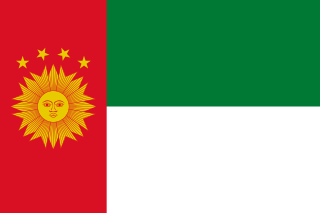
Reino de Charcas


The second Chileano-Charcan war had now ravaged for two years now. Prior to the war, Chile had succeeded in gaining the support of other American nations, as well as rapidly training their soldiers and modernizing their army. Chile's rapid militarization, enabled for it to win a few initial battles, however in the long run, the semi trained troops nor the brand new weapons purchased from Chicago, would help Chile survive the fury of the Charcan war machine.

The war formally began July 8th, 1903(I really don't know when it started), however the first few months were silent ones, both economies left their civilian one and began mass producing weapons at rates, never seen before in South America; Charcas however had the larger industry. Alliances and support were sought after, however it was Chile who had gained most support, whereby Charcas relied on Colombia-Peru and Brazil, both who stayed silent in the conflict. As Chile brought itself onto the world stage, seeking support and promising it's supporters economic assets, Charcas began the war, with a daring naval raid on the port of Valparaiso, which took Chile by surprise.

The naval battles of the second Chileano-Charcan war, went rather quick. As mid-year into the war, the Chilean navy, which was composed of outdated ships, collapsed in the battle of La Serena. This being, left for Charcas to rule the waves. Raids on Chilean ports continued and blockades were eventually put in place, and to further deteriorate the Chilean economy, Chilean merchant ships were destroyed on sight. Having cut the supply line of Chile, the nations which had pledged support to Chile, abandoned it, leaving the poor nation to face its fate alone. Chilean moral quickly plummeted, following the defeat of Chilean navy in the Pacific threatre, support for the war began to deteriorate too and with the blockade of Chile still continuing today, Chile's economy continues to suffer, as does the Chilean government, as by these stages of the war; has lost its credibility in the eyes of Chilean's whom now push for a ceasefire.

Though the naval war went by fast and victories for the Charcan navy, a victory in land had been hard to achieve. Following the raid on Valparaiso, the Chilean Army quickly crossed the "border" and pushed Charcas back into the city of Taltal. During the Chilean occupation of Taltal province, Charcan support for the war slipped, if it wasn't for the navy's victories, the populace of Charcas would have called the war off. Taltal, was besieged by the Chileans, however when they failed to take the city and saw that they were outnumbered as Charcan reinforcements arrived to the scene, they slipped back into Chile. The recovery of the occupied Charcan territory, lifted the spirits of the populace and the men in the fronts. The King visited them on occasions, bring the spirit of the men back up. Within a month's time, Charcan generals began preparing for the 100 days campaign, a campaign intended to destroy Chile's fighting spirit and capabilities.

By the end of January, 1905, the Atacama region of Chile had fallen. The loss of Atacama had created a tense atmosphere in Chile, where in Puerto Montt, demonstrations, followed by a revolt occurred. Of course they were crushed by the government forces, however one important detail of that event was the extensive Argentine coverage of the situation. Perhaps because of Argentine business in the area or for some other reason, Argentine newspapers had Charcas informed of the Chile's failing government.

The combined elements of Charcan industrial superiority, stronger army and navy in Charcas's side and the unpopularity of the war in Chile, had enabled for Charcas to quickly push even deeper into Chile. Fueled by the rapid victories and such, the Charcan army is now nearing the city of Valparaiso, which had been blockaded for about a year now. The initial plans for an amphibious assault on the city were crushed, however now as the Charcan army nears the city, only being miles away, the citizens and the Chilean soldiers who remain, prepare to defend the city and push back the invaders, whom if succeed in capturing Valparaiso would then be able to march freely to Santiago, Chile's Capital city.


IGNORE ;c
Last edited by Baja California y Sonora on Sat Jun 14, 2014 6:23 pm, edited 4 times in total.

User avatar
Lithuanian Empire
Minister
 
Posts: 2881
Founded: May 09, 2012
Ex-Nation

Postby Lithuanian Empire » Sat Apr 19, 2014 9:18 pm

-Stripped-
Last edited by Lithuanian Empire on Tue Apr 22, 2014 10:20 am, edited 1 time in total.
Hannibal Lecter's Inspiration of the AXIS PACT!
I am the real Lith. Isle of Lithonia is a fake!

-stripped-
Political Compass:
Economic Left/Right: 0.50
Social Libertarian/Authoritarian: 2.97
Lithuanian Empire wrote:I never watch Eurovision - it's a waste of possible time on NS.
Yes, I prefer NS rather than Eurovision.

Lithuanian Empire wrote:
United Great Britian wrote:-really lame app-

If I was the OP, I would reject this immediately.
However, Allen doesn't like my harsh/just technique, so there's hope.

User avatar
Marsisian
Postmaster of the Fleet
 
Posts: 26314
Founded: Aug 22, 2013
Ex-Nation

Postby Marsisian » Sat Apr 19, 2014 9:32 pm

-Place reserved for Polonia and Galicia-
Last edited by Erich von Manstein on June 9, 1973, edited 24 times in total

MGSV: The Phantom Pain hype! Game of the decade!

User avatar
The Holy Dominion of Inesea
Postmaster-General
 
Posts: 14676
Founded: Jun 08, 2012
Ex-Nation

Postby The Holy Dominion of Inesea » Sat Apr 19, 2014 9:33 pm

Reserved for Stuff
I'm really tired

User avatar
Emilio Aguinaldo
Postmaster-General
 
Posts: 11530
Founded: Jan 05, 2011
Ex-Nation

Postby Emilio Aguinaldo » Sun Apr 20, 2014 6:11 am

Insert last stand of the civil guard and their gattling gun in the cartel.

User avatar
Bujahla
Postmaster-General
 
Posts: 10330
Founded: May 22, 2013
Ex-Nation

Postby Bujahla » Sun Apr 20, 2014 1:38 pm

A New Russia
Chapter 2 - The Three Crises: Kyrgyz, Constantinople, Ethiopia


The History of Turkestan
By Professor Almazbek Atambayev
University of Moscow, 1994

Image
Russian soldiers mobilizing in Russian Turkestan.

In 1904 the Kyrgyz Autonomy Republic was a dream held by Serik Myrzakha, a treasonous rebel to the the Russian State. In his attempts to create an autonomous community he drafted a treaty that would be sent to the Russian governor in Turkestan. Upon reading the letter, he realized the deceptive wording which the attempted to secure not only autonomy, but independence from the Russian state.

The Governor-General, Nikolay Alexandrovich Ivanov knew the Tsar's response, "нет." He drafted a letter to the Tsar, the rebels, and the Russian border guard with the Mughals. The letter to Serik Myrzakha read:

The Russian government will not, and can not comply with these demands. Your group of men present no fear to the might of the Russian Empire. We are willing to negotiate, however. We will comply with Kyrgyz autonomy by granting the region you described the ability to create an autonomous oblast. From there you will be a part of the Russian Empire yet be able to control all domestic affairs as you see fit. We can not offer any more than that. Comply or face fear resistance.


As well, the Ivanov could anticipate the events that Myrzakha would attempt to follow. Recognition was a must for any fledgling government, especially one which appeared to have no support and literally grew out of no where. The logical move would be to attempt recognition from the Mughals and the Turks. It was because of this that Ivanov set the border guard on full alert, and it paid him well. Not long after the border guard was alerted, a group on the border between Persia and Russia apprehended a Kyrgyz courier. He was carrying a message to the Turkish government declaring the KAR an independent nation and that wanted recognition. As well they declared the need for 8,000 turkish soldiers in their claimed territory. The courier was shot dead, as reported by a soldier's diary. The letter was then rewritten for recording keeping purposes and the original sent to Ivanov. Upon receiving the letter and having not gotten a response from the rebels, he began to mobilize forces (OOC: see Adel's last post). A force of 55,000 men and 15,000 Calvary were marching towards Tashkent to train for a short war."

(OOC: This whole thing is based on the dude not being here anymore. If he is, well shit.)


The Constantinople Commune
By Nikos Tsiantakis
University of Constantinople, 2001


"The Constantinople Commune was one of the few 'successful' communist regimes in the world. It took power in 1902 and was the epicenter of all communist activities in Europe and Asia. In fact, during its existence many famous communists bought homes including: Trotsky, Lenin, Chernov, and more. While they did not rule their parties from the commune, they used it as a base of operations in times of need. One such times of need was the Menshevik crisis.

Starting in 1903 after the vote to split the Social Democrat Labor party, the Meneshviks moved to Constantinople. Headed by Lenin, they knew it was safe from the growing Russian persecution of the communists. His failure in being able to secure the majority of his party leadership that lead to the decision to leave St. Petersburg. His first and only option was Constantinople, the safe haven of communism. He arrived in the fall of 1903 and so did many of his party members. They were not well welcomed however. They did not speak the language and they were quite isolated. With no real power, Lenin's reputation was falling fast.

The mayor of the commune, Dimitris Koutsoumpas, wasn't a fan of Lenin. His belief was not well tolerated by him and he did not want to see him in his city. He feared a 'second revolution' lead by the power-Hungary Lenin. It was this that drove him to collapse. In January of 1904 he sent a letter to the Tsar of Russia saying:

It comes with great distress that I write to you. A citizen of Russia known for his treason resides wtihin the walls of my city, Constantinople. I am willing to allow the Russians to launch a small force in Constantinople to secure Lenin and his party members on behalf of treason. Shall you accept you will be given military access into the city to search and apprehend him. I fear his influence in my city as I can not agree with the polices he believes in and is trying to advocate in Russia and Constantinople. Please respond with haste.


In hindsight he writes that, "It was the worst moment of my political career." Though this did not bother him at the time. Quite immature in the understanding of Russian politics, he believed that Russian's imperialism ended when they did not gain territory in the European war. This was far from the truth. At the moment, Russia was focused inwards with the Finland Question, Kyrgyz Question, and Communist Question. Believing that Russia could not seek to expand its influence as it reflected on itself, he made a major miss calculation that cost him dearly.

It was on February 2nd that the Russians moved to secure Constantinople. Using the fleet of recently purchased warships from Russia, they blockaded the Dardanelles using 10 new light cruisers and landed a total of 15,000 soldiers landed on the docks over the day. They were met by the communists who were fully aware of the situation at hand and let them pass into the city. The soldiers started to march through the streets checking every house and building looking for the traitors. By noon, many groups were stopping to eat lunch. One group of 50 men stopped in Taskim square where they stopped to eat. They were met by an deadly force of nearly 200 rioters who assaulted them. A couple of the Russians were killed in the fighting that resulted.

The Russians ended up pushing the rioters back and killed a decent amount of them. Estimates guess around 40. These men were killed and the group pushed on, but with force. Every group they ran into was informed and more force was used. Eventually it got out of hands when locals were killed for no reason. The general, Mikhail Alekseyev, took the situation even further. When he heard of the riot, he declare "We take the city! Kill all opposition! I wont let these damn communists kill our men!" The fighting began and the communists didn't even know. Engagements continued throughout the day, though there was no real fighting, until 6:00 p.m.

At dinner time, Mikhail Alekseyev marched a group of 1,000 on the mayor's residence. It was heavily guard, as suspected. They lost many men, but eventually forced their way in. They killed the mayor for, "not giving us the damn man beforehand." The force was well beyond what the mayor declared was "small" but was naive and let them in as the numbers grew through the day. The communists would organize over night and attack the Russians who had still not found Lenin. The "Battle of Constantinople" would last for a week and result in a Russian victory. More men poured in the next day and the next day and the next. Eventually the communists surrendered though the city was seriously damaged. Roads would become war zones for the next year as guerillas would occasionally find support. The Russian Constantinople rule began on March 3rd, 1904."


A History of the Russians in Africa
By Professor Ippolit Gorbachev
University of Gannibalgrad, 1999


"Early Russian involvement in Africa pivoted around the nation known as Ethiopia. Starting in 1891 when a cossak lead a small settlement there, formal relations did not start until 1904 when Emperor Menelik II accepted the Russian ambassador V.T. Mashkov. Prior to this, the russian royal member Boris Vladimirovich, the Grand Duke, married the Emperor's daughter and formed the personal union between the nation. When Mashkov appeared in Ethiopia he brought lots of change to the African nation. Some good, some bad.

The first thing was the securment of permanent relations between the two with embassies. Next was the contract between the Ethiopian government and Russia to allow Russian companies to build rails and the new capital in Ethiopia. As well, he secured an alliance between the nations which essentially turned Ethiopia into a vassal state with Russian protection. A garrison of 20,000 troops would be stationed there at all time. The final act was bringing a deadly disease to Ethiopia, or so he is accredited.

When his ships arrived, they also carried rats and other rodents with them. It is believed that these are what transferred the disease that changed Ethiopia's history. The disease did not affect many people, only a few important ones. One of these was the Emperor, Menelik II. A fortunate tragedy, he became sick on April 2nd. With no doctors in Ethiopia able to treat him, he was taken with V.T. Mashkov back to Russia for medical treatment. His disease turned increasingly worse and he died within a week of stay in Russia.

This lead way to Boris Vladimirovich taking the throne of Ethiopia. "It suited him well," Tsar Nicholas II wrote in his diary when referencing the new title he gave himself "Grand Duke of Ethiopia." When his father-in-law came back, it was said that he wept "like the sky poured forward," referencing his growing affection for the man. In his diary he wrote:

It was never my intention to take the throne this early, but it appears I must. My father-in-law was right in saying his daughter wasn't the brightest and I am glad indeed. I will rule his people with pride and with justice. He expanded this empire only so much, and now I must expand my cousin's as is my royal duty.


Vladimirovich secured a deal with Mashkov establishing it as a protectorate of Russia on May 1st. He would start his rule as Grand Duke of Ethiopia with many reforms to "bring the might of the Russians to the willing people of Ethiopia."
*Huzzah he lives!*

Nah, son. Britain was all like "yo, why my colonies be all uppity an' shit?!" And Lord Durham laid it straight: "they be wantin' legislation with representation, dawg."


Never Forget / My Best IC Posts
Never Forget / My Longest Running Series
Never Forget / My Best RP

User avatar
The Emerald Dragon
Senator
 
Posts: 4708
Founded: Jan 30, 2014
Ex-Nation

Postby The Emerald Dragon » Mon Apr 21, 2014 5:28 pm

The people went to the ballot box in Denmark, with men and women voting for their candidate as prime minister of Denmark. After a few days the results were in, and the 'Labour' party had it's candidate elected. It was the former president Christian, who had been leading Denmark during the German crisis in 1900. His first act as leader was to write a telegramme to the Chicagoan government.


To the Chicagoan govermment

Please forgive my predecessor's war against your nation. As of now, any Chicagoan citizens in custody are being released from the camps and all Chicagoan businesses will be handed back to their respective owners. I hope that my predecessor's actions are to be forgiven, he is currently standing trial for crimes against Denmark and will be imprisoned.

Yours, Prime minister Christian of Denmark.

User avatar
Aldelxane
Negotiator
 
Posts: 6760
Founded: Nov 29, 2013
Ex-Nation

Postby Aldelxane » Mon Apr 21, 2014 7:05 pm

-deleted, change of plans-
Last edited by Aldelxane on Wed Apr 23, 2014 6:56 pm, edited 2 times in total.

User avatar
Rephesus
Powerbroker
 
Posts: 8061
Founded: Aug 16, 2013
Ex-Nation

Postby Rephesus » Mon Apr 21, 2014 7:29 pm

[Placeholder for Mughal post depending on time skip]

User avatar
Saragrossa
Minister
 
Posts: 2698
Founded: Jul 08, 2010
Ex-Nation

Postby Saragrossa » Tue Apr 22, 2014 11:12 am

Image


Crescent City, Mexico


The Pacific Army lead by Jacques Riel had prepared itself to face the rowdy miltia men who threw themselves together rather chaotically without much solitary or much formal military training. They would be full of morale and spirit but their lack of standardization, drilling and heavy weapons while being outnumbered heavily would decide this battle. The key was not to lose much men power in putting down these revolters but he had to respect them and not be over-cocky in confronting them.

He ordered his artillery to line up and being to pound the defenders to pieces. They were lacking any artillery so Riel decided this was the ideal moment to pound the defenders with a massive and intense barrage. Riel focused all of his batteries unto the center of the massed defenders to create a massive gap and opening and to structurally weaken their lines as his men prepared to assault them. The artillery caused havoc and would smash these untrained men.

After five hours of constant bombardment, the Pacific Army then ordered a creeping barrage where the first force of 5000 men would now advance behind a screen of massive artillery which would lift and reveal his army in close range and their sheer number and fire power would decimate the defenders.

The Pacific army then committed the rest of the force which numbered a little more then 5000 into the city where they entered with attempts to commandeer the city while the Miltia now where committed outside where the Pacific army was going to put them down with sheer artillery and weigh of numbers.

Pacific Army Group West
Redding, California


The Force under the command of Gabriel Dumont had reached Reading and began to enter the city. There was no mobilization by the defenders or by the Mexicans and they marched into the city in full force but they were bearing gifts of food, bread and a flag of California and they claimed to help restore the city to the new Republic of California.

They waited eagerly the response of the citizens who seemed very overwhelmed with joy for the Pacific soldiers who brought a flag of California which they could stand behind.
Last edited by Saragrossa on Tue Apr 22, 2014 11:12 am, edited 1 time in total.
" For Death & Glory "
Factbook of Saragrossa

Political Compass;

Economic Left/Right: -2.00
Social Libertarian/Authoritarian: 1.69

User avatar
Caltarania
Postmaster-General
 
Posts: 12927
Founded: Feb 01, 2013
Ex-Nation

Postby Caltarania » Tue Apr 22, 2014 1:54 pm

United Provinces|Verenigde Provinciën

Image

Een Nieuw Dageraad


The Hague, The Netherlands

The election results had been counted. The four main parties of the federal government - Zakelijk Partij, Arbeidersfront, Liberalen and Verenigde Reactionairen - had secured the majority of the seats, however a new party had risen, taking an astonishing 5% of the House of Representatives; an amazing feat for such an unknown party. The new party was known as 'Rode Dageraad', and had apparently taken various seats from the more extremest former-supporters of the Arbeidersfront. Roge Dageraad demanded the end of the monarchy - which not even the Arbeidersfront approved of - along with the institution of full-blown communism, based on the ideals of several other communists. This was worrying for the Stadtholder, but the ones who seemed most annoyed were the Arbeidersfront who had their entire campaign high-jacked by an extremer party. Liberalen had prevailed overall, controlling 54% of the House of Representatives. The other parties controlled varying amounts. Zakelijk Partij controlled 13%, Arbeidersfront controlled 16% and Verenigde Reactionairen controlled 12%. As always, the two parties of Zakelijk Partij and Verenigde Reactionairen had attempted to form a conservative majority, but with a mere 25% they were unable to take power from Liberalen. Liberalen's success has been widely attributed to it's new leader, after former Prime Minister Casper van Hofwegn resigned due to personal reasons. The party made huge gains after a Zulu-Boer former-general Jonkheer Lwazi Joosten took up leadership. He is now Prime Minister of the United Provinces.
Last edited by Caltarania on Wed Apr 23, 2014 8:10 am, edited 2 times in total.
I'M FROM KYLARIS, AND I'M HERE TO HELP!

User avatar
Bujahla
Postmaster-General
 
Posts: 10330
Founded: May 22, 2013
Ex-Nation

Postby Bujahla » Tue Apr 22, 2014 2:28 pm

A New Russia
Chapter 3 - The Crises Continue


A place hold for:
The History of Turkestan
By Professor Almazbek Atambayev
University of Moscow, 1994

- Begins the march on Kyrgyz
- Anger in Tsar's cour

The Constantinople Commune
By Nikos Tsiantakis
University of Constantinople, 2001

- Anger in Tsar's court
- Message to the Mughals
- Further mobilization, occupation, and conflicts

A History of the Russians in Africa
By Professor Ippolit Gorbachev
University of Gannibalgrad, 1999

- Anger in Tsar's court
- The Crimea-Kirachi Naval accord
- Anger in Ethiopian courts
- Grand Duke takes action
- Mobilization of 20k troops to Ethiopia via Moscow-Delhi rails

The Parties of Russia: 1900-1904
By Professor Nikita Putin
University of Petrograd, 2004

- Kadets Long March
- The Constitutional Democrats launch a massive campaign, funded by wealthy capitalists, to tour the countryside for the party. Many regional segments are created after this as many of the peasants like the ideology presented.
- The collapse of the Menesheviks
- With Lenin gone missing, the party starts to fall apart and officially disbands on April 26th.
- Mechelin-Trotsky meeting
- Mechelin meets with Trotsky to discuss future Bolshevik-Kadet relations. Trotsky agrees that a constitutional monarchy with capitalism would be the bourgeois government he was looking for.
Last edited by Bujahla on Fri Apr 25, 2014 2:07 pm, edited 2 times in total.
*Huzzah he lives!*

Nah, son. Britain was all like "yo, why my colonies be all uppity an' shit?!" And Lord Durham laid it straight: "they be wantin' legislation with representation, dawg."


Never Forget / My Best IC Posts
Never Forget / My Longest Running Series
Never Forget / My Best RP

User avatar
Altito Asmoro
Post Czar
 
Posts: 33367
Founded: May 18, 2012
Ex-Nation

Postby Altito Asmoro » Tue Apr 22, 2014 7:35 pm

To: King Andres Yegros of Charcas
From: King Edward of United Kingdom

As a gratitude to our lasting relationship, UK will invest more of its funds to the Charcas, particularly in its arms and shipbuilding. We will send in our engineers and businessmen to establish arms and ships companies in Charcas. I hope we can keep this relationship for a such long time. We will also letting opening our immigration rules from colonies to Charcas

Sincerely yours,
King Edward of United Kingdom


Dozens of businessmen and 100 engineers had been prepared to be on their way to Charcas, to discuss the possibility of arms and shipbuilding companies in Charcas. Citizens from colonies who are looking for jobs can go overseas to Charcas, and about the first batch of 20,000 immigrants from Sudan and Cote d'Ivoire had been allowed to go to Charcas.
Last edited by Altito Asmoro on Tue Apr 22, 2014 7:40 pm, edited 1 time in total.
Stormwrath wrote:
Altito Asmoro wrote:You people can call me...AA. Or Alt.
Or Tito.

I'm calling you "non-aligned comrade."

A proud Nationalist
Winner for Best War RP of 2016

User avatar
Lithuanian Empire
Minister
 
Posts: 2881
Founded: May 09, 2012
Ex-Nation

Postby Lithuanian Empire » Tue Apr 22, 2014 9:21 pm

Lithuanian Liberation Movement


LLM under Russia
By Professor Jonas Tautikis
University of Vilnius, 1978


Image
Nacionalistų Frontas soldiers ready to assault Raseiniai

"The year 1904 was marked with many events in LLM's history, but the most notable one is certainly the actions of the Nacionalistų Frontas, a right-wing militaristic group under the affiliation of the Lithuanian Liberation Movement.

The NF was created in 1901 by a few right-wing intellectuals, led by Silvestras Žukauskas. Unlike the LLM, which focused on liberating the country through peaceful means and educating the masses, the Nacionalistų Frontas relied on military means and was basically the fist of the whole movement. While the organization lacked up-to-date equipment and military training, S. Žukauskas, who was previously a military officer under the Russian Imperial Army, was optimistic.

One of the first actions by NF were raiding Russian military warehouses and drafting Lithuanian soldiers under the Russian Army. Though the first one wasn't successful, as after a few raids the organization was forced to work undercover, the group eventually got military packages from the West, sent by rich Lithuanian supporters. While getting the needed supplies and weapons, NF also gained support from patriotic Lithuanian military officers, who helped the organization to organize raids to towns and warehouses and taught the members in the art of war.

By the year 1904, the organization was fully ready and started guerilla warfare in the woody Samogitian Highlands. The first attacks were successful, and the organization occupied a few small towns, most notably Rietavas. Not only that, but the members started spreading the word, informating the masses about the existence of Lithuania's defenders. However, the most notable action by NF was certainly the assault to Raseiniai.

Raseiniai is located in the south-eastern part of Samogitia, and is the most populous and most influential town in the region, and is named "The Capital of Samogitia" by the Samogitians. Many feudal castles and estates are nearby, as the town was in the defense line against the Teutonic Order. It is also located at a crossroad, with roads going to Klaipėda(Memel), Kaunas, Riga and Konigsberg. The assault was planned for a very long time by the group, with many possible outcomes considered.

The assault happened at night, when most of the Russian soldiers were sleeping. A force of 2,000 men entered the town. Though the Russians spotted the NF fighters, they were quickly beaten, with only 45 patriots dead. The NF fighters raised the flag of LLF in the center of the town and burned all Russian flags and symbols to show that the town is now held by LLF."

(OOC: Buj, do you mind if I copy your writing style?)
Last edited by Lithuanian Empire on Wed Apr 23, 2014 12:52 am, edited 3 times in total.
Hannibal Lecter's Inspiration of the AXIS PACT!
I am the real Lith. Isle of Lithonia is a fake!

-stripped-
Political Compass:
Economic Left/Right: 0.50
Social Libertarian/Authoritarian: 2.97
Lithuanian Empire wrote:I never watch Eurovision - it's a waste of possible time on NS.
Yes, I prefer NS rather than Eurovision.

Lithuanian Empire wrote:
United Great Britian wrote:-really lame app-

If I was the OP, I would reject this immediately.
However, Allen doesn't like my harsh/just technique, so there's hope.

User avatar
Emilio Aguinaldo
Postmaster-General
 
Posts: 11530
Founded: Jan 05, 2011
Ex-Nation

Postby Emilio Aguinaldo » Wed Apr 23, 2014 12:18 am

The 4000 militia served as a scapegoat for the real defenders of the city. As their numbers slowly dwindled, the time for the civil guard to prepare was getting shorter and shorter. However, in the very short time that they had, they had made the cartel a fortified position. The windows were broken and the men who were fortunate enough to have the dragons fired blindly hoping to hit at least one enemy soldier.

The 4000 man militia was by now either dead, dying, surrendered, or have ran into the cartel. The preparations for their final stand was finished, three archaic gattling guns were placed inside two of which were aimed out of the open windows awaiting the enemy whilst the lat one was waiting on the main door. When the soldiers of the Pacific
Union went closer to the cartel the Mexicans opened fire with their weapons.


The populace of Veracruz, having been blockaded by the Imperial navy and being besieged by Crisostomo in the outside had started to feel the prices of food to rise. However, whilst the commoners were starving, the nobles who took power were still dining like kings with their enormous stockpiles of food. This, unfortunately or fortunately did not sit well with the populace. Upon hearing about their enormous stockpiles, they stormed their houses, store houses, granaries, and warehouses for their food and soon enough chaos again engulfed the city. What gave them power was the same thing that made them fall out of power, their grip on the city shrunk and shrunk whilst Crisostomo had already reclaimed a large swath of the city.

Not before long, they were confined in the palace of Agustin himself with his son outside biding his time.
Emilio Aguinaldo wrote:Grab your gun, point it at bad guy, pull trigger.

User avatar
Vredlandia
Negotiator
 
Posts: 5092
Founded: Sep 08, 2012
Ex-Nation

Postby Vredlandia » Wed Apr 23, 2014 2:25 am

Image

The United Prussian Confederation


Potsdam, Prussia
Babelsberg Palace


It was a pretty nice day in Potsdam. The sun was shining, people of all age walked through the streets and even better - Prince Heinrich of Prussia was able to call all the important North German nobles and generals to a meeting in Babelsberg. Heinrich was brother of the former Emperor, Wilhelm II. of Prussia. He admired his brother that much, his death led to severe depressions of Heinrich. But he loved his family and his house, so there was no way he would have killed himself, too. Instead, he decided that his brother shall be revenged and the monarchy restored. And these plans were the reason for the meeting in the halls of beautiful Babelsberg Palace.

Heinrich knew that the Hohenzollern family was in a bad light because of the Treaty of Strasbourg and even though they remained the strongest (North) German nation, it was impossible for them to take over the nation without resistance. So, to appease the other monarchs that heavily disliked the new government under a Chancellor, the North German Confederation would be reinstated with the same laws as before, just not with Prussia as head of the Confederation, at least not yet. The second most powerful monarch, and maybe the most popular, was undoubtly the Saxon Friedrich August III., so he was supposed to be the new President of the North German Confederation.

The meeting began when all delegates, mostly the nobles and generals themselfs, although Heinrich represented Prussia instead of his nephew, who was actual King of Prussia. Heinrich started to play 'Die Wacht am Rhein' on his piano and the others joined him vocally. Afterwards he announced his plans. Most of them agreed, although the Grand Duke of Mecklenburg-Schwerin, a close ally of the Prussians, and some military officers tried to convince the Prussians to take the Presidency again. But that wasn't all. To show their neighbours that their intentions weren't hostile, they gave up the claim on the Emperors crown. Two German Emperors were one too many and upholding that claim would have been a wrong message, especially in the ridiculous state the nation was in right now.

Image
And so it happened that the younger brother of the former Emperor wrote and signed the demands the nobility and generality expressed. It was a several page long letter directed at Joan von Bismarck himself. He could either bow to their demands, resign and give Heinrich the position of the Chancellor so he could introduce the reforms they planned, or he would be arrested for high treason. If any nation was willing to accept him, they would have even allowed him to walk into exile, although that was rather unlikely.

Not unlikely, however, was the case that they would succeed. After all large parts of the population, especially industrials and bourgeoise, but also average citizens and workers, still wanted a monarchy and most soldiers and officials were sworn to the crown and not the Chancellor. Should they see the need to start a rebellion, they had manpower and the money to do so. Prince Heinrich was the first to sign the treaty, the generals and other monarchs followed.

Joan von Bismarck,

You have couped the government and proclaimed yourself Chancellor without the support of the population. Neither did you ask the states of the North German Confederation to proclaim you Chancellor. If God didn't choose you and the people did neither, you are without an doubt a criminal, as you usurped the leadership of this great nation without any legitimate claim for it. You have no proper army and no proper funds. With this letter we ask you to resign and fulfill the demands listed on the other pages. Should you not comply, you will be arrested for high treason and put on a trial. In hope of cooperation,

Signatures


Reichstag, Berlin

Joan von Bismarck sat in his office in the building of the Reichstag and attempted to read the newspaper, but he was pretty much busy with his own thoughts. He had been reported that nobles from all North German principalities, duchies, kingdoms,... arrived in Potsdam to discuss something. They surely wanted more rights, as Prince Heinrich of Prussia already announced that he would like to speak to Joan later, but still all this secrecy made him a little worried. He was, after all, well aware that the monarchs disliked him. To his disadvantage, there was a certain distrust in general, after all you couldn't expect to appear and be loved at the same moment.

Just when he wanted to go for a walk, someone knocked and immediately opened the door. Eight well-armed guards in prussian uniform entered the room and lined up on both sides of the room. Then Prince Heinrich of Prussia entered and handed over the letter. Joan read carefully and his mood darkened immensely. "You damn fool! You're only going to ruin this nation again, just like your mad brother did!", he yelled and threw the letter away. Heinrich stepped back and the guards arrested the 'Chancellor'. "As stated in the letter you apparently don't want to accept, you are hereby accused of high treason and shall be brought to prison. As new Chancellor, I will dissolve this damned system you tried to enforce once and for all. We're a federation of diverse states, not just Prussian ones, and with my leadership we will rise again", the Prussian Prince announced and walked over to the desk, where he signed the plans he and the other monarchs made himself.

This same evening, the United Prussian Confederation was renamed North German Confederation, King Friedrich August III. of Saxony took over the Presidency of the Confederation, being representative leader of the NGC, while all the other monarchs remained leaders in their respectable states. But that was, of course, not the only thing that had been done this day. They needed money, and it seemed the Dutch were wealthy enough to afford giving them a loan, while the Polish state divided the territories, which was another huge problem, to say the least. As the treaty didn't care for this problem, it was now time to care for it on their own.

To: The United Provinces of the Dutch Republic
From: The North German Confederation


Esteemed Gentlemen,

The reign of Emperor Wilhelm II. brought a horrible war to Europe. It ended with the suicide of Wilhelm and was used as a chance for Joan von Bismarck to usurp leadership. However, we were able to coup him and will now reinstate the monarchy and a federal system. Let me be honest, while the war was a horrible mistake, such a shattered and weak centre will be very destabilizing to all of Europe. We want to regain our lost territories through diplomacy, if we are able to do so. But first of all we need to rebuild the nation, which is why we write you. The United Provinces are wealthy and have always been good neighbours, despite the recent dispute. That's why we would like to humbly ask you to grant us a loan. In return we can assure you that our joint border shall be final. There is no reason for us to hurt this holy border.

Sincerely,
Friedrich August III.
King of Saxony
President of the NGC


To: Polish Republic of Pomerania and Silesia
From: The North German Confederation


Gentlemen,

Let me be honest with you: The Polish occupation of Pomerania and other former territories of the North German Confederation that has been decided with the Treaty of Strasbourg is a great problem for us. As you know, East Prussia is know surrounded by hostile factions and our connection to them has been broken and can only work over ship. That is why we would like you to allow us to build and administrate railroads in Pomerania and the Danzig area. Declining would only harm our relations further, so we expect you to be wise and accept the proposal. In return you shall be allowed to build two railroads in East Prussia, too.

Signed,
Friedrich August III.
King of Saxony
President of the NGC

User avatar
Altito Asmoro
Post Czar
 
Posts: 33367
Founded: May 18, 2012
Ex-Nation

Postby Altito Asmoro » Wed Apr 23, 2014 5:15 am

Altito Asmoro wrote:
Altito Asmoro wrote:The fleet moved towards Denmark now, with full force. The Danish have considerable and balanced navy, but no match for the more balanced fleet of UK. While the fleet are on their way to Denmark, the military reluctantly planning the next movement of the invasion, which is to hold Denmark and capture the lands of Germany.


The fleet now is in a battle with Danish Navy, after they had been spotted by their patrols. The battle still ongoing as of now, and it seems it won't end. However, another batch of 25 ships had been mobilized as well to support the British Royal Navy and to destroy the Danish Navy. Once they had been defeated, the ports will be claimed, and then a hastily base of operations will be established while also unloading troops to the land of Denmark. The Mercenaries of Mexican, as they had been called now, had been included in this second fleet, and they will ride to the battlefield for glory!


The first and second fleet had joined the war, with the second fleet being able to unload their troops to the land of Denmark, with the inclusion of the Mexican death soldiers, their presence raised the morale of British troops. While the British-Mexican troops start attacking and firing at the Danish Army, the cannons had been unloaded as well and began to shell the Danish. The first fleet start to advance to defeat the Danish Navy and to send their troops down to the land of Denmark!
Stormwrath wrote:
Altito Asmoro wrote:You people can call me...AA. Or Alt.
Or Tito.

I'm calling you "non-aligned comrade."

A proud Nationalist
Winner for Best War RP of 2016

User avatar
Caltarania
Postmaster-General
 
Posts: 12927
Founded: Feb 01, 2013
Ex-Nation

Postby Caltarania » Wed Apr 23, 2014 11:43 am

United Provinces|Verenigde Provinciën

Image

Een Nieuw Dageraad


Official Communique from the Dutch Republic
Image

To: President Friedrich August III of the North German Federation
From: Prime Minister Lwazi Joosten of the United Provinces
Subject: The Road to Recovery

We thank you for your apologetic nature about the German Brothers War, and hope that such a tragic conflict does not occur again. It with this hope that De Nederlandsche Bank has decided to grant the North German Confederation a loan of up to ƒ.5,000,000 in order to repair damages caused by the war and to restore stability in your nation altogether. The terms of the loan will be discussed by officials of the DNB, should you accept our offer.

We will maintain!
Jonkheer Lwazi Joosten, Prime Minister of the United Provinces
Envoy of His Majesty Stadtholder Willem VII
I'M FROM KYLARIS, AND I'M HERE TO HELP!

User avatar
Aldelxane
Negotiator
 
Posts: 6760
Founded: Nov 29, 2013
Ex-Nation

Postby Aldelxane » Wed Apr 23, 2014 6:57 pm

A Question of Minorities


After years of court battles and protest movements, heightening dissent in Bohemia, dissent in Croatia, dissent in Slovakia, and dissent in the remaining portion of Transylvania, the day had finally come for the nation to decide. To decide between a system of two states, or of five. That morning, radio stations relayed the news to the denizens of cities such as Vienna, Budapest, and Munich, far from urban centers such as Prague and Bratislava, where minorities dominated, and the movement for greater autonomy from Austria and Hungary. The passage of the movement would mean federalization. Within the last year, protests just like these ones had sent a message to the parliaments of Austria and Hungary, as well as to Kaiser Joseph Wilhelm II. With growing support in Hungary after it's own recent acquisition of it's own parliament for the rights of Slovaks, the expectation among Czechs that they would gain same rights as Hungarians, and the threat of the secession of Bohemia and Germano-Hungarian Transylvania, the government was forced to act.

And act it did. The joint parliaments of Austria and Hungary convened in Vienna to discuss the question of minorities. Bavaria had been excluded, in lieu of it's current awkward lack of a parliament but status as a state. The Austrian parliament would currently "represent" Bavarian interests, even though the possibility of misrepresenting them was high. The Kaiser paced the hallways of the Hohes Haus and brooded. At 1:00 PM, the members of the two parliaments filed out of the room, one by one. First the Hungarians, as they one by one filed out of the Hohes Haus, and prepared for their return journey to Budapest on the
Vienna-Budapest Railroad constructed after the creation of the Dual Monarchy, in order to link the two capitals. With mounting petitions from Czechs, Slovaks, Croats, Transylvanians, and large numbers of sympathetic Bavarians, Austrians, and Hungarians, the parliaments had decided to allow referendums in those three territories. If they were to pass, the join parliaments had agreed to allow the federalization of the Empire and the creation of a central government. The referendum would occur on the morrow.

Thousands lined up at the polls in Bohemia, Czechoslovakia, Croatia, and Germano-Hungarian Transylvania. In Bavaria, it had been decided that the state would finally gain it's own parliament separate from Austria, and voters their too were in the position to decide the relative autonomy of their state. The lines at polling stations were long, and the hours dragged by. The Kaiser continued to pace, now in his office, every so often receiving reports from the polling station. Just an hour ago, he had received word of some anti-federalists trying to skew the vote in Bohemia against autonomy by voting thousands of times. They had been promptly arrested. At 8:00 PM the day after the parliamentary vote, radio stations announced the results of the referendums for statehood, and consequently federalization. All of them had passed, despite efforts of vocal minorities to alter the course of the vote. Imperial Police had been obliged to patrol near the polling stations in order to prevent people from ballot stuffing. Even so, the referendums for statehood had passed by a wide margin, as well as the referendum for the creation of a Bavarian parliament. As parliamentary elections began in the new states, general polls for the naming of the new federation that would replace the former imperial domination, and the consensus had to do with the river Danube. The decision had been made, and a paper with the information was passed to Joseph Wilhelm II. The Kaiser finally walked to the radio room of the Hohes Haus, took a seat, and prepared to announce the news to the public. The people had spoken, and changes would be made. Already, the nation prepared for the elections of parliaments in the new states, and the election of a Congress. Joseph Wilhelm smiled privately, as he turned on the microphone, resting the paper which would proclaim the federation to the world on a nearby desk. This seemed to be a decade of reform.

State-Level Map of the Danubian Confederation:
Red=Austria
Green=Hungary
Blue=Bavaria-Sudetenland
Purple=Bohemia
Orange=Slovakia
Brown=Croatia
Gold=Transylvania

http://i.imgur.com/irtLSzg.png

Summary:
-Empire federalized
-Danubian Confederation Created
-States of Bohemia, Croatia, Transylvania, and Slovakia created with parliaments
-Creation of the Bavarian state parliament
-Creation of a national parliament and election of a Chancellor
____________________________________________________________

Two Weeks Later
Bohemia, Danubian Confederation
The newly created state of Bohemia had always been a heartland of coal mining, and the new federal government intended to encourage the capitalists who were eyeing it's vast deposits of brown coal, provided they ship to Danubian industry. The government had provided a subsidy to aid the creation of new iron mines, coal mines, and steel mills, while companies used private funding to repair and improve the rail lines connecting Bohemia, the iron producing regions of Austria, and the nation's industry. With this renewed focus on steel production and the manufacturing sector, the nation's output of steel was expected to improve drastically, even as the nation's unemployed would no longer be so, as the number of jobs increased.

Ten Weeks Later (On the next page)
Esteemed King of the Italian Empire,
For too many years have our nations disagreed over your acquisition of Carniola, Dalmatia, and costal Croatia in our time of weakness. I come not to make demands, but to negotiate a settlement of the ownership of the region that will satisfy both the public opinion of the newly creation Federation, and of the Italian Empire. I invite you to meet with myself and my the Danubian foreign ministry in Zagreb.

May we reach a compromise,
Joseph Wilhelm II, Kaiser of the Danubian Federation
Last edited by Aldelxane on Thu May 08, 2014 1:54 pm, edited 16 times in total.

User avatar
Saragrossa
Minister
 
Posts: 2698
Founded: Jul 08, 2010
Ex-Nation

Postby Saragrossa » Thu Apr 24, 2014 10:23 am

Image


Crescent City, Mexico


The Pacific Soldiers had smashed the citizens with their raking fire and were able to push them off the field and as they ran into the cartel where it was clear that Mexican forces were going to commit a last stand and they knew this was going to be a very difficult position.

The Pacific soldiers figured they had some short ranged cannons with grape shots/canister shot or grenades or home-made explosives which would rake their lines or even worse a machine gun or heavy emplacement so they knew this could end quiet badly.

The Mexicans were going to be defeated but they had to make sure they didn't get a bloody nose in the warm up match before they even got to face the Mexican military.


General Riel ordered the artillery to regroup and consolidate and formed a Grand battery, Napoleon style and he ordered the artillery to focus a massive barrage at the cartel to focus and deafen the defenders and he ordered a creeping barrage to commence with secondary 9 pound batteries to give his soldiers a fighting chance.

He ordered his skirmishers to engage the cartel. His portion of the army was 2500 men and they incorporated another 500 native forces to bring their force to three thousand and these men were armed with carbines, rifles and grenades and they were ordered to advance under the artillery cover despite any friendly fire and engage the men holed up within the cartel with grenades and carbines.

They were in a loose formation to make sure they weren't raked down by any machine gun fire and they hovered 50 meters behind the artillery barrage which caused in some friendly fire causalities since the artillery crews were professional but mistakes were bound to happen and when fire is danger close, it resulted in the odd incident of several soldiers been wounded or killed by direct or indirect (shrapnel hits ).

However once the artillery hit the cartel and lifted, it would reveal a wall of defenders that immediately jumped to the ground for cover and used their carbines to fire from the ground and they threw in their grenades and bombs at the entrenched warriors.

It was going to be a very bloodly scene.
" For Death & Glory "
Factbook of Saragrossa

Political Compass;

Economic Left/Right: -2.00
Social Libertarian/Authoritarian: 1.69

User avatar
Vredlandia
Negotiator
 
Posts: 5092
Founded: Sep 08, 2012
Ex-Nation

Postby Vredlandia » Thu Apr 24, 2014 10:24 am

To: The United Provinces of the Dutch Republic
From: The North German Confederation


Esteemed Prime Minister Joosten,

First of all let me congratulate on your recent election. You might notice that we German monarchs are rather conservative, but I hope that our political differences won't be any problem to our relations. Anyways, in regards to the loan I can proudly say that we accept. Furthermore there's a serious issue we would like to discuss. Since the Teaty of Strasbourg the Saar region has been taken, no robbed, from us, despite the will of the local population. They are Prussians (mostly) and belong to Prussia and the North German Confederation. We would therefore like to ask you to help us prepare a referendum, where they're able to decide if they want to be independent or not on their own. Otherwise I do not think they will be independent long and fear that the French might take adventage of their weakness.

Sincerely,
Friedrich August III.
King of Saxony
President of the NGC

User avatar
Caltarania
Postmaster-General
 
Posts: 12927
Founded: Feb 01, 2013
Ex-Nation

Postby Caltarania » Thu Apr 24, 2014 11:29 am

United Provinces|Verenigde Provinciën

Image

Een Nieuw Dageraad


Official Communique from the Dutch Republic
Image

To: President Friedrich August III of the North German Federation
From: Prime Minister Lwazi Joosten of the United Provinces
Subject: RE: The Road to Recovery

I thank you for your congratulations, and assure you that politics are an interior matter, and do not wholly effect our external and foreign relations. In regards to your request for the Saarland, we would be honoured in promoting democracy in the region by allowing the populous to determine their own future. However, we request a few terms we wish for you to agree to if the Saarland agrees to join the North German Confederation. The first of these is that the Saarland will join the Confederation as it's own state, not as a part of Prussia. The second term is that the Dutch-German border will be demilitarized by both sides, in order to prevent future conflict. The same will apply to the Saarland, however this will expire on the 1st of January 1915. A separate and final request is that democracy is more thoroughly routed in the German political system, but that is not part of our current deal and is simply something we encourage and wish for you to consider.

We will maintain!
Jonkheer Lwazi Joosten, Prime Minister of the United Provinces
Envoy of His Majesty Stadtholder Willem VII
I'M FROM KYLARIS, AND I'M HERE TO HELP!

PreviousNext

Advertisement

Remove ads

Return to Portal to the Multiverse

Who is online

Users browsing this forum: Kingdom of Irhk, New Harken, Theyra

Advertisement

Remove ads