NATION

PASSWORD

A Stormy World (PT, OOC, Signups Open)

A staging-point for declarations of war and other major diplomatic events. [In character]

Advertisement

Remove ads

User avatar
Saubre
Diplomat
 
Posts: 728
Founded: Jan 21, 2012
Ex-Nation

Postby Saubre » Sun Feb 03, 2013 7:21 pm

Berate wrote:
Bassyruk wrote:You're probably going to have to edit your history a lot, considering this pretty much screws up every else's history..

I tried to keep it fairly localized and separate from the rest of the world by putting things hundreds or thousands of years in the past, but if you'll let me know what I need to fix to make it work, I'll do so.


Okay, for a start you're going to have to edit the part about being independent during the ancient era because as you know Rome conquered Sicily during the First Punic War and I'm Rome. Sicily could only be independent as early as 476 AD where the Western Empire (Temporarily) collapsed and lost hold of its territories.

Next, Bassyruk is the Vandal Kingdom. The very same Germanic people who sacked Rome and they are located in Africa, so you're going to have to ask him about the Africa part in your history. Also the part about the Kingdom of Tyre, it contradicts with the history of the The Supreme Nizāri Caliphate of Palestine since they currently control that area.

EDIT: Never mind the part about the Nizāri Caliphate of Palestine since your history doesn't contradict with theirs after checking. Still, most of the events in your history wouldn't be possible since Sicily was never independent under Rome.
Last edited by Saubre on Sun Feb 03, 2013 7:41 pm, edited 4 times in total.

User avatar
Berate
Political Columnist
 
Posts: 5
Founded: Feb 03, 2013
Ex-Nation

Postby Berate » Sun Feb 03, 2013 7:28 pm

I was under the impression that this was for fictional roleplays, and that you were using the map of Europe for convenience. That's my bad, I'll go back through and edit the history.
Last edited by Berate on Sun Feb 03, 2013 7:28 pm, edited 1 time in total.

User avatar
Saubre
Diplomat
 
Posts: 728
Founded: Jan 21, 2012
Ex-Nation

Postby Saubre » Sun Feb 03, 2013 7:31 pm

Berate wrote:I was under the impression that this was for fictional roleplays, and that you were using the map of Europe for convenience. That's my bad, I'll go back through and edit the history.


Don't worry, it's no problem at all. We're actually in need of a Sicily, it would make things more interesting. :)

User avatar
Berate
Political Columnist
 
Posts: 5
Founded: Feb 03, 2013
Ex-Nation

Postby Berate » Sun Feb 03, 2013 7:50 pm

Okay. I edited it quite a bit to include Rome, the Vandals, Goths, Greeks, Carthaginians, and Byzantines to make the history closer to reality. I didn't include a whole lot of details, just enough to get me from point A to point B.

User avatar
Saubre
Diplomat
 
Posts: 728
Founded: Jan 21, 2012
Ex-Nation

Postby Saubre » Sun Feb 03, 2013 8:13 pm

Berate wrote:Okay. I edited it quite a bit to include Rome, the Vandals, Goths, Greeks, Carthaginians, and Byzantines to make the history closer to reality. I didn't include a whole lot of details, just enough to get me from point A to point B.


Okay, now all we have to do is wait for Annaliea to log back in so he can check your app and make his decision.

User avatar
Berate
Political Columnist
 
Posts: 5
Founded: Feb 03, 2013
Ex-Nation

Postby Berate » Sun Feb 03, 2013 8:18 pm

Sweet, thanks for your help :)

User avatar
Songhia
Ambassador
 
Posts: 1255
Founded: Mar 27, 2012
Ex-Nation

Postby Songhia » Sun Feb 03, 2013 8:42 pm

Berate wrote:
Bassyruk wrote:You're probably going to have to edit your history a lot, considering this pretty much screws up every else's history..

I tried to keep it fairly localized and separate from the rest of the world by putting things hundreds or thousands of years in the past, but if you'll let me know what I need to fix to make it work, I'll do so.


I have two points to make:

1 - Where did this pagan religion come from? What are its antecedents, and from whom did they learn it?

2 - I fear that you will have the same problem as would the previous Sicily (whatever happened to that dude?) You're small, and you're surrounded by larger powers with an interest in ripping on you. Tension is going to explode between the Vandals and the Romans any day now, and Sicily will get caught in the middle. Fair warning.
Diplomatic Program of the Republic of Songhia - Factbook
Whenever you see a word ending in -e or -ey, it's supposed to end in é - ie the city of Yandé, Brg. Simon Touré, and so on.
I also control Aurinsula and sometimes post interchangeably with it.

User avatar
Annaliea
Chargé d'Affaires
 
Posts: 500
Founded: Dec 07, 2012
Ex-Nation

Postby Annaliea » Sun Feb 03, 2013 9:16 pm

Arthurista wrote:-snip-


Arturista I am happy to say you are ACCEPTED! Feel free to make your first post on the IC, though keep in mind that your first post especially should be extremely detailed and fairly long, see a few of the other opening posts from other nations to see what I mean. :)

Berate wrote:-snip-


First of all, welcome to Nationstates! I hope you enjoy your time here, and the best advice I can give you is to always be detailed! :) In terms of your application, it does need a bit of work. To be honest, since this is your first ever RP, I would reccomend making a new application for a place that won't be the biggest source of tension for two of the RP's biggest powers ;) I would reccomend a Russian or Central European state (preferably Russian) and I would advise you to do a bit of research into the history of your chosen territories so that you can accurately speak on them and their customs/attitudes etc.

User avatar
Annaliea
Chargé d'Affaires
 
Posts: 500
Founded: Dec 07, 2012
Ex-Nation

Postby Annaliea » Sun Feb 03, 2013 10:04 pm

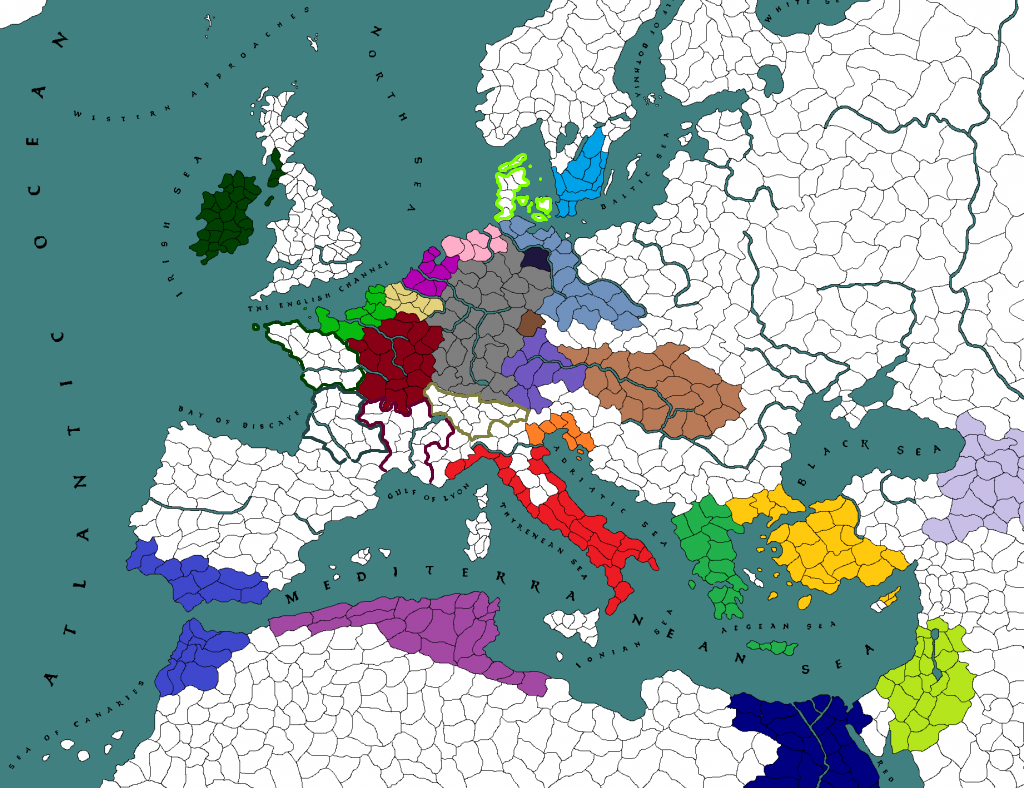
Map updated :ugeek:

User avatar
Danarian
Diplomat
 
Posts: 805
Founded: Jan 06, 2012
Ex-Nation

Postby Danarian » Sun Feb 03, 2013 10:12 pm

Annaliea wrote:
Berate wrote:-snip-

First of all, welcome to Nationstates! I hope you enjoy your time here, and the best advice I can give you is to always be detailed! :) In terms of your application, it does need a bit of work. To be honest, since this is your first ever RP, I would reccomend making a new application for a place that won't be the biggest source of tension for two of the RP's biggest powers ;) I would reccomend a Russian or Central European state (preferably Russian) and I would advise you to do a bit of research into the history of your chosen territories so that you can accurately speak on them and their customs/attitudes etc.

We could also use a Kingdom of France...?
Danarian Federation of Clans Embassies | Danarian Federation Factbook
The proper demonym for the Danarian People is: Danarii. 'Danarian' is the adjective form of the word Danarii and used when addressing individuals and smaller-groups (less) formally.

"Once is happenstance, twice is coincidence, three times is your[...]companion being a f*cktard." ~ Marshall Bailey, Quantum Castaways - Ch IX.

User avatar
Danarian
Diplomat
 
Posts: 805
Founded: Jan 06, 2012
Ex-Nation

Postby Danarian » Sun Feb 03, 2013 10:14 pm

Annaliea wrote:Map updated :ugeek:

What happened to the Empire of Barcelonia?
Danarian Federation of Clans Embassies | Danarian Federation Factbook
The proper demonym for the Danarian People is: Danarii. 'Danarian' is the adjective form of the word Danarii and used when addressing individuals and smaller-groups (less) formally.

"Once is happenstance, twice is coincidence, three times is your[...]companion being a f*cktard." ~ Marshall Bailey, Quantum Castaways - Ch IX.

User avatar
Arthurista
Minister
 
Posts: 2313
Founded: Sep 04, 2012
Ex-Nation

Postby Arthurista » Sun Feb 03, 2013 10:19 pm

Annaliea wrote:
Arthurista wrote:-snip-


Arturista I am happy to say you are ACCEPTED! Feel free to make your first post on the IC, though keep in mind that your first post especially should be extremely detailed and fairly long, see a few of the other opening posts from other nations to see what I mean. :)

Berate wrote:-snip-


First of all, welcome to Nationstates! I hope you enjoy your time here, and the best advice I can give you is to always be detailed! :) In terms of your application, it does need a bit of work. To be honest, since this is your first ever RP, I would reccomend making a new application for a place that won't be the biggest source of tension for two of the RP's biggest powers ;) I would reccomend a Russian or Central European state (preferably Russian) and I would advise you to do a bit of research into the history of your chosen territories so that you can accurately speak on them and their customs/attitudes etc.


Thanks! I'll get working on it then.

Can I make a request? Maybe these guys should be between Greece and Hungary as an NPC?

Also, what year are we up to now?
Last edited by Arthurista on Sun Feb 03, 2013 10:27 pm, edited 2 times in total.

User avatar
Saubre
Diplomat
 
Posts: 728
Founded: Jan 21, 2012
Ex-Nation

Postby Saubre » Sun Feb 03, 2013 10:29 pm

Okay, Annaliea I have finished my factbook! :) It's really long so I decided to code it.

Code: Select all
[align=center]Factbook

[b]Nation Name:[/b] Imperium Romanum
[b]Nation Leader:[/b] Flavius Claudius Caesar Augustus Africanus
[b]Government Type:[/b] Autocratic Monarchy, Empire
[b]Heraldry (Nation Flag/Symbol):
[/b][img]http://i60.photobucket.com/albums/h19/CainRae/RomanRepublic.jpg[/img]
[b]Population:[/b] 4,860,000
[b]Religion:[/b] Roman Catholicism in most of the Imperium, though a small minority of Romans still worship the Old Gods of Roman Mythology.

[b]History[/b]

The crowning of Odoacer as king marked the fall of the fall of Rome in 476 AD. Having a barbarian as King of Italia did not sit well with the weakened Senatum Romanum, resulting in the formation of several Legions in an effort to revive Rome and the Republic. Though, their plans were cut short when Theodoric invaded with his Ostrogoth army in 489 AD. A bloody war followed, with the new Roman Legions helping Odoacer repulse and utterly destroy the invading Ostrogoth army and killing Theodoric.

In 500 AD, the Legio VII Gemina entered Ravenna, the Kingdom of Italy's capital, under the pretext of "reinforcing" the garrison. A bloody betrayal followed where the legionaries sacked the city from the inside and killed Odoacer and his family when they were having a banquet. The new Roman Republic followed up its victory with advances all across Italia, in an effort to recapture their lost territories.

For over two centuries the new Republic prospered, but by 750 AD, greed and corruption were eating away at Rome from the inside. That very same year, a popular Roman general, Flavius Maxentius, an heir to the Flavian dynasty, was given the seat of Consul with the people's support. He crowned himself Emperor the next day, to the disapproval of the Senatum. A long power struggle followed, with Flavius eventually ending up as victor over members of the Senatum in 758 AD. That marked the day the new Imperium Romanum was born.

[b] Political System[/b]

[i]Senatum Romanum[/i]
 – The Senatum Romanum is a policitcal institution of the Imperium Romanum mostly made up of wealthy patricians over thirty years of age. The Senate had the power to pass decrees in the past known as senatus consulta, which is actually advice from the Senate to a magistrate, though now these powers are not practiced. While these advices did not hold legal force, they usually were obeyed during the Republic.

Through these advices, the senate directed the magistrates, including the Consuls in their handling of military campaigns. The Senate also held power over the civil government in Rome, shown with regards to its management of state finances, as only it could authorize the disbursal of public fund from the treasury.

During the rebirth of the Roman Republic, the ancient powers of the Senate were restored until after the Second Roman Republic eventually fell in favor of the Imperium. After the emergence of the Imperium Romanum, the constitutional balance of power shifted from the Senatum Romanum to the Caesar.

Despite retaining its legal position as under the Republic, in practice, however the actual political power the Senatum holds is inconsequential, as the Caesar holds the true power in the state. Senators could still give advice to the Emperor about certain matters; however, whether the Emperor follows the advice is up to him in the end.  As such, membership in the Senate is now sought after by those seeking prestige and social standing, rather than actual authority.

[i]Caesar[/i]
 – The Emperor or Caesar is the head of government in the Imperium. They enjoys limitless power within their sphere of influence, their word is law and it must be followed. However the Caesars refuse to refer to themselves as “Kings” or monarchs. Instead, claiming to be the leader of the Republic, exercising their fully legal and legislative powers under the guidance and approval of the Senatum.

[i]The Pope[/i]
 – The Pope is the religious leader of all Christendom and the Sancta Sede. He also acts as an entity independent from the Ceasar and the Senate. Though, despite not having any political powers, he holds an encompassing influence over both the Sancta Sede and many members of the Senatum Romanum. In the past, his influence has directly challenged the power of the Caesar, resulting in minor conflicts concerning the differing Papal and Imperial Interest. His influence is also not limited to Rome’s borders, spanning all lands where Catholicism has taken root.

[i]The Vaticanus/Sancta Sede[/i]
 - The Sancta Sede or Holy See is the pontifical jurisdiction of the Catholic Church in the city of Rome. The Roman Bishop is the undeniable leader of the church, commonly known to many as the Pope. To decide any Papal action, a vote is taken between its members, a religious counterpart to the Senatum Romanum.

Rome is the prominent pontifical see of the Church, containing the central government, including various branches essential to administration. Diplomatically, the Holy See acts and speaks for the Pope and all of Christendom in Papal affairs.

[b]Military[/b]
[img]http://johnnyshumate.files.wordpress.com/2012/10/sneakpeek.jpg[/img]
The once uncontested Roman Legions are now a shadow of their former selves due to military incompetence and mismanagement during the late Empire. However, despite their decline the Roman Legions are still one of the best fighting forces in the world, boasting one of the most disciplined and efficient professional ground force since Antiquity.

[color=#FF0000][b]Roman Army[/b][/color]

Operating as Post-Marian Legions in both training and doctrine, the current Roman Legions are trained in an array of tactics and formations, having almost unmatched unit discipline when it comes to battle. Self discipline however varies as individual combat is not a focus for the legionaries. The basic pay for common legionaries has been significantly decreased however, and the Legions still use the same equipment used during the late Empire.

[i]Organization [/i] -
[u]Legions[/u]:The Roman army is divided into several Legions. Each Legio numbers about 5,200 men each, divided into ten [i]cohorts[/i] made up of heavy infantry known as [i]legionaries[/i]. Each cohort numbers 480 men total, divided into six [i]centuries[/i], numbering eighty men each. An exception lies with the [i]first cohort[/i], which boasts five double strength centuries out of its total six. Each Legio also includes a small cavalry attachment of [i]Equites[/i].

[u]Ranks[/u]: A century is distributed into ten [i]contubernia[/i] of eight men each. Each [i]contubernium[/i] is led by an enlisted man known as a [i]Decanus[/i]. While a [i]Centurion[/i] leads a century, totaling 59 Centurions per Legio, excluding the [i]Primus Pilus[/i].

The Primus Pilus is the Centurion of the first cohort, making him the Senior Centurion of the entire Legio. The Primus Pilus has a chance of later becoming a Praefectus Castrorum. When the primus pilus retired he would gain entry into the equestrian class.

The Legatus legionis is the commander of a Legio. The post was usually filled by a senator, appointed by the emperor, who holds command for three to four years, even more if he wishes. The legatus is also the provincial governor in a Roman province garrisoned by only one Legio.

Finally, the Legatus Augusti pro praetore, also known as the Imperial Legate, is the commander of two or more legions. The Imperial Legate also serves as the governor of the province in which the legions he commands are stationed. The Emperor himself is the only one who can appoint a Legatus Augusti.

[u]Cavalry[/u]:
[img]http://i49.tinypic.com/e5jihu.jpg[/img]
A small detachment of cavalry known as equites accompany each Legio. Most equites originate from the Equestrian Class with a few minor exceptions. Each Legio has only around 300 horsemen, divided into ten squadrons known as [i]turmae[/i] numbering thirty men each. The men of a turmae are led by a Decurion.

In battle, equites are used to disrupt and outflank enemy infantry and drive back the enemy's cavalry.

[i]Equipment[/i]: A fully equipped Roman legionary is armed with a shield known as a scutum, two javelins known as pila, a short sword known as a gladius, and sometimes a dagger called a pugio. Before engaging an enemy, the javelins would be thrown to disable their shields as the design of a pilum causes it to get stuck on a shield, rendering it useless. After both pila are thrown, the gladius would be drawn. Roman legionaries are trained to defend with the shield before thrusting with his sword, though the galius could also be used for slashing motions.

[color=#0040BF]Gladius[/color]
-Standard issue short swords for all Roman legionaries, fully known as the Gladius Hispaniensis or Spanish sword. The blade itself is about two feet long, not including the hilt.
[color=#0040BF]Oval Scutum[/color]
-Standard issue shield for legionaries made of hard wood. It is light enough to hold in one hand along with a large height and width covering the entire wielder, making him very unlikely to get hit by missile fire and in hand-to-hand combat.
[color=#0040BF]Lorica Hamata[/color]
-Chain mail armor worn by common legionaries.
[color=#0040BF]Lorica Segmentata[/color]
-Segmented armor given to Centurions and higher ranks.
[color=#0040BF]Pilum[/color]
-A light javelin generally about two metres long, consisting of an iron shank about seven milimeters in diameter and sixty cm long with a pyramidal head. The weapon has a hard pyramidal tip but the shank itself is not hardened. The softness of the shank would cause it to bend after impact, thus rendering the weapon useless to the enemy. If the pilum struck the shield of an enemy it would embed itself into the shield's fabric, and this along with the bending of the shank would cause the shield to become unwieldy, forcing the enemy to discard it or waste time trying to pull it out.
[color=#0040BF]Intercisa Helmet[/color]
-Barbarian type helmet worn by legionaries.
[color=#0040BF]Breastplate Armor[/color]
-Armor worn by the highest of ranks such as the Legatus and Legatus Augusti

[i]List of Roman Legions[/i] - The army consists of 12 Roman Legions, numbering about 62,400 men in total. The Senatum has the power to form more Legions rapidly in times of great conflict.

Legio I Germanica
Legio II Sabina
Legio III Cyrenaica
Legio III Gallica
Legio IV Macedonica
Legio IV Scythica
Legio V Alaudae (Larks)
Legio VI Ferrata (Ironclad)
Legio VII Gemina
Legio VIII Augusta
Legio IX Hispana Triumphalis (Triumphant)
Legio X Fretensis (of the sea strait)
Legio XI Abyssus
Legio XII Victrix (Victorious)

[color=#FF0000][b]Roman Navy[/b][/color]

Rome is primarily a land based power and its people prefer to stay on the hard ground. As a result, the Senatum and the Caesar have never fully embraced or respected the Roman fleet, otherwise known as the [i]Classis[/i]. Even at the height of the Pax Romana, the navy had never been a separate force from the army, instead the classis was treated as the sea branch of the Roman Legions and they still are.

Following the same organization of Augustus, Rome had rebuilt its navy, dividing it into two large fleets or [i]classibus[/i]. The two classibus act as direct naval arms for the Emperor, hence why the two classibus are referred to as praetorian fleets. The bulk of the fleet was soon subdivided into two praetorian fleets at Misenensis and Ravenna.

[u]classis Ravennas[/u] -
6 quinqueremes
10 quadriremes
28 triremes

[u]classis Misenensis[/u] -
1 hexeres
5 quinqueremes
13 quadriremes
19 triremes

The two praetorian fleet's operations are not secluded to waters near Italia, rather the two classibus operate throughout the Mediterranean, whether its hunting pirates or protecting trade routes. During times of war when Rome requires a much larger fleet, the Caesar usually turns to offering rewards to privateers to harass enemy ships rather than making entirely new classis in order to reduce costs.

[b]Trade[/b]

The Imperium Romanum acts as the gate to Europe with goods traveling through its borders before reaching Northwards. Wealth and power flows through the very waters of the Tiber, with Ostia Antica acting as its mouth. The recently captured city of Genua is also slowly growing, receiving trade goods everyday and prospering under Roman rule thanks to its expanded harbor.

[u]Exports[/u]: Wine, Glass, Olive Oil, and Gold
[u]Imports[/u]: Marble, Grain, Pepper, Cotton, and Silk

[b]Culture[/b]

Much of Rome's population live in heavily populated urban areas in contrast to the rest of Central Europa. The city of Rome is a well oiled machine adorned with monumental structures of grand proportions depicting past Emperors and many others honoring the people such as the [i]Forum Romanum[/i]. The city is also a capital of art and literature, having several theaters, gymnasiums, bathhouses, and brothels.

The large population inside urban cities requires a steady amount of food from the farmers, including grain, vegetables and fruit. Meat and fish are usually only eaten by the wealthy as the plebeian masses can't afford such luxuries. The aqueducts are currently being restored to working condition, but a fair number of them are bringing massive amounts of water to the cities in order to feed the people inside.

Latin is the predominant language of the Imperium with over ninety-eight percent of the population speaking such. While, the recently emerged Italian is being snuffed out and crushed under the Roman banner, resulting in Italian turning into a forgotten language. The patricians and much of the Roman aristocracy is able to speak Greek fluently, admiring the Hellenistic culture of their Eastern neighbors. There is now a rising Greek culture rising within Rome's wealthy, having lost their love of the Hellenistic after the fall of the first Imperium. Now most chefs, decorators, secretaries, doctors, and hairdressers originate from the Greek East.

Christianity is the official religion of the Empire. Many Romans are firm believers of the one true god, with only a few still clinging on the Gods of Old. Religions other than Christianity and Roman paganism are usually frowned upon, especially Islam and Hebrew to an extent.
In the end, all Romans share a single feeling, superiority over all barbarian races and love for Rome.[/align]


Also, here is the non-coded factbook for those who want to read it. :lol:
Factbook

Nation Name: Imperium Romanum
Nation Leader: Flavius Claudius Caesar Augustus Africanus
Government Type: Autocratic Monarchy, Empire
Heraldry (Nation Flag/Symbol):
Image
Population: 4,860,000
Religion: Roman Catholicism in most of the Imperium, though a small minority of Romans still worship the Old Gods of Roman Mythology.

History

The crowning of Odoacer as king marked the fall of the fall of Rome in 476 AD. Having a barbarian as King of Italia did not sit well with the weakened Senatum Romanum, resulting in the formation of several Legions in an effort to revive Rome and the Republic. Though, their plans were cut short when Theodoric invaded with his Ostrogoth army in 489 AD. A bloody war followed, with the new Roman Legions helping Odoacer repulse and utterly destroy the invading Ostrogoth army and killing Theodoric.

In 500 AD, the Legio VII Gemina entered Ravenna, the Kingdom of Italy's capital, under the pretext of "reinforcing" the garrison. A bloody betrayal followed where the legionaries sacked the city from the inside and killed Odoacer and his family when they were having a banquet. The new Roman Republic followed up its victory with advances all across Italia, in an effort to recapture their lost territories.

For over two centuries the new Republic prospered, but by 750 AD, greed and corruption were eating away at Rome from the inside. That very same year, a popular Roman general, Flavius Maxentius, an heir to the Flavian dynasty, was given the seat of Consul with the people's support. He crowned himself Emperor the next day, to the disapproval of the Senatum. A long power struggle followed, with Flavius eventually ending up as victor over members of the Senatum in 758 AD. That marked the day the new Imperium Romanum was born.

Political System

Senatum Romanum
– The Senatum Romanum is a policitcal institution of the Imperium Romanum mostly made up of wealthy patricians over thirty years of age. The Senate had the power to pass decrees in the past known as senatus consulta, which is actually advice from the Senate to a magistrate, though now these powers are not practiced. While these advices did not hold legal force, they usually were obeyed during the Republic.

Through these advices, the senate directed the magistrates, including the Consuls in their handling of military campaigns. The Senate also held power over the civil government in Rome, shown with regards to its management of state finances, as only it could authorize the disbursal of public fund from the treasury.

During the rebirth of the Roman Republic, the ancient powers of the Senate were restored until after the Second Roman Republic eventually fell in favor of the Imperium. After the emergence of the Imperium Romanum, the constitutional balance of power shifted from the Senatum Romanum to the Caesar.

Despite retaining its legal position as under the Republic, in practice, however the actual political power the Senatum holds is inconsequential, as the Caesar holds the true power in the state. Senators could still give advice to the Emperor about certain matters; however, whether the Emperor follows the advice is up to him in the end. As such, membership in the Senate is now sought after by those seeking prestige and social standing, rather than actual authority.

Caesar
– The Emperor or Caesar is the head of government in the Imperium. They enjoys limitless power within their sphere of influence, their word is law and it must be followed. However the Caesars refuse to refer to themselves as “Kings” or monarchs. Instead, claiming to be the leader of the Republic, exercising their fully legal and legislative powers under the guidance and approval of the Senatum.

The Pope
– The Pope is the religious leader of all Christendom and the Sancta Sede. He also acts as an entity independent from the Ceasar and the Senate. Though, despite not having any political powers, he holds an encompassing influence over both the Sancta Sede and many members of the Senatum Romanum. In the past, his influence has directly challenged the power of the Caesar, resulting in minor conflicts concerning the differing Papal and Imperial Interest. His influence is also not limited to Rome’s borders, spanning all lands where Catholicism has taken root.

The Vaticanus/Sancta Sede
- The Sancta Sede or Holy See is the pontifical jurisdiction of the Catholic Church in the city of Rome. The Roman Bishop is the undeniable leader of the church, commonly known to many as the Pope. To decide any Papal action, a vote is taken between its members, a religious counterpart to the Senatum Romanum.

Rome is the prominent pontifical see of the Church, containing the central government, including various branches essential to administration. Diplomatically, the Holy See acts and speaks for the Pope and all of Christendom in Papal affairs.

Military
Image
The once uncontested Roman Legions are now a shadow of their former selves due to military incompetence and mismanagement during the late Empire. However, despite their decline the Roman Legions are still one of the best fighting forces in the world, boasting one of the most disciplined and efficient professional ground force since Antiquity.

Roman Army

Operating as Post-Marian Legions in both training and doctrine, the current Roman Legions are trained in an array of tactics and formations, having almost unmatched unit discipline when it comes to battle. Self discipline however varies as individual combat is not a focus for the legionaries. The basic pay for common legionaries has been significantly decreased however, and the Legions still use the same equipment used during the late Empire.

Organization -
Legions:The Roman army is divided into several Legions. Each Legio numbers about 5,200 men each, divided into ten cohorts made up of heavy infantry known as legionaries. Each cohort numbers 480 men total, divided into six centuries, numbering eighty men each. An exception lies with the first cohort, which boasts five double strength centuries out of its total six. Each Legio also includes a small cavalry attachment of Equites.

Ranks: A century is distributed into ten contubernia of eight men each. Each contubernium is led by an enlisted man known as a Decanus. While a Centurion leads a century, totaling 59 Centurions per Legio, excluding the Primus Pilus.

The Primus Pilus is the Centurion of the first cohort, making him the Senior Centurion of the entire Legio. The Primus Pilus has a chance of later becoming a Praefectus Castrorum. When the primus pilus retired he would gain entry into the equestrian class.

The Legatus legionis is the commander of a Legio. The post was usually filled by a senator, appointed by the emperor, who holds command for three to four years, even more if he wishes. The legatus is also the provincial governor in a Roman province garrisoned by only one Legio.

Finally, the Legatus Augusti pro praetore, also known as the Imperial Legate, is the commander of two or more legions. The Imperial Legate also serves as the governor of the province in which the legions he commands are stationed. The Emperor himself is the only one who can appoint a Legatus Augusti.

Cavalry:
Image
A small detachment of cavalry known as equites accompany each Legio. Most equites originate from the Equestrian Class with a few minor exceptions. Each Legio has only around 300 horsemen, divided into ten squadrons known as turmae numbering thirty men each. The men of a turmae are led by a Decurion.

In battle, equites are used to disrupt and outflank enemy infantry and drive back the enemy's cavalry.

Equipment: A fully equipped Roman legionary is armed with a shield known as a scutum, two javelins known as pila, a short sword known as a gladius, and sometimes a dagger called a pugio. Before engaging an enemy, the javelins would be thrown to disable their shields as the design of a pilum causes it to get stuck on a shield, rendering it useless. After both pila are thrown, the gladius would be drawn. Roman legionaries are trained to defend with the shield before thrusting with his sword, though the galius could also be used for slashing motions.

Gladius
-Standard issue short swords for all Roman legionaries, fully known as the Gladius Hispaniensis or Spanish sword. The blade itself is about two feet long, not including the hilt.
Oval Scutum
-Standard issue shield for legionaries made of hard wood. It is light enough to hold in one hand along with a large height and width covering the entire wielder, making him very unlikely to get hit by missile fire and in hand-to-hand combat.
Lorica Hamata
-Chain mail armor worn by common legionaries.
Lorica Segmentata
-Segmented armor given to Centurions and higher ranks.
Pilum
-A light javelin generally about two metres long, consisting of an iron shank about seven milimeters in diameter and sixty cm long with a pyramidal head. The weapon has a hard pyramidal tip but the shank itself is not hardened. The softness of the shank would cause it to bend after impact, thus rendering the weapon useless to the enemy. If the pilum struck the shield of an enemy it would embed itself into the shield's fabric, and this along with the bending of the shank would cause the shield to become unwieldy, forcing the enemy to discard it or waste time trying to pull it out.
Intercisa Helmet
-Barbarian type helmet worn by legionaries.
Breastplate Armor
-Armor worn by the highest of ranks such as the Legatus and Legatus Augusti

List of Roman Legions - The army consists of 12 Roman Legions, numbering about 62,400 men in total. The Senatum has the power to form more Legions rapidly in times of great conflict.

Legio I Germanica
Legio II Sabina
Legio III Cyrenaica
Legio III Gallica
Legio IV Macedonica
Legio IV Scythica
Legio V Alaudae (Larks)
Legio VI Ferrata (Ironclad)
Legio VII Gemina
Legio VIII Augusta
Legio IX Hispana Triumphalis (Triumphant)
Legio X Fretensis (of the sea strait)
Legio XI Abyssus
Legio XII Victrix (Victorious)

Roman Navy

Rome is primarily a land based power and its people prefer to stay on the hard ground. As a result, the Senatum and the Caesar have never fully embraced or respected the Roman fleet, otherwise known as the Classis. Even at the height of the Pax Romana, the navy had never been a separate force from the army, instead the classis was treated as the sea branch of the Roman Legions and they still are.

Following the same organization of Augustus, Rome had rebuilt its navy, dividing it into two large fleets or classibus. The two classibus act as direct naval arms for the Emperor, hence why the two classibus are referred to as praetorian fleets. The bulk of the fleet was soon subdivided into two praetorian fleets at Misenensis and Ravenna.

classis Ravennas -
6 quinqueremes
10 quadriremes
28 triremes

classis Misenensis -
1 hexeres
5 quinqueremes
13 quadriremes
19 triremes

The two praetorian fleet's operations are not secluded to waters near Italia, rather the two classibus operate throughout the Mediterranean, whether its hunting pirates or protecting trade routes. During times of war when Rome requires a much larger fleet, the Caesar usually turns to offering rewards to privateers to harass enemy ships rather than making entirely new classis in order to reduce costs.

Trade

The Imperium Romanum acts as the gate to Europe with goods traveling through its borders before reaching Northwards. Wealth and power flows through the very waters of the Tiber, with Ostia Antica acting as its mouth. The recently captured city of Genua is also slowly growing, receiving trade goods everyday and prospering under Roman rule thanks to its expanded harbor.

Exports: Wine, Glass, Olive Oil, and Gold
Imports: Marble, Grain, Pepper, Cotton, and Silk

Culture

Much of Rome's population live in heavily populated urban areas in contrast to the rest of Central Europa. The city of Rome is a well oiled machine adorned with monumental structures of grand proportions depicting past Emperors and many others honoring the people such as the Forum Romanum. The city is also a capital of art and literature, having several theaters, gymnasiums, bathhouses, and brothels.

The large population inside urban cities requires a steady amount of food from the farmers, including grain, vegetables and fruit. Meat and fish are usually only eaten by the wealthy as the plebeian masses can't afford such luxuries. The aqueducts are currently being restored to working condition, but a fair number of them are bringing massive amounts of water to the cities in order to feed the people inside.

Latin is the predominant language of the Imperium with over ninety-eight percent of the population speaking such. While, the recently emerged Italian is being snuffed out and crushed under the Roman banner, resulting in Italian turning into a forgotten language. The patricians and much of the Roman aristocracy is able to speak Greek fluently, admiring the Hellenistic culture of their Eastern neighbors. There is now a rising Greek culture rising within Rome's wealthy, having lost their love of the Hellenistic after the fall of the first Imperium. Now most chefs, decorators, secretaries, doctors, and hairdressers originate from the Greek East.

Christianity is the official religion of the Empire. Many Romans are firm believers of the one true god, with only a few still clinging on the Gods of Old. Religions other than Christianity and Roman paganism are usually frowned upon, especially Islam and Hebrew to an extent.
In the end, all Romans share a single feeling, superiority over all barbarian races and love for Rome.
Last edited by Saubre on Thu Feb 07, 2013 3:45 pm, edited 8 times in total.

User avatar
Songhia
Ambassador
 
Posts: 1255
Founded: Mar 27, 2012
Ex-Nation

Postby Songhia » Sun Feb 03, 2013 10:45 pm

Annaliea wrote:Map updated :ugeek:


You didn't put on my acquisitions...
Diplomatic Program of the Republic of Songhia - Factbook
Whenever you see a word ending in -e or -ey, it's supposed to end in é - ie the city of Yandé, Brg. Simon Touré, and so on.
I also control Aurinsula and sometimes post interchangeably with it.

User avatar
Annaliea
Chargé d'Affaires
 
Posts: 500
Founded: Dec 07, 2012
Ex-Nation

Postby Annaliea » Mon Feb 04, 2013 12:09 am

Just asking Arthurista, given that I took on your language and culture (the religion part I concede, although I'm pretty meh with religious oppression) how did I oppress you culturally? I'm thinking that given our close cultural links and proximity to eachother, a political thawing is in order :)

User avatar
Arthurista
Minister
 
Posts: 2313
Founded: Sep 04, 2012
Ex-Nation

Postby Arthurista » Mon Feb 04, 2013 12:14 am

Annaliea wrote:Just asking Arthurista, given that I took on your language and culture (the religion part I concede, although I'm pretty meh with religious oppression) how did I oppress you culturally? I'm thinking that given our close cultural links and proximity to eachother, a political thawing is in order :)


It's mainly religion - see this chappie in particular: http://en.wikipedia.org/wiki/Theodosius_I

The Hellenic League declared independence in 400 after he died, in large part because of his oppressive policies towards Pagans.There may've been some detente by now, but cultural and historical bias runs deep. Plus, the whole fighting external tyranny thing is the whole raison d'etre of the League. The Byzantines served as a reliable bogeyman for many of the members, second to the Bulgarians, even though in practice there's probably plenty of perfectly friendly trading between the countries.

TBH, they're mostly just worried about attacking an Orthodox nation with the Byz just around the corner.
Last edited by Arthurista on Mon Feb 04, 2013 12:20 am, edited 4 times in total.

User avatar
Annaliea
Chargé d'Affaires
 
Posts: 500
Founded: Dec 07, 2012
Ex-Nation

Postby Annaliea » Mon Feb 04, 2013 12:21 am

Arthurista wrote:
Annaliea wrote:Just asking Arthurista, given that I took on your language and culture (the religion part I concede, although I'm pretty meh with religious oppression) how did I oppress you culturally? I'm thinking that given our close cultural links and proximity to eachother, a political thawing is in order :)


It's mainly religion - see this chappie in particular: http://en.wikipedia.org/wiki/Theodosius_I

The Hellenic League declared independence in 400 after he died, in large part because of his oppressive policies towards Pagans.There may've been some detente by now, but cultural and historical bias runs deep. Plus, the whole fighting external tyranny thing is the whole raison d'etre of the League. The Byzantines served as a reliable bogeyman for many of the members, second to the Bulgarians, even though in practice there's probably plenty of perfectly friendly trading between the countries.

TBH, they're mostly just worried about attacking an Orthodox nation with the Byz just around the corner.


Cool, I will respond tomorrow, as it is pretty late here. I'll cya then!

User avatar
Arthurista
Minister
 
Posts: 2313
Founded: Sep 04, 2012
Ex-Nation

Postby Arthurista » Mon Feb 04, 2013 2:46 pm

Nation Name: Hellenic League


Nation Leader: Philip, Archon of the Hellenic League


Heraldry: Heraldry


Population: 2 million


Religion: Paganism


Nation History

The cities of Greece never lost a measure of autonomy when under Roman rule. As the Empire’s power waned, the Greeks had to look to their own for defence. The city states of Southern Greece had to rebuild their citizen armies of armoured hoplites to stave off the barbarian menace, banding together to form a mutual defence alliance known as the Hellenic League in AD400.


Meanwhile, in the northern Macedonian plains, as law and order broke down in the collapse of the Roman Empire, a former Roman cavalry officer turned mercenary adventurer, claiming to be a descendant of Alexander the Great himself, started to gather supporters. Before long, he carved out a small kingdom around the city of Pella and had himself crowned the Basilleus (king) of Macedon. Things were tense between the Kingdom and the League at first, but when the Bulgars menaced Greece in the 700s, the two powers joined forces to defeat the invaders. Thus began the cooperation between them that would eventually led to accession of Macedon within the Hellenic League in the year AD800.

Since then, things have been relatively stable. The presence of potential threats from without – mainly the Bulgarians but also the Byzantine Empire, the former subjugator of Greece, kept the Hellenes relatively united rather than revert to the constant internecine warfare of pre-Alexander times. This does not mean, however, that tensions between cities and states have disappeared. More likely than not, given the necessary stimulus, old rivalries may flare up again in some unpredictable form.

Economy

Astride the trade route between Byzantium and the East in one direction, and Italy and the rest of Western Europe on the other, wealth flowed into the coffers of the High Kingdom’s constituent states, protected from pirates by the small but elite Hellenic League navy. Secondary industries include the export of wine and olive oil as well as Athens’ silver mine.


Politics

After the success in repelling the Bulgars, the Hellenic League assumed its current form with the inclusion of the Kingdom of Macedon. Each member could send one representative to the League Council at Delphi, where they elect an Archon for a five year term. There were hundreds of members, the smallest of them not much larger than fortified villages. As such, most of the decision-making power is concentrated in the hands of the ‘big five’ – Athens, Sparta, Thebes, Corinth and Macedon.
Each member is completely autonomous in internal affairs and there is a great diversity of political systems. Athens was run as a democracy, Corinth and Thebes were oligarchies, Macedon was a feudal monarchy influenced by the Normans while Sparta was a sort of forerunner of the modern totalitarian state led by a pair of co-kings, supervised by the Ephors, whose power over the the Helots slave caste was enforced by a secret police (see the Spartan Constitution). Each state maintains its own armed forces. In wartime, they all undertake under the constitution to contribute a number of its troops to the League. The Archon of the League represents it in foreign affairs and chairs the Council’s meetings. He also appoints the league’s military leaders – the Strategos (C-in-C land) and Navarch (C-in-C navy).


Leader History

Philip was a relatively young aristocrat from Argos. Through sheer ambition, hard work, charisma and cleverness, quickly rose through the ranks of the oligarchy to become appointed Argos’s representative at Delphi. The early death of the last Archon before the end of his term led to the a fresh election. The smaller members, tired of the big five running roughshod over them all the time, overwhelmingly supported the dark horse Philip. Expected to be a relatively weak character, beholden to the big five, he used the same characteristics that helped him climb to the top in his hometown to the full and, defying the expectations of all observers, had a fairly successful first year. Now in the second year of his term, many expect him to become one of the best leaders the League has ever had. His ultimate goal, besides defending Greece, was to divide the Big Five members while cementing the loyalty of the smaller states towards the League, using them to counterbalance the major powers and thus increasing the power of the League vis-à-vis the cities.


Philip appointed the 24 years old Queen Olympia II of Macedon to be the League’s Strategos, a move which surprised observers even more than his own ascension. An only child, she received the best political and military education his parents could afford. Ascending to the throne at the age of 16, after her father’s murder (Macedon, like the Ptolemies, had less scruples about females inheriting the throne than the Southern cities), her first act was to ruthlessly obliterate the rebellion led by his Uncle, the Count of Vergina. Two years later, when faced with a fresh Bulgar invasion, it was Olympia’s Macedonian contingent which turned the tide at the decisive moment when the other League troops were in headlong retreat. Besides her undoubted ability, especially in the sphere of cavalry command which most southern generals fail to understand, there were significant political advantages for appointing her as well. Macedon remained a relative outsider, economically and culturally far less influential than the cities of the South. This moves thus helps to cement Macedon’s loyalty firmly to the League rather than help the other members of the ‘big five’ in overpowering the smaller members. Furthermore, the more conservative cities such as Athens were scandalised by her appointment due to her gender and age. On the other hand, Sparta, far more pragmatic and egalitarian, was far more accepting. As such, her appointment led to splits in opinion among the major cities, again helping to prevent them from collaborating with each other against the smaller states or the League itself.


Culture

The League attempts to revive the glories of Classical and Hellenistic Greece. The most important change was religion. Following the efforts of the Roman Emperor Julian the Apostate to revitalise paganism to counter the spread of Christianity, Greece enjoyed a Pagan revival and, after the split from the Romans, adopted it wholeheartedly as a symbol of its new-found independence from the Eastern Empire. The statues of the gods re-occupied their places of prominence in temples. The Oracle of Delphi and the Olympic games were re-established. The great Academy of Athens was reopened and became the intellectual hub of the Mediterranean, where scholars debated endlessly on the philosophies of Plato and Aristotle, the science of Ptolemy and the Mathematics of Pythagoras.

The Pagan revival was simultaneously led to the persecution of Trinitarian Christians. The Pagan authorities saw them as exclusivist and a menace to knowledge and Greek Paganism, especially since the Eastern Empire, their former overlord, persecuted Paganism in the name of Trinitarian Christianity under Emperors such as Theodosius I. They were more tolerant of Arians, Jews and Muslims, mostly to counterbalance the Trinitarian Eastern Empire.


In terms of language, the lingua franca across the federation was an evolved form of Koine Greek. In the North, however, Norman French is becoming fashionable among the aristocracy due to the introduction of feudalism. In the South, especially in Athens, a Classical Attic Greek revival is taking place. Most educated individuals, whether north or south, can usually speak Greek, Latin and often some French.


Military

Army
Strategos (C-in-C Army): Queen Olympia of Macedon

The City States of the south rebuilt the old hoplite armies of classical times, updated with modern technology. The bronze helmets and breastplates, for example, were replaced by iron helmets and chainmail hauberks. Their xiphos swords were remodelled on the Roman gladius. Supported by militia crossbowmen formed from citizens who could not afford the full gear of hoplites (they were cheap and easily trained to use, perfect for militiamen. After all, Greece did invent the crossbow in the West)), as well as mercenary Cretan archers using Asiatic recurve bows. They were adept at siege warfare, fielding complex field artillery from old Greco-Roman designs. Their cavalry was relatively weak, mostly small units of light horsemen from the cities’ upper class, especially among states like Thebes located on the Boeotian plain. Known as the (Hippeis, armed with iron helmet and short mail shirt and armed with javelins, spears and long sword, essentially adopting the gear of the old Roman cavalry. The hoplites and supporting light forces were overall decent troops, with high morale owing to their civic pride, but slightly risk and casualty averse, especially given the fractious politics of the states. The Spartans were an elite, but their numbers were relatively few and, more often than not, used to hold a vital part of the line or used at the decisive point. Even more elite were the Theban Sacred Band, a unit of 150 pairs of male lovers, considered unbreakable in battle (see http://en.wikipedia.org/wiki/Battle_of_ ... 40;338_BC)).

In times of war, many cities choose to replace part or the entirety of their obligated contribution of citizen militia with mercenary hoplites or missile troops, similar to the ‘Ten Thousand’ in Xenophon’s Anabasis. This allows for longer campaigns, plus compared to the part timers they would typically be battle-hardened troops, although their loyalty was often suspect, especially if the battle goes against them.


The Kingdom of Macedonia in the North developed its military differently. In the plains of Northern Greece, cavalry has always played a larger role than in the south. The influx of Carolingian and Norman mercenaries slowly led to the transition into a feudal kingdom of the Western European style, with heavy mail-clad knights and men-at-arms. The most elite of these knights were the Companion Cavalry, a chivalric order modelled on Alexander the Great’s battle-winning force, as well as knights from Thessaly. The Prodromoi were light horsemen, wearing short chainmail shirts, riding unbarded geldings and equipped with spears and sword, supplementing the heavy force. They also had a peasant militia which fielded long pikemen in the historical Macedonian model as well as crossbows to complement the mounted elements. These Phalanxes were impregnable from the front, but inflexible and vulnerable to flanking. Being peasant conscripts rather than the urban militia of the southern cities, albeit ones which were seasonally drilled, they were decent when well supported, but would quickly melt away if things start to go wrong, especially if the enemy could exploit gaps in the line in rough terrain, such as at the Battle of Pydna. The sheer expense of outfitting the heavy horse, as well as the inefficiencies of a feudal economy, means that the small kingdom could only afford to provide for 3,000 knights, men-at-arms and medium cavalry at full mobilisation. Its overall military strength is weaker than that of the Southern cities combined.

Overall, the armies of Greece favoured cautious, conservative, defensive tactics over brilliant tactical manoeuvres, with an emphasis on holding and keeping ground as well as securing flank and rear. Although aggressive commanders such as Olympia may not like it, the sheer rarity of good Macedonian offensive cavalry means that they will only be risked in the most favourable or dire circumstances. Massed infantry must bear the brunt of any battle to come.


Navy
Navarch (C-in-C Navy): Admiral Dionysus of Corinth

Thermopylae may have been more famous, but Greece was in fact saved from Persian conquest by its decisive victory over the Persian fleet. The rich history of naval warfare continued on to the Peloponnesian war, when agile fleets of trireme from the allies of Athens and Sparta battled for dominance. During the Hellenistic era, the heirs of Alexander abandoned the trireme massive polyreme warships. The defeat of Cleopatra’s fleet at Actium by the smaller and far more manoueverable Roman laburnians led to a readoption of the smaller warship. The member state that contributed the largest naval force was Athens, followed closely by Corinth. The combined fleet of the Greek state, which is only mobilised in times of total war, is not large compared to those of Carthage, Byzantium or Egypt, but a very potent force nonetheless, commanded and crewed by battle-hardened officers and seamen who cut their teeth in countless skirmishes against pirates and raiders. However, no major pitched battle between fleets had ever been fought in the League's history and their only experience at large fleet manoeuvres were from their annual summer exercises. When fighting in defence of native shores, they were no less capable of defending Greece than their forefathers at Salamis.

Half the warships of the League’s naval strength are comprised of small biremes, the descendants of Roman liburnians. Equipped with two rows of oars, these relatively cheap and versatile ships were used mainly for commerce protection and anti-piracy operations, similar in role to the modern frigate. In pitched battles, they scouted for the battle fleet, guarded their flanks and worked in wolfpacks to swarm larger capital ships, similar to their predecessors at the Battle of Actium. For many smaller member states, these were the only ships they possessed.

Triremes were jack of all trades that fitted an important niche between the small biremes and the larger but slower quinquiremes, similar to the modern destroyer. They were fast and manvouerable enough for close quarter ramming battles and stable enough as a gunnery platform for light artillery. In fleet actions, they were the fast wings of the line, screening the heavier warships from enemies attempting to get into close quarters. Alternatively, they could use their phenomenol speed to flank the enemy lines and ram their lumbering heavy ships.

Quinquiremes were large capital ships, featuring four rows of oars, playing the role of a stable gunnery platform for heavy shipboard artillery. They would not be able to fight ramming actions at close quarters. As such, they are protected by small biremes and triremes from such enemy attempts. These expensive ships and their batteries catapults and ballistae were only built by the wealthiest of member states. Very few in number, they would only be deployed in large pitched battles. Some argue that they were white elephants which suck in money for endless maintenance and repair 90% of the time, while others praise their strategic value as a ‘fleet in being’, deterring enemies by serving as potent symbols of Greek naval power.

The Argo, a very large polyreme, was the flagship of the Athenian navy and, theoretically, the most powerful warship of the league. Constructed as Athens’ latest move in her game of one-upmanship with Corinth, it was modelled on the giant dreadnoughts of the Hellenistic era. Even proponents of the quinquireme doubted the usefulness of the exceedingly expensive vessel.

Normally, the biremes, as well as most triremes, are in constant use patrolling trade routes and hunting pirates. Larger warships are laid up in dry docks or on beaches, regularly maintained with state funds. Only in wartime would oarsmen, made up of militiamen from the lowest economic strata who could not afford any equipment, be recruited. Like in the army, the archers would be from the lower class citizens, the hoplites middle class and the officers aristocrats or plutocrats, depending on the city’s political system. The majority of ships are owned by the states themselves, although some are the possessions of private captains.
Last edited by Arthurista on Mon Feb 04, 2013 3:55 pm, edited 6 times in total.

User avatar
Bassyruk
Diplomat
 
Posts: 593
Founded: Mar 14, 2009
Ex-Nation

Postby Bassyruk » Mon Feb 04, 2013 3:27 pm

I'm afraid I don't have my factbook yet, but I do have a list of some important characters that could provide an easier reference and could possibly be put in the OP.

People in red are deceased.
Royal House of Hasdingar
Vandalirice* Gunderic III, 36
Queen Hilda, 34
Magnat Geslan, brother to Gunderic, 32
Fredbalum, brother to Gunderic, 31
Gunhilda, sister to Gunderic, 41
Blumarit, brother to Gunderic, 33
Trioua, sister to Gunderic, 29
Crown Prince Beremut, 19
Prince Guntari, 17
Prince Gudulo, 14
Prince Obadus, 5
Princess Auda, 20
Princess Odila, 16

*King of the Vandals, a short form

Royal Council
Kobikrag Iulico Harstalus, 51
Fleetmaster Hilderic Odilar, 37
Chief Chancellor Gelimar Faliwos, 33
Chief Steward Horatius Servillius, 42
Chief Justiciar Velarius Brutus, 29
Spymaster Marcus Caecilius, 31
Master of Tribal Affairs, Hammilco Micisperic, 27

Important Generals
General Valdemar Braulio, soon to be Lord Commander of Astralibia and the Eastern Wall, 43

Conspirators
King Mahasa IV of Gharmul, 33
Unknown Claimant
Orzog Ulimar, 55
Magnat Culmar, 20

Muslim Berber Army
Imam Hamekran, 37
Agizul, Second-in-Command, 20
Amalu, 35
Yugurten, 24
Ulama Itri, 42

Royal Court
Patriarch Ulimar, 32
Maxentius Servillius, Archon's Chief Steward
Makabar Numidianus, currently an advisor in Constantinople, 35
Marcus Antullius, diplomat, 33
Goar Deogar, 44
Tanca Narrus, 23

Miscellaneous
Theodoric Elytis, Greek merchant and convert, 30
Vilio and Ardo, merchants, 22
Freibal, Dock Agent
Thuramund, City Guard of Carthage

Will add more later, of course
Last edited by Bassyruk on Fri Feb 08, 2013 12:43 am, edited 3 times in total.

User avatar
Post War America
Powerbroker
 
Posts: 8193
Founded: Sep 05, 2010
Left-wing Utopia

Postby Post War America » Mon Feb 04, 2013 6:30 pm

Annaliea wrote:
Berate wrote:-snip-


First of all, welcome to Nationstates! I hope you enjoy your time here, and the best advice I can give you is to always be detailed! :) In terms of your application, it does need a bit of work. To be honest, since this is your first ever RP, I would reccomend making a new application for a place that won't be the biggest source of tension for two of the RP's biggest powers ;) I would reccomend a Russian or Central European state (preferably Russian) and I would advise you to do a bit of research into the history of your chosen territories so that you can accurately speak on them and their customs/attitudes etc.


Yeah man,or you could take control of one of these NPCs I just burdened myself with. Either way, it's better than being caught between the Vandals and the Romans. I am probably currently (and for the foreseeable future) the most potent state in Central Europe. I wouldn't want to tangle with either the Romans or the Vandals, being Sicily in that fight would result in you being pushed around like a rag doll. As for Russian states, Anny I've got someone roped into this, should I cattleprod this individual into finishing the app that was started a few weeks ago? Anyway to make a long message short. Please take over one of my NPCs, preferably Brandburg/Berlin/Whatever the appropriate name is, France of Belgium.
Ceterum autem censeo Carthaginem delendam esse
Proudly Banned from the 10000 Islands
For those who care
A PMT Social Democratic Genepunk/Post Cyberpunk Nation the practices big (atomic) stick diplomacy
Not Post-Apocalyptic
Economic Left: -9.62
Social Libertarian: -6.00
Unrepentant New England Yankee
Gravlen wrote:The famous Bowling Green Massacre is yesterday's news. Today it's all about the Cricket Blue Carnage. Tomorrow it'll be about the Curling Yellow Annihilation.

User avatar
Post War America
Powerbroker
 
Posts: 8193
Founded: Sep 05, 2010
Left-wing Utopia

Postby Post War America » Mon Feb 04, 2013 6:53 pm

Sorry but I got carried away with visually carving the map us some more, and have unfortunately come up with more NPCs/Premades for consideration. This time I asked myself "why does the Kingdom of France have such little territory?", and answered it, most of the new things I put up are for carving up modern France.

http://i867.photobucket.com/albums/ab23 ... 9d2d0d.png

Lime Green- The Danish Confederacy, a loose confederacy of the Nordic Danes. It is nominally led by the King of the Danes, but is more a loose collection of Danes who tolerate each other rather than face the more powerful Southern nations alone.

Dark Green- The Gallic Empire, a resurrection as an NPC of a Player made nation that I thought was kinda nifty.

Blue- The Kingdom of Bordeux. This is one of the other rival French Kingdoms that contests the Crown of "France United". It is the second most likely to have claim over this title, the first being the actual Kingdom of France.

Purple- The Kingdom of Massilia. This is a Kingdom that dominates Southern France and some of Northern Italy and Switzerland. This Kingdom is based on trade rather than conquest, and therefore has avoided war and despite a valid claim, has not pressed to take control of "France United".

Gold- The Swiss Confederation. After the fall of the 1st Roman Empire, the people of Switzerland reverted to their tribal ways, and are now a confederation of tribes with a nominal capital at Geneva in the South. the Swiss have returned from Tribal existence to a more, "civilized" way, but only barely.

So what do ya'll think if this. And perhaps most importantly, what does Anny think of this. Again, apologies for getting carried away.
Ceterum autem censeo Carthaginem delendam esse
Proudly Banned from the 10000 Islands
For those who care
A PMT Social Democratic Genepunk/Post Cyberpunk Nation the practices big (atomic) stick diplomacy
Not Post-Apocalyptic
Economic Left: -9.62
Social Libertarian: -6.00
Unrepentant New England Yankee
Gravlen wrote:The famous Bowling Green Massacre is yesterday's news. Today it's all about the Cricket Blue Carnage. Tomorrow it'll be about the Curling Yellow Annihilation.

User avatar
Post War America
Powerbroker
 
Posts: 8193
Founded: Sep 05, 2010
Left-wing Utopia

Postby Post War America » Mon Feb 04, 2013 6:55 pm

Additionally, I think something should go up in the OP about the nations in Central Europe (except for the Big Grey one, the Light Green one and a couple of others) are available for the taking.
Ceterum autem censeo Carthaginem delendam esse
Proudly Banned from the 10000 Islands
For those who care
A PMT Social Democratic Genepunk/Post Cyberpunk Nation the practices big (atomic) stick diplomacy
Not Post-Apocalyptic
Economic Left: -9.62
Social Libertarian: -6.00
Unrepentant New England Yankee
Gravlen wrote:The famous Bowling Green Massacre is yesterday's news. Today it's all about the Cricket Blue Carnage. Tomorrow it'll be about the Curling Yellow Annihilation.

User avatar
Arthurista
Minister
 
Posts: 2313
Founded: Sep 04, 2012
Ex-Nation

Postby Arthurista » Mon Feb 04, 2013 7:36 pm

If we're having a Kingdom of France, we need a good backstory, given that the 'Frankish Empire probably never existed in this timeline.

Alternatively, the Franks under Clovis migrated over the Rhine and took over France, but never returned to Germany and conquer the Frisians, Saxons etc.?

One advantage to having a feudal Kingdom of France is that the country won't be centralised - all the great feudal lords - Duchy of Burgundy, Normandy and Brittany, Counties of Aquitaine, Champagne, Toulouse all were more or less independent in their own domains and only paid homage to Paris when it suited them.
Last edited by Arthurista on Mon Feb 04, 2013 7:40 pm, edited 2 times in total.

User avatar
Songhia
Ambassador
 
Posts: 1255
Founded: Mar 27, 2012
Ex-Nation

Postby Songhia » Mon Feb 04, 2013 7:43 pm

To the East, it's simple:

- directly north of me is Poland. The guy who played Poland for one post actually got the map for it nigh-on perfect. Strong, unified kingdom.
- all along the Baltic coast are various Pagan tribes.
- In the Northeast is Novgorod, and a few other small Russian principalities, like Ryazan, Moscow, and the like.
- Everything directly east of the Dnieper, I think, is just a vast and endless grassy sea of Pechenegs. My people.

Should I try and draw them?
Diplomatic Program of the Republic of Songhia - Factbook
Whenever you see a word ending in -e or -ey, it's supposed to end in é - ie the city of Yandé, Brg. Simon Touré, and so on.
I also control Aurinsula and sometimes post interchangeably with it.

User avatar
Chazicaria
Minister
 
Posts: 2475
Founded: Jul 03, 2009
Ex-Nation

Postby Chazicaria » Mon Feb 04, 2013 8:18 pm

Post War America wrote:Sorry but I got carried away with visually carving the map us some more, and have unfortunately come up with more NPCs/Premades for consideration. This time I asked myself "why does the Kingdom of France have such little territory?", and answered it, most of the new things I put up are for carving up modern France.

http://i867.photobucket.com/albums/ab23 ... 9d2d0d.png

Lime Green- The Danish Confederacy, a loose confederacy of the Nordic Danes. It is nominally led by the King of the Danes, but is more a loose collection of Danes who tolerate each other rather than face the more powerful Southern nations alone.

Dark Green- The Gallic Empire, a resurrection as an NPC of a Player made nation that I thought was kinda nifty.

Blue- The Kingdom of Bordeux. This is one of the other rival French Kingdoms that contests the Crown of "France United". It is the second most likely to have claim over this title, the first being the actual Kingdom of France.

Purple- The Kingdom of Massilia. This is a Kingdom that dominates Southern France and some of Northern Italy and Switzerland. This Kingdom is based on trade rather than conquest, and therefore has avoided war and despite a valid claim, has not pressed to take control of "France United".

Gold- The Swiss Confederation. After the fall of the 1st Roman Empire, the people of Switzerland reverted to their tribal ways, and are now a confederation of tribes with a nominal capital at Geneva in the South. the Swiss have returned from Tribal existence to a more, "civilized" way, but only barely.

So what do ya'll think if this. And perhaps most importantly, what does Anny think of this. Again, apologies for getting carried away.


Really liking this. If we're able to establish all of these NPCs, it'll make RPing a LOT easier.

PreviousNext

Advertisement

Remove ads

Return to International Incidents

Who is online

Users browsing this forum: No registered users

Advertisement

Remove ads