Although the National People's Armed Forces is a forward-focused expeditionary-oriented offensive-based military force fully-capable of overwhelming both conventional militaries and asymmetrical irregular paramilitaries, it is actually for the most part a defensive-oriented military as only a fraction of NPAF personnel are deployed overseas while the rest stay to defend the nation.
Public shelters are common across Huaxia as the nation places a strong emphasis on defensive posture in the form of a large technologically-advanced well-trained military on constant alert, large available pool of volunteers willing to join the military, enormous paramilitary forces, nuclear deterrence using a massive stockpile of nuclear warheads, and a highly-active multi-faceted multi-layered anti-access/area-denial network. As a result, public shelters can be found anywhere in the country, from the rural countryside to urban areas. The Huaxian government strongly stresses the importance of social mobilization and collective responsibility in order to keep the country not only prosperous but also impregnable and fortified.
With the nation being a giant fortress, the National People's Armed Forces is known to operate numerous underground military installations nationwide including underground armories for firearms & crew-served weapons, underground depots for ground vehicles, underground aircraft caverns for fixed-wing and rotary-wing aircraft, and even underground vessel caverns for surface warships and submarines. The NPAF utilizes a vast array of highly-sophisticated military equipment, its total combined firepower being second-to-none globally, and while massive numbers of these weapons & equipment are in frontline active service, a large quantity of weapons & equipment also serve in rearline service including those in service with paramilitary forces as well as those placed in storage-reserve. The NPAF has several hundreds of thousands of military installations all across Huaxia, with each military installation featureing highly-complex networks of underground tunnels and bunkers that are large enough to not only fit hundreds and thousands of various weapons but also hundreds of armored vehicles, fixed-wing and rotary-wing aircraft, and tens of thousands of military personnel, all while still being spacious in order to permit freedom of movement without being restricted by confined spaces. As a result, Huaxia is the most heavily-tunnelled country in the world, and Huaxia has always been a heavily-fortified land for thousands of years since ancient times. On average, Huaxian military installations are known to be particularly massive in size, dwarfing those of foreign militaries, and with Huaxia's military installation being the largest, the massive underground tunnel networks found in every Huaxian military installation are so large that military analysts have stated that, hypothetically speaking, the NPAF could easily place its entire manpower and firepower underground in what are essentially "underground fortresses" as they are commonly nicknamed.
All of Huaxia's unrivalled highly-robust public infrastructure feature secondary military uses. For example, Huaxia is linked by a massive network of trunk-road highways, belonging to the Huaxia National Highways, and national- and provincial-level expressways, with the national-level expressway system belonging to the National Trunk Highway System. Huaxia has the world's most extensive network of highways and expressways, with Huaxian highways and expressways commonly featuring Road Runways, which are sections of highways and expressways that are specifically-built to allow landing of fixed-wing aircraft and to serve as emergency auxiliary military airbases. These are built to allow military aircraft to operate even if nearby airbases are destroyed. Various units from the National People's Air Force as well as the National People's Navy Air Force commonly conduct take-off & landing drills on road runways every month. Another example of Huaxia's highly-comprehensive transportation infrastructure having secondary military purpose would be the nation's numerous extremely-extensive urban-rail transit networks that encompass a broad range of urban and suburban passenger-rail mass transit systems. With the nation being home to the world's largest nationwide metro network, deep-underground and semi-underground metro stations can serve as nuclear shelters. For this purpose, deep-underground and semi-underground metro stations are each fitted with large thick-layered highly-reinforced doors with gas-tight seals, life-sustenance systems, and air-filtration systems. Military installations can also be connected to deep-underground and semi-underground metro stations, while underground metro lines can be reserved solely for military use only. Huaxia is home to multiple deep-underground metro stations and underground metro lines that can reach underground depth of around 105 to 120 meters or deeper, although the exact depth depends on each specific deep-underground metro station and underground metro line. As a result, underground metro stations can serve as emergency bunkers. The NPAF is known to operate numerous covert underground metro lines across the nation, which are used for a variety of clandestine functions including troop transportation, weapons transportation, and emergency evacuations. Huaxia also has numerous deep-underground and semi-underground railway stations connected to the nation's conventional railway network, high-speed railway network, and high-speed maglev railway network, which can also serve as nuclear shelters as well. As a result, deep-underground and semi-underground railway stations are also fitted with large thick-layered highly-reinforced doors with gas-tight seals, life-sustenance systems, and air-filtration systems. Military installations can also be connected to deep-underground and semi-underground railway stations, while underground railway lines can be reserved solely for military use only.
Public shelters in Huaxia that are used for civilians vary in shape and sizes. Small reinforced-concrete shelters can be found in every public space such as parks in every city nationwide, with these shelters being generally used for hiding from the elements such as rain, snow and hail, but can also be used by soldiers as a form of cover protection for urban warfare. Meanwhile, all cities in Huaxia feature underground parking lots that can also serve as public shelters, with each being fitted with large thick-layered highly-reinforced doors with gas-tight seals, life-sustenance systems, and air-filtration systems. While underground parking lots serve as commercial areas daily, they can be easily converted into emergency safe-zones if needed. Underground parking lots can also be connected to nearby deep-underground and semi-underground metro stations, and deep-underground and semi-underground railway stations.
The largest and most-complex type of public shelter in Huaxia would be Emergency Fortresses, which are found in every city across the nation. Commonly nicknamed "underground cities", an emergency fortress is a type of multi-level underground network of tunnels and shelters located beneath each city for the purpose of military defense. Operated and maintained by both the Civil Air Defense Bureau of the National Defense Mobilization Department of the Central Military Commission, and the National Civil Air Defense Office of the National Defense Mobilization Commission, these massive underground shelters are designed to accommodate and protect the inhabitants of the nation while providing a defensive refuge. The versatility of emergency fortresses is not only limited to passive defense, as they can also be utilized as highly-secure fortified underground strongholds capable of housing troops. Each emergency fortress has multiple levels containing several tunnels with roads that connect to different underground shelters, while each shelter contains multiple small apartments, medical facilities, communication centers, ventilation systems that can be sealed off to protect the inhabitants, heating and cooling systems, water supply, and thick-layered armored blast doors, as well as other facilities such as restaurants, schools, theaters, fully-automated factories, logistics warehouses, storage depots, water purification facilities, and bleeding-edge underground farms. To generate electricity, each emergency fortress features an underground nuclear power station equipped with nuclear reactors that can be either PWRs such as ACPR-1000, HPR1000 Hualong One, CAP1400 Guohe One, CAP1000, CAP1700 and CAP2100, Gen IV reactors such as smTMSR-400, CFR-600, CFR-1000, HTR-PM and HTR-PM600, small modular reactors such as ACP100 Linglong One, HAPPY200, DHR-400 Yanlong and CAP200, or fusion reactors of various types such as superconducting tokamak magnetic-confinement-fusion reactors, superconducting stellarator magnetic-confinement-fusion reactors, high-frequency electromagnetic-wave Z-pinch inertial-confinement-fusion generators, high-powered pulsed-power magnetized-target-fusion X-ray generators, high-powered direct-drive laser-based inertial-confinement-fusion generators and high-powered indirect-drive laser-based inertial-confinement-fusion generators. Each shelter within an emergency fortress contains an energy storage station, utilizing different methods of storing energy including electrochemical energy storage, compressed air energy storage, flywheel energy storage, thermal energy storage, and superconducting magnetic energy storage, as well as an emergency power station containing an array of highly-dense space-efficient backup battery-packs. Depending on their size, each underground shelter of an emergency fortress can house several thousands of people, with each emergency fortress being designed to accommodate all the inhabitants of a particular city it is located in. Analysts believe that the entire national population can be housed inside every emergency fortress across the nation. An emergency fortress would be connected to every public shelters within the city it is located in, including deep-underground and semi-underground metro stations, deep-underground and semi-underground railway stations, and underground parking lots.
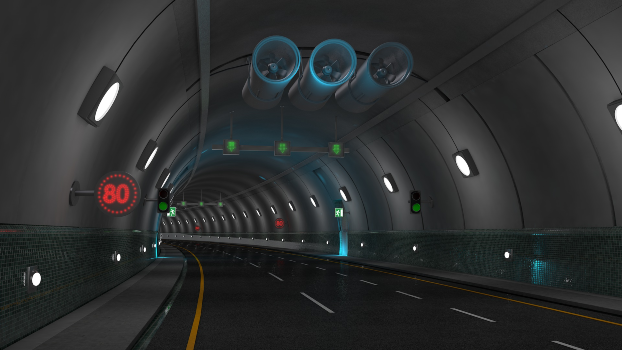
An underground road entrance to the Taiyuan Emergency Fortress, with this particular entrance located in Taiyuan's Wanbailin District.
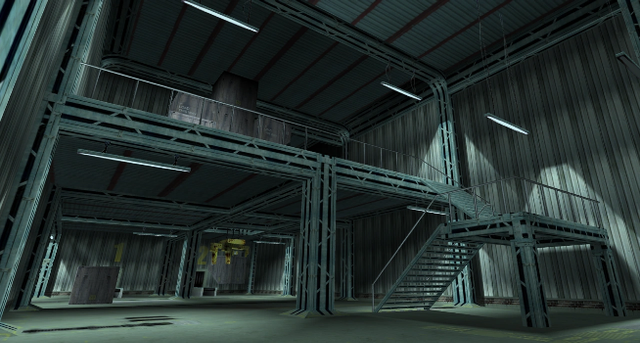
View of a logistics warehouse inside the Zhengzhou Emergency Fortress, specifically at a shelter located underneath Jinshui District with this logistics warehouse being connected to the Zhengzhou East railway station by high-speed rail.

A Honghuang-17D 8,300 MWe superconducting tokamak magnetic-confinement-fusion reactor inside the underground nuclear power station of the Chongqing Emegency Fortress, which also happens to be located right beneath Zhengxing Nuclear Power Plant in Chongqing's Bishan District.
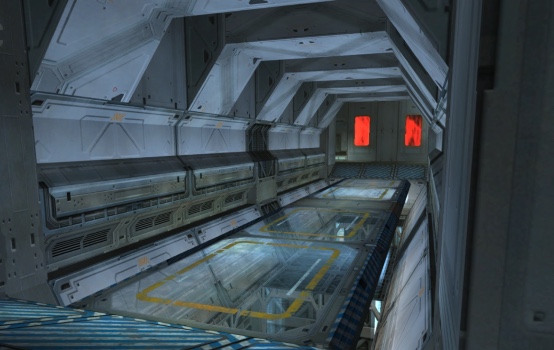
A corridor inside the Yinchuan Emergency Fortress, at a shelter located below Jinfeng District.
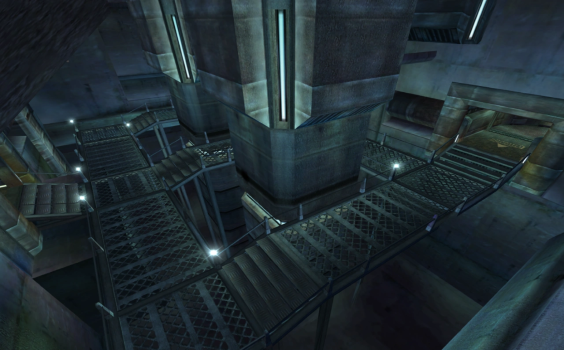
A pair of extremely-powerful water purifiers inside a shelter at the Wuhan Emergency Fortress, in a water purification facility located within a shelter deep beneath Wuhan's Hongshan District.
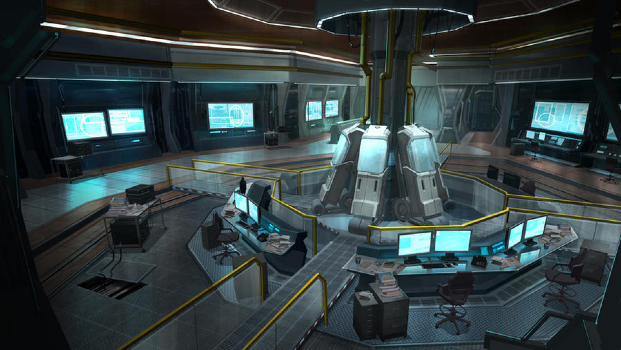
Interior of a communication center within the Shijiazhuang Emergency Fortress, at a shelter located under Yuhua District. In the middle is a bleeding-edge quantum computer module.
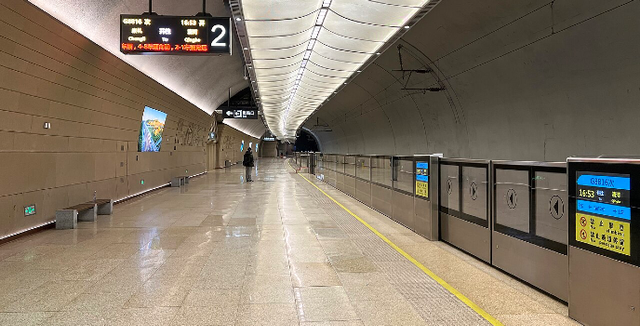
Platform 2 of Badalingchangcheng railway station, located deep below Yanqing District in Beijing.
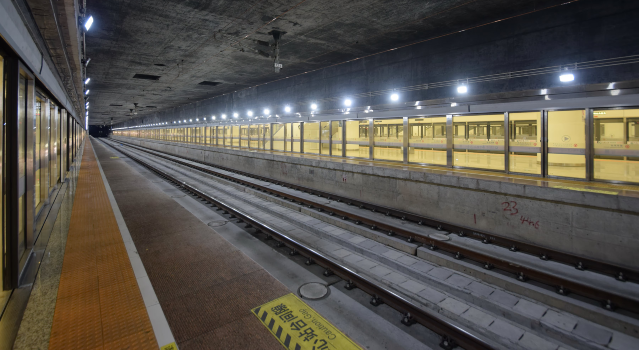
Underground high-speed rail tracks of the Guangzhou–Shenzhen–Hong Kong Express Rail Link at the deepest level of Futian station in Shenzhen.