NAVIGATION
- Making Your Team and Designing Your Drivers
- The Scorinator
- The Specs: Window Dressing
- The Teams and Drivers
- The Tracks
WELCOME to the I Forzala 1 Imperial Championship, the Golden Throne's premier open-wheel racing tournament. Witness the fastest cars and the best drivers battling each other over sixteen weekends to decide who will become champion.
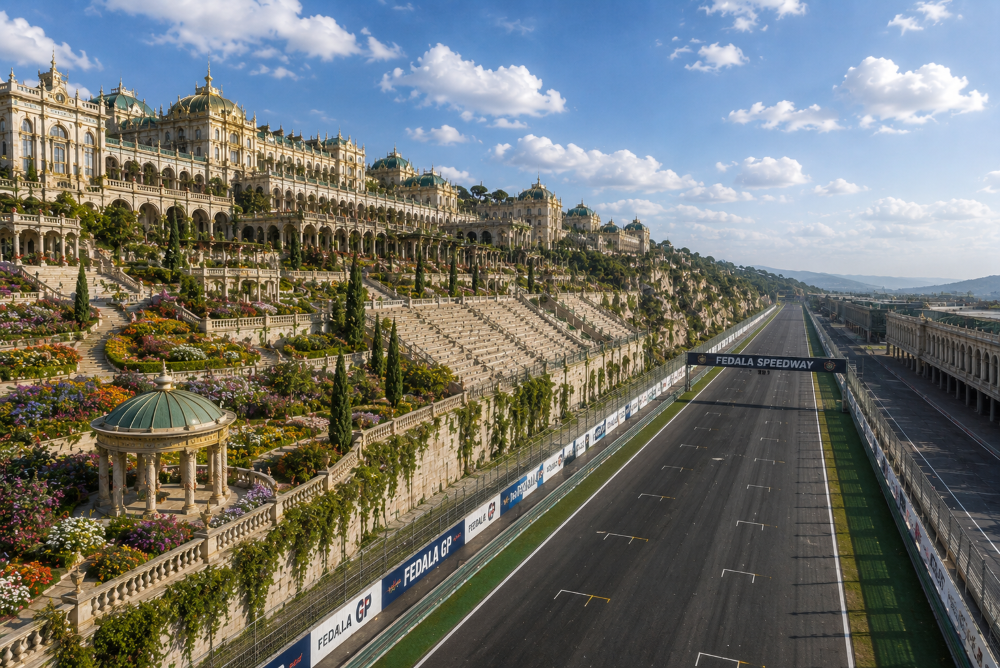
F1IC kicks off at the imperial capital, Fedala, where the imperial palatial complex and its sprawling, cool, and lush gardens overlook the track. Travel the empire, from city to city, to visit exotic worlds and some of the most beautiful cities in Greater Díenstad. You'll watch some of the most aesthetically pleasing race cars zip around the ancient Fedoroville acropolis abutting the sea, with its many marinas, stunning beaches, and impressive "hanging" homes. From there, we'll tour the provinces until heading over to northern Theohauancu, skipping over to coastal Indras, and then to the PMC-capital of the world, the city-state of Tarn. Week 12 takes us to the Pantocratorian-speaking territory of Cerfonlande. Afterwards, we're off to Zarbian Fedorogoda, then to the free city of Fedorograd, and finalizing our three-peat of cities named after His Imperial Majesty Fedor I in Fedoria, Nicaro. The tournament ends with the thrilling Beriston Speed Tunnels, a full-throttle, challenging, and dangerous circuit that is entirely underground! Get ready for majestic sights, enthralling action, and the stunning spectacle of Forzala 1.
N.B. I am scorinating using a custom script that updates an Excel sheet.This is the inaugural season. While I simulated a season in my QA and everything should go smoothly, please excuse any kinks while they get worked out.
CAN I JOIN MID-SEASON?
Yes.
CAN ANYONE JOIN, REGARDLESS OF REGION?
Yes.
AI POLICY
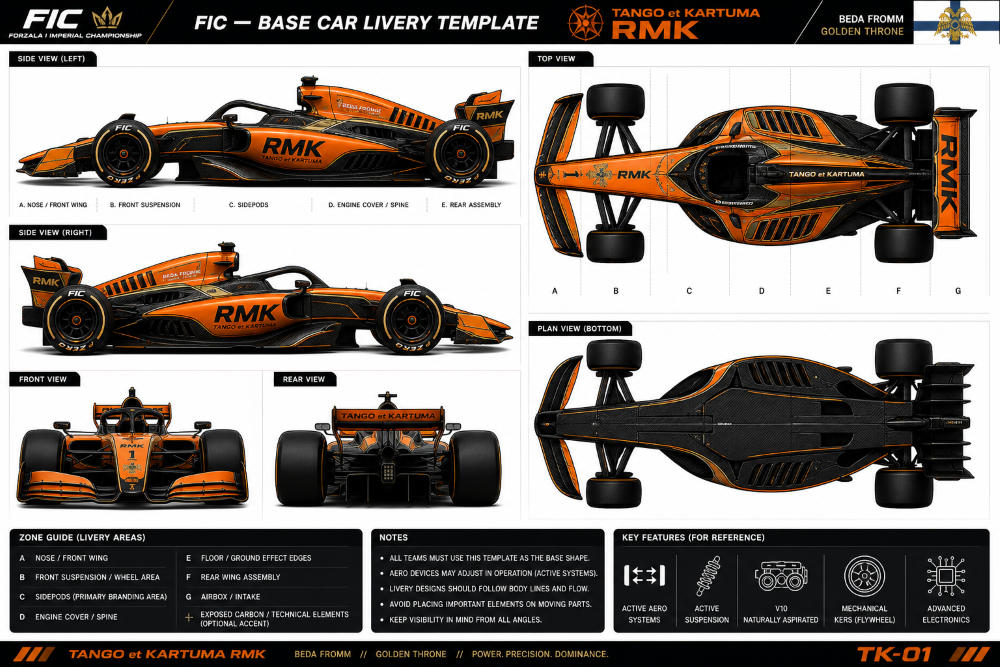
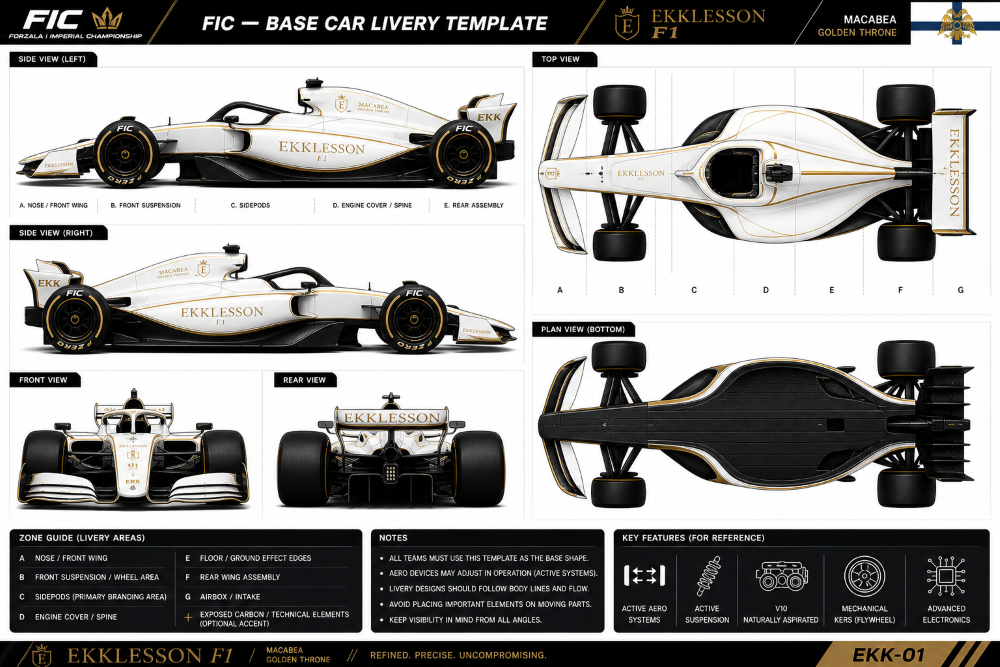
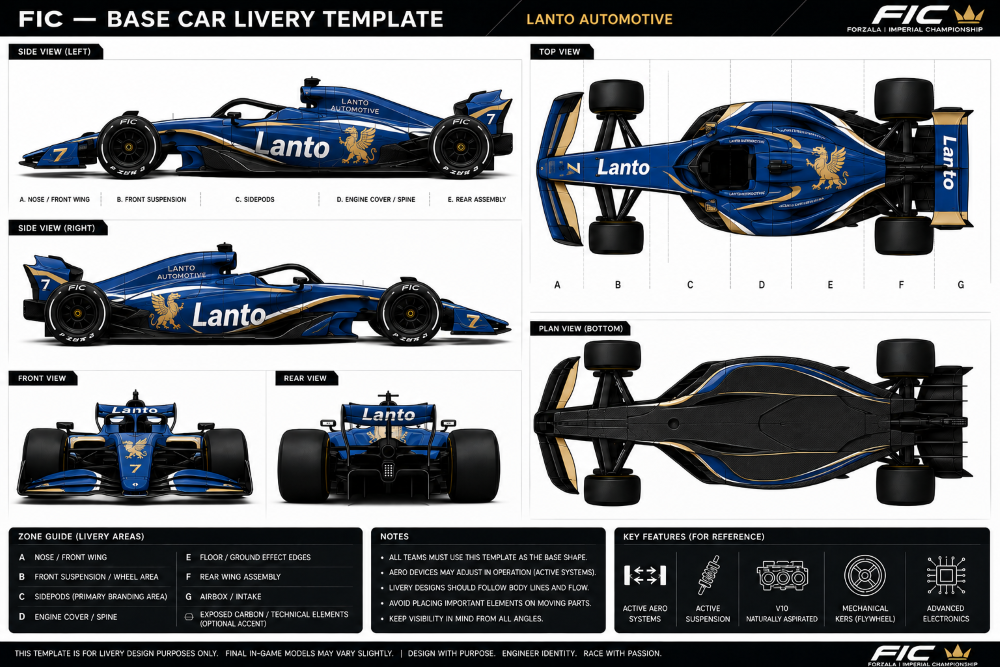
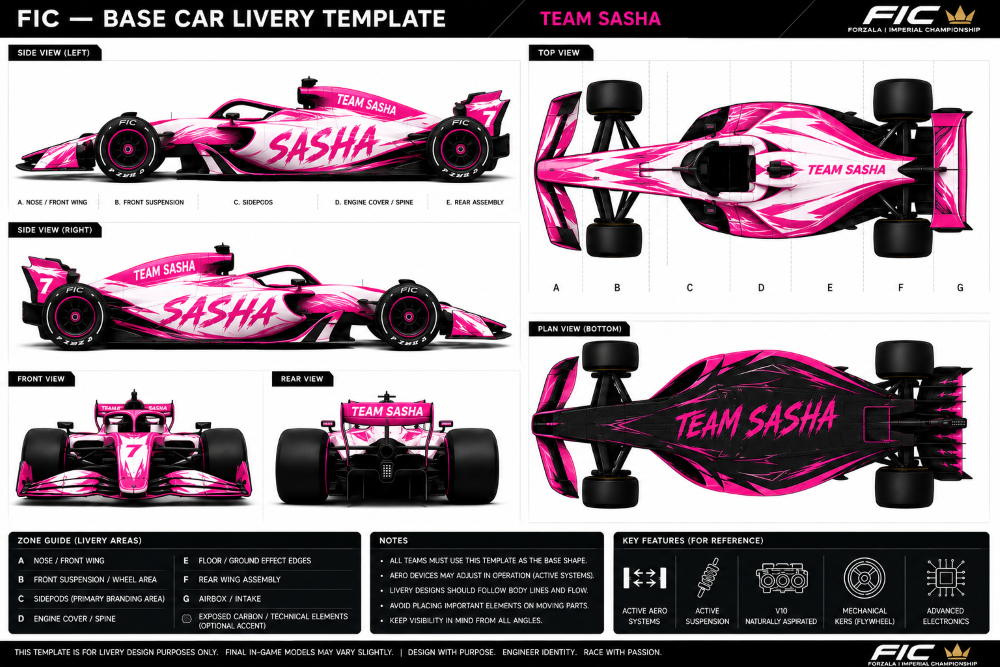
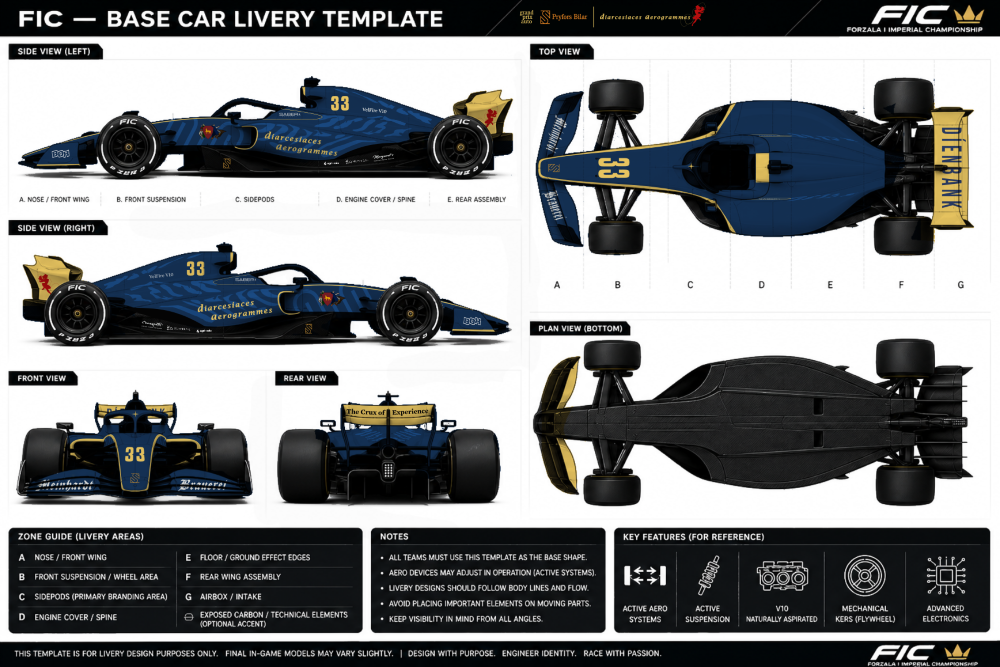
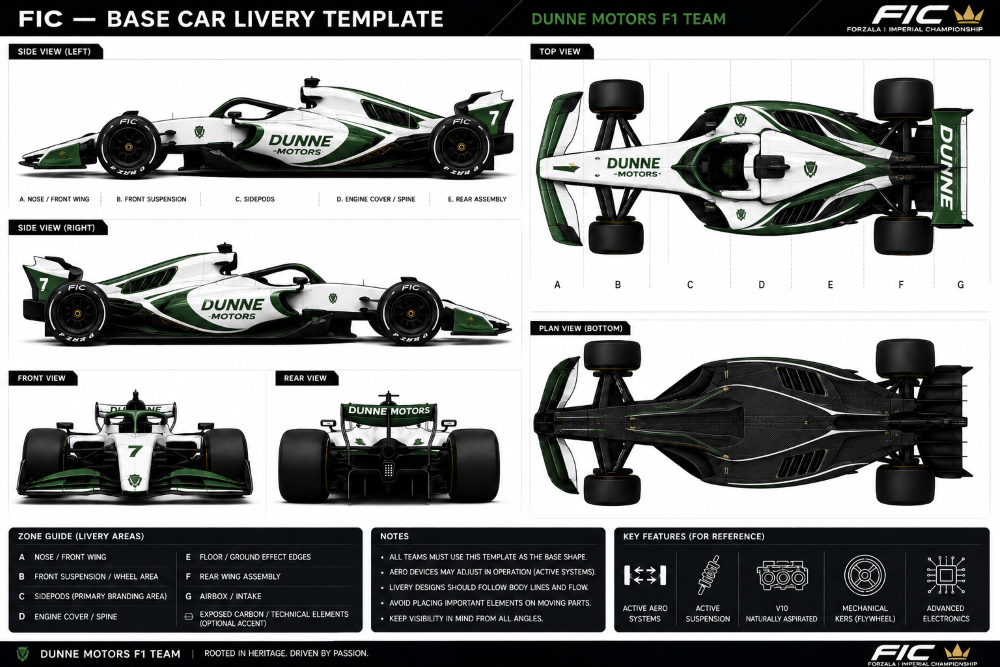
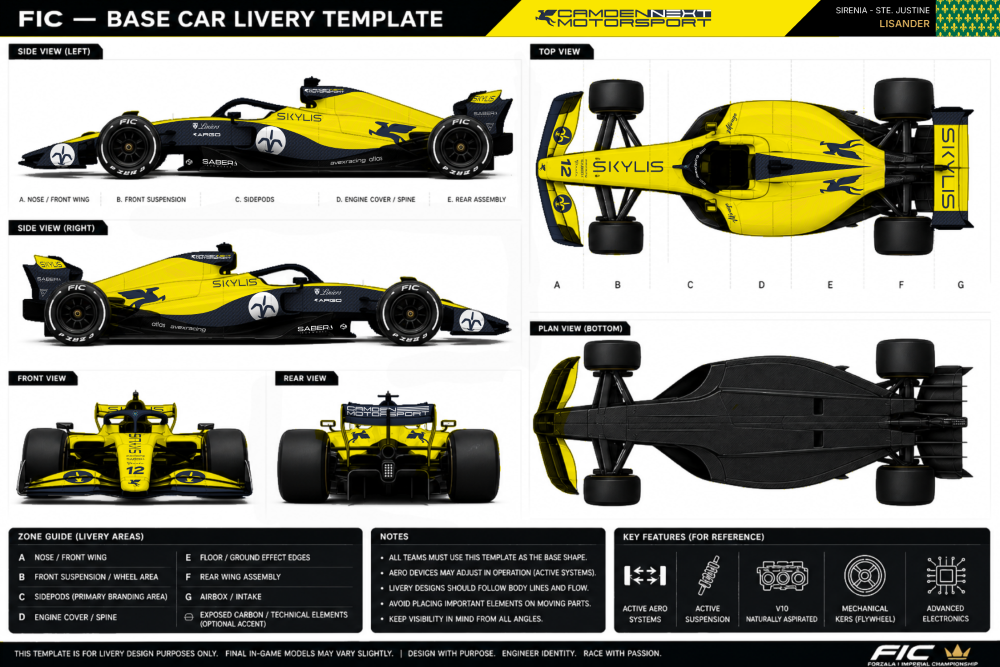
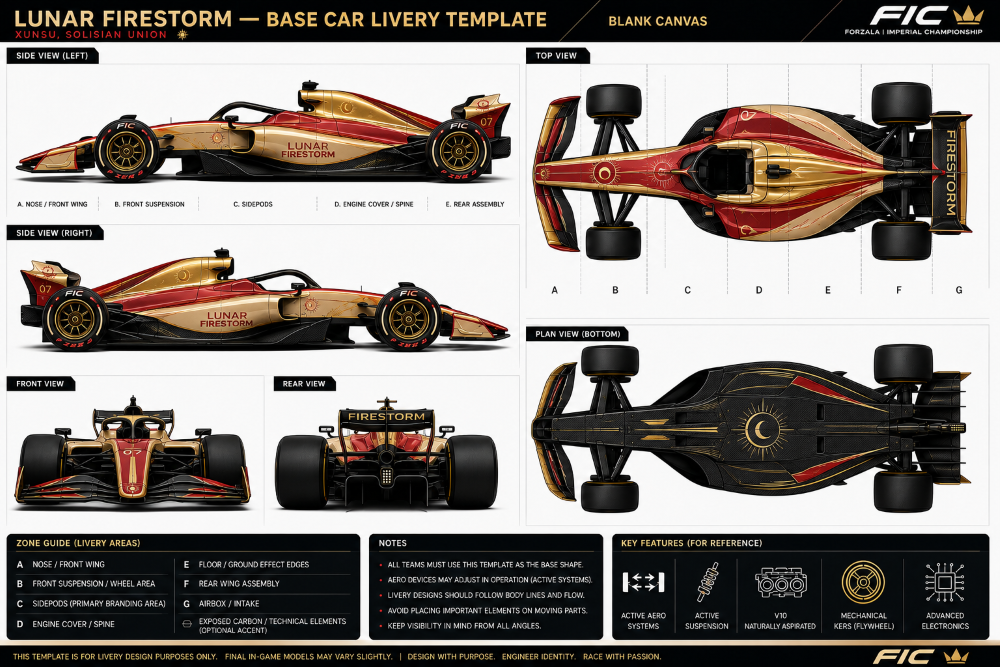
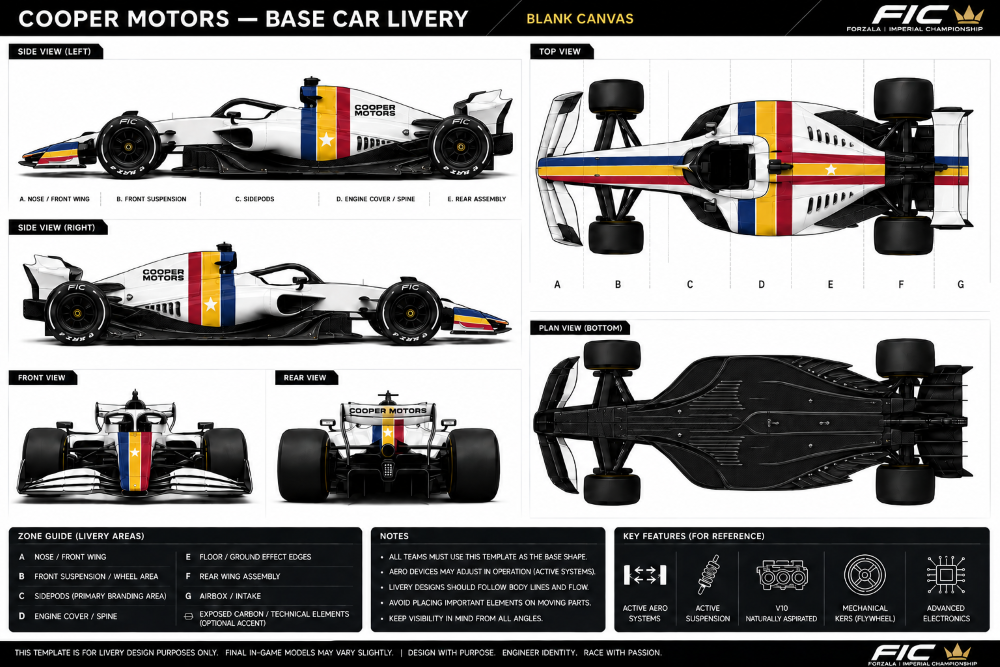
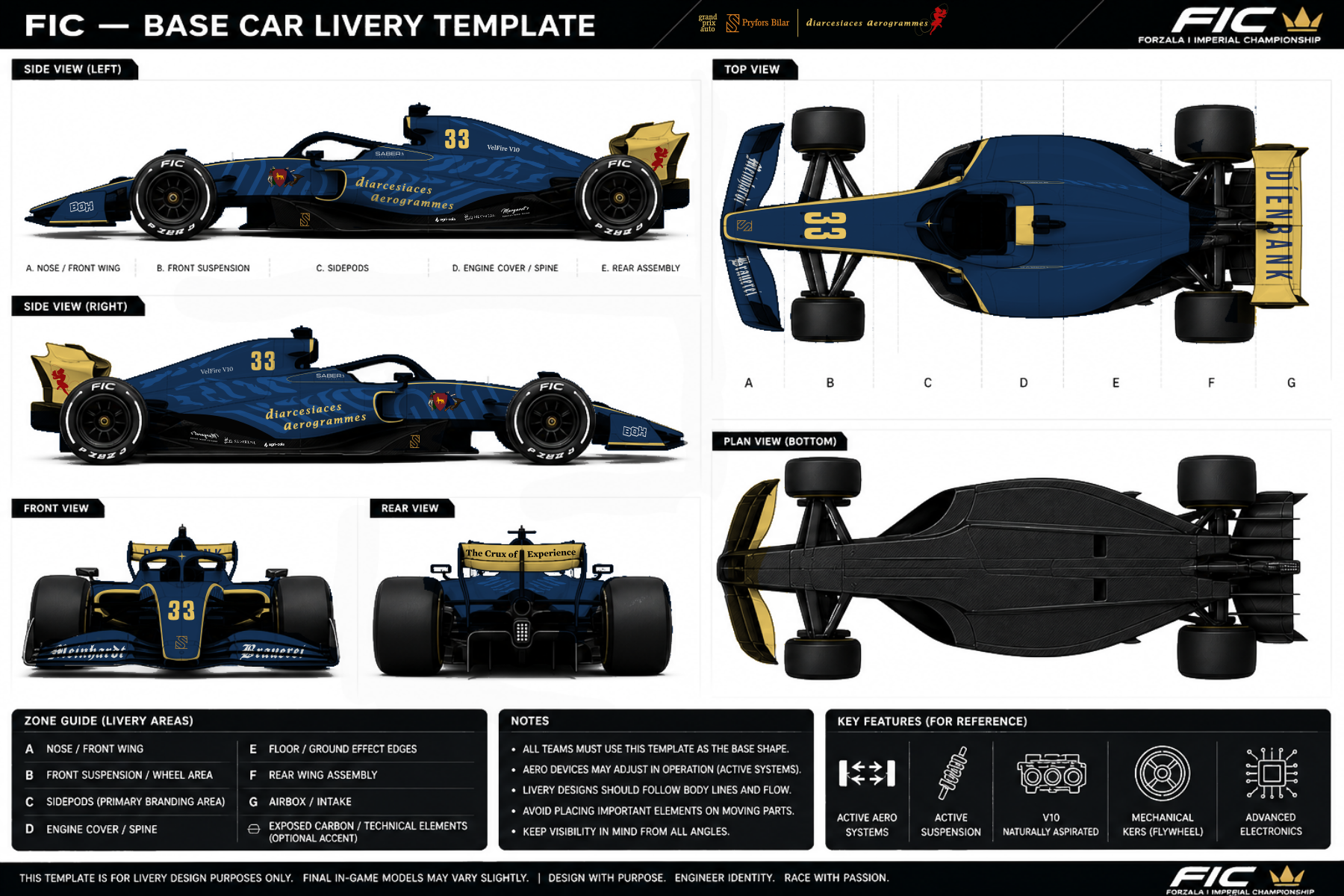
Images only. The livery designs for many (most?) teams are AI-generated. The images used for the weekend warmup posts are also AI-generated.
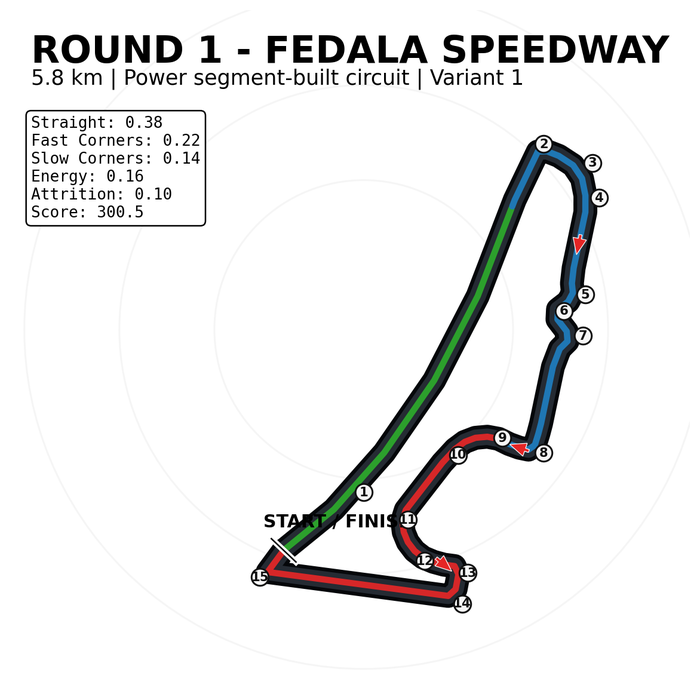
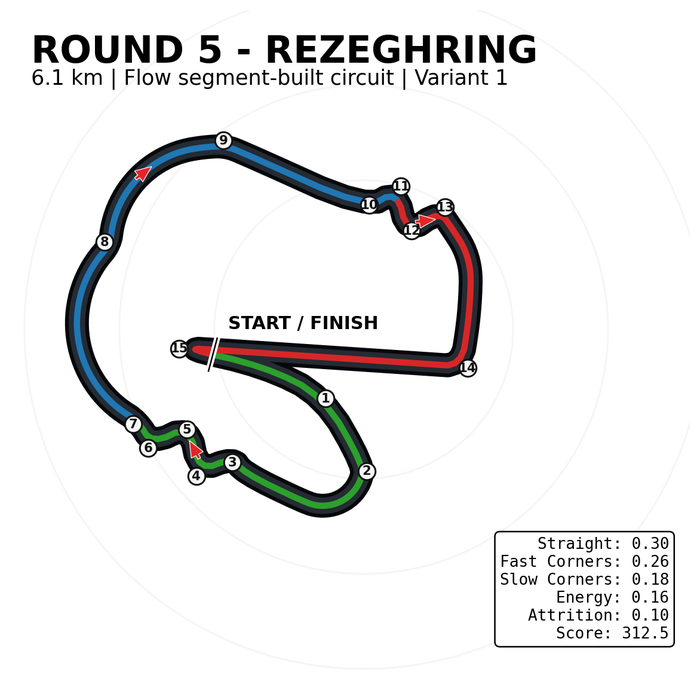
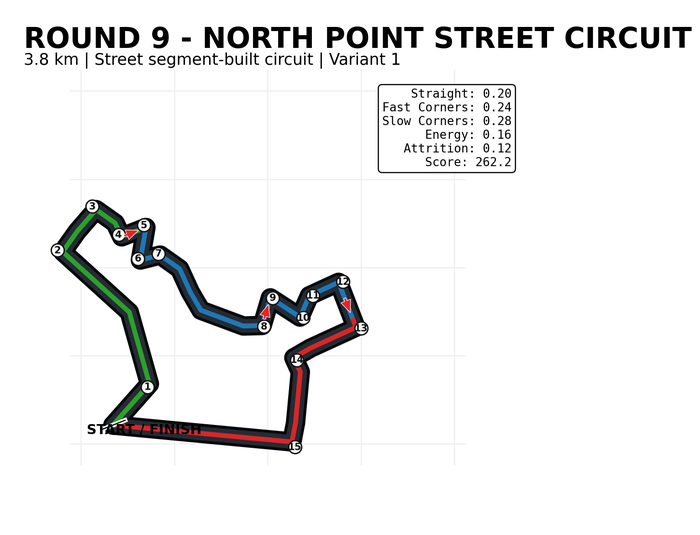
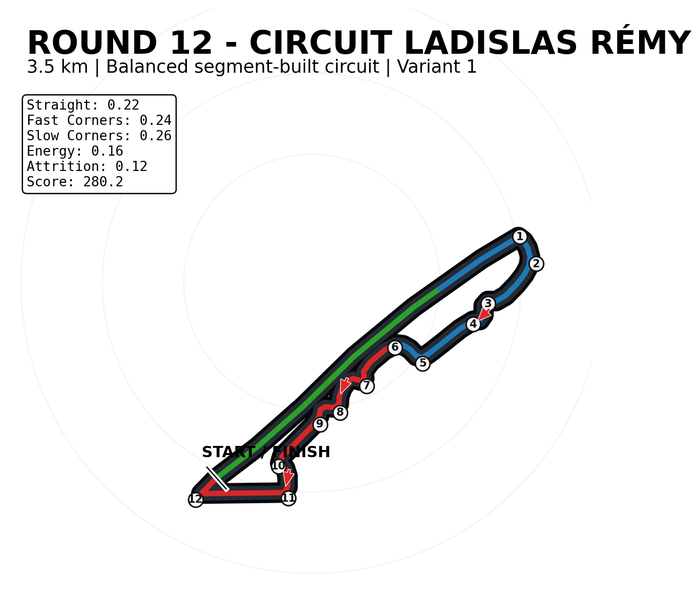
The only text written by AI is the key detail bullet points in the tracks section. The tracks themselves are mechanically designed in a spreadsheet, with points distributed across specific categories (you can see these in the track maps) by myself, that is, by hand. The track maps are made using a python script which reads the spreadsheet, using the track data to put together the map using segments. This allowed me to set up the tracks at scale, and also provide some insight for players trying to understand what to optimize for.
All RP must be written by a human.
ARE YOU ON DISCORD?
You can find me on the NS Sports Discord server. You're also welcome to join the Greater Dienstad server - the link will drop you at our ns sports channel.
MAKING YOUR TEAM AND DESIGNING YOUR DRIVER
The Basics
- Each team has two drivers. The team is associated with your country, but the drivers do not need to be.
- Qualifying is scorinated on Saturday.
- The race is scorinated on Sunday.
- Each team can earn an RP bonus. Only one post will be counted per session, per team.
- There are two sessions: qualifying and race.
- The qualifying bonus is larger than the race bonus.
- The race bonus is added to the qualifying bonus. Think of it as a little bump in chances.
- Upgrades: each team has up to three opportunities in a single season to redistribute their car points.
- Teams can replace drivers with new drivers at any point in the season.
- Drivers can redistribute 20 points in their stats once per season.
Creating Your Teams
Each gets 400 points to distribute across five categories:
- Top Speed: Most valuable on tracks with long straights and long overtaking zones. Speed takes a little penalty in rainy and high-wind conditions.
- Cornering: This is how good the car is at taking corners. Important for technical, corner-heavy maps, such as street circuits.
- Acceleration: How quickly the car can come up to speed. Tracks with a lot of corners will prize acceleration.
- Energy: This is partly about tire degradation, and also about consistency and the overall race page. Cars with more energy will have better late-race pace.
- Reliability: Highly reliable cars are less likely to DNF (did not finish). The higher the attrition rating of the track, the more prized reliability is.
Creating Your Drivers
Each driver gets 400 points. Remember, you have two drivers per team.
- Skill: Driver pace at a high level. A very important stat.
- Consistency: Highly consistent drivers make fewer mistakes.
- Aggression: Aggressive drivers take more risks for overtakes, fastest lap attempts, and moving up the grid on race day after a bad quali.
- Tire Management: Reduces tire degradation over the race, affecting average race pace. Important for tracks with 50+ laps.
- Qualifying Bias: This is an important stat insofar as qualis determine the race time penalty. The better you qualify, the lower the penalty.
Each team can have a #1 driver, or it can have two equal drivers. Your #1 driver will get 60% of the team's RP bonus.
THE SCORINATOR
The scorinator consists of (a) an Excel spreadsheet and (b) a python script.
The Excel spreadsheet contains team, driver, and track data. It is both referenced and updated by the script. The script outputs qualifying and race times in separate sheets and in separate runs; a.k.a it scorinates one day at a time.
To determine outputs, the scorinator references the sheet data, including driver, car, track, and weather data. There is built-in randomness, but the data establishes constraints and directionality. It is not designed to reward a specific build, as different track and weather conditions will call for different car and driver builds. That means that there is no "meta." Instead, you are encouraged to develop identities for your cars and drivers that appeal to you, distributing points accordingly. Because tracks and weather conditions will vary throughout the season, it's really about long-run performance. Remember that you have three opportunities to "upgrade," or redistribute points, throughout the racing season.
There are inherent trade-offs in the system. A car that's good for slow corners may perform poorly on circuits with long straights. Drivers also matter, with different driver builds producing different outcomes even for the same car build. Likewise, qualifying and race days are two completely different beasts. A car and driver setup that qualifies very well will not necessarily do well over multiple laps. The weather will also have an impact on outcomes, affecting grip conditions. Drivers who may not do well on sunny days may become monsters in the rain. Strong teams understand in which races they should be minimizing losses, and in which they should maximize points. The strongest team is whatever design philosophy appeals to you, allowing you to have fun when roleplaying around results.
Key takeaways:
- No such thing as a perfect build.
- Every setup has both advantages and disadvantages.
- Start with your identity first.
THE SPECS: WINDOW DRESSING
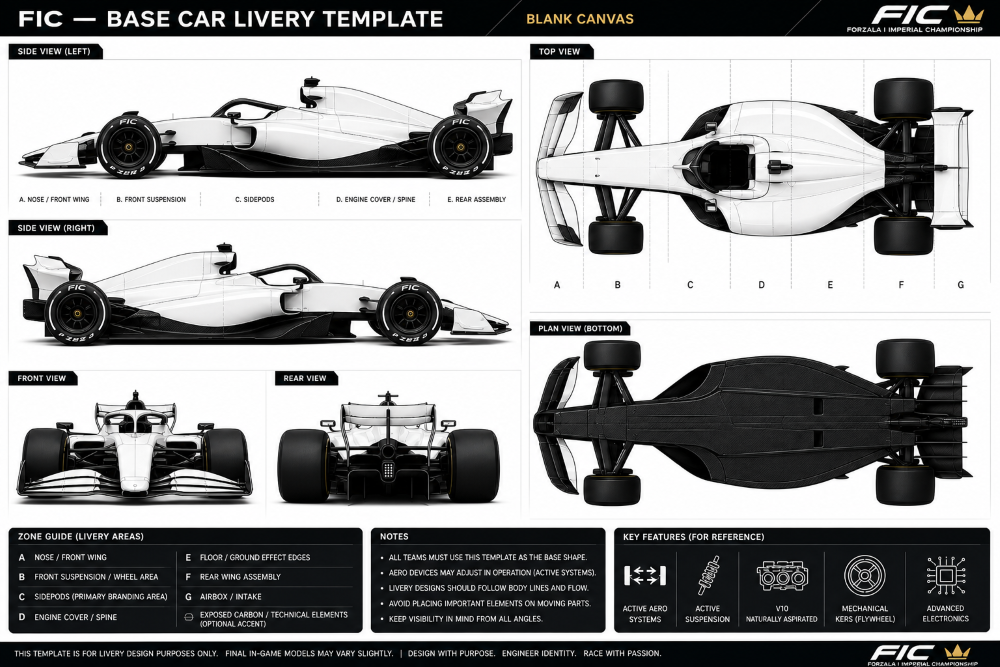
Core Philosophy
Mechanical performance takes primacy, with electronics as enhancers. The tournament rewards mechanical power and the spectacle.
Powertrain Regulations
- Naturally aspirated V10 engines (3.2L–3.5L typical range)
- Target rev range: 18,000–20,000 RPM
- No fuel flow restrictions
- 85-90:10-15 ICE:MGU-K
Energy Recovery
- Mechanical KERS (flywheel systems) permitted and encouraged
- Optional electric assist allowed, but: (a)Must remain a minor supplementary system; Cannot exceed primary engine dominance
Exhaust & Sound Requirements
To maintain a high acoustic profile, exhaust systems are largely unrestricted, with minimal muffling requirements (safety only). Teams are encouraged to develop distinct sound signatures.
Aerodynamics
- Fully active aerodynamic systems are permitted, including: (a) Adaptive front and rear wings; (b) Multi-state drag reduction systems
- Ground-effect underbodies are standard
Suspension & Chassis Systems
- Active suspension systems are permitted
- Real-time ride height and damping adjustments allowed
Electronic Systems
- Advanced electronics are allowed, including: (a) Traction and torque management systems (limited); (b) Integrated vehicle control systems (aero, suspension, energy deployment); (c) Predictive performance modeling and telemetry tools
- Systems must remain driver-influenced and overrideable
- Full automation or “perfect stability” systems are not permitted
Driver Interface
- Fully configurable steering systems allowed
- Multiple performance modes (e.g., attack, defend, thermal management) permitted