NATION

PASSWORD

Tradeborough Straits Corporate World | close | Regional RP

A staging-point for declarations of war and other major diplomatic events. [In character]
User avatar
Thiothard
Attaché
 
Posts: 73
Founded: Feb 05, 2023
Father Knows Best State

Tradeborough Straits Corporate World | close | Regional RP

Postby Thiothard » Tue Dec 02, 2025 8:36 pm

The Crossroads of Capital: Inside the Tradeborough Straits Corporate Arena


Welcome to the nexus of ambition and enterprise—the Tradeborough Straits. This dynamic region, anchored by six distinct nations from the innovative hubs of Hundredstar to the resource-rich lands of Fallenstorm, is more than a geographical marvel; it is the beating heart of modern commerce. Here, in the glass towers of Bledllyn and the historic trading halls of Royalhaven, the future of transnational business is written daily.

This portal serves as the definitive forum for the architects of that future. It is where CEOs, strategists, and dealmakers from empires like Fort Graves Hotel Group converge with the old and new money of the Straits to forge alliances, negotiate monumental acquisitions, and navigate the complex currents of international regulation and competition. We dissect the strategies behind the mergers, profile the titans of industry, and analyze the delicate balance of power that defines this competitive landscape. In the Tradeborough Straits, business is a high-stakes symphony of ambition, innovation, and calculated risk. This is your front-row seat.


Corporate Entities involved so far...
  1. Glenleigh Heavy Industry & Defense Thiothard
  2. Government Military Industries Thiothard
  3. GACO Land Systems Hundredstar
  4. Ravencrest Revolution Football Club Darkcastles
  5. Destination Greenbooker Hundredstar
  6. Chambermead Refinery Thousandsuns
  7. Port Adeling Oil & GasThousandsuns
  8. Hapmouth Capital Darkcastles
  9. Cloudmouth System Darkcastles
  10. Angerburgh Quarry Group Greythrone
  11. UNIMOR Hundredstar

List of agreements reached so far...
  1. Glenleigh Heavy Industry & Defense - Government Military Industries [Project Cyclone]
  2. GACO - Glenleigh [Iron Veil]
  3. Destination Greenbooker - Ravencrest Revolution FC [Pre-season friendly & Tourism promotion package]
  4. Port Adeling Oil & Gas - Hapmouth Capital [Project financing]
  5. Cloudmouth System [Broadcasting acquisition ]
  6. Angerburgh Quarry Group - UNIMOR [Product credit limits]

Last edited by Thiothard on Wed Dec 10, 2025 7:00 pm, edited 1 time in total.

User avatar
Thiothard
Attaché
 
Posts: 73
Founded: Feb 05, 2023
Father Knows Best State

Postby Thiothard » Tue Dec 02, 2025 8:58 pm

Image
GMI HQ
Sabermarks Tower
Richtergate

Project Cyclone: Glenleigh Heavy Industry & Defense & Government Military Industries

The afternoon light filtered through the vertical blinds of a secure conference room in the Government Military Industries (GMI) headquarters in Richtergate. The atmosphere was one of focused, low-key intensity, a stark contrast to the bustling capital of Thiothard outside. Seated across the polished duralloy table were two parties whose conversation could reshape the nation’s armored future.

Representing Glenleigh Heavy Industry & Defense was its founder and CEO, Jesper Norburgh, a man whose engineering background was evident in his precise demeanor. Flanking him was Liam Claywood, Glenleigh’s Chief Technology Officer, whose fingers rested lightly on a secured tablet displaying schematics. Opposite them sat Dr. Rafael von Otis, the seasoned CEO of GMI, and his CTO, Samantha Cruxley, a figure known for her ruthless technical audits.

“Thank you for the invitation, Dr. von Otis,” Jesper began, his voice calm. “We’ve followed Project Cyclone’s development parameters with great interest. Glenleigh believes our core specialization aligns perfectly with its next-generation requirements.”

Dr. von Otis nodded, steepling his fingers. “Your reputation precedes you, Jesper. The M-1111T Prowler APC and particularly the CV-2258T Protector ICV developed with GACO have shown impressive performance in joint exercises. Your integrated survivability suites were noted. But Project Cyclone is a main battle tank. The scale and complexity are of a different magnitude.”

This was the expected challenge. Liam Claywood leaned forward, activating a holographic display from his tablet. Rotating models of the Prowler and Protector materialized above the table. “The magnitude is understood,” Liam stated. “Our value isn’t just in manufacturing, but in systems integration. The Protector’s success lies in its ‘Iron Veil’ architecture—a synchronous layer where our proprietary composite armor doesn’t just absorb kinetic energy; its sensor-embedded matrix communicates directly with the vehicle’s core electronic warfare suite.”

Samantha Cruxley’s eyes narrowed, analyzing the data streams superimposed on the models. “Explain the tangible benefit for a 60-ton MBT over a 30-ton ICV.”

“Gladly,” Jesper interjected, taking the lead. “The ‘Iron Veil’ principle scales. For Project Cyclone, we propose a modular, hybrid armor system. The base layer would be our new ceramic-titanium composite, fracturing in a controlled manner to dissipate impact energy. Integrated within it would be a mesh of fiber-optic sensors and micro-emitters. This network forms the physical backbone of the digital warfare system Liam mentioned.”

Liam continued, zooming in on a schematic cross-section. “This embedded network performs two critical functions beyond traditional armor. First, it provides real-time, millimeter-accurate damage assessment to the crew’s tactical display, showing *exactly* where and how deeply the armor is compromised. Second, and this is the next-generation leap, the micro-emitters can be tuned to actively disrupt the guidance systems of incoming semi-active laser or millimeter-wave seekers, adding a soft-kill defensive layer directly from the point of impact.”

A contemplative silence filled the room. The concept moved defense from a passive, absorptive model to a reactive, intelligent one. Dr. von Otis glanced at Cruxley, who gave an almost imperceptible nod of technical credibility.

“The integration with the primary fire-control and countermeasure systems?” Cruxley asked, her tone now one of professional inquiry rather than skepticism.

“Our EW suite is designed with open architecture protocols, specifically to slot into a broader battlefield management system,” Liam assured. “We don’t seek to build the tank’s entire digital spine. We seek to make its skin intelligent and communicative.”

Jesper pressed the closing argument. “GMI possesses unparalleled expertise in propulsion, artillery, and primary chassis design. Our goal is to make that formidable platform exponentially more survivable and situationally aware. We offer to be the specialist for the integument—the smart skin and its defensive nervous system. The success with GACO on the Protector proves we can collaborate at the highest international level and deliver.”

Dr. von Otis leaned back, exchanging a final look with his CTO. The technical merit was clear, and the strategic logic of incorporating a nimble, innovative domestic specialist alongside GMI’s bulk manufacturing capacity was sound.

“Very well, Mr. Norburgh,” Dr. von Otis concluded. “You’ve presented a compelling case that aligns with Project Cyclone’s ambition for a networked, survivable platform. GMI is, in principle, agreeable to exploring this partnership. We will convene a dedicated technical working group—a special meeting to refine these specifications, define interfaces, and formalize the scope of work. Samantha will liaise with Mr. Claywood on the preliminary data exchange protocols.”

The meeting adjourned not with a signed contract, but with something equally valuable: a secured pathway onto the most critical defense project in Thiothard. For Glenleigh, the door to becoming the region’s leading defense supplier had just been nudged open.


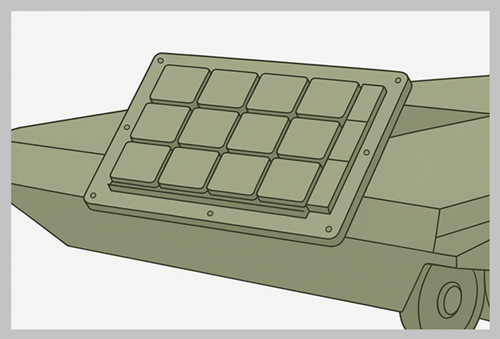
The Iron Veil Architecture: A Technical Overview

The Iron Veil is not merely an armor system; it is an integrated survivability architecture designed to transform a vehicle's protective shell into an intelligent, reactive defensive organ. Developed by Glenleigh Heavy Industry & Defense, its core philosophy extends beyond passive threat absorption to active management of the combat environment.
Image

The system consists of three synchronised layers:

1. Advanced Hybrid Composite Base: The foundation is a modular matrix of ceramic tiles, boron-carbide spheres, and titanium alloy laminates. This composition is engineered to fracture in a controlled, granular manner upon impact, dissipating kinetic energy laterally across the panel rather than allowing it to penetrate inward.

2. Embedded Sensor Nervous System: Within the composite matrix lies a dense, resilient mesh of fibre-optic cables and micro-transducers. This network functions as the system's proprioception. It detects and localises strikes—whether kinetic, thermal, or blast overpressure—in real-time, providing the crew with a millimetre-accurate damage assessment map on their tactical display.

3. Active Countermeasure Emitter Layer: The most innovative component. Micro-emitters, co-located with the sensors, are tuned to project a localized, multi-spectral interference field. Upon detecting an incoming guided threat (e.g., a laser-homing or millimeter-wave missile), this layer activates to scramble or spoof the projectile's targeting signal directly at the point of imminent impact, attempting a soft-kill negation.

In essence, the Iron Veil creates a "smart skin." It doesn't just try to stop a hit; it tells the crew exactly where and how badly they've been hit, and simultaneously attempts to confuse the next incoming round. This seamless fusion of materials science, sensor networks, and electronic warfare represents a next-generation leap in platform survivability and situational awareness.
Last edited by Thiothard on Tue Dec 02, 2025 10:35 pm, edited 3 times in total.

User avatar
Hundredstar
Minister
 
Posts: 2336
Founded: Feb 20, 2015
Left-Leaning College State

Postby Hundredstar » Tue Dec 02, 2025 11:31 pm

Conference Room,
GACO Land Systems Headquarters,
Bledllyn,
Hundredstar


The atmosphere in the executive briefing room was one of focused ambition. General (ret.) Amanda B. Carlingbridge, CEO of GACO Land Systems, stood at the head of the table, her posture rigid, her eyes fixed on the holoscreen displaying the Glenleigh Heavy Industry & Defense logo. Flanking her were Erin Platt, COO; Dr. Romulus Headerbury, CTO; Liz Cooper, General Counsel; and their external advisor, Rick Sterlingford from Gublin & Gows.

“The objective is clear,” Carlingbridge began, her voice cutting through the low hum of the ventilation system. “Glenleigh represents a unique and time-sensitive opportunity. Their niche in integrating advanced composite armor with next-generation electronic warfare suites is a capability gap in our portfolio. Acquiring them gives us that technology outright and provides a direct, operational foothold in the Thiothard defense market. Erin, what's our opening move?”

Erin Platt, ever pragmatic, scrolled through a financial dashboard on her tablet. “Our initial modelling suggests a controlling 51% stake is financially viable, with an estimated price point north of three hundred million. The strategic premium is justified. However, this isn’t a simple buyout. GHID is a prized asset in their homeland.”

“Precisely the point,” interjected Liz Cooper, the General Counsel, pushing a folder of printed statutes across the table. “Thiothard is not Hundredstar. Their regulatory environment for defense assets is a fortress. The primary hurdle isn’t finance; it's law. Two acts dominate: The Strategic Assets Control Act (SACA) and the National Economic Security Act (NESA).”

Rick Sterlingford nodded, adjusting his glasses. “Under SACA, GHID’s licenses for armor and EW systems make it a ‘Designated Strategic Entity.’ Any change in control—*any*—triggers a mandatory review by the Thiothard Defence Security Directorate, Ministry of Security & Defense. Under NESA, the Authority for Industrial Security, Ministry of Trade, Commerce & Industry, can block any foreign investment deemed prejudicial to national interests. A Hundredstar-based giant buying their innovative tank-armor shop? That will set off every alarm in Richtergate.”

Dr. Headerbury, the CTO, leaned forward. “We don’t need the political headache; we need the intellectual property and the engineering talent. How granular is our intelligence on this ‘integrated suite’? We know they have it, but do we know if it’s truly proprietary, or built on licensed cores?”

“Our technical due diligence is pending acquisition talks,” Platt replied. “But their work on the Protector ICV with us proved the concept is valid and battlefield-effective.”

“That prior collaboration is our only foot in the door,” Cooper stressed. “It establishes us as a known, semi-trusted entity. But it doesn’t guarantee approval. To get this past the Thiothard authorities, we cannot be seen as a predatory foreign conglomerate stripping assets. We must present as a strategic partner bringing global scale and R&D resources to amplify Thiothard’s own defense industrial base.”

Sterlingford outlined the tactical approach. “We recommend a phased, ‘softly-softly’ strategy. Phase One: We approach GHID’s board with an offer for a significant minority stake—say, 29.9%—just below the mandatory control-threshold that triggers an immediate SACA review. We couple this with a Technology Collaboration Agreement and a seat on the board. Phase Two: After 18-24 months of demonstrable, beneficial partnership and once we are a ‘known quantity’ to the regulators, we negotiate an option or a path to acquire the remaining shares to reach 51%.”

Carlingbridge listened, her expression unreadable. “A slow march. It introduces execution risk and gives competitors time to intervene.”

“It’s the only march available, General,” Cooper stated firmly. “A direct 51% assault will be rejected at the ministerial level. We must frame this as ‘GACO enabling GHID and Thiothard,’ not ‘GACO consuming GHID.’ Our public and private messaging must be flawless.”

After a moment of silence, Carlingbridge gave a sharp nod. “Very well. We proceed, but on the counsel’s terms. Sterlingford, your firm will draft the Phase One offer, which includes a minority stake and a collaboration framework. Cooper, you will lead a team to build the compliance narrative for the Thiothard regulators. Platt, prepare the capital allocation. Headerbury, once the NDA is signed, you get your deep dive into their tech. This isn’t a takeover; it’s a courtship. Let’s make sure Thiothard feels like the prize.”

User avatar
Hundredstar
Minister
 
Posts: 2336
Founded: Feb 20, 2015
Left-Leaning College State

Postby Hundredstar » Sat Dec 06, 2025 3:09 am

Meeting Room,
Greenbooker Government House,
Middlestead Park,
Owenbridge


The morning light streamed through the tall windows of the historic meeting room, illuminating a table where the tangible excitement of a novel partnership hung in the air. Seated across from each other were the principals of a deal described in the press release as a "Hundredstar-first."

On one side, representing the global draw, was Dr. Samuel Charron, Managing Director of Ravencrest Revolution Football Club, Linda Casterham, his Commercial Director, and Todd Sugarley, Ravencrest Chief Financial Officer. On the other hand, representing the destination was Anne Foxgrad, Director-General of Destination Greenbooker. Flanking them were the key enablers: Dr. Wilson L. Hermans, the Governor of Greenbooker State District, and Anita Ferrer, Managing Director of Longsail House Stadium.

Governor Hermans initiated the proceedings, his voice resonant with pride. “Welcome, Samuel, to Greenbooker. This isn’t just another sponsorship. It’s a strategic entry. Ravencrest Revolution’s first partnership in Hundredstar, and it’s with us. That is a statement.”

“Thank you, Governor,” Samuel Charron replied, his demeanour polished and distinctly continental. “Our fans are our most valuable asset. They travel, they engage passionately, and they consume content voraciously. This partnership allows us to offer them something new: an experience in Greenbooker, not just a match. Bringing the team to Owenbridge in 2026 makes it real for them.”

Anne Foxgrad leaned forward, her presentation tablet displaying demographic maps of Ravencrest’s fanbase. “Our analytics show concentrated followings in the Tradeborough Straits region and key markets in Fallenstorm and Thiothard. These are our primary target audiences. Our ‘Destination Greenbooker’ campaign will use your club’s channels not just to sell tickets, but to sell experiences—the vineyards of the Western Valleys, the coastal trails near Owenbridge, and our urban culture. The perimeter advertising at Longsail House during the matches is just the starting gun.”

Anita Ferrer interjected with operational clarity. “The stadium will be ready to deliver a world-class event. Two matches in one pre-season tour: Saltcay FC and Maplecoast FC. Both are excellent draws locally. This creates a festival atmosphere, not a one-off fixture. The matchday hospitality packages we’re co-designing will be a premium showcase of Greenbooker’s finest produce and hospitality.”

“The player access component is crucial,” added Samuel. “Our social media team will work with yours to create content from training sessions, community appearances, and behind-the-scenes glimpses. We will show Owenbridge and Greenbooker SD through the eyes of our players. It’s an authentic, powerful promotion.”

Governor Hermans nodded thoughtfully. “This fusion of high-profile sport and destination marketing is the innovative model we champion. It’s not merely buying a logo on a shirt; it’s co-hosting a global community. We are investing in the infrastructure and welcome to ensure every visiting fan becomes an ambassador.”

The discussion flowed into granular details: the split of digital asset creation, the integration of Greenbooker’s tourism narratives into Ravencrest’s matchday programmes, and the legacy plans for youth football clinics linked to the tour.

As the meeting concluded, Anne Foxgrad summarized the shared vision. “So, we are aligned. July 2026. This partnership will activate across three streams: the massive pre-event digital campaign targeting your fans, the immersive on-ground experience during the tour, and the legacy content that will continue to attract visitors long after the final whistle.”

Samuel Charron stood, offering a hand to the Governor. “To make Greenbooker a familiar name in households across the Straits. And to give our fans an unforgettable chapter in our club’s history.”

“To a Hundredstar-first,” echoed Dr. Hermans, sealing the agreement. Outside, the city of Owenbridge bustled, unaware that next year, it would be the centre of the footballing world for a fervent global tribe, all here under the banner of a revolutionary tourism deal.

User avatar
Thousandsuns
Ambassador
 
Posts: 1126
Founded: Aug 29, 2012
Father Knows Best State

Postby Thousandsuns » Sat Dec 06, 2025 5:38 am

Economic Forecast


Leanne Bishops: Welcome back to Economic Forecast. Our focus tonight is on the strategic mega-projects reshaping the energy landscape across the Tradeborough Straits. Joining me in the studio is Port Adeling Governor, Ian Schwebach, to discuss what is arguably one of the most significant industrial upgrades in the region—the Chambermead Refinery expansion in Thousandsuns. Governor Schwebach, this isn't just a routine upgrade; it's a fundamental shift in capability.

Ian Schwebach: Thank you, Leanne. That's absolutely correct. The Chambermead project, completed this year, is a transformative €752 million investment by Port Adeling Oil & Gas. Its core mission is to redefine the value we extract from every barrel of crude. Instead of treating the heavier residues as low-value fuel oil, our new delayed coking complex, employing ULTIA's advanced ULT-190 technology, cracks these molecules into high-demand products—propane, butane, premium gasoline, and diesel. It’s about moving up the value chain dramatically.

Leanne Bishops: And that shift in yield has profound economic implications. I understand the refinery can now process heavier, sourer crudes, which are often cheaper, and convert over 36,000 barrels per day of that residual material into those more valuable light products.

Ian Schwebach: Precisely. This isn't just about added volume; it's about strategic flexibility and margin resilience. The complex increases our middle distillate yield and slashes fuel oil production. In a market increasingly focused on emissions, this is a dual win: better economics and a reduced environmental footprint from our operations. The supporting units—from hydrodesulphurization to the massive flare gas recovery system—ensure we operate at the highest standards of efficiency and environmental performance.

Leanne Bishops: The scale of engineering is formidable. This required a consortium of expertise, led by Richby Engineering on construction and Cruxpool Union handling the intricate front-end design and technical supervision.

Ian Schwebach: Indeed. A project of this complexity, with over 29 megawatts of new power substation alone, demands top-tier partners. The collaboration was seamless, adhering to a rigorous cost-plus-fee structure that ensured accountability and technical excellence from FEED through to commissioning. The result is an asset that will define our industrial base for decades.

Leanne Bishops: Financing such an endeavor is a statement of confidence. A €400 million loan from Hapmouth Capital formed a substantial part of the package.

Ian Schwebach: It was a pivotal endorsement. Hapmouth's involvement signaled a strong belief in the project's fundamentals and our region's stability. This investment secures Chambermead's future, safeguards high-skill jobs, and significantly boosts the fiscal and trade balance for Thousandsuns. The increased throughput and product value directly enhance our export revenue and energy security.

Leanne Bishops: Looking ahead, Governor, with completion achieved in early 2026, what does Chambermead's new capacity mean for Port Adeling's and Thousandsuns' position in the regional energy market?

Ian Schwebach: Leanne, it positions us as a critical, sophisticated processor in the Straits. We are no longer just a refinery; we are a conversion powerhouse. This allows us to meet the region's growing demand for cleaner transportation fuels more profitably and reliably. It makes Port Adeling Oil & Gas a stronger, more competitive entity and solidifies Thousandsuns as a hub for advanced industrial investment. This project is the engine for a new chapter of economic growth.

User avatar
Darkcastles
Spokesperson
 
Posts: 136
Founded: Oct 31, 2025
Anarchy

Postby Darkcastles » Sat Dec 06, 2025 11:29 pm

Hapmouth Capital HQ
Frank Pace Tower III
Jeffrey D. Zients St.
Royalhaven
Darkcastles


The afternoon light streamed through the floor-to-ceiling windows of the conference room at Hapmouth Capital’s headquarters in Royalhaven—the city home to the region’s largest offshore financial centre and operating under the auspices of the Darkcastles Financial Services Authority—illuminating a thick financial dossier laid out before Dr. Manuel Pereira Coutinho. Seated around the polished mahogany table were his trusted lieutenants: Anya Sharma, the Chief Operating Officer, whose meticulous nature was reflected in her neatly tabulated notes; Robert Thorne, the Chief Financial Officer, a calculator never far from his hand; and Elias Vance, the firm’s unflappable General Counsel.

Dr. Manuel Pereira Coutinho also serves on the board of directors at Cloudmouth System, owned by Dale Vince, is the chairman of Ravencrest Revolution Football Club, Coutinho's favorite club.

"Thank you for joining on short notice," Dr. Coutinho began, his fingers steepled. "The subject is Triumvirate Shipping Co., formerly known as Orkim, which is days away from its Royalhaven SX listing. We are here to determine the viability and method of acquiring a strategic ten percent stake."

Anya Sharma opened the discussion, her voice precise. "The operational fundamentals are solid. They operate a fleet of seventeen vessels in the clean petroleum and LPG segments, with a nine-month utilization rate of ninety-one percent. Their revenue base, however, shows a significant concentration risk—eighty-three percent derived from just two charterers, both established oil majors. The impending delivery of a new MR tanker, the Triumph Citrine, and two more vessels on order, signal growth but also increase capital commitment."

Robert Thorne interjected, sliding a summary page forward. "The numbers tell a compelling story for a strategic entry. Based on their last unaudited figures, we project an annualized EBITDA run-rate of approximately $153 million. Applying a conservative sector multiple of 5.5x to 6x gives us an Enterprise Value range of $841 to $918 million. After subtracting net debt of about $240 million, the Equity Value sits between $600 and $678 million. Crucially, their IPO price is fixed at $0.92 per share, which values the entire post-listing equity at $920 million. A ten percent stake, therefore, has a market price tag of $92 million."

"A premium to our intrinsic valuation," Dr. Coutinho noted.

"Indeed," Thorne continued. "The IPO premium is roughly fifteen to twenty percent. However, this secures immediate liquidity and a clear entry point. The alternative—a private placement before listing—would require negotiating with existing shareholders and would likely demand a similar discount to the IPO price, without the benefit of a transparent market valuation."

Elias Vance leaned forward, his tone measured. "The regulatory path is straightforward if we act post-listing. Purchasing up to ten percent on the open market requires no mandatory offer. We would, however, need to file a substantial shareholder notice upon crossing five percent. The primary due diligence hurdles are not regulatory but operational. We must scrutinize the ongoing litigation with a former service provider, Azsat Global. While management views the $7 million claim as lacking merit, it carries reputational and financial risk. Furthermore, their tax exemption status, a one-hundred percent holiday on shipping income, is contingent on meeting specific local crew and operational expenditure requirements through 2026."

Anya added a critical point. "Our strategic rationale must extend beyond financials. Triumvirate provides Hapmouth with a direct, tangible asset foothold in the Krestian Region logistics chain. It’s a counter-cyclical balance to our tech-heavy portfolio and aligns with the long-term thesis on regional energy transportation demand. The key question is whether we pay the IPO premium for certainty or attempt to secure shares at a discount in the aftermarket, risking that the price climbs on listing-day momentum."

Dr. Coutinho considered the arguments, his gaze moving between his team. "The IPO premium is the cost of a clean, executable transaction with defined timing. Robert, prepare two models: one for a gradual accumulation post-listing, and another for a block purchase from the institutional offering, if any last-minute allocations are possible. Anya, you will lead the operational due diligence, focusing on the customer contracts and the specs of the newbuilds. Elias, you will take a much deeper dive into that litigation and the precise conditions of the tax exemption."

He stood, signaling the conclusion. "We proceed with intent. The target is ten percent. We will authorize a bidding limit of $94 million to account for minor market fluctuations. We engage a designated broker tomorrow. Triumvirate is not just a shipping company; it is a vessel for our broader exposure to the Tradeborough Straits' industrial base. Let's secure our passage."

Dr. Coutinho remained standing, his gaze sweeping across the team. "This move on Triumvirate is not an isolated play. It must be viewed within the broader architecture of our regional portfolio, specifically through the lens of our existing exposure via the €400 million project financing facility to Port Adeling Oil & Gas."

He paused, letting the connection settle in the room. "Our loan to POG is secured against the cash flows of the upgraded Chambermead Refinery, a facility that will soon have a significantly higher yield of middle distillates—diesel, jet fuel, gasoline. That refinery's success is predicated on its ability to move product to market efficiently and competitively. Triumvirate Shipping is not merely a bet on maritime logistics; it is a strategic complement to that POG credit. By taking an equity stake in a leading regional product tanker operator, we are, in effect, investing in the downstream logistics network that will carry POG's output."

Anya Sharma nodded, seeing the strategic weave. "You're creating a closed-loop insight. We gain a board seat or significant influence at Triumvirate, which gives us direct visibility into freight rates, regional demand patterns, and vessel deployment. That intelligence directly informs the risk assessment of our POG loan and the health of their off-take markets."

"Precisely," Coutinho affirmed. "It transforms us from a passive creditor into a connected participant in the value chain. If Triumvirate's fleet is busy and rates are firm, that is a leading indicator of robust regional fuel demand, which de-risks POG's revenue projections. Conversely, it gives us early warning signals." He turned to Robert Thorne. "This is why the IPO premium is acceptable. We are not just buying shares; we are buying strategic intelligence and influence for a key credit. The cost is amortized across the entire thesis."

Elias Vance added the legal perspective. "The structures remain separate and non-recourse, of course. But the informational synergy is a tangible, though intangible, asset. We must ensure our compliance protocols are robust to manage any material non-public information flow between the equity stake and the credit team, but the strategic benefits are clear."

"Then the path is set," Dr. Coutinho concluded, resuming his seat. "We proceed with the Triumvirate acquisition with this dual objective: financial return on the equity, and strategic hedging and intelligence for our cornerstone credit facility at POG. It is a deliberate step in building an integrated presence in the energy logistics corridor of the Straits. Anya, Robert, Elias—make it happen."
Last edited by Darkcastles on Sat Dec 06, 2025 11:33 pm, edited 1 time in total.

User avatar
Thiothard
Attaché
 
Posts: 73
Founded: Feb 05, 2023
Father Knows Best State

Postby Thiothard » Sun Dec 07, 2025 10:14 pm

Conference Room,
Glenleigh Heavy Industry & Defense HQ,
Richtergate


The air in the main conference room of the Greenfield Plains Complex was thick with a palpable tension that hummed beneath the surface of polite formalities. Seated on one side of the long, brushed-steel table were Glenleigh's leadership: Jesper Norburgh, CEO, flanked by his stern-faced Chief Financial Officer, Marcus Thorne, and the sharp-eyed Chief Technology Officer, Liam Claywood. On the other side was the delegation from Hundredstar, led by the formidable General (ret.) Amanda B. Carlingbridge, CEO of GACO Land Systems. With her were GACO’s Strategy Director, Olivia Sable, its gruff Head of Engineering, Colonel (ret.) Roderick Bale and the ever-calculating Chief Legal Officer, James Kincaid.

Jesper opened the discussion with a tone of forced cordiality. "General, we value our existing partnership on the Protector ICV. Today, we wish to build on that foundation. Our proposal is twofold. First, we seek a Domestic Production Rights license for the GACO IFV-2108A Vulcan 8x8 platform, with a significant reduction on the standard licensing fee. Second, we require a Technology Transfer for the Radimes Machinery HJ865-F1 400HP engine variant, for integration into our M-1111T Prowler APC."

Amanda Carlingbridge offered a thin smile that didn't reach her eyes. "Ambitious, Jesper. You ask for the keys to our latest IFV and the heart of one of our most reliable engines. What does GACO receive in return for such… generosity? Beyond a standard royalty stream, which we would, of course, require."

This was the pivot Liam Claywood had been waiting for. "Access," he stated plainly. "Structured, phased access to the underlying principles of our Iron Veil integrated survivability architecture. Not the core source code or composite formulae initially, but the integration protocols and performance data that would allow GACO to design future platforms compatible with the system."

A spark of keen interest flashed in Colonel Bale's eyes, but Olivia Sable, the strategist, countered immediately. "That's a promise of future knowledge, not a tangible asset. GACO needs a stake in the present to justify diluting our proprietary advantages. We propose a capital investment. A twenty percent equity stake in Glenleigh." The room stilled. "This investment would serve two purposes: it would provide the capital injection you need to scale your production for Project Cyclone, and it would, as a gesture of deep partnership, facilitate a waiver of the Vulcan DPR license fee entirely. The engine TOT, however, remains a separate commercial negotiation."

Marcus Thorne, the CFO, leaned forward, his voice a low murmur of financial caution. "A twenty percent stake implies a valuation and a loss of autonomy we may not be prepared for. The DPR fee waiver is attractive, but you are asking for a significant share of our company in exchange for what is, essentially, permission to build your own vehicle and a partial look under our hood."

"For a complete look under the hood," corrected James Kincaid, his tone legally precise. "The Iron Veil access would need to be comprehensive and codified in a joint development agreement, with clear milestones leading to full technology sharing. Our capital comes with strings that tie our futures together, securely."

Jesper felt the pressure from both sides—his team's wariness and GACO's aggressive expansionism. He saw a narrow path. "Then we split the difference," he proposed, his voice regaining its steadiness. "Let's achieve a fifty percent resolution today to build trust. GACO receives an immediate, non-exclusive license to integrate a defined, exportable subset of Iron Veil sensor and damage assessment technology into one future GACO platform, with a path to negotiate for deeper layers. In return, Glenleigh receives the Vulcan DPR at a fifty percent reduction of the standard fee, not a full waiver."

He continued, addressing the elephant in the room. "On the equity issue, we agree in principle to a capital investment, but not twenty percent. We agree to negotiate the terms of an investment for up to fifteen percent, with the final valuation and governance rights to be determined. As a sign of good faith tied to this agreement, you grant us the TOT for the HJ865-F1 engine at a fair market rate, to be used solely for the Prowler APC upgrade."

Amanda Carlingbridge studied Jesper, then her team. The offer was a classic half-step—it gave each side a tangible win while punting the most sensitive issues down the road. GACO got its foot in the Iron Veil door and made a firm commitment to an equity discussion. Glenleigh secured its prized DPR at half price, and the engine TOT it desperately needed, while temporarily fending off a controlling stake.

After a tense minute of silent deliberation, she gave a single, sharp nod. "Very well. We have a foundation. We agree to the fifty percent DPR fee reduction and the engine TOT at market rates, contingent on the immediate execution of the Iron Veil subset license you described. The equity stake, its size, price, and the full scope of Iron Veil integration will be the sole agenda items for a second round of negotiations."

"To be held in Bledllyn," Jesper confirmed, a note of relief subtly coloring his words.

"Indeed," Carlingbridge concluded, standing. "In Bledllyn. Where we will settle the fate of the other fifty percent. Today, we are still partners. Next month, we will see if we are to become family." The meeting adjourned, leaving a complex web of conditional agreements hanging in the air, the real battle merely postponed.
Last edited by Thiothard on Sun Dec 07, 2025 10:19 pm, edited 2 times in total.

User avatar
Greythrone
Envoy
 
Posts: 292
Founded: Mar 21, 2015
Moralistic Democracy

Postby Greythrone » Tue Dec 09, 2025 1:17 am

Kettlefield House,
Rowstham,
Greythrone


The steady hum of central heating filled the wood-paneled meeting room of Angerburgh Quarry Group, a stark contrast to the raw, mechanical thunder that defined the site of their discussion. Andy Riverham, UNIMOR's Marketing Director, sat with a comfortable, seasoned poise opposite Phil Casterhampton, Angerburgh’s Operations Director. Flanking them were Allen Capborough, UNIMOR’s Regional Sales Director for Greythrone, and Rachel Chatfield, Angerburgh’s formidable Chief Financial Officer.

"Andy, Phil," Allen began, setting the tone, "the results at Hallton Falls speak for themselves. Six months from field to full operation. That’s the UNIMOR effect."

Phil nodded, a genuine appreciation in his expression. "The EX-451 and the WL-424 were the backbone of that acceleration. The precision of the 451’s smart guidance let us strip and load with minimal rework, and the 424’s capacity kept our haulage cycle tight. We met early targets because the machines just… worked."

Andy leaned forward, his voice a blend of pride and strategy. "That’s the testimony we cherish, Phil. But it’s also a prologue. You have ten million tonnes of consented reserves at Hallton Falls. That’s a decade-plus of operation, and your market is expanding. The question isn’t if you need to scale your fleet, but when and how efficiently you can do it."

Rachel Chatfield interjected, her pen poised above a spreadsheet. "Efficiency is a financial metric as much as an operational one, Andy. The capital outlay for another EX-451 and a second WL-424 is significant. Our existing credit line with UNIMOR Finance was structured for the initial deployment."

"Understood, Rachel," Andy replied, smoothly pivoting. "But consider the alternative cost. The success of Hallton Falls has already attracted attention. To secure larger contracts and feed the new Greenstead infrastructure corridor, you need guaranteed, unimpeachable output. Relying on a single unit of each machine creates a single point of failure. A breakdown during a critical load-out could mean missing a key delivery, which costs far more in reputation and penalties than the finance premium on a second machine."

Phil glanced at Rachel, the operational truth hitting home. Allen seized the moment, adding technical weight. "There’s also synergy. With two WL-424s, one can dedicate itself to feeding the primary crusher while the other manages stockpile rotation and direct truck loading. You eliminate bottlenecks. The second EX-451 can be deployed for overburden removal or dedicated to face cleaning, speeding up the entire extraction cycle. It’s about transforming high productivity into predictable, scalable productivity."

Andy presented the crux of his offer. "Here is what UNIMOR proposes. Based on the demonstrable success and proven repayment history from the Hallton Falls equipment, we are prepared to increase your credit facility substantially. This would cover the acquisition of a second WL-424 and an additional EX-451. Furthermore, given the strategic importance of this partnership, we can offer a preferential rate on the finance package for the new units, tied to a long-term service and maintenance agreement that guarantees uptime."

Rachel scrutinized the preliminary numbers Allen slid across the table. "The preferential rate helps. But a larger debt obligation still impacts our balance sheet. We’d need to see a clear ROI projection."

"Let’s build that projection together," Andy said, his tone collaborative. "Use your own data from the last six months. Model the increased throughput with a second loader reducing cycle times by even fifteen percent. Factor in the risk mitigation of having redundant, critical equipment. The investment doesn’t just add machines; it insulates your revenue stream and unlocks higher-value contracts."

A contemplative silence fell, broken only by the ticking clock. Phil looked at Rachel, a silent conversation passing between them. The success at Hallton Falls was their strongest card, but Andy had skillfully reframed it not as a finished achievement, but as the foundation for an inevitable expansion that carried its own risks if not supported.

Finally, Rachel spoke. "We can agree to the principle. The need is there. But we require a tiered drawdown. We activate the increased credit line first for the WL-424, which addresses our most immediate bottleneck in loading and stockpiling. We will order it within the month. The commitment for the second EX-451 will follow in the next quarter, pending a joint review of the performance uplift from the new loader and the finalization of the two major supply tenders we are currently bidding for."

Andy smiled, a look of satisfied agreement. It was a prudent, sensible counter—a win secured in phases. "That is a sound and strategic approach, Rachel. We have a deal. UNIMOR will draft the amended credit agreement for the wheel loader immediately, under the terms discussed. We’ll also lock in the option for the excavator at today’s quoted rate, for exercise within the next ninety days."

Phil extended his hand across the table, a solid grip sealing the agreement. "Good. Let’s keep Hallton Falls running ahead of schedule." The outcome was positive, complex, and precisely calculated: Angerburgh secured its path to growth with managed financial exposure, and UNIMOR deepened its flagship partnership, ensuring its machines would remain at the heart of Greythrone's aggregate supply for years to come.

User avatar
Darkcastles
Spokesperson
 
Posts: 136
Founded: Oct 31, 2025
Anarchy

Postby Darkcastles » Tue Dec 09, 2025 4:51 am

Abroad The Silent Node
somewhere over Lyapchev Bay
Noon


The conference room aboard Dale Vince’s private yacht, The Silent Node, was a stark contrast to the bustling offices of Ravencrest. Here, surrounded by the quiet hum of the ship’s systems and a panoramic view of the open sea, the most consequential decisions were made. Seated around the teak table were the individuals who controlled the capital and strategic direction of Vince’s empire.

The Silent Node was less a luxury yacht and more a floating, secure command module. From a distance, its aesthetic was one of severe minimalism: a 75-meter monohull with a matte graphite hull that seemed to absorb light, and a low-profile superstructure of smoked glass and titanium alloy. It generated none of the audible hum typical of vessels its size; its propulsion was a hybrid hydrogen fuel-cell and electric azimuth pod system, rendering its movement virtually silent and its wake negligible—hence its name.

Its purpose was not entertainment but operational security and strategic detachment. The interior continued the theme of austere functionality. Bulkheads were lined with sound-dampening, radiation-shielded composites. The lighting was fully adjustable LED, capable of shifting to ambient modes or a stark, shadowless white for briefings. The dominant feature on the main deck was not a lounge but the primary conference room, with its table machined from a single slab of obsidian, embedded with holographic projectors and secure data ports.

The vessel's true character lay in its technological spine. It housed its own independent communications infrastructure: a phased-array satellite dome for uninterrupted, encrypted global connectivity via Cloudmouth's private network, and a multi-redundant mesh of low-orbit data relays. Its server room, cooled by a closed-loop seawater system, was a hardened node in Vince's empire, capable of running full simulations of the MagicTrix or housing the NEGOTRIX protocols during critical, off-grid negotiations. The security suite included signal-scrambling field generators to prevent electronic eavesdropping and a sophisticated air-gapped internal network.

For Dale Vince, The Silent Node was the ultimate tool for uncontaminated decision-making. Isolated from the daily noise of headquarters, surrounded only by open ocean and his most trusted directors, it served as a mobile, impervious boardroom. Here, amidst the quiet hum of its advanced systems, far from potential corporate espionage or media scrutiny, the future of Ravencrest Revolution and Cloudmouth System was charted with clinical precision. It was not a retreat; it was a forward-operating base for the business of control.

Dale Vince opened the session. “We are here to perform due diligence on an invasive procedure: the acquisition and reactivation of Proburgh Sports’ Darkcastles assets by RavenTV. This is not a media play. It is a bid for direct neural access to the sports consumer. Dr. Coutinho, initial prognosis.”

Dr. Manuel Pereira Coutinho, CEO of Hapmouth Capital, steepled his fingers. “As a venture, Proburgh is a clinical failure. As a vector, it has potential. The patient died of asphyxiation. RavenTV, with Cloudmouth’s backbone, is a solid foundation. The question is whether the host organism—the subscriber base—is worth reviving or if we are acquiring a corpse for spare parts. The fifty-thousand-subscriber list is a weak heartbeat, but it is a pre-qualified list of sports consumers in a hostile market. The value is not in their number, but in their existence.”

Samuel Charron, the Managing Director of Ravencrest, displayed the financial models. “The acquisition cost is negligible, a distress sale. The operational burn, however, will be significant. We must budget for content acquisition, platform integration, and aggressive marketing to reach the projected viability threshold of 300,000 subscribers within 18 months. The return is not direct subscriber revenue. It is strategic control.”

Gloria Seaburg of RavenTV activated a content map. “Control is the key. Currently, our club’s narrative is filtered through third-party broadcasters who decide the story. This acquisition allows us to own the narrative channel. We can stream matches directly, yes. But more importantly, we can create ancillary content: MagicTrix Unfiltered, deep dives into training physiology, and documentaries on player acquisition using the system. We make the process the product. Ravencrest isn’t just a team; it becomes a story about the science of winning.”

Miguel Sayford, Cloudmouth’s CFO, injected a note of cold reality. “The financial model only coheres if we secure exclusive, high-demand content to act as a subscriber engine. Ravencrest matches are a strong core, but insufficient. The proposed negotiations with Darkcastles Martial Combats represent a significant additional capital outlay for unproven returns in a demographically divergent area.”

It was at this point that Admiral (ret.) Stefan Nikolov Stambolov, the COO, spoke for the first time, his voice like gravel. “This is not a content discussion. It is a logistics and intelligence operation. Proburgh failed at secure distribution and signal integrity. Piracy is the insurgency. Cloudmouth’s infrastructure can secure the pipeline. The Martial Combats rights are not about fights; they are a live-fire testing ground for our proprietary data-overlay technology in a high-intensity, simple-to-analyse environment. If we can successfully layer real-time biometrics and predictive analytics over a martial arts broadcast, we can refine the system for the more complex football environment. It is a tactical proving ground.”

Dimităr Ganev Vărbanov, the non-executive director and legal founder, added, “The regulatory environment is the other battlefield. Acquiring a failed entity brings scrutiny. We must structure this as a clean asset purchase, isolating RavenTV from any legacy liabilities of Proburgh. The martial arts deal, if pursued, will be a minefield of image rights and data privacy laws, especially concerning biometrics. The legal framework must be constructed in parallel with the business model.”

A debate ensued, flowing around the table. Coutinho saw a defensible market niche. Charron saw a cost center requiring precise management. Seaburg saw a new media kingdom. Sayford saw red ink needing a guaranteed stopper.

Dale Vince listened, processing each vector. Finally, he raised a hand, silencing the room.

“The consensus is emerging from the conflict,” he stated. “The acquisition is approved. Not to save Proburgh, but to bury it and build on its grave. The objective is the creation of ‘The Performance Channel,’ a Cloudmouth-Ravencrest joint venture.”

He began issuing directives, looking at each member in turn.
“Gloria, you will lead. The channel’s branding will be ‘RavenTV Performance.’ The cornerstone is Ravencrest, but the foundation is data-narrative.
“Samuel, you will manage the integration, ensuring the football operation feeds the channel with unprecedented access.
“Admiral Stambolov, you will oversee the technical rollout and the Martial Combats pilot project. Treat it as a reconnaissance-in-force. If the biometric overlay works, we scale it. If it fails, we contain the loss.
“Miguel, you will release funds in stages, tied to subscriber growth and content delivery milestones.
“Mr. Vărbanov, you will construct the legal fortress around our data rights and new content.
“Dr. Coutinho, your fund will have the opportunity to co-invest in the second growth phase, once we have proven the model.”

He stood, signaling the meeting’s end. “We are not buying a streaming service. We are constructing a closed loop. We control the athlete, the data, the training, the match, and now, the narrative. This is the next logical step in the experiment. Proceed.”

User avatar
Thiothard
Attaché
 
Posts: 73
Founded: Feb 05, 2023
Father Knows Best State

Postby Thiothard » Sat Dec 13, 2025 10:35 pm

On the CEO ONE flight,
GMI's RMA-750TS-5 Magicwind+ aircraft


Time: Night
Location: somewhere near Richtergate airspace

The executive cabin of the "CEO ONE," GMI's wide-body business jet, was a pocket of intense focus amidst the turbulence buffeting the aircraft en route from Thousandsuns back to Richtergate. The mood inside, illuminated by soft cabin lights that flickered with each bump, was as choppy as the weather outside.

Dr. Rafael von Otis, the 69-year-old CEO, leaned forward, his fingers steepled. "The Ministry's new requirement is non-negotiable. Our Project Cyclone main battle tank and our infantry fighting vehicles must operate under a protective aerial umbrella. Our helicopter division needs to provide it. Samantha, start us off."

Samantha Cruxley (54, Chief Technology Officer), pulled up schematics on a wall-mounted screen. "The threat has evolved from single drones to coordinated swarms. Our adversary isn't just building drones; they're building disposable, AI-coordinated armies. Defeating this requires a layered approach integrated directly into our attack helicopter platform."

Winfield Scott Schley (62, Chief of Military Strategy), a man with a career built on assessing battlefield pragmatism, grunted in agreement. "Recent conflicts have shown the way with door guns, but that's a knife-fight solution. We need to kill the swarm before it envelops the helicopter. For that, we need reach." He pointed to the specifications of a leading modern attack helicopter. "We must integrate a dedicated air-to-air missile system. A modern lightweight variant is proven; it gives our pilots a 4 to 8-kilometer stand-off range against low-flying drones and loitering munitions."

Admiral (ret.) Benjamin P. Lamberton (72, Senior Advisor for Naval Integration) interjected, his voice a calm baritone that cut through the technical chatter. "Reach is meaningless without detection, Winfield. A swarm's strength is its low, slow, and small signature. Our helicopter's existing sensors are tuned for tanks and terrain. We need a dedicated sensor fusion upgrade—radar optimized for small, low-altitude moving targets, coupled with advanced electronic support measures to detect control signals. This is a sensor and electronic warfare fight as much as a weapons one."

Debra Winkowski (49, Director of Strategic Finance) had been silently running calculations. She now cleared her throat. "I am looking at a bill that could approach half a billion for R&D, integration, and procurement per airframe. The missile solution you want, Winfield, is effective but costly per engagement. Samantha's sensor and electronic warfare suite, while essential, is pure cost with no direct kinetic payoff. We must have a high-volume, low-cost kinetic option for close-in defense, or we will bankrupt the program before the first prototype flies."

The debate crystallized. Schley advocated for the high-end missile solution. Cruxley pushed for the enabling sensor and AI-targeting architecture to manage the swarm threat. Winkowski demanded financial sustainability.

Dr. von Otis listened as the jet lurched again, a physical metaphor for the decision. "We proceed, but in phases," he declared. "Phase One, Samantha: you have full approval to develop the integrated sensor and electronic warfare package. Work with Admiral Lamberton to ensure it can also network with ground-based air defense. This is our new 'eyes and ears'—non-negotiable."

He turned to Schley. "Phase Two: You will get your missile system, but not as the primary swarm weapon. We will integrate it as the 'sniper rifle' for high-value, long-range drone targets. However, Debra is right. For mass engagement, we will concurrently develop a modular, multi-barrel gun pod firing programmable airburst ammunition. Cheaper per shot, devastating against tight drone formations."

Finally, he addressed Winkowski. "Your job is to model the cost curve. The missile is for the first drones in the swarm; the gun pod is for the following hundred. We sell the complete suite—sensor, electronic warfare, missile, gun pod—as the only complete anti-UAV survival package on the market. The nation needs it, and our competitors are still thinking about single drones, not AI-driven swarms."

A tense silence settled, broken only by the hum of the engines. It was a compromise that committed them to immense spending but addressed all critical angles. The "CEO ONE" began its descent into Richtergate, its passengers now united on a path forward, their strategy as multi-layered as the threat they aimed to defeat.


Advertisement

Remove ads

Return to International Incidents

Who is online

Users browsing this forum: No registered users

Advertisement

Remove ads