

NATION

PASSWORD

A S A T R A - The Abandoned (MilPostApoc; OOC; Open)

For all of your non-NationStates related roleplaying needs!
User avatar
Cylarn
Post Marshal
 
Posts: 15108
Founded: Nov 25, 2011
Left-Leaning College State

A S A T R A - The Abandoned (MilPostApoc; OOC; Open)

Postby Cylarn » Sat Sep 05, 2026 7:41 pm


INTRODUCTION - THE WAR


"Forgive me if I sound almost as if I am waxing poetically about the Asatran War as if it were some distant war from past centuries - and not a sordid mess that we have emerged hardly five years from. Since the end of the war, both of the respective nations involved - the Republic of Alestria and the Republic of Crionia - have shed away the old ties that bound them in centuries of hatred and bloodshed and are on the up-and-up of regaining their respect in the eyes of the other nations that populate the continent of Diaketha. The journey for either nation is not an easy one to tread, as Alestria fought a civil war for the better part of 4E64 and Crionia's disgruntled veterans and once-repressed 'peace parties' overthrew the military government. The conditions imposed upon them by the Coalition of Diakethan Nations have not been kind; near-total military disarmament, internationally monitored elections, and monthly inspections to ensure that neither nation can ever possess nuclear weapons - or the 'bio-organic weapons' that almost destroyed the world."

"To fully explain the Asatran War and its outcome, we must go back to the middle of the Third Era. These were the final days of the Great Diakethan Empire, the nation that ruled the continent in all directions. The excesses of the ruling nobility, from the Imperial Family down to the lowest of feudal lords, had greatly angered the people of the Empire as their sons and daughters fought and died as pawns in foreign wars of conquest. While the lords dined and drank, taxed and conscripted, the common soldier of the Empire died in fruitless wars against rival nations and barbarian hordes. The modern nations of Diaketha sprouted from this discontent. As the Empire fragmented and the people cast away the sovereignty of the Empire, two particular nations emerged from the anarchy: the kingdoms of Alestria and Crionia. They were, and still are, neighbors who share a common culture and even a common language. The first two nations to successfully claw themselves from the bosum of the dying empire. In those early days, they fought as allies."

"Without the Empire, came the revanchist, reactionary elements of both nations to stoke the fires of discontent. For nearly five-hundred years, Alestria and Crionia have waged war and conflict against each other for every cause that one could imagine. They have fought for justice, for territory, and for no other reason than simple hatred. Some conflicts lasted mere weeks; others lasted for years. The progress of the two nations were intertwined by the tides of war. The days of pike and shot gave way to the breech and industrial revolution. With industry came wars of steel and oil. Many became rich by applying themselves to the trades that fueled the war effort, while many, many more died for a status quo that never changed."

"In a few instances, Alestria and Crionia fought not each other, but other nations. What brought them to Asatra was the threat of a common foe. In the early years of the Fourth Era, the Empire of Asatra dominated its continent of Honaache, separated by the sea from Diaketha. Asatra was a modern state with a formidable army and a desire to increase its reach. What started as a trade dispute between the Empire and the nations of Diaketha turned into a naval war, and finally, the Asatran invasion of Diaketha. By 4E22, Asatra possessed a foothold upon the southern coast of the continent. The nations of Diaketha, including Alestria and Crionia, united into the Coalition of Diakethan Nations to turn back the attackers. Five years of gruelling mechanized and trench warfare carried on, and it was due in no small part to Alestrian and Crionian sacrfice that Asatra was forced back beyond the waves. However, the Diakethan War carried on. The formidable Imperial Navy imperiled civilian maritime traffic, and thus the Coalition turned its sites to an Asatran campaign. Of the nations of the Coalition, the two republics of Alestria and Crionia spearheaded the campaign."

"They pushed across the seas, forcing back the navy until they invaded Asatra's very shores. By 4E30, Alestria and Crionia occupied the heartlands of Asatra while other nations of the Honaachen continent, namely the Republic of Pulastra and the Principality of Anteluja, reaped much of the rest. The defeat of Asatra did not see the departure of Alestria and Crionia, but it began the colonial exploitation of Asatra. Alestria occupied the western part of the peninsula; Crionia took the east. A line of demarcation between their territory was drawn straight down the middle of the Asatran Desert and the Outer Ring Jungle."

"For the next thirty years, there was peace. Yes, it was shaky and fragile and the saber-wrattlers on both sides continued to sharpen their proverbial sabers for the next war. But, the peace held. In Asatra, both sides consolidated their control and fought Asatran nationalist insurgents who were most certainly financed by one side or the other."


"The Alestrian-held portion of Asatra, what they called the 'Alocasia Colony,' centered itself around the oil trade. Three oases settlements in the desert - Tivola, Cantala, and Fesola - became oil boomtowns. Alestrian civilian and military engineers built the Alocasia Highway, a modern four-lane highway which ran oil from the oases' refineries and fields to the oil shipping terminal in the colonial capital of Porto Jaravais. The capital itself grew into a modern metropolis - skyscrapers, factories, military installations, an airport. Tivola did the same, building Tivola City as a way to complement the influx of colonists who came looking for work. Cantala and Fesola grew, but not as much as Tivola - and certainly nothing like Porto Jaravais. The Alestrian investment in the Outer Ring, on the other hand, was minimal. Most of the Alestrian presence in this region was military; Fort Jaguar and its firebases served to support border security along the Line of Demarcation. A connecting highway and military airbase served to sustain Fort Jaguar. While Western Alocasia drank on the fruits of economic lifeblood, Eastern Alocasia was the safeguard against any kind of Crionian aggression."

"Crionia? They had the east - the so-called 'Asatran Free State.' While they attempted to excavate oil in the desert, their yields could hardly compare to what was coming out of Tivola alone. Instead, the Crionians exploited the Outer Ring. Within the lush, tree-covered hills and mountains is an abundance of raw mineral wealth - gold, coal, copper, manganese - among other things. Crionian logging crews excavated land and moved timber out for Crionian plantations to operate. Like their Alestrian counterparts, they built a highway connecting their operations to their capital at Porto Maxima. They avoided the Alestrian model, centering their colonial population around the city and leaving the interior to house smaller, dispersed settlements and military bases."

"It was 4E59 began to simmer. No one side was to blame, not even Crionia for its military coup in the same year - or the electoral sweep of the hawkish faction of the Alestrian Republican Party the year prior. Suddenly, after nearly three decades of peace, tensions regarding Asatra arose. After thirty years, the attacks on both sides by Asatran nationalist insurgents and terrorists were not brought to heel. In May, terrorists assassinated the Deputy Governor of the Free State; insurgents also successfully blew up three oil platforms outside of Tivola. With that, the fingers began to point. Alestria accused Crionia of financing insurgent groups; likewise, Crionian authorities presented a Type 58 Battle Rifle - the primary weapon of the Alestrian Army - as the weapon used to kill the Deputy Governor."

"Once again, an Alestrian-Crionian war erupted - the Second Asatran War. The war started on the Line of Demarcation; both sides mobilized their forces on either side and dug in. Artillery traded shots back and forth across the border and jets did battle for control of the airspace. In those initial days, the Crionians had the advantage in terms of strength and manpower, having already moved crack divisions in the previous months to the Free State. The Alestrians, on the other hand possessed a much smaller garrison of colonial volunteers and police, who proved ill-suited for the task at hand. However, they fought hard, even as Crionian armor pushed past the border. They didn't take the entirety of the border, but the spearhead pushed into the desert toward Tivola City. Alestria was rushing as many of its continental units as it could to Asatra by air and sea. By the first week of the war, Crionian forces besieged Tivola and were moving more forces into the region. Crionia dropped paratroopers into the Outer Ring, who besieged Fort Jaguar. That siege, however, did not last very long as the 24th Jungle Rifles, arguably the best colonial regiment in Asatra at the time, easily broke out and forced the Paras into a game of cat-and-mouse in the jungle."

"The siege itself lasted three weeks. The few Alestrian units from the continent that reached Tivola - the 2nd Infantry Regiment, 1st Commando Squadron, and the 50th Infantry Regiment - made it in time to join the colonials and the police in bolstering the defense. It took the arrival of more air force fighter squadrons to gain air superiority over Alocasia, which in turn paved the way for the air force to launch ground attacks upon the besieging Crionian forces. Those air attacks, combined with the sheer dogged determination of the Alestrian defenders, broke the siege. The tide shifted over the next two months as Alestrian troops, backed by continentel reinforcements, steadily pushed the Crionian forces back to the Line of Demarcation."

"After that month of Alestria regaining its territory came another five months of nearly static trench warfare along the Line of Demarcation. There were no more mighty gains to be made; only a flow of static trench warfare temporarily broken by small tactical gains that were insignificant in the grand scheme of things. Offenses usually faltered due to the inability of one or more sections of the front to successfully fall. The greatest Alestrian offensive of the war actually succeeded in pushing a spearhead one mile into Crionian territory, but because the other sections of the offensive failed to press forward, the Crionians easily retook the lost ground. Elsewhere in the Outer Ring, the Crionian Paras who originally jumped into the jungle to take Fort Jaguar continued to fight behind enemy lines, carrying out an asymmetrical campaign without much in the way of the support from the rest of their military."

"The stagnant nature of the war concerned both sides, as well as the rest of Diaketha. The hawks were pushing to expand the war to Diaketha, which greatly concerned the rest of the Coalition. In response to the war, the Coalition voted to not only eject both Alestria and Crionia, but to economically and politically excommunicate both nations from Diakethan affairs."

"Among the Alestrian High Command, options were discussed. The nuclear option was posited, but ultimately shot down. However, as the trench war continued, murmurs of a top-secret proposal by the Military Research & Development Division began to circulate among the brass. Allegedly, the scientists developed a biological weapon, or what the rumors referred to as a 'Bio-Organic Weapon,' that could be deployed behind enemy lines and, through the mysterious powers of biology, turn the Crionian military against itself. The details of this weapon, codenamed 'PROJECT WENDIGO,' were seen only at the highest levels of the military. Ultimately, the deployment of PROJECT WENDIGO was declined."

"Around the same time, a religious holiday approached. The 'All-Father Day,' a sacred holiday dedicated to the deity worshipped by all of Diaketha since the early days of the Empire. Both sides agreed to a week-long ceasefire in celebration of the holiday. Stand-down orders went out among Alestrian forces and, at first appearance, Crionian forces. However, Crionia had other ideas. At the beginning of All-Father Week, the Crionian troops at the Line of Demarcation abided by the stand-down. All appearances were made to show a colony-wide stand-down in honor of the All-Father. Even in the air, Crionia matched the Alestrians by deploying only token air patrols. In reality however, the wheels for OPERATION WARHAMMER were already turning. Months prior, the Crionians moved armor and reserve infantry into staging areas to prepare for a breakthrough, deliberately leaking false intelligence that the positioning of their reserves was to anticipate an Alestrian breakthrough. Bombers, fighters, and transport planes with Para units were put into this reserve force around the same time. Additionally, Crionia covertly placed its tactical nuclear assets in the border region; Alestria had only a strategic nuclear capability and Crionia was gambling on the Alestrian reluctance to use those strategic assets."

"The Crionian offensive opened, by way of conventional and nuclear bombardment, a seven-mile hole in the Line of Demarcation that allowed Crionian forces to push into Alocasia and move west. They quickly regained air superiority, allowing more Paras and supplies to be dropped into the Outer Ring. Alestria was caught with its pants down and suffered heavy losses. The offensive took Cantala and Fesola with relative ease and encircled Tivola. A northward push was stopped by Alestrian armor, and the Alestrians scrambled to contain the breakout. It was at that point the Alestrian High Command sent word to the MRDD: 'PROJECT WENDIGO is given the green light.'

"Six ICBM platforms, loaded with the BOW, were launched from submarines into the Asatran Free State. Two were intercepted by the Crionian Air Force and shot down before they could pose a threat to Porto Maxima, but the other four struck along the Crionian side of the Line of Demarcation. The effects of the BOW were instantaneous; Crionian troops exposed to the virus succumbed to death within twenty-four hours, only to seemingly come back to life. Only, these unlucky souls were not who they had been. Instead, the resurrected dead were revenants who could not distinguish between friend or foe - their only motivation was to kill living creatures and mutilate their corpses in order to consume their blood. While these revenants, later called 'Wendigos,' were vulnerable to the usual methods of killing and harm, the infection that they caused to those they wounded led to the same outcome. The wounded suffered, died, and came back as Wendigos. This caused an instant breakdown at the front of Crionian military capability, rendering many units combat-ineffective within days."

"Alestria believed that they now possessed the upper hand as they watched Crionian soldiers killing one another. In light of this, Alestrian troops began to push into Crionian territory - and were met with the cold reality that PROJECT WENDIGO did not discriminate between Alestrian and Crionian soldiers. As the month progressed, the situation only continued to grow out of hand. Alestria and Crionia fought each other, and the bloodthirsty Wendigos - and both sides were losing. Those dark days were the dying gasps of two colonies. Military units and locations were instantly collapsing, commanders weren't checking in on radios, and the public back home were asking tough questions of their governments. Fesola and Cantala fell quickly to the Wendigos, and Alestria answered by dropping two nuclear bombs upon the oases. The decision was made: evacuate."

"Had a unilateral cease-fire been agreed upon by Alestria and Crionia, perhaps the events that unfolded - and the future those events brought - would not have happened. The evacuation orders were given: all military personnel and civilians were to make their way either to the colonial capitals or to one of the few remaining airbases that had not yet fallen. Simple enough - but the fighting raged on. If soldiers and civilians weren't fighting for their lives against Wendigos, they were at the mercy of a senseless war that was still technically being waged. Maxima and Jaravais were swamped by tens of thousands of people hoping to catch the last plane or ship out of Asatra. Some places, like Fort Jaguar and Tivola City, were too far from the ports and their land connections were too bogged down with fighting for people to evacuate."

"In the end, not everyone made it out. Close to a quarter-million people - soldiers and colonists - were left behind when Alestria and Crionia stopped sending ships and planes to pick people up. Close to three million people made it out; for both governments, that was enough. They formally ended the conflict and announced that the whole of Asatra was to be quarantined. No one would go in - or out. Once the no-fly-zone was declared, Alestrian and Crionian jets bombed the airfields in the hope that any aircraft left on the ground would be destroyed to prevent any possibility of the infection from spreading to Diaketha."

"Back home, the people - and the continent - had grievances to settle. Over the next few years, both Crionia and Alestria would undergo radical changes. For Alestria, civil war brought the long-dominant Republican Party - dominated by the hawks who supported the Asatran War - to its knees. Crionia would see a coup by democratically-minded soldiers overthrow the military government, transforming the nation into a democracy. The new governments appealed to the Coalition for readmittance into continental affairs. The Coalition responded by forcing both nations to bury the hatchet and end their long-running feud. Their weapons of mass destruction were destroyed, and their militaries mostly demobilized in every way."

"As for Asatra, it remains a Terra Incognita. A place long abandoned."


ASATRA, 4E65 - THE ABANDONED


"We are what's left of the Second Asatran War - the Abandoned. Because neither side wished to declare a cease-fire during the pullouts from this place, they stranded a lot of us. If you were on the coast, or close enough to a bird, you likely got out. If you were fighting the enemy - or the Wendigos - you probably ended up stuck when both sides wiped their hands of Asatra and instituted the Quarantine. Soldiers, civilians; there's no difference anymore. We're all unlucky bastards."

"The lucky ones are in Tivola City and Porto Maxima. Tivola was too far to fully evacuate and they didn't have enough planes and choppers to get everyone out, so the senior commander in that region ordered his troops to hold the city and hope for a later evacuation. No evacuation came, but enough of the garrison refused to desert and enough civilians stayed behind. Their fields are still in operation and their military strength keeps out the raiders and Wendigos alike. Maxima - that garrison opted to cover the sea evacuations against the Wendigos and as a reward, Crionia fucked them and refused to send any boats back to pick them up when they threw up the Quarantine. So, the ones who got left behind - the garrison and the Alestrian POWs they conscripted to cover the evac - cleared Maxima out and made it a halfway decent place. At least in those places, there's some semblance of what life used to be like. The people there have to work in either oil fields or factories and put up with abuse, but at least they can sleep safely without fear of being eaten alive."

"The Quarantine. No one gets in or out. The air forces bombed the airports and the navies blew up any ships halfway seaworthy to keep people from going back to Diaketha and potentially spreading the plague. There's a total blockade on the coast, and a no-fly-zone in the sky. The land borders with Anteluja and Pulastra are fully fortified and the border guards will shoot any crossers on site, or send out attack birds to kill whomever the guards can't kill. We saw, in the early days of the Quarantine, how far Alestria and Crionia were willing to go to keep us here. They can't be blamed; if the plague and the Wendigos made it to Diaketha, there'd be no stopping it. Cargo planes still make flights over Asatra, dropping supply caches to keep us sustained. But goddamn, couldn't they launch another operation to get those of us who aren't infected out?"

"The beasts are bad, but the people? Aside from the nurses and the priests and the workers, the only people in Asatra were soldiers. We're all trained killers to begin with, and getting left behind for five years has weeded out the weak, leaving only the strong to survive. Anyone can kill anyone else, for any reason; there is no "military police" in Asatra, nor is there a rule of law outside of the settlements. When we got left behind, a lot of guys grabbed their guns and ran off together, forming raiding bands in order to take whatever they needed by force. Groups like the Lost Dogs and Bone-Eaters control small improvised forts by the roadways, robbing or killing anyone who comes by. Slavery is big, too, and the Jungle Rifles command a slave-trading auction at Fort Jaguar. They sell off any Paras unlucky enough to be taken alive. Most of those slaves are taken on a death march to Coal Hill, where the Crionian mine administrators are still working people to death in the mines. Lone wolves are common threats too; a lot of the snipers took off on their own, and some of them gained a penchant for murder and robbery. Even in the friendly settlements, where guns are kept holstered often, the guys protecting the place are liable to kill anyone that steps out of line. Death is the ultimate penalty out here, and it can be issued for anything, at any time, anywhere."

"The war is over, and all we have is survival, day to day for most folk. If you aren't in Tivola City or Maxima, where they at least produce enough to keep themselves fed and safe - or slumming it in places like Ulyex or Fort Jaguar - you're living rough. Cantala and Fesola are craters, thanks to the atomic bombs that Alestria dropped after the Wendigos overran their garrisons. Jaravais is a ghost town, nothing but Wendigos and half-crazed survivors live there. The Demarc? It's a wasteland, filled with rusting relics and roaming Wendigos looking for a snack. The jungle ain't much better."

"Asatra is a changed place. The Wendigos hunt at night, and the opportunists rule the day. If you're unlucky enough to be out in the Blood Rocks, you're liable to get mutilated and crucified by the Bone Eaters. They're the biggest, baddest gang of raiders and psychopaths in Asatra, operating out of the badlands between Tivola and Jaravais. Alestrian or Crionian, they don't care. If you go out into their territory, expect to be greeted with IEDs, shot at by snipers, and eventually cannibalized. They aren't the only raider game in Asatra, but everyone else is terrified of them."

"Out in the Outer Ring, it's not much better. The Jungle Rifles are still kicking around, but they're mean as hell to anyone who isn't one of them - or who isn't paying them something. If you're a Crionian Para, they'll shoot you on sight. The Paras are also out there in the jungle, feral as all hell and still fighting the Jungle Rifles. They live off the land and exist in their squads. Rare to see a whole platoon of them."

"Sundown brings with it the stuff of nightmares, but even my childhood night terrors were mild compared to the horror that we endure on a nightly basis. The Wendigos, after slumbering away the daytime in darkness and seclusion, come out from their lairs to hunt and feast. Unprepared settlements and night travelers are almost guaranteed a death sentence. The locations that they can overrun, they'll hold back nothing. When someone gets bit by a Wendigo, it's all the same. Over the course of anywhere from twelve to twenty-four hours, that person will become a Wendigo. Starts out with nausea and stomach cramps, followed by violent vomiting and diarrhea. Irritability and dementia come up several hours, along with fainting spells and expulsion of blood. A variety of other symptoms follow next, different for everyone. After that, strokes and a life-ending brain hemorrhage. One hour later, you've got a live and pissed-off Wendigo. They hunt by way of enhanced night vision, smelling, and hearing. Fast as fuck and sticking to the shadows, they would be nigh-invincible if they weren't so susceptible to gunshot wounds. Shoot 'em anywhere, and they bleed out quickly. Death is the only cure for a Wendigo."

"Much of Asatra has been ruined to shit. What we brought to the island - the worker towns, the oil fields, the ports, our Palmoran civilization - has been reduced to shambles. There are vast swaths of this place ravaged by napalm, or contaminated by fallout from the nukes. Most of us survive by finding what we need, or by bartering for such things. We fight over water, money, food, fuel, ammunition, women, booze - anything, basically. When we aren't fighting over airdrops or resources, we scavenge the ruins, ever wary of the sleeping Wendigos as we pluck the buildings clean of goodies. We watch the sun, and our watches anxiously, hoping that we can get as much done as possible until the sun comes down. Not a lot is produced, because much of the land was unsuitable for crops even before the war. Still though, there are signs that Asatra is healing; minute, almost insignificant signs that Asatra will grow only long after we have joined the All-Father."


BREAKDOWN


If the text walls haven't scared you off yet and you have read this far, well done! I know it's a lot to read, but trust me, it's well worth it.

A S A T R A is my own creation, a character-focused, military-themed post-apocalyptic action RP set within a fictional world that resembles, in many ways, our own. Technologically and culturally, this world is somewhere in the 1960s. Equipment, vehicles, and clothing are based off of real-world examples, as you will see below in the information section. As for the real-world equivalents of Alestria and Crionia, I was imagining their culture and ethnic heritage to be a mix of different Latin-derived concepts. Not too Roman, not too Spanish or Italian, and not too French. Somewhere in between all of those.

As for the plot, A S A T R A takes place roughly five years after the end of the evacuations. Our characters are the Abandoned; the remnants of the soldiers and civilian colonists who were unlucky enough to be stranded in Asatra. At this point, there's no hope of escaping Asatra. If you try running the border, you'll be shot. Find a working plane? You're gonna get shot down. If you try escaping by sea, the deck guns of a destroyer or a torpedo from a submarine will send you to the bottom. Alestria, Crionia, and pretty much everyone else won't risk anyone escaping to potentially spread the infection to the rest of the world.

At the beginning of the RP, you're in Tivola City. It's pretty much the best place to be in all of Asatra; fortified, well-defended, prosperous, and powered by petroleum from its oil fields. Your background is your own, and it does not matter much in relation to the job offer you have found. The rulers of Tivola, the "Garrison Government," are looking to expand their trade network outside of the few friendly settlements in Alocasia. What that means is looking east for more places to send their caravans; in particular, Porto Maxima. In the minds of the Garrison Government, there's little reason to continue crying over the spilled milk that is the Asatran War. So, they're putting together a convoy. One oil tanker, some trucks laden with goods, and whatever vehicles they can get to escort the supplies. It is their hope that by successfully transporting an entire tanker of petroleum to Maxima, they can open up the door for a much greater relationship with the only other "civilized" settlement in Asatra.

The objective of this convoy means that it will have to undertake a long, arduous journey through the interior. They'll be crossing through the desert and the formidable Demarc, into the Outer Ring and eventually northward into the desert again until they reach the coast. Tivola won't spare a huge contingent of soldiers to escort this convoy; instead, they turn to souls of private initiative to staff the convoy. While some of the drivers and guards are affiliated with Tivola, there will be a number of mercenaries and enterprising souls venturing out with the convoy.

That's where you come in. Whether you're a member of the Tivola Guard Force or a wayward wanderer with nothing much else going on, you've taken it upon yourself to join the convoy on its journey. It hardly goes without saying that it will be a dangerous trek.

Lastly, this might be my original piece, but I am always happy when others contribute their own interesting and supportive contributions! Whether you've written a bit of lore in your app or you propose something to spice up the worldbuilding portion of things, I am all ears!
Last edited by Cylarn on Wed Sep 09, 2026 4:57 pm, edited 1 time in total.
✎ Member - ℘ædagog
If you are serving the US and its allies right now overseas, thank you for what you do.
Recipient of the Best Crime RP'er Award and the Best Crime RP Award for 2013 in P2TM. Recipient of the Best Crime RP'er Award of 2014 in P2TM.

User avatar
Cylarn
Post Marshal
 
Posts: 15108
Founded: Nov 25, 2011
Left-Leaning College State

Postby Cylarn » Sat Sep 05, 2026 7:42 pm


FACTIONS

  • TIVOLA GARRISON GOV/GUARD FORCE - The government of Tivola, that managed to maintain and retain its pre-Abandonment organization from the days of Alestrian control. Tivola is served by a council of officers who oversee particular aspects of the colony, and generally this system has remained effective in keeping the oasis from collapsing. The Tivola Guard Force is the most powerful armed faction in Asatra, primarily because the continued exploitation of fossil fuels enables the TGF to continue using Alestrian armored vehicles. The colony possesses a robust capability in manufacturing with several factories, primarily munitions, kept operational to produce supplies and goods. The Tivola Guard Force includes foot infantry, mechanized and armored vehicles, and artillery. Their primary focus is upon defending the three rings of defensive positions in Tivola, and as a result, the armored vehicles do not venture much beyond the outer perimeter of the colony. Bunkers and pillboxes are positioned on all perimeters and manned at all times. Vehicles within the perimeter are used to ferry troops from one location to another and enable a quick response to any emergency in Tivola. Armored vehicles, particularly the mortar carriers, tanks, and APCs, augment points within the outer and middle perimeters. A small mechanized unit is maintained specifically for quick reaction to supply drops.
  • MAXIMA GARRISON GOVERNMENT - The organized government of Porto Maxima, existing as a military junta of the highest-ranking officers who remained behind to lead the effort in keeping the Crionian evacuation secure. Few outside of this group can reason why these men and women chose to stay in Asatra - or why they didn't attempt to secure evacuation for their troops. The Garrison Government conducts its legislation in a democratic manner among themselves, but exercise their downward power in a very authoritative way. The MGG's military force is appropriately named "The Garrison." Primarily Crionian in composition, it is unique in that there is a large contingent of former Alestrian POWs. These Alestrians joined their former enemies in defending the evacuation points and voluntarily joined the MGG to clear out Maxima. While all POWs were given the option to leave Maxima following the pacification of the city, most chose to remain with the garrison in acknowledgement of the new situation they faced. Gasoline supply is very low, and thus the armored vehicles left in Maxima are used to provide strong points on the defensive perimeters. Garrison troops usually operate on foot.
  • LOST DOGS - A raider/mercenary group of mixed Crionian/Alestrian roots. They occupy a stretch of highway near the Demarc, and run tolls on travelers passing by their highway "fort." The Lost Dogs have a violent rivalry with the Bone Eaters and are prone to "renting" themselves out to travelers seeking to go through the Blood Rocks. Other groups, particularly the Jungle Rifles and even the FSMC, hire Lost Dogs to fight the Para tribes.
  • BONE EATERS - An organized raiding group operating in the Blood Rocks and the Maxima - Coal Hill Highway. Prior military or national affiliation is nonexistent; the Bone Eaters are all opportunists and sociopaths who enjoy forcing people to suffer. Some of them were violent sociopaths before the war; others were transformed by the horrors they experienced. Strength and domination are the major drivers among this group, and violent competition and settle-scoring is common in their ranks. Their totems, lining the heights of the Blood Rocks, serve to instill fear in any passers-by. The totems are supplemented by the frequent sight of crucified prisoners, who are often mutilated but kept alive. The Bone Eaters are very innovative with their tactics, particularly in the way of ambushes. They make proficient use of IEDs and mines on travel routes, supplemented by snipers and machine gun nests.
  • PARA TRIBES - The units of Crionian Paratroopers deployed to Alocasia during the initial invasion. Wartime isolation from Crionian High Command and a breakdown in the chain of command above the battalion level prompted the companies, platoons, and even squads to wage war independently of higher influence. This independence bred a strong connection and sense of loyalty among the Paras, thus forming the post-Abandonment Tribes. While not "feral" in the strictest sense, the Paras have long lived after the land and the unforgiving nature of their existence has instilled in them a distrust of others and reliance upon their tribal/regimental ties and customs. Some of the Paras have built innovative "treehouse" structures and all tribes utilize improvised traps and weapons in addition to the gear they have either stubbornly maintained, or pilfered from their fallen foes.
  • JUNGLE RIFLES - Formerly the 22nd Alestrian Rifles; an organized band of slavers/raiders operating from Fort Jaguar. While not sociopathic like the Bone Eaters, the Jungle Rifles are just as opportunistic. In no small part due to the strong sense of cohesion forged during the war and through the efforts of its officers and sergeants, the regiment stuck together through the Abandonment. They have an alliance with the Free State Mining Corp, whose mine serve as an effective place to sell slaves. During the war, the Rifles were drawn into counter-guerrilla operations against Honaachen Paras, developing a strong sense of animosity between the two groups that has lasted into the present crisis.
  • ULYEX GUARD - Alestrian and Crionian troops who control the trading post at Ulyex. Wartime differences were cast aside in favor of survival amid the Abandonment, and the defenders of the Post are all volunteers with the shared desire to keep the Post open for trade and shelter. They have a friendly relationship with the Tivola Guard Force and maintain a fuel depot. They function as the law enforcement for the Post, and respond forcefully to troublemaking within the walls of the Post.
  • FREE STATE MINING CORP - The remnants of the Crionian state mining corporation; now in charge of Coal Hill. Despite the inability to move resources back to Crionia, the FSMC continues its mining operation and sells its hauls to other settlements via independent traders. Coal is their primary export, in addition to lesser hauls of various minerals. The remaining civilian laborers are either poorly paid, or are acquired as slaves and given the barest minimum of sustenance. Although the working conditions of laborers, slave and free, are practically the same, the FSMC exploits class differences in their favor to keep the status quo intact. FSMC has a militia of Crionian regulars and FSMC corporate guards.
  • Joint Relief Airlift and Quarantine Security Command - A cooperative operation by the Diakethan Coalition air forces and navies, mandated to coordinate and deliver airdropped supplies to the abandoned, maintain the no-fly zone and the maritime cordon zone, and to monitor activities by the Abandoned. The most visible elements of the JRAQSC are the cargo planes dropping supplies each week, the fighter jets running patrols to enforce the no-fly zone, and naval vessels patrolling the coast. The two latter functions serve to keep the Abandoned from fleeing Asatra, out of fear that infected Abandoned will contaminate the continent. The Abandoned have little to no contact with JRAQSC and aside from the supply drops, hold a negative opinion of them. There are rumored sightings of unidentified special operations units operating within Asatra. What they may be searching for is unknown.
  • RADIO ASATRA - The only radio station broadcasting to the whole of Asatra aside from the JRASQ public service announcements. Radio Asatra plays a variety of popular music, mostly Diakethan but with some Asatran tunes mixed in. The Jockette, as the host is known, also delivers news and updates about things going on in Asatra. The location of Radio Asatra is unknown even to the few signals intercept experts left in Asatra.
  • RED CHALICE - A dispersed and fragmented medical organization, one of the wartime NGOs that provided medical services to military personnel and civilians, regardless of affiliation. In these days, the doctors and nurses of the Red Chalice are few and far in between. Roving physicians attempt to provide care where they can, while small chapters of the Red Chalice can be found in major settlements. Due to the post-war state of Asatra, these brave and compassionate men and women operate with less than they deserve - although their efforts are generally well-regarded by everyone, save for the Bone Eaters.
  • THE WENDIGOS - Humans infected with the Wendigo Virus. Technically undead, the Wendigo is a creature motivated by a desire to feed on the blood of the living, be they animal or human. Wendigos will run after or at potential prey and are feral by nature. They do not possess any apparent human intelligence. Physiologically, the Wendigo's eyes are mutated for nocturnal hunting and they are most active at night or in dark places. While not lethally harmed by sunlight, the Wendigo is effectively rendered blind by daylight and is considerably easier to kill. Vulnerable to gunfire and general forms of violence. Despite this, the Wendigos have become pervasive and transmit the virus through bites or bodily fluids. Lack of available knowledge early on allowed the Wendigos to proliferate greatly in number, and new Wendigos are emerging each night from survivors unlucky enough to cross their path.

LOCATIONS
  • PORTO JARAVAIS - The former capital of the Alestrian Alcosia Colony in Asatra; at its pre-war height, more than 300,000 people lived in the relative comfort of this modern port city. Jaravais was the primary staging ground for both the Alestrian oil industry's exploitation of the oil boom, and the military effort to expel Crionia. Wendigos infiltrated the city by way of war casualties afflicted with the virus, infesting much of the city by the time of the ceasefire. A total evacuation of the military and civilian population was carried out in the middle of intense fighting between Alestrian troops and the Wendigos. Unfortunately, many soldiers and civilians - particularly those covering the evacuation and protecting the harbor and airport - were left without orders to retreat, left to fend for themselves against Wendigos and napalm drops by the air force. Some were able to escape, but many other soldiers and civilians were claimed by the Wendigos. Today the city is a ghost town, with the exception of an unhealthy population of Wendigos roosting in the abandoned clubs and high-rises and outskirting haciendas. Valuable gear and resources await within the ruins, for those prepared and brave enough to claim it. Although a popular tramping ground for scavenging groups, the presence of Wendigo roosts have ensured that not everything has been picked out.
  • PORTO MAXIMA - The largest of the post-war settlements, and the former capital of the Asatran Free State. Like Porto Jarvis, Maxima was a major port and the center of military operations for Crionian forces. During the evacuations, a formation of soldiers, marines, sailors, and gendarmes - and Alestrian POWs - formed the core of the city's garrison, and performed heroically in covering the boarding of evacuees over the course of six days. Most of the garrison was left behind at their own volition, and proceeded to successfully retake Maxima from the Wendigos. Under the control of Colonel Savoy Mansfel, Maxima is a protected, powered settlement in which merchants and workers can go about their business milling in the munitions factories or repurposed canneries around town. Maxima also has a rather vibrant and innovative shore-based fishing industry. Despite the safety and relative freedom, administration under the Garrison Government, as Mansfel has termed his council of officers and senior NCOs, is rife with corruption and exercises of authoritarian behavior.
  • COAL HILL - "Coal Hill" was a single coal-mining site before and during the war; now, Coal Hill refers to the collection of mining sites that the FSMC managed to keep intact following the evacuations. The complexes are semi-isolated, accessible only by poor jungle roads. The conditions of Coal Hill are terrible; the mine guards and soldiers who work for FSMC treat both the civilian workers and slaves - purchased from raiders or the Jungle Rifles - with severe disdain.
  • FORT JAGUAR - An Alestrian jungle base in the Outer Ring, now used by the former 22nd Jungle Rifles as a base of operations for slave-trading and raiding. Before and during the war, Fort Jaguar was the major Alestrian base in the Outer Ring, complete with an airfield and even a prison that held Asatran insurgents - and later, Crionian POWs. A run-down place where safety is never guaranteed on the inside. Outside of the walls, the Jungle Rifles wage a campaign against the jungle-dwelling Para tribes. The walls of Fort Jaguar, formed as a four-pointed diamond, are made of stacked hesco barriers with wooden scaffolding positioned behind them, giving the troops a perch to fire from that is high and behind cover. The structures within are a mix of tents and bunkers, the latter of which are partially dug into the ground. Each point of the fort walls is a tower that, while not towering over the walls, is substantially reinforced with sandbags and barriers and equipped with two machine guns and a recoilless rifle. The prison within Jaguar's walls is used to house those souls unlucky enough to be captured by the Rifles, where they wait until being sold off to work the mines of Coal Hill.
  • DEMARC - The post-war name for the Line of Demarcation, which was the previous border between Alocasia and the Free State. Today, it is a wasteland of empty trenches, rusting relics of war, and scarred land. Portions of Demarc are irradiated from the usage of Crionian tactical nuclear weapons. Some scavengers brave the Demarc in daylight to scavenge equipment from the bunkers, trenches, and abandoned vehicles. However, Demarc is also a tramping ground for the Wendigos, who use the bunkers and dugouts to roost during the day. It is a horrible idea to be in Demarc after dark.
  • FORT BADASS - A former Alestrian - and later, Crionian - roadside outpost located just outside of Demarc, that serves as the base of operations for the Lost Dogs. During the evacuations, Crionian aircraft firebombed the outpost and the vehicles parked there. The Lost Dogs used the wreckage of the convoy vehicles to construct a crude perimeter wall around the outpost. Improvised gates block movement up and down the road, allowing the Lost Dogs to control vehicular movement and to impose tolls on travel between Alocasia and the Free State. Individuals and vehicles attempting to bypass Fort Badass are usually spotted by the raised, fortified tower of the fort and fired upon with its heavy machine guns. There are no amenities for purchase here, save for a single watering hole, and travelers are quickly ushered through after paying the toll - or after the Lost Dogs have shaken them down for all they have.
  • EF VIRINA - Evacuation Facility Virina, situated on the outskirts of an Alocasian hamlet bearing the same name, has a long history as a camp for displaced persons and POWs dating back to the days of Asatran control. It was used as a concentration camp by Alestria before the war, and morphed into a POW camp by the time of the war. When the Wendigos began to decimate both sides, it became a hub for infected servicepeople, who soon overwhelmed the camp. Today, it is a barren, cursed place.
  • ULYEX - A modest community of sixty people, living out of a former Alestrian firebase along Trifecta Highway between Tivola and Porto Jaravais. Positioned above the highway along a rocky collection of hills and surrounded by a perimeter of hesco barriers, concrete walls, and fighting trenches, it is a highly defensible location even without the presence of two working artillery pieces. The Lieutenant commanding this firebase remained at his post and has overseen the transformation of the firebase into a popular trading post. The presence of a refueling depot means that as long as Ulyex maintains good relations with Tivola, the outpost will continue to receive travelers and convoys.
  • TRABANIA - A former Asatran settlement on the fringes of the Outer Ring that was occupied by the Alestrians prior to the war. Despite being overrun and later abandoned, survivors have come back to Trabania and resettled the town. It's a modest place built upon farming, protected by a palisade. It trades regularly with Tivola.
  • BLOOD ROCKS - A range of red badlands and desert mountains along the former Alestrian highway and the Demarc, to the southwest of Porto Jaravais. The area is the turf of the Bone Eaters, a hyper-violent group of raiders currently at the top of the criminal food chain in Asatra. Their camps dot the badlands, and the Bone Eaters have erected totems - horrid bird depictions made from recycled metal and human and Wendigo bones - all along the routes of which travelers would have to follow to get south. Ambush spots, in the form of machine gun nests and mortar pits, are frequently exploited, and the region has gained the additional moniker of "Bomb Alley" for the amount of anti-tank mines and IEDs placed along the roads.
  • CORDITE HILL - The post-war name for the sanatorium that functions as the headquarters of the Red Chalice. Originally an Asatran sanatorium that was later used by the Alestrians. During the war, its position made it the main artillery position for the besieging Crionian force. With twisted wreckage and abandoned artillery dotting the hill, it has gained its current name. A small force from Tivola guards the site from attack and a line of travel is maintained with Tivola so that wounded can be transported to the sanatorium.
  • CAMP OMEGA - Its sheer existence is up for debate among the Abandoned; Camp Omega is reported to be an underground MRDD research facility in the Outer Ring, ten miles from Fort Jaguar. No records of the facility are to be found in Tivola, with any surviving written records of the facility rumored to be housed within the derelict headquarters of the Alestrian Colonial Command in Porto Jaravais. The rumors of its existence come from the accounts of individual Alestrian survivors who tell stories of the research facility, hidden from the world, as a place where PROJECT WENDIGO research was carried out in secret. Even more fantastical are stories of a potential cure or vaccine being housed within its derelict laboratories.
  • CORMORANT ONE - A rumored location; supposed to be a crash site outside of Porto Jaravais where an Alestrian Air Force fighter-bomber supposedly crashed during the first days of the evacuations, named for the callsign of the jet. What makes Cormorant 1 notable are the rumors that it was carrying a nuclear weapon destined to be used against Porto Jaravais. The fact that no nuclear detonation was reported in or around Jaravais neither serves as, or refutes, the existence of a nuclear weapon aboard Cormorant 1. The aircraft itself, on the other hand, is known to have participated in the Asatran War and boasts a distinguished service record.

[align=CENTER]EVENTS


  • ASSASSINATION OF DG VESUVIO VALCANTE -In 4E60, Asatran rebels staged an ambush along a main route between Porto Maxima and Coal Hill in a premeditated attack upon the motorcade of the Deputy Governor of the Free State, Major General Vesuvio Valcante. The motorcade's route was leaked by an insurgent working within the Governor's Office and, as declassified documents would later reveal, the attack received the tacit support of the Alestrian Intelligence Service. The attackers used Type 58 rifles and improvised explosives against the unarmored vehicles, killing the Deputy Governor and eight Crionian police officers. The incident was a catalyst for Crionian military action against Alestria.
  • TIVOLA PIPELINE ATTACK - Occurring roughly around the same time as the attack on the Crionian deputy governor, Asatran insurgents used mortars in an attempt to destroy the Tivola-Jaravais Pipeline. Although unsuccessful, the same time targeted several oil derricks and destroyed three, resulting in the deaths of five Alestrian workers.
  • SIEGE OF FORT JAGUAR - One of the first events of the war. Crionian paratroopers were dropped into the Outer Ring in order to capture Fort Jaguar and prevent the 22nd Rifles from moving in force to the Demarc. Three battalions dropped in, with one battalion tasked with capturing the airfield at Fort Jaguar. The attempted airfield seizure was repulsed and the battalion rejoined the other Paras in locking down Fort Jaguar. They used mortars and light artillery to bombard the fort, but were otherwise unprepared to sustain an effective siege. By the end of the week, the 22nd Rifles launched a breakout and assaulted the Paras. Beaten badly, the Paras retreated into the jungle and began an asymmetric campaign.
  • SIEGE OF TIVOLA - The oasis was one of the main locations targeted during Crionia's initial push. Five divisions surrounded the city; opposing them in the beginning were a handful of colonial military units, civilian police, and workers who volunteered to take arms for the defense of the city and the oil fields. The 1st Commando Squadron was airdropped in during the first days of the siege. Crionian troops dug in, hammering the city with heavy artillery and mortars while armor and infantry units launched probing attacks on suspected weakpoints. Alestria came very close to losing Tivola and the oil fields, saved only when air reinforcement began to hammer the Crionian siege. After that, continental units reached the city and relieved the garrison.
  • JUNGLE CAMPAIGN - Some would argue that this event is still ongoing. The Crionian Para units who rallied after the 22nd Rifles broke the Siege of Fort Jaguar began an asymmetric campaign against Fort Jaguar. Ambushes and hit-and-run attacks were their specialty and source of sustenance. The 22nd responded with aggressive counter-insurgency patrols backed by air support. The 22nd was never able to force the Paras into a large-enough engagement to defeat them in detail; nor were the Paras able to draw a large-enough force into a trap that they couldn't escape from.

ALESTRIAN KNOWLEDGE


  • ALESTRIAN ARMY - The ground warfare arm of the Alestrian military. It is a diversified command, with units specializing in infantry, armor, artillery, logistics, and special operations, among other things.
  • ALOCASIA COLONY - The colonial possession of Alestria in Asatra. Built upon the oil industry in the three oases of Fesola, Tivola, and Cantala, the Alestrians brought many metropolitan colonists in to supplant the native Asatran population and built cities in the Oases. The capital of Alocasia was Porto Jaravais. Unlike the Crionians, Alocasia employed a dedicated colonial military apparatus supplemented by colonial police - which proved to be a mistake in the initial days of the conflict.
  • ALESTRIA - A modern nation inhabiting the continent of Diaketha, boasting a population of 90 million people. As is the vogue with the rest of Diaketha, Alestria is a highly developed nation with much of its population residing in urban areas. The capital and largest city is Galmorla. Alestria operates under a system of parliamentary democracy, which became much more active following the end of the Asatran War and the Alestrian Civil War. Prior to that, the Alestrian Republican Party controlled every major apparatus of the government and had a monopoly on all national and international decisions regarding the fate of the nation. Alestrian civil society is characterized as being very libertine in nature.

CRIONIAN KNOWLEDGE


  • CRIONIAN ARMY - The main ground branch of service in the Crionian military and the largest. Like Alestria, the Army is diversified into different commands. Prior to and during the war, the Crionian military was a motivated, well-trained force.
  • CRIONIAN AIR FORCE - Quite possibly the most advanced arm of service in the Crionian military, and the smallest by size thanks to the presence of a naval air arm controlled by the Navy. The CAF oversees all fighter aircraft, bombers, transport craft, and helicopters. Its fighters are well-regarded as the most advanced in Diaketha, and their usage of radar-locking air-to-air missiles make them especially deadly in dogfights as they can lock onto and fire upon targets beyond visual range.
  • ASATRA FREE STATE - The Crionian colony in Asatra, with its capital at Porto Maxima. The Free State was primarily interested in resource exploitation and did not engage in the widespread settlement seen in Alocasia. Outside of the city, Crionian colonists were located in the dispersed mining and logging settlements throughout the Outer Ring. Numerous military installations were built in the jungle to support operations at the Demarc. The Crionians possessed a greater number of metropolitan units in Asatra than the Alestrians, routinely cycling units in and out of overseas colonial deployments.
[/align]
ALESTRIAN GEAR

WEAPONS


  • TYPE 58SM BATTLE RIFLE - The mass-produced standard infantry weapon of the Alestrian Armed Forces, chambered for the .308 cartridge and equipped with semi-automatic and three-round burst modes. Considered reliable in most conditions by Alestrian troops. An adapter can be attached to the barrel for the purpose of firing rifle grenades. The wooden furniture of the rifle, however, is considered uncomfortable during sustained operations. (RWE - CETME Model C)
  • TYPE 58CM CARBINE - A Type 58 with a shorter barrel, telescoping skeleton stock, and plastic composite furniture. It is intended for rear support units, military police, and special forces - but has nonetheless made its way into front-line units, who favor the rifle's portability and comfort.
  • TYPE 58HBM MARKSMAN RIFLE - A modified SM with a longer barrel, different barrel threading, and a composite stock featuring a cheekrest. The HBM also has a rail for the mounting of different optics.
  • TYPE 45A2 SELF-LOADING RIFLE -Alestria's first semi-automatic rifle, chambered for .308. Features an eight-round integral magazine, and the furniture is all wood. Although uncommon among Alestrian troops, the weapon is common with Alestrian civilian guards at industrial sites, civilian police officers, and colonial militiamen. (RWE - M1 GARAND)
  • TYPE 38A4 SNIPER RIFLE - A sniper rifle variant of the older Type 38 bolt-action rifle, developed as a dedicated platform for snipers. (RWE - LEE-ENFIELD SNIPER RIFLE)
  • TYPE 45 ANTI-TANK RIFLE - A bolt-action rifle chambered for the extremely heavy .55-inch anti-armor round, using bottom-fed three-round magazines. The stock features padding for the shooter's comfort, and is equipped with an optical sight for long-range targeting. (RWE - BOYS ANTI-TANK RIFLE)

SMGs


  • TYPE 41 SUBMACHINE GUN - The precursor of the Type 48, chambered for the same .35-inch pistol ammunition. Features a wooden stock, unshrouded barrel, and forward vertical handgrip. (RWE - STEN MK V)
  • TYPE 48 SUBMACHINE GUN - The standard submachine gun of the Alestrian Armed Forces, chambered for .35 (9mm) pistol rounds. It is equipped with a shrouded barrel, side-mounted magazine, and folding stock. Commonly carried by NCOs, officers, armor crews, rear units, and special forces. (RWE - L2 STERLING)
  • TYPE 52A1 SUBMACHINE GUN - A .35-inch machine pistol, fed by a magazine inserted into the pistol grip. Features a horizontal handgrip and a removable wooden stock, or skeleton folding stock. Popular among armor crews for its smaller size and ease of usage within tanks and APCs, compared to the Type 41 or 48. (RWE - UZI)

PISTOLS


  • TYPE 30 REVOLVER - A .45 single/double-action revolver, once the mainstay of Alestria sidearms. Widely phased out by the Type 38-series pistols, but nonetheless stubbornly kept on by troops who value its reliability and heavier round. (RWE - ENFIELD NO. 2)
  • TYPE 38A3 SELF-LOADING PISTOL - The standard semi-automatic pistol of the Alestrian Armed Forces, chambered for .35-inch. (RWE - BERETTA M51)

MACHINE GUNS


  • TYPE 60HBM LIGHT SUPPORT WEAPON - A variant of the 60 SM, equipped with a longer, heavier barrel than the standard rifle, along with a bipod and additional furniture to accommodate the modification of the weapon to serve as a light machine gun. The weapon can either be belt-fed or served by standard magazines. (RWE - HK23)
  • TYPE 58 GENERAL PURPOSE MACHINE GUN - The standard .308 belt-fed machine gun of the Alestrian Armed Forces, much heavier than the LSW but able to be carried and operated in much the same way. It is commonly seen mounted onto vehicles, helicopters, and is also popular in static defense. (RWE - MG3)
  • TYPE 45 HEAVY MACHINE GUN - A 12.7mm machine gun designed for penetrating armor. Unable to be carried into combat as the GPMG or LSW, it is common affixed to static positions or vehicles. (RWE - M2 Browning)

OTHER WEAPONS


  • TYPE 30 SHOTGUN - A 12-gauge pump-action shotgun that can be modified with different barrel lengths, furniture, and chokes. (RWE - Winchester M12)
  • TYPE 51 LIGHT MORTAR - An 81mm mortar used in a light support role.
  • TYPE 55 RECOILLESS RIFLE - A 105mm anti-tank weapon commonly mounted to vehicles or used in checkpoints and static defenses.
  • TYPE 58 GRENADE RIFLE - While technically a smoothbore weapon, this "rifle" provides soldiers with the ability to employ tactical indirect fire. (RWE - M79 GRENADE LAUNCHER)
  • TYPE 44 ROCKET LAUNCHER - A shoulder-mounted tubular weapon, designed for anti-armor warfare. Watch the backblast.

UNIFORMS


  • FIELD SERVICE UNIFORM - The standard combat dress of the Alestrian Armed Forces. Consists of a four-pocket long-sleeved blouse, cargo pants, and black leather lace-up combat boots. The Alestrian flag is worn on the upper right sleeve, and unit patches are worn on the left. Rank is located on both sleeves for enlisted, below the flag and unit patches. Officers wear rank on shoulder epaulettes, or on the collars or headgear. Military Police personnel wear black or white brassards on either shoulder, marked appropriately to denote their special status.

COLOR PATTERNS PER SERVICE/UNIT -

  • ARMY - Frogskin or the dark OD green uniform. While the frogskin was the new camouflage pattern introduced in 4E56, not every soldier possesses a full set.
    • MARINES - Frogskin. Red identifiers on epaulettes to denote Marine status.
  • AIR FORCE - Olive drab with grey tint.
  • FIELD DRILL UNIFORM - Modified FSU with short-sleeved, tucked-in shirt. The blouse is often seen in combat instead of the FSU blouse. The shirts can either come in a single color, or camouflage matching the trousers.
  • MECHANIZED CREW UNIFORM - A one-piece coverall colored in olive drab, worn by crewmembers of armored vehicles, aerial vehicles, and mechanics.
  • Combat helmet, worn with camouflage helmet cover and optional netting. (RWE - BRITISH HSAT)
  • Mesh vests with pouches are common among special forces. (RWE - FIREFORCE WEBBING)
  • Chest rigs.
  • Belt rigs.
  • Chest bandoliers.

CRIONIAN GEAR


WEAPONS


  • MODEL 55 BATTLE RIFLE - The standard .308-chambered battle rifle in Crionian service. The Type 55 features a carrying handle with integrated iron sights, charging handle on the upper receiver, and furniture with both wood and composite plastics. (RWE - AR-10)
  • MODEL 59 ASSAULT RIFLE - A revolutionary "bullpup" design of rifle, chambered for a lower-powered .223 cartridge. A rare weapon to be found in Asatra. (RWE - EM2)
    • MODEL 41A3 MARKSMAN RIFLE - The primary weapon of Crionian snipers; it is a variant of the old bolt-action infantry rifle. Chambered for .308. (RWE - KAR 98K)

    SMGs

    • MODEL 49 SMG - A .35-inch-chambered SMG with a 30-round capacity. Seen among armor units, special forces, police, and rear echelon troops. The magazine can be folded up for easy transportation in cramped quarters. (RWE - MAT49)
    • MODEL 59 SMG - A newer SMG, featuring a pistol grip forward of the magazine well. The smaller magazines make it popular in cramped quarters, but there are extended magazines available. (RWE - BERETTA M12)
    PISTOLS

    • MODEL 50 AUTOMATIC PISTOL - A .45-inch pistol, favored for its hitting power. (RWE - SIG P210)
    • [B]MODEL 48 AUTOMATIC PISTOL -A .35-inch pistol with a short barrel, capable of being carried in a concealed manner. A favorite of the Crionian Security Directorate, and of high-ranking Crionian officers. (RWE - Walther PPK)
    • MODEL 39 REVOLVER - A .38-inch six-shot revolver, of older Crionian issue. (RWE - M38)
    MACHINE GUNS

    • MODEL 53 GPMG - A heavy .308 caliber machine gun that is commonly seen with machine gun sections and mounted on vehicles. (RWE - FN MAG)
    • MODEL 41 MG - A .308 light machine gun portable enough for fireteams to comfortably carry. Magazine are loaded from the top. (RWE - BREN)
    • MODEL 44 HMG - A 12.7mm heavy machine gun. (RWE - VICKERS 50)
    OTHER WEAPONS

    • MODEL 39 GRENADE MORTAR - A very nifty weapon that, although not a true mortar, is often used in such a capacity. The M39 is a grenade discharger, launching grenade rounds as a mortar would. Highly prized. (RWE - TYPE 89 GRENADE DISCHARGER)
    • MODEL 59 ROCKET LAUNCHER - A front-loaded rocket launcher, capable of firing both anti-personnel and anti-armor projectiles. (RWE - RPG 2)
    • MODEL 60 GRENADE LAUNCHER - A rare replacement for the grenade mortar; a direct copy of the Type 58 used by the Alestrians. This weapon has a folding skeleton stock and pistol grip.
  • UNIFORMS
    • FIELD WEAR UNIFORM - Almost the same as the Alestrian FSU, with the exception of a tucked-in blouse.

      COLOR PATTERNS PER UNIT -
    • ARMY - OD Green. Splinter uniforms slowly were making an appearance in regular units before the end of the war.
    • PARA/COMMANDO - Splinter.
    • MARINES - Splinter.
  • AIR FORCE - Tan.
  • NUCLEAR/BIOLOGICAL/CHEMICAL WARFARE UNIFORM (NBCWU) - A three-stage uniform that is worn over the FSU.
  • Combat helmet; can be modified with netting and camouflage covers. (RWE - M35 STAHLHELM)
  • Soldiers also wear various bandoliers and chest rigs for equipment.
  • Like the Alestrians, Honaachen troops are also issued with flak vests.
  • BERETS - Only the Paras wear berets, these being colored in a maroon scheme.
  • All soldiers are issued with a patrol cap.
  • Garrison caps are also issued, and can commonly be worn with the field uniform.
  • Watch caps and boonies are also worn.
  • Certain reservist units and police wear sun helmets.
[/list][/list]
  • As the OP and original creator of this RP, I retain all usage and rights to the setting and everything within this RP. My word is the final, deciding factor on everything within.
  • I will read your app before approval. If I see something that requires amendment, I will notify you and let you know what needs to be changed, added, or removed.
  • No OOC antagonism or offensive behavior. All NS forum rules apply. Do not bleed this over into the IC.
  • This RP will explore themes that some may consider unsettling, offensive, or even traumatizing. It is not my intention to deliberately harm people. However, I want to keep the nature mostly PG-13. Overt sexual escapades are forbidden. Implication is okay; RP smut is not made for NS.
  • In this roleplay, gender roles are not rigid as they are in our world at the comparable time period. Women in the Asatran War did indeed serve in combat units.
  • There is no Rule Six.
  • There will be violence, there will be injuries. I do not intend to go out of my way to kill characters, but posts that do not fit logic will receive a warning. If you keep doing dumb shit, expect the All-Father to stop smiling.
  • Lore and worldbuilding by players is totally allowed, and subject to Rule One.
  • When writing your character, remember the general state of affairs in Asatra. It is hardly a place where anyone in the population is well-adjusted or immune to the ills of the world. Make your character believable for the place. No Mary/Marty Sues.
  • Killing of other characters is expressly forbidden, unless I am granting permission for one player-character to kill another.
  • When it comes to writing, I want to see detail and effort. Length is great and all, but it needs to have substance. If you're into one-liners, this might not be the place for you.
  • Inactivity will be judged at the discretion of the OP. I will make attempts to contact you, either by TGs or direct pings on the Discord server. If you do not respond, then I will assume you are either busy - or have lost interest in the RP. At that point, barring any attempt on your part to preserve your character in the face of a hiatus, your character belongs to the plot and may be used in any such way to benefit the RP. This includes the possibility of death for your character.
Code: Select all
[b]NAME:[/b]
[b]AGE:[/b]
[b]GENDER:[/b]
[b]APPEARANCE:[/b]
[b]NATIONALITY:[/b]
[hr][/hr]
[b]PERSONALITY:[/b]
[b]LIKES:[/b] (Optional)
[b]DISLIKES:[/b] (Optional)
[b]SKILLS:[/b] (List this in bullet format, starting with MAJOR; and then MINOR skills. Elaborate a little bit)
[hr][/hr]
[b]WARTIME BACKGROUND:[/b] (Short and to the point. Leave the long-winded war stories for your bio. Here, I only want to know if you were military or civilian. For the former, what was your job and employer? As for military, I want the following: final rank; branch of service; number of years; specialty; optionally, you can include notable units. In the absence of me naming units, make them up because I will add them to the glossary)
[b]GEAR:[/b]
[list][*][b]WEAPONS:[/b] (Three max)
[*][b]CLOTHING:[/b]
[*][b]IMPORTANT ITEMS:[/b] (This can be for job-specific gear)[/list]
[hr][/hr]
[b]BIOGRAPHY:[/b] (Tell us about your character in at least two paragraphs. Hint: you get bonus points for more than two paragraphs)
PLAYER-CHARACTERS


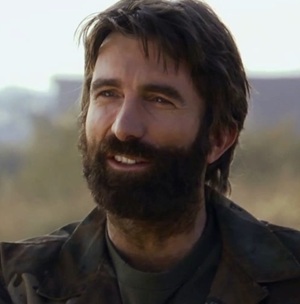
  • BRACCO AEGLIUS - A former Alestrian Commando who was raised among a predominant military/political family in Galmorla. Although an experienced and valued officer with the Tivolan Guard Force, Bracco carries significant guilt at his actions leading up to the beginning of the war and believes - privately - that he started the war at the behest of the Alestrian Intelligence Service by arming anti-Crionian terrorists among the Asatran resistance.
  • BOGGIONA MRESTE - A native Asatran hailing from Cantala who immersed herself in her work with the lower classes as a physician prior to the war. Dr. Mreste served in the Order of the Red Chalice - a civilian medical NGO - and gained significant wartime experience. An introverted extrovert bothered by Diakethan exploitation and repression of her nation, Mreste is engaged in bettering post-war Asatra in spite of the odds being heavily stacked against her.
  • PHILLIPO RALMOS - A saturnine former Constable of the Alocasia Colonial Police. Phillipo was a youthful policeman prior to the war who sought an adventurous life away from Alestria, and managed to live through both the Siege of Tivola and the disastrous evacuation of Porto Jaravais. He has since entered into a monotonous life as a member of the Tivola Guard Force with no clear aim besides existing in Asatra.
  • Arraste - An Asatran cook possessing a dark sense of humor in regard to the Abandonment and the war. Arraste was conscripted by the Crionian Army to serve as a cook and subsequently survived the collapse of several fighting units. Well-read but not one to be considered "tough," Arraste is nonetheless an experienced survivor of calamity.
  • ASTRUC BERENDON - Prior to the war, this ex-military litigator was well-known among the Asatran population as an unwavering defender of rights - and among the Crionian military establishment as a trouble-maker. Busted down to the lowest of ranks when the war broke out, Berendon's natural leadership abilities and prowess in combat shone brightest in the dark jungle following the attempted siege of Fort Jaguar, where he rallied elements of the Paras into a cohesive element. He spent the entirety of the war leading his Paras against the Jungle Rifles, earning the moniker of "Red Ghost." Principled, well-manicured, and an utterly unstoppable force.
  • LUCIAN CALARIS - A deeply religious former helicopter mechanic of Alestrian colonial roots, hailing from Fesola. Lucian spent the war repairing helicopters before a helicopter crash sent him fleeing to Tivola. A longtime denizen of Tivola who is among the most optimistic of the city's residents. Lucian has a paramour in "Lupo," one of the working girls in the city's bordello, and hopes to wed her following the return of the convoy from Maxima.
  • Felicia Alvarez de Urtex - Coming soon to theaters near you!

MAJOR NON-PLAYER CHARACTERS


  • JON HIKASKES - The highest-ranking Alestrian officer to be abandoned (that we know of). A career military man from an establishment family who was appointed as the commander of all Alestrian forces in Tivola and Southern Alocasia. A formal but hardened and pragmatic man, it was Major General Hikaskes who elected to keep his forces at Tivola instead of taking a chance on sending them towards Jaravais. For five years, Hikaskes has been the Chairman of the Tivola Garrison Government and been instrumental in preserving its security. While pragmatic to a fault, Hikaskes believes that after five years, there exists a real chance of forming a new Asatran nation from the ashes of war and quarantine.
  • SAVOY MANSFEL - A former Crionian Air Force colonel and the leader of the Maxima Garrison Government. An experienced fighter pilot and the Wing Commander of the 25th Air Interdiction Wing, Savoy voluntarily chose to stay behind when his superiors loaded themselves at the head of the evacuation, despite having the option of taking to the air. Many of his airmen chose abandonment by Crionia rather than abandoning their commander. Five years out, Savoy leads Maxima with an iron fist.
  • PETRO RAVALIA - The former commander of 1st Battalion, 22nd Alestrian Rifle Regiment. Currently the leader of the Jungle Rifles. A charismatic, brutal man who held the remnants of his regiment together amid the Abandonment. Under his leadership, the Jungle Rifles are a formidable group that engages in raiding, racketeering, and slavery. His hatred of Crionians runs deep.
  • GARGO VISALIS - The current warlord of the Bone Eaters. Visalis was previously a disgraced sergeant of the 1st Colonial Regiment of the Alestrian Army, sentenced to death for first-degree murder. The Wendigos interrupted his sentence and he later found himself joining a band of raiders. Through sheer brutality and fear, he has since built the Bone Eaters from a handful of raider bands into an organized killing machine. A psychopath with no remorse and total unpredictability, Visalis is perhaps the most dangerous human being left in Asatra.
  • THE JOCKETTE - An enigmatic female who is never seen, but always heard. The Jockette operates Radio Asatra and seems to know a little bit about a lot of the happenings in Asatra, giving news updates over the radio in between songs. A very popular, well-known figure in Asatra, despite absolutely no concrete knowledge about her being available.
  • JARYL HALMAS - The current "Chairman" of the Free State Mining Corporation. Prior to the Abandonment, Jaryl was a mild-mannered, somewhat meek senior supervisor within the FSMC's accounting department. When the senior leadership of FSMC were evacuated or killed, Jaryl was the last man standing and demonstrated unexpected competency in rallying the remnants of the FSMC. The Abandonment has twisted this man into a domineering, calculated strongman. While he and his closest lieutenants live in luxury, he keeps the workers and slaves of Coal Hill firmly under the boot.
Last edited by Cylarn on Sat Sep 19, 2026 12:51 pm, edited 11 times in total.
✎ Member - ℘ædagog
If you are serving the US and its allies right now overseas, thank you for what you do.
Recipient of the Best Crime RP'er Award and the Best Crime RP Award for 2013 in P2TM. Recipient of the Best Crime RP'er Award of 2014 in P2TM.

User avatar
Cylarn
Post Marshal
 
Posts: 15108
Founded: Nov 25, 2011
Left-Leaning College State

Postby Cylarn » Sat Sep 05, 2026 7:44 pm

NAME: "My name is Bracco. Bracco Aeglius."
AGE: "I feel much older than I am, but I am thirty-two."
GENDER: "A man."
APPEARANCE: Image
NATIONALITY: "Alestrian. It doesn't count for much anymore. Call me 'Abandoned' or 'Tivolan.'"


PERSONALITY: "I'm a mixed bag. Prior to the war, I was your average straight-lacer. My boots were polished, uniform starched, and I walked around with a stick up my ass. A typical capital kid, bred in the blue and groomed to hold some lofty office as an old man. I hardly cursed or raised my voice, but I held those below my station as being beneath me. I lived the five-to-five of an Alestrian officer. I knew how to schmooze, which cocktail to order at the Officer's Lounge when I was schmoozing up to Colonels and Generals, and if I wasn't doing any of that, I was either polishing my brass or sifting through reports. Believe me, I could bullshit and brown-nose like it was no one's business. Everything back then, in what feels like another life, was about stepping on the stones and climbing upward - for the eventual goal of being able to tell everyone else what to do."

"The man I am today is far different than the preppy elitist that I was. I curse, I spit, and I yell - but I don't look down on anyone anymore and I have no compunction about getting my hands dirty. Trust me, the officers that tried holding on to the world that they used to know are long-dead. I talk to everyone the same way; I treat them with an even bag unless they do or say something that convinces me otherwise. I'm not afraid to shout down a bullshitter, or assist someone with coming back down to reality."

"I got a lot of guilt, I'll tell you that. There was a lot of shit that went down right before the war, and I was involved in it. Hell, I wonder if I started the damn war, you know? I've killed men, I've seen friends die. I've had to shoot friends, even. There's no coming back from being a Wendigo."

LIKES: "It's not like I have a ton of time for hobbies, you know? But hey, I'm in Tivola and I like where I am at. I've got a dog - Jako - so that's another thing I enjoy. A cold beer, a book I haven't read, a movie I haven't seen. Hell, even listening to the radio is good - for all of the options we have for radio stations in Asatra. Clean women, too. Here's the real thing I enjoy: not seeing a fucking Wendigo."
DISLIKES: "The fucking Wendigos, hands-down. I fucking hate them, I hate that they're the reason I can't see my fucking homeland or my family again. Crionians? I'm really not the biggest fan of them. I can't waste time over the war anymore, but I gotta say, Crionians still suck.
SKILLS:
  • MAJOR SKILLS - "First and foremost, I was a commando officer. I am well-versed in every small arm used by the Alestrian Army as well as most of the guns used by Crionia. It's part of our familiarity training; learn the gun, shoot the gun, move with the gun - so that if you're ever in a situation in which you are stuck with any one weapon, you'll know exactly how to use it as opposed to fumbling with it under fire. My general infantry training - from the 22nd and the Capital Garrison - taught me conventional warfare. Those are the general infantry movements, movement under fire, combat first aid, land nav, combat drills, and all that stuff. Commando training expanded on that; how to organize and launch raids and ambushes, how to conduct recon in enemy territory, and two baker's-dozen ways to kill a man. I like to think my training and experience from the war is what's keeping me alive. When you look at it, the Asatran War was short - short but bloody on a whole other level. You learn instincts, muscle memory, and most importantly, how to rely on yourself and what you've learned so that you will come back safely."
  • MINOR SKILLS - "It's not like I'm riding in the sky anymore, but I'm qualified for rappelling and jumping from aircraft in mid-flight. Ropes and parachutes, y'know? Not much use for that stuff aside from rappelling, I guess; the first and last combat jump I made was at Tivola. Languages - I know enough Asatran to hold my own in a conversation, but some of the dialects take work to make out. Back when the Intelligence Service had me, it was important to know what the Asatrans were saying in front of you when they chose not to speak Diakethan Common."


WARTIME BACKGROUND: "During the war, I fought in the Alestrian Army. If you want the specifics, I was a Captain; I'd been in for nine years by the time that the bottom fell out. I saw the entirety of the conflict. When it broke out, I was officially a liason to the 22nd Rifles - the Jungle Rifles; their resident Commando observer/adviser. In reality, I was doing work for the Intelligence Service before that, but I was lucky enough to end up in Jaguar when the fighting broke out. After we repulsed the Paras, I was airlifted to rejoin 1 Commando when they were deployed to Tivola. Spent the rest of the war with the 1 Commando."
GEAR:
  • WEAPONS: "My first weapon is my rifle; the 58SM. No frills, nothing fancy - she gets the job done. My secondary weapon is an SMG - Type 52 with a skeleton stock and suppressor. Lastly, I pack a Model 48 as my sidearm. I picked it up from a dead Crionian officer three years ago. Got a suppressor for it too. As for my hand-to-hand weapons: an ice pick, a combat knife, and a folding shovel that I keep sharpened."
  • CLOTHING: "I'm surprised that I've kept my uniform for as long as I've had it. I wear the frogskin pattern blouse with a pair of green trousers from the old uniform, tucked into a pair of leather/canvas combat boots. A commando vest in frogskin, worn over the blouse. Below that, I wear the belt of the Army-issue webbing, with pouches to carry additional gear and weapons. I kept my helmet, too. When I'm not wearing that, I either wear the bucket hat or the beret."
  • IMPORTANT ITEMS: (This can be for job-specific gear)


BIOGRAPHY: "Here is the story of Bracco Aeglius. I'm what they call 'Capital Stock' - born in the blue of ARP nepotism. My papa was - is still, probably - with the Army. Officer-class, was a Captain pushing Major when I was born. Mama - daughter of the Vice President and a behind-the-scenes operative for the ARP political machine. Where Papa would chomp at the bit and scream in someone's face, Mama was the type to badmouth them at parties, badmouth them to their bosses, and generally talk enough of a game to get that person blacklisted from society. Image; that's the big thing for the Aeglius family. The image of the family. Everything had to be in its place, and every place had a thing. There were three of us kids, all starched and well-groomed for the parade ground of every capital fundraiser or memorial service. What we wanted, or needed, came second to what was expected of the Aeglius family. Our parents doted on us in public, and tormented us behind closed doors if we stepped out of line."

"My lot in life was decided for me. At ten, I was sent off - well, sent down the street - to be boarded at the Alestrian Cadet Academy. It's the prep school for young officers-to-be before they were ready to attend the Military Academy. It was like trading one domineering family for another - only that instead of having domineering parents, I now had domineering teenagers beating my ass for ever mistake I, or someone else, made. Again, credibility and impeccability before peers were the virtues. If you didn't painstakingly clean your room, starch and iron your uniform every morning, and make damn-sure every hospital corner was perfect and identical, you paid the price. The beating weren't bad; they were expected - but it was the shame. The older cadets took great care to remind me of every single little fuck-up that I made."

"How does one survive in a world like that? Just keep moving forward. That's what Papa told me. Move forward, take the fire, and keep moving forward. Stumble forward, never backwards. Pick yourself up and fix your shit. That was my matra. If I didn't take the licks and move forward, I was dead. When I became a teenager, I still had the peers above me judging what I did and how I looked. It pains me to say this though, but that hell is a whole lot easier to get through when you can pass your own judgements upon those below you. ACA made me a mean, snooty motherfucker by the time I made rank in the Cadet Corps. I drilled the hell out of those kids, tossed their rooms, and shoved them around - just as my 'betters' had done for me."

"The Military Academy has much of the same vibe, but that vibe paled in comparison to what the purpose of the MA was. This was where we truly learned to become officers and gentlemen, to do the job that the nation expected of us. We learned tactics, real leadership, weapons - everything a young military officer needs to thrive. It's a grueling environment, lots to test on and lots of knowledge and practical checks. Hardly any time off though; our summers were spent in the ranks, because our betters wanted us to have more than just a rudimentary understanding of the men we'd be leading. The break between ACA and MA was spent in Basic Training. At the very least, we got to pick three options as to which unit we'd be spending the summer with. Papa, at the time a Colonel, wanted me to do endless salutes and pass paper and answer phones for High Command every summer. I did High Command one summer as an enlisted adjutant-assistant - end of Freshman year - and never did it again. The rigid culture wasn't what pissed me off - it was the monotony, the boredom. When Sophomore year wrapped up, I put in for the following: 1st Asatran Colonial Infantry; Alocasia Frontier Force; and the 22nd Rifles. They put me with the Rifles."

"That summer was the first time I'd ever left Alestria; hell, the first time I'd spent any meaningful time outside of the capital. I went across the ocean by boat and then took a plane to Fort Jaguar. Totally different vibe than ACA or MA. Yes, I was a ranker - a private - but it was like I was in an adventure. Stationed in the Outer Ring, far from the capital, working on the frontier. The soldier's life. I learned to be a chameleon among those enlisted men, not to stand out too much. I ate their food, carried the same rifle, and rucked through the jungle on patrol. The camaraderie was great; when I saw my first sighting of a Crionian soldier on the Demarc, I joined the other soldiers in mooning the poor border sentry. For about an hour, we traded insults and curses and obscene gestures with the Crionians, and I loved it. God, that summer - and the next one, were so much fun. When I got weekend liberty, the other Cadets and I embedded with the Rifles would cram into a rented Sparrow and take the highway up to Jaravais. There was always a club to go to, or a civvie party to go crazy at. The colonial girls loved us. By continental standards, those hot chicks in Jaravais were out in the wild frontier. But the reality is that Jaravais was more Alestrian than Alestria. It was so far removed from what was going on in the Demarc or even the Oases, when it came to the civvie socialites who had no connection to the Army or the oil. They loved it when we came up to party with them, eating up our boasts about 'guarding the border.' Tivola, Cantala, and Fesola were alright - Tivola was the best one out of the Oases. None of them could hold a candle to what Jaravais used to be before the war."

"I graduated, finally, and received my commission as a Junior Lieutenant. First assignment was continental; Capital Garrison. I wanted to go back to Jaguar and take up a platoon there, but Papa - Brigadier Papa - probably pulled the strings to keep me home. CG was mouse farts; my Captain called our garrison the 'Chamber Pot Guards.' You know, I spent more time schmoozing up to the brass and going to cocktail socials than I actually spent soldiering. When we did drill, we trained for urban warfare in the city blocks and along the highway. I listened to old men talk about the Great War, when Asatra invaded and very nearly broke through the border into Alestria. They said that every generation gets its war. What broke the monotony of CG was when the Commando Regiment came around to recruit officers. That's where I truly cut my teeth; I immediately volunteered. Papa was not happy about it, but lemme tell you, it worked back then to schmooze up to the brass. Papa may have been one with the brass, but a Lieutenant-General set him right and ensured that Papa couldn't interfere with me getting sent to Selection and Qualification. S&Q Course was tough, but I made it though. Just barely, of course; I had only ten percent of my knowledge to rely upon, because schmoozing and starching gets you nowhere in S&Q."

"My first assignment was 'secret-squirrel,' working with the Intelligence Service in Asatra. Officially, I was booked as the counter-insurgency liason for the 22nd Rifles. Didn't even have a team yet, hardly had any experience with COIN. I was happy to go back, but in retrospect, I've grown to regret these early days. At the time, I didn't realize that I was being used. Yes I know, I'm a soldier and a tool of the nation - but I am talking about being truly used and hoodwinked. The hawks in the capital wanted a war. I didn't know that at the time. I knew that Asatra was the battleground for what some of the spooks were calling a 'hot peace.' The Asatrans - the ones we didn't either assimilate, exile, or kill slow in the camps - were causing trouble on both sides of the Demarc. Low-level clashes with the colonial police, acts of sabotage, threats in the paper. 'Low-intensity conflict,' we called it. My job wasn't to fight the insurgents on our side of the border; it was to metaphorically 'lift the fence' and check in with the Asatrans on the other side of the Demarc. They all hated us, but there's a saying: 'the enemy of my enemy, is my friend.' I would meet random Asatrans at cafes or drive out to a clandestine meeting spot in the jungle and exchange information with those people affiliated with the anti-Crionian insurgency. I'd give them a report on Crionian supply lines flowing into the Demarc, and they'd tell us that a 'cousin' was about to hit one of our pipelines in Tivola. Occasionally, the spooks would arrange for a handful of Asatrans to meet me at a quick-dash bivvie in the jungle for some off-the-books training before they crossed the Demarc into the Free State. Quid pro quo."

"I must admit; while I do regret this period of my life, it was not a bad life. In fact, it was quite luxurious for a twenty-something young officer. The colonial authorities boarded me up with two properties; a private quarters bungalow at Fort Jaguar and a high-rise suite in Jaravais, right on the 24th floor of the Hieronymo Building. Only at Jaguar or when I was heading to the Colonial Office, was I to wear a uniform. The government paid for a maid, food, gas, and I made a healthy salary as an officer. When I wasn't doing work for the spooks, I had free reign over my schedule. Mama's connections in Jaravais paid off, and I went to every fancy party and cocktail hour that I could ever want. More of the brown-nosing and schmoozing. By that point, I was happy enough to be an "elite" commando, so I didn't exactly need to schmooze. It was instinct, though - something that's in the blood of everyone who is Capital Stock."

"I don't know what I was expecting when the spooks asked for me to procure ten 58s and hand them off to the Asatrans. Maybe I was too naive to see the absolute fucking problem with giving insurgents our standard battle rifle to use however they saw fit on Crionian turf, or maybe I just thought that it wouldn't blow back at us. But it did. When the fucking Asatrans shot the Deputy Governor as he was traveling by motorcade to Coal Hill for a publicity tour, all hell broke loose. I realize now that it was all part of the grand plan, and I was the patsy. The night following the assassination was spent in Jaravais at some local ARP fundraiser, as if the ARP needed fundraisers with all of the taxpayer money they had access to. I remember drinking on the rooftop of the Chyrsla Building with this tall brunette - Ursula Capaela. Officially, she was the 'Director for Commercial Outreach' at the Governor's office; in reality, station chief for the Intelligence Service in Alocasia. She asked me something: 'Lieutenant, are you looking forward to your first war?' That was the tip-off; she was warning me. But, I was too far down in six cocktails to take it seriously."

"When the war started a week later, I drove from my girlfriend's apartment in Jaravais to Fort Jaguar. She was an accountant with the Colonial Office, and thank the All-Father she evacuated before the war got hot. Five hours in my little Alvia Sparrow with dogfights and rockets flying all around me. Made it into the compound just in time to see the Paras falling out of the sky. They dropped with mortars and lots of gear; the plan was to cut us off from moving to the Demarc and starve us into giving up Jaguar. We traded mortar fire and pounded back with artillery. In probably the week or so that they had us under a bonafide siege, there were probably four times that they almost broke in with an assault. I commanded a platoon of riflemen, plugging up whatever break in the wire the Crionians made. Reinforcements didn't come and break the siege; we broke the damn siege, with a Father-damned night attack. We kicked them back into the jungle, thought we had them. Turns out, they were worse to deal with in the jungle than in siege. We captured their heavy gear and a good bit of their supplies, but damn, those Paras know how to thrive where others are fucked."

"Finally, reinforcements from the continent were arriving. 1 Commando was headed to Tivola, so I took a plane from Jaguar to Tivola City - while they were under siege. It was my first combat jump. The rest of 1 Commando jumped in the next day. The captain over the squadron was unlucky, hit by a tracer that ripped up his guts on the drop, so command of 1 Commando passed to me. I planned and organized forays outside the wire. Night attacks mostly, doing hunter-killer tag-jobs on tanks or trying to hit places where we thought the Crionians had supply depots along their line. We slept by day in fortified dugouts while the rankers got bombed and popped at by snipers."

"When the Air Force got its shit together, we started doing observer ops for the birds. We'd go outside the wire with radios and maps, marking positions on the grid so that the ground attack jets could swoop in and tear their asses up. Once that got flowing, we started launching preliminary raids in force alongside the infantry. I'd have my guys hit a position first and break the line, and then the infantry would charge through and clean things up. Once our armor came down from Jaravais, the siege was finally cleaned up. 1 Commando was the first unit to break the line at Cordite Hill. That was a tough fight. Crionian riflemen were in the sanatorium; had to hit them with mortars to make them break. High Command was pleased; they bumped me up to Captain, kept me over 1 Commando, and attached us to the counter-offensive. That was a lot of forward reconnaissance work and raids behind the Crionian retreat to soften them up and make the push towards the Demarc less strenuous."

"The lines stabilized for a few months and we went back into the desert for mop-up. A lot of small Crionian units and stragglers were left behind, posing a threat to the rear of our lines at the Demarc as well as to the oil fields. They even succeeded in hitting a few. 1 Commando rode sidecar with the Air Force choppers. When they spotted enemy troops wandering in the desert, we would get flown in, dropped off, and picked up once we whipped them dead. Easier said than done, because their own commandos were out there too. We got them in the end, but they are tough bastards, good asymmetric fighters. Same thing with the Paras when we flew out to help the 22nd. The Paras lived off the land and reveled in hit-and-run jobs. They'd knock over a supply convoy or a small patrol, take their gear, and bug out into the bush before the QRFs could get out there. Even for 1 Commando, hunting down Paras was a tall order. It took a lot of work, and a lot of chance-taking, to dent them. I tried catching the Red Ghost; hell, we had at least two confirmed kills on the Ghost. Yet, he kept coming back. Dunno if it's the same guy. Hell; it's been five years since the continent ditched us, and the Paras are STILL out there, fighting BOTH the Jungle Rifles and Wendigos."

"Before the war when I was still a cadet at MA, I had the opportunity to attend an atom bomb test with Papa. That was a sight to behold. The sheer shock value alone and the pondering that came after can't be undersold. I saw the Crionians bomb the Demarc. Four explosions; the mushroom clouds were considerably smaller than the one made by the Starfist Bomb that I observed at Vilarosi. But goddamn, they did the job. There was no stopping the Crionians when they followed up the tactical bombs. 1 Commando was rushed up to buff up the response and we got our asses kicked. Commandos are not infantry; we are made for behind-lines jobs and forward recon - but the brass was desperate and thought that throwing in 1 Commando to stop an armored juggernaut assault would make a difference. It did not. I lost good men and women who'd been with me since Tivola. What did I get after that? A few green-gills from the continent - and the Wendigos."

"High Command sent 1 Commando to conduct a battlefield assessment when the reports came in about the Crionian lines along the Demarc breaking down. It didn't matter for much because the field commanders had already started sending in the troops. But the Wendigos made a right mess of things. We took casualties almost immediately upon stepping into the Demarc. Swarm attacks, coming from the trenches and over the dugouts and destroyed tanks. We shot back, stabbed at them with bayonets, and fell back. The wounded were taken to a Red Chalice camp outside of the front line. That place sure lived up to its name when my wounded turned. Again, more fighting, more shooting, more dead, and more running. There were a lot of fighting retreats. I took what was left of 1 Commando and hoofed it by wheel to Tivola."

"The oasis was as safe as it could be. The garrison stopped us at the gate and 'examined' us before letting us go in. The highest-ranking officer at Tivola, Major General Hikaskes, put 1 Commando to work on the perimeter. My comms guys were seconded to Signal, trying to get High Command to send planes for an evac. I talked to the General and suggested that we rally everyone up into every vehicle in town and attempt to push towards Jaravais. There weren't enough wheels to transport everyone, nor did we have enough planes to pull everyone out. In fact, even if we took every wheel and track, and every bird in Tivola, there wouldn't be enough room to move everyone to safety. The roads were chocked full of refugees and fleeing soldiers, and the Crionians were still launching attacks. High Command was too tied up to send planes. The best we could do was to send as many non-combatants by plane to Jaravais, and everyone else would hold in Tivola until High Command could send planes."

"I managed to speak with my parents once in Tivola, using one of the long-distance telephones usually reserved for the senior officers. It was a favor from the General. A reward, I guess, for fighting in the first siege. Papa, who was Chief of Staff to the Army Chief of Staff, sounded shaky. Mama was in a state. They cried; it was the first time I had heard them cry outside of some scripted memorial ceremony, and it was...authentic. Truly, they were both scared. Scared for me, not the nation. It was the first, and only, time they showed any real concern for me. Even in the few correspondences that we maintained by mail during the war, they always talked about duty to the country and all of those kinds of abstract things. I think Papa knew what was going to happen, that his first-born was destined to be abandoned. He didn't say it outright, but it was how he talked to me. Sure, he said some stuff about how he would see me when I came back to Alestria, but he told me that whatever came next, I would make it through. That I needed to remain strong for what would come next. And, the last thing he said to me was that he was proud of me. There was no bandying of words there, no shield or cowl to cover another meaning to what he said. He sounded sincere, sorrowful - as if he would never see me again. My siblings? My youngest sister, Carmila, worked for the Foreign Service. As far as I know, she's still there. My brother Sigiso...he made it home. Was with the 3rd Armored Division when they tried to counter-attack the 5th Armored; it didn't go well. The last I heard, he was invalidated back to Alestria without his legs. Amputated below the knee after his mates were barely able to rescue him from their T11 as it burned. He'll be hailed as a hero when it's convenient - and overlooked because the country has no use for a cripple outside of PR value."

"We never got the evac; instead, we took on an all-out Crionian assault. Their 5th Armored Division, which had spearheaded the All-Father Day Offensive, was on the run from the Wendigos that were coming up from their rear and the only place they could think to get to before the gas ran out was Tivola. We didn't try to hail them and they didn't try to talk to us. There was no talking, no thinking - only survival and shooting. They pushed into the city and fought hard, but we eventually destroyed the entire division. Next, came the Wendigos. Once we reconstituted the perimeter after the all-out assault, it was time to fight the night hordes. Hundreds, thousands of them swarmed the perimeter. They started at the east, and grew to begin surrounding us. I don't know how much ammo we used on them. Some of the tankers and mechanized infantry from the 5th, the Crionian POWs who we took after their attack, were a big help. By the time the Wendigos started swarming, we gave up on the pretense that they were the enemy and gave them back their guns."

"A week after the last evacuations, and we finally mopped up the swarms attacking Tivola. Signal tried to hail High Command, and were pretty much told that Tivola - and the rest of Asatra was on its own. The despair was thick in the air when the General made the announcement. Some people killed themselves with their own rifles and pistols, others deserted to try and find their way home. A lot of the ex-POWs ran off into the desert. One group of POWs stole back one of their tanks; I heard that it might be sitting at Fort Badass. But more of us stayed, accepting the reality that it was safer to make a go of things in Tivola than to try braving the hostile world outside of the Oasis."

"I've been here for five years now. There's no more 1 Commando; just the Tivola Guard Force, we call ourselves now. They've got me leading supply drop ops. We roll out fast, with 4x4s escorting the trucks to the drops. We fight off the raiders - especially the Bone Eaters - and take the goods home. It's a good supplement to what we can grow and husband in the Oasis. I try to keep busy when I'm not out in the field. Runs around town are good. They help me clear my head when I'm prone to thinking too much about the past. We've got a few watering holes in town, so it's not uncommon to find me drinking in one. I'll have a cold beer, play some pool or checkers with the other stiffs. Occasionally, you can find me at the Tivola General School doing a class or two for the kiddies. Can you believe that people are popping out kids in this fucked-up place? Well, they do and they are, so we have to take care of them."

"As for this latest task, I've been ordered to participate as one of the big hats over the convoy. The General and the rest of the council think that once we make contact with Maxima, we can build a lifeline through trade. There's even talk of building a nation, but I don't know how realistic that can be. The General talks about it sometimes. So do some of the others, like the Red Chalice doctors. The point made by those people who think that - they say that since we're abandoned by our mother nations, there's no sense in waiting to die. 'United we stand, divided we fall;' to be honest, I think that line got ripped from some Great War propaganda poster."

"Well, there's always a shot. Maybe we'll get a functioning trade route going. Maybe that will pave the way for us to bring what's left of the 'sane' people here together to actually build a nation or something. Granted, this convoy could make it as far as the Blood Rocks before it hits an IED and we all get crucified to die a slow-ass death in the sun. Maybe I am just a pessimist though. It's easy to be one of those out here when you've been left behind and forgotten."
Last edited by Cylarn on Sun Sep 06, 2026 11:33 pm, edited 4 times in total.
✎ Member - ℘ædagog
If you are serving the US and its allies right now overseas, thank you for what you do.
Recipient of the Best Crime RP'er Award and the Best Crime RP Award for 2013 in P2TM. Recipient of the Best Crime RP'er Award of 2014 in P2TM.

User avatar
Zenik
Diplomat
 
Posts: 870
Founded: Feb 25, 2024
New York Times Democracy

Postby Zenik » Sun Sep 06, 2026 2:03 am

NAME: Philippo Ralmos
AGE: 27
GENDER: Male
APPEARANCE: https://imgur.com/a/1flXXjC
NATIONALITY: Alestrian


PERSONALITY: " I think a part of me died during the war and all the chaos that ensued : I remember how I was before all this: I was a person full of hopes, dreams, energetic and alive; today I feel much duller, I have lost most of my hopes and dreams, the only thing that keeps me going is my will to continue living, even if someone might argue whether this is actually living or just surviving. My only comforts in this horrible situation are the bedbunk I have in Tivola, the few human acquaintances I have and the few commodities I receive. "

LIKES: His bedbunk, playing cards, the few acquaintances he has
DISLIKES: Wendigos, the Jungles, his former superiors, Bandits, Opportunists
SKILLS:

MAJOR:

- Agile
- Gun-trained
- High Stamina

MINOR:

- Intidimating Presence
- Card Player
- Persistant


WARTIME BACKGROUND: " During the war I was in force with the Colonial Police as a Constable: At first me and my fellow Constables were deployed in Porto Jaravais to maintain order, then I was then redeployed to Tivola in support of the regular forces that were fighting against the Crionians in the siege of the city, and then I returned to Porto Jarvais for the rest of the war "

GEAR:
  • WEAPONS: TYPE-45A2 Self-Loading Rifle, TYPE-30 Revolver
  • CLOTHING: Standard Alocasian Colonial Police uniform, dusty and a bit worn out, Combat Helmet, salvaged from a dead body, Boots and rudimentary body armor
  • IMPORTANT ITEMS: Multipurpose Knife, Lighter, Watch


BIOGRAPHY: " I'm not from here : I was born in 4E38, 8 years after the end of the Asatran Invasion of Diaketha, in the town of Vebro, in Alestria proper; my dad, Adalgiso, a former Army veteran turned office worker, and my mom, Kalina, a cashier the grocery store of the neighbourhood we used to live, have made sure that I had anything a child needed during my childhood and were very supportive of me in anything I chose.

I must confess, Since my infancy I was hungry for adventure, often fantasizing about being an adventurer, embark on a boat and explore the world, or become an astronaut and explore the stars : That hunger for adventure stimulated my curiosity greatly, as I wanted to know about everything and anything. At school I was the teachers' favorite and I was top of the class: I participated in numerous school competitions and carried forward the name of my school in city and provincial competitions, everyone of the adults had great faith in me, saying that I was destined to great things later in my life; seeing my current situation, maybe they were wrong.

One thing I remember of my past life is that I vehemently wanted to get out of Vebro and explore the world, and, when I graduated, I choose the one option that would eventually seal my fate : instead of going to a good University, choosing to pursue higher education and find other ways of exploring the world, my young, dumb self decided to join the Colonial Police in Alocasia : Everybody I knew were a bit stunned by that decision, even my parents, but I was too stubborn to back down, and so, in 4E57, I embarked on a ship and departed towards Porto Jarvais.

Once arrived I took a cab to the Colonial Police Headquarters, presented my enlistment demand, passed the medical examinations and was promptly took to training : Training was conducted in the a training camp in the jungles, and lasted for 12 months, I remember the umbearable hotness that I beared for those 12 months, but after that, I was finally sworn as Constable and assigned to the Porto Jarvais Regional Command in 4E59, just in time for the hostilities to break out "

At the start of the war me and my fellow Constables were tasked with enforcing the law in Porto Jarvais and provvide garrison to the city, along with enforcing martial law and fighting partisans, but when the Crionians started to advance on Tivola and fears of a siege started to arise among the High Command, a large number of colonial police, including me, was sent in support of the Tivola garrison to reinforce it from potential attacks

Our arrival proved to be vital, as shortly after we arrived the Crionians managed to open a breakthrough in the frontlines and sieged down Tavola. The battle was fierce and brutal, with numerous casualties among our forces and theirs, but in the end we managed to break the siege and beat back the Crionians. With the siege broken, I was redeployed in Porto Jarvais, where I stayed for the majority of the war.

Things started to break down when the bombs fell and the Crionians occupied Casala, Fesola and sieged down Tivola again, but this time without the possibilty of our reinforcements to arrive : I remember the chaos of those days in Porto Jarvais, but nobody knew what we would soon face.

We launched our missiles in retaliation, and that was the beginning of the end : soon reports of what was initially called " Radiation Disease " started to emerge, and a new, unknown force started to attack both our forces and the Crionians, and large numbers of injured and disperced were now in the city, pushed out by the expansion of this unknown menace. Then Casala and Fesola were bombed, and Porto Jarvais, already a shit-show from the chaos, turned into a carnage when the creatures emerged and started attacking people.

My section was in the streets to restore order when evacuation was called, and me and many other policemen, soldiers and civilian volunteers fought fiercely and desperately to protect the evacuation of civilians and other military personnel, although it was all futile : Porto Jarvais was a massacre, and,after realizing that the city was lost and that there would be no evacuation for us, we took off and fled towards Tivola.

Our small group of Constables, leaded by our NCO, Superintendent Teganes, managed to break out of Porto Jarvais and march towards Tivola to reach a safepoint and evacuate, but the march was far froom clean : My section had 102 men before the creatures attacked Porto Jarvais, when we got out of the city we were down to 30, and when we arrived to Tivola we were down to 19.

We joined forces with the regular forces in Tivola to repell any Wendigo attacks, but our evacuation never came : we were willingly left to die by Alestria, as Airforce and Navy bombed everything that could take one out of that god-forsaken city, leaving anyone else stranded. 5 years have passed from that dreadful day, and I now work as a civilian guard in one of the city's establishments : the pay is decent, I have a company-provvided bedbunk and I have some commodities; it could go better sure, but It also could go a lot worse.

Regarding this Convoy, the city government is searching for civilian volunteers to staff the convoy's security, as the garrison forces are spread thin, and are offering some bonuses to civilians to incentivize the offerings, while it is risky, those bonuses are an offer to good to refuse "
Last edited by Zenik on Sun Sep 06, 2026 11:35 pm, edited 4 times in total.

User avatar
Cylarn
Post Marshal
 
Posts: 15108
Founded: Nov 25, 2011
Left-Leaning College State

Postby Cylarn » Sun Sep 06, 2026 2:12 am

Colonial Police is an interesting take!

Prior to the war, the Alocasia Colonial Police Force oversaw all preventative and investigative policing throughout Alocasia. Big places like the Oases and Jaravais had their own police garrisons for enforcing the law, while the more sparse locales had regional commands and patrols. Obviously, policing Jaravais would be different than policing a place like Trabania.

During the war, the Colonial Police was not mobilized to take on direct combat alongside the military; instead, they enforced wartime laws and kept the civilian areas secured from rear-guard attacks. Obviously, the regional commands would have been thrust into the fighting.

My only concern so far is that any Colonial Police moved from Jaravais to Tivola would likely be moved once the Crionian forces in the area were defeated, so that they could concern themselves with maintaining order and assisting with rescue/recovery efforts. The Tivola Police Garrison, on the other hand, would be more inclined to participate in the actual siege.
✎ Member - ℘ædagog
If you are serving the US and its allies right now overseas, thank you for what you do.
Recipient of the Best Crime RP'er Award and the Best Crime RP Award for 2013 in P2TM. Recipient of the Best Crime RP'er Award of 2014 in P2TM.

User avatar
Zenik
Diplomat
 
Posts: 870
Founded: Feb 25, 2024
New York Times Democracy

Postby Zenik » Sun Sep 06, 2026 2:20 am

Cylarn wrote:Colonial Police is an interesting take!

Prior to the war, the Alocasia Colonial Police Force oversaw all preventative and investigative policing throughout Alocasia. Big places like the Oases and Jaravais had their own police garrisons for enforcing the law, while the more sparse locales had regional commands and patrols. Obviously, policing Jaravais would be different than policing a place like Trabania.

During the war, the Colonial Police was not mobilized to take on direct combat alongside the military; instead, they enforced wartime laws and kept the civilian areas secured from rear-guard attacks. Obviously, the regional commands would have been thrust into the fighting.

My only concern so far is that any Colonial Police moved from Jaravais to Tivola would likely be moved once the Crionian forces in the area were defeated, so that they could concern themselves with maintaining order and assisting with rescue/recovery efforts. The Tivola Police Garrison, on the other hand, would be more inclined to participate in the actual siege.


Maybe I'll slightly twitch it, by making him return to his regional command in Jarvais and take part in the clusterfuck that was the evacuation and battle of Jaravais, making him and a small group of Constables evacuate to Tivola after the aftermath of the Jaravais

User avatar
Vonston
Lobbyist
 
Posts: 23
Founded: Jul 07, 2026
New York Times Democracy

Postby Vonston » Sun Sep 06, 2026 3:02 am

NAME: Lucian Calaris
AGE: 26
GENDER: Male
APPEARANCE: https://imgur.com/dO62XaI
NATIONALITY: Alestrian


PERSONALITY: "I consider myself an optimistic person, as difficult as it is to be in this situation, and I am very spiritual: if I am still here it is because the All-Father has protected me; maybe he thinks my time has not come for now, or maybe he thinks I'm destined for better things, who knows ? Also I'm a talkative and good-natured person, I'm quite well-liked among my colleagues and friends and I try to help in all the ways I can when there is the need for extra hands. In my free time I hang out at the Brothel, there are a lot of pretty girls there and the alcohol they serve is more or less decent, and Ludo works there, too. "

LIKES: The All-Father, Fixing stuff, Talking with others, The girls at the Brothel
DISLIKES: The Hotness, the Jungles, the Wendigos, Assholes, Feeling Hopeless
SKILLS:

-MAJOR:

- Capable of repairing most things
- Ingenious
- Morale Upkeeper

-MINOR:

- Talkative
- Swimmer


WARTIME BACKGROUND: AIRMAN, ALESTRIAN AIRFORCE, ALOCASIAN AIR GUARD, FLIGHT PERSONNEL-TECHNICIAN, 12th Helicopter Squadron ( 4E57-4E61 )
GEAR:
  • WEAPONS: TYPE 52A1 SUBMACHINE GUN, MODEL 39 REVOLVER ( This one stolen from a Crionian serviceman during the initial days of the Abbandon )
  • CLOTHING: Airforce Mechanized Crew Uniform, a Combat Helmet, A backpack
  • IMPORTANT ITEMS: Torch, Toolbox, Sunglasses, Scotch tape, Ties


BIOGRAPHY: " I was born in Fesola in 4E39, but I'm ethnically Alestrian and have Alestrian nationality : my parents were intertwined with Bureaucracy, the Party and the Government, as my father was a ARP official, and my mother worked in the Colonial Administration. I was the second of 4 siblings : My brother Alvise, me, my brother Sigfrido and my sister Pamela; We were fairly rich and our parents made sure to satisfy each of our needs.I went to school in the Fesola Gymnasium, located in the heart of the Administrative district, and where the majority of the students were the offsprings of bureaucrats, administration officials and party officials.I never had any particular problems at school and I followed the lessons carefully, I had many friends and I did competitive swimming, think that I was in the swimming team of the Gymnasium, and I was also good: maybe I could have followed the career of a sports athlete and lived a different life, but fate and the All-Father put me on a different road.

The Alocasian colonial forces were launching numerous recruitment campaigns in an effort to increase the number of personnel, as the threat of a Crionian invasion was becoming more present than ever in the minds of the administrators and politicians back in Porto Jarvais and Alestria, and were offering bonuses for enlistment to young people : I tought it was a good idea to join and I made my enlistment demand for the Alestrian Airforce's Corps in Alocasia, the Alocasian Air Guard, which at the time was a small force, mainly made up of 2 Helicopter Squadrons, 3 Fighter Wings, 1 Logistical Squadron and 1 Bombing Group.

My parents weren't that enthusiast about me enlisting and tried to change my mind a pair of times, but I made my decision and decided to enlist eitherway. I arrived at a trainingcamp near the Outer Ring in 4E57, and completed the training before in 4E58, just in time for the hostilities to break out.

I was quickly assigned to the 12th Helicopter Squadron, headquartered in an airbase that was located near the Demarc, and there I was assigned the role of Flight Personnel and Ground Technician : you may ask why I had two completely different roles, but since the hostilities had broke out and there was a shortage of personnel I was chosen to take these two roles.

When the war broke out I firstly was on the ground, fixing choppers and repairing things, but then was quickly dispatched on flight missions as a board gunner when fight got intense along the Demarc : I remember that those missions were an absolute clusterfuck, as the Air Guard, ill-prepared and ill-equipped, was surpassed by the Crionian Airforce in all ways possible, and our Squadron often reported casualties.

We were forced to evacuate towards another airbase when the Crionians broke our lines and advanced towards our previous airbase, and once we established ourselves in another base, this time near Casala, I returned to either fixing helos or machinegunning Crionians while we were transporting troops, supplies or injured from one place to another. Our Squadron then participated as Air Support and Airlift in the Jungle Campaign, and, let me say, It was a fucking hell of a fight : bullets and rockets coming from the trees and our choppers desperately trying to avoid being hit.

As the siege of Tivola was repelled by our troops and new air and land reinforcements had came to help a large counter-offensive came to happen, but was then stalled on the Demarc after we liberated the majority of Alocasia from Crionian control. We were now stuck in a war of attrition, with no major gains on either side, and more and more bodies that piled up.

Then it came that dreadful All-Father day : Tactical Nukes were launched on the Demarc as the Crionian armored formations broke our lines, occupied both Fesola and Cantala, forcing us to evacuate again, and sieging Tivola with all of their forces : it was truly a dark day for Alestria, but it was only going to worsen up.

Alestria responded with their own missiles, and that was the beginning of a nightmare : My Squadron was quickly assembled to fight off a new kind of menace : the Wendigos were relentless with their hunt, and the war was still happening, until the situation was so much of a fuckup that Evacuation was called : My base was one of the points indicated as evac points, and we fought day and night to protect it, but when it was our turn to evacuate and reach safety, it was already too late : We my chopper was full of both soldiers and civilians, leaving behind the base, but we didn't make it that far before we were taken down by Crionian aircraft : I was sure these would be my last moments on this Planet before meeting with the All-Father, but, strangely, or should I say thanks to the All-Father, I survived the crash without major injuries.

After I managed to get out of the chopper I walked around aimelessly, trying my best to reach Porto Jarvais and evacuate, but I was stopped earlier when I stumbled upon a stranded military convoy : when I explained what had happened to me and that I needed to reach Porto Jaravais, they quickly stopped me in my tracks, explaining to me what had happened : Porto Jarvais had fell, and Cantala and Fesola were vaporized by the nukes, the evacuation was over as our Airforce had made sure to bomb everything capable of flying or sailing away from Asatra, leaving everyone who didn't make it stranded.

I was devastated by those words, but when they offered me a ride to Tivola, I accepted : it was the only place with human life in the minst of the chaos that was now Asatra. After I arrived there
I was relieved to meet my two Sigfrido and Alvise, who had been conscripted during the war and of whom I had heard nothing more, believing they had made it out. They explained to me that they originally tried to reach Porto Jarvais, but were bogged down in combat in Tivola, making them unable to evacuate, but fortunately our sister Pamela, who was in service with the Porto Jarvais Police, managed to get out while she could.

Neither of the three of us knew what had happened to our parents, as no one had received news of them after the fall of Fesola to Crionian hands, but to me, It was already enough that I had my two brothers with me.

In these 5 years I've worked in the Logistics Office of the Tivola Guard, as my abilities in fixing stuff have came in handy, and I've also met a special person, Ludo : green eyes, light-brown skin, dark hair, fairly tall, nice and funny. She works at the Brothel and I've met her a pair of years ago, right now we aren't officially engaged or anything, but we spend a lot of time together, outside of the Brothel and do things that couples usually do.

One of the main motives I volunteered for the Convoy was that I could then use what I would earn from the trip to move in with Ludo, maybe we could even start a family, who knows ? "
Last edited by Vonston on Mon Sep 07, 2026 6:27 am, edited 5 times in total.

User avatar
Great Confederacy of Commonwealth States
Postmaster of the Fleet
 
Posts: 23097
Founded: Feb 20, 2012
Democratic Socialists

Postby Great Confederacy of Commonwealth States » Sun Sep 06, 2026 3:16 am

NAME: "You can call me Doctor Mreste, M.D. That's Mr-este, not 'Mereste' and certainly not 'Merestee', or the Ghosts forbid, Meereestee. I have heard it all. Just doctor is fine too. My first name you don't need to know, since we are not on first-name basis. Oh, you need it for your form? Or what, it's going to eat me? Please, I think we have both gone through enough that forms don't frighten us anymore. Alright, if it means we can go onto the next question: my full legal name is Boggiona Honona'Den Mreste. That's pronounced... Ah, never mind."
AGE: "I was born in the year 5543, your 4e11, which makes me forty… No, fifty-four. Or fifty-three, depending on what month we're in. So, what I think is most interesting there is that… My life here feels like it has been as long as my life back home. Do you know the feeling? It feels like we've had two decades here, to me. Perhaps that's just what happens when every day is a new discovery."
GENDER: "Female. Really? That's on your form? You want to know my shoe size and my old address in Cantala too, while you're at it? My civilian service code is 566-221…"
APPEARANCE: "I'm what you might expect of a doctor nowadays. Short-cropped hair to fit under a respirator, and so I don't trek contaminants all over. My 'uniform', if you can call it that, is my old white doctor's coat, with a red chalice sewn over the left breast. The coat is my badge of office, and in most civilised settlements it is a death sentence to wear one without the proper qualifications."

"I don't get a lot of shit about my complexion nowadays. That used to be different, even during the war. No matter whether they were Alestian or Crionian, as soon as they saw the pitch-black hair and the grey eyes, they treated me more as a captor than as their doctor. Not all of them, of course. Many of them were nice young men and women. But some of them could never forgive me for having their life in their hands. Even if they saw themselves as a civilising force, and if they saw their occupation as a punishment for past aggressions, they could not help but feel like I was somehow out to punish them."
NATIONALITY: "Now, what would be a useful way to answer this? If you were to dredge my 'passport', or rather my 'personal identification document', from the bottom of Jaravais Bay, it would say "Alocasia". Apparently, that is a semi-mythical land in the stories of Diaketha where there was so much wealth that there were no wars and everyone was equal. My birth certificate used to say Asatra, right up to the moment when it was vapourised by a nuclear weapon. The province of Aeyanne, which was as much a fabrication as your 'Alocasia', even if it was two centuries older. I like to think of myself as a child of Cantala. So, an orphan of Cantala."
[HR=3][/HR]
PERSONALITY: "A nice way to put it would be to call me 'reserved', which I have heard in the past. 'Introverted' is another. That's all really not in my nature, if I am totally honest. I am outgoing, I love to party, I can sing, I can dance… But it needs the right conditions to come out, and honestly, since I was 19, those conditions have not really existed at all. Who is there to dance with? Native Asatrans are few and far between, and it feels like I am the only Cantalan left. Who else is there to remember its colourful buildings, the cloth hung above the streets for shade, the smell… So I keep to myself. I do like to talk, however, especially small talk. I do not drink much, but I like to have conversations about banal shit with a few drinks. It helps keep my mind from spiralling, you know?"

SKILLS:

MAJOR

[HR=3][/HR]
Medical degree and license
[HR=3][/HR]
Experience in siege conditions healthcare
MINOR
[HR=3][/HR]
Speaks Asatran
[HR=3][/HR]
Has connections in the medical world throughout Asatra
WARTIME BACKGROUND: "I was a doctor with the Red Chalice, as a civilian conscript."
GEAR:
  • WEAPONS: "My main rifle is a 44SA. It's an older piece, but it was what I could get my hands on and what I trained with. As a semi-automatic, it doesn't spray-and-pray, but with munitions as scarce as they are, that's probably for the better. And it was an MP's weapon, so I got the hollow-points that prove so effective against Wendigo's. More importantly for me is the Cass Defender, a six-shot revolver I found in a private security firm's armory. This is my final implement; if a patient is beyond saving, they get the 'Cass Mercy'. Finally, there is my 'bayonet', if you can call it that. A heavy knife with a serrated back, which can (in a pinch) double as a bone saw. It looks comically big on my 44SA, but look's don't kill, and that knife has proven itself."
  • CLOTHING: "I wear a doctor's coat, my main badge of office. Beneath I wear a camouflage outfit I got from an army warehouse. The clothing is tough and durable, and since I am nog looking for fashion, it suits my needs nicely."
  • IMPORTANT ITEMS:
[HR=3][/HR]
Medical bag with stethoscope, thermometer, bandages, morphine, bone saw, scalpels, syringes, cotton swabs, gloves, alcohol, tweezers, scissors, ophthalmoscope, otoscope, blood pressure monitor, muscle relaxant
[HR=3][/HR]
Silver lighter
[HR=3][/HR]
Lamp oil
[HR=3][/HR]
Cigarettes
[HR=3][/HR]
Backpack
[HR=3][/HR]
Rations
[HR=3][/HR]
Emergency blanket

BIOGRAPHY: "So, the way I used to tell my story was: My parents were comfortable, part of the middle class of Cantala before it grew to monstrous proportions. My dad was a local civil servant, my mother was a nurse, and she inspired me to get into medicine. All was fine and well in my youth, until I was around 14, when the foreign invaders captured our home town and tore down everything that reminded us of the old culture, and built their monstrous sprawl in its stead.

"Now, that's how I used to tell it. The way I tell it now is slightly different. My father was a civil servant, yes, but moved in from the Asatran heartlands. He was a foreigner too, albeit less foreign than the Alestrians. And it wasn't like Cantala was entirely an untouched jewel. The imperial war effort abroad demanded oil just the same as the Alestrian economy did, and plans for a rebuilt Cantala had been drawn up just after I was born. My father actually played a role there, although his love for my mother and her culture made him a moderating influence.

"The war, or at least the fighting, lasted for about five years, from my experience. The time between when the first bombs started landing on our shores and when the guns fell silent. Of course, there had been war before that; I had lost two cousins on that far-away continent, but that never hurt us. Until it did, of course. In my memory, those years were grueling. There was hunger and starvation, fuel shortages, shortages in medicine and basic goods… And of course there were the attacks on the oil fields, which weren't as big as they are now, but which were still targets. I remember one day when the Alestrians bombed an oil convoy. It rained black soot for days afterwards, and my mother got very sick. I had to do volunteer work until the war was over, clearing rubble at first, but then assisting the nurses in the hospital, which would hopefully help during my medical studies.

"My family was part of a 'caste', as it would later be called, that played a part in the imperial governance of the province. When the Alestrians arrived, they simply took over what was already there, and used the Asatran ruling caste to suppress the working class natives. It was only by this happy miracle that I was spared the back-breaking labour that the other Cantalans were forced into. While I got to go to university to become a doctor, my former classmates were being drafted into the oil industry. And when their labour was insufficient, the ancient oases, burial sites and monuments of my mother's people were bulldozed to make way for oil-fueled suburbs; the oil companies creating the very demand for the product they were extracting. My uncle on my mother's side drove a petrol truck, until the truck routes were replaced with pipelines.

"By the time I finished my medical degree, I was thirty. I became a community doctor, which you might call a 'general practitioner' or a 'house doctor'. I was a member of the Cantalan Medical Association, but by then it was dominated by Alestrian doctors, who had more successful practices. Rather, they served a richer clientele, and one that was ensured through their employer, while my patients were all part of the lower ranks, and did not enjoy the same union protections that their Alestrian counterparts did.

"I should have gotten married then, perhaps. It was what my family expected, and it certainly would have made things easier. But there was simply never the time. My twenties I spent studying, and I had no time for boys. And then when I was ready, most of my age bracket had already settled. It was not too much of a loss; those within my social group were often careerists, and I found their willingness to cooperate with the occupiers distasteful. By then, doctors were a minority in the middle castes, which was dominated by financiers and so-called 'apolitical' engineers.

"When did I have my political awakening? I am sad to say that it never really happened in the way you would think. I was personally fed up with the Medical Association and their unwillingness to allow me to advance. They looked down at what they called 'peasant medicine' (as if a poor body is somehow less complicated than a rich one). When my dad got sick, he was unceremoniously kicked out of city hall, as his cooperation was no longer required to make the local population heel.

"It was about a decade before the second war when I heard a knock on my door in the middle of the night. There, with their faces covered in shawls and their clothes bathed in blood, stood three armed people. Two were supporting their friend, who was bleeding from a wound in his leg. I told myself I did not know what was going on, but I knew. I let them in, took the bullet out of the man's thigh, and sent him home with some stitches and painkillers. We did not say a word about what happened. From that moment on, there would be occasional armed men and women banging on my door in the middle of the night. I never asked what they were doing, I just did my duty, but I always peered at the newspapers the next day. Usually, there was nothing.

"When the war broke out, all the doctors in Asatra were drafted to work for the Red Chalice, the international medical aid organisation. Suddenly, the Medical Association did not mind so much that I was a 'peasant doctor'. They shipped me all over the country during the fighting. I was at the siege of Tivola, which meant mostly dealing with malnourishment and communicable diseases, as well as amputating limbs crushed by falling buildings. Those three weeks had turned me into an expert, I firmly believe that surviving those three weeks meant I was going to survive the apocalypse. I actually traveled to Alestria for the first and last time then; giving a speech to the Red Chalice about the medical needs of war-torn communities. I thought a week away from the war would be good for me, but seeing how comfortable the 'home front' (to them, at least) was compared to the actual front made me feel irresponsible for being away for so long, and I never took another day off during the war.

"When the war turned stagnant, the medical situation very much did not. While the whole experience of trench warfare might be considered as one diseased day after the other, those diseases do change. At first, trench foot was the biggest issue, as the soldiers were not prepared for the hardship (their final war was more thirty years gone). When dry socks and hygiene rules largely fixed the trench foot, then came the malaria. The winter saved many from mosquitos, but then introduced the deadly cold desert nights, and while high command was prepared, the soldiers often underestimated the danger when they left during the evening on night patrols. And just when they were used to the cold, the rainy season came in, which flooded shallow graves and brought up the bloated corpses of the dead.

"I was almost relieved when the Crionians used their nuclear arsenal. The cost to life was horrific; people who are dying of radiation poisoning are awake all the time, and might seem healthy at first, but then they start crying blood. You know they are going to die weeks before they actually do. There are those whose skin melted off because of the initial flash, or those who had a limb vapourised because they had it sticking out when the bombs hit. But at least, I thought, it would be over soon. I was wrong. It would never end.

"There had been options. Had the Alestrians shared what they knew about the virus with the Red Chalice, we could have taken precautions. We could have made tests. But they did not. As far as the public was concerned, the stories coming in from the enemy lines were stories of mutiny and civil war. Soldiers turning on their officers and their comrades. We did not expect a thing when they brought in the first infected. The symptoms look like food poisoning at first, and shell shock later (including the bleeding from exposed orifices). So we took them in, we placed them in observation in our wards, we turn off the lights, and the next morning we woke up to a blood bath, if we woke up at all.

"We were lucky enough that we locked the ward during the night, mostly to prevent confused and shell-shocked patients from hurting themselves. It gave us time to evacuate. This started out orderly as could-be. We left in the morning, a neat column of trucks headed towards the coast to a fall-back line. We were harassed by aircraft all the time, necessitating the trucks taking cover beneath the trees or behind rocks for hours. And when we thanked the night for arriving and providing cover, we heard the first of them. We drove on through the night, we did not stop even if another truck broke down. There was no time; we had to make up all the distance we could. We even ignored the enemy air force, which still harried us from the moment the sun came up. The next morning, we received the general evacuation orders and we headed down to Porto Jaravais, being strafed all the way, despite the medical markings on the trucks. We arrived at Porto Jaravais with a quarter of the trucks we set out with.

"I spent the final moments of the war on a hospital boat, doing the terrible work of picking those who could make the sea journey and those who were unlikely to make it. Those who were not healthy enough were taken back to shore, but they might as well have tipped them overboard. Luckily, I was not on the door duty, because anyone thought to be infected was simply taken out back and shot by soldiers in HAZMAT. I worked until the final moments, when I heard the air raid sirens go off outside. "Crionia wouldn't hit a hospital ship," I said told them. "It's not Crionia, it's Alestria," said one of the soldiers. Then the portside bow was hit by a missile, and I managed to escape with only my life before the ship sank.

"While others huddled in the city to be rescued, I knew what would happen if I stayed there. To my shame, I did not tell many others. To avoid panic, I tell myself, but also to keep the roads clear for us. I gathered as many medical personnel and equipment as I could, together with some weapons, and took a jeep out of the city, away from the explosion of violence and infection that was about to happen. By nightfall we had gotten well-clear of the city, and joined up with a military convoy trapped there for protection after dark.

"And to think that our work had only just begun then. Imagine being a doctor being transported to a medieval world. That is what we were faced with. As soon as the power grid collapsed, so did running water. As soon as running water gave out, dysentery and cholera skyrocketed. And during the outbreak, we had to make up best practices regarding wendigo-infected as we went along. The solution was simple, since we could not risk anything. Those who showed clear signs of infection were told to take a medical shower, we gassed them with truck exhaust to poison their blood with carbon monoxide. We blew their stomachs out, and then burned the bodies. It took years for us to be able to distinguish between the early stages of wendigo infection and dysentery, which cost many lives.

"During the last years, I have been doubly busy. Of course I dedicate myself to the study of the infected, as well as the study of other diseases. Typhoid fever, rabies, pox, measles, rubella, mumps… We are not in a position to produce vaccines anymore, and the children born after the apocalypse are old enough to socialise, so this has been a problem. But even more important than that: I have tried to help set up medical schools, where we can teach the new generation. It is a hard statistic, but the life expectancy has dropped significantly since the apocalypse. More doctors are dying than we are training up, and our work is more necessary than ever. Not only as physicians, but also as advisors to public authorities, regarding best practices on hygiene and health. We have set up something of an Order, with our own code of conduct, and we have been trying to turn isolated buildings into fortified hospitals. Our doctors are trained with weapons as well, both to protect their patients, and to administer the only known remedy for infection.

"Perhaps this is why I want to go with the convoy. Tivola is set up nicely for now, but we are isolated. We need to learn from other communities. And if that means traveling with an oil convoy, then so be it. They will need a doctor two, and they could use two extra hands to wield a battle rifle."
The name's James. James Usari. Well, my name is not actually James Usari, so don't bother actually looking it up, but it'll do for now.
Lack of a real name means compensation through a real face. My debt is settled
Part-time Kebab tycoon in Glasgow.

User avatar
Cylarn
Post Marshal
 
Posts: 15108
Founded: Nov 25, 2011
Left-Leaning College State

Postby Cylarn » Sun Sep 06, 2026 3:23 am

Great Confederacy of Commonwealth States wrote:
NAME: "You can call me Doctor Mreste, M.D. That's Mr-este, not 'Mereste' and certainly not 'Merestee', or the Ghosts forbid, Meereestee. I have heard it all. Just doctor is fine too. My first name you don't need to know, since we are not on first-name basis. Oh, you need it for your form? Or what, it's going to eat me? Please, I think we have both gone through enough that forms don't frighten us anymore. Alright, if it means we can go onto the next question: my full legal name is Boggiona Honona'Den Mreste. That's pronounced... Ah, never mind."
AGE: "I was born in the year 5543, your 4e11, which makes me forty… No, fifty-four. Or fifty-three, depending on what month we're in. So, what I think is most interesting there is that… My life here feels like it has been as long as my life back home. Do you know the feeling? It feels like we've had two decades here, to me. Perhaps that's just what happens when every day is a new discovery."
GENDER: "Female. Really? That's on your form? You want to know my shoe size and my old address in Cantala too, while you're at it? My civilian service code is 566-221…"
APPEARANCE: "I'm what you might expect of a doctor nowadays. Short-cropped hair to fit under a respirator, and so I don't trek contaminants all over. My 'uniform', if you can call it that, is my old white doctor's coat, with a red chalice sewn over the left breast. The coat is my badge of office, and in most civilised settlements it is a death sentence to wear one without the proper qualifications."

"I don't get a lot of shit about my complexion nowadays. That used to be different, even during the war. No matter whether they were Alestian or Crionian, as soon as they saw the pitch-black hair and the grey eyes, they treated me more as a captor than as their doctor. Not all of them, of course. Many of them were nice young men and women. But some of them could never forgive me for having their life in their hands. Even if they saw themselves as a civilising force, and if they saw their occupation as a punishment for past aggressions, they could not help but feel like I was somehow out to punish them."
NATIONALITY: "Now, what would be a useful way to answer this? If you were to dredge my 'passport', or rather my 'personal identification document', from the bottom of Jaravais Bay, it would say "Alocasia". Apparently, that is a semi-mythical land in the stories of Diaketha where there was so much wealth that there were no wars and everyone was equal. My birth certificate used to say Asatra, right up to the moment when it was vapourised by a nuclear weapon. The province of Aeyanne, which was as much a fabrication as your 'Alocasia', even if it was two centuries older. I like to think of myself as a child of Cantala. So, an orphan of Cantala."
[HR=3][/HR]
PERSONALITY: "A nice way to put it would be to call me 'reserved', which I have heard in the past. 'Introverted' is another. That's all really not in my nature, if I am totally honest. I am outgoing, I love to party, I can sing, I can dance… But it needs the right conditions to come out, and honestly, since I was 19, those conditions have not really existed at all. Who is there to dance with? Native Asatrans are few and far between, and it feels like I am the only Cantalan left. Who else is there to remember its colourful buildings, the cloth hung above the streets for shade, the smell… So I keep to myself. I do like to talk, however, especially small talk. I do not drink much, but I like to have conversations about banal shit with a few drinks. It helps keep my mind from spiralling, you know?"

SKILLS:

MAJOR

[HR=3][/HR]
Medical degree and license
[HR=3][/HR]
Experience in siege conditions healthcare
MINOR
[HR=3][/HR]
Speaks Asatran
[HR=3][/HR]
Has connections in the medical world throughout Asatra
WARTIME BACKGROUND: "I was a doctor with the Red Chalice, as a civilian conscript."
GEAR:
  • WEAPONS: "My main rifle is a 44SA. It's an older piece, but it was what I could get my hands on and what I trained with. As a semi-automatic, it doesn't spray-and-pray, but with munitions as scarce as they are, that's probably for the better. And it was an MP's weapon, so I got the hollow-points that prove so effective against Wendigo's. More importantly for me is the Cass Defender, a six-shot revolver I found in a private security firm's armory. This is my final implement; if a patient is beyond saving, they get the 'Cass Mercy'. Finally, there is my 'bayonet', if you can call it that. A heavy knife with a serrated back, which can (in a pinch) double as a bone saw. It looks comically big on my 44SA, but look's don't kill, and that knife has proven itself."
  • CLOTHING: "I wear a doctor's coat, my main badge of office. Beneath I wear a camouflage outfit I got from an army warehouse. The clothing is tough and durable, and since I am nog looking for fashion, it suits my needs nicely."
  • IMPORTANT ITEMS:
[HR=3][/HR]
Medical bag with stethoscope, thermometer, bandages, morphine, bone saw, scalpels, syringes, cotton swabs, gloves, alcohol, tweezers, scissors, ophthalmoscope, otoscope, blood pressure monitor, muscle relaxant
[HR=3][/HR]
Silver lighter
[HR=3][/HR]
Lamp oil
[HR=3][/HR]
Cigarettes
[HR=3][/HR]
Backpack
[HR=3][/HR]
Rations
[HR=3][/HR]
Emergency blanket

BIOGRAPHY: "So, the way I used to tell my story was: My parents were comfortable, part of the middle class of Cantala before it grew to monstrous proportions. My dad was a local civil servant, my mother was a nurse, and she inspired me to get into medicine. All was fine and well in my youth, until I was around 14, when the foreign invaders captured our home town and tore down everything that reminded us of the old culture, and built their monstrous sprawl in its stead.

"Now, that's how I used to tell it. The way I tell it now is slightly different. My father was a civil servant, yes, but moved in from the Asatran heartlands. He was a foreigner too, albeit less foreign than the Alestrians. And it wasn't like Cantala was entirely an untouched jewel. The imperial war effort abroad demanded oil just the same as the Alestrian economy did, and plans for a rebuilt Cantala had been drawn up just after I was born. My father actually played a role there, although his love for my mother and her culture made him a moderating influence.

"The war, or at least the fighting, lasted for about five years, from my experience. The time between when the first bombs started landing on our shores and when the guns fell silent. Of course, there had been war before that; I had lost two cousins on that far-away continent, but that never hurt us. Until it did, of course. In my memory, those years were grueling. There was hunger and starvation, fuel shortages, shortages in medicine and basic goods… And of course there were the attacks on the oil fields, which weren't as big as they are now, but which were still targets. I remember one day when the Alestrians bombed an oil convoy. It rained black soot for days afterwards, and my mother got very sick. I had to do volunteer work until the war was over, clearing rubble at first, but then assisting the nurses in the hospital, which would hopefully help during my medical studies.

"My family was part of a 'caste', as it would later be called, that played a part in the imperial governance of the province. When the Alestrians arrived, they simply took over what was already there, and used the Asatran ruling caste to suppress the working class natives. It was only by this happy miracle that I was spared the back-breaking labour that the other Cantalans were forced into. While I got to go to university to become a doctor, my former classmates were being drafted into the oil industry. And when their labour was insufficient, the ancient oases, burial sites and monuments of my mother's people were bulldozed to make way for oil-fueled suburbs; the oil companies creating the very demand for the product they were extracting. My uncle on my mother's side drove a petrol truck, until the truck routes were replaced with pipelines.

"By the time I finished my medical degree, I was thirty. I became a community doctor, which you might call a 'general practitioner' or a 'house doctor'. I was a member of the Cantalan Medical Association, but by then it was dominated by Alestrian doctors, who had more successful practices. Rather, they served a richer clientele, and one that was ensured through their employer, while my patients were all part of the lower ranks, and did not enjoy the same union protections that their Alestrian counterparts did.

"I should have gotten married then, perhaps. It was what my family expected, and it certainly would have made things easier. But there was simply never the time. My twenties I spent studying, and I had no time for boys. And then when I was ready, most of my age bracket had already settled. It was not too much of a loss; those within my social group were often careerists, and I found their willingness to cooperate with the occupiers distasteful. By then, doctors were a minority in the middle castes, which was dominated by financiers and so-called 'apolitical' engineers.

"When did I have my political awakening? I am sad to say that it never really happened in the way you would think. I was personally fed up with the Medical Association and their unwillingness to allow me to advance. They looked down at what they called 'peasant medicine' (as if a poor body is somehow less complicated than a rich one). When my dad got sick, he was unceremoniously kicked out of city hall, as his cooperation was no longer required to make the local population heel.

"It was about a decade before the second war when I heard a knock on my door in the middle of the night. There, with their faces covered in shawls and their clothes bathed in blood, stood three armed people. Two were supporting their friend, who was bleeding from a wound in his leg. I told myself I did not know what was going on, but I knew. I let them in, took the bullet out of the man's thigh, and sent him home with some stitches and painkillers. We did not say a word about what happened. From that moment on, there would be occasional armed men and women banging on my door in the middle of the night. I never asked what they were doing, I just did my duty, but I always peered at the newspapers the next day. Usually, there was nothing.

"When the war broke out, all the doctors in Asatra were drafted to work for the Red Chalice, the international medical aid organisation. Suddenly, the Medical Association did not mind so much that I was a 'peasant doctor'. They shipped me all over the country during the fighting. I was at the siege of Tivola, which meant mostly dealing with malnourishment and communicable diseases, as well as amputating limbs crushed by falling buildings. Those three weeks had turned me into an expert, I firmly believe that surviving those three weeks meant I was going to survive the apocalypse. I actually traveled to Alestria for the first and last time then; giving a speech to the Red Chalice about the medical needs of war-torn communities. I thought a week away from the war would be good for me, but seeing how comfortable the 'home front' (to them, at least) was compared to the actual front made me feel irresponsible for being away for so long, and I never took another day off during the war.

"When the war turned stagnant, the medical situation very much did not. While the whole experience of trench warfare might be considered as one diseased day after the other, those diseases do change. At first, trench foot was the biggest issue, as the soldiers were not prepared for the hardship (their final war was more thirty years gone). When dry socks and hygiene rules largely fixed the trench foot, then came the malaria. The winter saved many from mosquitos, but then introduced the deadly cold desert nights, and while high command was prepared, the soldiers often underestimated the danger when they left during the evening on night patrols. And just when they were used to the cold, the rainy season came in, which flooded shallow graves and brought up the bloated corpses of the dead.

"I was almost relieved when the Crionians used their nuclear arsenal. The cost to life was horrific; people who are dying of radiation poisoning are awake all the time, and might seem healthy at first, but then they start crying blood. You know they are going to die weeks before they actually do. There are those whose skin melted off because of the initial flash, or those who had a limb vapourised because they had it sticking out when the bombs hit. But at least, I thought, it would be over soon. I was wrong. It would never end.

"There had been options. Had the Alestrians shared what they knew about the virus with the Red Chalice, we could have taken precautions. We could have made tests. But they did not. As far as the public was concerned, the stories coming in from the enemy lines were stories of mutiny and civil war. Soldiers turning on their officers and their comrades. We did not expect a thing when they brought in the first infected. The symptoms look like food poisoning at first, and shell shock later (including the bleeding from exposed orifices). So we took them in, we placed them in observation in our wards, we turn off the lights, and the next morning we woke up to a blood bath, if we woke up at all.

"We were lucky enough that we locked the ward during the night, mostly to prevent confused and shell-shocked patients from hurting themselves. It gave us time to evacuate. This started out orderly as could-be. We left in the morning, a neat column of trucks headed towards the coast to a fall-back line. We were harassed by aircraft all the time, necessitating the trucks taking cover beneath the trees or behind rocks for hours. And when we thanked the night for arriving and providing cover, we heard the first of them. We drove on through the night, we did not stop even if another truck broke down. There was no time; we had to make up all the distance we could. We even ignored the enemy air force, which still harried us from the moment the sun came up. The next morning, we received the general evacuation orders and we headed down to Porto Jaravais, being strafed all the way, despite the medical markings on the trucks. We arrived at Porto Jaravais with a quarter of the trucks we set out with.

"I spent the final moments of the war on a hospital boat, doing the terrible work of picking those who could make the sea journey and those who were unlikely to make it. Those who were not healthy enough were taken back to shore, but they might as well have tipped them overboard. Luckily, I was not on the door duty, because anyone thought to be infected was simply taken out back and shot by soldiers in HAZMAT. I worked until the final moments, when I heard the air raid sirens go off outside. "Crionia wouldn't hit a hospital ship," I said told them. "It's not Crionia, it's Alestria," said one of the soldiers. Then the portside bow was hit by a missile, and I managed to escape with only my life before the ship sank.

"While others huddled in the city to be rescued, I knew what would happen if I stayed there. To my shame, I did not tell many others. To avoid panic, I tell myself, but also to keep the roads clear for us. I gathered as many medical personnel and equipment as I could, together with some weapons, and took a jeep out of the city, away from the explosion of violence and infection that was about to happen. By nightfall we had gotten well-clear of the city, and joined up with a military convoy trapped there for protection after dark.

"And to think that our work had only just begun then. Imagine being a doctor being transported to a medieval world. That is what we were faced with. As soon as the power grid collapsed, so did running water. As soon as running water gave out, dysentery and cholera skyrocketed. And during the outbreak, we had to make up best practices regarding wendigo-infected as we went along. The solution was simple, since we could not risk anything. Those who showed clear signs of infection were told to take a medical shower, we gassed them with truck exhaust to poison their blood with carbon monoxide. We blew their stomachs out, and then burned the bodies. It took years for us to be able to distinguish between the early stages of wendigo infection and dysentery, which cost many lives.

"During the last years, I have been doubly busy. Of course I dedicate myself to the study of the infected, as well as the study of other diseases. Typhoid fever, rabies, pox, measles, rubella, mumps… We are not in a position to produce vaccines anymore, and the children born after the apocalypse are old enough to socialise, so this has been a problem. But even more important than that: I have tried to help set up medical schools, where we can teach the new generation. It is a hard statistic, but the life expectancy has dropped significantly since the apocalypse. More doctors are dying than we are training up, and our work is more necessary than ever. Not only as physicians, but also as advisors to public authorities, regarding best practices on hygiene and health. We have set up something of an Order, with our own code of conduct, and we have been trying to turn isolated buildings into fortified hospitals. Our doctors are trained with weapons as well, both to protect their patients, and to administer the only known remedy for infection.

"Perhaps this is why I want to go with the convoy. Tivola is set up nicely for now, but we are isolated. We need to learn from other communities. And if that means traveling with an oil convoy, then so be it. They will need a doctor two, and they could use two extra hands to wield a battle rifle."


Of course Boggy is accepted!
✎ Member - ℘ædagog
If you are serving the US and its allies right now overseas, thank you for what you do.
Recipient of the Best Crime RP'er Award and the Best Crime RP Award for 2013 in P2TM. Recipient of the Best Crime RP'er Award of 2014 in P2TM.

User avatar
New Harken
Ambassador
 
Posts: 1512
Founded: Jan 03, 2025
Iron Fist Consumerists

Postby New Harken » Sun Sep 06, 2026 7:51 am

Count me intrested

User avatar
Cylarn
Post Marshal
 
Posts: 15108
Founded: Nov 25, 2011
Left-Leaning College State

Postby Cylarn » Sun Sep 06, 2026 2:28 pm

New Harken wrote:Count me intrested


Good to have you on board!
✎ Member - ℘ædagog
If you are serving the US and its allies right now overseas, thank you for what you do.
Recipient of the Best Crime RP'er Award and the Best Crime RP Award for 2013 in P2TM. Recipient of the Best Crime RP'er Award of 2014 in P2TM.

User avatar
Zenik
Diplomat
 
Posts: 870
Founded: Feb 25, 2024
New York Times Democracy

Postby Zenik » Sun Sep 06, 2026 3:01 pm

Completed my app

User avatar
Cylarn
Post Marshal
 
Posts: 15108
Founded: Nov 25, 2011
Left-Leaning College State

Postby Cylarn » Sun Sep 06, 2026 5:18 pm

Zenik wrote:Completed my app


Phil will do. The only thing I will ask you to add: move him to Tivola from Jaravais prior to the Siege, so that he gets the full three weeks of hell.

Otherwise, welcome aboard!
✎ Member - ℘ædagog
If you are serving the US and its allies right now overseas, thank you for what you do.
Recipient of the Best Crime RP'er Award and the Best Crime RP Award for 2013 in P2TM. Recipient of the Best Crime RP'er Award of 2014 in P2TM.

User avatar
Cylarn
Post Marshal
 
Posts: 15108
Founded: Nov 25, 2011
Left-Leaning College State

Postby Cylarn » Sun Sep 06, 2026 9:30 pm

Vonston wrote:-snip-


I am excited to see what our resident cannoneer's adventures are like.
✎ Member - ℘ædagog
If you are serving the US and its allies right now overseas, thank you for what you do.
Recipient of the Best Crime RP'er Award and the Best Crime RP Award for 2013 in P2TM. Recipient of the Best Crime RP'er Award of 2014 in P2TM.

User avatar
Cawn
Ambassador
 
Posts: 1608
Founded: Mar 27, 2026
Corporate Police State

Postby Cawn » Sun Sep 06, 2026 10:19 pm

Count me interested as well! I’m currently drafting the application.

User avatar
Cylarn
Post Marshal
 
Posts: 15108
Founded: Nov 25, 2011
Left-Leaning College State

Postby Cylarn » Sun Sep 06, 2026 10:27 pm

Cawn wrote:Count me interested as well! I’m currently drafting the application.


10-4! Welcome aboard!
✎ Member - ℘ædagog
If you are serving the US and its allies right now overseas, thank you for what you do.
Recipient of the Best Crime RP'er Award and the Best Crime RP Award for 2013 in P2TM. Recipient of the Best Crime RP'er Award of 2014 in P2TM.

User avatar
Cawn
Ambassador
 
Posts: 1608
Founded: Mar 27, 2026
Corporate Police State

Postby Cawn » Sun Sep 06, 2026 11:26 pm

NAME: Arraste is my first name, and while it is okay to pronounce it as [æ.ɹɛs.ˈteɪ̯], I would much rather prefer the native pronounciation of [a.ˈras.te].
AGE: I feel a bit older, but I am 48 years old, born in 4E17 in December 18th.
GENDER: Male.
APPEARANCE: I have clear wrinkles and have not taken too much care of my body, although still better weathered than the soldiery, my hair is short and ungroomed usually. I am also not a fan of showers, not that you can get it anywhere nowadays.

I am mostly of a tanned complexion, the result of being in such a sunny area. I should also address why I have a scar on my hand, that was a result of an accident while doing my job.
NATIONALITY: Crionian, although since they have abandoned this continent, just Asatran will do.


PERSONALITY: To say the least, I am not very social, I have a friend circle, although it has become fewer since the war began, and I am not exactly “tough” as many people are. Like, I like all my friends and family and it’s sad to see people go or die. For I cannot and will not hide how I feel death to be, an end of a life of memories, friends and family, no matter how much it has been taken.

On the other hand, I have been quite humorous, mostly intentionally, maybe in part because I have made some missteps, some were funny, some was not as funny, and a few were threatening. I am good at cracking dark jokes, because with the lives lost in the nuclear explosions also came humor as a victim.

LIKES: Hobbies? I have been well-read, usually in recipes and I also have a radio and paper to write notes.
DISLIKES: Wendigos, have heard horrible things about them, and in general well, anything that threatens my life, I also dislike dogs.
SKILLS:
    Major skills:

  1. Speaking Asatran.
  2. Cooking, specifically of food, mostly at mass and for myself.
  3. Being able to carry heavy loads of food.
  4. Due to an education at school till high school, I will have some skills in subjects.
    Minor skills:

  1. I can play the radio and do antenna aiming.
  2. I can remember the exact page in which I last read the book.


WARTIME BACKGROUND: Military, was in the Crionian military as a cook, to specify, I was in the 5th Battalion of the 3rd division till it was destroyed and I then served the 3rd Battalion of the 2nd Division.
GEAR:
  • WEAPONS: A TYPE 58SM BATTLE RIFLE, of an older version, as a non-soldier I had to take what I could find. It was while I was scavenging through the camps that I found it.
  • CLOTHING: The dark OD green uniform, I wasn’t considered important enough to get a new uniform.
  • IMPORTANT ITEMS: A frying pan and a stove from my time as a cook in the Crionian army, I have a few bags to carry all of them, and also books and radio from Tivola.


BIOGRAPHY: When I was born, the Empire of Asatra was there, and I recall seeing everyone who spoke my language and followed my practices, much until the colonisers came and colonised the place, back then I couldn’t resist, much to my chagrin.

My school was good, as good as what my family could afford, I had difficulties going to school, mostly because of the long distance, for my family lived in a neighbouring village, and in addition, some days I had to labour to ensure that my family could survive, still, I was fortunate for receiving an education and being able to read and write.

I had supplied the resistance movements with food and supplies, up until they withered and declined in strength. Nowadays I don’t care as much as back then due to other factors.

When I was conscripted as a cook to the Crionian side, I was quite annoyed that I had to cook, however with no option to say no, I did what I had to do, I made some friends and eventually started enjoying, after all, Criolia was winning, I could leave as soon as Crionia won!

Of course the siege of Tivola threw a wrench into my dreams, I remember all the air-fire of the Alestrian air-force, destroying buildings and wreaking havoc upon being able to take positions. Eventually we had to abandon our siege, my battalion was not very lucky as they retreated late, most were captured/killed, I evaded capture via hiding in the rubble of a building and escaping via nightfall.

Now that I was assigned into a new unit, which also had to be destroyed by project Wendigo. I was one of the few again who survived by using my wits to hide, for Wendigo are not smart, and then leaving during the day.

By the time I had reached Tivola, I was exhausted, struggling to stand and having lost significant weight, the scars still remain to this day. I was quarantined and had to wait before entering the city for the fear of me being infected.

Today, I serve Tivola as a cook, and I have gotten some books and a radio, to remember the old days of having the luxury of these items. Good for me that a cook is more than needed here.
Last edited by Cawn on Tue Sep 08, 2026 1:52 am, edited 3 times in total.

User avatar
Zenik
Diplomat
 
Posts: 870
Founded: Feb 25, 2024
New York Times Democracy

Postby Zenik » Sun Sep 06, 2026 11:36 pm

Cylarn wrote:
Zenik wrote:Completed my app


Phil will do. The only thing I will ask you to add: move him to Tivola from Jaravais prior to the Siege, so that he gets the full three weeks of hell.

Otherwise, welcome aboard!


Did

User avatar
Cylarn
Post Marshal
 
Posts: 15108
Founded: Nov 25, 2011
Left-Leaning College State

Postby Cylarn » Sun Sep 06, 2026 11:39 pm

Not bad, not bad. The Type 58 rifle would have been acquired after the Abandonment, probably from some poor sap who dropped their weapon.

The oven...ovens are heavy. Let's keep it to the stove, since those are portable enough for one man to carry in a ruck or pack.

Other than that, all good. Just look at some of the spellings; Criolia is Crionia, and Tivolia is Tivola.

Zenik wrote:-snip-


Awesome sauce.
✎ Member - ℘ædagog
If you are serving the US and its allies right now overseas, thank you for what you do.
Recipient of the Best Crime RP'er Award and the Best Crime RP Award for 2013 in P2TM. Recipient of the Best Crime RP'er Award of 2014 in P2TM.

User avatar
Cawn
Ambassador
 
Posts: 1608
Founded: Mar 27, 2026
Corporate Police State

Postby Cawn » Sun Sep 06, 2026 11:45 pm

Cylarn wrote:Not bad, not bad. The Type 58 rifle would have been acquired after the Abandonment, probably from some poor sap who dropped their weapon.

The oven...ovens are heavy. Let's keep it to the stove, since those are portable enough for one man to carry in a ruck or pack.

Other than that, all good. Just look at some of the spellings; Criolia is Crionia, and Tivolia is Tivola.

Alright, I’ll just keep it to the stove, assuming that vehicles don’t have an oven.

User avatar
Cylarn
Post Marshal
 
Posts: 15108
Founded: Nov 25, 2011
Left-Leaning College State

Postby Cylarn » Sun Sep 06, 2026 11:46 pm

Cawn wrote:
Cylarn wrote:-snip-


You'd have to find one in the field, in an abandoned settlement or camp.
✎ Member - ℘ædagog
If you are serving the US and its allies right now overseas, thank you for what you do.
Recipient of the Best Crime RP'er Award and the Best Crime RP Award for 2013 in P2TM. Recipient of the Best Crime RP'er Award of 2014 in P2TM.

User avatar
Cawn
Ambassador
 
Posts: 1608
Founded: Mar 27, 2026
Corporate Police State

Postby Cawn » Mon Sep 07, 2026 12:10 am

Cylarn wrote:
Cawn wrote:


You'd have to find one in the field, in an abandoned settlement or camp.

Alright, I elaborated on the ways I found it.

User avatar
Cylarn
Post Marshal
 
Posts: 15108
Founded: Nov 25, 2011
Left-Leaning College State

Postby Cylarn » Mon Sep 07, 2026 12:49 am

Cawn wrote:-SNIP-


All good, all good!
✎ Member - ℘ædagog
If you are serving the US and its allies right now overseas, thank you for what you do.
Recipient of the Best Crime RP'er Award and the Best Crime RP Award for 2013 in P2TM. Recipient of the Best Crime RP'er Award of 2014 in P2TM.

User avatar
Reverend Norv
Senator
 
Posts: 4318
Founded: Jun 20, 2014
New York Times Democracy

WIP

Postby Reverend Norv » Mon Sep 07, 2026 3:22 am

NAME: "What's in a name? The Crionians still call Astruc Berendon 'Captain No' - because when he was a legal commissar, he kept telling commanders here that it was illegal to abuse the native Asatrans. Nowadays, the nickname mostly conveys grudging respect for a man who never yielded any of his principles. I first heard of Astruc as 'the Grey Pandit' - that was what native Asatrans called him before the war. A pandit is a scholar, an expert; and Astruc had prematurely grey hair even in his twenties. If you were in trouble, people said, write to the Grey Pandit: for he was the only Crionian who would care. For their part, the Alestrians call Astruc the 'Red Ghost' - because of his maroon Para beret, and the way he hunted them in the jungle around Fort Jaguar. And me? Though we share no blood, since he took me in after my parents died, I've been lucky to call Astruc Berendon 'father.'"

AGE: "He was born in 4E23 - the year after the end of the Cataclysm, what Diakethans now call the First Asatran War. So he must be forty-two now. It's hard to tell. Camil once showed me a photo of Dad at thirty, taken before the war. He looks pretty much the same now as he did then. Except the eyes, I suppose. Yes - except the eyes."

GENDER: "Astruc Berendon is a man. That doesn't matter so much here in Asatra, and it matters even less among the Paras. It matters to him, though, I think. Because he's known too many bad men, he thinks it matters a lot to be a good one."

APPEARANCE:
"People say the Paras are tribal. Feral, even. Then you see my father, and you know what gossip is worth.

"He's this perfect Crionian officer. Still. I think it's partially habit, and partially because he appreciates the irony. But as with most things when it comes to Astruc, beneath the irony there's sincerity - Dad is trying to hold on to the few good things he saw in the system that created him. He's very thin, wiry rather than burly, with a sort of boiled-down sinewy strength. And he's tall, half a head taller than most men. His complexion is fair, only lightly tanned - we don't get as much sun in the jungle as you do out in the desert, and the Diakethans stay pale even if they spend all day outdoors. There's literally an old duelling scar on his chin, from those fencing clubs that were popular among Crionian junior officers.

"Astruc is cleanshaven - he's the last Diakethan in Asatra with no beard - and he wears his hair in this distinctive Crionian military style: four inches long on top, combed back from the forehead and held in place with grease, and then completely shaved on the sides. He goes over his face and the sides of his head each morning with his father's razor, the one with the mother-of-pearl handle. His hair is grey - has been for years, went grey when he was still in his twenties - but it's not old-age grey; it's darker. Like gunmetal, Camil likes to say.

"What else? The face, I suppose. Not exactly handsome: too long, too serious, the nose and the forehead too big. The chin oddly weak, considering the strength that lives inside Dad - and the way he grinds his teeth. Shrapnel scarring from a grenade left a half-dozen little lines from his jaw to his forehead - and they healed badly, they're livid and ugly, easily distinguishable from the dueling scar on his chin. The eyes are very pale blue-grey - eyes from a different continent where colors are less saturated - and Dad wears reading glasses with gold frames when he needs to see close up.

"And yet despite all that, people stare at him. They do. Because sometimes, when he's at his best, it's like he lights up from the inside: and that long skinny body moves with precision and grace and power, and that long serious face looks at you with a searching clarity that scours you down to your soul, and you hear him speak with a voice that rings and rolls like the crashing of great waves. I read in one of my father's books that we are amalgamations of body and soul, and when you look at a man you see both. For most of us, I think that's true. But when you look at my father, I think what you see is a soul too big for its body, and the visible is illuminated in the image of the invisible."

NATIONALITY: "Oh, he's Crionian, all right. He'll tell you something different - tell you about the Para tribes, about the way that nations are imaginary but families are real. Or he'll mention all the things he admires about traditional Asatran culture, and argue that that Diakethans need to become part of this place and its traditions. Or he'll talk about the historical continuity between Alestria and Crionia - 'mutually constituting,' and so forth. Or he'll talk about the unique experience of the Abandonment, and the way in which those sorts of shared experiences create new nations - the 'phenomenological foundation.' And yet, every time, he'll explain his views in this precise, disciplined, exhaustive way - like a mathematician proving a theorem, or a staff officer briefing an operation - and you'll say to yourself: 'Oh, right - that's a Crionian.'"


PERSONALITY:
"I mean, I love him. So maybe I'm the wrong person to ask. But I also know him. So maybe I'm the right person to ask.

"He's - earnest. Sincere. So much so that sometimes you cringe, because he just can't help himself. It's not that he lacks social skills - because he's eloquent and inspiring and charismatic. It's not that he lacks social awareness - because he's sensitive and insightful and empathetic. It's that he means everything he says, and he's incapable of saying anything he doesn't mean, no matter how harmless or useful it might be. What you see is what you get.

"Astruc is also just a very serious person. He thinks all the time - I don't think he can turn his brain off, except maybe when he drinks too much, and he only does that when he knows we're safe - which, for Paras, is pretty unusual. When you ask him what he's thinking about, he'll answer honestly, and you'll get some disquisition on military history or legal philosophy or the psychology of a literary character. So yeah - always thinking. And while he has a sense of humor, most people don't notice it - because it's so dry, so observational and understated, that you have to think about what he just said in order to realize it was a joke.

"But despite all that - the painfully sincere, dry, kind of stilted way he goes through the world - my father is a hero. Not just to me; to most Paras. Maybe a lot of other people too. He's the legal commissar who told the FSMC they had to compensate crippled workers; he's the officer who denounced the Crionian military coup, and was broken to the ranks for it; he's the leader who rallied the Paras after the assault on Fort Jaguar failed, and inspired them not to surrender even though they were trapped behind enemy lines. He's been fighting the odds his whole life; every time he's chosen a side, he's chosen the weak instead of the strong. And it shows: because there's a steady fearless courage in him that comes from not caring about the odds, from caring only about doing what's right. And when you're around him, you start to feel that maybe you can be that way too, that maybe it's possible to go on after all - that if he can do it, I can too. And that's why people love him - why I love him. When you can't go on, he'll carry you."

LIKES: "Oh, to read. Definitely to read. And he can read the same book six times over, even if he knows every word, and still enjoy it. I don't know how he does that. And music - he plays the flute, of all things, and he jumped into the jungle twelve years ago with a flute in his rucksack, and he will still get it out in the evenings and play concertos and sonatas and airs. He likes to talk, definitely - loves good conversation - but I think he worries about talking too much, and so he can be quieter than you expect around people he doesn't know. And he wouldn't say this - I don't know if he even knows it about himself - but he likes killing. Not fighting, killing. In those seconds after an ambush springs, and a dozen men or Wendigos drop before they can even realize they're under attack, you can look at my father, and you'll see this deep, calm, professional satisfaction. It's the same reason he's such a good sniper: he doesn't need the adrenaline rush of combat, but he enjoys snuffing out a life between one breath and the next. Even if he'll never, ever admit it - least of all to himself."

DISLIKES: "Um - stupidity? That's not quite right. Arrogance, that's closer. No, domination. Astruc hates the kind of power that doesn't have to justify itself - that only answers, 'Because I say so.' He was a lawyer, remember. He believes in a world governed by rules - not always perfect rules, maybe not even good ones, but rules nonetheless. 'You can have rules, or rulers,' my father says, 'but you can't have both; either law is supreme, or man is.' And I know this may seem ridiculous, when you look around at Asatra - but it's not, and the Paras prove that. Because we have rules, not rulers; traditions and norms and agreements, not masters. You Tivolans and Maximans look at us and see feral tribes, but you couldn't be more wrong. You're the ones living in anarchy - because you have no rules, and the only law is the command of your masters. We are the ones living in order: because we live according to our own rules, and we don't need masters to whip us into line. Astruc did as much as any single person to make sure of that. So if you need a measure of how much he hates arbitrary power - there you go."

SKILLS:
  • MAJOR:
    "Some things are easier to see than others. You look at Astruc, you see a Para officer: elite airborne light infantry. Knows how to kill with a sniper rifle or submachine gun or pistol or knife. Knows how to site a machine gun, range a mortar, plan an ambush; knows how to dress a wound and read a map. And all that's real. He's especially gifted as a marksman and as a small-unit tactician. I've seen him pick off Wendigos from a kilometer away through jungle, waiting for movement and then firing at a flash of skin glimpsed through the leaves. And I've watched him take one look at a valley or a ridgeline, and understand immediately how it can be defended or assaulted most effectively. In one of my father's military manuals, they talk about a coup d'oeil: the ability to see everything you need to know at a glance, to see your plan already written into the terrain. That's what Astruc can do.

    "But in a way, that's the least of it. Certainly he'd say that; he'd say that all those skills are how you survive, but they're not how you live. My father would say that his most important skill is the ability to talk to a crowd in Diakethan or Asatran with equal fluency, and find the words to touch their hearts and make them see the world as he sees it. He'd say that the accuracy of his thought matters more than his accuracy with a rifle: his ability to analyze, to work through a problem, to make a rational decision even when the stakes are unspeakably high. He'd say that his most important accomplishments are the ideas he contributed to our life as Paras, and that his intellectual creativity - the ability to imagine new systems and norms and ways of being - is his greatest natural gift. And he'd tell you that all these skills - the skills that really matter - were honed not by his military training but by his classical education: and I can confirm that his ability to quote poets and novelists and philosophers and historians is sometimes preternatural.

    "But perhaps Astruc's most extraordinary talent is that he's survived in the jungle for the last five years, without any wall to protect him from the Wendigos, and he still believes that his training in poetry matters more than his training with a gun. How unbreakable do you have to be to hold on to that faith in this place?"

  • MINOR: "And on top of that? Well, he can still organize and execute a mass static-line jump, though his old chute is long gone now. His ability to fast-rope and rig knots is still useful in the jungle, though. He has the survival skills that all Paras have acquired, by necessity: the ability to live off the land, to trap rodents and hunt game and know which mushrooms are good for eating and which are poison. He plays the flute, like I said - good for morale, that. Good singing voice, too, surprisingly enough. He's not exactly mechanically inclined in the conventional sense, but he's good at improvising repairs and solutions out of whatever we have around - that classic Para ability to build a treehouse out of a downed airplane fuselage and some vines. That homemade ghillie suit of his is the best example of that particular skill, I think. And he usually knows just what to say if you're having a bad day. Come to think of it, at least for me, I think that's Dad's most important skill of all."


WARTIME BACKGROUND: "Short and to the point? Well, okay. Before the war, Dad was a legal commissar in the Crionian Army, with the rank of captain. When the Army overthrew the republic, he wrote an opine declaring the new government illegal and advising the commander of colonial forces in Asatra to ignore its orders. For that, the military regime revoked his commission and transferred him to the Paras as a private. He was a sergeant by the time the Paras dropped into the Outer Ring. After the Jungle Rifles broke the siege of Fort Jaguar, the Paras were behind enemy lines continually until the Abandonment; Astruc likes to say that the Abandonment came early for them, because they started surviving on their own long before the rest of Asatra. He ended up leading a group of Paras, and because the chain of command really no longer existed, they started electing their own officers. So now he's a 'captain' again, though not really in the Crionian Army. He says it's the realest rank he's ever had."

GEAR:
    WEAPONS: "Astruc is a sniper. He's not great at truly long range, beyond a kilometer or so; but he has this combination of fast reflexes and precise aim that lets him pick you off in the half-second you lean out from behind cover. His main weapon is a Model 41A3. He's modified it: filed down the sear to give it a hair trigger, and added a homemade suppressor - the baffles are made out of cone-shaped aircraft engine components from all the downed jets that litter the jungle. It works like a charm. Then he's got a Model 49, a submachine gun, which he uses if he gets swarmed at close range - that usually rides in a purpose-built scabbard-like holster low on his back, made from the leather of a giant anaconda. He has two pistols: a suppressed Model 50 in a homemade holster on his belt, and a Model 48 he took off a Jungle Rifles slaver a few years back. That guy must have gotten it from a Crionian captive, so my father always calls it his 'reclaimed' pistol. Astruc keeps the Model 48 tucked in his boot, as a backup gun. Finally, his hand weapon is a homemade hatchet: the handle is polished jungle mahogany, and the blade is a repurposed piece of a helicopter rotor honed to a razor edge. It's balanced so that he can throw it with deadly accuracy - and I've seen him do just that."

    CLOTHING: "None of us in the Paras have all that many clothes, so we repair and reuse what we've got. For Astruc, that means his old splinter-camo field uniform. It long ago wore through at the knees and elbows and under the arms, and he patched it with the soft homemade tapir-leather that Paras use for pretty much everything. Same for his boots; he resoled those with leather when the rubber wore through, and now they give less traction but they make no sound at all. Rifle ammo goes in a bandolier; sub-gun magazines go in a chest rig; pistol mags go in pouches on the same belt as the pistol. Astruc still has his Para smock - this big baggy splinter-camo sack coat, that he wears all the time and that covers most of his gear. And he has his maroon beret, which he wears most of the time; he only takes it off when he's expecting action - when he's "going hunting," as he puts it. Then he'll put on his homemade ghillie suit, which is just a big hooded cape of netting that was once used to contain airdropped supplies. Now Astruc weaves vegetation through the net - carefully adjusting to the local biome every time we move - and when he puts it on, he pretty much disappears. Finally, he carries his Model 49 low on his back, in a scabbard made from the leather of the biggest anaconda you ever saw; on his upper back, he has the small assault pack that Paras were issued for use after they dropped. That's where my father carries everything he really cares about."

    IMPORTANT ITEMS: books, razor


BIOGRAPHY:
Last edited by Reverend Norv on Mon Sep 07, 2026 9:08 am, edited 4 times in total.
For really, I think that the poorest he that is in England hath a life to live as the greatest he. And therefore truly, Sir, I think it's clear that every man that is to live under a Government ought first by his own consent to put himself under that Government. And I do think that the poorest man in England is not at all bound in a strict sense to that Government that he hath not had a voice to put himself under.
Col. Thomas Rainsborough, Putney Debates, 1647

A God who let us prove His existence would be an idol.
Dietrich Bonhoeffer

User avatar
Cylarn
Post Marshal
 
Posts: 15108
Founded: Nov 25, 2011
Left-Leaning College State

Postby Cylarn » Mon Sep 07, 2026 3:24 am

Hooray! We have Norv here!
✎ Member - ℘ædagog
If you are serving the US and its allies right now overseas, thank you for what you do.
Recipient of the Best Crime RP'er Award and the Best Crime RP Award for 2013 in P2TM. Recipient of the Best Crime RP'er Award of 2014 in P2TM.

Next

Advertisement

Remove ads

Return to Portal to the Multiverse

Who is online

Users browsing this forum: Cawn, Independent State of Novgorod, New Harken, Parcia, Reginalida, The Daeva

Advertisement

Remove ads